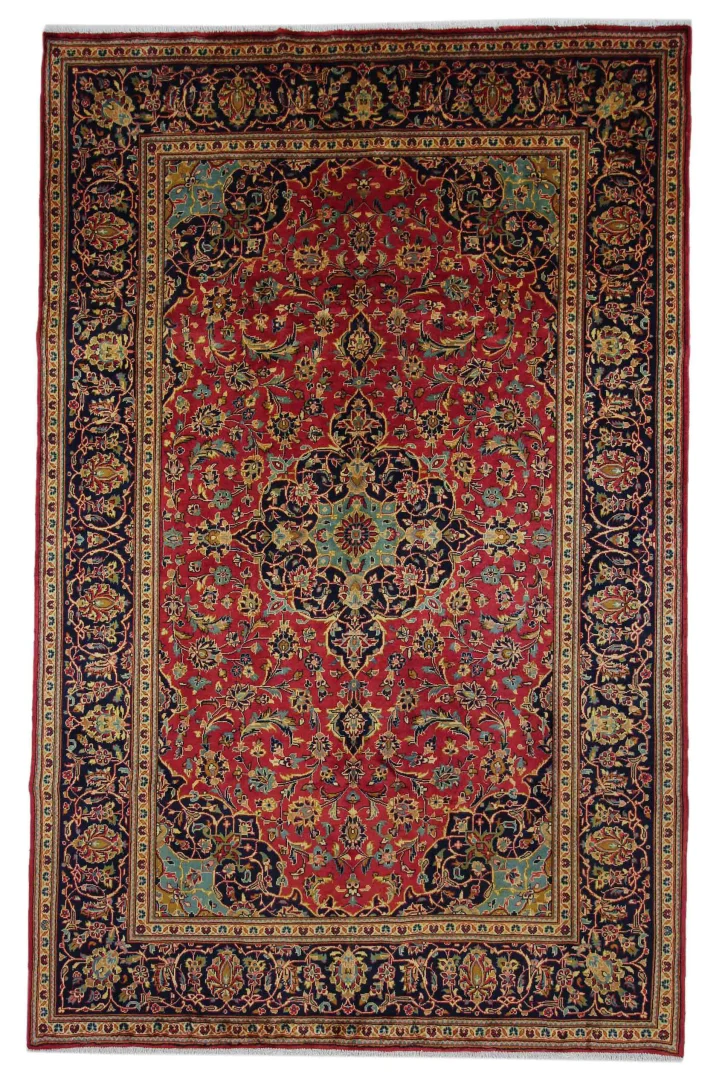
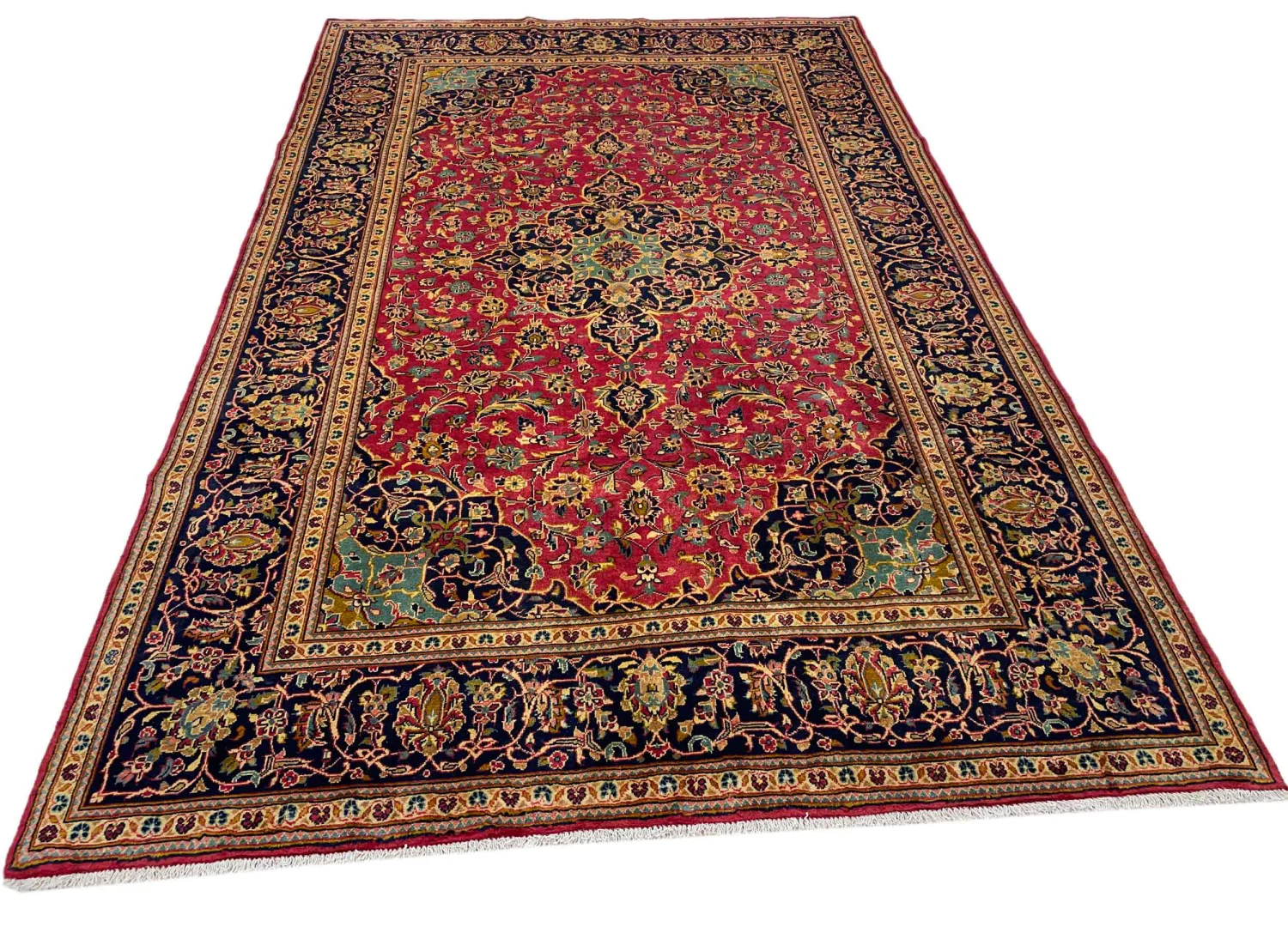
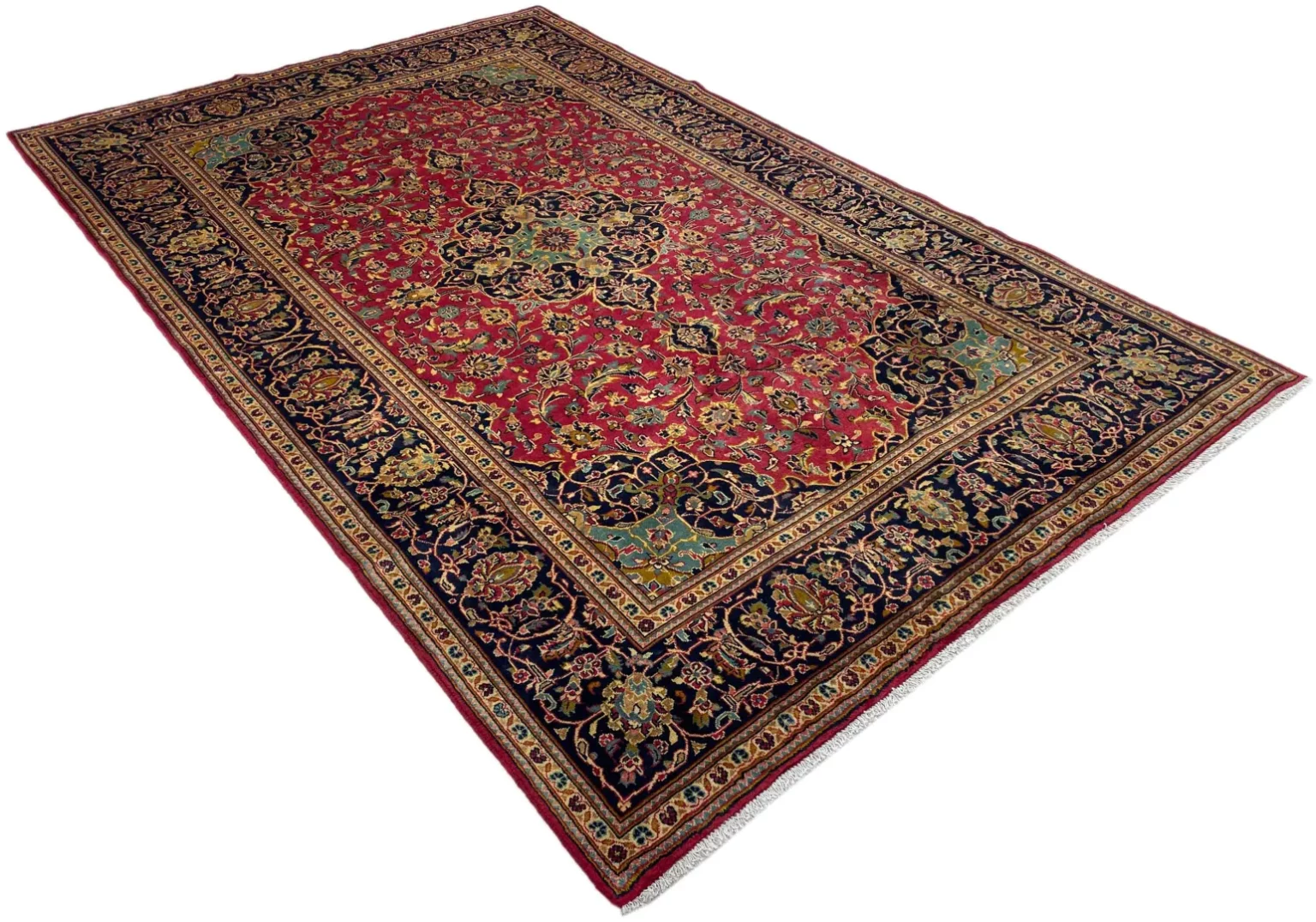
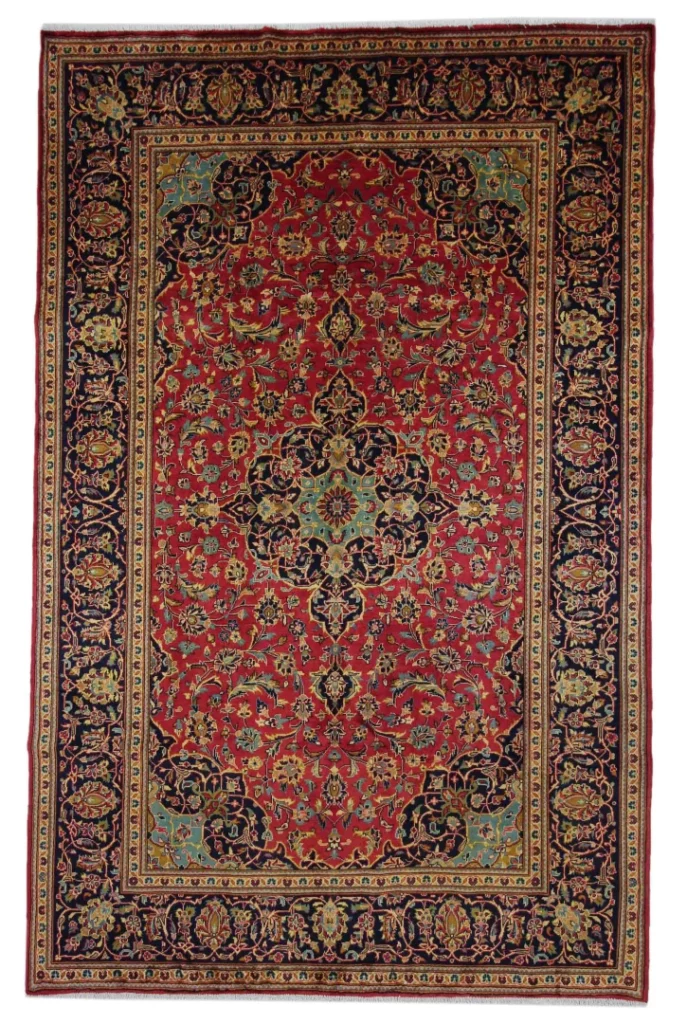
Persian Rug Kashan 307 x 196 cm Sheep wool Hand-knotted
€ 1274
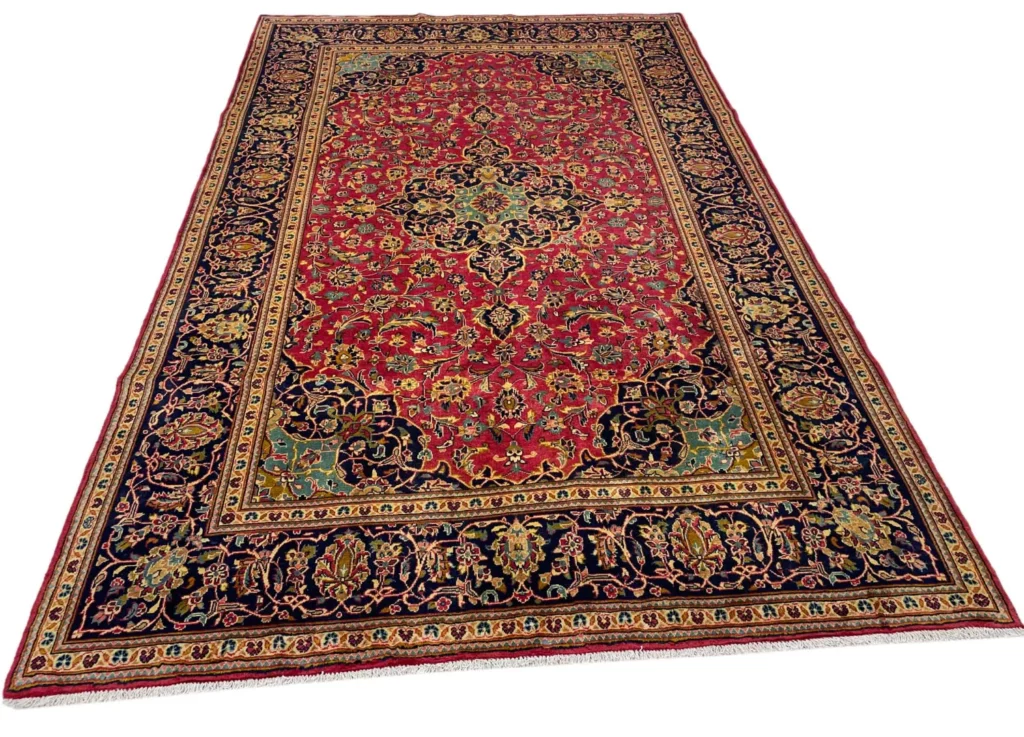
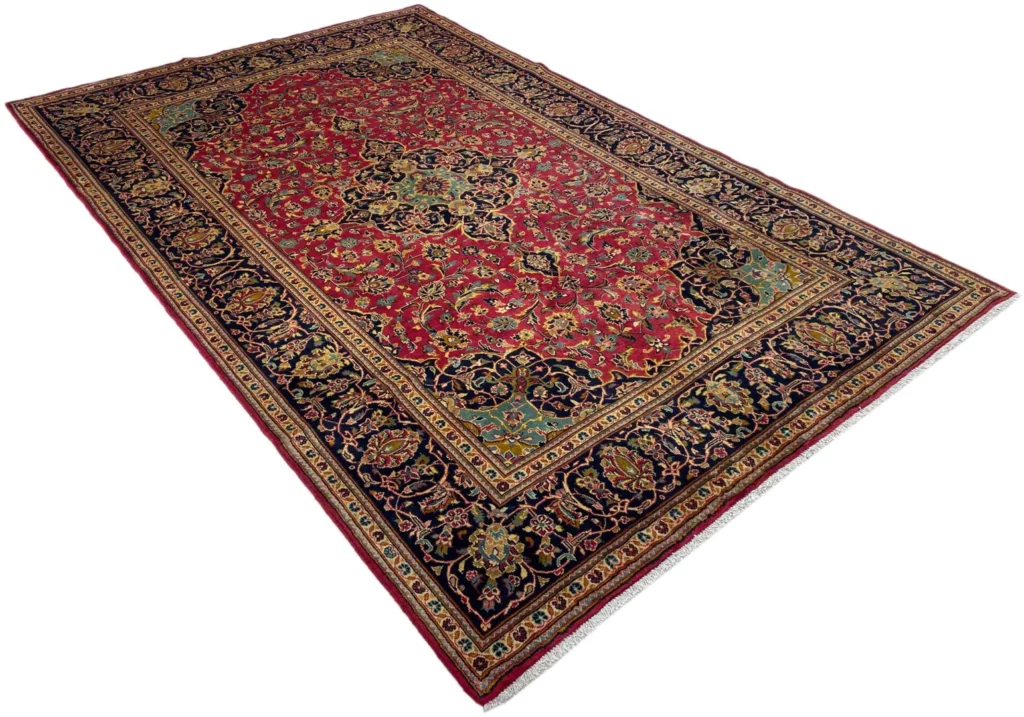
Hand-knotted Keshan Persian Rug | Knot density: 150,000 – 300,000 knots/m² | Material: pile sheep wool, warp and weft cotton | Size: 307 x 196 cm | Pattern: traditional | Condition: Very good
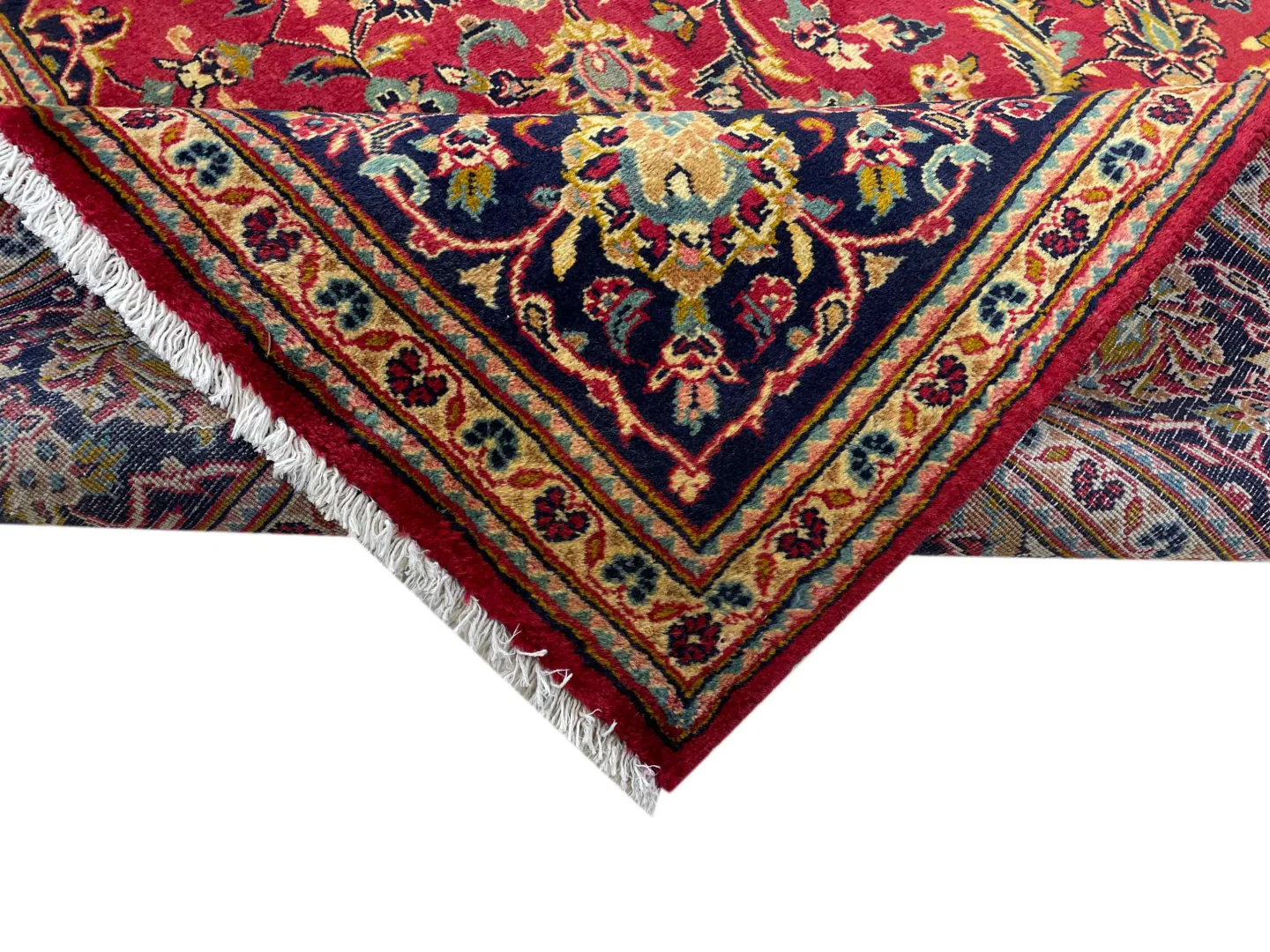
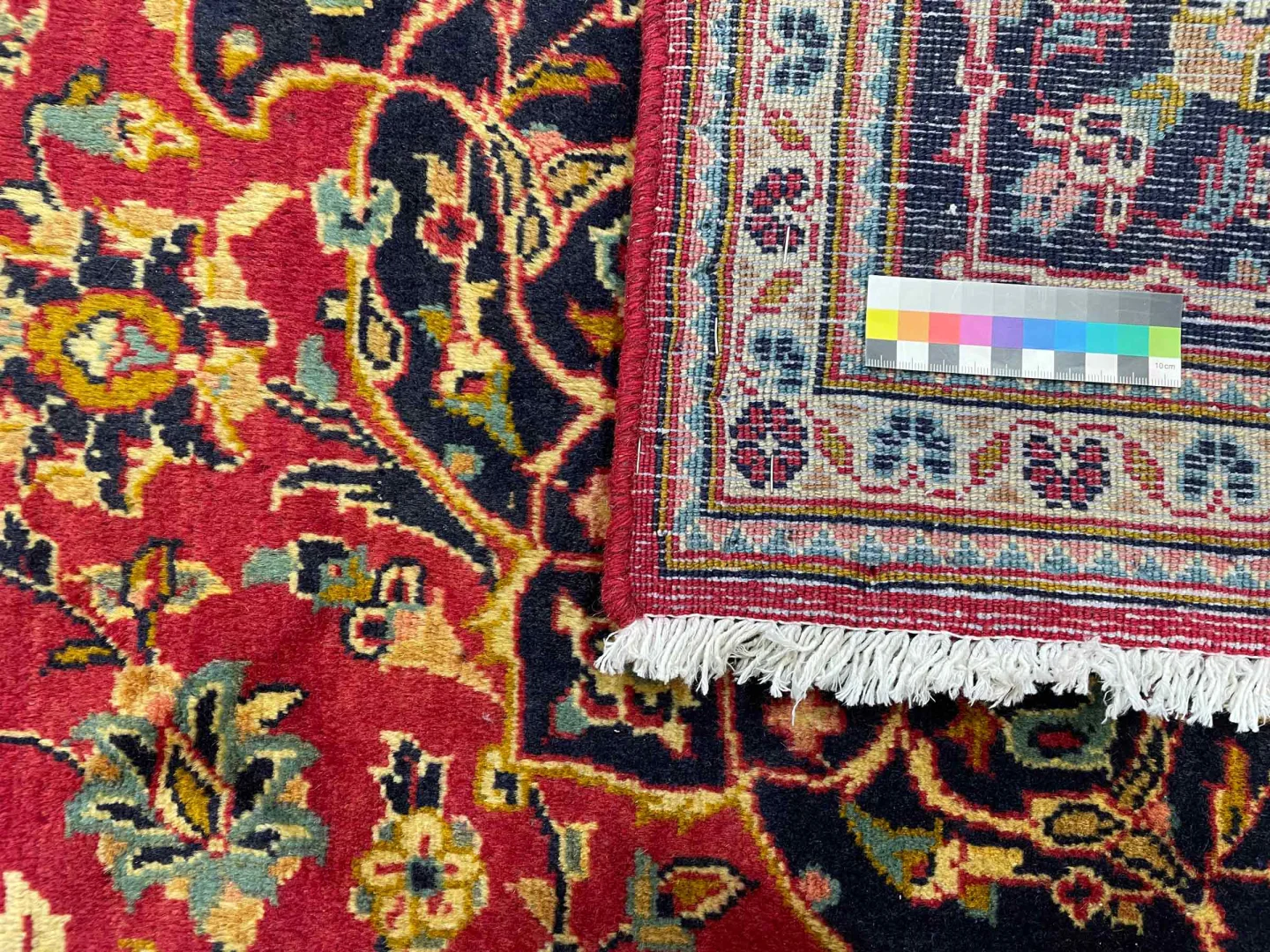
This Keshan Persian rug is hand-knotted. Its pile is made from high-quality sheep wool, while cotton is used for both warp and weft. This combination belongs to the established foundation of Persian rug making. Wool provides a soft surface with the resilience associated with the fibre, while cotton gives the construction a stable textile base. Together, these materials support both detailed ornament and practical use.
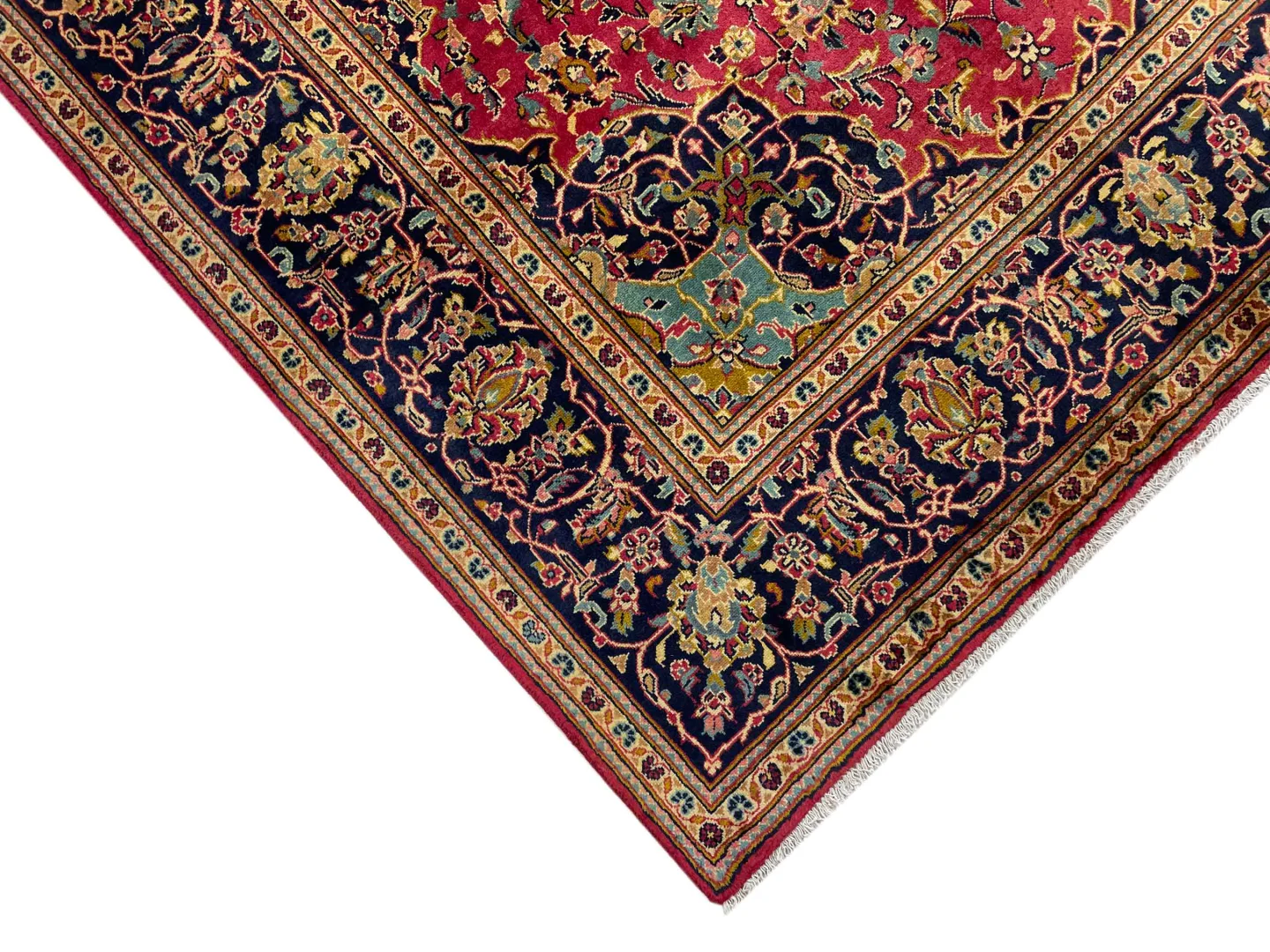
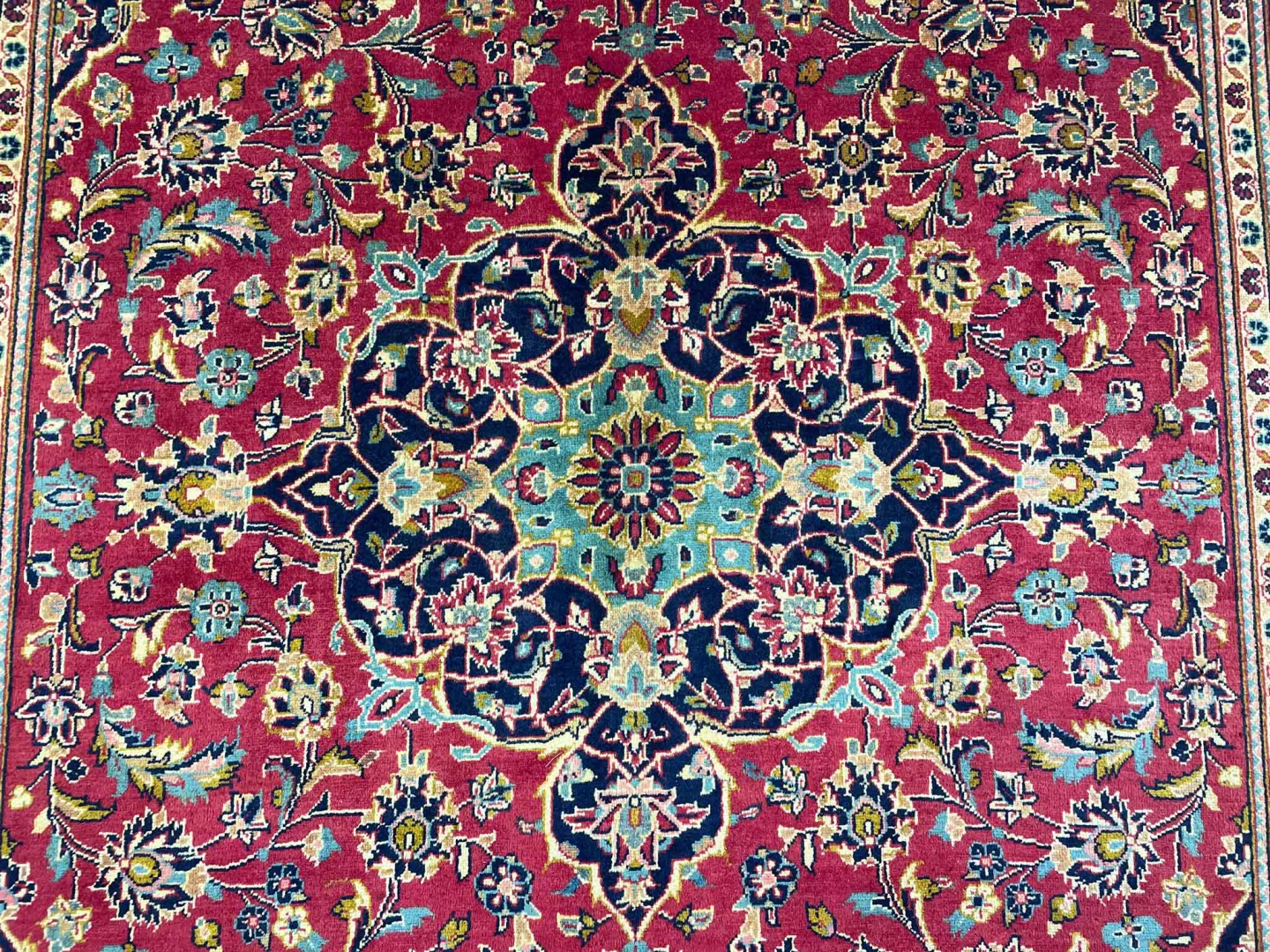
The rug has a knot density of 150,000 to 300,000 knots per square metre. A density in this range permits fine contours and a differentiated rendering of decorative elements. In hand-knotting, each knot is inserted individually into the foundation. The design therefore develops gradually through the work of the knotter rather than being printed onto the surface. Careful execution is a defining part of the Keshan weaving tradition.
The pile is short. This helps the pattern remain clearly legible and makes routine care comparatively straightforward. The sheep wool is described as soft and pleasant, while also offering the durability associated with wool fibres. Keshan rugs are traditionally made with materials that can carry both a nuanced design and sustained everyday use. The cotton warp and weft contribute to the ordered structure beneath the pile.
Origin and Tradition
The Keshan Persian rug belongs to the Persian weaving tradition and originates from the city of Keshan in Iran. Keshan is recognised as an important centre of Oriental rug making. Over generations, knowledge of fibres, knotting, colour, drawing and finishing was passed on through the region’s craft culture. The name Keshan consequently identifies more than a visual category: it points to a long-established regional tradition of producing hand-knotted textiles.
Keshan has been associated with artistic work and skilled craftspeople for centuries. Weavers there developed a characteristic relationship between carefully organised ornament, balanced fields and precise execution. In Persian rug making, a design is not simply placed on a finished cloth. It is created through the interaction of warp, weft, knots and pile, together with an inherited understanding of how motifs should be ordered across the field and borders.
Iranian weaving centres developed distinct approaches while sharing a broad Persian vocabulary of ornament. Keshan is commonly associated with rugs that are controlled, detailed and ornamental in composition. Knotters work within established conventions but can introduce individual nuances in the arrangement and treatment of forms. This is why the regional character can remain recognisable while every hand-knotted rug retains its own concrete expression.
Persian rug making is closely connected with the cultural history of Iran. Rugs served practical purposes in interiors, but they also expressed regional identity, design knowledge and the patience required for manual production. Skills were transmitted in workshops and among craft families. The continuity of this knowledge explains why traditional Keshan patterns remain identifiable across different examples, while variations in drawing, colour balance and detail continue to occur.
Other well-known Iranian traditions include Isfahan and Tabriz. Isfahan rugs are often associated with complex, symmetrical compositions, whereas Tabriz is known for varied colour work and detailed drawing. These are separate regional traditions with their own visual language. A Keshan Persian rug is placed within this wider Persian diversity as a distinct origin and design tradition rather than being identified with those other centres.
The long history of Keshan weaving also explains why these rugs are discussed in connection with collecting and interior culture. Their significance rests on the combination of regional origin, hand-knotting, material choice and an established ornamental vocabulary. Some Keshan rugs can remain in use for more than a century and be passed on as heirlooms. That statement describes the durability associated with the type and does not assign an age to this particular rug.
Design and Pattern
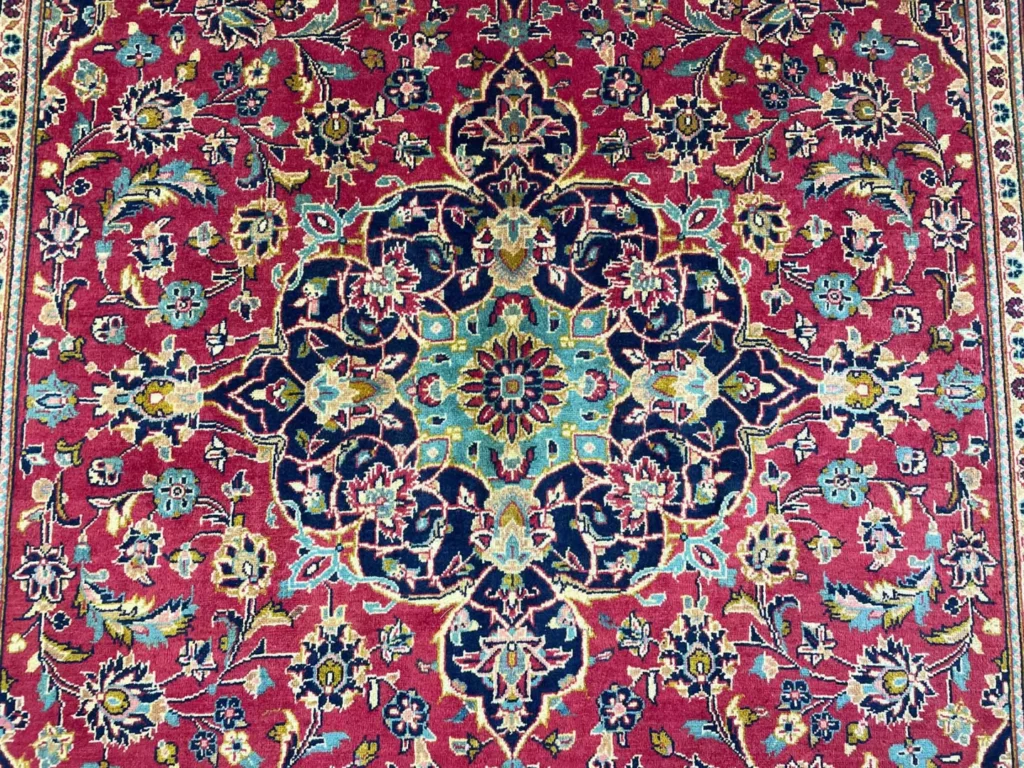
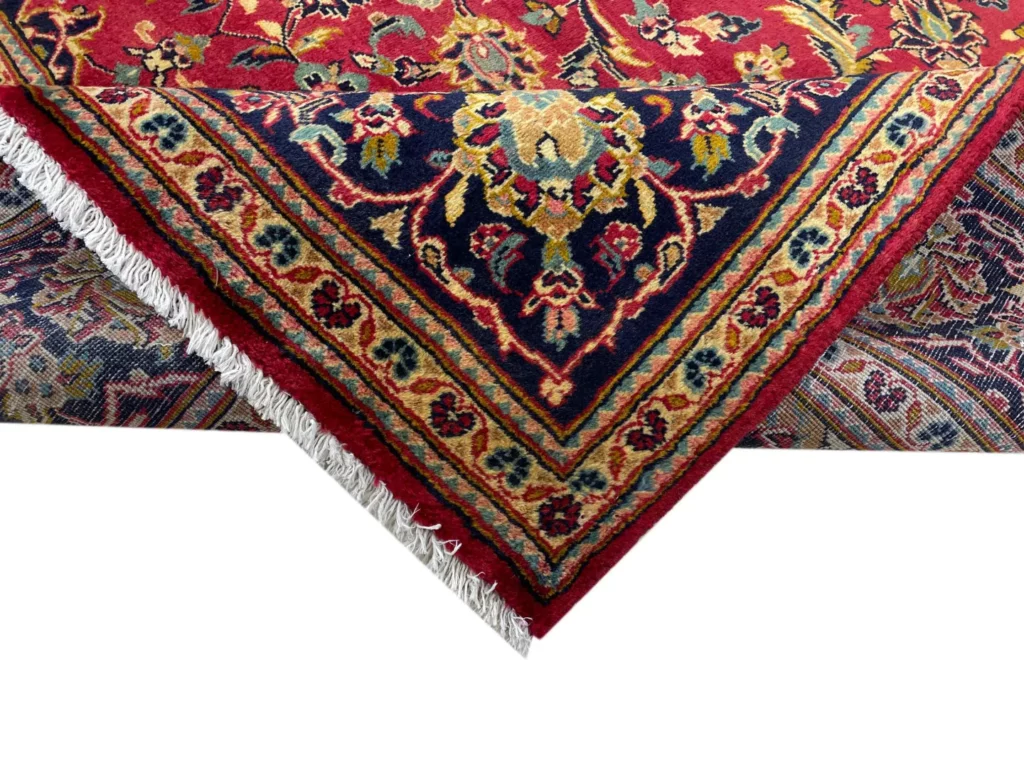
The pattern of this rug is described as traditional. Keshan rugs are known for elegant, detailed designs in which floral and geometric motifs may be combined. Floral elements introduce curved lines, leaves, blossoms and scrolling forms. Geometric elements organise the composition through measured shapes, repeated structures and clearer directional lines. Used together, these two groups of motifs can create a balanced design without losing visual order.
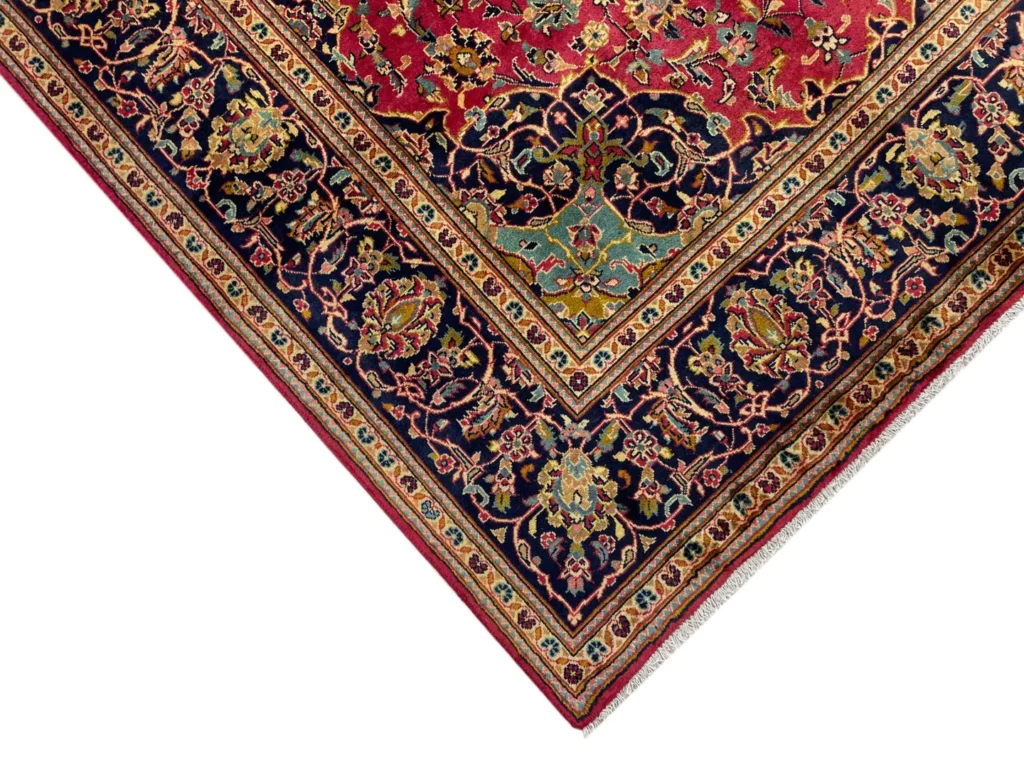
A traditional Persian rug often has a structured relationship between central field and surrounding borders. The field carries the principal arrangement, while one or more borders frame it and create a transition toward the outer edge. In Keshan design, the relationship between line, open space and ornament is carefully considered. The precise composition remains dependent on the individual weaving, so the regional tradition does not mean that every Keshan rug has an identical drawing.
Persian ornament is also connected with cultural ideas about nature, order and continuity. Floral forms may recall gardens, cultivated growth and the use of plant imagery in Persian art. Geometric forms provide rhythm and a sense of proportion. These are general features of Persian decorative language. They explain the background of a traditional Keshan design without adding a specific motif that has not been identified for this individual rug.
The colour range associated with Keshan rugs can include deep reds and blues alongside gentle beige and green tones. Such colours may be distributed between the main field, borders and smaller floral details. Darker tones can establish a strong visual frame, while lighter shades separate individual elements and make fine drawing easier to follow. The balance of colour is part of the overall design language and allows a detailed composition to remain coherent.
A high knot density supports the precise rendering of small motifs and narrow contours. Curves can be drawn closely, transitions can be handled with care, and the relationship between floral and geometric forms can remain differentiated. This effect comes from the sequence of individual knots and the finishing of the wool pile. It is therefore a result of textile craftsmanship rather than a surface image applied after production.
Keshan patterns can be placed in both classical and contemporary interiors because their character is based on ornament, colour and measured composition. This describes the stylistic range of the rug type, not a prescribed setting for this particular piece. The traditional drawing carries the history of Persian design while the hand-knotted construction keeps that drawing rooted in the material process of weaving. Pattern, colour and technique consequently belong together in the Keshan tradition.
Special Features
The rug is in very good condition. It has a hand-knotted pile of high-quality sheep wool and a construction using cotton for warp and weft. Its knot density, traditional pattern and careful workmanship are central features. The short pile makes regular care easier while preserving the textile character and detailed appearance associated with the weaving.
The traditional Keshan design is described as having high collector value. Keshan rugs are sought after by collectors and by people interested in Persian interior design because of their quality and distinctive designs. Many rugs from this tradition can last for more than a hundred years and may be handed down as heirlooms. This is general information about the durability of Keshan rugs and does not state the age of this individual piece.
FAQ
How can I recognise an authentic Keshan Persian rug?
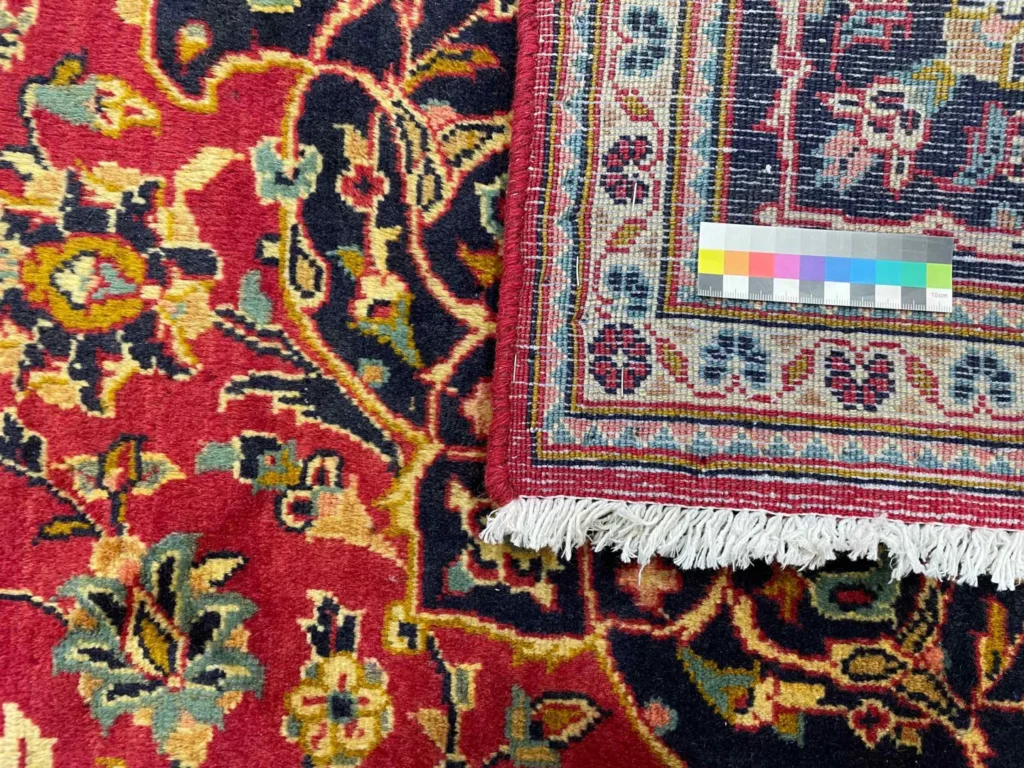
An authentic Keshan Persian rug is hand-knotted. Its knot density, the care shown in the workmanship and the clarity of the pattern provide useful indications of its construction. The reverse should also be well made, with the design remaining clearly recognisable from the back. The name Keshan refers to the origin tradition of the city of Keshan in Iran. For a binding assessment of one particular rug, an examination by a qualified specialist may provide additional certainty.
Can a Keshan rug be cleaned?
Yes, Keshan rugs can be cleaned. Because the rug contains wool fibres and has a hand-knotted structure, professional cleaning is advisable. A specialist can choose a treatment suited to the pile, colours and construction, helping to protect the textile. Regular vacuuming is useful for keeping the rug in good condition during normal use. Care should be adapted to the short wool pile so that the surface and pattern are not subjected to unnecessary strain.
What accessories do I need to care for my Keshan rug?
A gentle vacuum cleaner and specialist rug cleaners are suitable for routine care. Cleaning products should be intended for textiles and compatible with wool fibres. A rug pad can help keep the rug in place and reduce wear. It also supports a stable lie on the floor. Care is best carried out regularly but gently, so that the short pile, colours and hand-knotted construction remain protected over time.
To provide the best experiences, we use technologies like cookies to store and/or access device information. Consenting to these technologies will allow us to process data such as browsing behavior or unique IDs on this site. Not consenting or withdrawing consent, may adversely affect certain features and functions.
Functional Always active
The technical storage or access is strictly necessary for the legitimate purpose of enabling the use of a specific service explicitly requested by the subscriber or user, or for the sole purpose of carrying out the transmission of a communication over an electronic communications network.
Preferences
The technical storage or access is necessary for the legitimate purpose of storing preferences that are not requested by the subscriber or user.
Statistics
The technical storage or access that is used exclusively for statistical purposes.The technical storage or access that is used exclusively for anonymous statistical purposes. Without a subpoena, voluntary compliance on the part of your Internet Service Provider, or additional records from a third party, information stored or retrieved for this purpose alone cannot usually be used to identify you.
Marketing
The technical storage or access is required to create user profiles to send advertising, or to track the user on a website or across several websites for similar marketing purposes.
 SECURE PAYMENT
 SHIPPING PARTNERS


