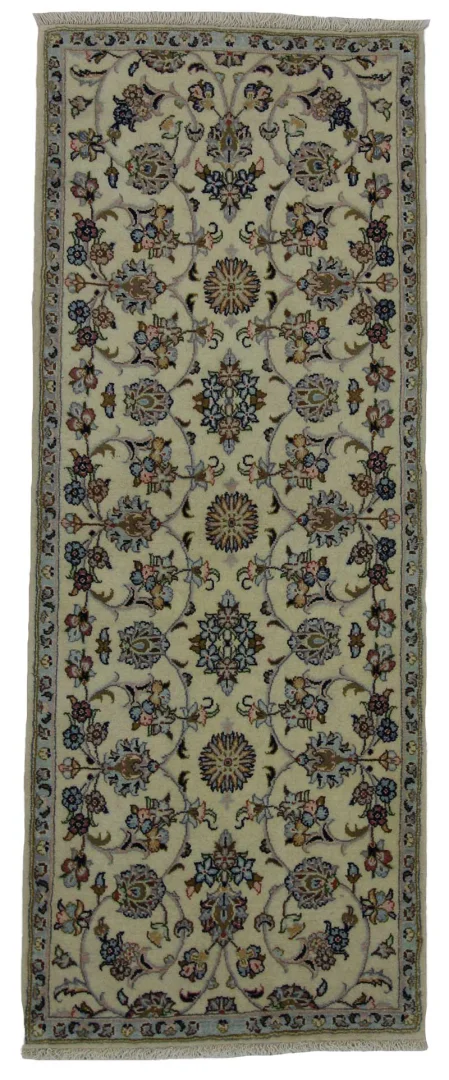
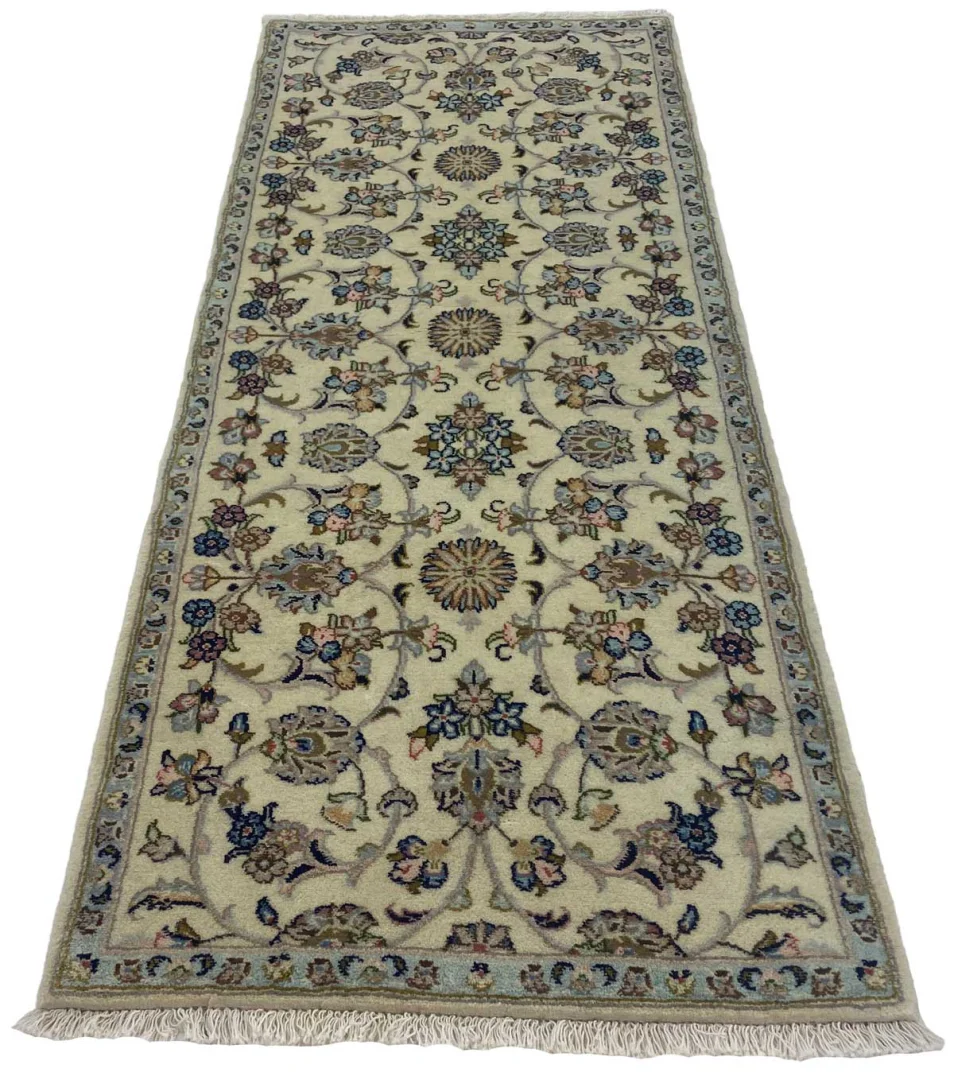
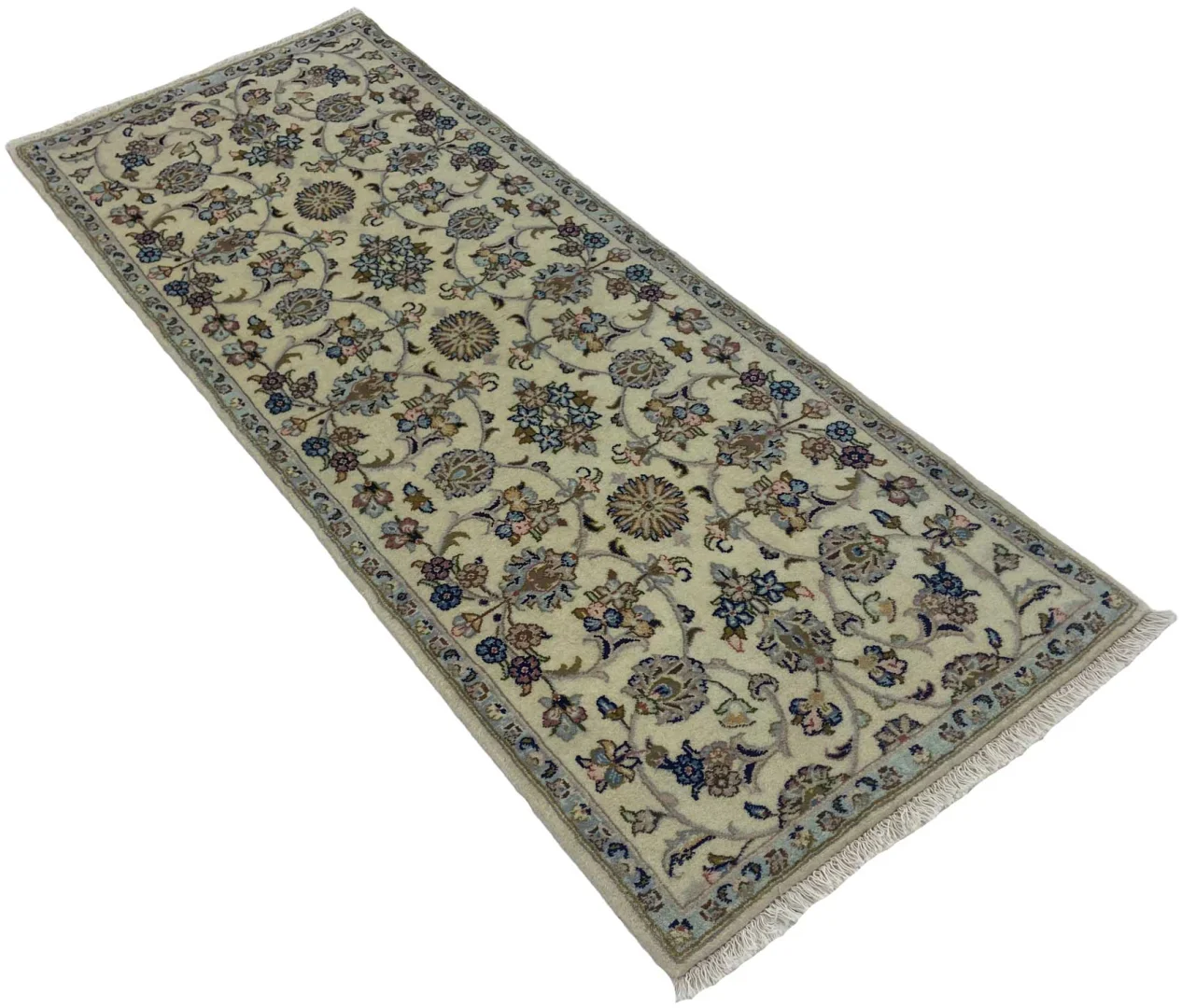
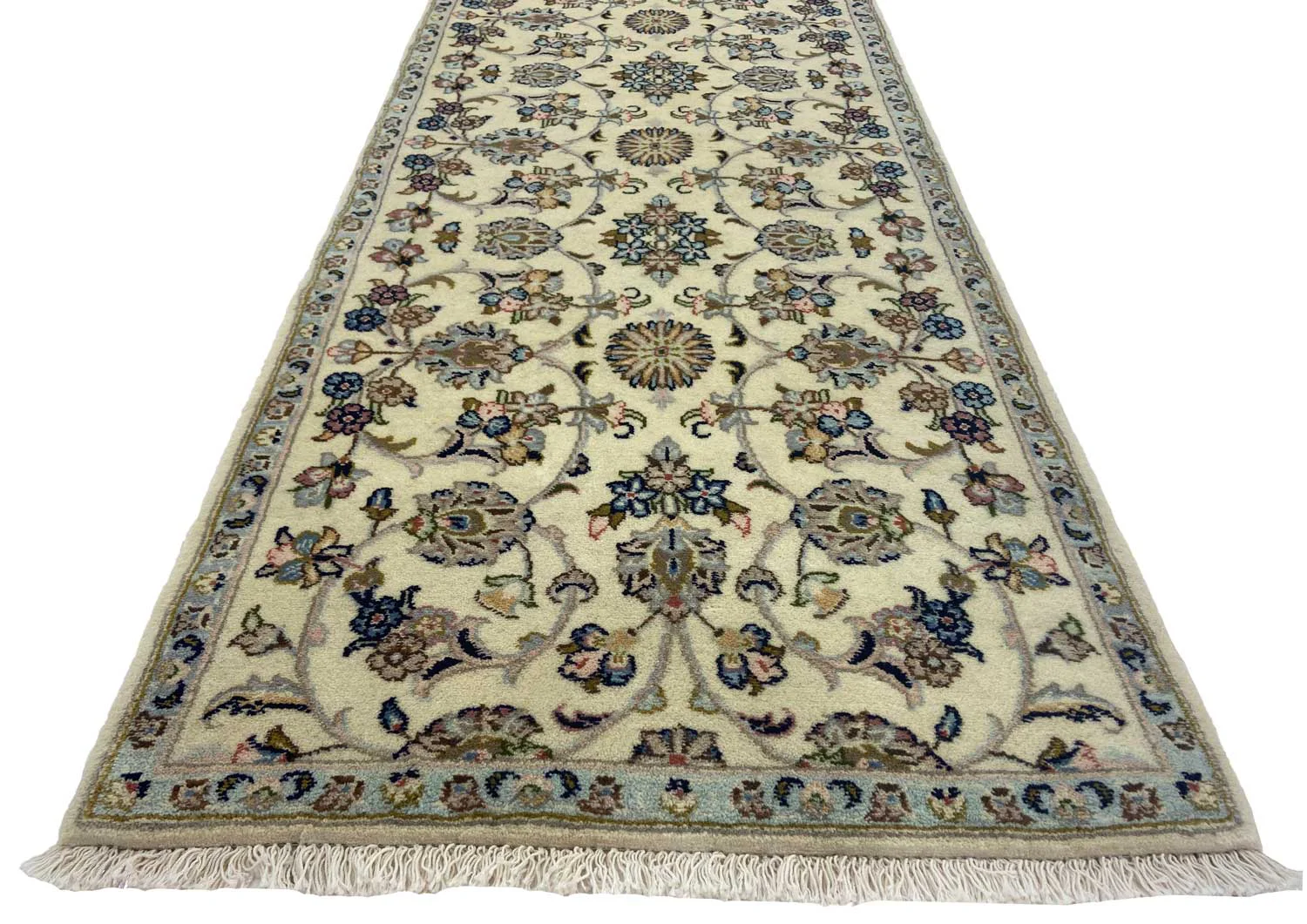
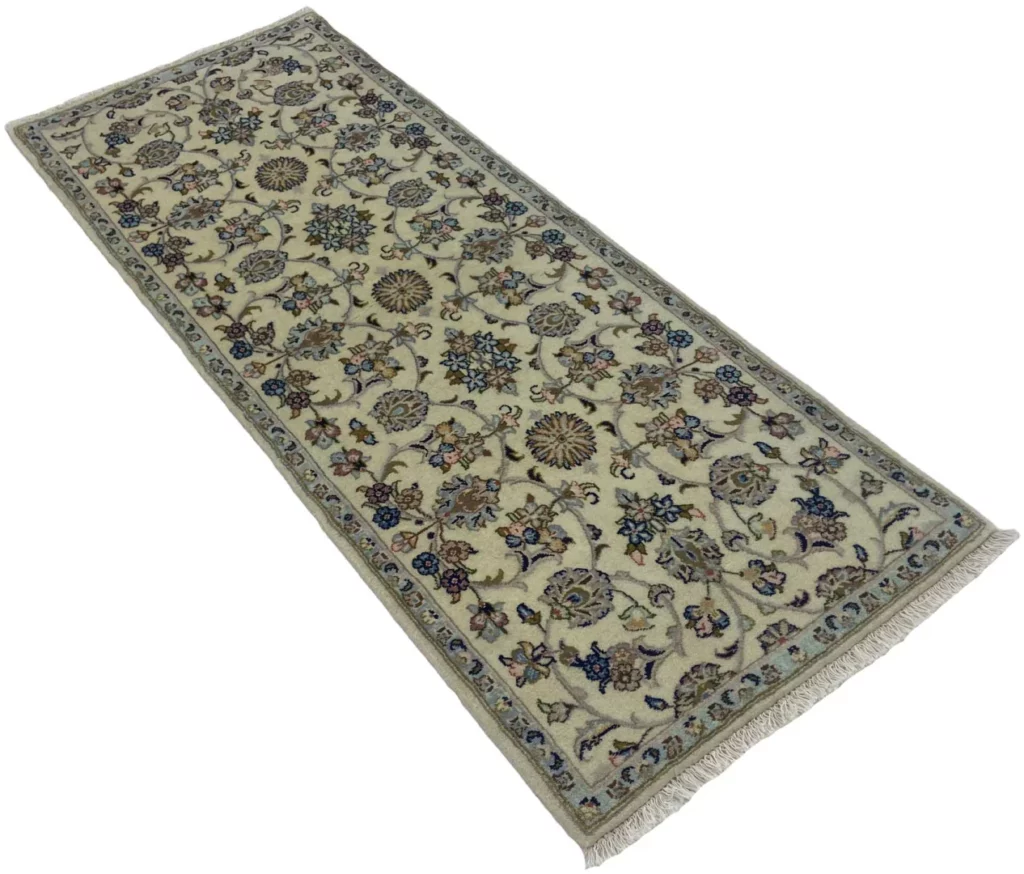
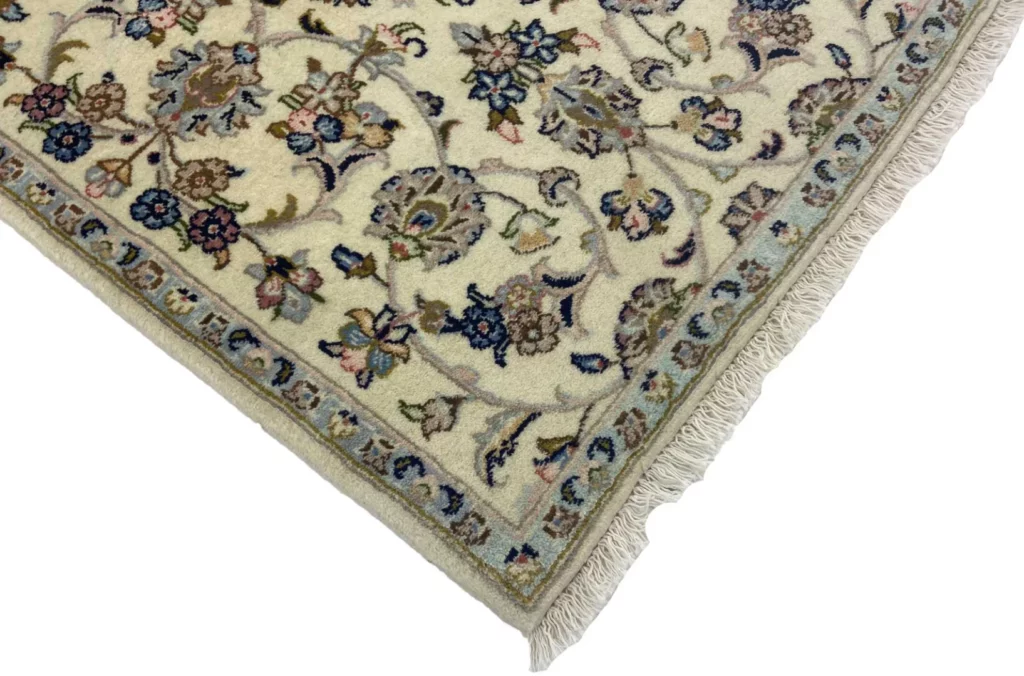
This Keshan Persian rug is made from high-quality sheep wool and cotton and was hand-knotted. The combination of natural wool and cotton belongs to the established material traditions of Persian rug making. Sheep wool is valued for its resilience, comfortable surface and ability to take dyes evenly. Cotton contributes a firm textile structure to the construction.
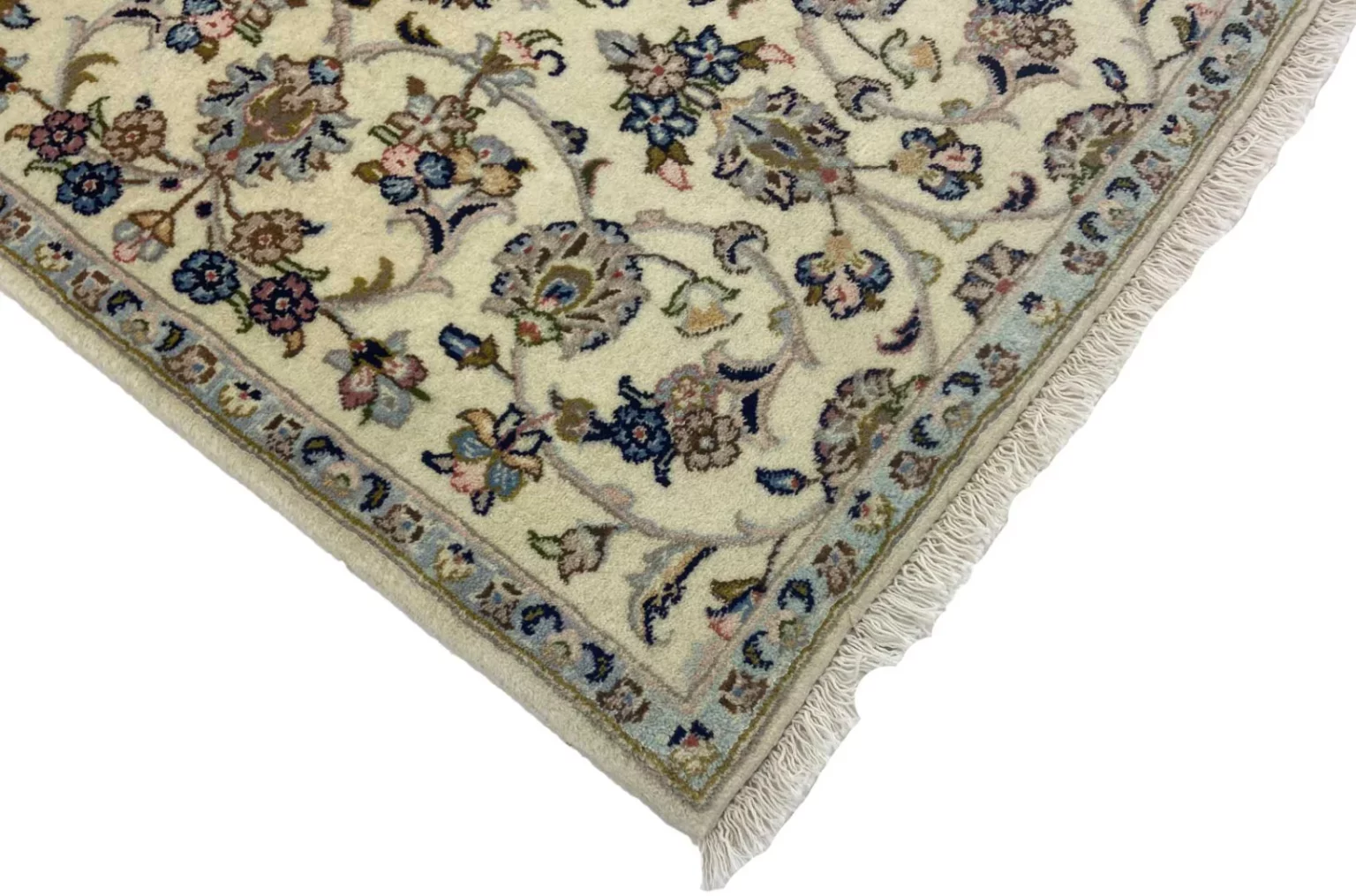
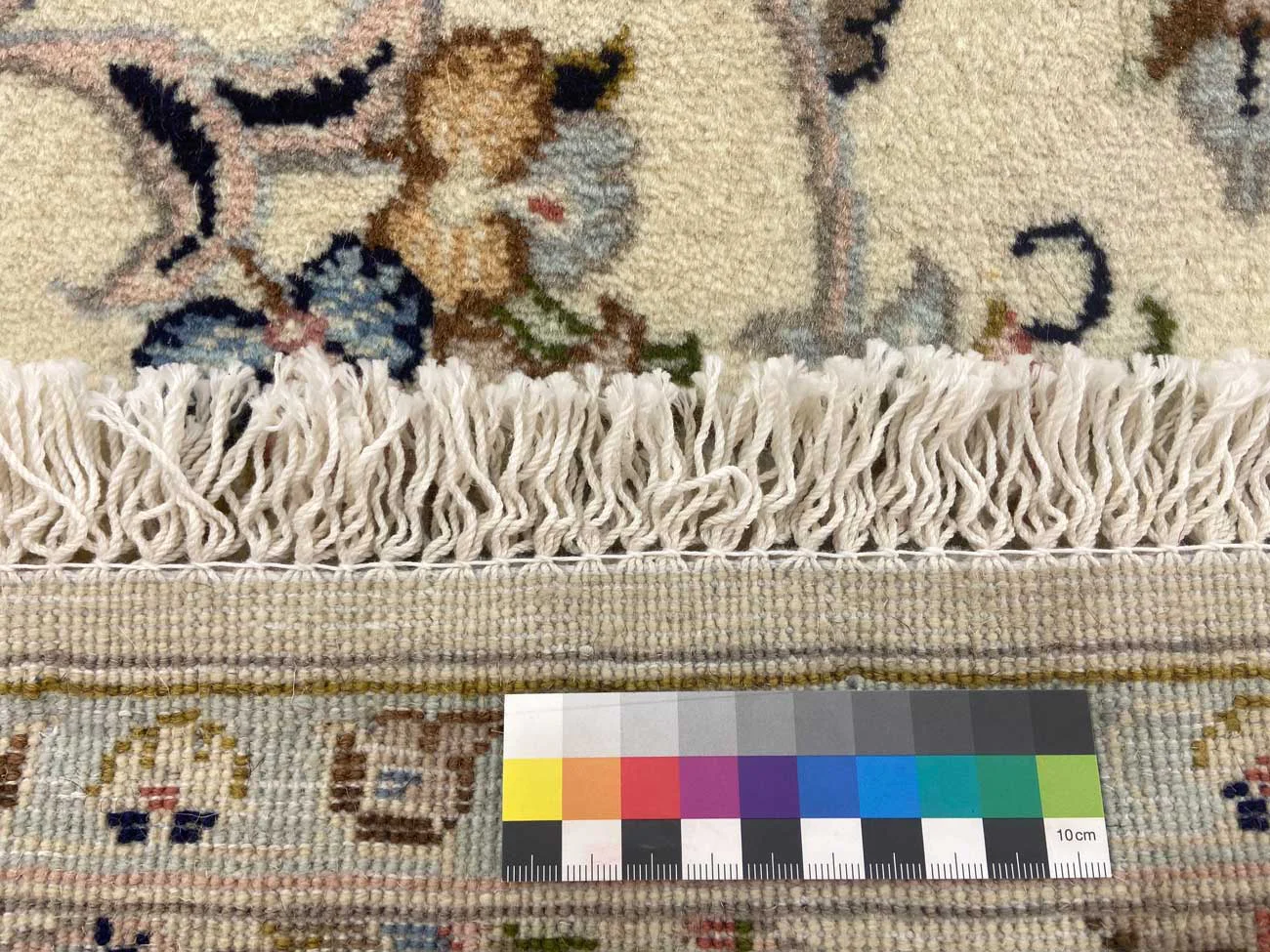
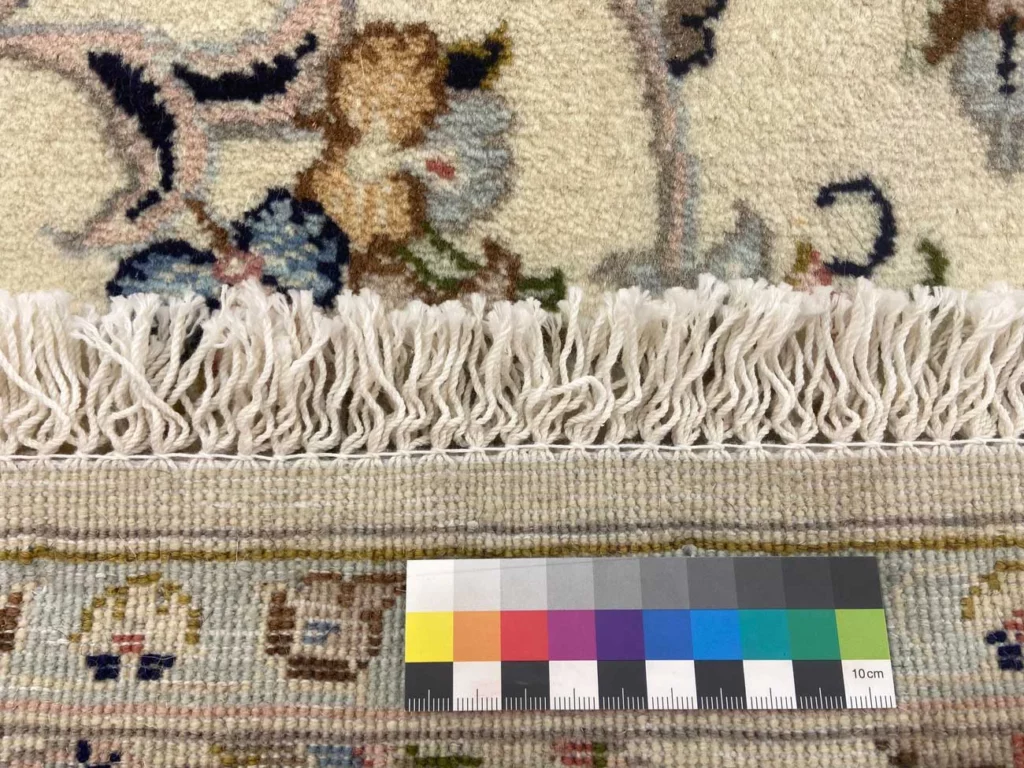
In a hand-knotted rug, the design is built knot by knot. The knotters insert coloured yarns by hand into the foundation and then compact the rows. This process makes each piece unique. The high knot density recorded for this rug indicates a closely worked surface and allows a more differentiated rendering of fine motifs. Keshan rugs traditionally have a short, dense pile.
Sheep wool is a durable natural fibre suited to a rug intended for indoor use. Its natural surface can offer a degree of resistance to everyday dirt and, with appropriate care, helps preserve the structure and appearance of the pile. This rug is very well preserved. Its hand-knotted construction, stated materials and dense workmanship define its particular character.
Origin and Tradition
Keshan rugs originate in Keshan, Iran, a city in Isfahan Province. The area developed a distinctive rug-making tradition over many generations. Keshan became known through its position on important trading routes. Its connection with the Silk Road brought commercial prosperity, cultural exchange and contact with different textile and artistic influences.
The history of Keshan rugs is associated with the flourishing period of the Persian Empire. Across this long development, knowledge of material selection, dyeing, knotting and pattern planning was passed from one generation to the next. A Keshan is therefore both a useful textile and a record of Iranian design and craft continuity. Rugs from the region combine practical durability with carefully structured ornament.
Persian rug making begins with preparing the foundation. The design is then built upon it from a drawn plan or from established compositions. Colour fields develop gradually while the pile is trimmed and compacted during the process. A high knot density makes it possible to resolve lines, flowers, foliage and geometric details more finely. The work requires patience, experience and a precise understanding of proportion.
Keshan is one of the recognised Persian rug traditions and is often associated in the trade with careful, detailed execution. Older Keshan rugs are frequently regarded as collectible textiles; historic examples may be more than 100 years old. That general appreciation of older pieces is part of the type’s history and is not an age statement about this particular rug.
Other Iranian traditions from Isfahan and the surrounding regions are also widely known. Tabriz is associated with detailed floral compositions, while Nain is often linked with lighter, finely organised designs. Kashan is itself a major Persian rug tradition known for strong colours and classical motifs. Ziegler and Sarough are further recognised names in Oriental rug making. These comparisons illustrate the variety of Iranian weaving centres without changing this rug’s stated origin in Iran.
Design and Pattern
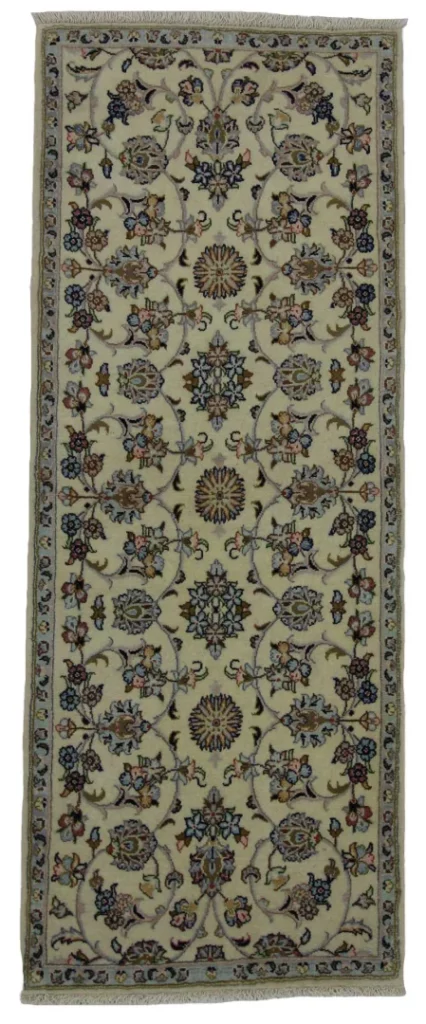
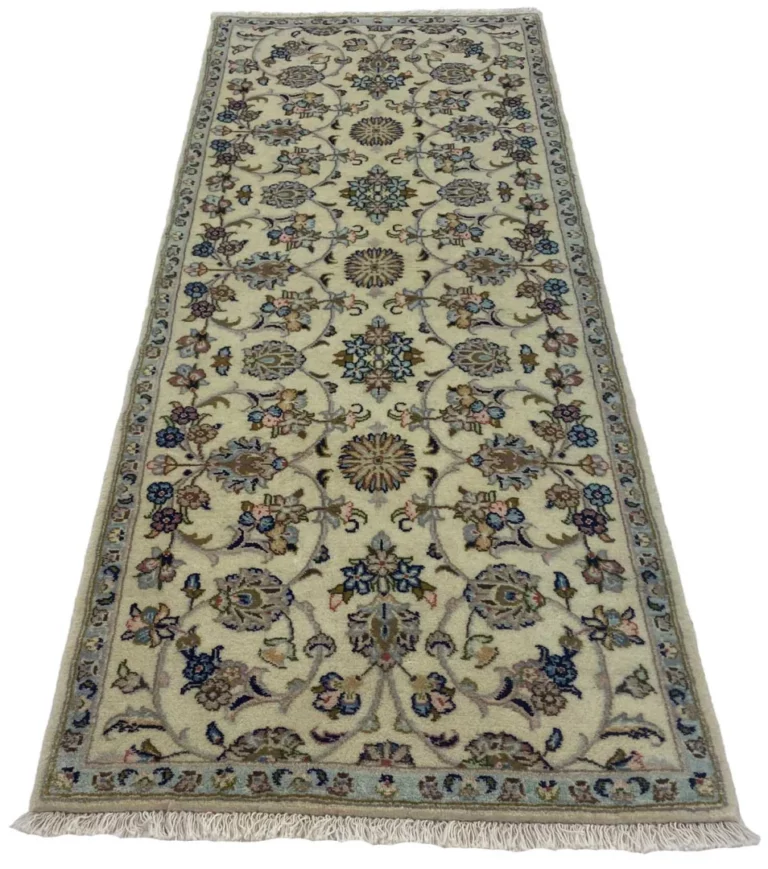
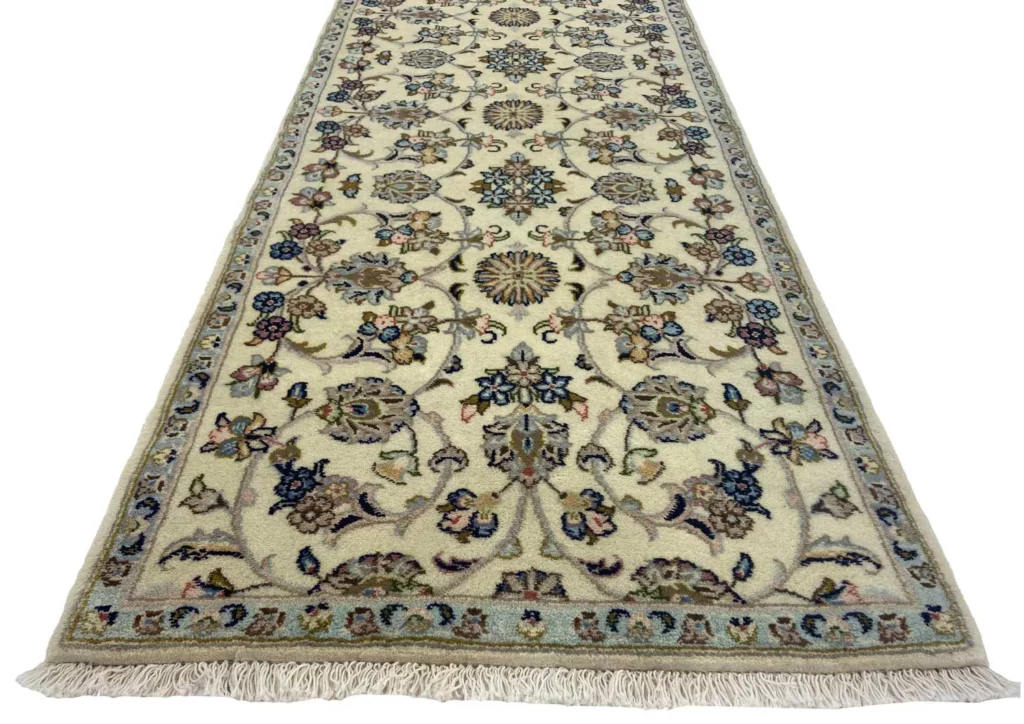
The design of this rug is described as classic and timeless. Traditional Keshan compositions often rely on a clearly organised centre, a balanced border and a rhythm of repeated ornament. Floral elements, scrolling vines and geometric forms may be combined into one coherent arrangement. The identity of the design lies not in one isolated motif, but in the relationship between centre, border and open spaces.
Keshan design has close links with Iranian art and architecture. Flowers, leaves and curved lines can recall garden imagery and the ordered ornament of historic buildings. Geometric forms provide structure, while smaller details animate the surface. Hand knotting allows these elements to be rendered with defined outlines and controlled transitions between individual colour areas.
Keshan rugs are traditionally made with strong, varied colours. Deep red, blue, gold and cream are among the shades commonly associated with descriptions of this rug type. Depending on the composition, they may appear as a field colour, an accent or part of the border. The visual balance comes from the interaction of these areas and from the repetition of related tones throughout the ornament.
A border frames the central design and creates a visual transition between the rug and the surrounding room. Several narrow guard stripes may accompany a principal border. In the centre, symmetrical or carefully distributed forms create order, while small floral details add movement. Dense knotting supports this kind of composition because closely placed motifs and fine lines can be worked with greater precision.
The classic, timeless character of Keshan design can suit a range of interiors. In a traditional room, its ornament may relate to other textiles and architectural details. In a more restrained setting, a classical rug can provide a distinct graphic element. This is a general feature of the Keshan design tradition and does not add unspecified colour or motif details to this individual piece.
Special Features
The rug is very well preserved and was made for indoor use. Its hand-knotted construction, high-quality sheep wool and use of cotton are among its stated characteristics. With regular care, the natural wool can help the surface retain its structure and visual colour effect.
Regular, gentle vacuuming is sufficient for routine care. Occasional cleaning with a suitable rug cleaner can help maintain the surface. Direct sunlight should be avoided to reduce the risk of fading. The rug should not be used outdoors, where moisture and strong direct sun could cause damage. Appropriate settings include living rooms, bedrooms and offices.
FAQ
How can the quality of a Keshan Persian rug be assessed?
Important indicators include knot density, the materials used and the execution of the pattern. High-quality sheep wool, a dense and even structure, and finely defined details are typical quality features. In a hand-knotted rug, the careful relationship between foundation, pile and ornament is also significant. This rug is made from high-quality sheep wool and cotton, is hand-knotted and is very well preserved.
How should a Keshan Persian rug be cared for?
The rug should be vacuumed regularly and gently. When necessary, a specialist rug cleaner may be used, provided it is suitable for natural wool. Direct sunlight should be avoided because it can fade colours over time. Outdoor use is not appropriate, as moisture and direct sun can affect the material and its appearance.
Can Keshan Persian rugs be used outdoors?
No. Keshan Persian rugs are intended for indoor spaces. Outdoors they would be exposed to moisture and direct sunlight, which could damage the wool, textile construction and colours. Living rooms, bedrooms and offices are suitable locations, provided the rug is protected from weather and prolonged direct sun.
To provide the best experiences, we use technologies like cookies to store and/or access device information. Consenting to these technologies will allow us to process data such as browsing behavior or unique IDs on this site. Not consenting or withdrawing consent, may adversely affect certain features and functions.
Functional Always active
The technical storage or access is strictly necessary for the legitimate purpose of enabling the use of a specific service explicitly requested by the subscriber or user, or for the sole purpose of carrying out the transmission of a communication over an electronic communications network.
Preferences
The technical storage or access is necessary for the legitimate purpose of storing preferences that are not requested by the subscriber or user.
Statistics
The technical storage or access that is used exclusively for statistical purposes.The technical storage or access that is used exclusively for anonymous statistical purposes. Without a subpoena, voluntary compliance on the part of your Internet Service Provider, or additional records from a third party, information stored or retrieved for this purpose alone cannot usually be used to identify you.
Marketing
The technical storage or access is required to create user profiles to send advertising, or to track the user on a website or across several websites for similar marketing purposes.
 SECURE PAYMENT
 SHIPPING PARTNERS


