This Jowsan Persian rug is hand-knotted and made of 100% wool. Pure wool forms the pile and gives the surface its characteristic textile feel. It is warm to the touch and has long been used for hand-made rugs because it combines a comfortable handle with a resilient structure. The rug has a pile height of 10 mm, creating a clearly tactile surface and reinforcing its character as a traditional wool rug.
In hand-knotting, individual knots are inserted into the prepared foundation one by one. This distinguishes a hand-knotted rug from a machine-made floor covering. Rows are built gradually, and the pile is shaped as the work proceeds. At the same time, colours and motifs can be placed directly into the structure rather than being printed onto a finished surface. The knot density for this rug is described as hand-knotted; no numerical density is given.
Wool is valued in rug making for its durability and pleasant texture. The fibre can absorb and release moisture from the surrounding air, helping it remain suitable for everyday interior use. A wool pile also has a naturally substantial feel and can be maintained with regular, careful cleaning. These are general properties of the material. For this rug, the stated material is pure wool, combined with hand-knotting and the specified pile height.
The craft process remains part of the identity of a hand-knotted one-off. Minor variations in knot placement, colour transitions or the course of a line can result from the repeated manual work at the loom. They are different from the uniform repetition of industrial production. Here, the construction can be described directly: the pile is 100% wool, the rug is hand-knotted, and the design is formed within the pile as the rug is made.
Origin and Tradition
The rug comes from Jowsan, the Iranian region of the same name. It therefore belongs to the Persian rug tradition, a craft culture shaped by regional weaving practices, inherited designs and the use of established materials. Persian rugs have served as floor coverings, household textiles and decorative objects. They are also records of a textile tradition in which design, colour, structure and technique are passed from one generation to the next. Jowsan identifies the origin of this rug, while the description Oriental refers to its design category.
Iranian rug regions developed their own preferences for drawing, layout and colour. Differences could appear in the use of medallions, borders, floral scrolls or geometric fields. The handling of wool and the manner of knotting also formed part of local practice. A Jowsan rug is therefore connected with a particular Iranian tradition, even though the finished appearance also reflects the individual work of the people who made it.
The history of Persian rugs reaches back many centuries. In Iranian homes, rugs provided warmth, defined sitting areas and added decoration to the interior. They also became important articles of regional and long-distance trade. Designs could refer to plants, landscapes, architecture or symbolic ideas. Colours and motifs were often arranged according to established visual systems rather than being combined at random. A composition might bring stylised flowers, geometric order and framing borders together in one textile field.
Jowsan weaving is associated with traditional designs that may include floral elements and geometric forms. Floral motifs can take the form of simplified leaves, flowers and scrolling branches, with repetition and rhythm being more important than botanical accuracy. Geometric elements can organise the field through lines, angles, compartments and borders. These two approaches are often combined in Persian rug design, allowing an ornament to remain decorative while also giving the composition a clear structure.
The Iranian knotting tradition depends on patient, sequential handwork. A design is not applied in a single printing stage; it develops row by row at the loom. The maker places knots, trims or arranges the pile, and continues the process until the planned field is complete. This method supports a wide range of detailed drawings, but it also requires control of tension, material and colour changes. The Iranian origin and hand-knotted construction place this Jowsan within that long technical tradition.
This rug is described as antique and assigned to the early twentieth century. That period belongs to a time when Persian rugs were produced both for domestic use and for wider trade. The date indicates the historical period associated with the piece. It does not establish a particular workshop, designer or individual weaver, none of which is named here. The documented points are its Jowsan origin in Iran, its place in Persian rug tradition, its hand-made construction and its early twentieth-century classification.
Design and Pattern
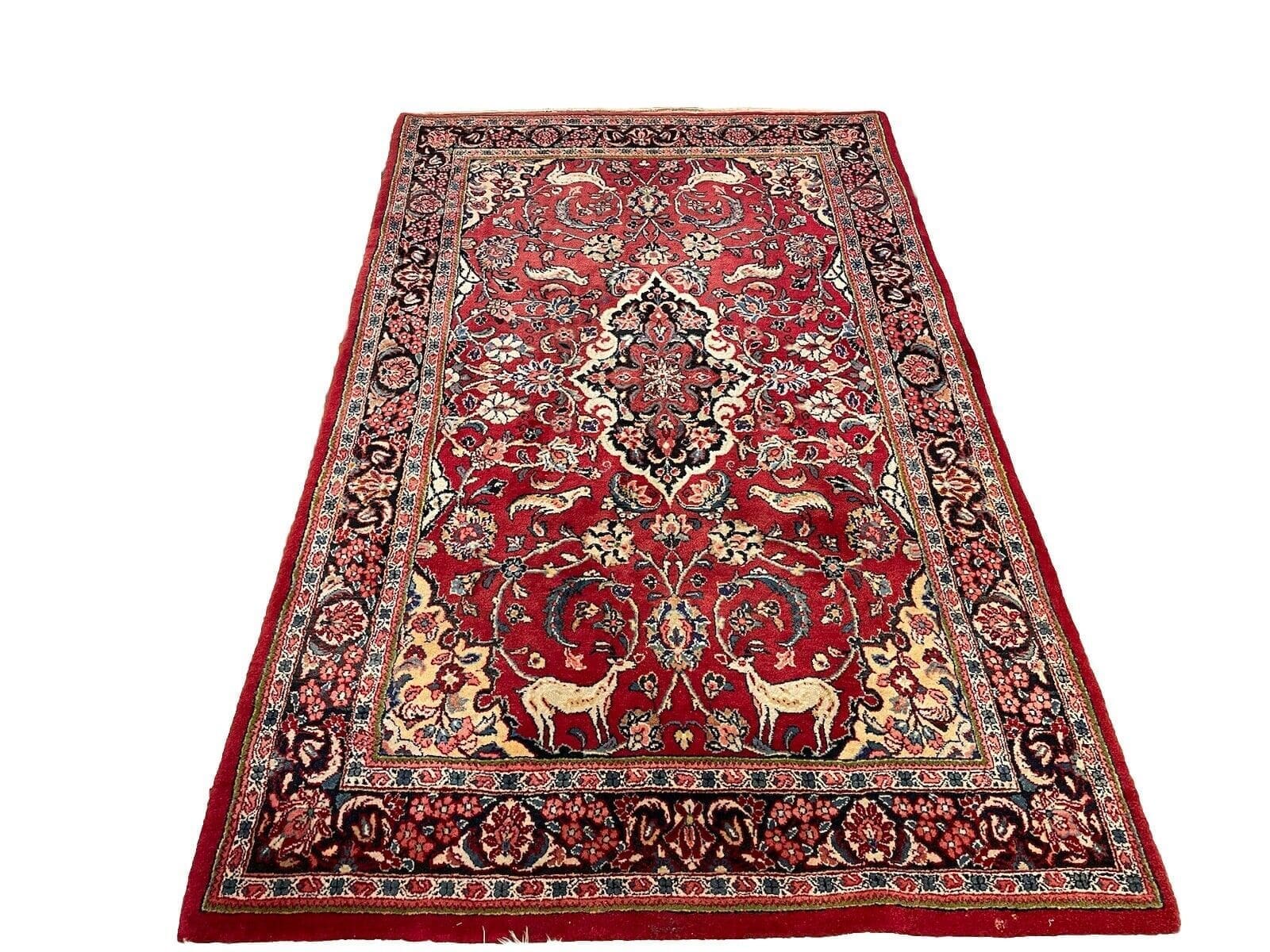
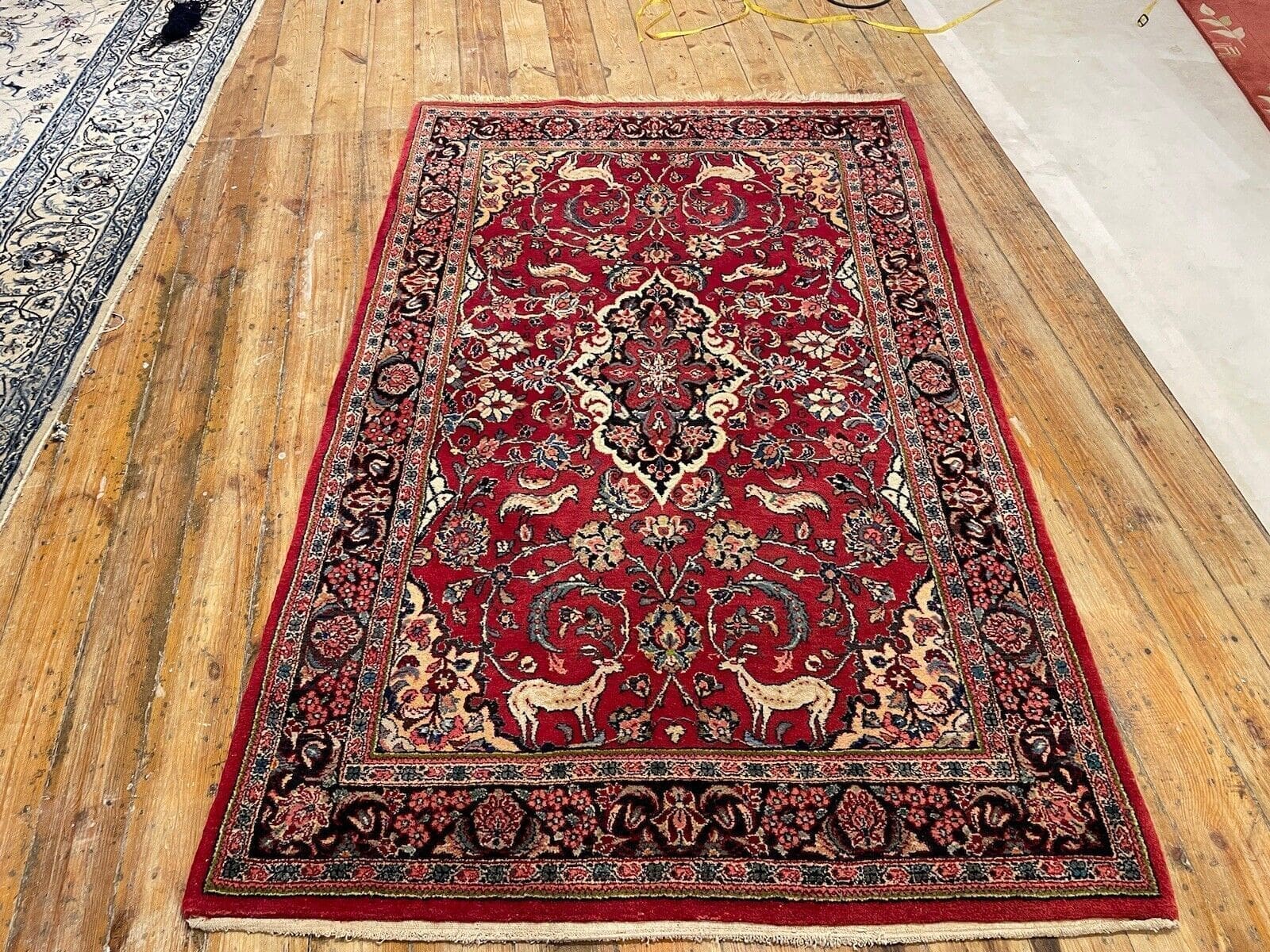
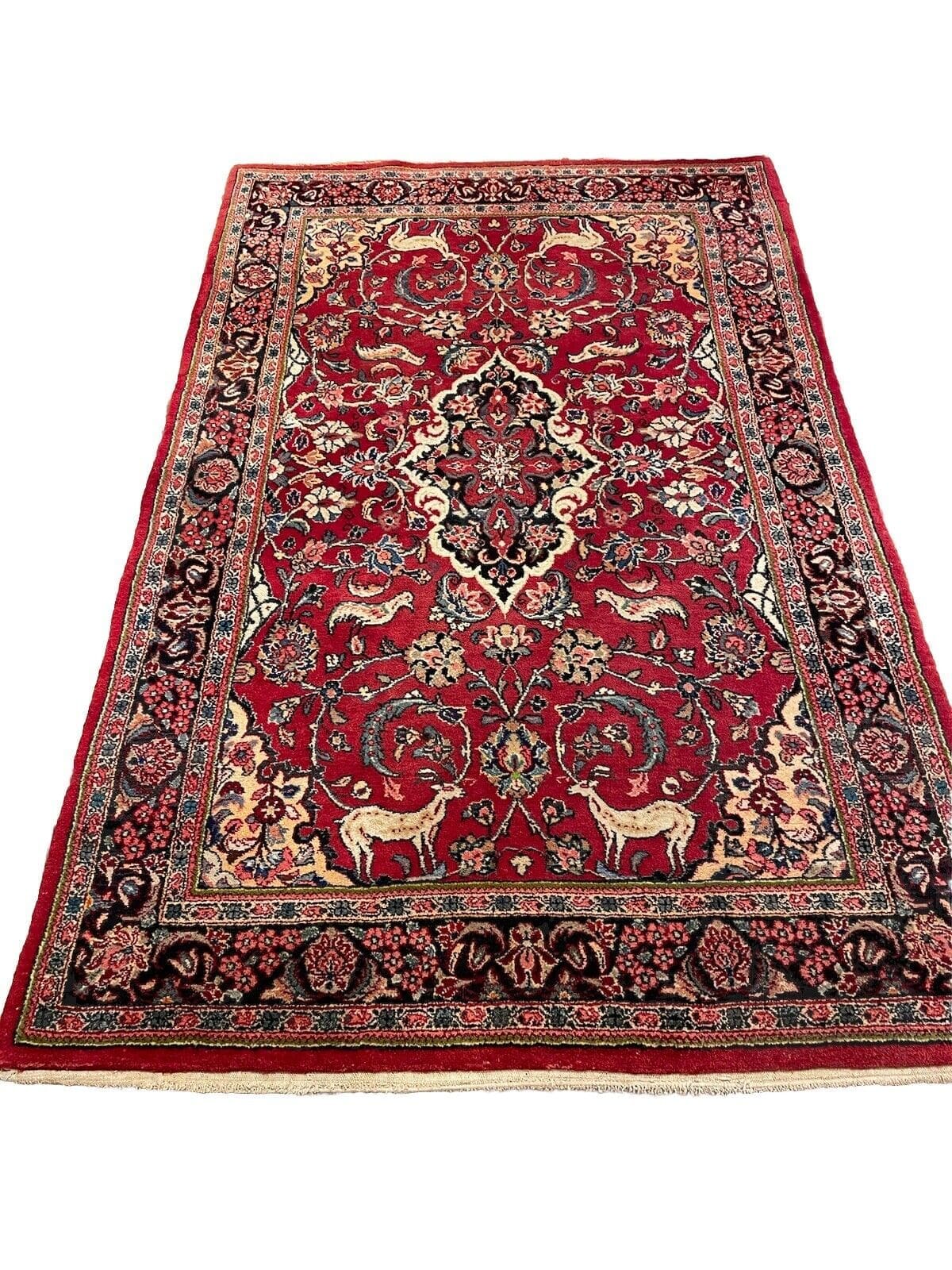
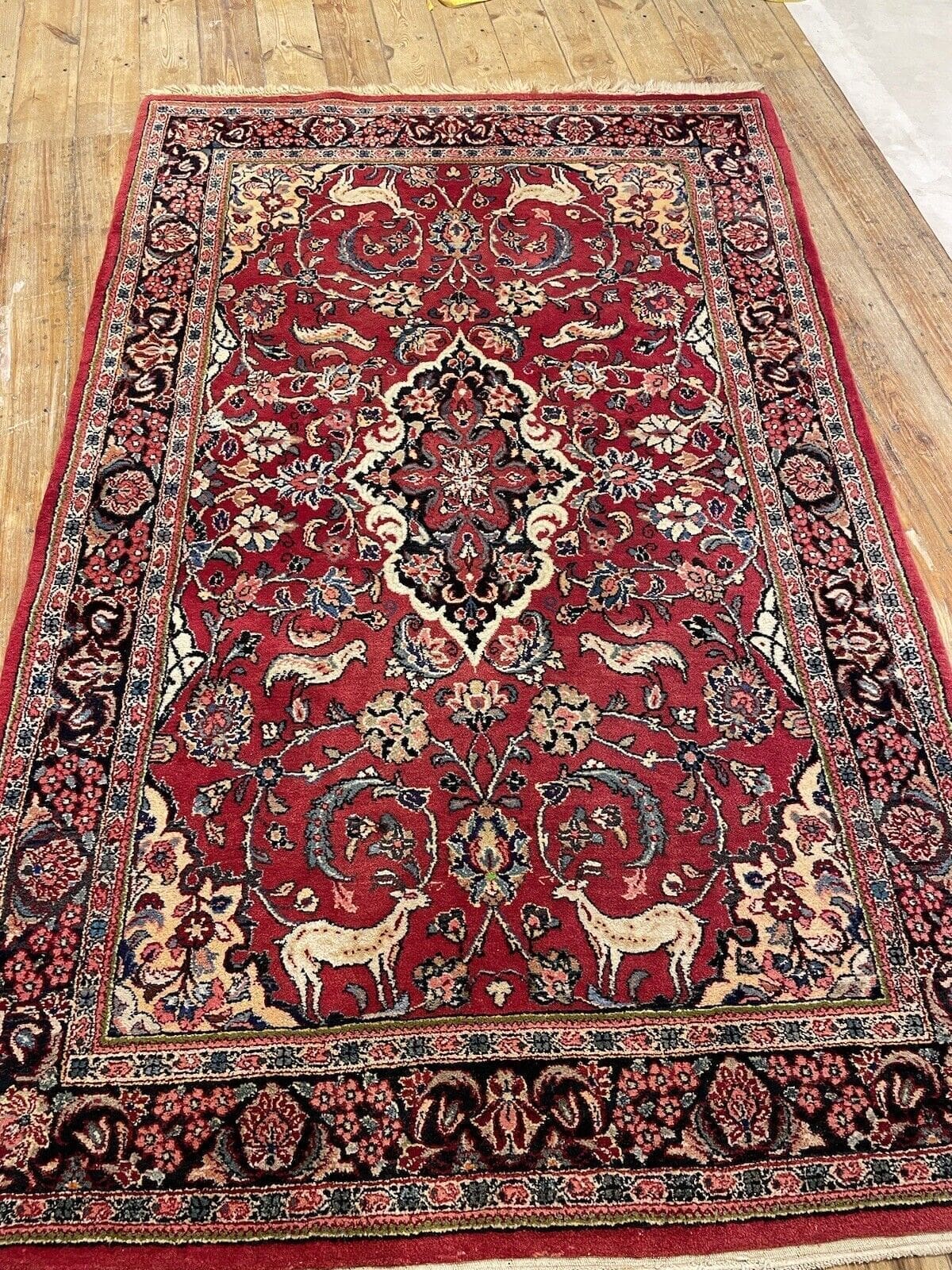
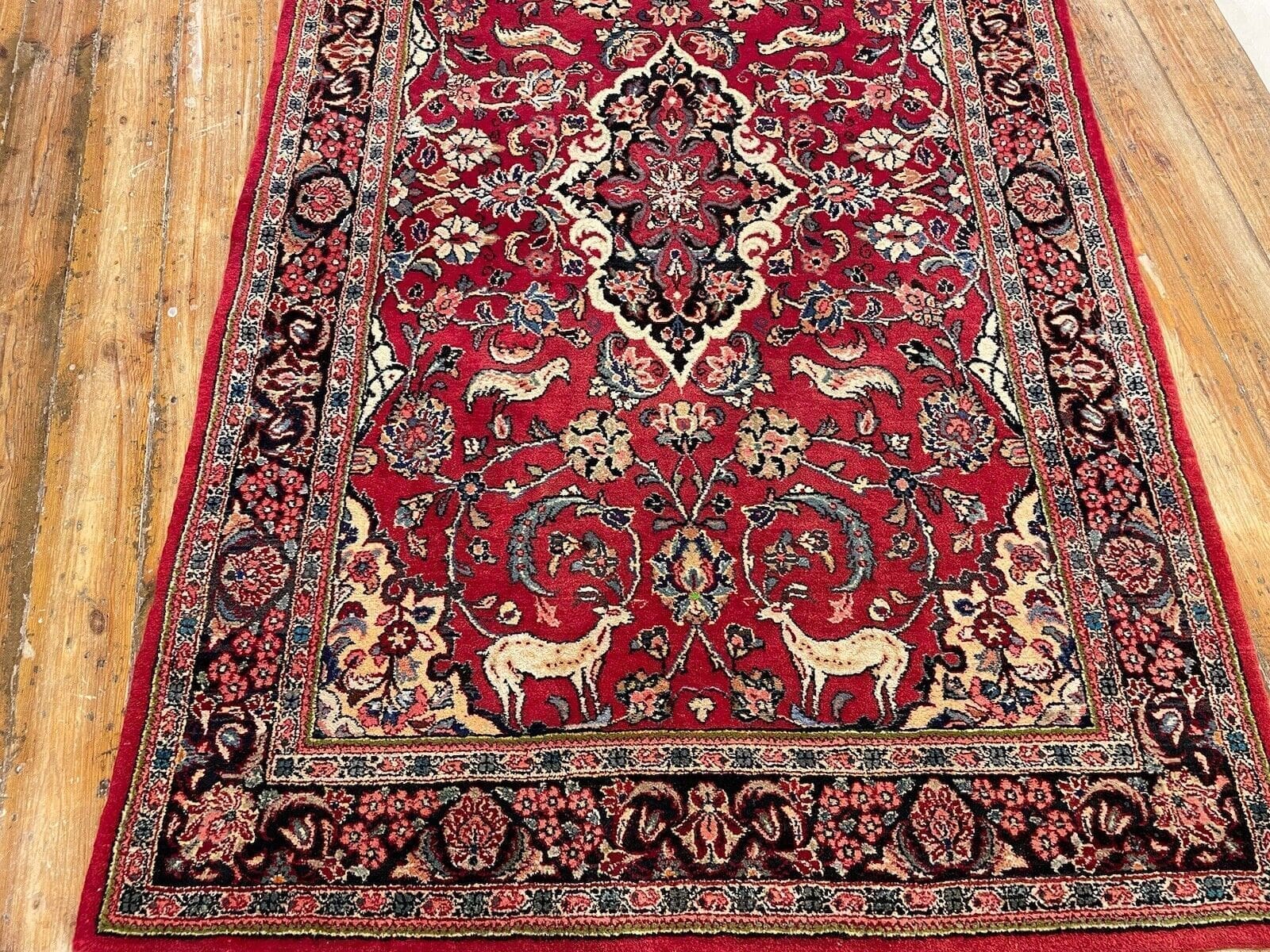
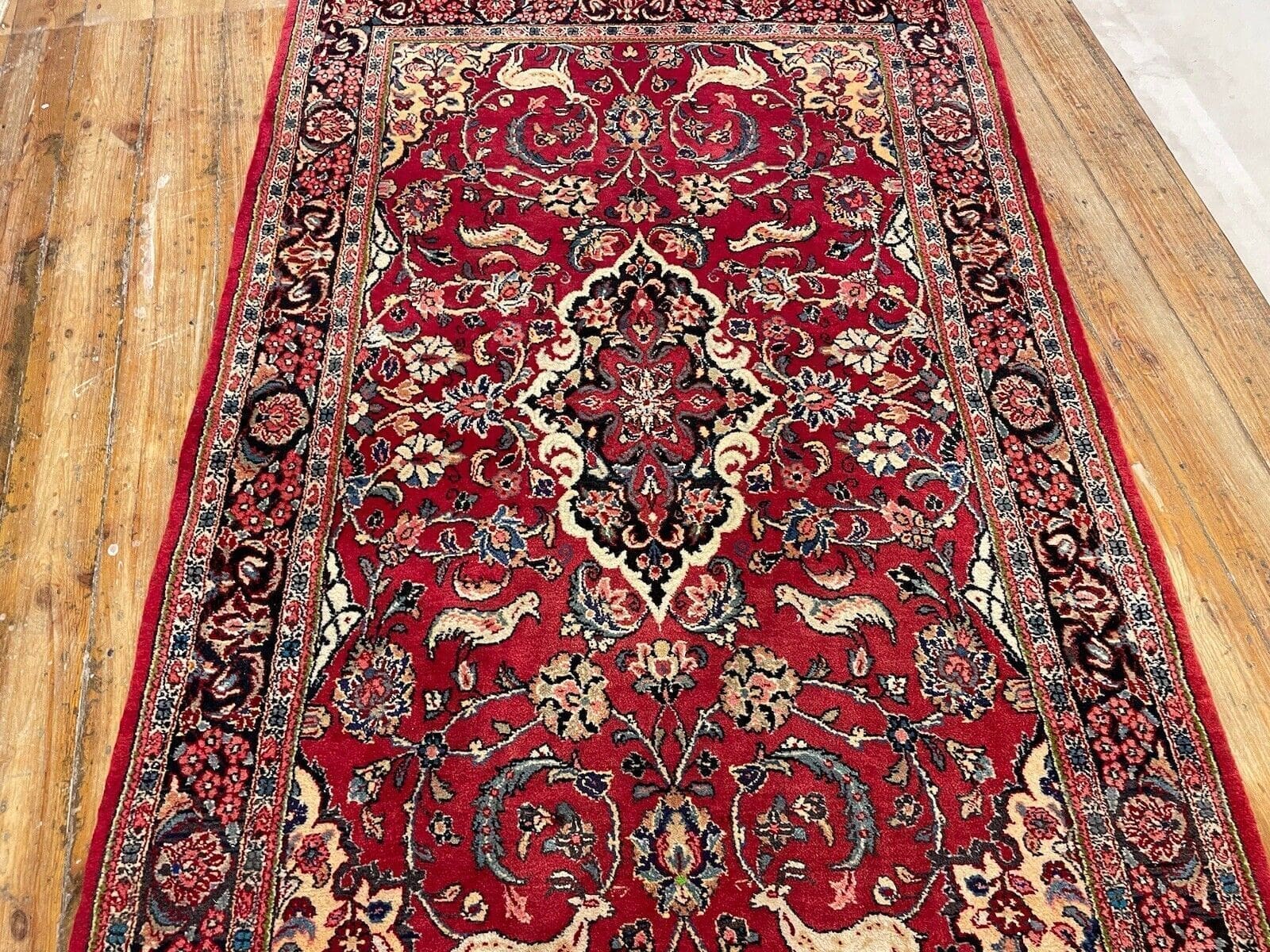
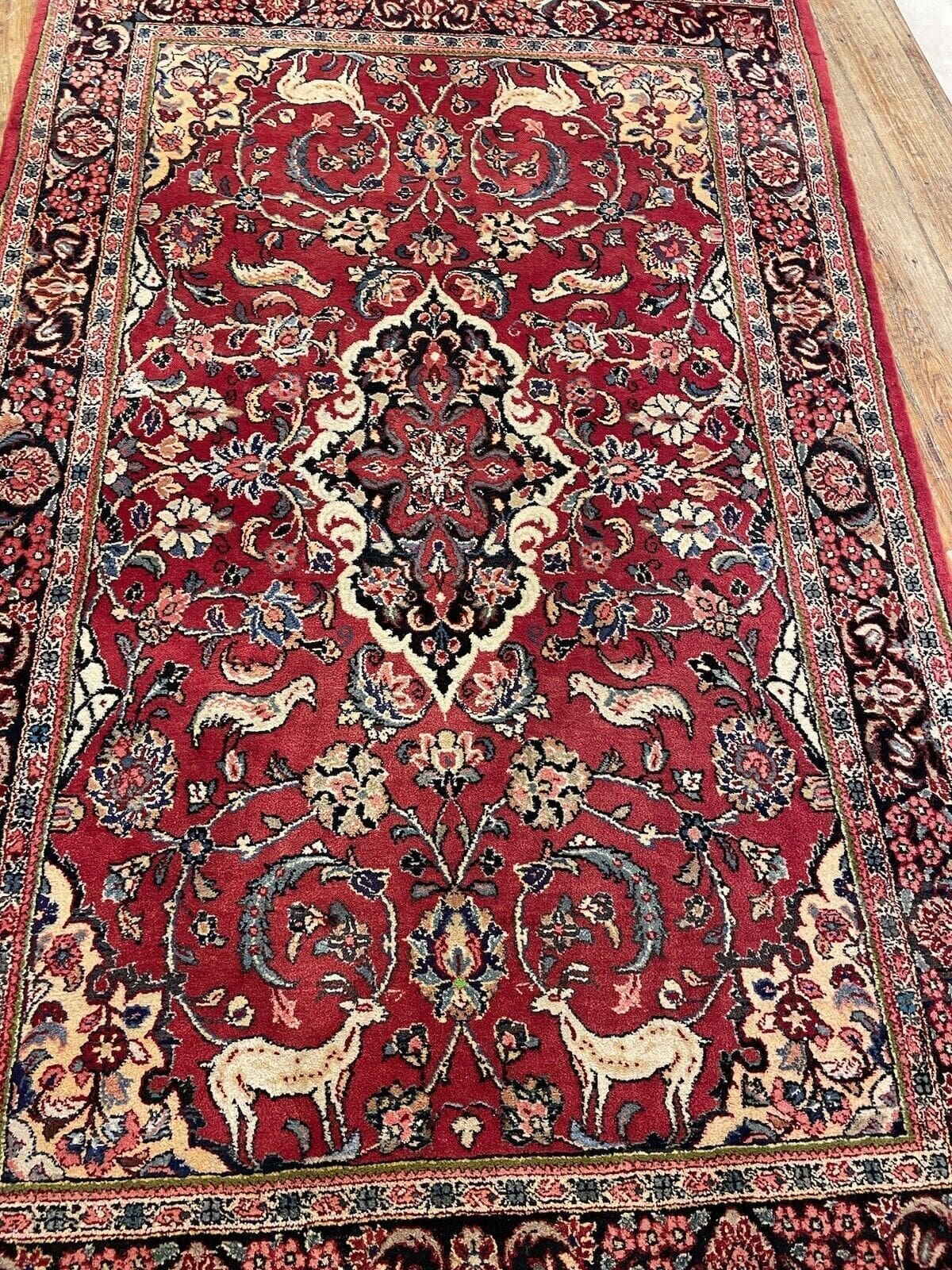
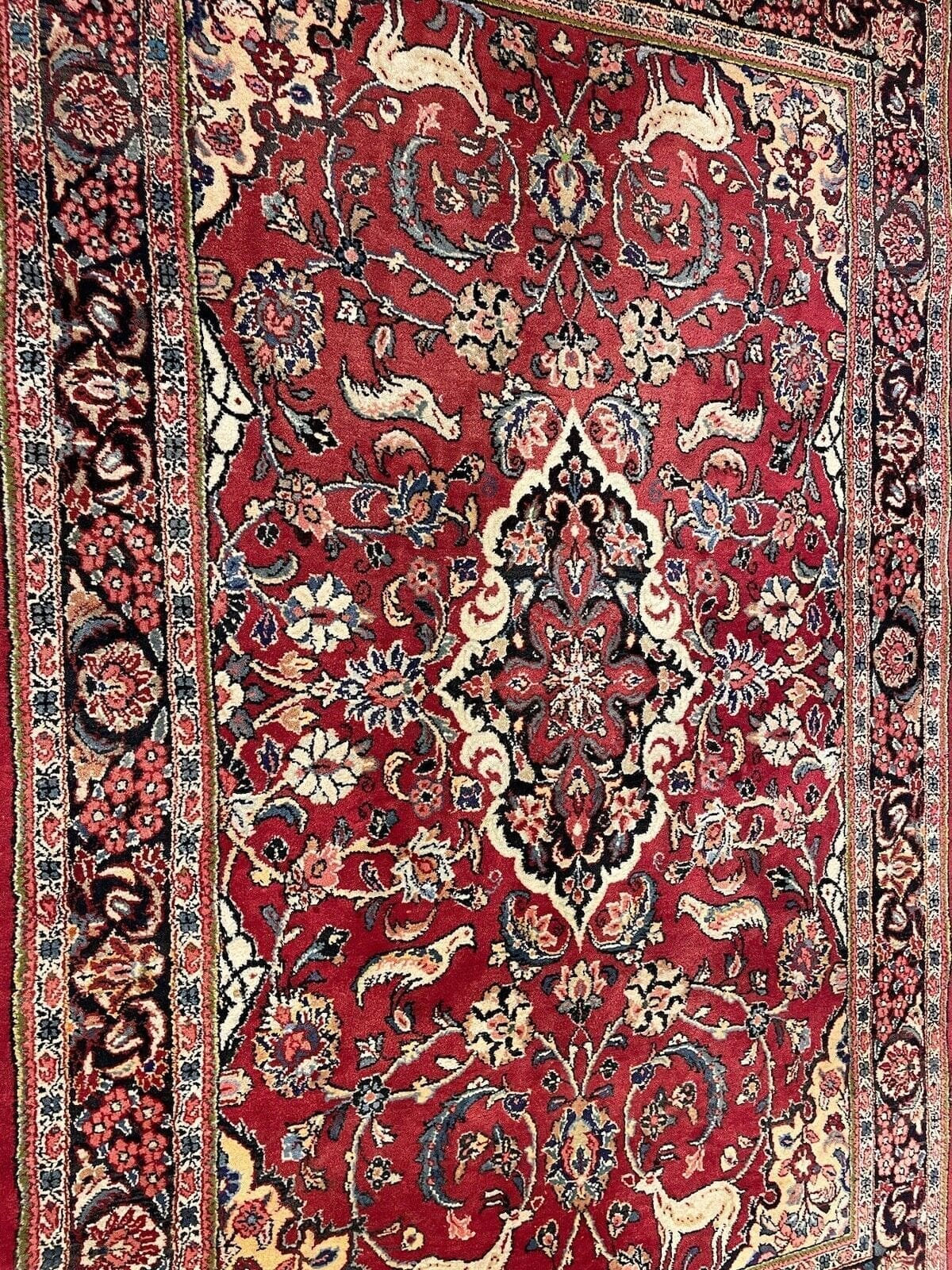
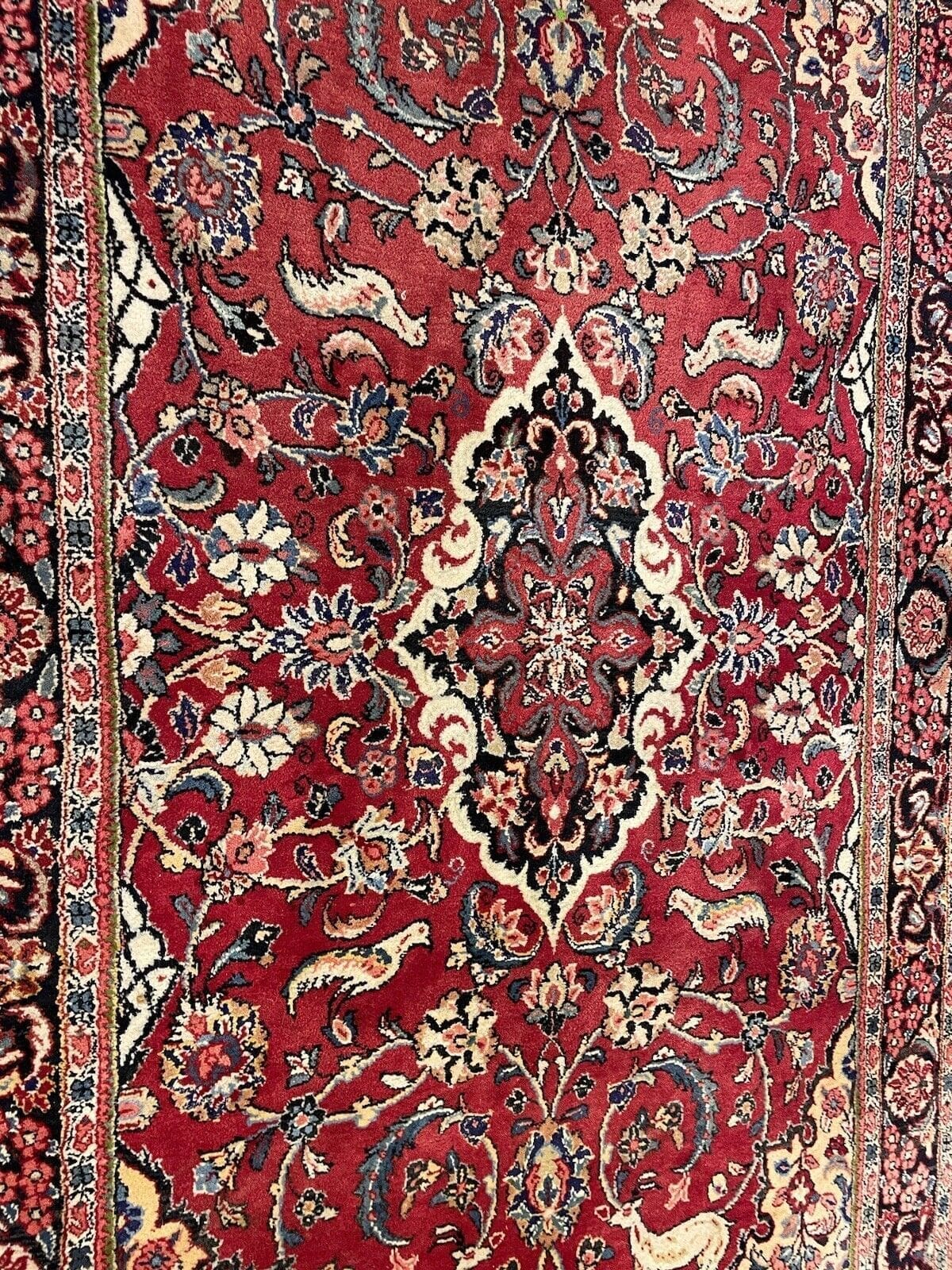
The pattern is described as Oriental, the style as classic, and the colour as red. Together, these details identify the visual direction of the rug without assigning an unlisted specific motif. Red may serve as a field colour, appear in ornaments or be used in several related areas; the exact distribution is not stated and is therefore not specified here. What is established is a classic Oriental appearance with red as the named colour.
Jowsan design traditions can bring floral and geometric devices together. Floral drawing may use stylised leaves, blossoms and vines arranged in repeated sequences. Geometric forms can provide structure through axes, compartments, angular details or ordered outlines. In a Persian rug these elements do not necessarily stand apart. They can be linked across the field or placed inside a border system, creating a composition that is both ornamental and organised.
Classic Oriental rugs frequently use a central field framed by one or more borders. A border provides a visual edge and helps separate the inner design from the outer finish. Some compositions use a broad main border with narrower companion bands, while others rely on repeated motifs along the perimeter. No particular border arrangement is recorded for this Jowsan, so no individual layout is claimed. The regional background nevertheless explains why floral repetition and geometric framing are familiar features of Jowsan-related design.
Red has a long history in Persian rug design. It can create a strong visual field and can be balanced by contrasting or related colours in the outlines and ornaments. The name of a colour alone does not establish which dye was used or how the shade was produced, so no specific dye is assigned to this rug. The stated fact is simply that the rug is red. Its colour belongs to the broader vocabulary of Persian textile design, where colour helps separate motifs and establish visual rhythm.
Because the rug is hand-knotted, its pattern is built into the pile during production. The maker places each colour area and contour in sequence, allowing lines, angles and curves to develop as part of the woven structure. This is different from a decorative image printed onto a finished textile. The hand-made construction can give the design a subtle rhythm associated with knot-by-knot work. It does not, however, justify adding a specific motif or detailed layout that has not been recorded.
An Oriental design can work in more than one interior setting. In a traditional room, a classic Persian pattern can relate to existing ornament and furniture. In a restrained modern setting, the red ground or red decorative elements can act as a defined textile contrast. This versatility follows from the combination of a classic style, an Oriental pattern and the named colour. It does not prescribe a particular room or furnishing scheme for this individual rug.
Each hand-knotted rug is an individual textile object. Even when a regional design vocabulary is based on inherited forms, the finished piece is not an exact industrial duplicate. The arrangement of knots, colour areas and small details belongs to the process of making this rug. Jowsan names the origin, while Oriental names the pattern category. Keeping those terms separate is important: the design may draw on a broad Oriental vocabulary, but the rug itself is identified as a Persian rug from Jowsan in Iran.
Special Features
The rug is antique and dated to the early twentieth century. Its condition is given as used, but in top condition. This wording combines a history of use with a very good stated condition. It identifies the piece as an antique rug that has been used while also describing it as being in top condition. No individual repairs, wear marks or restoration details are listed, so none are added to the description.
Other recorded features are the 100% wool construction, hand-knotting, a pile height of 10 mm, a red colour and a classic Oriental pattern. The shape is rectangular. The rug is also stated to be suitable for use over underfloor heating. That suitability is specifically recorded. As with any floor covering, the heating system and the floor manufacturer’s care instructions should still be followed, since the actual conditions of use depend on the room and installation.
As an antique Persian rug, the Jowsan combines an Iranian origin, a historical period and traditional manual workmanship. It can therefore be understood both as a functional floor covering and as a textile object with collecting relevance. This description rests on the origin, age, construction and stated condition. No signature, named workshop or additional provenance is provided.
FAQ
How should I care for my Persian rug?
Regular vacuuming without a brush attachment helps remove loose dirt while avoiding unnecessary strain on the wool pile. Spills should be treated promptly with a slightly damp cloth and a mild soap solution. Rubbing hard should be avoided, since friction can affect the surface and the appearance of the colours. Keep the rug out of direct sunlight to reduce the risk of fading. For a more extensive cleaning, use a specialist service familiar with hand-knotted wool rugs and antique textiles.
How can I tell whether a Persian rug is genuine?
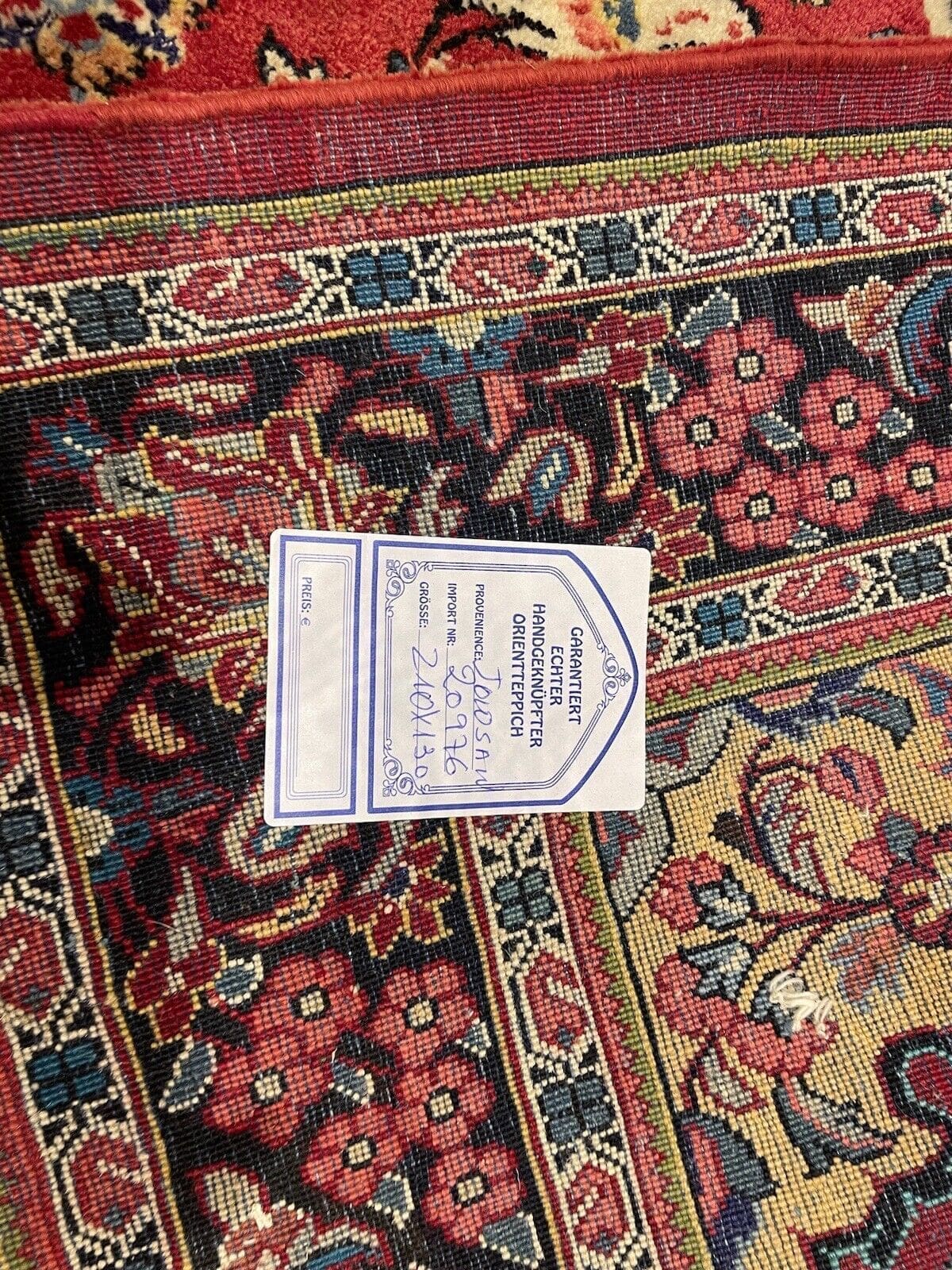
Genuine Persian rugs are hand-knotted and are often made from quality materials such as wool or silk. The back can provide useful evidence because the knotted structure and the reverse view of the pattern may be visible there. Knot density is also commonly considered when assessing craftsmanship, although it should not be treated as the only criterion. Material, construction, design, origin and condition should be considered together. For this rug, the recorded details are hand-knotting, pure wool and an origin in Jowsan, Iran.
Can Persian rugs be used in modern interiors?
Yes. A classic Oriental pattern can be used in a modern interior as well as in a traditional one. Red colour and established ornament can create a defined contrast against simpler furniture and quieter surfaces. In a more classic room, the same design language can work alongside other decorative textiles and furnishings. The combination of hand-knotted wool, classic style and Oriental pattern therefore does not limit the rug to one furnishing period or one type of interior.
To provide the best experiences, we use technologies like cookies to store and/or access device information. Consenting to these technologies will allow us to process data such as browsing behavior or unique IDs on this site. Not consenting or withdrawing consent, may adversely affect certain features and functions.
Functional Always active
The technical storage or access is strictly necessary for the legitimate purpose of enabling the use of a specific service explicitly requested by the subscriber or user, or for the sole purpose of carrying out the transmission of a communication over an electronic communications network.
Preferences
The technical storage or access is necessary for the legitimate purpose of storing preferences that are not requested by the subscriber or user.
Statistics
The technical storage or access that is used exclusively for statistical purposes.The technical storage or access that is used exclusively for anonymous statistical purposes. Without a subpoena, voluntary compliance on the part of your Internet Service Provider, or additional records from a third party, information stored or retrieved for this purpose alone cannot usually be used to identify you.
Marketing
The technical storage or access is required to create user profiles to send advertising, or to track the user on a website or across several websites for similar marketing purposes.
 SECURE PAYMENT
 SHIPPING PARTNERS


