This Isfahan Persian rug is hand-knotted. Hand knotting is one of the established methods of Persian carpet making: individual knots are worked into the prepared structure and then secured through successive rows and passes. The result is a textile floor covering whose surface is directly shaped by the craft process. Each stage requires controlled handling of the yarn and a careful transfer of the drawn design into the woven structure.
The listed materials are 95% virgin wool and 3% silk. Virgin wool is widely used in Oriental rugs for its resilient structure and naturally pleasant feel. It provides a firm, comfortable pile suited to regular use. Silk can add finer accents and a smoother reflection of light within a wool construction. Here, the combination is described as providing durability, a soft touch and an attractive appearance.
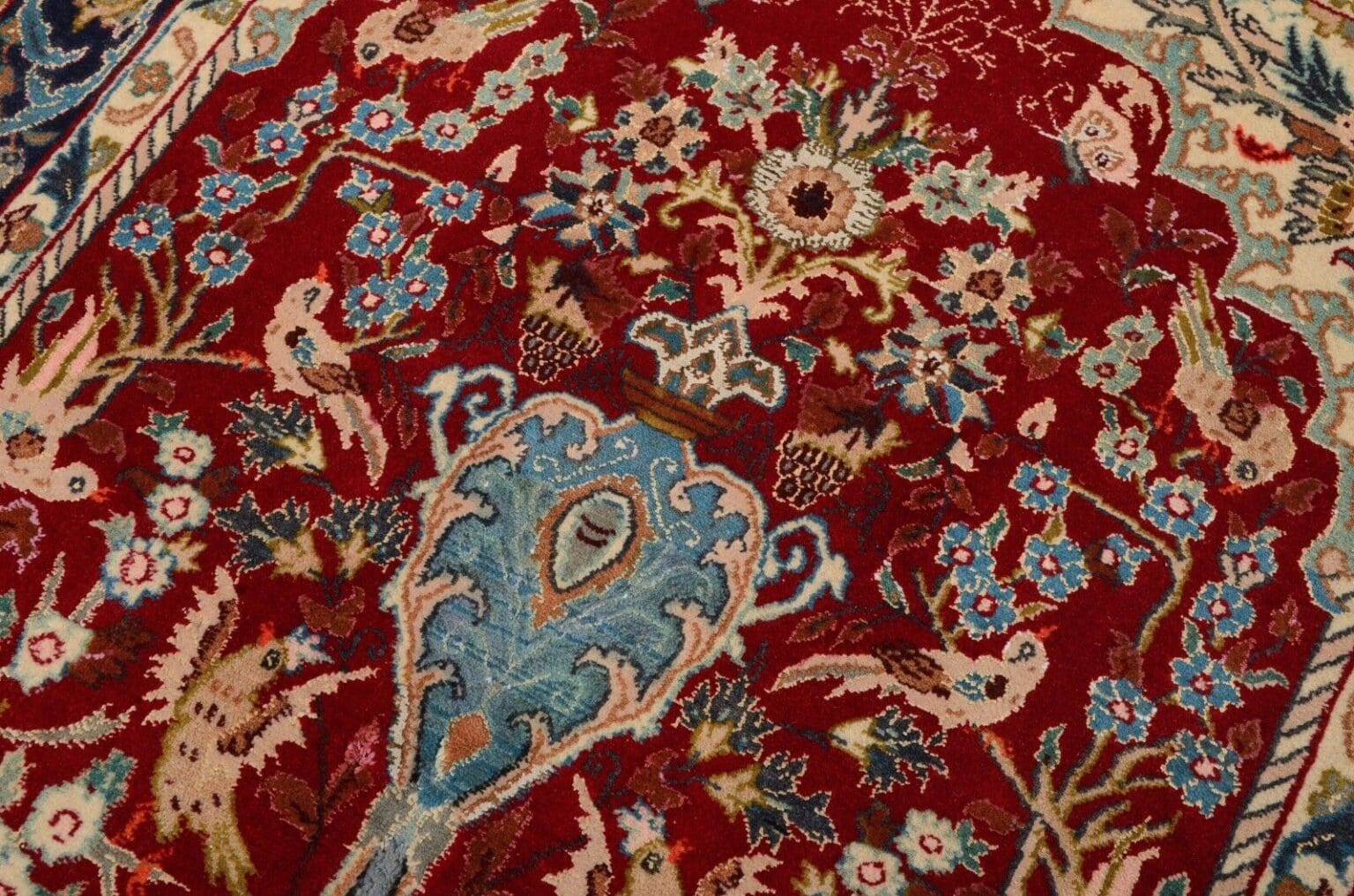
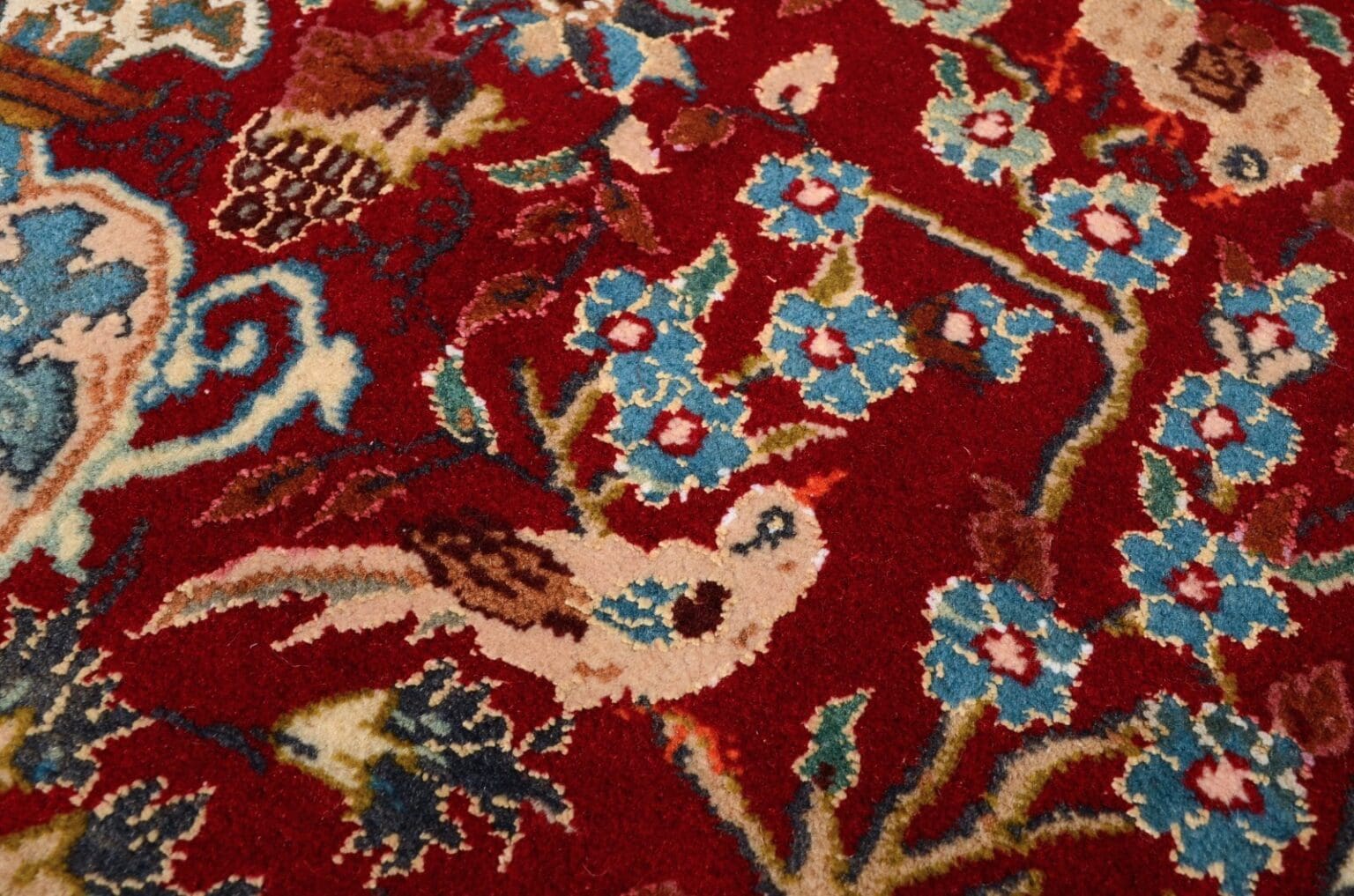
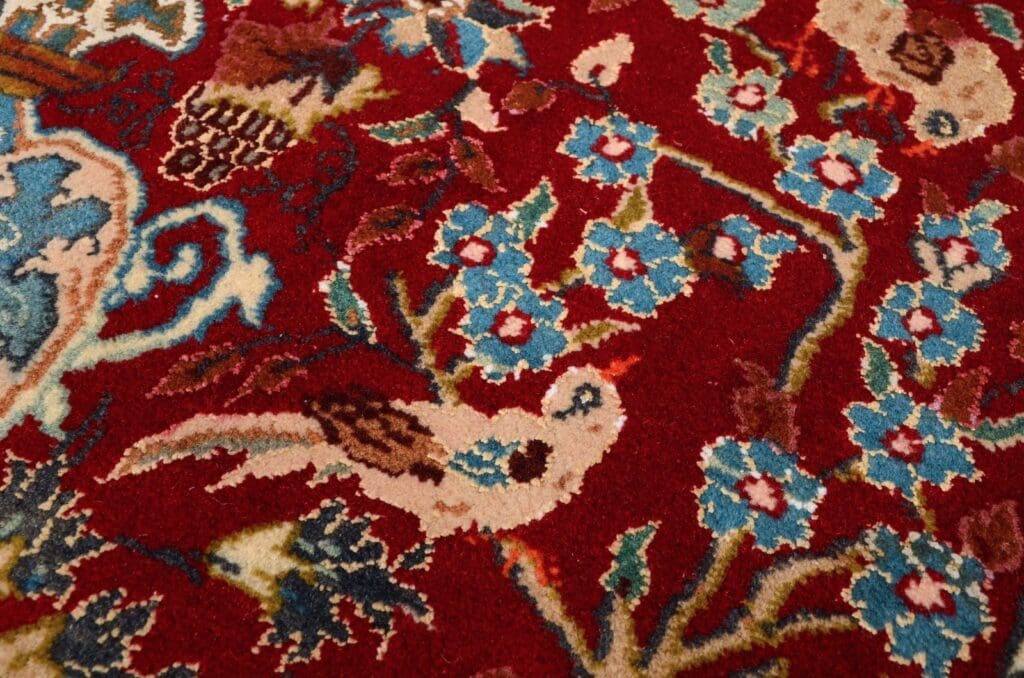
A knot density of 600,000 knots per square metre indicates fine workmanship. A closely knotted surface allows outlines and smaller decorative elements to be placed with greater definition. In a hand-knotted rug, the pattern is not printed onto the finished surface; it is built into the pile through the placement of differently coloured yarns. The rug is also stated to be suitable for use over underfloor heating.
Hand craftsmanship gives the construction its individual character. The work proceeds row by row rather than through a uniform industrial production method. That process makes the pile, pattern and material part of one connected textile surface. Wool supplies the principal material of the pile, while the silk content contributes to the material blend named for this rug.
Origin and Tradition
Isfahan is a city in Iran and one of the historic centres of Persian culture. It is known for architecture, visual arts and several forms of skilled craft. Carpet weaving is part of this wider cultural tradition. The name Isfahan therefore identifies more than a location: it also refers to a recognised Persian design language in which drawing, colour balance and careful workmanship are considered together.
The carpet tradition of Isfahan developed across many generations. Workshops preserved older Persian principles while adapting them to changing tastes and artistic approaches. This continuity allowed classical ornament to coexist with a clear, finely organised composition. A carpet could serve as a practical floor covering while also functioning as a carefully planned work of textile design.
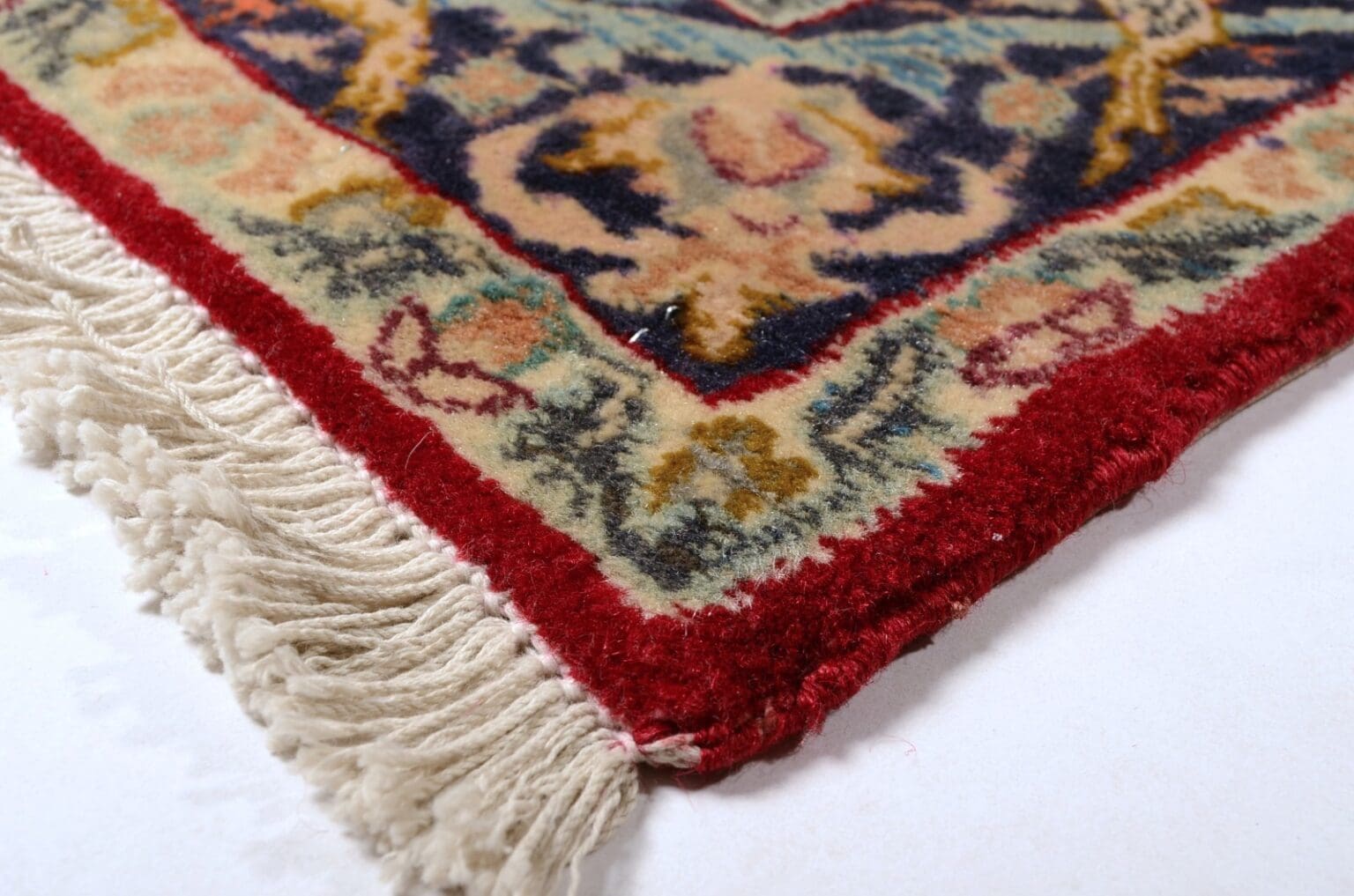
Persian rugs are traditionally built on a foundation of warp and weft. The warp establishes the lengthwise framework, while the weft passes across it and helps stabilise the rows. Knots are placed around the foundation to create the pile. Once the knotting is complete, the surface is trimmed and finished so that the drawing can be read clearly. This construction is fundamentally different from a machine-made covering, where the structure and pattern are produced by an industrial process.
Isfahan designs are often associated with balance and detailed organisation. Traditional compositions may include flowers, leaves, animals, scrolling vegetation or vessels. These elements are arranged within relationships of field, border and supporting ornament rather than being distributed at random. The regional tradition thus joins decorative order with a symbolic visual vocabulary rooted in Persian culture.
The term Persian rug is appropriate here because the source places the rug in Persia, meaning Iran, and identifies it as Isfahan. Isfahan is both the named city of origin and the reference point for the style described. The long history of weaving in this region explains why Isfahan rugs are commonly connected with precise drawing, classical ornament and carefully controlled colour relationships.
Traditional Persian carpet making also depends on the relationship between the person who draws a design and the weaver who interprets it in yarn. A planned motif has to be translated into rows of knots, colour changes and contour lines. Fine work requires attention to proportion so that a vessel, leaf or flower remains legible within the complete composition. This relationship between design and execution is central to the identity of hand-knotted Persian textiles.
Design and Pattern
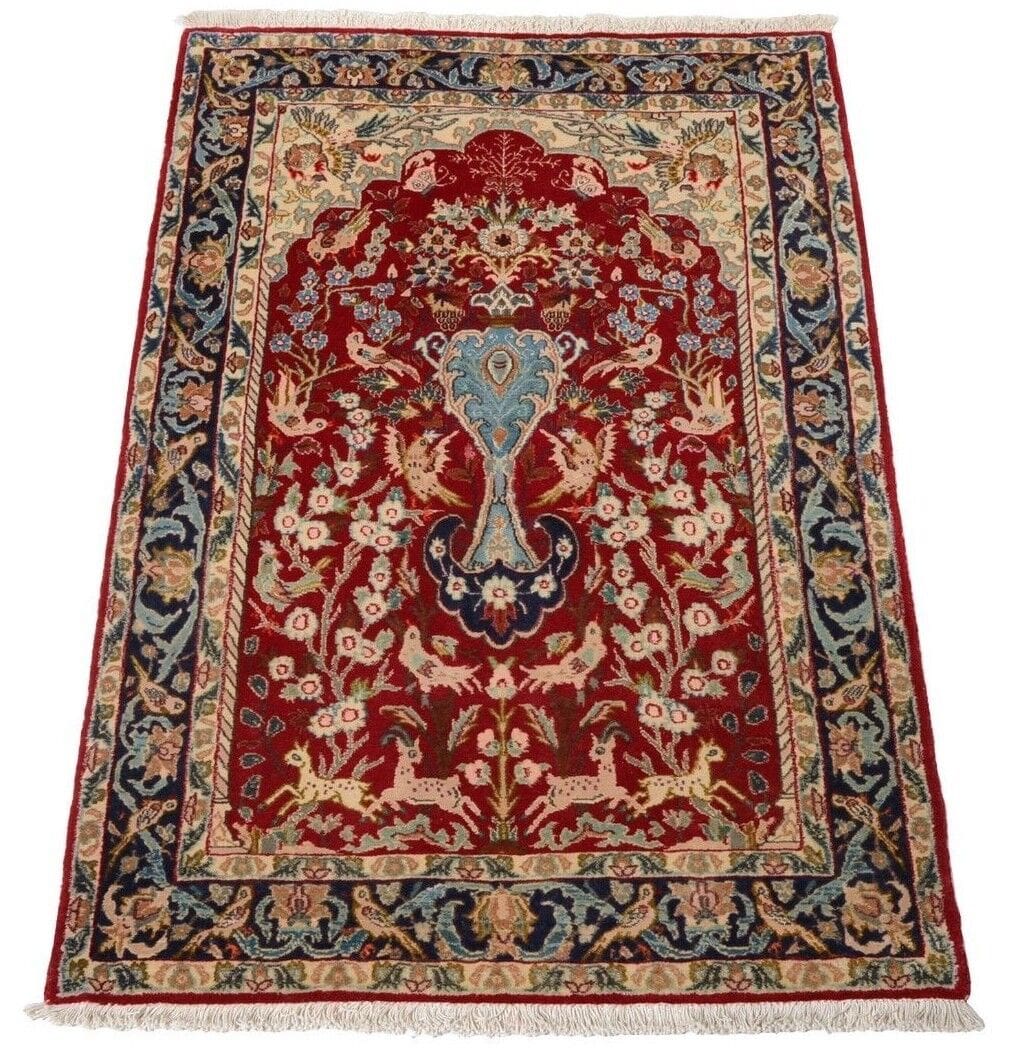
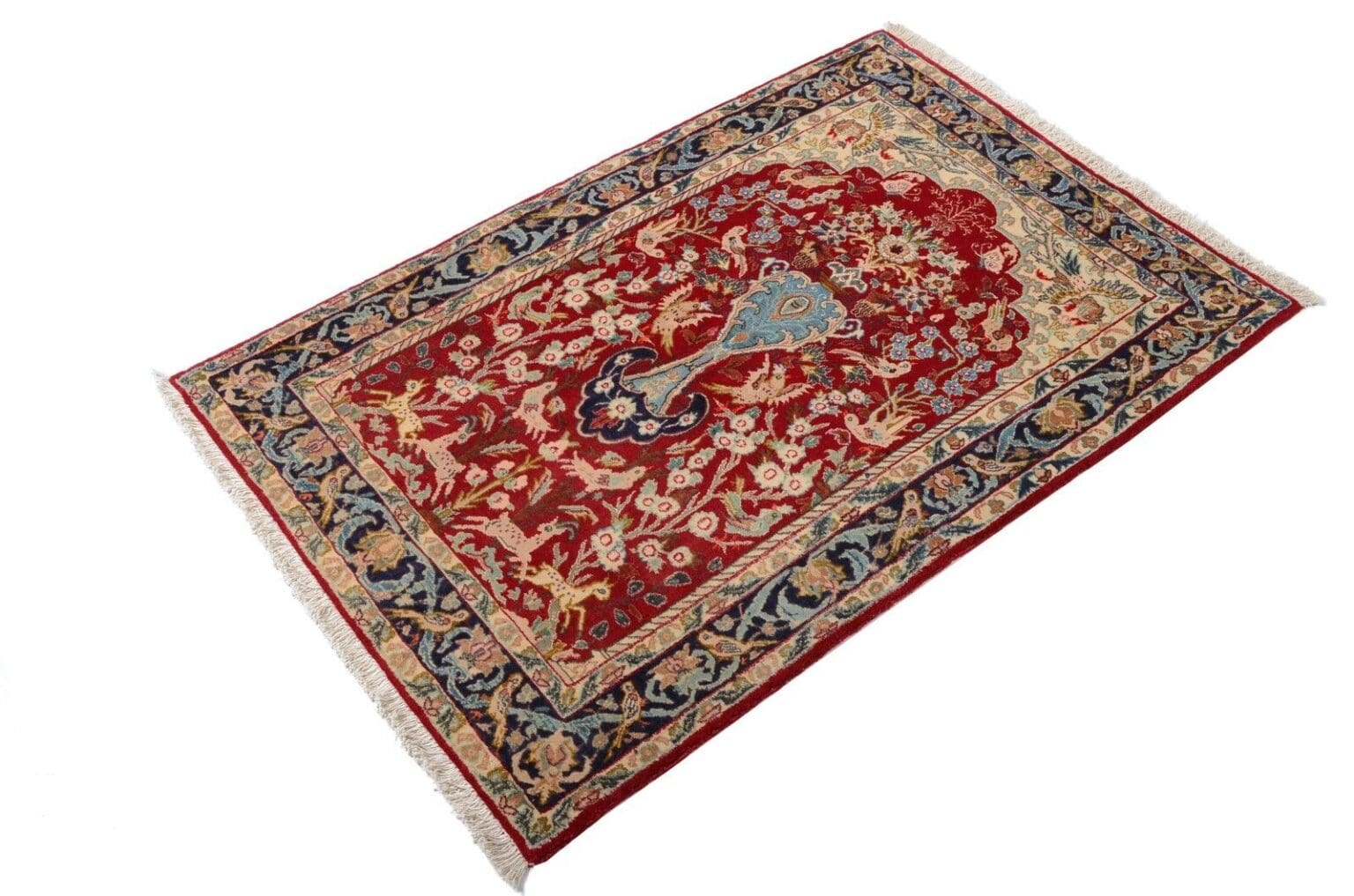
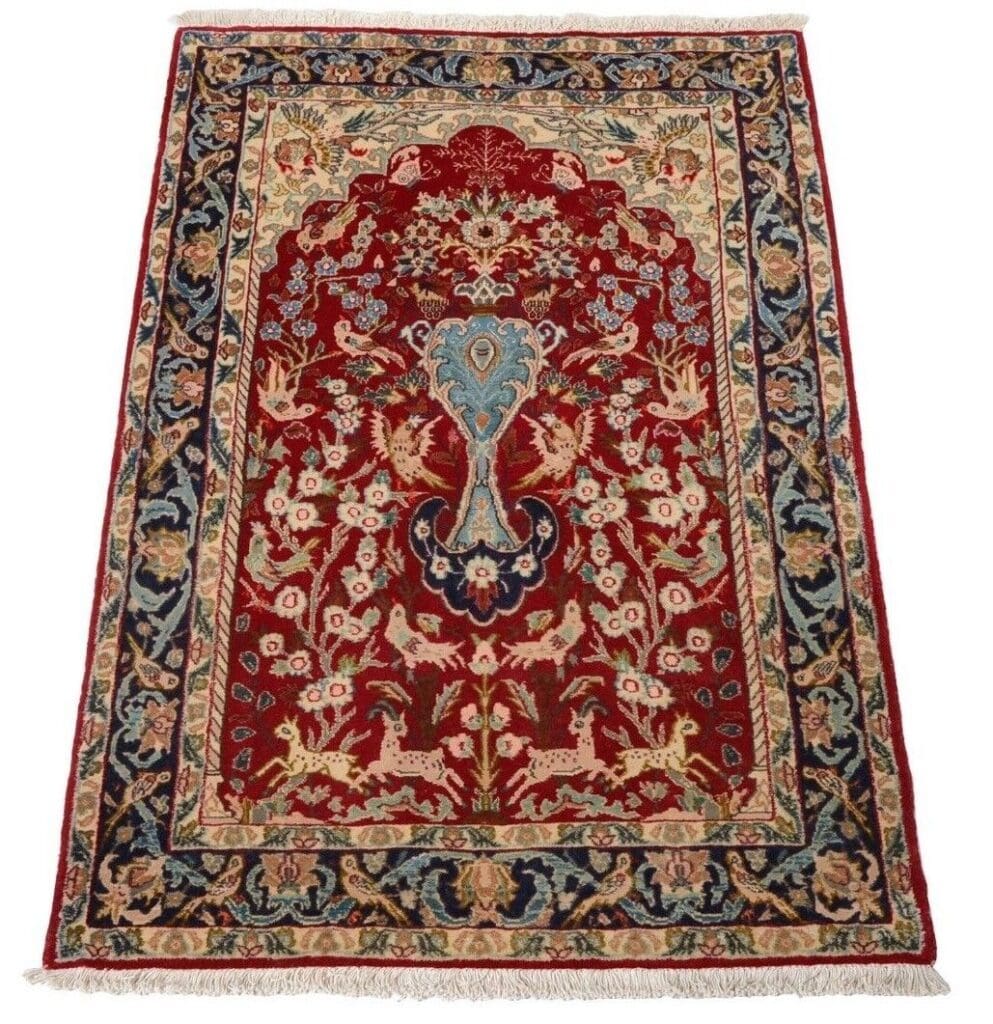
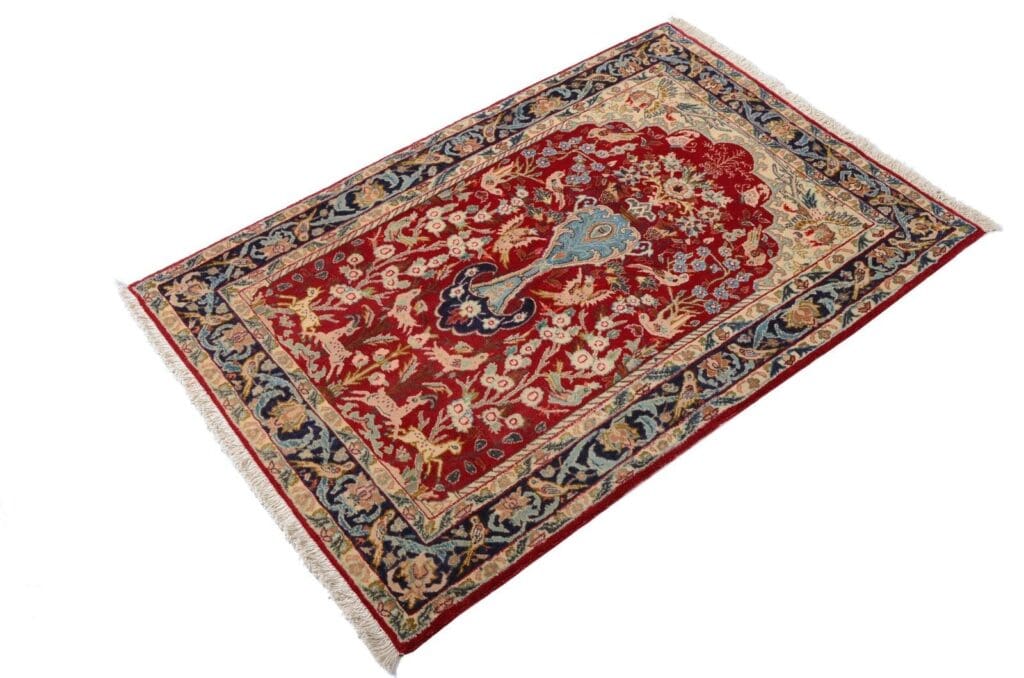
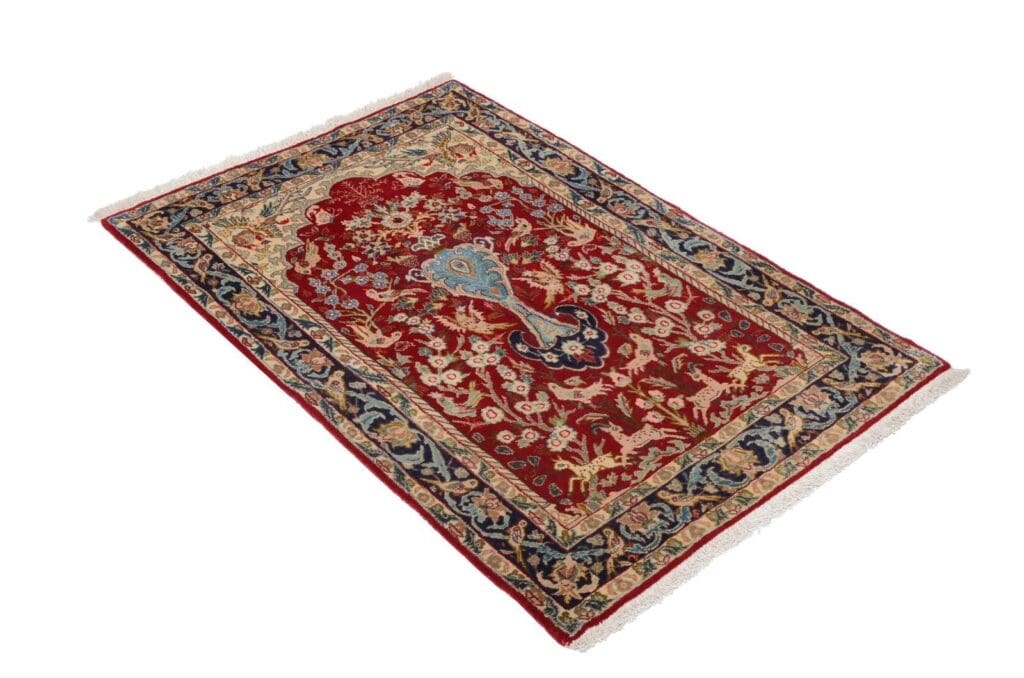
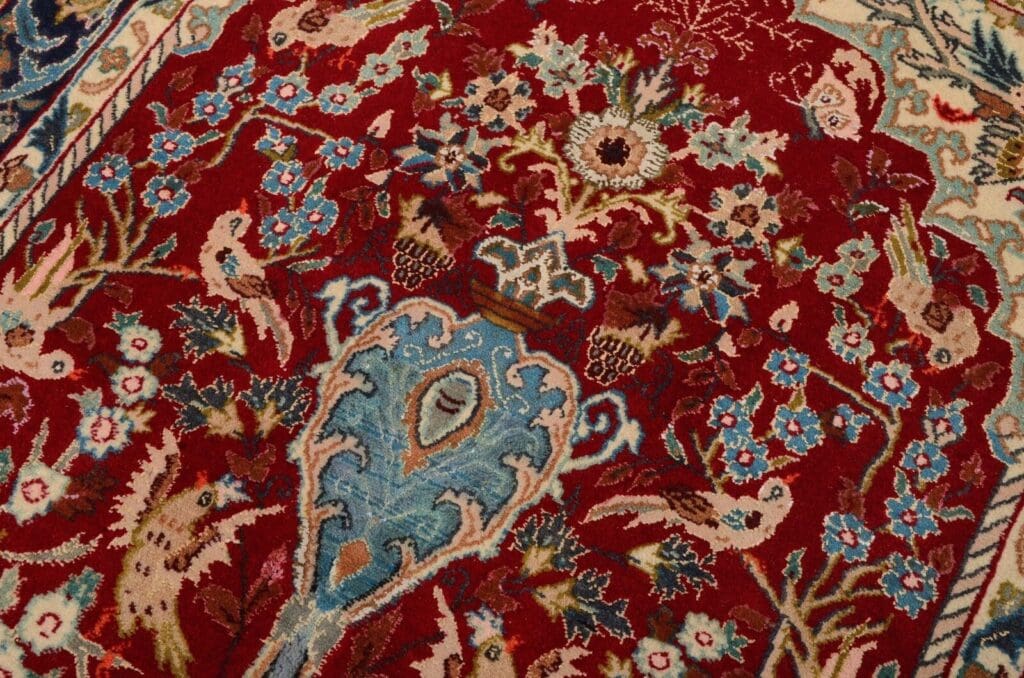
The pattern of this rug is described as an Oriental vase motif. In Persian ornament, a vase or vessel can serve as a container for flowers, leaves and curling stems. The vessel may act as a central point from which a larger floral arrangement develops, or it may be incorporated into a repeating decorative scheme. Either way, the vase gives the design a recognisable structure and connects the object with the surrounding plant forms.
Floral ornament is one of the important visual traditions in Persian rugs. Leaves, blossoms and winding stems create movement across the surface while remaining part of a disciplined arrangement. A vase motif often suggests that the vegetation grows outward from the vessel and continues into the surrounding decoration. The forms are generally stylised rather than botanical copies; their purpose is to establish rhythm, balance and a coherent ornamental language.
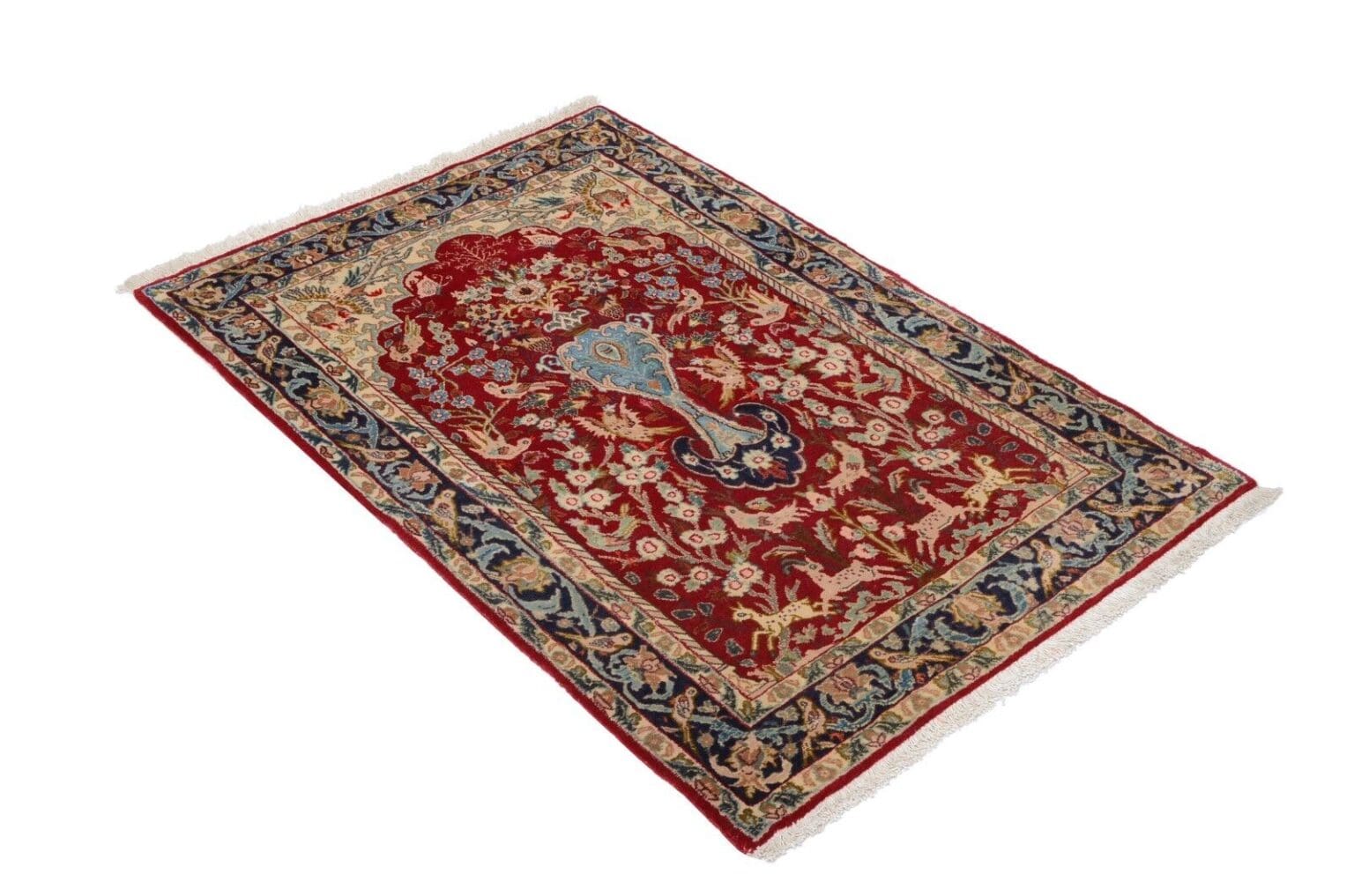
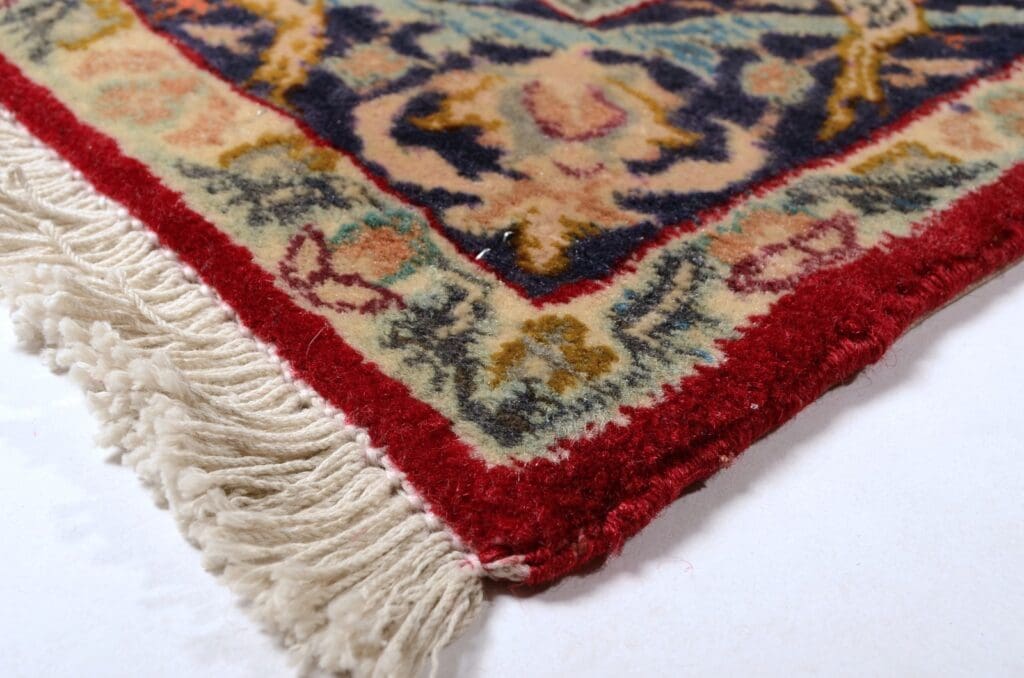
The intense red colour is a defining feature of this rug’s appearance. In Persian decorative traditions, red may be associated with vitality, celebration, good fortune and prosperity. As a dominant colour, it establishes a strong visual field against which other elements can be read. It can also make lighter, darker or more reflective details stand apart. The combination of wool and silk may add a subtle contrast between a softer matte surface and smoother highlights.
The Oriental design can be placed in a traditionally furnished room as well as alongside simpler contemporary pieces. Wood tones and classic furniture can reinforce the Persian character of the vase motif. In a restrained interior, the red field can function as the principal colour accent while the ornament retains its cultural identity. The design is therefore defined by its vessel imagery, floral character and Persian compositional order.
Isfahan’s design tradition is concerned with the relationship between broad areas and small details. Larger colour zones provide visual structure, while leaves, blossoms and fine outlines articulate the surface. Viewed close up, the hand-knotted construction makes the individual details more apparent. From farther away, the separate parts combine into a unified decorative image. This change in perception is an important feature of finely drawn carpet patterns and allows the design to operate both as ornament and as detailed textile drawing.
The vase motif also belongs to a wider history of Persian garden and plant imagery. Vessels, cultivated flowers and ordered vegetation can evoke the idea of nature shaped through artistic arrangement. In carpet design, this idea is expressed through repeated lines, balanced spacing and a controlled relationship between filled and open areas. The result is not a literal garden scene, but a stylised system of forms that gives the surface continuity.
Special Features
The features specifically associated with this rug are its hand-knotted construction, the listed blend of virgin wool and silk, the fine knot density and the Oriental vase motif. The dense knotting supports the precise rendering of smaller pattern sections. Hand production makes the decorative structure part of the rug itself rather than an applied image. Its strong red colouring further gives the piece a clearly recognisable visual character.
The condition is described as very good and unused. The rug is also suitable for underfloor heating, which connects its traditional Persian construction with a current interior application. The wool-based pile offers a natural textile surface, while the vase design and red ground preserve the distinctive appearance of an Isfahan Persian rug.
FAQ
How should a hand-knotted Persian rug be cared for?
Regular, gentle vacuuming helps remove dust and loose particles before they settle deeply into the pile. The vacuum should be moved without an aggressive beater action. If the rug becomes heavily soiled, professional cleaning is advisable. Household chemicals should not be applied without specialist guidance, since they may affect fibres and colours. Excessive moisture should also be avoided. Spilled liquid is best absorbed promptly rather than rubbed into the surface. A professional cleaner can take the hand-knotted construction and the combination of virgin wool and silk into account when selecting a suitable treatment.
How can I tell whether a Persian rug is genuine?
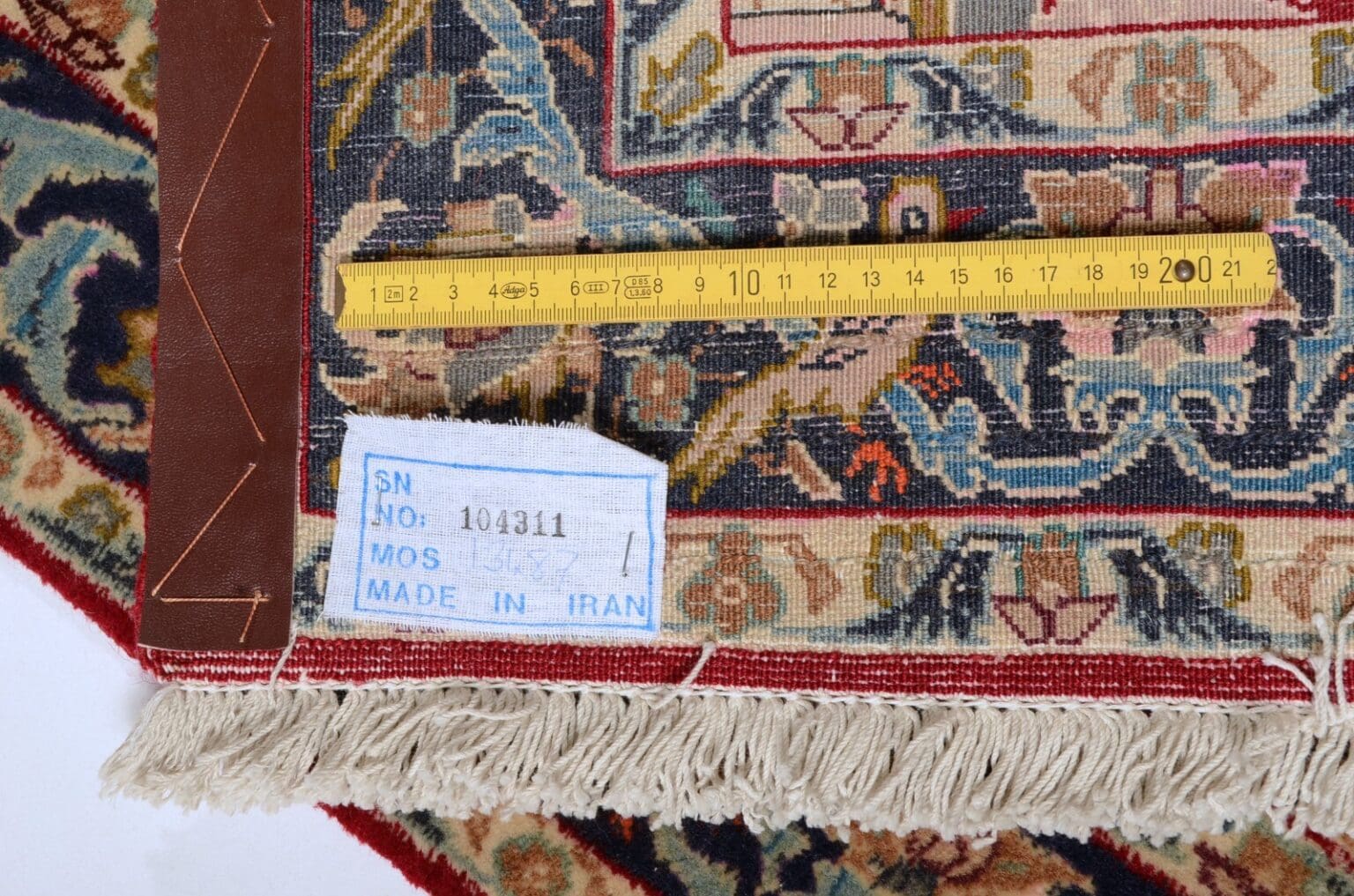
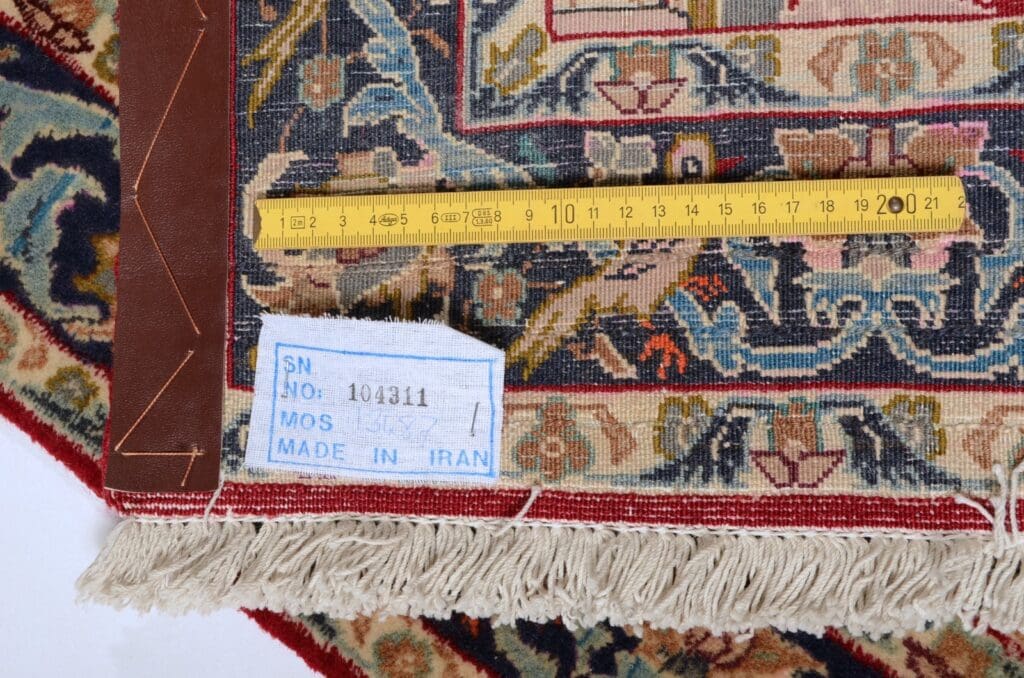
Authenticity is assessed through several features considered together. Knot density, the materials used and the hand-knotted construction are important points of examination. The back of a hand-knotted rug can provide additional information because the knot structure is normally visible there, rather than appearing as a completely uniform machine-made foundation. When a firm identification is required, an experienced specialist should inspect the rug. No single characteristic is enough on its own; material, structure, pattern and workmanship should all be considered.
Where is the best place to position a Persian rug?
A Persian rug can be used in a range of living areas. Living rooms, other reception spaces and libraries are particularly suitable because the Oriental pattern and red colouring can create a defined accent. Tile and wooden floors are suitable types of flooring for displaying such a rug. Before placing it, make sure that it lies flat and cannot slide. Since this rug is stated to be suitable for underfloor heating, it can also be used in a room with that system.
To provide the best experiences, we use technologies like cookies to store and/or access device information. Consenting to these technologies will allow us to process data such as browsing behavior or unique IDs on this site. Not consenting or withdrawing consent, may adversely affect certain features and functions.
Functional Always active
The technical storage or access is strictly necessary for the legitimate purpose of enabling the use of a specific service explicitly requested by the subscriber or user, or for the sole purpose of carrying out the transmission of a communication over an electronic communications network.
Preferences
The technical storage or access is necessary for the legitimate purpose of storing preferences that are not requested by the subscriber or user.
Statistics
The technical storage or access that is used exclusively for statistical purposes.The technical storage or access that is used exclusively for anonymous statistical purposes. Without a subpoena, voluntary compliance on the part of your Internet Service Provider, or additional records from a third party, information stored or retrieved for this purpose alone cannot usually be used to identify you.
Marketing
The technical storage or access is required to create user profiles to send advertising, or to track the user on a website or across several websites for similar marketing purposes.
 SECURE PAYMENT
 SHIPPING PARTNERS


