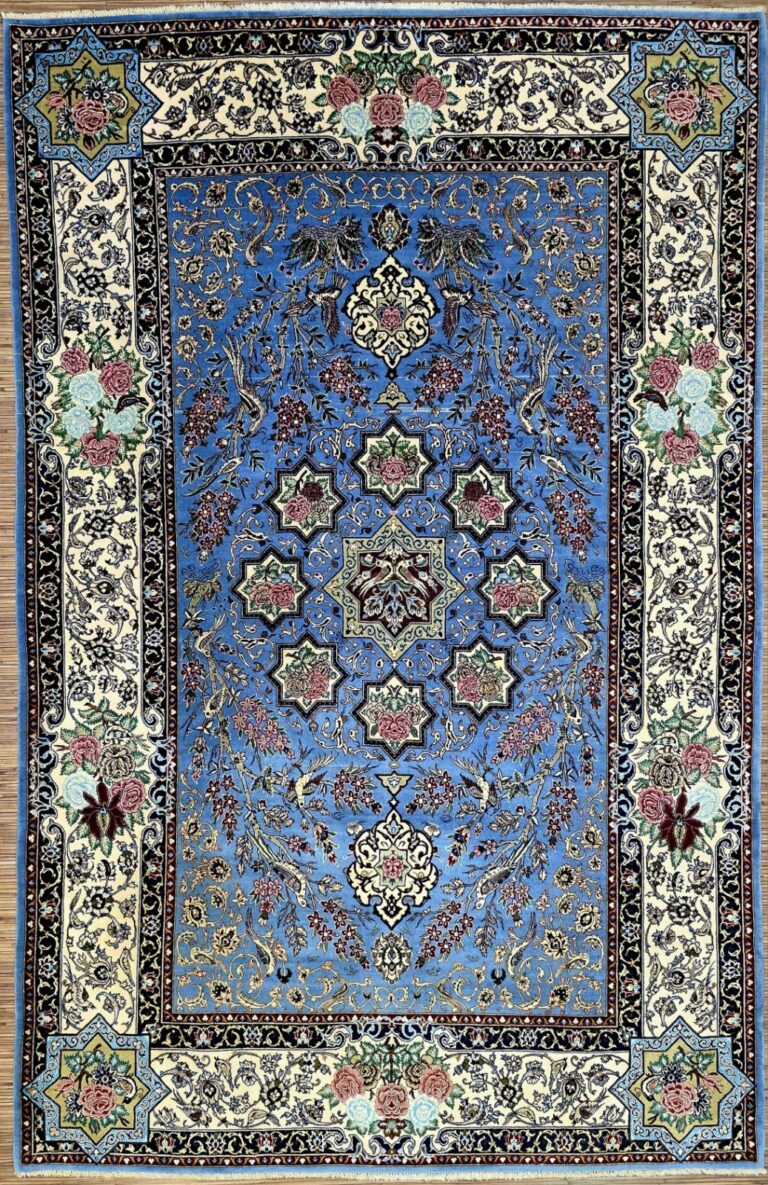
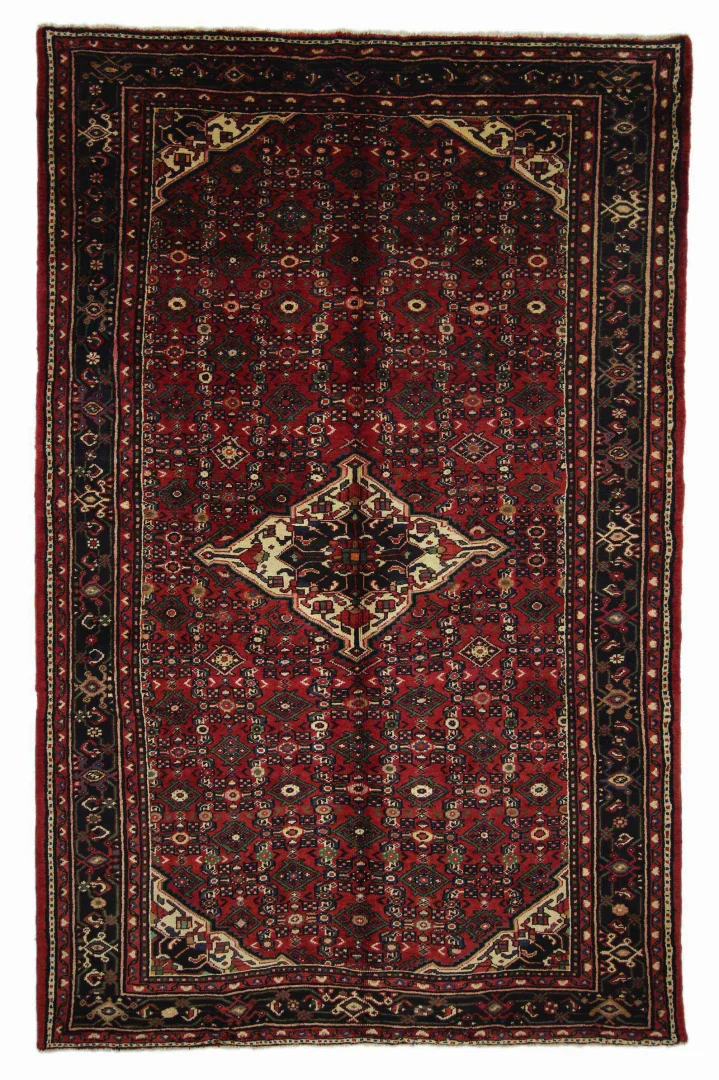
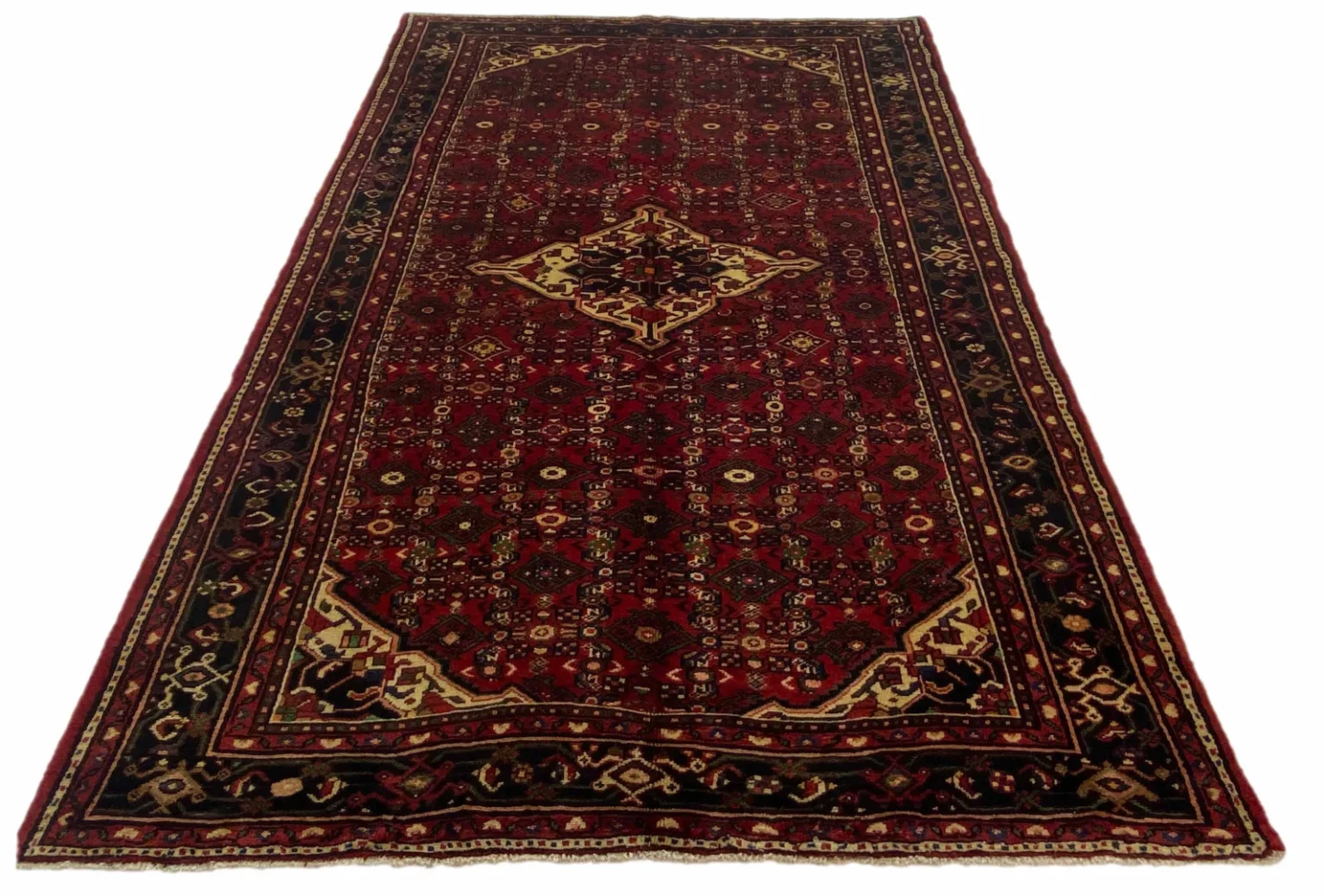
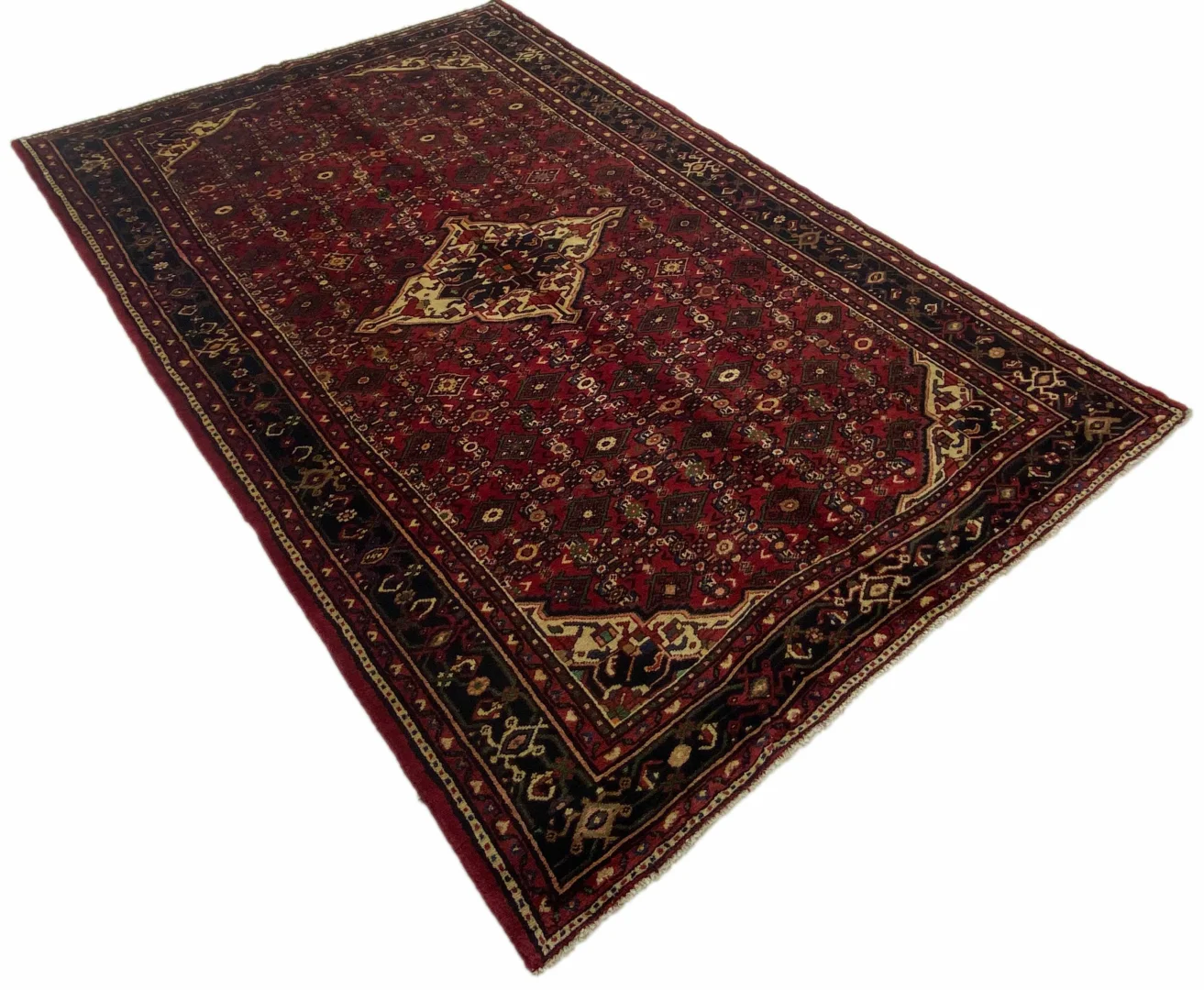
Persian Rug Hosseinabad 310 x 200 cm Wool Hand-knotted
€ 1183
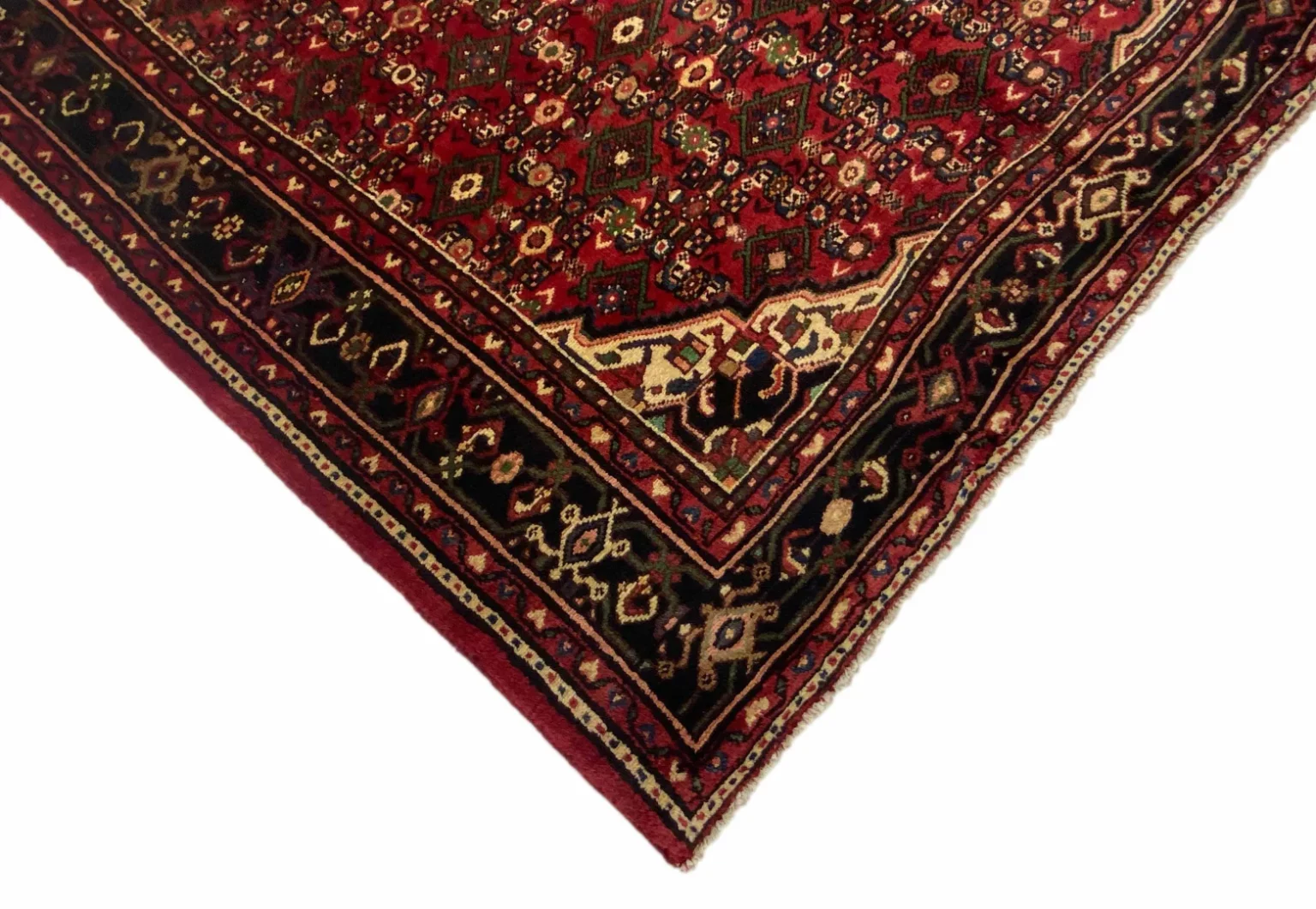
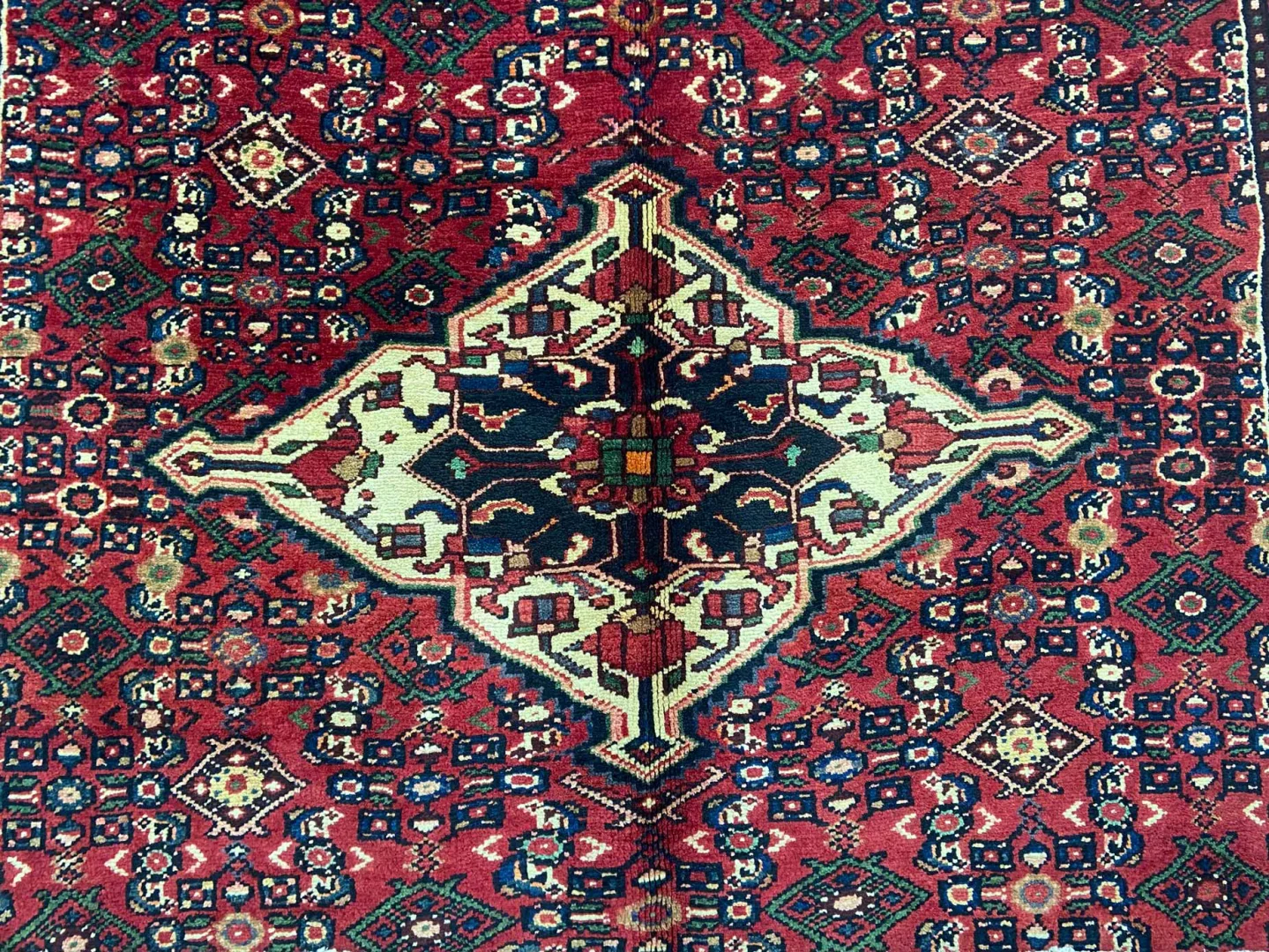
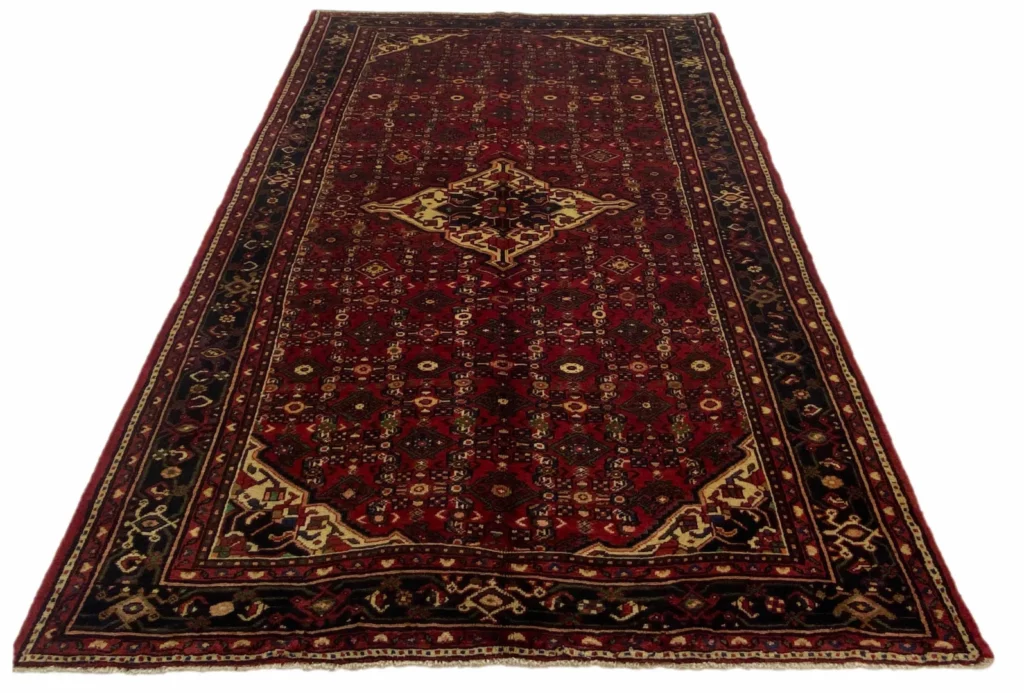
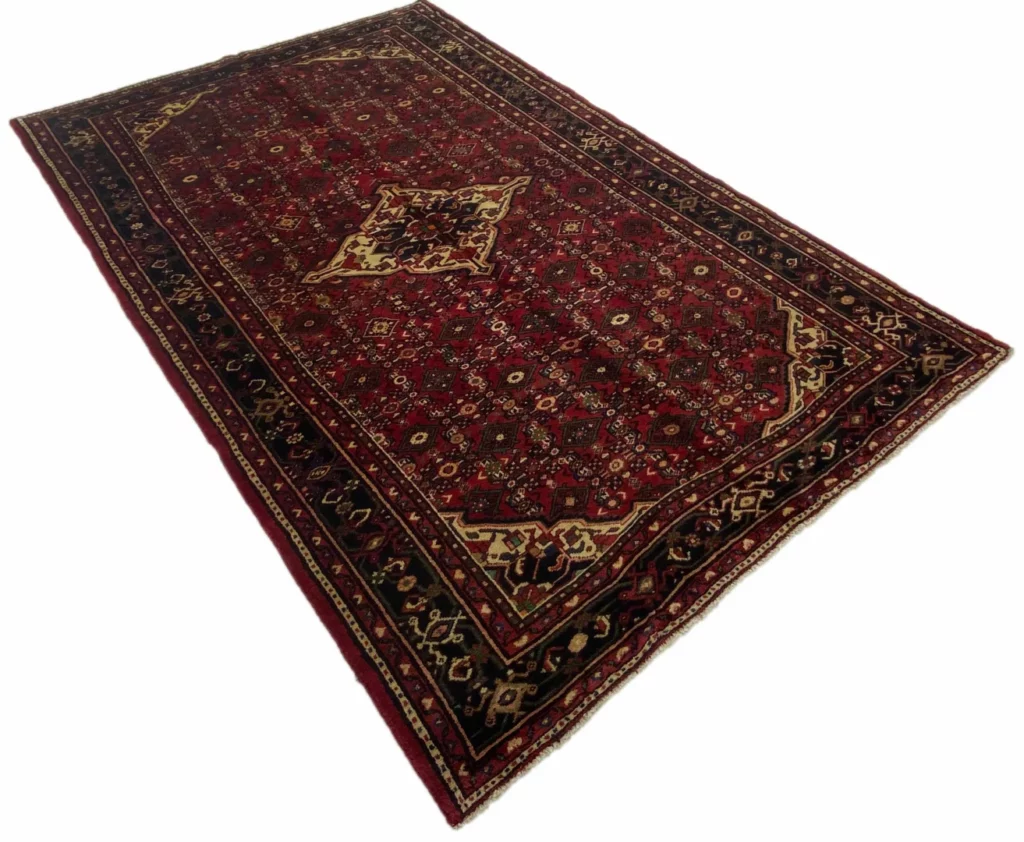
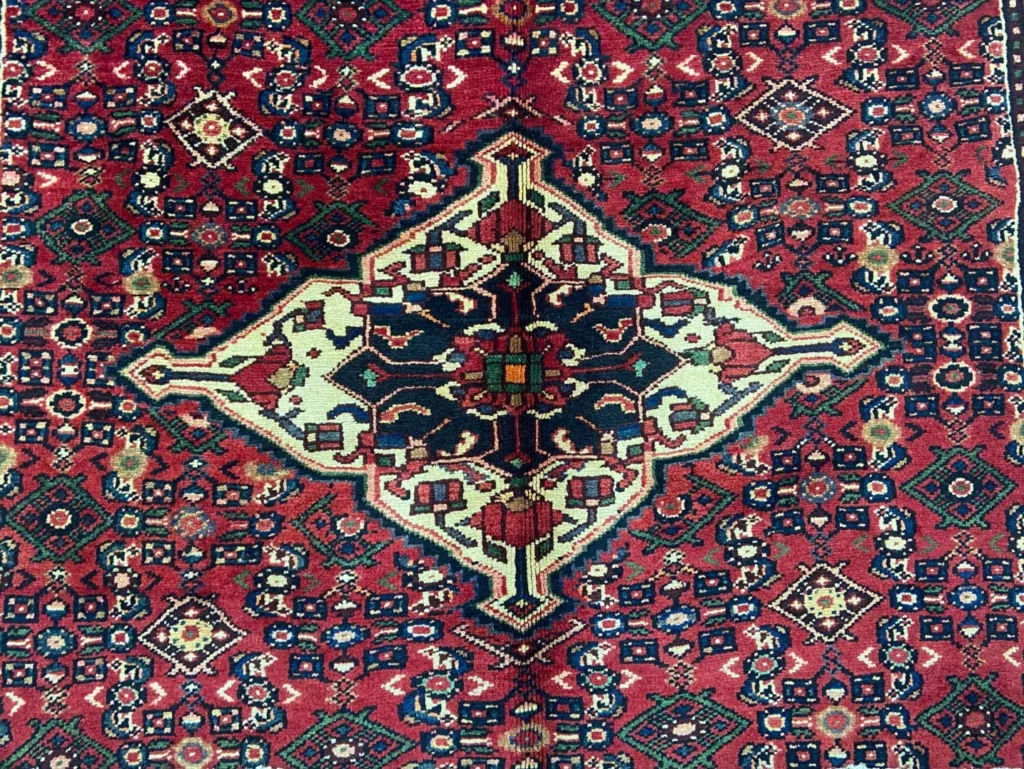
Hand-knotted Hosseinabad Persian Rug from northwestern Persia | Knot density: 200,000 – 250,000 knots/m² | Material: wool pile | Size: 310 x 200 cm | Pattern: diamond medallion or Herati pattern; colours from red to dark red
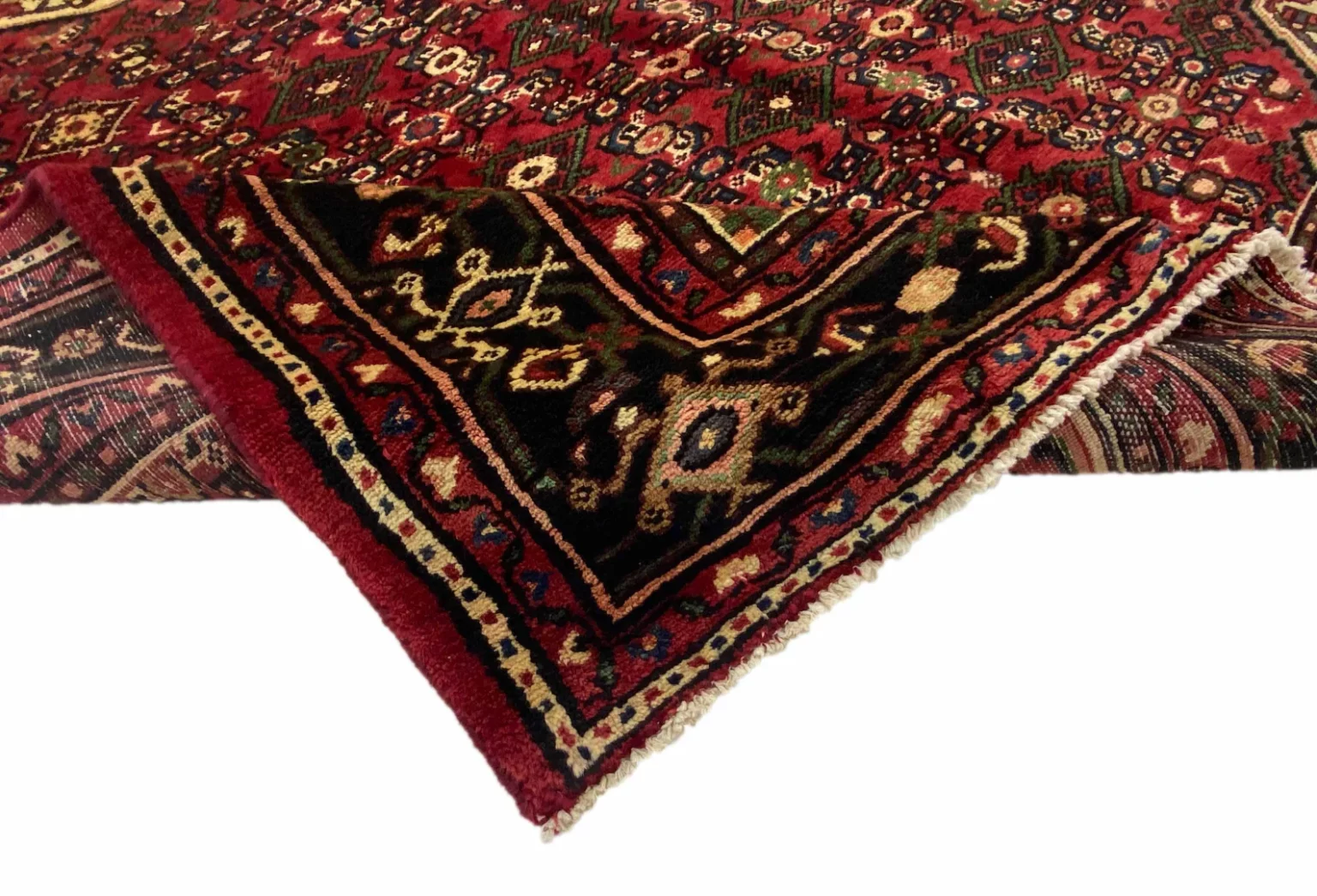
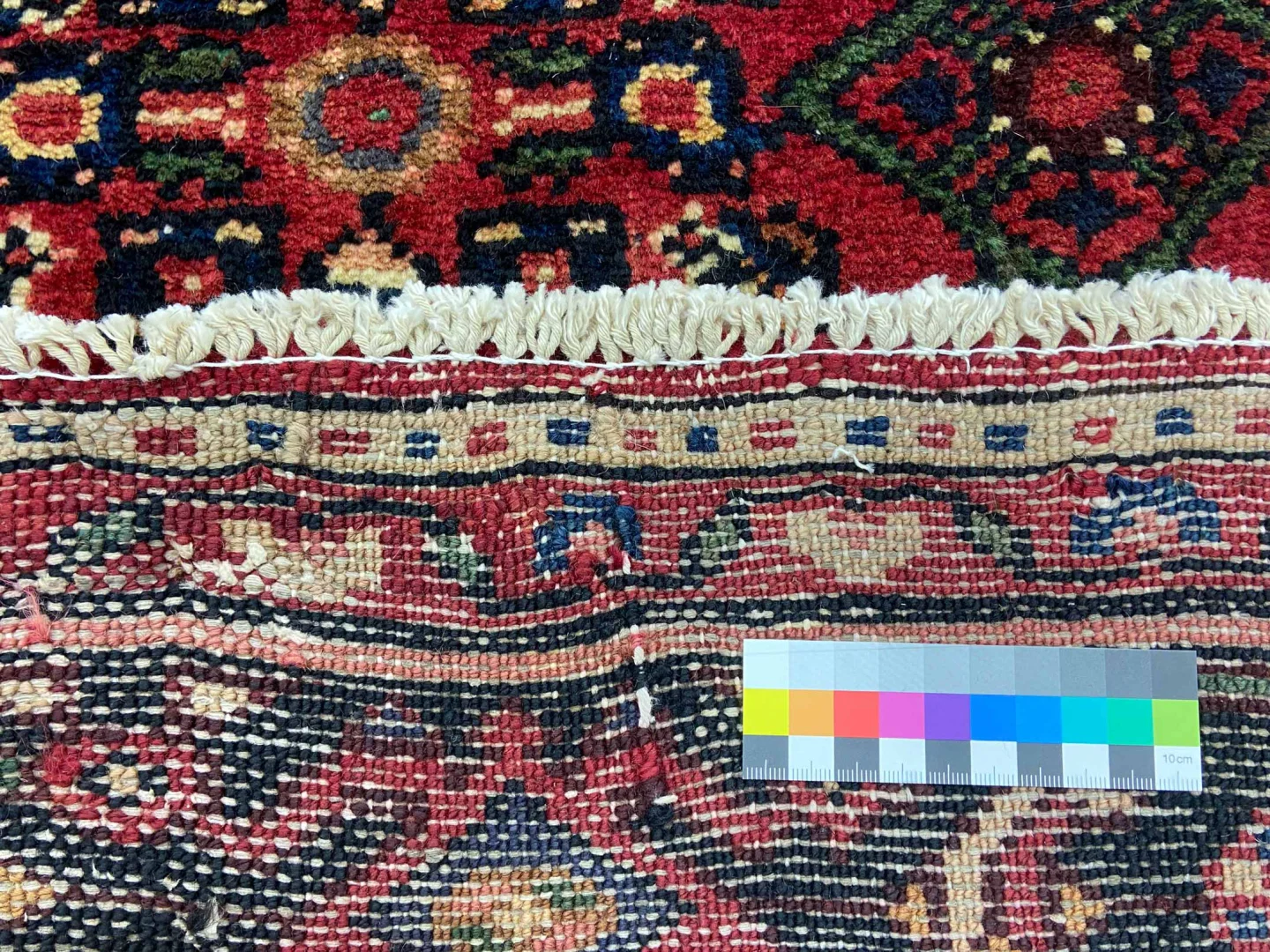
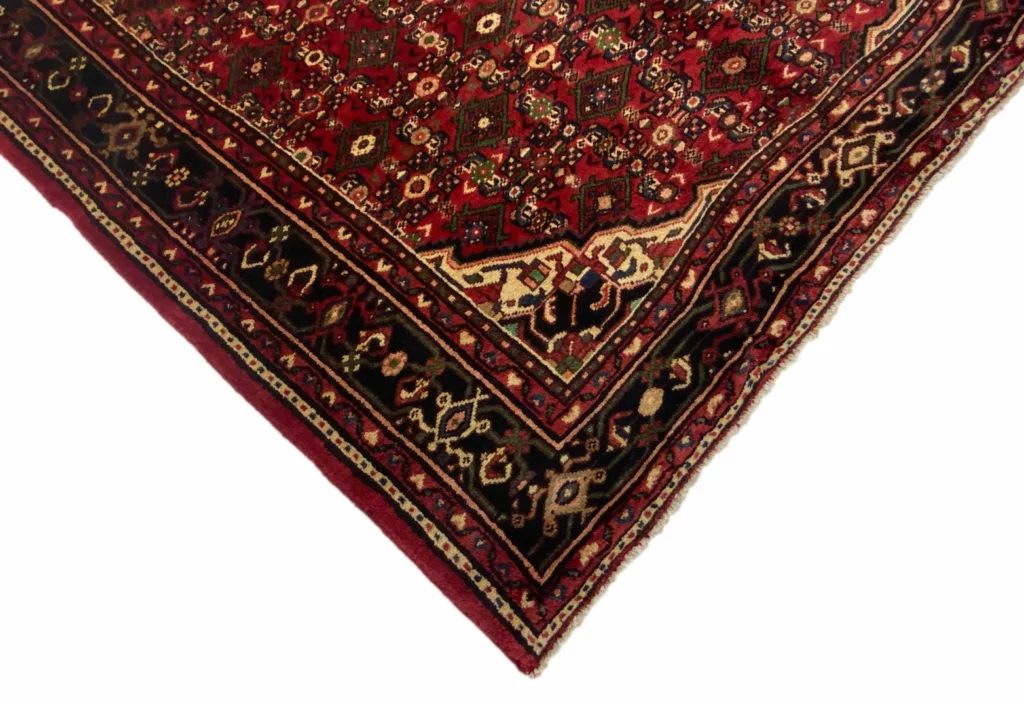
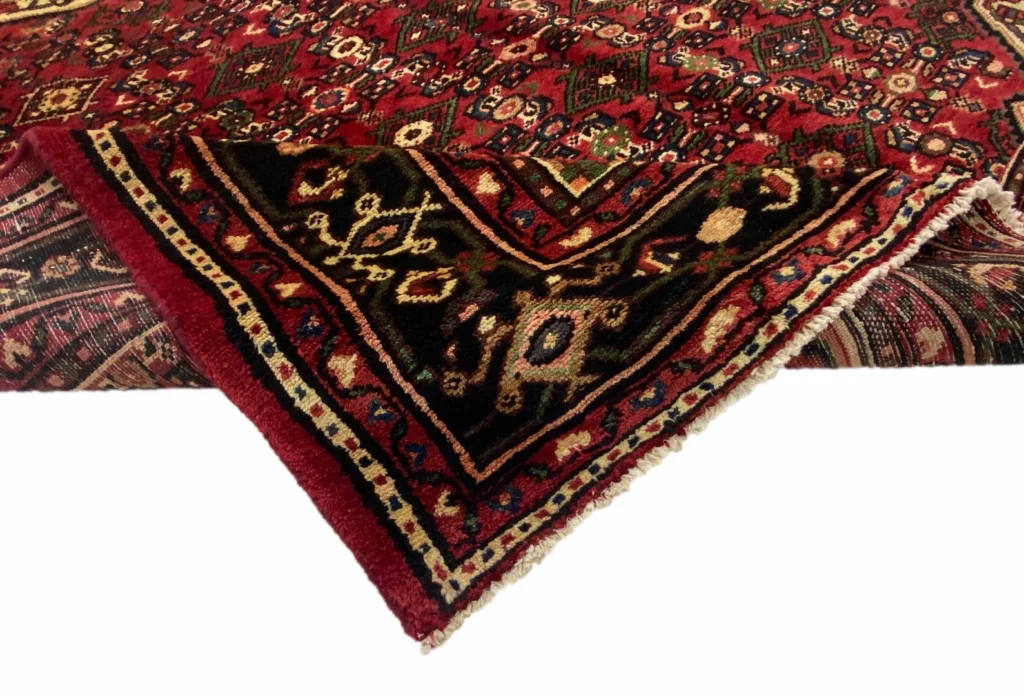
This Hosseinabad Persian rug is hand-knotted with a pile made from hard-wearing wool. Wool has long been used for Oriental rugs because it can provide a durable surface together with a pleasant tactile quality. In a hand-knotted rug, the design is built knot by knot. The pattern therefore becomes part of the textile structure itself rather than being applied to an already finished surface.
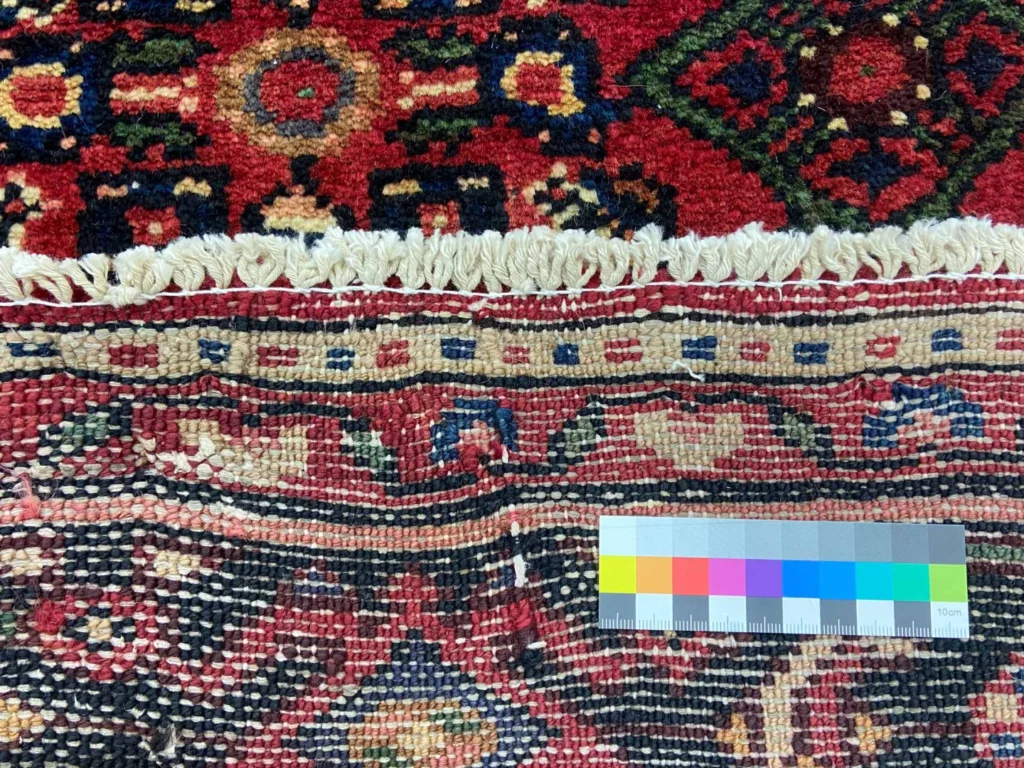
The stated knot density is between 200,000 and 250,000 knots per square metre. Dense knotting supports clearly defined outlines and carefully worked transitions within a pattern. At the same time, hard-wearing wool is a material suited to regular use. The combination of close knotting, natural wool and traditional handwork defines the construction of this type of rug.
With appropriate care, wool can remain in use for a long time and provides a sturdy foundation for a rug placed in frequently used living areas. The natural fibre also gives the pile a substantial feel rather than a smooth, manufactured character. In this rug, craftsmanship is central: the structure, colour fields and decorative forms belong to one individually knotted textile piece.
Origin and Tradition
Hosseinabad is situated in northwestern Persia and is associated with the carpet tradition of the wider Hamadan region. The locality lies south of Hamadan. Hosseinabad rugs are counted among the recognised Hamadan rugs, while retaining a distinct character within that group. Their name refers both to a geographical origin and to an established form of weaving in which practical durability and carefully developed ornament are brought together.
Hosseinabad is known for a rug-making tradition based on handwork, hard-wearing wool, close knotting and clearly structured designs. In regional workshops, traditional motifs are not treated as isolated decoration. They are arranged as part of a coherent composition across the field. The resulting rug retains a recognisable connection between material, knotting technique, colour effect and the pattern traditions of northwestern Persia.
Compared with Hamadan rugs, Hosseinabad rugs are described as having a higher knot density and pronounced durability. Hamadan rugs often show simpler patterns and a lower knot density. This comparison explains why Hosseinabad is viewed as its own regional expression while remaining connected to the wider northwestern Persian tradition. Both names belong to an established carpet culture, yet their execution and pattern effect are not identical.
The weaving culture of northwestern Persia has produced many distinct rug forms. Alongside Hosseinabad and Hamadan, Kashan, Tabriz and Isfahan are associated with their own design languages and with a high level of craftsmanship. Kashan is known for opulent designs and vivid colours, while Tabriz and Isfahan are noted for elaborate patterns. These references help place different Persian rugs in context; they do not alter this rug’s origin in Hosseinabad.
A hand-knotted rug from this tradition combines an object of use with a piece of cultural heritage. Natural materials, an established knotting method and regional ornament give each piece its own character. The making of the rug represents practical knowledge that can be passed from one generation to the next. Hosseinabad is therefore more than a geographical label: it identifies a regional relationship between wool, hand knotting and ornamental design.
Design and Pattern
This Hosseinabad rug is described with either a diamond-shaped medallion or an all-over Herati pattern. A medallion creates a visual centre and arranges the surrounding ornaments around a central form. Its diamond shape gives the composition a clear direction. The surrounding field can echo that central structure, allowing the design to be read as a relationship between the middle and the area around it.
The Herati pattern belongs to the widely established ornament vocabulary of Persian rugs. An all-over Herati design repeats its decorative elements across the field instead of relying solely on one central motif. This produces a continuous pattern image. Repetition creates rhythm, while individual motifs remain legible as parts of an ordered regional design.
The two named pattern possibilities represent different approaches within the Hosseinabad tradition. The diamond medallion gives priority to a central composition. The Herati design places greater emphasis on continuous ornament across the surface. Both approaches use geometric and botanical-looking forms that are frequently combined in Persian carpet art. The motifs are not scattered at random; they follow an inherited order of centre, field and repetition.
The colour range extends from red to dark red. Warm red tones establish a clearly recognisable base, while deeper red nuances can separate ornamental areas more strongly from one another. The palette remains within a coherent red spectrum. The design can therefore be experienced through the shape of the medallion or the repeated Herati structure as well as through the tonal steps within the reds.
In Persian rug design, colour and ornament work together to organise the field. A medallion directs attention towards the centre; an all-over pattern carries the eye across the whole rug. In a Herati composition, the effect comes from continued repetition, while in a medallion design it comes from the relationship between centre and surrounding field. The forms and colours named here connect decorative order with the rug’s Hosseinabad origin.
Related pattern traditions also occur in other Persian rug types, but a pattern name is not automatically an origin name. A Herati pattern does not make this rug a rug from another province. Its origin remains that of a Hosseinabad Persian rug from northwestern Persia. Regional pattern references can therefore be explained without changing the provenance of this individual piece.
Special Features
The special features of this rug are its hand-knotted construction, hard-wearing wool and dense knotting. The natural wool makes it suitable for regular use, while traditional handwork determines the textile structure. The stated knot density supports a detailed rendering of the named designs. In colour, the rug ranges from red through dark red.
Hosseinabad rugs are described as versatile for use in the home. They can be placed in a living room, bedroom or hallway, where they act as an independent textile element within the interior. The combination of durable wool, close hand knotting and regional pattern tradition brings practical use together with a clearly structured decorative effect.
The use of natural materials and plant dyes is associated with an environmentally responsible choice. At the same time, choosing hand-knotted rugs helps maintain traditional craftsmanship. Each hand-knotted piece is an individual textile work because of the way it is made. These features complement the information about origin, material and pattern without adding characteristics that are not stated for this rug.
FAQ
How should I care for a Hosseinabad Persian rug?
Regular vacuuming removes dust and dirt from the pile and helps keep the surface maintained. If a spill occurs, the affected area should be dabbed immediately with a damp cloth. Rubbing should be avoided, since it can work the dirt further into the fibres and place unnecessary strain on the surface. Professional rug cleaning can be useful for a thorough treatment. Any cleaning process should be appropriate for the hand-knotted structure and wool fibres.
Where can I use a Hosseinabad Persian rug?
A Hosseinabad Persian rug can be used in several areas of the home. Living rooms, bedrooms and hallways are examples of suitable spaces. Its hard-wearing wool and dense hand-knotted construction make it suitable for areas that are used regularly. The diamond medallion or Herati pattern adds an organised textile structure to the room. The red to dark-red colour range can serve as a clearly defined element within different interior arrangements.
Are Hosseinabad Persian rugs environmentally friendly?
Hosseinabad Persian rugs are made from natural materials such as wool and are associated with plant dyes. For that reason, they are described as an environmentally friendly choice. Their hand-knotted production also represents a durable form of traditional craft. Using natural materials and continuing established knotting techniques helps preserve practical textile knowledge. In this context, environmental responsibility is connected with the choice of materials, handmade production and the continuation of regional rug-making traditions.
To provide the best experiences, we use technologies like cookies to store and/or access device information. Consenting to these technologies will allow us to process data such as browsing behavior or unique IDs on this site. Not consenting or withdrawing consent, may adversely affect certain features and functions.
Functional Always active
The technical storage or access is strictly necessary for the legitimate purpose of enabling the use of a specific service explicitly requested by the subscriber or user, or for the sole purpose of carrying out the transmission of a communication over an electronic communications network.
Preferences
The technical storage or access is necessary for the legitimate purpose of storing preferences that are not requested by the subscriber or user.
Statistics
The technical storage or access that is used exclusively for statistical purposes.The technical storage or access that is used exclusively for anonymous statistical purposes. Without a subpoena, voluntary compliance on the part of your Internet Service Provider, or additional records from a third party, information stored or retrieved for this purpose alone cannot usually be used to identify you.
Marketing
The technical storage or access is required to create user profiles to send advertising, or to track the user on a website or across several websites for similar marketing purposes.
 SECURE PAYMENT
 SHIPPING PARTNERS