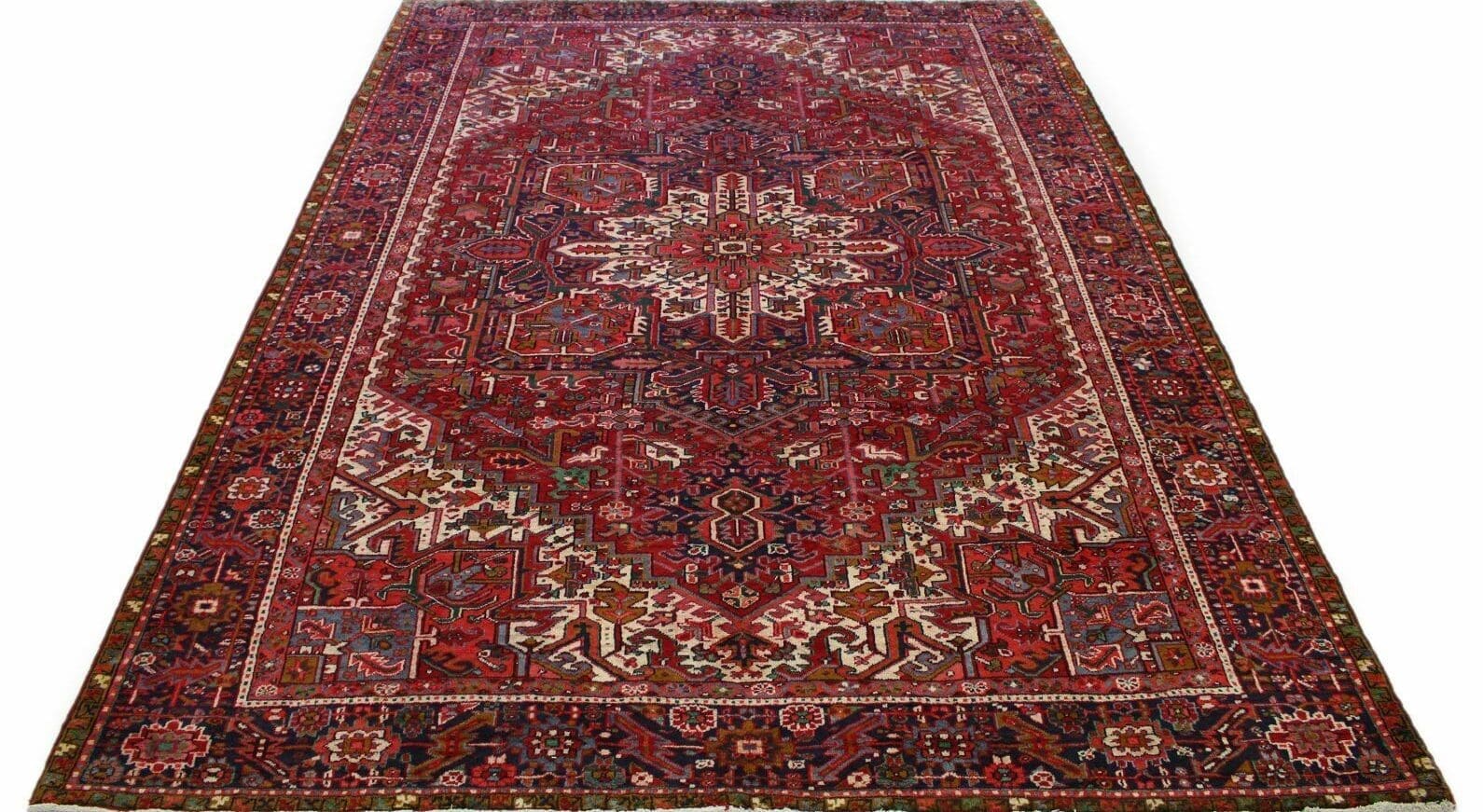
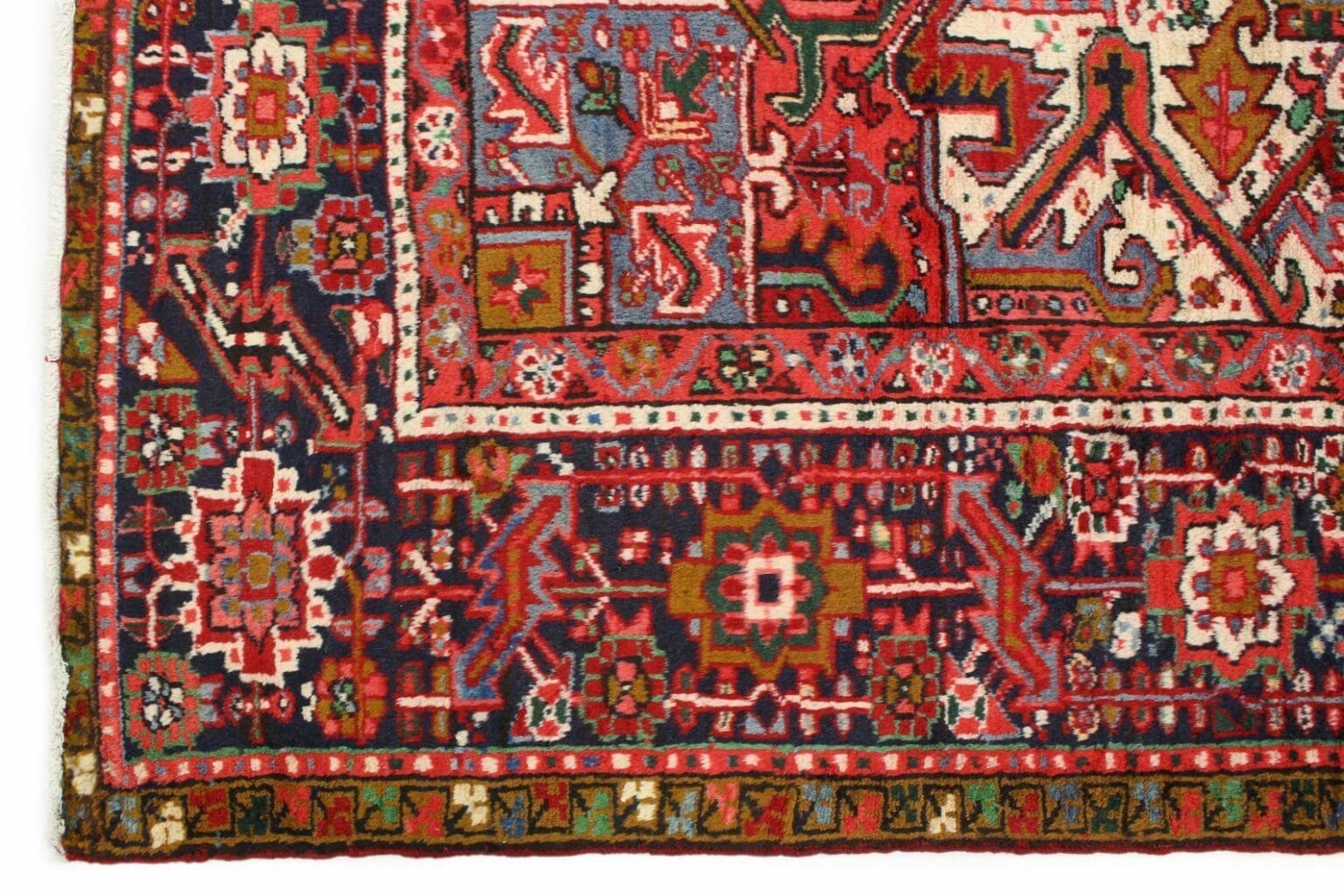
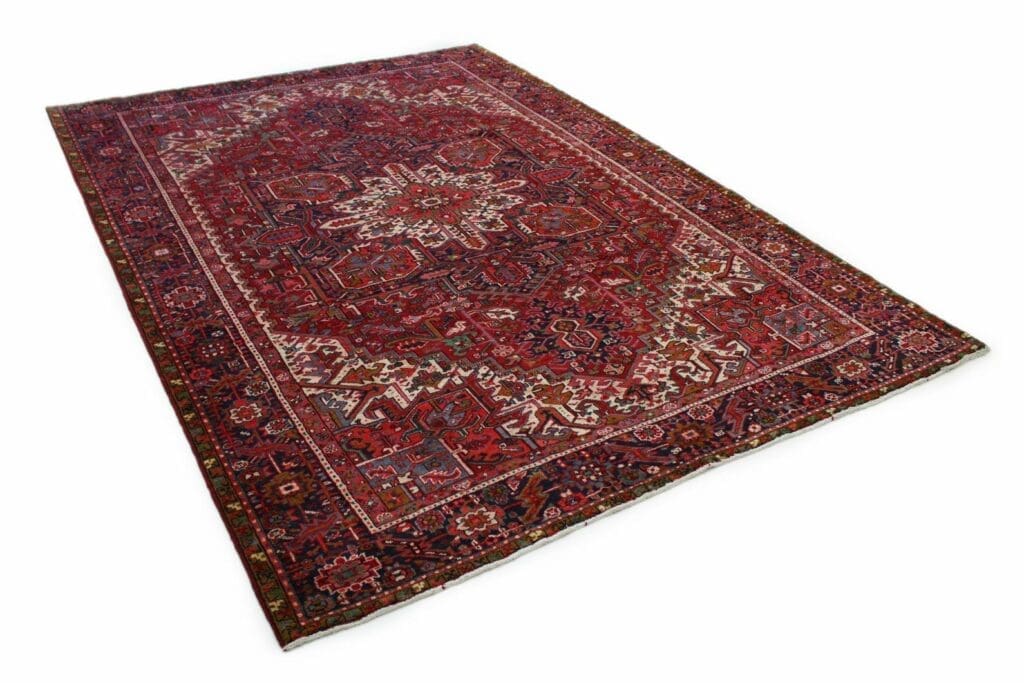
This Heriz Persian rug is hand-knotted and inspected. The pile is made of wool, while cotton forms the warp. Wool creates the visible and tactile surface; cotton belongs to the inner foundation of the rug. Wool has long been used in Persian rugs because it is durable and pleasant to the touch. Its resilient textile character supports the sturdy impression of a hand-knotted piece.
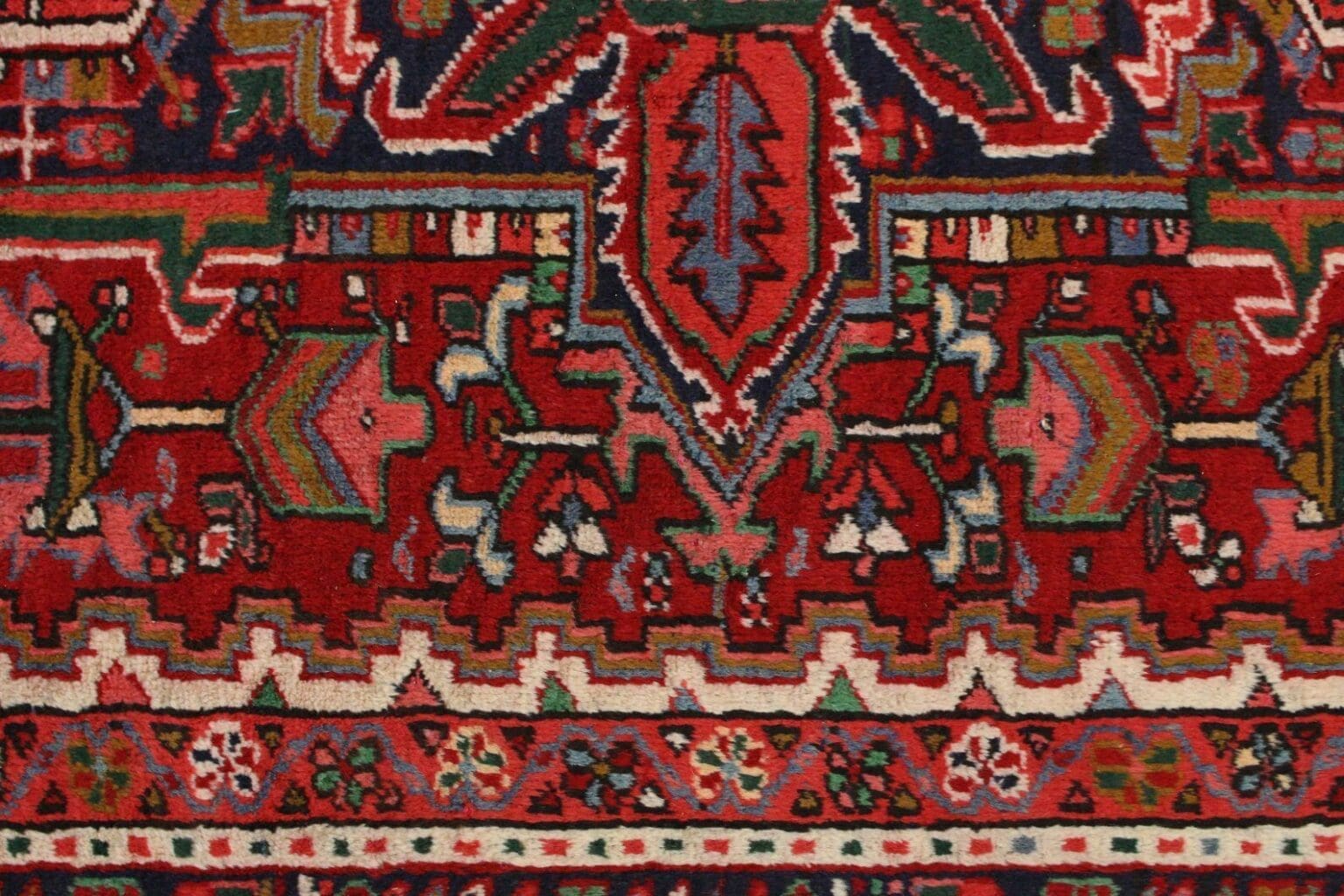
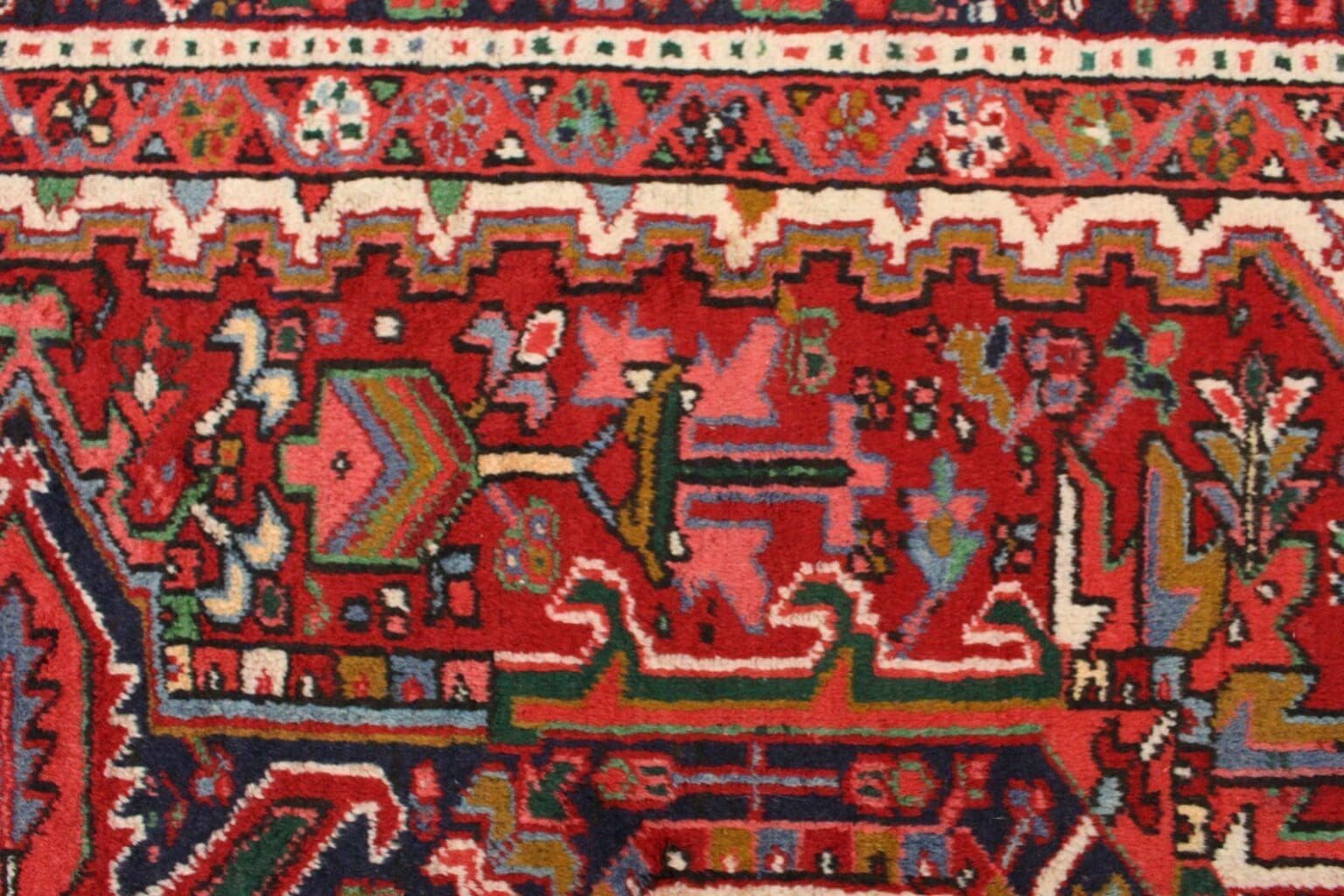
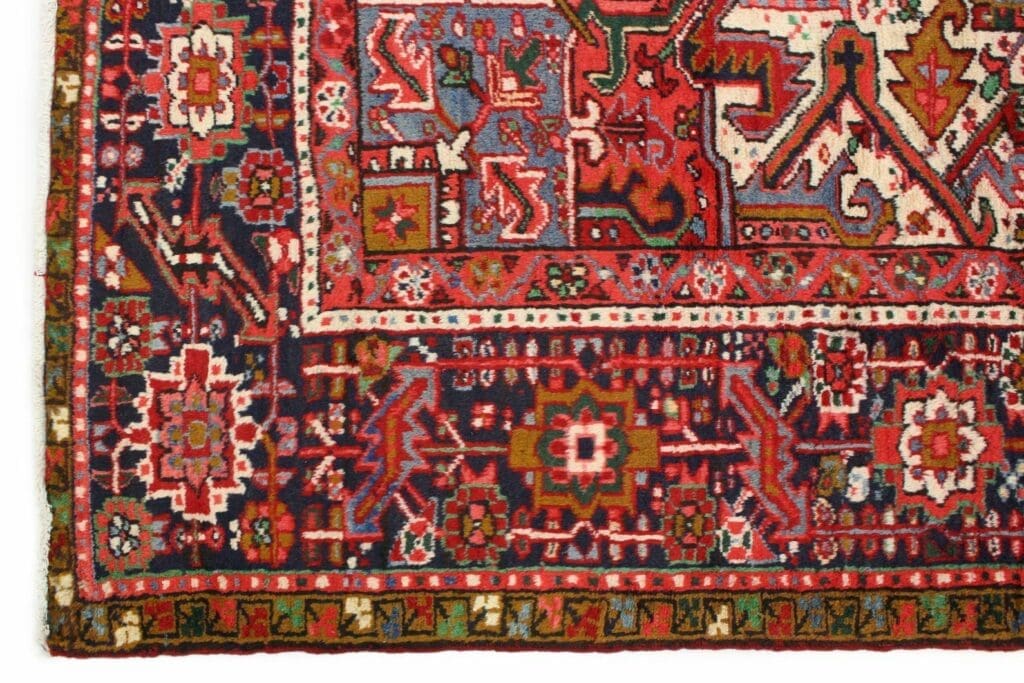
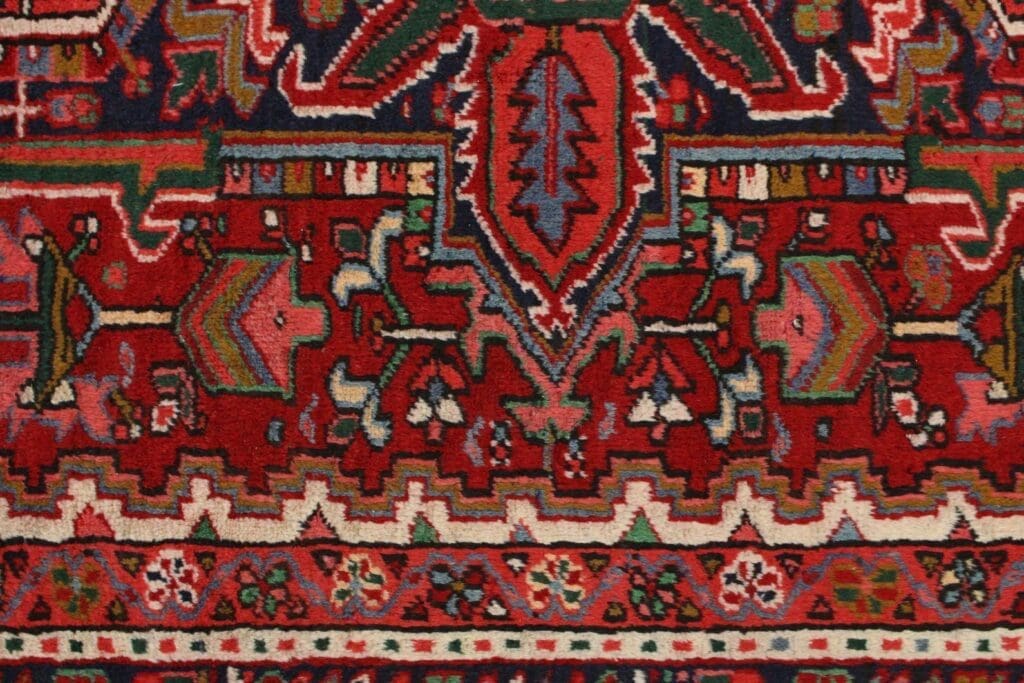
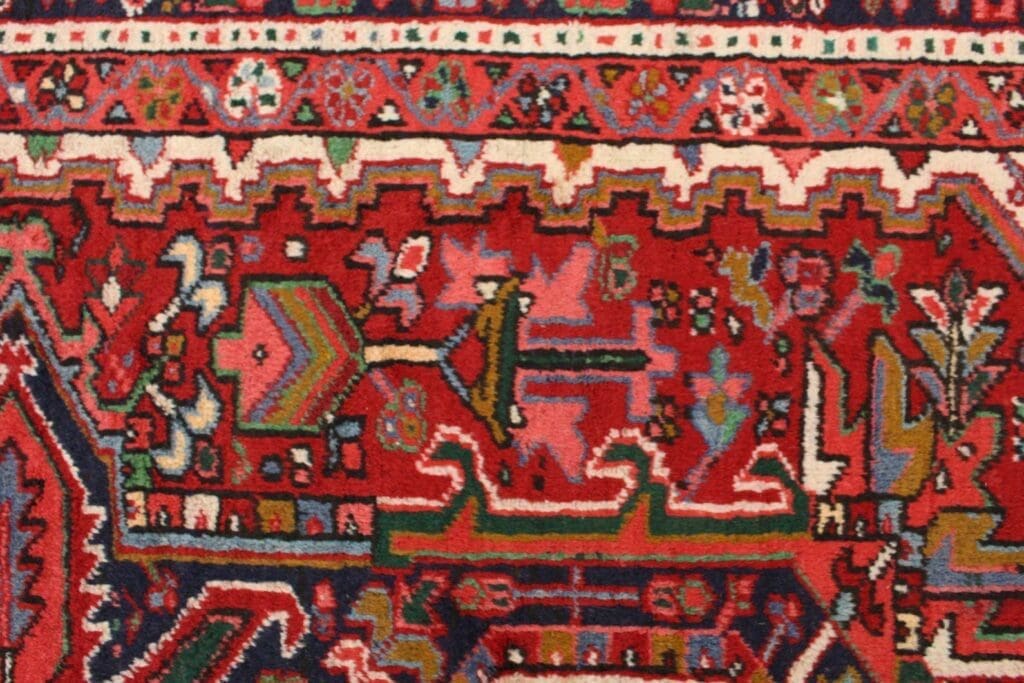
The knot density is approximately 120,000 knots per square metre. In hand-knotting, the design is built from individual knots worked into the warp row by row. Knot density affects how finely lines, fields and geometric shapes can be rendered. The back of a hand-knotted rug shows structured knotting, while the front presents the design through the wool pile. This construction is distinct from machine production.
The wool was washed and dyed by hand. Washing and dyeing influence both the feel of the fibre and the appearance of the finished colour. Vivid red tones define this rug’s colour impression. Professional washing is also explicitly included in its condition. Together with the hand-knotting, these details give a clear account of the rug’s materials, making and care history.
The rug is between 30 and 50 years old and is described as used. It is therefore an existing one-off piece rather than newly produced series merchandise. Its workmanship has been inspected. The wool pile, cotton warp, hand-knotting, age, used condition and professional wash are the recorded characteristics of this particular rug.
Origin and Tradition
Heriz is in northern Iran and is known for rugs with geometric designs and strong colours. The name Heriz identifies the region and does not merely describe a decorative motif. Heriz Persian rugs belong to an Iranian knotting tradition in which regional design, practical craftsmanship and the use of wool are closely connected.
Rug making is deeply rooted in the culture and history of the region. Knowledge of preparing wool, setting the warp, building rows and arranging motifs has traditionally been passed from one generation to the next. Handwork remains central to this tradition and distinguishes it from industrial machine production. Each hand-knotted rug is formed through many separate stages of work and develops its own textile structure.
Heriz is one of Iran’s well-known rug towns. The regional tradition is especially associated with clearly defined geometric forms and powerful colours. Lines, angles, enclosed fields and an organised centre often shape the visual character of such designs. This language makes Heriz rugs recognisable within the wider landscape of Iranian Persian rugs, while individual pieces can still have their own compositions.
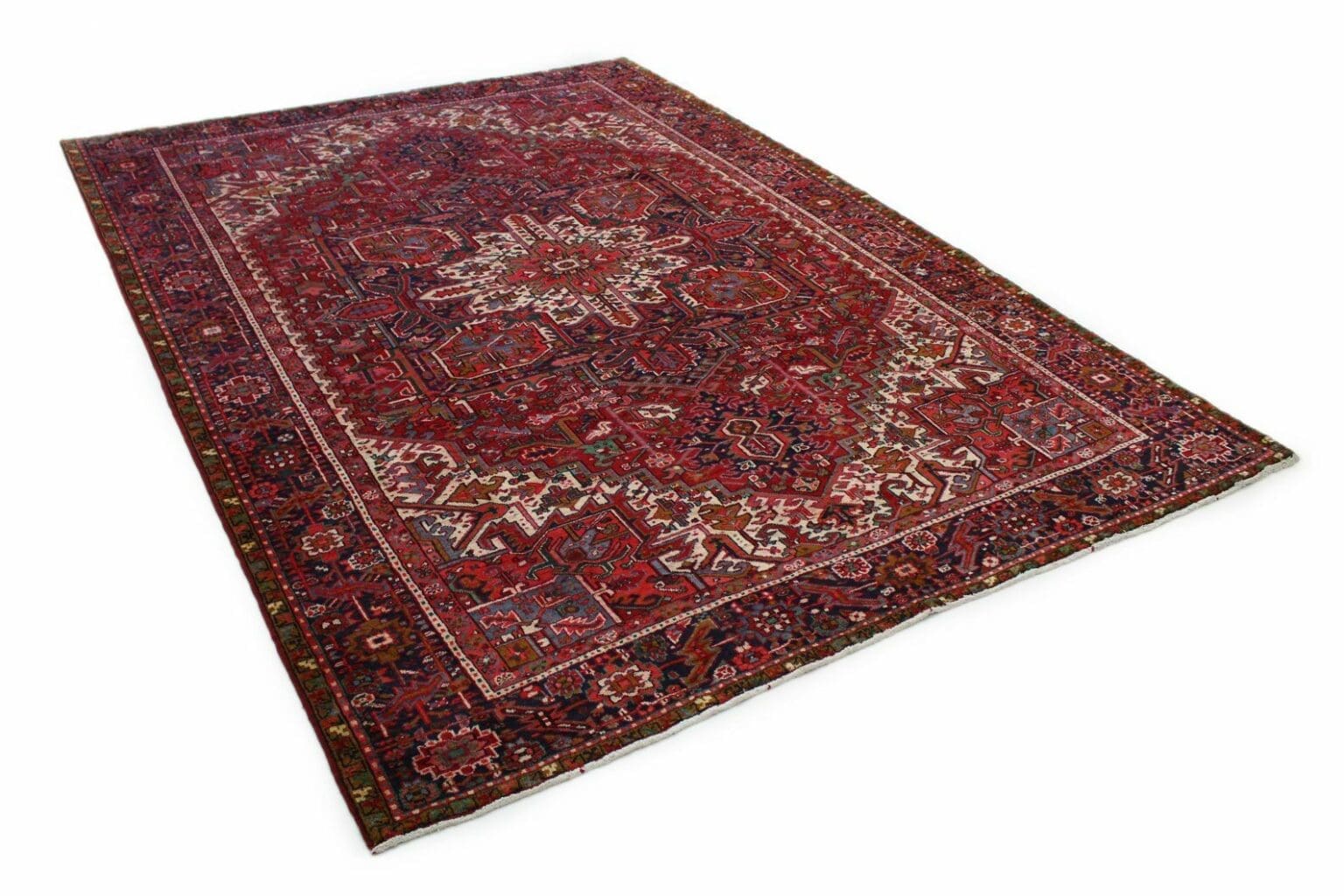
Heriz rugs are traditionally often coloured with a combination of natural plant dyes and synthetic colourants. This can create a differentiated palette and is associated with good colour fastness. Red is the dominant colour in the rug described here. Its vivid reds, geometric pattern and central medallion are the explicitly identified features of its appearance.
The transfer of knowledge within families and workshops helps preserve regional patterns over time. At the same time, knotting remains a craft in which material, colour and execution work together in each individual piece. The northern Iranian origin therefore supplies the cultural and design context for this rug. It places the piece within the Heriz tradition without replacing its specific description as a hand-knotted, inspected rug.
Design and Pattern
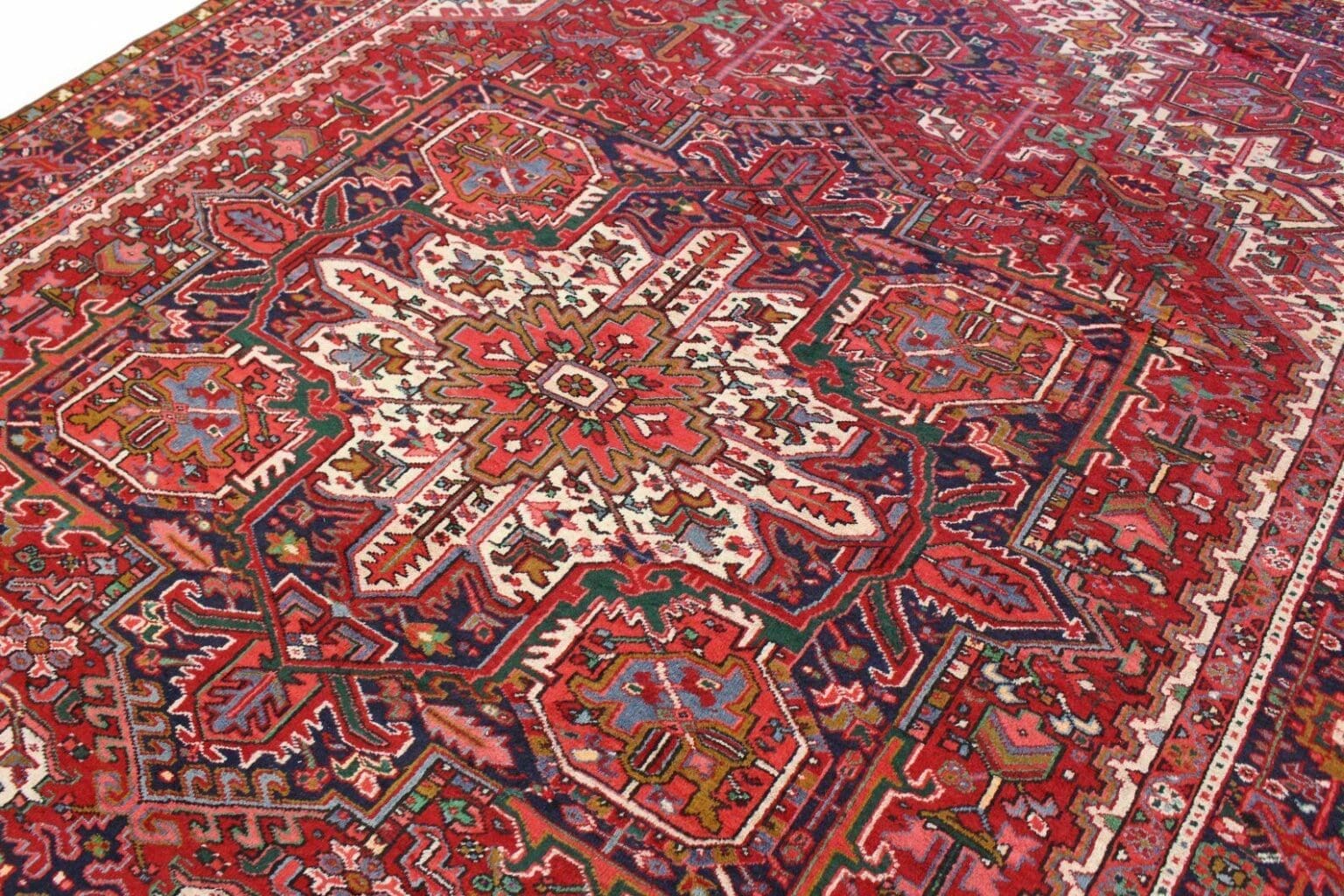
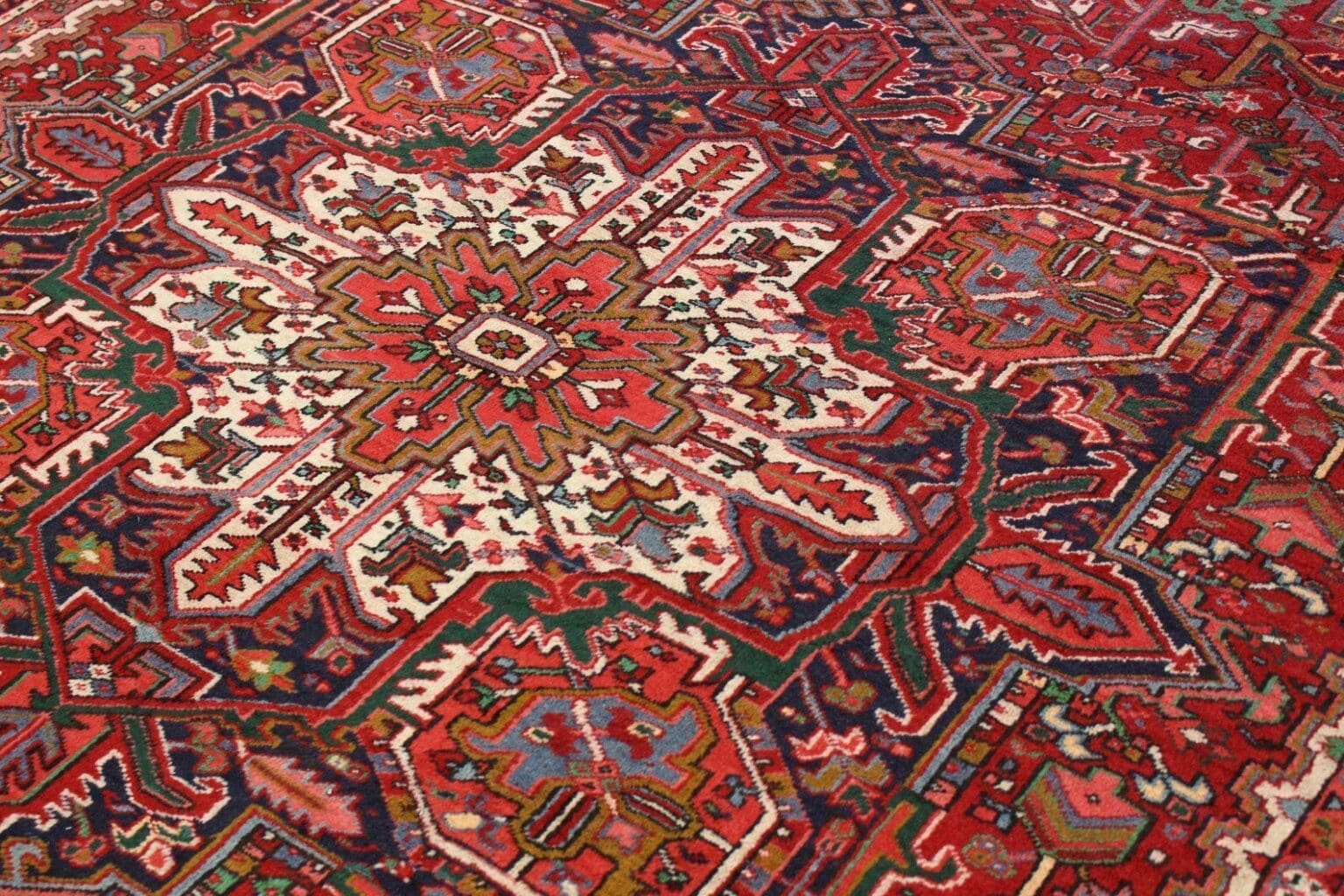
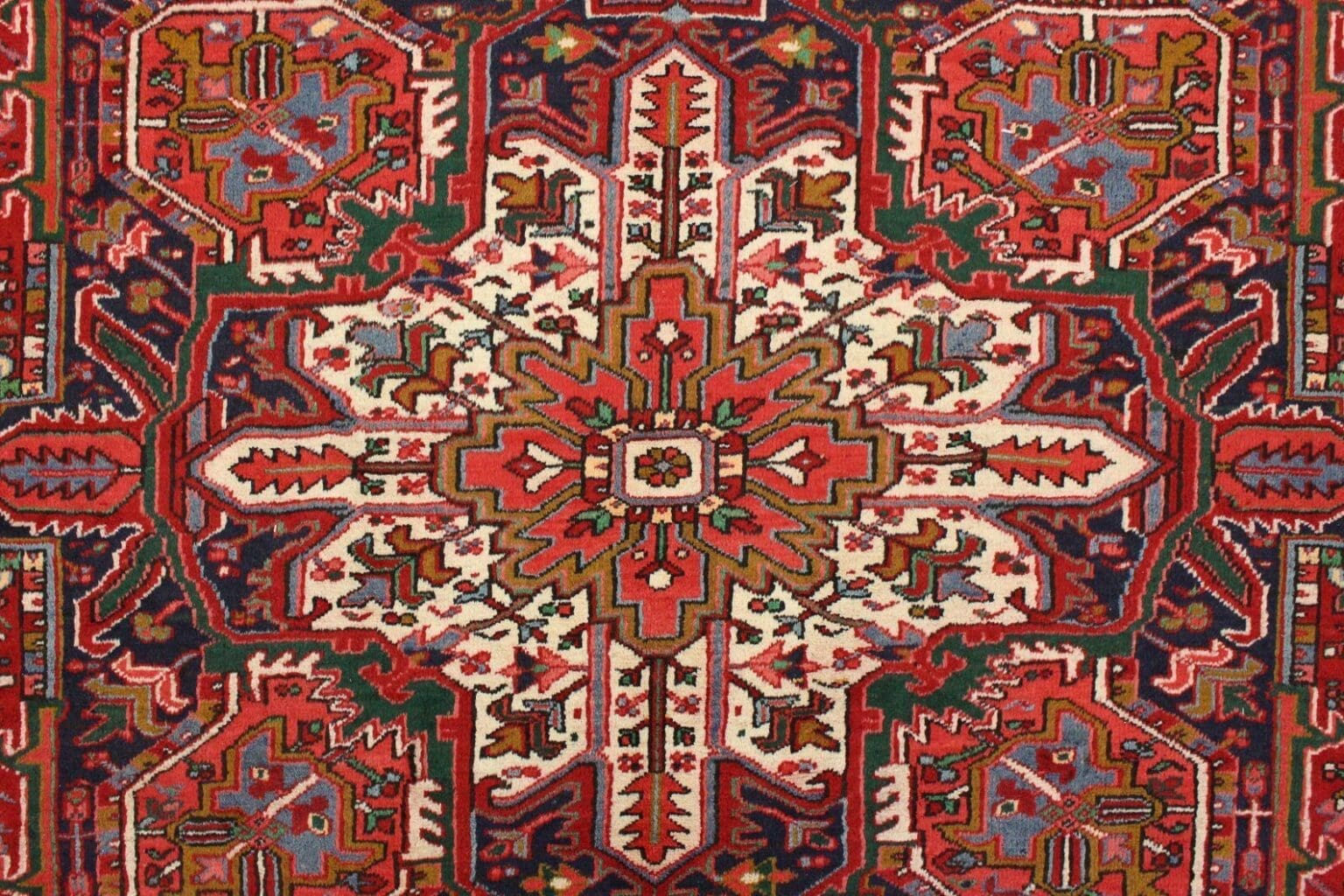
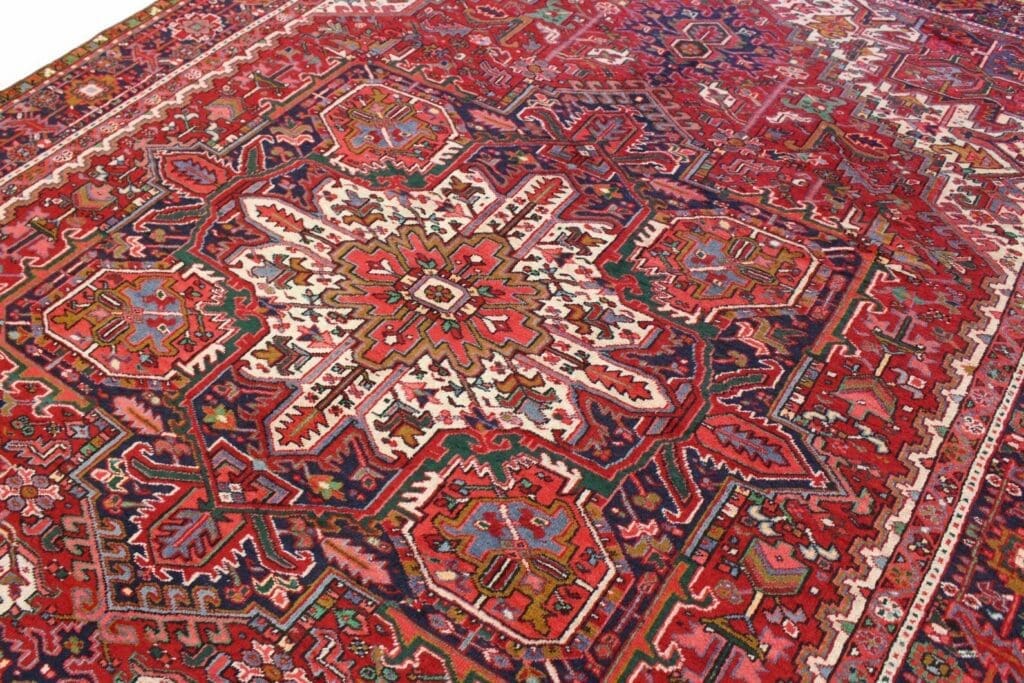
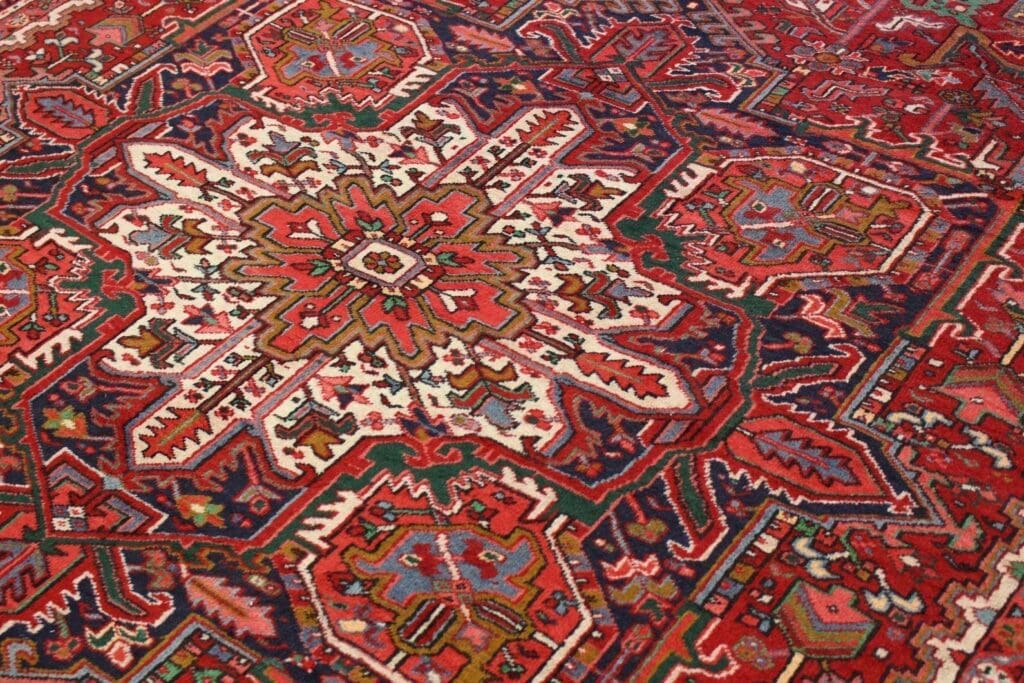
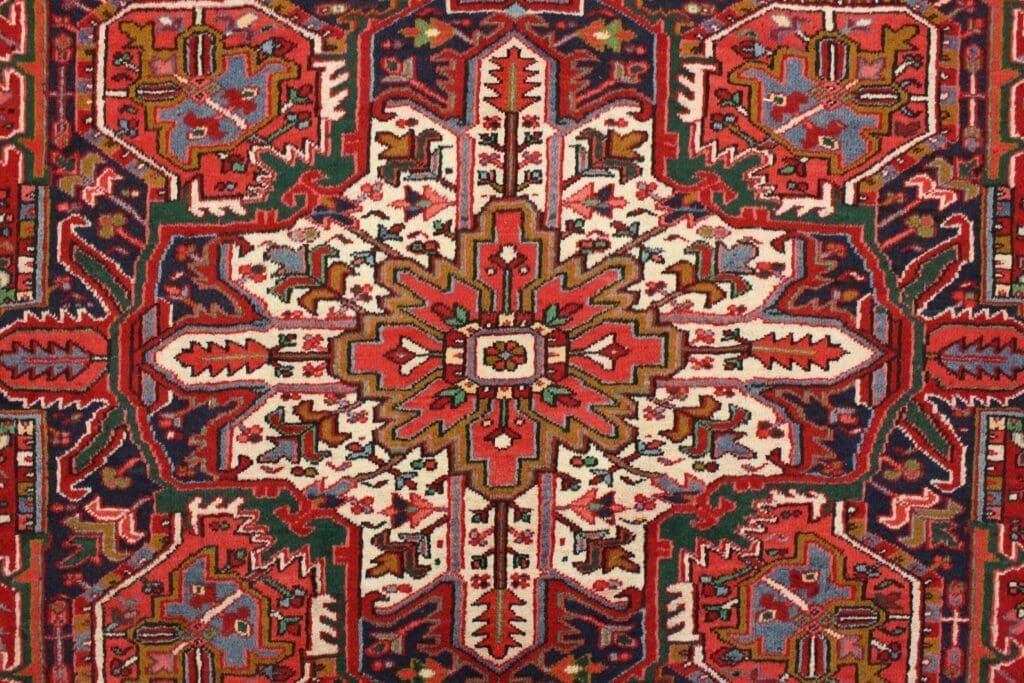
The design is geometric and includes a central medallion. The medallion serves as the visual centre of the composition. The other forms and lines relate to this centre, giving the pattern a clear and understandable order. A central layout is a familiar principle in Persian rug design because a focal element can connect the surrounding sections into one composition.
The strong red colour is combined with different geometric shapes. Angular elements, lines and defined fields create a structured visual language. The source specifically identifies a geometric pattern with a medallion for this rug. Its appearance can therefore be described as the combination of vivid reds, geometric form and a central arrangement.
Geometric patterning is one of the defining design languages of the Heriz tradition. Rather than relying solely on floral imagery, it uses angles, outlines, symmetry and separated fields. The composition can be read as a whole from a distance, while closer viewing reveals the arrangement of the individual forms and the hand-crafted development of the surface.
The medallion establishes a clear point of focus. Lines and shapes around it can be arranged rhythmically in relation to that centre. In a hand-knotted rug, this order is not printed onto the surface; it is built knot by knot. Colour fields, contours and transitions emerge from the relationship between fibre, knotting and dye. The design is therefore both a decorative pattern and a visible expression of construction.
The style is described as traditionally Persian and Oriental. This identifies the historical design vocabulary without prescribing one particular furnishing period. A geometric Heriz design can be understood in a traditional interior as well as beside simpler contemporary furniture. The defining features remain the red colour scheme, central medallion and clearly articulated geometric forms.
Special Features
The stated special features include inspected workmanship, an age of 30 to 50 years, a used condition and professional washing. The rug is described as hand-knotted. Its robust construction and wool material make it suitable for areas with frequent foot traffic, as the description states. Suggested settings include living rooms, bedrooms, studies, dining rooms and offices.
The rug is suitable for underfloor heating. Its wool fibres are described as practical to care for because they can repel dirt and dust. Gentle cleaning remains appropriate so that the wool pile and hand-knotted surface are treated carefully. The combination of regional origin, material, pattern, technique and condition forms the factual profile of this Heriz Persian rug.
FAQ
How should I care for my Persian rug?
Regular vacuuming helps remove loose dust and dirt. The knots should not be exposed to strong direct suction, so the hand-knotted surface is treated gently. For stains, use a mild soap solution and a soft cloth. Clean the affected area carefully and avoid vigorous rubbing. Since the pile is wool, a gentle routine is appropriate. If heavier soiling occurs, professional rug washing is the suitable treatment.
Where is the best place to use this Persian rug?
The Heriz Persian rug can be used in living rooms, bedrooms, studies, dining rooms and offices. Its robust construction and wool pile make it suitable for areas that receive frequent use. The red geometric pattern with its central medallion provides a defined visual accent. Because the rug is suitable for underfloor heating, it can also be used in rooms equipped with that system.
How can I recognise an authentic Persian rug?
When assessing a hand-knotted Persian rug, relevant characteristics include the knotting technique, the quality of the wool and the regional design. The back should show clear, structured knotting. Geometric patterns can provide indications of a regional tradition; Heriz is identified as the origin of this piece. The combination of wool pile, cotton warp and hand-crafted construction is also part of its factual description. This rug is additionally described as inspected.
To provide the best experiences, we use technologies like cookies to store and/or access device information. Consenting to these technologies will allow us to process data such as browsing behavior or unique IDs on this site. Not consenting or withdrawing consent, may adversely affect certain features and functions.
Functional Always active
The technical storage or access is strictly necessary for the legitimate purpose of enabling the use of a specific service explicitly requested by the subscriber or user, or for the sole purpose of carrying out the transmission of a communication over an electronic communications network.
Preferences
The technical storage or access is necessary for the legitimate purpose of storing preferences that are not requested by the subscriber or user.
Statistics
The technical storage or access that is used exclusively for statistical purposes.The technical storage or access that is used exclusively for anonymous statistical purposes. Without a subpoena, voluntary compliance on the part of your Internet Service Provider, or additional records from a third party, information stored or retrieved for this purpose alone cannot usually be used to identify you.
Marketing
The technical storage or access is required to create user profiles to send advertising, or to track the user on a website or across several websites for similar marketing purposes.
 SECURE PAYMENT
 SHIPPING PARTNERS


