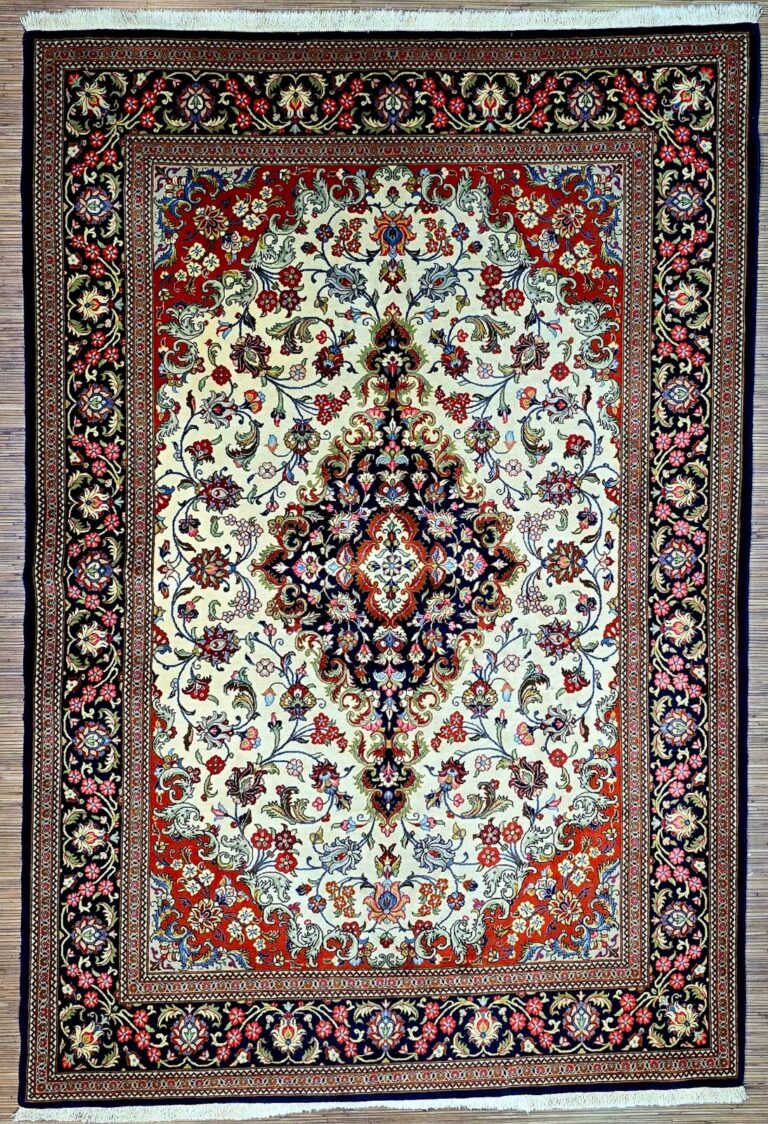
This Hamadan Persian rug is hand-knotted and has a rich pile made from durable wool. Wool is one of the established materials used in Persian rug making because it combines resilience with a pleasant surface. Here, the material gives the pile a substantial, comfortable feel while supporting the practical use of the rug in an interior. The relationship between wool, knotting and pile is central to the character of the finished textile: each element contributes to both its handling and its appearance.
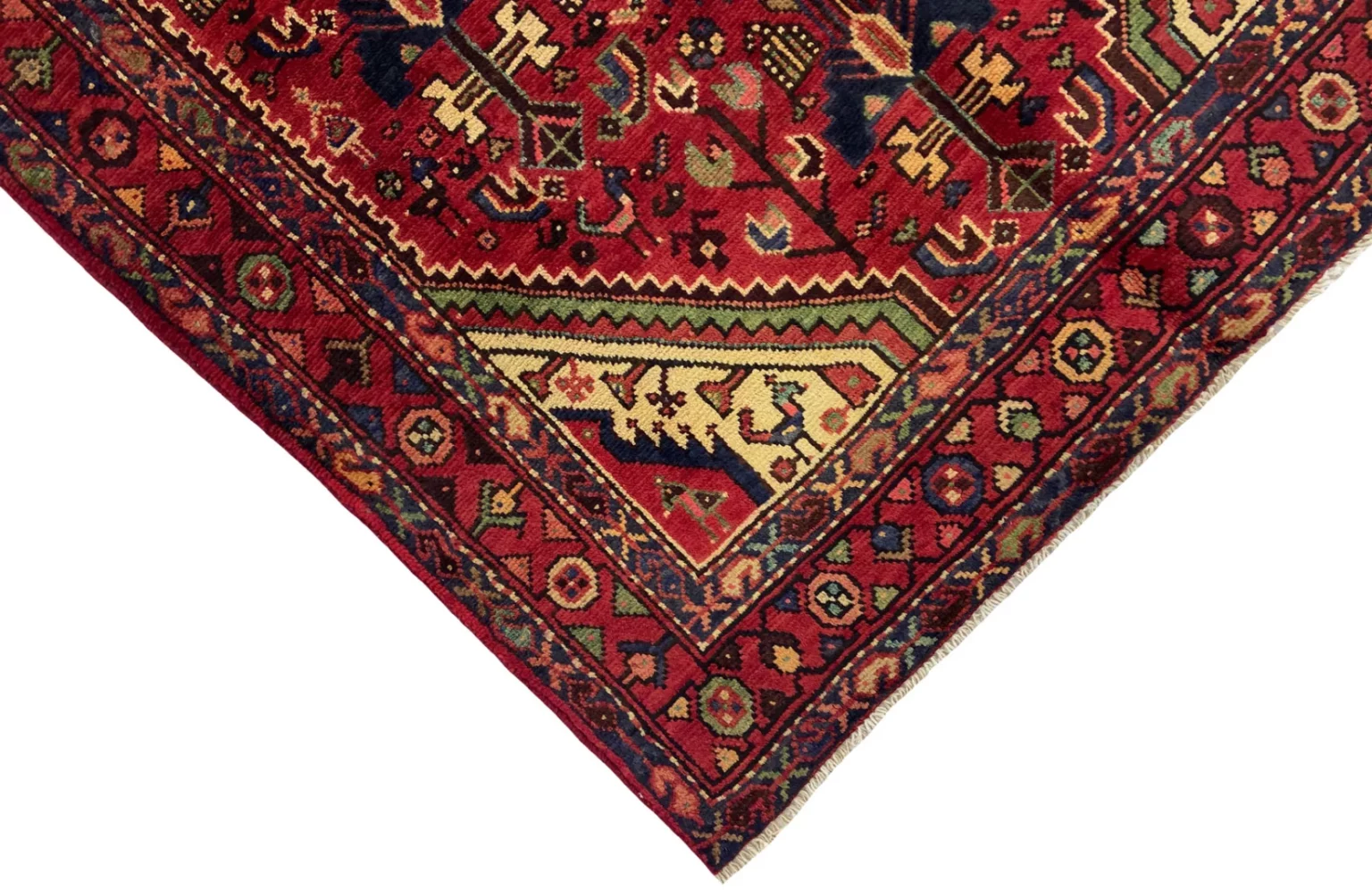
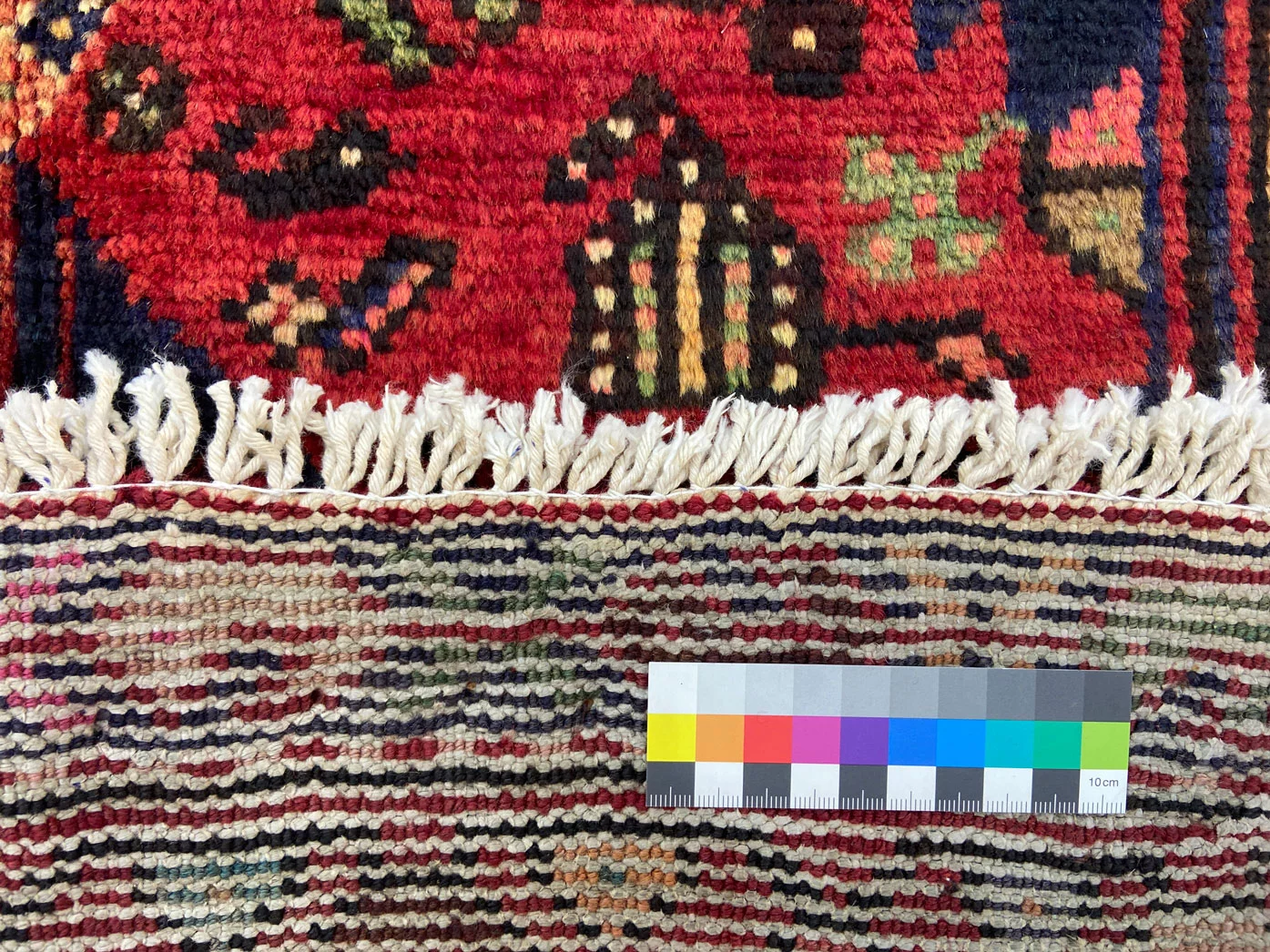
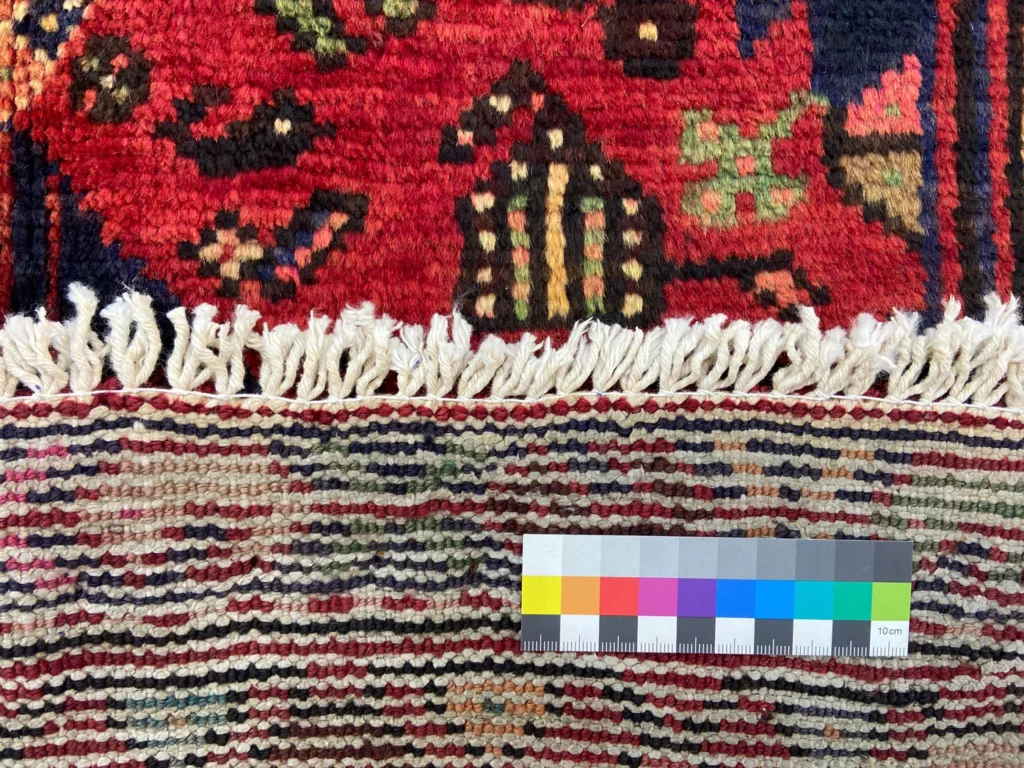
Hand knotting is a gradual process in which the structure is built through many individual knots. It requires care, repetition and a confident understanding of the design being followed. The knot density recorded for this rug ranges from 100,000 to 350,000 knots per square metre. Such a density provides a basis for working more differentiated outlines and smaller elements into a pattern. The rich pile adds depth to the tactile surface produced by the knotted construction.
Durable wool has long been valued in oriental rug making for its ability to withstand use while retaining a comfortable handle. Its fibres can create a pile that feels firm enough for everyday contact without losing its softness. In a hand-knotted rug, the material is prepared and placed through a sequence of skilled actions rather than formed as a uniform industrial sheet. This makes the craft process inseparable from the final texture. For this piece, the stated material is durable wool in the pile, combined with hand-knotted construction.
The density of the knots also relates to the way a design can be articulated. A higher number of knots within a given area can support more controlled transitions, fine contours and detailed ornament. The stated range should not be read as a separate decorative feature; it describes the technical structure behind the visible pattern. Together with the rich pile, it identifies a rug made through a detailed textile process rooted in Persian carpet craft.
Origin and Tradition
Hamadan is a city in north-western Persia and gives its name to this Persian rug. The city and the surrounding area are associated with a long and varied carpet tradition. Rather than representing a single uniform workshop style, the wider Hamadan region includes many villages and local weaving centres. Their different practices and design preferences have contributed to the broad range of rugs known under the Hamadan name.
Assadabad, Khamseh and Nahawand are among the villages and places connected with the surrounding weaving landscape. Their presence helps explain why Hamadan rugs appear in such a variety of designs and patterns. Rugs from Nahawand and Tuyserkan are also valued within this regional context and may share related techniques or visual approaches. They are associated with strong colours and complex patterns, while still forming distinct parts of the broader north-west Persian tradition.
The knowledge behind Persian carpet making is transmitted through generations. It includes the preparation of materials, the organisation of a field and border, the setting of knots and the disciplined interpretation of a design. Hand workers learn through practice how a pattern is maintained across the developing textile and how individual details are placed in relation to one another. A hand-knotted Hamadan rug therefore reflects a living craft tradition in which regional knowledge becomes visible through a particular piece of work.
The landscape of the Hamadan area is culturally diverse, with urban production, village weaving and neighbouring centres contributing to the regional identity. This variety is one reason the Hamadan group cannot be reduced to one fixed motif or one prescribed arrangement. Local traditions can preserve recognisable ideas while allowing changes in scale, ornament and composition. The references to Nahawand and Tuyserkan show how closely related weaving areas participate in the same wider tradition, with their own emphasis on strong colours and intricate patterning.
Persian rugs carry practical and cultural functions at the same time. They are made for use, but their patterns and methods also preserve knowledge about the communities where they are woven. In the Hamadan region, the range of designs is part of that cultural record. Each hand-knotted rug is a separate result of the maker’s work, even when it uses familiar regional forms. The origin therefore provides a framework of tradition, while the individual knotting gives the finished rug its particular expression.
The regional background also explains the continuing association of Hamadan with variety. Several villages may work with comparable construction principles while selecting different arrangements of floral, geometric or figurative motifs. This does not make the rugs interchangeable. It shows instead how a shared tradition can produce many visual outcomes. The rug offered here belongs to that Persian regional context through its Hamadan origin and its hand-knotted manufacture.
Design and Pattern
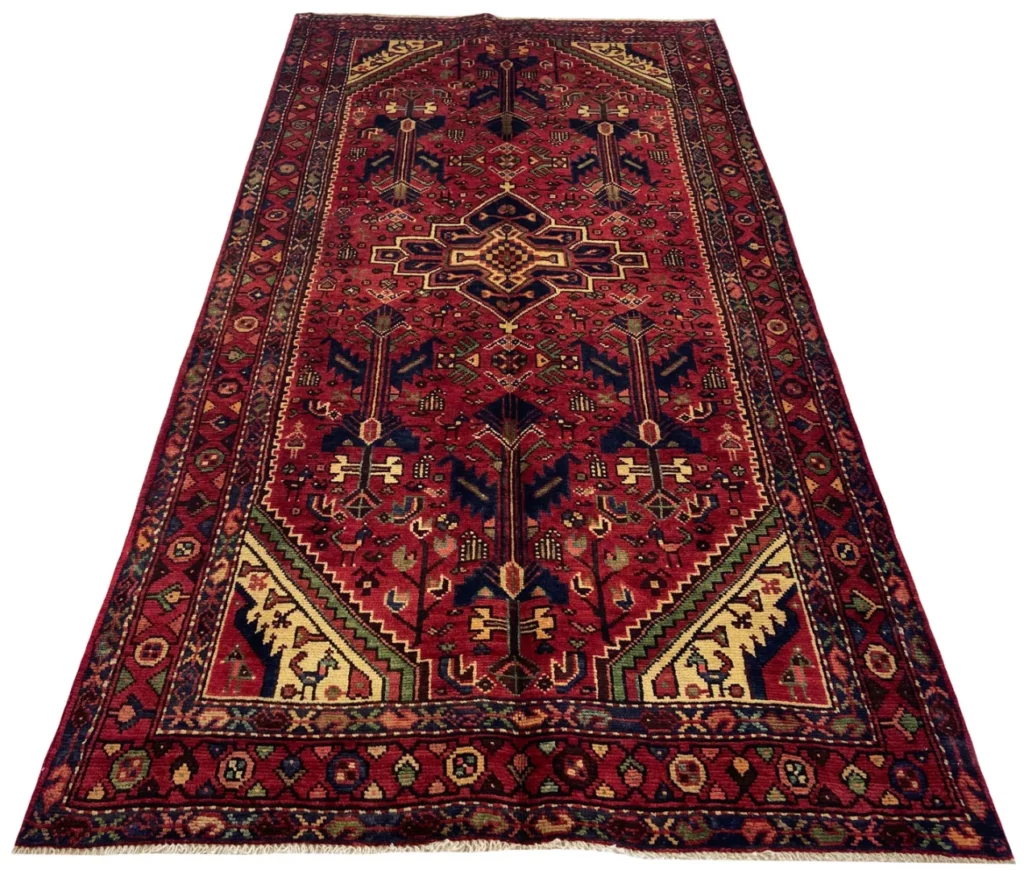
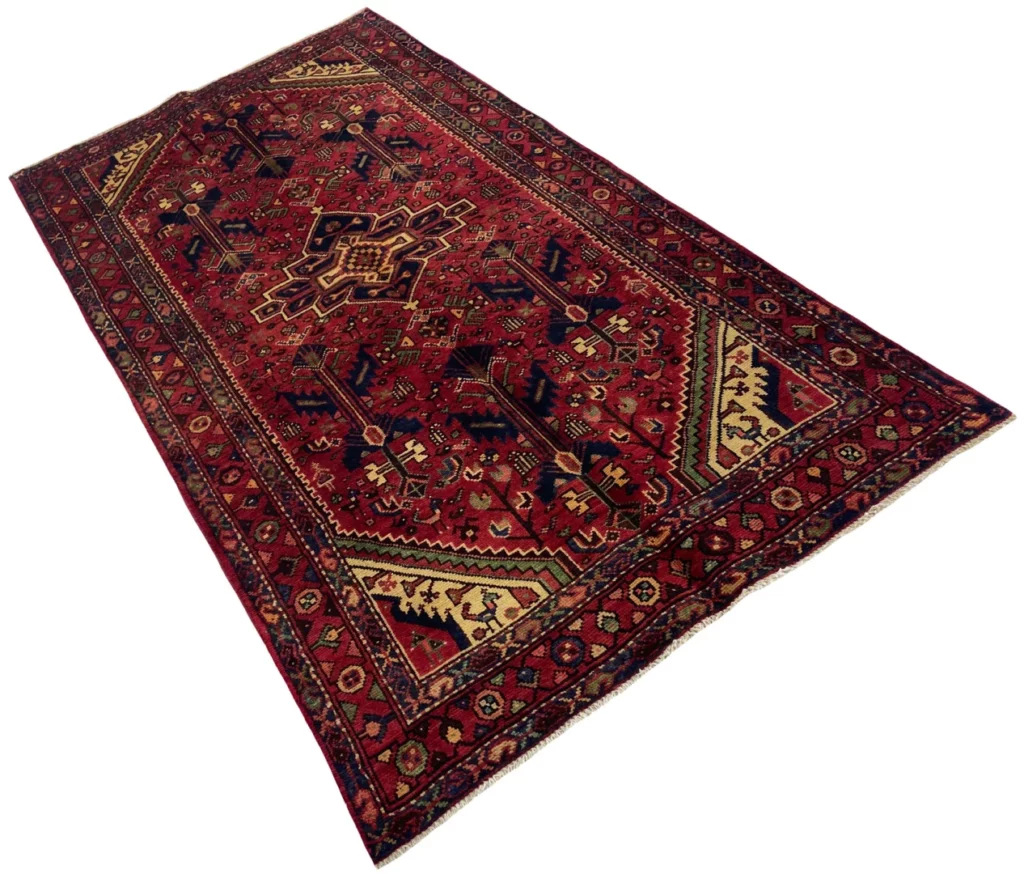
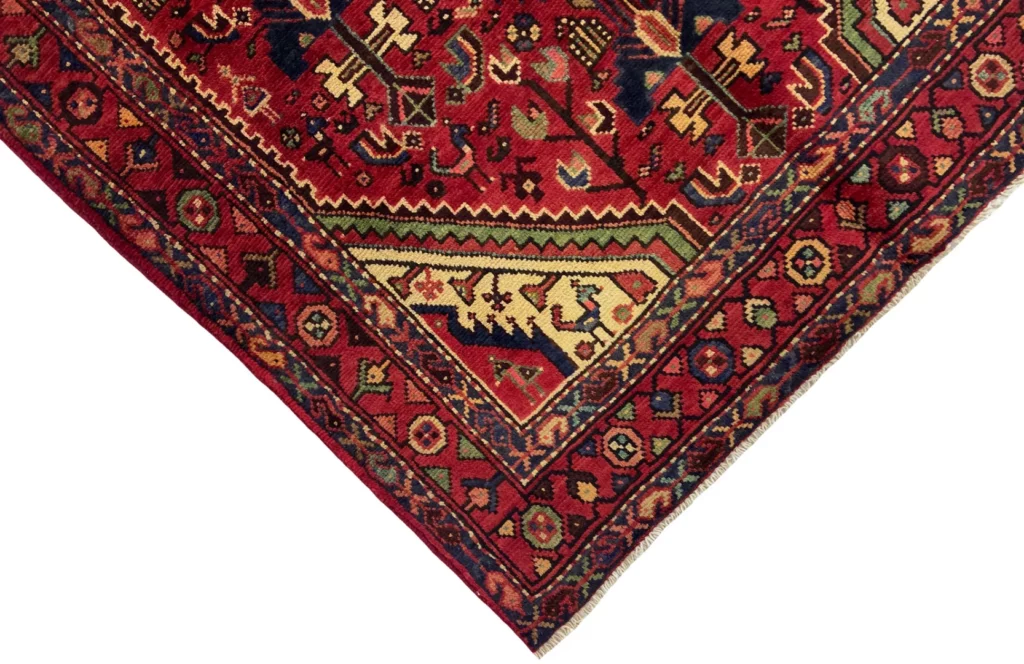
The pattern of this Hamadan rug is described as varied in design. Hamadan weaving is known for a broad repertoire that includes floral motifs, geometric forms and stylised representations of animals. These categories can be used separately or brought together in different combinations. Floral elements introduce plant-based ornament, geometric shapes organise the composition, and stylised animals add a figurative note without being rendered as naturalistic pictures.
Floral ornament in Persian rugs is generally translated into a pattern language of flowers, leaves, stems and related shapes. The forms are arranged for a woven surface, so repetition, balance and framing are important. A motif is not simply copied as an isolated image; it becomes part of a field or border and relates to the surrounding elements. In a hand-knotted rug, these relationships are built gradually, with lines and contours emerging from successive rows of knots.
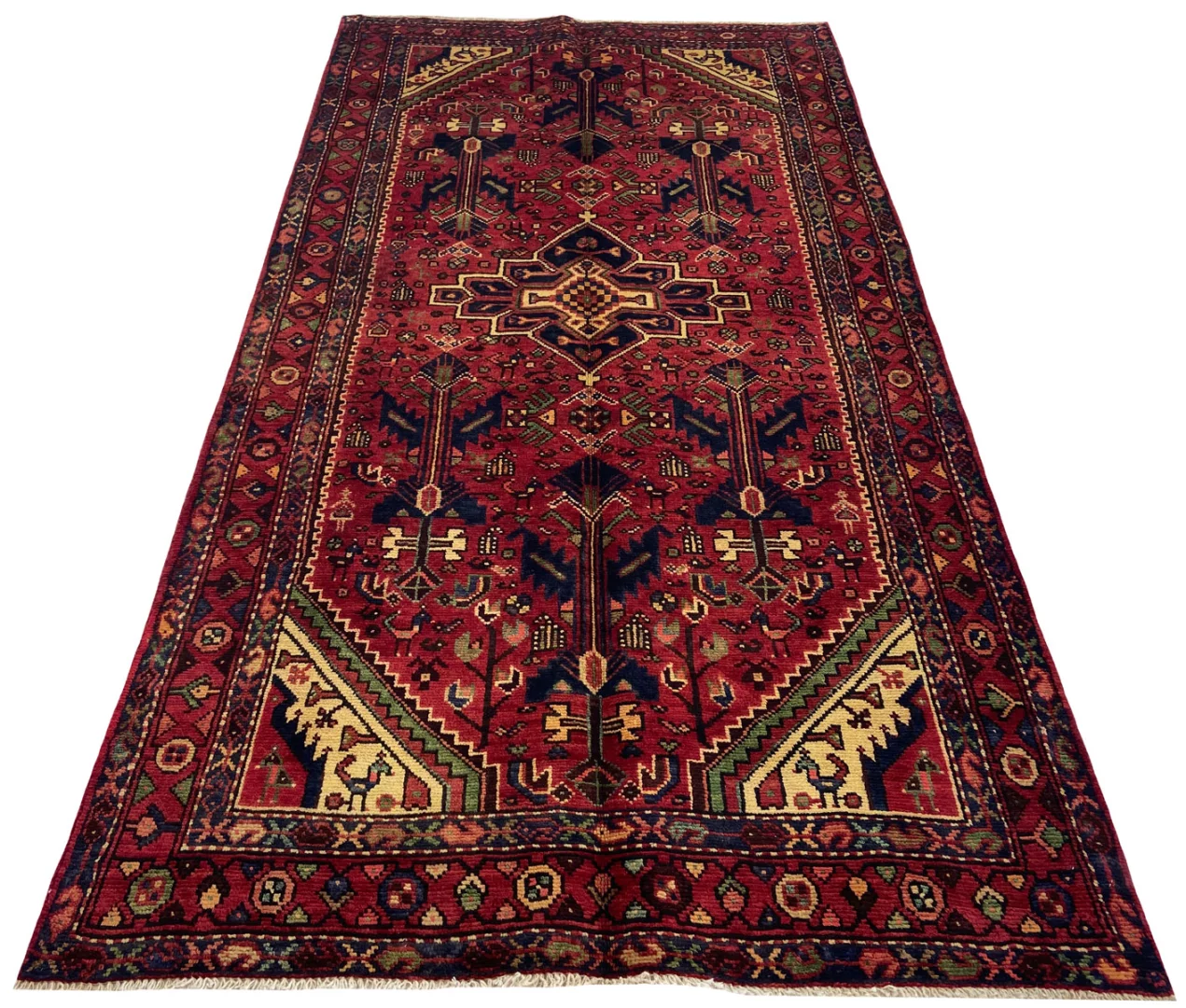
Geometric design provides another important route within the Hamadan repertoire. Diamonds, angular lines, stepped forms and divided fields can give a composition a clear internal structure. Geometry may remain prominent or be combined with flowers and other ornament. Its role is not limited to a rigid arrangement: variations in scale and placement can make the pattern more complex. The regional diversity of Hamadan rugs comes partly from the many ways these established forms can be assembled.
Stylised animal figures belong to the traditional vocabulary as well. They are simplified into decorative signs so that they can fit within the rhythm of the textile. Their purpose is not photographic representation, but the integration of a living form into an ornamental composition. When animal motifs appear alongside floral and geometric elements, they add another layer to the design language associated with the region. The description of this rug as having varied designs leaves room for this wider range of traditional pattern types.
Knot density affects the degree to which a design can be drawn. This rug has a stated density of 100,000 to 350,000 knots per square metre. A detailed knotted structure can support carefully controlled edges and smaller pattern components, while the rich pile gives the surface a fuller textile presence. Technical construction and visual design are therefore connected, but they are not the same claim: the specific pattern characteristic here is its variety of designs, within a Hamadan tradition that includes floral, geometric and stylised animal motifs.
Rugs from the Hamadan area are also associated with strong colours and complex patterns, particularly when considered alongside related weaving centres such as Nahawand and Tuyserkan. This regional background helps place the varied design vocabulary in context without assigning an unrecorded colour scheme to this individual rug. Its documented pattern description remains broad. It identifies the piece as part of a tradition in which different ornamental approaches can coexist and in which the final arrangement is shaped by the particular handwork.
The value of a regional design tradition lies in its continuity as well as its variation. Familiar motifs can be recognised across different rugs, yet their proportions, combinations and arrangement change from one work to another. This prevents a Hamadan rug from becoming a mechanically repeated image. The design is carried by the structure of the knots and the decisions made during the weaving process, resulting in an oriental textile with a distinct regional vocabulary.
Special Features
This rug combines a Hamadan origin, hand-knotted construction and a rich pile of durable wool. Its knot density is given as 100,000 to 350,000 knots per square metre, and its pattern is described as varied in design. The piece is also described as being in well-preserved condition. Together, these details identify a Persian rug whose material, technique, regional background and visual language are clearly defined.
A hand-knotted rug is both a functional textile and the result of skilled manual work. The wool pile offers resilience and a comfortable surface, while the pattern gives the rug its decorative role. Rugs of this kind can also help dampen sound in a room and act as thermal insulation. These practical effects complement the cultural and visual qualities of the Hamadan tradition rather than replacing them.
FAQ
How should I care for my Hamadan Persian rug?
Regular vacuuming helps remove loose dirt from the rich wool pile and keeps the surface orderly. When a deeper clean is needed, professional cleaning is recommended. Direct sunlight should be avoided because it can cause colours to fade. Gentle, appropriate care protects the textile surface and helps maintain the rug’s well-preserved condition. Strong treatments or unsuitable cleaning methods should not be used in place of specialist attention.
What sizes are available for Hamadan rugs?
Hamadan rugs are made in many different sizes. The range includes small runners, medium-sized rugs and large room rugs suitable for areas such as living rooms or dining spaces. This variety is part of the general Hamadan rug tradition and allows the type to be used in different interiors. The individual rug presented here has the format specified in its product details, while other Hamadan rugs may have different proportions.
What makes Hamadan rugs distinctive?
Their distinctive character comes from the combination of traditional hand craftsmanship, durable materials and a broad design vocabulary. Their north-west Persian origin connects them with a weaving culture whose knowledge has been passed down through generations. Floral motifs, geometric shapes and stylised animal figures illustrate the range of patterns found in the region. A Hamadan Persian rug therefore brings together practical use, regional tradition and individual handwork in one textile piece.
To provide the best experiences, we use technologies like cookies to store and/or access device information. Consenting to these technologies will allow us to process data such as browsing behavior or unique IDs on this site. Not consenting or withdrawing consent, may adversely affect certain features and functions.
Functional Always active
The technical storage or access is strictly necessary for the legitimate purpose of enabling the use of a specific service explicitly requested by the subscriber or user, or for the sole purpose of carrying out the transmission of a communication over an electronic communications network.
Preferences
The technical storage or access is necessary for the legitimate purpose of storing preferences that are not requested by the subscriber or user.
Statistics
The technical storage or access that is used exclusively for statistical purposes.The technical storage or access that is used exclusively for anonymous statistical purposes. Without a subpoena, voluntary compliance on the part of your Internet Service Provider, or additional records from a third party, information stored or retrieved for this purpose alone cannot usually be used to identify you.
Marketing
The technical storage or access is required to create user profiles to send advertising, or to track the user on a website or across several websites for similar marketing purposes.

 SECURE PAYMENT
 SHIPPING PARTNERS