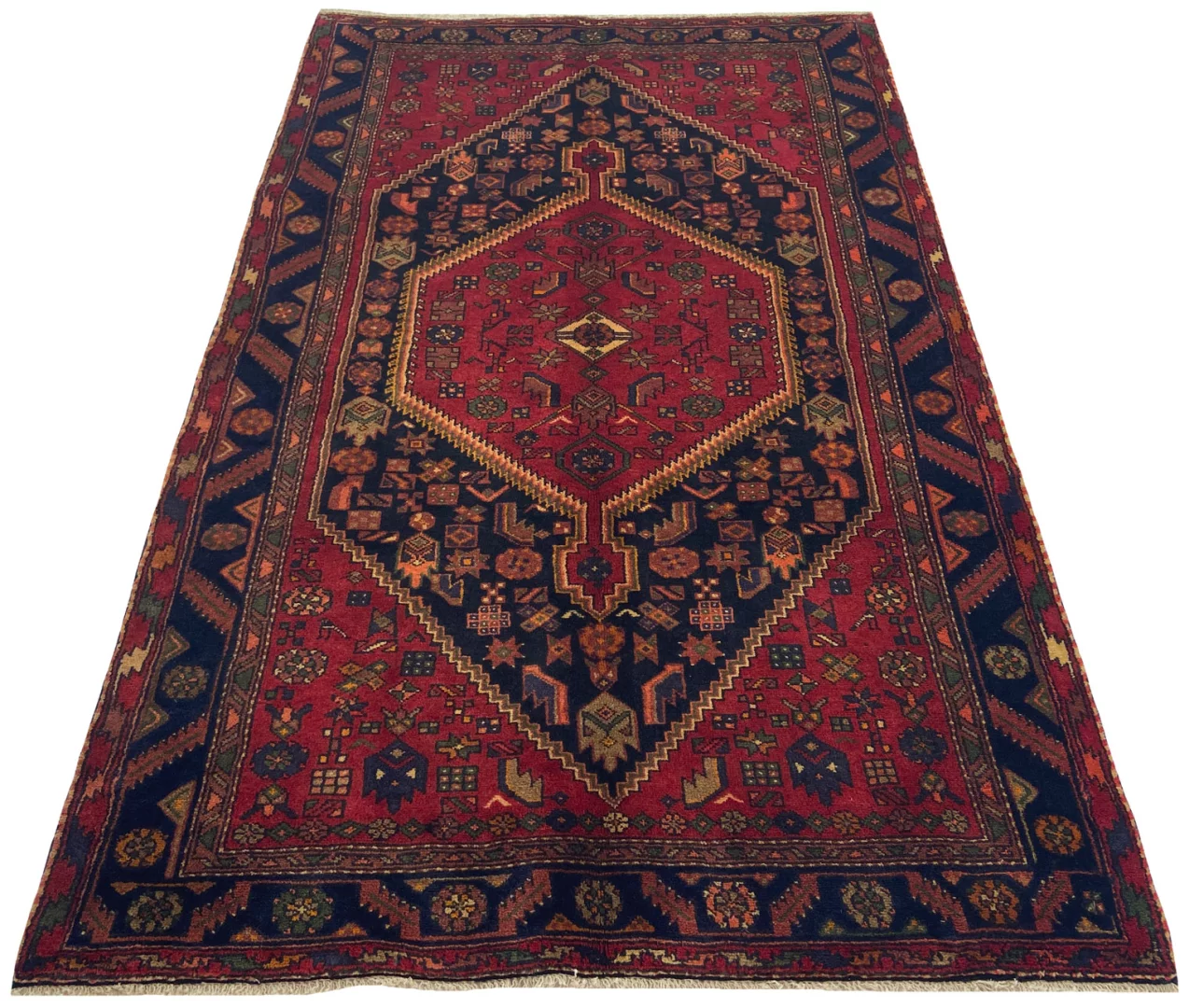
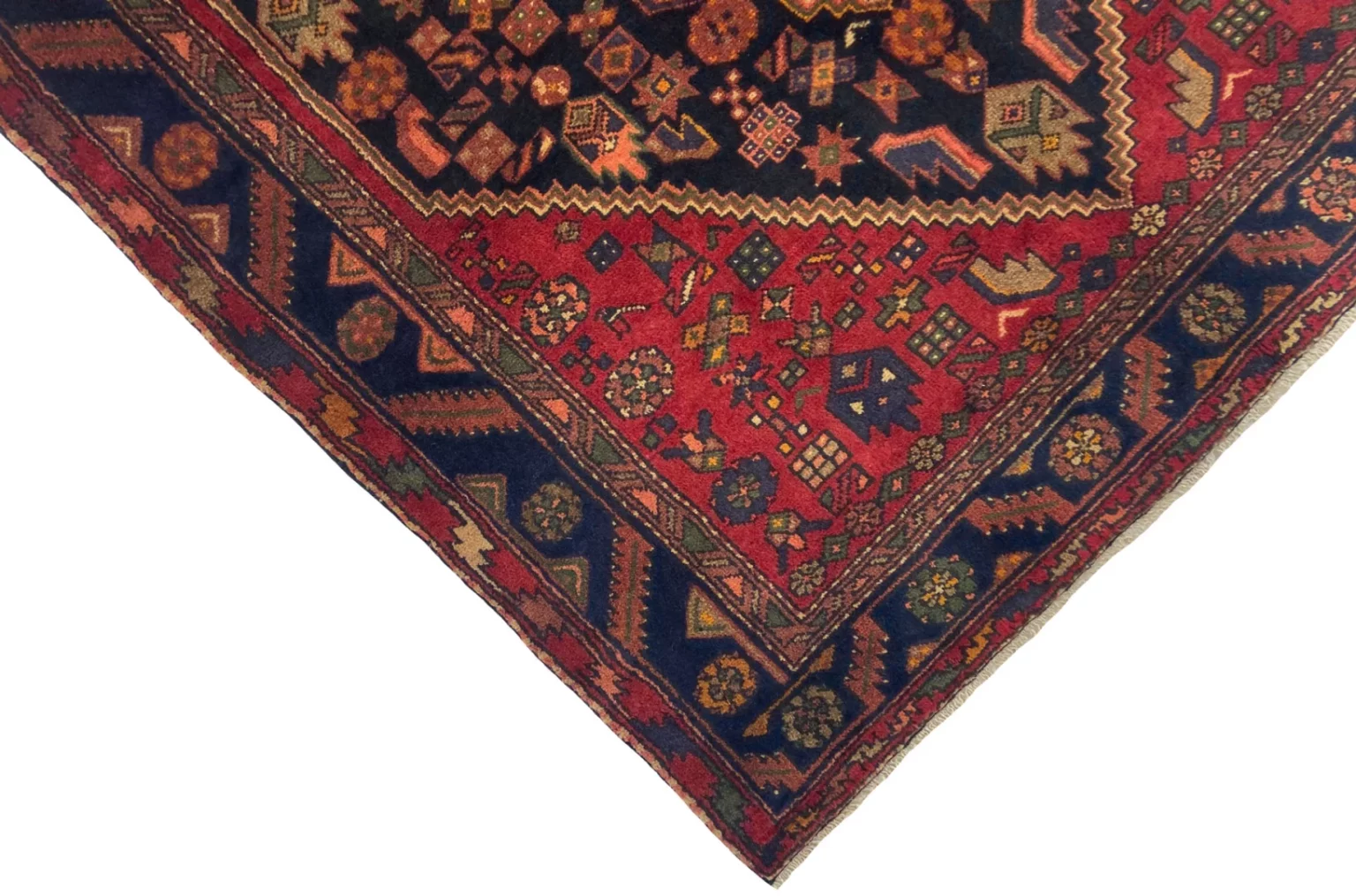
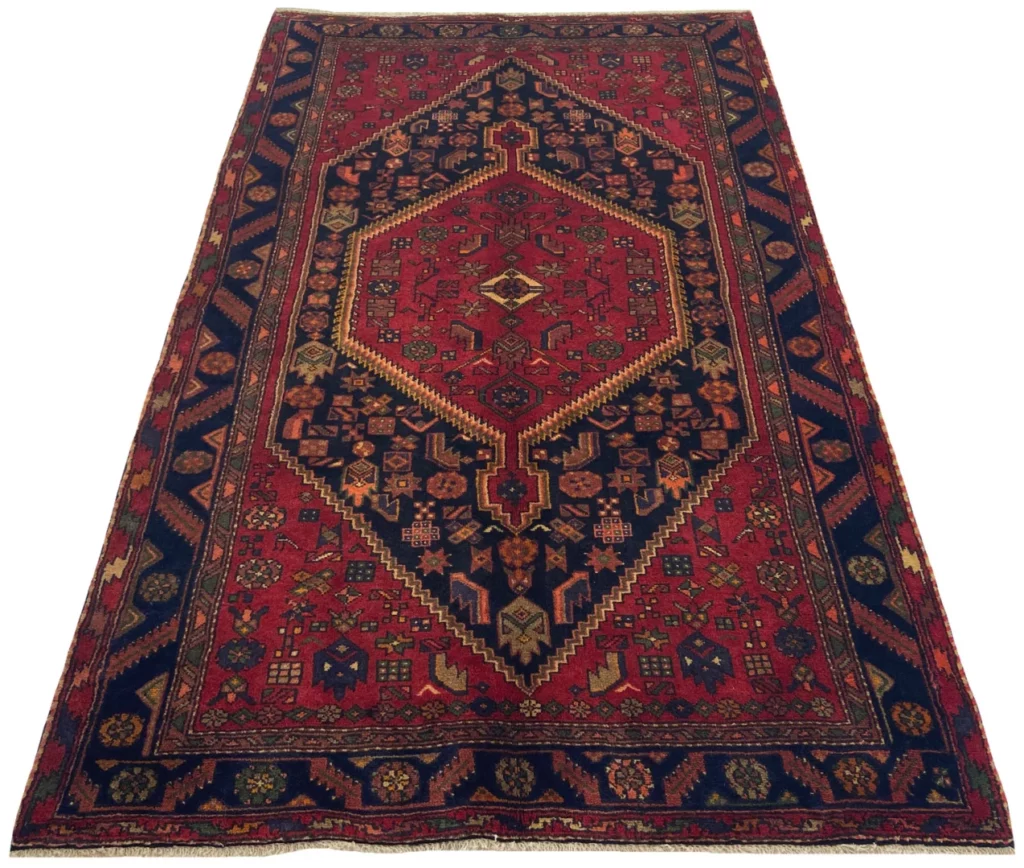
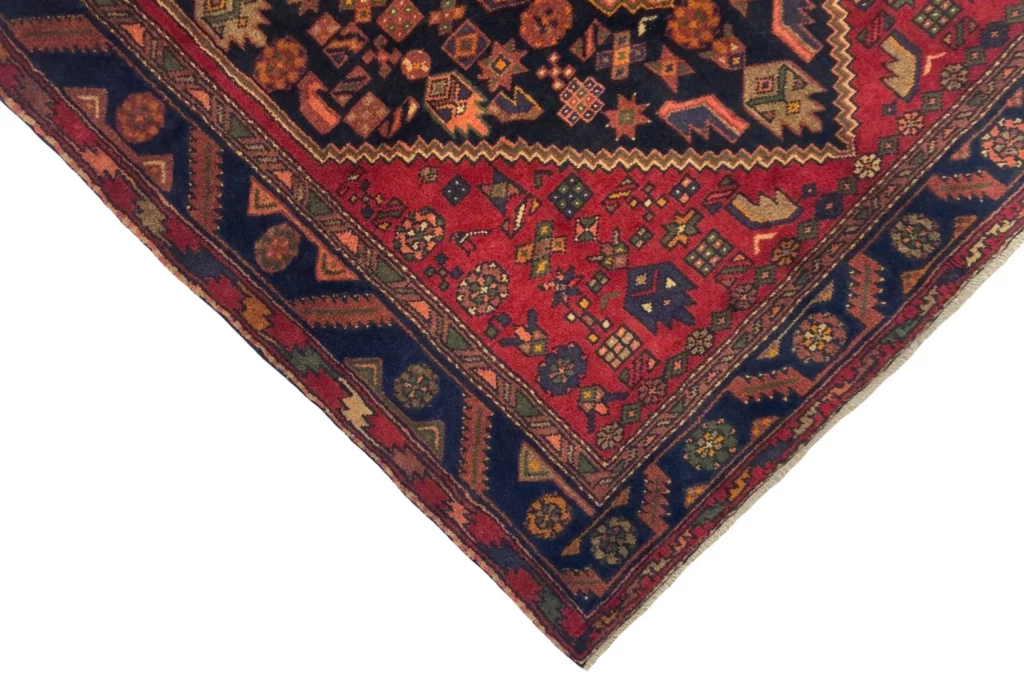
This Hamadan Persian rug is made from durable wool. Wool is traditionally used in oriental rugs for its resilient fibre structure and agreeable tactile quality. Here it forms the pile, the visible textile surface of the rug. The pile is described as dense and soft. This gives the surface a combination of sturdiness and a pleasant feel under the hand.
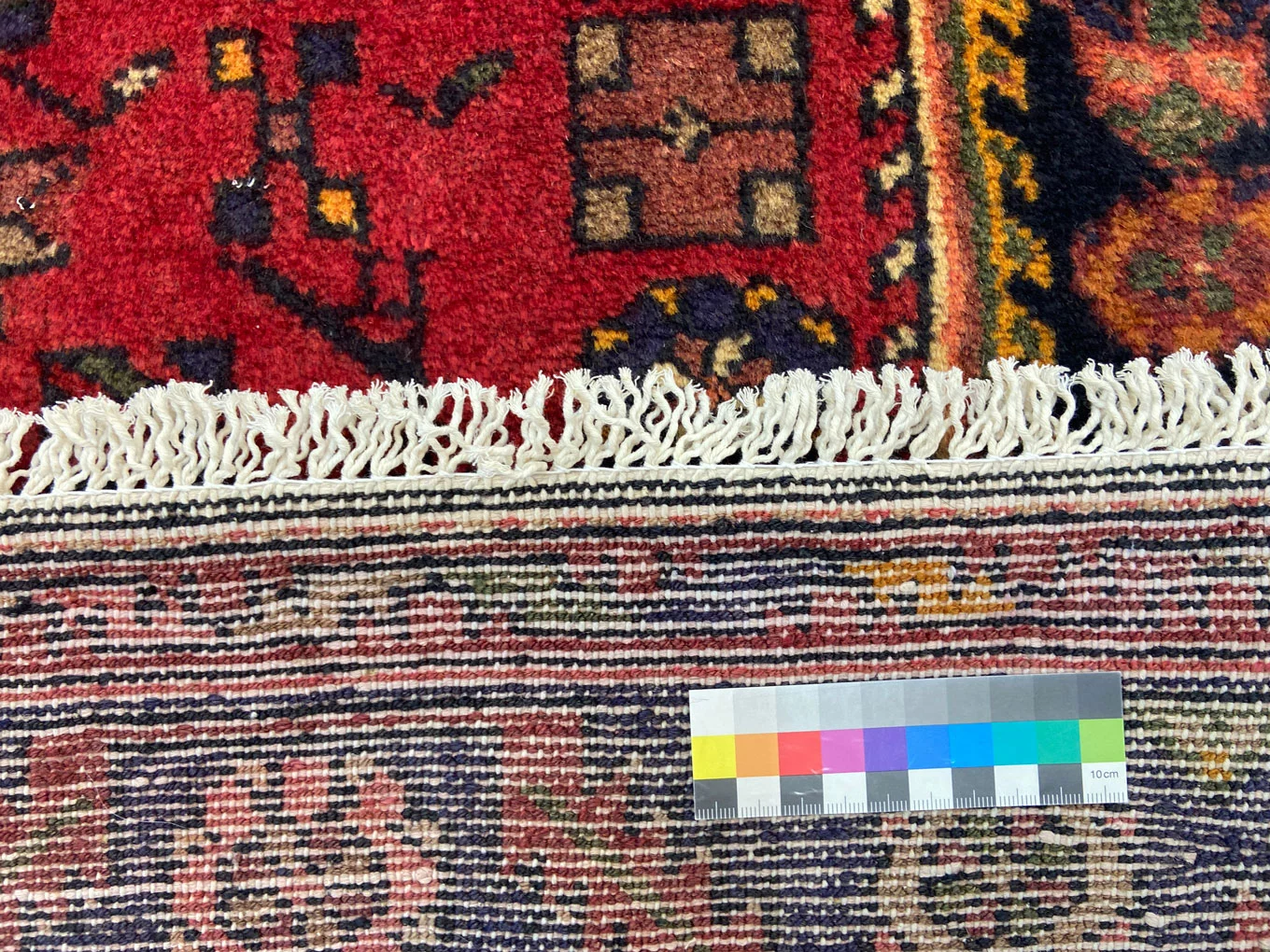
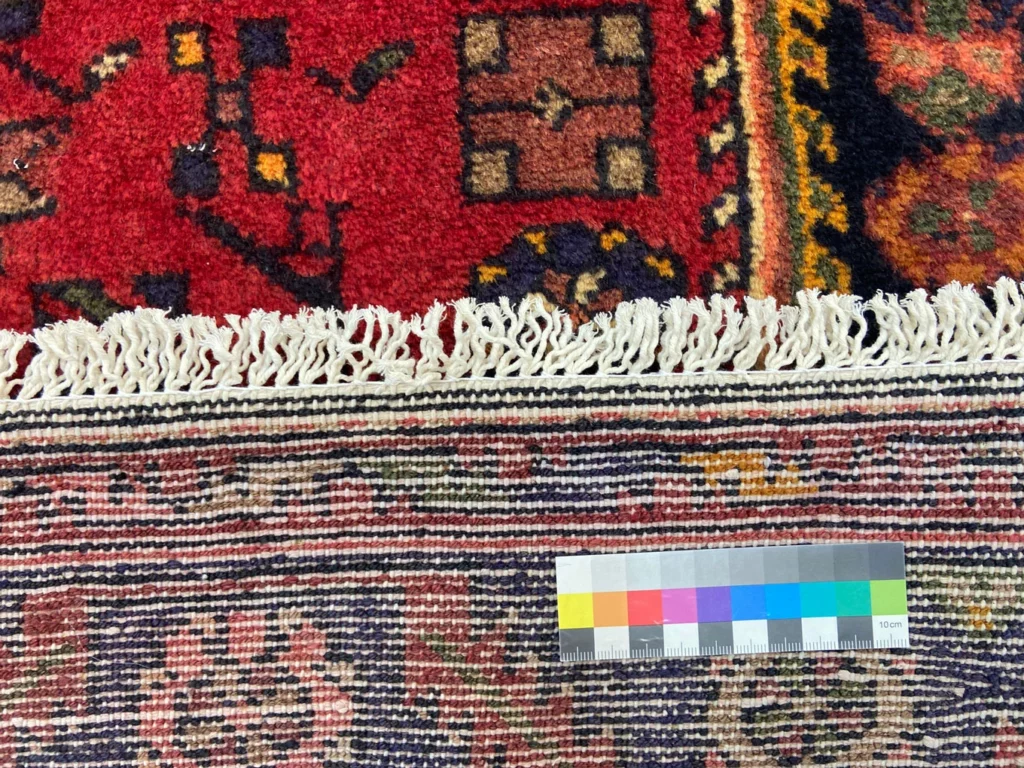
The rug is hand-knotted. With this technique, individual knots are inserted into the foundation one at a time. The knotter works row by row until the pile and pattern have been built up. Unlike an industrially produced floor covering, a hand-knotted rug is created as an individual textile piece through direct manual work. Each stage matters because the structure is assembled from many separate knots.
The stated knot density is 100.000 to 350.000 knots per square metre. Knot density is a technical feature of a hand-knotted rug and can support the detailed execution of lines and shapes. In Hamadan rugs, it is considered together with the durable wool and dense pile as part of a construction intended for regular use. This particular rug is described as well preserved.
In the traditional production of Hamadan rugs, wool is spun and dyed by hand. Spinning turns the fibres into usable yarn, while dyeing establishes the colour before the yarn enters the knotting process. These preparatory stages are part of the inherited craft method. They give the material an individual character and connect the finished surface with the regional tradition of rugmaking.
Hand-knotting, wool pile and knot density are technically related. The pile is not added as a separate decorative layer; it is formed directly by the wool knots worked into the foundation. Material, construction and design are therefore developed together during production. This rug is well preserved. No information about a warp material is provided.
Origin and Tradition
The rug comes from Hamadan in north-western Iran. Hamadan is a region with a rich rugmaking tradition and a wide range of patterns and colours. The name Hamadan refers to a regional origin rather than to one single fixed design. Rugs from the area can vary in appearance while remaining connected to the same regional craft tradition.
Rugmaking in Hamadan is based on the transmission of practical skills. These include preparing wool, spinning and dyeing it, working at the loom and translating a design into a sequence of knots. Such knowledge is passed on not only through finished patterns but also through repeated work with the material and the tools. The regional designation therefore links the rug to a place, a method of production and a tradition of design.
A hand-knotted rug develops through a series of coordinated stages. The foundation is prepared, and knots are then placed in continuous rows. The structure is arranged and compacted as the work progresses so that the pile can retain its form. The pattern is created during the same process as the surface. This connection between construction and decoration is a basic feature of traditional knotting.
Hamadan is one of the recognised rugmaking regions of Iran. Tabriz, Isfahan and Kerman also have important traditions of carpet production. Tabriz is commonly associated with artistic designs and high knot density. Isfahan is known for finely detailed patterns and high-quality materials. Kerman has a long rugmaking history and is associated with striking colour compositions. These regional references illustrate the diversity of Iranian carpet art, but they do not alter the origin of this piece: this rug comes from Hamadan.
Iranian regional traditions developed different preferences in layout, line, colour and ornament. Influences may meet across regions, while each origin continues to provide its own cultural and craft framework. Within this diversity, Hamadan represents a broad selection of possible designs and a robust hand-knotted construction using wool.
Wool is traditionally processed by hand in Hamadan rugmaking. Spinning and dyeing prepare the yarn before it becomes part of the knotting work. Handmade production does not mean that all rugs from one region look identical. Rather, the established technique allows different patterns, colour arrangements and degrees of visual organisation. This capacity for variation is part of the Hamadan tradition.
Rugs in Iranian culture have both practical and decorative functions. They can serve as textile floor coverings while also preserving regional forms, colours and craft knowledge. In a Hamadan rug, these functions meet in the hand-knotted surface. Its origin is expressed through the relationship between material, technique and design, even though every individual piece may use a different arrangement of motifs.
The designation Persian rug is appropriate here because the stated origin is Hamadan in Iran. Hamadan belongs to the historic Persian carpet-producing landscape. Origin should be distinguished from any shapes that might appear in a pattern. The relevant origin information for this piece is the named production area, Hamadan.
Design and Pattern
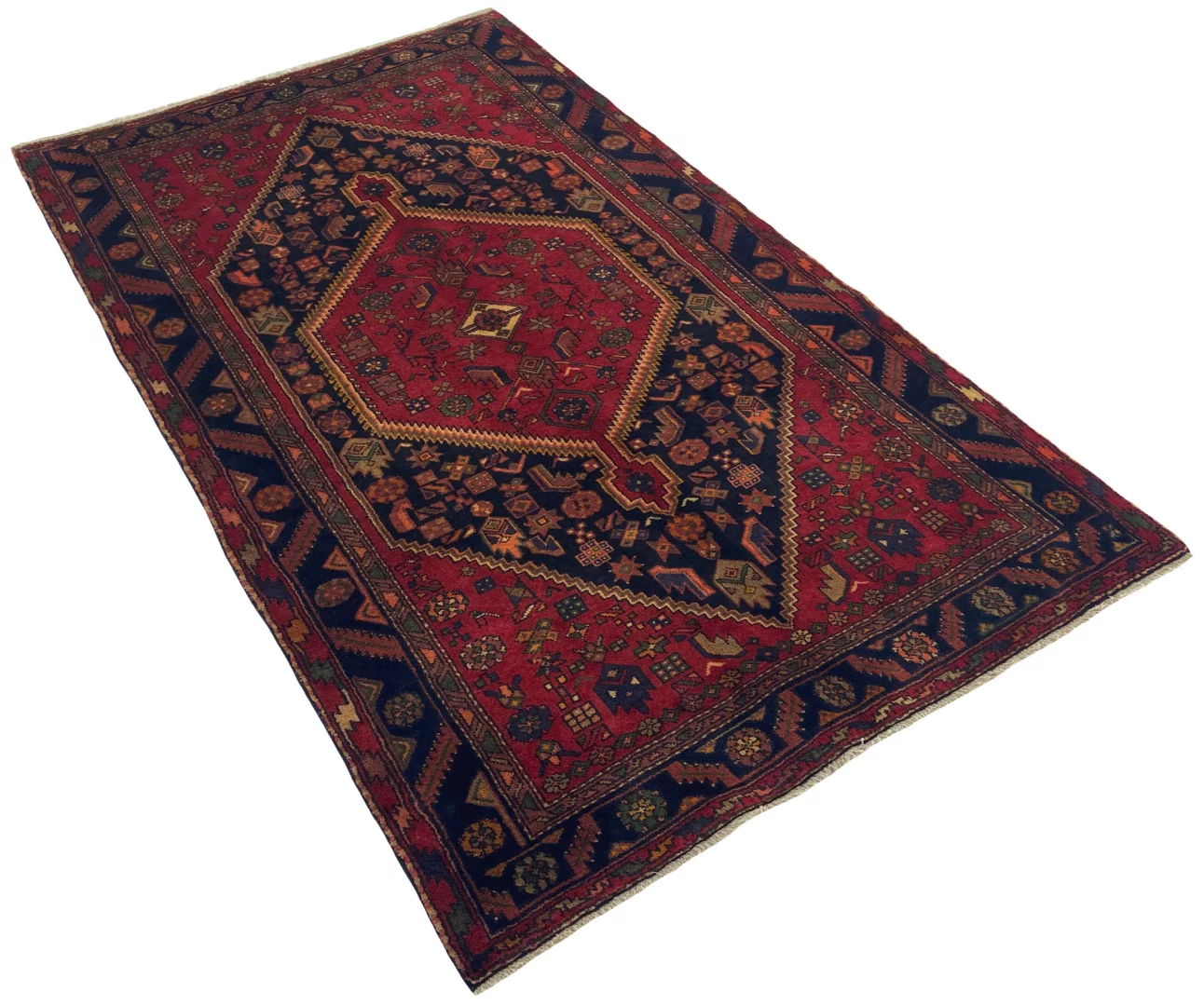
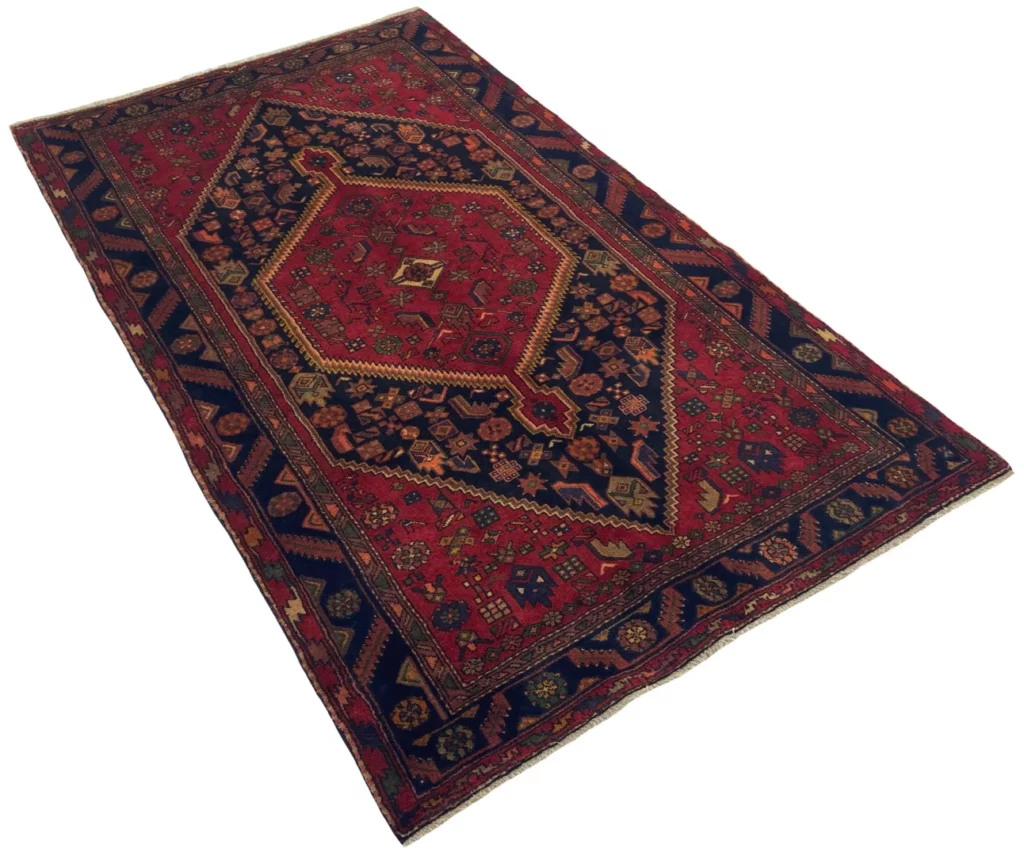
The pattern of this rug is described as a varied design. No single specific pattern name is given. Hamadan rugs may include geometric compositions as well as floral motifs. This range is a feature of the rug type and explains why the regional name does not automatically identify one particular ornament.
Geometric patterns use lines, angles, repeated forms and clearly organised areas. Repetition can create a regular visual rhythm. Floral patterns draw on blossoms, vines or other plant-inspired shapes. They may be placed within a central field or combined with a border. Both approaches belong to the wider design vocabulary of Hamadan rugs.
Many oriental rugs are organised into a field and surrounding borders. The central field carries the main composition, while the borders frame it and create a visual boundary between the pattern and its surroundings. In Hamadan rugs, these areas may be geometric, floral or combined. Repeated elements provide continuity, while changes in motifs give the composition its individual structure. Hand-knotting translates this arrangement into a textile surface knot by knot.
Red tones, blue, beige and brown are commonly associated with the colour range of Hamadan rugs. These colours may appear in different shades and combinations. Reds can provide a warm foundation, blue can introduce contrast, and beige and brown can create quieter transitions. This is a general description of the type’s colour tradition. The source does not give a detailed colour distribution for this individual rug.
The broad selection of designs allows different visual effects within the Hamadan tradition. A clearly structured geometric arrangement has a different character from a floral composition with softer lines. The relationship between field and borders also influences the overall appearance. Traditional forms can be combined in many ways, which is why rugs with the same regional origin can still be distinct from one another.
The varied design stated for this rug should therefore be understood as a general pattern description, not as the name of one particular motif. The source does not identify a specific medallion, border or individual ornament. It establishes the Hamadan origin and the presence of varied designs. This wording reflects the regional range without assigning an unmentioned pattern to the piece.
The pattern tradition of Iranian rugs is closely connected with their handmade construction. A design is not simply printed onto a finished surface; it is built as the knots are placed. Lines, colours and motifs emerge gradually from the yarn. The result combines drawing and material in one process, which is a defining characteristic of hand-knotted rugs.
Special Features
The stated special features of this rug are its origin in Hamadan, Iran, its hand-knotted construction, its durable wool pile and its varied design. It is described as well preserved. The pile is also described as dense and soft. Its knot density is given as 100.000 to 350.000 knots per square metre. These details define the material, technique and condition of this individual piece.
The regional origin connects the rug with a varied Iranian knotting tradition. Its pattern is not identified by one individual name, but is described as a varied design. This keeps the description focused on the characteristics provided for the rug. No age, signature or additional provenance is stated.
FAQ
What makes the Hamadan Persian rug distinctive?
Its distinctive character comes from its origin in Hamadan, Iran, hand-knotted construction, durable wool and varied design. Hamadan is known for a broad range of patterns and colours. The general design vocabulary includes geometric forms and floral motifs. The pile of this rug is described as dense and soft. Its knot density is 100.000 to 350.000 knots per square metre. Together with the well-preserved condition, these details define it as a hand-knotted Iranian wool rug connected to a diverse regional tradition.
How should I care for my Hamadan Persian rug?
The rug should be vacuumed regularly and professionally cleaned when necessary. Gentle, consistent removal of dust helps maintain the wool pile. For more thorough cleaning, a professional service familiar with hand-knotted wool rugs is recommended so that the material and construction can be taken into account. Direct sunlight should be avoided to prevent the colours from fading. Regular care, careful treatment and professional cleaning when needed support the quality and longevity of the rug.
Where do the materials for the Hamadan Persian rug come from?
The materials for Hamadan Persian rugs mainly come from the region itself. Durable wool is identified as the pile material for this rug. Traditionally, the wool is spun and dyed by hand before it is used in the hand-knotting process. These stages give the material an individual character and belong to the regional craft tradition. No additional warp material is specified for this piece.
To provide the best experiences, we use technologies like cookies to store and/or access device information. Consenting to these technologies will allow us to process data such as browsing behavior or unique IDs on this site. Not consenting or withdrawing consent, may adversely affect certain features and functions.
Functional Always active
The technical storage or access is strictly necessary for the legitimate purpose of enabling the use of a specific service explicitly requested by the subscriber or user, or for the sole purpose of carrying out the transmission of a communication over an electronic communications network.
Preferences
The technical storage or access is necessary for the legitimate purpose of storing preferences that are not requested by the subscriber or user.
Statistics
The technical storage or access that is used exclusively for statistical purposes.The technical storage or access that is used exclusively for anonymous statistical purposes. Without a subpoena, voluntary compliance on the part of your Internet Service Provider, or additional records from a third party, information stored or retrieved for this purpose alone cannot usually be used to identify you.
Marketing
The technical storage or access is required to create user profiles to send advertising, or to track the user on a website or across several websites for similar marketing purposes.

 SECURE PAYMENT
 SHIPPING PARTNERS


