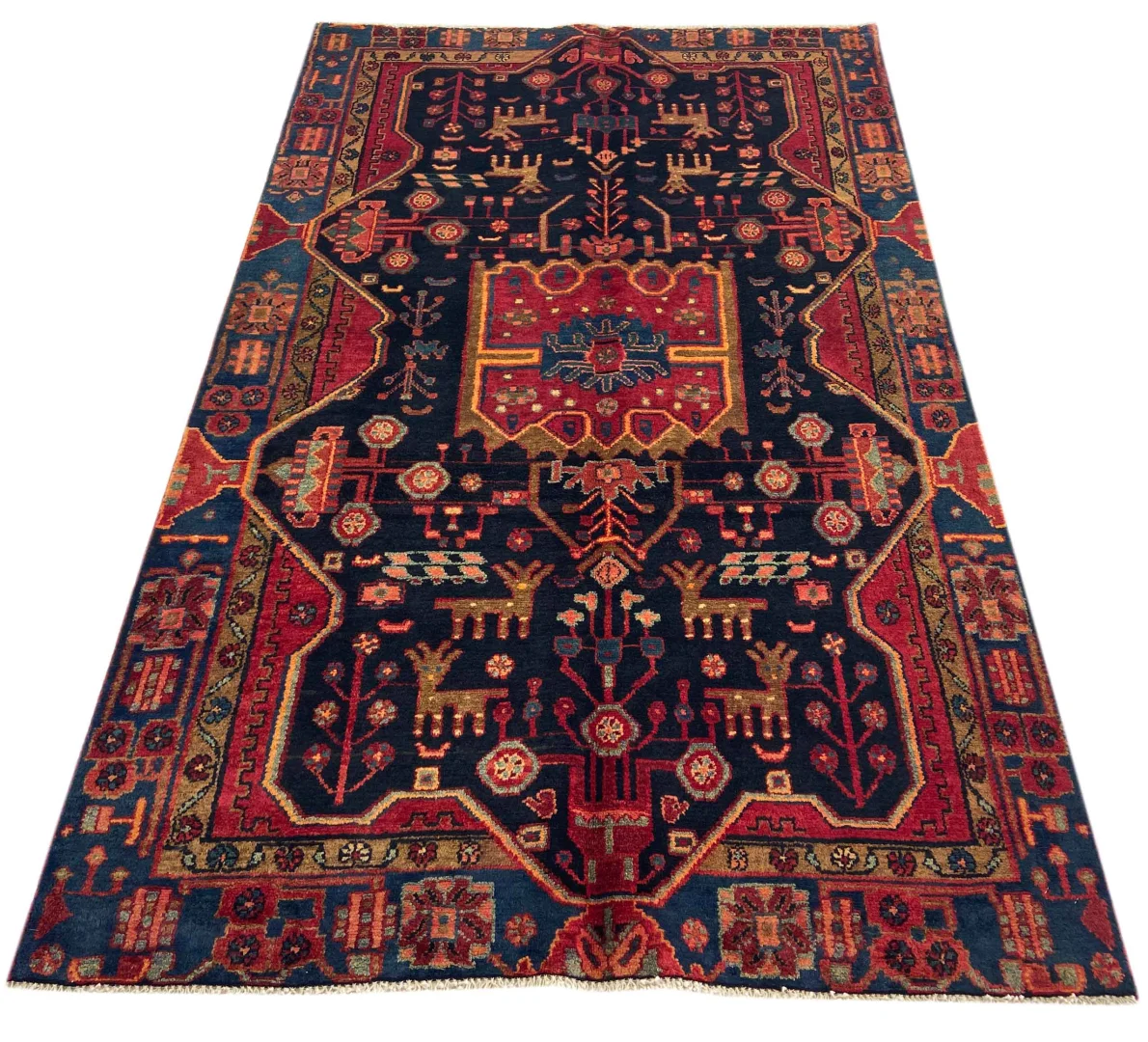
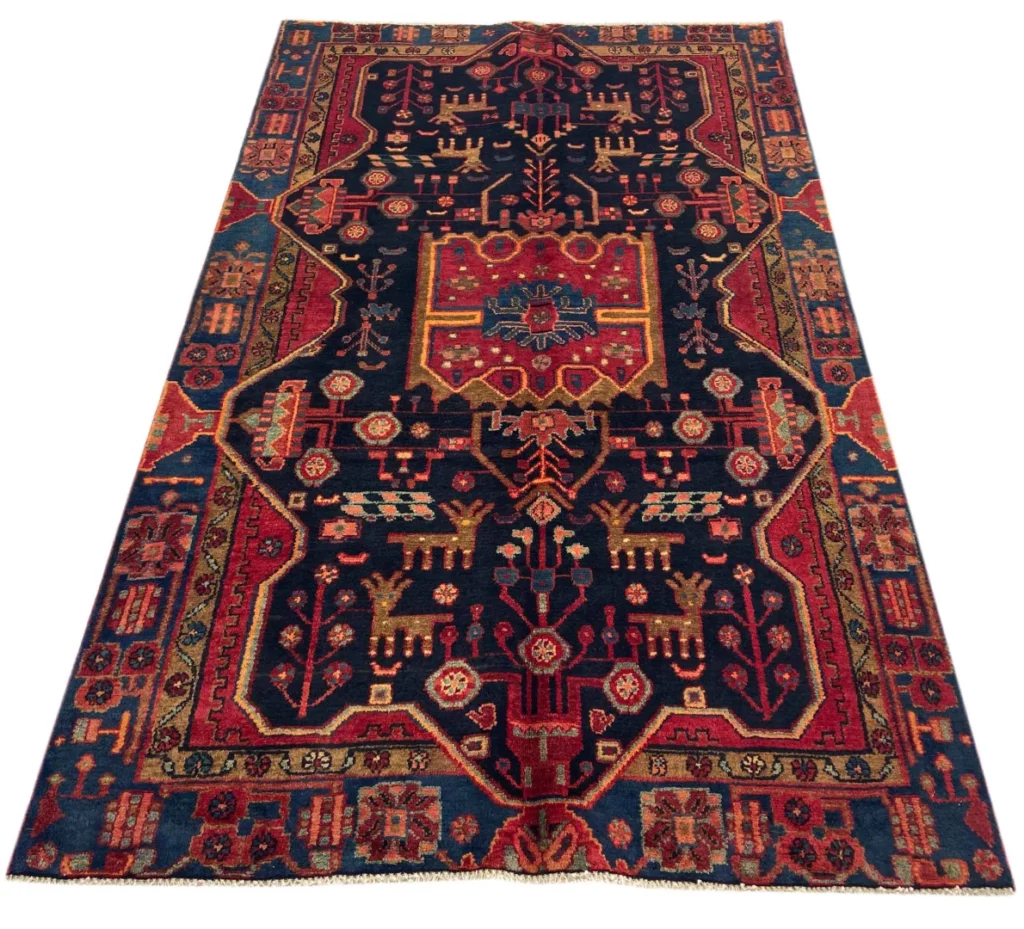
This Hamadan Persian rug is hand-knotted and made of durable wool. Wool is one of the defining materials used in many rugs from the Hamadan region. It combines a resilient surface with a pleasant pile, making it suitable for a rug intended for regular use in living spaces. The sheep’s wool described for Hamadan rugs is obtained mainly from the region itself. It therefore represents a material closely connected with the local tradition of Iranian rug making.
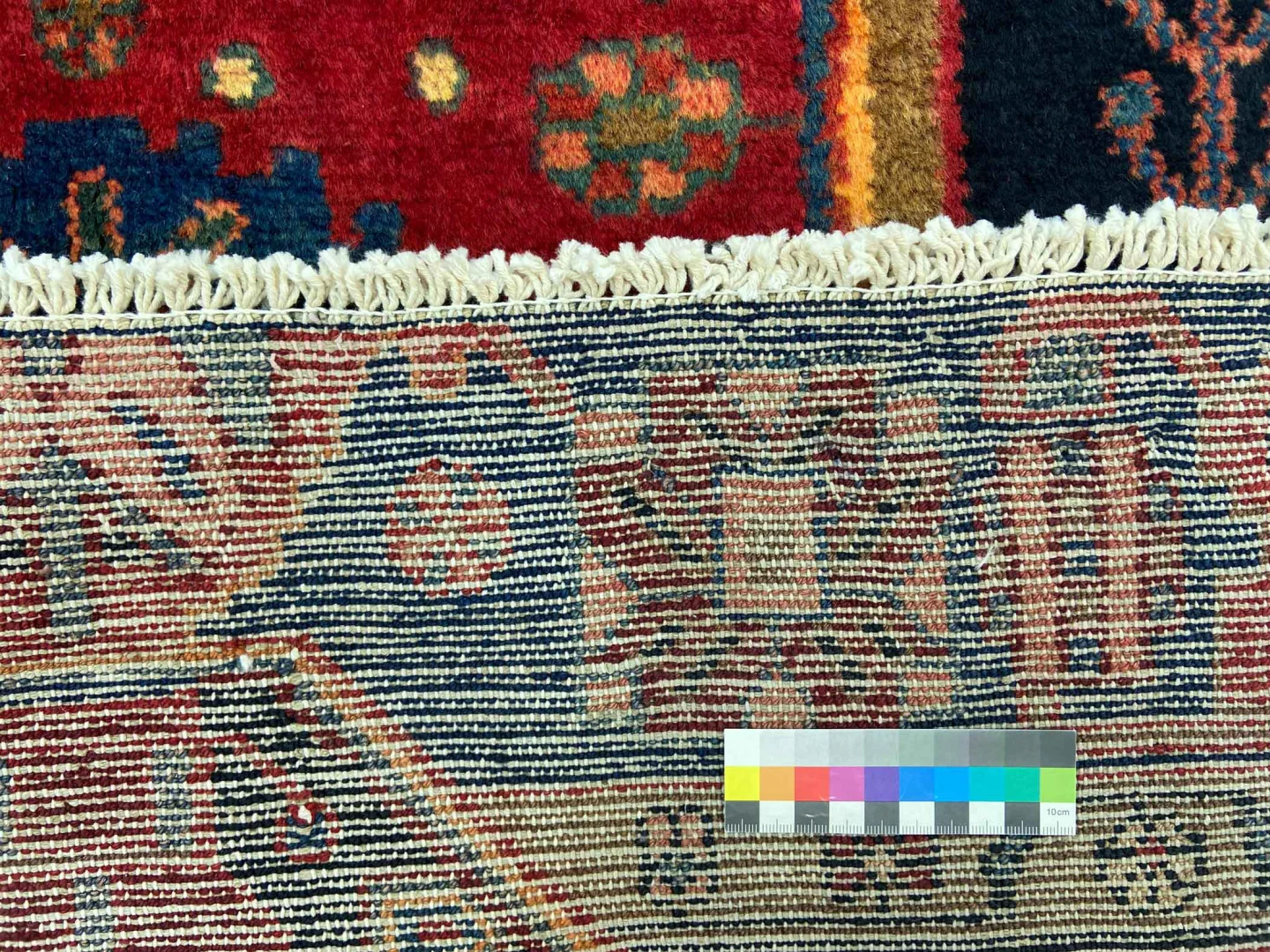
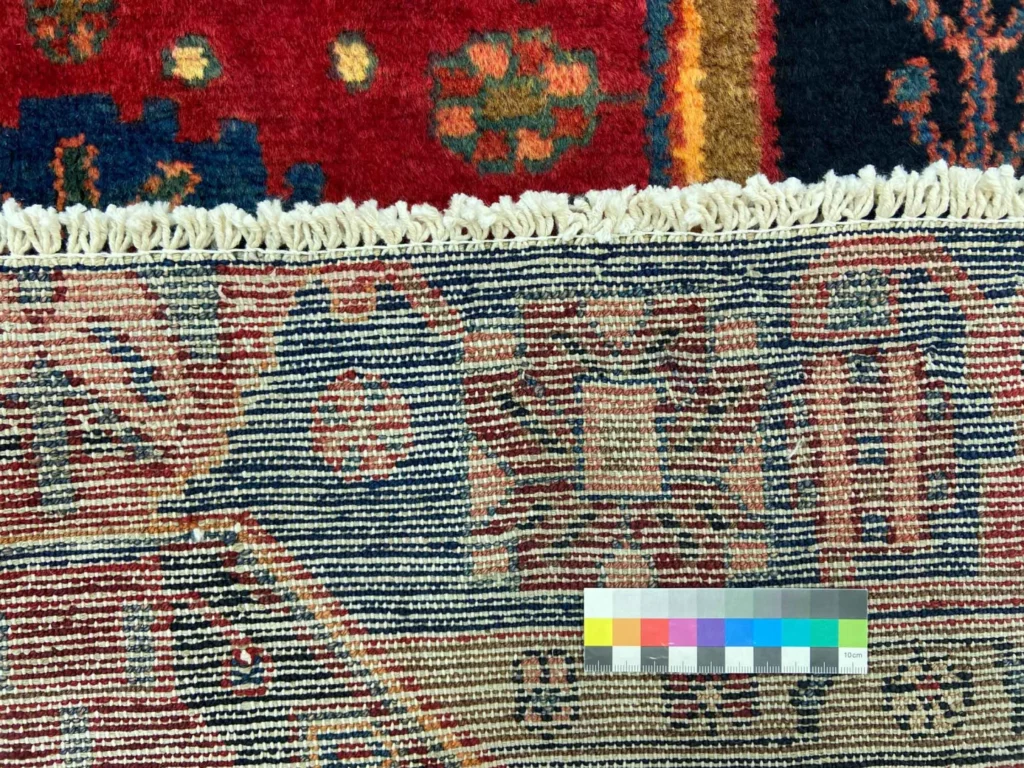
Hand-knotting builds the rug one knot at a time. Each knot is inserted into the foundation, while the continued work of forming and arranging the pile creates the finished surface. This method gives a hand-knotted rug a structure that differs fundamentally from a machine-made floor covering. The density specified for this rug belongs to a broad range and reflects a carefully constructed textile made through manual work. At the same time, the combination of durable wool and varied design remains central to its character.
Wool is used in Hamadan rugs for more than its strength. It accepts colour well and can create a clearly textured pile. The resulting surface offers a comfortable feel underfoot, while the resilient fibre supports practical use in the home. Material and technique work together: the wool contributes durability, the hand-knotting produces the individual construction, and the design gives the surface its visual identity. These qualities are characteristic of the regional type without assigning an unmentioned detail to this individual pattern.
Origin and Tradition
This rug comes from Hamadan in north-western Iran. Hamadan and its surrounding area are known for a longstanding tradition of rug weaving. The regional name covers more than the city itself. Places and villages such as Assadabad, Khamseh and Nahawand are also associated with Hamadan rugs. This geographical variety helps explain why rugs sold under the Hamadan name can show different layouts, decorative languages and degrees of detail.
The weaving tradition of the area is connected with practical local resources and skilled manual work. Sheep’s wool is available in the region and is well suited to forming a durable pile. Over time, knowledge of preparing the fibre, colouring it, arranging the foundation and tying the knots was passed on through workshops and households. Hamadan therefore describes a group of regional rugs rather than a single rigid design formula. Their common identity rests on their connection to the area and its craft tradition.
Hamadan’s north-western Iranian setting has supported a varied weaving culture. Urban production exists alongside rugs associated with villages and smaller settlements. Different working environments have contributed to differences in drawing, colour preference and visual scale. This diversity does not weaken the shared origin. It is an important part of the Hamadan tradition and allows the region’s rugs to range from restrained compositions to more visibly ornamented designs.
Iranian rugs are often named after a city, a wider region or the place where they were woven. In this case, Hamadan identifies the origin, not merely a decorative reference. Origin and pattern should be kept separate: a Hamadan rug may use geometric, floral or other established motifs without becoming a rug from another province. This distinction is useful when regional weaving traditions share visual elements or when a motif resembles the design vocabulary associated with a different Iranian centre.
Hand-knotted rugs occupy an important place in the history of Iranian craftsmanship. They combine function and design because they serve as floor coverings while also displaying colour, ornament and the decisions of the maker. Within this wider history, Hamadan rugs are associated with a practical and adaptable regional form of weaving. Their reputation is based on the relationship between durable wool, hand production and a broad selection of designs rather than on one exclusive decorative scheme.
Design and Pattern
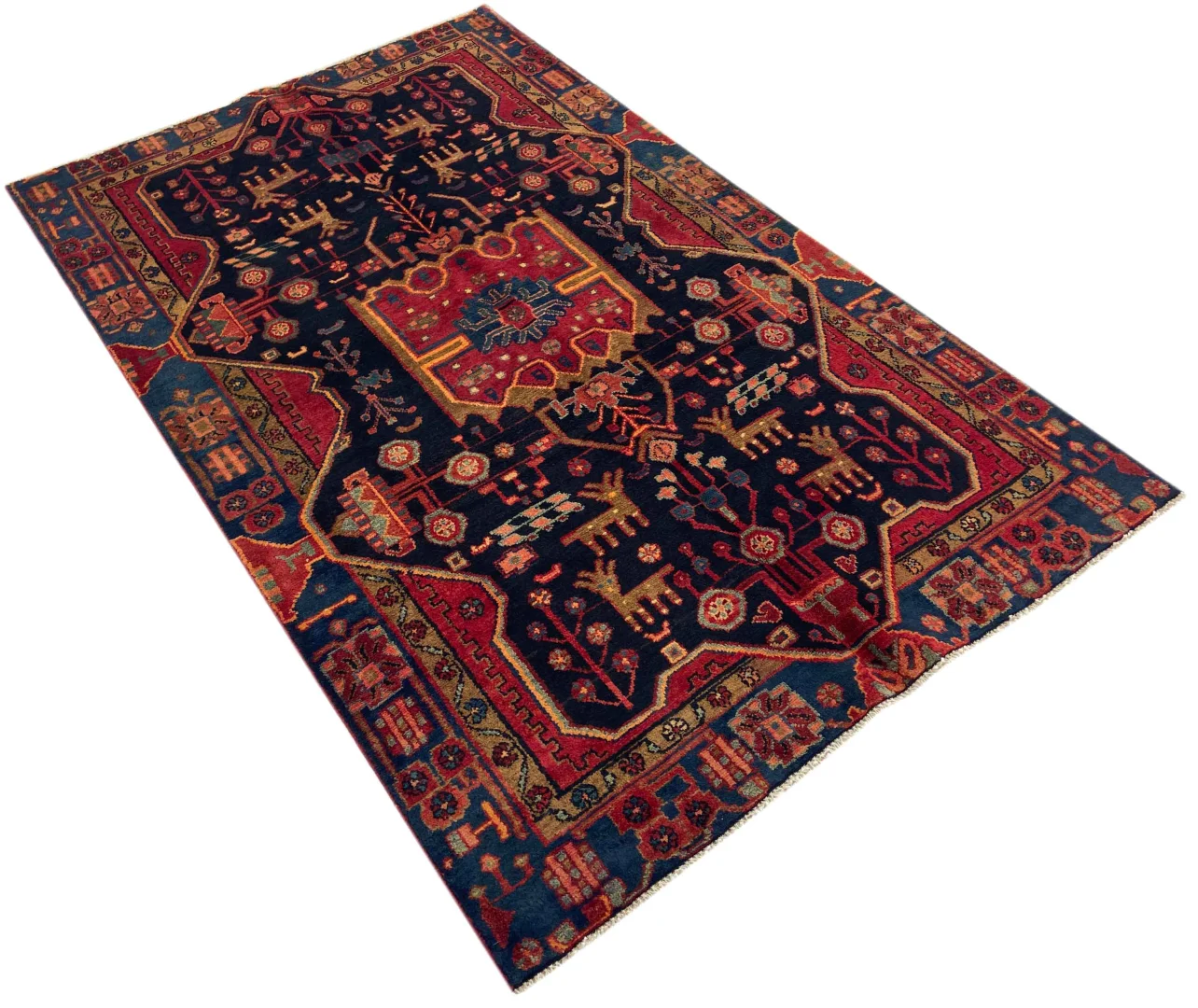
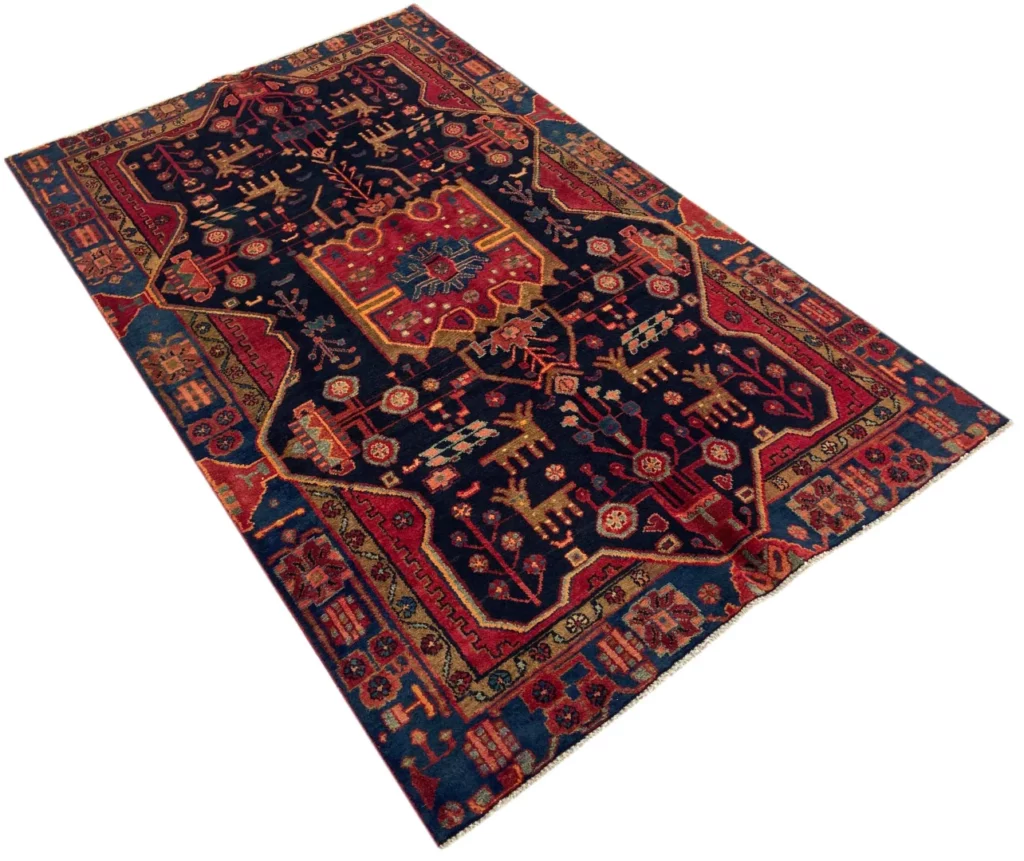
The pattern of this rug is described as varied. Hamadan rugs are not limited to one established layout. The regional tradition includes geometric compositions as well as floral motifs. Geometric designs may rely on clearly organised forms, repeated ornaments and a strong sense of structure. Floral designs may use stylised blossoms, vines or other plant-based elements. Both approaches belong to the broad visual language associated with rugs from Hamadan.
This range of design allows Hamadan rugs to work with different interior styles. A traditionally drawn composition can sit naturally within a classic room, while a quieter or more clearly structured arrangement can also be used in a modern setting. The description of varied designs does not mean that this individual rug contains every possible Hamadan motif. It identifies the broad design tradition in which its pattern is placed and avoids attributing a more specific, unstated motif to the piece.
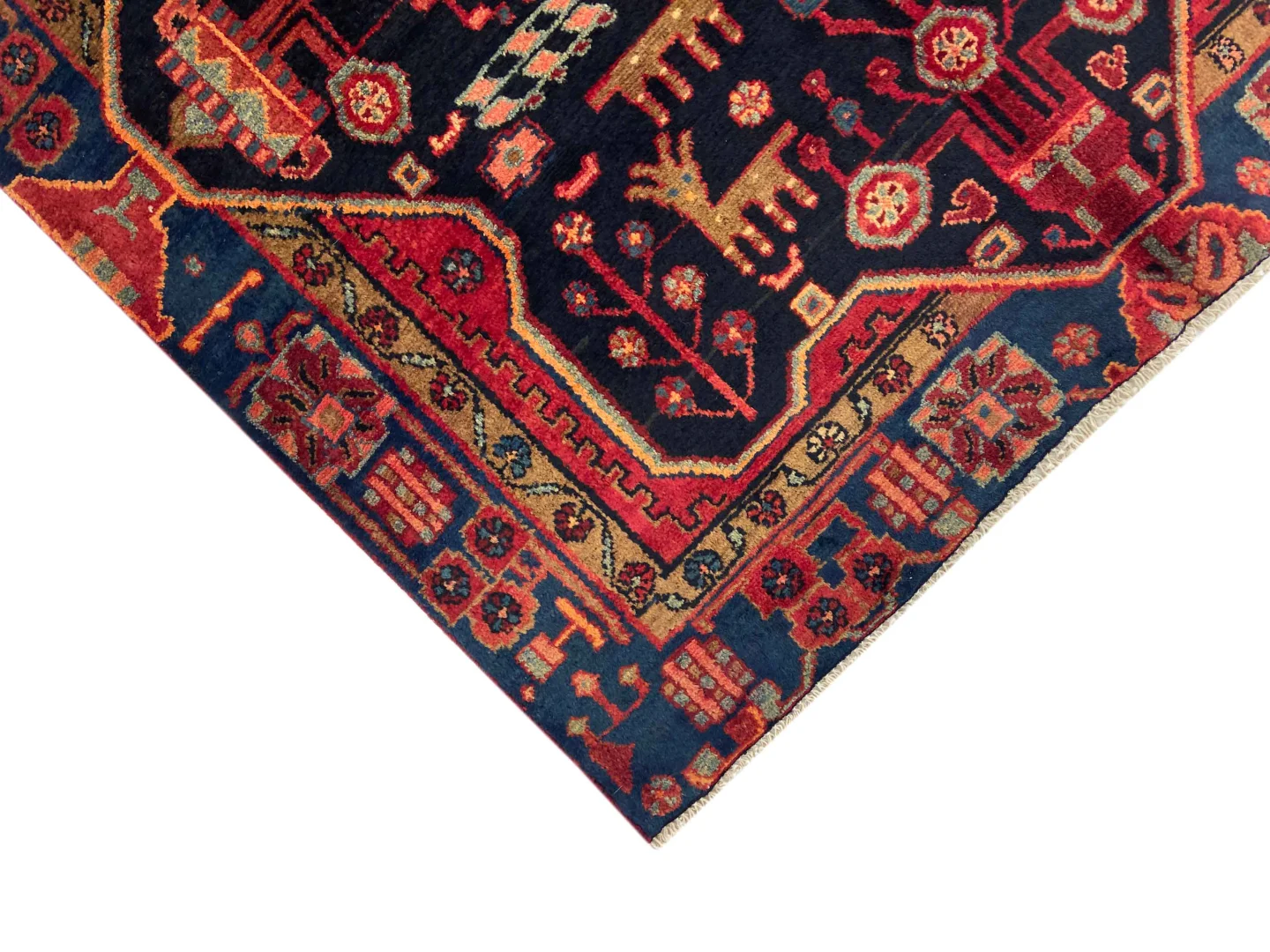
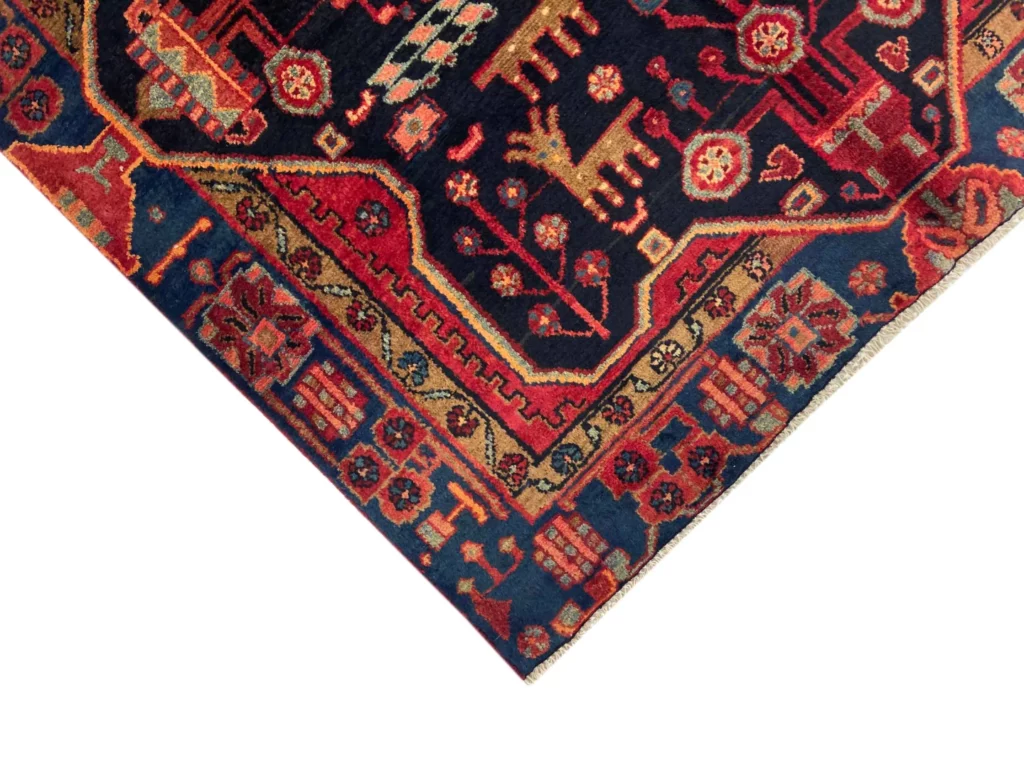
In a regional rug, the effect of a pattern comes from the relationship between the field, the border and the ornaments within them. A border frames the composition and gives the design an outer structure. The field may contain geometric elements or floral forms that repeat, balance one another or follow a more open arrangement. Because the rug is hand-knotted, the design is not produced as a perfectly uniform industrial surface. The sequence of manual steps gives the finished textile its crafted character.
The colour range associated with Hamadan rugs can include deep reds, warm earth tones, soft blues and greens. These colours may be combined in different ways according to the individual design. Reds and earthy shades can create a warm and connected visual impression, while blue and green can provide quieter contrasts. The dominant colour of a particular rug depends on its own composition. The regional tradition, however, is known for a palette that can move between stronger tones and softer colour relationships.
Design also shows why regional origin and decorative vocabulary are separate descriptions. Hamadan names the weaving tradition and place of origin, while floral or geometric elements describe the pattern language. This rug joins its Hamadan origin with a design described as varied. It can therefore be presented as a regional Persian rug with a broad decorative tradition without assigning it a specific motif that is not named in the product information.
Other Iranian rug types demonstrate the same diversity of regional expression. Tabriz rugs are known for detailed floral patterns and high knot density. Nain rugs are widely valued for their refined hand-knotted appearance. Kerman and Isfahan also represent distinct groups with their own range of designs and colours. These comparisons illustrate the variety of Iranian weaving; they do not change this rug’s stated origin in Hamadan.
Special Features
The rug is in very good condition. It is also described as easy to care for. Regular vacuuming is recommended, but a brush attachment should be avoided. If a spill or mark occurs, the affected area should be dabbed promptly with a damp cloth. A specialised rug cleaner may be used when further treatment is needed. Gentle care helps protect the wool pile and the pattern while respecting the condition in which the rug is offered.
Durable wool and hand-knotted construction define the practical side of this Hamadan rug. Its robust character allows it to be used in different living areas. Regional origin, varied design tradition and material are brought together in a rug that connects classic Persian craft with everyday usability. Hamadan rugs are also associated with a favourable balance between quality and price: they offer hand-knotted quality at a fair price. Their appeal is therefore based on clear material and craft qualities rather than on an exaggerated claim.
FAQ
How should I care for my Hamadan rug?
Vacuum the rug regularly, but do not use a brush attachment. If something is spilled or a mark appears, dab the area immediately with a damp cloth. Avoid vigorous rubbing, as this can put unnecessary strain on the pile and the pattern. If more extensive treatment is required, a specialised rug cleaner can be used. Consistent, gentle care is appropriate for the durable wool quality and helps preserve the rug’s very good condition for as long as possible.
Where do the materials for Hamadan rugs come from?
The materials come mainly from the region itself. High-quality sheep’s wool is used for the pile and is obtained locally. Wool is well suited to Hamadan rugs because it is durable and forms a pleasant surface. Its resilience supports use as a household rug, while its ability to take colour contributes to the variety of regional designs. The combination of local wool and hand craftsmanship forms part of the material foundation of the Hamadan weaving tradition.
How do Hamadan rugs differ from other Persian rugs?
Hamadan rugs are distinguished by their robust construction and their variety of patterns. Compared with Tabriz rugs, which are known for detailed floral designs and high knot density, Hamadan rugs are often simpler in their composition. That does not mean that they are made with less care. Their particular strength lies in the combination of durable wool, hand-knotted construction and different regional designs. Compared with other Persian rugs, they provide hand-knotted quality at an affordable price.
To provide the best experiences, we use technologies like cookies to store and/or access device information. Consenting to these technologies will allow us to process data such as browsing behavior or unique IDs on this site. Not consenting or withdrawing consent, may adversely affect certain features and functions.
Functional Always active
The technical storage or access is strictly necessary for the legitimate purpose of enabling the use of a specific service explicitly requested by the subscriber or user, or for the sole purpose of carrying out the transmission of a communication over an electronic communications network.
Preferences
The technical storage or access is necessary for the legitimate purpose of storing preferences that are not requested by the subscriber or user.
Statistics
The technical storage or access that is used exclusively for statistical purposes.The technical storage or access that is used exclusively for anonymous statistical purposes. Without a subpoena, voluntary compliance on the part of your Internet Service Provider, or additional records from a third party, information stored or retrieved for this purpose alone cannot usually be used to identify you.
Marketing
The technical storage or access is required to create user profiles to send advertising, or to track the user on a website or across several websites for similar marketing purposes.

 SECURE PAYMENT
 SHIPPING PARTNERS


