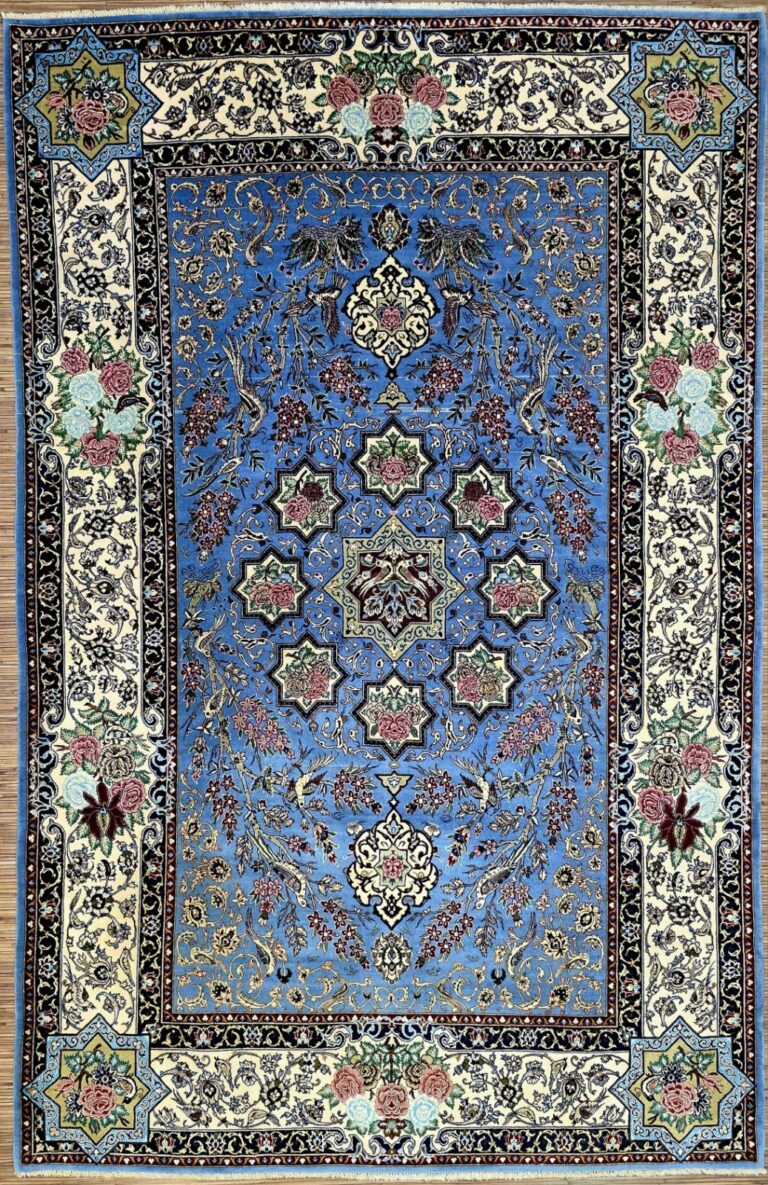
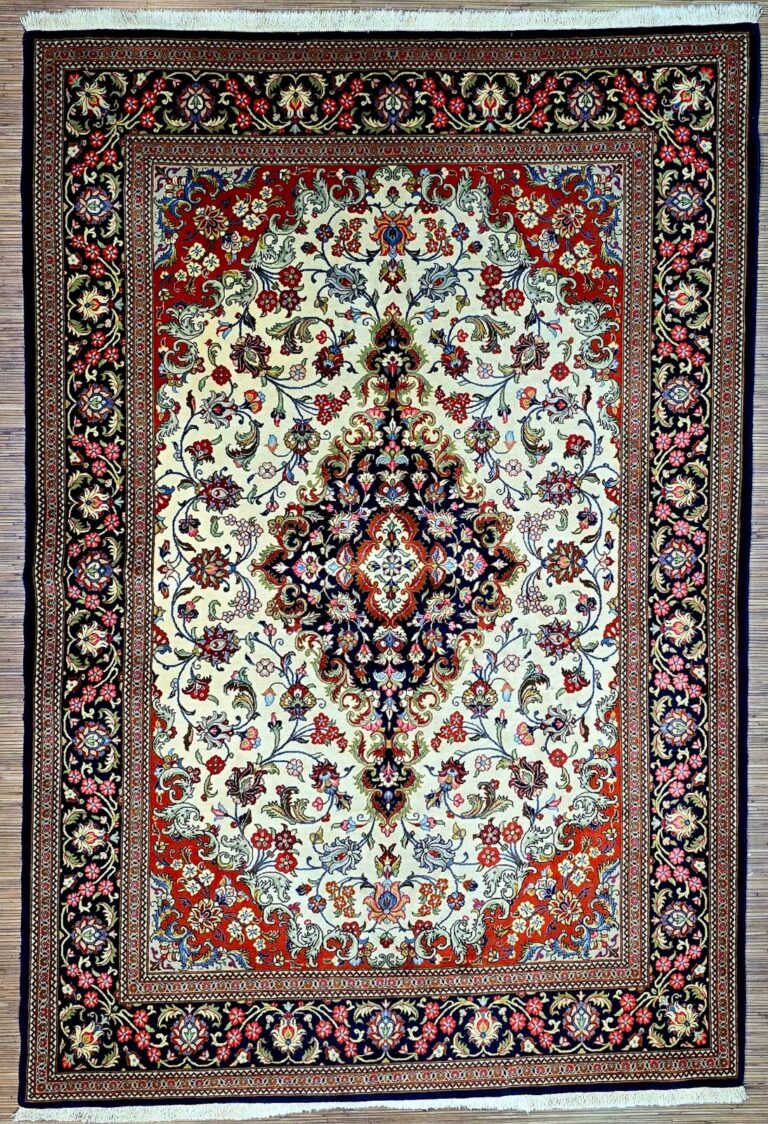
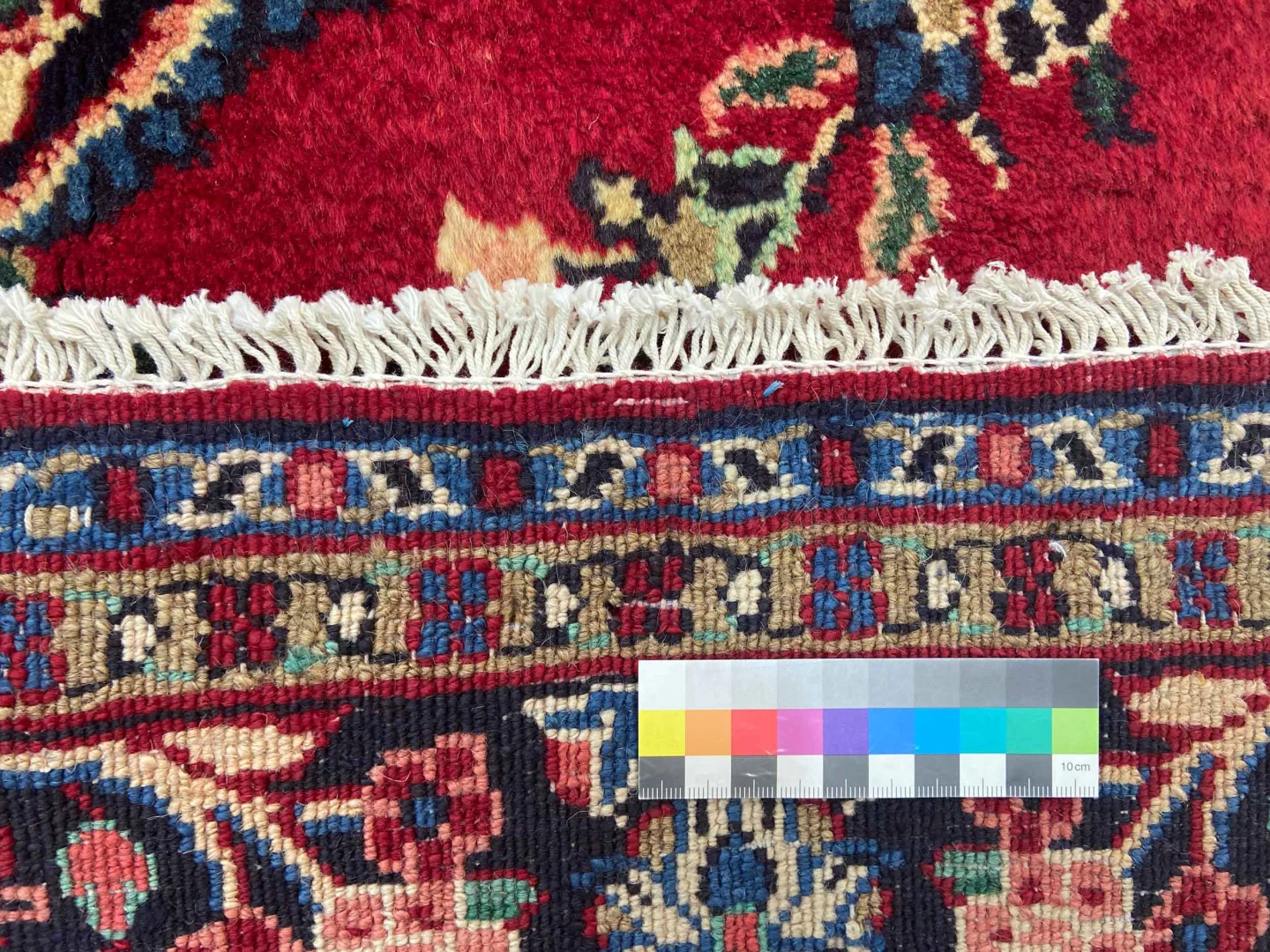
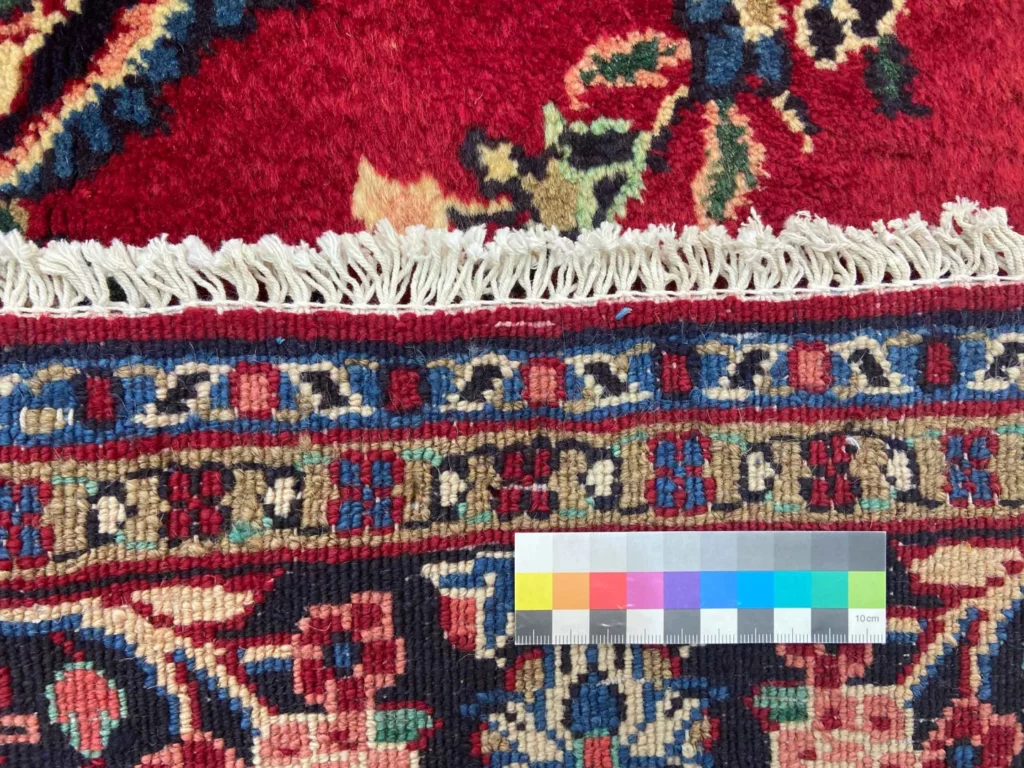
This Hamadan Persian rug is hand-knotted with durable wool in the pile. The wool fibres are described as dense, creating a pile that is both soft and hard-wearing. That combination gives the rug a comfortable surface while also making the material suitable for regular use. Wool is the defining pile material here and is central to the traditional character of this type of Hamadan rug.
The knot density of this rug is 100,000 – 350,000 knots per square metre. This density supports the precise rendering of shapes and colour areas and contributes to the durability of the knotted textile. The pile is robust without losing its soft feel. The use of natural materials is also associated with suitability for households with allergy sufferers, as Hamadan rugs are described as hypoallergenic.
Origin and Tradition
The rug comes from Hamadan, Iran. Hamadan lies in the north-west of Persia and has long been an important centre of carpet weaving. The city and its surrounding area represent a distinct regional tradition in which handcraft, durable materials and a broad range of designs meet. A Hamadan rug therefore reflects not only one city, but also the work of many weavers in the communities around it.
Assadabad, Khamseh and Tuyserkan are among the places associated with the Hamadan area. Rugs from these locations and their wider surroundings are valued for their materials and their varied designs. Over generations, village and local workshops developed patterns connected with their own regional practices. The Hamadan tradition is consequently not limited to one uniform visual language. It is a regional group with recurring craft qualities and many individual design solutions.
Persian carpet weaving in Hamadan combines practical use with decorative composition. Wool was a natural and accessible choice for many workshops in the region. Its resilience suits rugs intended for everyday life, while hand-knotting makes it possible to build detailed designs carefully. Regional origin therefore describes an established weaving culture extending across Hamadan and several nearby communities, rather than a single fixed pattern.
Hamadan also belongs to the wider landscape of Iranian carpet traditions. Tabriz and Kashan carpets are mentioned among other recognised types found in the same broader region. Tabriz is associated with complex patterns and often luxurious materials, while Kashan is known for rich colours and floral motifs. Nain and Isfahan are named as recognised makers or origins connected with finely worked designs and high-quality materials. These related traditions show the range of Persian carpet culture while leaving the origin of a Hamadan rug distinct.
Design and Pattern
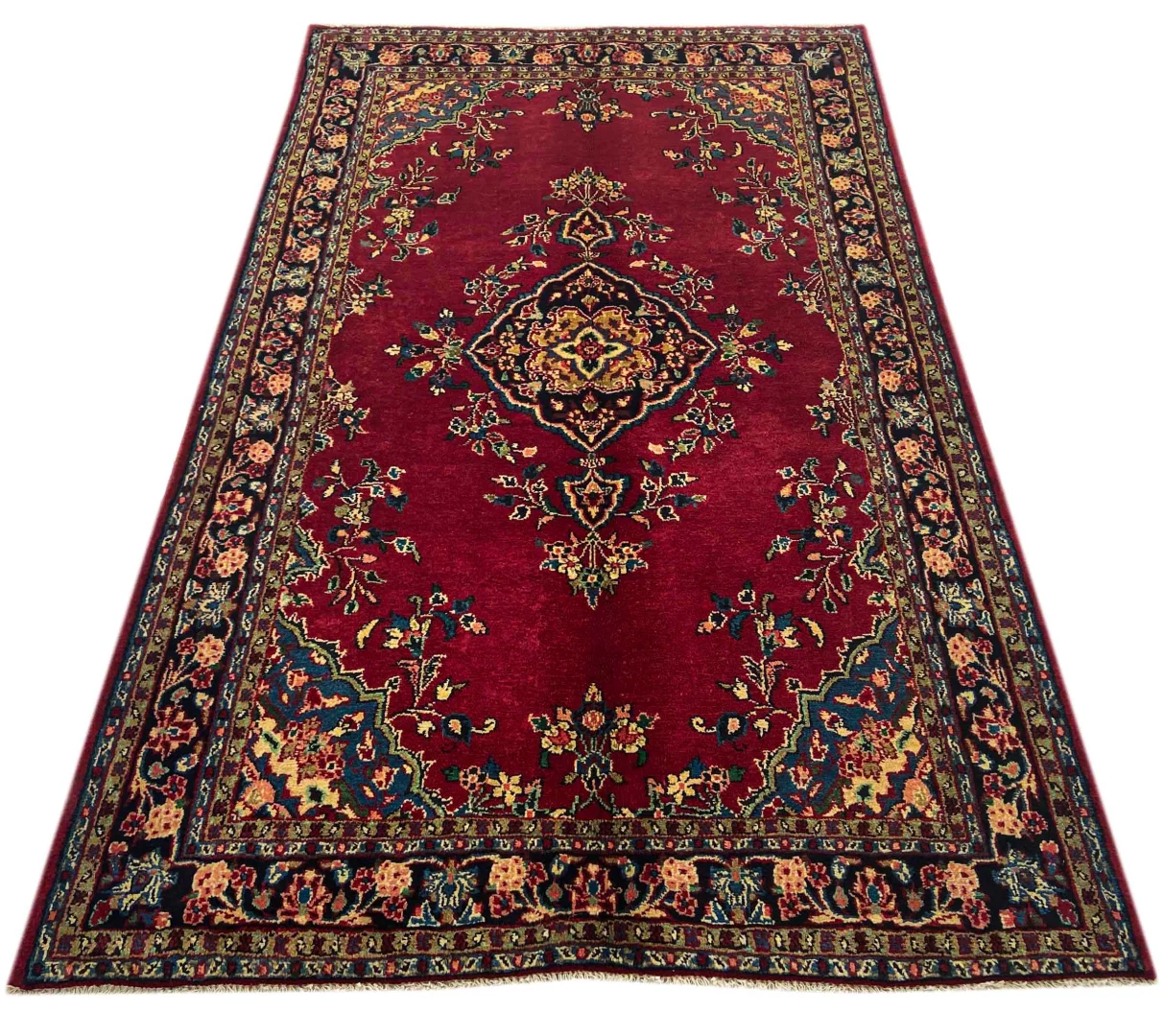
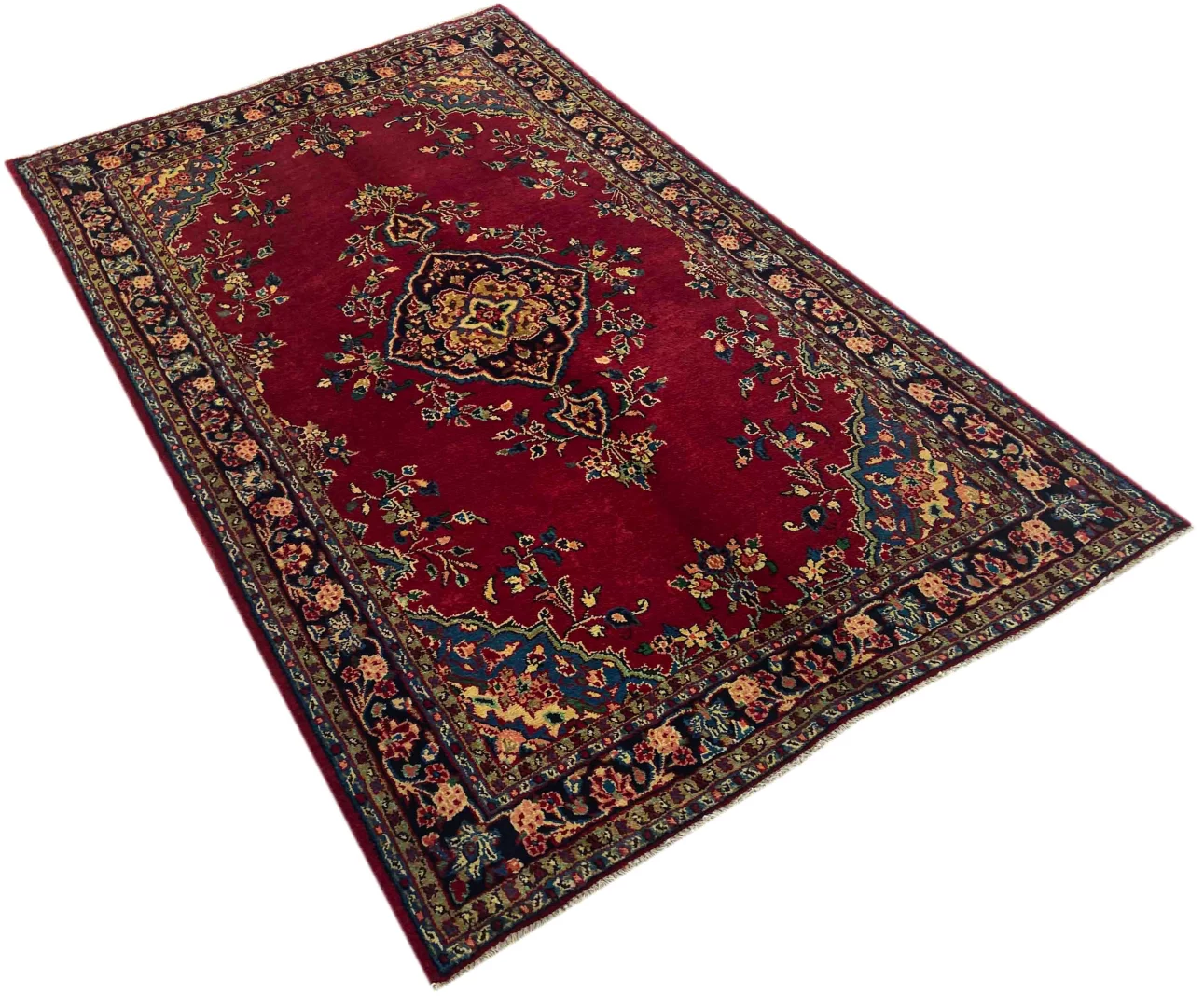
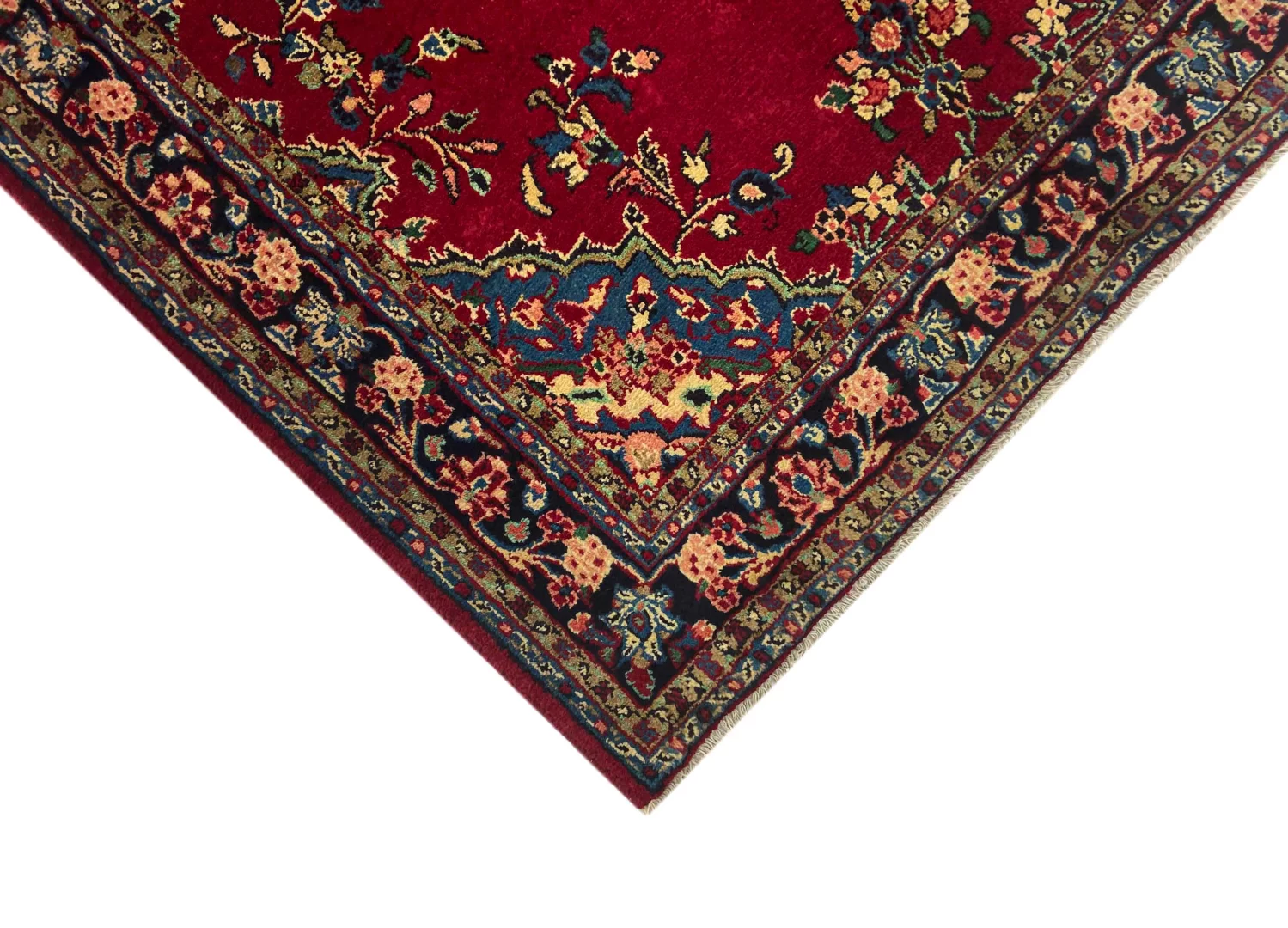
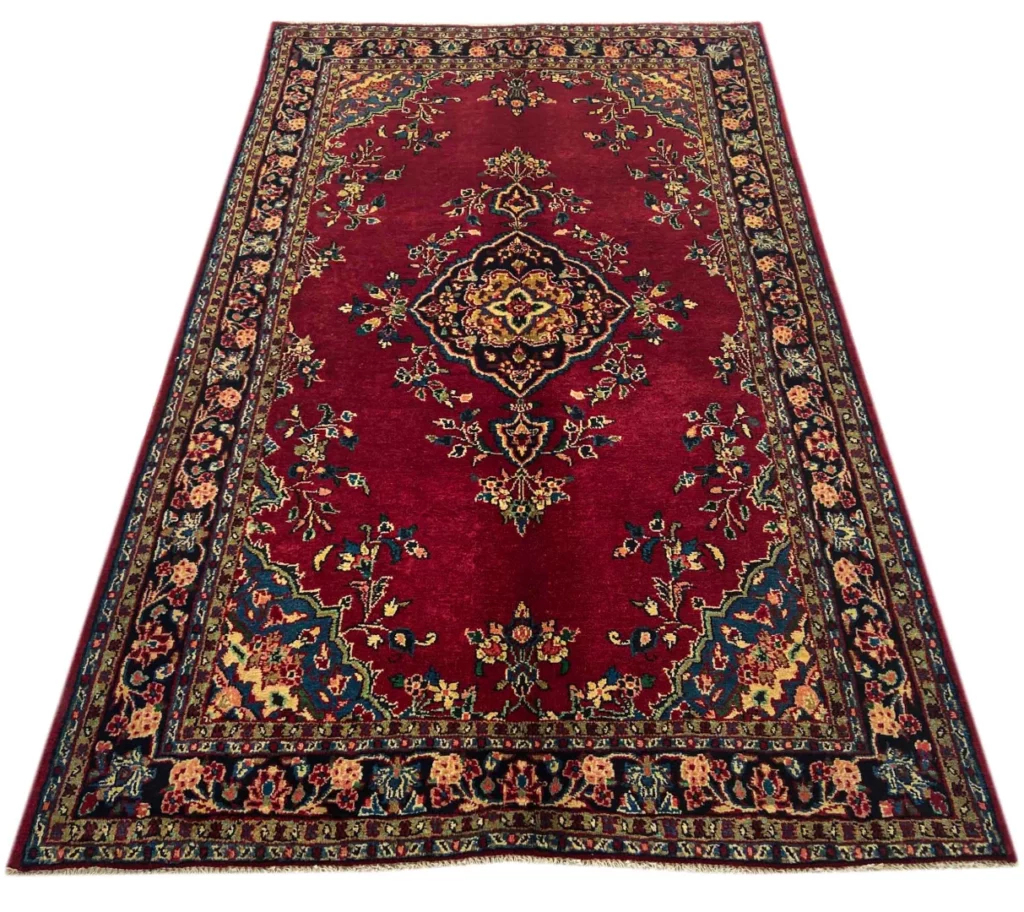
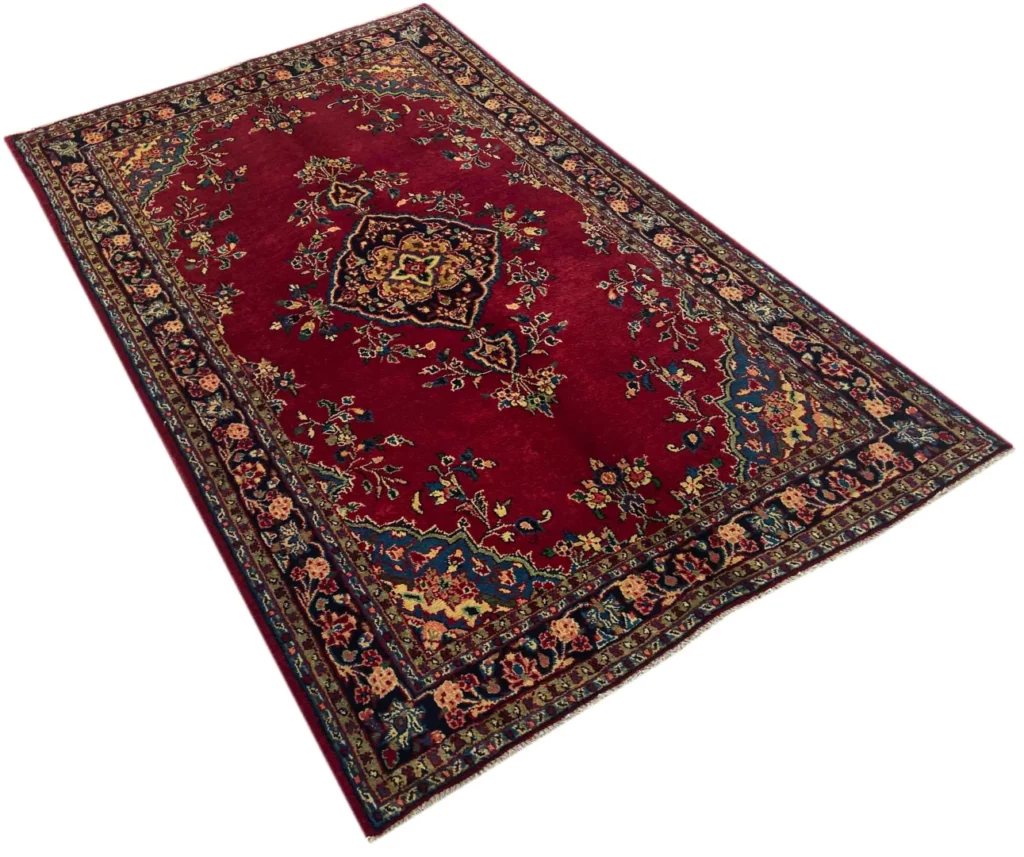
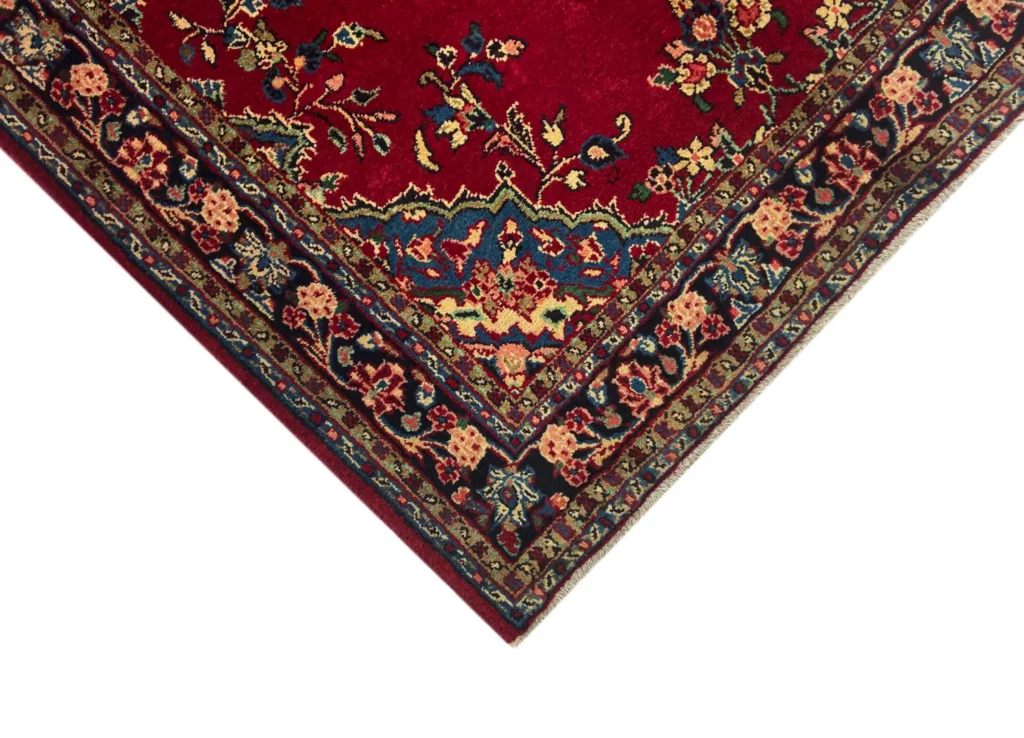
Variety is a central feature of Hamadan design. This rug is described as having varied designs, and the regional group includes compositions ranging from geometric forms to floral motifs. Hamadan rugs therefore cannot be reduced to one decorative formula. Different examples may use strongly ordered geometry, flowing botanical elements or a combination of both, with lively colours and balanced colour relationships used to organise the overall image.
Geometric designs are built from an orderly arrangement of lines, angles, diamonds, fields or repeated forms. Within regional carpet design, these elements can create a central structure, a border or smaller rhythmic units across the field. Floral designs offer a more organic vocabulary. Leaves, blossoms and stylised plant shapes function as decorative signs rather than botanical illustrations, allowing them to be integrated into a carefully structured textile composition.
The variety associated with Hamadan explains why these rugs can appear at home in classical, rustic or modern interiors. A strongly geometric design brings clarity and rhythm, while a floral composition introduces a more flowing decorative quality. Lively colours give the motifs definition, and harmonious combinations keep the different elements connected. The result is a regional design tradition with room for considerable variation rather than a single prescribed appearance.
Hand-knotting also affects how a pattern is perceived. Each motif is built knot by knot, giving outlines and colour fields a textile surface rather than the flat appearance of a printed image. The stated knot density supports detailed drawing, while wool lends the pattern a tactile character. The diversity of Hamadan design thus lies both in the motifs themselves and in the way regional ideas are translated into material, colour and handwork.
Special Features
Hamadan rugs are associated with practical qualities as well as decoration. Their wool is described as durable, and the pile combines softness with resistance. The rugs retain their colour even with intensive use. A wool pile can also add warmth to a room and improve its acoustics, since a textile surface helps absorb sound in a living environment.
Care consists of regular vacuuming and, when necessary, cleaning with a damp cloth. Direct sunlight should be avoided to help prevent the colours from fading. Hamadan rugs can also be used over underfloor heating. Wool is described as having good heat-conducting properties while retaining warmth at the same time. The natural material and hand-knotted construction therefore bring together decorative, tactile and practical characteristics.
FAQ
How should I care for a Hamadan rug?
Vacuum the rug regularly to remove dust and loose dirt from the pile. If further cleaning is needed, use a damp cloth on the affected area. Avoid using more moisture than necessary. Direct sunlight should be limited because it can cause the colours to fade. Gentle, consistent care supports the service life of the durable wool and helps preserve the appearance of the varied design during everyday use.
Where do the materials for Hamadan rugs come from?
Most materials used for Hamadan rugs come from the region itself. The wool is often obtained from local sheep flocks. This provides a natural material known for quality and robustness. Durable wool is specified for the pile of this rug, where its dense structure contributes to a surface that is soft yet hard-wearing. The material suits the traditional hand-knotted production found in Hamadan and the surrounding communities.
Are Hamadan rugs suitable for underfloor heating?
Yes, Hamadan rugs can be used with underfloor heating. Wool has good heat-conducting properties while also storing warmth. It can therefore take up the heat from the floor without losing its role as a textile floor covering. The general care recommendations remain relevant in this setting: vacuum regularly, clean with a damp cloth when needed and protect the rug from direct sunlight to help preserve its colours.
To provide the best experiences, we use technologies like cookies to store and/or access device information. Consenting to these technologies will allow us to process data such as browsing behavior or unique IDs on this site. Not consenting or withdrawing consent, may adversely affect certain features and functions.
Functional Always active
The technical storage or access is strictly necessary for the legitimate purpose of enabling the use of a specific service explicitly requested by the subscriber or user, or for the sole purpose of carrying out the transmission of a communication over an electronic communications network.
Preferences
The technical storage or access is necessary for the legitimate purpose of storing preferences that are not requested by the subscriber or user.
Statistics
The technical storage or access that is used exclusively for statistical purposes.The technical storage or access that is used exclusively for anonymous statistical purposes. Without a subpoena, voluntary compliance on the part of your Internet Service Provider, or additional records from a third party, information stored or retrieved for this purpose alone cannot usually be used to identify you.
Marketing
The technical storage or access is required to create user profiles to send advertising, or to track the user on a website or across several websites for similar marketing purposes.

 SECURE PAYMENT
 SHIPPING PARTNERS