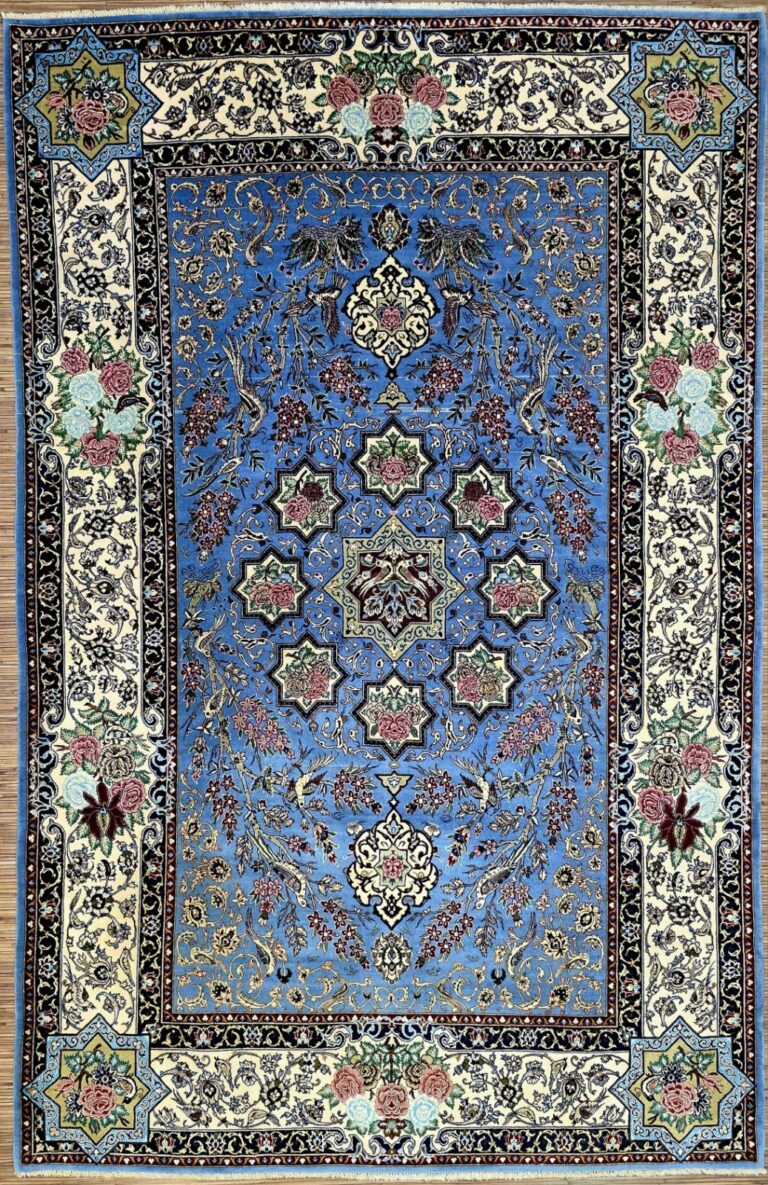
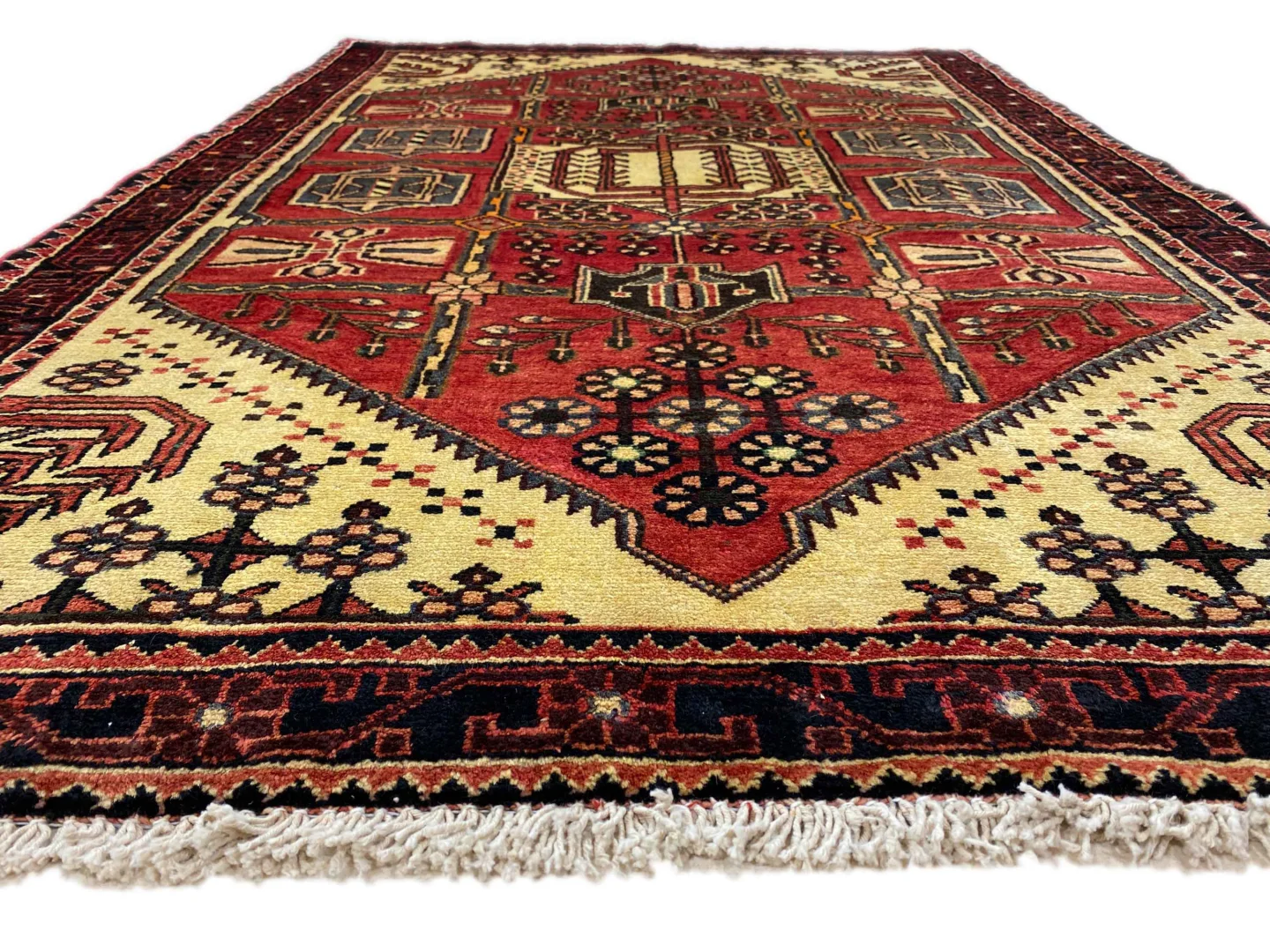
This Hamadan Persian rug is made of 100% wool and is hand-knotted. Wool has long been used for Oriental rugs because it offers a resilient, stable and tactile surface. As a natural fibre, it is suited to a rug intended for regular use. Its texture gives the pile a substantial feel and contributes to the characteristic textile quality of a woven floor covering.
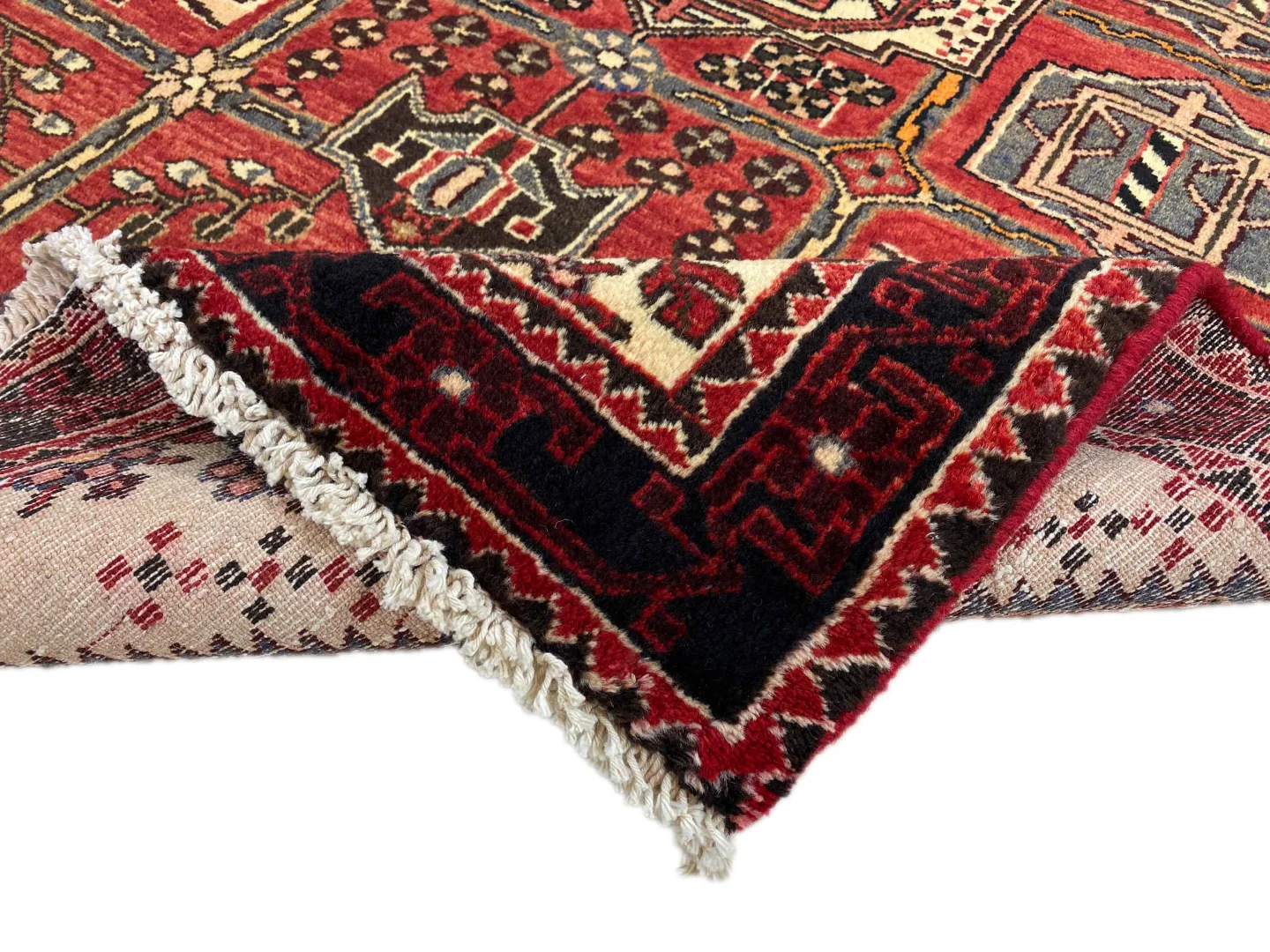
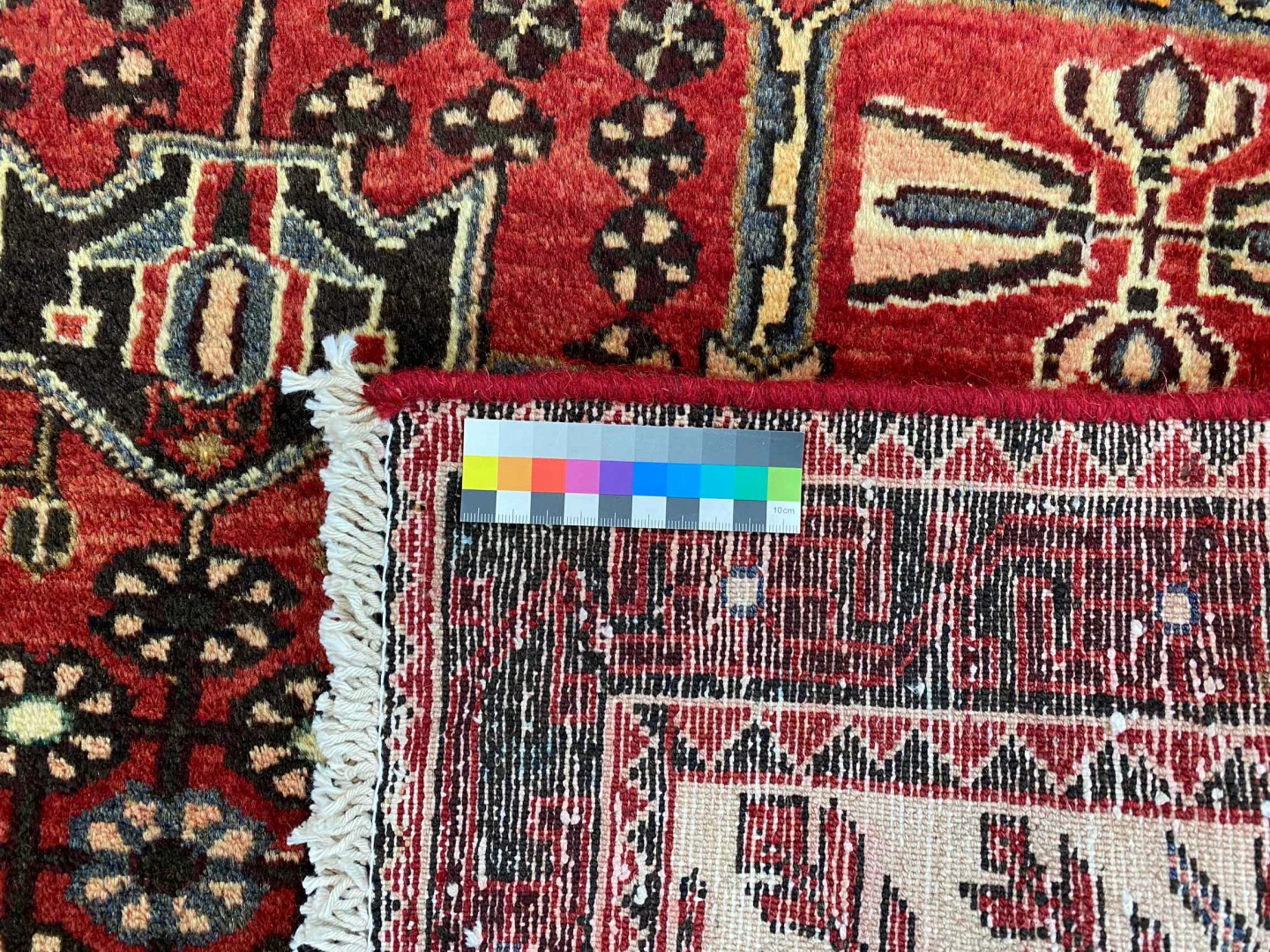
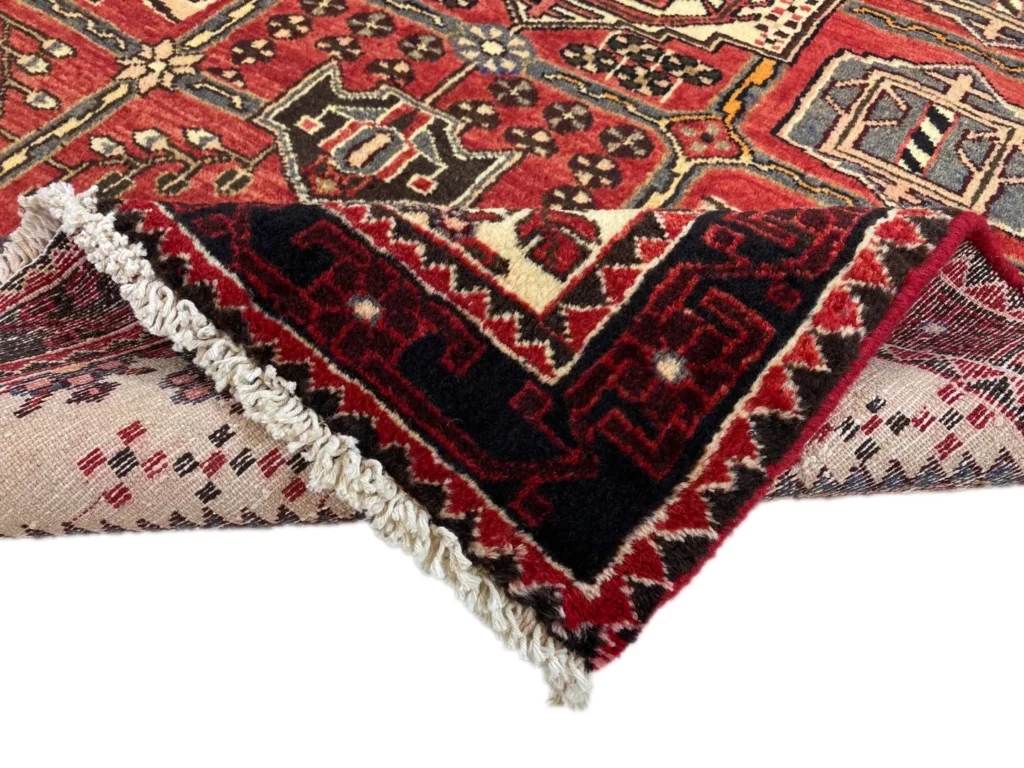
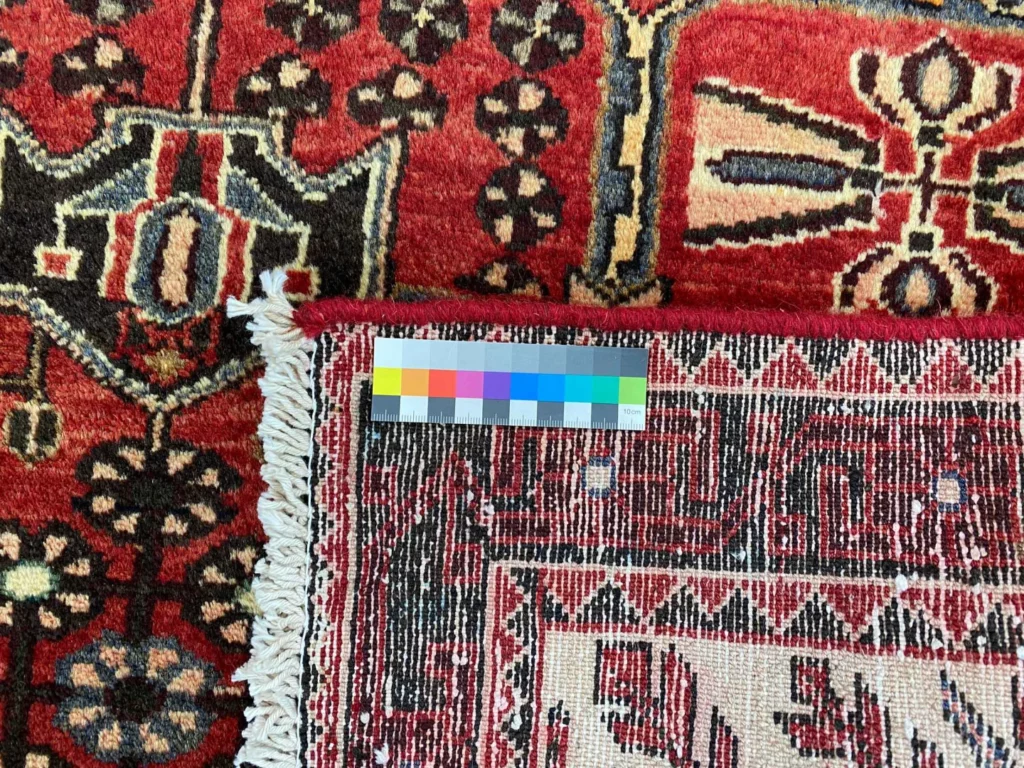
A hand-knotted rug is built knot by knot. The pattern is created through the placement of individual knots rather than printed onto a finished surface. The knot density recorded for this rug is 120,000 knots per square metre. Such density allows lines, fields and smaller motifs to be worked with definition while retaining the visible character of handmade production.
In this method, pile threads are inserted by hand into the rug structure and compacted as the work progresses. The process requires consistent movements and close attention across the entire design. Larger colour areas can be combined with smaller elements, with the wool providing both a durable surface and the familiar hand of a traditional rug.
The rug is described as well preserved. That condition forms part of its presentation alongside the wool material and hand-knotted construction. Care should take account of both the wool pile and the handmade structure. Regular vacuuming or dusting helps remove loose dirt, while specialist treatment is appropriate for particular stains or more demanding cleaning.
Origin and Tradition
This rug comes from Hamadan in Iran. Hamadan refers both to an important city and to the surrounding region, which is associated with a long-established Iranian rug tradition. The city is counted among the oldest in the country and has a history of more than 3,000 years. Within this historical setting, rug making developed as a significant part of local craft culture.
Persian rugs do not follow one single visual formula. Designs, colour arrangements and structural approaches vary between places, workshops and inherited traditions. Hamadan represents a regional identity within Iran’s broader and varied rug landscape. The name therefore identifies the geographical and cultural setting connected with the rug’s production.
Rug making in the region is described as a craft passed from one generation to the next. Knowledge of dividing a field, organising a pattern and balancing colours is acquired through practice and transmission. A hand-knotted rug consequently preserves more than a decorative arrangement: it also reflects a method of making closely tied to the history of Iranian textile craftsmanship.
Rugs from Hamadan and the wider region are made in a variety of patterns and colours. The range extends from classical Persian designs to livelier contemporary interpretations. Their role combines practical use with decorative composition. A rug is made as a functional textile, yet its pattern gives it a cultural and visual dimension that reaches beyond the basic purpose of covering a floor.
The city’s long history provides important context for this tradition, without assigning every individual rug to a particular workshop, family or period. For this piece, Hamadan and Iran are identified as the origin. No additional information about a named workshop, weaver or signature is provided, so no such attribution is added here.
Handwork in Persian rug culture is a process in which the final result develops through many individual choices. These include the knots, the contours and the distribution of colour. Even a traditional design can therefore acquire a distinct expression within a regional vocabulary. Hamadan rugs bring inherited regional practice together with the particular execution of each one-off piece.
The regional name should also be kept separate from a general description of Persian design. It points to origin, while the actual pattern may draw on several established forms. In this case, the stated Iranian origin and the Hamadan designation belong to the rug itself. The broader history of Hamadan explains the tradition behind it without adding an unrecorded date, workshop or provenance.
Design and Pattern
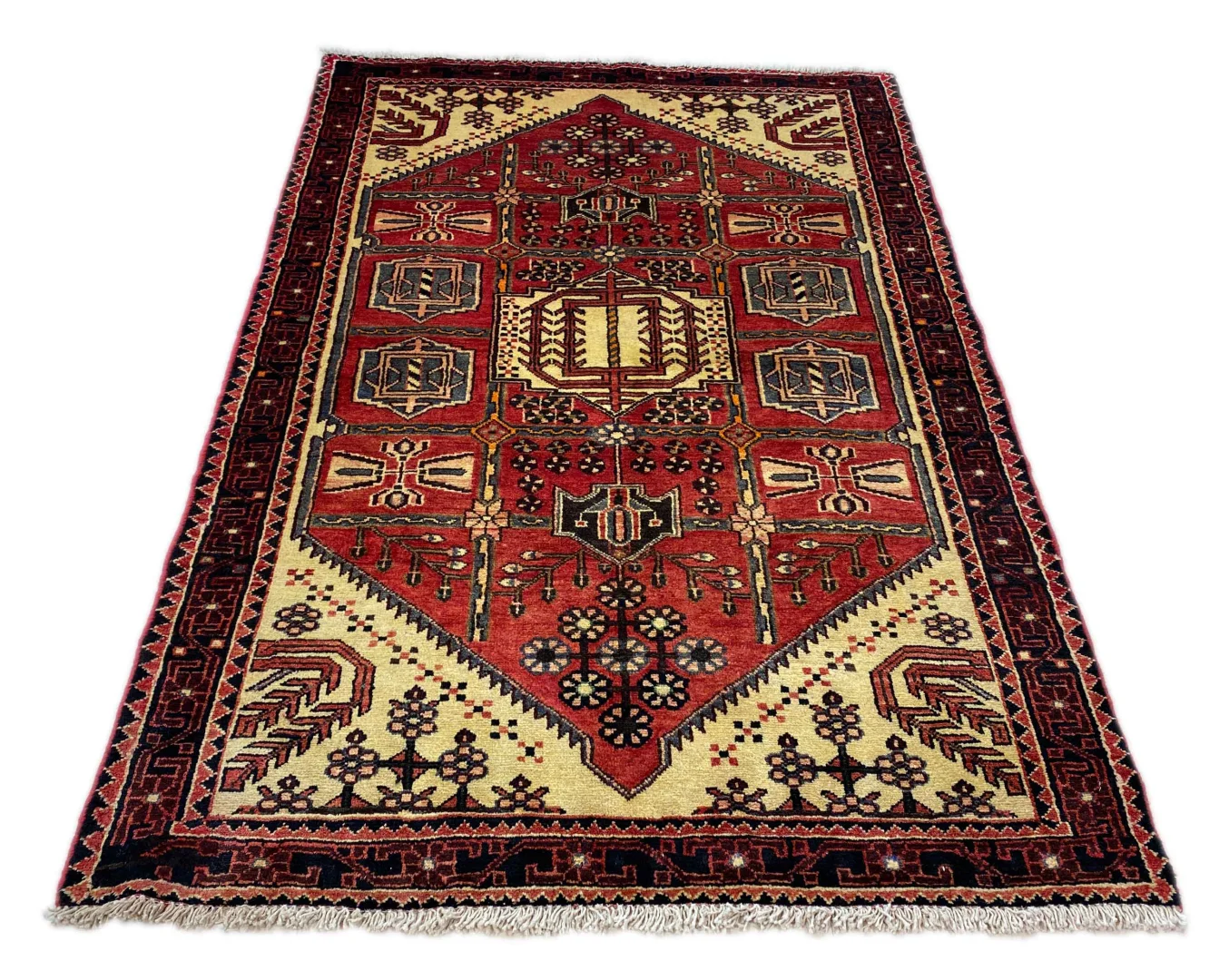
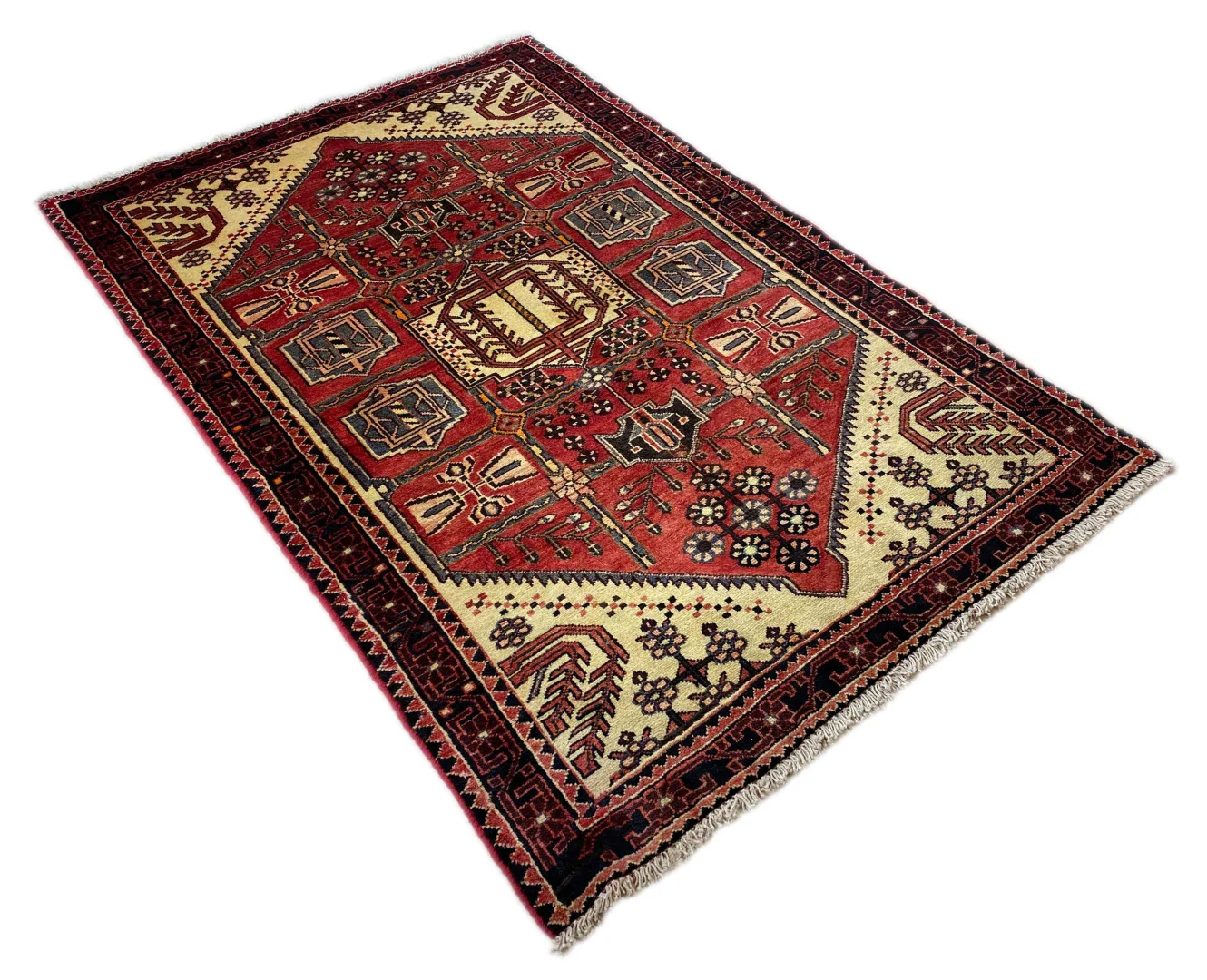
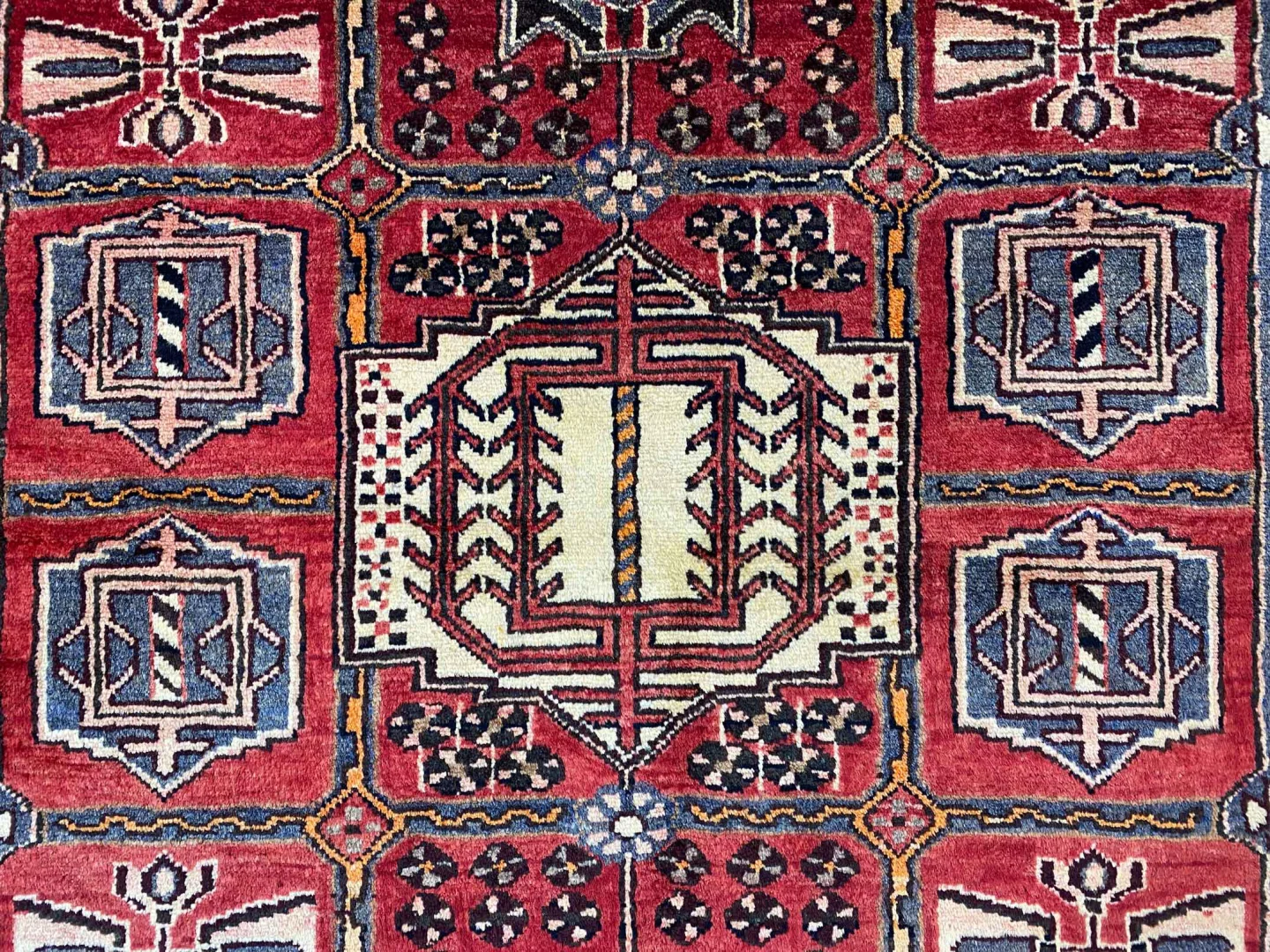
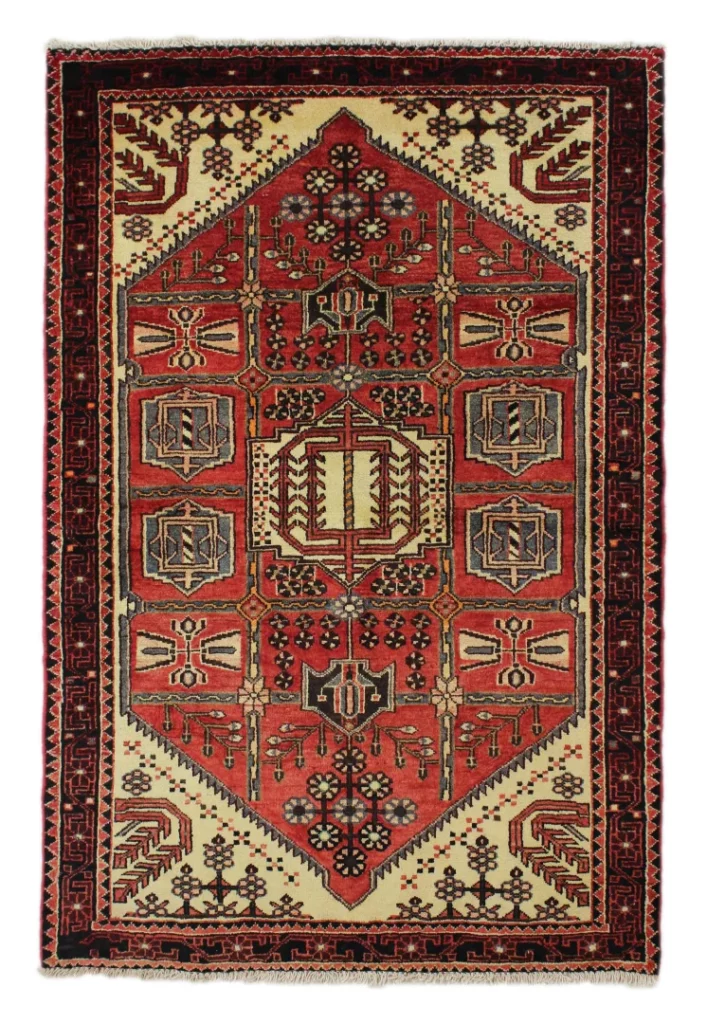
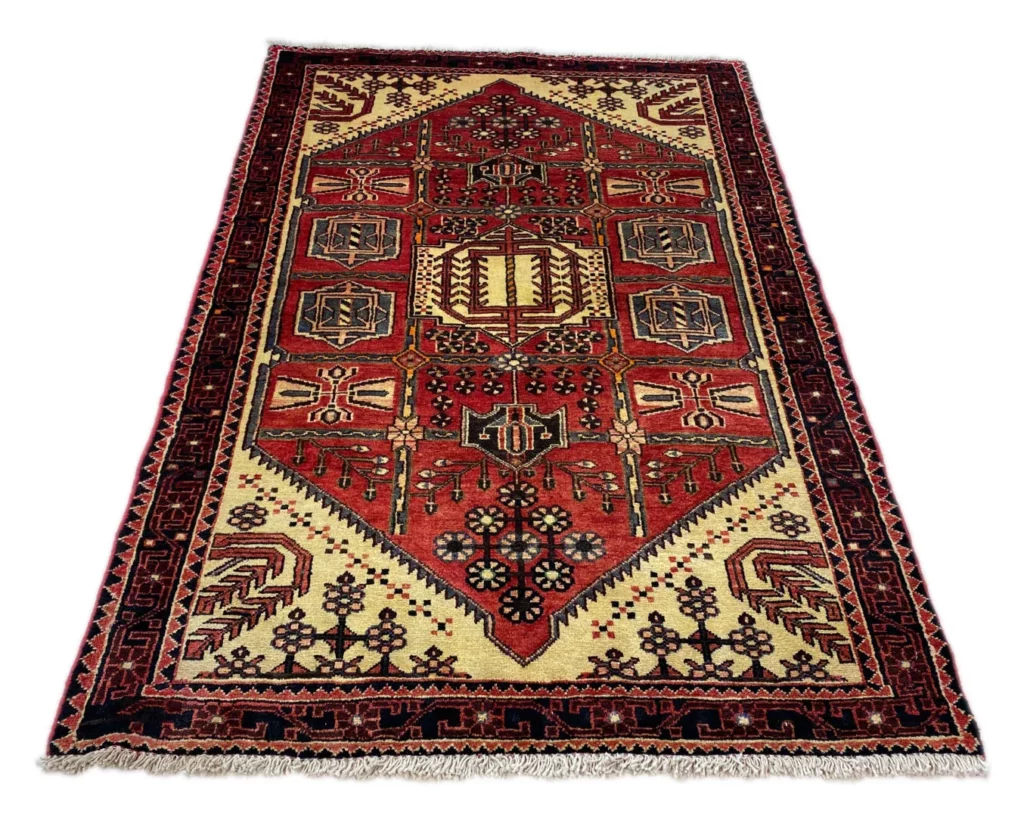
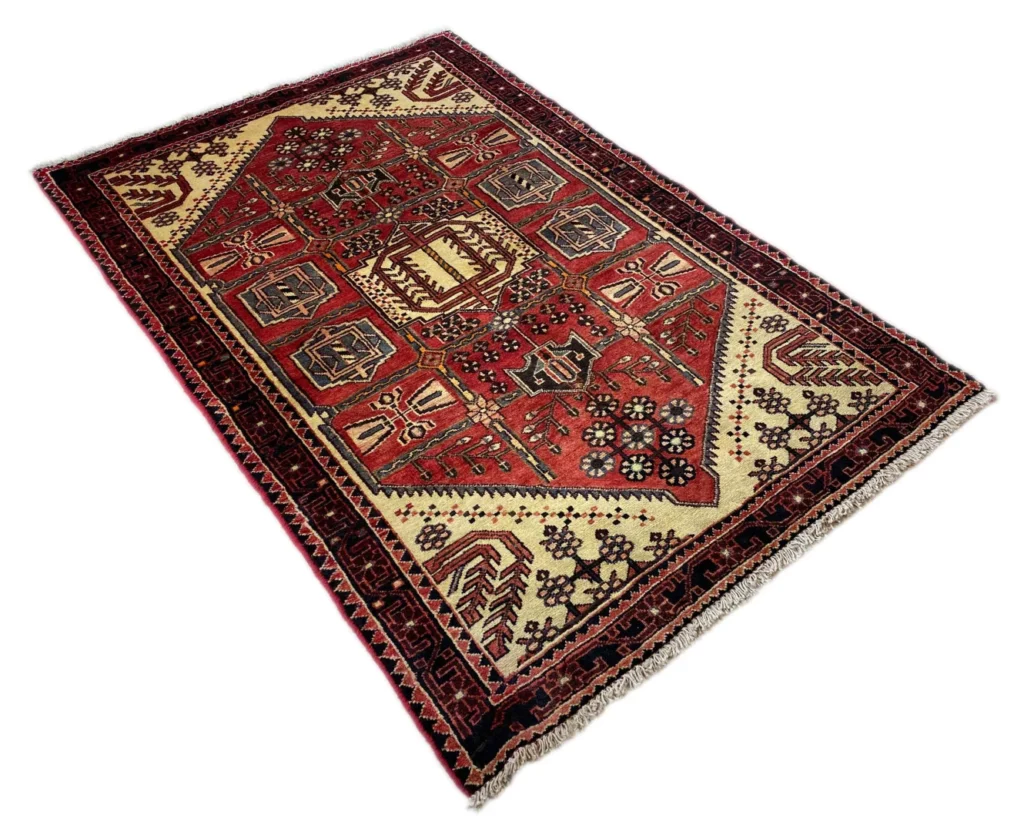
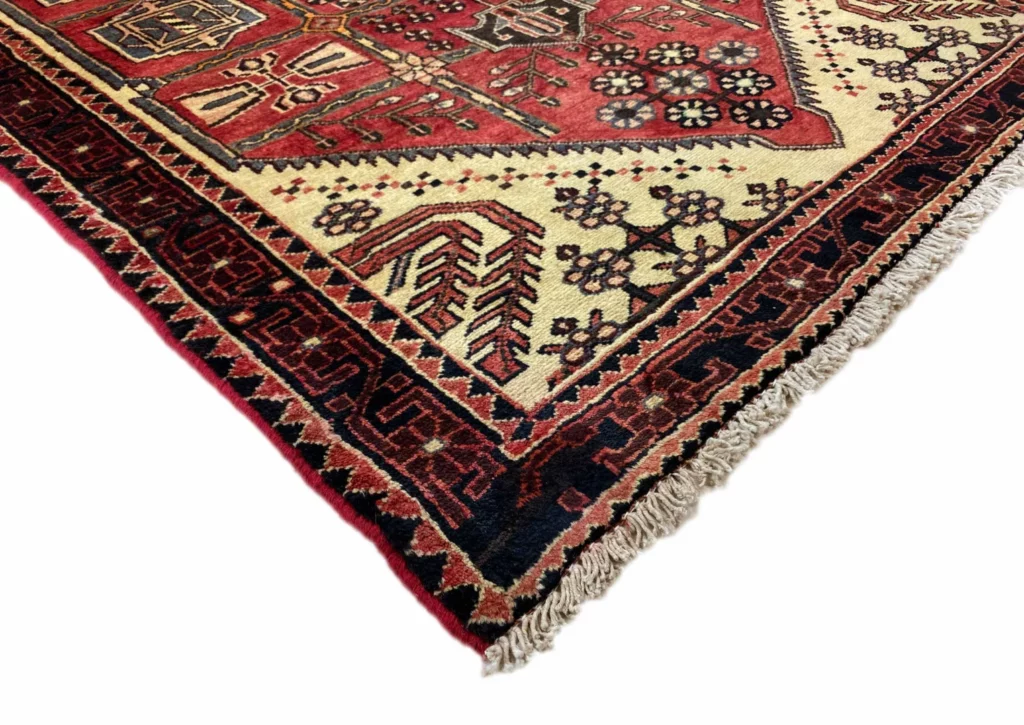
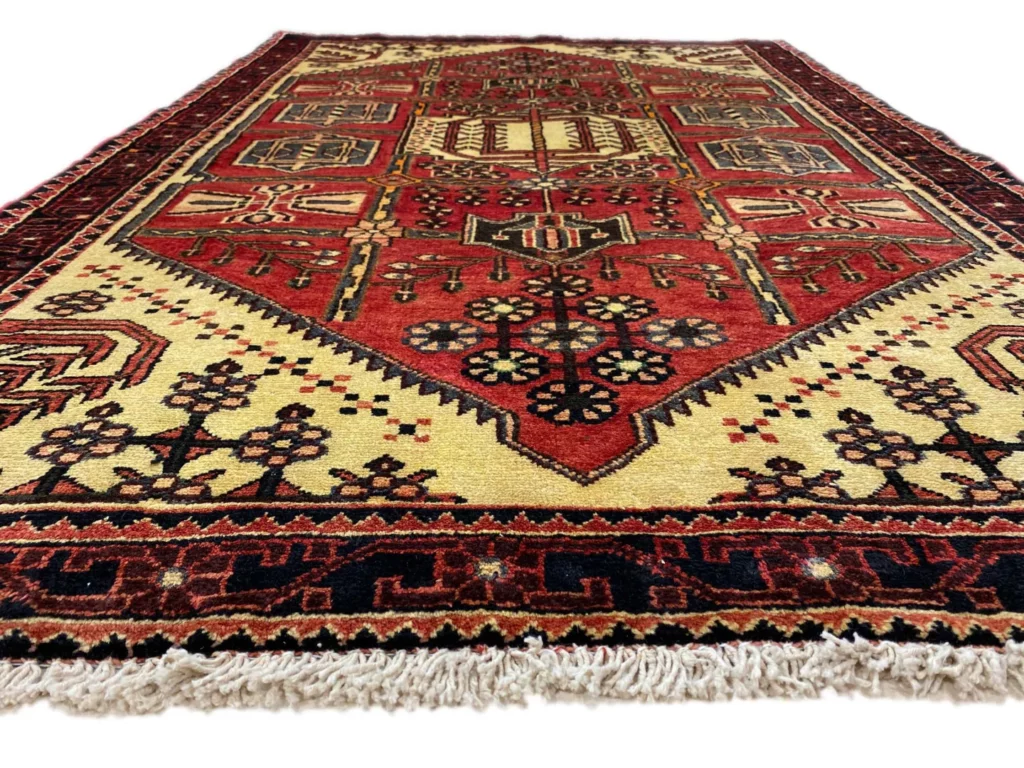
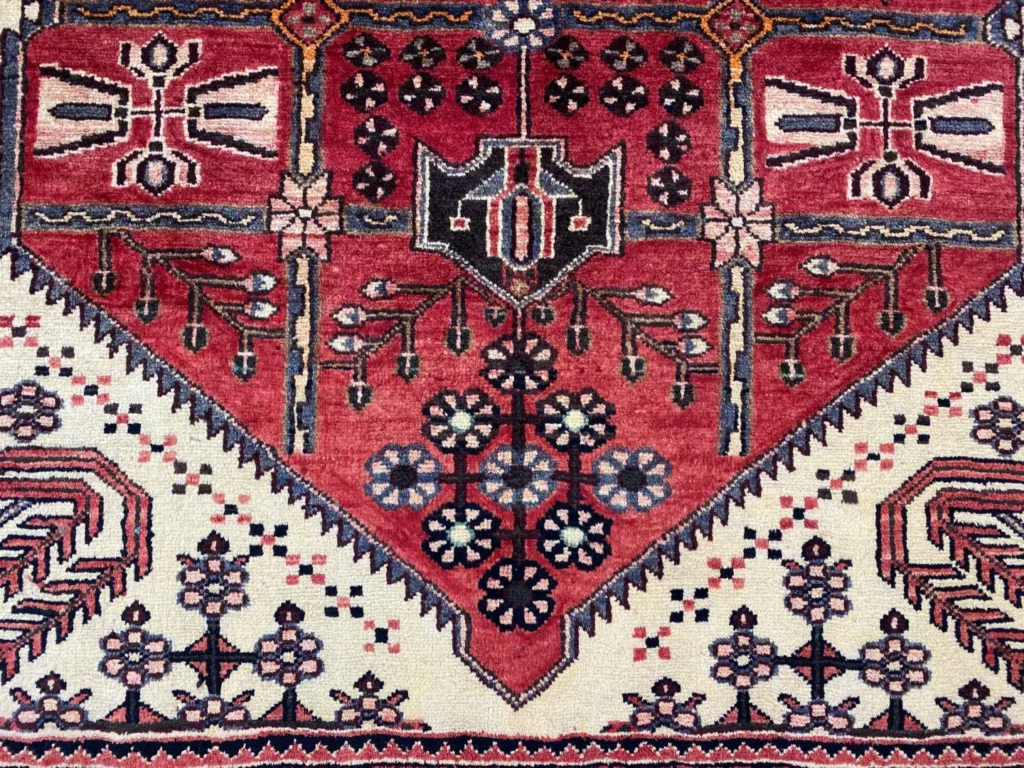
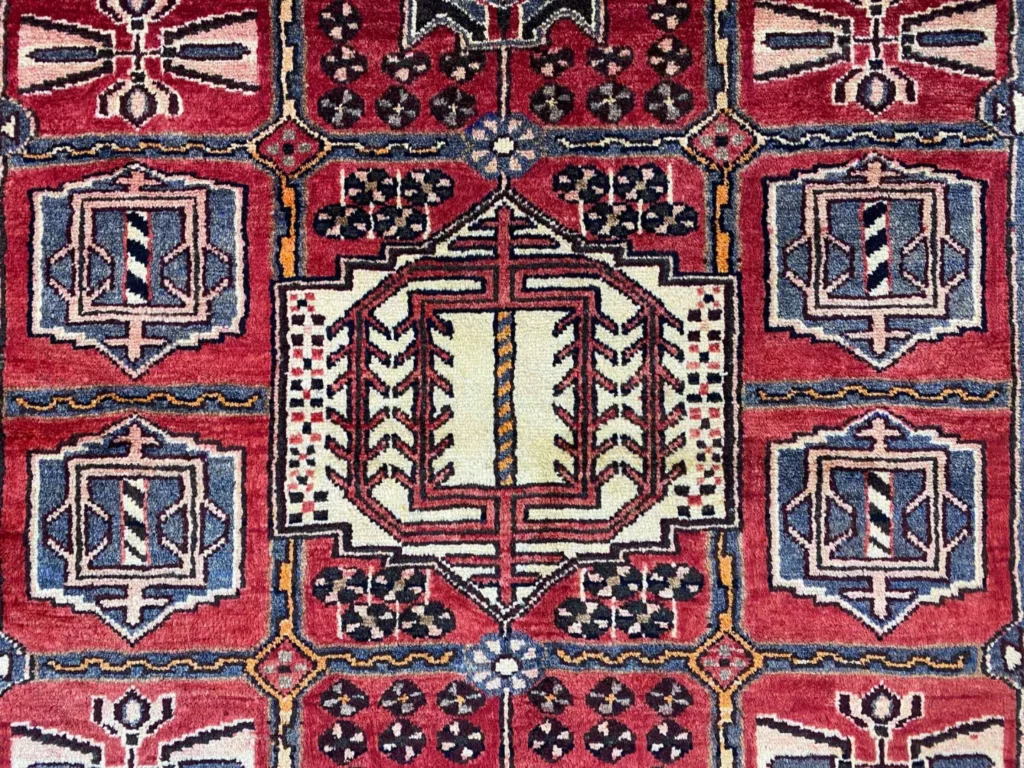
The design of this Hamadan rug is described as traditional and geometric. Geometric forms organise the surface through lines, angles, fields and repeated contours. In a hand-knotted rug these shapes are built from individual knots, so the design is also expressed through the structure of the pile rather than simply placed on top of it.
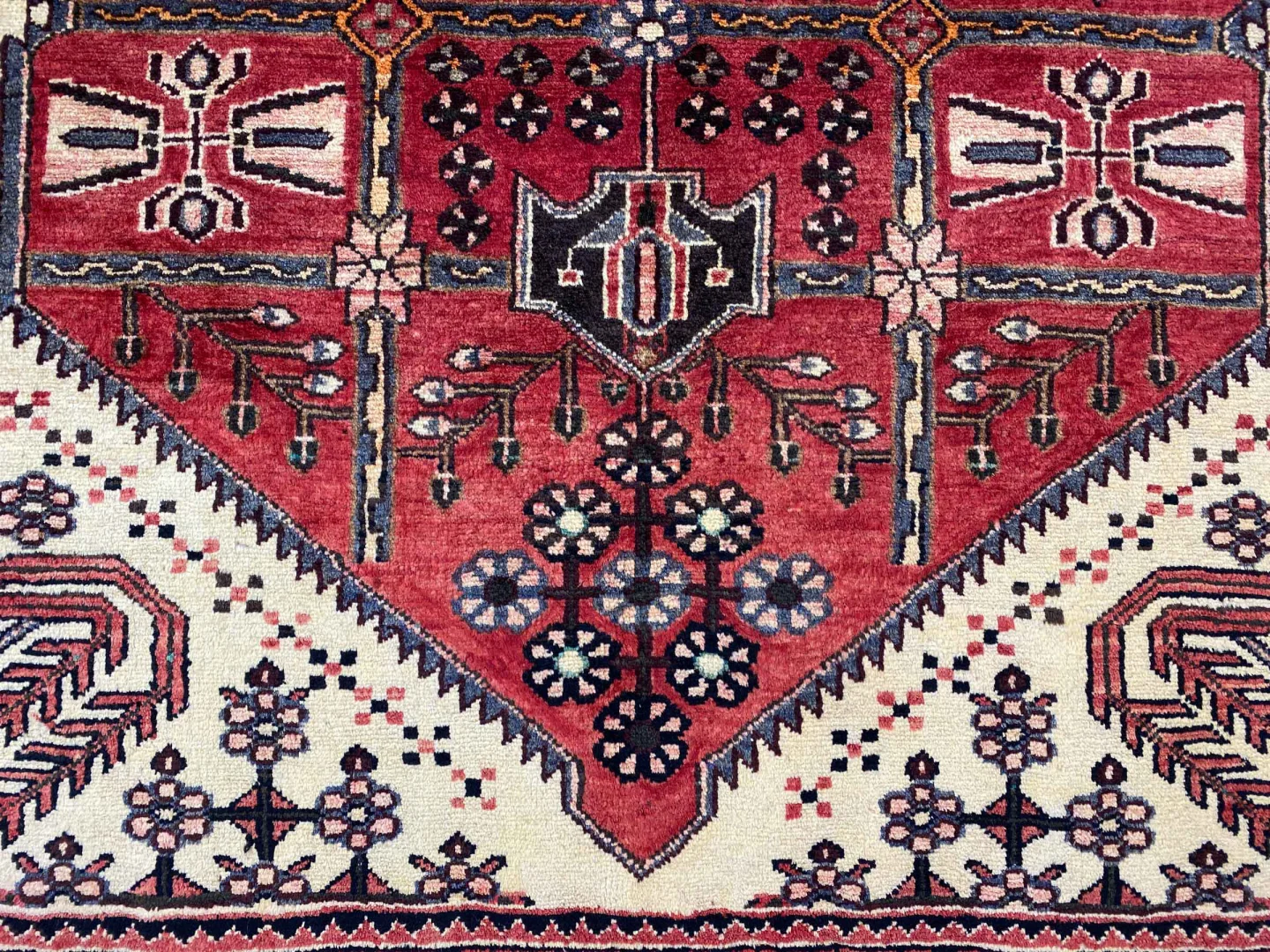
The detailed description also refers to floral motifs. The composition therefore combines geometric order with forms drawn from the plant world. In Persian rug design, floral elements may be simplified, repeated rhythmically or placed within a carefully divided field. They can function as small details or work together with geometric shapes to create a continuous ornamental system.
The colours named for this design are red, blue, yellow and natural tones. Their proportions and placement influence the balance of the overall pattern. Red and blue can create clear contrast, while yellow and natural shades may provide accents or transitions. The final colour effect comes from the relationship between the wool, the knots and the arrangement of the motifs.
Traditional rug patterns are often understood as more than random decoration. Repeated shapes and symbols may refer to regional visual culture, inherited signs and shared experiences. The description of this rug notes that such patterns can tell stories and carry symbolism associated with luck, prosperity and well-being. This is part of the cultural background of the design and does not require every individual motif to have one fixed translation.
Geometric designs also give a rug a readable internal structure. A central form may be supported by surrounding shapes, while smaller elements connect larger areas and establish rhythm. Floral details can soften a strict geometry without removing its clarity. The result is a design language in which ordered contours and more flowing decorative forms coexist.
Persian design traditions include both tightly organised compositions and arrangements with a freer sense of movement. Hamadan provides the regional framework, while the specific pattern can reflect different traditional influences. This rug is characterised by its geometric basis and the floral motifs mentioned in the description. No special pattern name or precise medallion arrangement is stated, so those details are not assigned to it.
In an interior, a geometric pattern is perceived through recurring lines, shapes and colour blocks. Hand-knotting gives these elements a textile presence that can be seen in the surface as well as felt in the wool pile. The result is traditional in vocabulary while remaining specific to the individual rug. The design description does not establish a particular period or age for the piece.
Special Features
The stated knot density is 120,000 knots per square metre. Knot density indicates how many individual knots are set within a given area. It is a technical characteristic of the construction and may support the definition of smaller contours and more differentiated motifs.
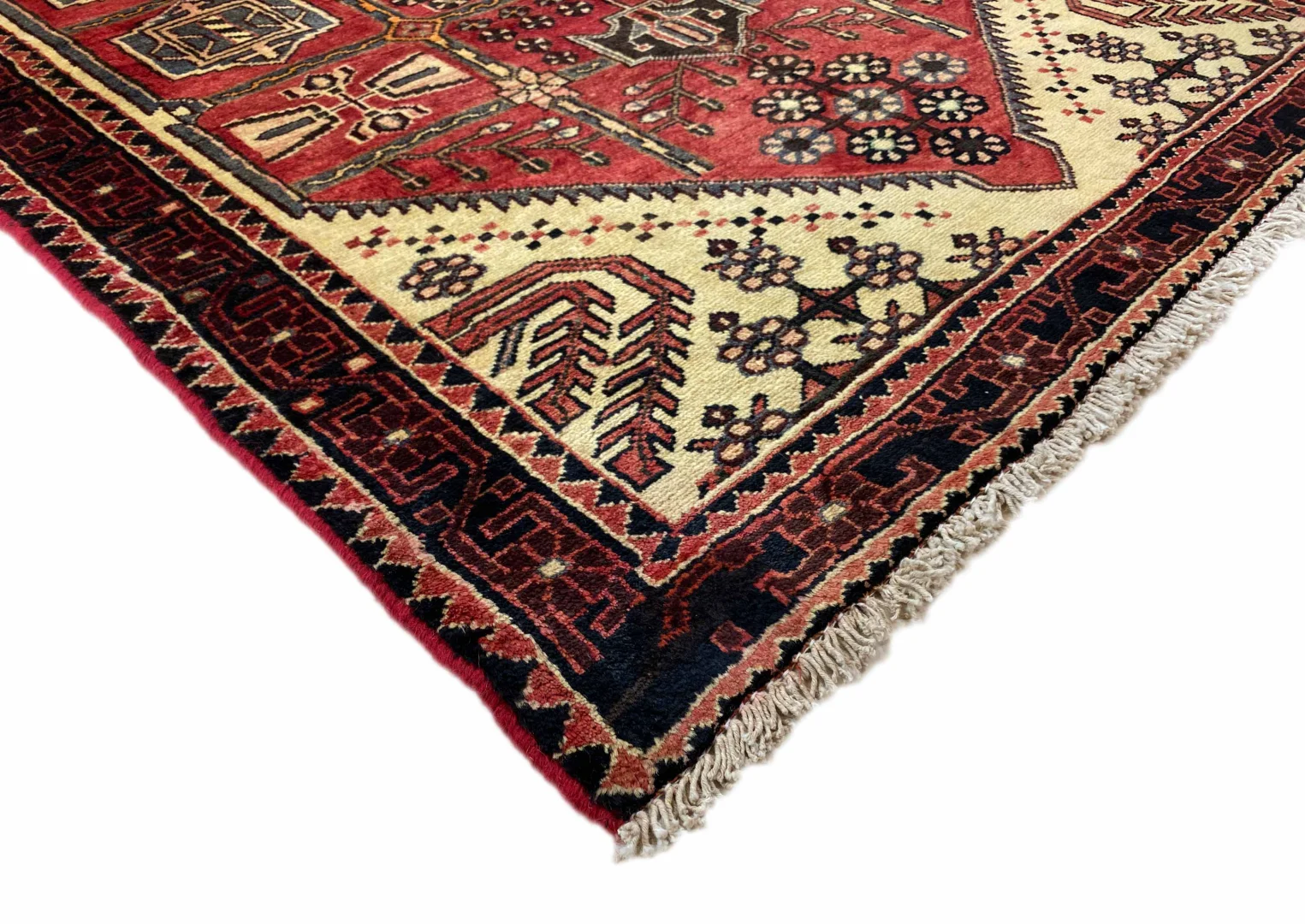
The careful knotting is described as helping the motifs remain clearly defined. In a hand-knotted rug, every detail results from the relationship of many separate knots. Wool and construction therefore work together in determining the character of the piece. Its condition is given as well preserved.
The description also mentions a patina created by the natural ageing process. Patina can give a surface its own character and alter the way material and colour are perceived over time. No specific age or date is supplied. Patina is therefore presented as a surface characteristic, not as evidence for a particular year of manufacture.
FAQ
How should I care for my Hamadan Persian rug?
Regular vacuuming or dusting removes loose dirt and dust from the wool pile. If a spill occurs, dab the area promptly with a damp cloth rather than rubbing it hard. Avoid direct sunlight, since prolonged exposure can cause colours to fade. For a thorough cleaning or a difficult stain, use a specialist familiar with hand-knotted wool rugs and their construction.
Where can I buy a Hamadan Persian rug?
Hamadan Persian rugs are available from specialist rug dealers, antique dealers and online retailers. When buying, the stated hand-knotted quality and the origin are useful points of reference. For this piece, Hamadan and Iran are identified as the origin, and the hand-knotted construction is specified. Material, knot density and condition can also be considered when assessing the rug.
How can I identify a well-made hand-knotted rug?
Useful indicators include a dense knot count per square metre, clearly defined and lively patterns, and careful overall construction. Firm edges and a back that appears even can also be examined. Handmade work does not necessarily look perfectly uniform: small irregularities may reflect the manual process. With a Hamadan Oriental rug, the stated origin and the regional design tradition are additional points for understanding the piece.
To provide the best experiences, we use technologies like cookies to store and/or access device information. Consenting to these technologies will allow us to process data such as browsing behavior or unique IDs on this site. Not consenting or withdrawing consent, may adversely affect certain features and functions.
Functional Always active
The technical storage or access is strictly necessary for the legitimate purpose of enabling the use of a specific service explicitly requested by the subscriber or user, or for the sole purpose of carrying out the transmission of a communication over an electronic communications network.
Preferences
The technical storage or access is necessary for the legitimate purpose of storing preferences that are not requested by the subscriber or user.
Statistics
The technical storage or access that is used exclusively for statistical purposes.The technical storage or access that is used exclusively for anonymous statistical purposes. Without a subpoena, voluntary compliance on the part of your Internet Service Provider, or additional records from a third party, information stored or retrieved for this purpose alone cannot usually be used to identify you.
Marketing
The technical storage or access is required to create user profiles to send advertising, or to track the user on a website or across several websites for similar marketing purposes.

 SECURE PAYMENT
 SHIPPING PARTNERS