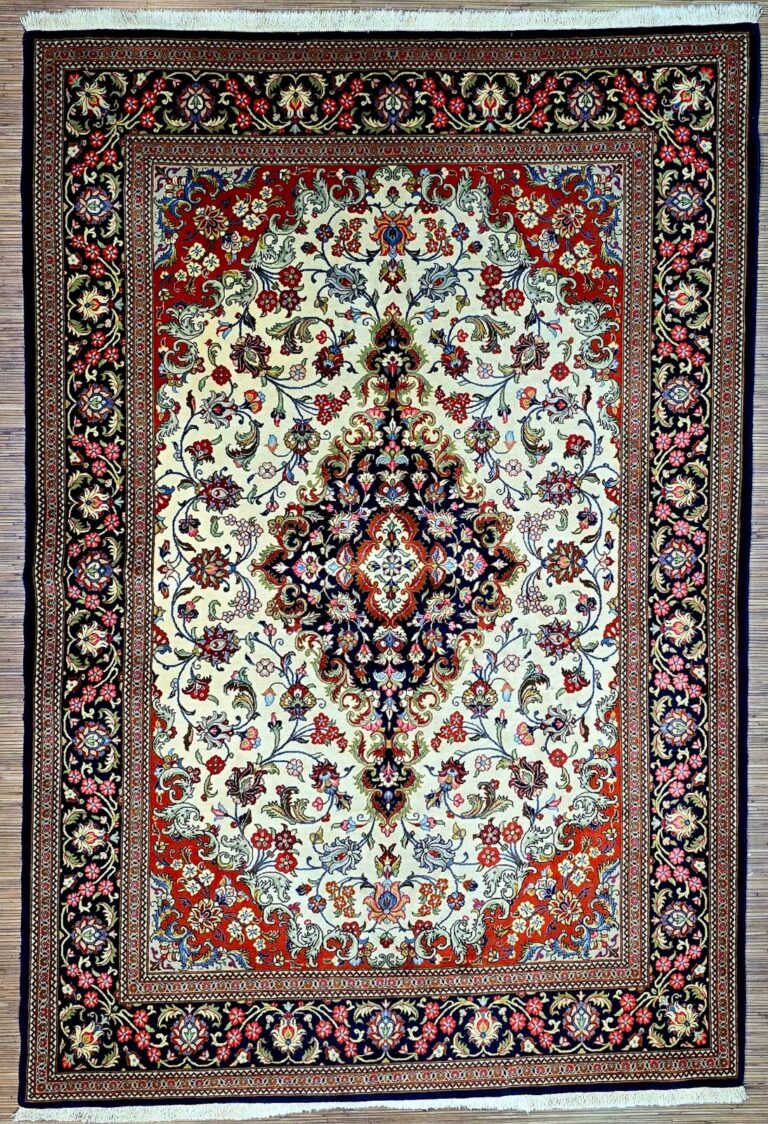
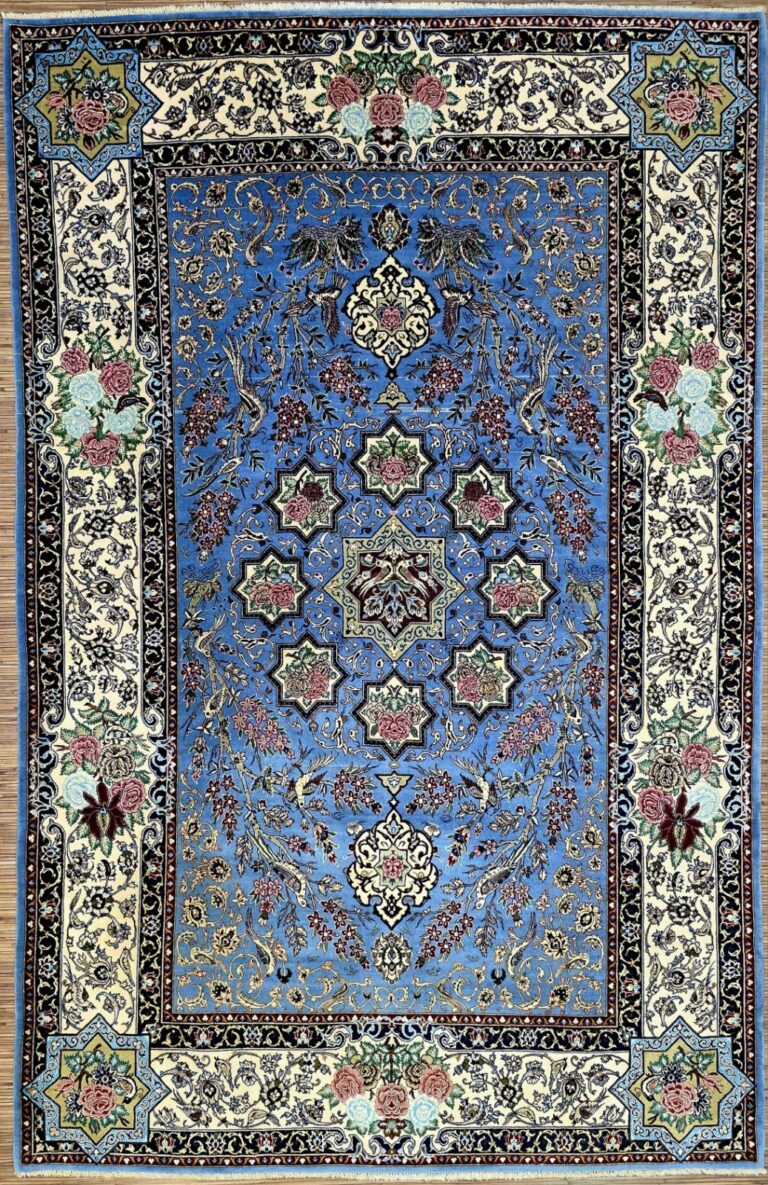
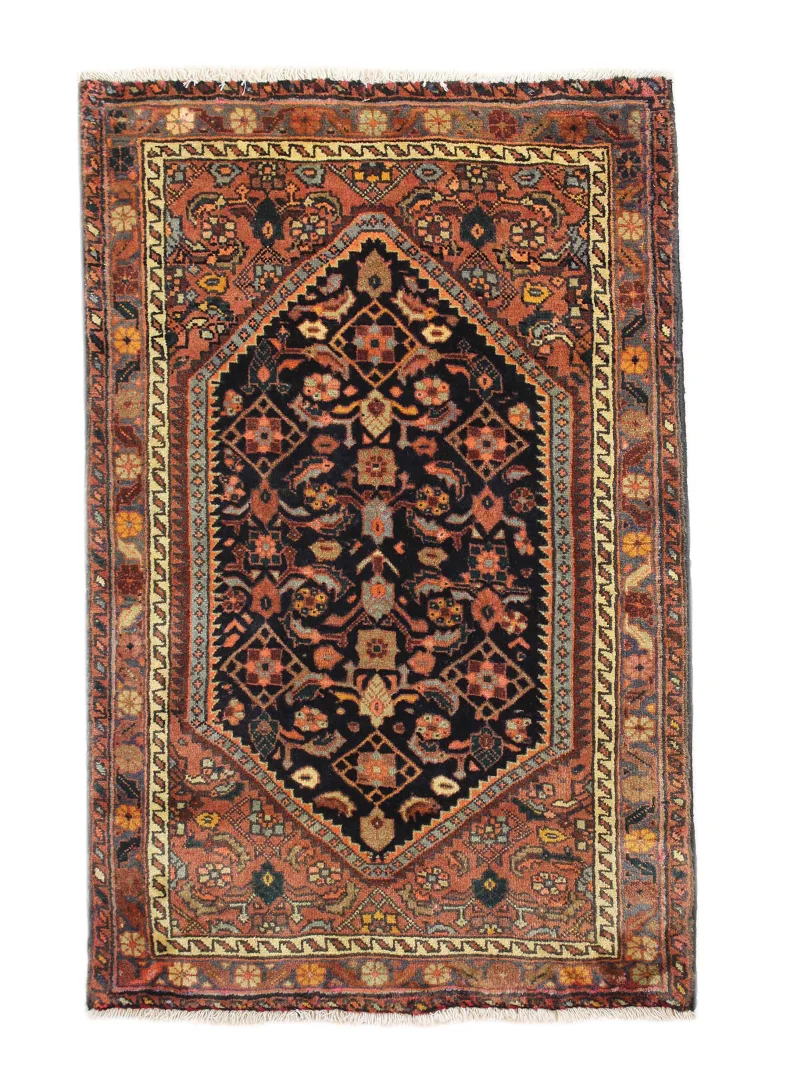
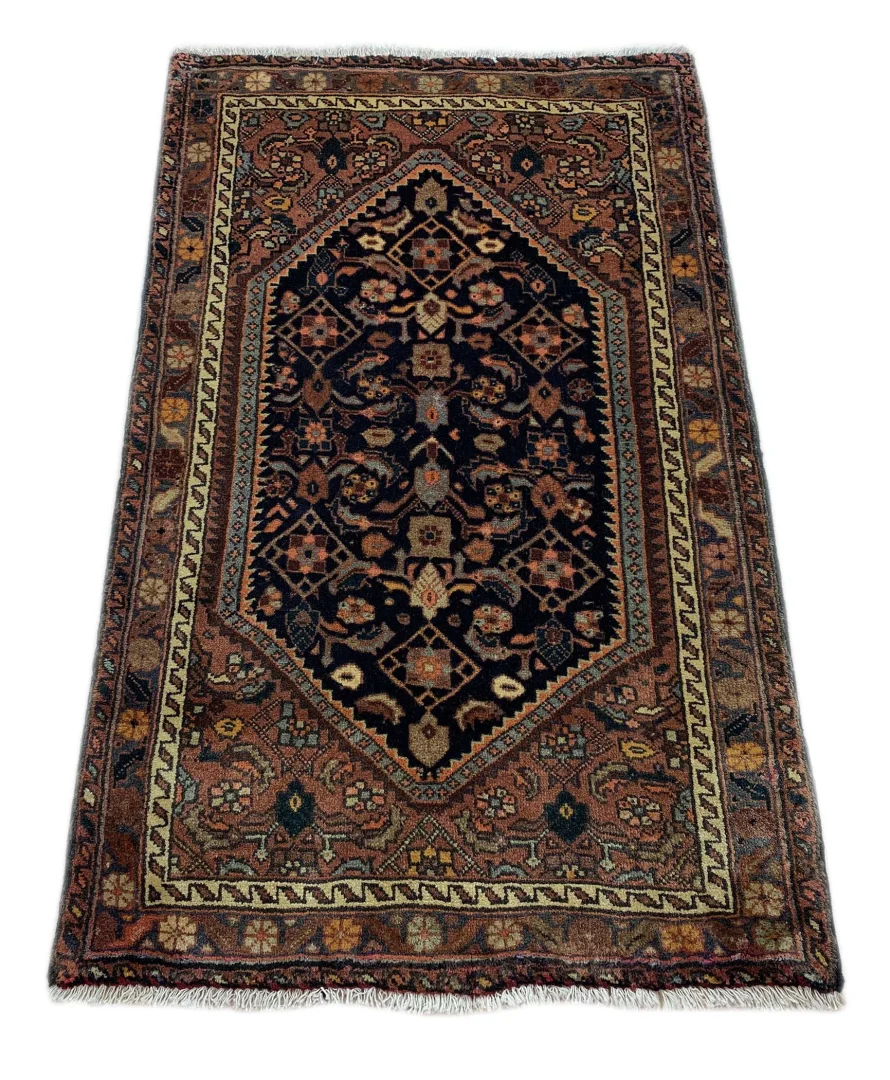
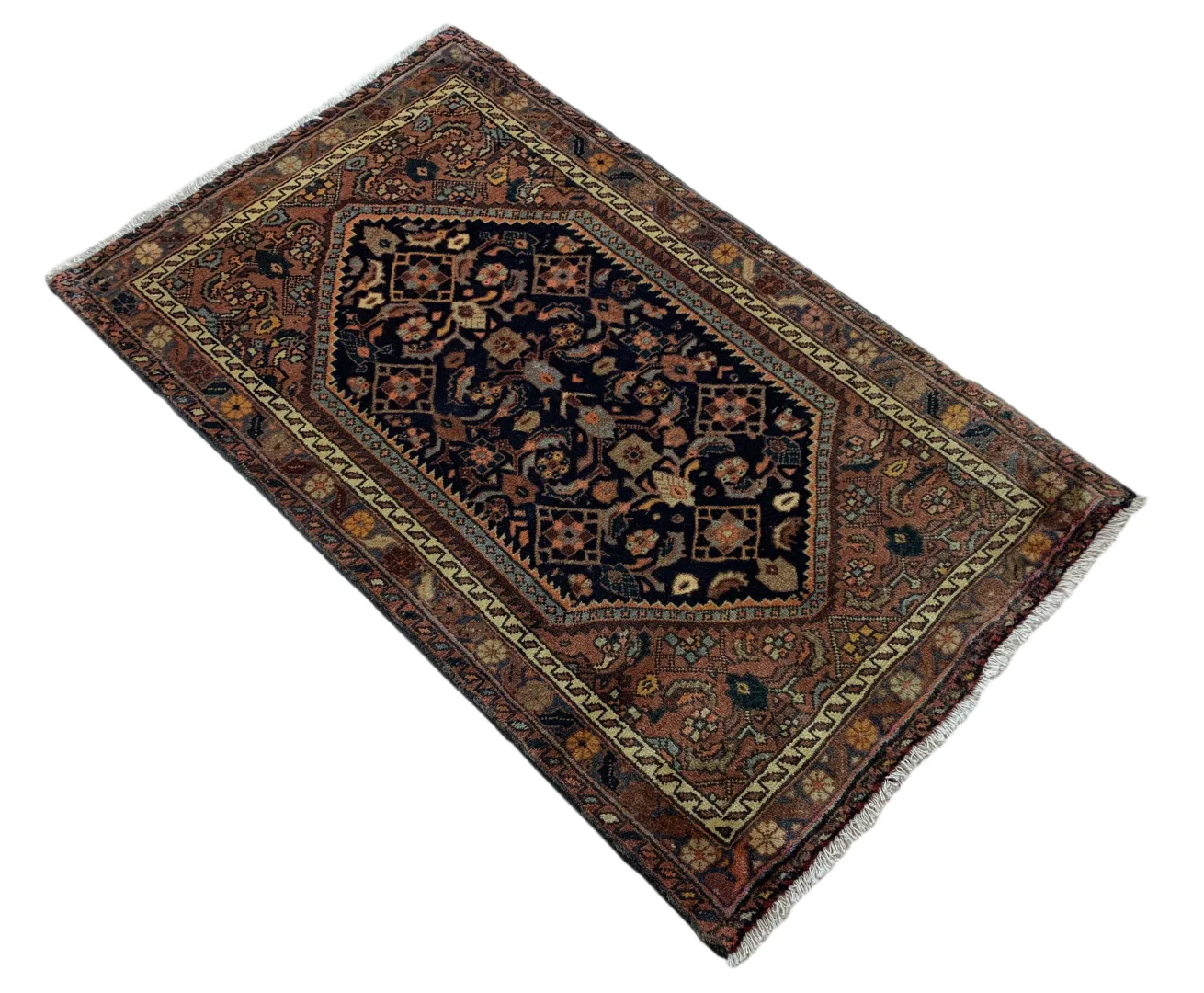
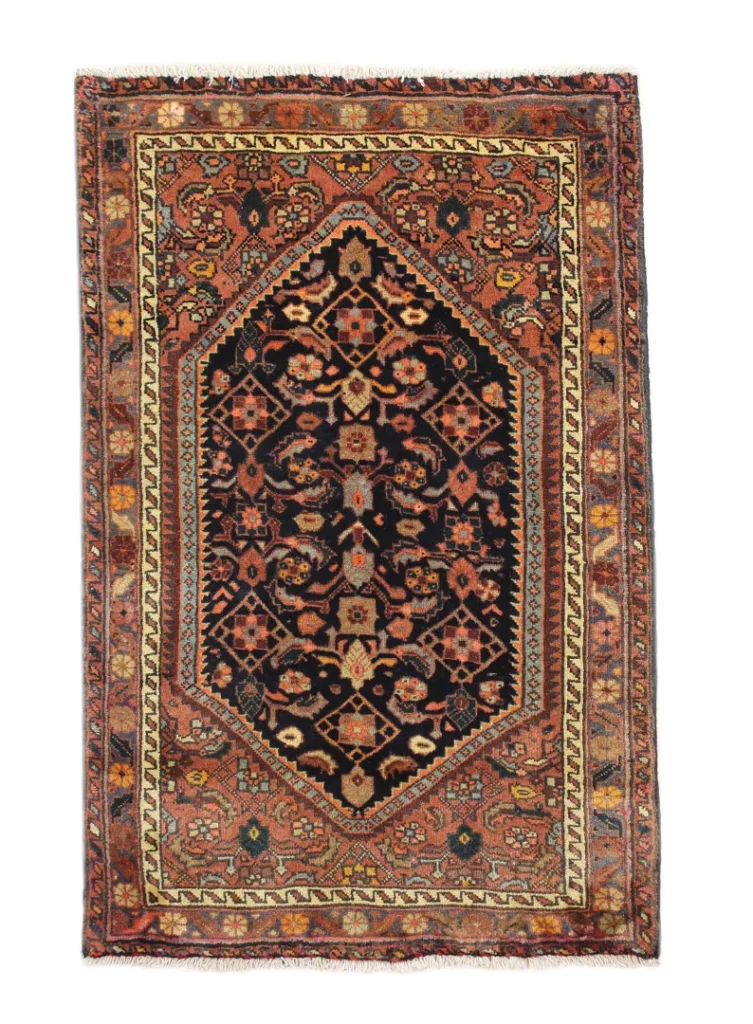
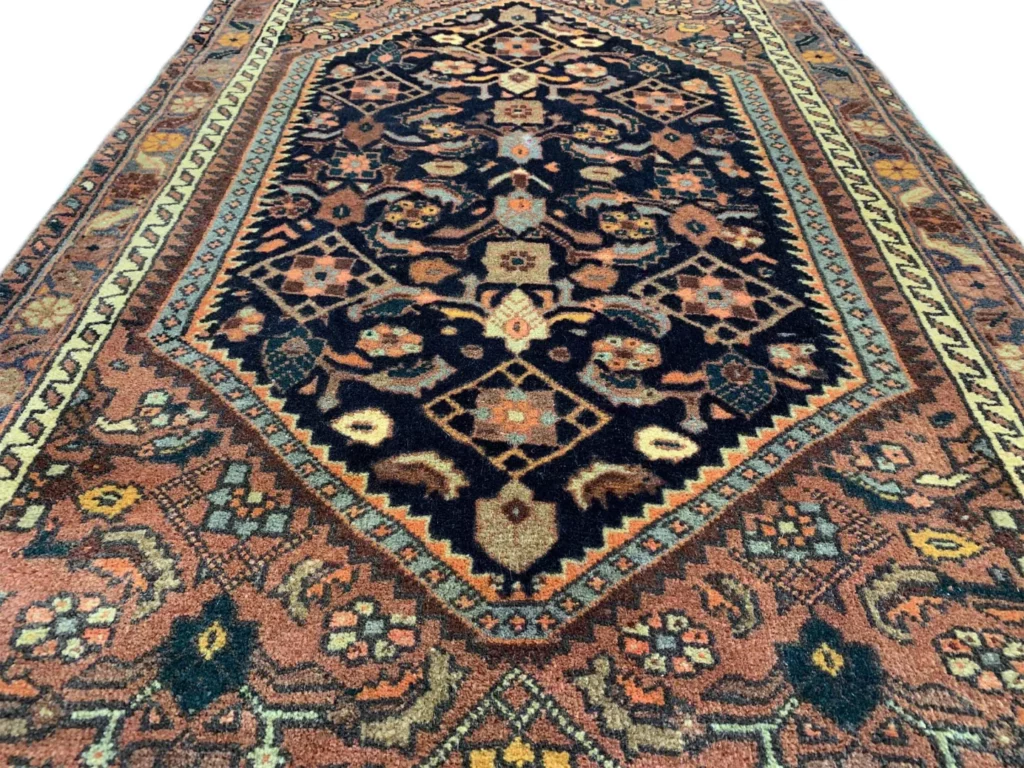
Hand-knotted Goltogh Persian Rug | Knot density: 120,000 – 250,000 knots/m² | Material: Hard-spun wool pile | Size: 127 x 77 cm | Pattern: Medium to dark brown tones | Condition: Very well preserved
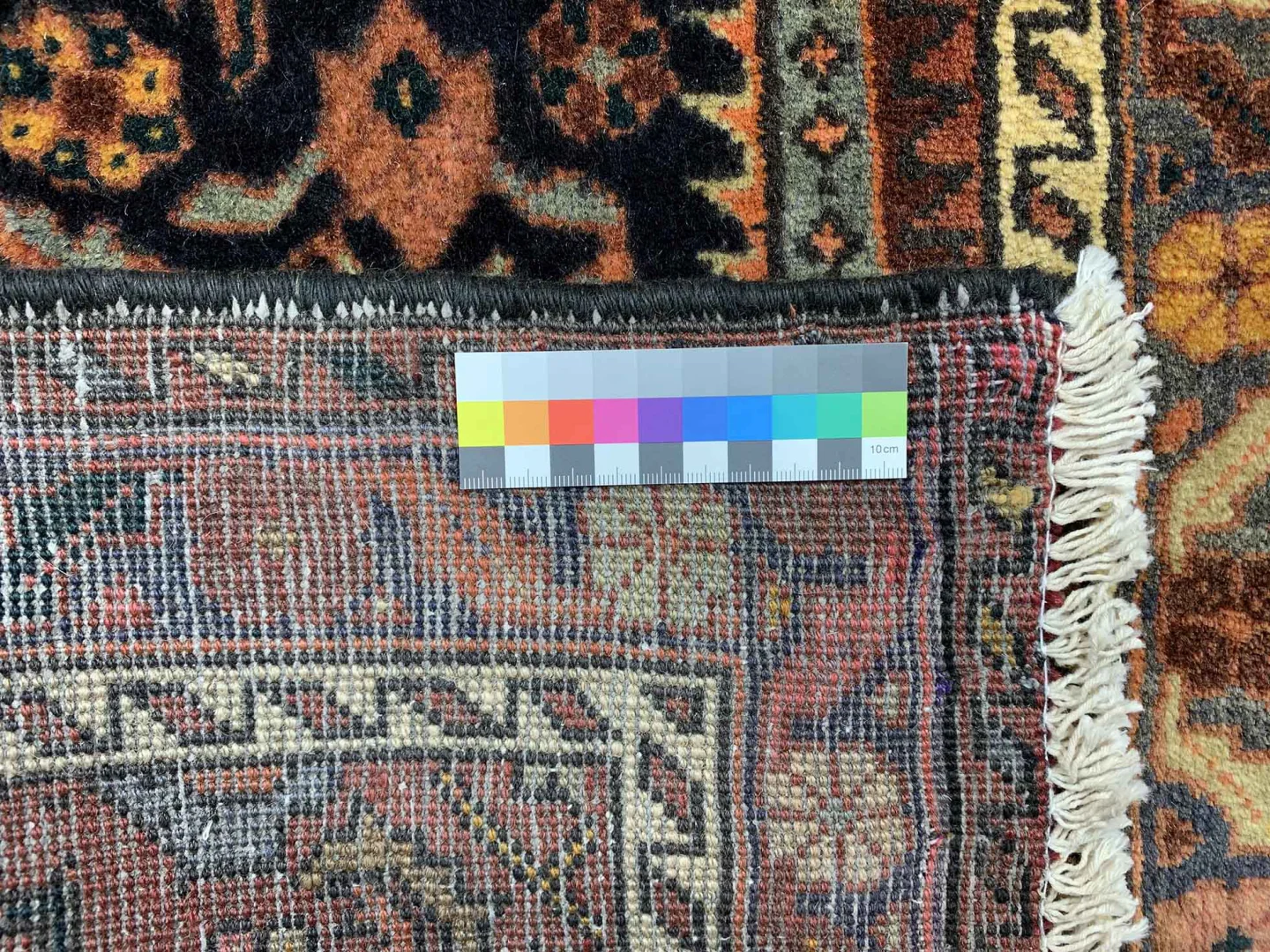
This Goltogh Persian rug is hand-knotted and made from hard-spun wool. The firmly spun fibre forms a resilient pile with the tactile surface associated with hand-worked wool. This material choice is part of the characteristic construction of Goltogh rugs, combining practical durability with the natural textile appearance of wool.
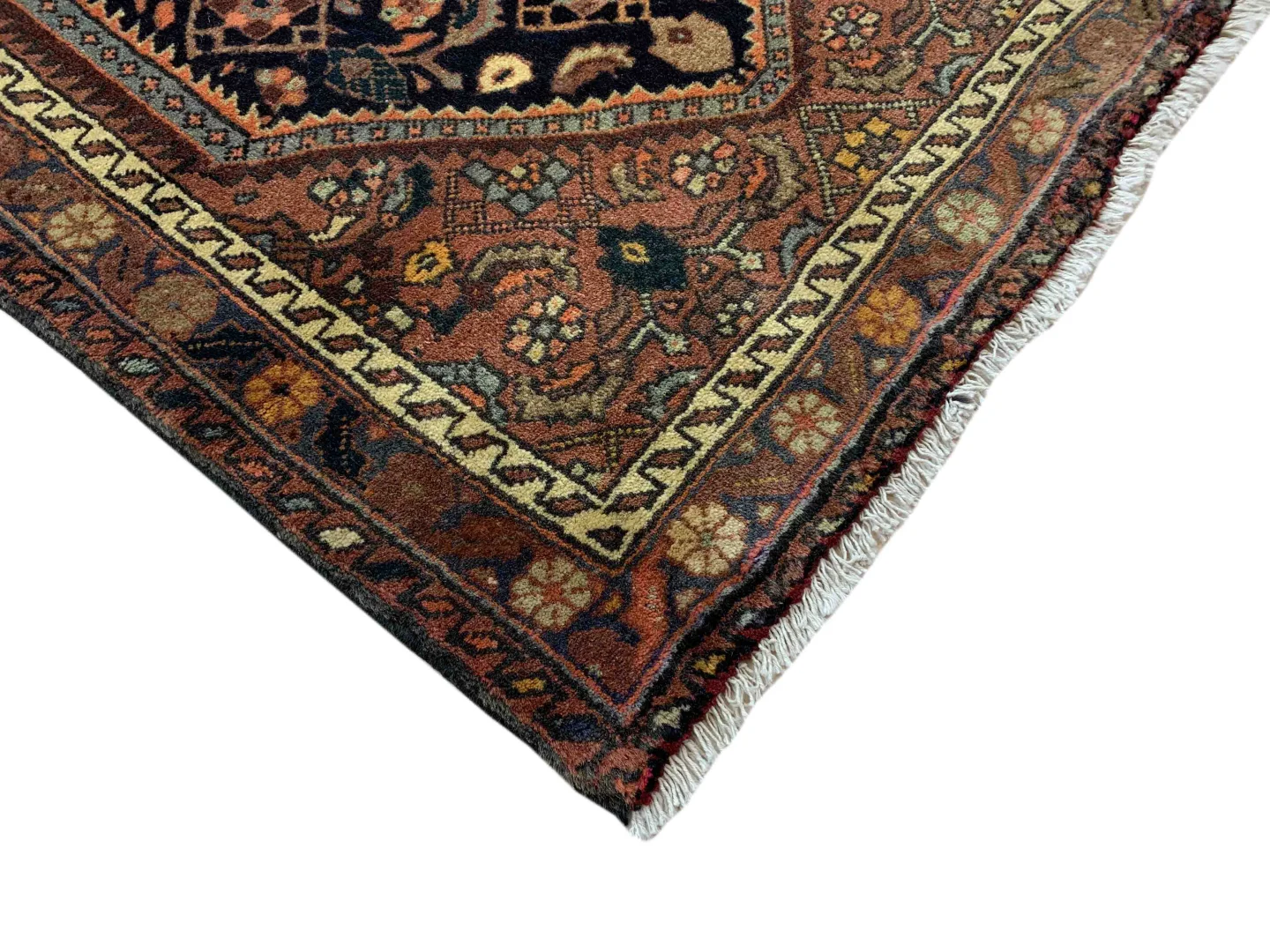
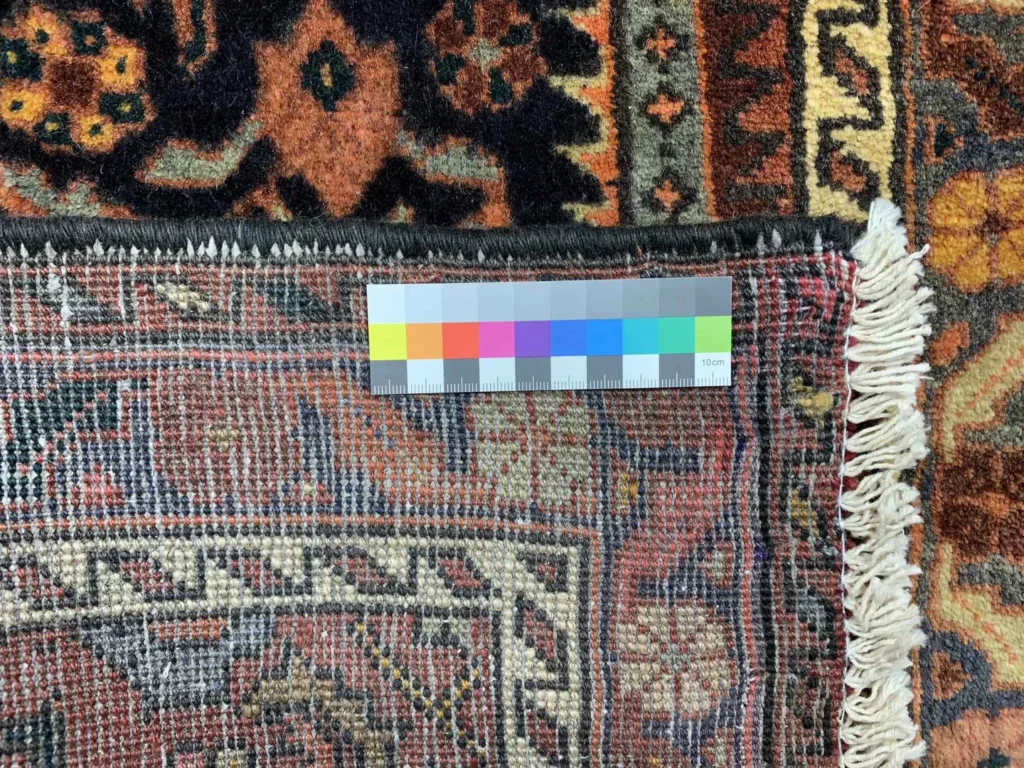
In a hand-knotted rug, individual knots are placed by hand into the foundation. The finished surface therefore depends on the care and skill applied throughout the weaving process. The dense knotting of this Goltogh supports the definition of its pattern and gives the pile a compact structure. Hard-spun wool is well suited to a rug intended to be used as well as viewed, since it provides a firm and durable textile surface.
Its sturdy construction is similar to the technique associated with Bidjar rugs. This comparison refers to the robust method of making and does not change the origin or identity of this piece. The rug remains a Goltogh from the Zanjan region of northwestern Iran. Its hand-knotted structure and hard-spun wool are the central material facts of its construction.
Origin and Tradition
Goltogh rugs originate in northwestern Iran, particularly in the Zanjan region. They are made in villages surrounding Zanjan, an area with a long-established tradition of rug production. There, knowledge of spinning, knotting and design has been passed through generations. Rug making is part of a broader textile culture in which local materials, practical experience and inherited visual forms come together.
The Zanjan area lies within a part of Iran where several influences in Persian rug making meet. Village rugs from the surrounding districts are not generally produced from one uniform industrial pattern. Instead, they reflect established regional methods and the individual interpretation of the people who make them. Rugs from the same area may therefore differ in drawing and colour while retaining a clear connection to their place of origin.
The Goltogh tradition gives practical durability an important role alongside visual design. Its robust technique, often compared with the construction of Bidjar rugs, is associated with a resilient finished textile. Bidjar rugs are also known for their exceptionally sturdy construction and form part of the wider Iranian rug tradition. Goltogh and Bidjar nevertheless remain distinct rug types, with their own names and differing approaches to pattern and colour.
Other notable rugs are also made in the Zanjan region. Zanjan rugs are known for artistic designs and for the use of natural dyes. This regional variety shows that northwestern Iranian weaving cannot be reduced to one single design formula. Different workshops and villages maintain different preferences, ranging from restrained compositions to lively and varied colour schemes. The present Goltogh is specifically defined by its medium to dark brown tones.
Iranian rug making brings regional identity together with practical knowledge. Wool, knotting and pattern are coordinated to create a useful textile with a distinct cultural character. The transmission of these methods explains why rugs from one area can share important qualities while still displaying individual variations. Their classification rests on origin, construction and design language rather than on a single colour impression alone.
Design and Pattern
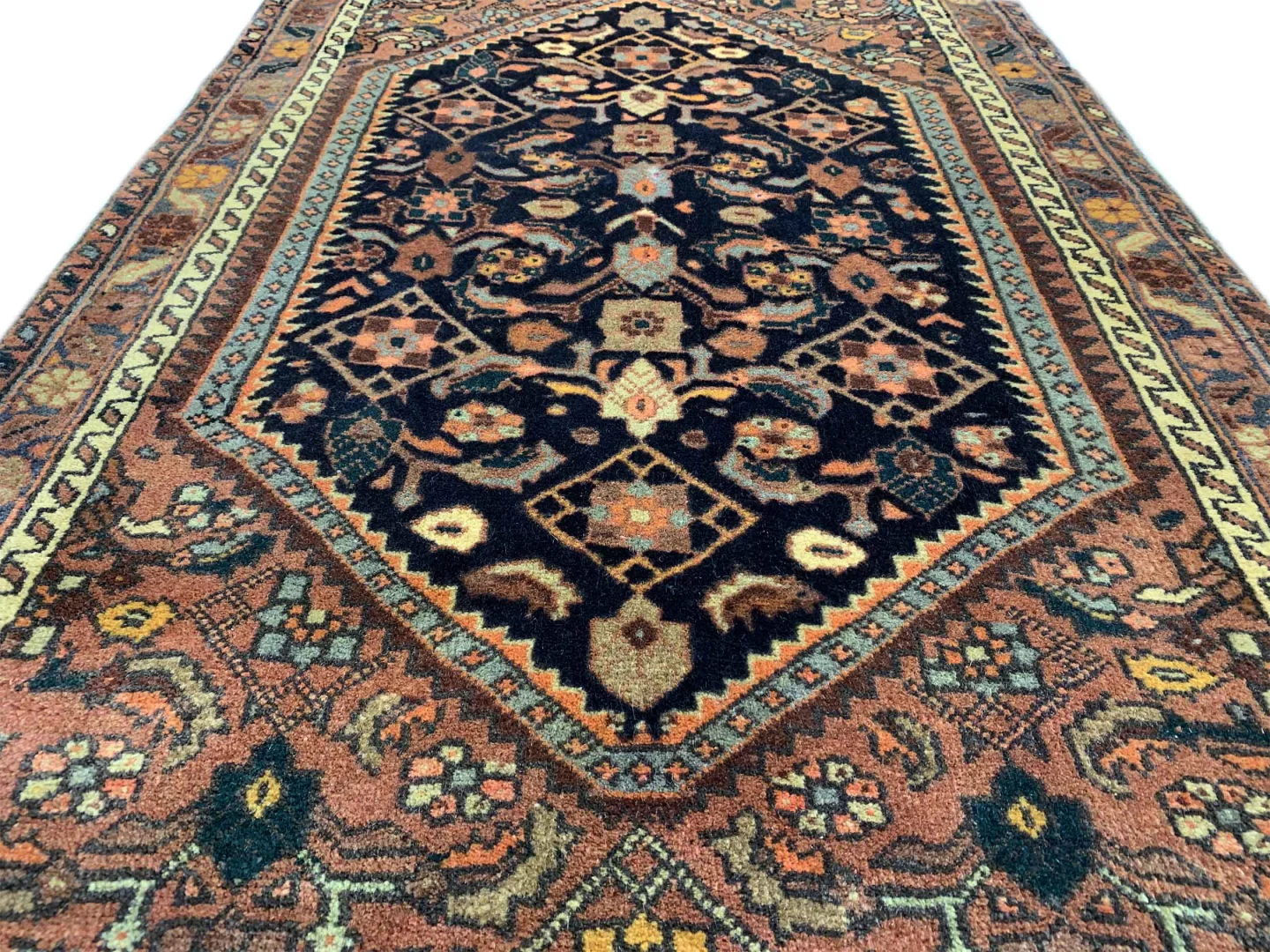
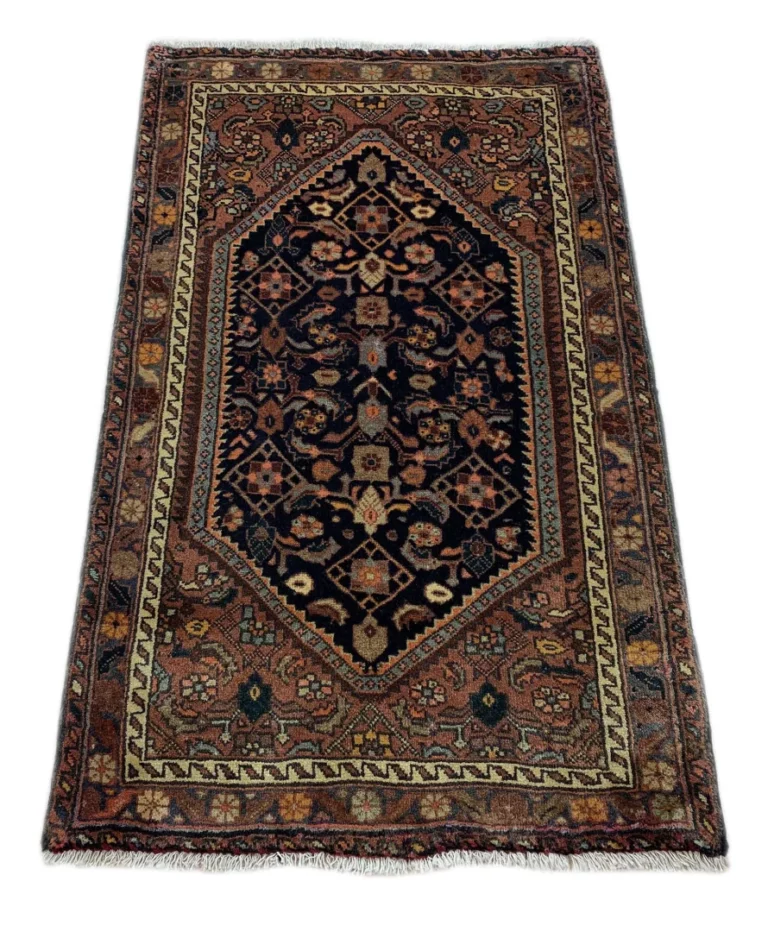
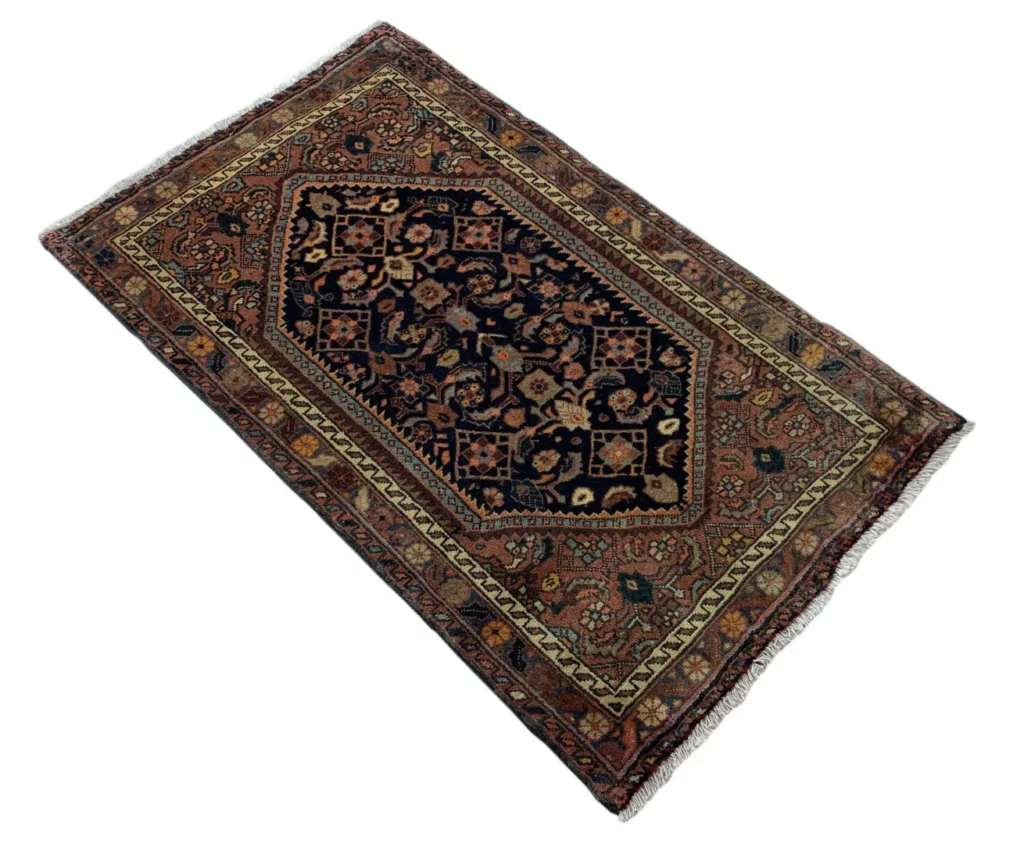
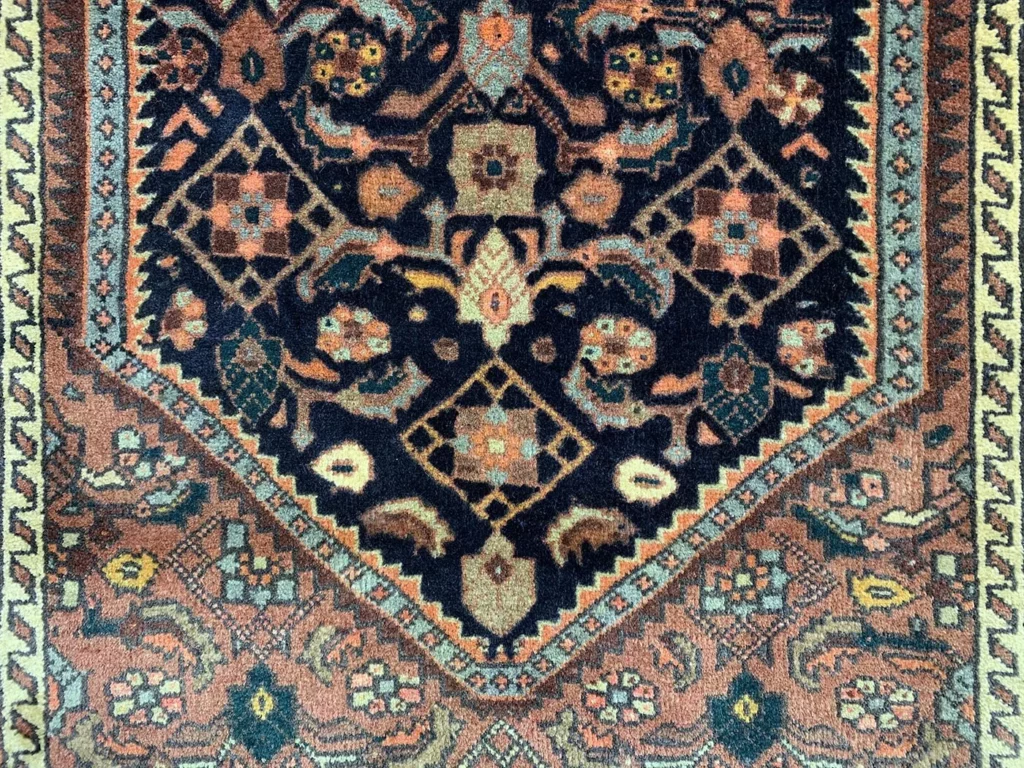
The appearance of this Goltogh is defined by medium to dark brown tones. This range establishes the rug’s overall colour character and gives the composition a warm, settled presence. Brown can appear lighter or deeper across a hand-knotted surface as the pile changes direction or receives different light. The result is a nuanced impression without requiring a large number of contrasting colours.
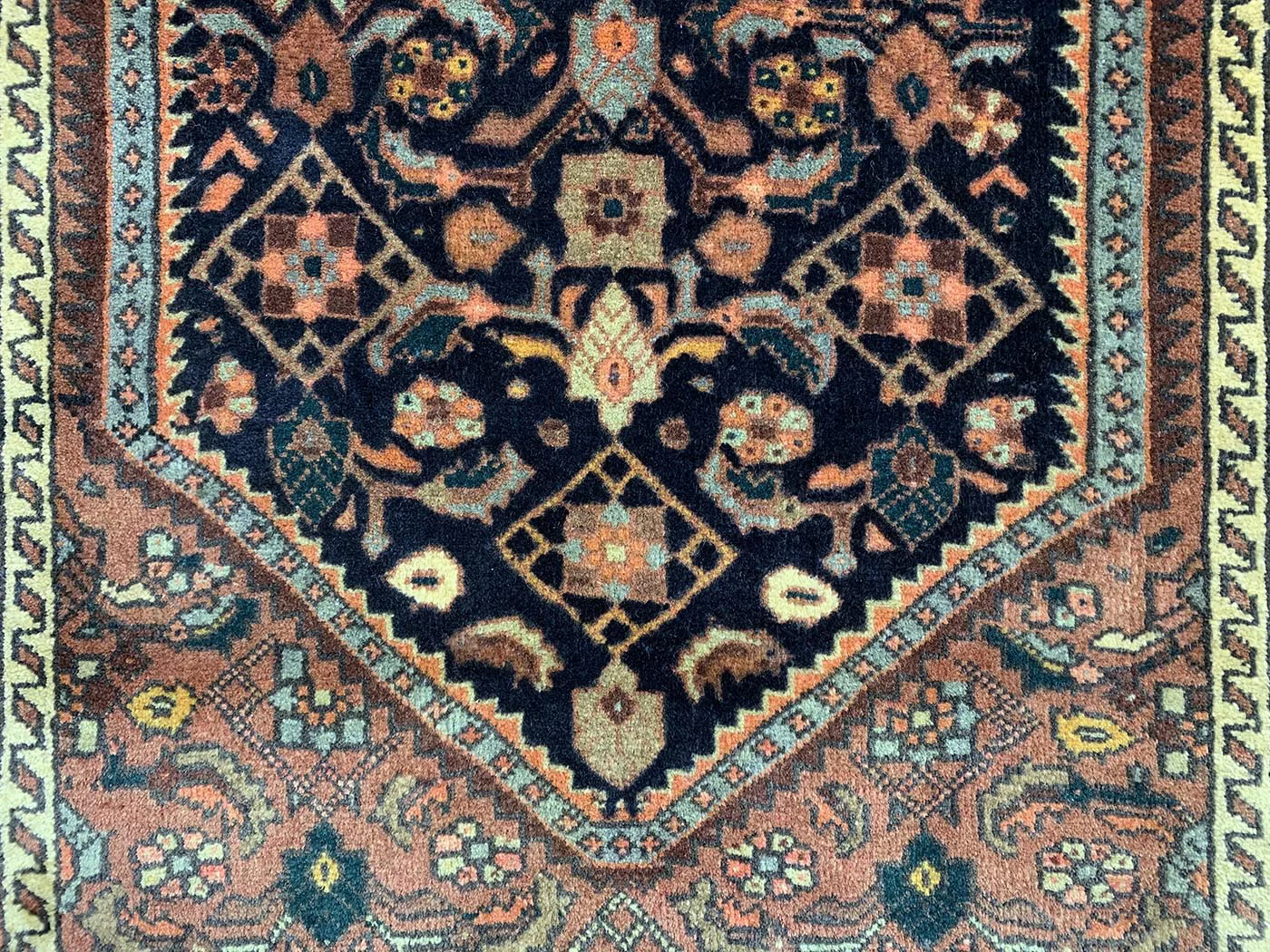
Goltogh rugs are associated with traditional designs that are often inspired by nature. Nature-based imagery is a recurring theme throughout Oriental rug design. Leaves, flowers, vines and other stylised forms may be transformed into an ordered textile composition. In a hand-knotted rug, these shapes are not printed onto the surface; they are built knot by knot. This gives the drawing the particular depth and irregular textile quality of a woven object.
Dense knotting helps the maker define lines and ornaments with greater precision. Closed outlines, repeated details and controlled transitions can be rendered within a compact structure. The design nevertheless remains connected to the handwork of the individual maker. Small variations in drawing are a normal feature of handmade rugs and distinguish them from completely uniform machine-made surfaces.
Regional rug designs often balance the open areas of the field with a structured arrangement of ornament. Repetition creates rhythm, while differences in the scale and emphasis of forms establish visual order. Individual Goltogh rugs can present different drawings, yet they share their hand-crafted connection with the Zanjan area. In this example, the medium to dark brown palette places the emphasis on warmth and visual continuity rather than on a strongly multicoloured effect.
The design tradition of Persian rugs has developed through a continuing exchange between inherited motifs and personal interpretation. A motif may be adapted from one village or workshop to another while retaining its underlying idea. This combination of continuity and individual execution is central to the character of hand-knotted Oriental rugs. The Goltogh expresses that relationship through a colour scheme concentrated on medium and dark brown nuances.
Its design can therefore be understood both as a regional textile tradition and as a practical furnishing element. Traditional forms provide structure, while the restrained brown palette creates a coherent basis for a range of interior settings. The essential point is the interaction between the hand-knotted surface, the regional pattern heritage and the specific colour statement described for this rug.
Special Features
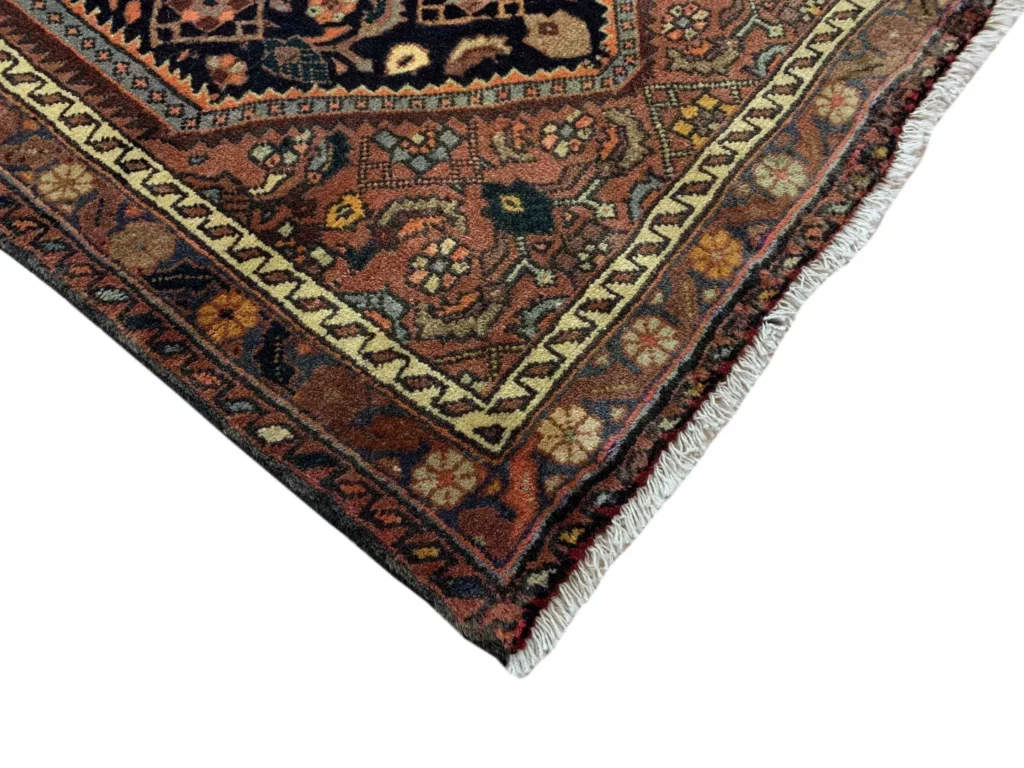
The rug is very well preserved. Together with its hand-knotted construction and hard-spun wool, this condition describes a piece made for lasting use. The sturdy construction associated with Goltogh rugs is also comparable to the durable workmanship noted in Bidjar rugs.
The Zanjan origin, dense knotting and medium to dark brown tones are the principal features of this example. Its colour range has a warm, unified character, while the hand-crafted construction gives the surface its individual textile presence. Simple cleaning methods are recommended: vacuum regularly and use a damp cloth when necessary. Direct sunlight should be avoided so that the colours do not fade.
FAQ
What makes a Goltogh Persian rug distinctive?
Goltogh rugs combine their origin in the Zanjan area of northwestern Iran with robust hand-knotted workmanship. Hard-spun wool, dense knotting and traditional designs are among their defining characteristics. This example is marked by medium to dark brown tones. Its pattern tradition reflects the cultural history of the region and may draw on natural forms. The construction is similar to that of Bidjar rugs in its emphasis on durability, but a Goltogh remains a distinct rug type rather than a Bidjar.
How should I care for this Goltogh rug?
Regular vacuuming is suitable for routine care and helps remove loose dirt from the pile. If cleaning is needed, the surface can be treated with a damp cloth. The rug should not be unnecessarily soaked. Direct sunlight should be avoided because prolonged exposure can cause colours to fade. Gentle, consistent care helps preserve the very well-preserved condition of this hand-knotted rug.
Where can I buy a Goltogh Persian rug?
Goltogh Persian rugs are available from specialist rug dealers and from online shops that focus on Oriental rugs. When buying, it is useful to check the precise name, the stated origin, the hand-knotted construction and the quality of the wool. The knotting, pattern and condition should also be described clearly. These details help distinguish a Goltogh from the Zanjan region from rugs that merely share a similar colour scheme or a related pattern tradition.
To provide the best experiences, we use technologies like cookies to store and/or access device information. Consenting to these technologies will allow us to process data such as browsing behavior or unique IDs on this site. Not consenting or withdrawing consent, may adversely affect certain features and functions.
Functional Always active
The technical storage or access is strictly necessary for the legitimate purpose of enabling the use of a specific service explicitly requested by the subscriber or user, or for the sole purpose of carrying out the transmission of a communication over an electronic communications network.
Preferences
The technical storage or access is necessary for the legitimate purpose of storing preferences that are not requested by the subscriber or user.
Statistics
The technical storage or access that is used exclusively for statistical purposes.The technical storage or access that is used exclusively for anonymous statistical purposes. Without a subpoena, voluntary compliance on the part of your Internet Service Provider, or additional records from a third party, information stored or retrieved for this purpose alone cannot usually be used to identify you.
Marketing
The technical storage or access is required to create user profiles to send advertising, or to track the user on a website or across several websites for similar marketing purposes.
 SECURE PAYMENT
 SHIPPING PARTNERS