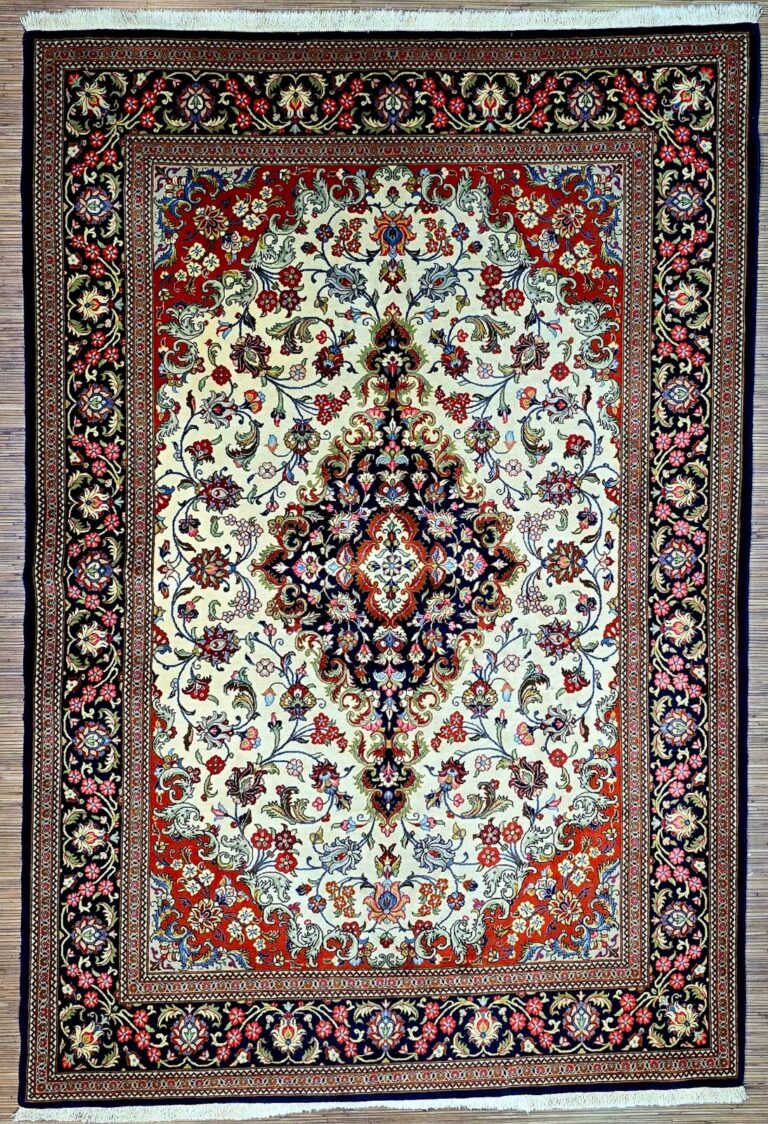
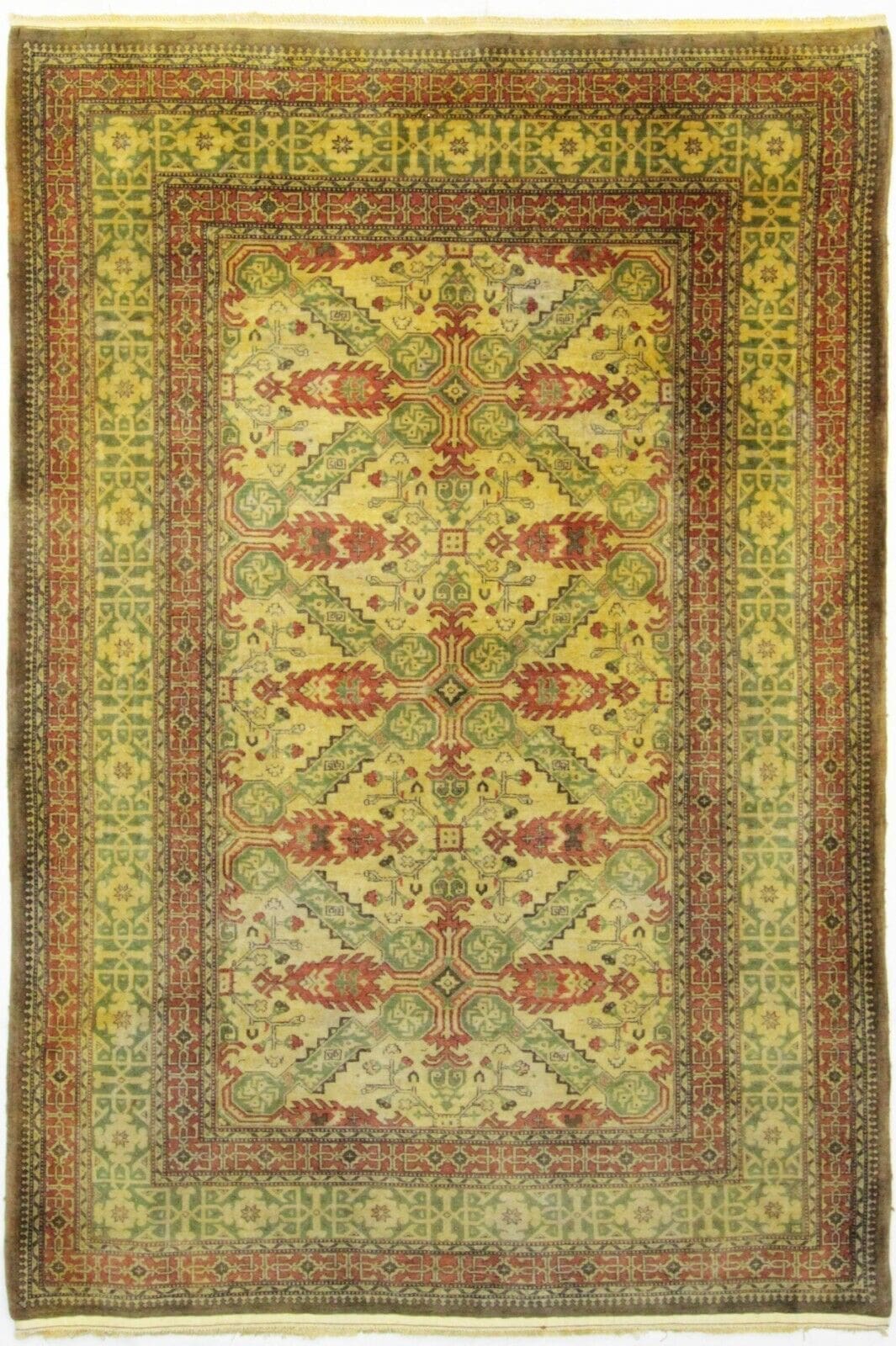
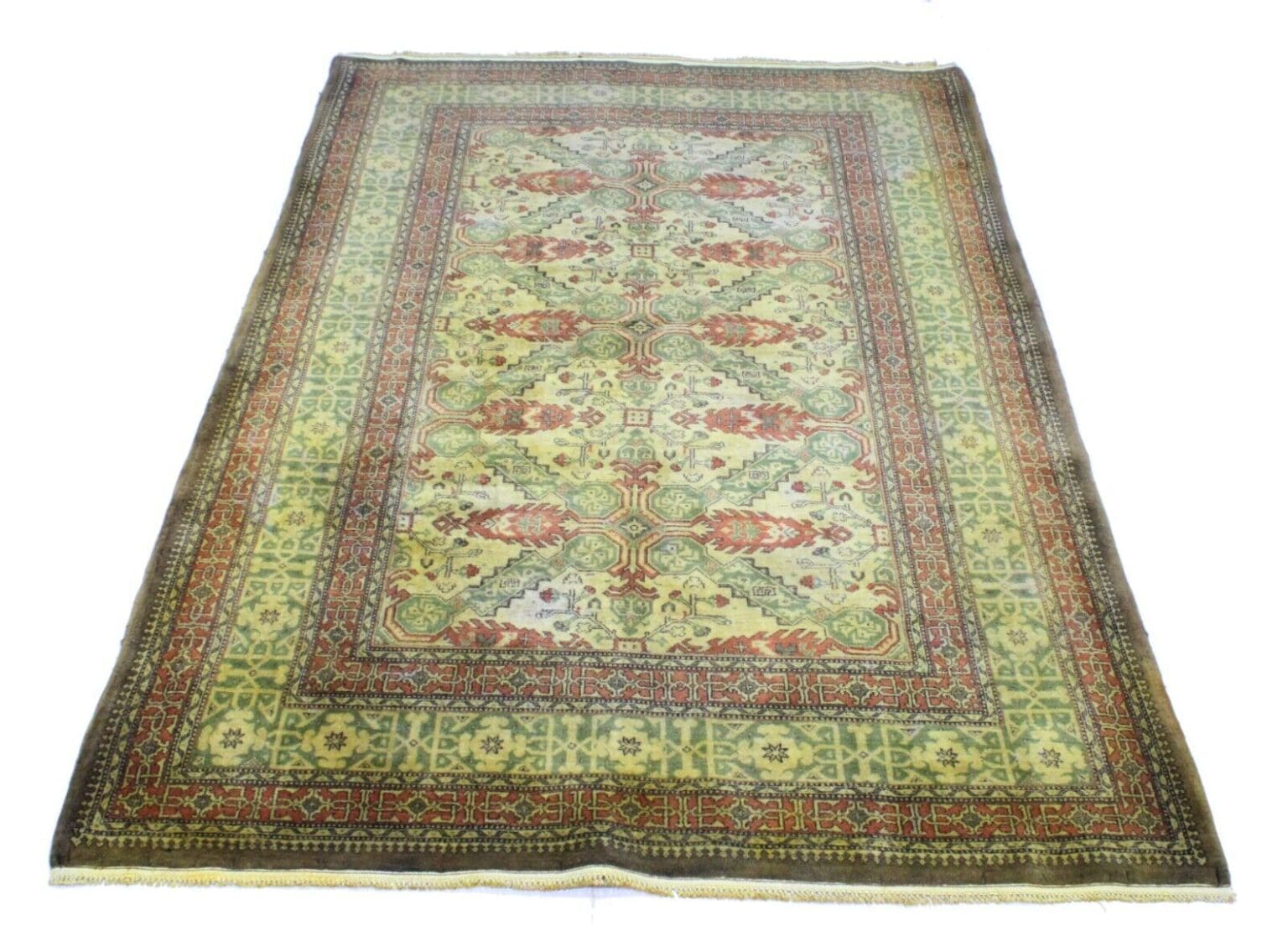
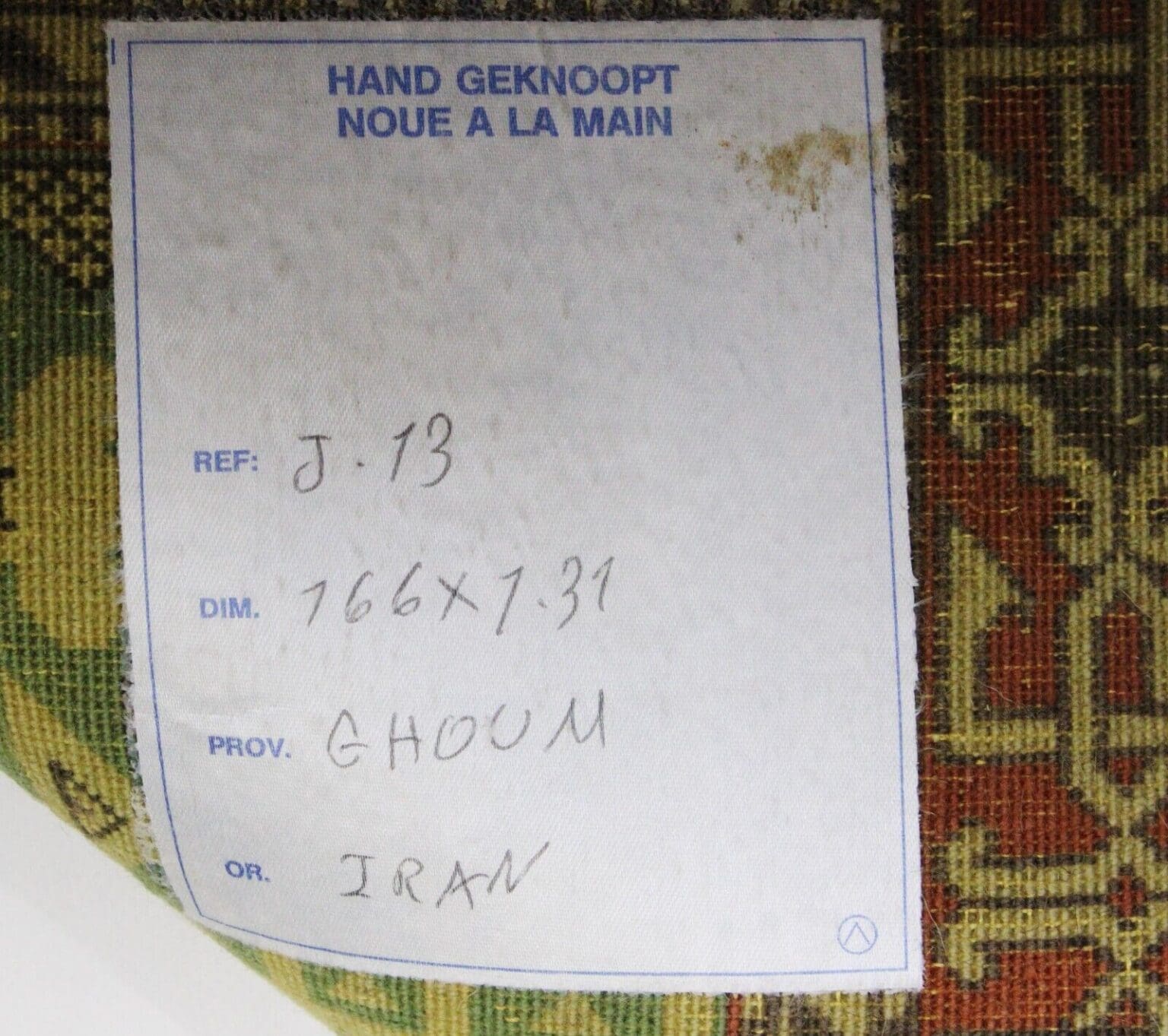
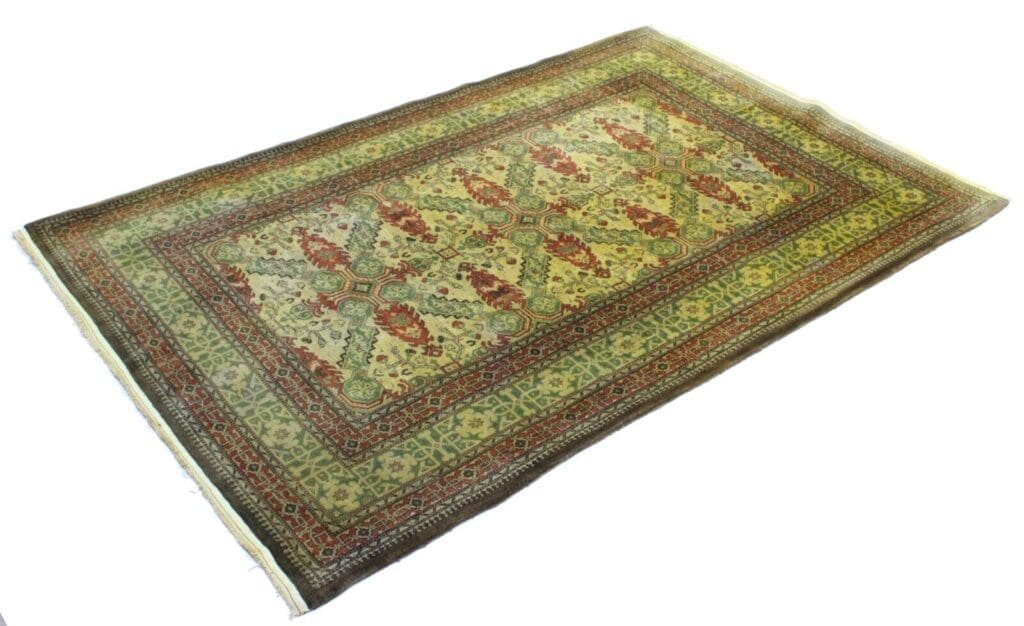
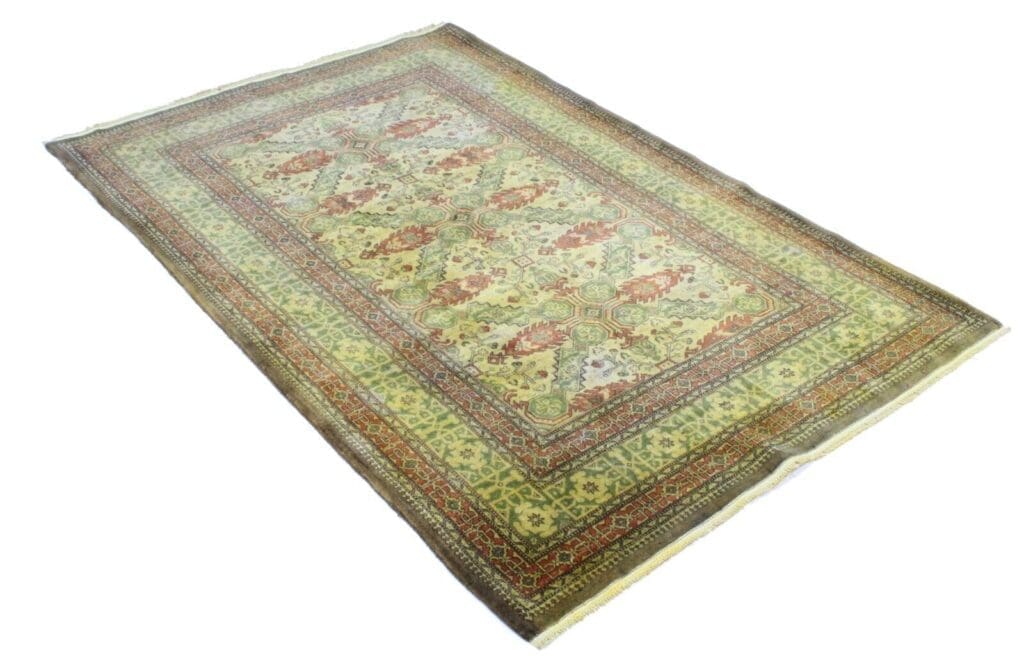
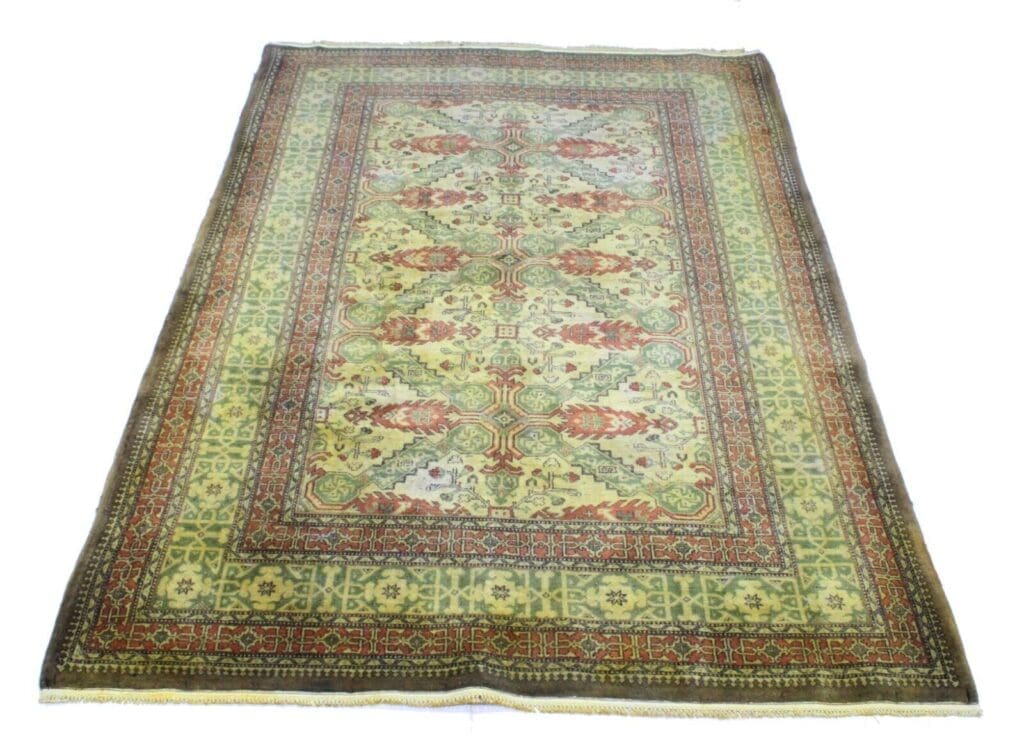
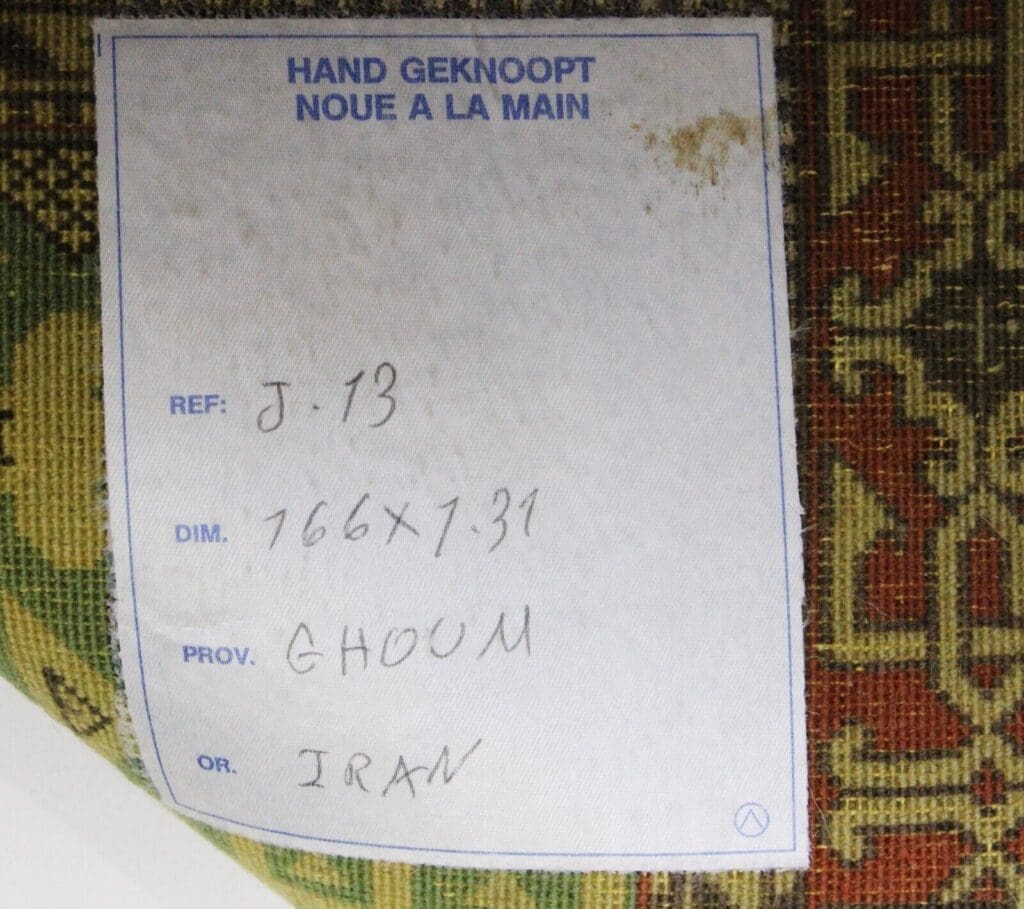
Hand-knotted Ghom Persian rug | Knot density: 60 Raj | Material: 100% silk and 100% wool | Size: 166 x 131 cm | Pattern: Gold monochrome with geometric and floral motifs | Condition: Top condition, washed, old semi-antique
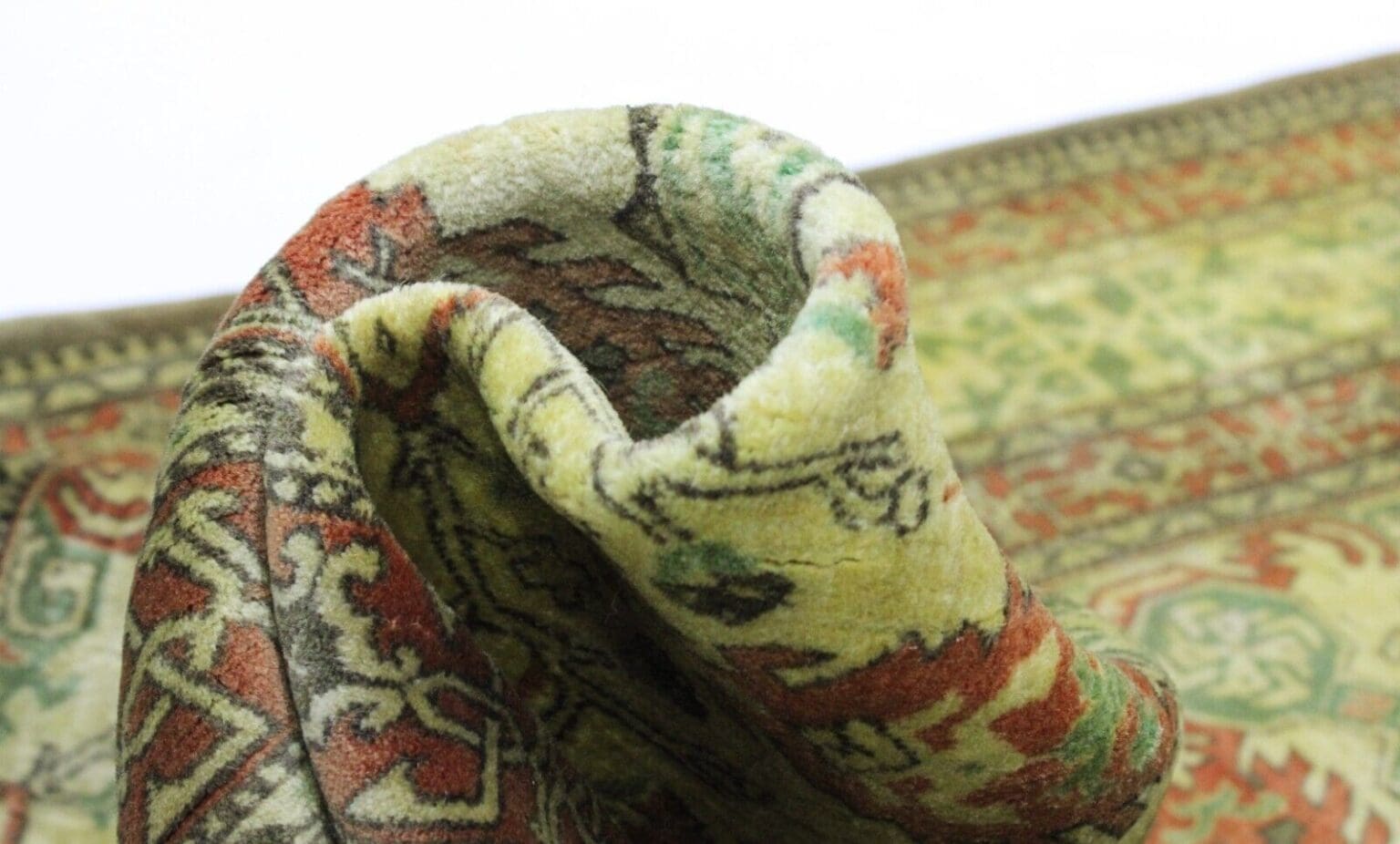
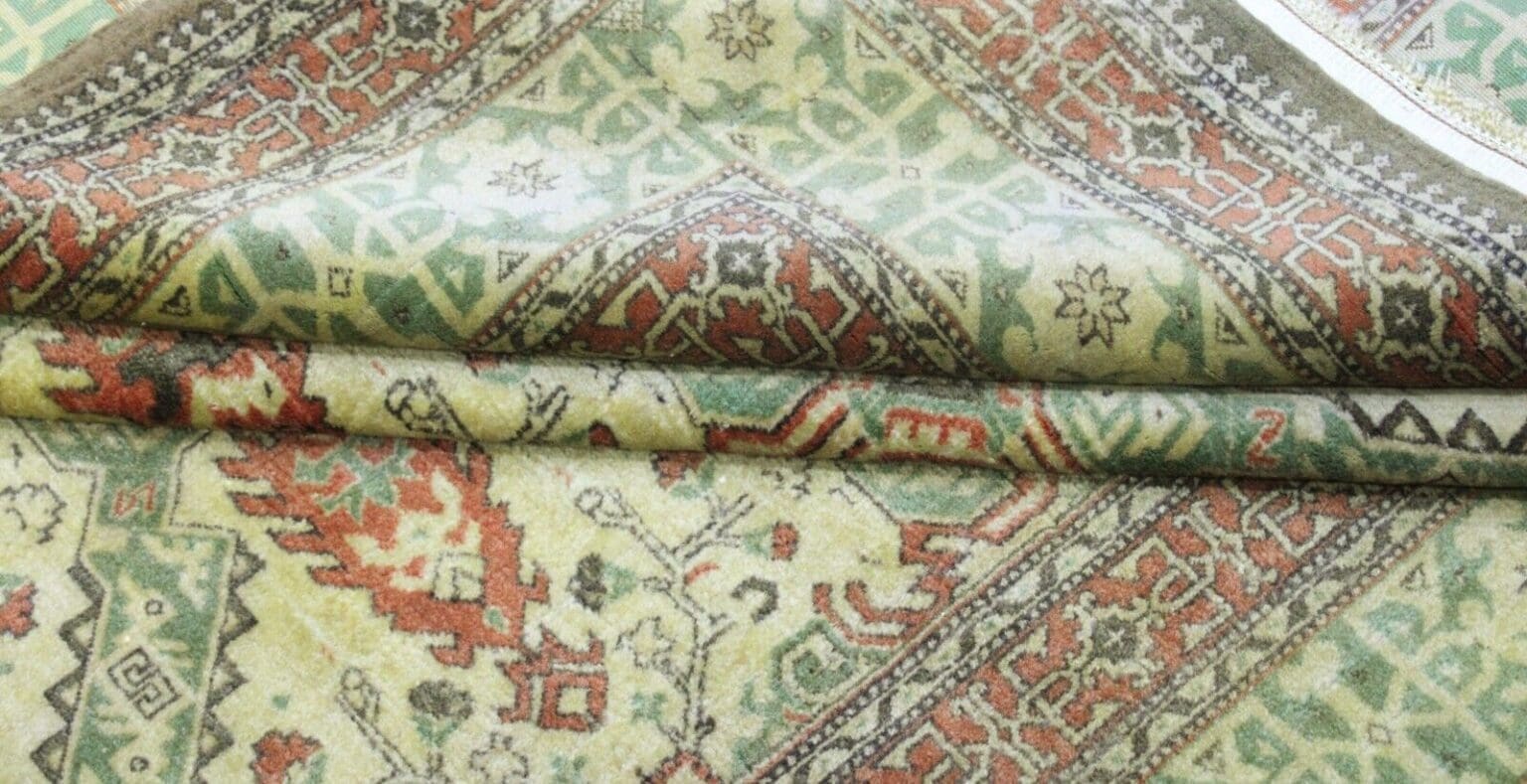
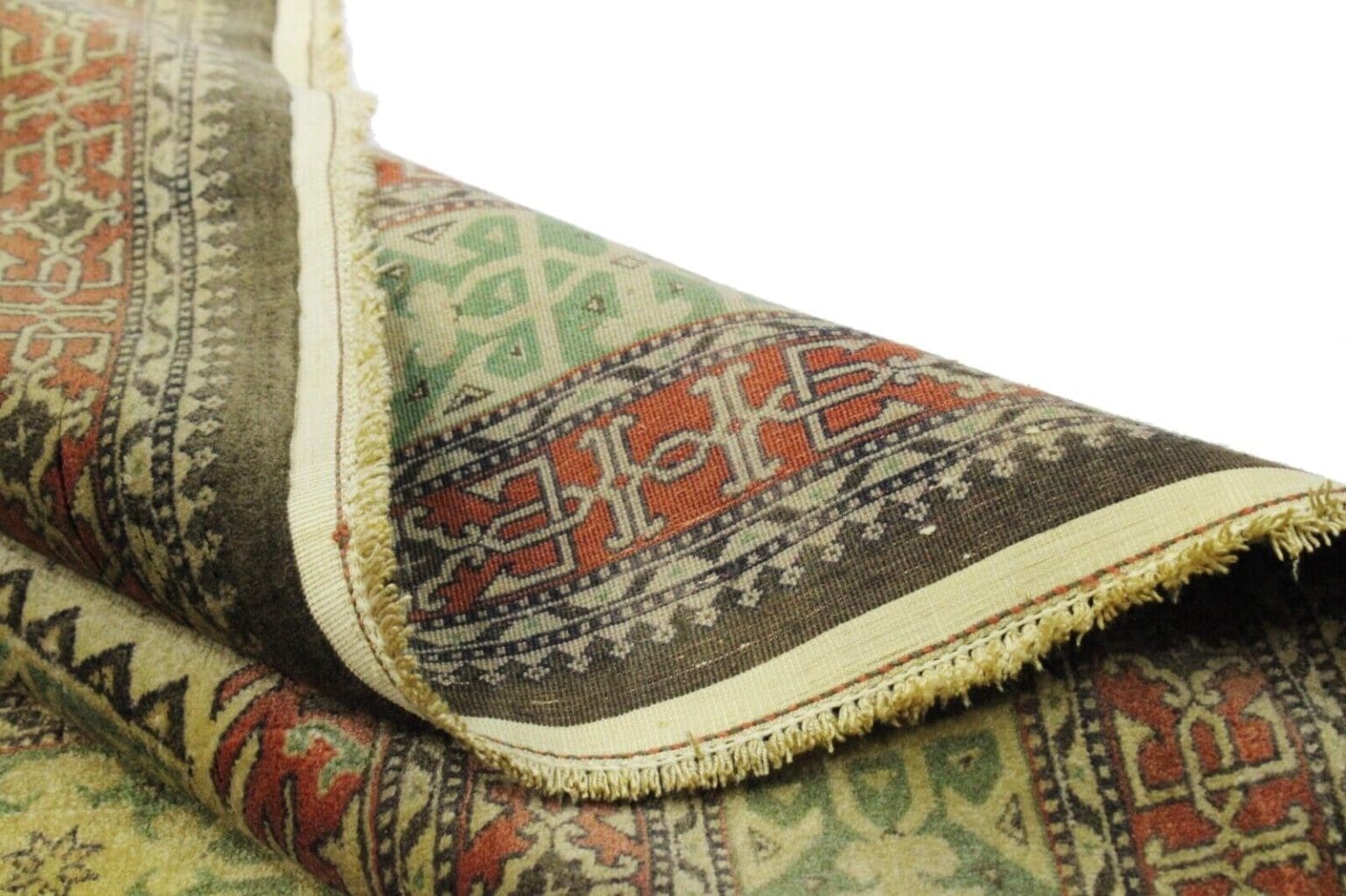
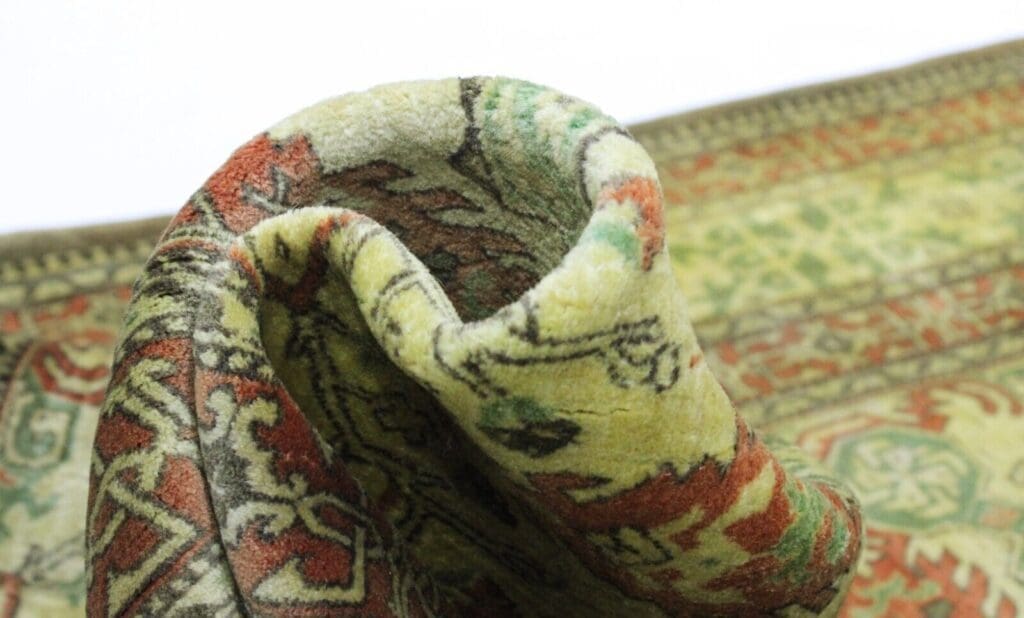
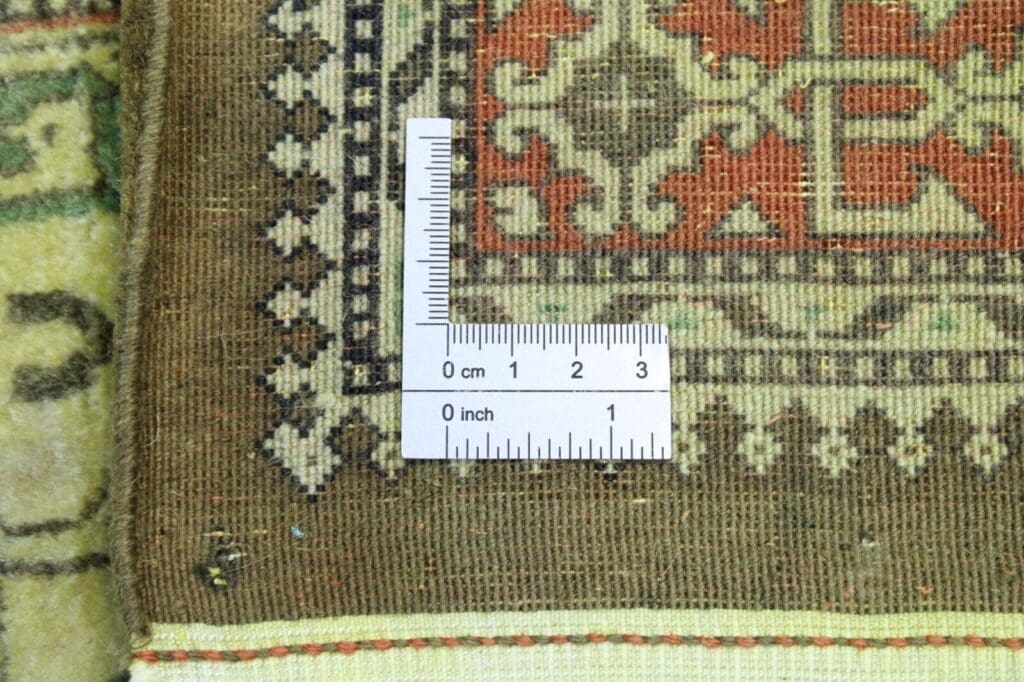
This Ghom Persian rug is hand-knotted and made from 100% silk and 100% wool. The product description expressly identifies both materials. Its hand-knotted construction is therefore a central part of the piece. Unlike a machine-made rug, a hand-knotted rug is formed knot by knot, with the design built into the textile structure rather than applied to a finished surface. The visible pile is the result of many individual knots worked into the foundation.
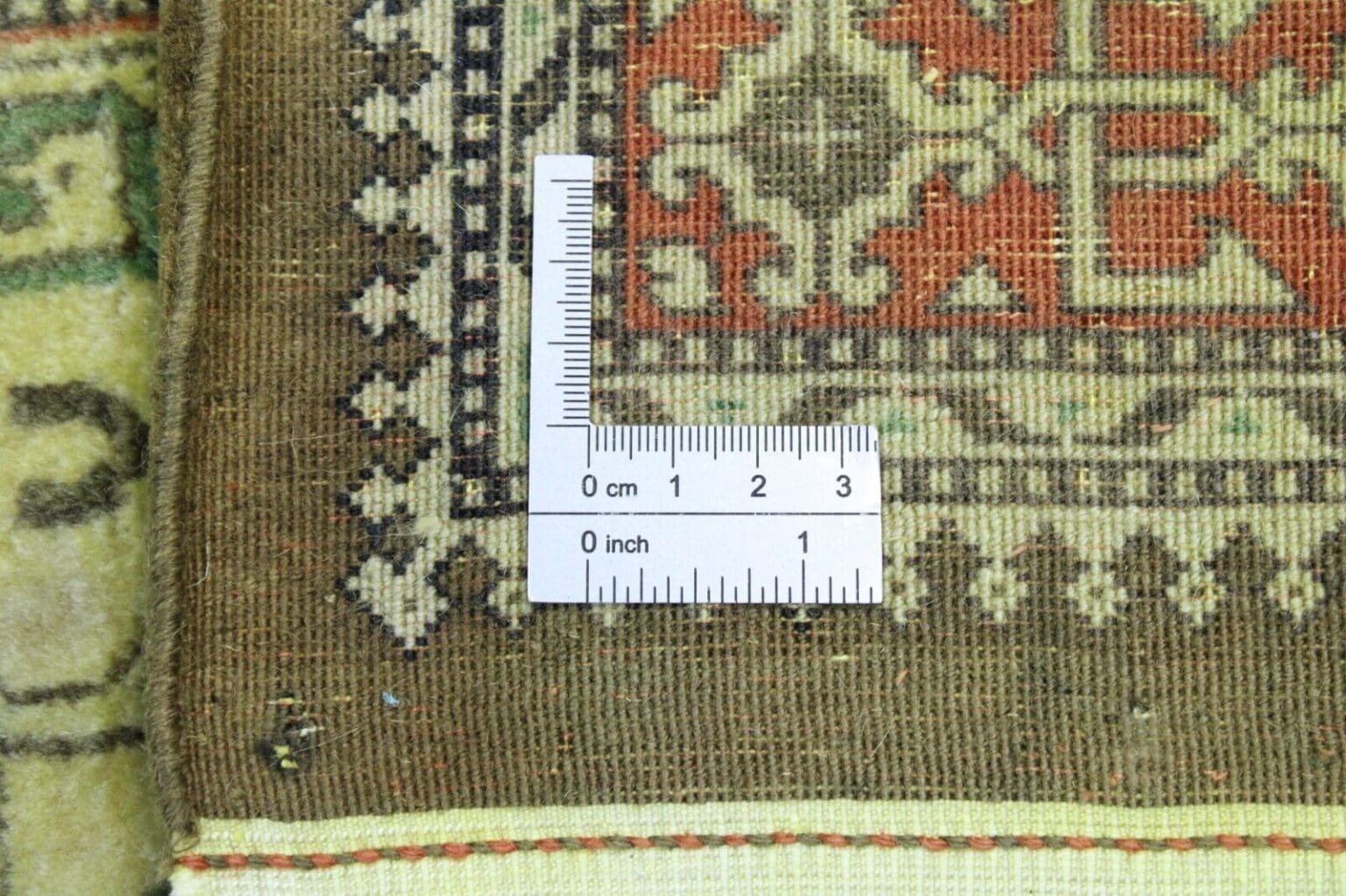
The knot density is given as 60 Raj. Raj is a traditional way of classifying knot count and provides an indication of the fineness of a rug’s construction. It helps place the workmanship within the vocabulary of oriental rug making without describing the colour or ornament. Silk and wool contribute different textile qualities: silk is traditionally valued for its fine, smooth surface, while wool is known for its resilient handle and practical durability. Here, both are named as materials of the rug.
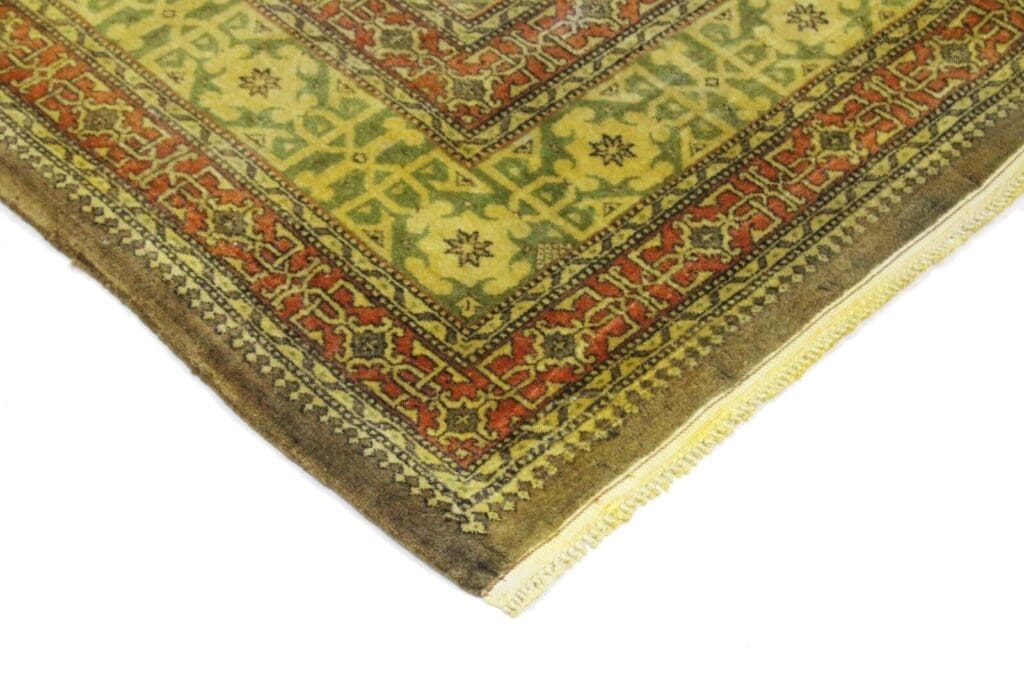
The pile is short, giving the surface a relatively low profile and allowing the design to remain easy to read. The rug is described as washed and in top condition. It is also designated old semi-antique, with a manufacturing period of 1970 to 1979. These details establish the condition and period given for this individual piece. They do not imply any additional history of ownership or use beyond the information stated for the rug.
Origin and Tradition
Ghom, also written Qom, is an Iranian city and a recognised centre of Persian rug production. Ghom rugs are commonly associated with a refined urban weaving tradition in which the drawing, knotting and finishing are carefully coordinated. The city is located in central Iran and became important for the production and trade of rugs. In this listing, Ghom identifies the stated regional origin of the rug, not merely a decorative subject or a pattern name.
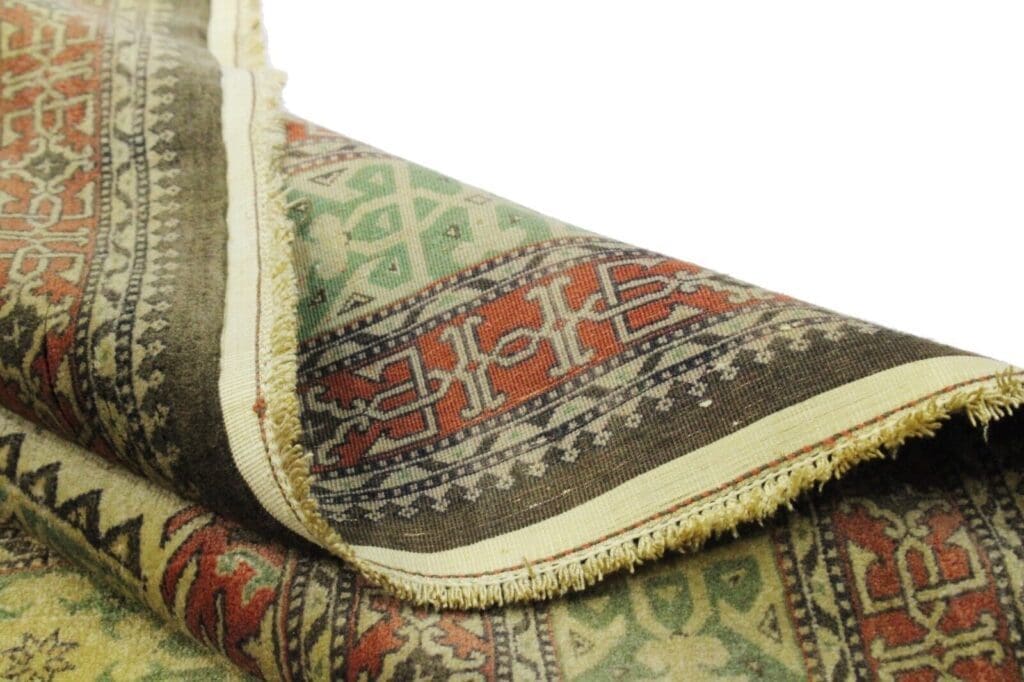
Persian rug making has developed over centuries through many regional schools. Each school may differ in its approach to materials, knotting, colour arrangements, borders and ornaments. Ghom belongs to the urban side of this tradition, where designs are generally planned with attention to proportion and detail. The basic principle of a hand-knotted rug remains a textile one: the foundation is formed by warp and weft, while the visible surface is created through rows of tied knots.
Making a hand-knotted rug involves a sequence of coordinated operations. The loom is first prepared and the warp is tensioned. Knots are then placed row by row and secured with weft shoots. A prepared drawing or design guides the placement of colours and motifs across the field. Once the knotting is complete, the pile is trimmed to an even height, and subsequent washing and finishing influence the final appearance. Each stage affects how clearly the pattern is expressed in the finished textile.
Ghom’s urban tradition is associated with controlled drawing and carefully organised compositions. City rugs often use a deliberate relationship between field, border and smaller filling motifs. This makes it possible to develop a detailed design while retaining a coherent overall structure. The regional background therefore provides context for the connection between the stated Ghom origin, the fine knot-density terminology and the use of both floral and geometric elements.
Design and Pattern
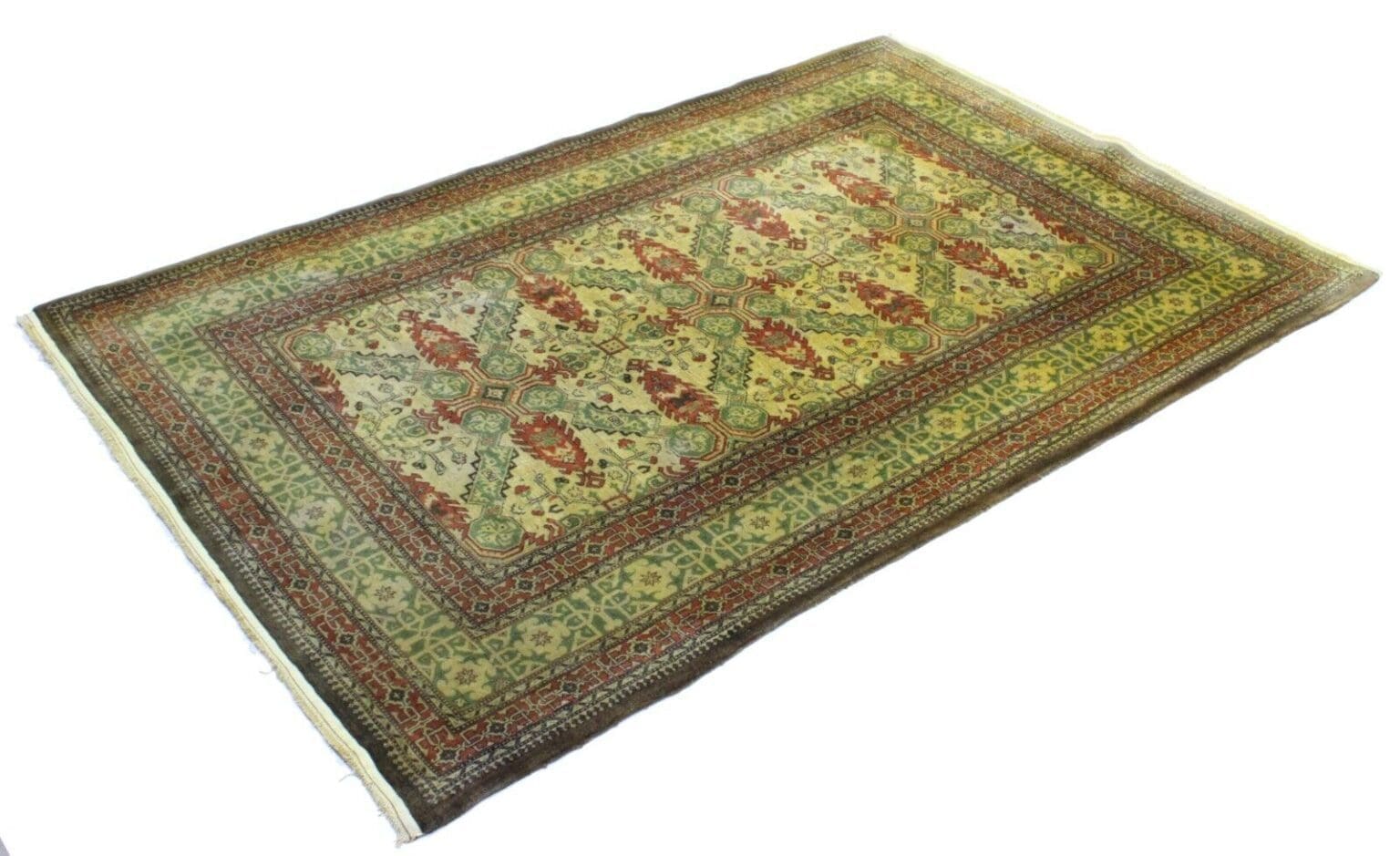
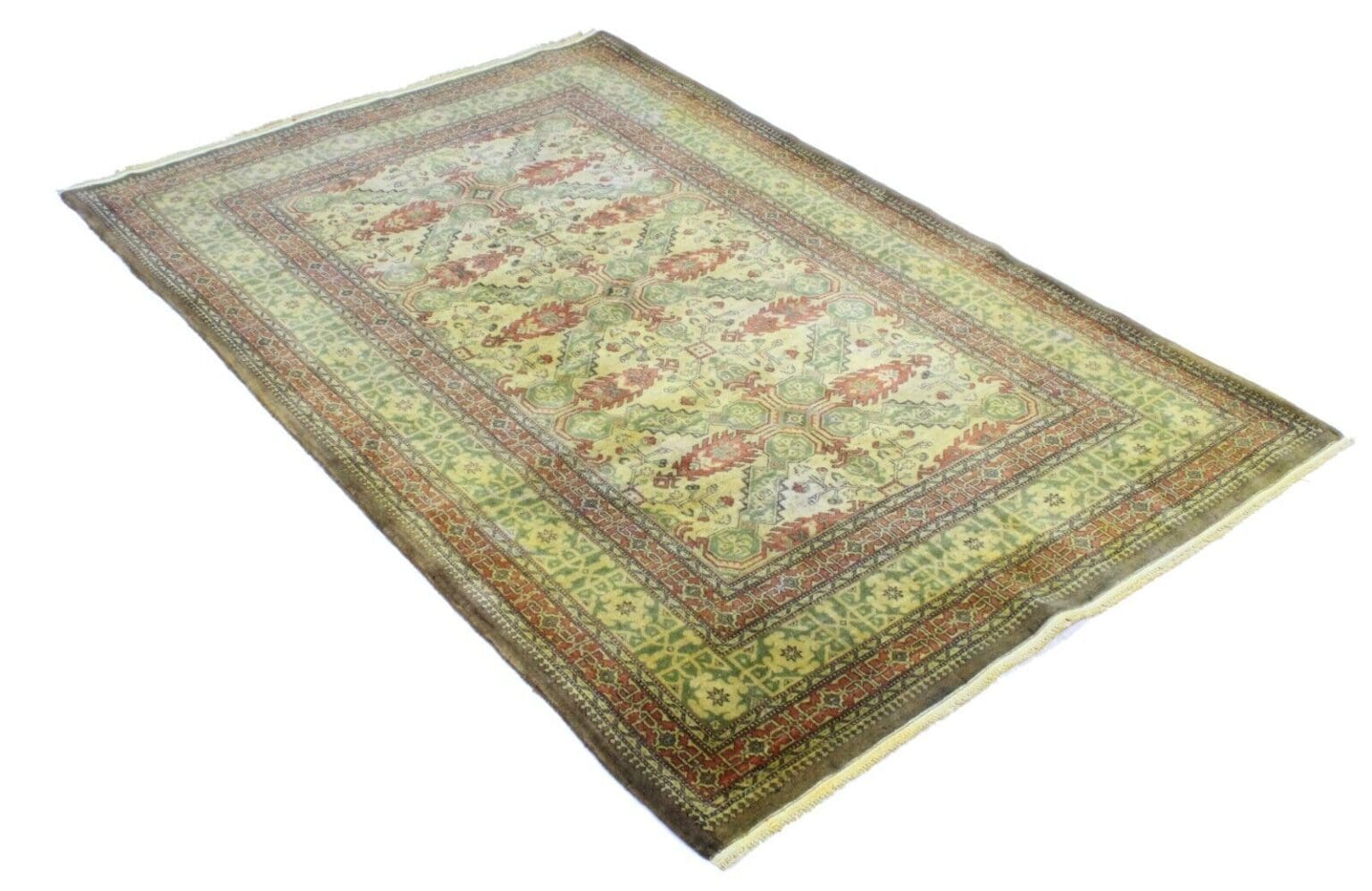
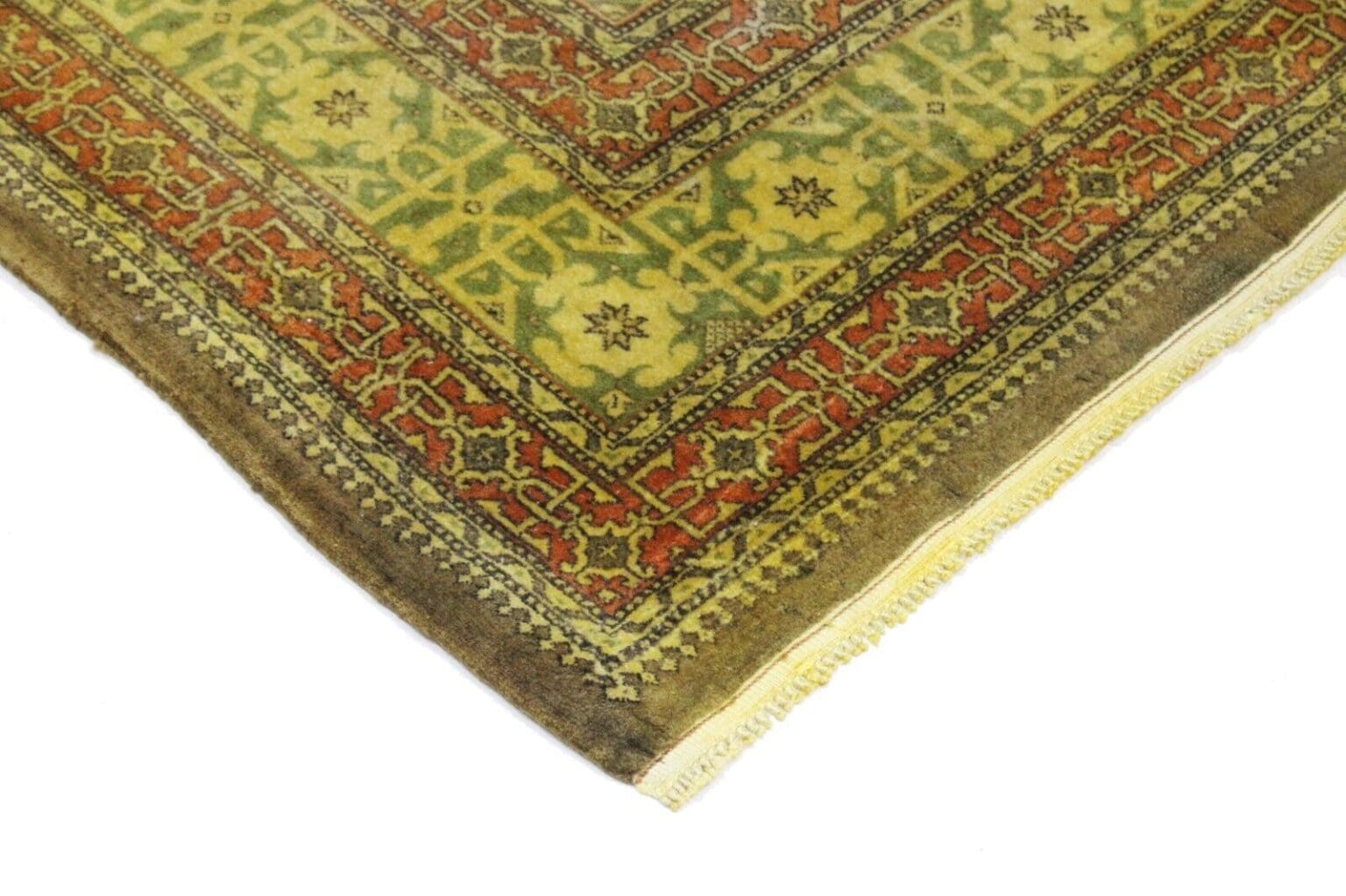
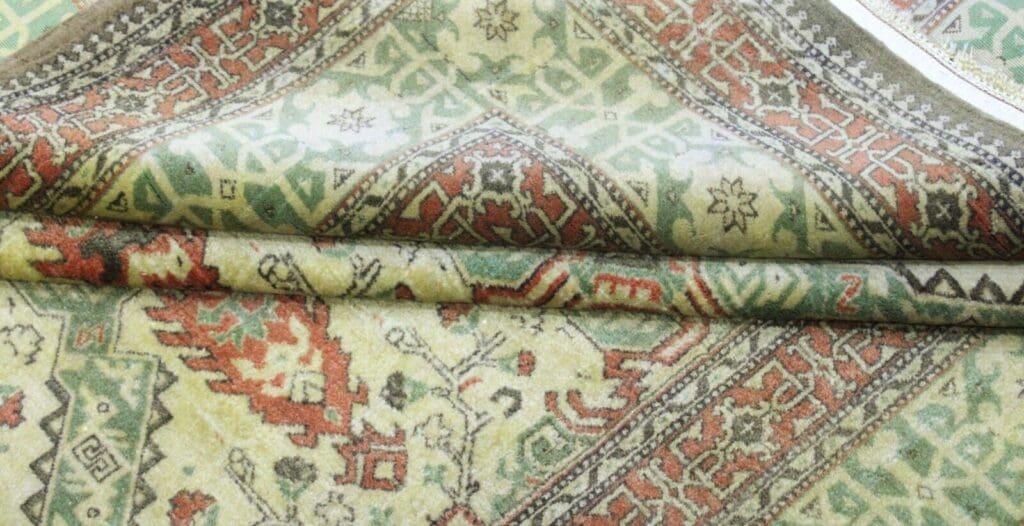
The rug’s colour is described as gold and monochrome in gold. Its design is also identified as containing geometric and floral motifs. These two visual languages are fundamental to Persian rug design: geometry supplies clear structure, while floral ornament draws on stylised forms inspired by leaves, blossoms and vines. In this piece, both are presented within the dominant gold colour statement.
Geometric patterning is based on lines, angles, diamonds, polygons and repeated contours. Such forms may organise a field, define a border or separate smaller areas within a composition. Their visual effect comes from rhythm, repetition and proportion. Handwork can introduce subtle individual variation as the design is translated into rows of knots. Geometry gives the ornament a framework and makes the arrangement legible across the woven surface.
Floral ornament uses leaves, flowers, scrolling vines and other plant-inspired shapes. In Persian design these are usually stylised rather than intended as botanical copies. The forms are simplified, repeated and adapted to the requirements of a flat textile surface. Vines can connect separate motifs, while flowers may act as recurring points of emphasis. This process turns references to nature into an ordered decorative language suitable for a rug.
The combination of geometric and floral elements is a long-standing principle in Persian ornament. Straight lines and measured divisions can provide boundaries, while floral details animate the interior spaces. Floral forms themselves may also be arranged symmetrically or repeated at regular intervals. The present rug combines this type of formal relationship with a gold monochrome appearance, so its design can be read through both the structure of its motifs and the unity of its colour.
Pattern is perceived differently at different distances. From farther away, the gold field and the overall organisation appear first; closer inspection reveals the separate geometric outlines and floral details. This layered perception is characteristic of ornamental rugs. The knotting process translates the drawn design into many small textile units, giving borders, curves and transitions their own surface structure. The short pile supports a comparatively clear reading of those details.
Special Features
The specifically listed features include hand-knotted construction, silk and wool, a knot density of 60 Raj and a short pile. The rug is washed and described as being in top condition. Its designation as old semi-antique and its stated manufacturing period of 1970 to 1979 form part of the product information. Ghom is given as the regional designation, while the gold colour and geometric and floral pattern describe its appearance.
The rug is listed as suitable for underfloor heating. It is also described as non-slip and easy to clean. The product information additionally calls it environmentally friendly and pet-friendly. These are stated characteristics of the offering. They should be understood alongside the particular room, underlay and cleaning method, since practical use always depends on the surrounding conditions and appropriate care.
FAQ
How should I care for a Ghom Persian rug?
Regular gentle vacuuming helps remove loose dirt from the short pile. The surface should not be subjected to unnecessary force during cleaning. Direct sunlight should be avoided so that the gold colour remains as even as possible. If a spill occurs, respond immediately with a damp cloth and treat the affected area carefully. Do not use harsh cleaning products. For more extensive cleaning, professional treatment is advisable because the rug combines silk and wool. Since this rug is already described as washed, further washing should only be considered when it is genuinely needed and should be carried out with suitable textile expertise.
Can the rug be used with underfloor heating?
Yes. The rug is specifically described as suitable for rooms with underfloor heating. Even so, the temperature should not be set too high, as excessive heat can place unnecessary stress on the wool. Moderate, even heating and regular ventilation are sensible general practices. The rug should lie flat, and its position should be checked from time to time so that folds do not develop. Suitability for underfloor heating does not mean that every temperature setting is harmless. Careful operation remains important for both the textile and the floor beneath it.
How can the authenticity of a Persian rug be assessed?
Material quality, knot fineness and the details of hand-knotting are important points when assessing a Persian rug. A specialist may also examine the back, pile, pattern drawing and border construction. A label identifying the origin can provide additional information about the region and method of manufacture, but it is only one element of a complete assessment. For this rug, Ghom, hand-knotted construction, 60 Raj, silk and wool are listed as product characteristics. A definitive authenticity assessment should be carried out by a qualified specialist when such verification is required.
To provide the best experiences, we use technologies like cookies to store and/or access device information. Consenting to these technologies will allow us to process data such as browsing behavior or unique IDs on this site. Not consenting or withdrawing consent, may adversely affect certain features and functions.
Functional Always active
The technical storage or access is strictly necessary for the legitimate purpose of enabling the use of a specific service explicitly requested by the subscriber or user, or for the sole purpose of carrying out the transmission of a communication over an electronic communications network.
Preferences
The technical storage or access is necessary for the legitimate purpose of storing preferences that are not requested by the subscriber or user.
Statistics
The technical storage or access that is used exclusively for statistical purposes.The technical storage or access that is used exclusively for anonymous statistical purposes. Without a subpoena, voluntary compliance on the part of your Internet Service Provider, or additional records from a third party, information stored or retrieved for this purpose alone cannot usually be used to identify you.
Marketing
The technical storage or access is required to create user profiles to send advertising, or to track the user on a website or across several websites for similar marketing purposes.
 SECURE PAYMENT
 SHIPPING PARTNERS