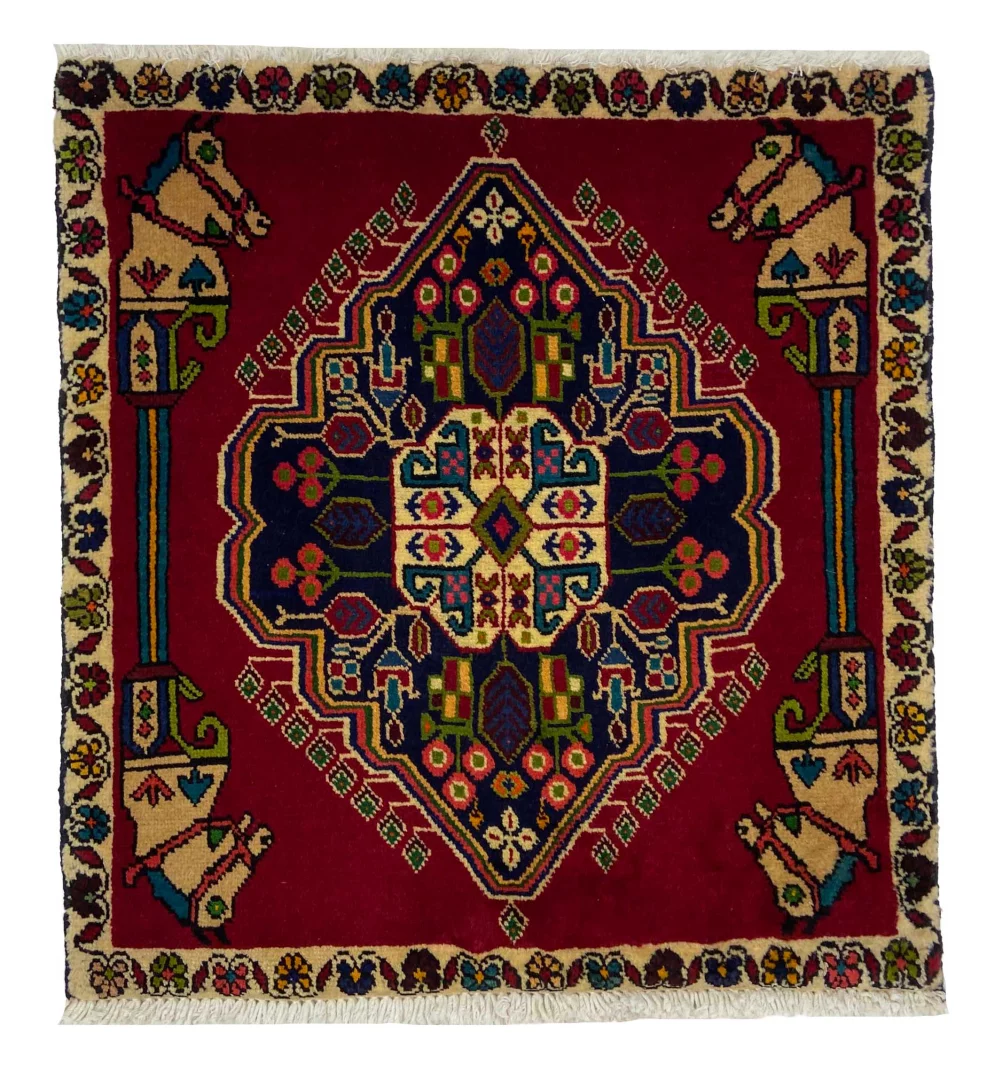
This Ghashghai Persian rug is made of natural wool and is hand-knotted. Wool is one of the traditional materials used in the carpet-making culture of Southern Persia. It gives the rug a substantial surface and the resilience associated with wool textiles. In a hand-knotted rug, each knot is inserted by hand into the prepared structure. The result is a textile whose character is directly connected with the work of the weaver.
The knot density of this rug falls between 180,000 and 250,000 knots per square metre. Such density supports the rendering of clearly defined ornaments and contributes to a comparatively fine, compact texture. The workmanship is described as high quality. Together with the natural wool and the hand-made technique, this produces a rug known for a robust and durable construction.
Ghashghai rugs are traditionally knotted in the open air. This method is linked to the nomadic way of life of the Ghashghai and differs from production in a permanently established workshop. Wool remains the central material, while the designs grow from the inherited visual vocabulary of the region. The hand-knotted construction makes the making of the rug visible in its textile structure and gives it its characteristic firmness.
Origin and Tradition
The Ghashghai Persian rug comes from Southern Persia, specifically from Fars Province. Fars is one of the important landscapes in Iranian carpet culture. The region is closely associated with the Ghashghai, whose nomadic traditions have shaped the design and production of their rugs. In this tradition, practical use, portable textiles and patterns passed down through generations are closely connected.
The Ghashghai, also known as the Qashqai, have traditionally lived as nomadic peoples in Southern Persia. Their rugs were not created only as decorative objects, but also as useful textiles for everyday life. A nomadic environment calls for articles that can be moved, used and relied upon over time. This context helps explain the importance of wool, a regionally available fibre with a warm, workable and durable structure.
The carpet tradition of Fars is not limited to one single type. The region also includes other carpets with their own patterns and making traditions. Shiraz carpets, for example, are known for traditional designs and lively colours. In comparison, the source describes them as generally less durable than Ghashghai rugs. The nomadic Qashqai carpets likewise feature geometric patterns and are made from similar materials. Their strong colours demonstrate the variety of craft traditions found in the region.
Iranian carpet history also includes centres such as Kerman, Isfahan and Tabriz. These names refer to distinct regional schools, pattern languages and approaches to craftsmanship. Kerman is associated with differentiated ornament, Isfahan with sophisticated designs, and Tabriz with a highly developed carpet-making tradition. A Ghashghai rug, however, belongs to the tradition of Fars and Southern Persia. Mentioning other Iranian centres places it within the wider cultural context without changing its origin.
The nomadic Ghashghai tradition becomes particularly clear through the relationship between material, technique and pattern. Hand-knotted wool can be made into resilient floor and household textiles. Geometric forms can be varied within an inherited design language while remaining recognisable as regional work. In this way, the carpet culture of Fars combines continuity in craftsmanship with the individual character of each piece.
Iranian carpet production as a whole is widely recognised for its level of craftsmanship. Carpets from different regions are valued for complex designs and the use of quality materials. They attract collectors as well as people who bring traditional art into their living spaces. Within this wider culture, the Ghashghai rug represents the Southern Persian and nomadically shaped side of Iranian carpet making.
Design and Pattern
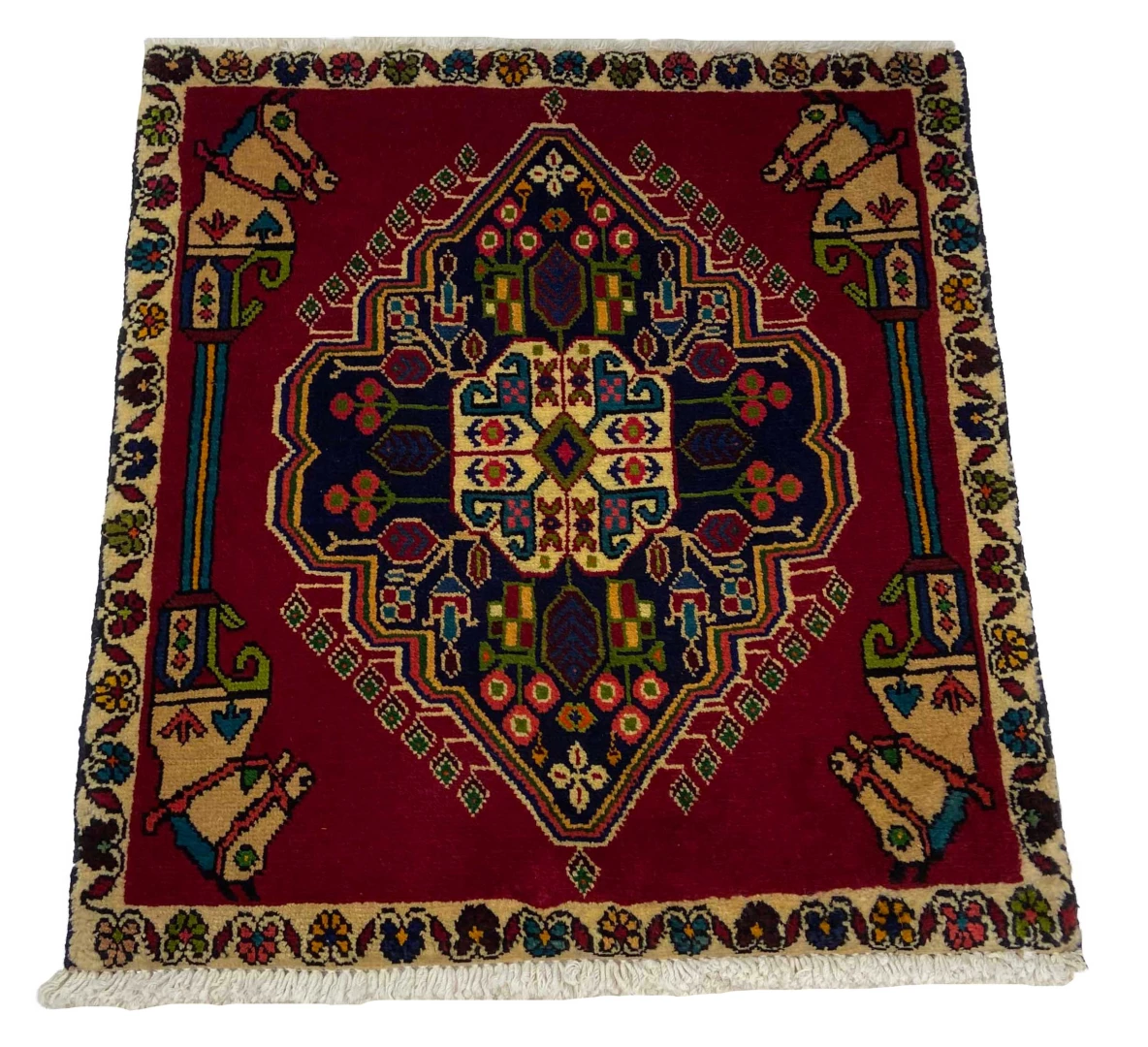
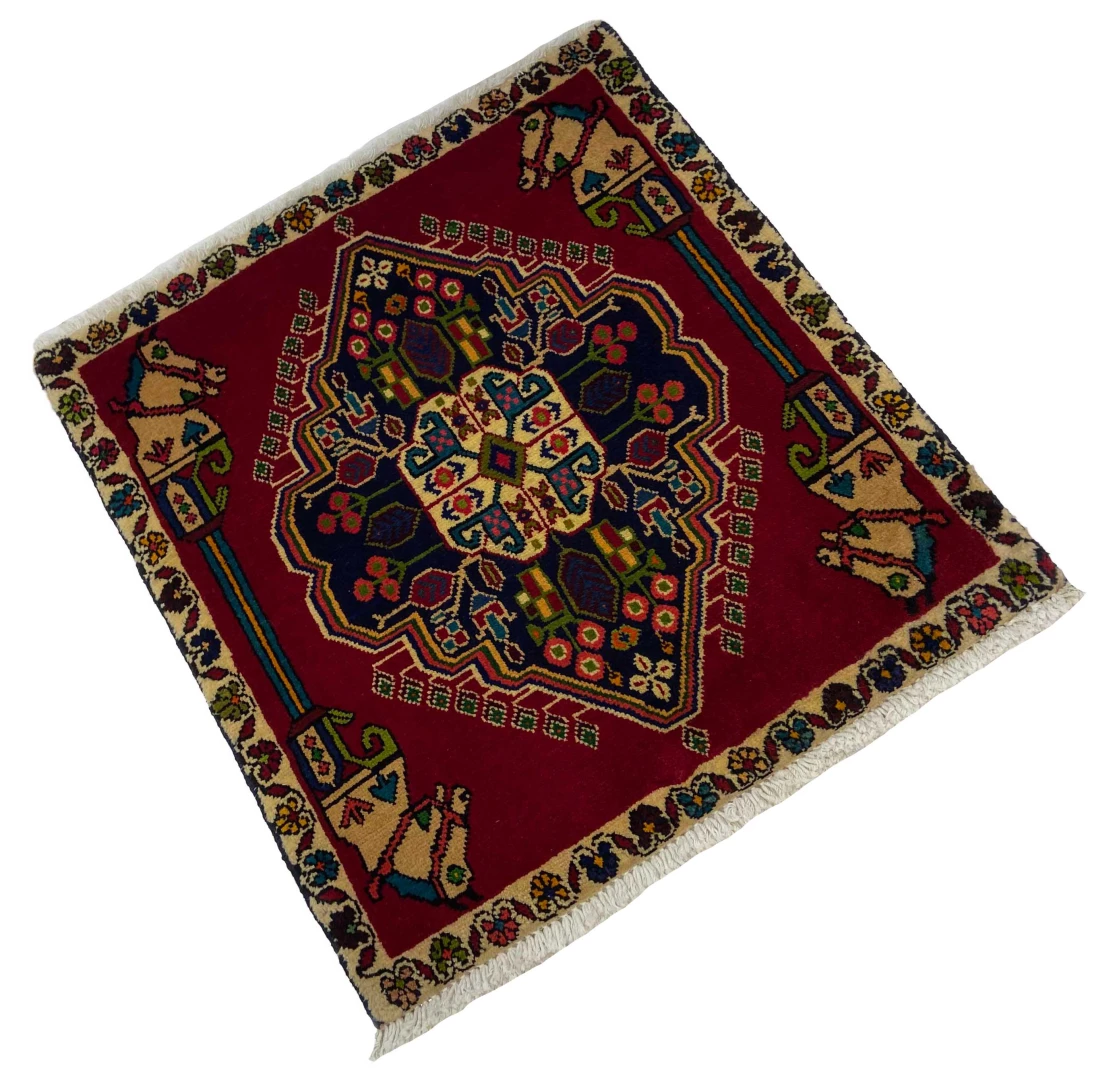
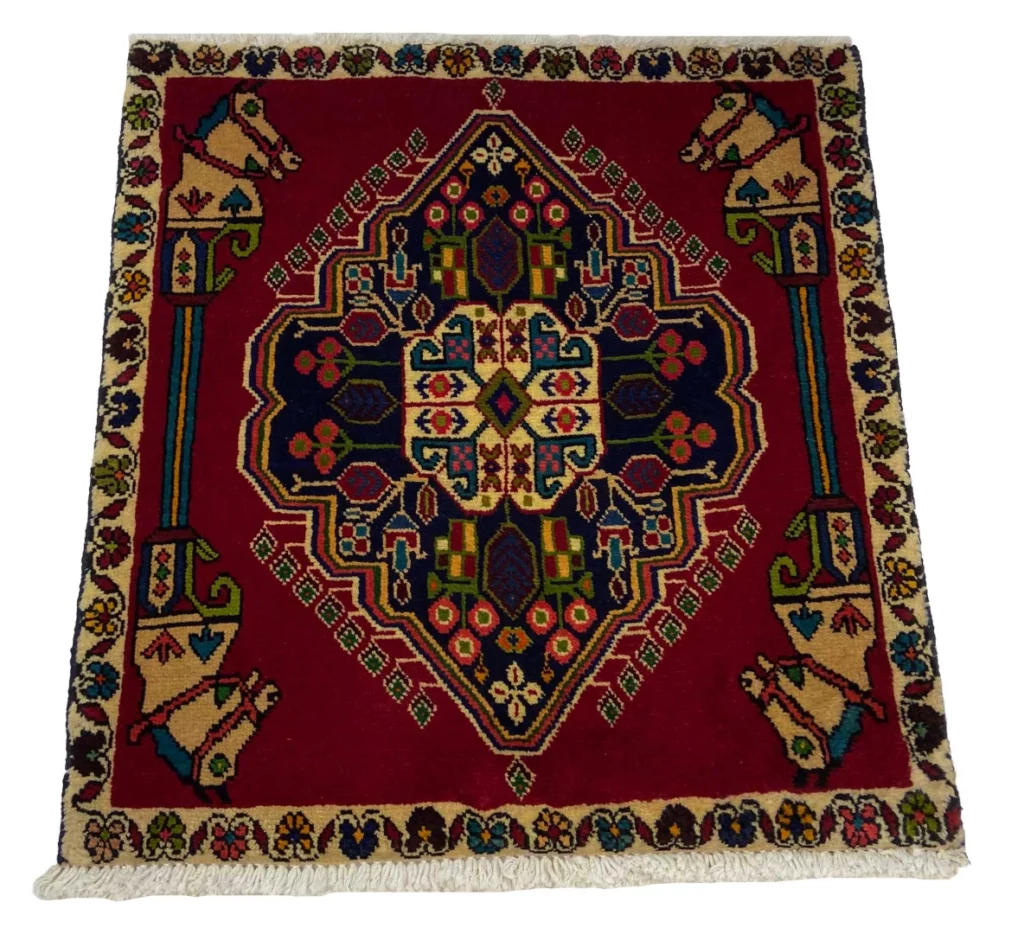
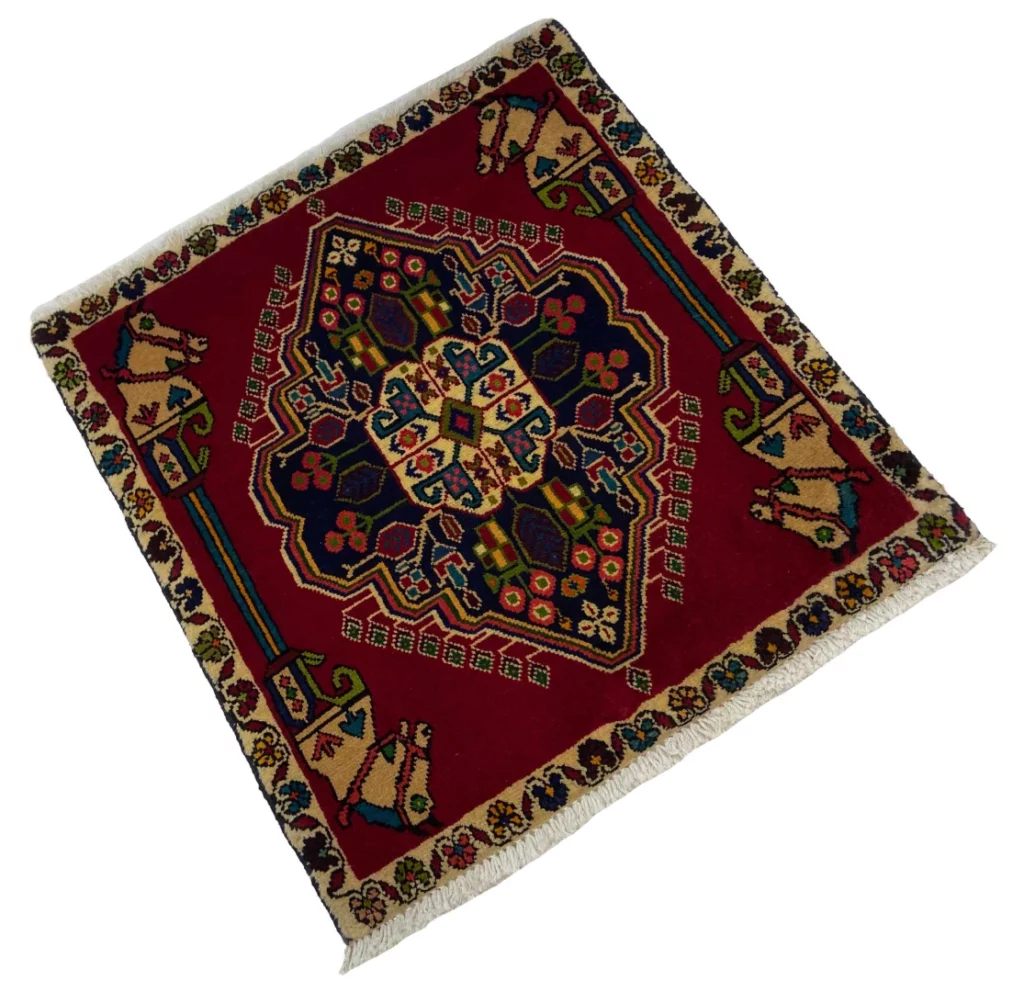
The pattern of this rug consists of geometric ornaments. Geometric design is a defining feature of many Ghashghai rugs. Lines, angles, diamonds and repeated fields may be combined into a rhythmic composition. Rather than presenting a naturalistic image, this visual language relies on clear outlines and abstracted signs. As a result, the pattern remains legible even when viewed from a distance.
In the Ghashghai tradition, geometric ornaments are more than formal decoration. They belong to an inherited visual vocabulary that can be interpreted differently from one rug to another. The nomadic background helps explain the direct and structured character of many designs. Forms may be repeated, mirrored or arranged within a field. This creates an ordered composition that can still appear active and varied, without requiring every rug to follow the same layout.
The colour range described for this rug includes vivid reds and warm browns. Red may appear in regional carpet art as a strong ground or accent colour, while brown gives weight to the ornament and is associated with the natural environment of the region. The relationship between the two colour groups gives the geometric forms a clear outline. The colour effect remains part of the Southern Persian design tradition rather than being derived from an imported decorative style.
The pattern tradition of Fars shows how closely colour and form work together in hand-knotted rugs. A geometric ornament becomes readable through contrast, while related colours can join separate areas into a coherent field. Ghashghai rugs can therefore have a strong and ordered presence. Their decoration remains rooted in a craft structure in which every form is created through the knotting process.
The geometric ornaments of this rug type are also related to Qashqai carpets from the same region. Both traditions show that nomadic knotting cannot be reduced to one fixed template. Recurring principles exist, but the arrangement of forms, the balance of colours and the treatment of individual fields may vary. This combination of inherited motifs and individual workmanship is part of the character of carpets from Fars.
Across Iran, Kerman, Isfahan and Tabriz also represent rich and complex pattern traditions. Each of these centres is associated with its own designs and methods of elaboration. The Ghashghai style differs through its connection with Fars and the nomadic way of life. While other regional schools are often more closely connected with established workshop designs, the geometric ornament of the Ghashghai tradition points to a direct, clearly organised and adaptable visual language.
The design can therefore be read both as a decorative pattern and as an expression of a regional craft tradition. Strong reds and warm browns give the ornaments presence, while geometric order holds the composition together. For the classification of this rug, the geometric ornament and its connection with the Ghashghai tradition are the defining points.
Special Features
The distinctive features of this rug include natural wool, hand-knotting, a high knot density and geometric ornaments. These qualities bring material, technique and design together in a characteristic way. The workmanship is specifically described as high quality. The rug therefore represents both the practical side of Southern Persian wool weaving and the decorative pattern tradition associated with Ghashghai carpets.
Ghashghai rugs are associated with robustness and durability. This makes rugs of this type suitable in principle for living areas that receive frequent use. The rug can be used in a living room, dining room or other areas of the home. Its care is described as straightforward: regular vacuuming and professional cleaning when needed help maintain it. Direct sunlight should be avoided to reduce the risk of colour fading.
FAQ
How should I care for my Ghashghai Persian rug?
Regular vacuuming removes loose dirt from the pile and forms the basic part of routine care. If a more thorough cleaning is needed, it should be carried out professionally. Direct sunlight should be avoided because it can contribute to colour fading. These recommendations take account of the natural wool, the hand-knotted construction and the coloured design of the rug.
Where does the Ghashghai Persian rug come from?
The Ghashghai Persian rug comes from Southern Persia and is associated with Fars Province. Its tradition is linked to the nomadic Ghashghai people, also called the Qashqai. Hand-knotting and geometric ornaments are among the features of this regional craft tradition. Fars thus provides the origin-based context for the rug’s material, technique and design.
What makes the Ghashghai Persian rug distinctive?
Its defining combination is natural wool, hand-knotted workmanship, high knot density and geometric patterning. The designs are described in a lively colour range of reds and browns. Together with the high-quality workmanship, these features connect the rug’s decorative character with the practical side of Ghashghai tradition. Its robust, durable nature and suitability for different living areas are also among the stated characteristics.
To provide the best experiences, we use technologies like cookies to store and/or access device information. Consenting to these technologies will allow us to process data such as browsing behavior or unique IDs on this site. Not consenting or withdrawing consent, may adversely affect certain features and functions.
Functional Always active
The technical storage or access is strictly necessary for the legitimate purpose of enabling the use of a specific service explicitly requested by the subscriber or user, or for the sole purpose of carrying out the transmission of a communication over an electronic communications network.
Preferences
The technical storage or access is necessary for the legitimate purpose of storing preferences that are not requested by the subscriber or user.
Statistics
The technical storage or access that is used exclusively for statistical purposes.The technical storage or access that is used exclusively for anonymous statistical purposes. Without a subpoena, voluntary compliance on the part of your Internet Service Provider, or additional records from a third party, information stored or retrieved for this purpose alone cannot usually be used to identify you.
Marketing
The technical storage or access is required to create user profiles to send advertising, or to track the user on a website or across several websites for similar marketing purposes.

 SECURE PAYMENT
 SHIPPING PARTNERS