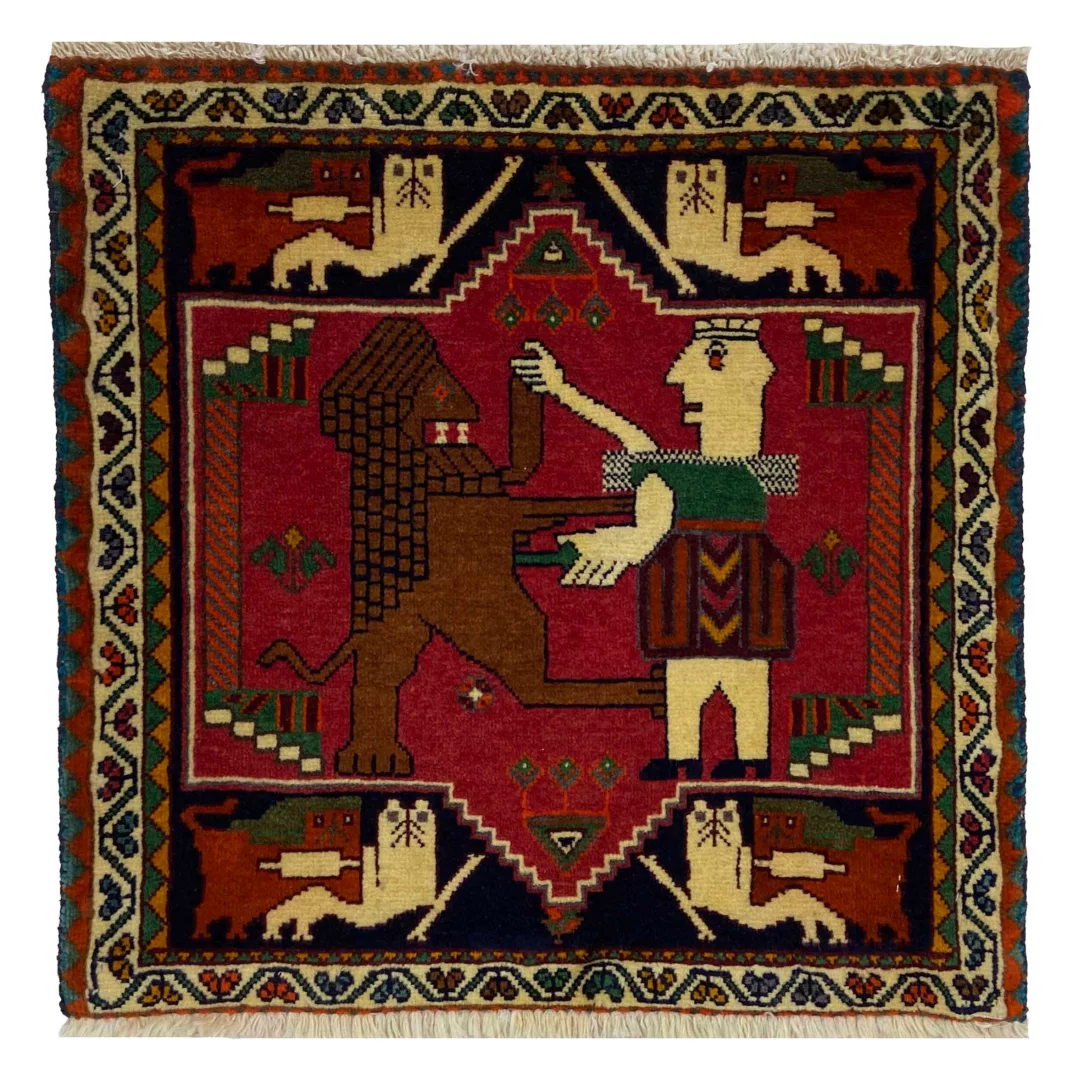
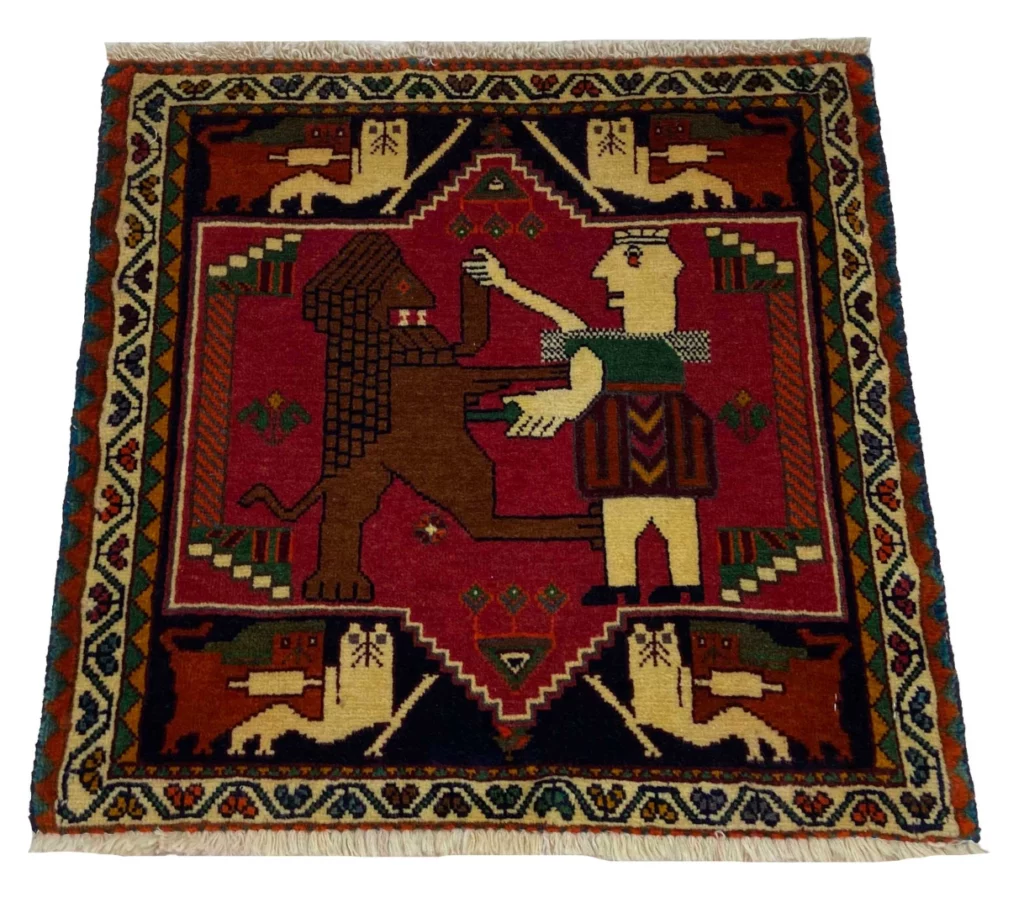
This Ghashghai Persian rug is hand-knotted and made from natural wool. In hand-knotting, individual knots are worked one by one into the prepared foundation. The resulting surface is therefore directly shaped by the craft process rather than by industrial repetition. The wool forms the pile and gives the rug its characteristic tactile quality. In Ghashghai weaving, natural wool is traditionally used for its suitability for a durable textile surface.
The stated knot density is between 180,000 and 250,000 knots per square metre. This level of construction allows geometric ornaments to be arranged with clear distinctions between individual forms. The hand-knotted structure joins the colours and shapes into one continuous composition. In a handmade rug, small variations in the sequence of work arise from individual execution. They are part of the making process, rather than evidence of a mechanically reproduced pattern.
Natural wool is the material specified for this rug. Its use is closely connected with the traditional weaving practice of southern Persia. The wool pile contributes both to the appearance and to the feel of the piece. It carries the red and brown shades and provides the surface on which the geometric ornaments are formed. Hand-knotting and natural wool consequently define both the construction and the visual character of this individual rug.
Origin and Tradition
The rug comes from Ghashghai in southern Persia, in Fars Province. Ghashghai rugs are associated with an Iranian weaving tradition that combines nomadic life, practical knowledge and the passing down of craft skills through generations. Fars, in the south of Iran, has a distinct textile culture. The Ghashghai name connects the rug with the weaving traditions of the Ghashghai nomads and with the forms developed within that cultural setting.
For this type of rug, weaving is more than a technical operation. It belongs to a tradition in which textile work was connected with daily life, movement and shared knowledge. Familiar forms could be developed from memory while the rug was being knotted, without every stage having been fixed in a drawing beforehand. This helps explain why Ghashghai rugs often use a recognisable group of geometric shapes while still allowing individual variations in their arrangement.
The source describes Ghashghai nomads working outdoors and often proceeding without a fully prepared plan. This method points to a tradition in which knowledge of motifs was not dependent only on written diagrams. Forms, colour relationships and sequences were transmitted through experience. A rug could therefore retain the character of a familiar regional design while receiving its own specific arrangement. Geometric order and personal execution belong together in this weaving context.
Fars is also a region in which several Persian rug traditions exist alongside one another. In the wider field of oriental rugs, Ghashghai weaving is therefore often discussed in relation to other southern and western Iranian styles. Shiraz rugs may also feature geometric elements, but their knotting methods and colour choices can differ. Bakhtiari and Qashqai groups are likewise associated with nomadic weaving traditions and natural wool. Such comparisons provide context, but they do not alter the origin of this piece, which is identified as Ghashghai from southern Persia, Fars Province.
Iranian centres such as Tabriz and Isfahan are known for other forms of elaborate design. Ghashghai rugs, by contrast, are associated with a robust construction, geometric ornaments and warm shades. The regional traditions show that Persian rugs are not made according to one uniform visual system. Each origin refers to a particular relationship between material, technique, pattern and colour. The Ghashghai tradition retains its own place within this larger history.
Design and Pattern
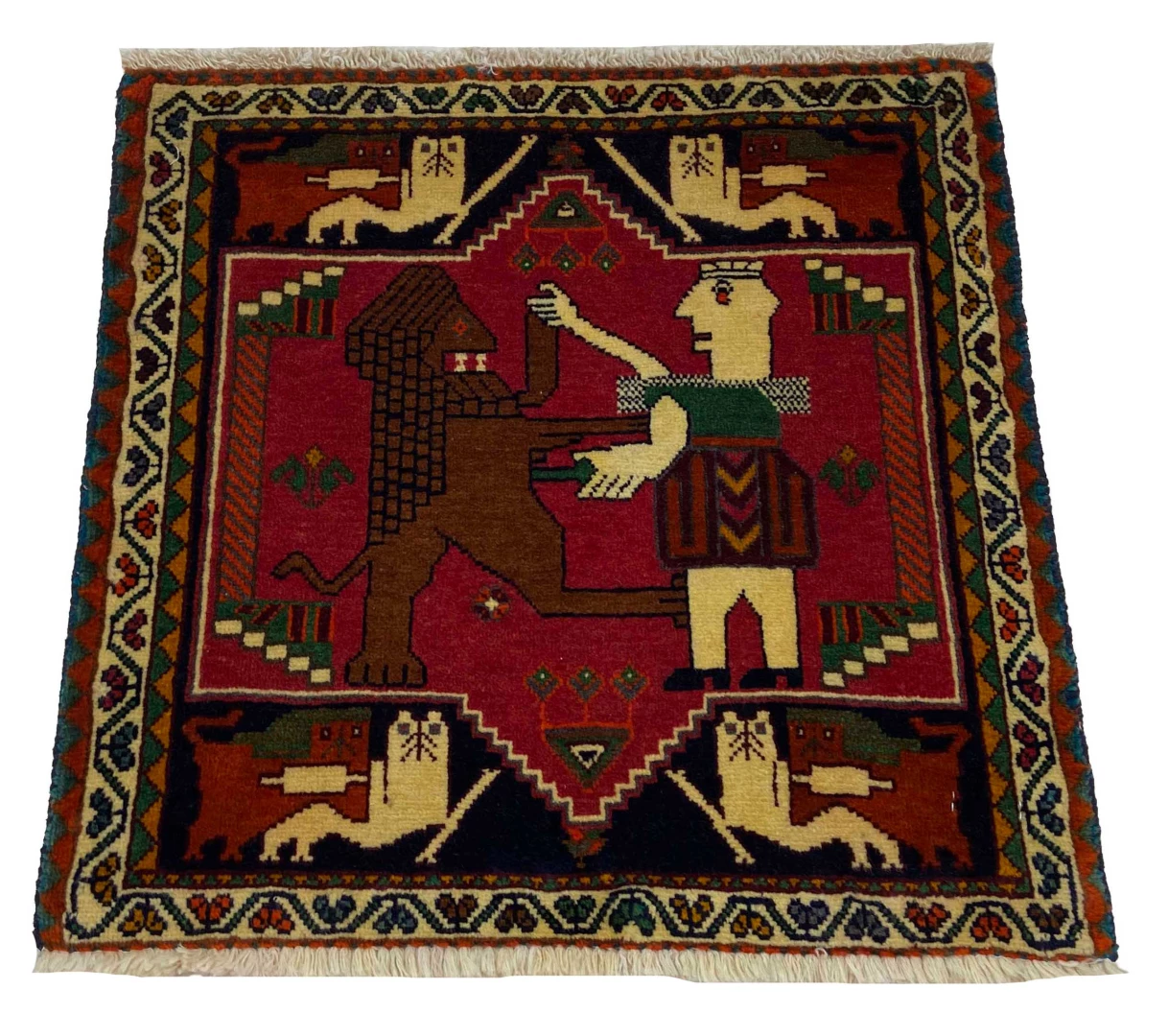
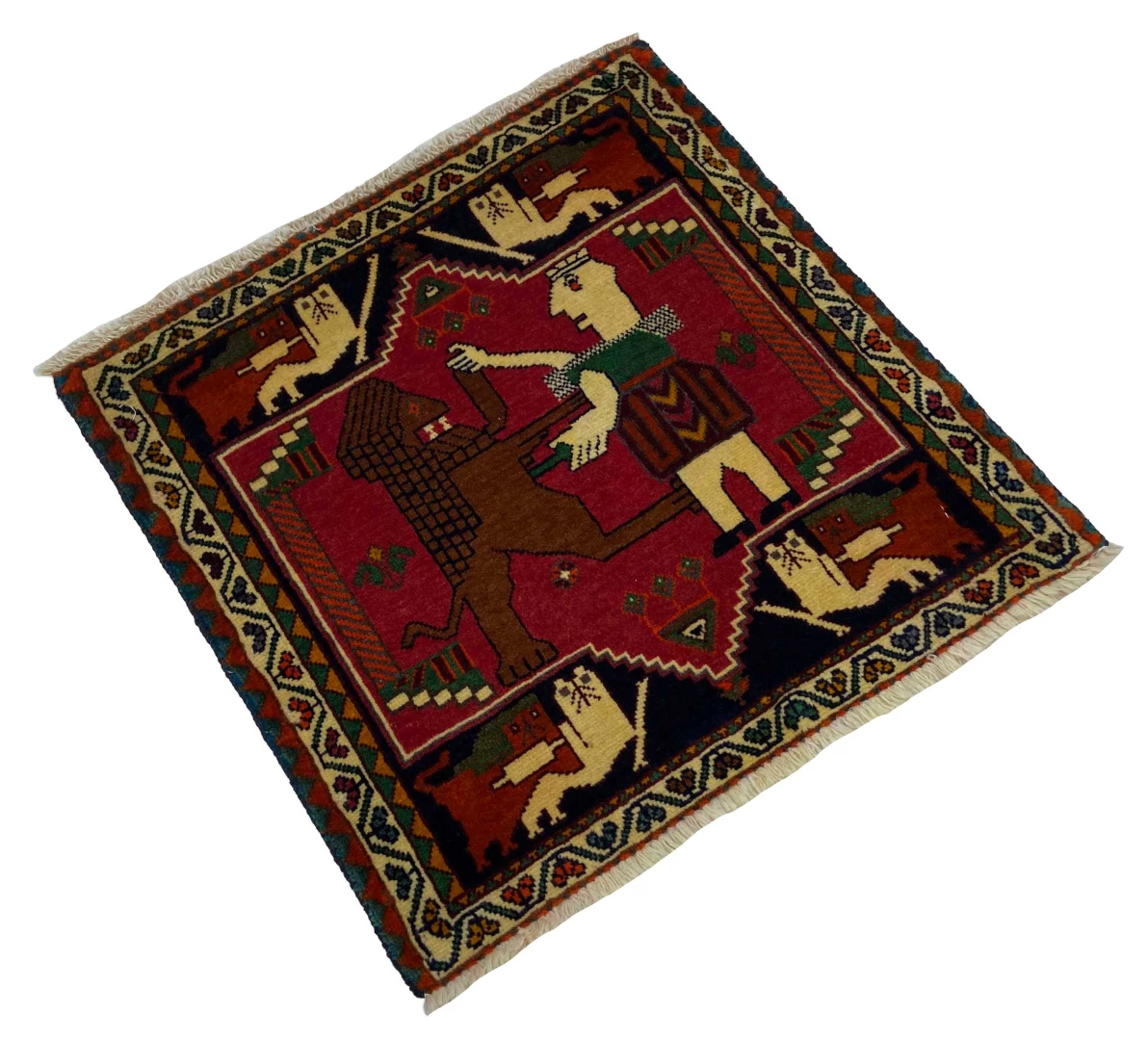
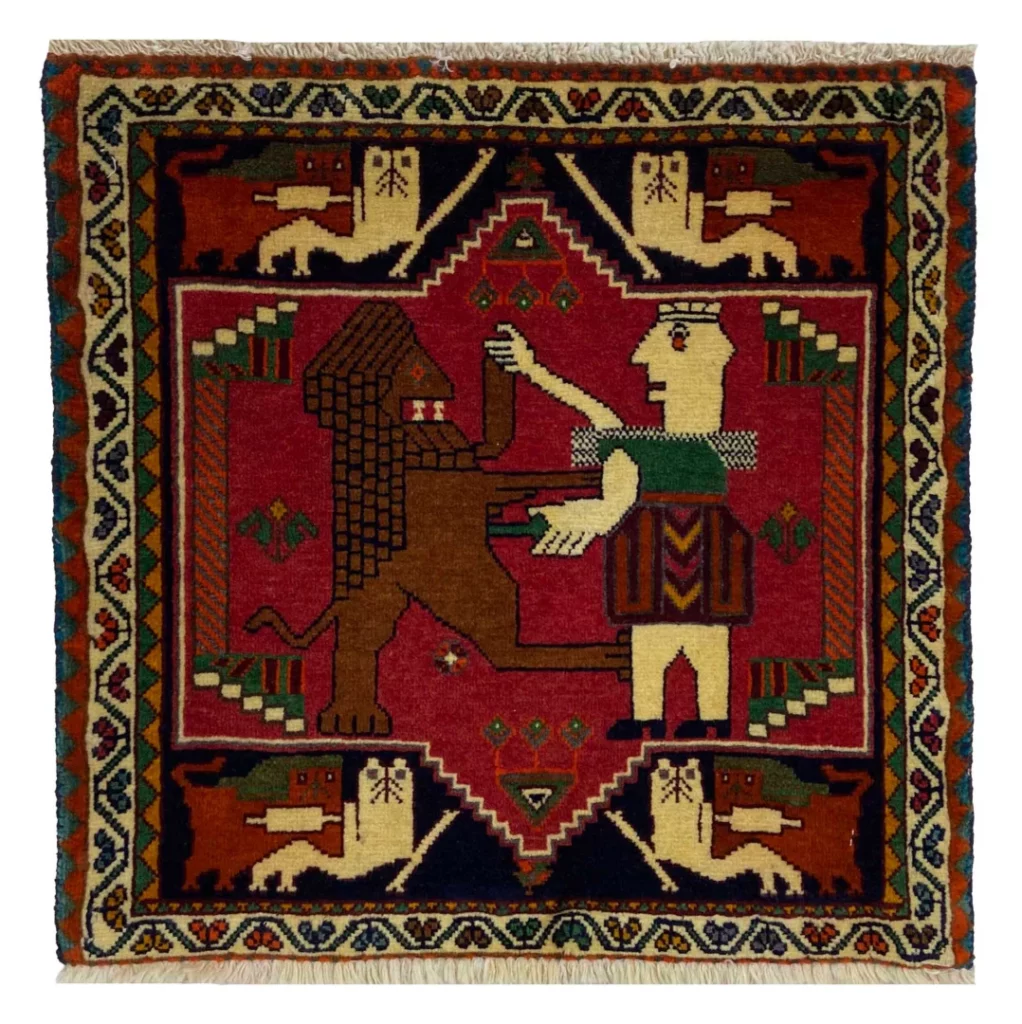
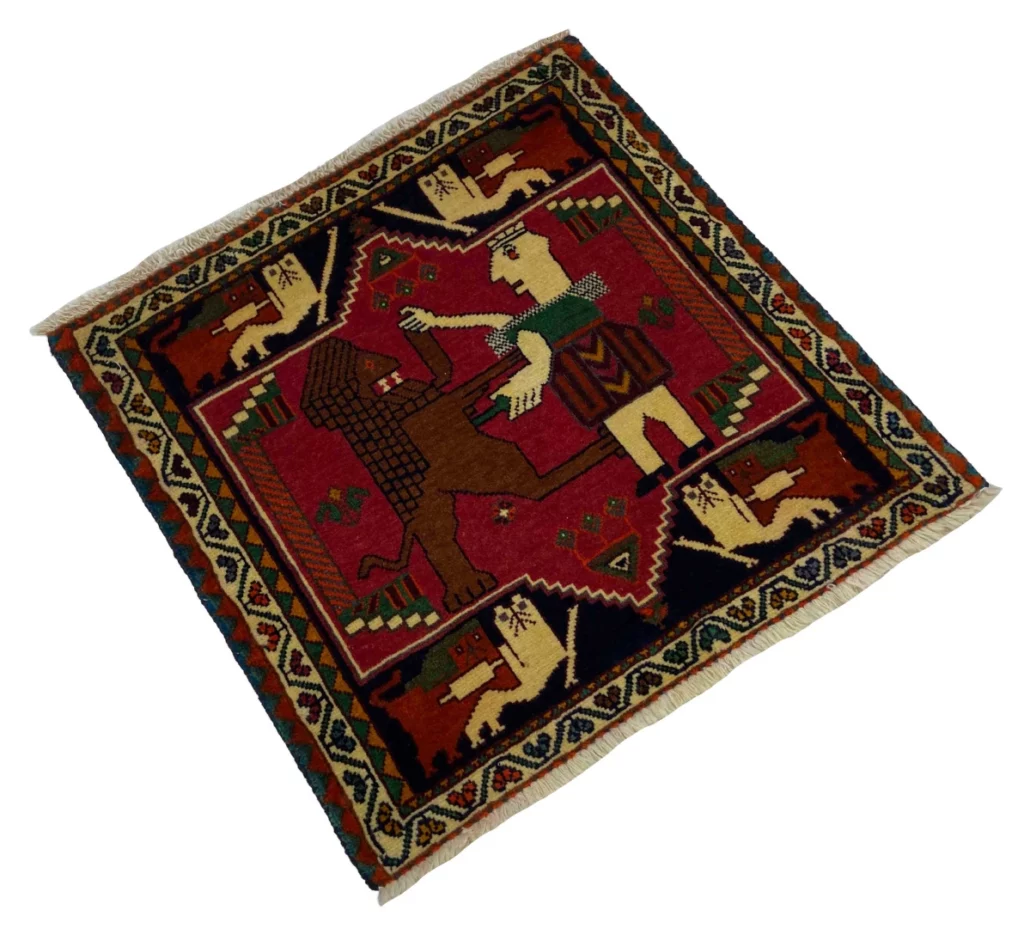
The pattern of this rug consists of geometric ornaments. Geometric design uses lines, angles, repeated fields, diamonds and other structured elements to organise the woven surface. Rather than presenting a naturalistic image, it simplifies and orders forms so they can be expressed through knots and coloured areas. The pattern is created by the relationship between separate ornaments and their distribution across the rug.
In Ghashghai rugs, geometric forms are frequently connected with nomadic design traditions. A motif may appear as a clearly defined figure or become part of a sequence of smaller ornaments. Repetition provides rhythm, while slight differences in alignment or proportion can reveal the handmade origin of the work. These motifs are not merely decorative additions; they belong to a regional visual language supported by memory and practical weaving experience.
The colours specified for this piece are shades of red and brown. Red may serve as a principal field or accent, while brown can define outlines, motifs or adjoining areas. The placement of each colour affects how clearly the ornaments can be read. Together, red and brown create a warm, earthy colour range. This description identifies the colour families present in the rug and does not add any colours that are not stated.
The ornaments and colours form one visual system. In this type of rug, a relatively high knot density can support the clear separation of smaller geometric units. The final effect nevertheless depends on the interaction of knots, wool pile, colour fields and the arrangement of the pattern. Because the rug is hand-knotted, its design is not produced as a mechanically repeated grid. The individual areas take shape during the work and retain the character of a handmade piece.
The source connects Ghashghai patterns with the life and culture of the Ghashghai nomads. This connection helps explain how formal clarity and freer arrangement can coexist. A geometric composition may use familiar basic forms while placing them in a particular sequence for one rug. Regional identity can therefore remain visible without every example looking exactly the same. This rug is defined by its geometric ornaments and by its red and brown palette.
Related geometric elements can also be found in rugs from Shiraz and in work associated with Bakhtiari and Qashqai groups. A similarity of motifs does not mean that the origins are identical. Knotting technique, colour selection, proportions and execution may vary from one tradition to another. For this rug, the relevant origin is Ghashghai, southern Persia and Fars Province.
Special Features
The notable features of this rug are its hand-knotted construction, natural wool pile, stated knot density and geometric design. Its warm red and brown shades provide the colour framework for the ornaments. Taken together, these characteristics correspond to the description of Ghashghai rugs from southern Persia.
The handmade process gives each rug its own execution. When work proceeds without a completely predetermined pattern, the arrangement, rhythm and minor details may develop individually. This is not separate from the regional tradition; it is part of the working method associated with it. The connection with Ghashghai nomadic culture and the use of natural wool add cultural and material context to the technical description.
Care instructions include vacuuming the rug regularly and cleaning it with a damp cloth when necessary. Direct sunlight should be avoided to reduce the risk of colour fading. These recommendations relate to the wool pile and to the coloured surface of the rug. Gentle handling supports the preservation of its red and brown tones.
FAQ
How should I care for my Ghashghai Persian rug?
Vacuum the rug regularly to remove loose dirt from the wool pile. If needed, clean the surface with a damp cloth. Avoid direct sunlight, as prolonged exposure can contribute to fading. Gentle, material-appropriate care is useful for a hand-knotted rug and helps preserve its red and brown colours.
Where can I buy a Ghashghai Persian rug?
Ghashghai Persian rugs are available from specialist rug dealers and online retailers. Choose a reputable seller who can confirm the rug’s authenticity and origin description. It is important to distinguish a Ghashghai rug from southern Persia from a rug that merely uses similar geometric motifs without having the same stated origin.
What makes Ghashghai rugs distinctive?
Ghashghai rugs combine hand-knotting, natural wool, a pronounced knot density, geometric ornaments and warm red and brown shades. Their design is connected with the nomadic culture of the Ghashghai in southern Persia. The combination of regional tradition, handmade construction and individual pattern arrangement gives this rug type its distinctive character.
To provide the best experiences, we use technologies like cookies to store and/or access device information. Consenting to these technologies will allow us to process data such as browsing behavior or unique IDs on this site. Not consenting or withdrawing consent, may adversely affect certain features and functions.
Functional Always active
The technical storage or access is strictly necessary for the legitimate purpose of enabling the use of a specific service explicitly requested by the subscriber or user, or for the sole purpose of carrying out the transmission of a communication over an electronic communications network.
Preferences
The technical storage or access is necessary for the legitimate purpose of storing preferences that are not requested by the subscriber or user.
Statistics
The technical storage or access that is used exclusively for statistical purposes.The technical storage or access that is used exclusively for anonymous statistical purposes. Without a subpoena, voluntary compliance on the part of your Internet Service Provider, or additional records from a third party, information stored or retrieved for this purpose alone cannot usually be used to identify you.
Marketing
The technical storage or access is required to create user profiles to send advertising, or to track the user on a website or across several websites for similar marketing purposes.
 SECURE PAYMENT
 SHIPPING PARTNERS


