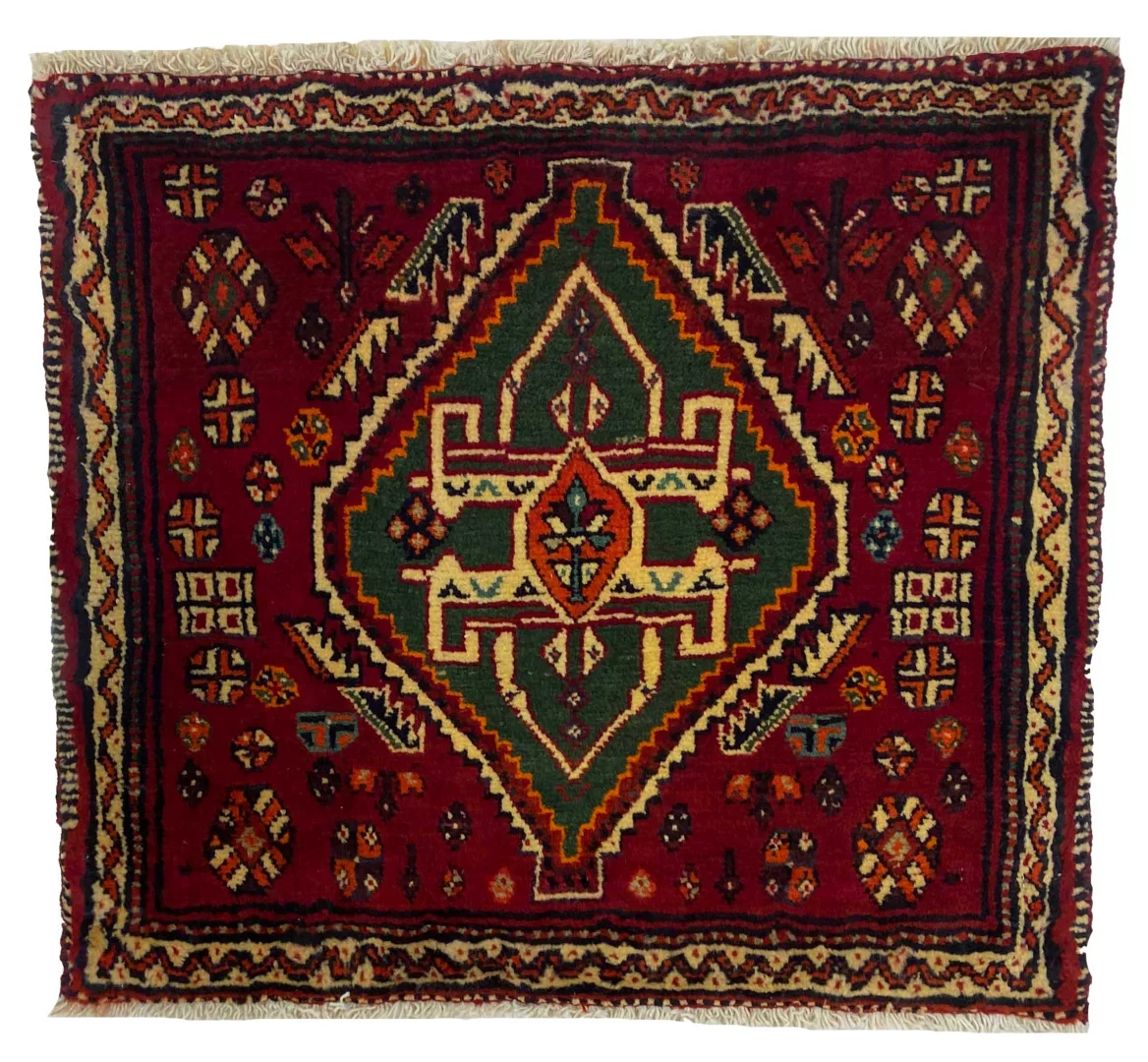
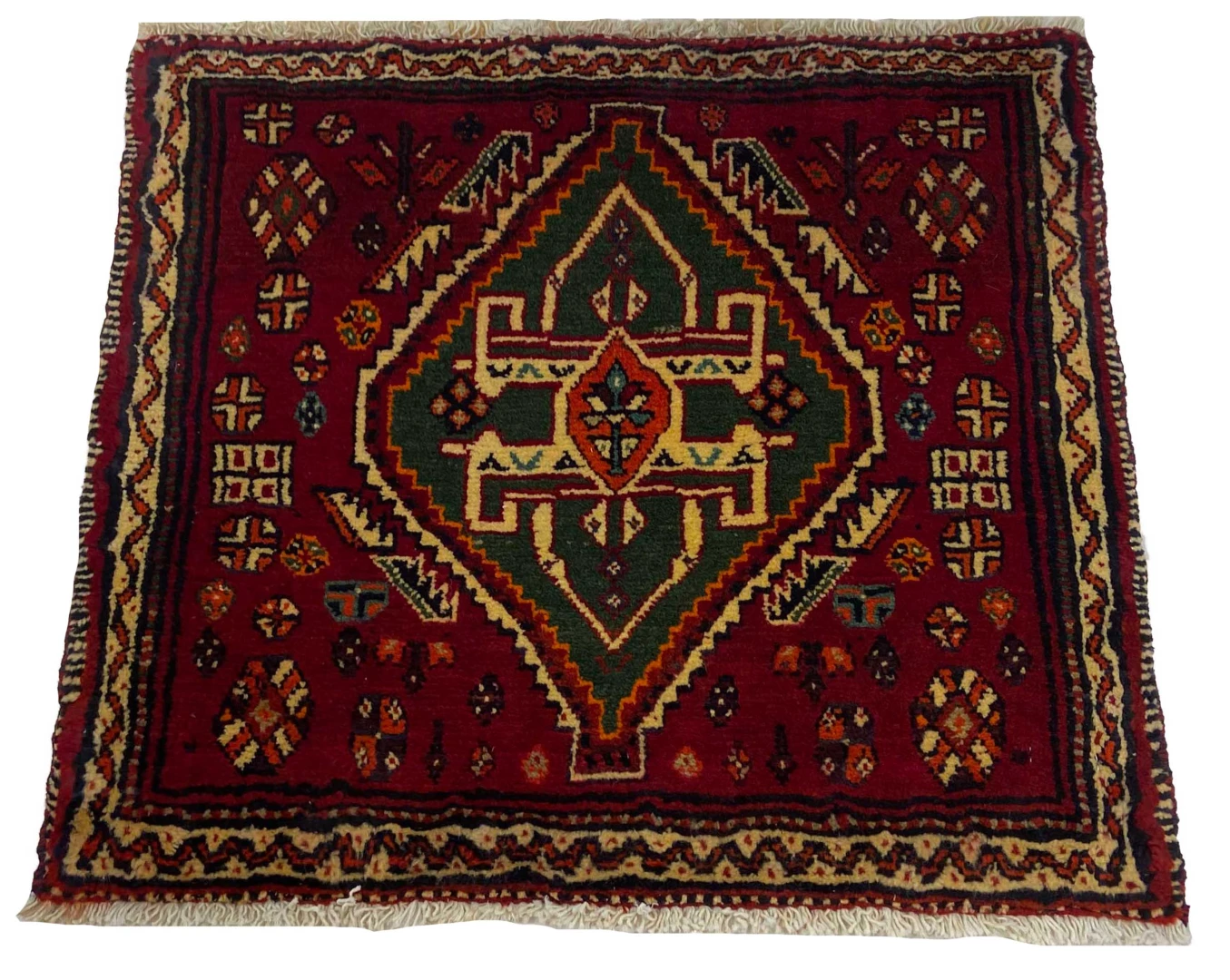
This Ghashghai Persian rug is hand-knotted and made from natural wool. The combination of a natural fibre and manual knotting belongs to the defining features of traditional rugs from southern Persia. Each knot is placed individually within the textile structure. The result is not a uniform industrial product, but an individual piece whose execution reflects the sequence of hands-on work.
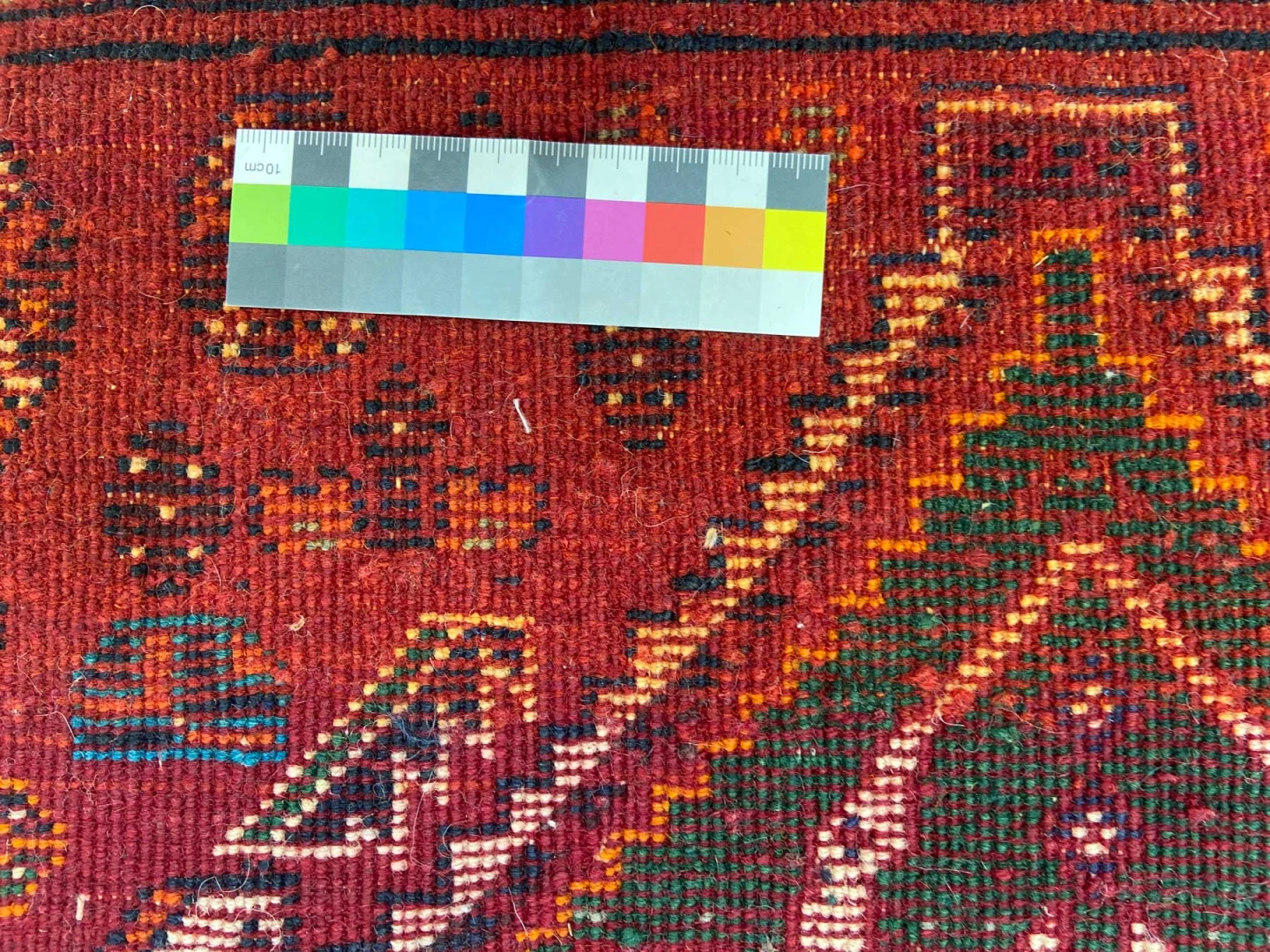
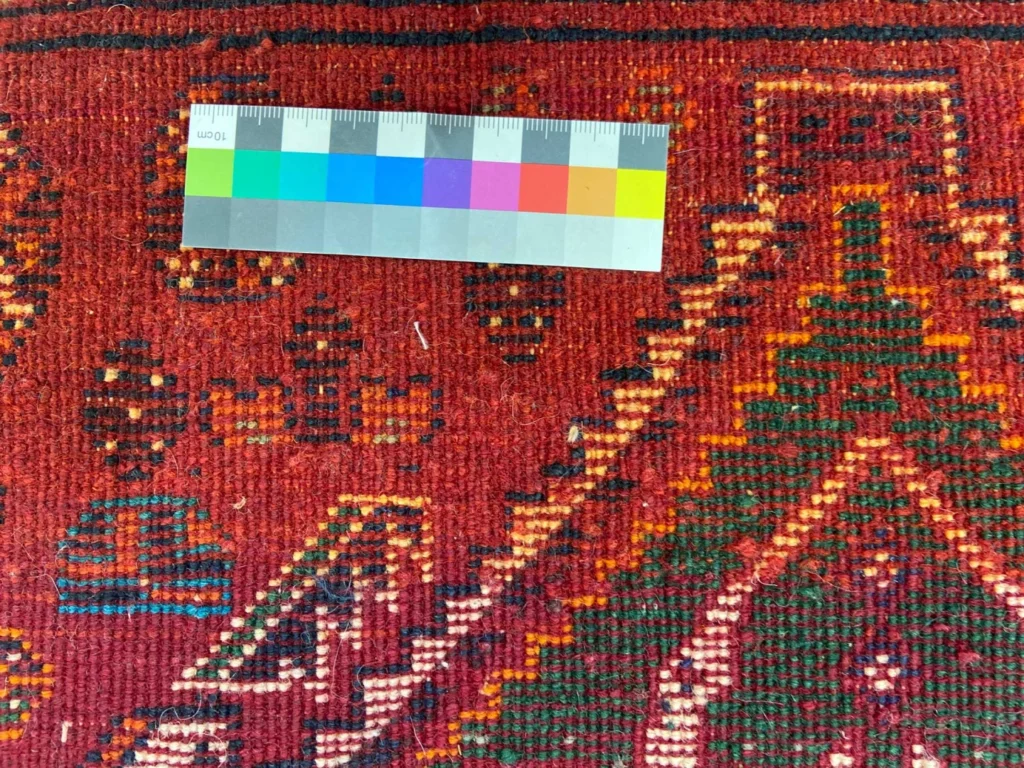
The product specification gives a knot density of 180,000 to 250,000 knots per square metre. Knot density records the number of knots within a defined area and provides an indication of the fineness of the work. It is only one part of a rug’s construction, however. The quality of the wool, the tension of the foundation, the regularity of the knots and the finishing of the surface also contribute to the way a hand-knotted rug is made.
Natural wool is used in hand-knotted rugs because its fibres combine a pleasant feel with a resilient textile character. It gives the surface a tactile quality and contributes to a warm interior atmosphere. This piece is described as high-quality handwork. Hand-knotting is a slow process made up of many individual operations, with the pattern built knot by knot rather than reproduced by a machine.
The term hand-knotted distinguishes this rug from a mechanically produced floor covering. It refers to a textile process requiring practical knowledge, patience and a secure understanding of colour and form. In Ghashghai weaving, the individual execution can be part of the rug’s character. Small variations in lines, fields and transitions arise from manual production and make each example distinct.
Origin and Tradition
This rug comes from Ghashghai in southern Persia, in Fars Province. Ghashghai rugs are associated with the Ghashghai, a nomadic people of the region. Their textile tradition developed in circumstances where weaving and knotting served more than a decorative purpose. Rugs were useful objects in everyday life as well as carriers of inherited visual language and cultural memory.
Fars, in the south of Iran, has long been connected with different forms of nomadic and settled textile production. Within a nomadic setting, textile work had to remain practical and adaptable. This encouraged a design language that was not limited to the formal order of courtly carpets or to perfectly repeated industrial patterns. Motifs could instead be combined through memory, experience and regional practice.
Ghashghai weaving is particularly associated with geometric designs and vivid colours. Geometric forms can be organised clearly within a knotting plan and repeated across a field without losing their handmade character. Diamonds, stepped lines, angular shapes and other linear elements may appear as individual motifs or as parts of a larger composition. Their precise arrangement varies from one rug to another.
Traditional nomadic rugs are often guided by an inherited vocabulary rather than by a completely standardised pattern sheet. The tradition provides a framework, while the actual execution remains individual. This helps explain why Ghashghai pieces can share regional features while differing in proportions, colour relationships and visual rhythm. A single rug can therefore express both its place within a tradition and the particular decisions made during its creation.
The description of Ghashghai working methods includes production in the open air and often without a fully prepared plan. A design may therefore develop as the knotting progresses. This does not mean that the work is without knowledge or structure. Decisions are based on experience, established motifs and an assured handling of colour and form. The finished piece can consequently show a direct design process that is not entirely schematic.
Warm reds and rich browns are part of the colour world associated with the Ghashghai rugs described here. Colour fields do more than provide decoration. They organise the interior of the rug, bring particular ornaments forward and establish relationships between centre, border and transition areas. In a hand-knotted piece, those relationships are shaped by the wool and by the succession of individual knots.
The Ghashghai tradition is therefore part of a Persian rug culture in which material, use and design are closely connected. Regional origin signifies more than a point on a map. It also refers to a community, an inherited working method and a repertoire of forms transmitted across generations. This rug is identified as a Ghashghai from Fars Province and carries that regional association in its description.
Design and Pattern
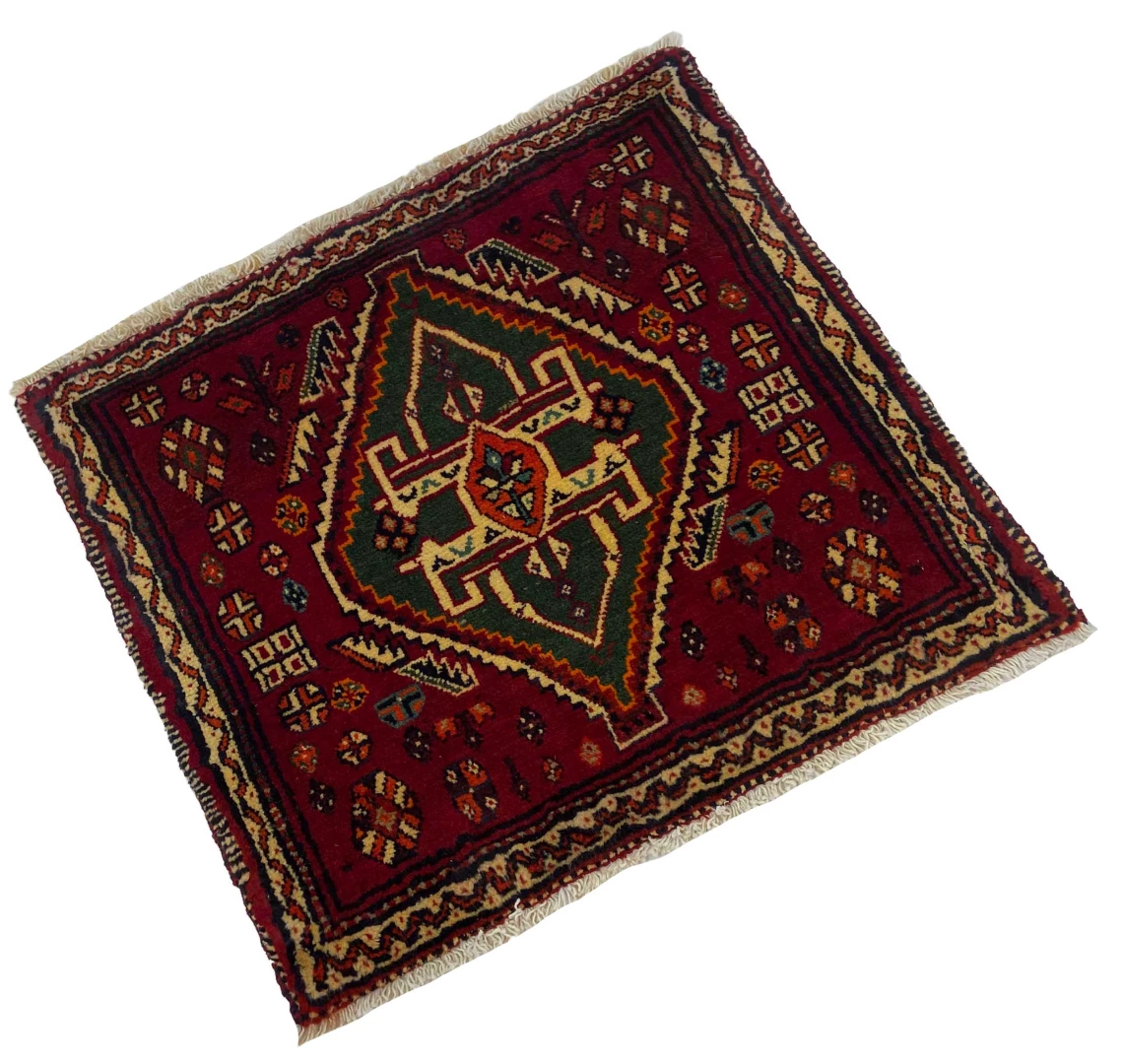
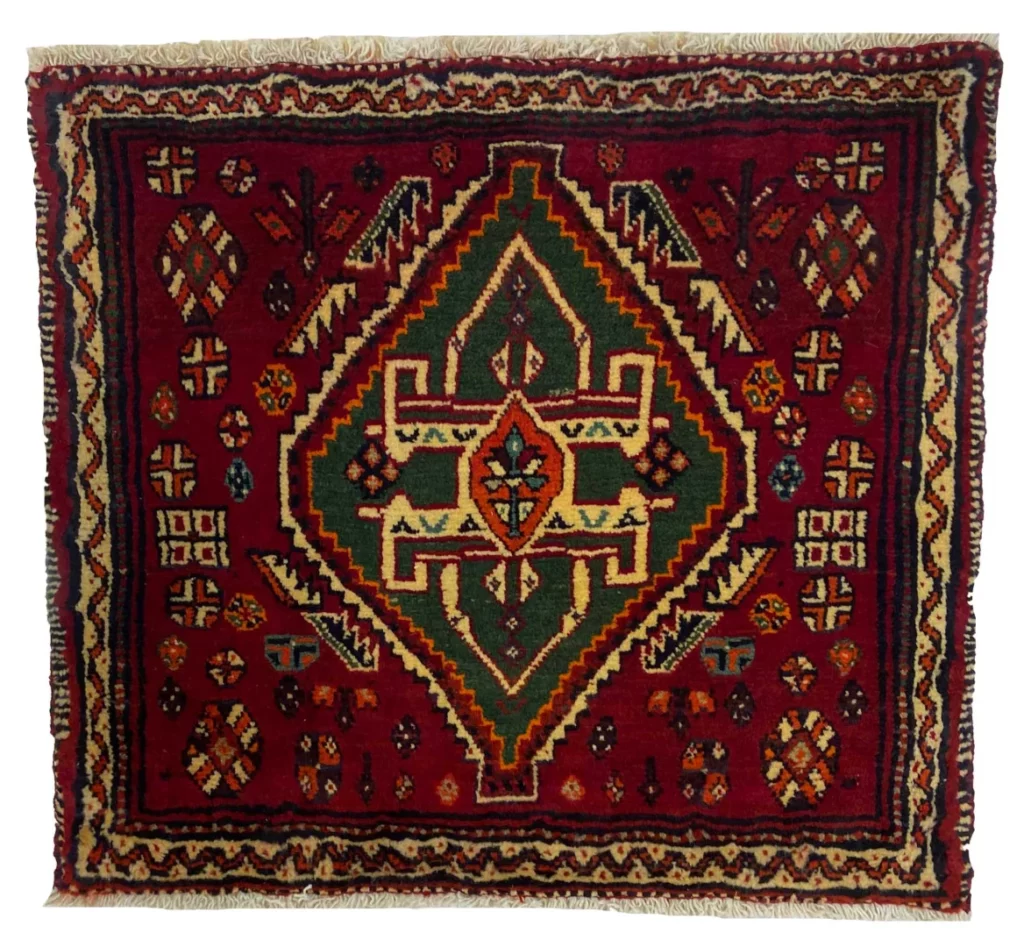
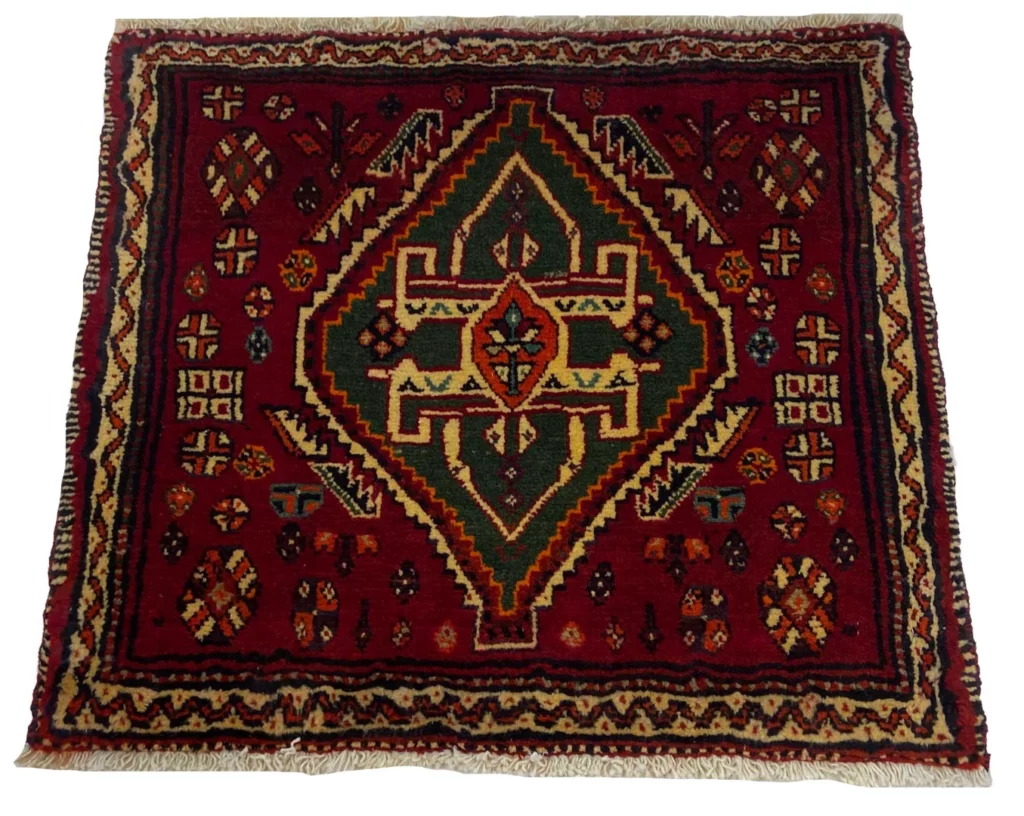
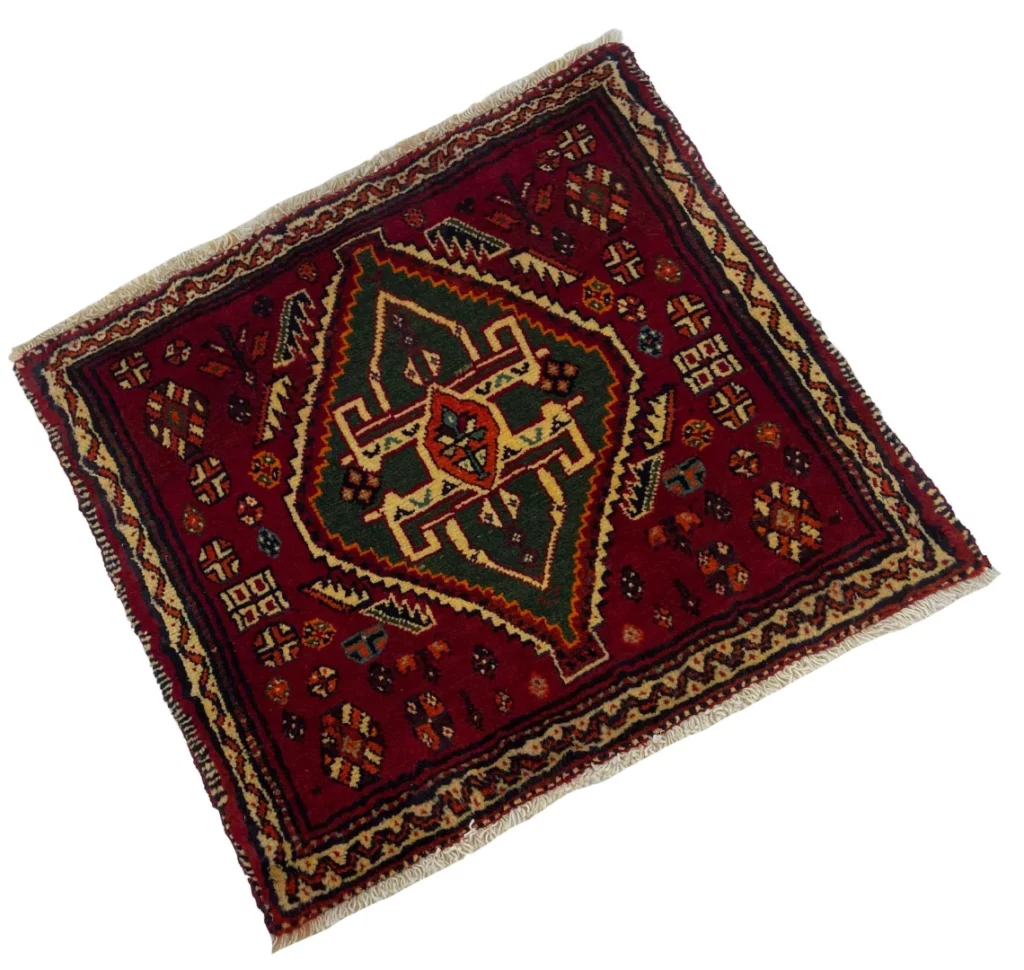
The pattern of this rug is described as geometric ornaments. Geometric ornament uses defined contours, organised fields and recurring shapes. Unlike a naturalistic floral image, it does not need to reproduce botanical detail. Its visual order comes from the relationship between lines, angles, diamonds, panels and areas of colour. The result can appear structured while retaining the irregularities associated with individual handwork.
Within Ghashghai design language, geometric motifs can divide a field into several connected areas. A central form may be accompanied by smaller elements, while border zones create a transition towards the outer edge. Whether the composition is strictly symmetrical or more freely arranged depends on the individual execution. In a hand-knotted rug, the rhythm of the ornaments remains closely tied to the practical process of making it.
The use of vivid colour is another feature of the Ghashghai tradition described in the source. Warm reds may provide a strong ground, while rich browns add contrast and an earthy connection. Colours are not considered in isolation, but in relation to the ornaments. A change in tone can emphasise a diamond, extend a line or separate adjoining pattern fields.
Geometric forms are well suited to a process in which the design is built gradually from knots. Straight lines emerge from sequences of coloured points, while diagonal and stepped contours are created by shifting the placement of successive knots. This gives hand-knotted geometry its particular character: the overall shapes remain legible, but close observation reveals that they are assembled from many small textile decisions.
A Ghashghai rug should therefore not be understood as a perfectly mechanical repetition of a decorative scheme. Tradition supplies motifs and principles of arrangement, while the specific execution may introduce its own spacing, transitions and emphasis. The description of this piece as unique refers to that relationship between an inherited design vocabulary and individual craftsmanship. The pattern is not arbitrary; it is a personal realisation within a regional tradition.
Geometric ornament can act as a structuring element in an interior. Its lines give a textile surface a clear visual order, while warm and rich tones add density to the composition. The rug can consequently be read as a distinct textile image. Its effect depends on how the existing furnishings relate to the pattern and colours, rather than on any alteration to the rug itself.
The Fars tradition differs from courtly floral compositions in which flowers, vines and medallions are often arranged in a carefully planned repeat. Ghashghai rugs place greater emphasis on geometric drawing, regional colour sensibility and individual execution. This distinction describes a stylistic tradition; it does not mean that every Ghashghai piece contains exactly the same forms or distributes colour in the same way.
The pattern thus brings together two levels of meaning. It is immediately recognisable as geometric ornament, while also forming part of a regional history of nomadic textile work in southern Persia. The individual shapes contribute to the overall order, and the hand-knotted construction presents that order as a one-off handmade work. Design, material, technique and origin remain closely connected.
Special Features
This rug’s notable features are the combination of natural wool, hand-knotted construction and geometric ornament. It is described as unique, high-quality handwork. The combination points to a one-off piece whose surface was formed through a succession of manual operations rather than through industrial repetition.
The stated knot density of 180,000 to 250,000 knots per square metre is another product characteristic. It helps make the fineness of the knotting understandable without reducing the rug’s identity to a technical figure. Other defining features are its connection with Fars Province, its classification within the Ghashghai tradition and its use of geometric ornaments.
The natural wool provides a pleasant handle and contributes to a warm room atmosphere. The construction is described as durable and long-lasting, which is why Ghashghai rugs are generally suitable for areas with more frequent use. This is a characteristic of the rug type. Actual use should always take the room, level of traffic and appropriate care into account.
Through its regional origin, inherited pattern vocabulary and individual knotting, the rug joins practical use with textile tradition. It is therefore more than a floor covering: it is a handmade object in which fibre, design and method of production work together.
FAQ
How should I care for a Ghashghai Persian rug?
Regular vacuuming helps remove dust and dirt from the wool. The surface should be treated gently during this process. Direct sunlight should be avoided because it can encourage the colours to fade. If a thorough cleaning is needed, professional cleaning is recommended. Specialist treatment is better suited to natural wool and a hand-knotted structure than an unsuitable do-it-yourself method.
Where can I buy an authentic Ghashghai Persian rug?
Authentic Ghashghai Persian rugs can be found at specialist rug dealers and on online platforms that focus on hand-knotted rugs from Iran. Certificates may help confirm authenticity. Buyers should also look for a clear presentation of origin, material, knotting technique and the characteristics of the individual piece. This makes it easier to distinguish a regional attribution from a general pattern name.
What are the advantages of a hand-knotted Ghashghai Persian rug?
A hand-knotted Ghashghai Persian rug combines durable qualities with an individual geometric design and the tactile character of natural wool. Because it is made by hand, each piece is distinct. It can serve as a furnishing element as well as a handmade work of textile art. Such rugs are also described as valuable investments that may increase in value over time. That possibility depends on factors including preservation, demand and the precise classification of the rug.
To provide the best experiences, we use technologies like cookies to store and/or access device information. Consenting to these technologies will allow us to process data such as browsing behavior or unique IDs on this site. Not consenting or withdrawing consent, may adversely affect certain features and functions.
Functional Always active
The technical storage or access is strictly necessary for the legitimate purpose of enabling the use of a specific service explicitly requested by the subscriber or user, or for the sole purpose of carrying out the transmission of a communication over an electronic communications network.
Preferences
The technical storage or access is necessary for the legitimate purpose of storing preferences that are not requested by the subscriber or user.
Statistics
The technical storage or access that is used exclusively for statistical purposes.The technical storage or access that is used exclusively for anonymous statistical purposes. Without a subpoena, voluntary compliance on the part of your Internet Service Provider, or additional records from a third party, information stored or retrieved for this purpose alone cannot usually be used to identify you.
Marketing
The technical storage or access is required to create user profiles to send advertising, or to track the user on a website or across several websites for similar marketing purposes.
 SECURE PAYMENT
 SHIPPING PARTNERS


