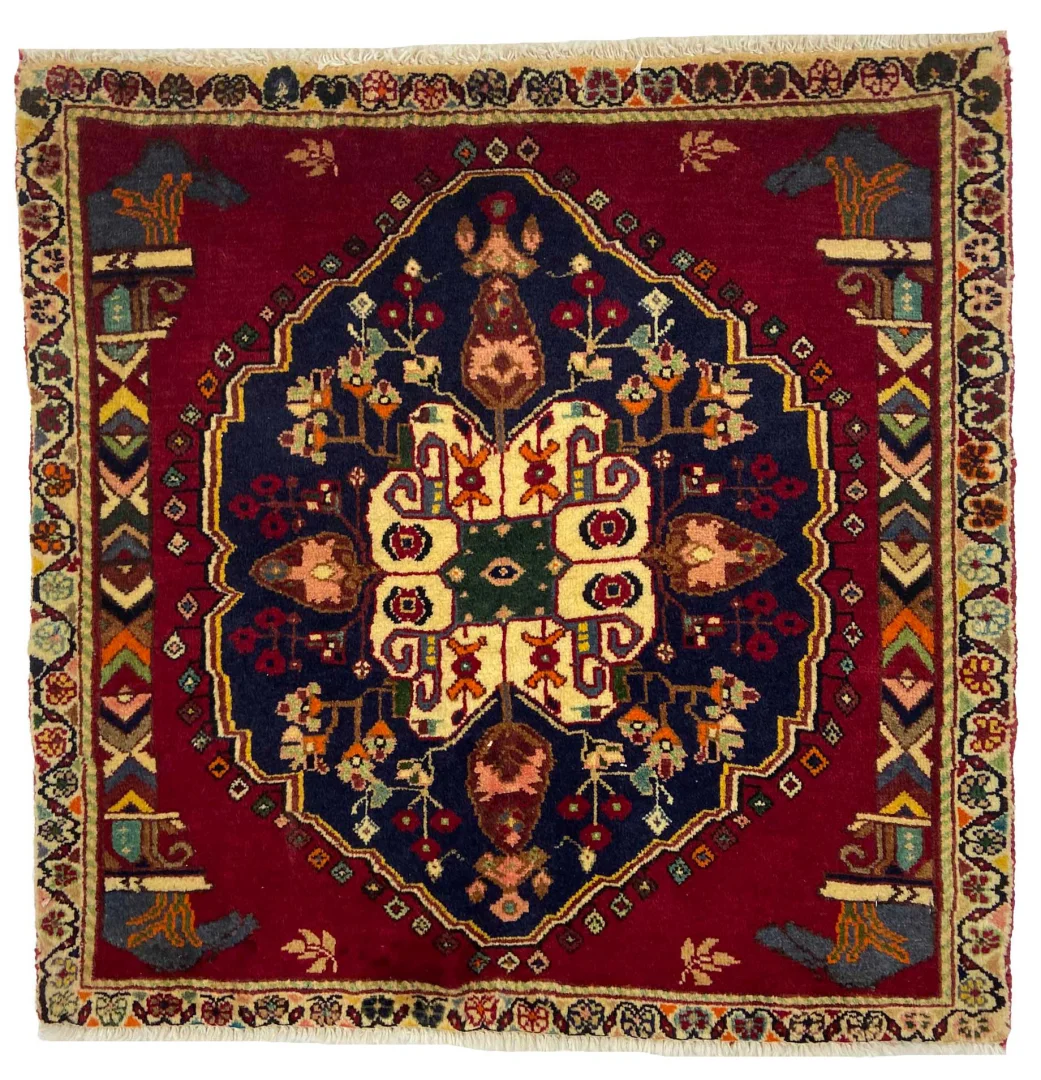
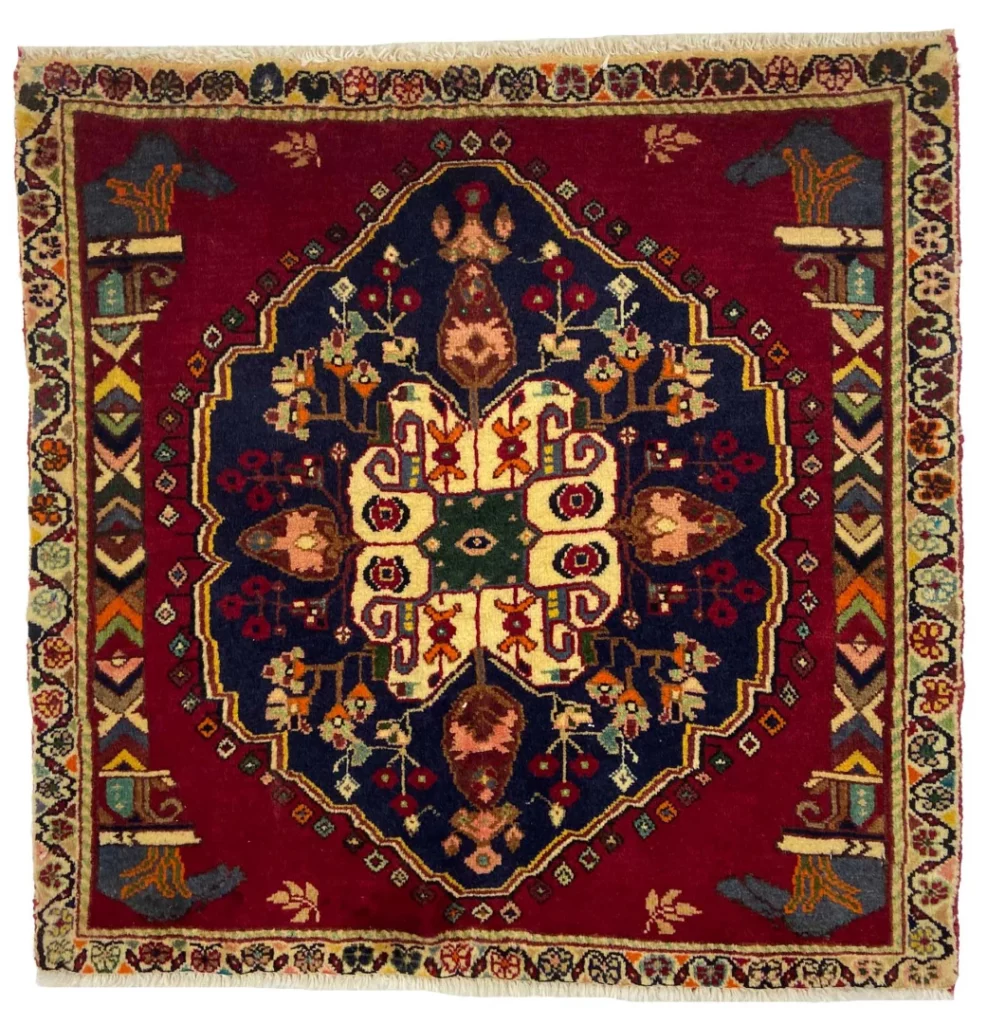
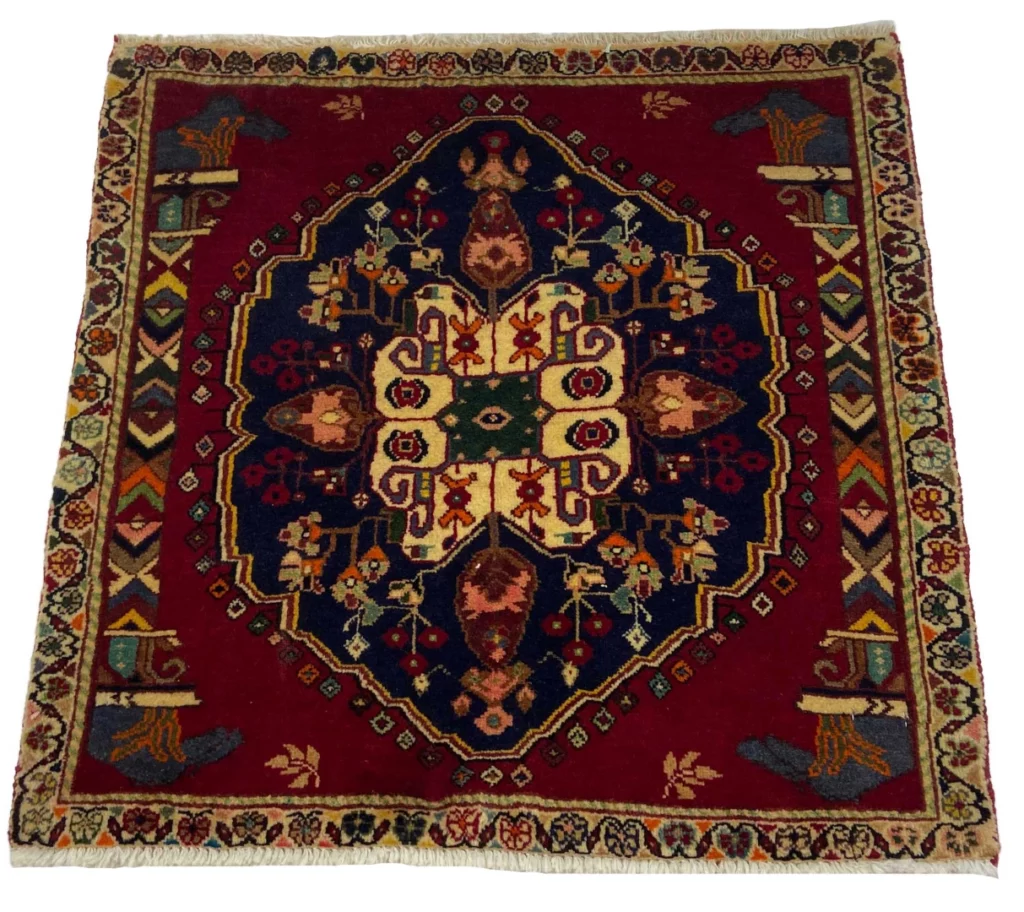
This Ghashghai Persian rug is hand-knotted and made from natural wool. Natural wool is one of the defining materials associated with this type of rug. It is valued for its soft feel as well as its durability. The fibre therefore combines a comfortable surface with a resilient structure suitable for use in a living environment.
Hand-knotted production makes each rug an individual piece. The design is built knot by knot rather than printed onto a completed surface. Pattern, material and workmanship are consequently connected throughout the rug. The making process remains part of the object’s character, and the finished surface reflects the decisions involved in creating a textile by hand.
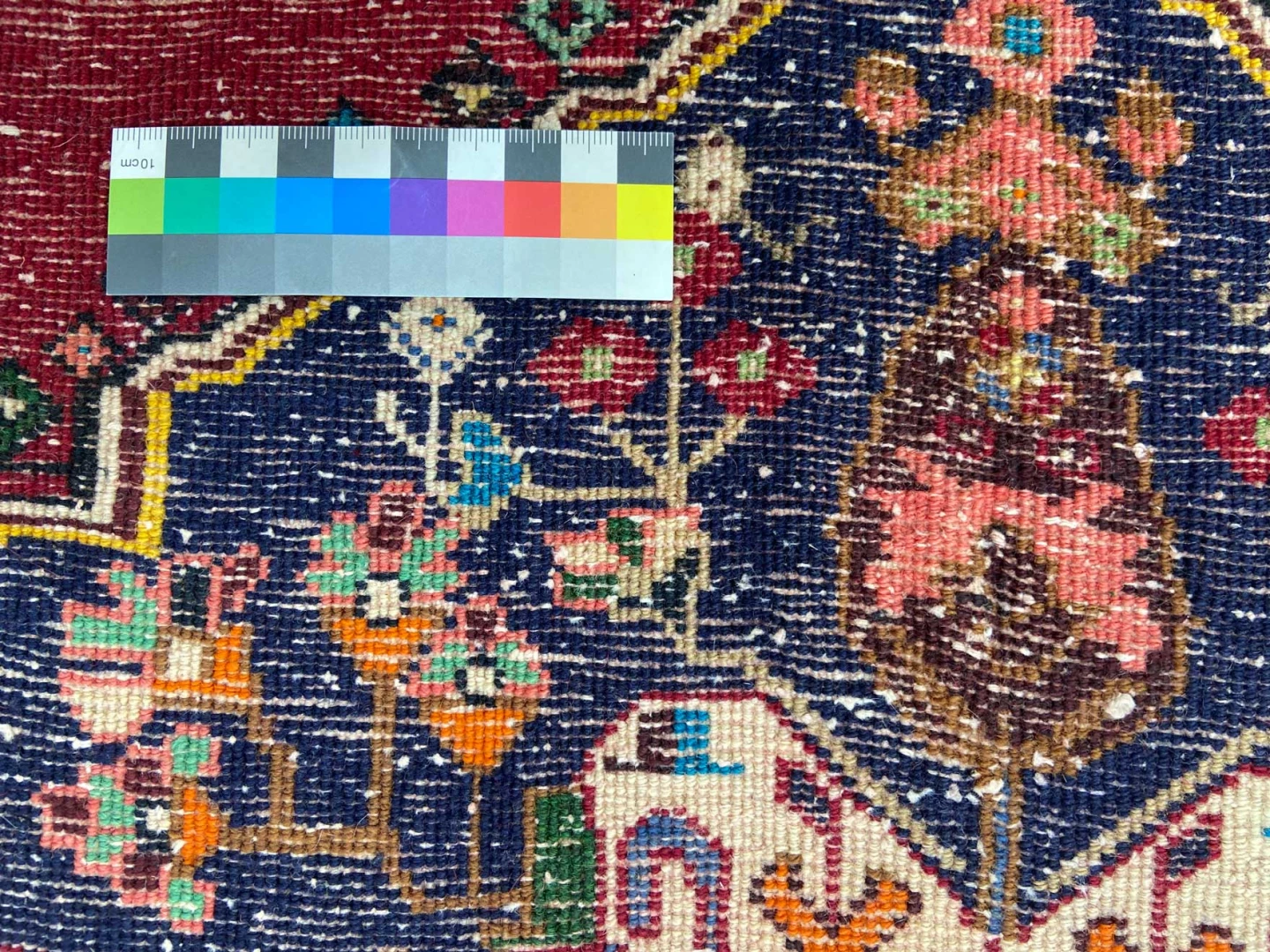
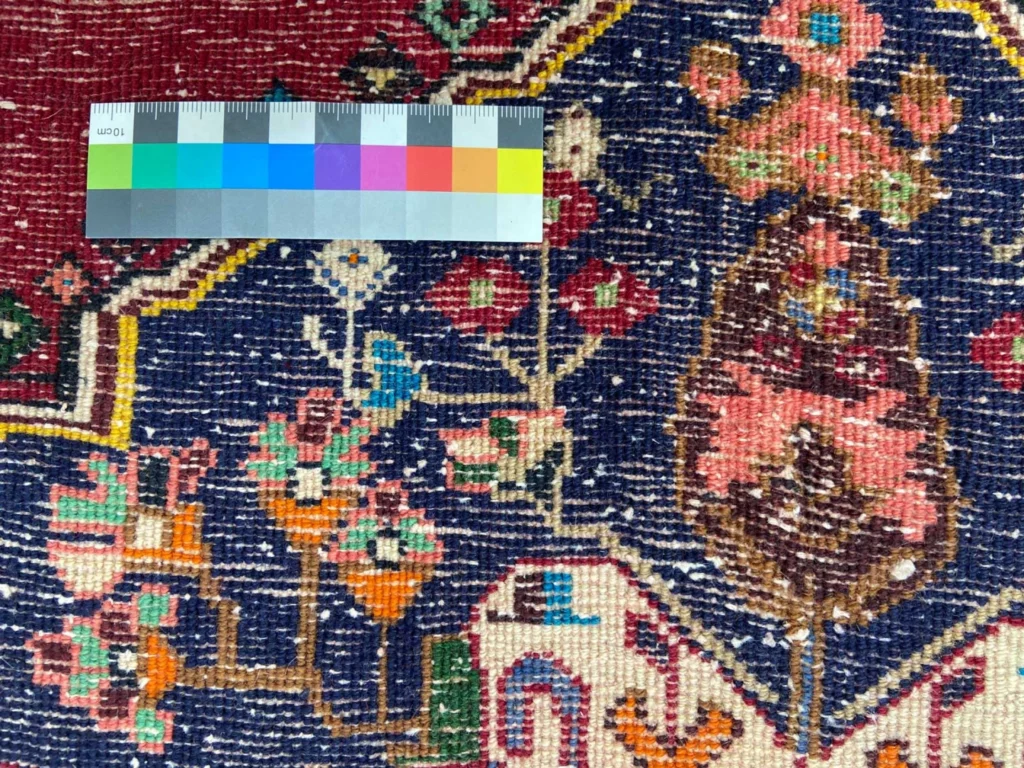
The knot density of this Ghashghai rug is given as 180,000 to 250,000 knots per square metre. This density is part of the high-quality craftsmanship described for the rug. It supports a clearly worked surface and contributes to the robust character associated with Ghashghai rugs. Natural wool complements the construction with fibres known for both resilience and a soft handle.
The rug is described as having high-quality craftsmanship. That description concerns the workmanship of this individual piece. No further details are provided about the warp, weft, fringes, exact dye composition or state of preservation. The material, hand-knotted technique and geometric design therefore form the basis of its description.
Origin and Tradition
The rug comes from southern Persia, from Fars Province. Fars is one of the traditional carpet regions of Persia and is closely associated with the Ghashghai people. The Ghashghai are known for their nomadic way of life and for their hand-knotted rugs. Within this tradition, textile work is both practical and expressive, allowing forms, colours and ornaments to carry regional and cultural meaning.
Ghashghai rugs often have a different visual character from city rugs built around strict regularity. Their patterns may appear freer and more individual. This independence is connected with Ghashghai nomadic origins. Designs grow from inherited forms, personal execution and the practical conditions of hand weaving. Each rug can therefore remain distinct while still belonging clearly to a shared regional tradition.
The carpet culture of Fars brings function and design together. A rug must serve as a useful textile, but it also carries an ornamental language of its own. In Ghashghai work, this relationship is expressed through lively, direct and not entirely schematic patterns. The hand-knotted construction keeps the making tradition visible and prevents the result from being reduced to industrial uniformity.
Southern Persia is associated with a range of carpet-making expressions. Shiraz rugs from the region are another recognised type. They are described as less complex in design while still being lively and varied in colour. Ghashghai rugs, by contrast, are identified through geometric ornaments, rustic beauty and the individual character of each piece.
Tabriz and Isfahan are also well-known Persian carpet centres. Their rugs are often associated with fine detail and elegant designs. The Ghashghai rug from Fars occupies its own place beside those traditions: it does not depend on the same formal language, but retains a more direct, nomadic expression. The comparison shows that Persian carpet art consists of several regional traditions rather than one uniform style.
The reference to Fars is therefore more than a geographical label. It points to an established culture of knotting in which the southern Persian landscape, nomadic life and inherited ornament interact. This rug is identified as a Ghashghai Persian rug from southern Persia and belongs to that regional context. Its character comes from the combination of origin, handwork, natural wool and geometric design.
Design and Pattern
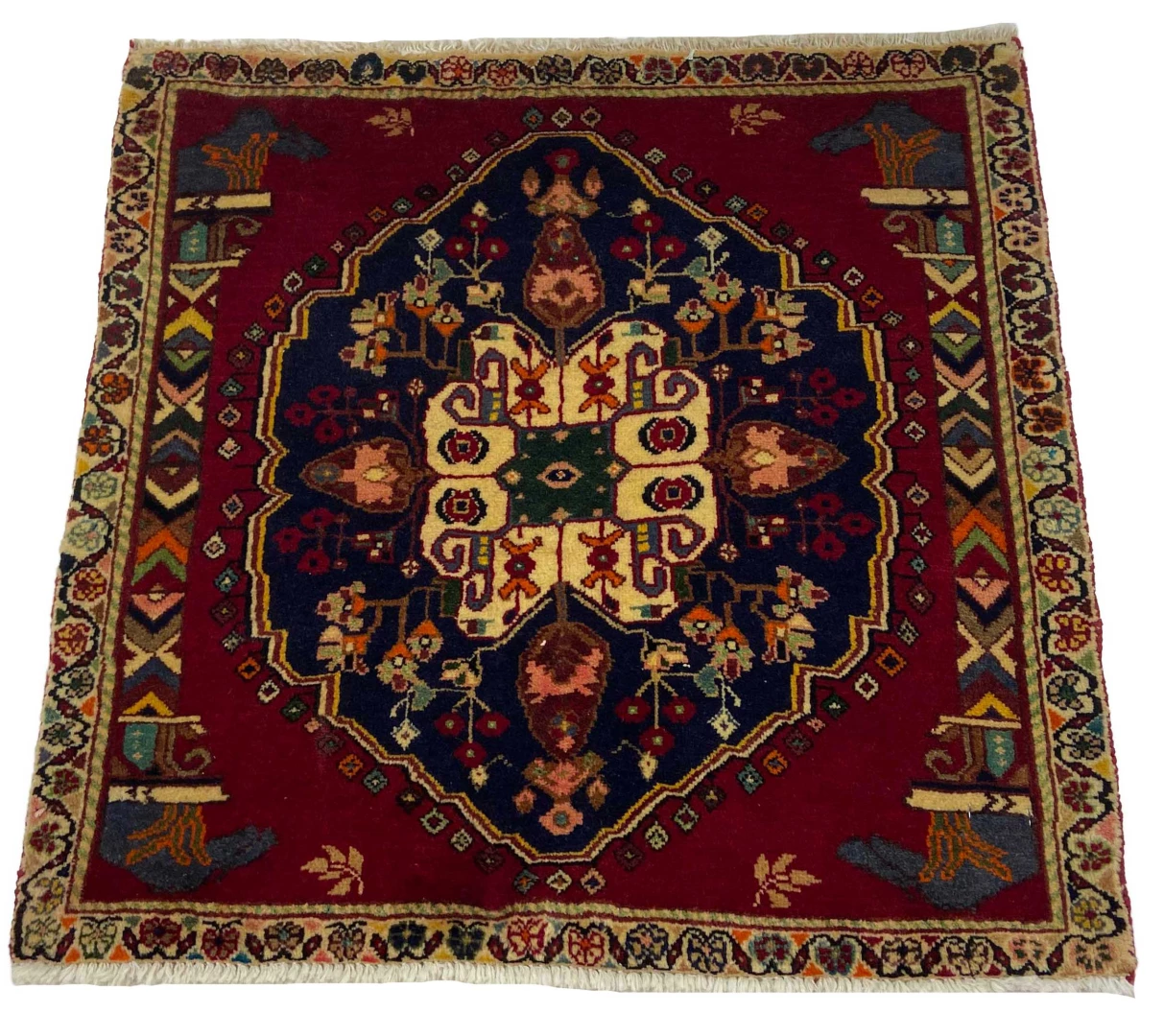
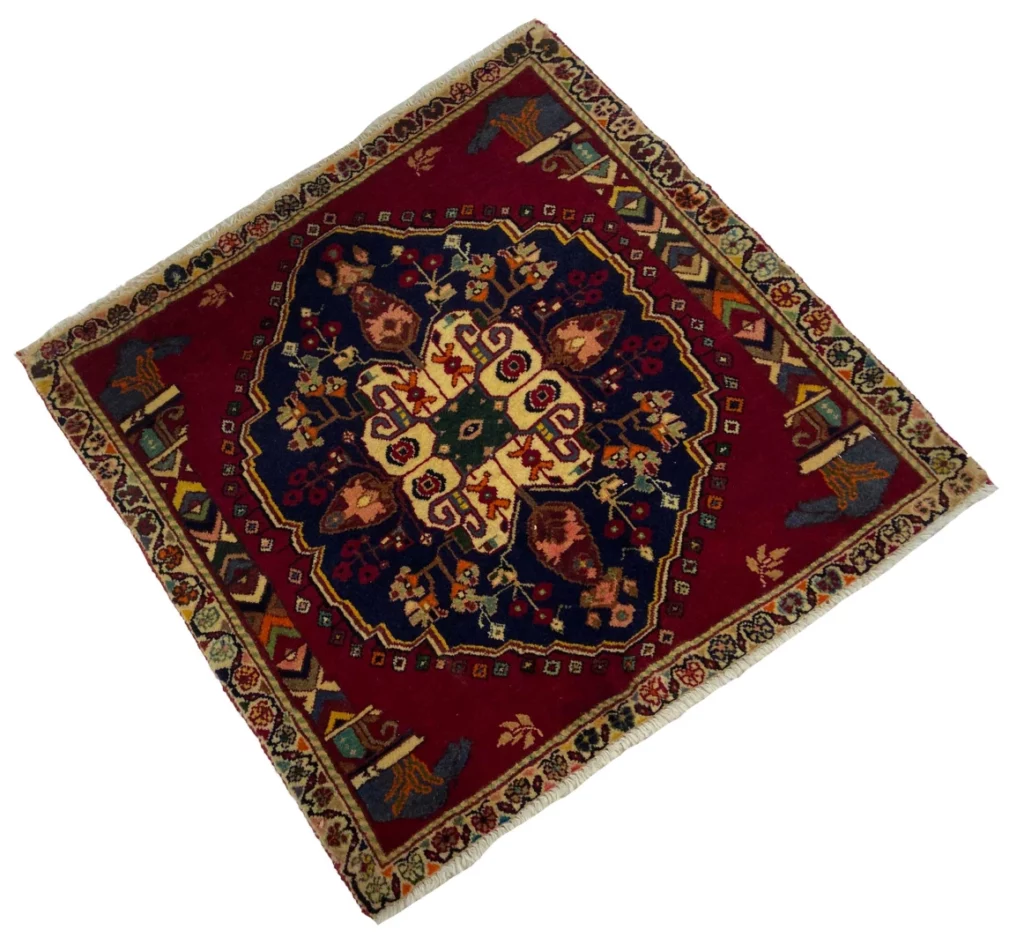
The pattern of this rug consists of geometric ornaments. Geometric forms create a recognisable order without requiring the composition to feel rigid. Lines, angles, repeated signs and connected shapes can work together to form a structured surface. In a hand-knotted Ghashghai rug, that structure remains linked to the individual decisions of the person who made it.
Ghashghai ornament is commonly understood in relation to the nomadic culture of the Ghashghai people. The patterns are not merely decorative additions. They belong to an inherited visual language whose forms can be passed on while also being interpreted by individual makers. This helps explain the distinctive character associated with hand-made Ghashghai rugs.
The described design tradition is often connected with vivid reds and earthy browns. This palette gives Ghashghai rugs a warm and grounded presence. Red may function as a strong accent, while earthy browns suggest a relationship with the landscape and natural surroundings of southern Persia. These colours form part of the general description of Ghashghai design; no additional specific colour details are supplied for this piece.
Geometric ornaments may appear as individual signs or as linked fields of pattern. Their effect comes from the relationship between repetition, contrast and open surface. A nomadic design does not have to follow complete symmetry, and small shifts or personal choices can remain visible. Rather than weakening the composition, this gives it the individual quality associated with Ghashghai work.
The visual language of Fars differs from the more elegant and finely detailed styles often associated with Tabriz or Isfahan. It also differs from the less complex but lively designs connected with Shiraz. Ghashghai design remains geometric, colourful and direct. It combines a clear formal vocabulary with the rustic beauty named as one of the characteristics of this tradition.
Pattern also depends on the interaction between material and technique. Natural wool gives the surface a tactile textile depth. Hand knotting builds the ornaments directly into the structure of the rug. Design and craftsmanship therefore do not stand apart: the geometric drawing is created through the knots and gains its physical presence from the wool fibres.
Special Features
This rug is distinguished by the combination of Ghashghai tradition, Fars origin and hand-knotted construction. Natural wool, geometric ornaments and the stated knot density add further defining features. Together, these details establish its character without assigning it to another Persian region. It is identified as a Persian rug from southern Persia.
The rug is described as having high-quality craftsmanship. Its natural wool provides a material basis known for softness and durability. The geometric pattern refers to the nomadic design tradition of the Ghashghai. As with every hand-knotted one-off, these properties form an individual combination in this particular piece.
FAQ
What makes a Ghashghai rug distinctive?
Its distinctive character comes from the combination of geometric ornaments, vivid and earthy colour associations, and the tradition of the Ghashghai people in Fars Province. The hand-knotted construction and stated knot density support the robust and individual character described for this type. Unlike more strictly symmetrical city rugs, a Ghashghai rug is associated with a freer, nomadic design language.
What material is used for the rug?
The rug is made from natural wool. This material is known for a soft texture and good durability. Combined with hand knotting, it creates a resilient textile surface in which the material is directly involved in the appearance and feel of the rug. The description does not provide information about other materials such as warp or weft.
What kind of design does the rug have?
The rug has geometric ornaments. This pattern language belongs to the described Ghashghai tradition of southern Persia and combines clear forms with an individual, not entirely schematic expression. The design is often associated with vivid reds and earthy browns. The rug is characterised by its geometric ornament rather than by any separately named individual motif.
To provide the best experiences, we use technologies like cookies to store and/or access device information. Consenting to these technologies will allow us to process data such as browsing behavior or unique IDs on this site. Not consenting or withdrawing consent, may adversely affect certain features and functions.
Functional Always active
The technical storage or access is strictly necessary for the legitimate purpose of enabling the use of a specific service explicitly requested by the subscriber or user, or for the sole purpose of carrying out the transmission of a communication over an electronic communications network.
Preferences
The technical storage or access is necessary for the legitimate purpose of storing preferences that are not requested by the subscriber or user.
Statistics
The technical storage or access that is used exclusively for statistical purposes.The technical storage or access that is used exclusively for anonymous statistical purposes. Without a subpoena, voluntary compliance on the part of your Internet Service Provider, or additional records from a third party, information stored or retrieved for this purpose alone cannot usually be used to identify you.
Marketing
The technical storage or access is required to create user profiles to send advertising, or to track the user on a website or across several websites for similar marketing purposes.
 SECURE PAYMENT
 SHIPPING PARTNERS


