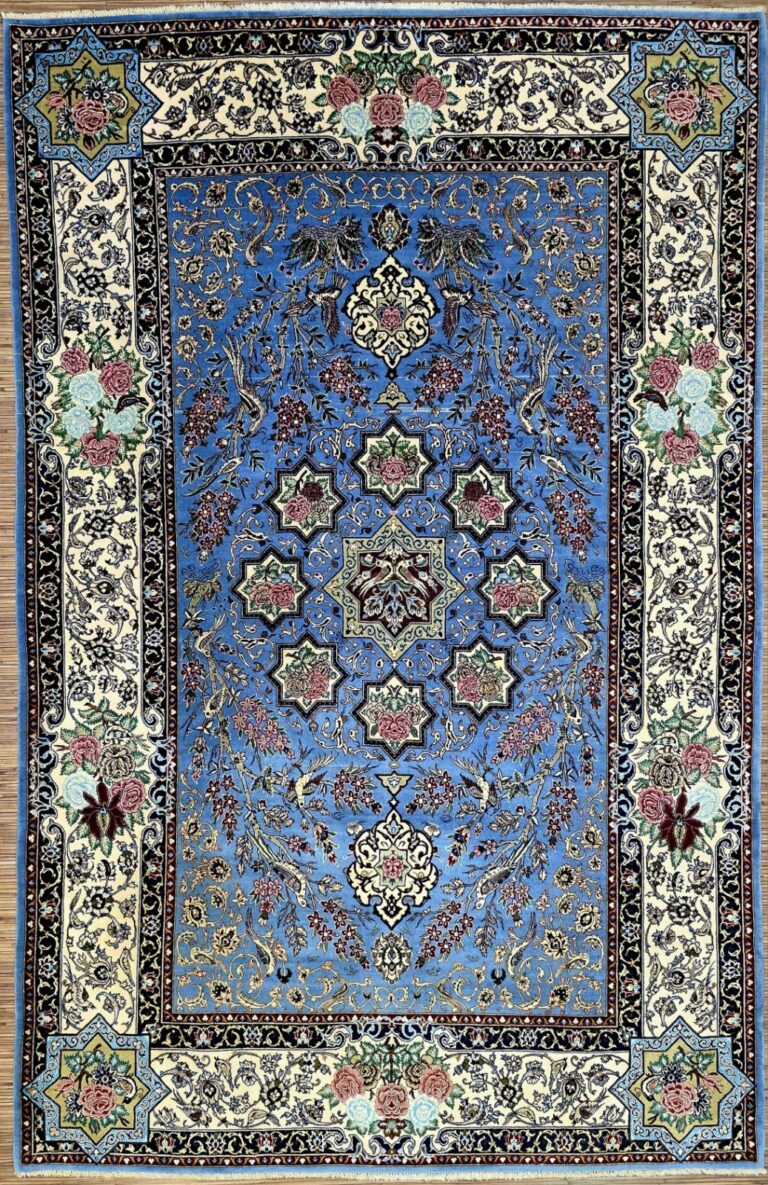
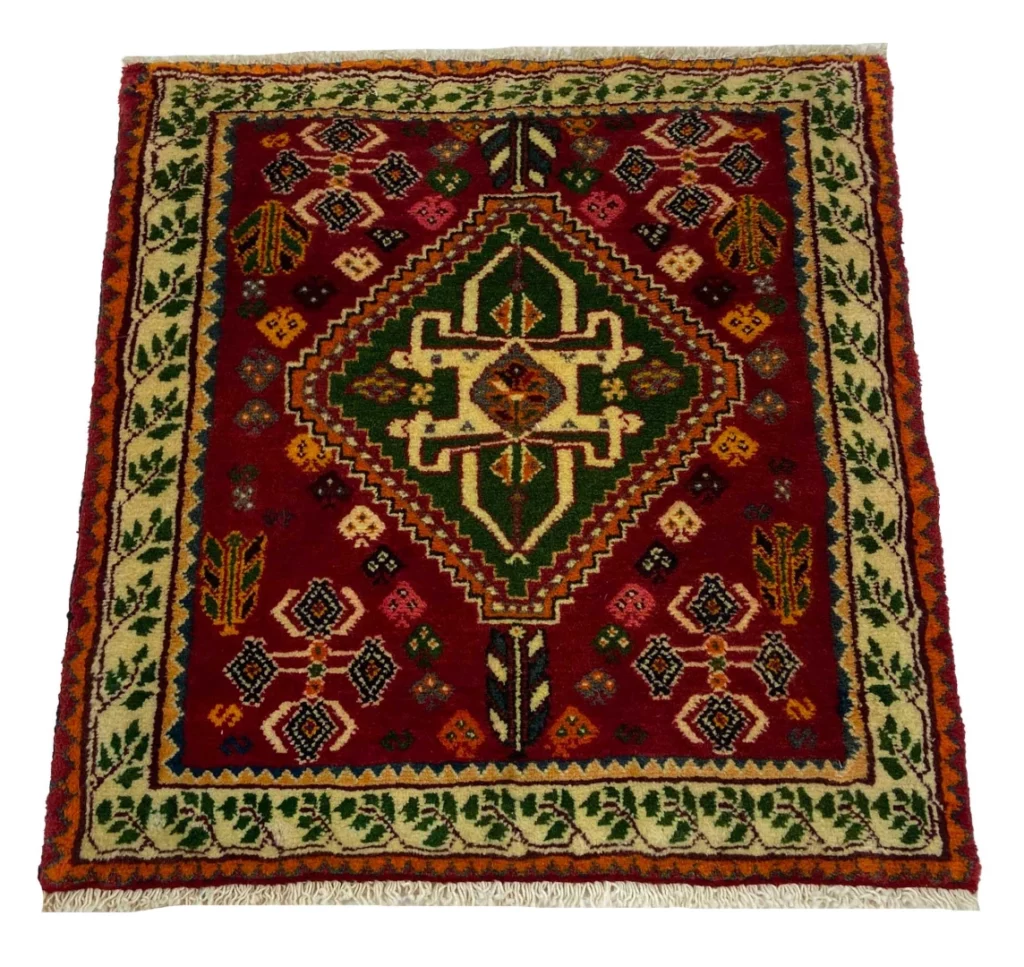
This Persian rug is hand-knotted and made from natural wool. Its craftsmanship is described as high quality. Wool is one of the traditional materials used in rug making, and it shapes both the feel of the surface and the practical character of a hand-knotted textile. Each knot is placed by hand, creating a structure in which the material, the knotting technique and the design remain closely connected.
The recorded knot density ranges from 180,000 to 250,000 knots per square metre. Such dense knotting allows ornaments to be worked with clear definition and represents careful workmanship in Ghashghai rugs. Natural wool gives the surface a soft yet durable character. The description presents Ghashghai rugs as pleasant underfoot while also able to withstand the demands of everyday use.
Ghashghai rugs are generally made in the open air. This method of production belongs to the traditional nomadic working environment of the Ghashghai and reflects the circumstances in which their textile skills developed. Every knot forms part of a manual process. The geometric ornaments are therefore not printed onto the finished rug; they are created within the structure through the arrangement of the knots and colours.
Natural wool is used for this rug type because of its comfortable handle and hard-wearing qualities. The description emphasises that Ghashghai rugs are soft and comfortable to walk on while remaining highly durable. Their construction therefore combines a domestic textile surface with a robust, practical character. This individual rug is described as having high-quality craftsmanship; no additional information is provided about its age, signature or specific condition.
Origin and Tradition
The rug comes from southern Persia, from Fars Province. The name Ghashghai refers to the nomadic Ghashghai peoples, whose textile tradition is closely associated with this region. Fars has long been shaped by varied landscapes, routes of exchange and cultural influences. Rugs from this setting express a craft culture in which textiles are not merely useful objects but also carriers of regional identity and inherited knowledge.
The Ghashghai are known for a mobile way of life and for an independent weaving and knotting tradition. In that context, nomadic rugs had to be practical, transportable and resilient textiles. The use of natural wool suits this tradition because wool is a versatile basis for textile work. It can be spun into yarn and used to create a surface intended for everyday use. The description specifically identifies open-air production as a characteristic of the making process.
In a hand-knotted rug from Fars, the design takes shape gradually as individual knots are inserted. This is fundamentally different from the construction of a machine-made floor covering. Knot density affects how finely an ornament can be rendered and how closely joined the surface appears. In Ghashghai rugs, this manual technique is combined with a regional visual language in which geometric order and traditional motifs play an important role.
Fars is also linked with several other recognised rug traditions. Shiraz rugs are likewise associated with the region and are described here as generally having a lower knot density. Bakhtiari rugs and Qashqai rugs are known for distinctive patterns and vivid colours. These names represent different cultural and craft traditions. They share hand-knotted production and a connection between use, design and regional identity, but they should not be treated as interchangeable names for the origin of this rug.
Nain and Isfahan are also mentioned as traditions known for fine designs and high quality standards. They belong to different Persian rug traditions and are not the origin stated for this piece. This rug is assigned to Fars Province and the Ghashghai tradition. That distinction matters because a motif or a general visual resemblance does not by itself establish where a rug was made.
The history of Ghashghai rugs is therefore understood through more than colour or ornament alone. The weavers’ way of life, the use of natural materials and the transmission of practical knowledge are equally relevant. A hand-knotted rug from Fars brings these elements together in a textile object. Its origin is described through the combination of province, people, material and technique, without adding any claim about age or individual provenance.
Design and Pattern
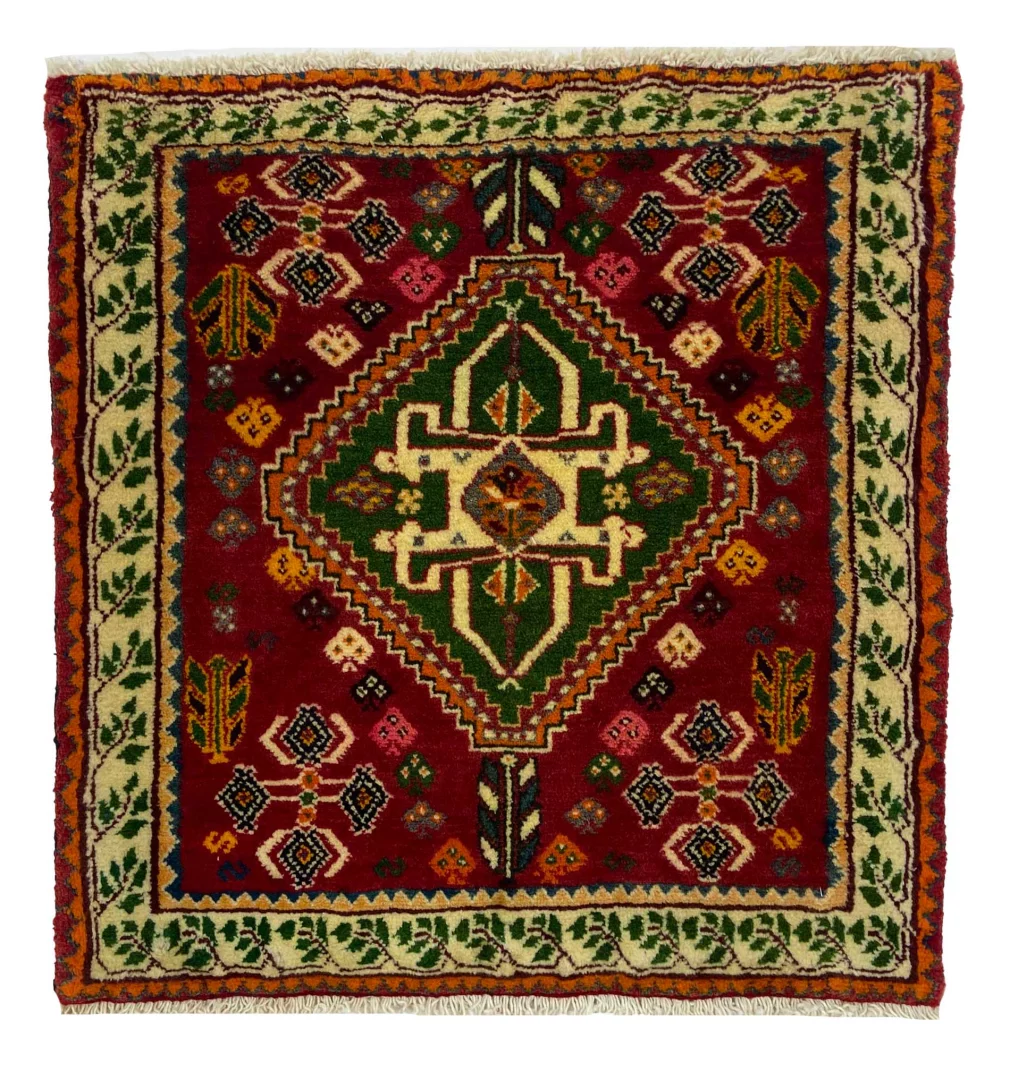
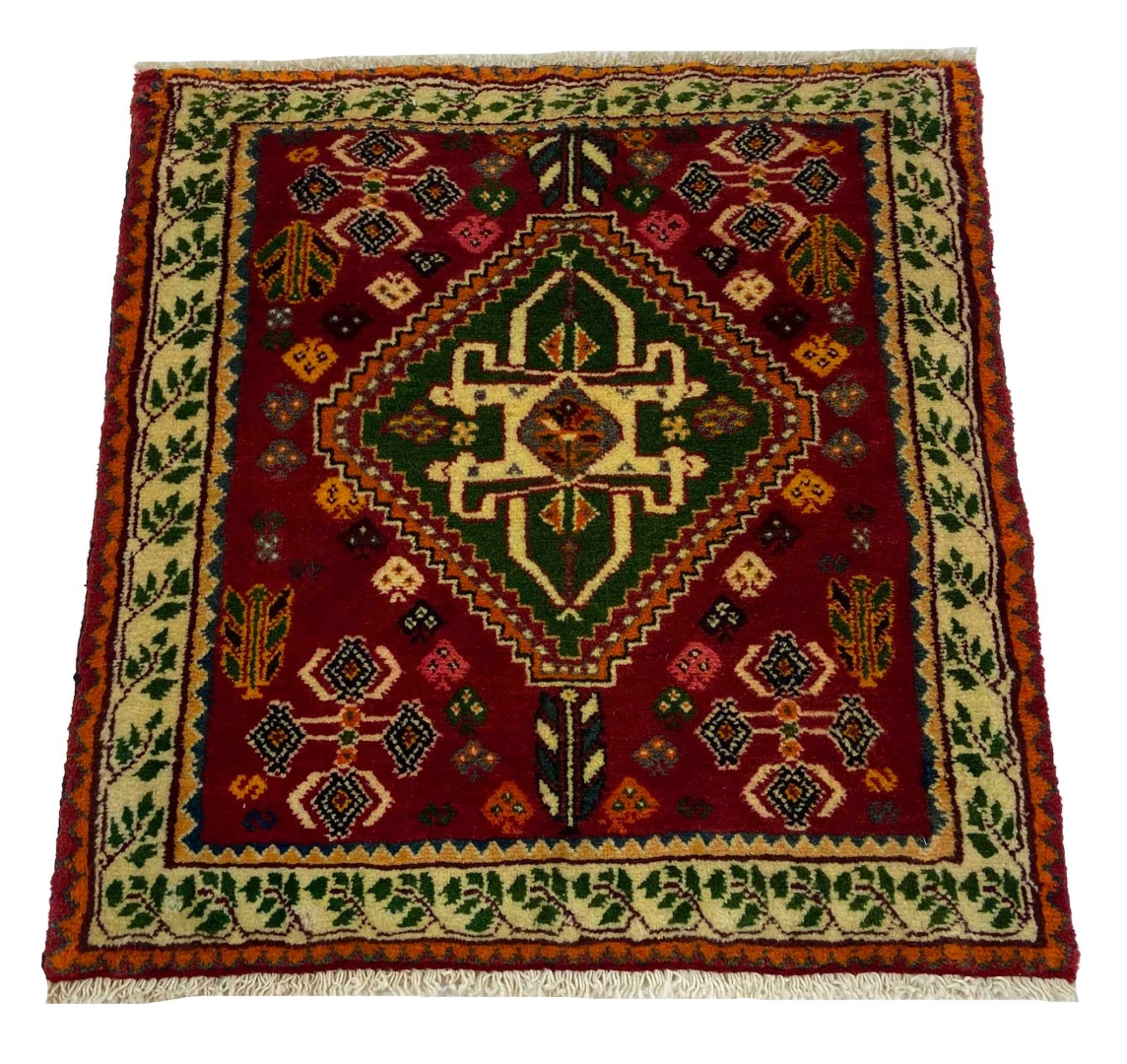
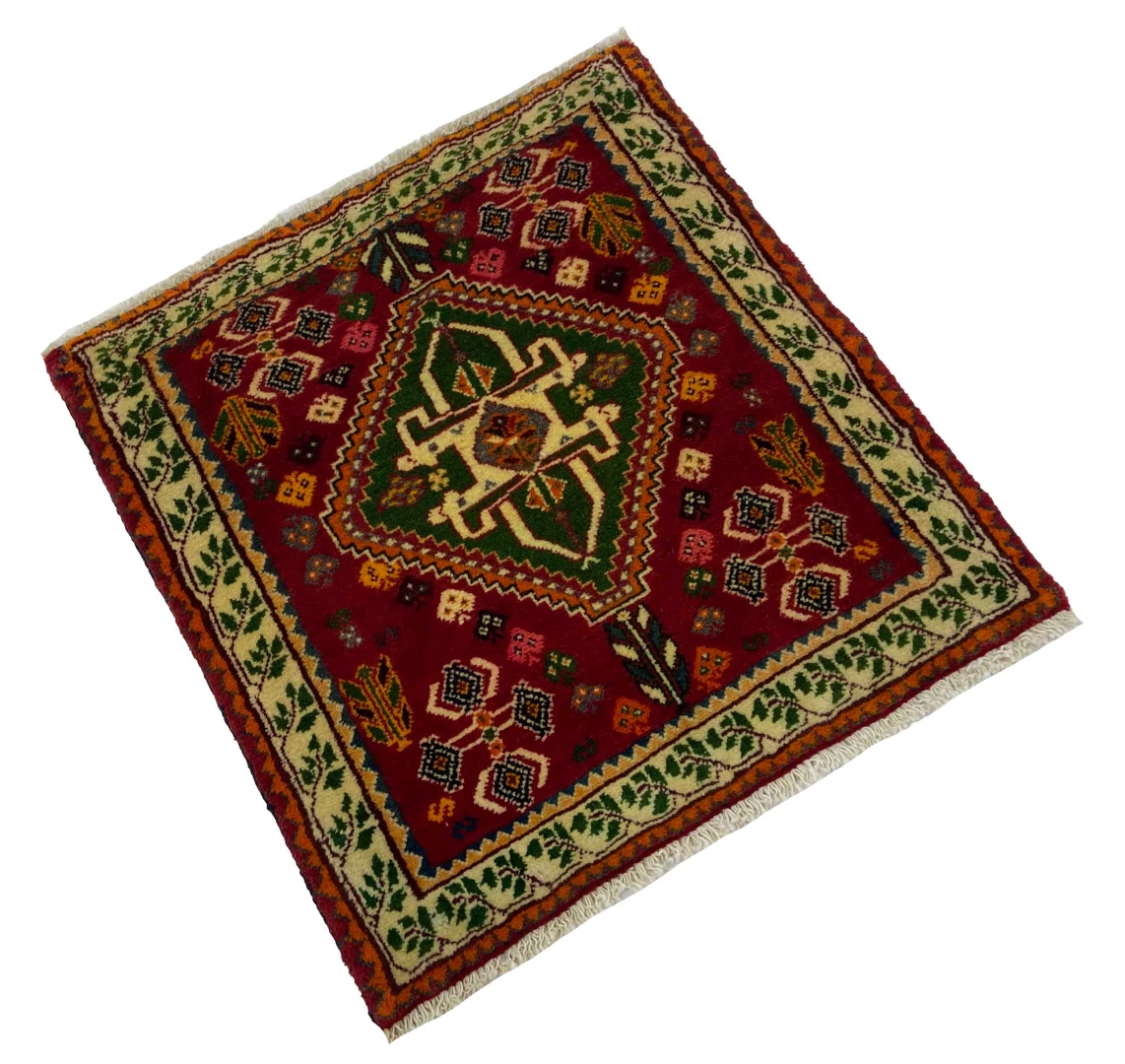
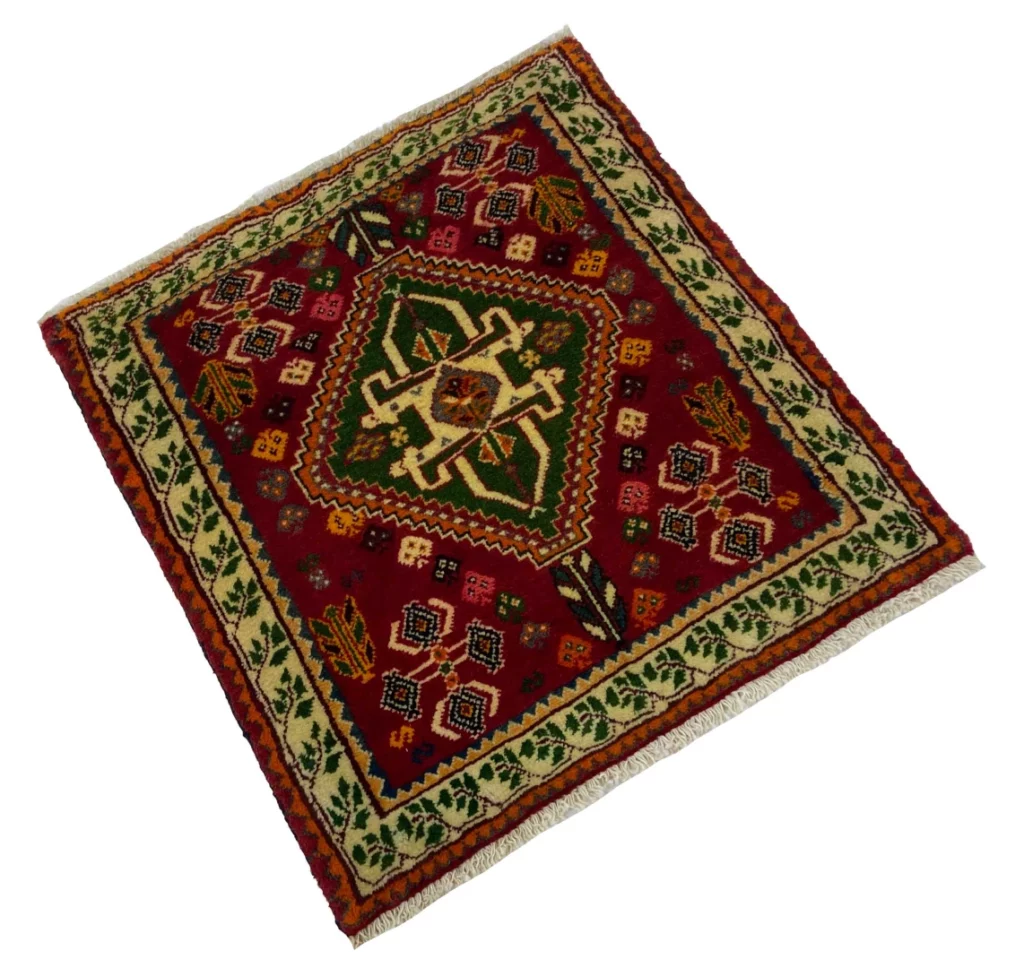
The pattern of this rug is described as geometric ornamentation. Geometric design works with lines, angles, areas, repetition and clearly defined forms. In a hand-knotted rug, these elements are produced through the arrangement of knots and colours. The design therefore becomes part of the construction itself. Unlike decoration applied only after the textile has been made, the pattern remains connected to the structure of the rug’s surface.
Ghashghai rugs are known for a vivid use of colour. Red and brown tones are specifically named in the description. This colour range is associated with the natural surroundings of southern Persia and with the cultural influences of the region. Red can create a strong field or accent, while brown supports an earthy impression. The exact colour arrangement of this individual rug is not itemised; what is established is the regional association of Ghashghai rugs with this palette.
Geometric ornaments in Ghashghai rugs are often combined with traditional motifs. Such motifs can be understood as part of an inherited visual vocabulary. They organise the field, create rhythmic repetition and give the rug its visual structure. The description also connects these patterns with stories from the history and customs of the Ghashghai nomads. A rug is not read like a written document; its cultural meaning is conveyed through the continuation of forms, colours and methods of design.
Nomadic rug design is often recognised by a clear and legible arrangement of forms. Repeated ornaments may emphasise a central area, frame a field or connect individual motifs. In geometric compositions, repetition creates a sense of order and rhythm. At the same time, handwork allows each individual piece to retain the character of manual execution. The pattern recorded for this rug remains precisely identified as geometric ornamentation; no specific medallion, border or individual motif is stated.
Colour and pattern traditions in Fars vary between regions and peoples. For that reason, Ghashghai, Bakhtiari, Qashqai and Shiraz rugs cannot be identified solely by one ornament. Each is associated with its own patterns and lively colours. The Ghashghai tradition represented here is defined by the combination of geometric design, natural colour influences and nomadically rooted handwork.
A geometric pattern can work in different interiors because its visual effect comes from structure and rhythm rather than from dependence on one particular type of furniture. It can organise a room while remaining adaptable in use. The description names both domestic and commercial settings as possible environments for Ghashghai rugs. This general suitability results from the relationship between ornament, natural wool and durable craftsmanship, not from an additional claim about the exact atmosphere created by this one-off rug.
Special Features
The recorded features include an origin in southern Persia, specifically Fars Province, an association with the Ghashghai tradition, natural wool and hand-knotted construction. The knot density is given as 180,000 to 250,000 knots per square metre. The workmanship is described as high quality. The design consists of geometric ornaments, while red and brown tones are identified as characteristic colours of Ghashghai rugs.
Natural wool combines a comfortable surface with durability. The description states that the rug type can be used in residential and commercial settings. It also describes Ghashghai rugs as suitable for use over underfloor heating. For care, regular vacuuming and professional cleaning when necessary are recommended. Direct sunlight should be avoided so that the colours do not fade.
These features cover the stated material, technique, pattern and regional classification. No details are provided about the year of manufacture, a signature, particular repairs or individual provenance, so none are added here. The defining character of this piece lies in the combination of its Fars origin, Ghashghai tradition, natural wool, geometric ornamentation and hand craftsmanship.
FAQ
How should I care for a Ghashghai rug?
A Ghashghai rug should be vacuumed regularly so that dust and loose particles do not remain in the wool surface. If more thorough cleaning is required, professional cleaning is recommended. Direct sunlight should be avoided because it can encourage the colours to fade. These care instructions take account of the natural wool and the coloured, hand-knotted surface. Consistent, careful maintenance supports everyday use and helps preserve the appearance of the geometric ornaments.
How can I identify an original Ghashghai rug?
High knot density, natural colours and hand-knotted patterns are named as characteristics of an original Ghashghai rug. The quality of the wool and the workmanship should also be examined. Its classification as a rug from southern Persia and Fars Province is another part of the identification. Individual features should be considered together, since one ornament alone cannot establish origin with certainty. For this rug, the recorded characteristics are hand-knotted construction, natural wool, the stated knot density and geometric ornamentation.
Can a Ghashghai rug be used over underfloor heating?
Yes. Ghashghai rugs are described as suitable for underfloor heating because of their natural materials and high-quality construction. Natural wool can provide a comfortable sense of warmth while the rug also contributes to the appearance of the room. Proper care remains important: regular vacuuming is recommended, and direct, intense sunlight should be avoided. Suitability for underfloor heating is stated as a general property of this rug type.
To provide the best experiences, we use technologies like cookies to store and/or access device information. Consenting to these technologies will allow us to process data such as browsing behavior or unique IDs on this site. Not consenting or withdrawing consent, may adversely affect certain features and functions.
Functional Always active
The technical storage or access is strictly necessary for the legitimate purpose of enabling the use of a specific service explicitly requested by the subscriber or user, or for the sole purpose of carrying out the transmission of a communication over an electronic communications network.
Preferences
The technical storage or access is necessary for the legitimate purpose of storing preferences that are not requested by the subscriber or user.
Statistics
The technical storage or access that is used exclusively for statistical purposes.The technical storage or access that is used exclusively for anonymous statistical purposes. Without a subpoena, voluntary compliance on the part of your Internet Service Provider, or additional records from a third party, information stored or retrieved for this purpose alone cannot usually be used to identify you.
Marketing
The technical storage or access is required to create user profiles to send advertising, or to track the user on a website or across several websites for similar marketing purposes.

 SECURE PAYMENT
 SHIPPING PARTNERS