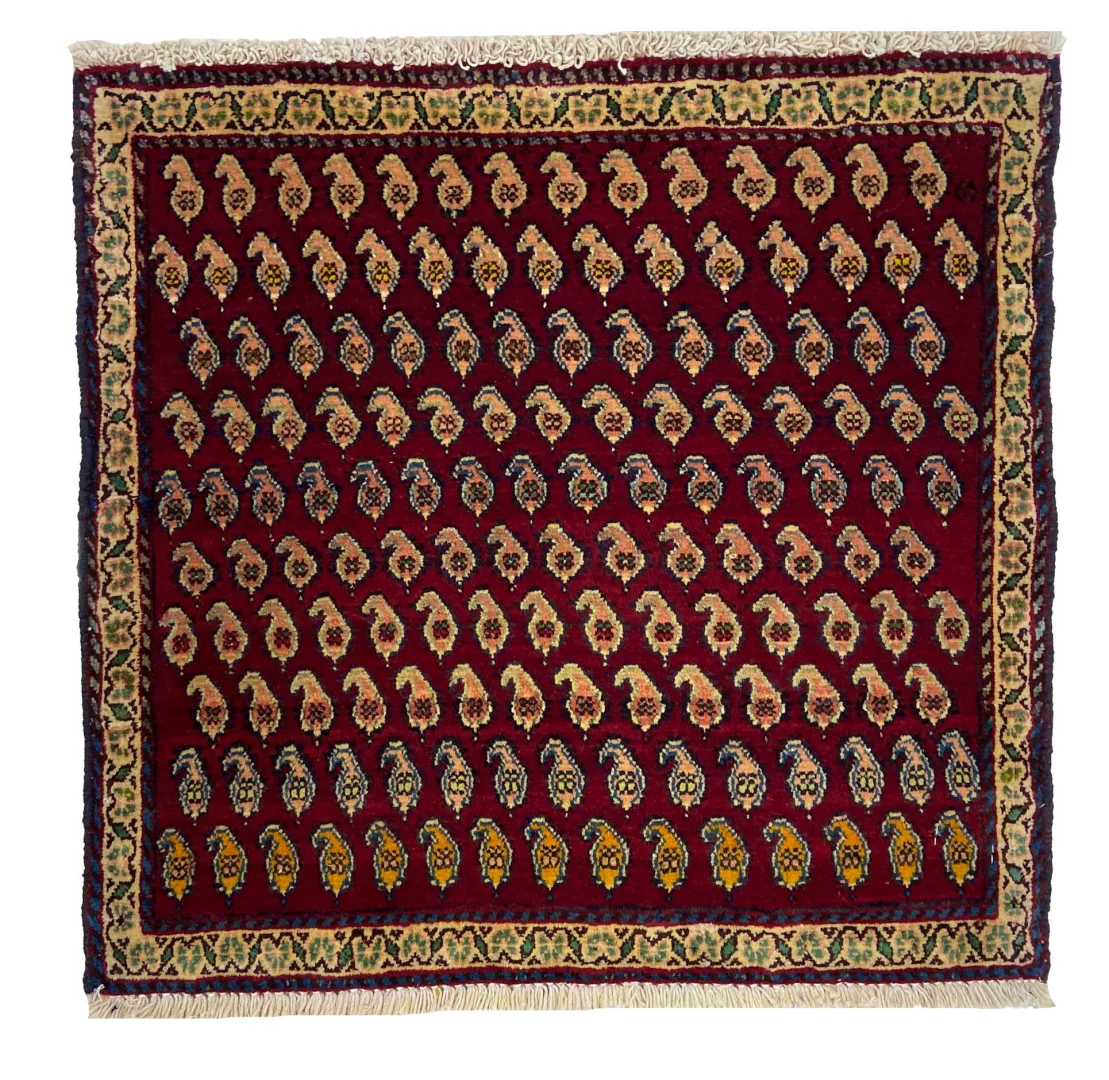
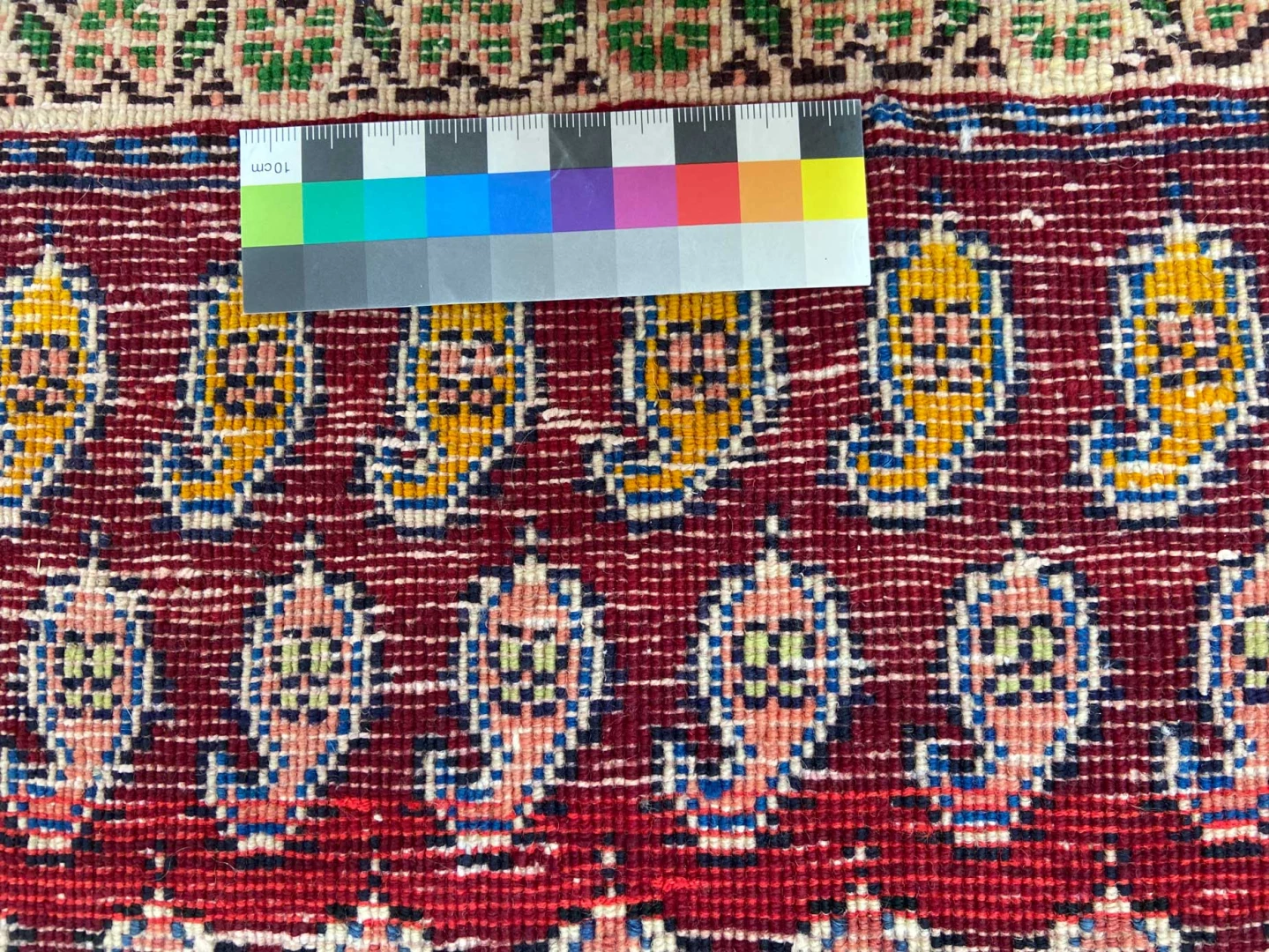
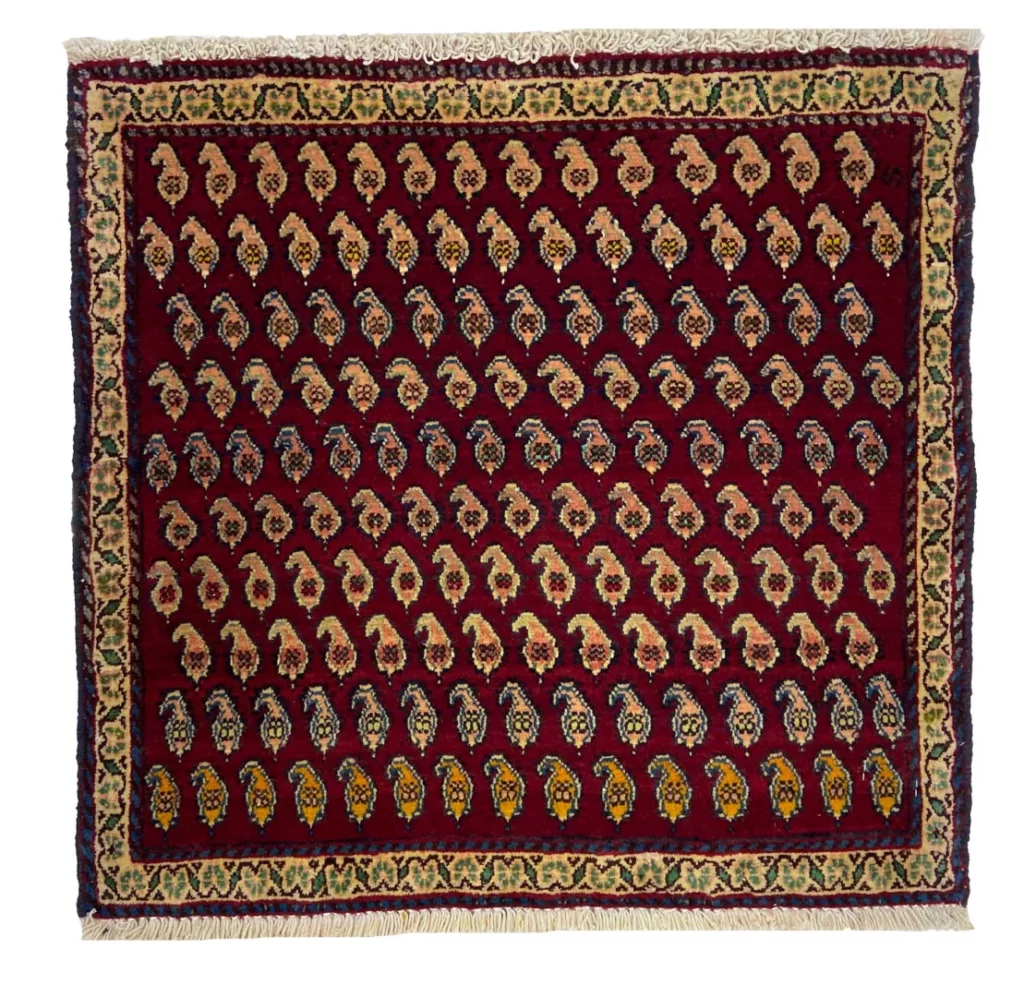
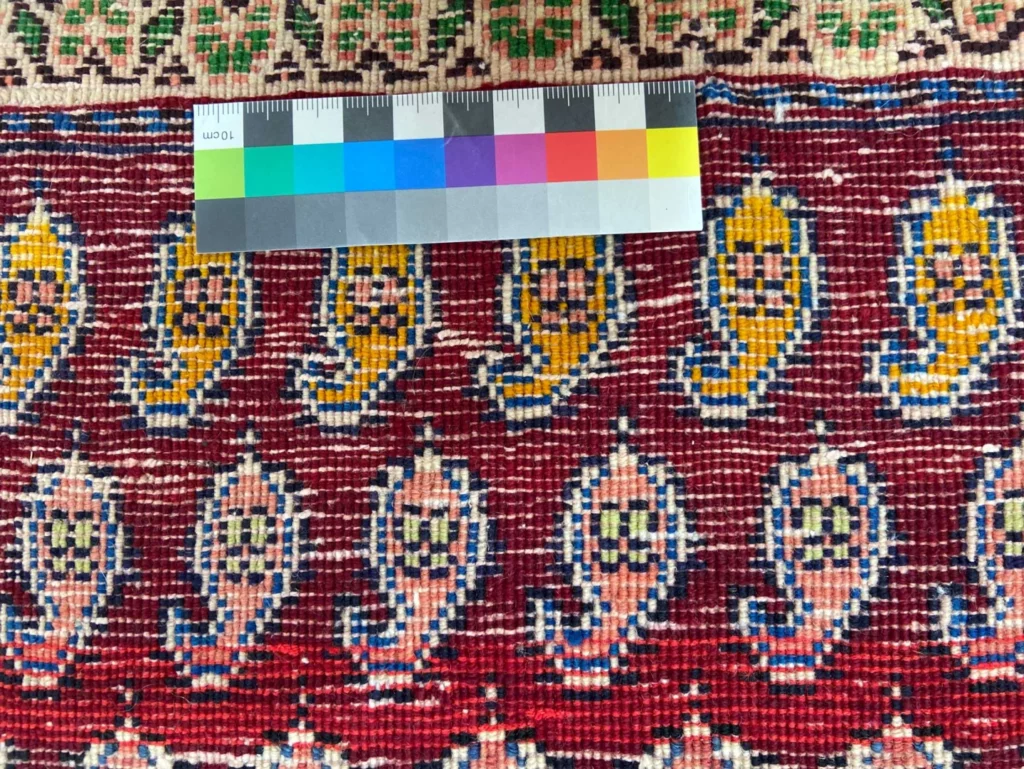
This Ghashghai Persian rug is hand-knotted and has a pile made from natural wool. Its handmade construction is combined with a knot density of 180,000 to 250,000 knots per square metre. This density supports a clearly defined surface and allows geometric ornaments to be worked with differentiated detail. The workmanship is described as high quality.
In a hand-knotted rug, the pattern is built knot by knot on a loom. Each knot is placed into the structure so that the separate rows form a continuous textile surface. In Ghashghai work, the natural character of wool is part of the relationship between material and craft. The natural wool used for the pile shapes the feel, surface and visual character of the rug.
Ghashghai weaving is traditionally often carried out in the open air. The work does not necessarily follow a completely fixed plan at every stage. The design may develop during the process, leaving room for the character of the handmade execution to remain visible. For this rug, the stated production method is hand-knotting, the pile material is natural wool, and the knot density is between 180,000 and 250,000 knots per square metre.
Origin and Tradition
The rug comes from southern Persia, from the province of Fars. Fars is one of Iran’s established carpet regions and is closely connected with the history of several nomadic and rural communities. Over a long period, the region produced rugs shaped not only by workshops but also by tribal and family traditions. The name Ghashghai refers to an important weaving tradition associated with Fars.
Ghashghai rugs are connected with the craft culture of the Ghashghai people. Their weaving tradition brings practical use together with an independent approach to composition. Rugs were traditionally made for everyday life and therefore required sound, dependable workmanship. At the same time, the woven surface provided space for symbols, ornaments and colour arrangements passed on within local traditions.
The carpet tradition of Fars reaches back for centuries. Different forms developed in the region because landscape, ways of life and local transmission all influenced the appearance of woven pieces. Nomadic weavers worked with available materials and translated familiar patterns into individual executions. As a result, rugs can share regional characteristics while still differing from one another in layout, colour balance and the treatment of motifs.
Fars is also often associated with rugs from Shiraz. Shiraz rugs may show less complex patterns and a lower knot density, making them a distinct group within the region’s carpet landscape. Ghashghai rugs, by contrast, are particularly associated with geometric compositions, robust materials and a strong sense of detail. This comparison explains a regional distinction; it does not assign another origin or label to the present rug.
Bakhtiari rugs are another recognised group from the broader southern Persian context. Their designs are often described as more strongly floral and as using a lively range of colours. Qashqai rugs are closely related to the Ghashghai tradition in regional and craft significance and are also known for individual designs. These comparisons show the variety of Fars and its surrounding weaving culture without erasing the specific Ghashghai association of this rug.
Hand-knotting connects these regional traditions with a long history of textile work. A rug is formed through many individual operations rather than through an industrially repeated surface. Material selection, knot placement, colour distribution and the working of ornaments all influence the final result. In Ghashghai rugs, the connection between practical use and inherited visual language remains central to their cultural classification.
Design and Pattern
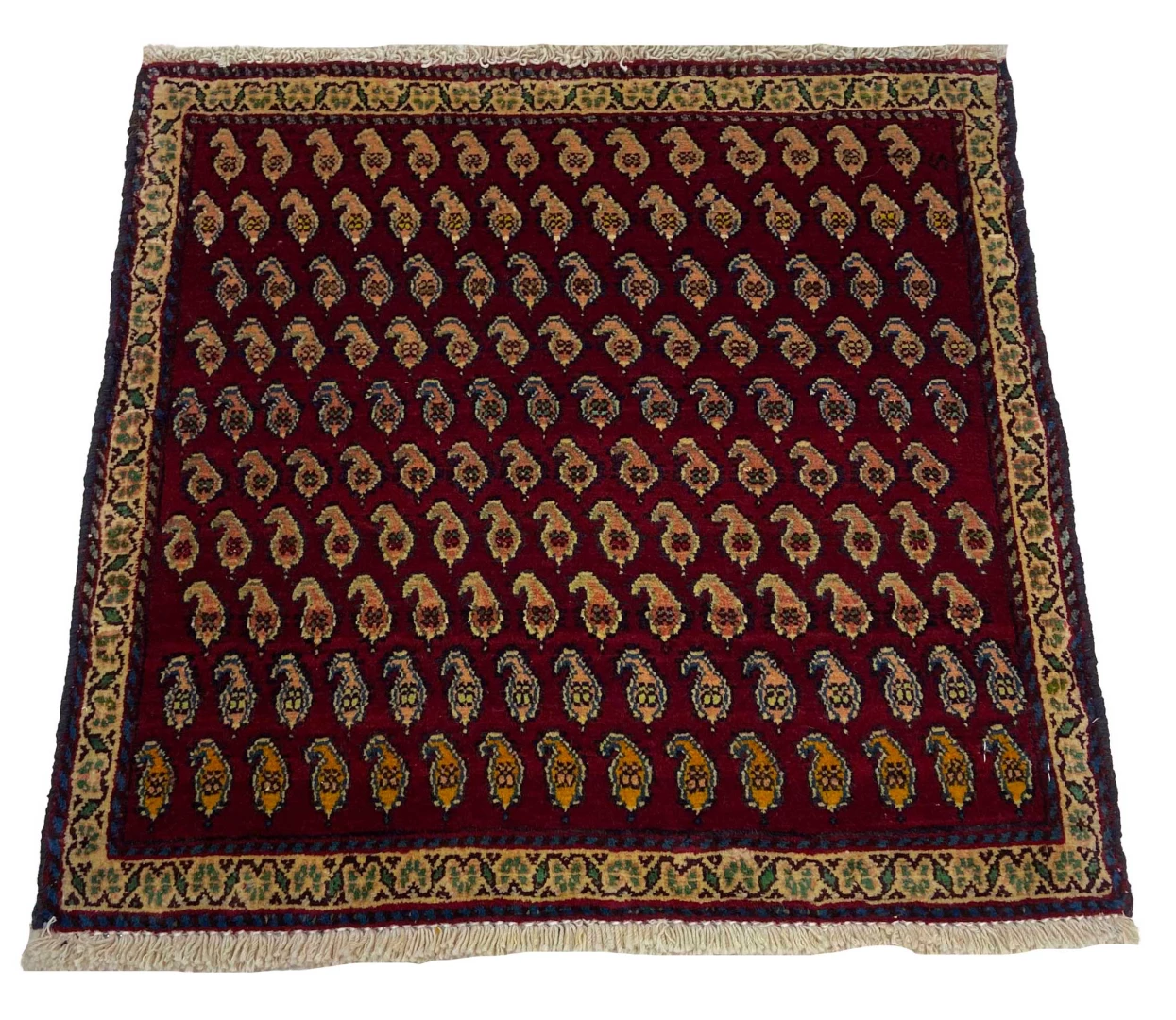
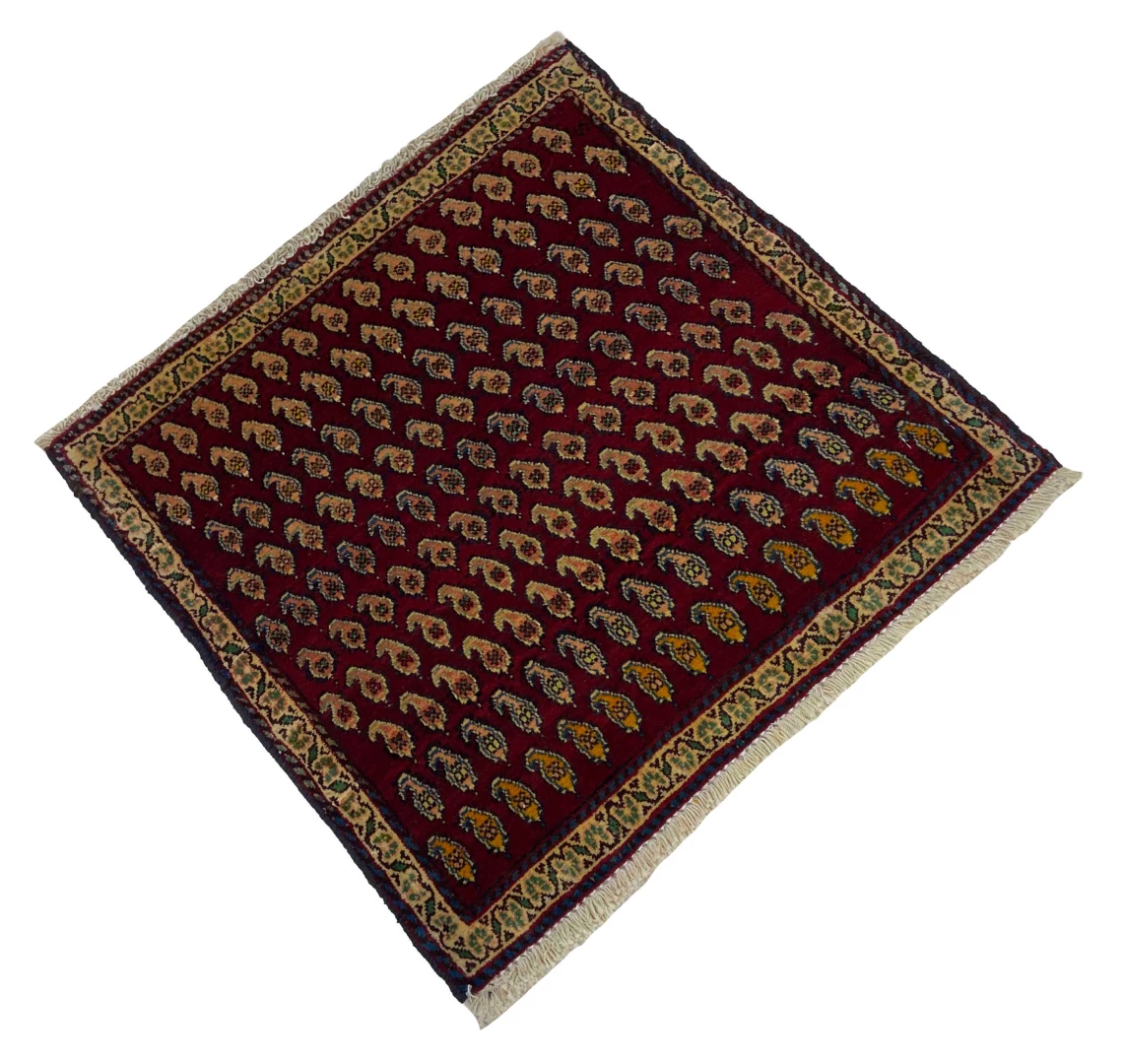
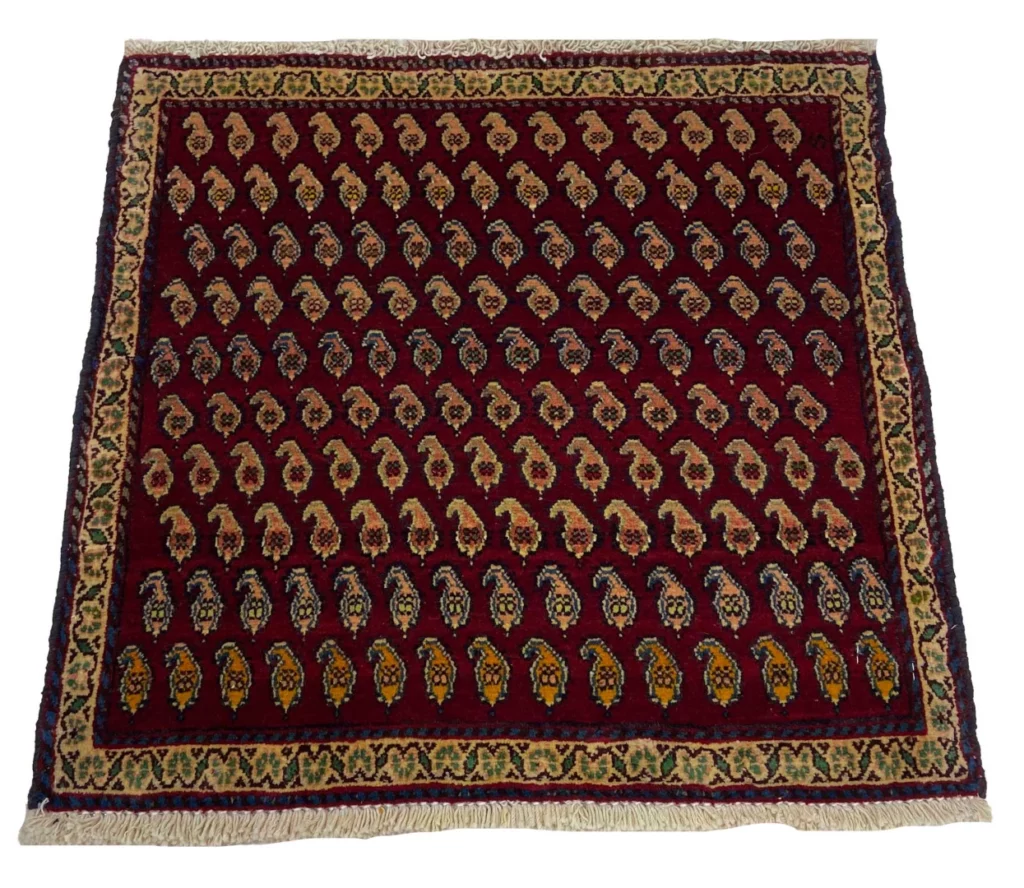
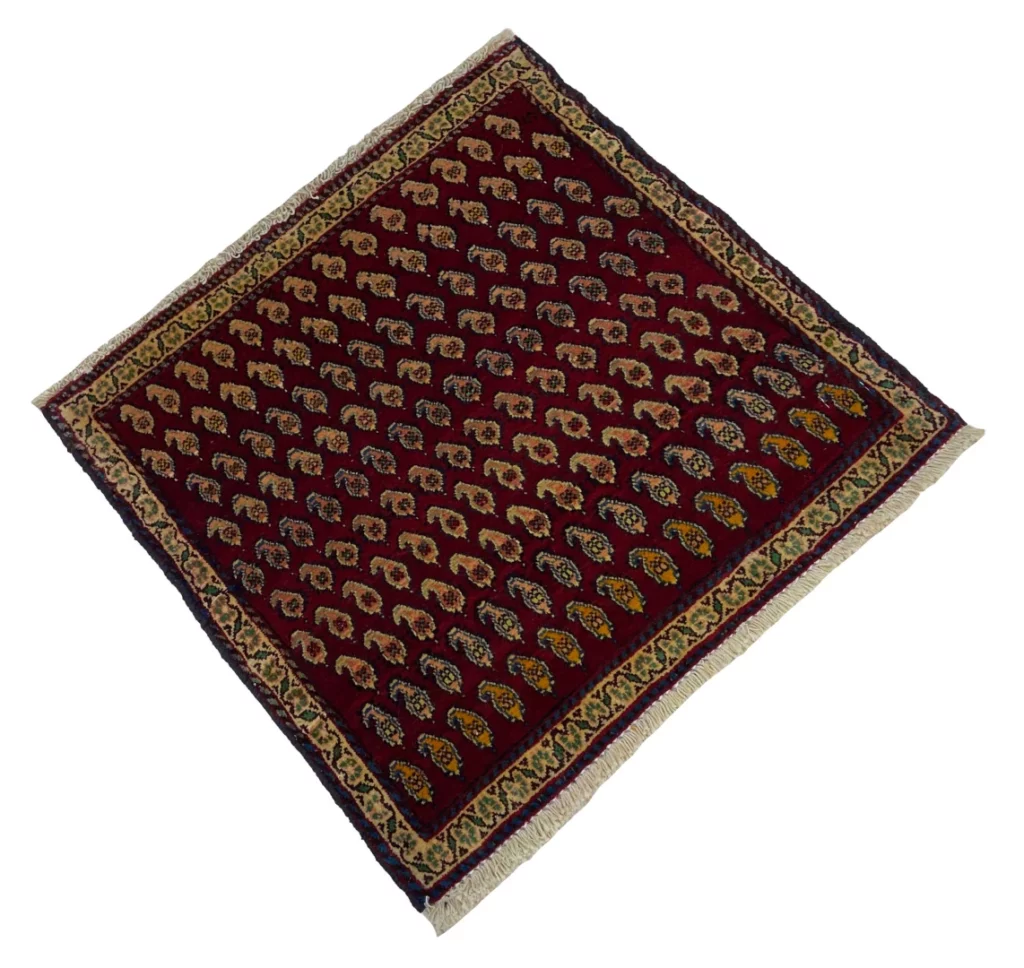
The pattern of this rug consists of geometric ornaments. Geometric forms are characteristic design tools in many Ghashghai rugs from Fars. Lines, diamonds, hooked shapes, angles and repeated fields may appear in different combinations. They organise the surface and create a distinct rhythm without relying on a naturalistic depiction of flowers, animals or landscapes.
In a geometric composition, the effect comes from the relationship between separate motifs and the spaces around them. An ornament can be repeated, mirrored, placed in a sequence or incorporated into a larger field. The weaver does not use these forms merely as neutral decoration; they belong to a regional visual vocabulary. Technical repetition and individual execution therefore work together in the finished textile.
The colour combinations described for the rug include shades of red and brown. Red tones can give a field visual emphasis, while brown tones can ground the geometric forms and connect them across the composition. Together, these colour families create a warm appearance. The effect remains linked to the handmade execution and to the natural wool used in the pile.
Ghashghai patterns are often not governed by a strictly central, perspective-based composition. Individual ornaments may stand beside one another and form a surface made from recurring units. This approach allows the structure to be read from different distances: close up, the separate shapes become visible; from farther away, the pattern gathers into a coherent field.
The geometric vocabulary distinguishes Ghashghai work from rugs whose designs are dominated by flowers, vines or more naturalistic plant forms. Bakhtiari rugs, for example, are often described through floral patterns and vivid colour palettes. The Ghashghai rug instead relies on angles, lines and geometric ornaments. This contrast illustrates regional variety without adding motifs that are not stated for the present piece.
A knot density of 180,000 to 250,000 knots per square metre relates directly to the ability to render motifs with differentiated detail. The more precisely individual knots are placed, the more finely contours and transitions can be worked within a design. Here, the stated knot density is combined with a geometric composition and a hand-knotted surface made from natural wool.
Special Features
The special features of this rug include its origin in Fars, its association with the Ghashghai tradition, its hand-knotted construction and its pile of natural wool. The stated knot density of 180,000 to 250,000 knots per square metre is another technical characteristic. Its pattern is defined by geometric ornaments, while the described colour impression includes red and brown tones.
High-quality workmanship is also given as a property of the rug. The individual features are best understood together: the regional origin explains the design tradition, the handmade construction describes how the rug was made, and the knot density records an aspect of its technical execution. The result is one individual rug that combines regional visual language with textile handwork.
FAQ
What distinguishes a Ghashghai Persian rug?
A Ghashghai Persian rug is associated with the weaving tradition of Fars in southern Persia. Its defining features include hand-knotting, a pile made from natural wool and a design based on geometric ornaments. This piece also has a knot density of 180,000 to 250,000 knots per square metre. The combination of regional origin, handmade construction and geometric vocabulary forms its main identity. The colour selection described for it includes shades of red and brown.
How should I care for a Ghashghai Persian rug?
Regular vacuuming is recommended for care. If more extensive cleaning is needed, professional cleaning should be chosen so that the hand-knotted structure and natural wool are treated appropriately. Direct sunlight should be avoided because it can contribute to colour fading. Gentle, consistent care helps preserve the surface and the red and brown tones described for the rug.
Where can I use a Ghashghai Persian rug?
A Ghashghai Persian rug can be used in living rooms, hallways and bedrooms. Its geometric ornaments give the floor a clearly structured regional character. The combination of natural wool and red and brown tones can work with different interior settings. The visual effect depends on the surrounding furniture, the room and the available light. It can therefore be used in several areas of the home.
To provide the best experiences, we use technologies like cookies to store and/or access device information. Consenting to these technologies will allow us to process data such as browsing behavior or unique IDs on this site. Not consenting or withdrawing consent, may adversely affect certain features and functions.
Functional Always active
The technical storage or access is strictly necessary for the legitimate purpose of enabling the use of a specific service explicitly requested by the subscriber or user, or for the sole purpose of carrying out the transmission of a communication over an electronic communications network.
Preferences
The technical storage or access is necessary for the legitimate purpose of storing preferences that are not requested by the subscriber or user.
Statistics
The technical storage or access that is used exclusively for statistical purposes.The technical storage or access that is used exclusively for anonymous statistical purposes. Without a subpoena, voluntary compliance on the part of your Internet Service Provider, or additional records from a third party, information stored or retrieved for this purpose alone cannot usually be used to identify you.
Marketing
The technical storage or access is required to create user profiles to send advertising, or to track the user on a website or across several websites for similar marketing purposes.
 SECURE PAYMENT
 SHIPPING PARTNERS


