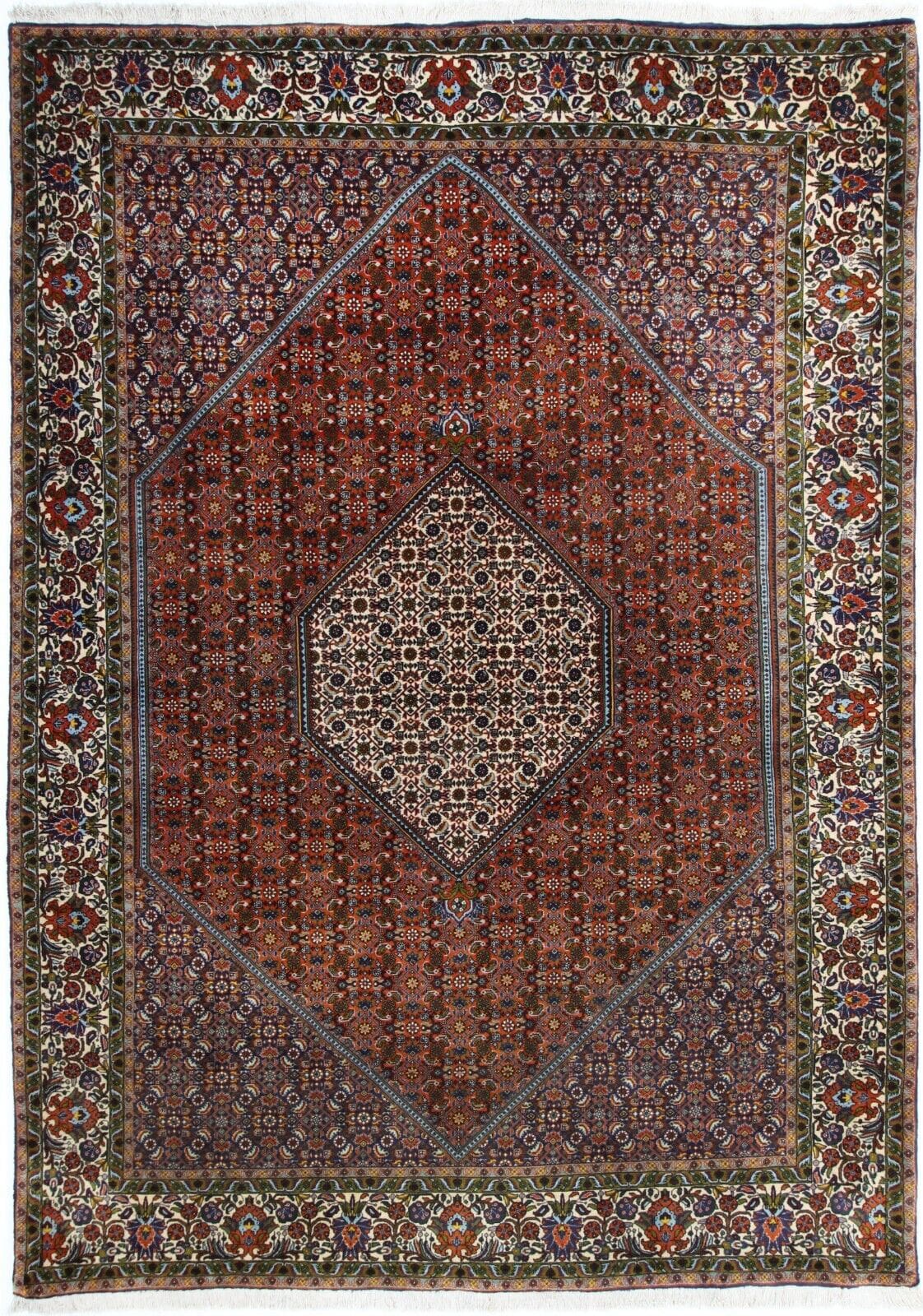
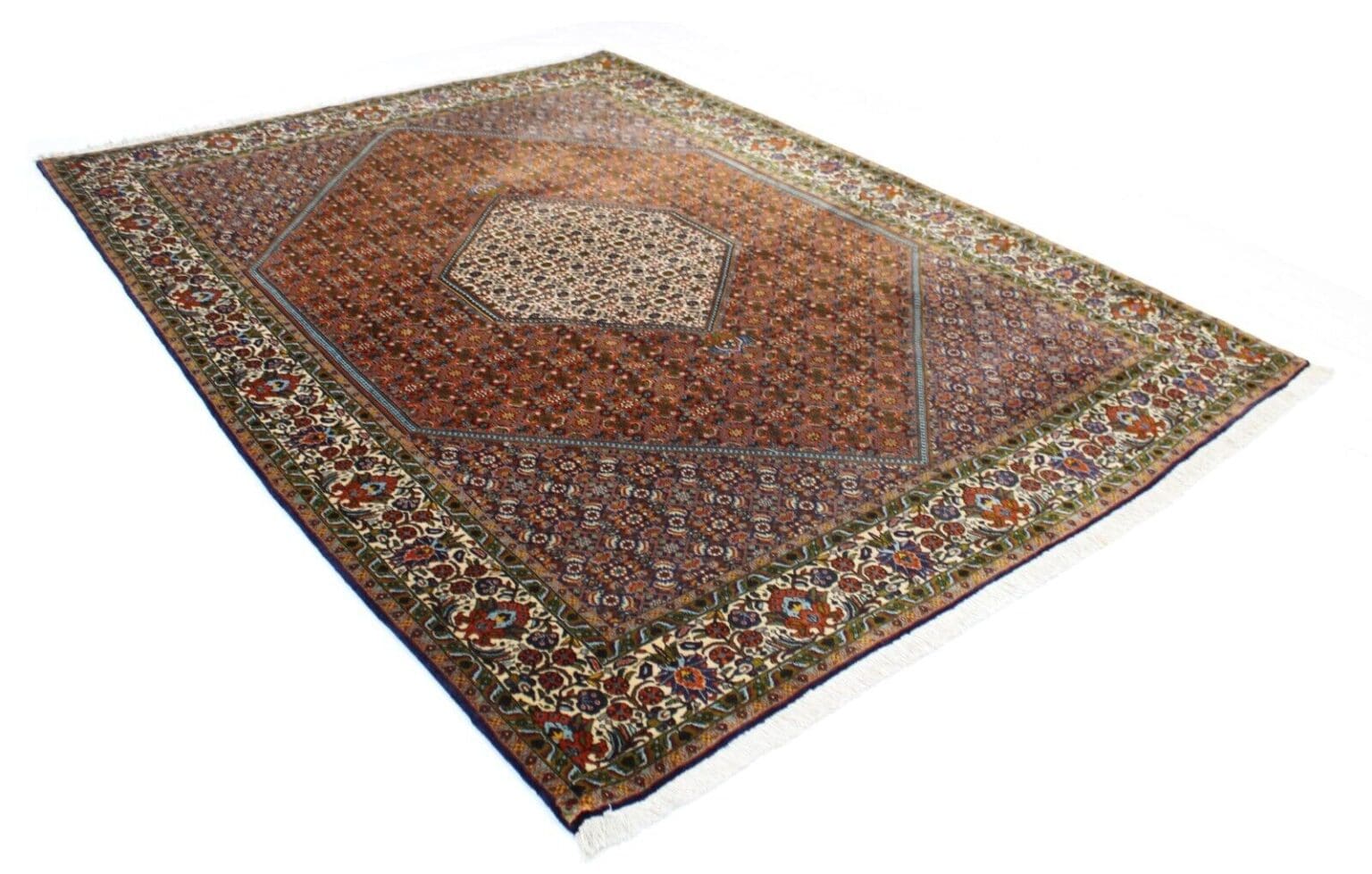
This Bidjar Persian rug is hand-knotted. Its pile is made from 100% wool, while the warp is made from 100% cotton. These materials have distinct roles in the construction: the wool forms the visible and tactile surface, and the cotton warp provides the supporting foundation into which the knots are placed. The description therefore identifies both the pile material and the structural material rather than treating the rug as a single undifferentiated textile.
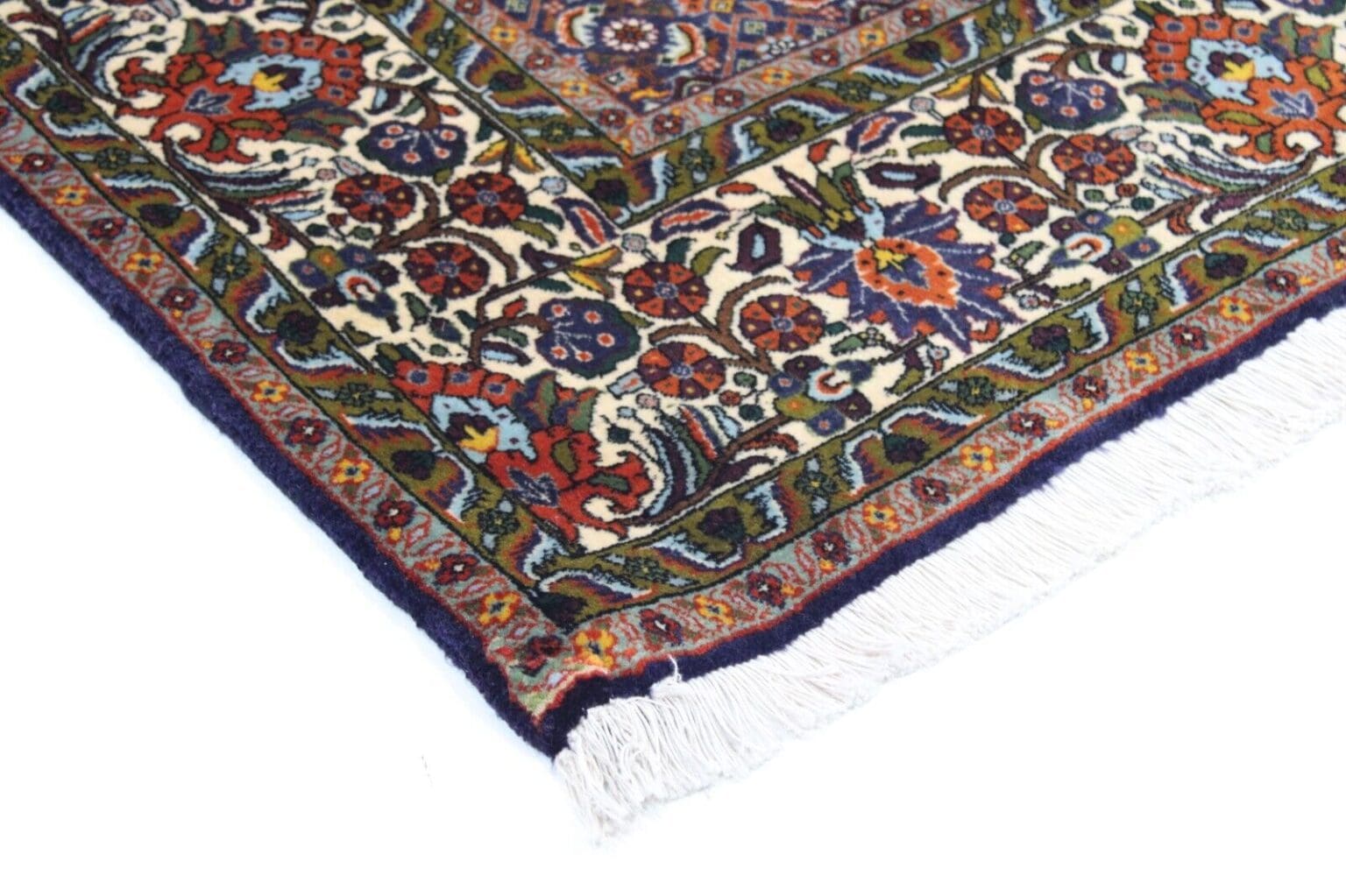
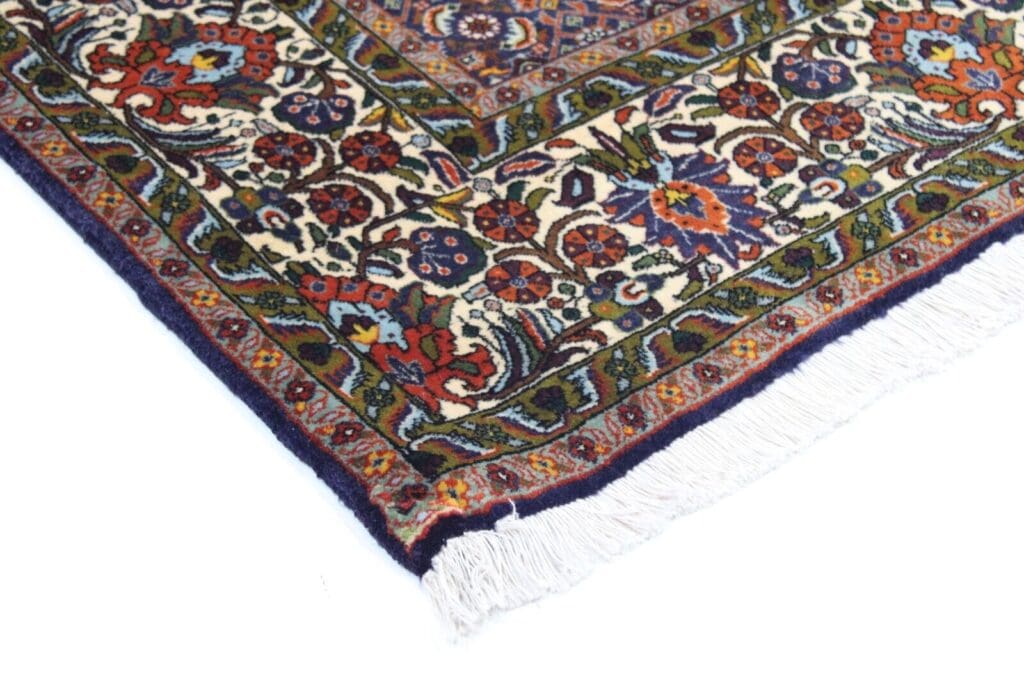
The knot density is high. A high knot density allows lines, edges and repeated forms to be arranged closely within the design. In a hand-knotted rug, each knot is inserted individually into the foundation. The pile is then worked so that the separate rows form a continuous surface and a coherent pattern. The finished structure is the result of the relationship between the warp, the knots, the wool pile and the work carried out by hand.
Bidjar rugs are traditionally associated with a robust construction and a firm, carefully made surface. Wool is widely used for pile because it can provide a resilient and tactile covering. Cotton in the warp creates a regular base for the rows of knots. In any hand-knotted rug, the knot density, the tension of the warp and the treatment of the pile influence how the pattern is presented. These technical factors explain why a hand-knotted rug can have a clearly defined textile surface.
Hand-knotting is a sequential process rather than a single operation. The foundation is prepared first, knots are added row by row, and the pile is adjusted as the work progresses. The surface is checked as the pattern develops. This combination of material knowledge and manual precision is part of the craft associated with Bidjar production. The rug’s wool pile and cotton warp are therefore considered together with its high knot density and hand-knotted construction.
Origin and Tradition
Bidjar is a city and carpet-producing region in Iran, known for hand-knotted Persian rugs. Carpet weaving has been practiced there for many generations. Knowledge of foundation building, knotting, pattern planning and finishing has traditionally been passed through families and workshops. The name Bidjar consequently refers not only to a geographical place but also to a long-established body of Iranian weaving practice.
The region is especially connected with strong construction and durable workmanship. A rug is formed through the interaction of warp, weft, knots and pile. The warp establishes the lengthwise framework. Wefts cross that framework, while the knots anchor the pile and build the patterned surface. Careful control of the foundation helps the weaver keep the design ordered as the work proceeds. The resulting construction is one reason Bidjar rugs are discussed for their technical solidity as well as their appearance.
Iranian carpet making developed over centuries in many different towns and regions. Each area cultivated its own preferences in construction, drawing, colour organisation and working methods. Bidjar belongs to this broader Persian tradition while retaining a regional identity associated with a compact and robust build. The regional character is expressed through both the way the rug is made and the kinds of designs that have been used by weavers in the area.
Traditional oriental rugs often involved a detailed preparation of yarn, colour and layout. Natural dyes made from plants and minerals were used historically, and preparing them required knowledge of raw materials and dye baths. Spinning, dyeing, arranging the foundation and knotting were connected stages of one production process. Colour is therefore not separate from technique: it is part of the way a design is planned, repeated and balanced across the woven surface.
A hand-knotted rug may take many months to a year to complete, depending on the design, knot density and working method. The process begins with the foundation and continues through repeated rows of knots, pile work and finishing. This time scale is part of the general tradition of hand-knotted Bidjar rugs. It also distinguishes this type of work from an industrial floor covering made through a mechanised process. The result remains a textile object whose construction records the sequence of manual operations.
Bidjar weaving combines practical construction with visual organisation. Historically, rugs from Iranian weaving regions served as floor coverings, household textiles and objects in which local design knowledge was preserved. Their patterns could be developed from established regional conventions while still allowing an individual weaver or workshop to interpret the drawing. This balance between continuity and individual execution is a central feature of the wider Persian rug tradition.
Design and Pattern
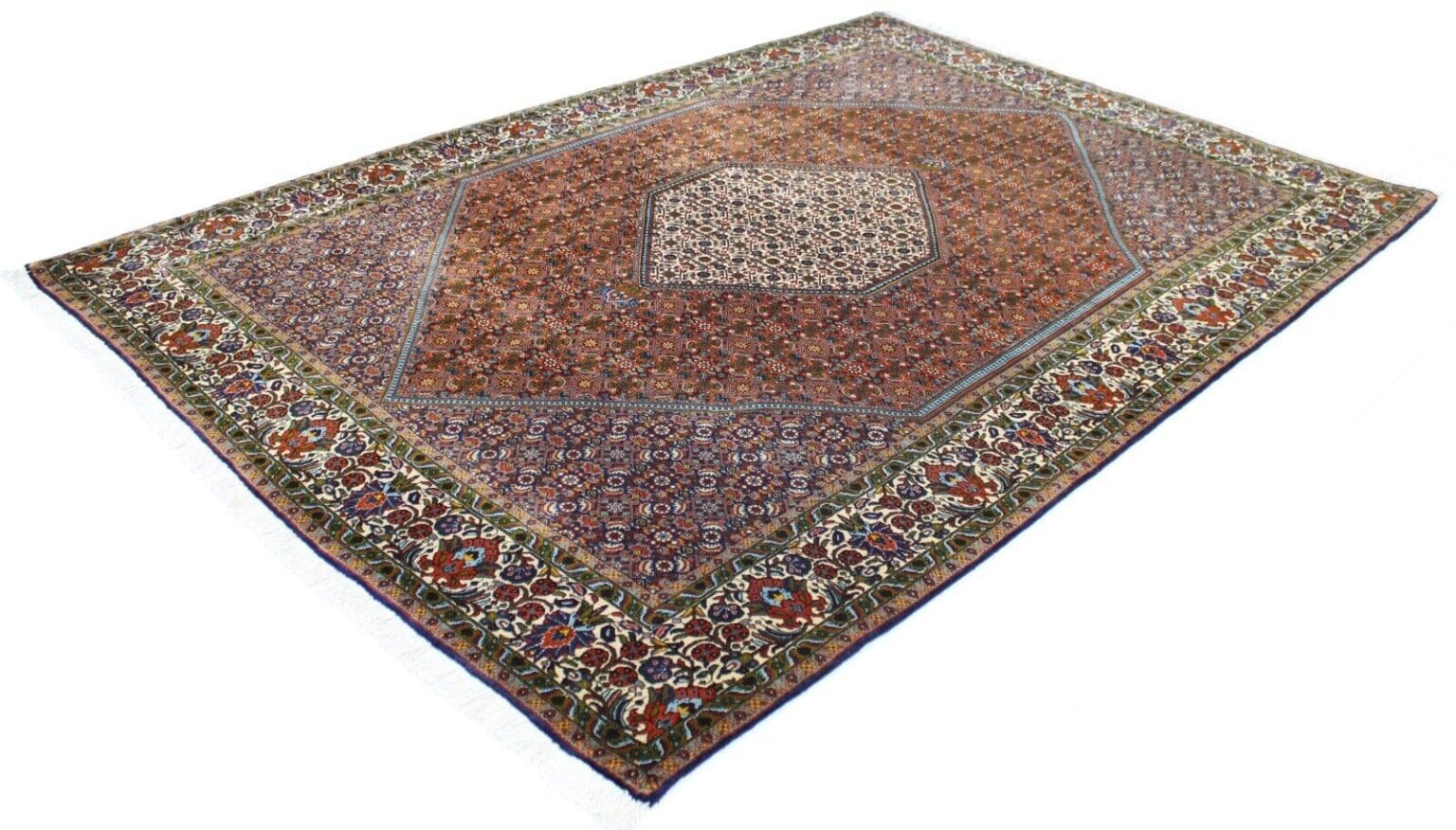
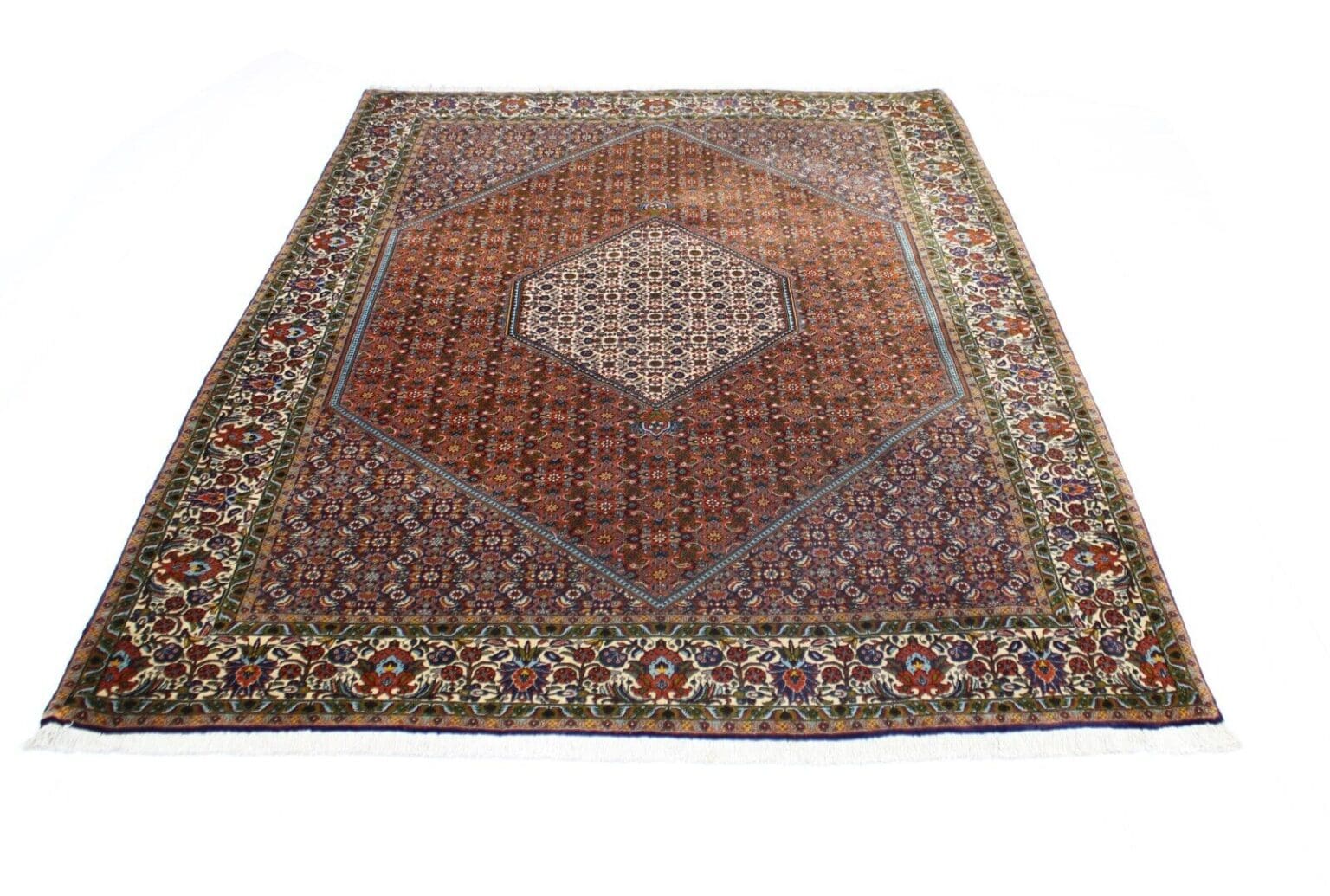
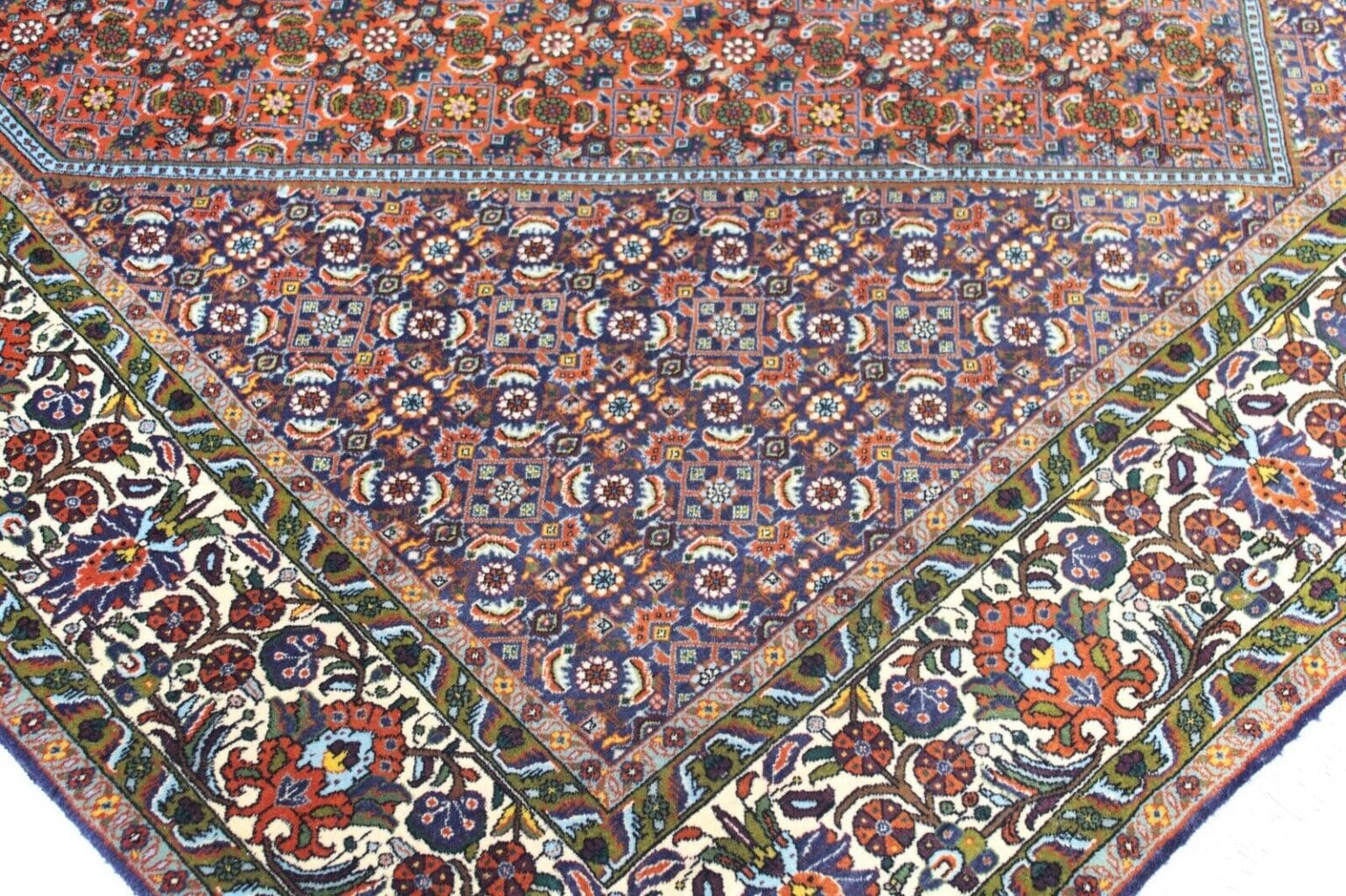
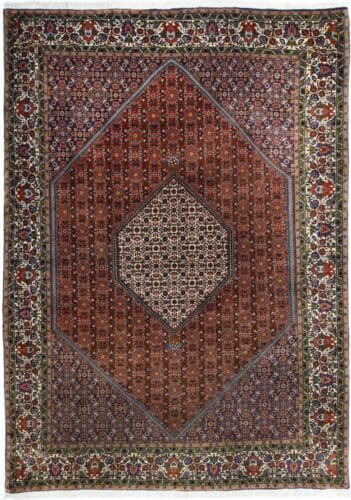
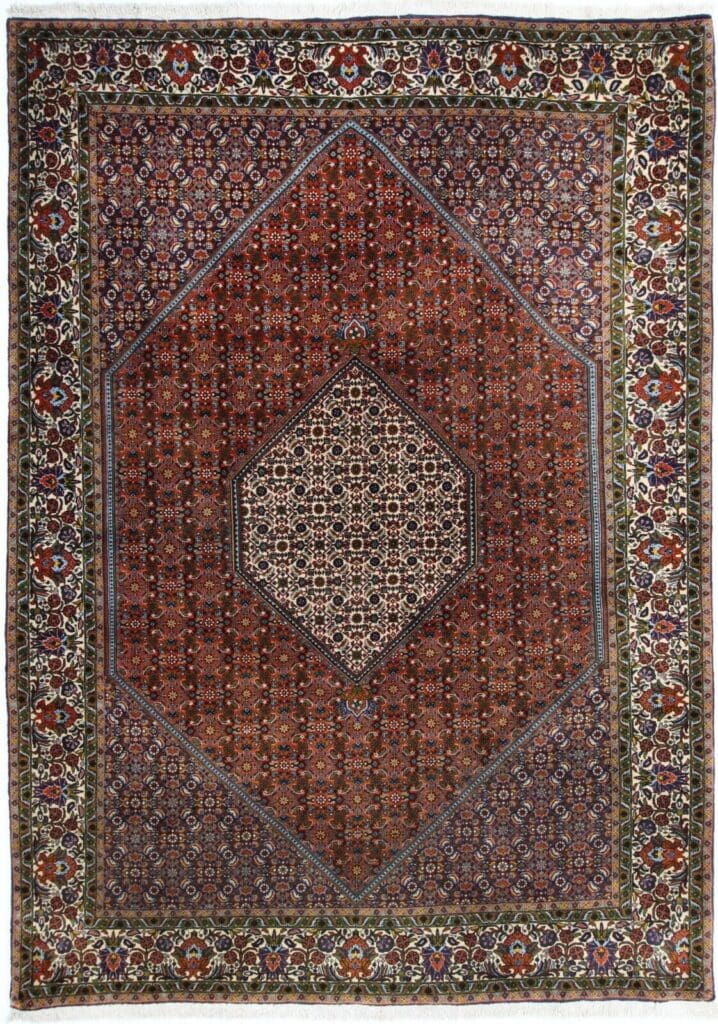
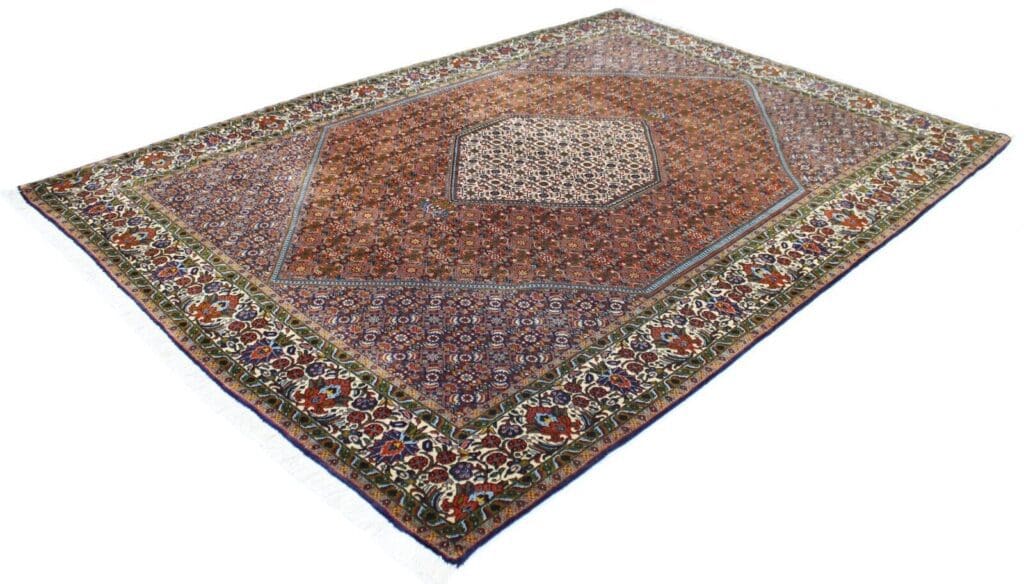
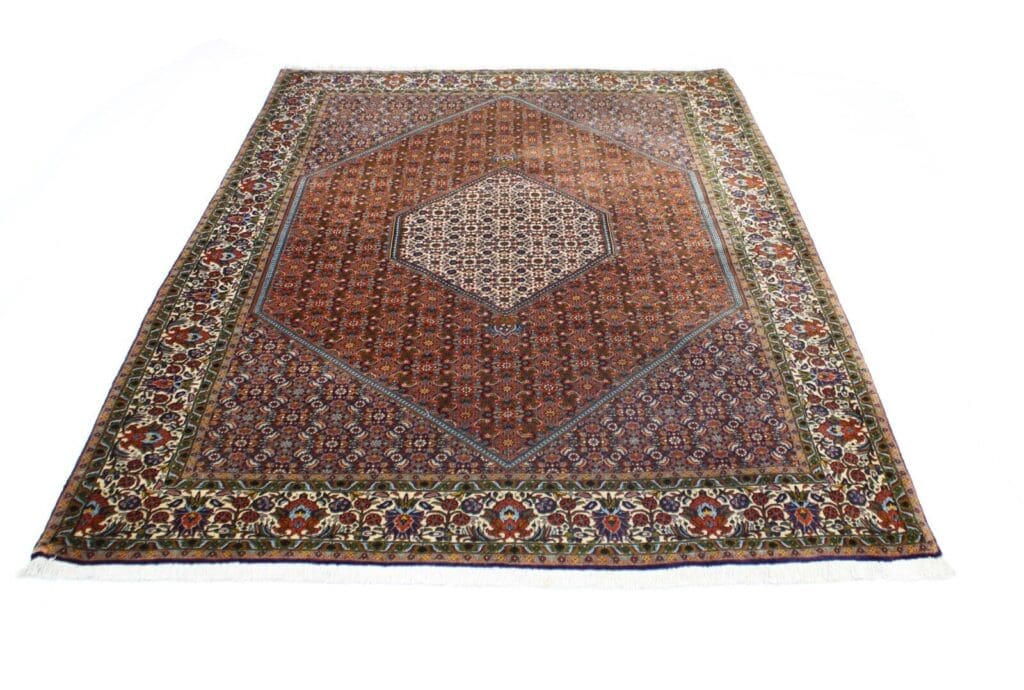
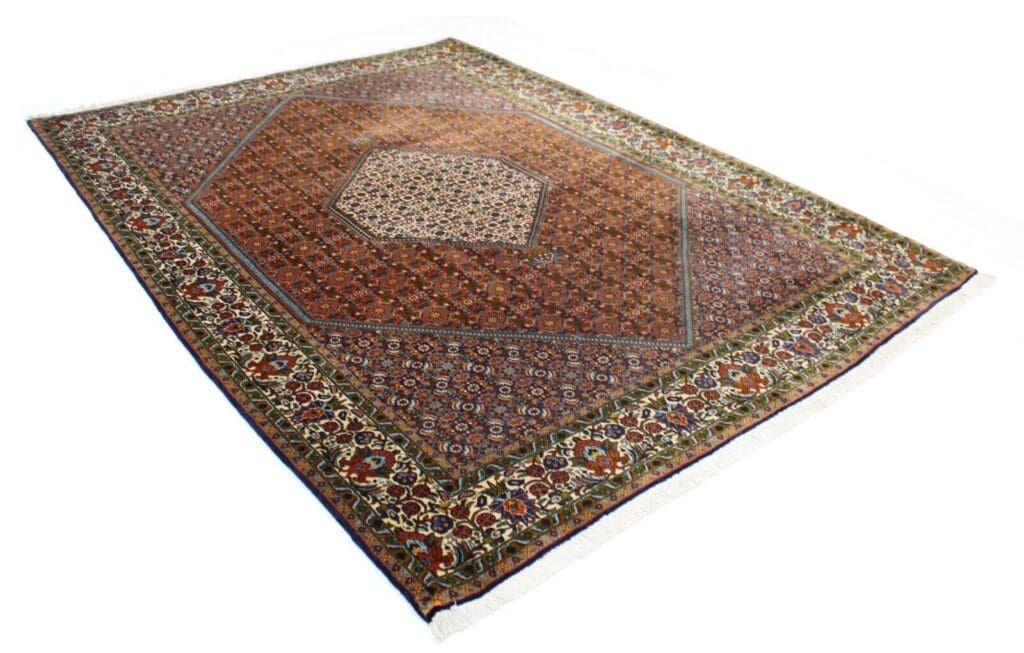
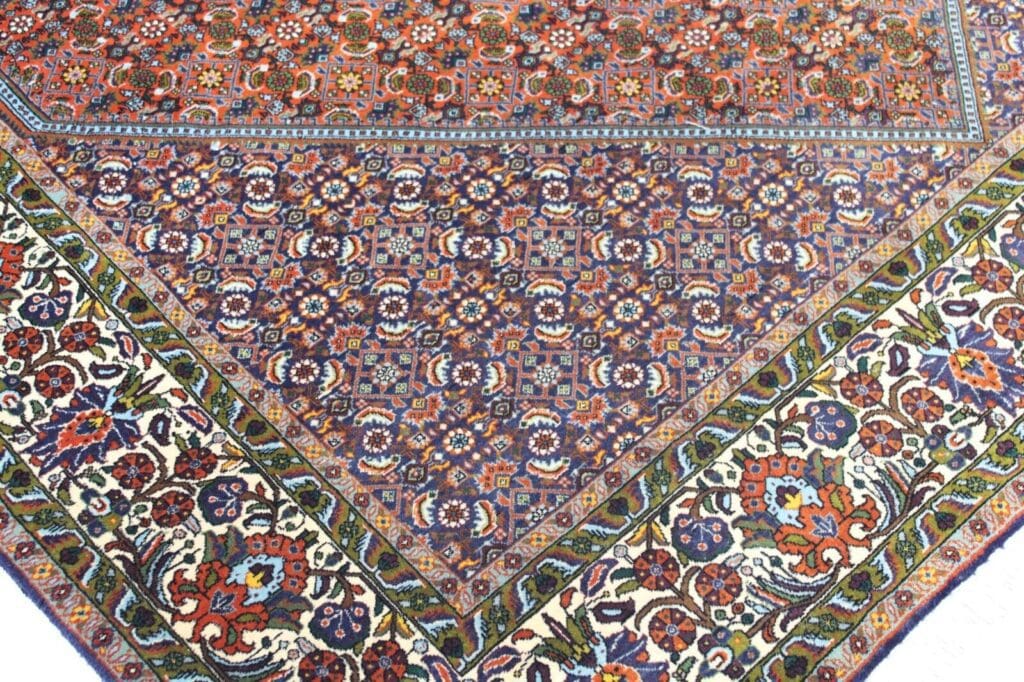
The pattern of this rug is described as geometric. Geometric designs use lines, angles, repeated shapes, fields and deliberate spacing to create an ordered composition. The arrangement is planned rather than random, with forms relating to one another across the surface. Its high knot density is technically suited to the close rendering of contours and smaller transitions, although the description does not assign a separate named pattern to this particular rug.
Geometric designs in oriental rugs can be organised in several ways. Shapes may repeat in rows, occupy separate panels, emphasise a central field or appear within a border. A border often creates a visual transition between the outer edge and the principal design area. Repetition produces rhythm, while changes in scale give the eye a way to read the composition. The exact organisation belongs to each individual rug and should not be replaced with an assumed standard layout.
Bidjar weaving is not limited to one design family. Regional Iranian rugs may include floral, geometric and combined forms. Natural motifs can be simplified into angular outlines, and geometric structures can provide a framework for stylised leaves, blossoms or other plant references. In the rug described here, the geometric character is the stated pattern classification. The Bidjar designation adds the regional context in which a range of drawing traditions has been developed.
Patterns in oriental rugs often carry historical and cultural associations. Repeated forms may be connected with ideas such as order, protection, peace, prosperity or good fortune. Such meanings are not fixed for every individual shape, and a particular symbol should not be assigned without evidence from the design or its tradition. More broadly, these associations show that an Iranian rug can be understood as more than a practical covering. Its pattern, materials and making process belong to a shared visual and cultural language.
The character of a geometric pattern comes from the balance between lines and open areas. Larger fields can give the composition visual calm, while smaller forms guide attention and add detail. Repetition creates a rhythm that can continue from one side of the rug to the other. A high knot density supports this kind of close drawing because it gives the weaver more room to articulate narrow lines and compact shapes. Handwork remains visible in the making process, and the individual execution is part of the identity of a one-off rug.
The description highlights warm colour tones and a harmonious arrangement of motifs. It also names the living room, bedroom and hallway as possible interior settings. In these spaces, a geometric Bidjar design can provide a defined textile element while retaining its connection with Iranian carpet tradition. The visual effect comes from the relationship between the structured pattern, the colour arrangement and the hand-knotted surface, not from a claim that the rug belongs to any different place of origin.
Special Features
The rug is described as being in top condition and washed. Its care condition is called notable. The colours are described as bright, and the structure of the rug is described as unchanged. These statements concern the condition of this particular piece. It is also identified as an original from the 21st century. The result is a rug that combines a traditional Bidjar origin with a date classification in the 21st century.
This rug is suitable for use with underfloor heating. It is also described as slip-resistant and easy to clean. It can be used indoors as a decorative floor covering. Its hand-knotted construction, wool pile and cotton warp define its textile character. The description additionally presents it as an example of the skill of carpet makers in the Bidjar region and as a possible investment. No specific future change in value is established by that classification.
FAQ
How should I care for a hand-knotted Persian rug?
Vacuum regularly without using a brush attachment to remove dust and loose dirt while avoiding unnecessary mechanical stress on the pile. Keep the rug away from direct sunlight to help prevent the colours from fading. Deal with spills promptly using a damp cloth. For a deeper clean, consult a specialist who works with hand-knotted Persian rugs and understands the different behaviour of wool pile and cotton foundations. Strong cleaning agents and unsuitable procedures should not be used without professional advice, as they may affect the pile, colours or structure.
How can I tell whether a rug is genuine?
A genuine Persian rug is hand-knotted. Examining the back can provide useful clues: on an authentic hand-knotted rug, the pattern on the reverse is often less sharply defined than on a machine-made product. The quality of the materials and the knot density are further points to consider. A certificate can also help confirm authenticity. A reliable assessment should take several features into account rather than relying on one visual detail alone, and a specialist can be consulted when a formal opinion is required.
Can I use a hand-knotted rug outdoors?
Hand-knotted rugs are not recommended for outdoor use because they are not weatherproof. Moisture can damage the materials and affect the structure of the rug. Direct sunlight can also cause the colours to fade. Indoor rooms are therefore the appropriate setting, where the rug is protected from weather and persistent dampness. Even indoors, it should be kept dry and maintained in a way that avoids unnecessary strain on its textile surface. Underfloor heating suitability does not change the fact that outdoor exposure should be avoided.
To provide the best experiences, we use technologies like cookies to store and/or access device information. Consenting to these technologies will allow us to process data such as browsing behavior or unique IDs on this site. Not consenting or withdrawing consent, may adversely affect certain features and functions.
Functional Always active
The technical storage or access is strictly necessary for the legitimate purpose of enabling the use of a specific service explicitly requested by the subscriber or user, or for the sole purpose of carrying out the transmission of a communication over an electronic communications network.
Preferences
The technical storage or access is necessary for the legitimate purpose of storing preferences that are not requested by the subscriber or user.
Statistics
The technical storage or access that is used exclusively for statistical purposes.The technical storage or access that is used exclusively for anonymous statistical purposes. Without a subpoena, voluntary compliance on the part of your Internet Service Provider, or additional records from a third party, information stored or retrieved for this purpose alone cannot usually be used to identify you.
Marketing
The technical storage or access is required to create user profiles to send advertising, or to track the user on a website or across several websites for similar marketing purposes.
 SECURE PAYMENT
 SHIPPING PARTNERS