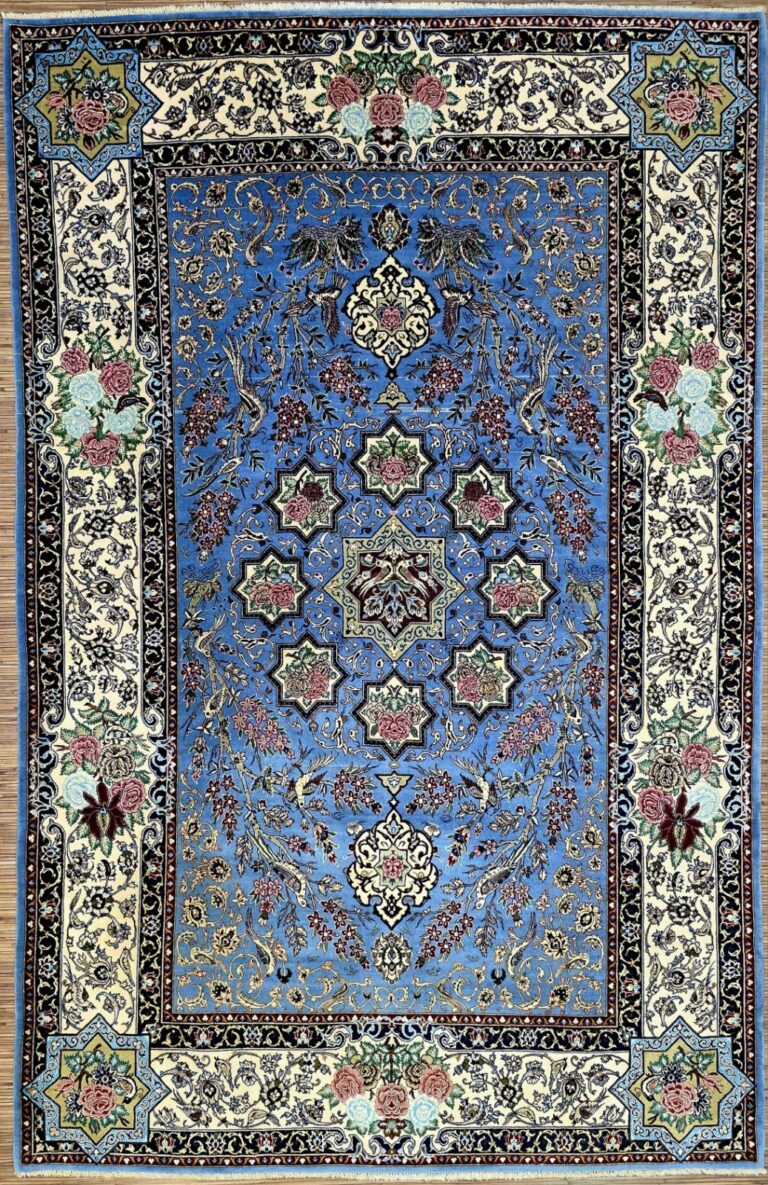
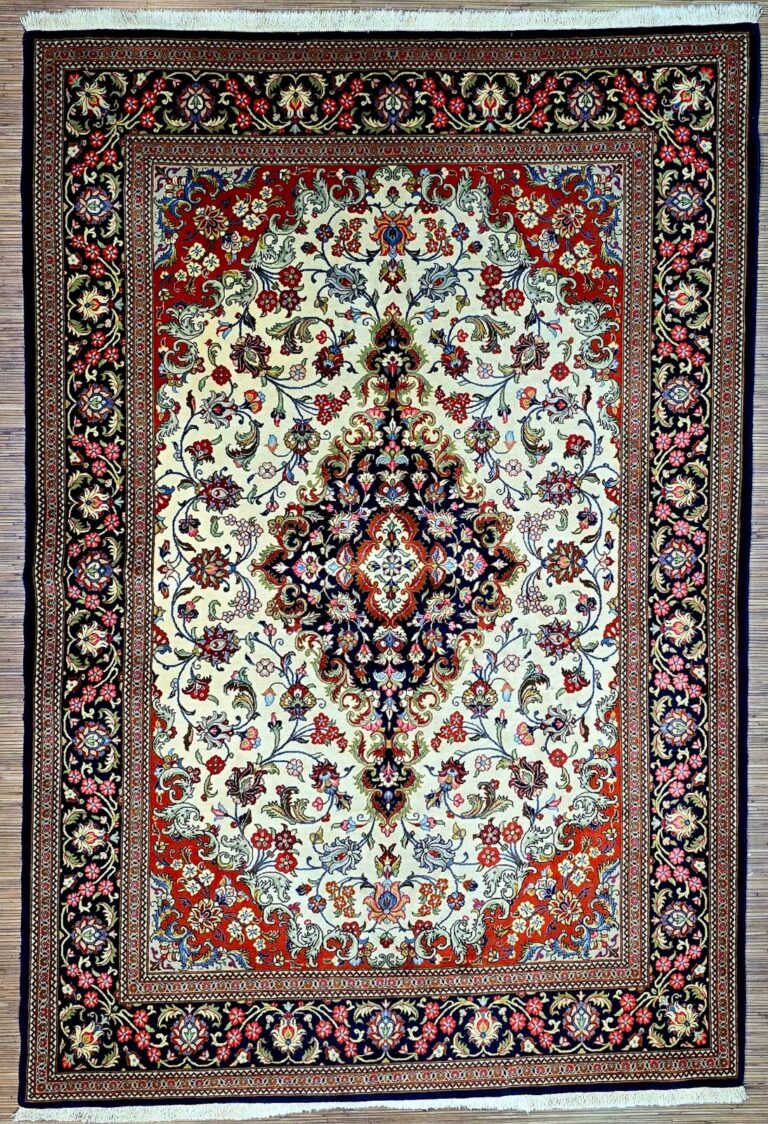
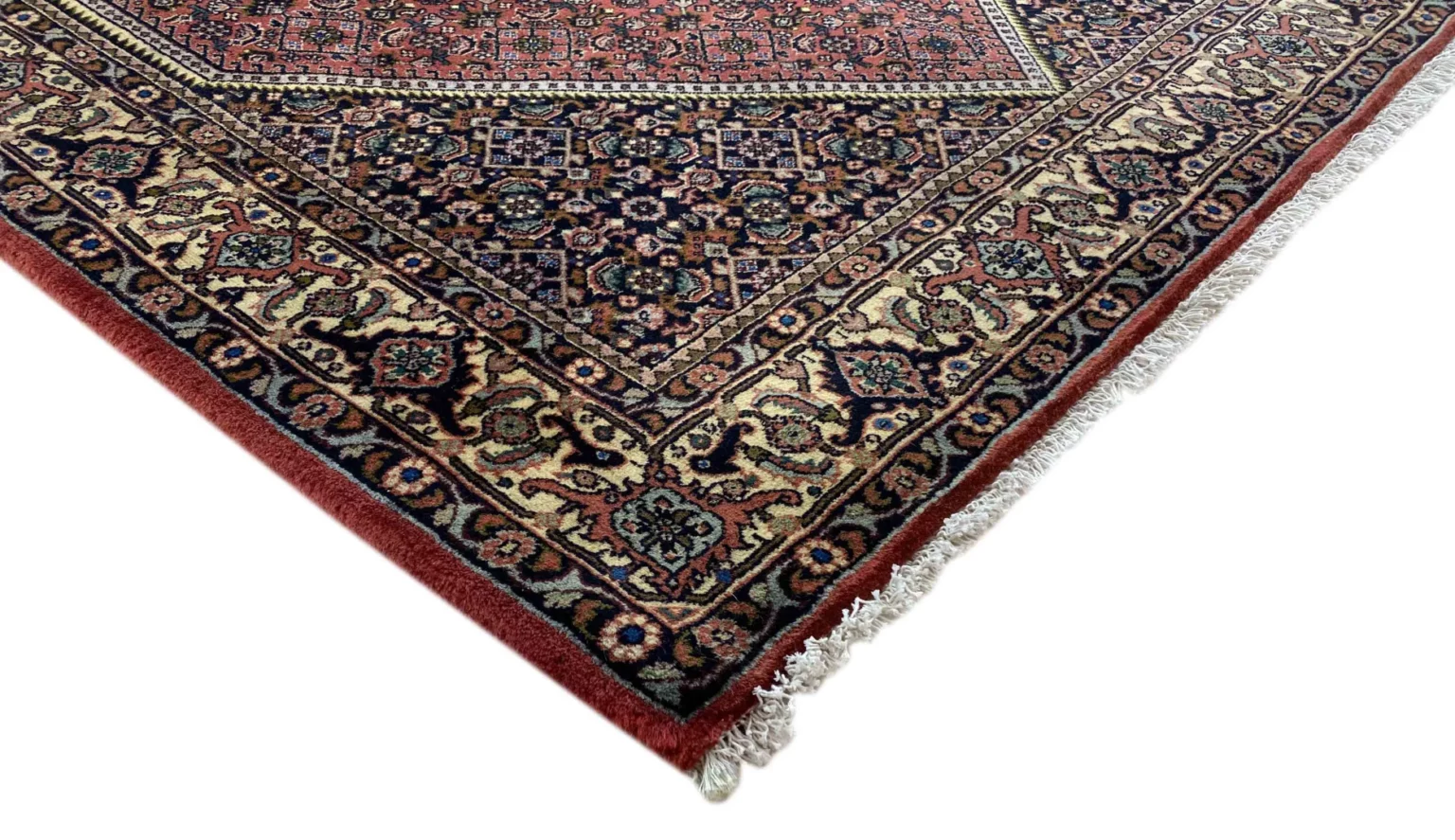
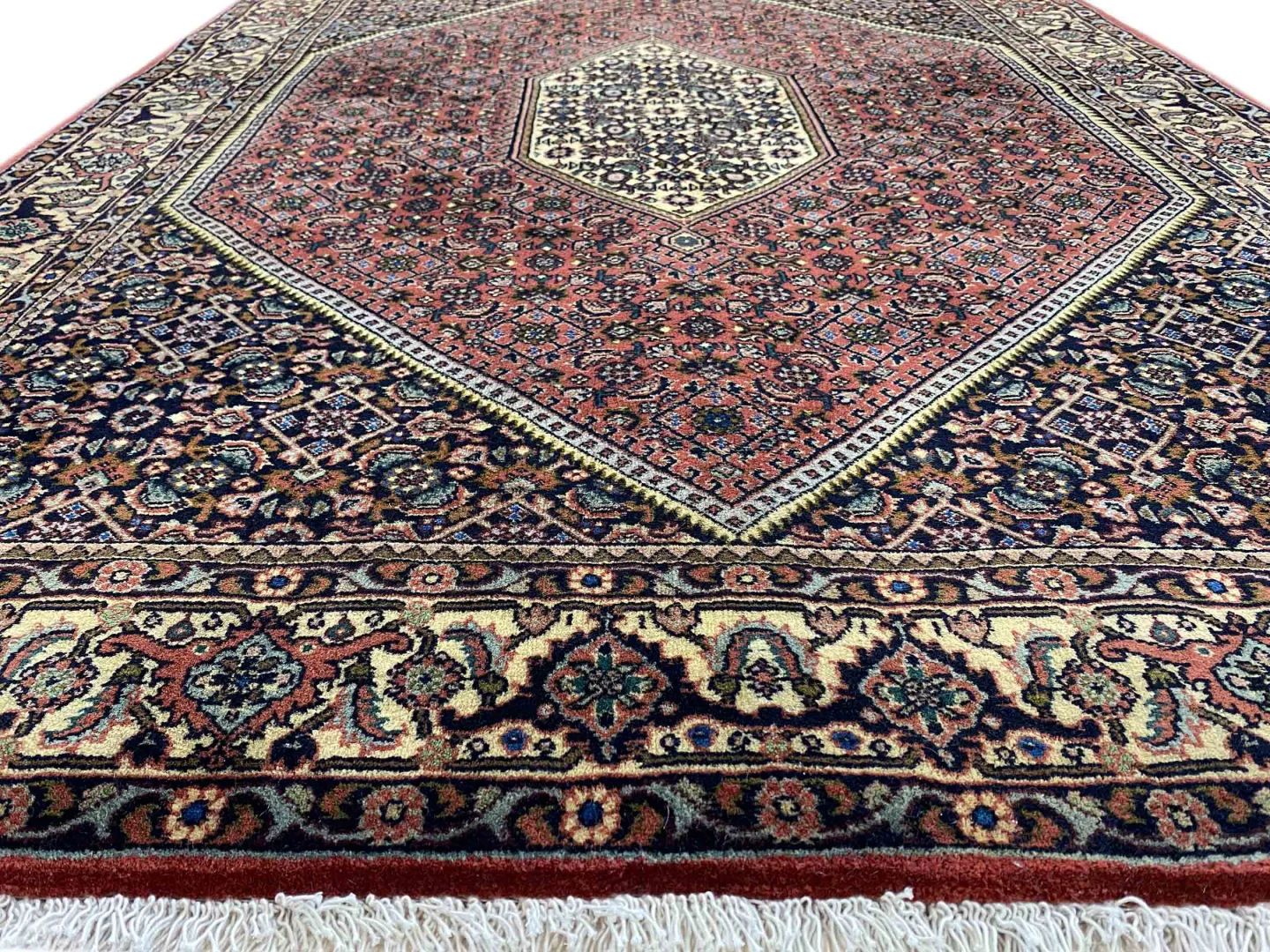
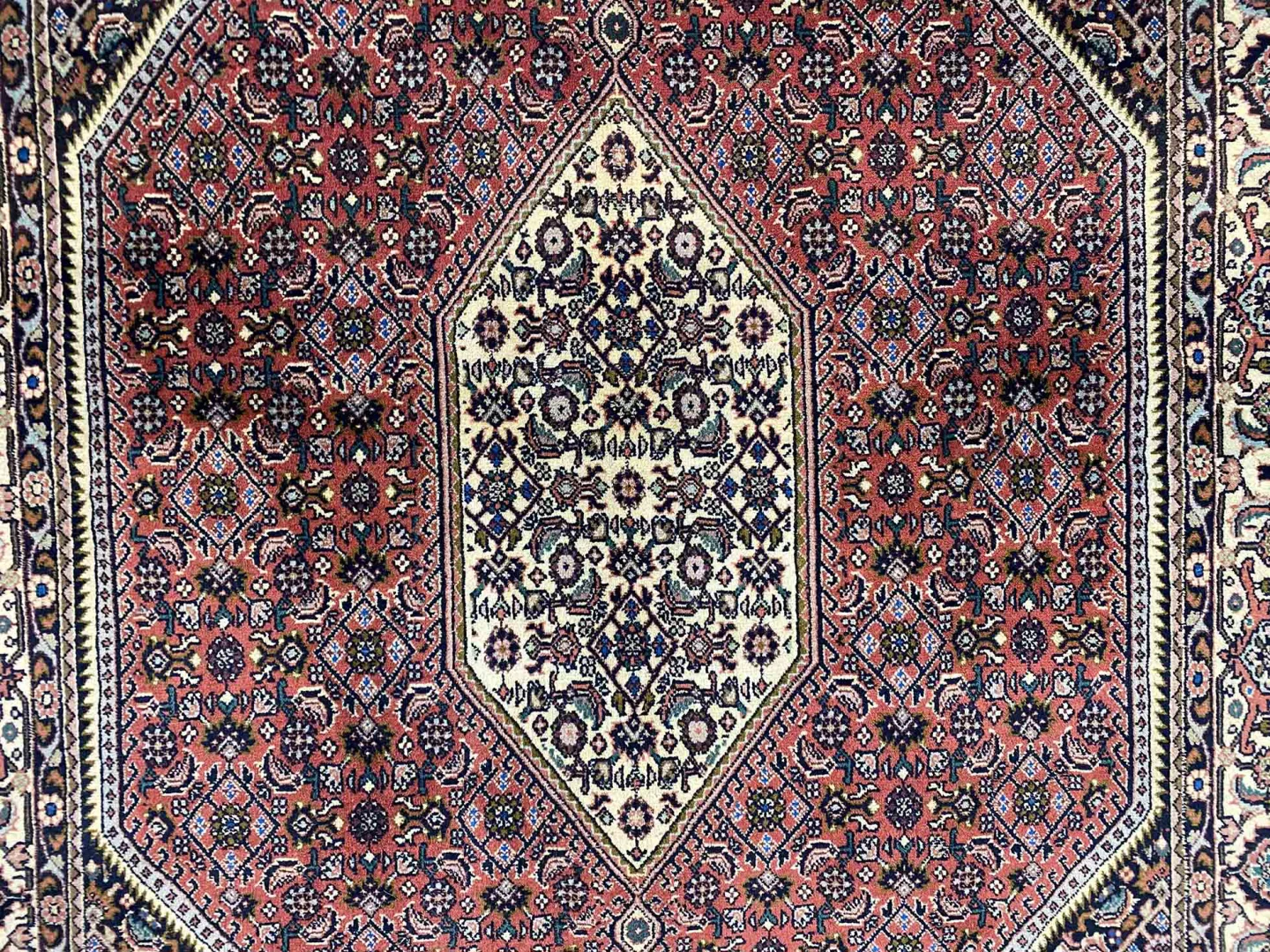
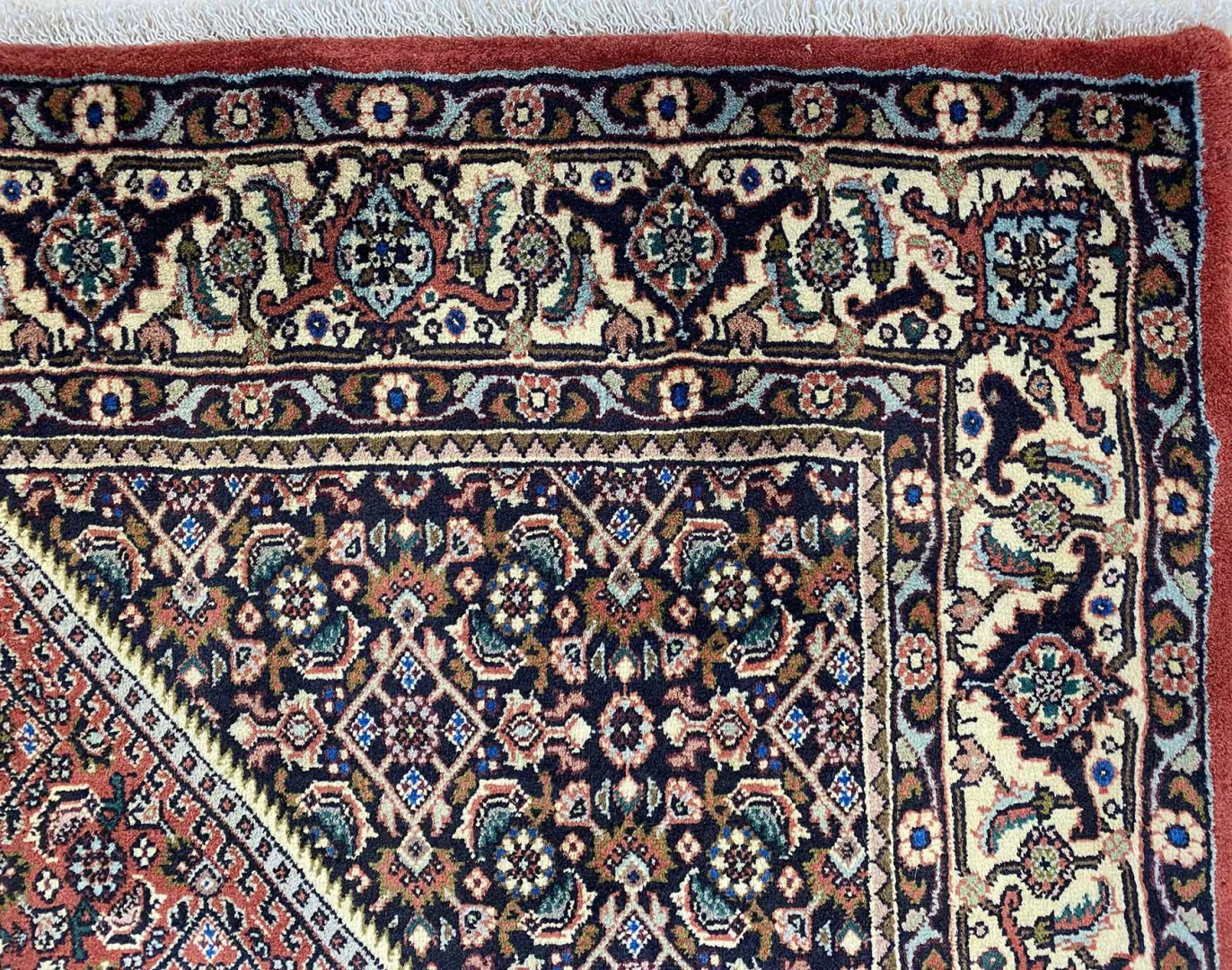
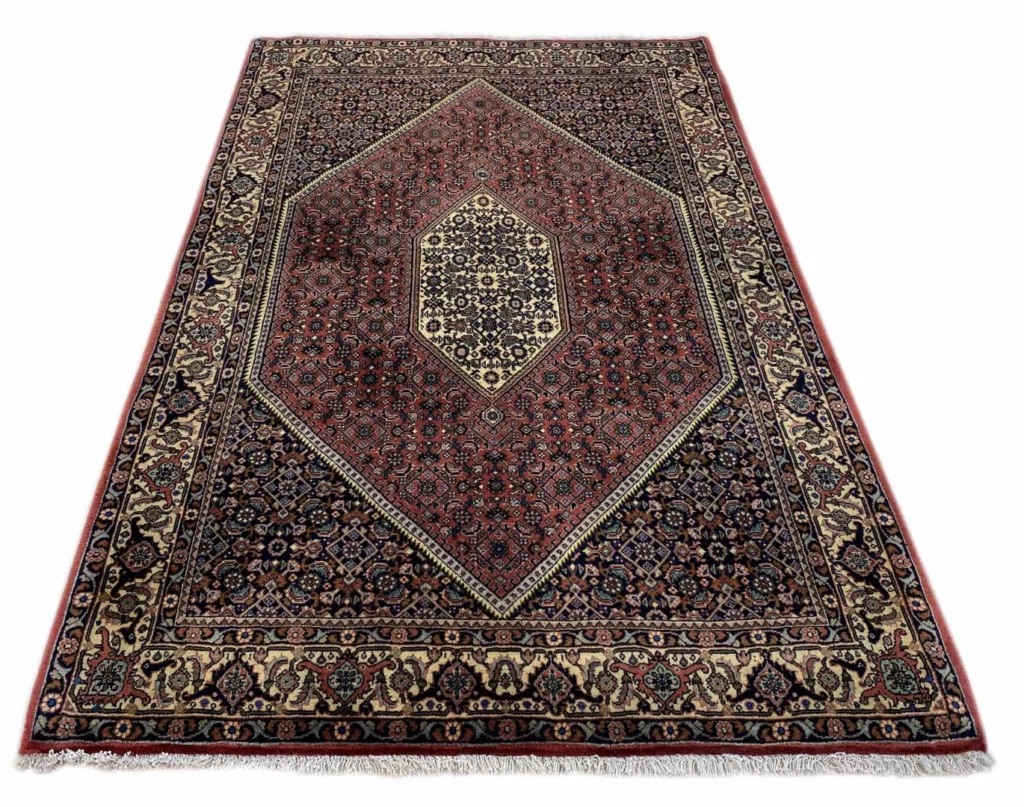
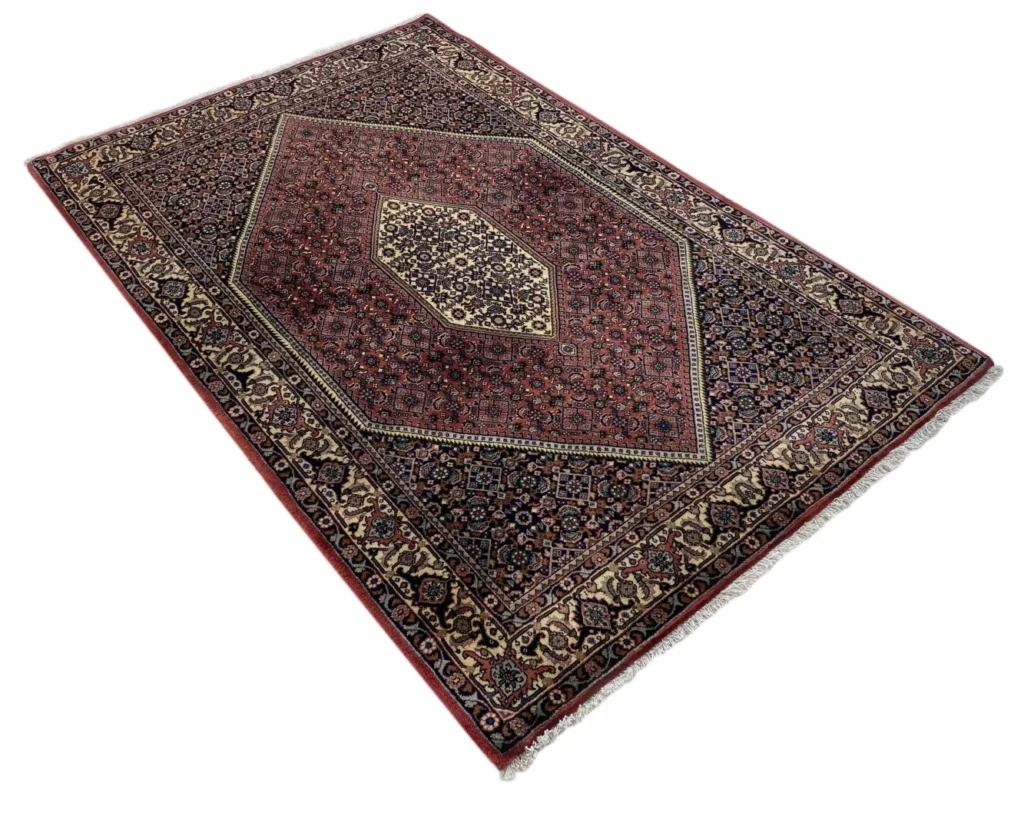
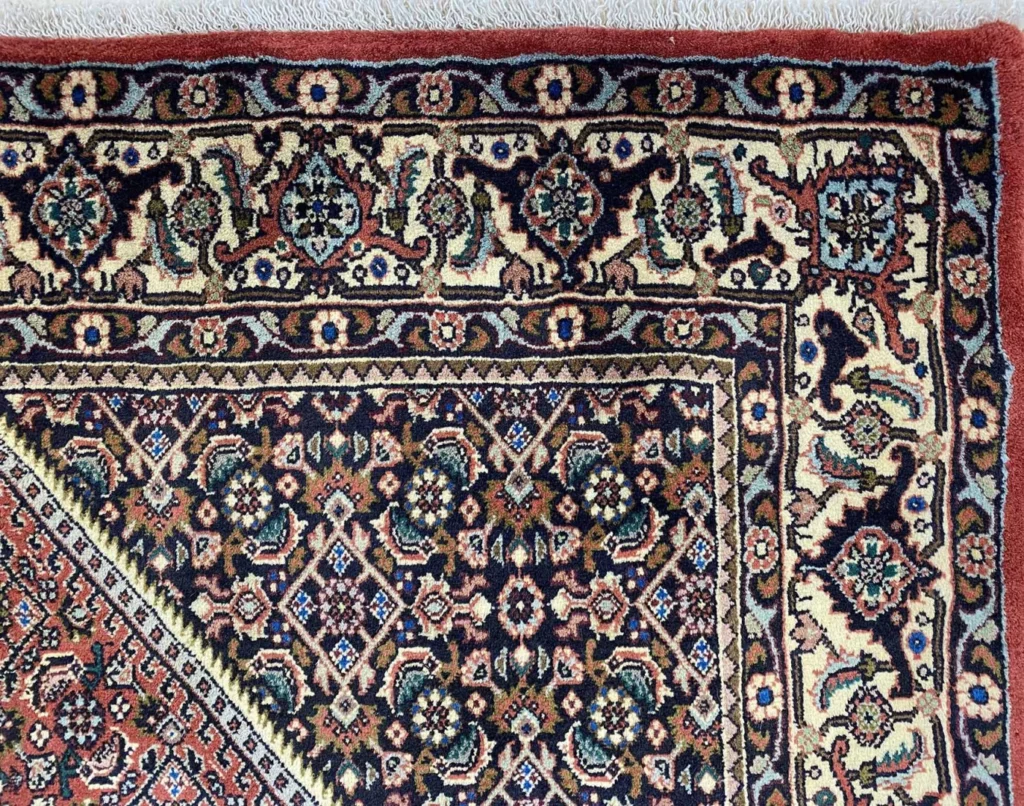
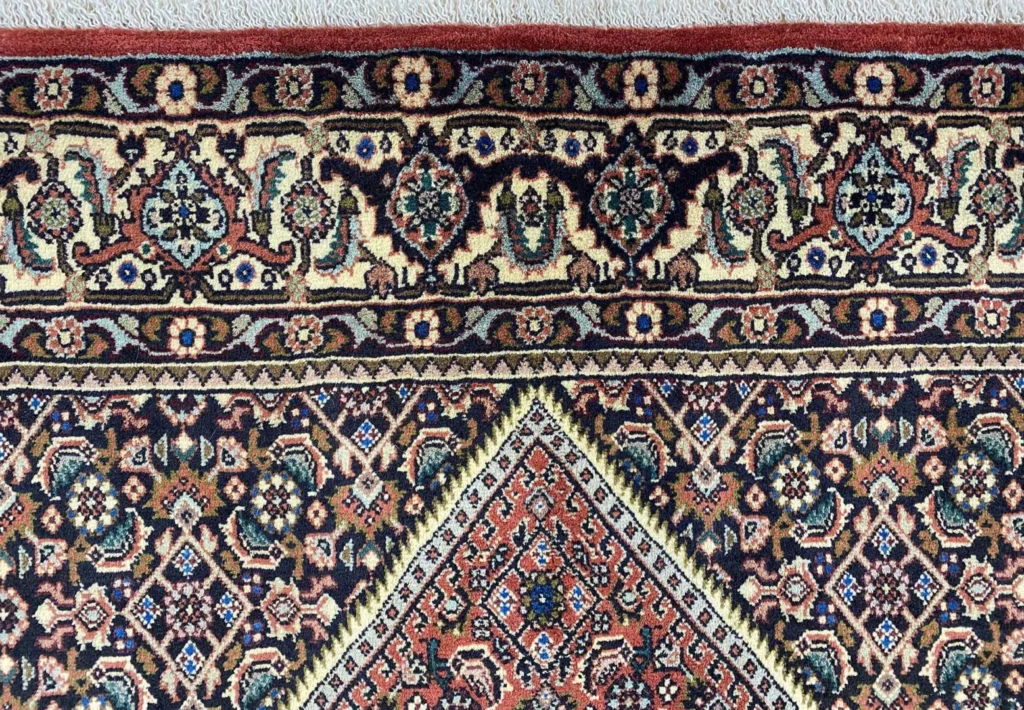
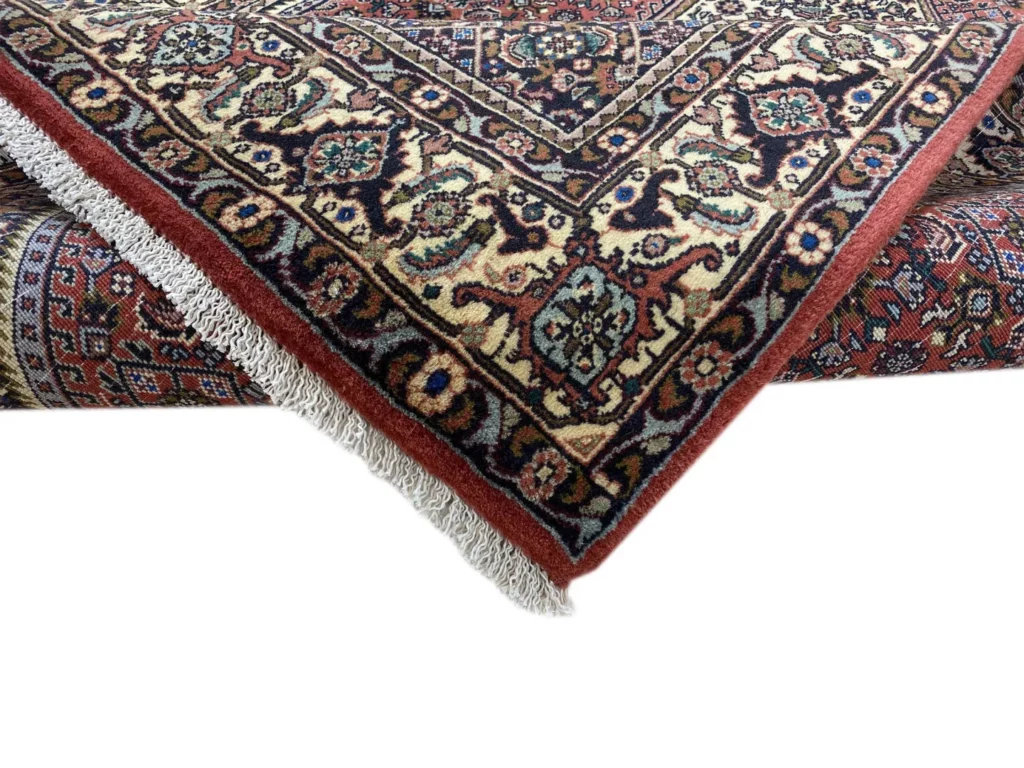
Hand-knotted Bidjar Persian Rug | Knot density: 200,000 to 450,000 knots per square metre | Size: 176 x 115 cm | Pattern: Floral motifs and geometric forms in red, blue and gold
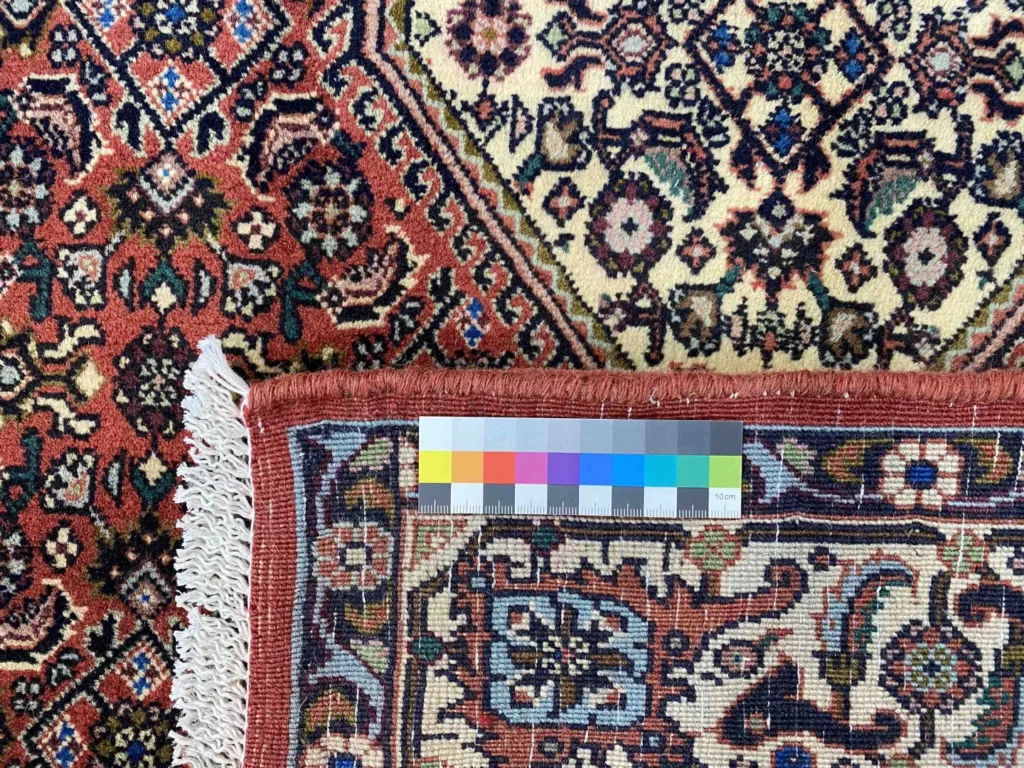
This Bidjar Persian rug is hand-knotted, a method in which individual knots are tied by hand onto a prepared foundation. Hand knotting allows the design to be built row by row and gives the finished textile a clearly structured surface. The source describes Bidjar rugs as typically being made from high-quality wool. Wool is valued in this tradition for its robust character, resilience and suitability for a densely knotted pile. The material also supports the practical qualities associated with Bidjar weaving, including resistance to dirt and straightforward routine care.
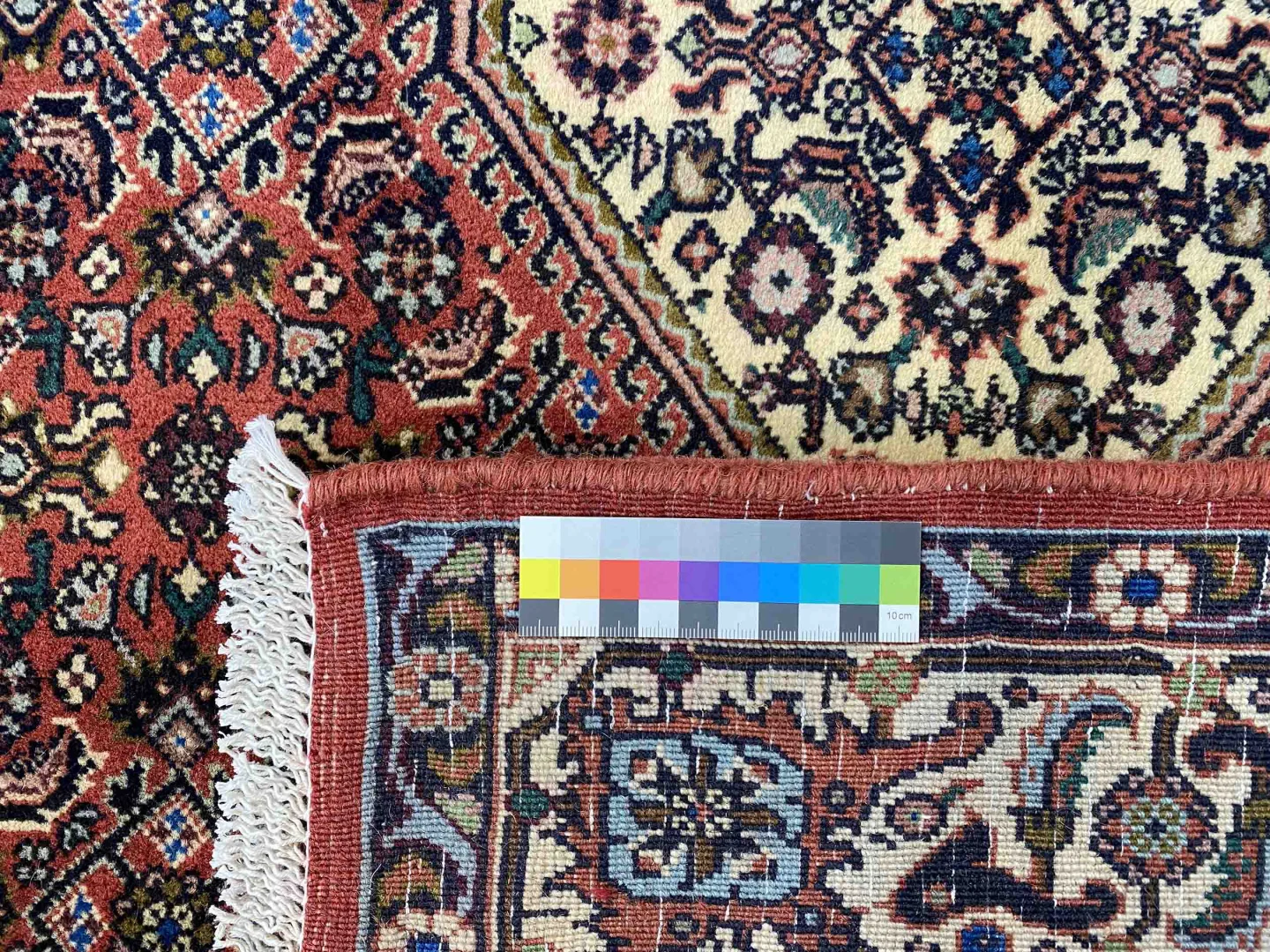
The stated knot density for this rug is between 200,000 and 450,000 knots per square metre. A dense knot structure contributes to a firm, compact construction and helps the pile withstand regular use. It also allows decorative forms to be rendered with definition. Knot density is not the only measure of a rug’s character, but it is an important part of the relationship between handwork, surface structure and durability. In a hand-knotted rug, the work of the weaver remains visible in the way the pattern is assembled and in the tactile variation of the pile.
Bidjar rugs are associated with a sturdy construction and are described here as hard-wearing, robust and dirt-repellent. Their dense knotting and the use of wool are also connected with resistance to wear. The source further notes that these rugs can provide pleasant warmth underfoot through their insulating properties and may contribute to a comfortable room climate. These are practical characteristics of the Bidjar type and explain why such rugs are used not only as decorative textiles but also in areas that experience regular foot traffic.
Origin and Tradition
The rug comes from Bidjar, a small town in western Persia. Bidjar Persian rugs belong to a long-established regional tradition of hand-knotted carpet making. The town and its surrounding area are known for weaving that combines a strong construction with carefully arranged ornament. In this tradition, the rug is both a useful household textile and a carrier of visual culture. The colours and motifs associated with Bidjar weaving reflect the cultural history of western Persia and connect the object with the place where its design language developed.
Western Persian carpet traditions are shaped by the relationship between practical use and decorative order. A hand-knotted rug had to function on the floor, withstand movement and remain useful over time, while also presenting a coherent composition. Bidjar weaving is commonly discussed in this context because its reputation rests on a compact, durable structure. The emphasis on resilience does not exclude ornament; rather, the construction provides a lasting ground for floral details, geometric organisation and strong colour contrasts.
The making of a hand-knotted carpet requires a sequence of deliberate operations. A foundation is prepared, knots are tied individually, and rows are compacted as the design progresses. The weaver follows a planned arrangement of colours and motifs while maintaining the balance of the field and borders. This process differs from industrial surface printing because the pattern is integrated into the structure of the textile. It also explains why hand-knotted rugs are treated as individual woven works rather than as identical factory products.
Bidjar is often considered alongside other Persian weaving centres because each region developed its own preferences in composition, drawing and colour. Ghom is associated with fine, intricate designs and high-quality materials. Tabriz is known for detailed motifs and a broad range of patterns, while Kashan and Kerman offer many traditional and modern design approaches. These names describe distinct regional traditions; they do not change the origin of this rug, which is Bidjar. The comparison places Bidjar within the wider history of Persian carpet production without confusing the different weaving centres.
The continued importance of Bidjar weaving lies in this balance of regional identity and everyday function. The rug carries references to western Persian culture through its palette and ornament, while its hand-knotted construction gives it a physical role in the home. Tradition is therefore present in more than the name of the town. It can be found in the method of production, the arrangement of the pattern and the preference for a durable textile that remains useful in lived spaces.
Design and Pattern
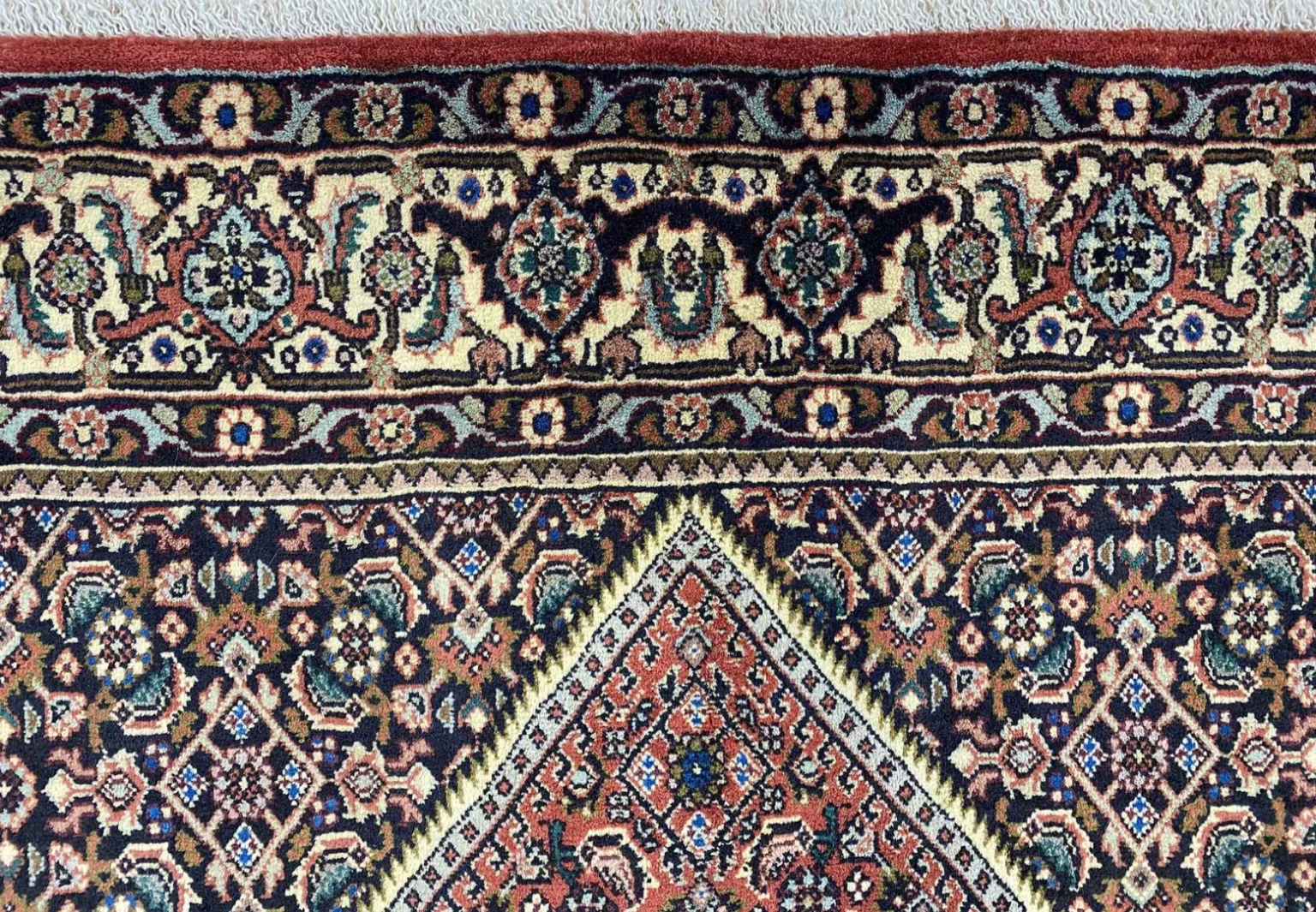
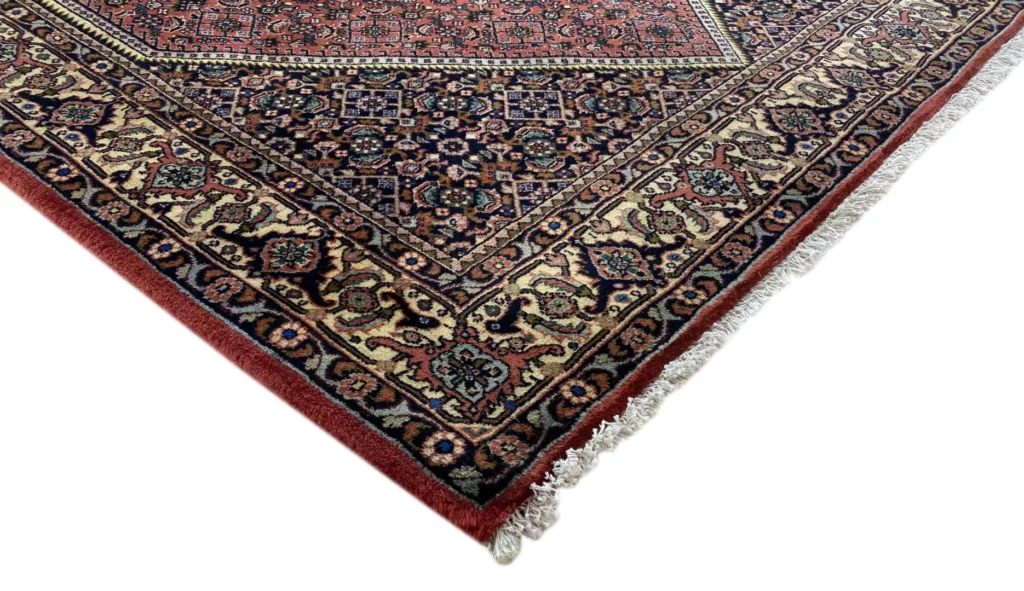
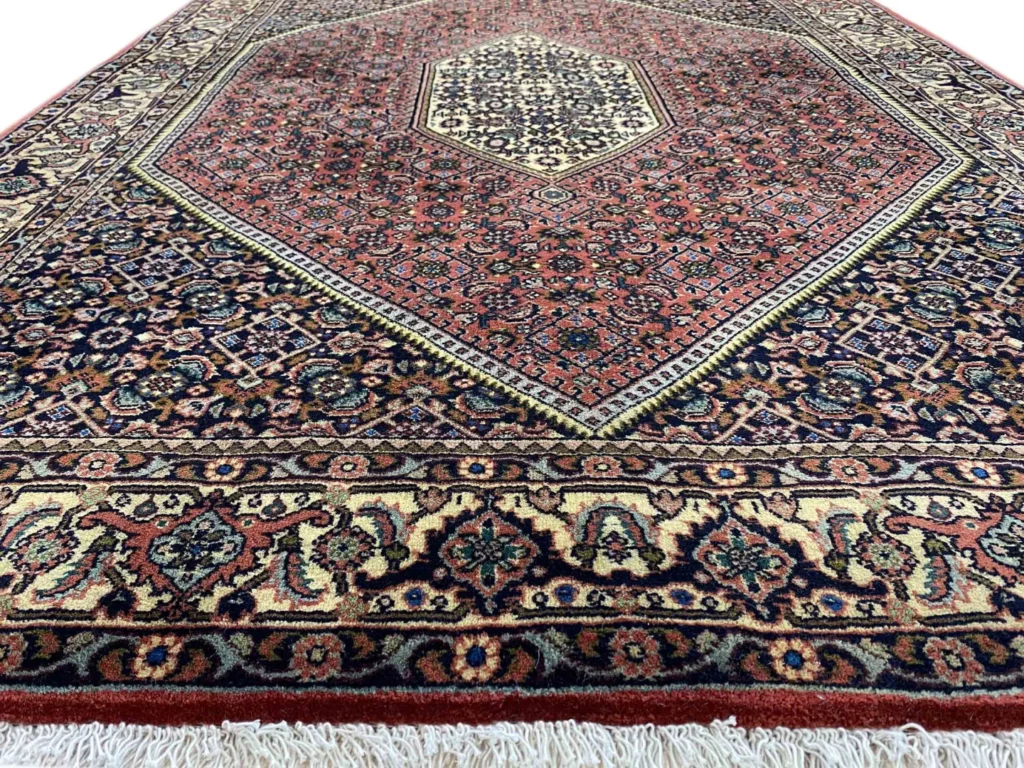
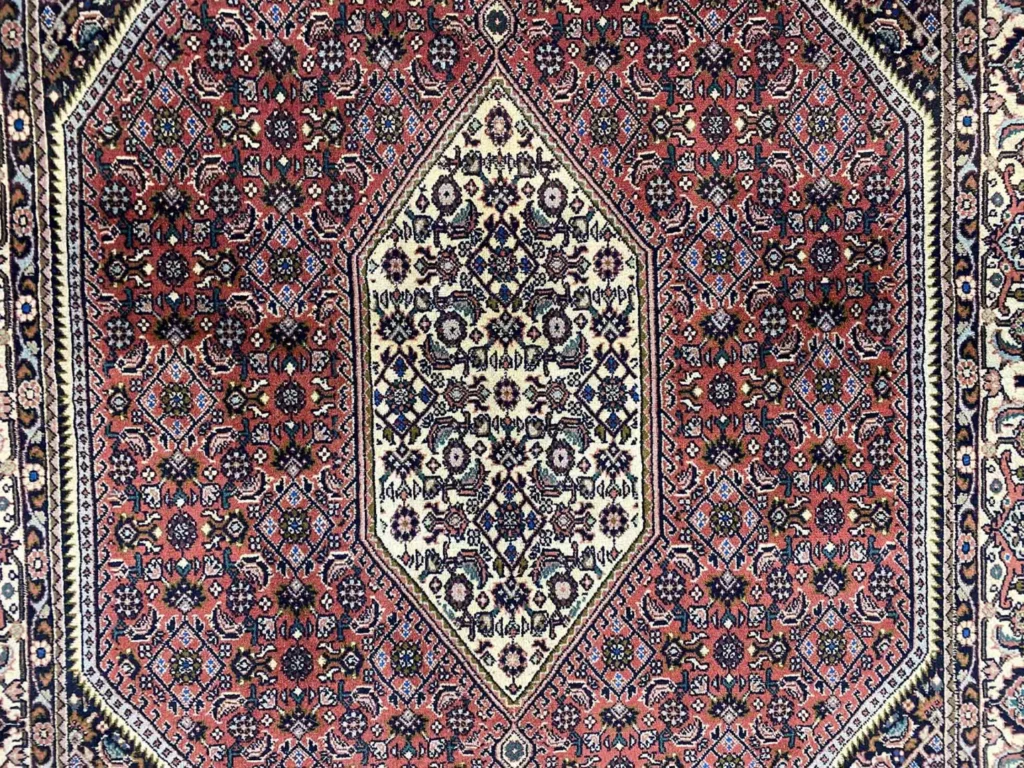
The design described for this rug combines floral motifs with geometric forms. These two visual languages frequently work together in Persian carpet composition. Floral elements introduce stems, blossoms, leaves or other references to cultivated and natural forms, while geometry establishes rhythm, direction and structure. Together they can create a pattern that is decorative without losing order. The source describes the Bidjar designs as complex and varied, so the relationship between organic detail and geometric organisation is central to understanding the style.
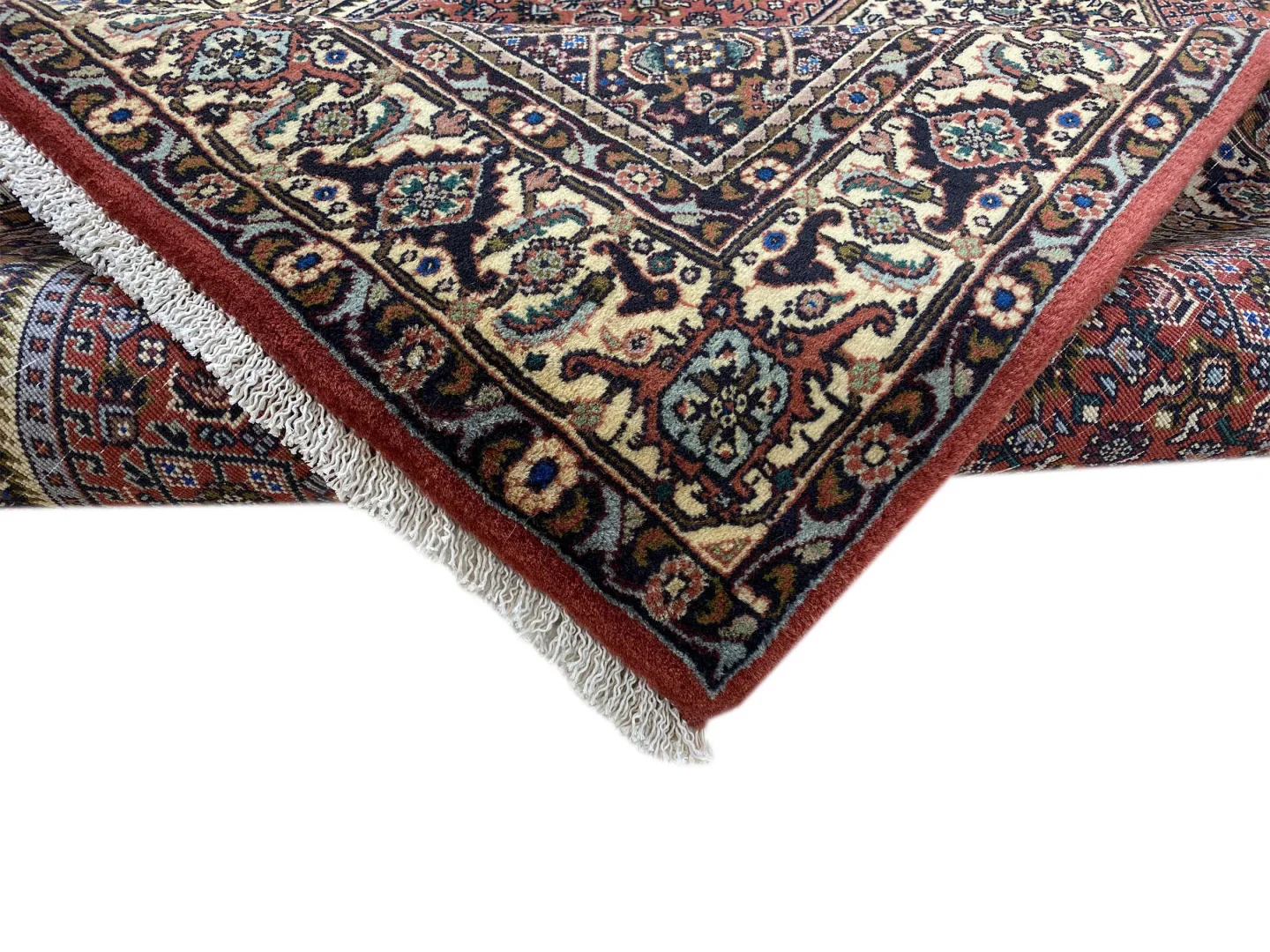
Colour is another important part of the stated appearance. Deep red, blue and gold are identified as popular Bidjar colour variations, and these tones are described as creating a harmonious atmosphere. Red can give a composition warmth and visual weight. Blue introduces a cooler counterpoint, while gold adds brightness and highlights selected parts of the ornament. The effect of a palette depends on how colours are distributed across the field and borders, not simply on the presence of individual shades. In a traditional carpet, colour helps separate motifs, establish hierarchy and guide the eye through the design.
Floral and geometric motifs can be arranged in several ways within Persian weaving traditions. A floral pattern may be repeated to create continuity, placed within a regular framework or combined with angular forms for contrast. Geometric shapes can define compartments, organise a border or provide a measured background for smaller details. The source does not assign a separate named pattern to this rug, so it is best described through the floral and geometric elements that are specified rather than through a more particular design label.
The character of a hand-knotted pattern is inseparable from its construction. Each knot contributes to the drawing, and the density of the knotting supports the rendering of detail. Curves, corners, repeated units and changes in colour must all be translated into a grid of individual knots. This gives traditional patterns a distinctive visual logic: rounded botanical forms may sit beside precise angular structures, while colour changes mark the boundaries between motifs. The finished design is therefore both an image and a record of the weaving process.
Bidjar pattern traditions are part of a broader Persian vocabulary, but regional interpretation remains important. Similar floral and geometric ideas appear in rugs from other centres, yet the balance of drawing, colour and construction varies from one weaving area to another. Ghom, Tabriz, Kashan and Kerman may offer related decorative references, but each has its own established identity. For this rug, the relevant design context is Bidjar: a western Persian tradition in which robust handwork is paired with varied ornament and a palette that may include red, blue and gold.
The pattern also allows the rug to operate visually within different kinds of interior. Floral detail can soften the presence of a structured geometric arrangement, while the stronger colour accents can define the textile as a clear element within a room. This is a general feature of the described design language, not a claim about a particular furnishing scheme. The rug’s individuality comes from the specific way its motifs and colours have been brought together through hand knotting.
Special Features
The defining practical features stated for this Bidjar Persian rug are its hard-wearing character, robust construction and dirt-repellent qualities. The dense knotting and the use of wool associated with Bidjar rugs are linked to resistance against everyday wear. These properties make the type suitable for areas with regular foot traffic, including living rooms, dining rooms and entrance areas. The source also describes Bidjar rugs as easy to clean and notes their insulating effect, which can provide comfortable warmth underfoot and support a pleasant room climate.
The rug is presented as an individual hand-knotted piece rather than a mass-produced textile. Its regional identity, stated knot density and combination of floral and geometric ornament give it a recognisable Bidjar profile. The colour vocabulary of red, blue and gold adds further definition. Together, construction, use-oriented qualities and design tradition explain the rug’s character without requiring an additional attribution or a more specific pattern name.
FAQ
How should a Bidjar Persian rug be cared for?
Regular cleaning helps preserve the rug’s surface and keeps dust from settling into the pile. Dust can be removed with a vacuum cleaner used carefully and without aggressive treatment. Spilled substances should be dealt with promptly: blot the affected area with a damp cloth rather than rubbing it, so that the material is not worked further into the fibres. A professional cleaning every few years can also be appropriate. The rug’s wool-based tradition, dense knotting and dirt-repellent character support practical maintenance, but they do not remove the need for attentive care.
Where do Bidjar Persian rugs come from?
Bidjar Persian rugs come from the region of Bijar in western Persia, with Bidjar identified as the town associated with this weaving tradition. The area is known for a long history of hand-knotting and for the use of materials suited to durable carpets. Bidjar rugs are recognised through the combination of strong construction, dense knotting and varied decorative designs. Their floral motifs, geometric forms and characteristic colour combinations connect them with the cultural history of western Persia while distinguishing the tradition from other Persian centres such as Ghom, Tabriz, Kashan and Kerman.
What makes Bidjar Persian rugs distinctive?
Bidjar Persian rugs are distinguished by their dense knotting, durable construction and designs that combine floral motifs with geometric forms. The source describes them as robust, hard-wearing and dirt-repellent, qualities that make them suitable for rooms with frequent use. High-quality wool is typical of the Bidjar tradition and contributes to the resilience and practical character associated with these rugs. Red, blue and gold are among the colours connected with the design tradition. Their individual character comes from the way regional ornament and hand-knotted construction are brought together in each piece.
To provide the best experiences, we use technologies like cookies to store and/or access device information. Consenting to these technologies will allow us to process data such as browsing behavior or unique IDs on this site. Not consenting or withdrawing consent, may adversely affect certain features and functions.
Functional Always active
The technical storage or access is strictly necessary for the legitimate purpose of enabling the use of a specific service explicitly requested by the subscriber or user, or for the sole purpose of carrying out the transmission of a communication over an electronic communications network.
Preferences
The technical storage or access is necessary for the legitimate purpose of storing preferences that are not requested by the subscriber or user.
Statistics
The technical storage or access that is used exclusively for statistical purposes.The technical storage or access that is used exclusively for anonymous statistical purposes. Without a subpoena, voluntary compliance on the part of your Internet Service Provider, or additional records from a third party, information stored or retrieved for this purpose alone cannot usually be used to identify you.
Marketing
The technical storage or access is required to create user profiles to send advertising, or to track the user on a website or across several websites for similar marketing purposes.

 SECURE PAYMENT
 SHIPPING PARTNERS