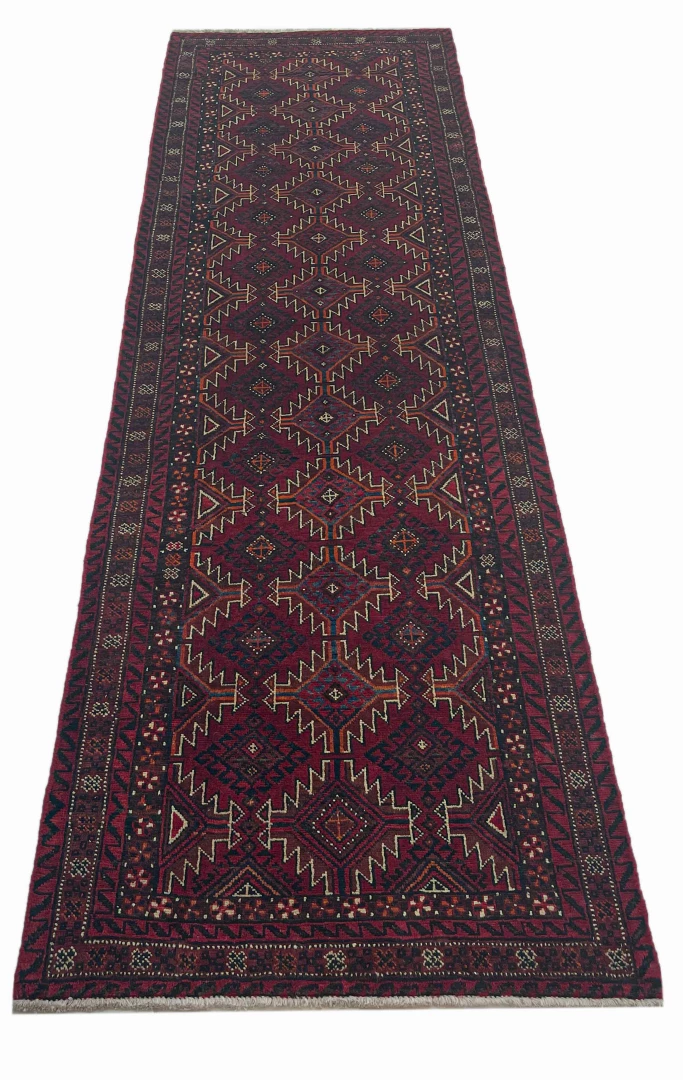
This Belutsch Persian Rug is made by traditional handcraft and is hand-knotted. Its pile is made from natural wool sourced from the producer’s own production. The wool is described as soft to the touch, while also being resistant to dirt and easy to clean. These material properties give the rug a pleasant surface and make it suitable for everyday use.
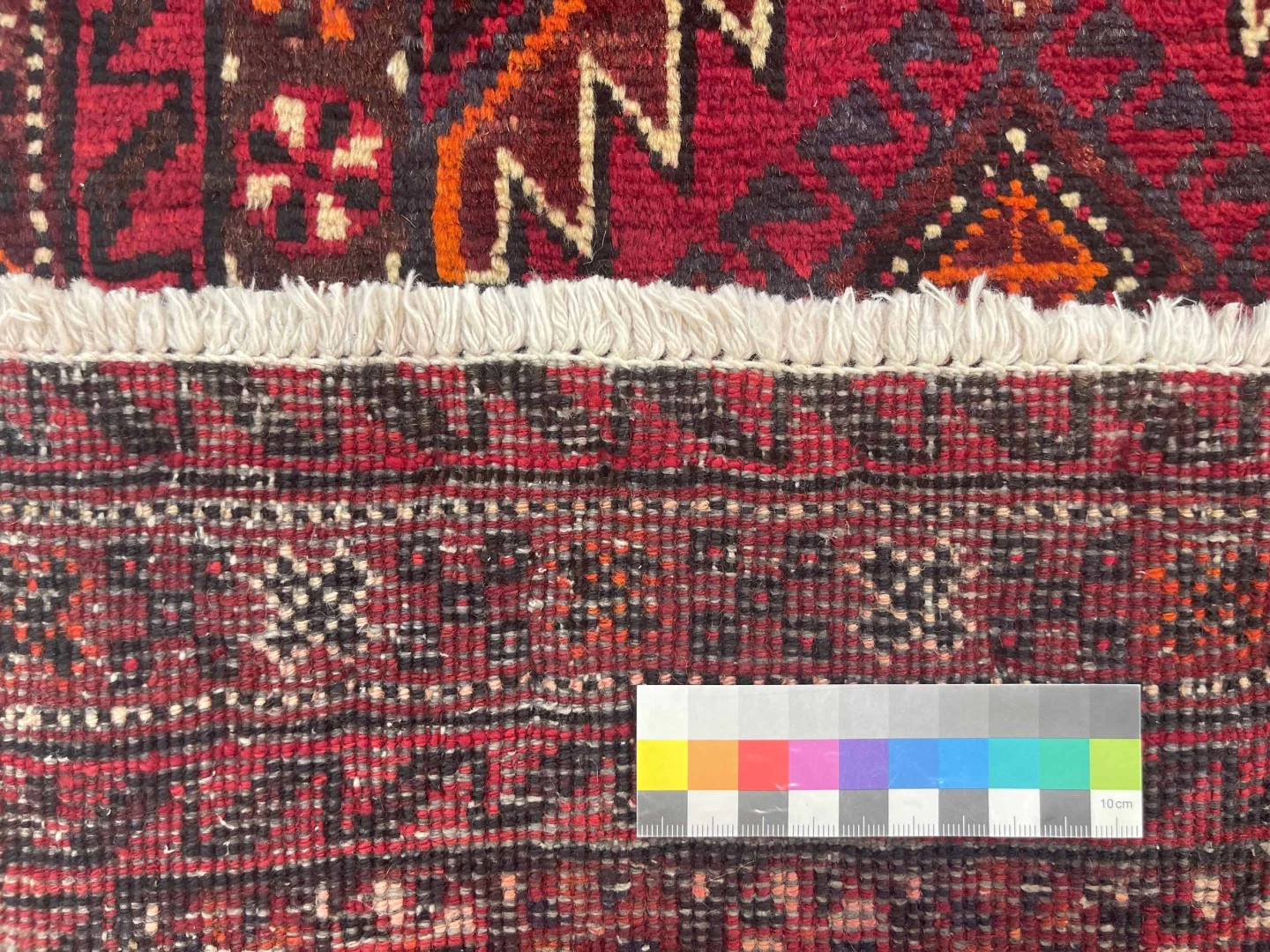
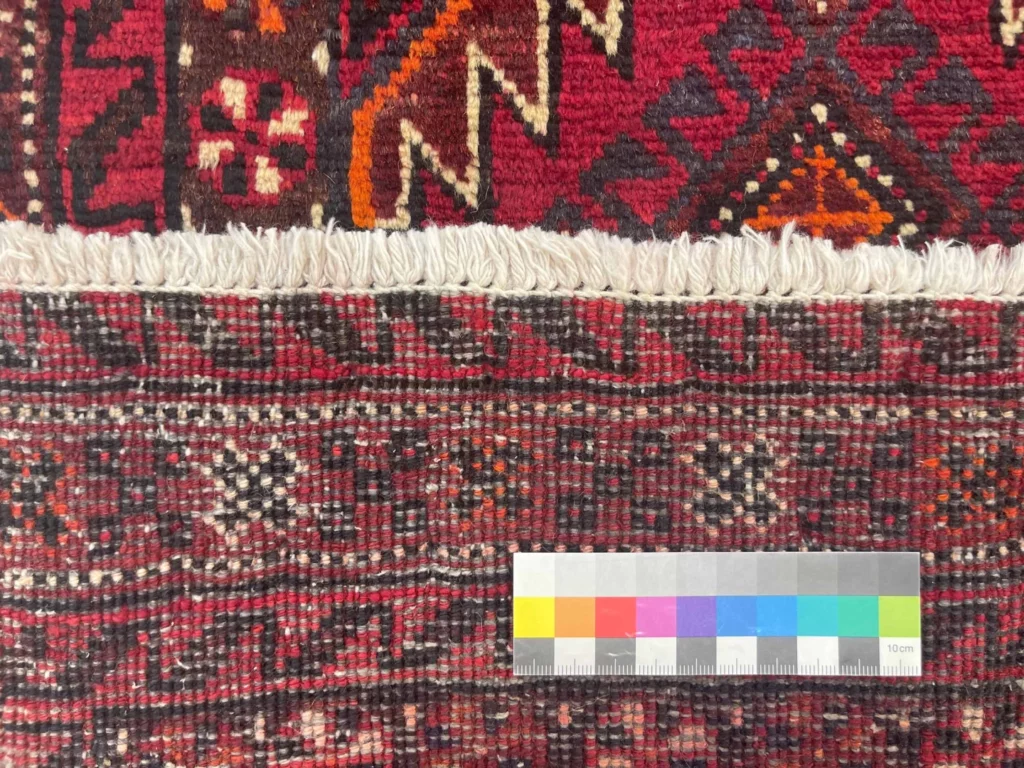
The rug has a knot density between 120.000 and 250.000 knots per square metre. This dense construction is one of the stated characteristics of the piece and allows the motifs to be worked with considerable precision. The rug is produced through the traditional craftsmanship of the Baluch people. Each element of the pile and design is formed through the knotting process rather than being printed onto a finished surface.
Hand production brings together practical skill and an inherited method of working. Rugs from the Baluch tradition are made using techniques passed down through generations. The individual rug is therefore presented as a distinct piece in which wool, knotting and pattern are closely connected. This particular rug is recorded as being in very good condition.
Origin and Tradition
The rug is associated with the region of the Baluch people, also called Balouch. This region lies in the tri-border area between Afghanistan, Persia and Pakistan. The reference identifies a cultural and craft region rather than one named town. It points to a cross-border area where textile traditions developed over a long period and where related forms of weaving and knotting continue to be associated with the Baluch people.
The region has produced a distinct carpet culture in which useful household textiles carry inherited design ideas. Knowledge of wool, colour, knotting and recurring symbols is transmitted within craft communities. Making a rug is therefore more than a purely technical process. It is part of a tradition whose forms are preserved, adapted and executed anew by successive generations of makers.
Traditional carpet production in this setting is based on building the design knot by knot. The maker works across the structure in successive rows, creating the pile and defining the outlines of the motifs. A higher knot density allows lines, small shapes and transitions to be rendered with greater precision. The density given for this rug is therefore directly relevant to the detailed character attributed to its pattern.
Baluch rugs are associated with designs in which the local environment, observations of nature and inherited ornament come together. Geometric structures can provide a firm order, while floral forms introduce more organic movement. These devices do not belong to one single period. They appear in varied arrangements and show how a regional craft tradition can respond to changing tastes while retaining recognisable links to its cultural background.
The wider Persian carpet landscape also includes Sarough and Tabriz rugs, which are described as notable for their craftsmanship and detailed patterns. Makers such as Nourollah and Haji Jalili are known for high-quality hand-knotting and individual designs. These examples belong to the broader carpet culture of the region and illustrate the range of schools, workshops and approaches that developed there. The present piece remains a Belutsch Persian Rug, with its own connection to Baluch tradition.
The term Persian Rug places the piece within the Persian carpet tradition. At the same time, its origin is given as the traditional craft of the Baluch people in the tri-border region between Afghanistan, Persia and Pakistan. These two descriptions complement one another. One identifies the wider cultural carpet context, while the other specifies the regional tradition associated with this rug. Together they provide a factual description of a hand-knotted piece connected with Baluch carpetmaking.
Design and Pattern
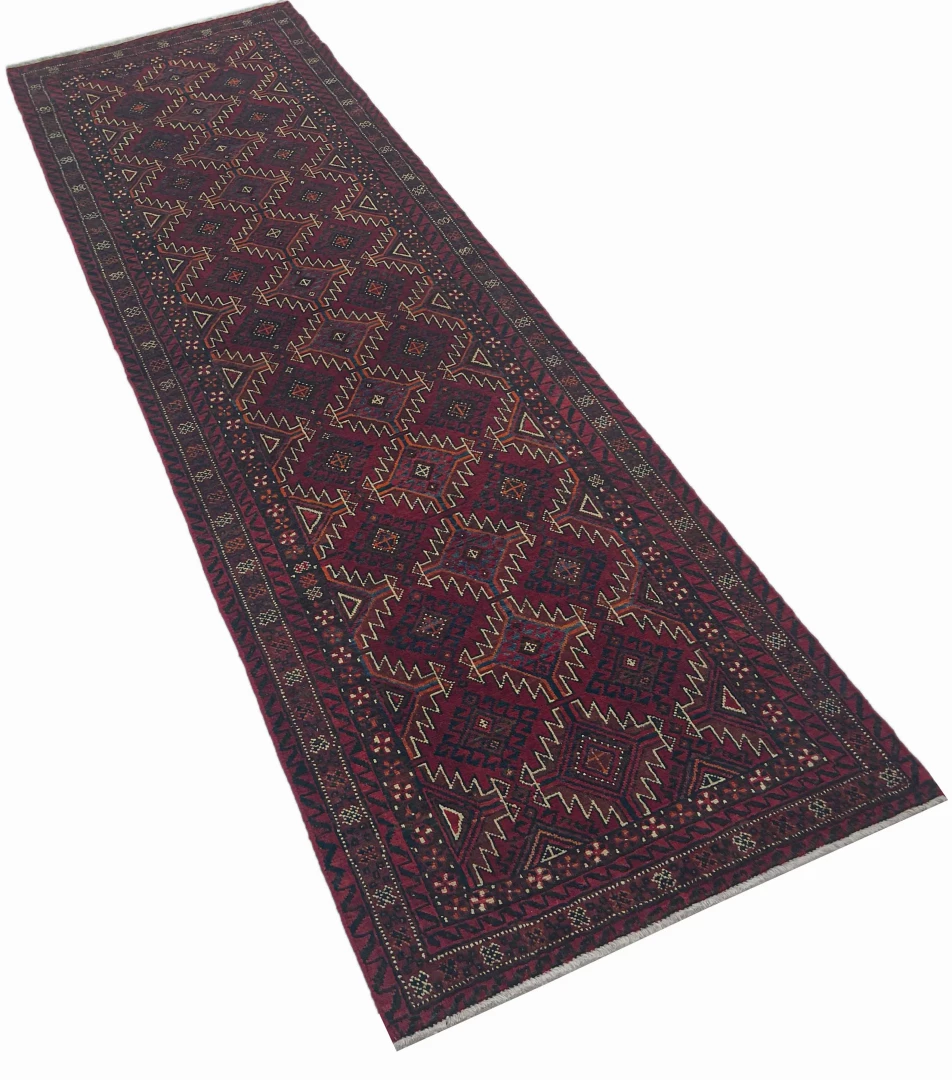
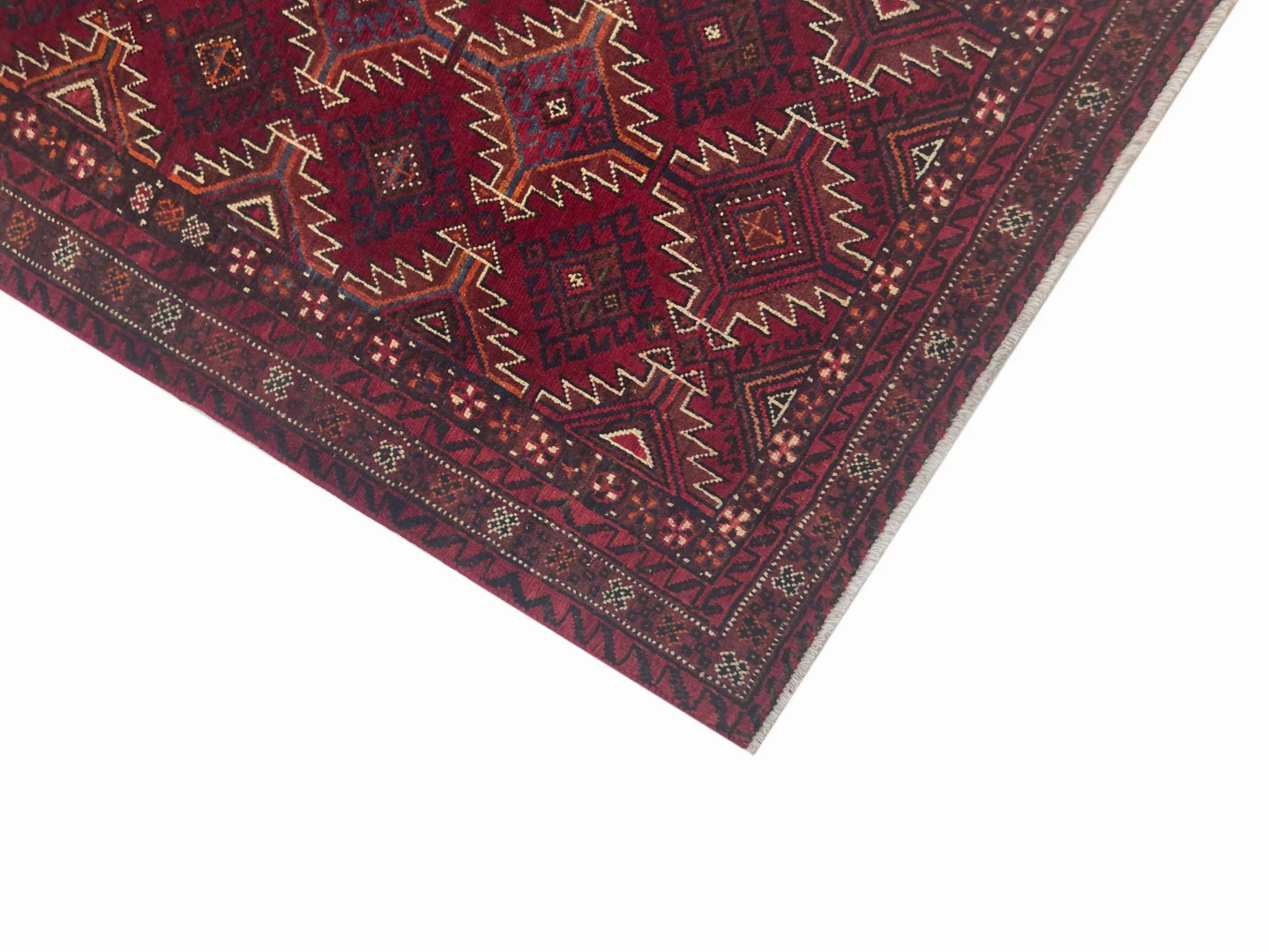
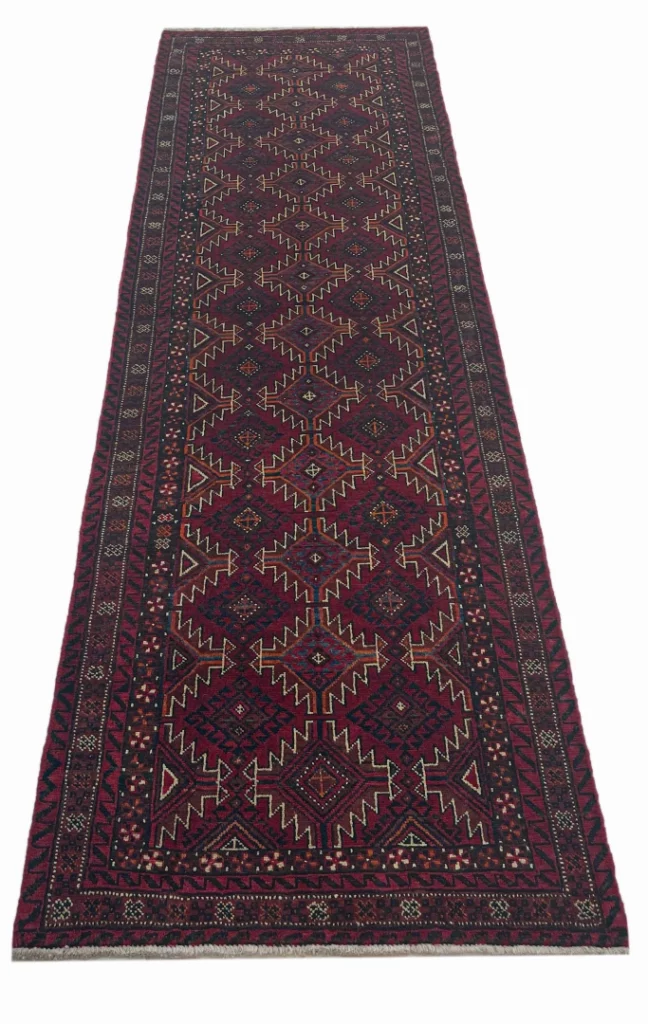
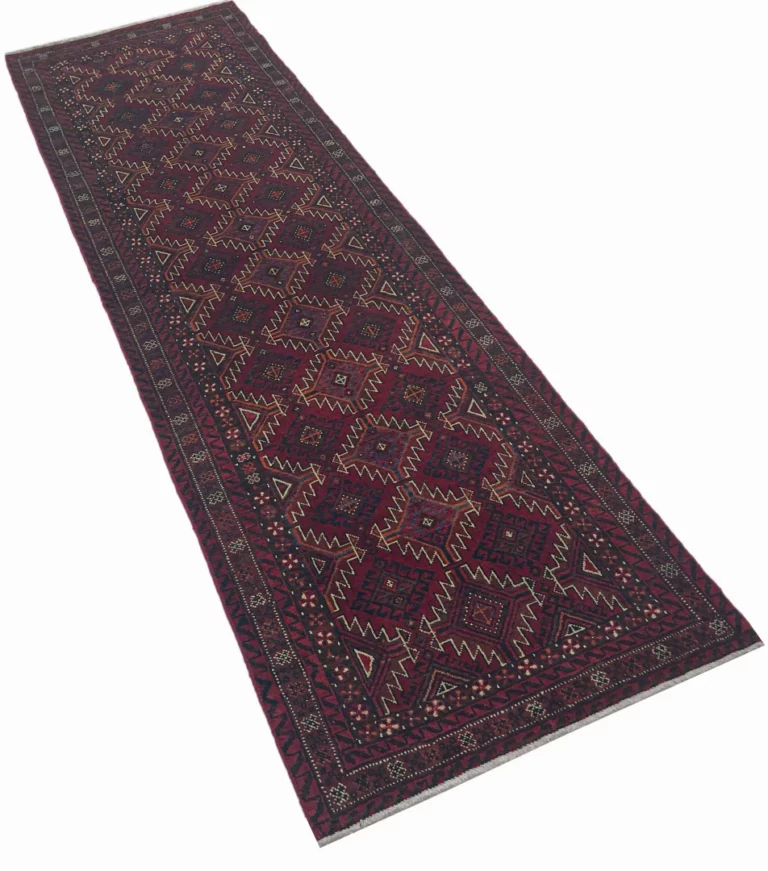
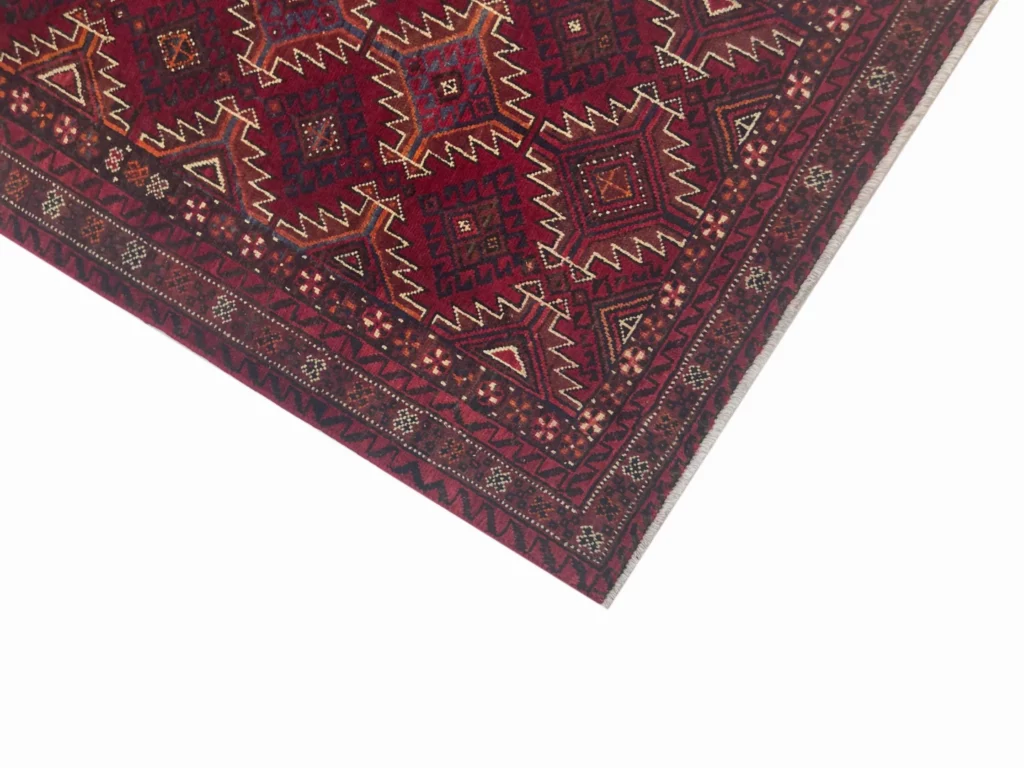
The design combines floral and geometric elements. Floral motifs draw on forms found in nature and introduce organic lines into the composition. Geometric motifs add clear outlines, repetition and structured areas. Their combination creates a design language that joins inherited ornament with an appearance that can also work in a more contemporary interior.
Baluch patterns are inspired by nature and the surrounding environment. This does not necessarily mean a literal depiction of one particular plant or landscape. Instead, observed forms are transformed into an ornamental vocabulary. Flowers, branches or simplified plant shapes may appear as rhythmic signs, while geometric fields, lines and repeated symbols organise the surface. In a hand-knotted rug, this effect is built through the arrangement of many individual knots.
The stated colour range extends from deep, rich reds through blue and green tones to gentle earth colours. These colour families form part of the described visual character. Reds can establish a warm and concentrated foundation, while blues and greens provide contrast and accents. Earth tones create quieter transitions between stronger areas. The overall effect depends on how these colours interact with the floral and geometric structure rather than on one isolated shade.
Floral and geometric forms can be arranged in many ways within a regional design tradition. Repeated motifs give the surface cohesion, while small variations in a handmade execution preserve the character of an individually produced rug. The high knot density supports the precise rendering of detail, but the design is not reduced to one single named motif. Its identity comes from the combination of organic and ordered forms.
Baluch pattern traditions are also connected with the rug’s role as a useful textile. Decorative elements must sit within a coherent field that can be read as a whole. Geometric divisions can frame and organise the composition, while floral details introduce rhythm and movement. This balance helps explain why the design is described as combining tradition with modern style and as suitable for different interior settings.
Colour and motif are not separate from construction in a hand-knotted rug. The knotting determines how finely a line can be drawn, while the wool surface influences how the colour fields are perceived. In this piece, natural wool, dense knotting and the combination of floral and geometric elements therefore work together. The design is not applied after production; it is formed as part of the handmade structure.
The result can be placed in a traditionally furnished room or alongside more modern shapes. This does not assign the rug to one particular interior style. It describes the flexibility of an ornament that retains regional references while allowing different combinations around it. The stated reds, blues, greens and earth tones provide several points of connection without changing the rug’s Baluch design identity.
Special Features
The key features of this rug are the traditional Baluch handcraft, the hand-knotted construction and the use of natural wool from the producer’s own production. Its knot density of 120.000 to 250.000 knots per square metre is expressly stated and supports the detailed treatment of the pattern. The pile is described as soft, while the wool is also considered resistant to dirt and easy to clean.
The rug is in very good condition. Its design combines floral and geometric motifs with a palette of red, blue, green and earth tones. Its regional origin is given as the Baluch area in the tri-border region between Afghanistan, Persia and Pakistan. The individual piece therefore brings together clearly stated information about material, technique, condition, design and cultural context.
FAQ
What makes this Belutsch Persian Rug distinctive?
Its distinctive features are the traditional handcraft of the Baluch people, the hand-knotted construction and the use of natural wool from the producer’s own production. The stated knot density of 120.000 to 250.000 knots per square metre supports the precise treatment of the design. Floral and geometric motifs are combined with deep reds, blue and green tones, and gentle earth colours. The rug is also described as being in very good condition.
How should the rug be cared for?
The natural wool is described as resistant to dirt and easy to clean. Regular vacuuming is suitable for removing dust and loose dirt from the surface. If a stain occurs, it should be dabbed immediately with a damp cloth. Rubbing should be avoided so that the wool fibres are not damaged. This straightforward care routine helps support the good condition of the hand-knotted rug.
Where does the rug come from?
The rug comes from the region of the Baluch people, also known as Balouch. This area is situated in the tri-border region between Afghanistan, Persia and Pakistan. Traditional craft practices are passed down there through generations. The origin therefore identifies the regional and cultural setting of Baluch carpetmaking. At the same time, the rug is placed within the Persian carpet tradition and described as a Belutsch Persian Rug.
To provide the best experiences, we use technologies like cookies to store and/or access device information. Consenting to these technologies will allow us to process data such as browsing behavior or unique IDs on this site. Not consenting or withdrawing consent, may adversely affect certain features and functions.
Functional Always active
The technical storage or access is strictly necessary for the legitimate purpose of enabling the use of a specific service explicitly requested by the subscriber or user, or for the sole purpose of carrying out the transmission of a communication over an electronic communications network.
Preferences
The technical storage or access is necessary for the legitimate purpose of storing preferences that are not requested by the subscriber or user.
Statistics
The technical storage or access that is used exclusively for statistical purposes.The technical storage or access that is used exclusively for anonymous statistical purposes. Without a subpoena, voluntary compliance on the part of your Internet Service Provider, or additional records from a third party, information stored or retrieved for this purpose alone cannot usually be used to identify you.
Marketing
The technical storage or access is required to create user profiles to send advertising, or to track the user on a website or across several websites for similar marketing purposes.

 SECURE PAYMENT
 SHIPPING PARTNERS


