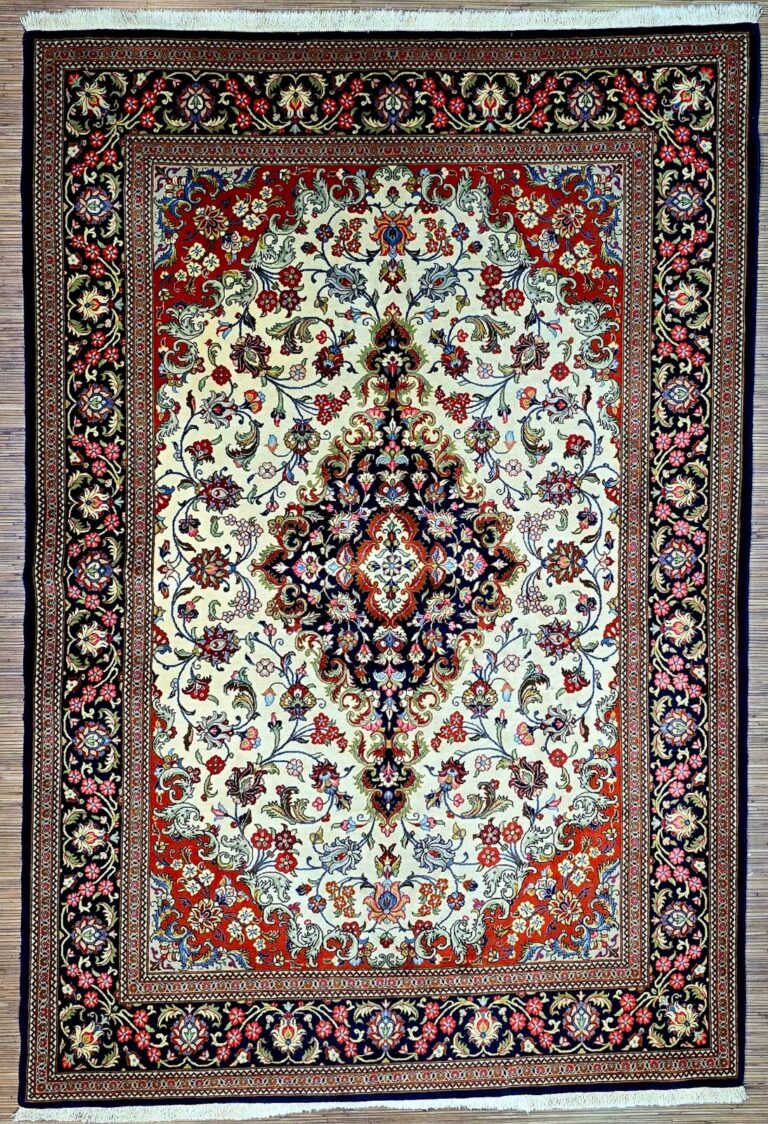
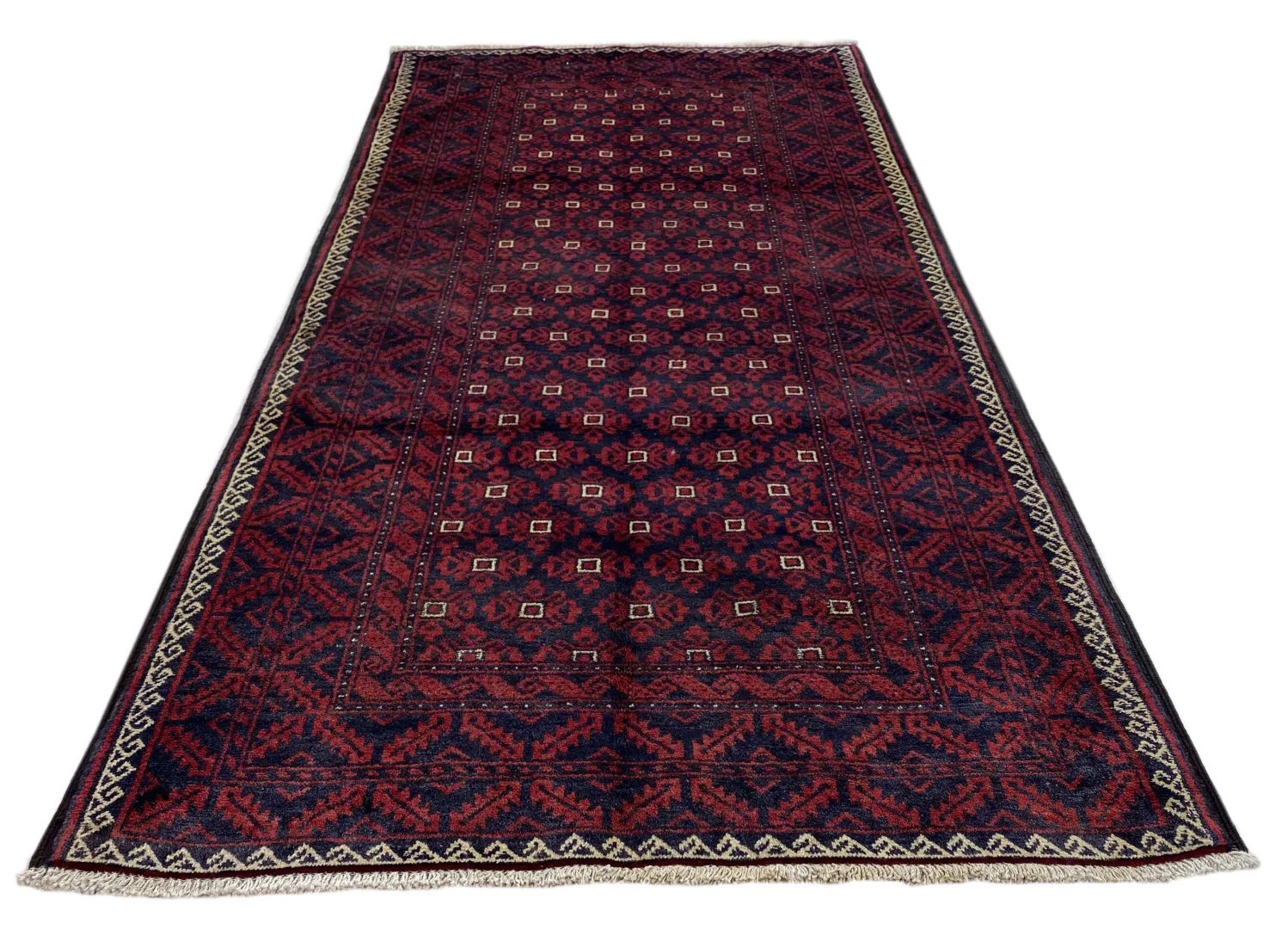
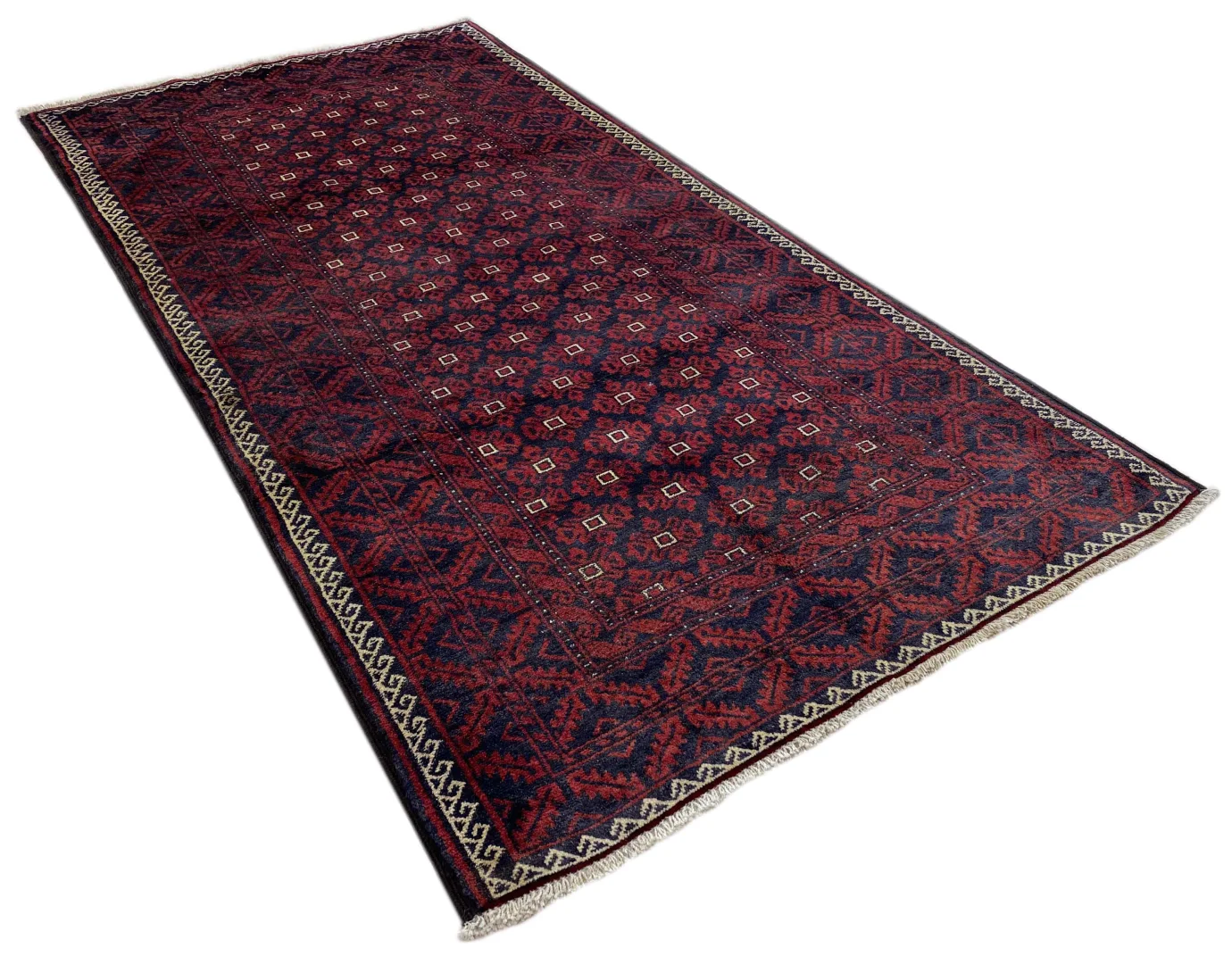
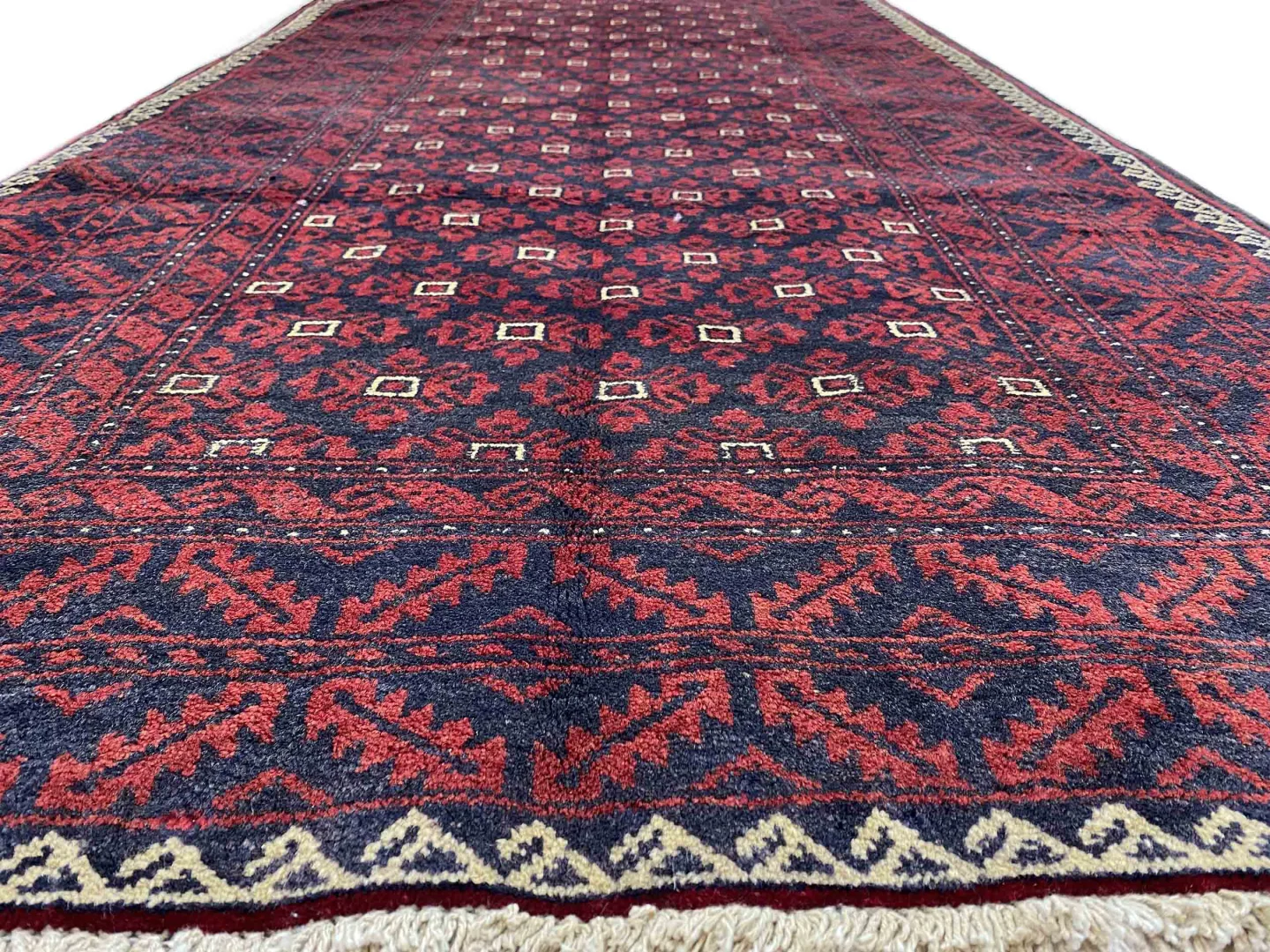
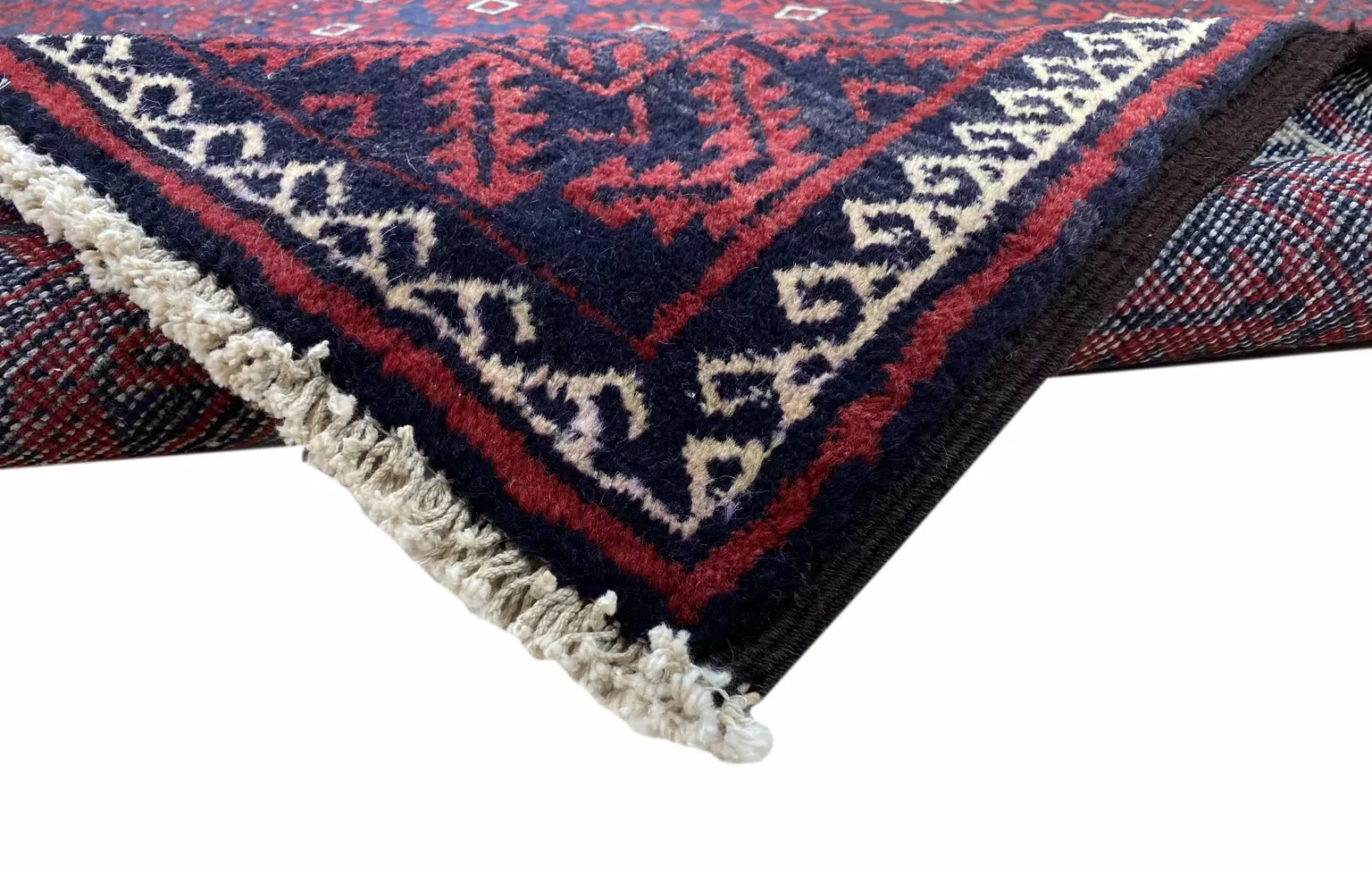
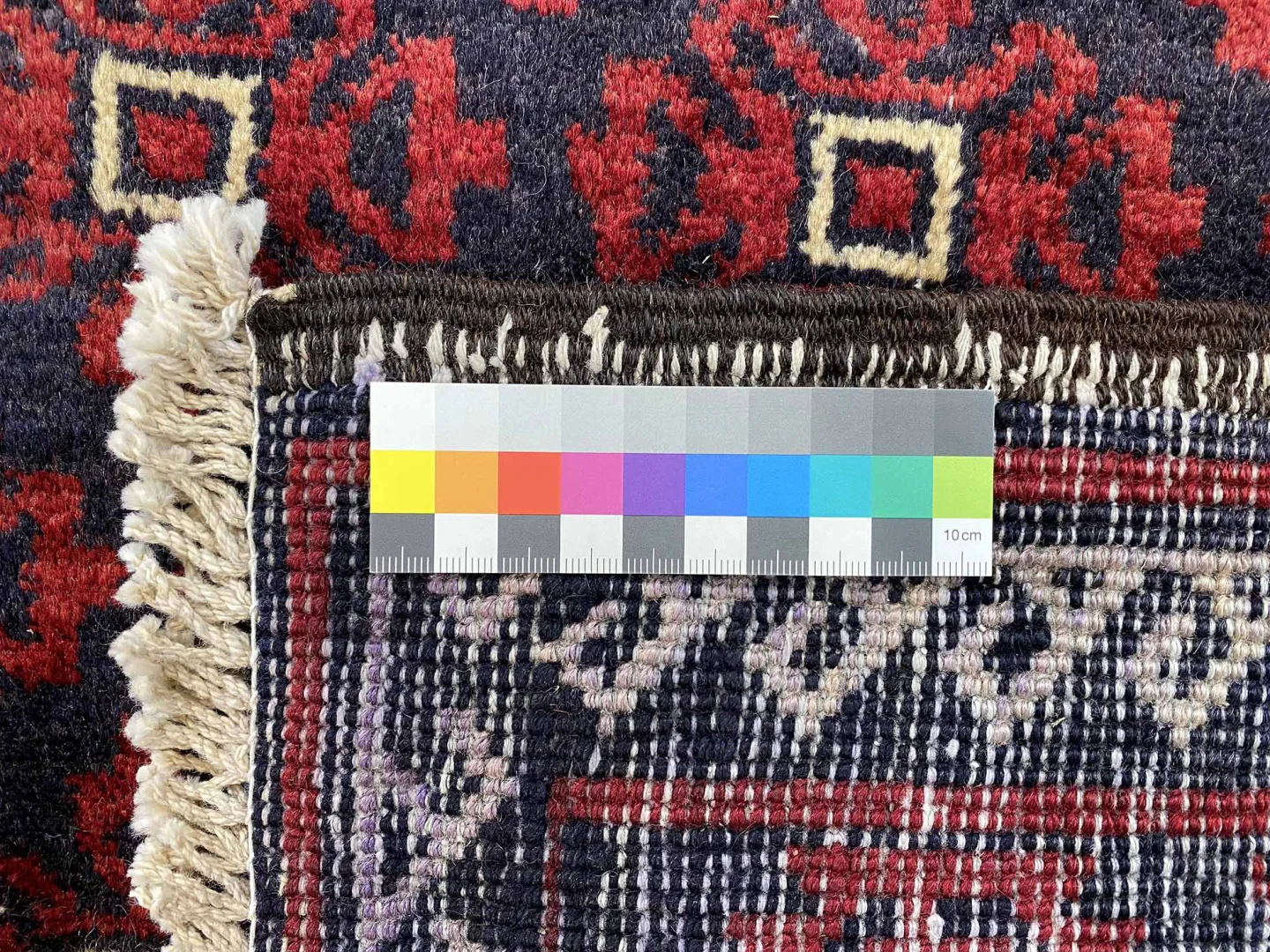
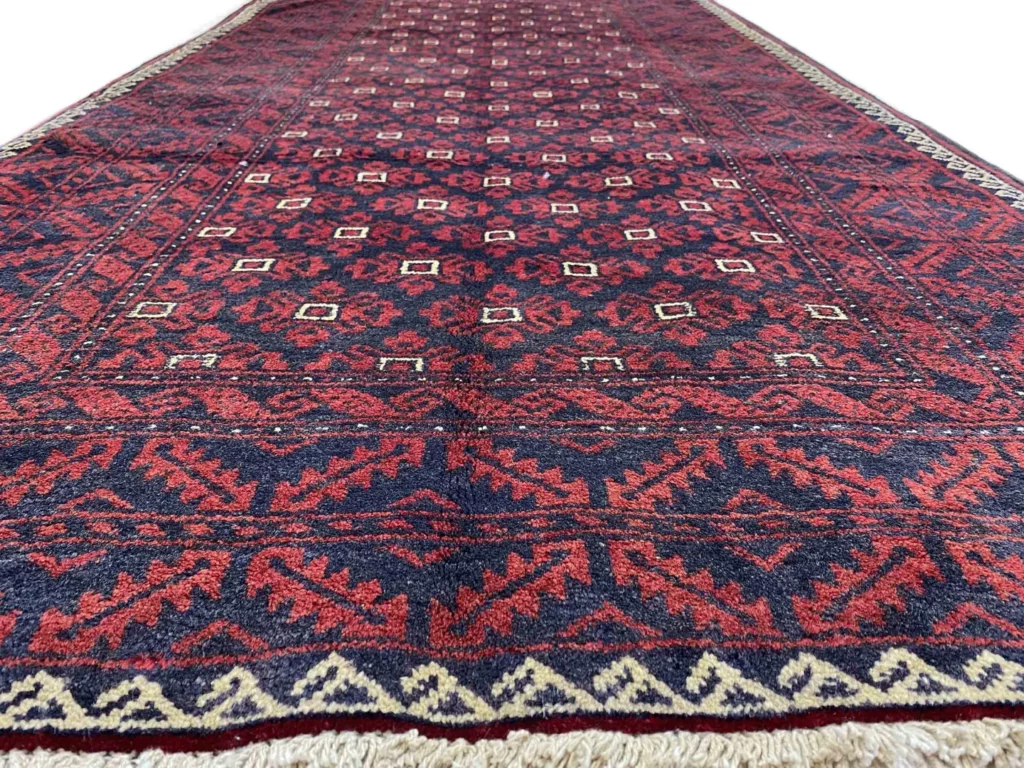
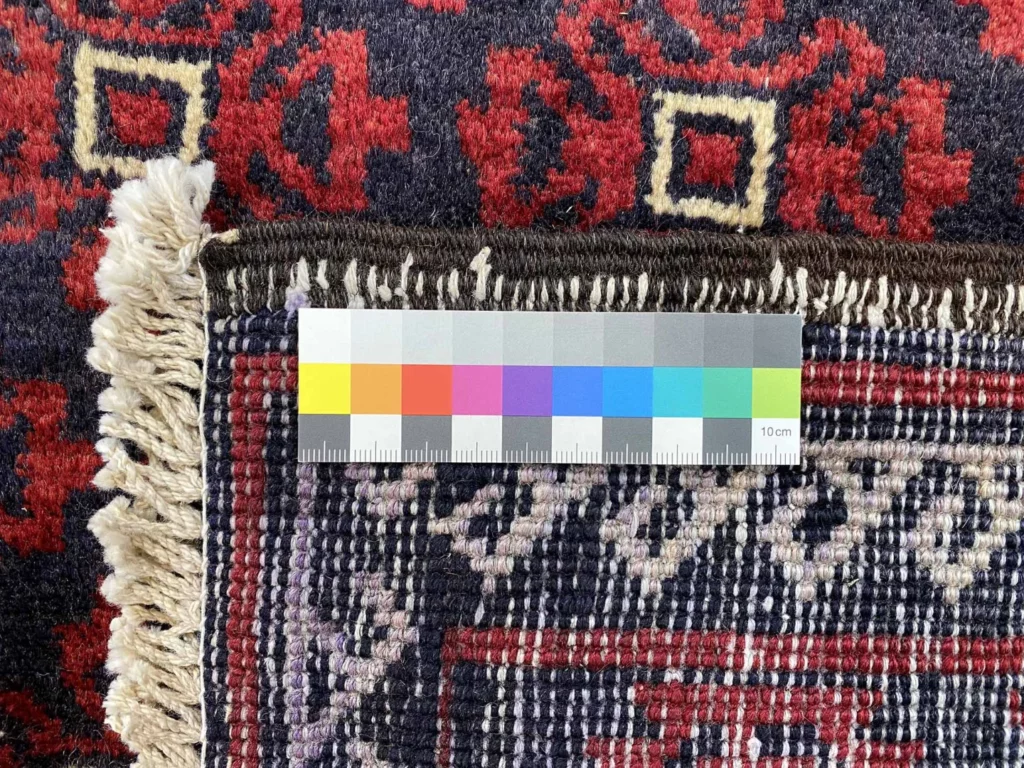
This Belutsch Persian rug is hand-knotted and has a pile made of natural wool. Hand knotting is one of the defining methods of oriental rug making: individual knots are tied into the foundation, building the textile surface row by row. Unlike a machine-made floor covering, the pile is formed directly during the weaving process. The preparation of the wool, the spinning of the yarn and the consistency of the work all influence how the finished surface is structured.
Natural wool has long been used in rug making because it combines resilience, flexibility and a comfortable handle. Wool fibres can recover part of their shape after pressure, which helps create a durable pile structure. The material also accepts dye well and supports a distinct relationship between colour and texture. These are general properties of wool as a rug material; they do not add an unrecorded specification to this particular piece.
The knot density of this rug is stated as 120,000 to 250,000 knots per square metre. A density in this range allows a knotted surface to carry carefully differentiated outlines and repeated details. Density should nevertheless be considered together with yarn thickness, knotting method and the organisation of the design. In a hand-knotted rug, the character of the result depends on the interaction of material, workmanship and pattern rather than on one figure alone.
Wool passes through several stages before it becomes part of a knotted rug. It is prepared, spun and introduced as yarn into the construction. As the work progresses, the emerging surface is aligned and compacted. Once the knotting is complete, the pile and edges are finished so that the textile forms a coherent whole. The features specifically recorded for this rug are its hand-knotted technique, natural wool pile and stated knot density.
Origin and Tradition
The name Belutsch connects this rug tradition with the cultural area of the Baluch people. That area extends across territories now associated with Afghanistan, Iran and Pakistan. Belutsch rugs therefore appear in more than one national and historical context. The origin of this rug is given as Afghanistan, Persia and Pakistan. This wording reflects a broad regional connection rather than assigning the piece to one modern country alone.
Baluch communities traditionally lived across widely separated regions and worked under varied environmental and social conditions. Rugs and other textiles served practical purposes in domestic life, including furnishing, insulation and protection from the ground. They could also carry decorative and cultural meaning. Skills involving wool, colour, pattern and construction were learned through family and community practice. Such knowledge was transmitted through doing the work, with techniques adapted to local resources and individual workshops.
Persian rug history developed through the interaction of craft, trade and regional production centres. Persian rugs are not a single uniform category: different areas developed their own approaches to layout, ornament, colour and construction. The term Persian rug describes a broad artistic and craft tradition, while Belutsch represents a particular regional textile context within the wider oriental rug world. Nomadic, village and workshop practices may all be relevant when discussing this tradition, but the name alone does not identify one specific maker.
Afghanistan, Persia and Pakistan have long been linked by movement across neighbouring regions. Wool, dyes, textiles and finished rugs travelled along routes that also carried ideas and techniques. As communities met, motifs could be borrowed, simplified or reinterpreted. This explains why related forms may occur in rugs associated with different areas. It does not mean that every rug with a shared motif has the same origin. The multiple origin statement for this piece preserves that wider historical and geographical context.
Hand knotting is a method in which the pattern is built into the textile rather than applied after manufacture. The knotter follows a design arrangement, introduces coloured yarns and advances through the rows of the rug. The result is a surface whose ornament and structure are connected. Repeated practice is required to keep the rows, proportions and colour sequence coherent. This relationship between use and decoration has shaped oriental rug production over many generations.
When a Belutsch rug is classified, origin, material, technique and design should be considered together. The term does not by itself identify a village, workshop, date or exact production area. For this example, the relevant recorded points are the origin Afghanistan, Persia and Pakistan, the natural wool pile, the hand-knotted construction and the stated knot density. No more precise attribution to a town or workshop is made here. That distinction keeps the description tied to the documented identity of the piece.
The wider tradition is also connected with the history of Persian carpet making, in which knowledge was passed between generations and adapted to changing circumstances. Regional names can describe both a cultural association and a style of textile production. In the case of this rug, Belutsch is the named designation, while the origin is expressed through the three-part geographical reference. These terms should be read together and not replaced by a narrower provenance that has not been supplied.
Design and Pattern
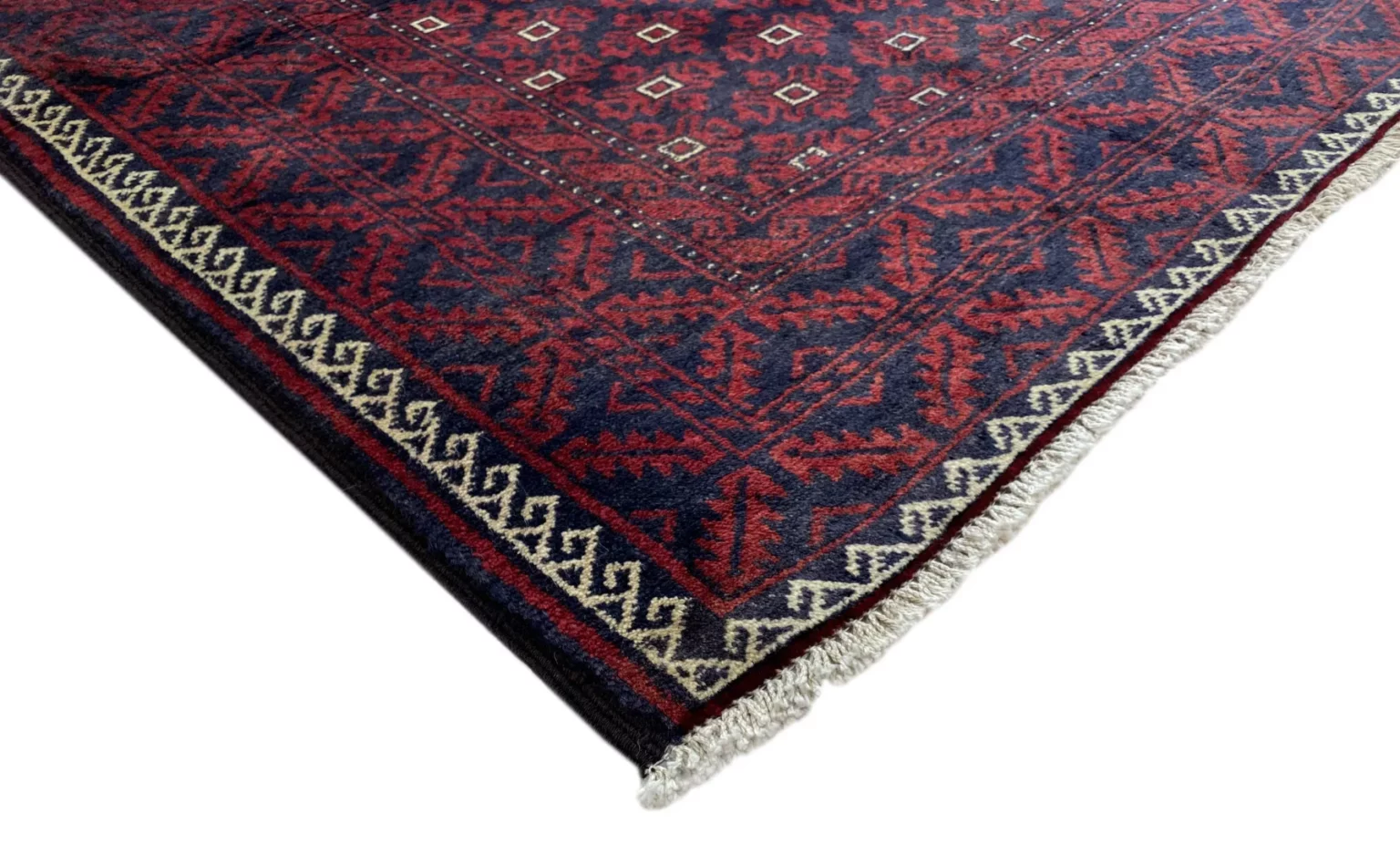
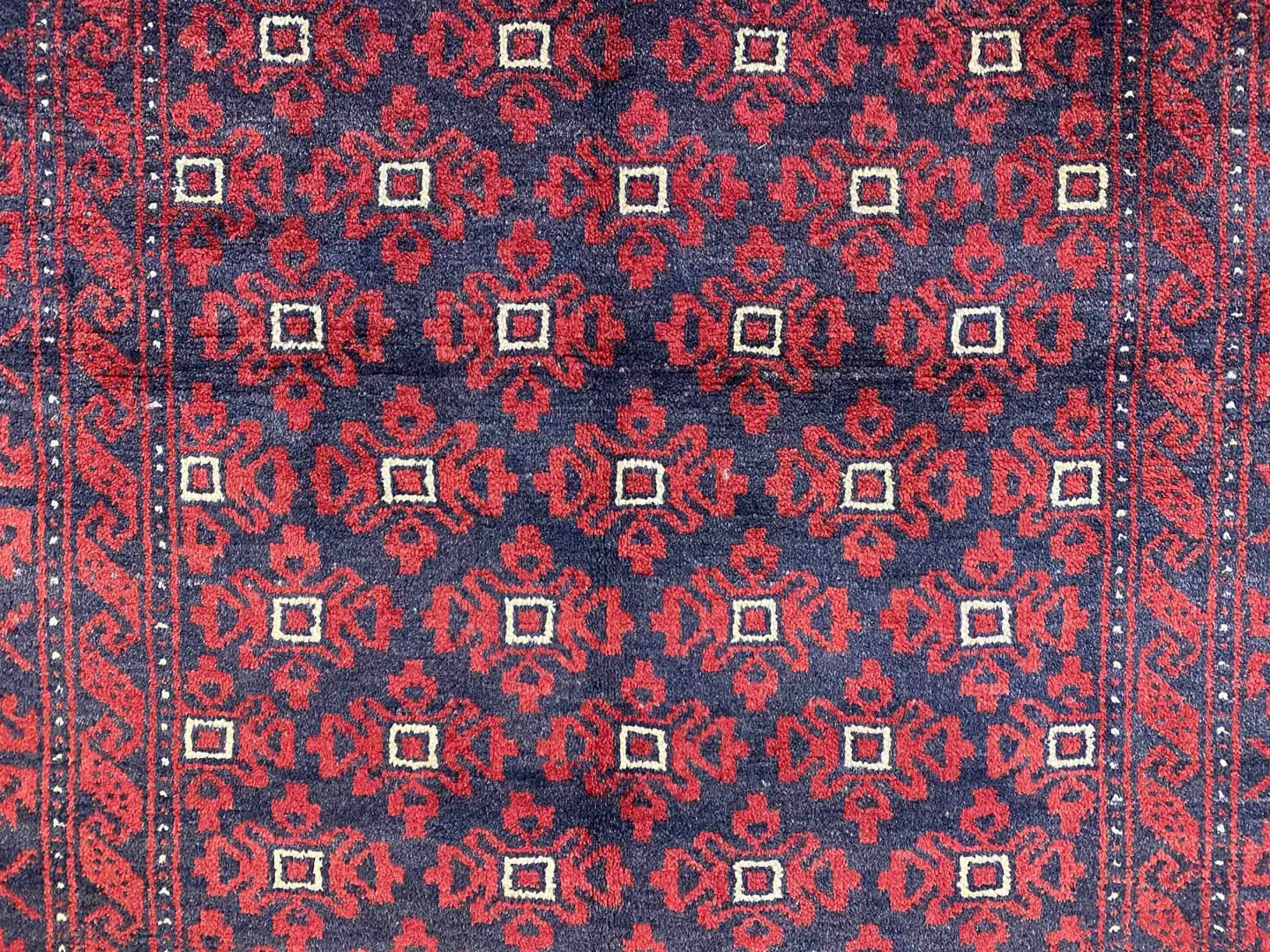
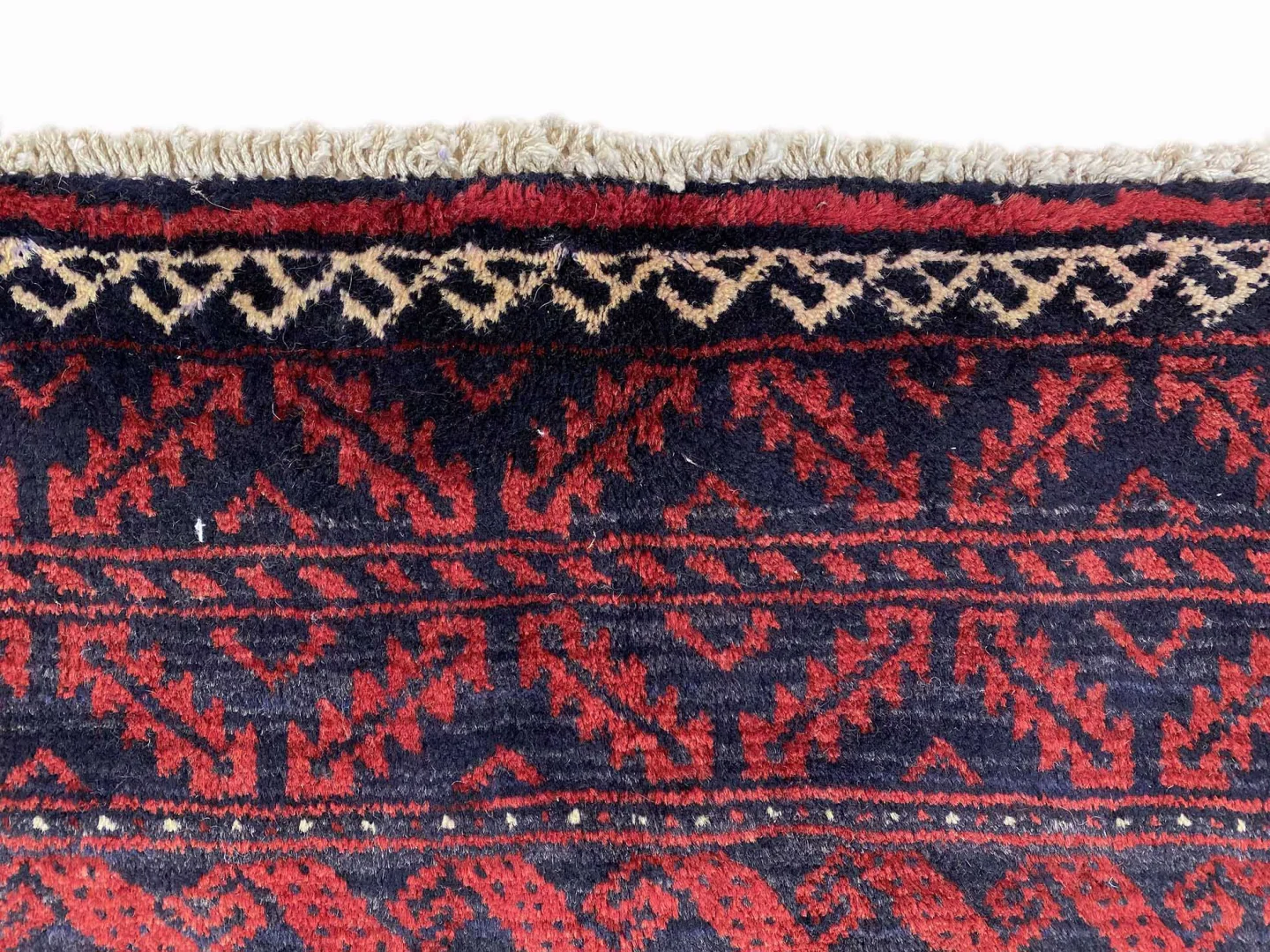
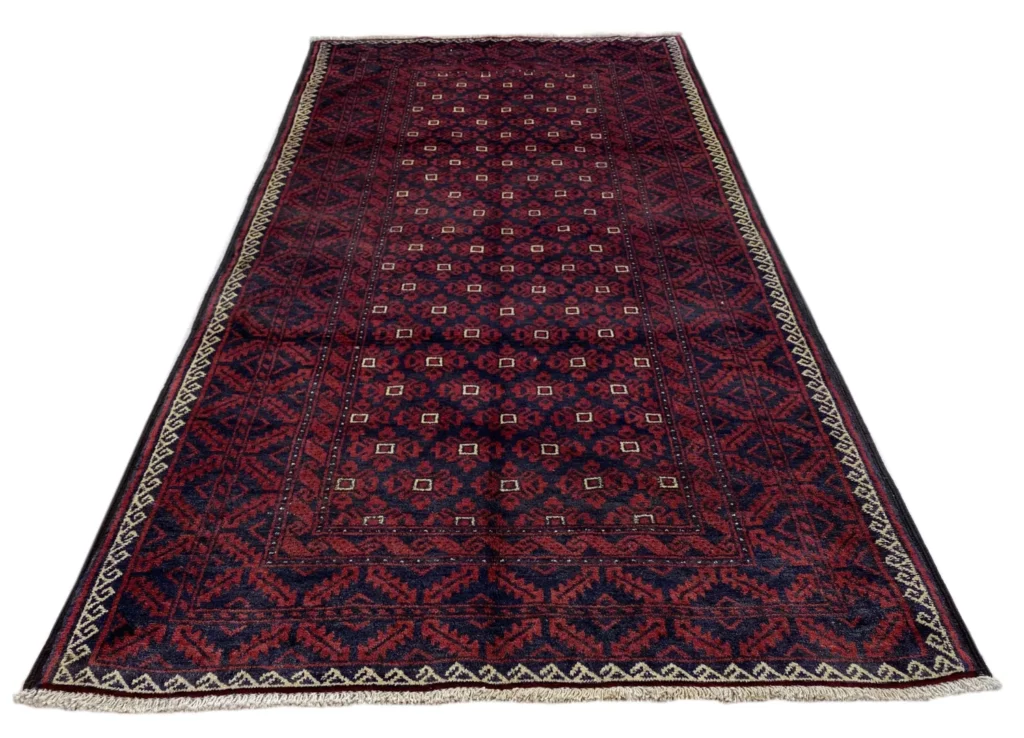
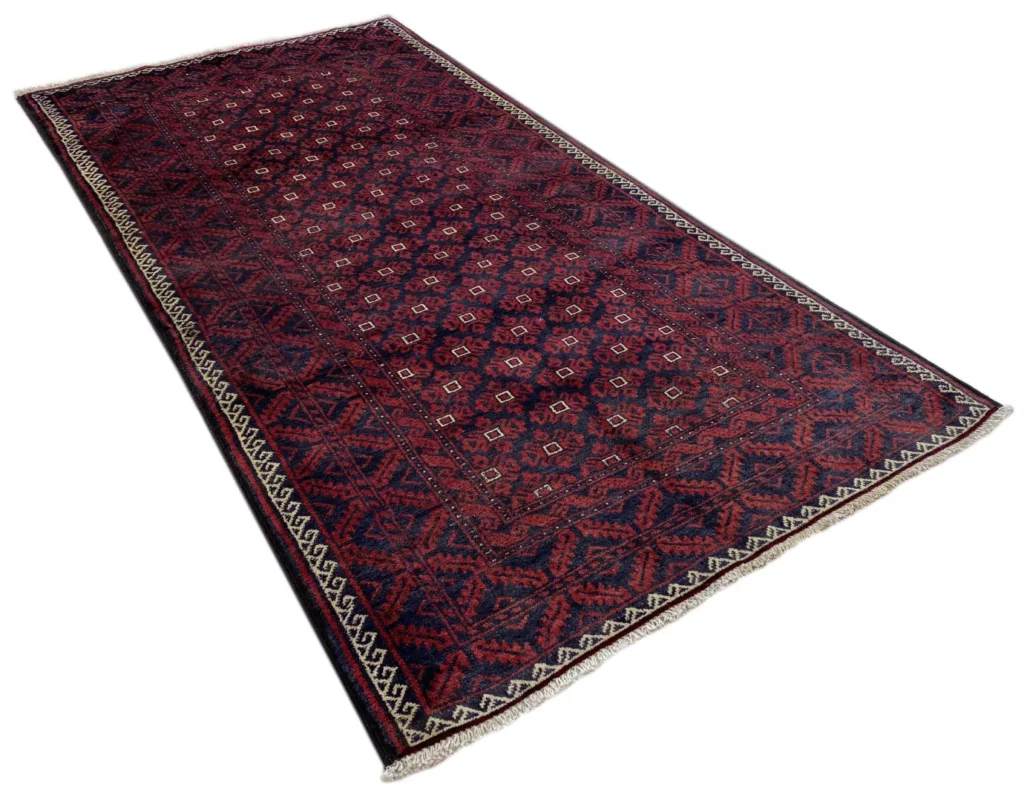
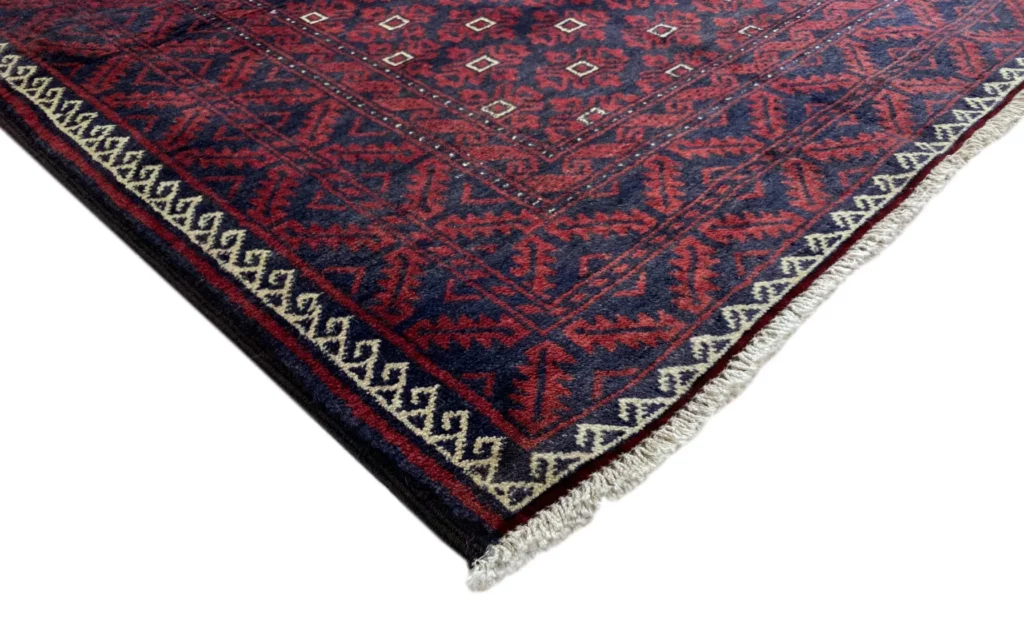
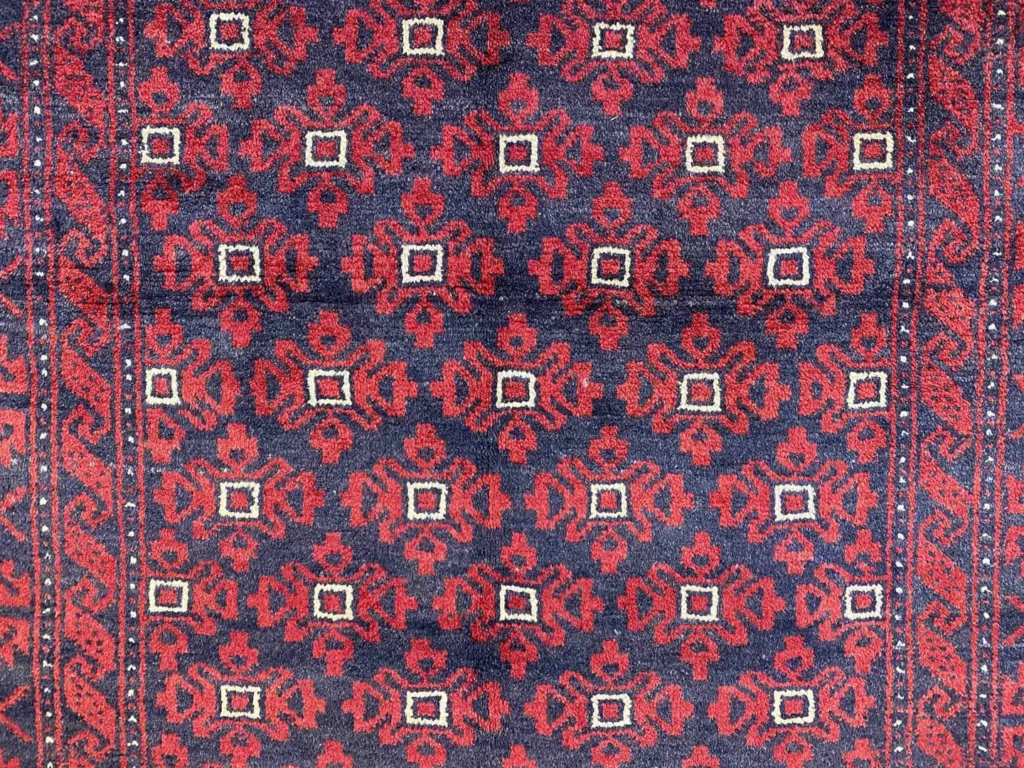
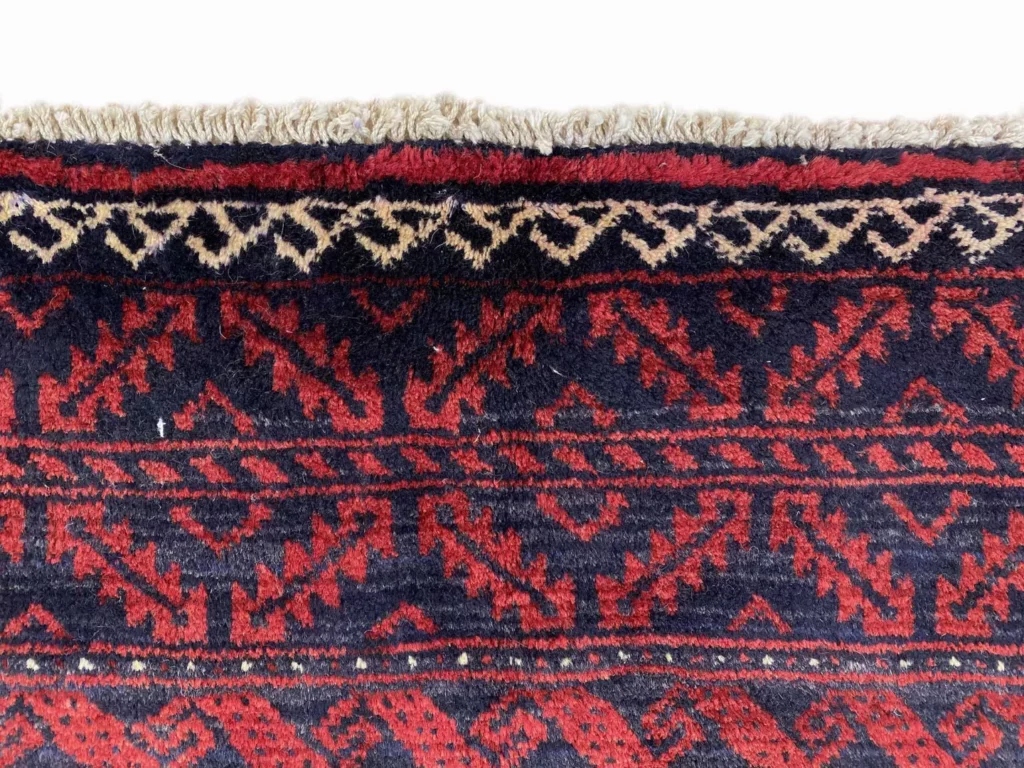
Belutsch rugs are commonly discussed in connection with a design language where geometric order and handwork reinforce one another. Rhomboids, diamonds, stepped forms, hooked shapes, stripes and repeating borders can divide the surface into recognisable areas. A central field may be framed by one or more borders, while repeated motifs establish rhythm across the textile. These forms are practical as well as decorative because they help organise the pattern during knotting.
Geometric motifs are built from shapes that can be repeated, mirrored or combined. A diamond may be placed beside smaller hooks, enclosed by stepped lines or arranged in a sequence. Stripes can establish direction and distinguish the inner field from the border. In a hand-knotted rug, repetition is not necessarily mechanically identical. Small variations can arise from the manual process and reflect the way the design is translated into individual knots.
Stylised plants and simplified animal forms may also occur in the broader Belutsch design tradition. They are often reduced to lines, angles and compact shapes instead of being rendered as naturalistic pictures. This allows them to remain part of a geometric composition. Floral, animal and abstract references may overlap in oriental rug design, but none of these general motifs proves a specific origin on its own.
Persian carpet design has preserved many different approaches to ornament. Floral scrolls, palmettes, medallions and border systems were interpreted differently in urban, village and courtly settings. Belutsch design is often associated with a more abstract and angular vocabulary, although regional traditions have never existed in complete isolation. Neighbouring communities, trade and shared cultural history encouraged forms to circulate. Similarities between patterns therefore need to be distinguished from proof of identical manufacture.
Colour is an important structural element in a rug. Contrasting tones can separate motifs, establish a border and make the sequence of the pattern legible. Traditional oriental rug production used plant-based and mineral colour sources, while dyeing methods changed across time and region. The final impression also depends on the wool, the yarn, the light and the way the surface has aged. The source text does not specify the colours of this rug, so no particular palette is assigned to it.
Nor is an individual motif described in the information for this piece. A responsible description therefore separates the general Belutsch pattern tradition from details that are actually recorded. The rug is identified as Belutsch and hand-knotted, but its exact field design, border composition and colour arrangement are not stated. The regional background explains the design vocabulary without turning commonly associated motifs into unsupported claims about this rug.
The recorded knot density can support a differentiated treatment of contours and repeated ornaments, but density alone cannot determine which pattern was used. The arrangement of knots into fields, borders and colour blocks is what creates the visible design. In a hand-knotted Belutsch rug, inherited forms are combined with the interpretation of the individual knotter. This is why rugs within the same broad tradition can share a visual language while remaining distinct in their execution.
Special Features
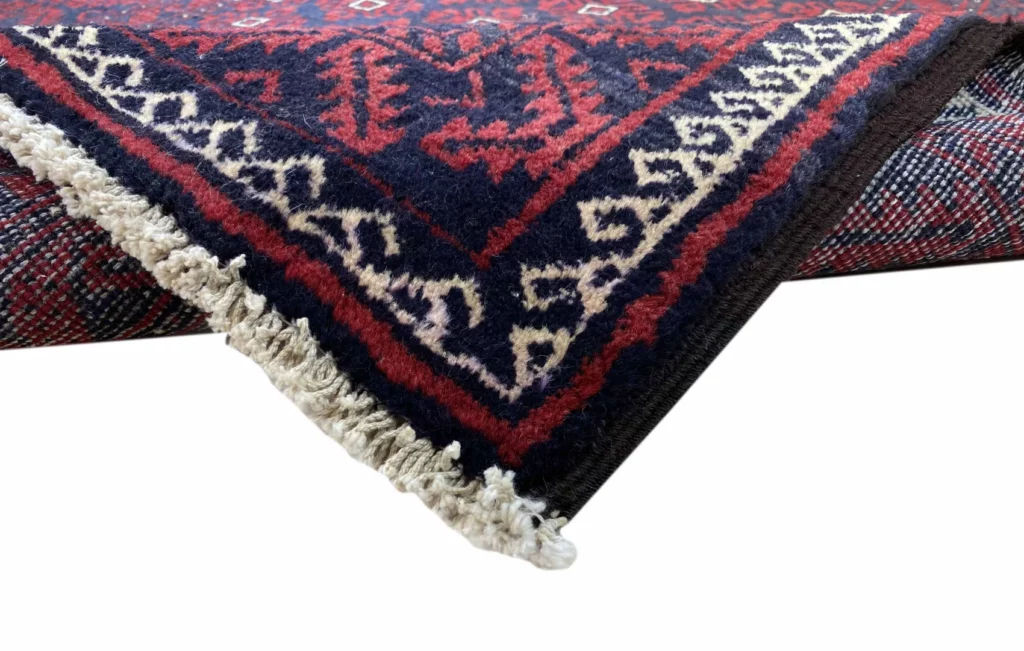
The specifically recorded features are the hand-knotted construction, a pile of natural wool and a knot density of 120,000 to 250,000 knots per square metre. The rug is also described as being in very good condition. These statements concern the material, technique, density and stated condition of the offered piece. They provide the factual basis for describing it without adding an age, signature, workshop or more precise provenance.
Natural wool gives the pile its characteristic textile quality, while hand knotting places the material directly into the structure of the rug. The stated density indicates closely organised knotting work. Together, these features define the piece as a hand-knotted wool rug within the Belutsch and Persian rug context. They should be considered alongside the condition description rather than treated as a substitute for an examination of every part of the rug.
The origin is recorded as Afghanistan, Persia and Pakistan. This broad wording is appropriate to the cross-border cultural area associated with Belutsch rugs. No additional attribution to a particular city, village, workshop or production period is included. Keeping the description at that level avoids converting a regional designation into a narrower provenance that is not documented.
FAQ
How can the quality of a Persian rug be assessed?
Quality in a hand-knotted Persian rug is considered through several factors, including knot density, material and workmanship. A higher density may permit finer outlines and more detailed pattern work, but it must be read together with yarn, knotting method and design. The condition of the pile and the coherence of the construction are also relevant. Natural wool is traditionally valued for its resilience, flexibility and comfortable handle. This Belutsch rug is described as hand-knotted, with a natural wool pile and a knot density of 120,000 to 250,000 knots per square metre. Its condition is stated as very good. These documented features support a factual assessment without adding an unrecorded age or precise place of manufacture.
How should a hand-knotted wool rug be cared for?
Regular, gentle vacuuming helps remove loose dust and surface dirt from the pile. The surface should not be subjected to unnecessary force. If liquid is spilled, it should be absorbed promptly rather than rubbed deeply into the textile. Professional cleaning is advisable for a thorough treatment because wool, dyes and the knotted structure require appropriate handling. Cleaning at suitable intervals can help preserve the textile substance over time. When the correct method or cleaning product is uncertain, professional advice should be obtained before treatment begins.
Where does a Belutsch rug come from?
Belutsch rugs are associated with the cultural area of the Baluch people, which extends across parts of present-day Afghanistan, Iran and Pakistan. Their origin can therefore be expressed through more than one country or historical region. For this rug, the origin is given as Afghanistan, Persia and Pakistan. Belutsch describes the regional and textile classification here; it does not automatically identify one town or workshop. The tradition is known for inherited handcraft, wool use and geometric pattern languages. A more precise local attribution can only be made when a specific place or maker is explicitly documented.
To provide the best experiences, we use technologies like cookies to store and/or access device information. Consenting to these technologies will allow us to process data such as browsing behavior or unique IDs on this site. Not consenting or withdrawing consent, may adversely affect certain features and functions.
Functional Always active
The technical storage or access is strictly necessary for the legitimate purpose of enabling the use of a specific service explicitly requested by the subscriber or user, or for the sole purpose of carrying out the transmission of a communication over an electronic communications network.
Preferences
The technical storage or access is necessary for the legitimate purpose of storing preferences that are not requested by the subscriber or user.
Statistics
The technical storage or access that is used exclusively for statistical purposes.The technical storage or access that is used exclusively for anonymous statistical purposes. Without a subpoena, voluntary compliance on the part of your Internet Service Provider, or additional records from a third party, information stored or retrieved for this purpose alone cannot usually be used to identify you.
Marketing
The technical storage or access is required to create user profiles to send advertising, or to track the user on a website or across several websites for similar marketing purposes.

 SECURE PAYMENT
 SHIPPING PARTNERS