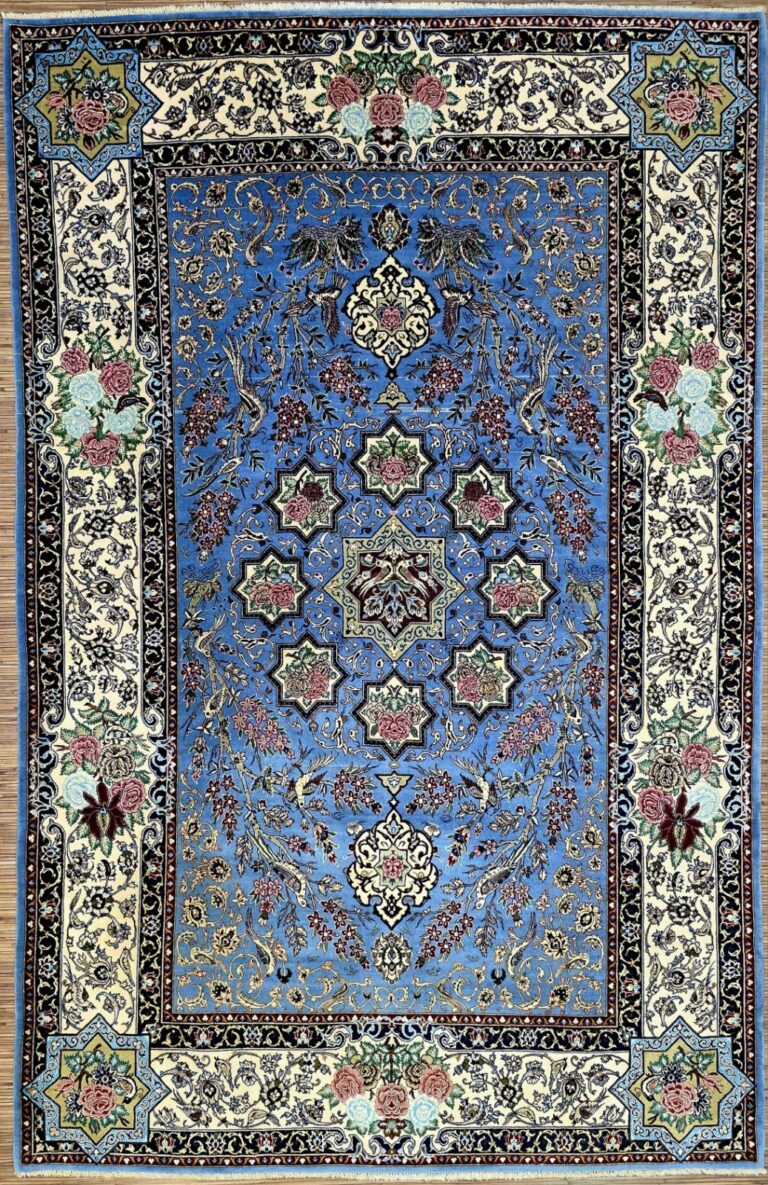
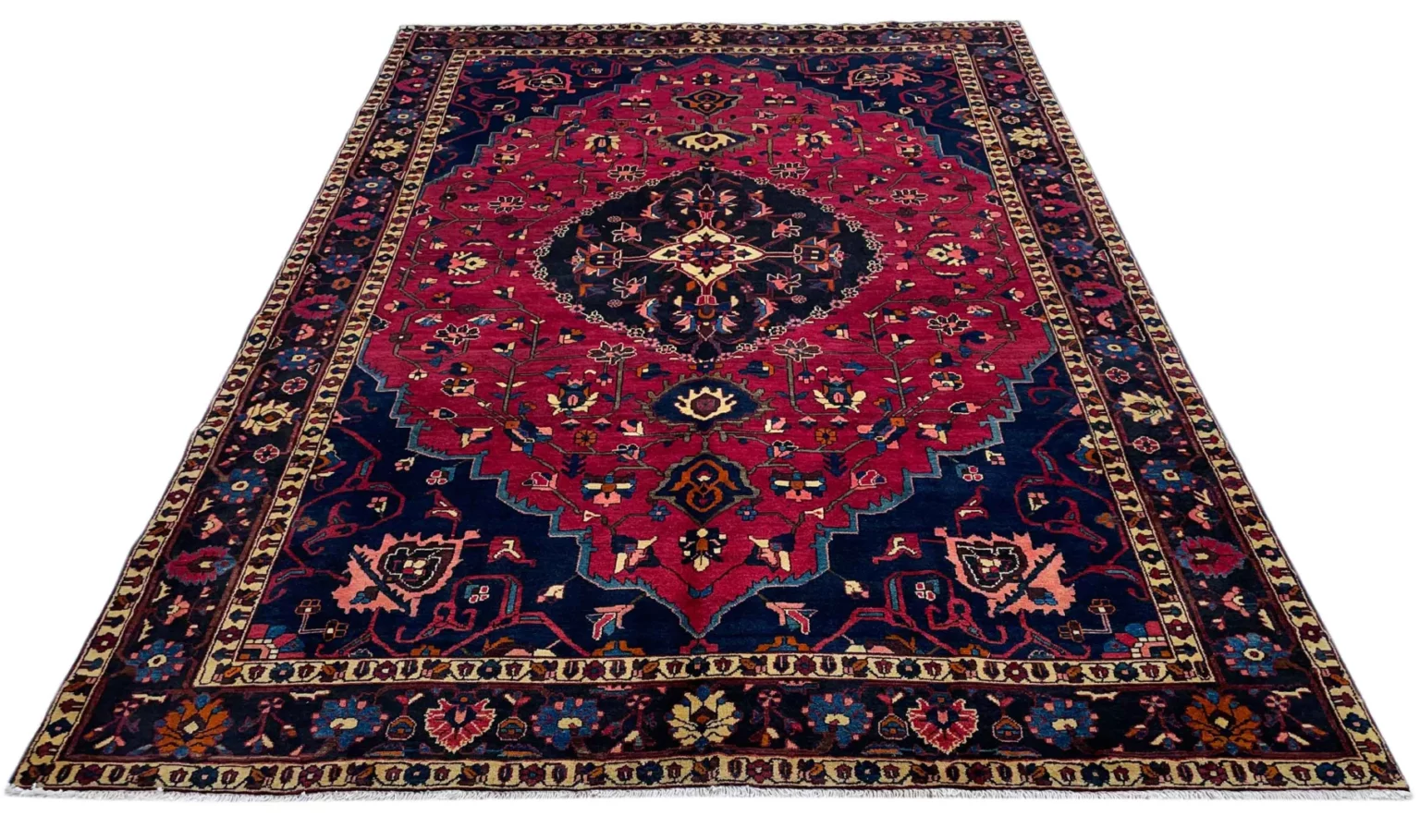
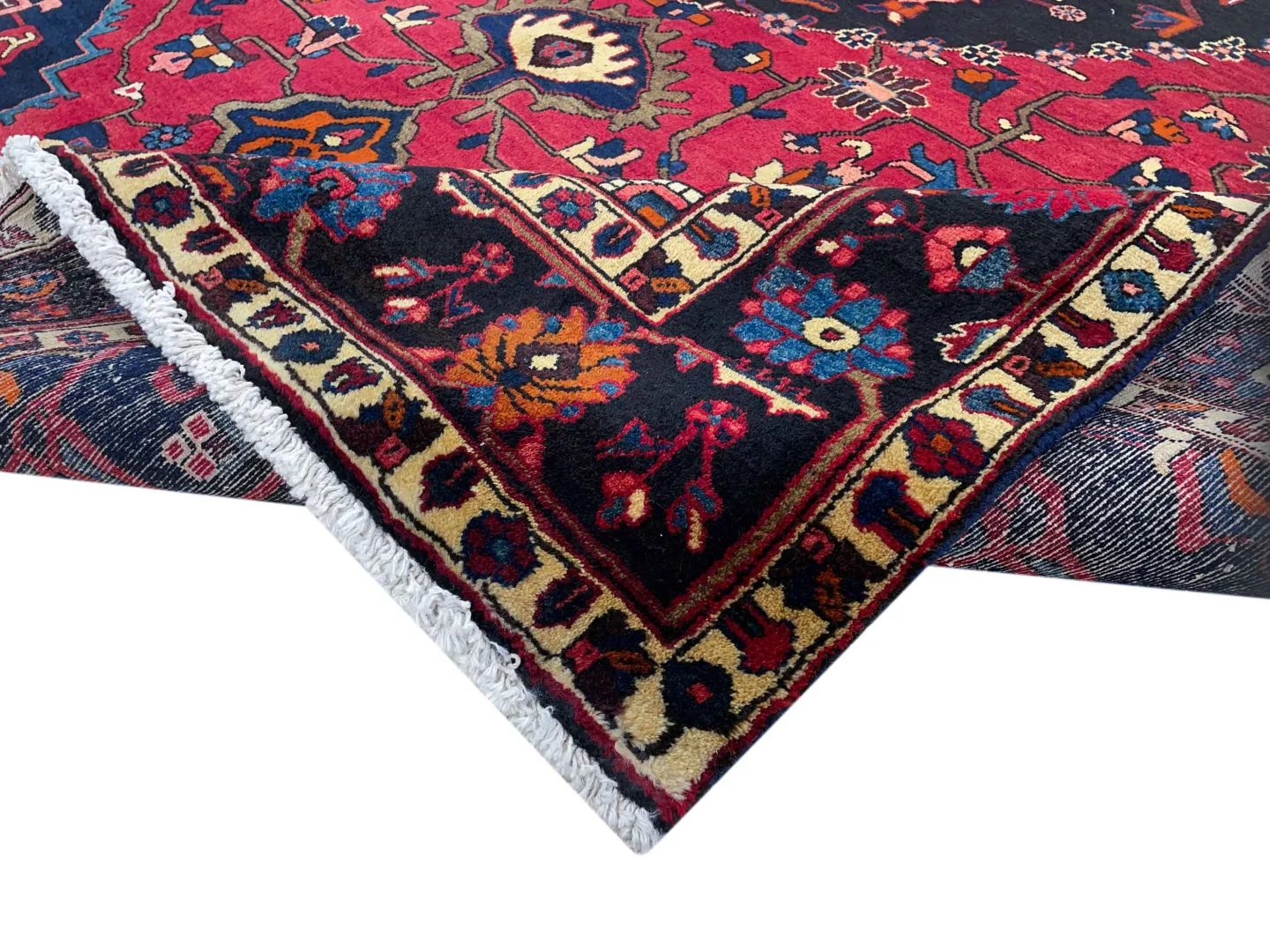
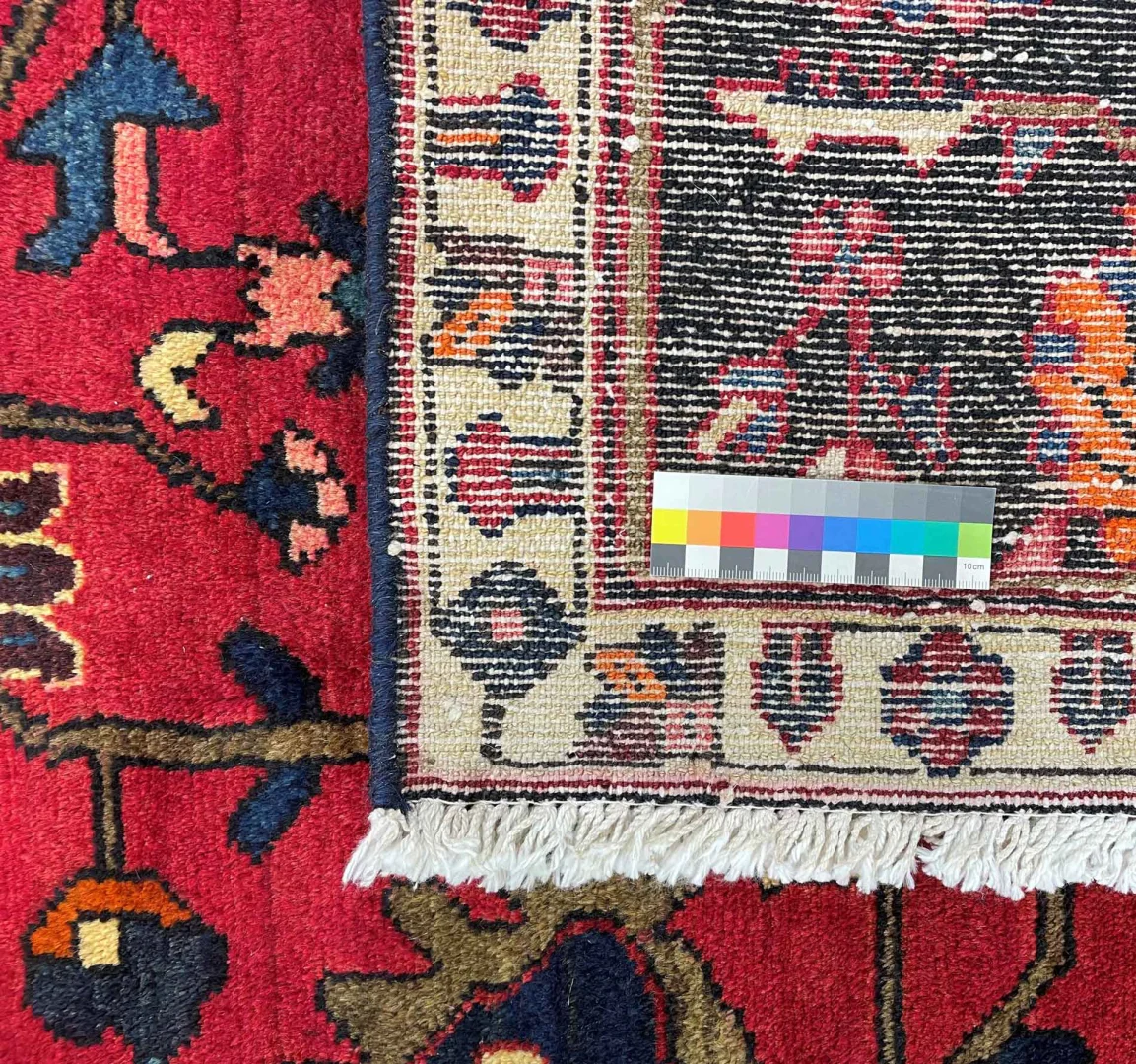
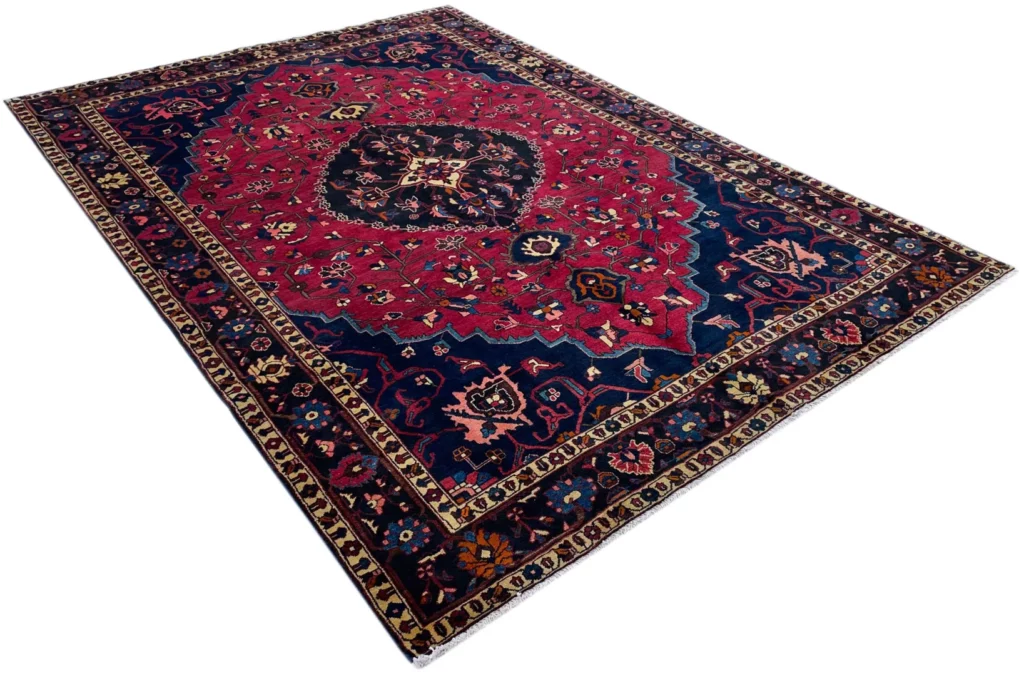
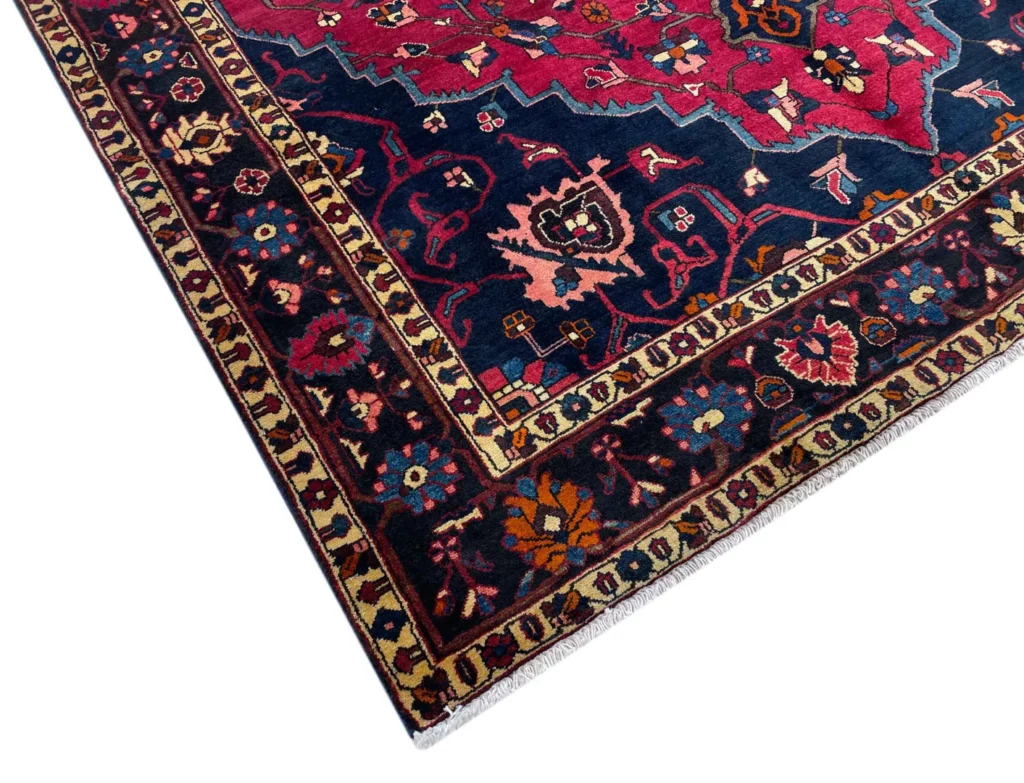
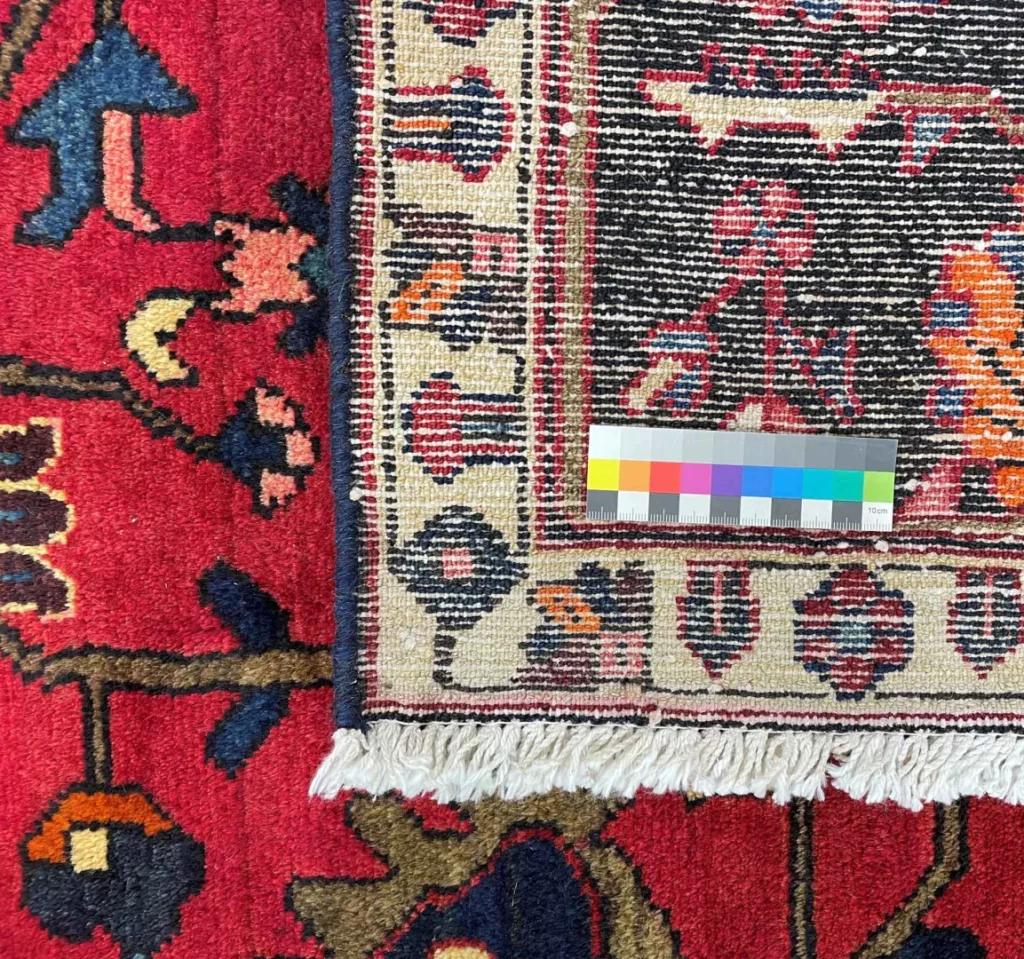
This Bakhtiar Persian rug is hand-knotted with a pile made of high-quality wool. Bakhtiar rugs traditionally use wool for its combination of softness and resilience. In this one-off piece, the material is paired with a knot density of 150.000 to 200.000 knots per square metre. The knotted construction provides the basis for the clearly rendered garden design and for the durable surface associated with this rug.
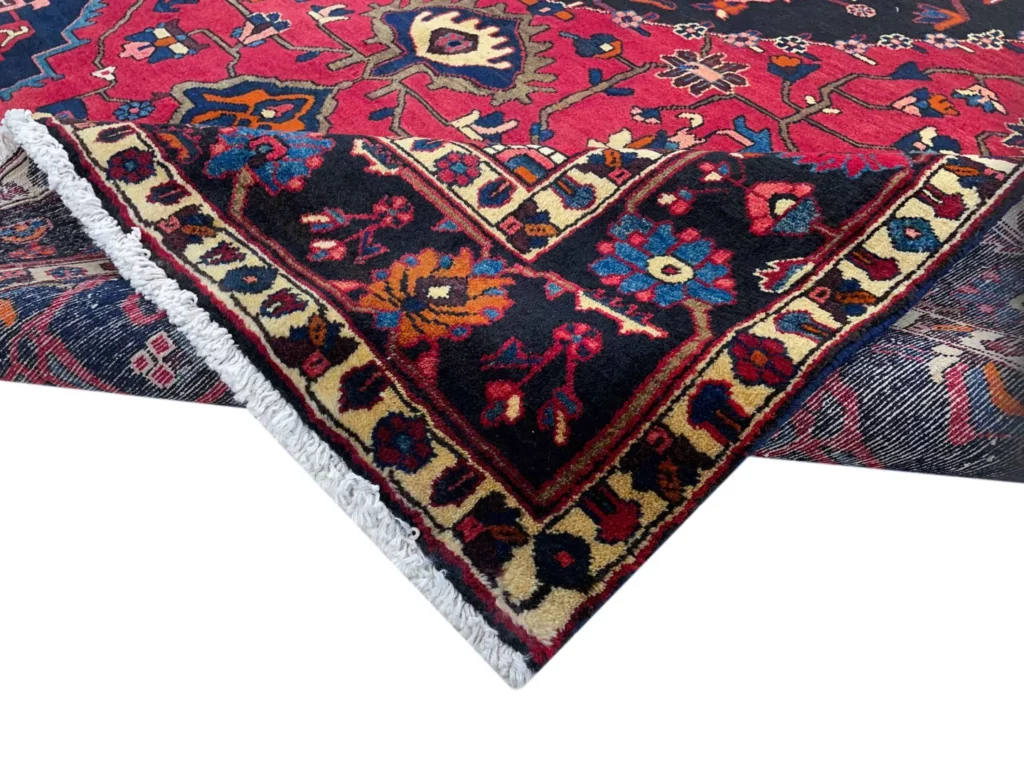
Hand-knotting builds the design knot by knot rather than through a mechanical production process. The resulting textile work brings together pile, colour and ornament in a structure created by the weaver. Bakhtiar weaving is associated with a sturdy execution, and wool supports that practical quality while remaining suitable for detailed ornament. This rug is described as being in very good condition and as hard-wearing and durable. Regular cleaning helps preserve the wool and the appearance over time.
Origin and Tradition
Bakhtiar rugs are connected with the nomadic Bakhtiar people, who live west of the city of Isfahan in the Zagros Mountains. Isfahan and its surrounding areas form one of the important landscapes of Iranian carpet culture. The Zagros region, with its mountain slopes, valleys and grazing grounds, has shaped the working environment of the communities living there. Within this setting, weaving developed as a practical craft that also carried established visual traditions.
The Bakhtiar weaving tradition reflects the nomadic background of its makers. Rugs served as useful household and furnishing objects as well as textiles with decorative value. Wool was a natural choice because it was available within the regional way of life and could be made into a resilient pile. Knowledge of the fibre allowed weavers to combine a soft surface with the ability to withstand regular use. This balance between visual design and practical construction remains an important part of the identity of Bakhtiar rugs.
In the classification of Iranian carpets, Bakhtiar pieces are associated with the wider Isfahan region, while their specific tradition comes from the Bakhtiar area west of the city. The name therefore refers to a cultural and regional origin, not merely to a particular ornament. Designs can vary within the tradition, yet the connection remains grounded in the community of weavers and in the local approach to materials, structure and pattern.
Other Iranian weaving traditions belong to the same broad carpet history but have their own design languages. Kashan rugs are known for rich floral-oriental compositions, while Nain rugs often use lighter colour schemes and precise drawing. Qom rugs are associated with luxurious materials and elaborate designs. These comparisons help place Bakhtiar work within Iranian weaving culture; they do not change the origin of this rug, which is a Bakhtiar piece from the area west of Isfahan.
Design and Pattern
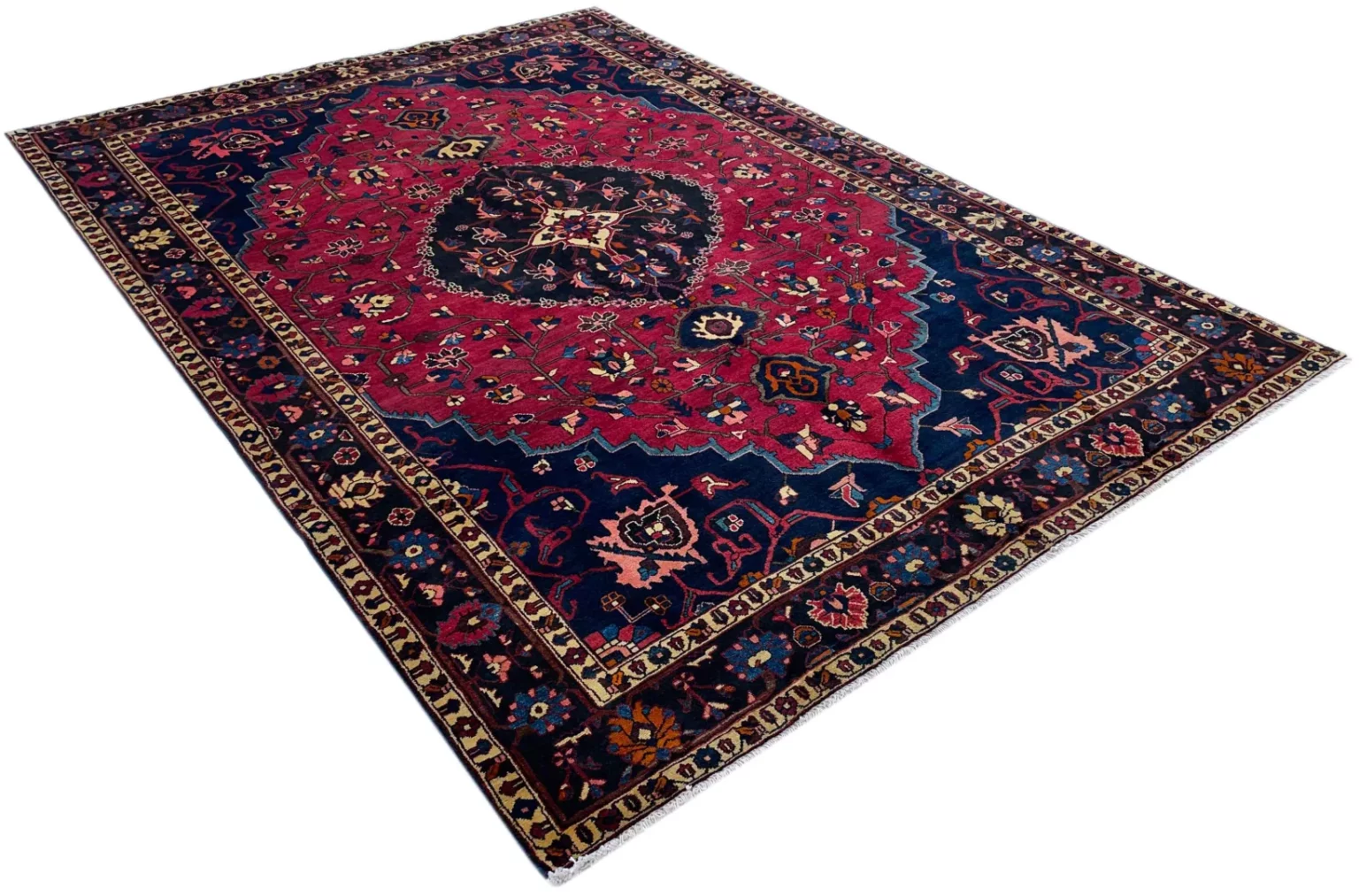
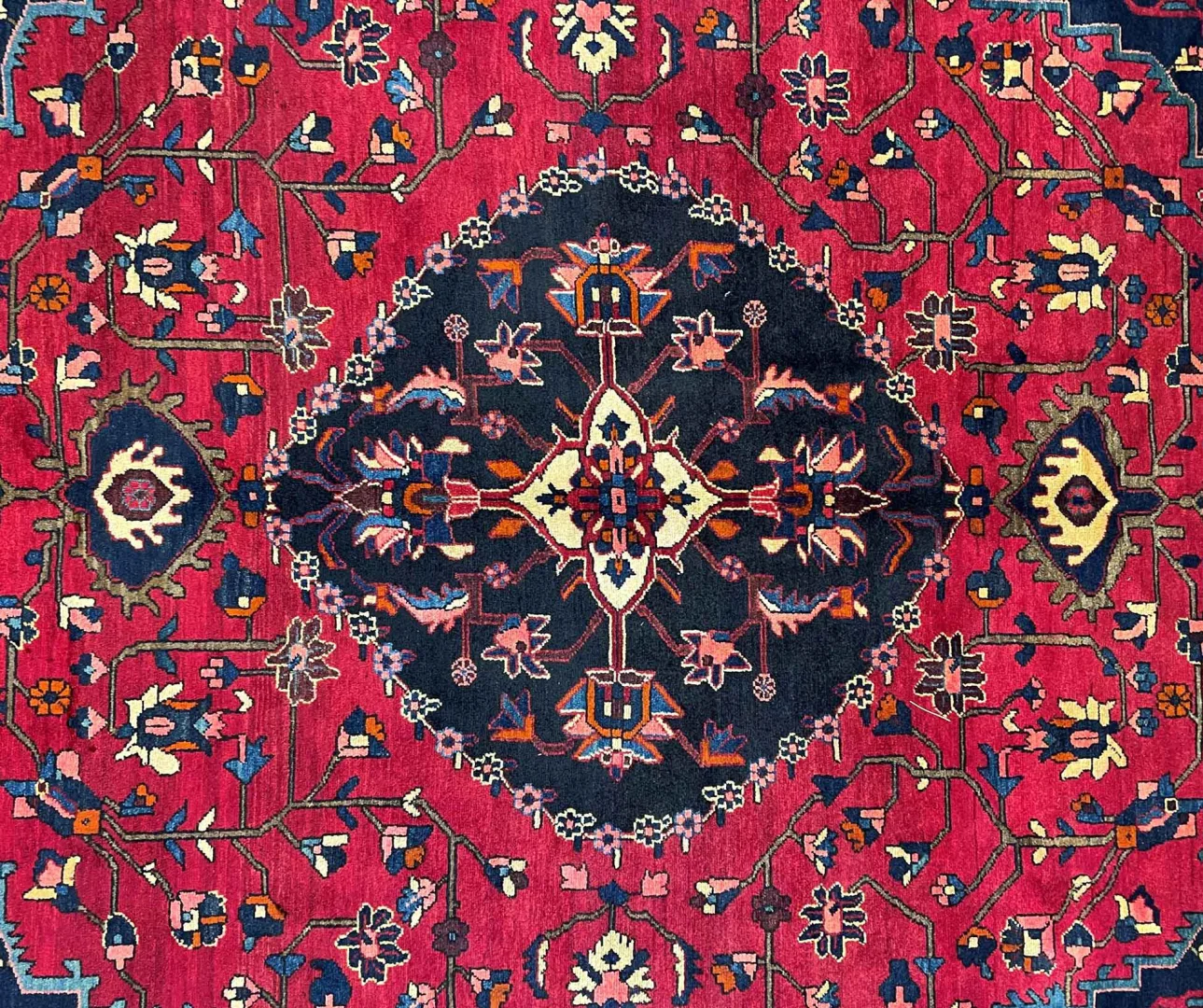
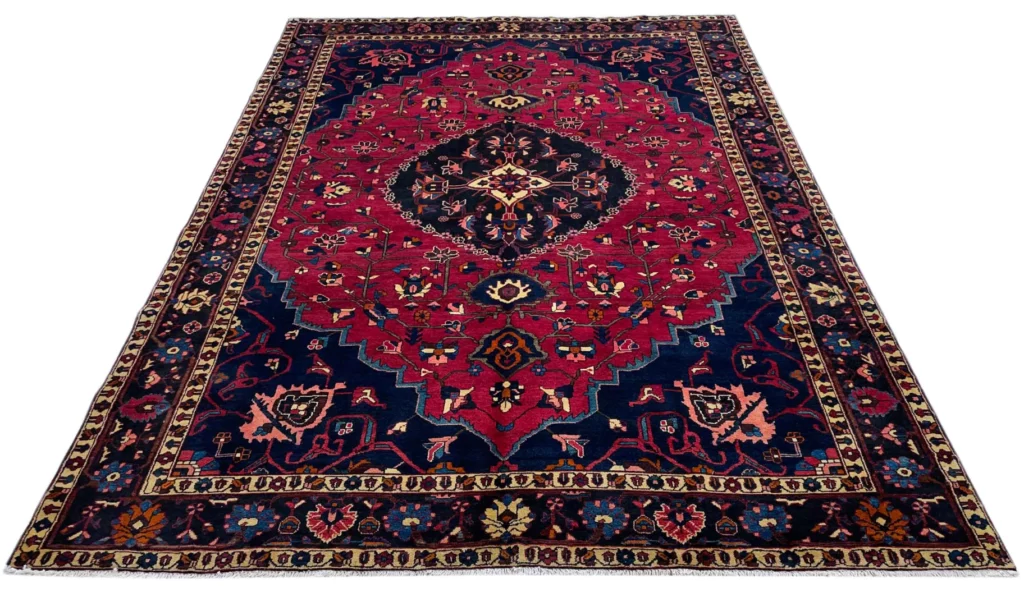
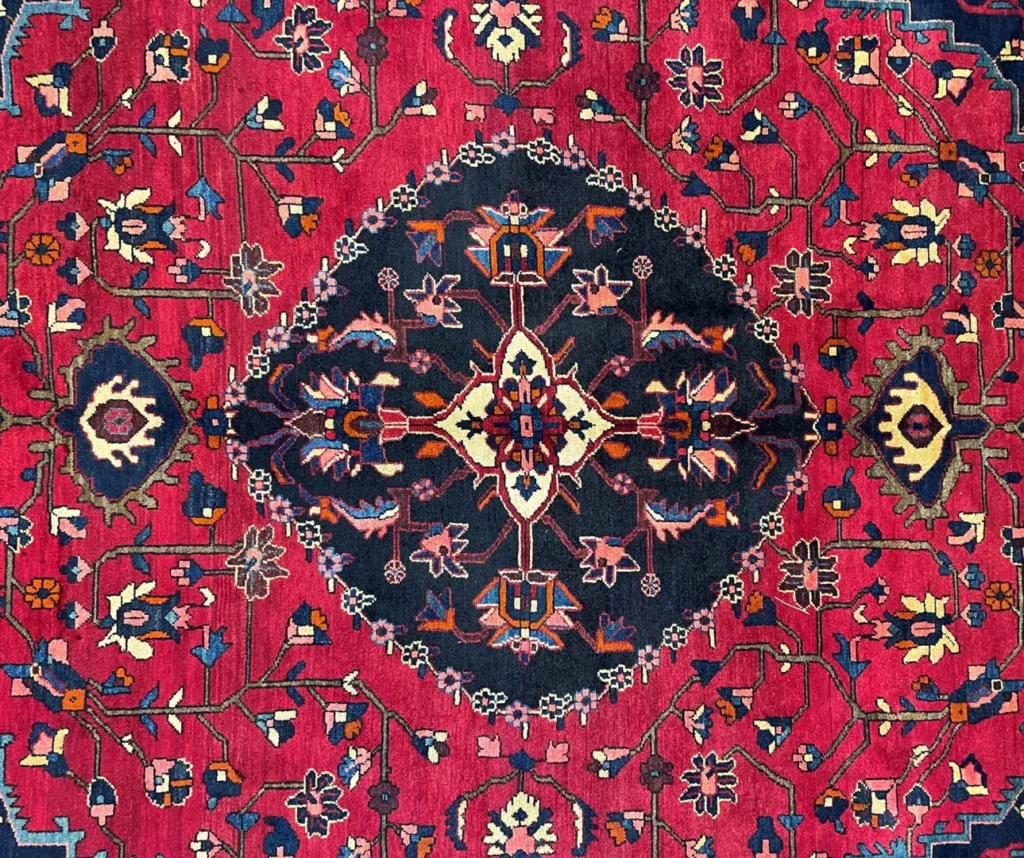
The design of this rug is a garden pattern known as Kheshti. The term describes a composition divided into individual fields that together form an ordered garden-like arrangement. Plant and animal motifs appear within these sections. The design is therefore not based on one isolated central emblem. Instead, its visual structure comes from the relationship between repeated compartments, their ornaments and the overall rhythm created across the rug.
Garden designs are characteristic of Bakhtiar weaving. Their inspiration comes from the rich flora and fauna of the region. Plant forms may suggest beds, branches, leaves or flowers, while animal figures bring the surrounding living landscape into the composition. In a woven rug, these references are translated into stylised ornaments rather than reproduced as a naturalistic picture. The motifs become clear shapes that can be arranged in a regular field structure and expressed through knotting.
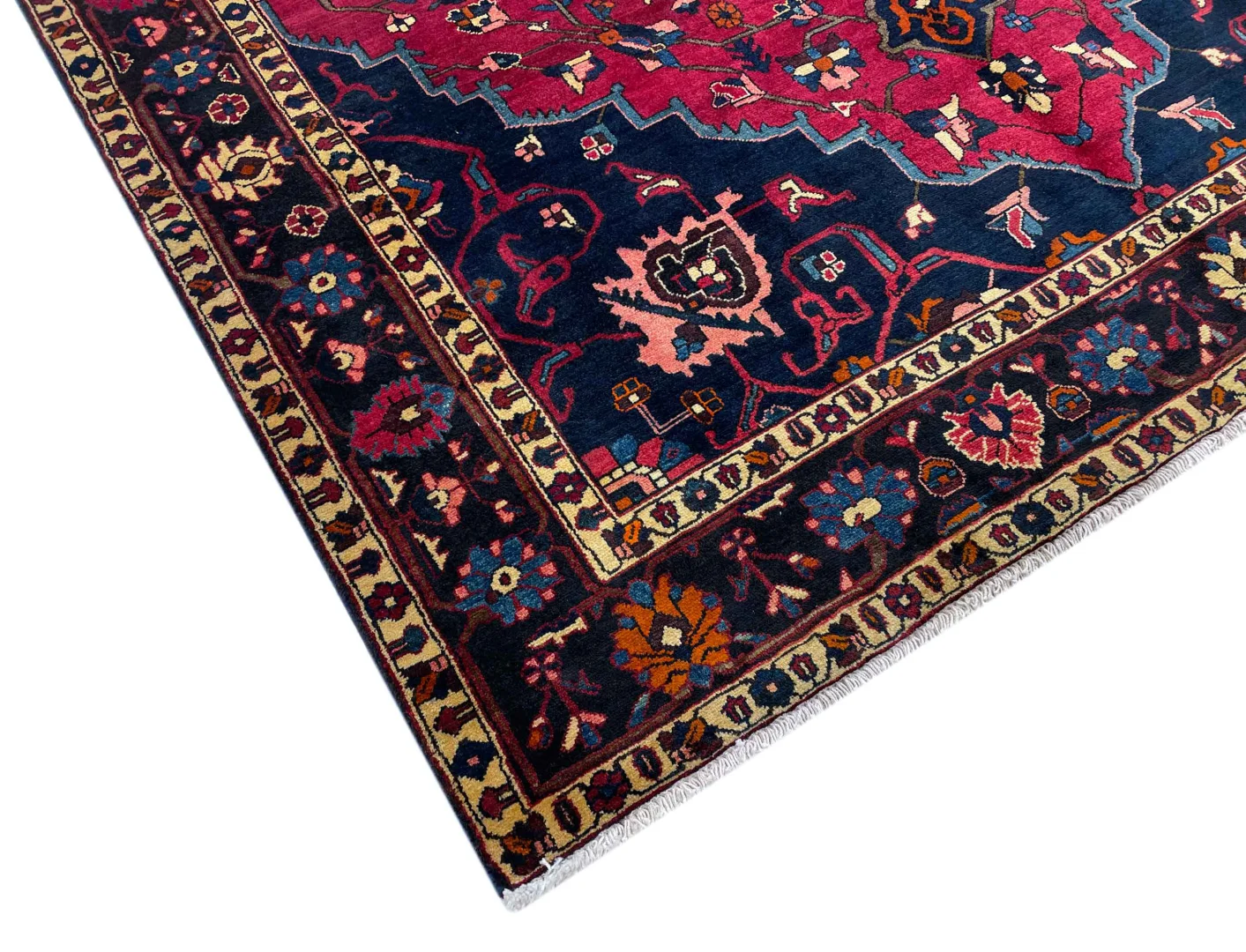
The colours of this piece are red, brown and cream. Red can provide a strong ground or accent within a Kheshti arrangement, brown relates the fields to earthy tones, and cream introduces light contrast around the ornaments. Together, these colours create a traditional warm palette. The visual effect comes from the interaction of the three shades with the plants, animals and field divisions, rather than from any single colour considered on its own.
The field structure gives the eye a clear order to follow. Repeated sections establish a measured rhythm, while the different plant and animal figures provide variation within that framework. In a hand-knotted rug, each shape is built from coloured knots. The knot density supports the rendering of smaller details while preserving the recognisable, compartmentalised character of the Kheshti garden design.
Within Iranian carpet culture, garden imagery can also be understood as a representation of an ordered and fertile landscape. The pattern is therefore decorative while retaining a cultural reference. This rug combines that established image with the sturdy orientation of Bakhtiar weaving. Its design remains tied to a regional pattern tradition and uses a clearly defined sequence of red, brown and cream.
Special Features
The defining features of this one-off piece are its Bakhtiar origin, hand-knotted construction, high-quality wool and Kheshti garden design. Plant and animal motifs are arranged within a structured field pattern. Red, brown and cream determine its colour character. A knot density of 150.000 to 200.000 knots per square metre provides a basis for rendering the ornament with a high level of detail.
The condition is described as very good. The rug is also described as hard-wearing and durable. These qualities correspond to the robust material and construction associated with Bakhtiar rugs, while the garden pattern gives the piece its distinct decorative identity. Recommended care consists of vacuuming regularly on a low setting and arranging occasional professional cleaning. Direct sunlight should be avoided to help prevent the colours from fading.
FAQ
How should I care for the Bakhtiar rug?
Vacuum regularly using a low setting for everyday care. Occasional professional cleaning helps maintain the wool, colours and pattern. Direct sunlight should be avoided because prolonged exposure can contribute to colour fading. Gentle routine care combined with professional cleaning when needed supports the very good appearance of this hand-knotted rug. There is no need for unnecessarily forceful treatment of the wool pile.
Where does the Bakhtiar rug come from?
The rug comes from the Bakhtiar tradition in Iran. The Bakhtiar are a nomadic people living west of Isfahan in the Zagros Mountains. Bakhtiar rugs are produced mainly in this region. The name therefore identifies the connection with the Bakhtiar people and their local weaving tradition. At the same time, the rug belongs to the wider history of Iranian carpet production associated with the Isfahan area.
What makes a Bakhtiar rug distinctive?
Its distinctive combination is the hand-knotted construction, high-quality wool, substantial knot density and durable execution. The Kheshti garden pattern places plant and animal motifs inside separate fields. Red, brown and cream create the earthy traditional palette described for this design. The rug is recorded as being in very good condition, bringing together an ornamental regional tradition with a hard-wearing structure and care requirements suited to regular maintenance.
To provide the best experiences, we use technologies like cookies to store and/or access device information. Consenting to these technologies will allow us to process data such as browsing behavior or unique IDs on this site. Not consenting or withdrawing consent, may adversely affect certain features and functions.
Functional Always active
The technical storage or access is strictly necessary for the legitimate purpose of enabling the use of a specific service explicitly requested by the subscriber or user, or for the sole purpose of carrying out the transmission of a communication over an electronic communications network.
Preferences
The technical storage or access is necessary for the legitimate purpose of storing preferences that are not requested by the subscriber or user.
Statistics
The technical storage or access that is used exclusively for statistical purposes.The technical storage or access that is used exclusively for anonymous statistical purposes. Without a subpoena, voluntary compliance on the part of your Internet Service Provider, or additional records from a third party, information stored or retrieved for this purpose alone cannot usually be used to identify you.
Marketing
The technical storage or access is required to create user profiles to send advertising, or to track the user on a website or across several websites for similar marketing purposes.

 SECURE PAYMENT
 SHIPPING PARTNERS