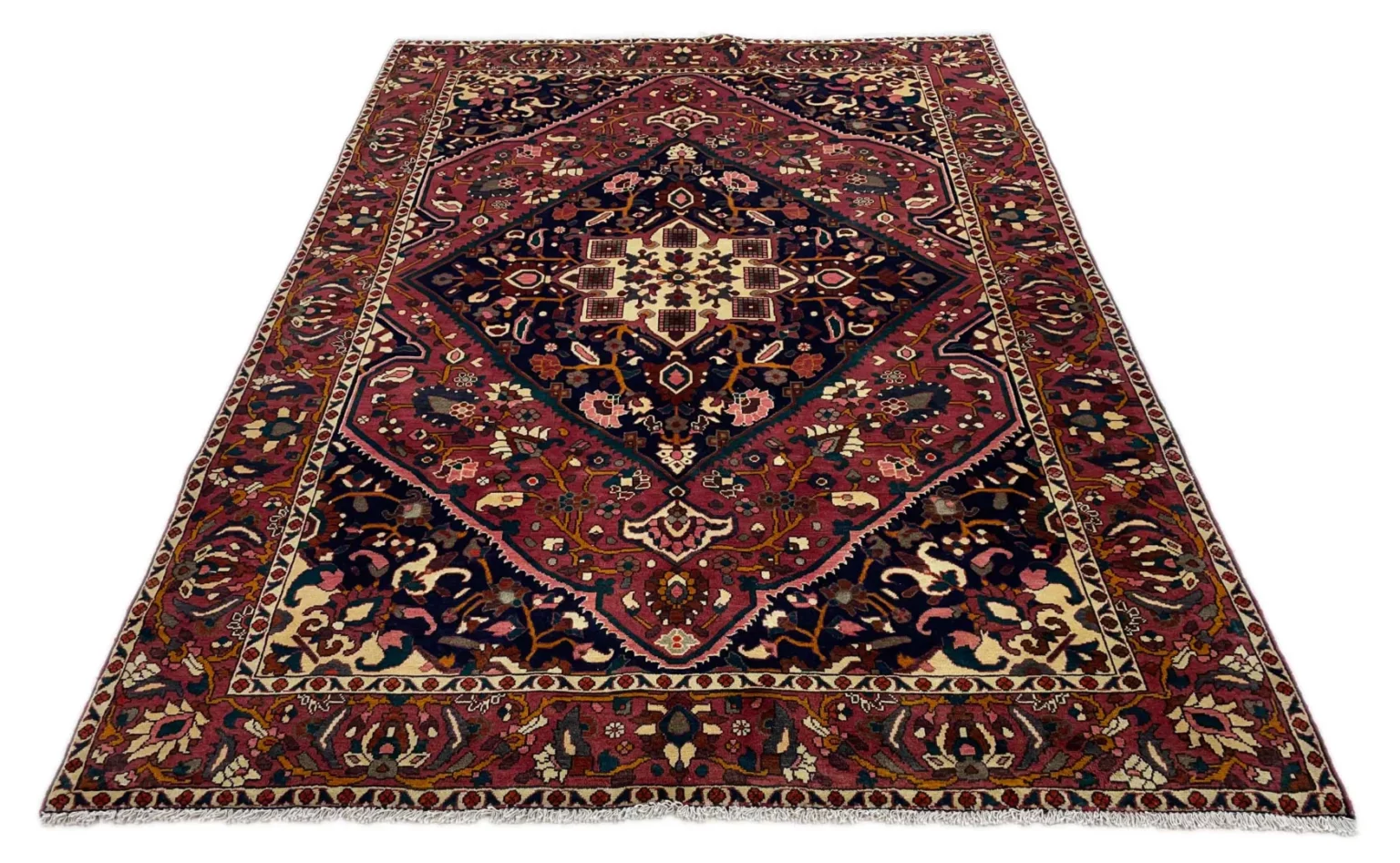
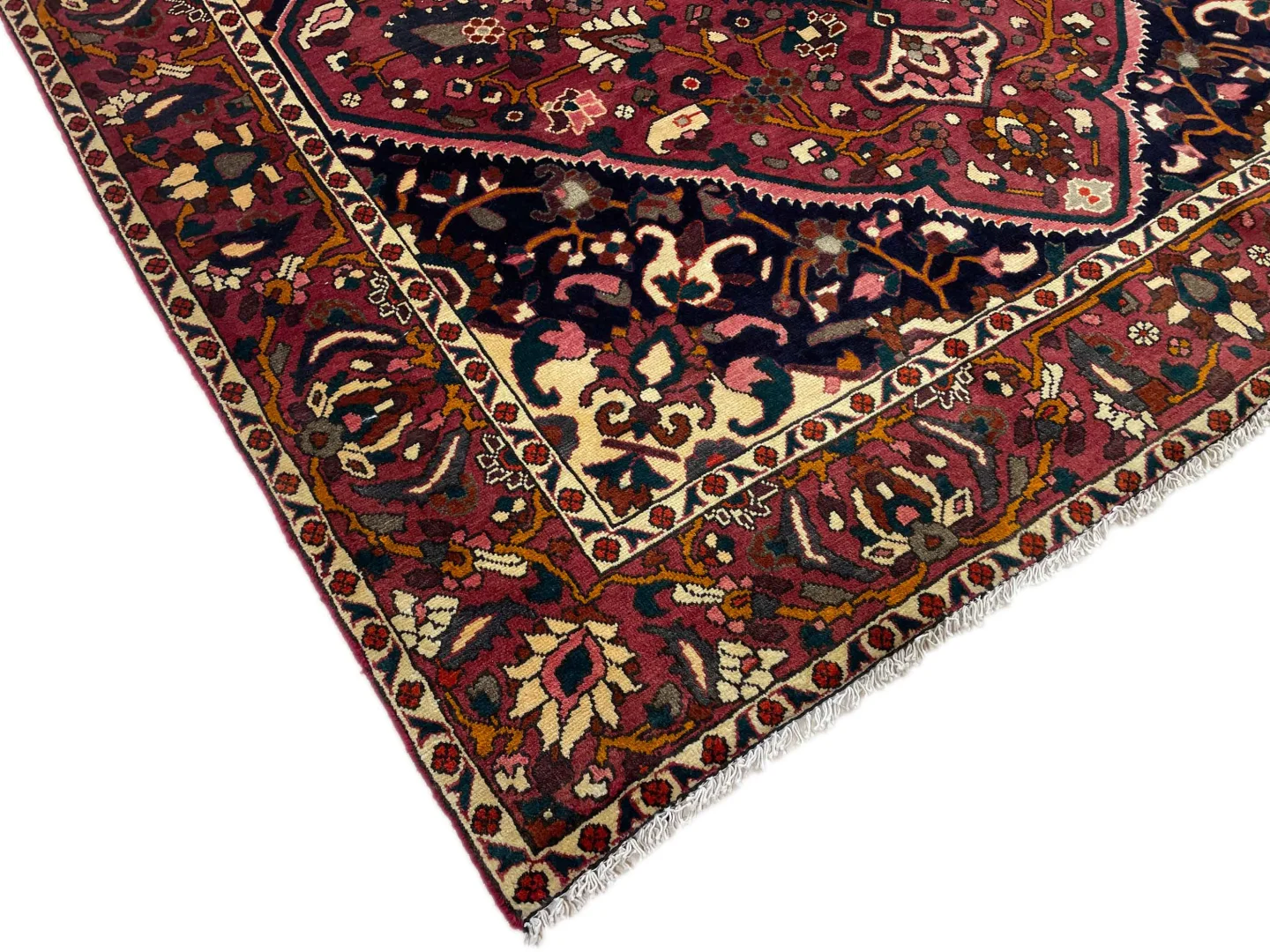
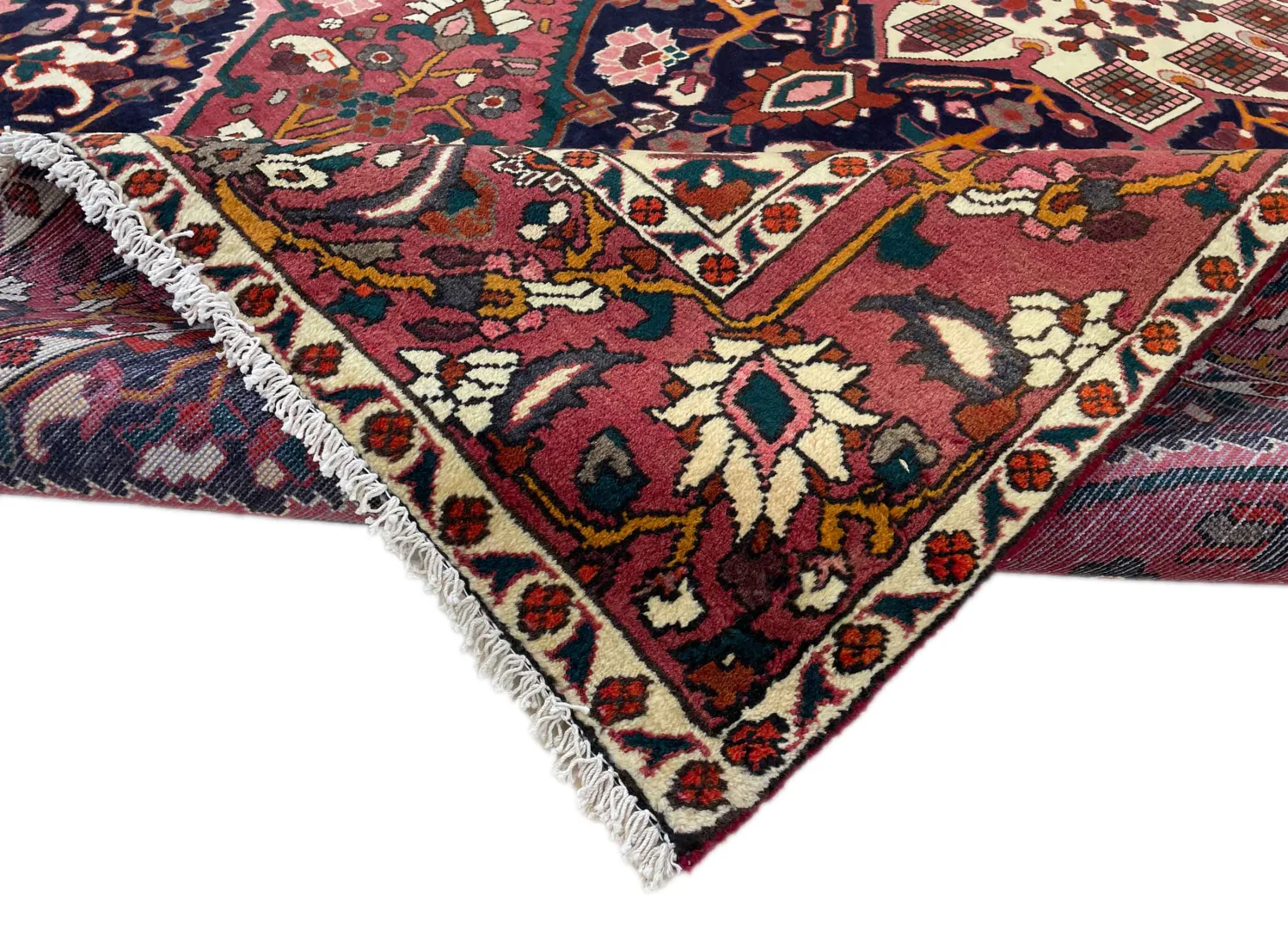
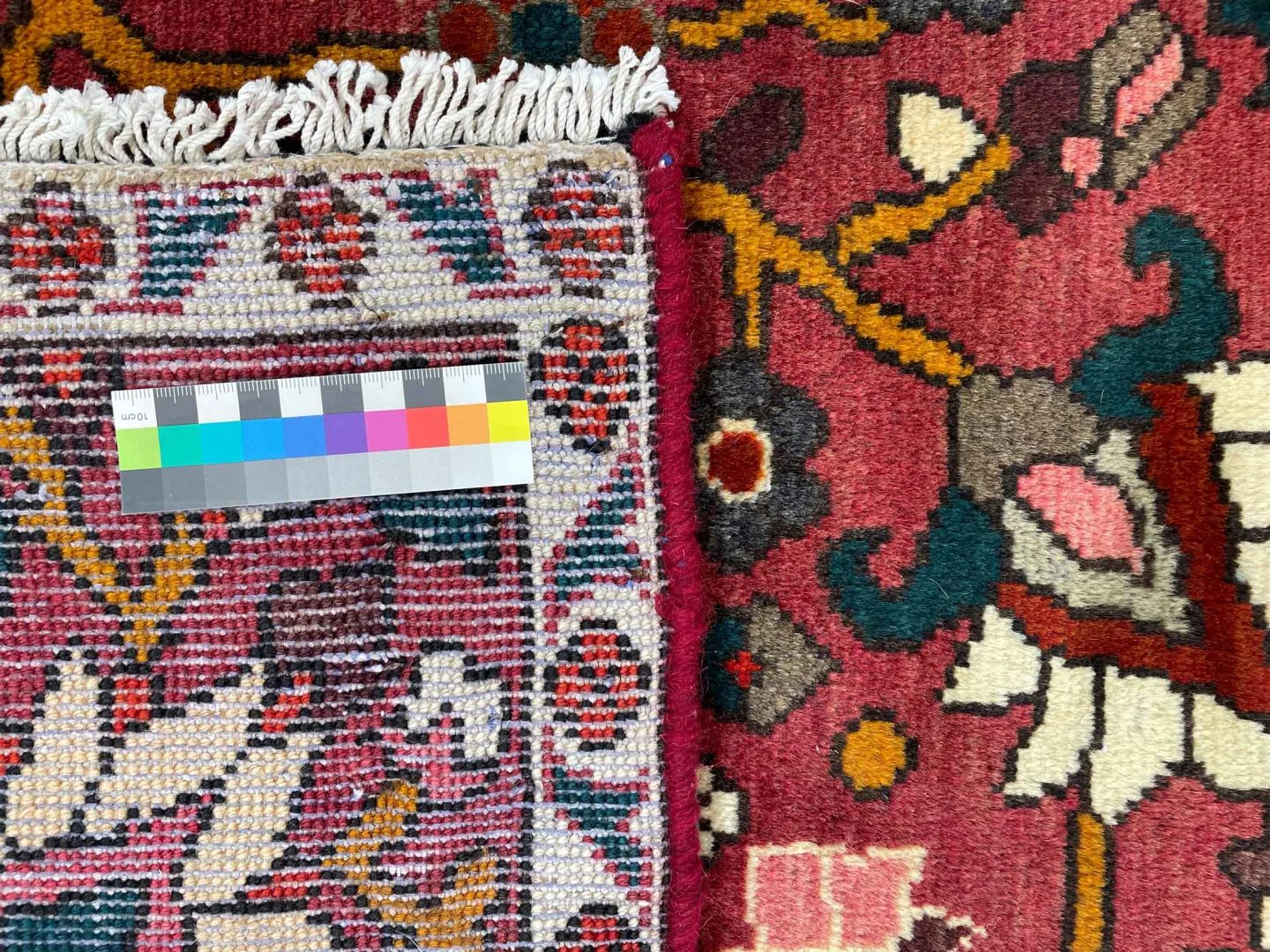
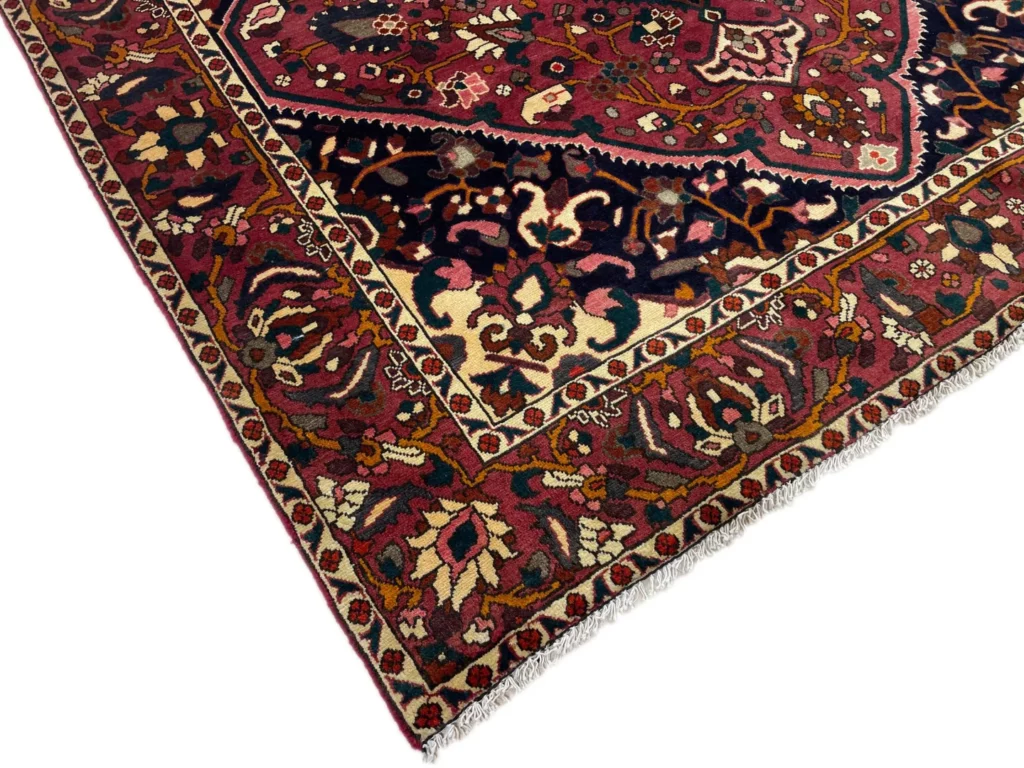
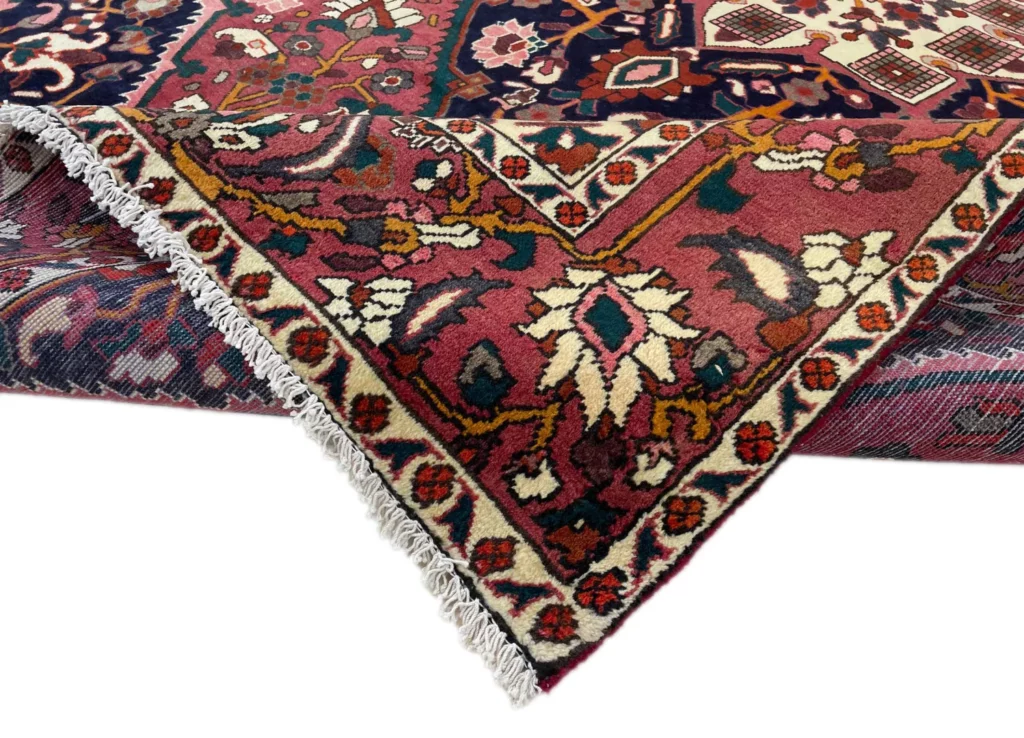
This Bakhtiar Persian rug is hand-knotted from high-quality wool. The wool forms the pile and combines a firm character with a soft handle. It is a material suited to everyday use because it is described as resilient and hard-wearing. The hand-made construction also makes each rug unique: individual manual work gives the piece its own character rather than the uniformity associated with industrial production.
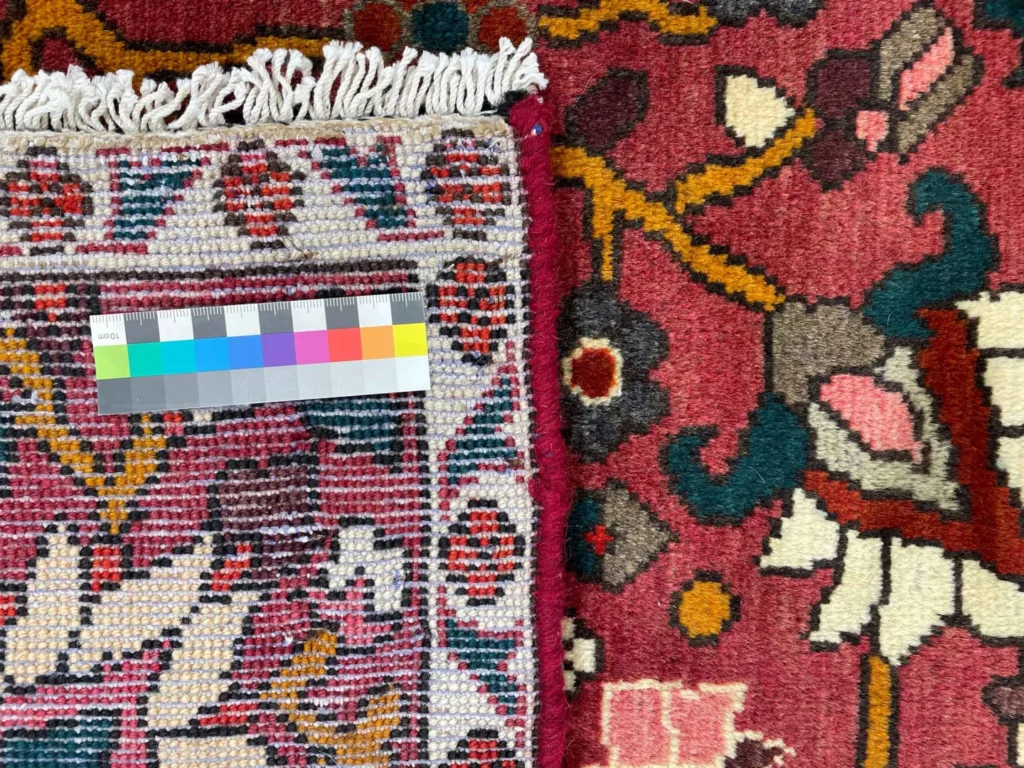
The rug has a knot density of 150,000 to 200,000 knots per square metre. This density is one of its stated characteristics and reflects careful, skilled workmanship. In a hand-knotted rug, the design is built up step by step through the placement of individual knots. The wool gives the surface a substantial feel while retaining the softness that makes it pleasant in use.
Bakhtiar rugs are associated with strong wool and a construction intended to withstand regular demands. Their durability is an important part of the regional weaving tradition. The pile is therefore more than a decorative surface: it contributes to the rug’s practical character and supports its suitability for both living and business spaces. Hand-knotting brings together the material, the pattern and the work of the weaver in one distinct oriental rug.
Origin and Tradition
The Bakhtiar rug comes from western Iran, from the area of the Zagros Mountains near Isfahan. Its name refers to the Bakhtiar people, who are known for producing these rugs. The Bakhtiar are a nomadic people whose traditional craft is closely connected with inherited skills, the use of wool and the creation of recognisable designs. Their rugs therefore belong to a cultural setting in which practical use and ornament are developed together.
The Zagros Mountains form the landscape and cultural setting of western Iran in which Bakhtiar weaving is rooted. This regional background helps explain the combination of strong wool, a durable construction and clearly organised motifs. A Bakhtiar rug is not limited to a purely formal role. Its ability to withstand use is part of its tradition, just as much as the careful arrangement of its pattern.
The proximity to Isfahan also places Bakhtiar weaving within the broader history of Iranian rug making. Isfahan rugs are known for detailed floral designs, while Bakhtiar rugs have their own visual language, shaped especially by garden compartments. Both belong to Iranian weaving, but their regional expressions differ. Tabriz rugs are often associated with complex geometric designs. Rugs from Kurdistan, particularly Bijar rugs, are in turn known for robustness and artistic patterns.
Iranian rug making includes many distinct regional approaches. Sarough is named as a noted house associated with lively colours and high-quality materials, while the workshops of Kerman are known for fine knotting and elegant designs. These examples show how closely origin and visual language are linked in Iranian rug traditions. The Bakhtiar rug remains identifiable through its western Iranian origin, its connection with the Zagros region and its Kheshti garden design.
The Bakhtiar craft tradition joins knowledge of wool with a design vocabulary that brings natural imagery into a geometric order. The rug is hand-knotted, and its knot density supports the detailed development of the motifs. At the same time, the robust impression associated with Bakhtiar rugs is retained. Nomadic craftsmanship, Iranian regional culture and a practical choice of material thus meet within this rug type.
Design and Pattern
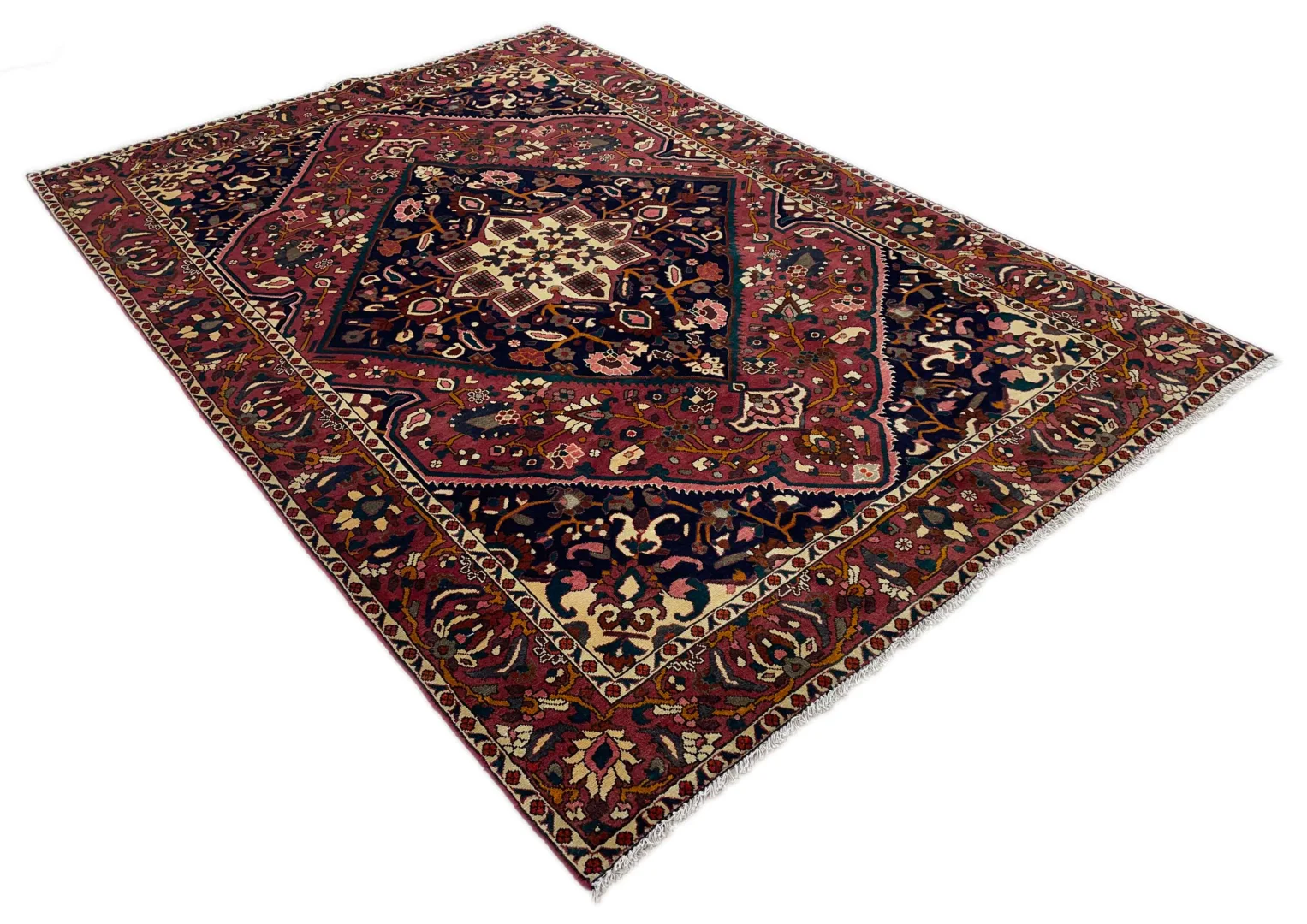
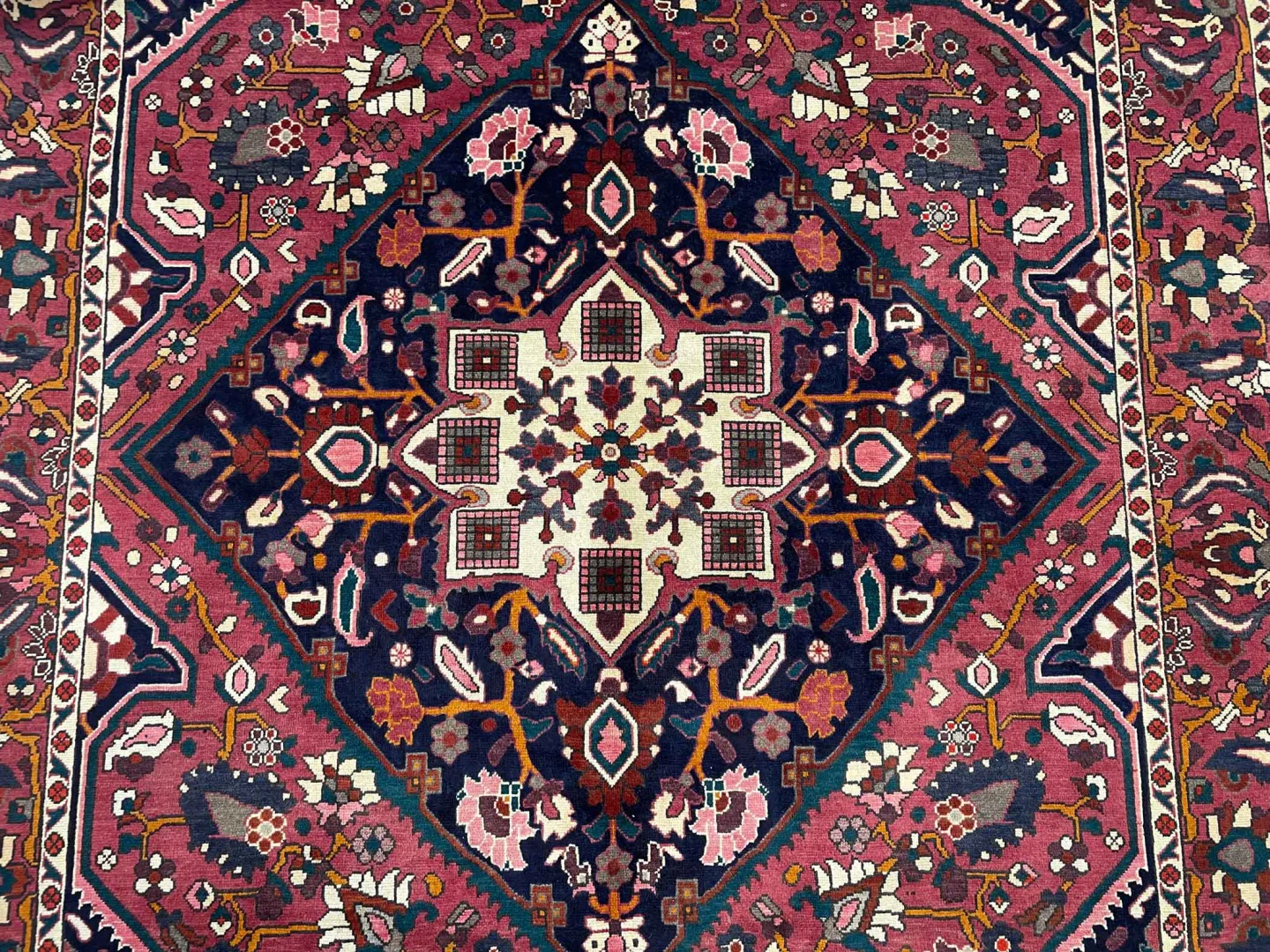
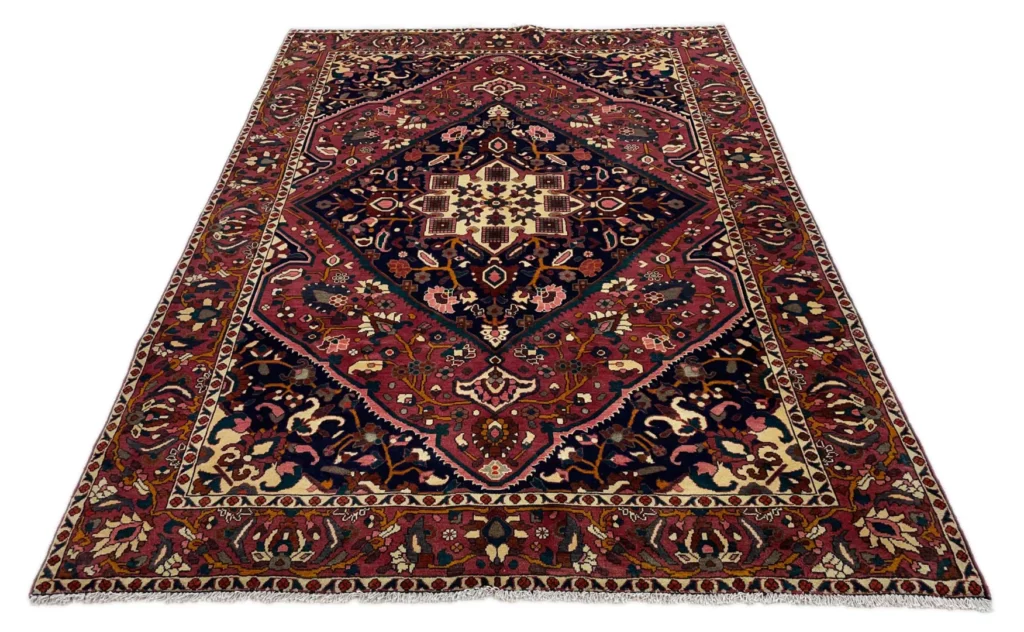
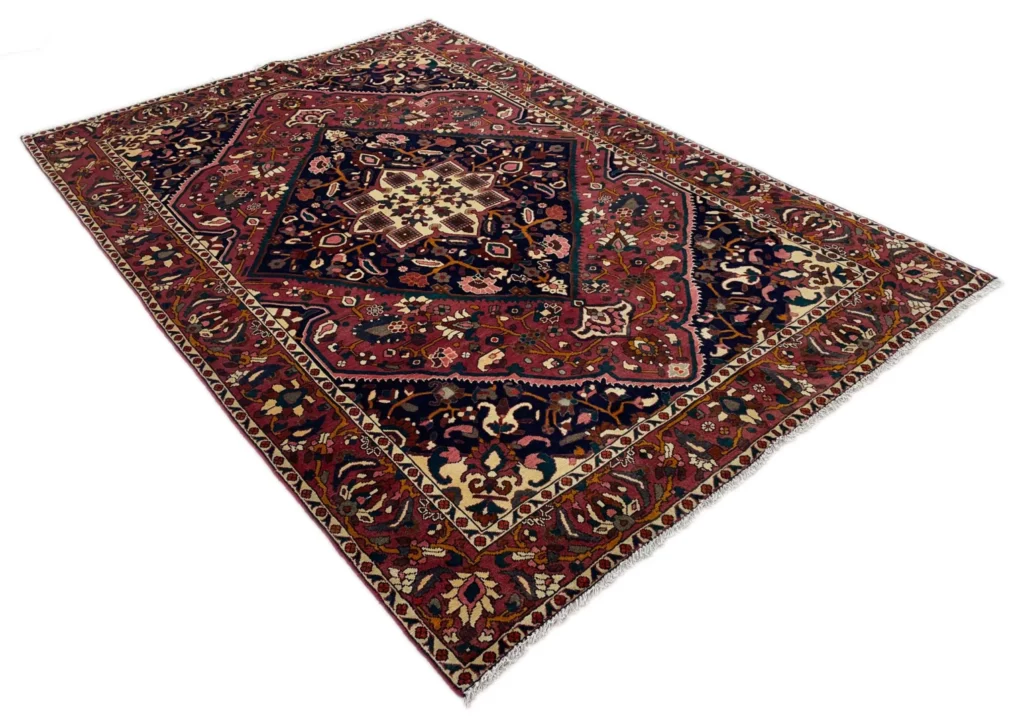
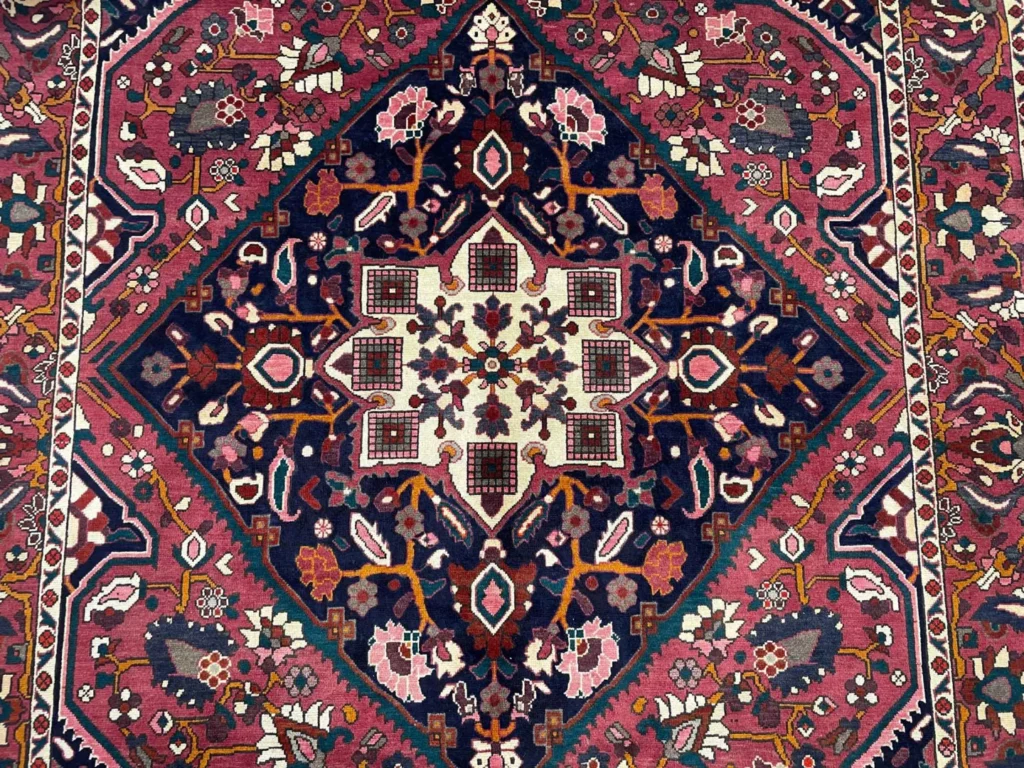
The pattern of this rug is a garden design, also known as Kheshti. The term describes a layout in which the surface is divided into garden-like compartments. These fields create a visible order and provide defined spaces for floral and animal motifs. The design is therefore structured without being limited to a purely geometric image.
Within the Kheshti pattern, floral motifs refer to the beauty of nature. Animal motifs extend that vocabulary by bringing further elements of the natural world into the composition. Flowers, plants and animals work together as parts of an organised garden image associated with Bakhtiar cultural traditions. The individual motifs are not isolated details; they belong to a larger arrangement of repeated and related fields.
The colour palette of this rug includes red, brown and cream. These shades are described as commonly used natural tones in the Bakhtiar context and are combined harmoniously. Red can provide a strong foundation for a garden composition, brown adds an earthy counterpoint, and cream creates lighter passages within the design. The colour description remains with the stated shades and their warm, balanced relationship.
A Kheshti design depends on the relationship between its separate compartments and the overall field. Repeated garden sections create rhythm, while floral and animal details introduce variety. The result is an organised surface with a broad range of imagery. In contrast to especially complex designs often associated with Tabriz or Isfahan, Bakhtiar rugs are described as simpler and more rustic. That quality is part of their regional design language.
The pattern tradition can also be understood in relation to other Iranian rugs. Isfahan rugs are known for detailed floral designs, while Tabriz rugs are often linked with complex geometric compositions. Bakhtiar rugs instead place their emphasis on robust garden patterns whose fields carry natural motifs in a clear arrangement. The Kheshti design is consequently both decorative and structured. It is not merely an ornament but a defining feature of this rug tradition.
In a hand-knotted rug, the design is formed through the sequence of many individual knots. The stated knot density supports the careful rendering of the pattern fields and their motifs. At the same time, the design remains rooted in Bakhtiar tradition: strong wool, warm colours, garden compartments, and floral and animal imagery form one coherent regional visual language.
Special Features
The distinctive features of this Bakhtiar Persian rug include its hand-knotted construction, high-quality wool and Kheshti garden design. Its knot density is 150,000 to 200,000 knots per square metre. The colours red, brown and cream are harmoniously combined. Together, these elements unite skilled workmanship, a durable material character and a clearly recognisable regional pattern.
The rug is described as resilient and hard-wearing. Its strong yet soft wool is suited to everyday use. Care is uncomplicated: regular cleaning is recommended, with professional cleaning when needed. Direct sunlight should be avoided so that the colours do not fade. These care instructions support the preservation of the rug’s appearance and longevity.
FAQ
What makes a Bakhtiar Persian rug distinctive?
Its defining combination is a high knot density, durable high-quality wool and the characteristic Kheshti garden design. The divided composition contains floral and animal motifs and reflects the regional Bakhtiar tradition. Red, brown and cream create a harmonious palette. Together, material, craftsmanship and pattern produce a hard-wearing hand-knotted Persian rug with a clear regional identity.
How should a Bakhtiar Persian rug be cared for?
Regular cleaning is recommended to preserve the rug. If more thorough treatment is required, professional cleaning should be arranged. Direct sunlight should be avoided because it can encourage the colours to fade. The strong wool is resilient and hard-wearing, but attentive care helps maintain the beauty and longevity of the hand-knotted rug.
How does it differ from other Persian rugs?
Bakhtiar rugs are especially known for robust garden patterns and the use of natural tones. This Kheshti design combines divided garden fields with floral and animal motifs. Tabriz rugs, by comparison, are often associated with more complex geometric designs, while Isfahan rugs are known for detailed floral patterns. Bakhtiar rugs are generally described as simpler and more rustic, and this is precisely what gives the type its own regional character.
To provide the best experiences, we use technologies like cookies to store and/or access device information. Consenting to these technologies will allow us to process data such as browsing behavior or unique IDs on this site. Not consenting or withdrawing consent, may adversely affect certain features and functions.
Functional Always active
The technical storage or access is strictly necessary for the legitimate purpose of enabling the use of a specific service explicitly requested by the subscriber or user, or for the sole purpose of carrying out the transmission of a communication over an electronic communications network.
Preferences
The technical storage or access is necessary for the legitimate purpose of storing preferences that are not requested by the subscriber or user.
Statistics
The technical storage or access that is used exclusively for statistical purposes.The technical storage or access that is used exclusively for anonymous statistical purposes. Without a subpoena, voluntary compliance on the part of your Internet Service Provider, or additional records from a third party, information stored or retrieved for this purpose alone cannot usually be used to identify you.
Marketing
The technical storage or access is required to create user profiles to send advertising, or to track the user on a website or across several websites for similar marketing purposes.

 SECURE PAYMENT
 SHIPPING PARTNERS


