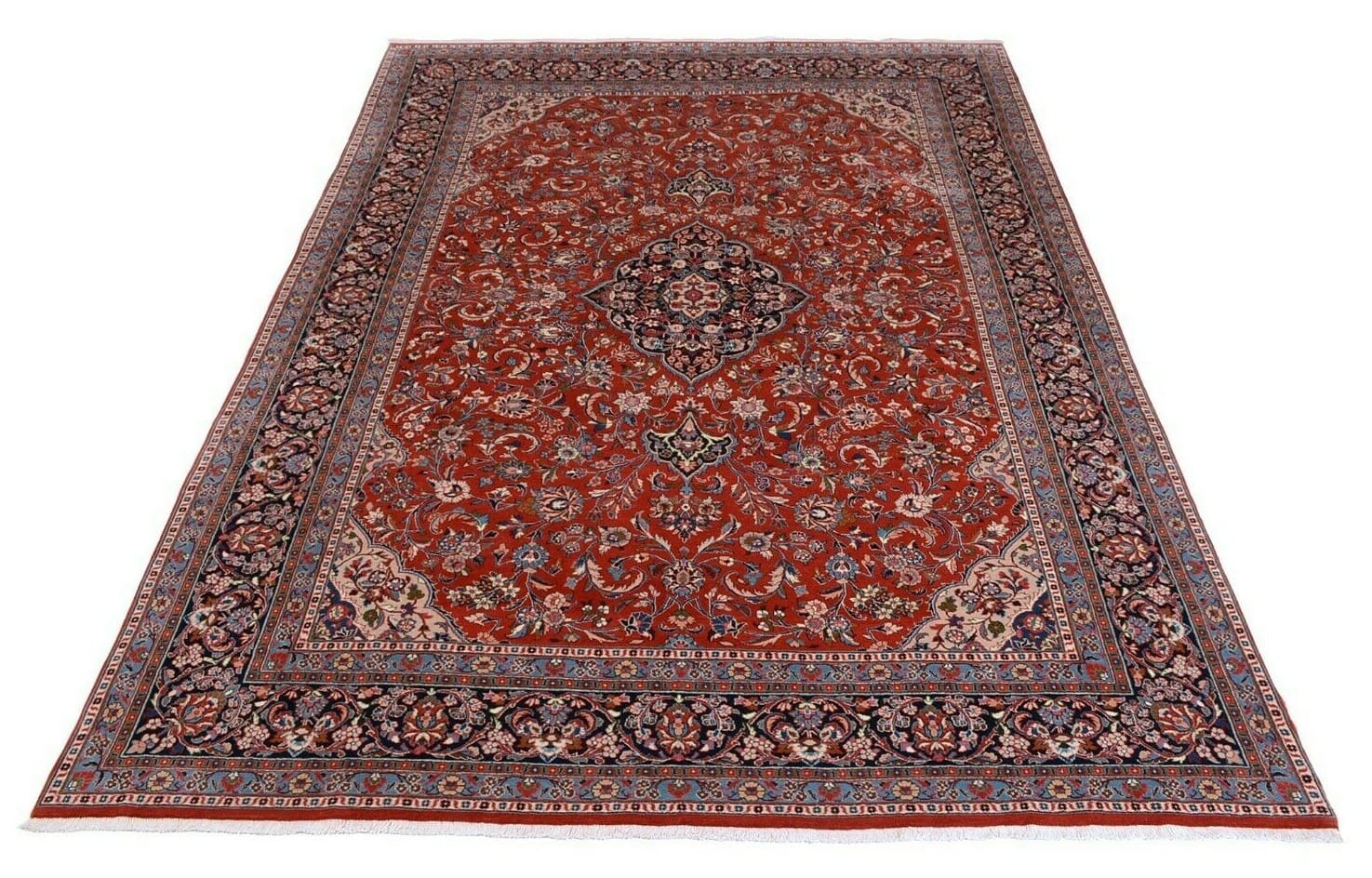
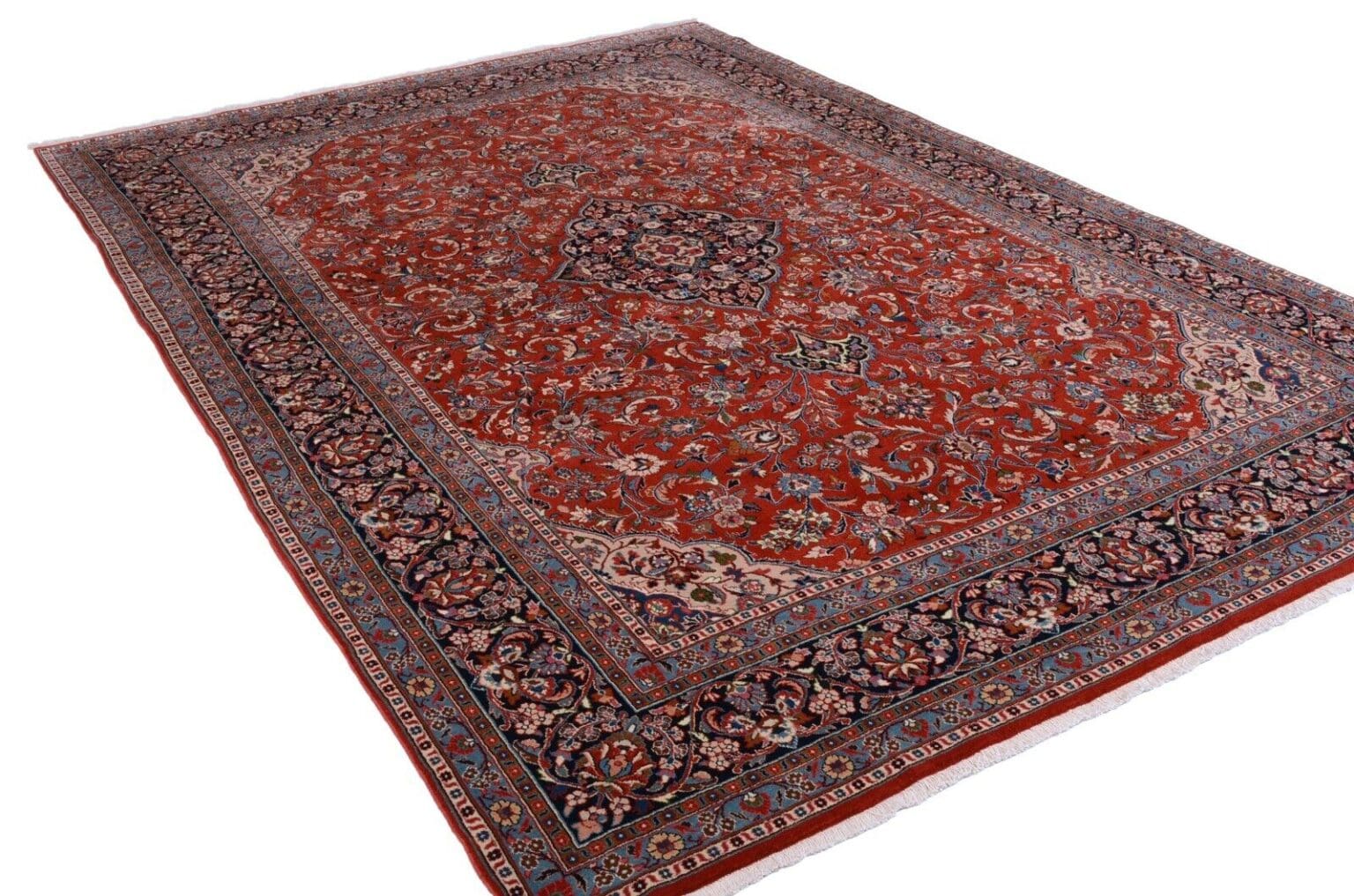
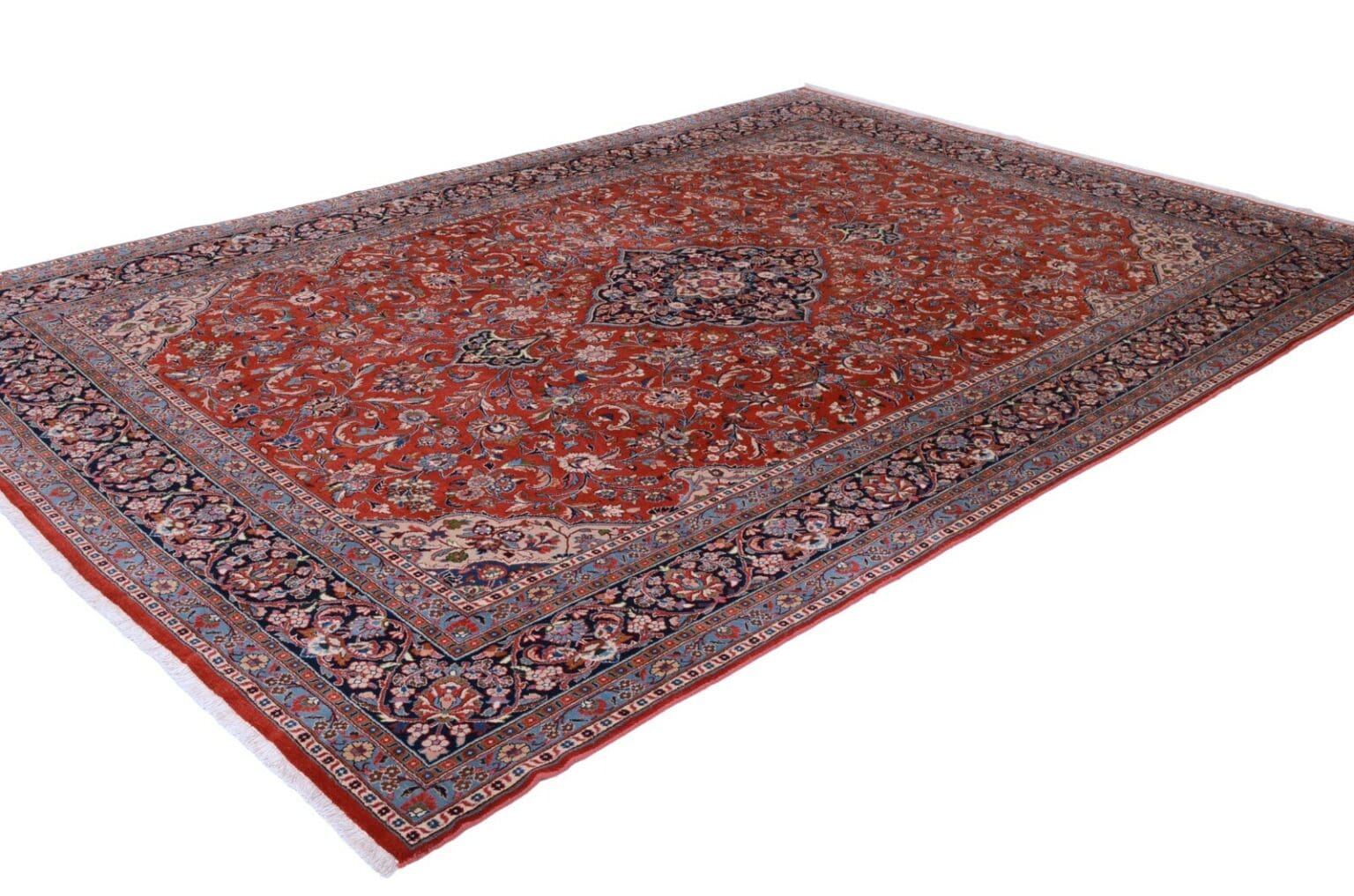
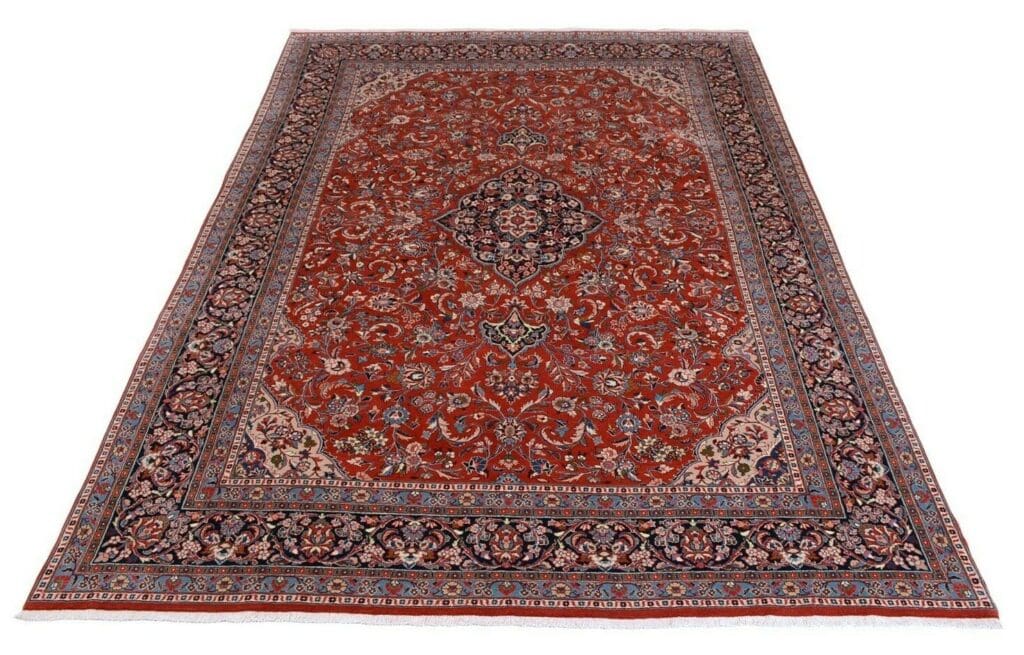
This hand-knotted Persian rug has a pile made from 100% new wool and a warp made from 100% cotton. Each material serves a different structural purpose. The wool forms the visible surface, while the cotton warp provides the foundation into which the knots are inserted. Natural dyes are also mentioned in the description. Together, the stated materials and the hand-knotted method place the rug within a traditional form of Persian textile production.
Sheep wool has been used in rug making for centuries. Its natural fibre structure gives a pile a pleasant tactile quality and a warm feel. Wool is also valued in the craft for its resilience and resistance to everyday wear. Cotton is commonly used for warp threads because it creates a regular, stable base on the loom. The combination of wool pile and cotton warp is therefore both functional and characteristic of many hand-knotted rug constructions.
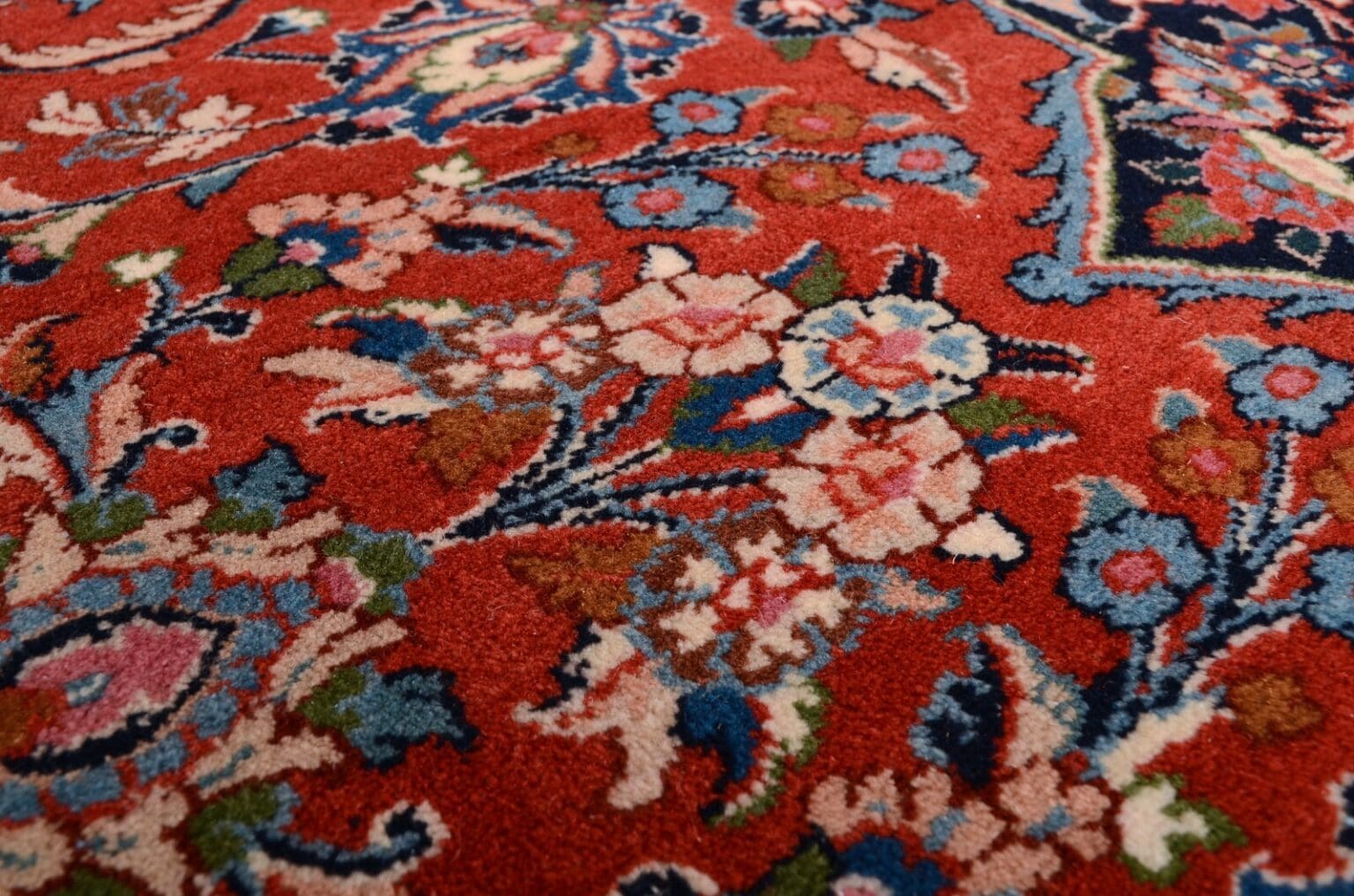
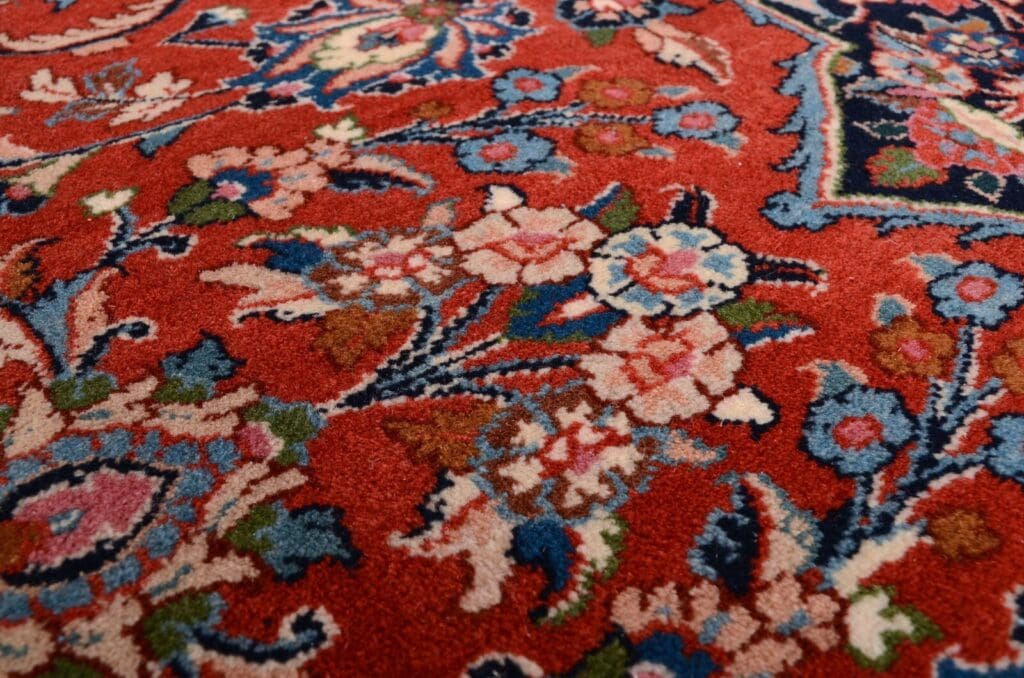
The rug is built knot by knot rather than produced as a machine-made surface. Its density is given as 350,000 knots per square metre. A dense knot structure can support the rendering of fine outlines, leaves, flowers and central ornaments. In this rug, it contributes to the detailed appearance of the floral medallion design. Knot density is a technical characteristic: it describes how closely the individual knots are arranged within the surface.
Hand knotting involves a sequence of carefully repeated operations. The warp is first arranged on the loom. Knots are then tied in successive rows, with weft threads helping to secure the developing structure. As the work advances, the pile is built up and the design gradually becomes visible. After the knotting is complete, the surface can be trimmed and finished so that the drawing is clearly defined. The pattern is thus created as part of the textile itself, not applied as a printed decoration.
This rug is described as perfect and unused. That condition is a specific characteristic of the individual piece. The pile of new wool, the cotton warp and the hand-knotted construction define its material and technical profile. The description also gives a thickness of approximately 10 mm and states that the rug is suitable for underfloor heating. These details belong to the product itself and are separate from the wider history of Persian weaving.
Origin and Tradition
The rug is described as Persian and as originating from Persia, or Iran. Iran has one of the most extensive and varied traditions of rug making. In this tradition, the preparation of fibres, the arrangement of the loom, the knotting technique and the design language are closely related. Knowledge is developed through practice and passed through workshops, families and regional weaving communities.
Persian rugs are made in many different parts of Iran. Individual cities and regions have developed distinctive preferences in drawing, borders, colour organisation and construction. Isfahan, Tabriz and Kerman are among the well-known names in the history of Persian rug production. These names illustrate the breadth of the tradition. No particular city or province is specified for this individual rug, so its origin is stated only as Persia and Iran.
The history of Persian rugs is connected with the development of specialised textile skills. Wool must be selected, prepared and spun before it can become pile yarn. The warp is placed under tension on the loom, and the design is translated into a succession of knots. A weaver must keep track of spacing, row order and proportion while the composition grows. This process requires both technical control and familiarity with the intended pattern.
Many Persian workshops have traditionally operated within family structures. Knowledge about wool, dyeing, yarn preparation, loom setting and ornament may be taught from one generation to another. Established designs can therefore remain recognisable while being adapted by different workshops. Differences may appear in the handling of outlines, the density of detail, the balance of the field and the treatment of borders. The general tradition provides a framework, but hand production does not reduce every rug to an identical result.
A traditional production sequence includes several connected stages. After the loom is prepared, knots are inserted row by row and secured with weft threads. The foundation becomes progressively covered by the pile. Once the knotting is finished, the surface is trimmed, cleaned and prepared for use. The relationship between the warp, the weft and the pile gives the rug its textile structure. These technical principles explain why hand-knotted rugs are associated with long-established craft knowledge.
Regional names in Persian rug culture can refer to a place of production, a workshop tradition or a recognisable design vocabulary. They should not automatically be treated as interchangeable terms. For this rug, the concrete origin information is Persia or Iran; no narrower province or city is given. Its recorded characteristics are hand knotting, a wool pile, a cotton warp, a high knot density, a floral medallion pattern and a traditional Persian or Oriental style.
Design and Pattern
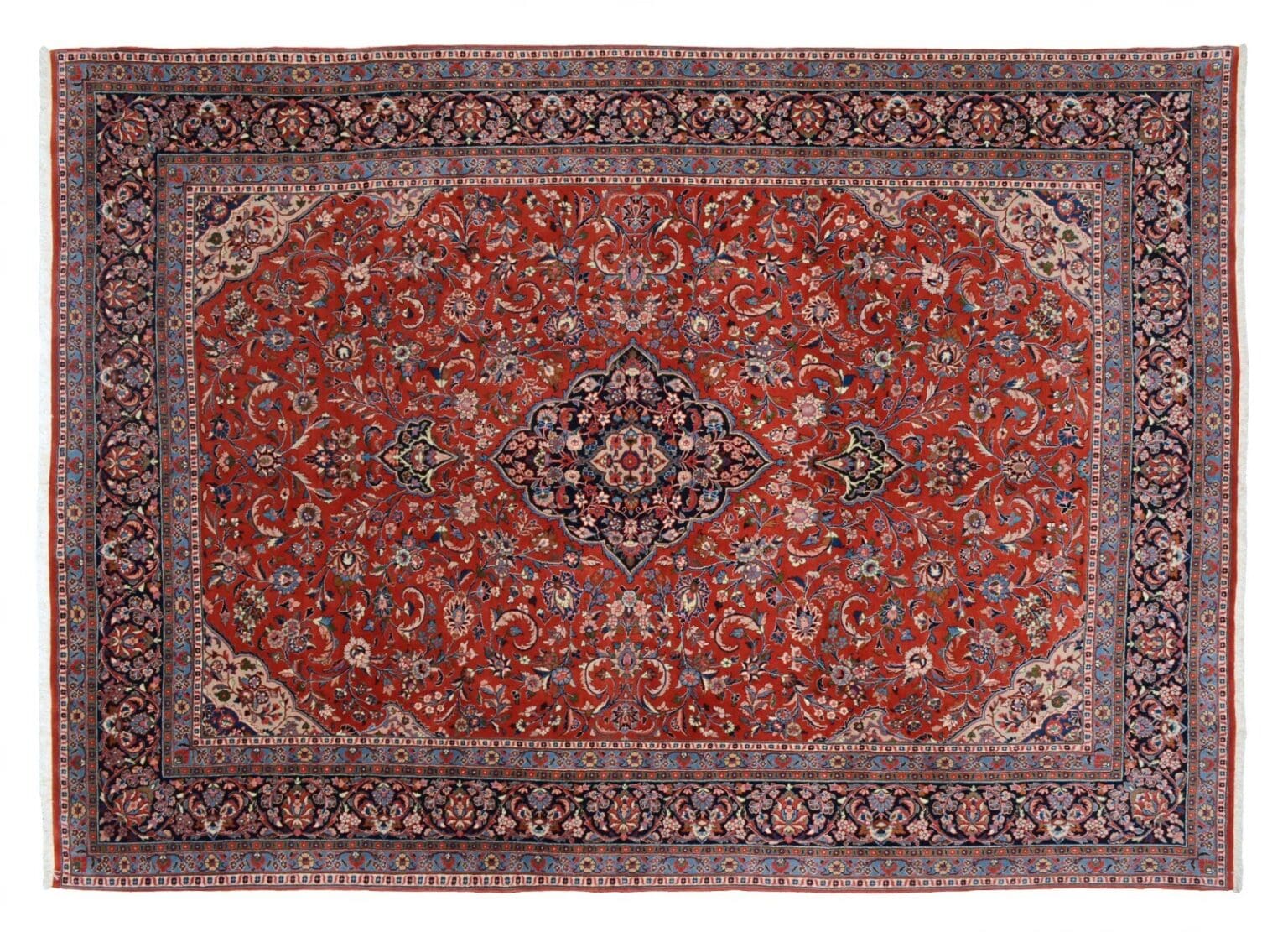
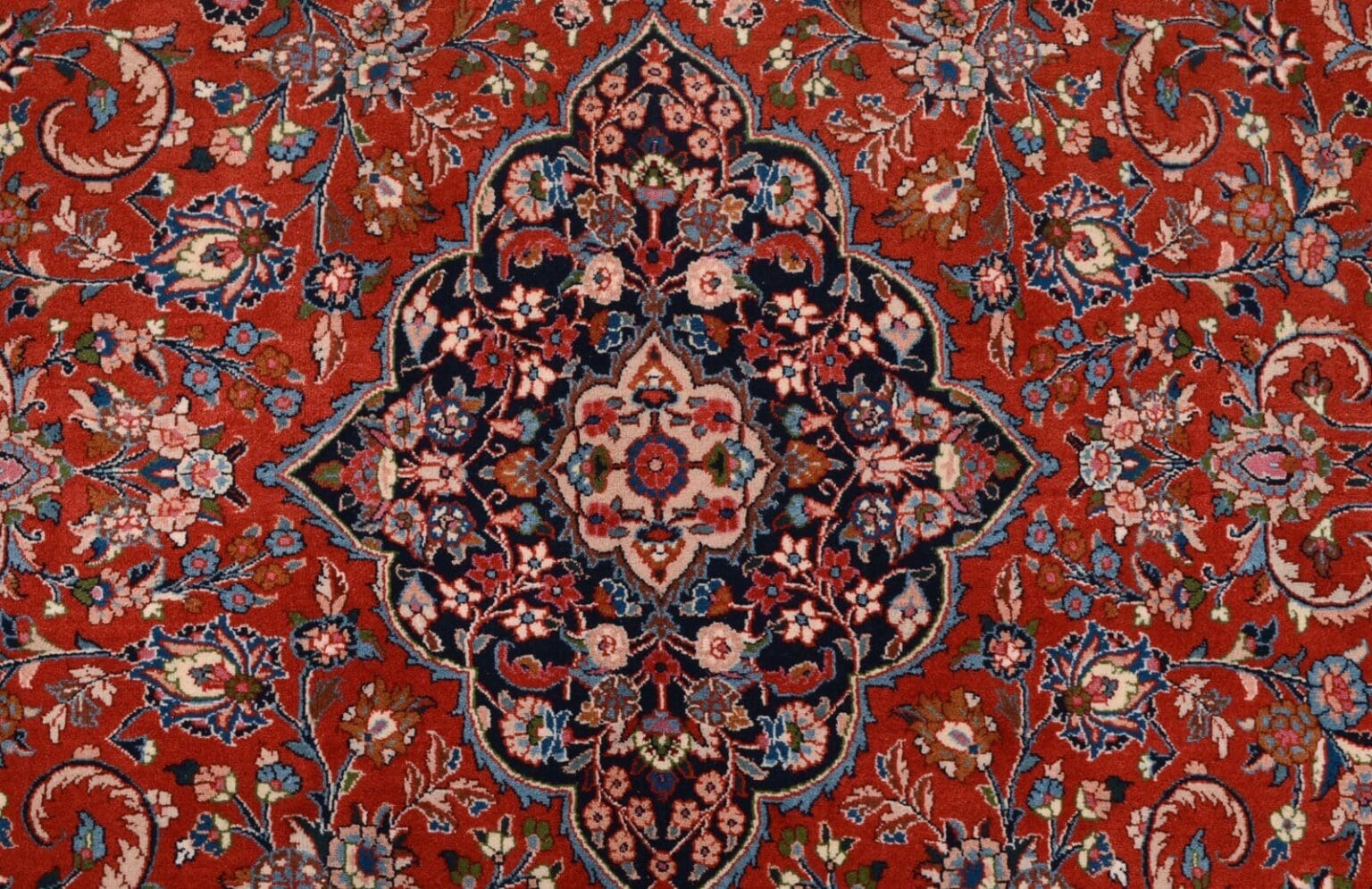
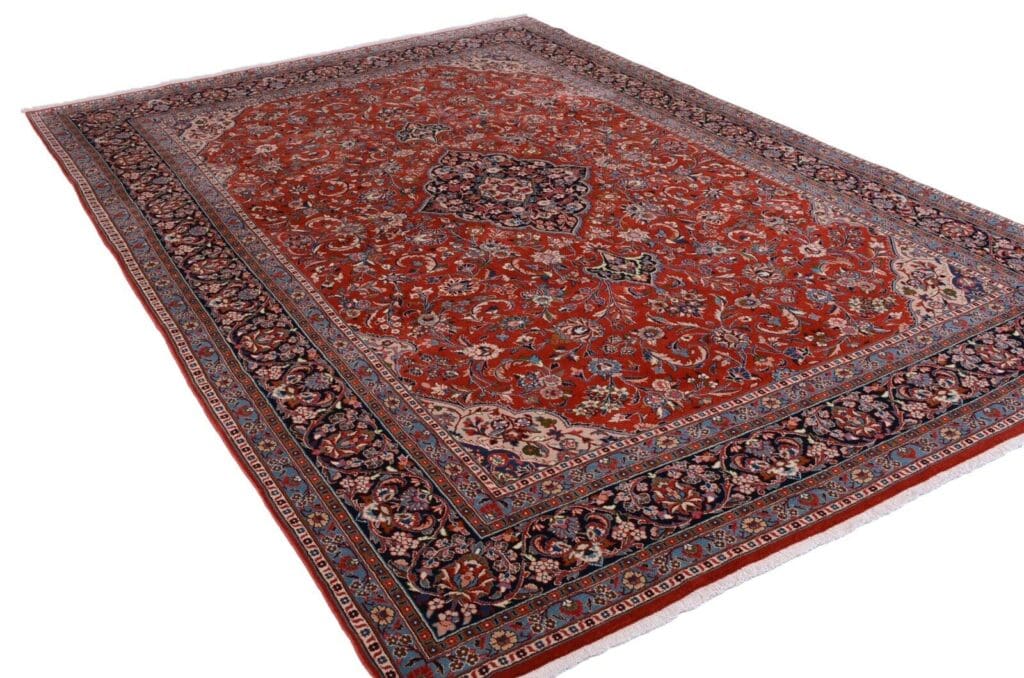
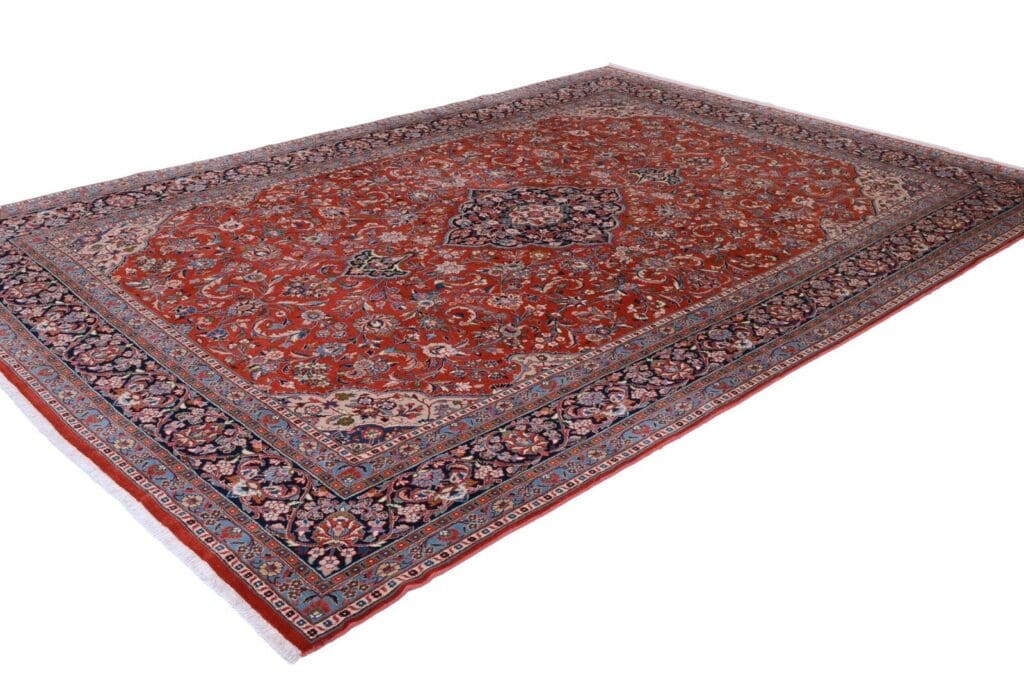
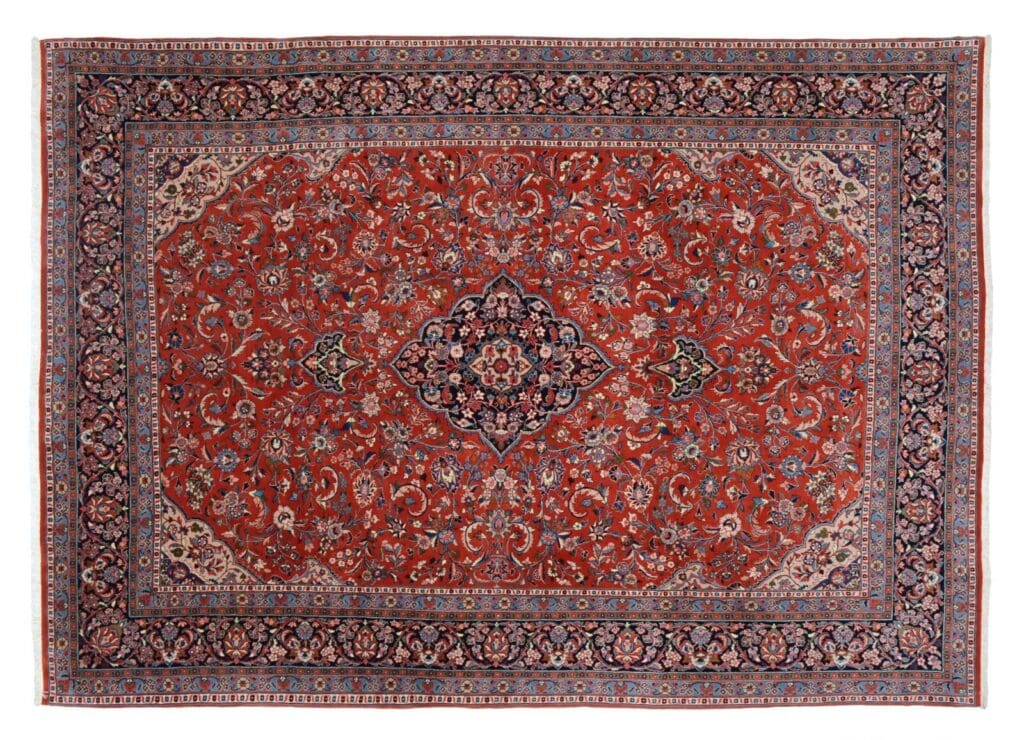
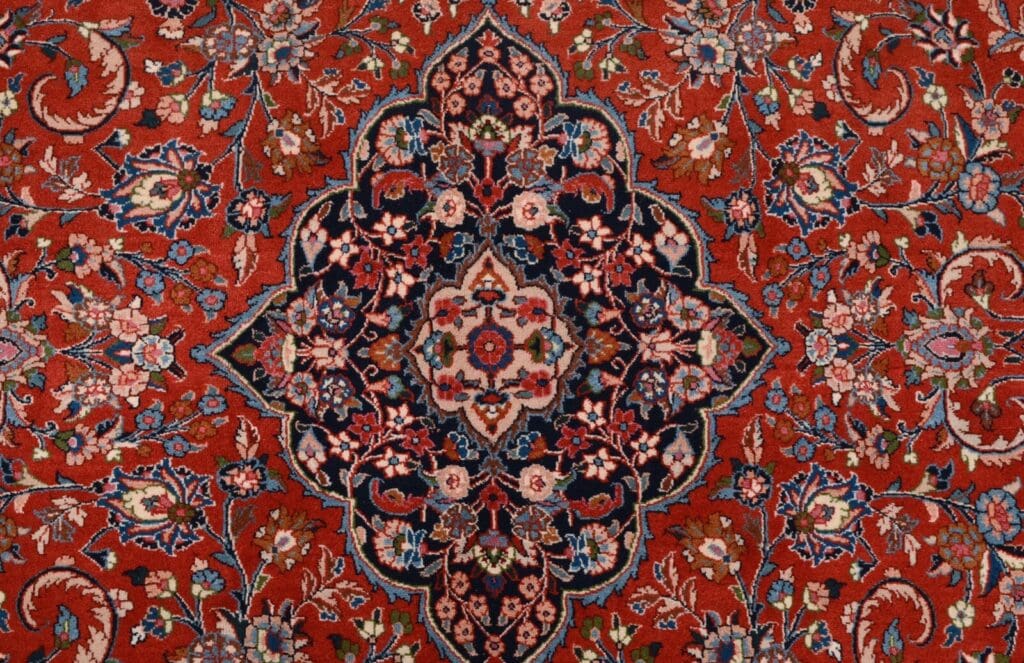
The design is floral with a medallion. In rug design, a medallion generally acts as the central organising motif of the composition. It may appear as a defined shape in the middle of the field, accompanied or framed by flowers, leaves and scrolling forms. This arrangement creates a visual centre and establishes a relationship between the central ornament and the surrounding decorative elements.
Floral motifs are among the most established themes in Persian ornament. Flowers and leaves may be represented in a stylised manner rather than copied directly from nature. Vines can connect separate areas, blossoms can create points of emphasis and smaller botanical forms can establish rhythm. The floral language may be symmetrical, repeated or more freely distributed. For this rug, the stated design feature is the combination of a floral pattern and a medallion.
In the cultural symbolism of the Middle East, floral ornament is often associated with growth, fertility and the cycle of life. These associations belong to the broader tradition of the motif. They do not identify a particular flower or establish a specific colour meaning for this rug. The source does not describe individual blossoms, exact shades or a defined palette, so no such details are attributed to the piece.
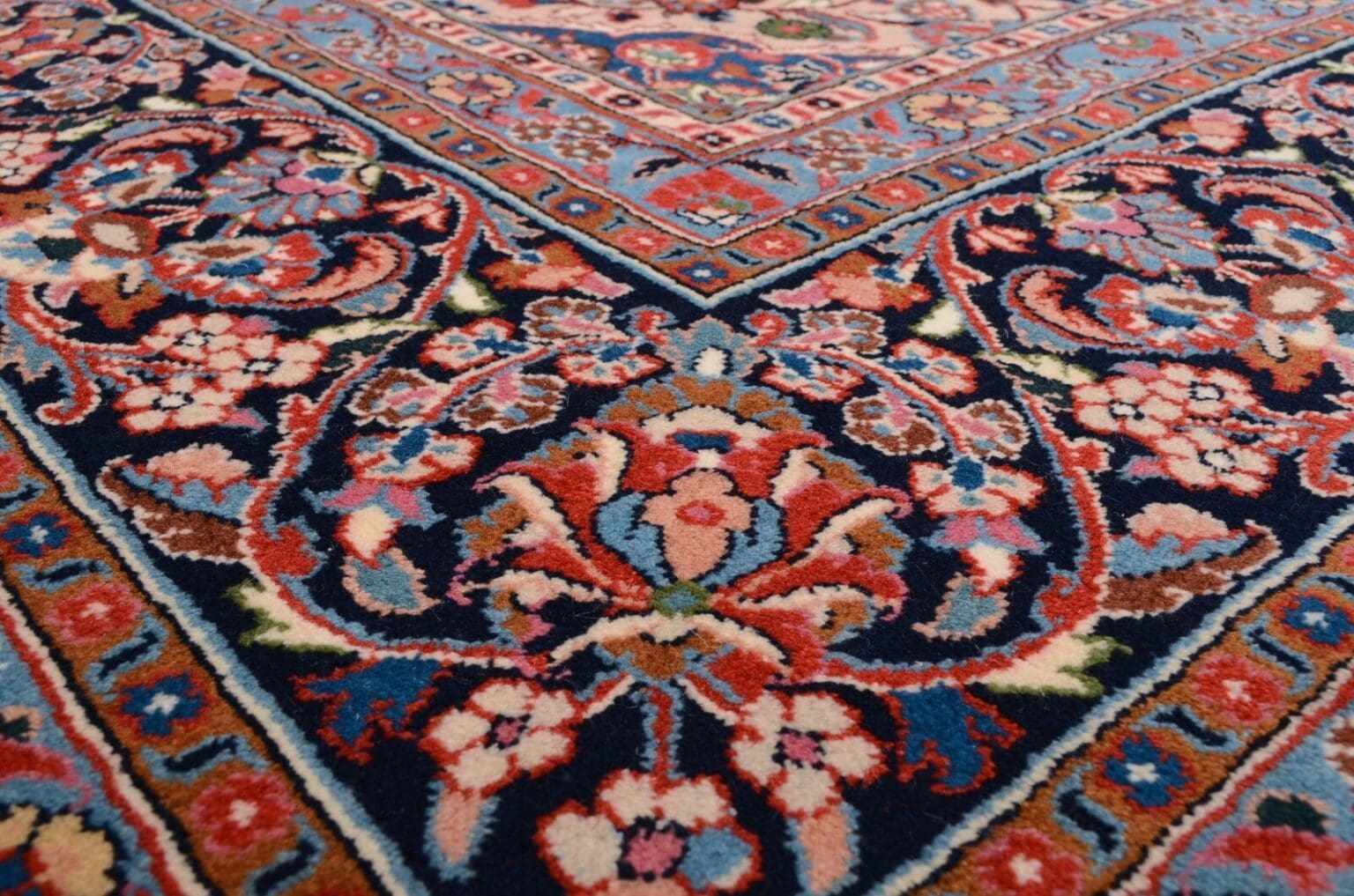
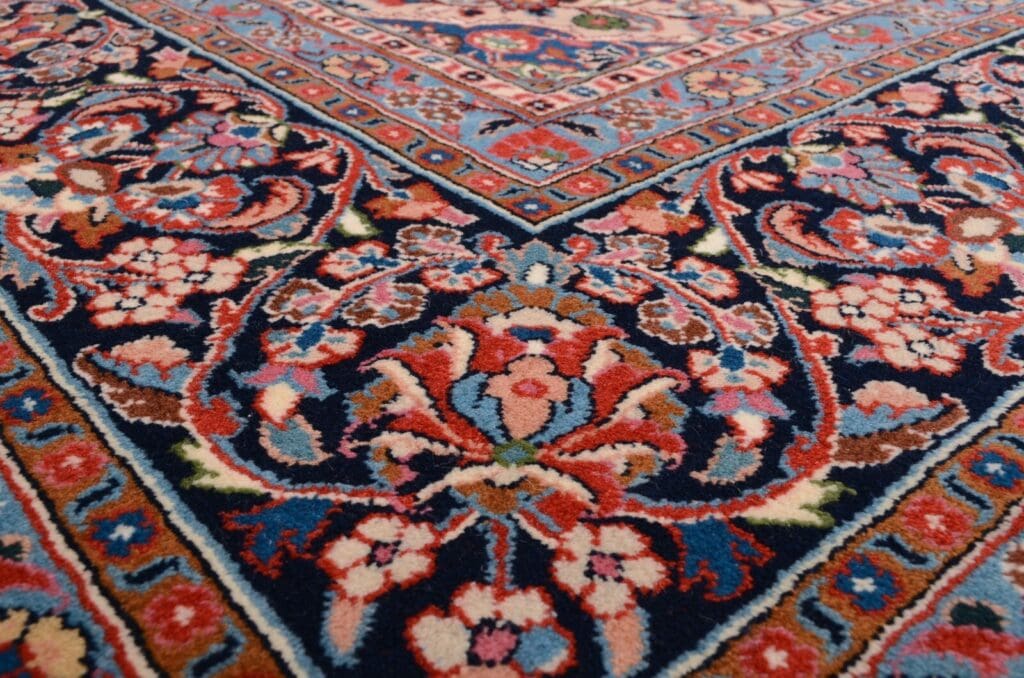
A central medallion can organise the viewer’s perception of the field. Surrounding motifs may repeat its rhythm, mirror parts of its form or provide transitions toward the border. Persian compositions often create balance through the relationship between centre, field and enclosing ornament. Borders can contain the design, while vines and smaller forms connect the interior areas. The precise border treatment of this rug is not specified.
Hand knotting has a direct effect on how a design is rendered. Curves and contours must be constructed through sequences of individual knots. The placement of each row contributes to the clarity of a leaf, flower or central outline. A higher knot density can make smaller forms and finer transitions possible when the design and workmanship are planned accordingly. The visual pattern is therefore inseparable from the technical process by which it is built.
The traditional Persian and Oriental style places this design within a broad decorative vocabulary. Floral medallion compositions can be used in many types of interiors without indicating a particular place of origin. The relevant features of this individual rug are the floral motif, the medallion and the stated traditional Persian or Oriental style. No named regional pattern and no specific colour scheme are added beyond the information provided.
Special Features
The specific features recorded for this rug include its perfect, unused condition, its suitability for underfloor heating and its stated thickness of approximately 10 mm. Suitability for underfloor heating concerns use in an appropriately equipped indoor room. The rug is not intended for outdoor use, because weather exposure and moisture can affect the fibres and the hand-knotted structure.
Routine care should be gentle. Regular vacuuming with a soft or otherwise suitable attachment is recommended for removing dust. A deeper cleaning should be carried out by a professional rug-cleaning service experienced in hand-knotted rugs. Professional care can take account of the wool pile, cotton warp and worked surface. Appropriate cleaning helps preserve the condition of the textile and the clarity of its floral design.
The wool pile, cotton warp, hand-knotting and floral medallion are the main material, technical and visual features. The recorded knot density supports the finely worked appearance of the design, while the unused condition describes its current state. Its Persian origin and stated suitability for underfloor heating complete the factual profile of this one-off rug.
FAQ
How should I clean my hand-knotted Persian rug?
For regular care, vacuum the rug using a gentle attachment. The surface should be treated carefully so that the wool pile is not subjected to unnecessary stress. For a deeper clean, a professional rug-cleaning service with experience in hand-knotted rugs is recommended. A specialist can take the combination of new wool in the pile, cotton in the warp and the hand-worked construction into account. Suitable cleaning helps maintain the condition of the surface and keeps the floral pattern legible.
Can I use a Persian rug outdoors?
No. Hand-knotted Persian rugs are not suitable for outdoor use. Weather, dampness and changing conditions can affect the wool, cotton and knotted structure. The rug should therefore be used in a protected interior. This particular piece is described as suitable for underfloor heating, which applies to suitable indoor rooms and does not imply resistance to outdoor exposure, rain or moisture.
How can I assess whether a Persian rug is genuine?
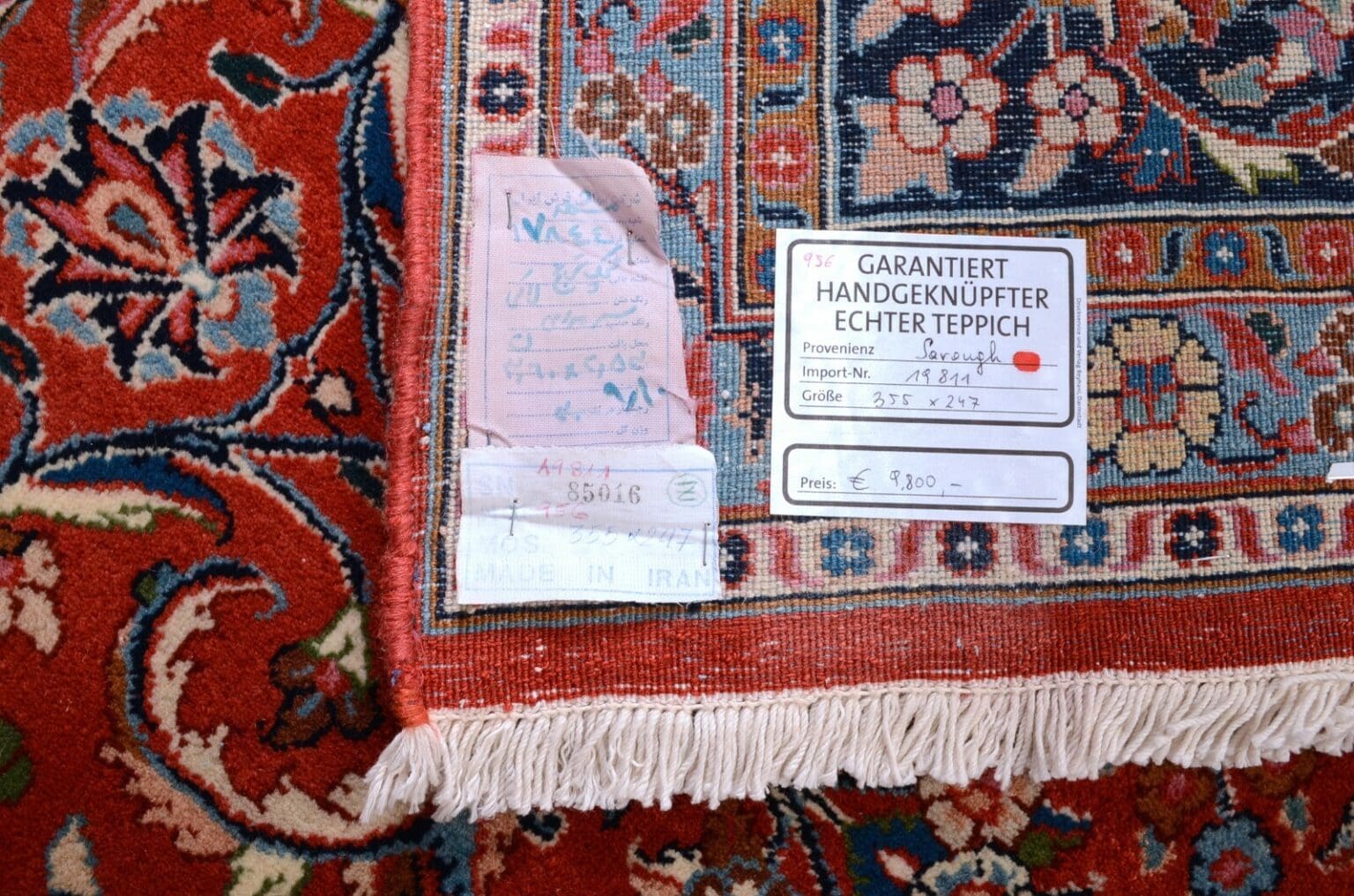
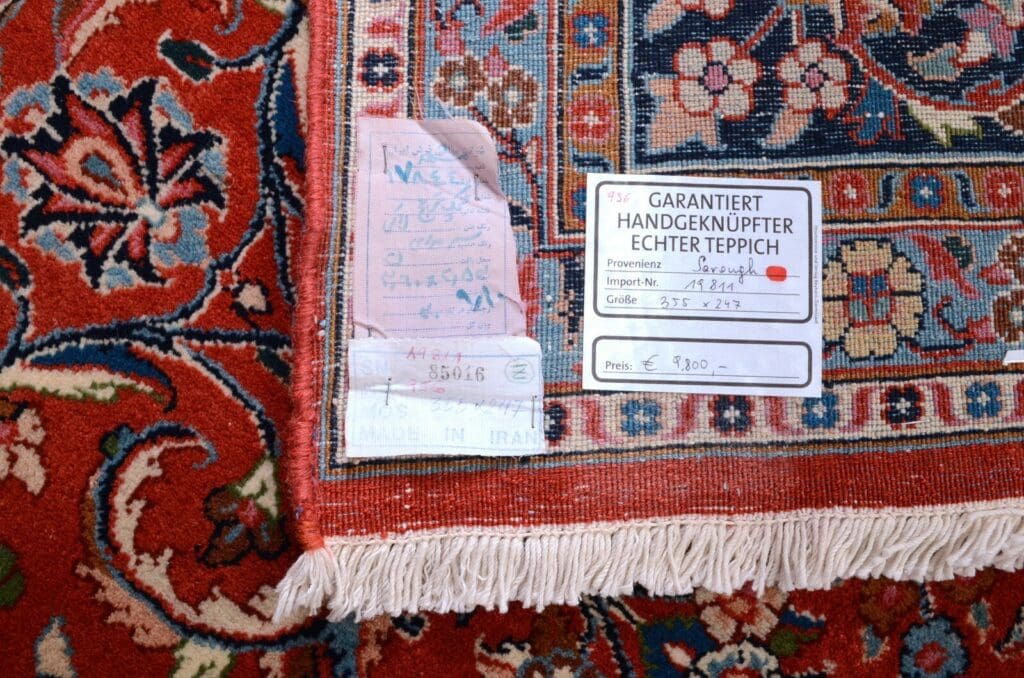
Several features can be examined when assessing a Persian rug, including knot density, materials and workmanship. For this rug, the listed details are 350,000 knots per square metre, 100% new wool in the pile, 100% cotton in the warp and a hand-knotted construction. The back should also appear even and free from coarse irregularities, as this can indicate careful workmanship. Examining both sides and the knot structure can assist with an assessment. For a thorough evaluation, experience with Persian rugs remains useful.
To provide the best experiences, we use technologies like cookies to store and/or access device information. Consenting to these technologies will allow us to process data such as browsing behavior or unique IDs on this site. Not consenting or withdrawing consent, may adversely affect certain features and functions.
Functional Always active
The technical storage or access is strictly necessary for the legitimate purpose of enabling the use of a specific service explicitly requested by the subscriber or user, or for the sole purpose of carrying out the transmission of a communication over an electronic communications network.
Preferences
The technical storage or access is necessary for the legitimate purpose of storing preferences that are not requested by the subscriber or user.
Statistics
The technical storage or access that is used exclusively for statistical purposes.The technical storage or access that is used exclusively for anonymous statistical purposes. Without a subpoena, voluntary compliance on the part of your Internet Service Provider, or additional records from a third party, information stored or retrieved for this purpose alone cannot usually be used to identify you.
Marketing
The technical storage or access is required to create user profiles to send advertising, or to track the user on a website or across several websites for similar marketing purposes.
 SECURE PAYMENT
 SHIPPING PARTNERS


