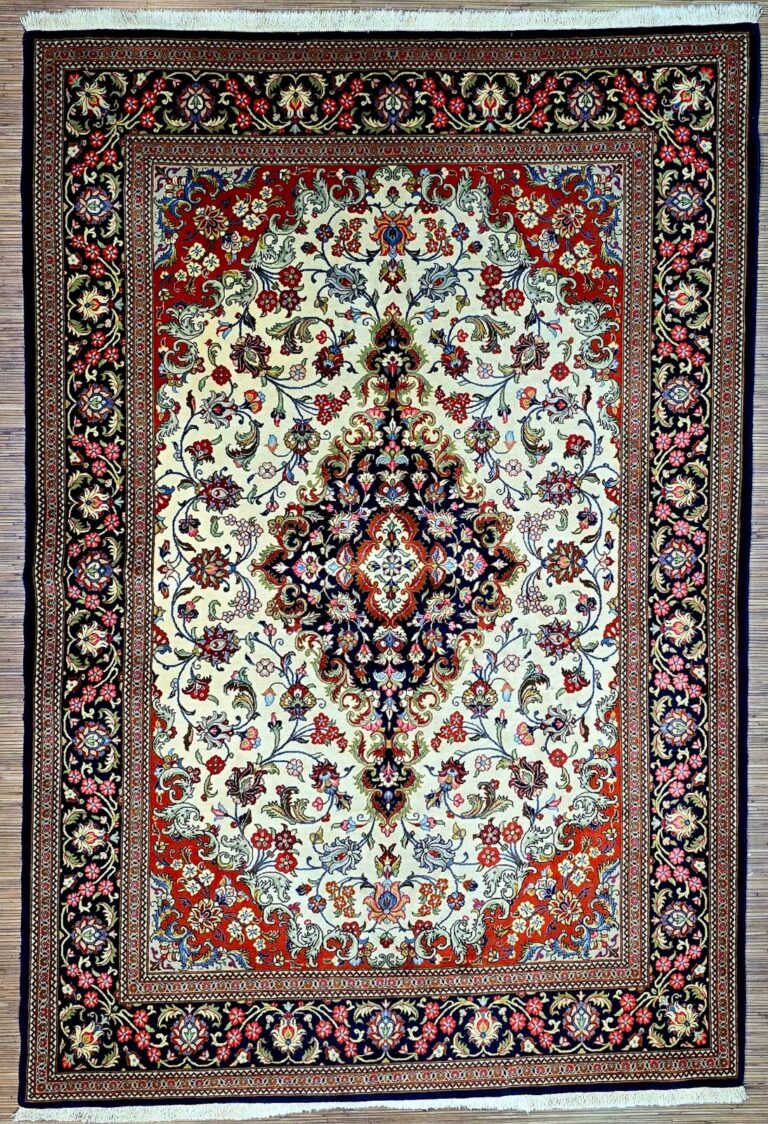
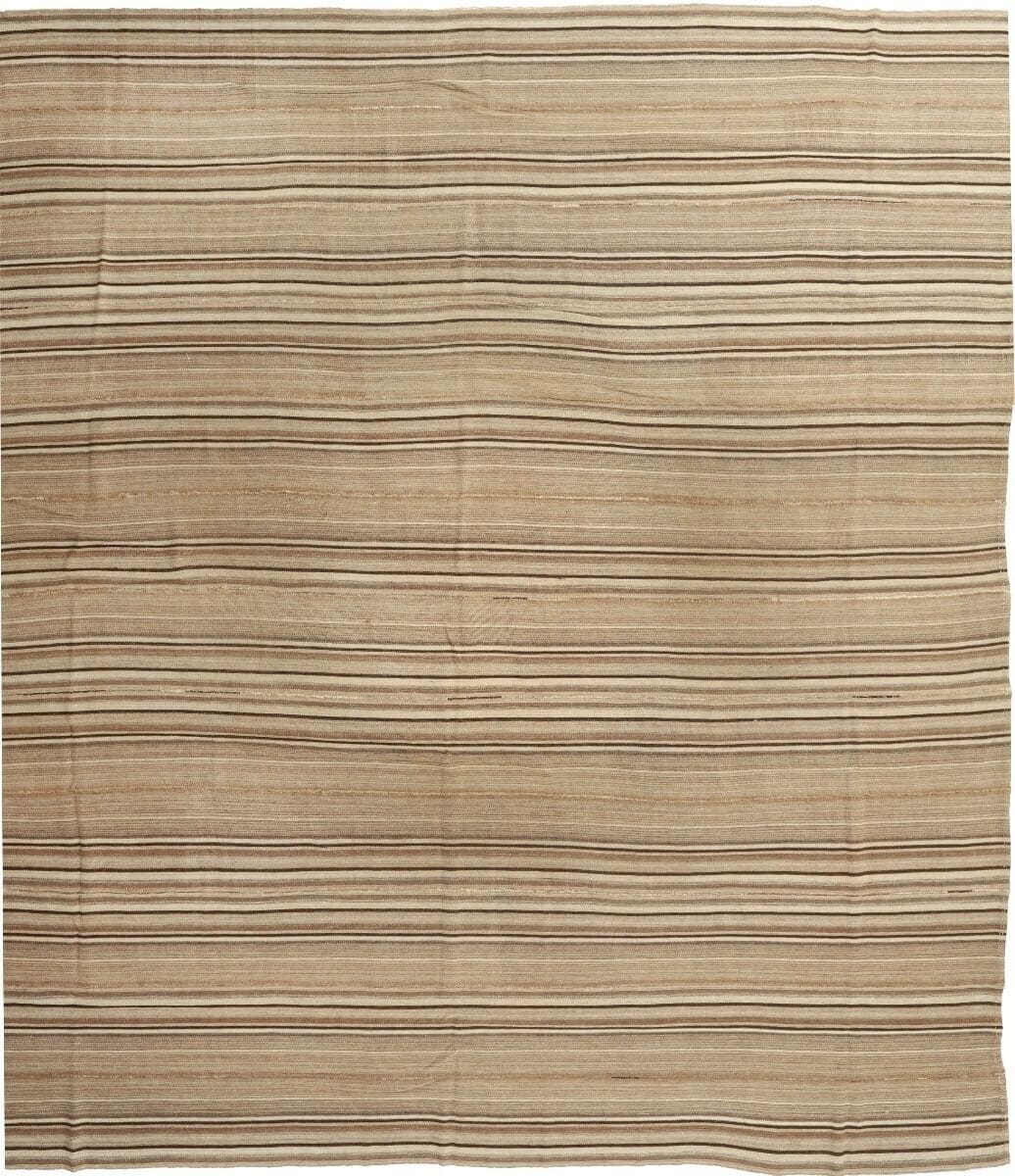
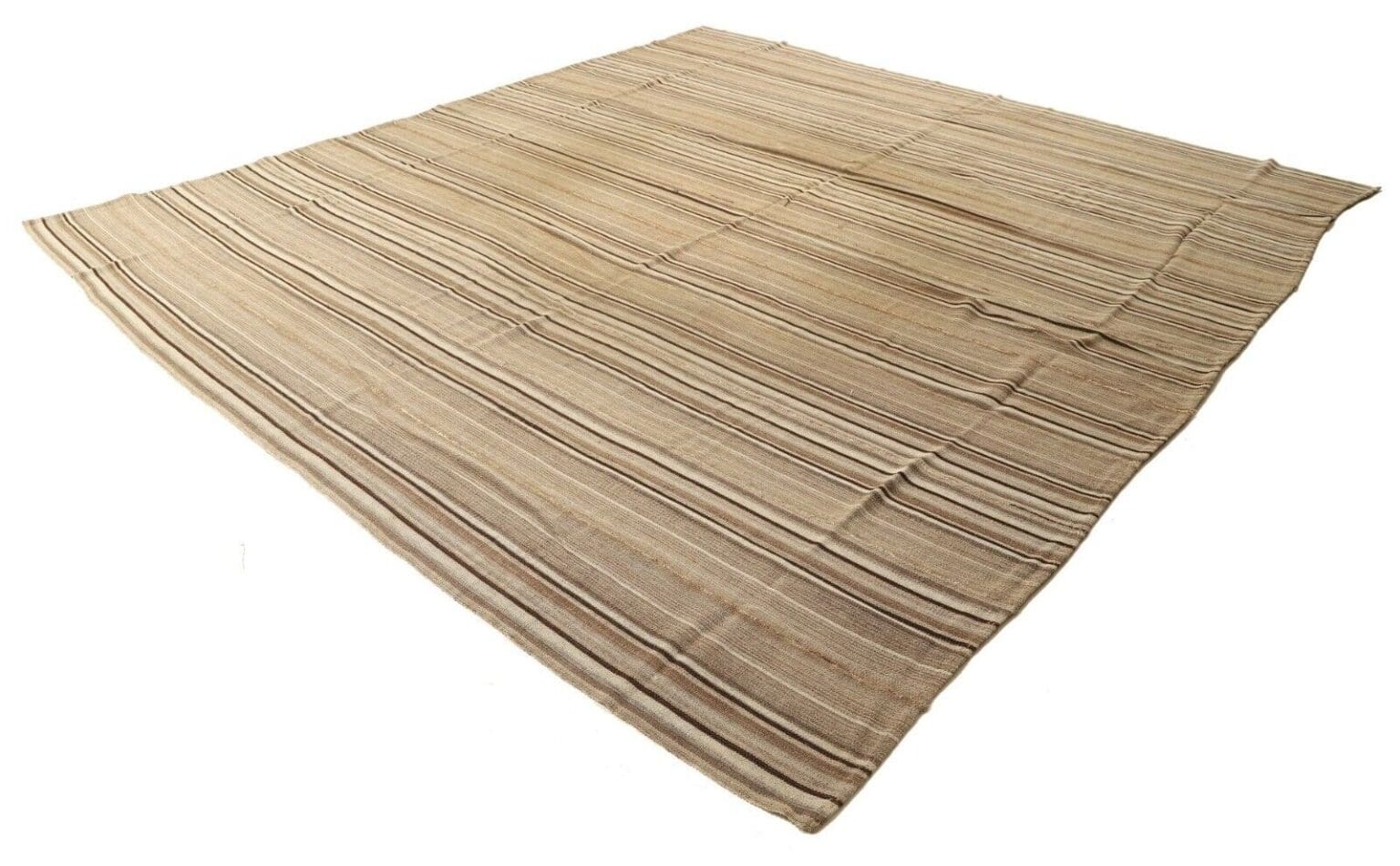
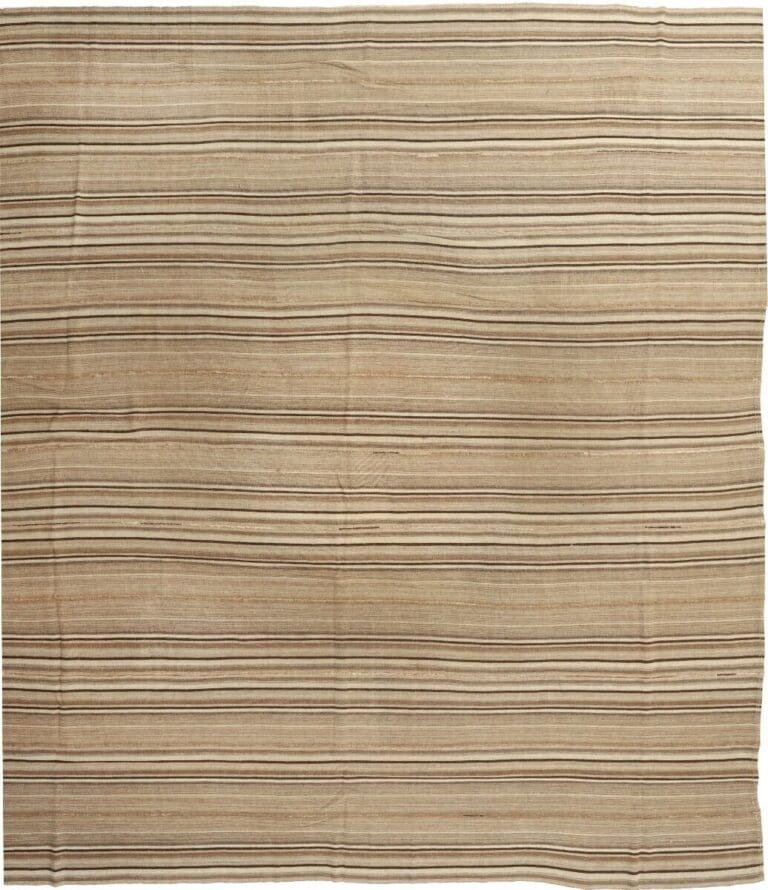
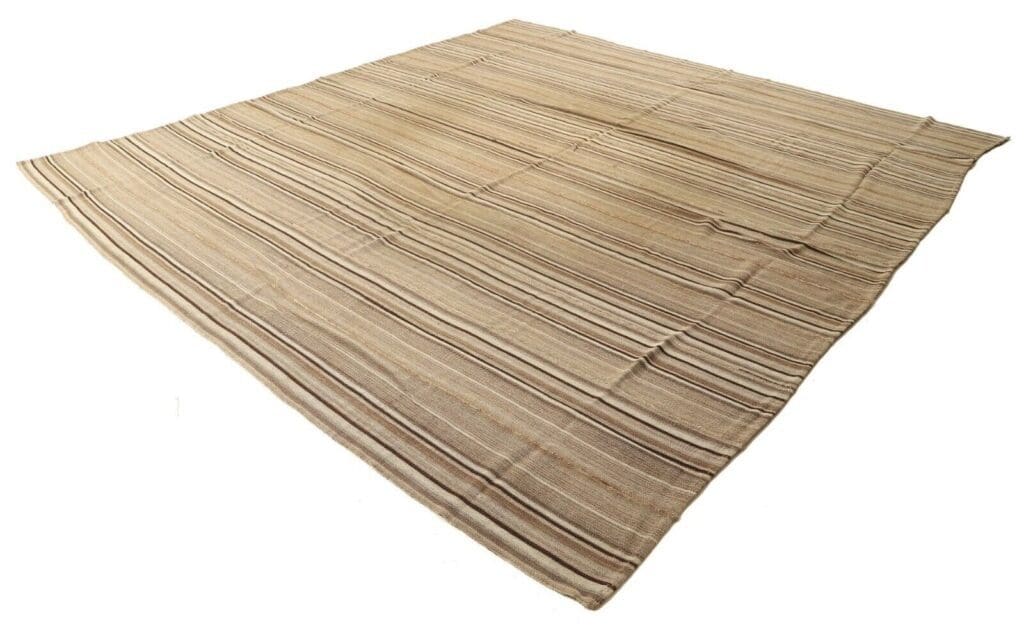
Hand-woven Persian rug | Material: Wool pile | Size: 345 x 305 cm | Pattern: Multicoloured and modern, Art Deco | Condition: New without label | Suitable for underfloor heating
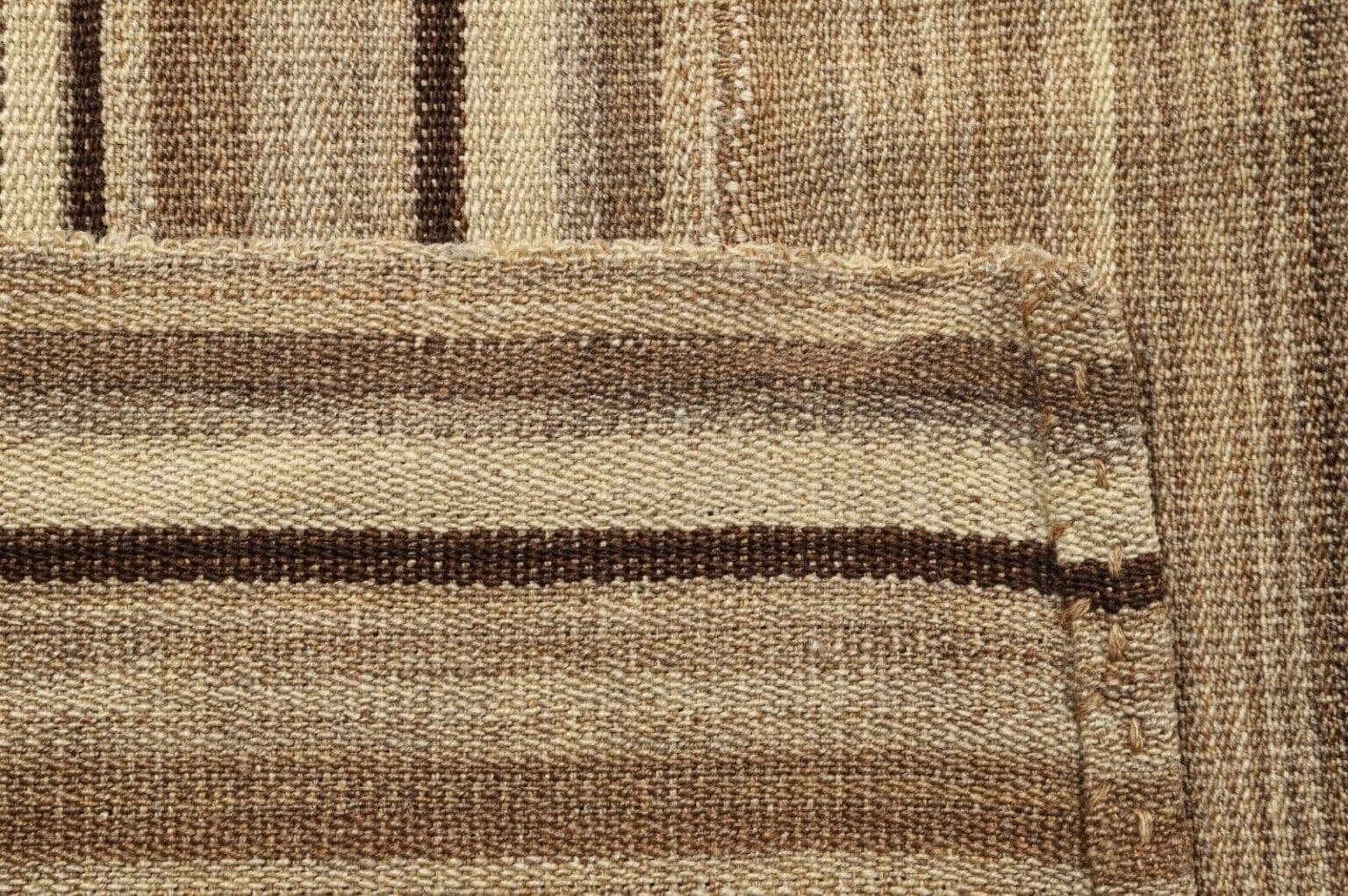
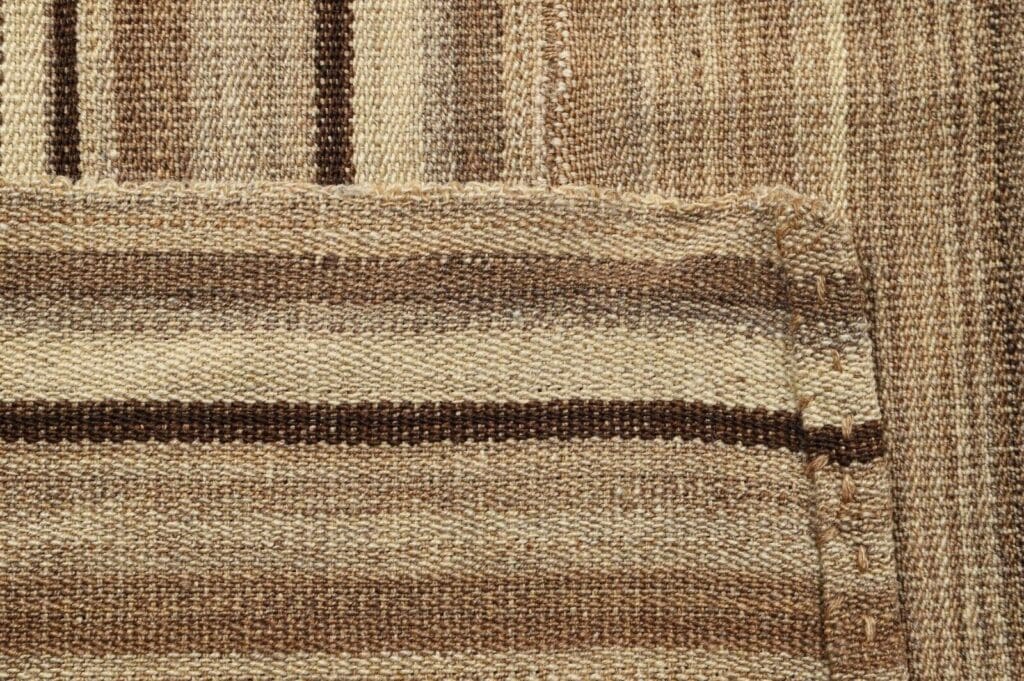
This modern Persian rug is made of wool and is described as a hand-woven Kelim with a flat-weave construction. A flat weave does not create a raised pile. Instead, the weft is worked through the warp to form a level textile surface. This method gives the Kelim its characteristic structure and distinguishes it from a rug made with a dense, cut pile.
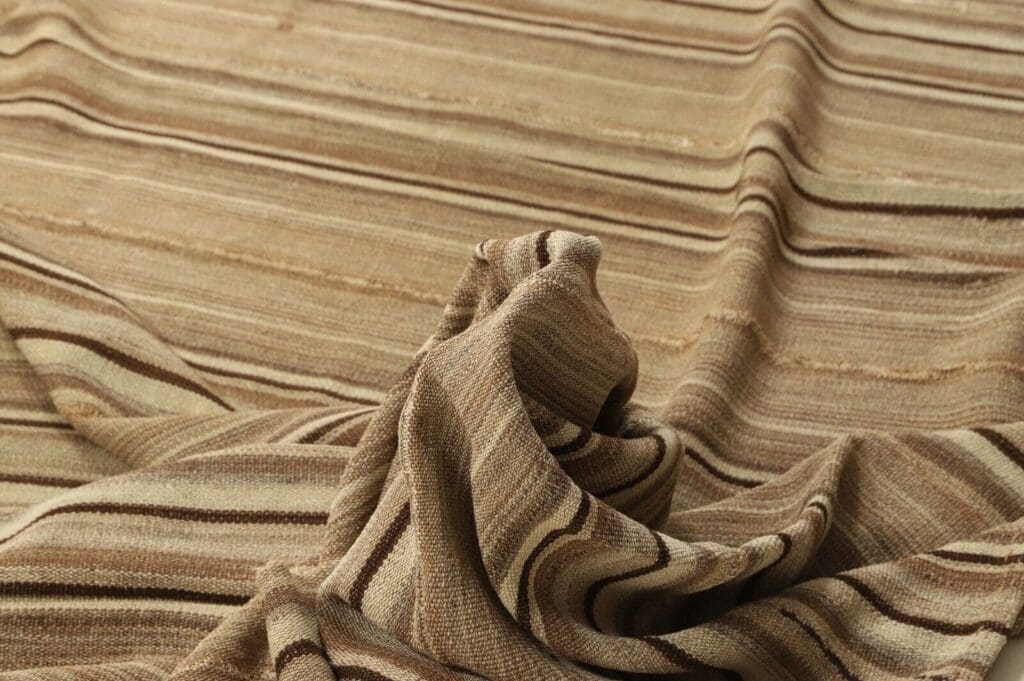
Wool is a natural material with a long-standing place in Persian rugs and Kelims. It provides a pleasant handle and contributes natural warmth to a room. Wool is also used traditionally for its resistance and durability. In a flat weave, the material remains closely connected to the visible textile structure: the pattern is produced by the arrangement and colour of the woven threads rather than by differences in pile height.
Hand weaving makes each rug an individual piece. In a Kelim, the design is built as the weaving progresses, so the visual composition is directly connected with the making process. The construction is identified as a flat weave. No knot density is given, and the appropriate focus for this piece is therefore its hand-woven technique rather than a numerical knot count.
Origin and Tradition
The rug is identified as a Persian rug from Iran. Iran has a centuries-old tradition of carpet making, with regional approaches to wool, colour, weaving tension and pattern arrangement. This tradition includes both pile rugs and flat-woven Kelims. A Kelim is not simply a lesser form of a knotted rug; it is an established textile form with its own technical principles and visual character.
Persian carpet making developed in a setting where rugs served everyday, decorative and representative purposes. Knowledge of materials and production was passed through generations. Different weaving areas developed their own preferences in colour, geometry and the distribution of motifs. This regional variety is one of the defining features of Persian carpet culture and helps explain why the term covers such a broad range of appearances.
Tabriz is one of the recognised centres of Persian carpet production. The city has a history reaching back to the fifteenth century and is known for finely designed carpets and careful use of materials. The Tabriz tradition is associated with complex pattern arrangements and a wide colour vocabulary. This reference places Tabriz within the history of Persian weaving; it does not assign this individual rug to that city.
Persian rugs are often regarded as cultural records because their patterns, colours and techniques have been developed and preserved over long periods. Modern designs can remain connected to that wider history while responding to contemporary interiors. Flat-woven Kelims also have an established role within the tradition, combining a practical textile structure with a strong decorative surface.
The designation Persian rug therefore identifies the piece with the Iranian carpet tradition. No particular province or city is named as the origin of this rug. The description remains with the Iranian context and the broader history of the techniques rather than making a narrower regional attribution.
Design and Pattern
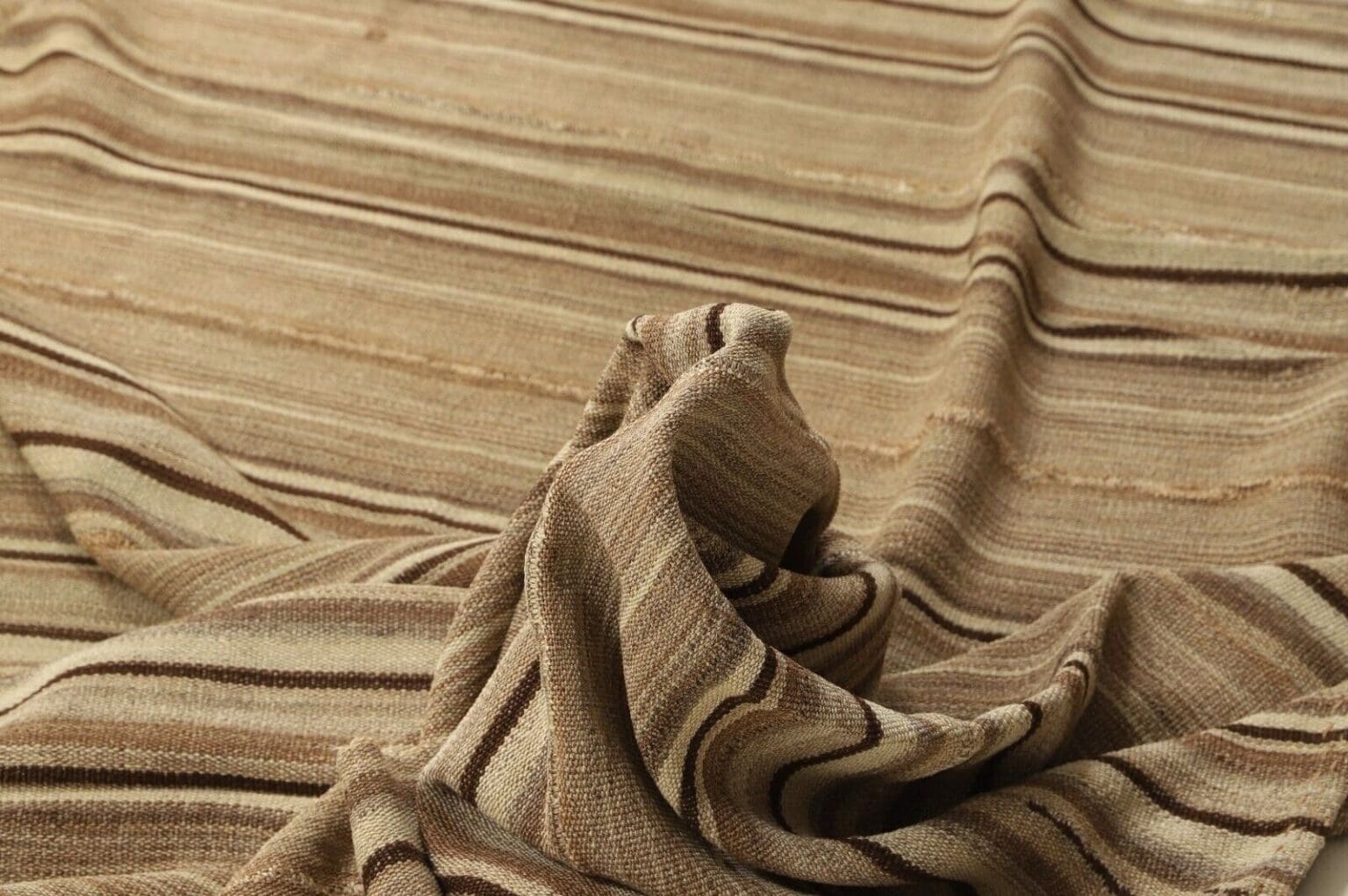
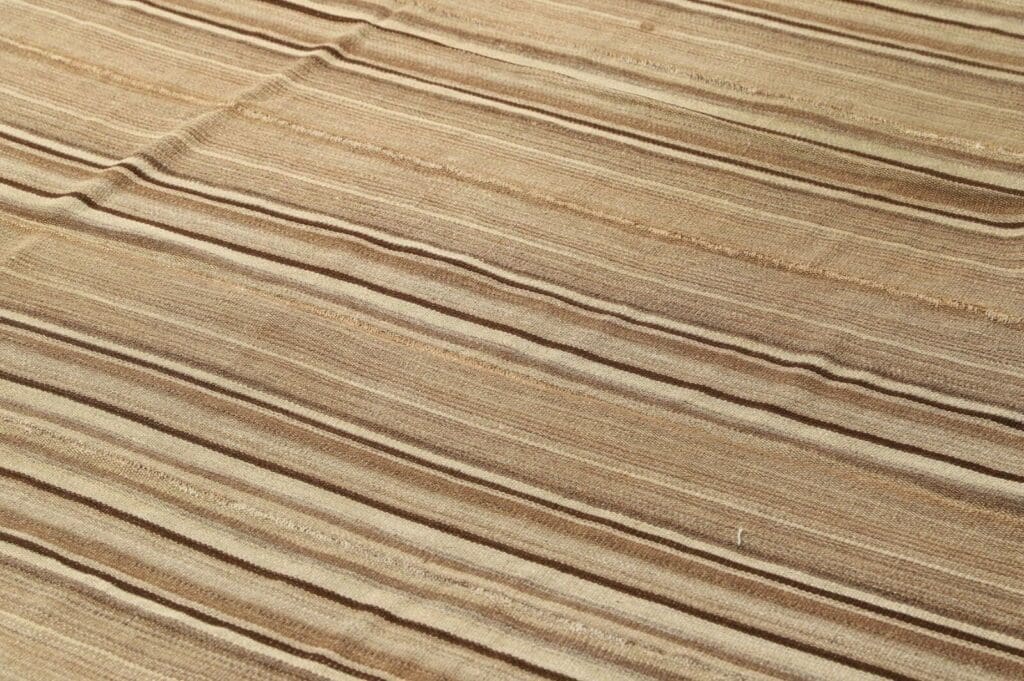
The design is described as multicoloured and modern, with an Art Deco style. It therefore combines a contemporary overall appearance with the ordered, decorative tendencies associated with Art Deco. The rug is not assigned a single named traditional motif. Its recorded design information consists of the multicoloured, modern character and the Art Deco classification.
Art Deco is commonly associated with clear outlines, measured repetition and an organised visual rhythm. Balanced arrangements, stepped forms, linear details and contrasts between colour areas are frequent features of the style. These general characteristics explain the stylistic reference without adding an unrecorded specific motif to this Kelim. Its particular pattern is simply identified as modern and multicoloured.
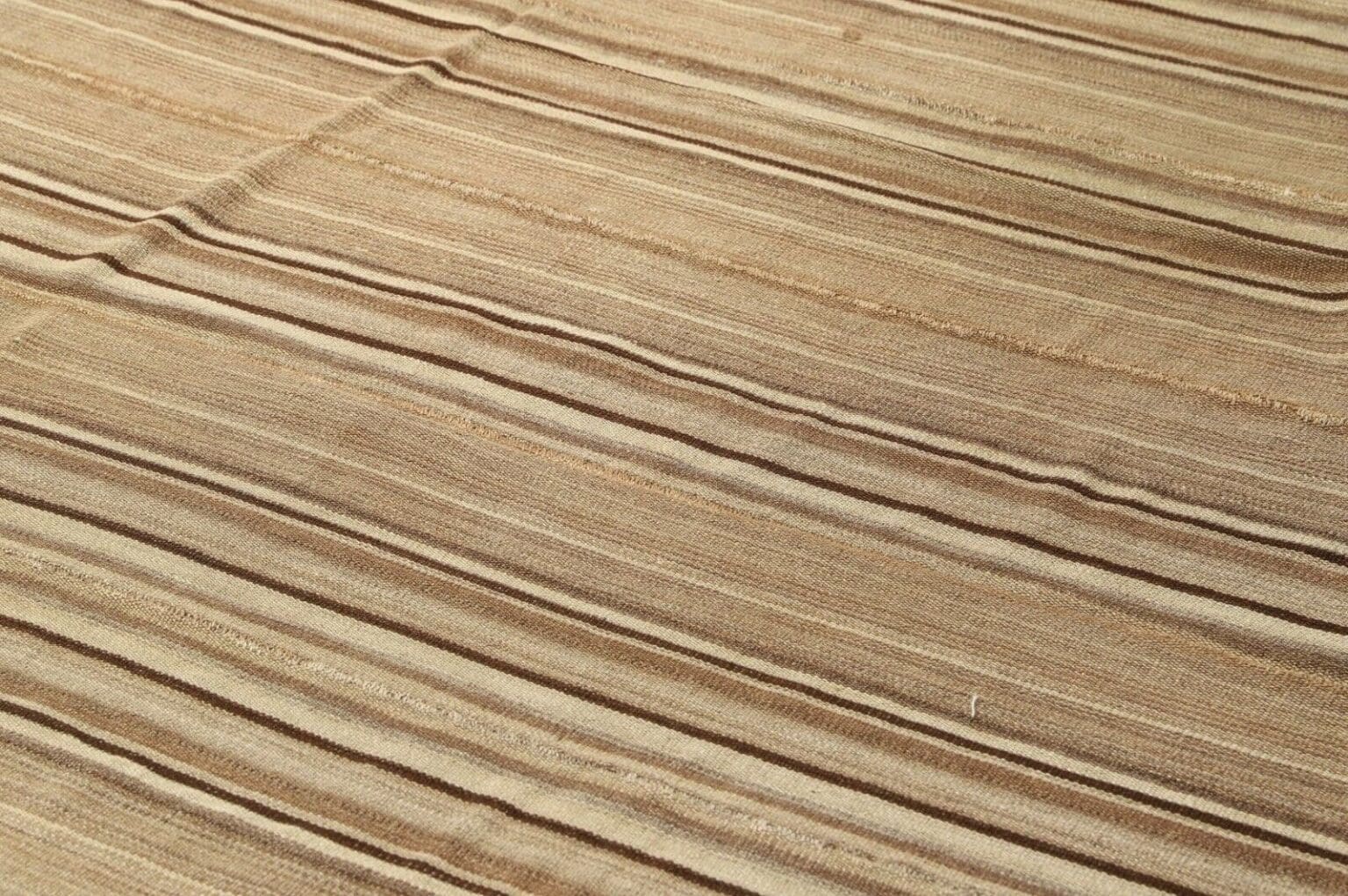
With a flat weave, the design appears directly on the textile surface. Since there is no high pile to soften the contours, woven lines, colour fields and transitions remain part of the visible construction. The colours are not merely applied to a pile surface; they result from the interaction of the threads. The weaving method therefore contributes to the way the pattern is seen.
Modern multicoloured Kelims can work with a range of interiors because their appearance is not tied to one historical room setting. An Art Deco design may sit alongside streamlined furniture or act as a defined colour element in a more restrained room. The rug can function as a central textile surface or support an existing palette without requiring one particular furnishing style.
Persian carpet history provides a wide design background for contemporary work. Geometric structures, floral references and repeated borders are among the established possibilities in carpet design. No single one of these motif groups is specified for this rug, however. The documented design facts are its modern, multicoloured appearance and its Art Deco style, and those facts define the presentation of the piece.
Special Features
The rug is new and is offered without a label. As a hand-woven Kelim, it has a flat textile surface and can be used in living rooms, bedrooms or offices. It is also described as suitable for underfloor heating. This makes it compatible with rooms equipped with that form of heating.
A low maintenance requirement is listed as another feature. Wool is also described as having a sound-dampening effect, which can contribute to a pleasant interior climate. The combination of flat weave, natural wool, multicoloured modern design and Art Deco styling allows the rug to be used in different settings without prescribing one specific interior scheme.
FAQ
How should I care for the Persian rug?
Regular vacuuming helps remove loose dirt from the rug. Direct exposure to sunlight should be avoided. If a stain occurs, it should be dabbed immediately with a damp cloth. Professional cleaning every few years is recommended to help protect the fibres and preserve the colours. Because this is a flat-woven Kelim, cleaning should be carried out without placing unnecessary stress on the woven surface.
Where can I use this rug?
The modern Persian rug is suitable for living rooms, bedrooms and offices. Its multicoloured Art Deco design can complement different furnishing styles and add a warm visual presence to a room. Since it is suitable for underfloor heating, it can also be used in rooms with that system. The listed resistance of wool makes it relevant for areas that receive frequent use as well.
What makes this Persian rug distinctive?
Its hand-woven Kelim construction, flat weave, natural wool and multicoloured modern Art Deco design are its defining features. The rug is new and is offered without a label. It is also suitable for underfloor heating and is described as low maintenance. The sound-dampening effect associated with wool adds another practical characteristic, bringing an Iranian textile tradition together with a contemporary design approach.
To provide the best experiences, we use technologies like cookies to store and/or access device information. Consenting to these technologies will allow us to process data such as browsing behavior or unique IDs on this site. Not consenting or withdrawing consent, may adversely affect certain features and functions.
Functional Always active
The technical storage or access is strictly necessary for the legitimate purpose of enabling the use of a specific service explicitly requested by the subscriber or user, or for the sole purpose of carrying out the transmission of a communication over an electronic communications network.
Preferences
The technical storage or access is necessary for the legitimate purpose of storing preferences that are not requested by the subscriber or user.
Statistics
The technical storage or access that is used exclusively for statistical purposes.The technical storage or access that is used exclusively for anonymous statistical purposes. Without a subpoena, voluntary compliance on the part of your Internet Service Provider, or additional records from a third party, information stored or retrieved for this purpose alone cannot usually be used to identify you.
Marketing
The technical storage or access is required to create user profiles to send advertising, or to track the user on a website or across several websites for similar marketing purposes.
 SECURE PAYMENT
 SHIPPING PARTNERS