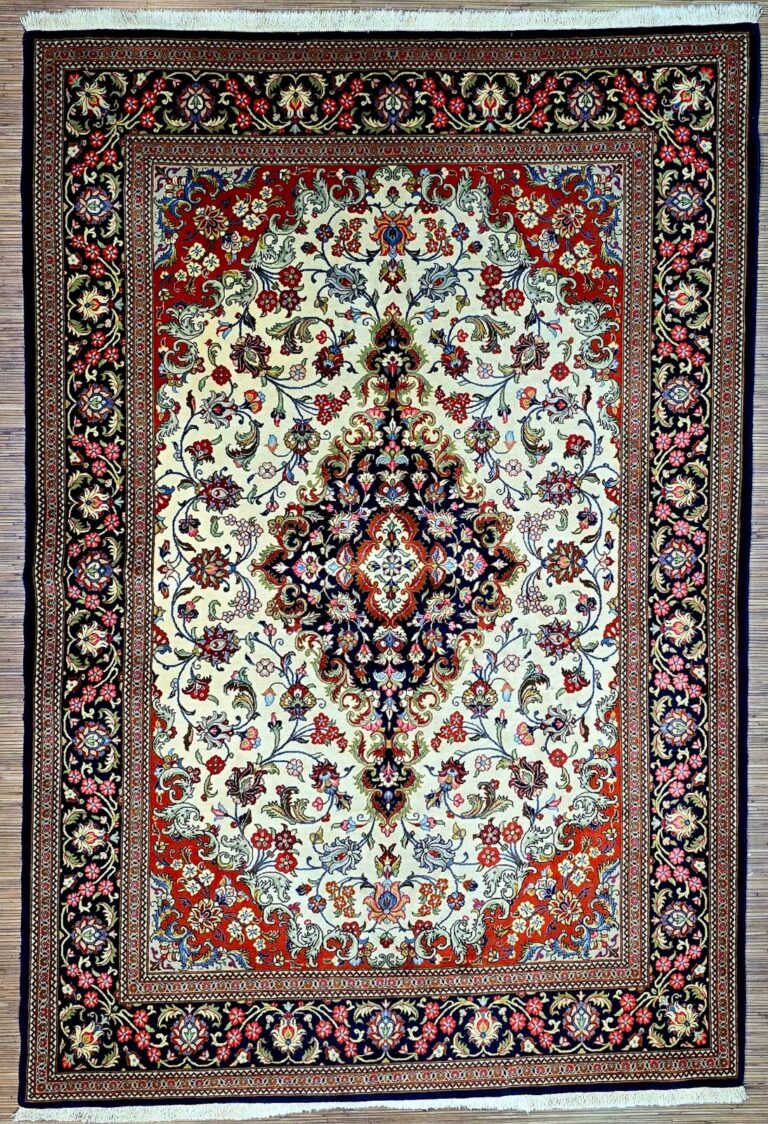
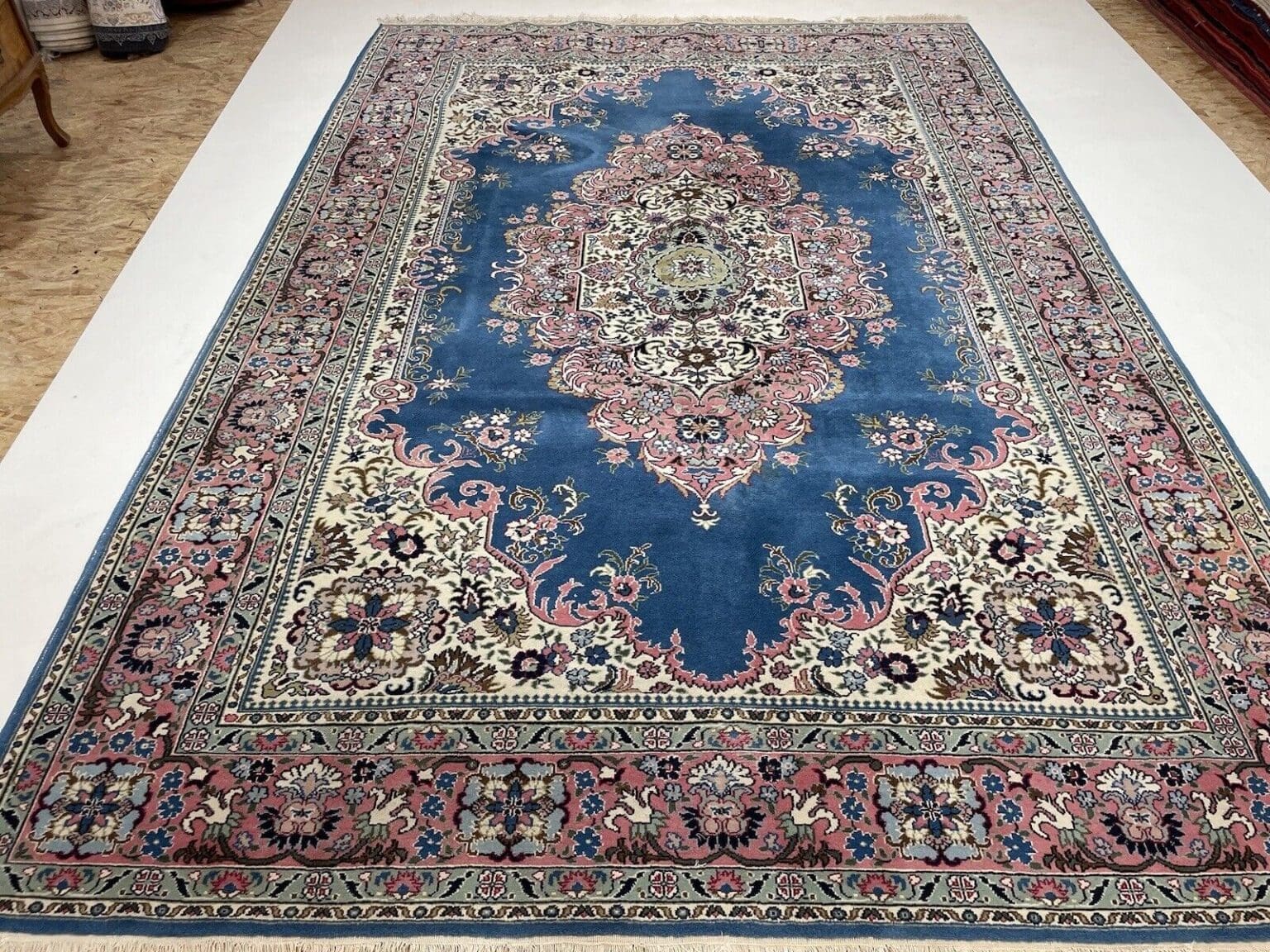
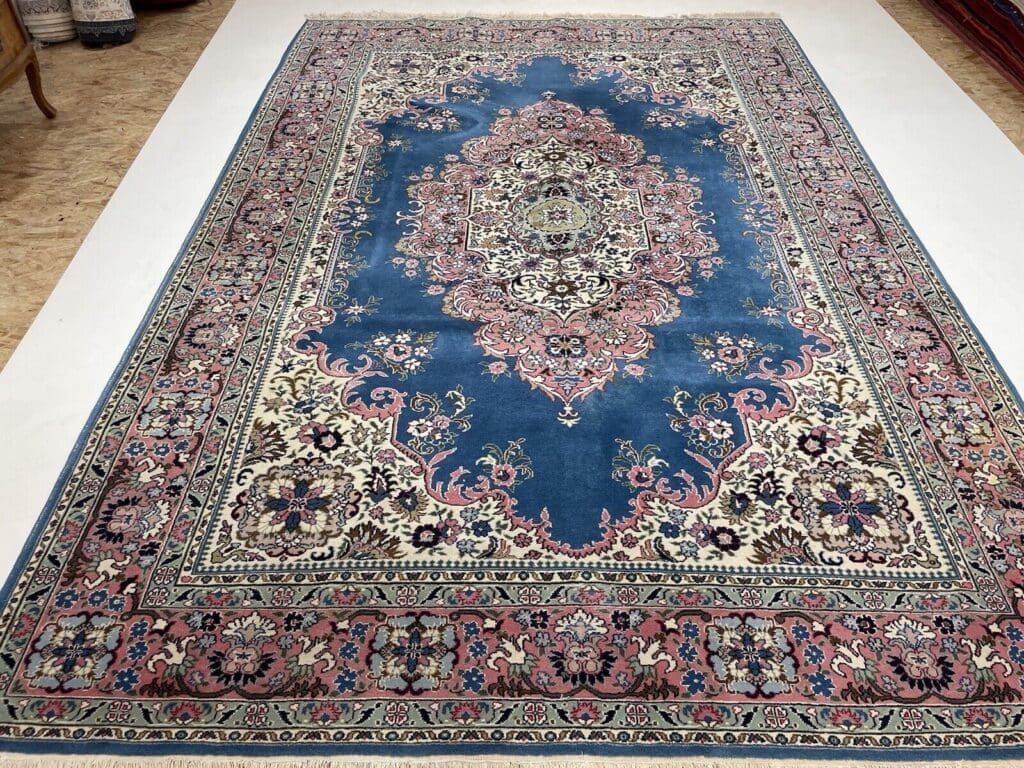
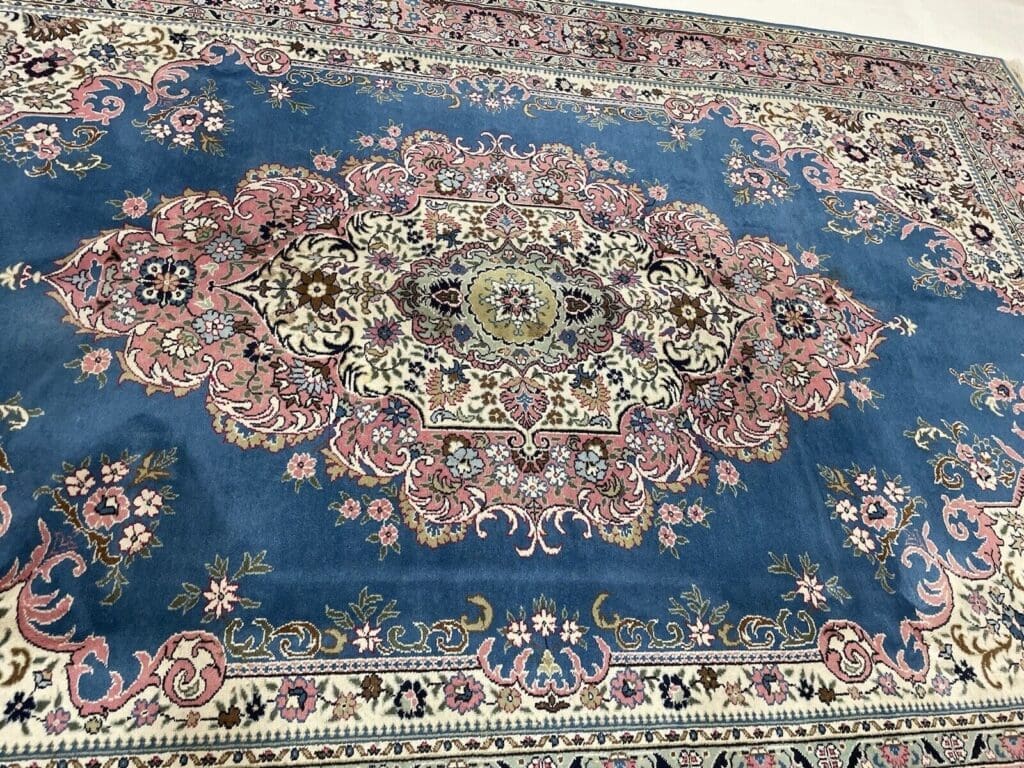
Hand-knotted Persian Rug | Knot density: high | Material: pile pure new wool, warp cotton | Size: 310 x 210 cm | Pattern: Oriental design with border | Condition: New with tag
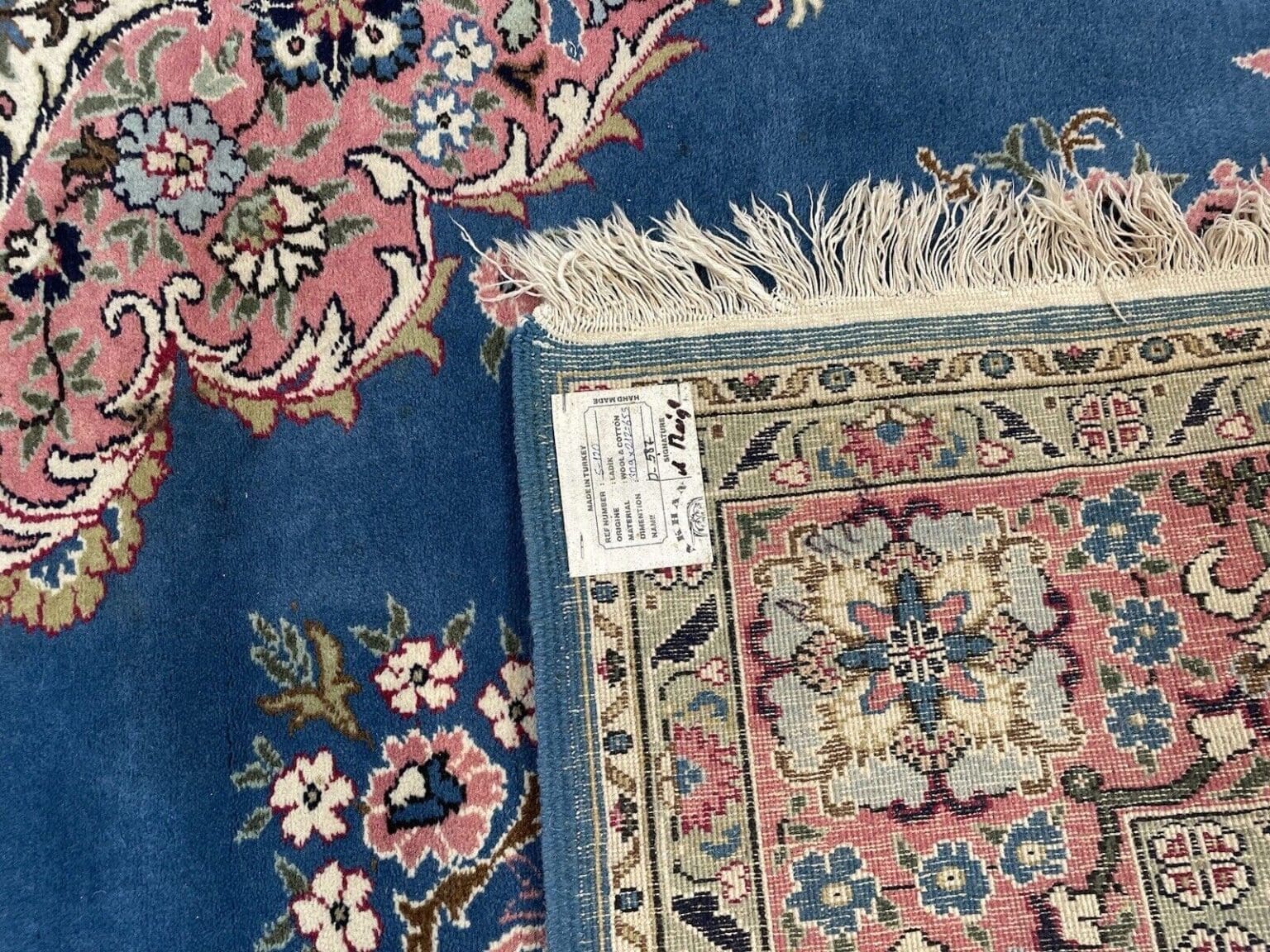
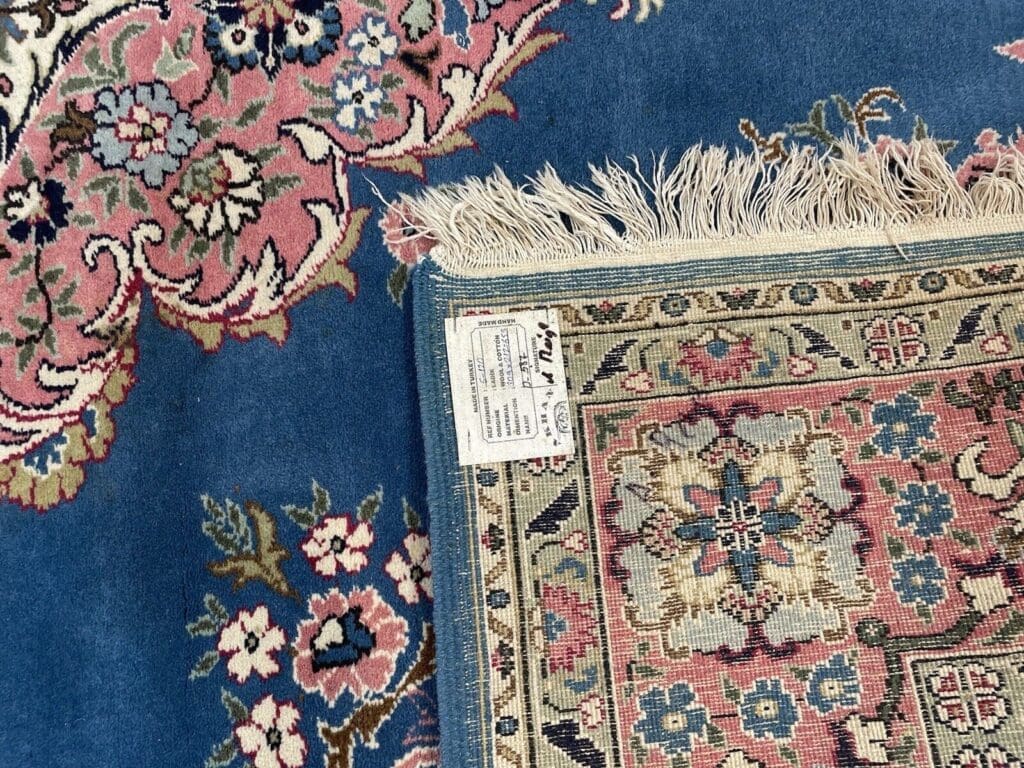
This Persian rug is hand-knotted, with a pile made of pure new wool and a cotton warp. The two materials therefore have distinct roles in the construction: wool forms the visible surface, while cotton provides the warp foundation into which the knots are worked. The pile height is 1 cm. The rug has a rectangular form and is made for use as a floor covering.
Hand knotting is carried out by placing individual knots into the prepared warp and securing each row as the work progresses. The process is manual rather than machine-made, and the completed surface reflects the accumulation of many separate working steps. The source describes the knot density as high, but gives no numerical knot count. It is therefore presented here as a qualitative feature rather than converted into an unsupported figure.
Pure new wool determines the feel and surface character of the pile. Wool has long been used in rug making because its resilient fibres can form a substantial working surface. In a hand-knotted construction, it can be shaped into a dense pile with a tactile finish. The combination of wool pile and cotton warp is a recognised arrangement in textile production. On this rug it appears together with hand knotting, a 1 cm pile height and the stated high knot density.
The construction is best understood as a layered textile structure. The warp runs through the foundation, the knots create the pile, and the finished surface is arranged into a coherent field and border. Each part depends on the others: the warp supports the knotting, the knots hold the pile material in place, and the pile carries the visible pattern and colour. No further material, fibre percentage or structural detail is specified for this individual rug.
Origin and Tradition
The rug is described as a Persian rug and comes from Iran. Iran has a long-established tradition of carpet making in which knotting developed into an important craft. Knowledge of warp preparation, knotting, row construction, pile finishing and pattern arrangement has been passed through workshops and generations. A handmade rug is consequently the result of a sequence of connected skills rather than one isolated production stage.
Iranian carpet traditions include many different approaches to composition, colour and ornament. Some designs are organised around a central field, while others use repeated arrangements or all-over patterns. Floral scrolls, leaves, blossoms, geometric forms and ornamental bands are among the established visual resources of Persian carpet design. They may be arranged with symmetry, repetition or variations that give a workshop or design family its particular character.
The word Persian identifies the Iranian origin and the related craft tradition; it does not identify a specific city or province by itself. No precise Iranian production location is named for this rug. The product information does mention Kashmiri regional design. That statement concerns the design reference, not the country of manufacture. The rug is therefore described as an Iranian Persian rug with Kashmiri regional design, rather than as a rug originating in Kashmir.
Carpet weaving in Iran has historically connected domestic use with visual culture and skilled manual work. Rugs can define the character of an interior while also displaying the knowledge of the people who made them. A border, an ordered field and repeated motifs make the surface readable from a distance and detailed at close range. Hand knotting preserves the relationship between practical flooring and textile craft, since the finished object is both functional and patterned.
When a rug is classified, origin, technique and design should be considered separately. Iran is the stated country of origin. Hand knotting identifies the method of manufacture. The oriental design, border and traditional Persian-oriental style describe the visual language, while Kashmiri regional design identifies the design association. Keeping these categories distinct avoids treating a motif or design reference as proof of a different place of manufacture.
The broader history of Persian carpets also explains why pattern vocabulary is often shared across regions and periods. Designs may travel through drawings, workshop practice and the movement of skilled makers. Similar floral or geometric ideas can consequently appear in different settings, while colour, scale and border treatment vary. This rug belongs to that wider tradition through its Iranian origin, hand-knotted construction and traditional Persian-oriental design, without requiring an unrecorded city attribution.
Design and Pattern
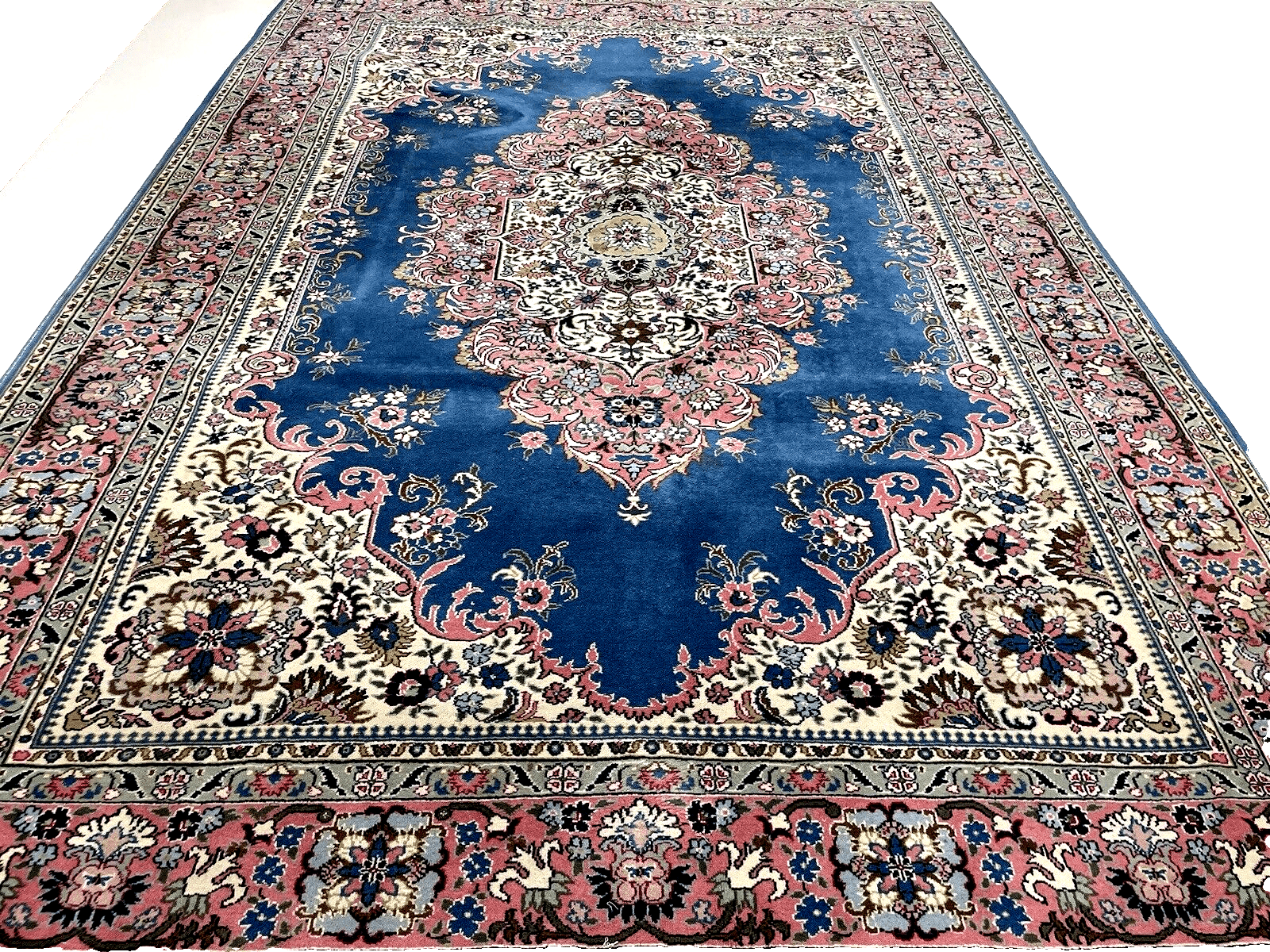
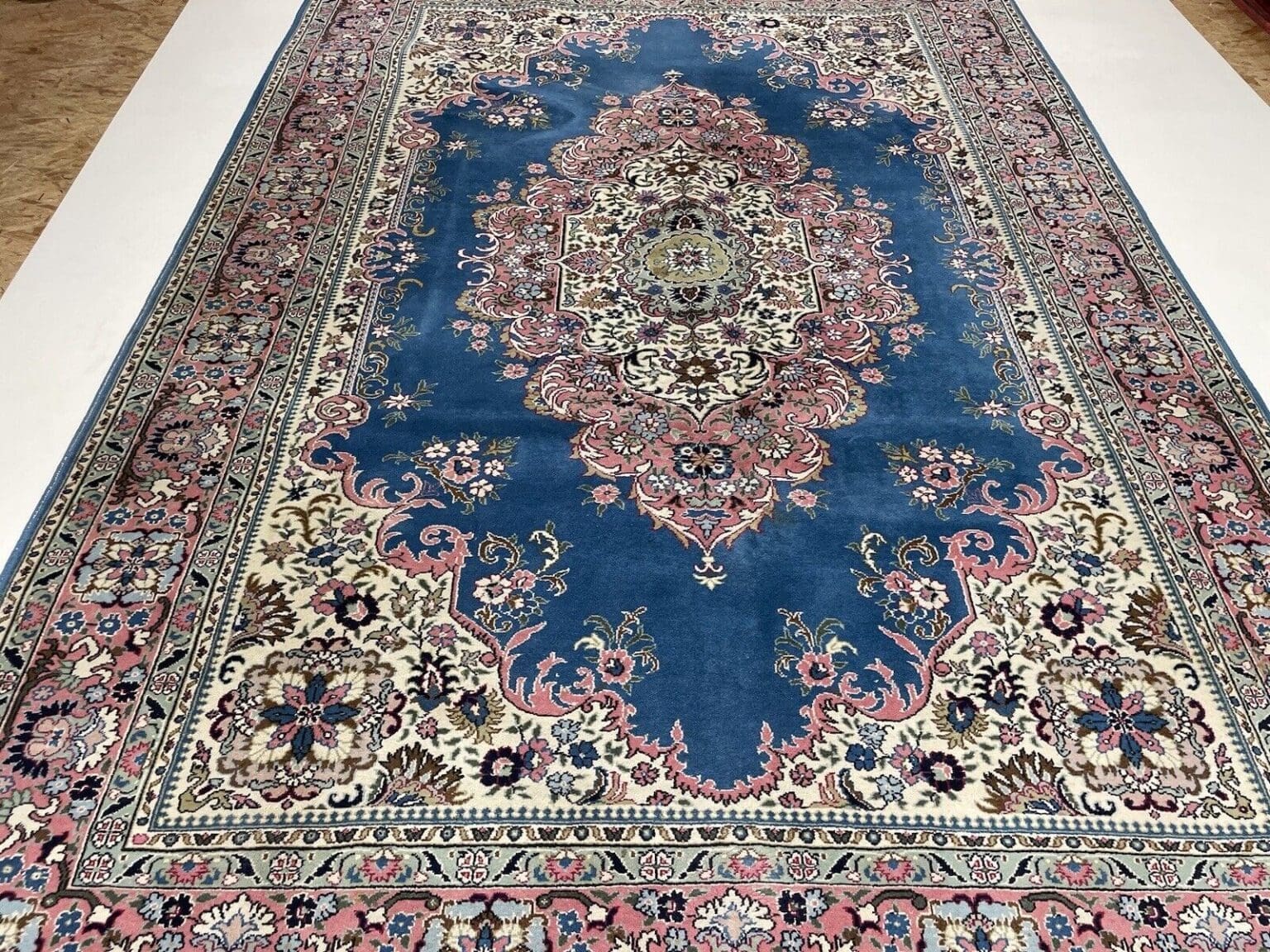
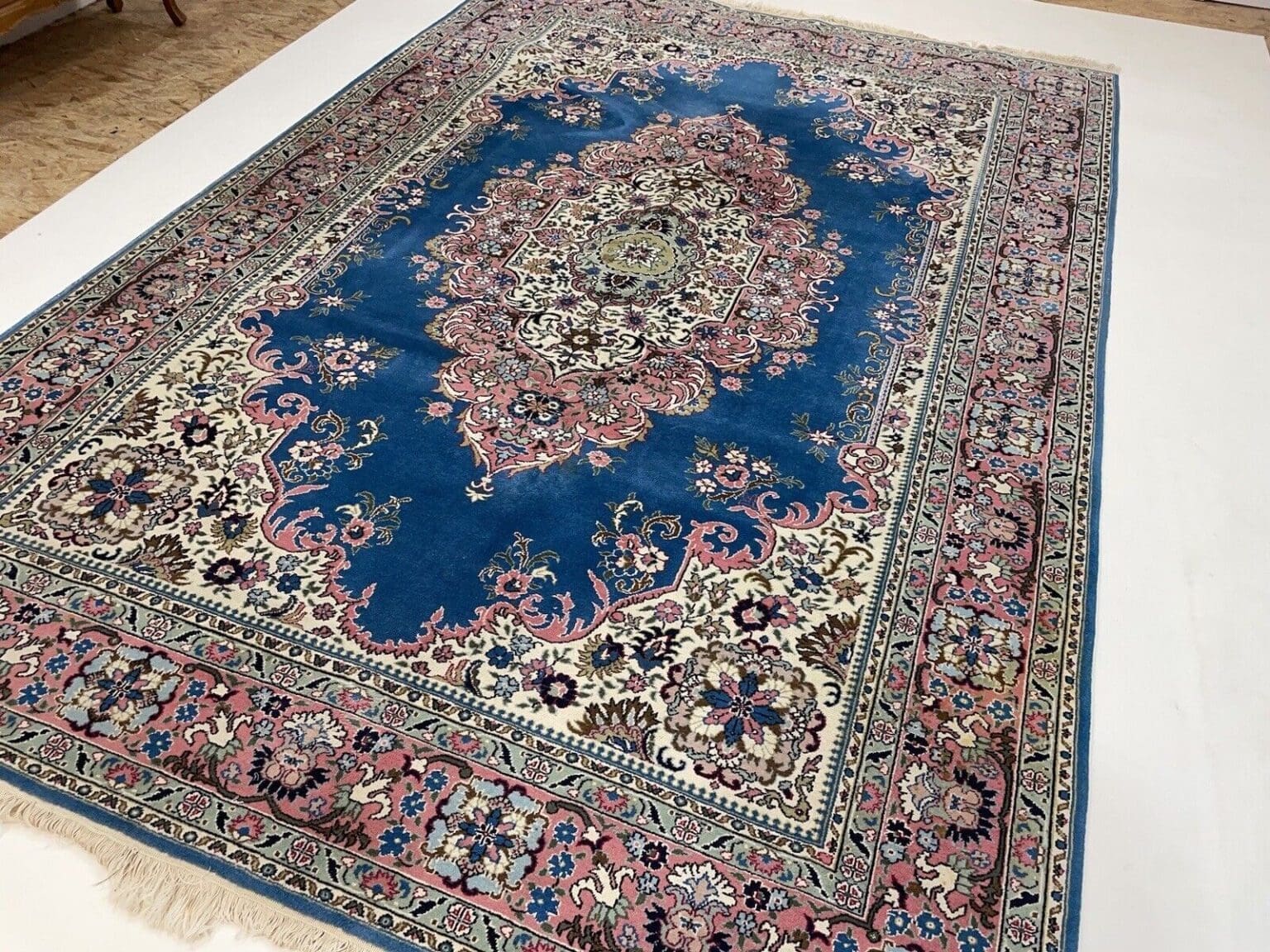
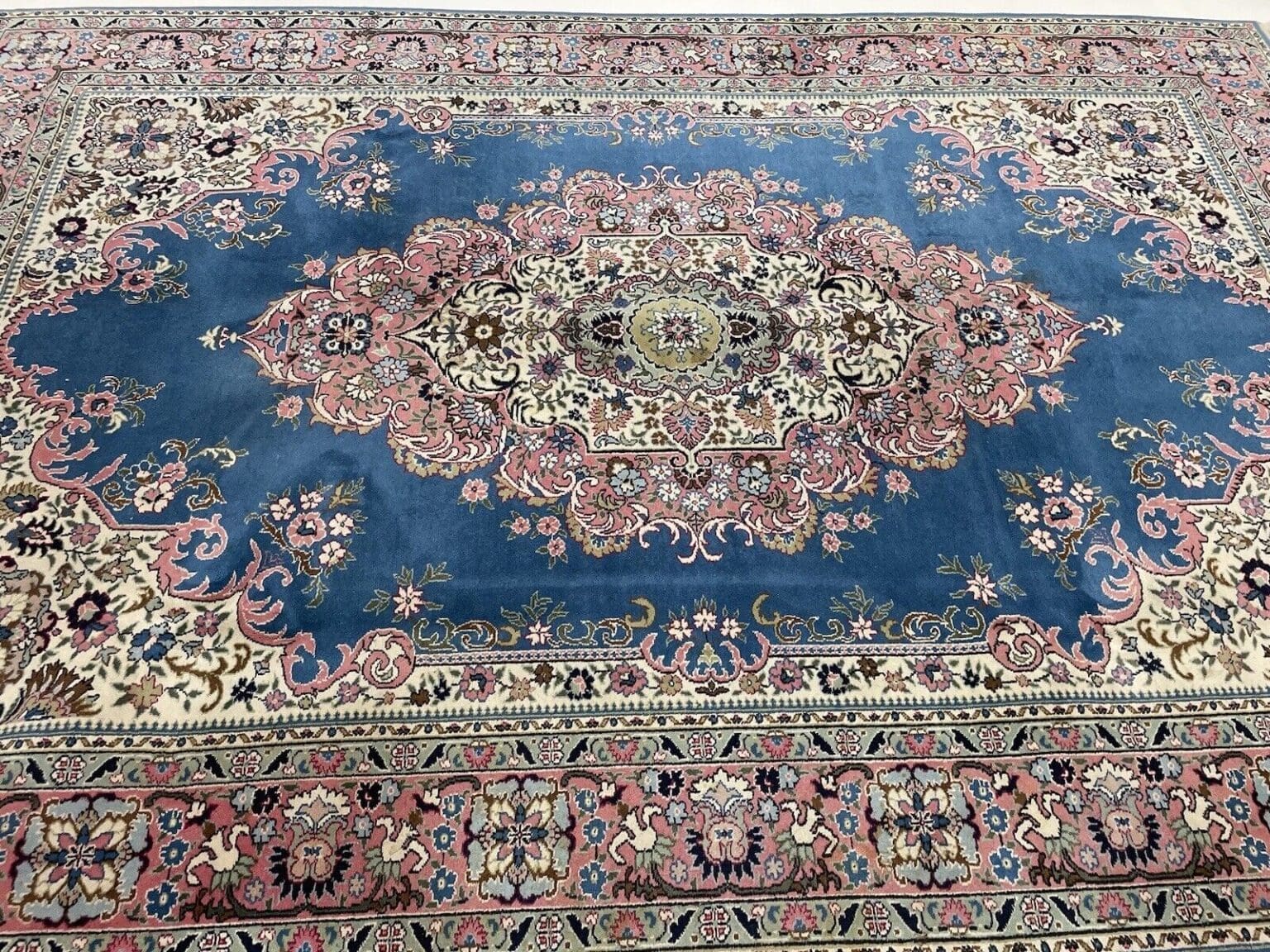
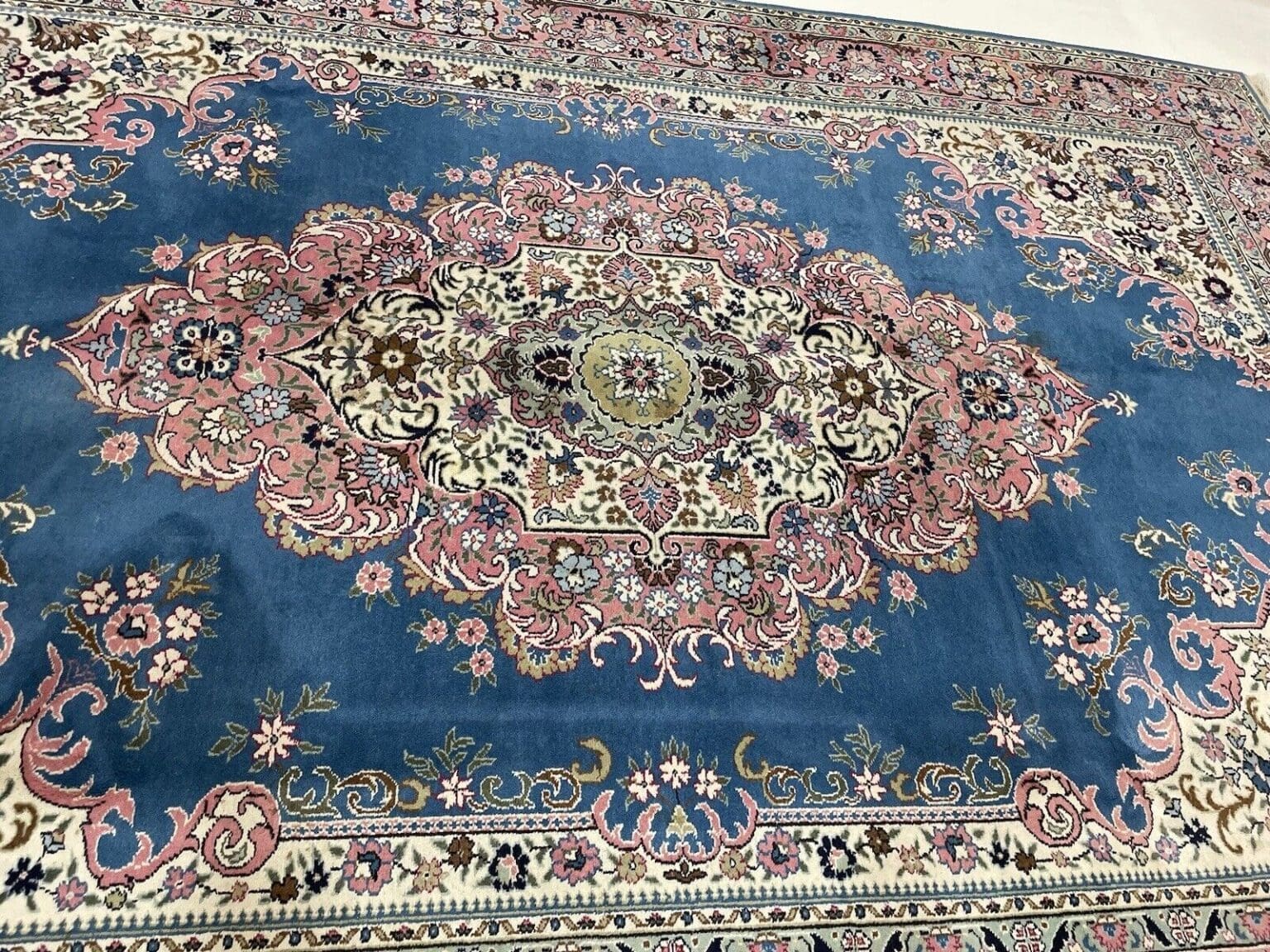
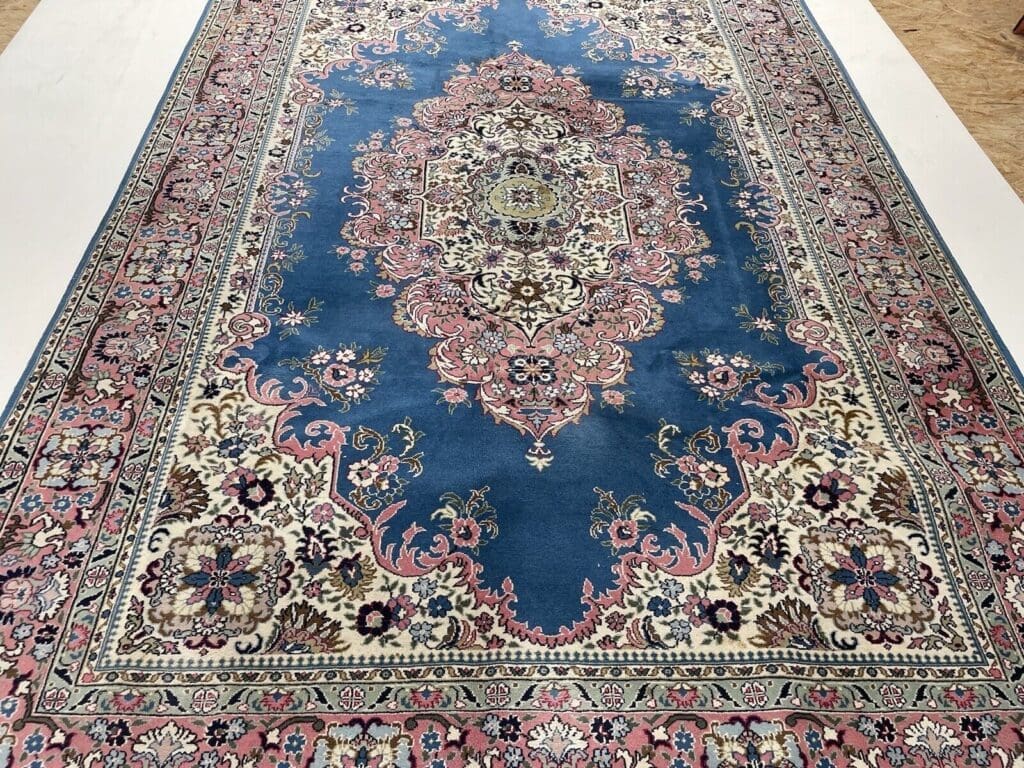
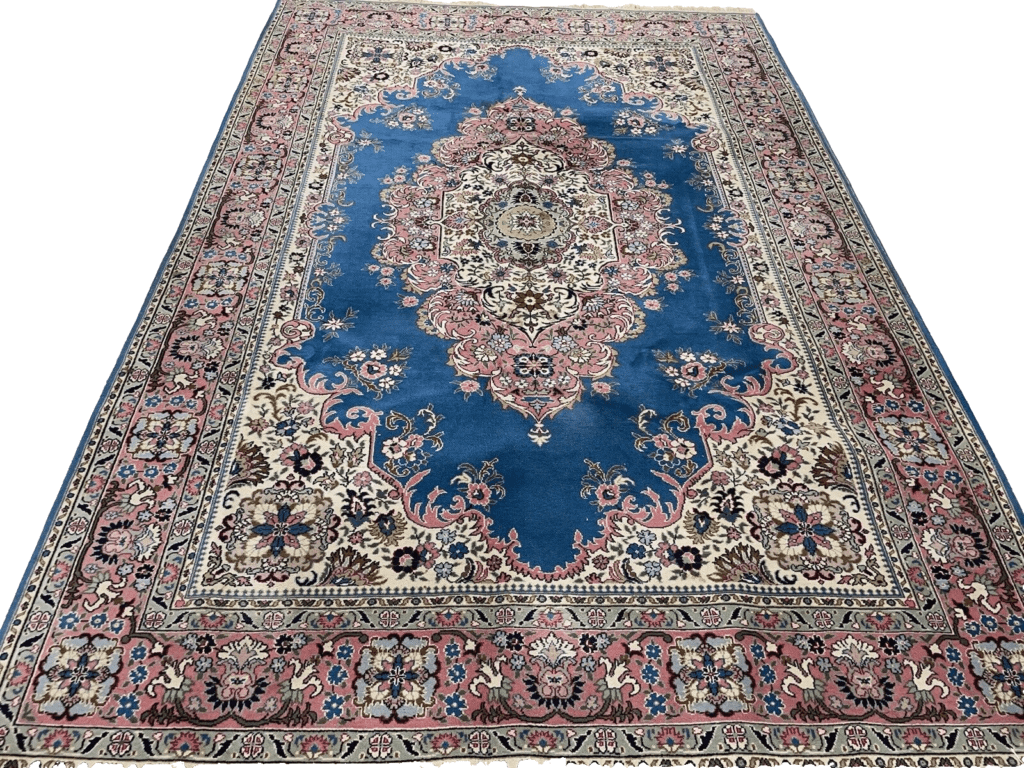
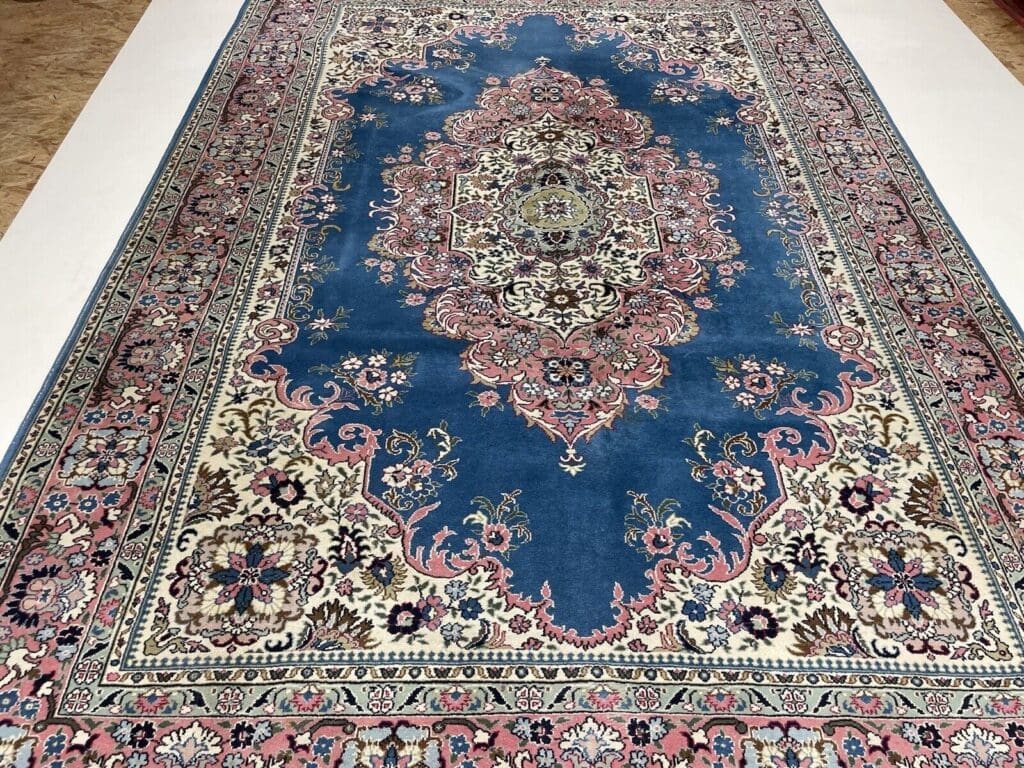
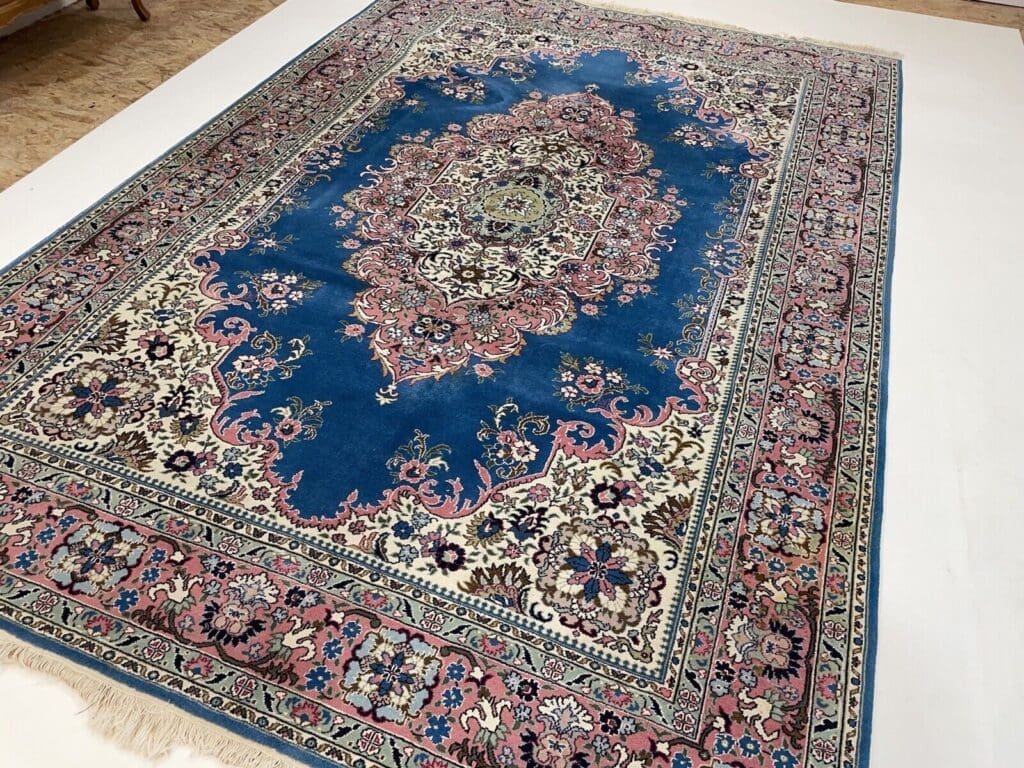
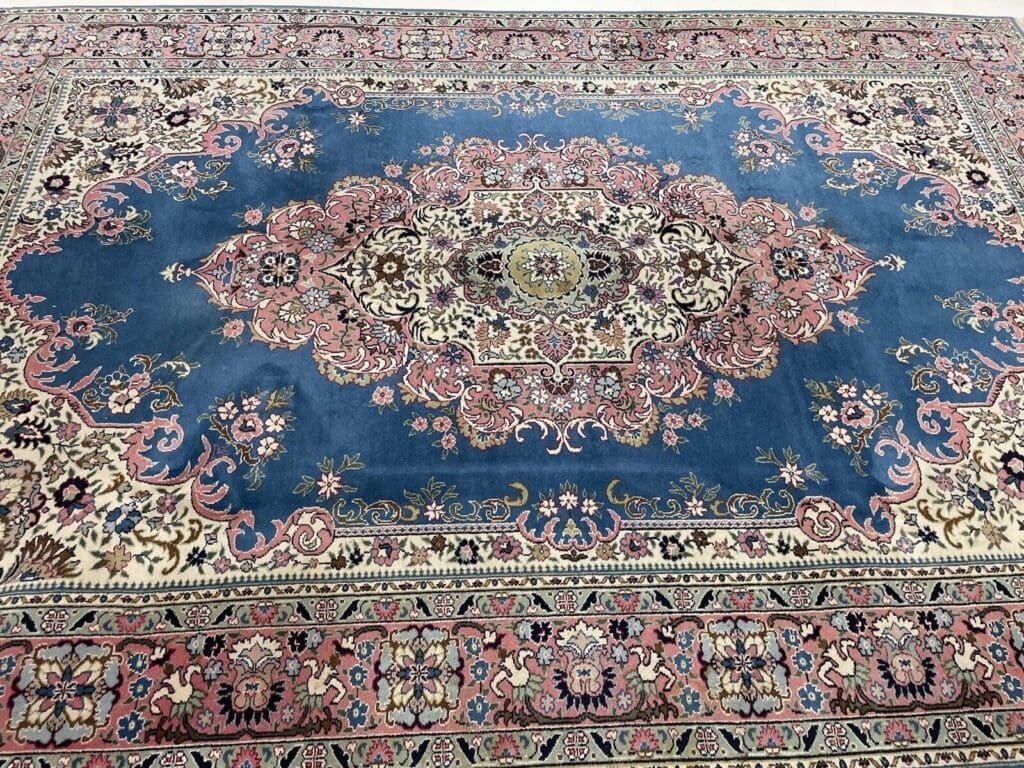
The pattern is identified as an oriental design with a border. A border frames the central area and creates a visual transition between the interior field and the outer edge. In traditional rug composition, border bands can organise the surface, guide the eye around the rectangle and give the design a defined finish. The precise sequence of ornaments within this border is not specified for this rug, so no individual motif is assigned to it.
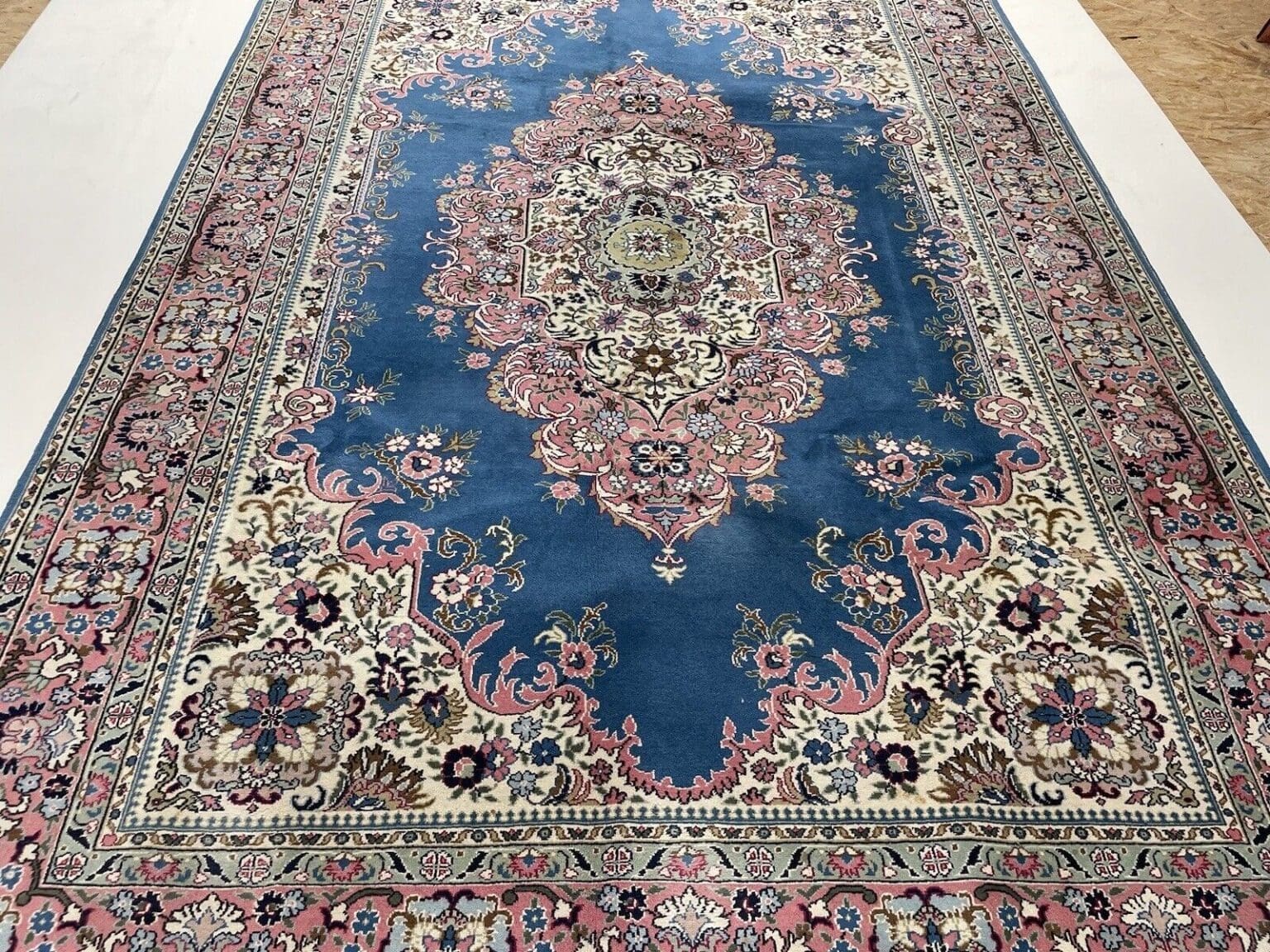
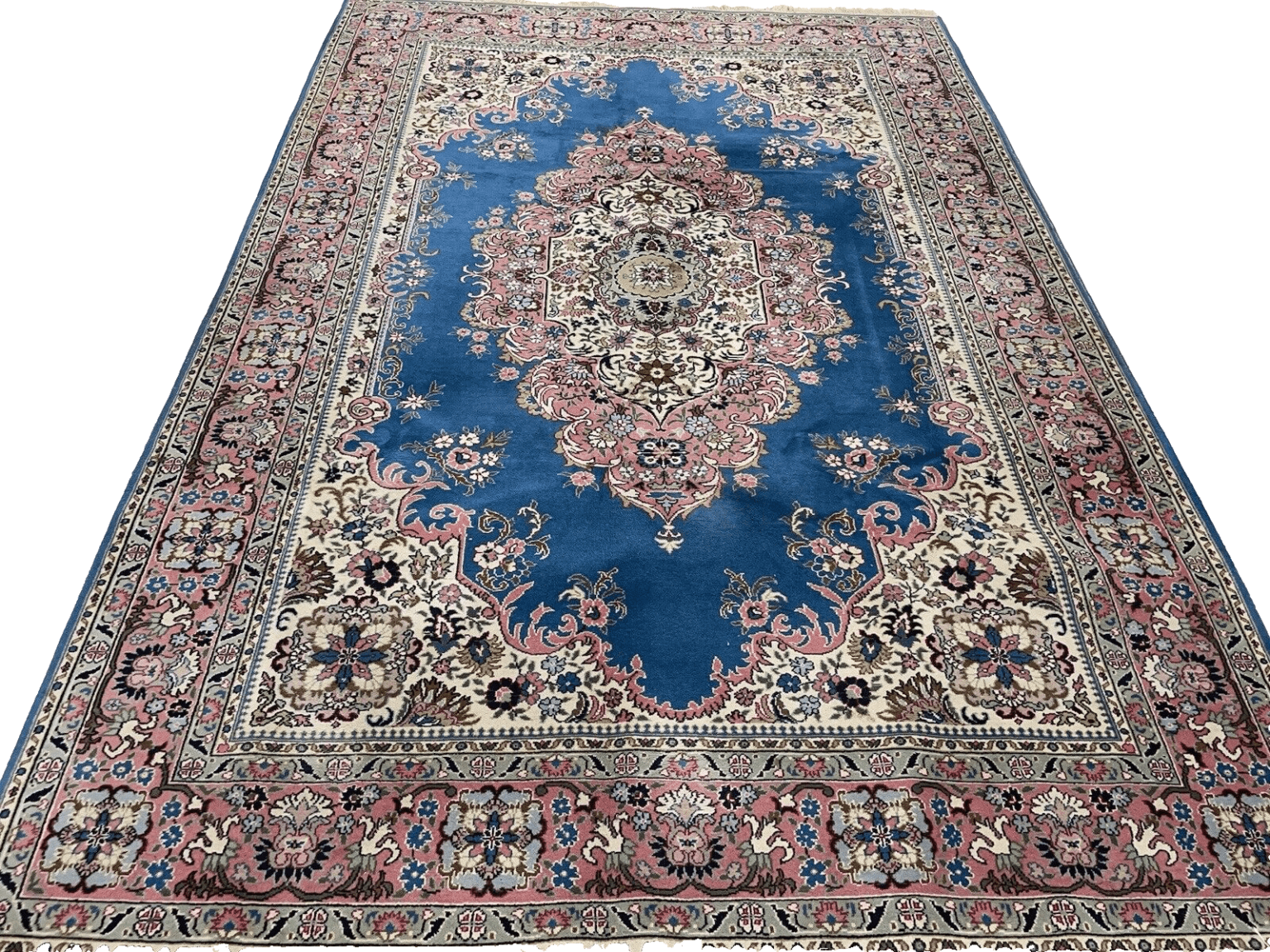
The colour is turquoise, also described in the source as Super Turquoise. Turquoise occupies a position between blue and green and can appear differently depending on surrounding colours and light. In rug design it may serve as a dominant ground colour or as a strong element within the composition. For this piece, turquoise is the documented colour. No additional colour list is supplied, so other tones are not added to the description.
The reference to Kashmiri regional design connects the visual concept with the design language associated with Kashmir. Kashmiri carpet traditions are broadly known for carefully arranged floral ornament, scrolling vegetation and finely divided pattern fields. Leaves, flowers, vines and repeated forms can be combined into balanced compositions. This general background explains the design reference, but it does not change the stated Iranian origin of the rug.
Persian carpet design often depends on the relationship between the inner field, the surrounding border and the finishing edge. A field may be read as a unified area, while a border establishes a perimeter and adds rhythm through repetition. Symmetry can create balance, and smaller repeated elements can make a surface appear richly articulated. The documented features here are an oriental design, a border, a turquoise colour and a traditional Persian-oriental style; the exact individual motifs remain unspecified.
The design brings together a traditional framework and a clearly identified colour. The border gives the rectangular rug a formal outline, while the turquoise tone provides its main visual distinction. The effect comes from the interaction of colour, framing, pile and manual construction rather than from a single named emblem. This makes the pattern legible as an oriental composition while keeping the description within the details recorded for the piece.
Pattern scale is also related to the density of the knotting. A more closely worked surface can support the rendering of fine pattern details, although no numerical density is given here. The high knot density is a stated product feature, not a basis for inventing a specific count. The most precise description is therefore an oriental design with a border, traditional Persian-oriental styling, turquoise colouring and a Kashmiri regional design reference.
Design terminology should not be confused with provenance. Kashmiri describes the regional design association in the product information, while Iranian Persian origin describes where the rug comes from. The border describes the composition, turquoise describes the colour, and hand knotting describes the technique. Together these terms provide a clear account of the rug without assigning it to a workshop, town or province that has not been named.
Special Features
The listed features include hand knotting, a pile of pure new wool, a cotton warp, high knot density and a 1 cm pile height. The rug is new with a tag. It is rectangular and is stated to be suitable for all rooms, including offices and studies. It is also described as suitable for underfloor heating. These details concern the documented construction, condition and intended use of this individual piece.
The turquoise colour and border give the rug a distinct visual identity. Alongside the traditional Persian-oriental style, they combine a recognisable handcraft technique with a clearly specified colour treatment. The product description calls it top quality. No age, signature, workshop attribution, restoration history or investment development is supplied for this rug, so those points are not included as claims.
The wool pile and cotton warp make the basic construction transparent. Hand knotting distinguishes the rug from a machine-made floor covering, while the new condition with tag distinguishes it from a used or restored example. The stated suitability for underfloor heating and for rooms including offices and studies gives practical context for placement. No additional cleaning treatment, repair or previous use is recorded.
The individual features work together without requiring an unsupported provenance. The Iranian origin identifies the rug as Persian, the hand-knotted technique describes how it was made, and the Kashmiri reference identifies a design association. The border, turquoise colour, wool pile and cotton warp complete the factual description of the piece.
FAQ
How should I care for my Persian rug?
Regular vacuuming without using a brush attachment helps remove dust and loose dirt while treating the pile gently. For spills or other marks, use a suitable rug cleaner or consider professional cleaning rather than applying an aggressive treatment without checking the material. Direct sunlight should be avoided because prolonged exposure can fade colours over time. A hand-knotted rug with a pure new wool pile should be treated carefully: absorb liquid promptly, avoid vigorous rubbing and follow cleaning advice appropriate for wool. The right method depends on the type of dirt and the condition of the pile.
Where do the best Persian rugs come from?
Persian rugs traditionally come from Iran, a country with a broad and long-standing carpet-making culture. Isfahan, Tabriz and Kashan are often cited among the recognised centres of Persian rug production, each associated with its own design vocabulary and working traditions. This rug is identified as Iranian, but no specific production city or province is given. Kashmiri appears as a regional design reference rather than an origin statement. Origin, design association and technique should therefore be read as separate pieces of information.
What makes hand-knotted rugs special?
A hand-knotted rug is made by placing individual knots by hand, rather than reproducing the surface through a machine process. Careful construction and a high knot density can support a detailed and durable pile. Each rug also reflects the particular sequence of manual work used to create it, which gives hand-knotted textiles their own material and craft identity. They are often valued for their practical, artistic and cultural significance. This example combines hand knotting with pure new wool pile, cotton warp, an oriental border design and a turquoise colour.
To provide the best experiences, we use technologies like cookies to store and/or access device information. Consenting to these technologies will allow us to process data such as browsing behavior or unique IDs on this site. Not consenting or withdrawing consent, may adversely affect certain features and functions.
Functional Always active
The technical storage or access is strictly necessary for the legitimate purpose of enabling the use of a specific service explicitly requested by the subscriber or user, or for the sole purpose of carrying out the transmission of a communication over an electronic communications network.
Preferences
The technical storage or access is necessary for the legitimate purpose of storing preferences that are not requested by the subscriber or user.
Statistics
The technical storage or access that is used exclusively for statistical purposes.The technical storage or access that is used exclusively for anonymous statistical purposes. Without a subpoena, voluntary compliance on the part of your Internet Service Provider, or additional records from a third party, information stored or retrieved for this purpose alone cannot usually be used to identify you.
Marketing
The technical storage or access is required to create user profiles to send advertising, or to track the user on a website or across several websites for similar marketing purposes.
 SECURE PAYMENT
 SHIPPING PARTNERS