This Persian rug is hand-knotted and made from 100% cotton together with hand-spun virgin wool. Hand-spun virgin wool is one of the traditional natural materials used in rug making. Spinning by hand gives the fibres an individual structure with slight natural variation. That structure contributes to the characteristic surface of a handmade rug and distinguishes it from uniformly industrial products.
Virgin wool comes from an animal’s first shearing. As a natural fibre, it is known for its robust and durable qualities. It can help regulate temperature and moisture, which is why wool has long been used for textiles in living spaces. It combines a pleasantly textile surface with a resilient material structure. Cotton is also one of the classic fibres used in rug weaving and is part of the materials specified for this piece.
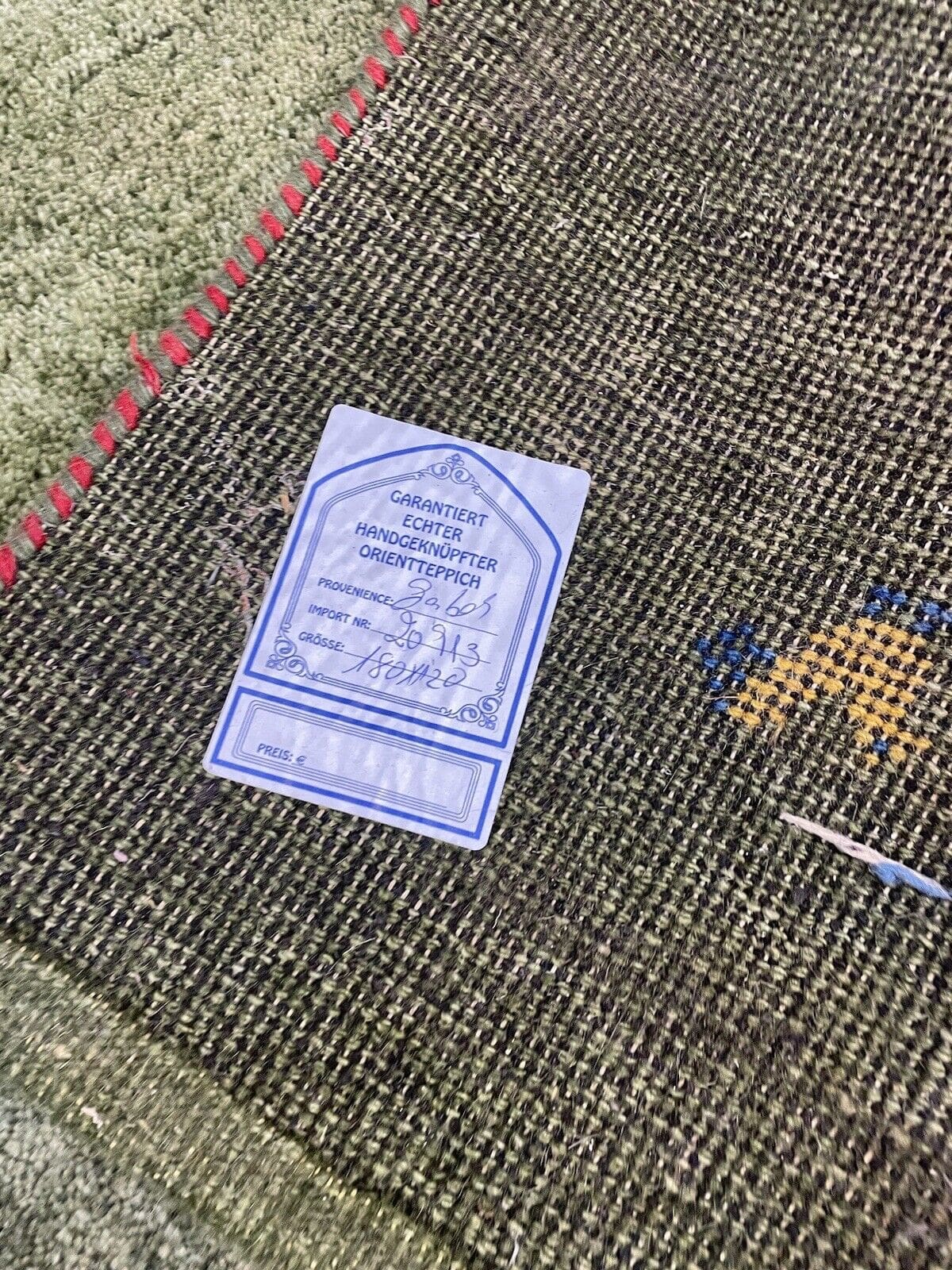
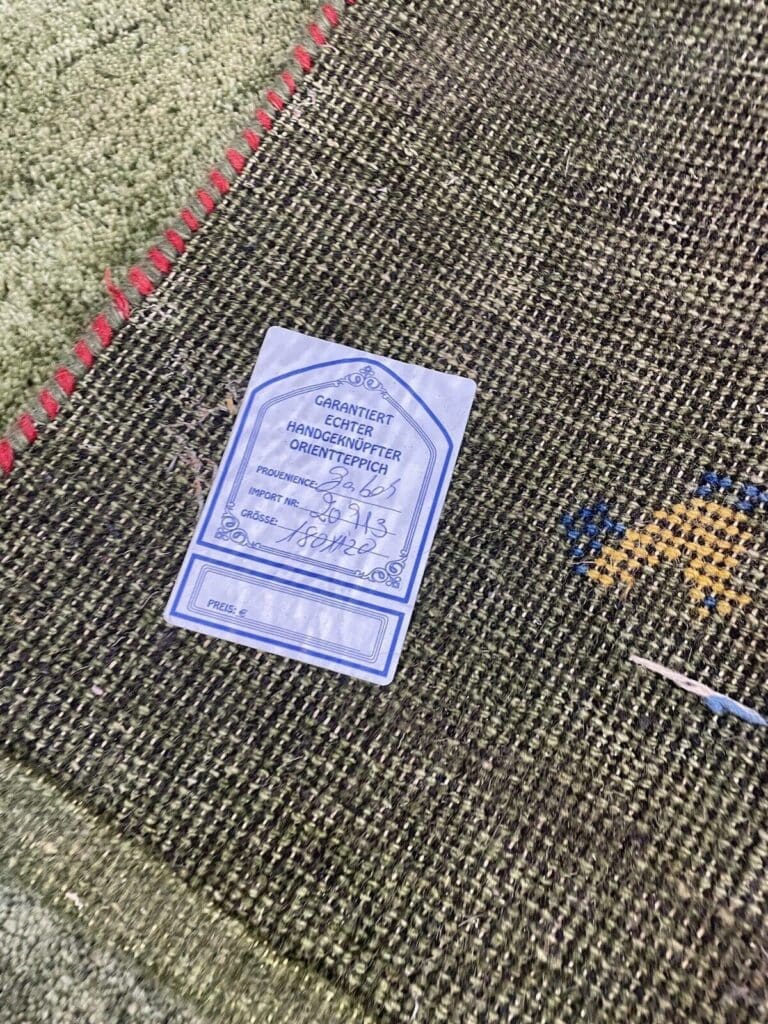
In hand-knotting, each knot is inserted individually into the prepared warp threads. Row by row, this creates the body of the rug. The rows are then compacted, the surface is arranged, and the pile is worked into an even finish. These stages require time, concentration, and practical skill. Since a hand-knotted rug is not completely standardised by industrial production, each individual piece retains the characteristics of its own making.
The construction of this rug is described as hard-wearing. It is therefore intended for regular use in a living environment. Its hand-knotted construction and the use of virgin wool combine a traditional method of manufacture with an emphasis on lasting use. The rug is described as a rectangular, brand-new one-off piece. Its pile height is 23 mm.
The making of a knotted rug begins with the preparation of the warp. These threads form the framework into which the knots are inserted. After each row, the structure is beaten down so that the knots sit securely and the construction remains stable. The pile threads are then aligned. At the end, the surface is carefully finished. The interaction of fibre, knot, and finishing work determines the appearance of a hand-knotted rug.
Origin and Tradition
The term Persian rug refers to the Persian, or Iranian, tradition of rug making. This tradition is one of the best-known forms of Oriental knotting. It has developed over many centuries and includes different regional schools, workshops, and systems of pattern design. The particular place where this rug was made is not stated. For that reason, no specific province, city, or workshop is assigned as its origin.
Iranian rugs are made in many parts of the country. Names such as Isfahan, Tabriz, and Kashan are recognised in rug culture as important centres, each with its own technical and decorative character. Isfahan is often associated with balanced compositions, fine ornament, and carefully organised design. Tabriz is known for a broad range of designs and a long knotting tradition. Kashan also has a substantial history of producing decorative rugs. These place names describe regional traditions; they do not identify the origin of this particular piece.
Persian rug making combines practical use with a developed visual language. Rugs can define areas within a room, provide a textile surface, and display colour, pattern, and workmanship at the same time. Traditional workshops often develop designs from recurring forms. Floral scrolling, medallions, borders, and geometric elements may appear in many different combinations. The precise composition depends on the workshop, the design, and the execution.
The history of Iranian rug making is closely connected with the transmission of knowledge. Skills relating to preparing the warp, spinning, dyeing, and processing yarns, as well as tying knots, have traditionally been passed from one generation to the next. Regional differences can therefore appear in materials, knotting methods, colours, and the organisation of patterns. Workshops within the same region may also follow different working methods. A general reference to Persian tradition does not replace a specific statement of place.
Hand-knotted rugs are created through a sequence of manual operations. First, a framework of warp threads is prepared. Knotters then pass coloured yarns through this framework and secure them knot by knot. After several rows, the structure is beaten down so that the knots sit firmly. The pile is worked during production and finished afterwards. This process explains why making a hand-knotted rug is a continuous craft activity rather than a single manufacturing step.
The tradition is not limited to historical designs. Established forms may be simplified, rearranged, or transferred into a more contemporary visual language. This creates a relationship between inherited design ideas and present-day interiors. This rug is described as traditional Persian or Oriental in style and has an abstract pattern. Its classification therefore combines the designation Persian rug with a design category that is not restricted to a representational image.
Design and Pattern
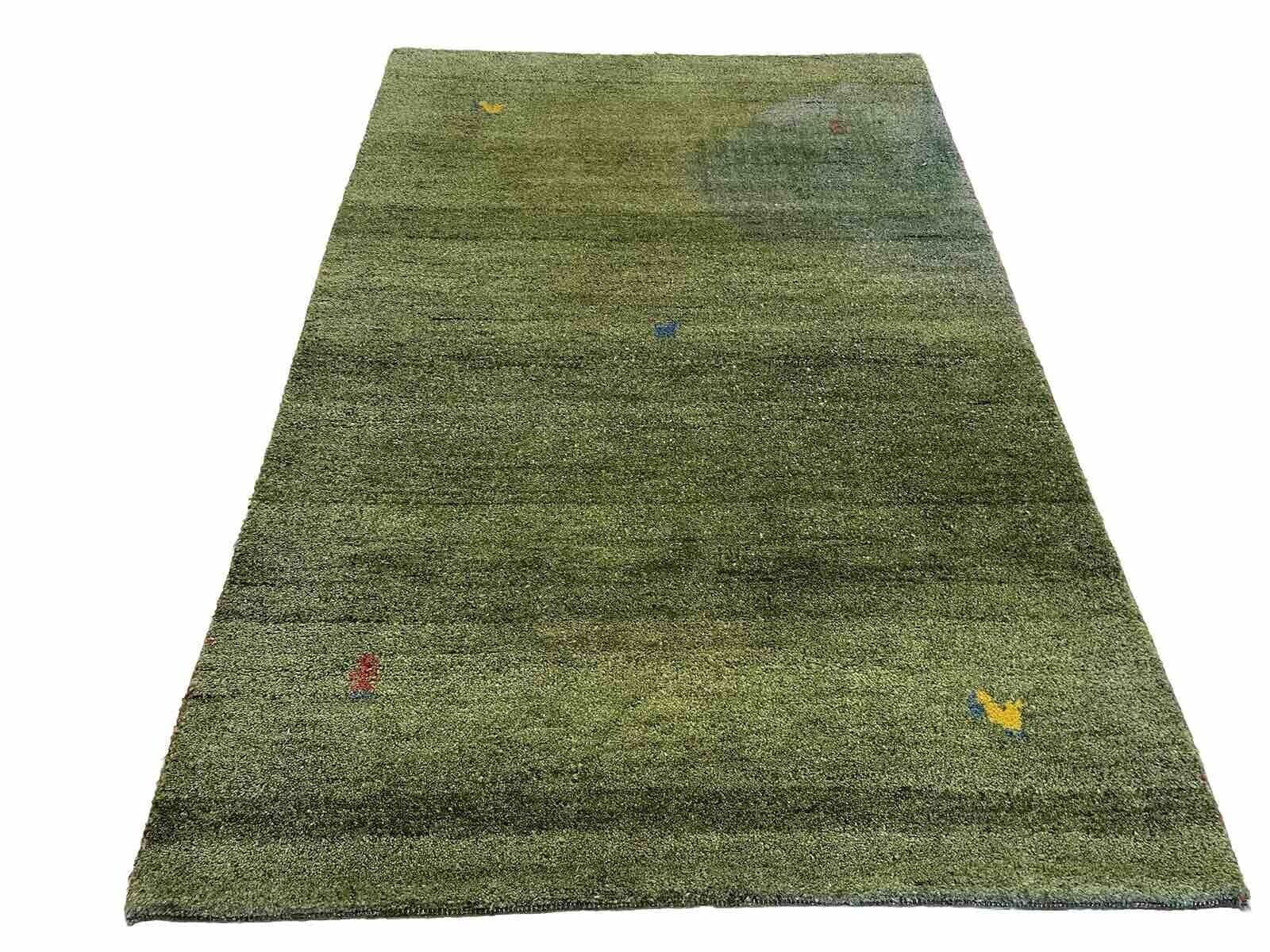
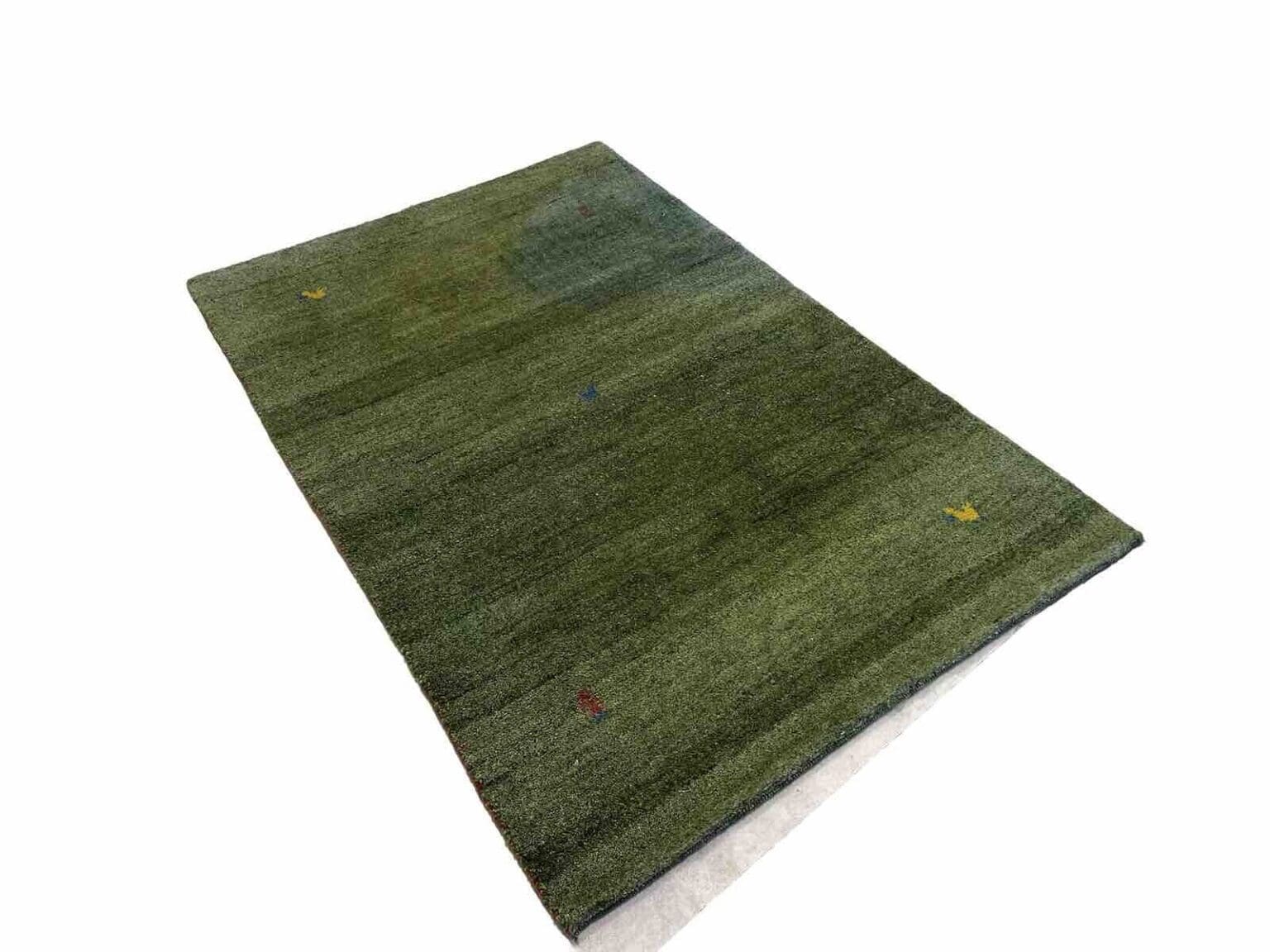
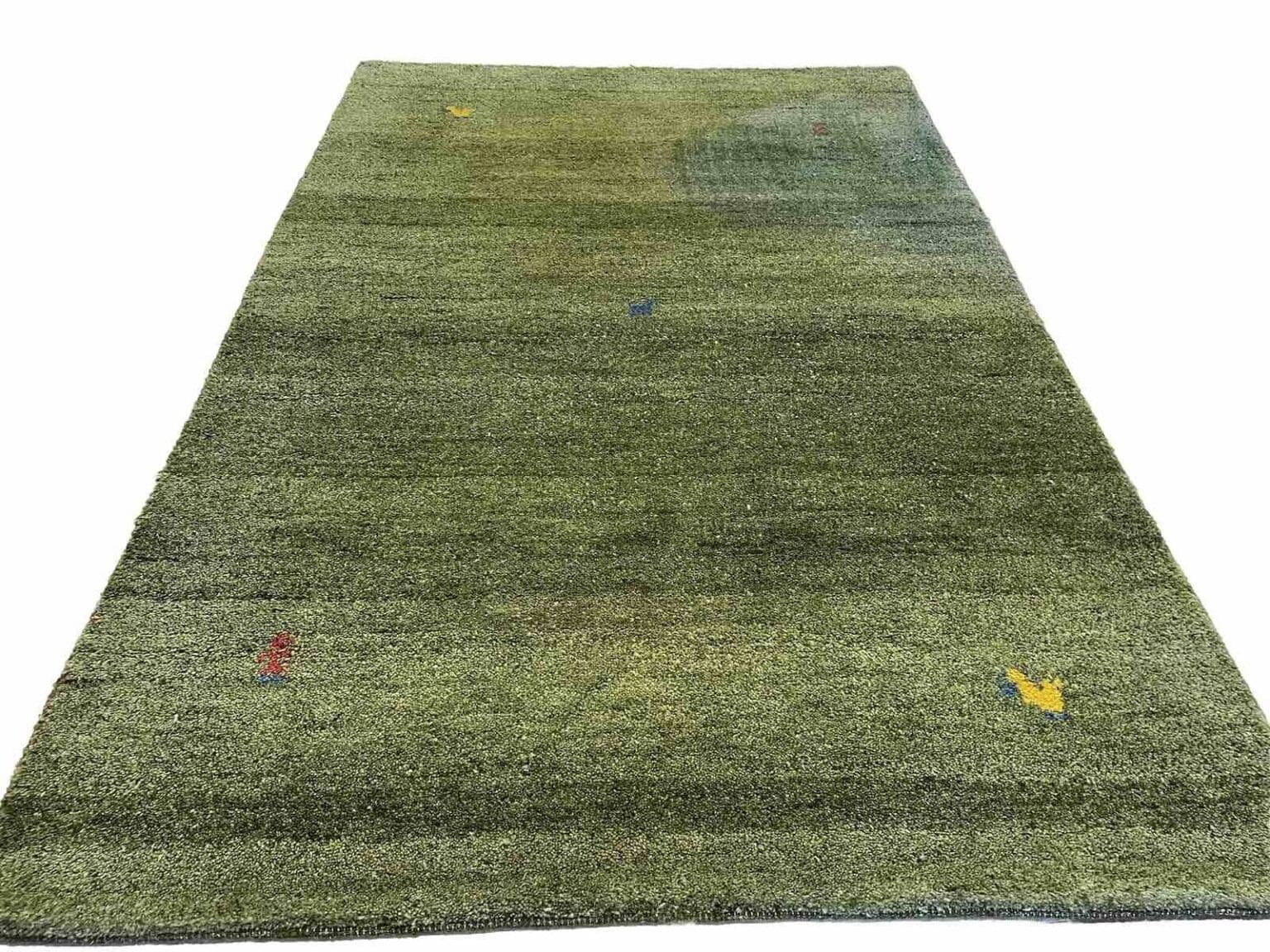
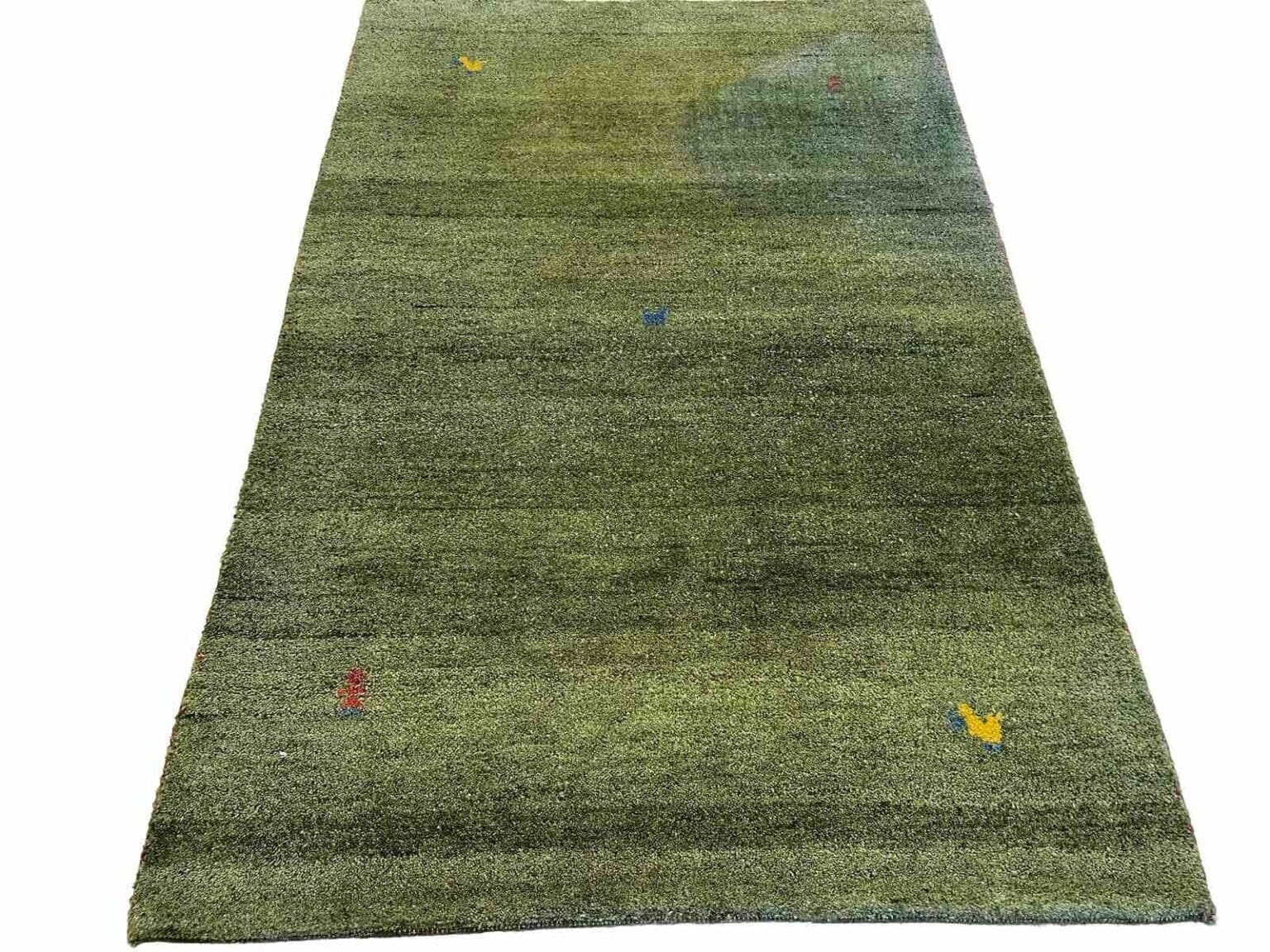
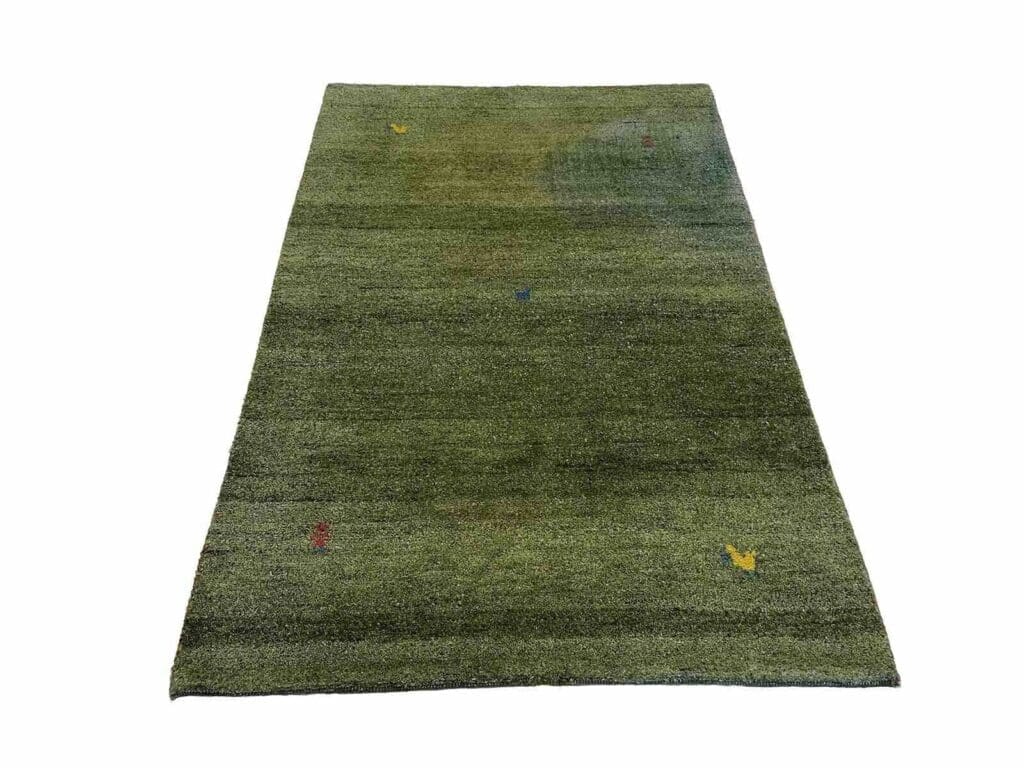
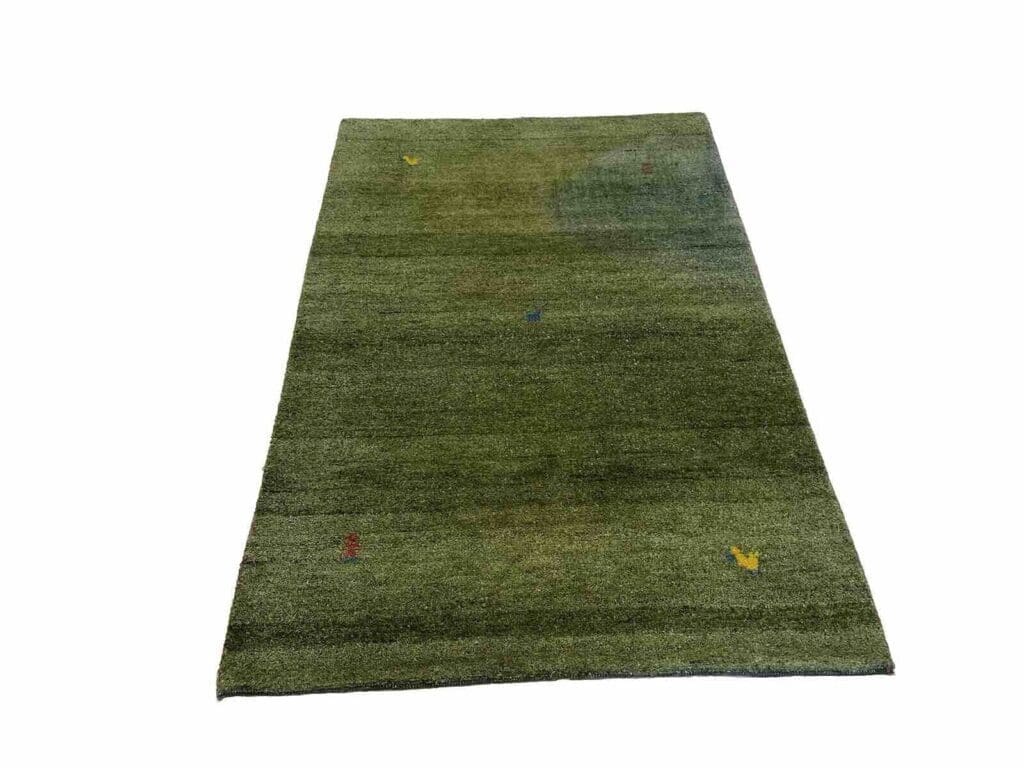
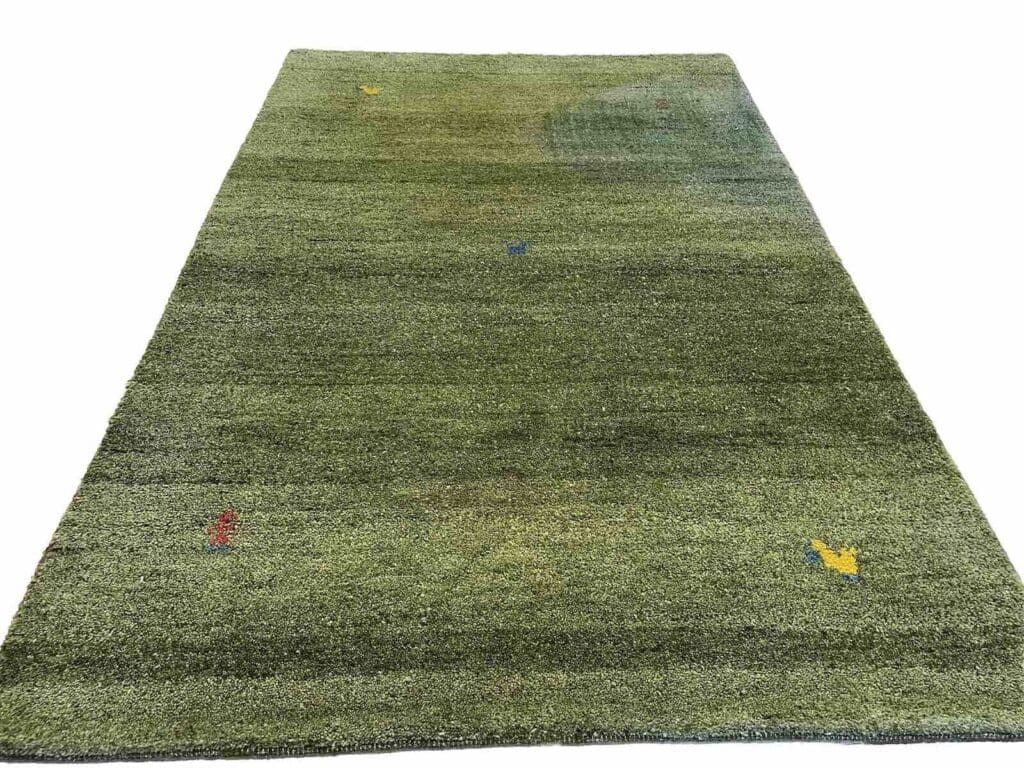
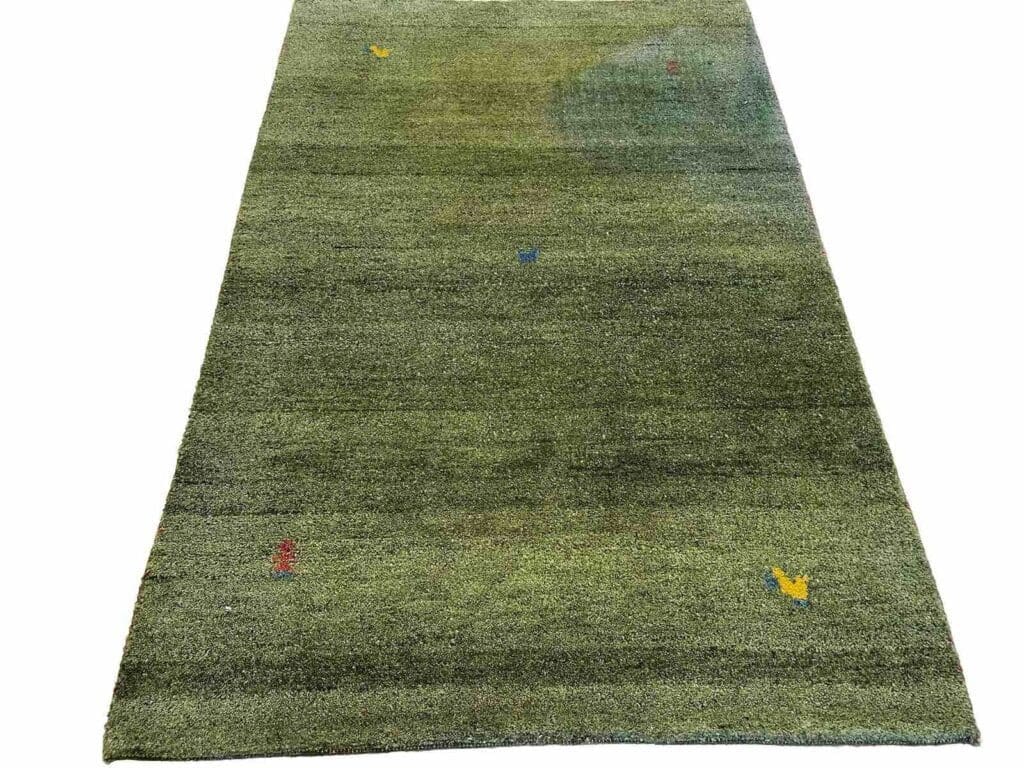
The pattern of this rug is identified as abstract. Abstract rug designs do not necessarily depict a recognisable scene, landscape, or single object. Instead, areas, lines, shapes, transitions, and relationships between colours may organise the composition. This open visual language allows different interpretations and can be used alongside both modern and traditional furnishings.
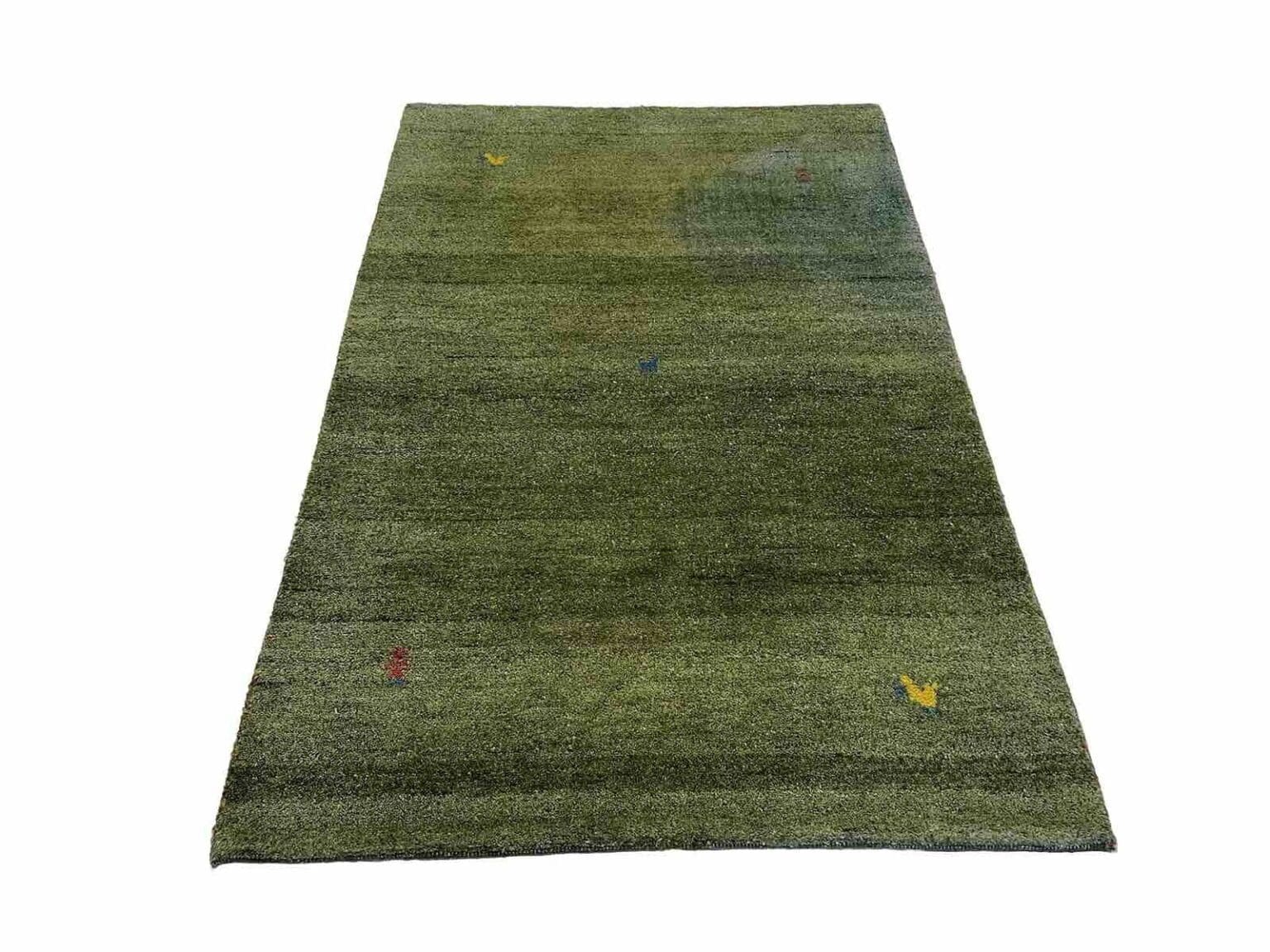
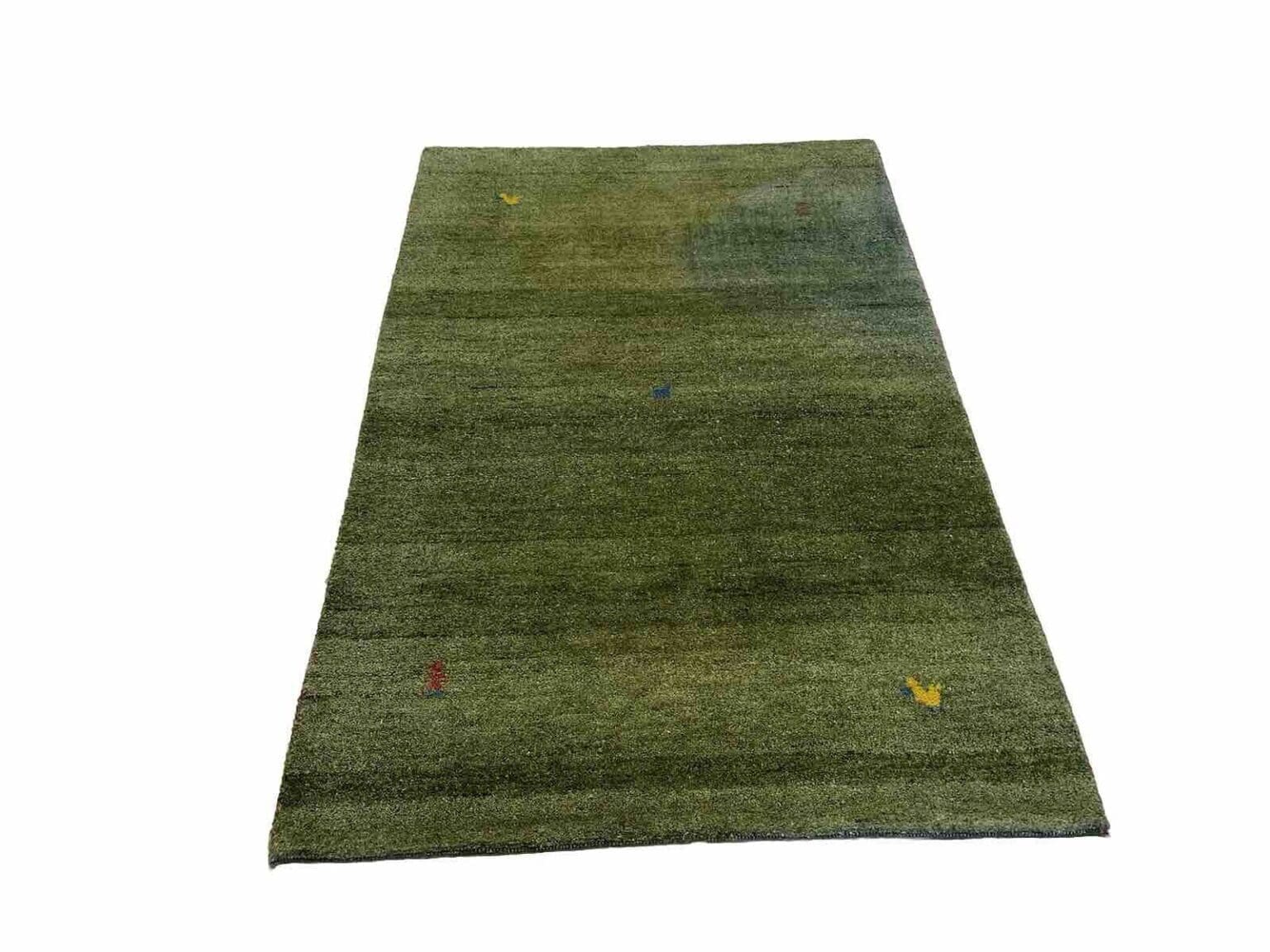
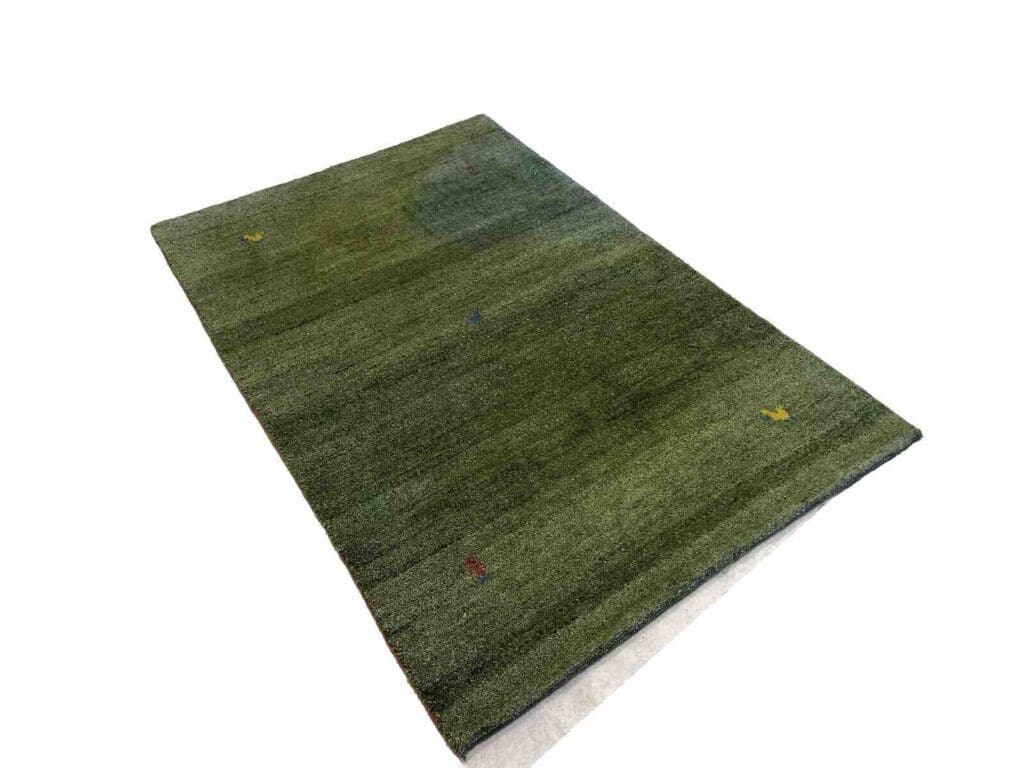
The colour is described as natural green. In Persian and Oriental textile design, green may be associated with plants, landscape, and natural colour impressions. Natural green can range from muted to stronger shades and may appear differently depending on fibre, dyeing, and light. For this rug, the stated colour description is limited to natural green; no additional individual colours or precise gradations are specified.
Abstract compositions can create visual order through repetition and balance. Repeated lines or shapes provide structure, while freer transitions produce a less rigid effect. In a hand-knotted rug, the pattern is built knot by knot. The design is therefore directly connected with the technical process. The clarity of a motif depends, among other things, on the careful placement of coloured yarns and on the final treatment of the pile.
Persian design traditions include both strictly symmetrical and more freely arranged compositions. Symmetrical designs may be organised around a central field, recurring axes, or a surrounding border. Freer designs use a less rigid distribution of forms. Abstract compositions can draw on both approaches without depicting a particular scene. The individual forms used in this rug are not described in further detail.
A rug’s pattern is shaped not only by its individual forms. The distribution of areas, the weight of the borders, and the relationship between pile and foundation are also important. In a hand-knotted one-off, the overall effect comes from the combination of material, colour, and knotting. Here, the natural green colour is the central stated feature of the design and gives the abstract composition its identifiable colour direction.
In rug culture, colours and forms are not considered in isolation. Their effect results from the interaction of surface, light, and room. Wool receives light differently from smooth synthetic fibres and can therefore produce a textile, nuanced appearance. The structure of hand-spun fibre supports this natural variation. These general qualities explain how material and pattern may work together without adding details about the specific drawing of this rug.
Special Features
The rug is described as hard-wearing and intended for use in a living space. Its hand-spun virgin wool and hand-knotted construction are the principal craft characteristics specified for it. As a rectangular piece, it can be placed within different room arrangements, although the shape alone does not prescribe a particular use. Its condition is listed as brand new.
Another explicitly stated feature is its suitability for underfloor heating. The rug can therefore be used on a floor equipped with such a system. Virgin wool is described as a material that can help regulate temperature and moisture. The technical requirements of the individual heating system and the rug-care instructions should still be followed when it is put into use.
To maintain the surface, regular and gentle cleaning is advisable. Dust and loose dirt can be removed carefully with a vacuum cleaner. Strong direct sunlight should be avoided because it can contribute to changes in colour. Professional cleaning is recommended for stains. Specialist cleaning at longer intervals can also help preserve the material quality and the vitality of the colours.
The combination of traditional knotting, hand-spun virgin wool, a hard-wearing construction, and suitability for underfloor heating connects handmade production with practical use in a contemporary living space. The details about pattern, colour, condition, and material describe this individual rug. No further claim is made about a particular workshop, region, or date of manufacture.
FAQ
How should I care for this Persian rug?
For everyday care, the rug should be vacuumed regularly and gently. Careful treatment helps preserve the hand-knotted surface and the virgin wool. Direct sunlight should be avoided where possible so that the natural green colour is not unnecessarily exposed. Professional cleaning is the recommended response to stains. A specialist clean every few years can help maintain the material and preserve the liveliness of its colours over time. Cleaning products should not be applied to the wool surface without checking their suitability first.
Can the rug be used with underfloor heating?
Yes. This Persian rug is suitable for use with underfloor heating. The hand-spun virgin wool is described as a material that can help regulate temperature and moisture. Before use, the rug-care instructions and the technical recommendations of the heating system should nevertheless be observed. Consistent, appropriate warmth and careful treatment support the intended use. If there is uncertainty about a particular heating system, its manufacturer’s instructions should be followed.
Where does this rug come from?
The rug is described as a Persian rug and therefore belongs to the Persian, or Iranian, tradition of rug making. No specific city, province, or workshop is named. For that reason, no particular regional origin is claimed. Persian rugs have traditionally been made in Iranian centres such as Isfahan, Tabriz, and Kashan, each of which developed its own design and craft traditions. This general context explains the designation Persian rug, but it does not identify the place where this individual rug was made.
To provide the best experiences, we use technologies like cookies to store and/or access device information. Consenting to these technologies will allow us to process data such as browsing behavior or unique IDs on this site. Not consenting or withdrawing consent, may adversely affect certain features and functions.
Functional Always active
The technical storage or access is strictly necessary for the legitimate purpose of enabling the use of a specific service explicitly requested by the subscriber or user, or for the sole purpose of carrying out the transmission of a communication over an electronic communications network.
Preferences
The technical storage or access is necessary for the legitimate purpose of storing preferences that are not requested by the subscriber or user.
Statistics
The technical storage or access that is used exclusively for statistical purposes.The technical storage or access that is used exclusively for anonymous statistical purposes. Without a subpoena, voluntary compliance on the part of your Internet Service Provider, or additional records from a third party, information stored or retrieved for this purpose alone cannot usually be used to identify you.
Marketing
The technical storage or access is required to create user profiles to send advertising, or to track the user on a website or across several websites for similar marketing purposes.
 SECURE PAYMENT
 SHIPPING PARTNERS


