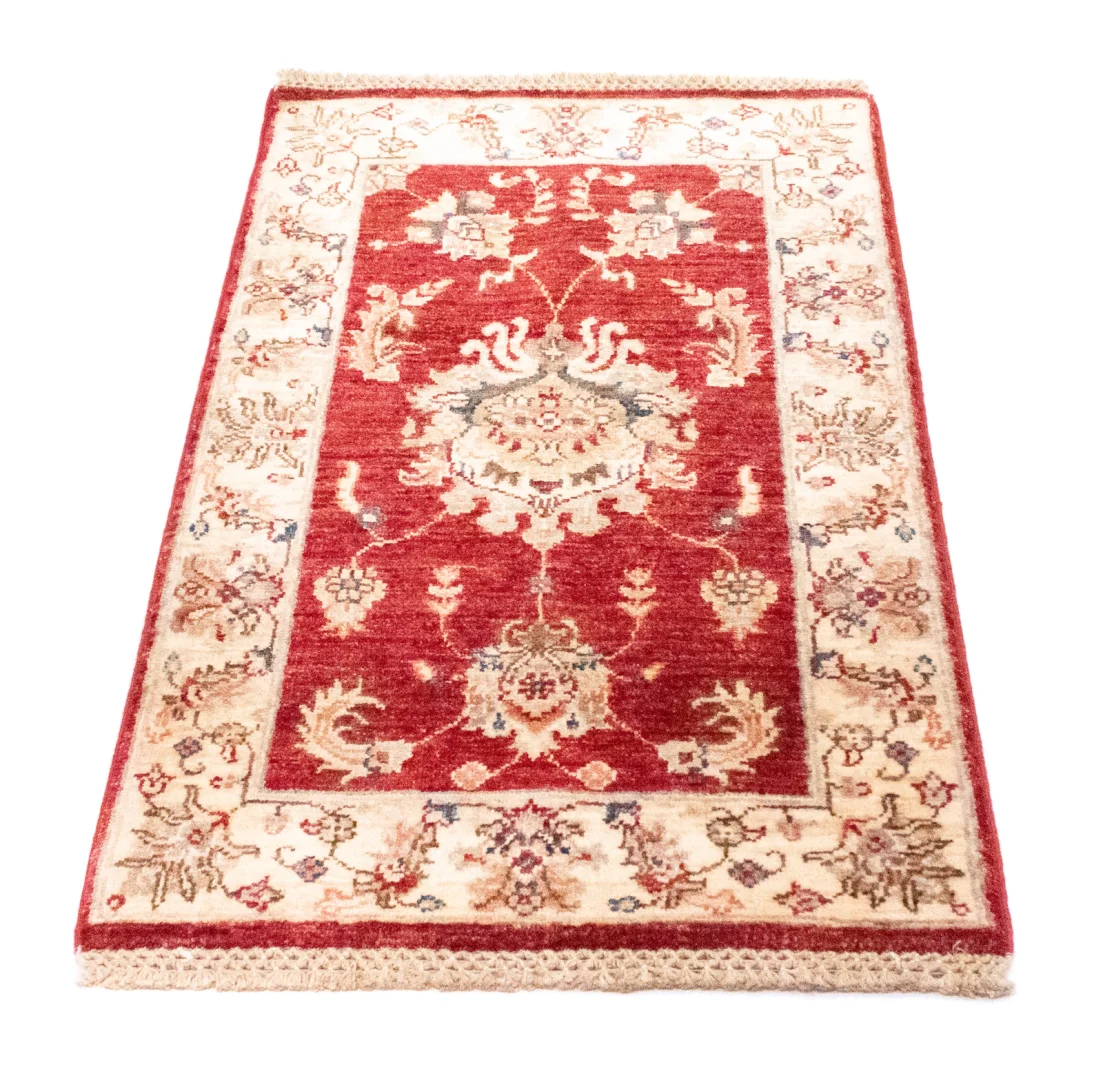
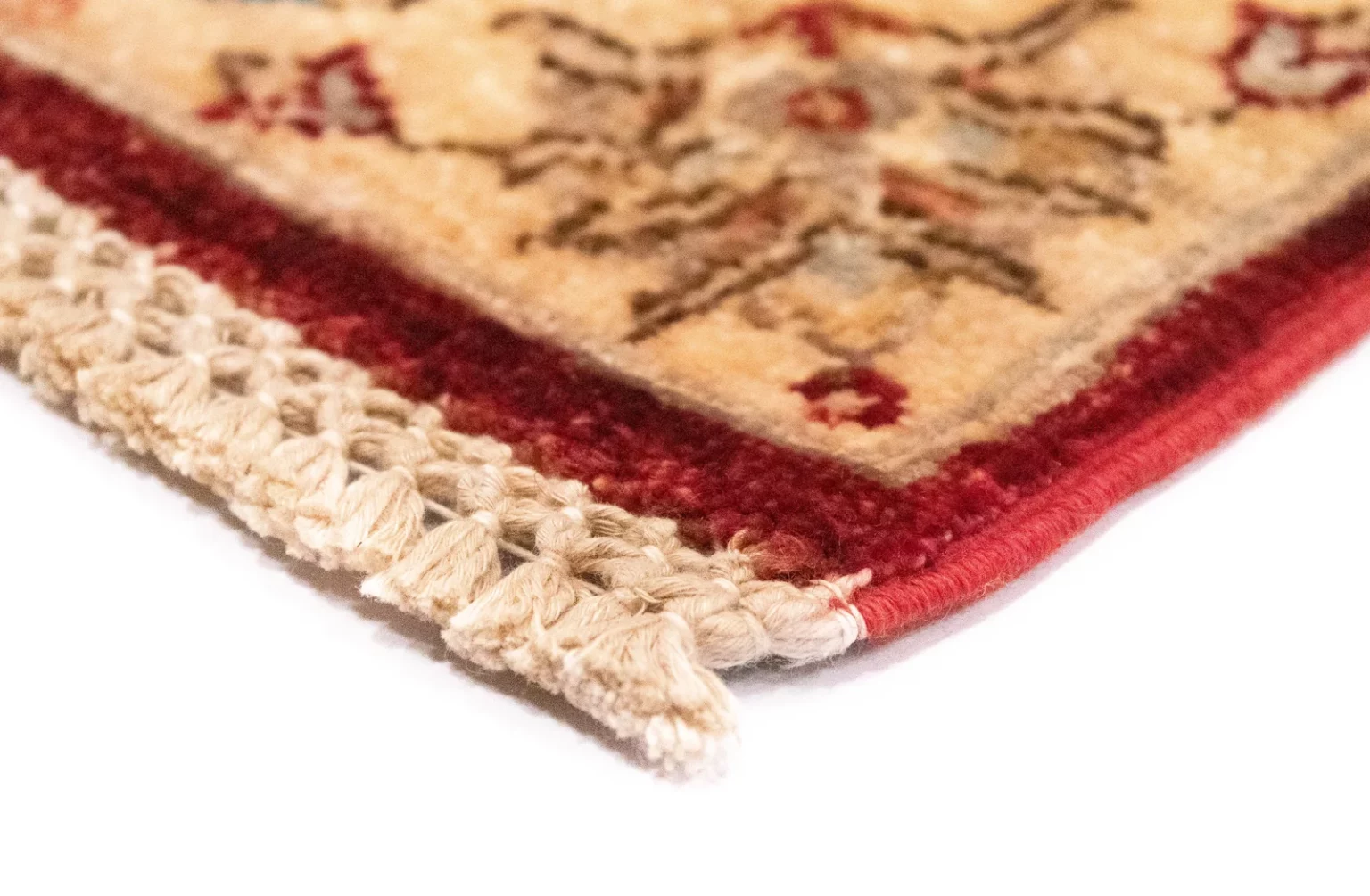
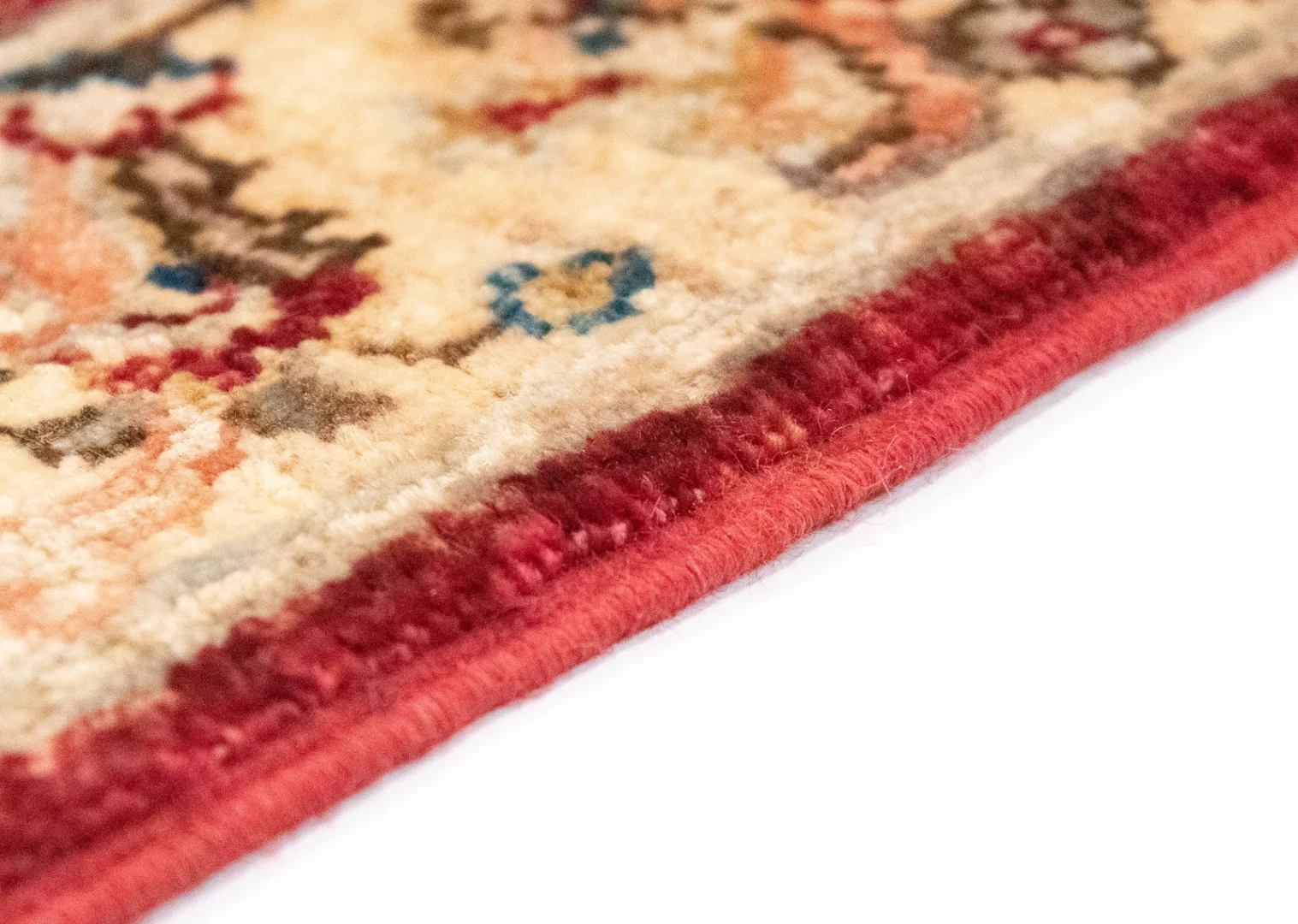
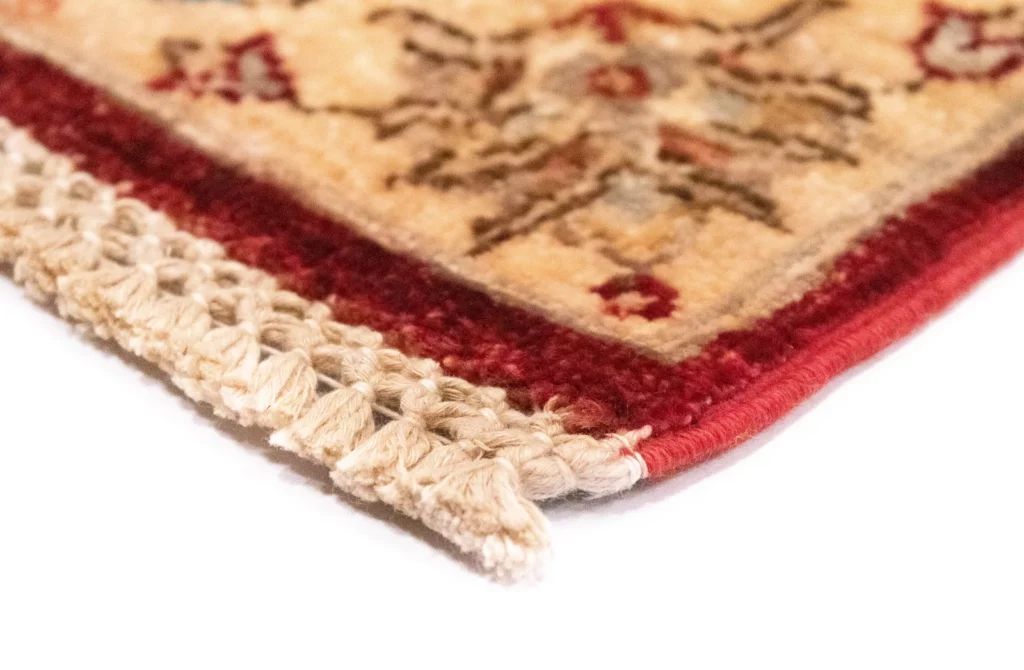
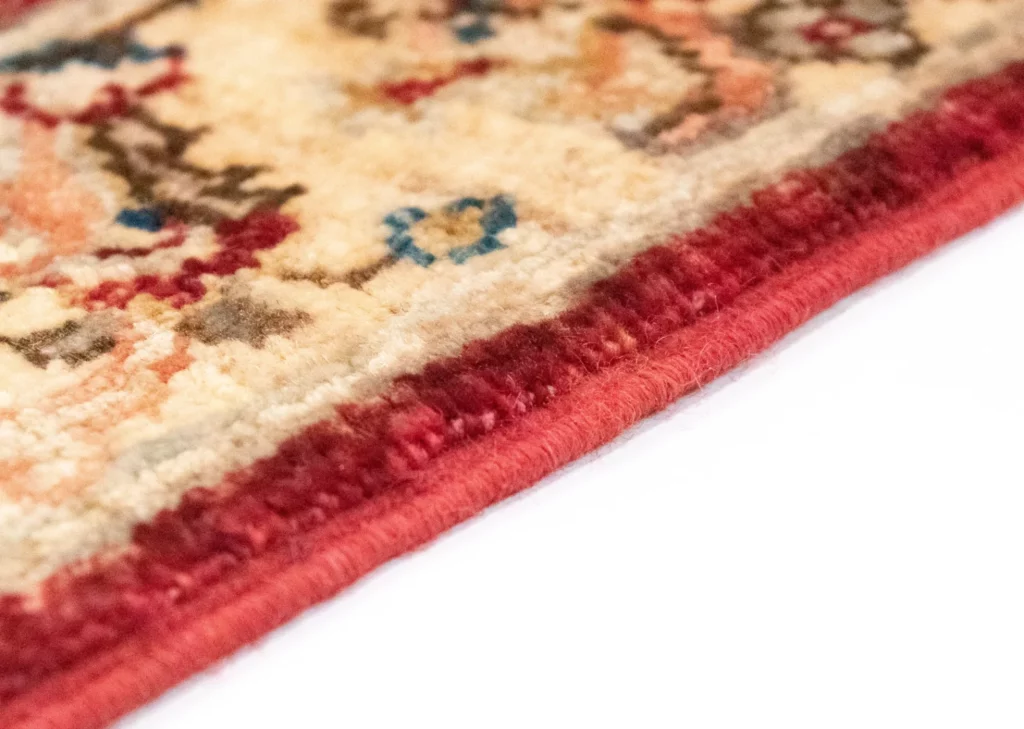
This Ziegler Oriental rug is hand-knotted and made with natural wool. Wool is a traditional rug material because it combines a resilient surface with a soft, comfortable feel underfoot. Its natural structure allows the pile to retain a defined texture while remaining suitable for use in living spaces. The wool used in oriental rugs also contributes to a tactile surface that changes subtly as light moves across it.
Hand-knotting is a manual process in which individual knots are placed into the foundation row by row. The weaver builds the pile gradually and follows the intended arrangement of colours and forms as the work progresses. This method requires patience and close attention to the design. Unlike a mechanically produced surface, a hand-knotted rug reflects the rhythm of the person who made it, including small variations in the placement and tension of the knots.
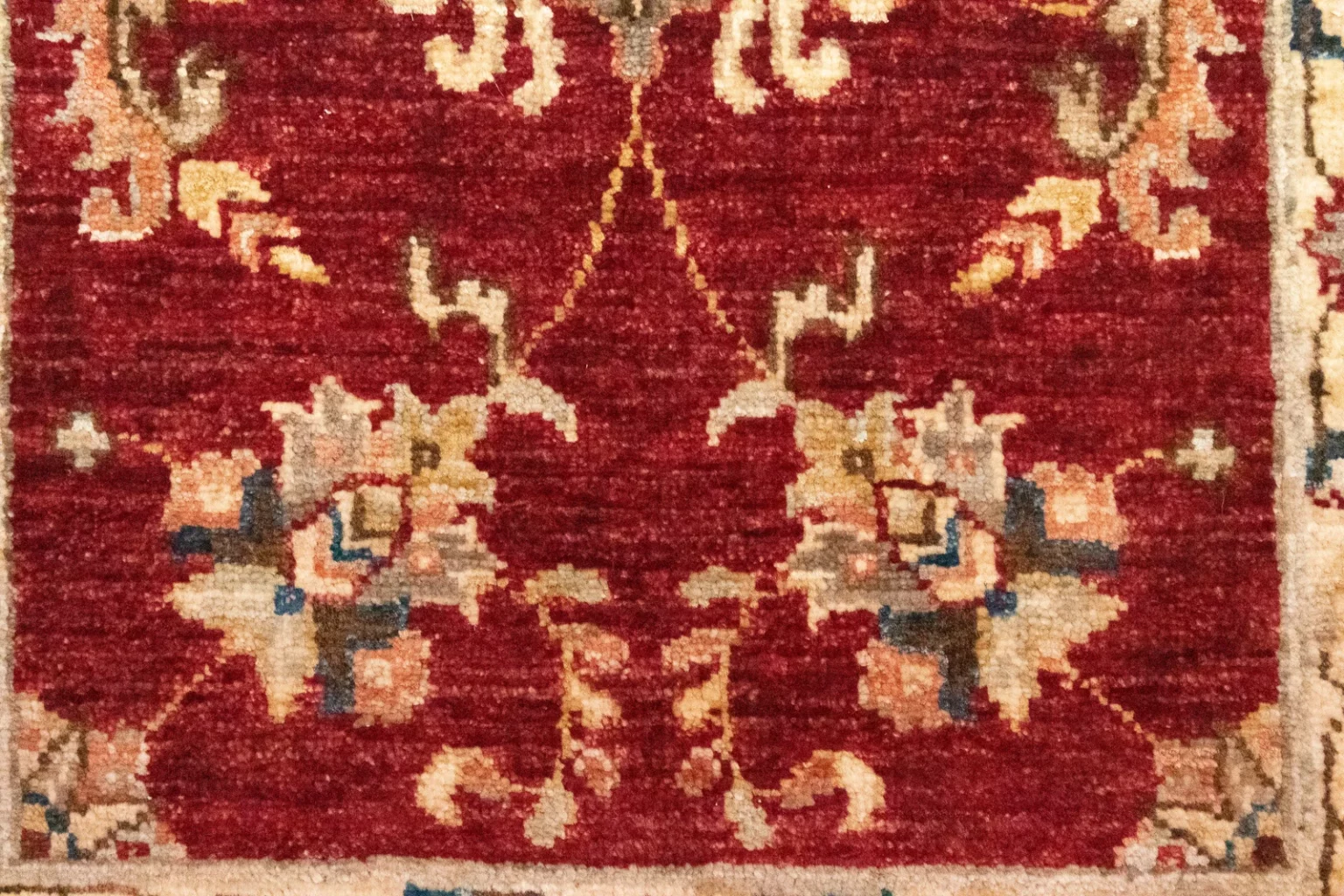
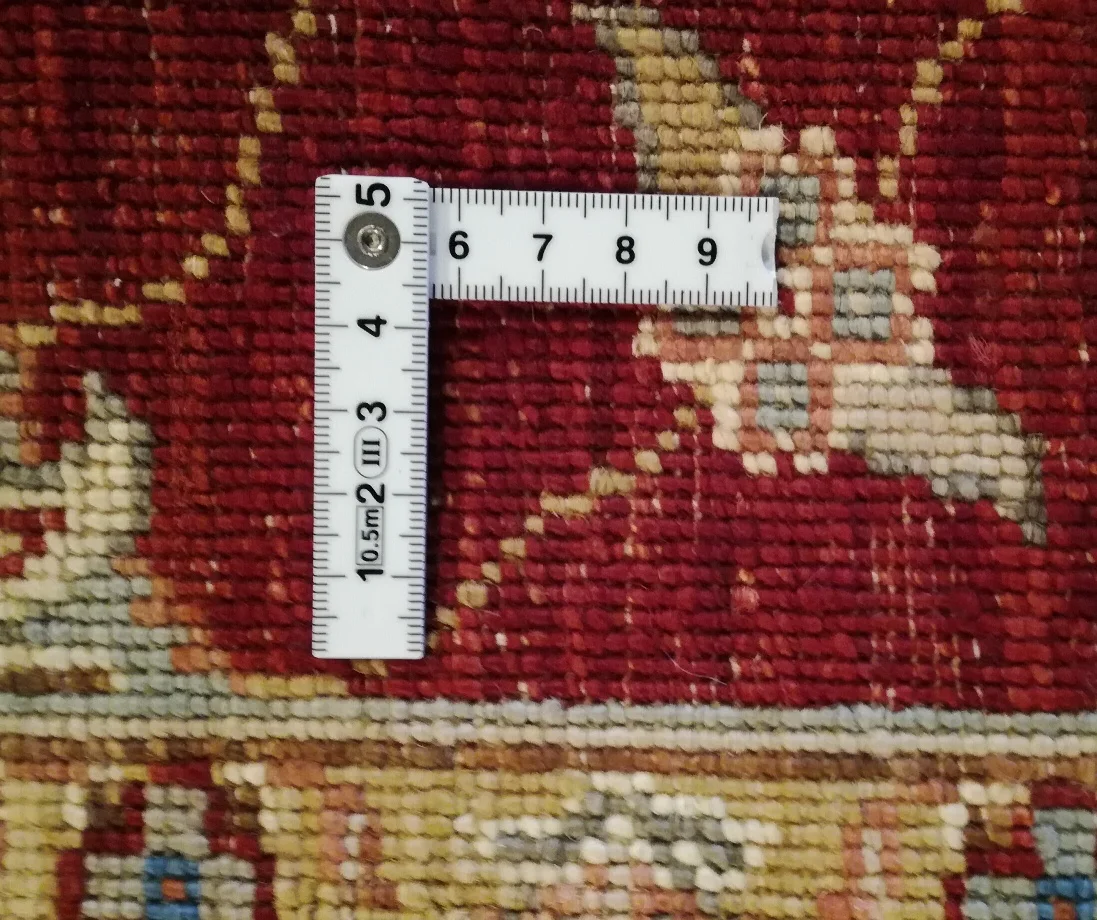
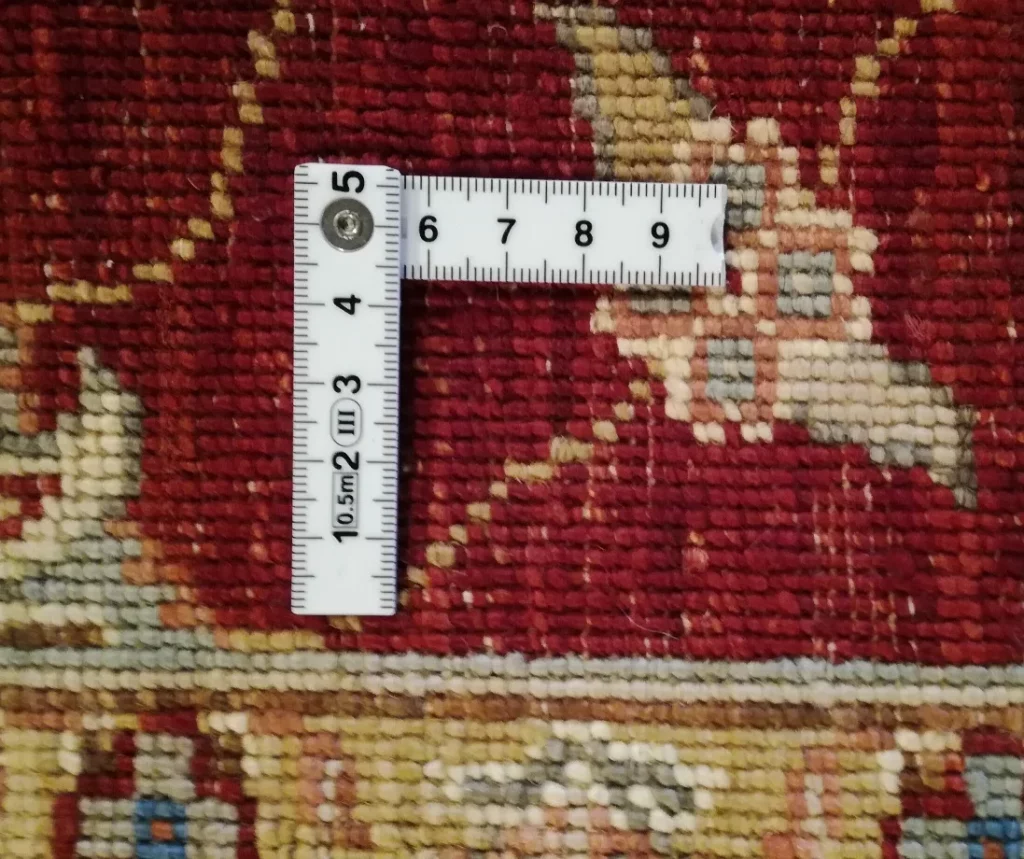
The rug has a knot density of 200,000 knots. A dense knot structure allows a pattern to be rendered with greater definition, particularly where several small shapes meet. It also gives the pile a closely worked character. The combination of natural wool and manual knotting is part of the traditional construction of oriental rugs and explains why this type of textile is valued both for its appearance and for its useful qualities.
Wool is also practical in everyday interiors. It offers a naturally substantial pile and can maintain its feel when cared for properly. The hand-knotted construction supports the rug’s durability, while the organic material gives it a surface that is distinct from that of a machine-made carpet. This piece therefore combines a traditional material with a craft technique that has been used for generations.
Origin and Tradition
The Ziegler rug tradition is rooted in the textile culture of Persia. Persian weaving developed within a long history of domestic and professional craftsmanship, with knowledge passed from one generation to the next. Rugs were made not only as practical floor coverings, but also as textiles in which colour, arrangement and symbolic forms could be preserved. The Ziegler name belongs to this wider oriental rug tradition and is associated with a preference for balanced compositions and a decorative interpretation of established Persian design language.
Hand-knotting requires the weaver to translate a planned composition into a field of individual knots. The process connects technical skill with visual judgement. The maker must keep the proportions of the pattern coherent, maintain the intended sequence of colours and build a consistent pile as the rug develops. This work is slow and requires concentration, which is why hand-knotted rugs are understood as products of skilled textile labour rather than as purely industrial objects.
Persian rug culture includes many regional approaches, each shaped by local habits, available materials and inherited forms of decoration. Floral arrangements, geometric structures and repeated borders can carry meanings that differ according to the tradition in which they appear. The source describes Persian carpets as known for detailed patterns and lively colours, while also pointing to the cultural significance reflected in the motifs and symbols of different regions. These conventions provide a background for understanding the Ziegler design tradition without assigning this individual rug to a province that is not named.
Rugs also have a social role in the history of oriental interiors. A carefully prepared rug could help define a reception room, provide comfort for guests and express the care given to a household. In this context, the oriental rug became associated with hospitality and prosperity. Such associations are part of the cultural history of the object rather than a claim about the personal history of this particular piece.
The transmission of weaving knowledge is based on repetition and practice. Experienced makers teach the handling of wool, the formation of knots, the reading of a design and the treatment of colour relationships. At the same time, hand-knotting leaves room for the character of the individual weaver. The result is a textile in which a longstanding tradition and manual execution meet. The Ziegler rug is presented within this tradition as an oriental rug with a hand-knotted construction and a finely worked surface.
In a contemporary home, this heritage can be understood through the rug’s material and method rather than through a need to reproduce a historical setting. Its traditional construction allows it to sit alongside modern furniture, while its decorative vocabulary connects it with the long history of Persian and oriental textile arts. The rug can therefore be considered both as a functional furnishing textile and as an example of a craft tradition that has retained its cultural importance.
Design and Pattern
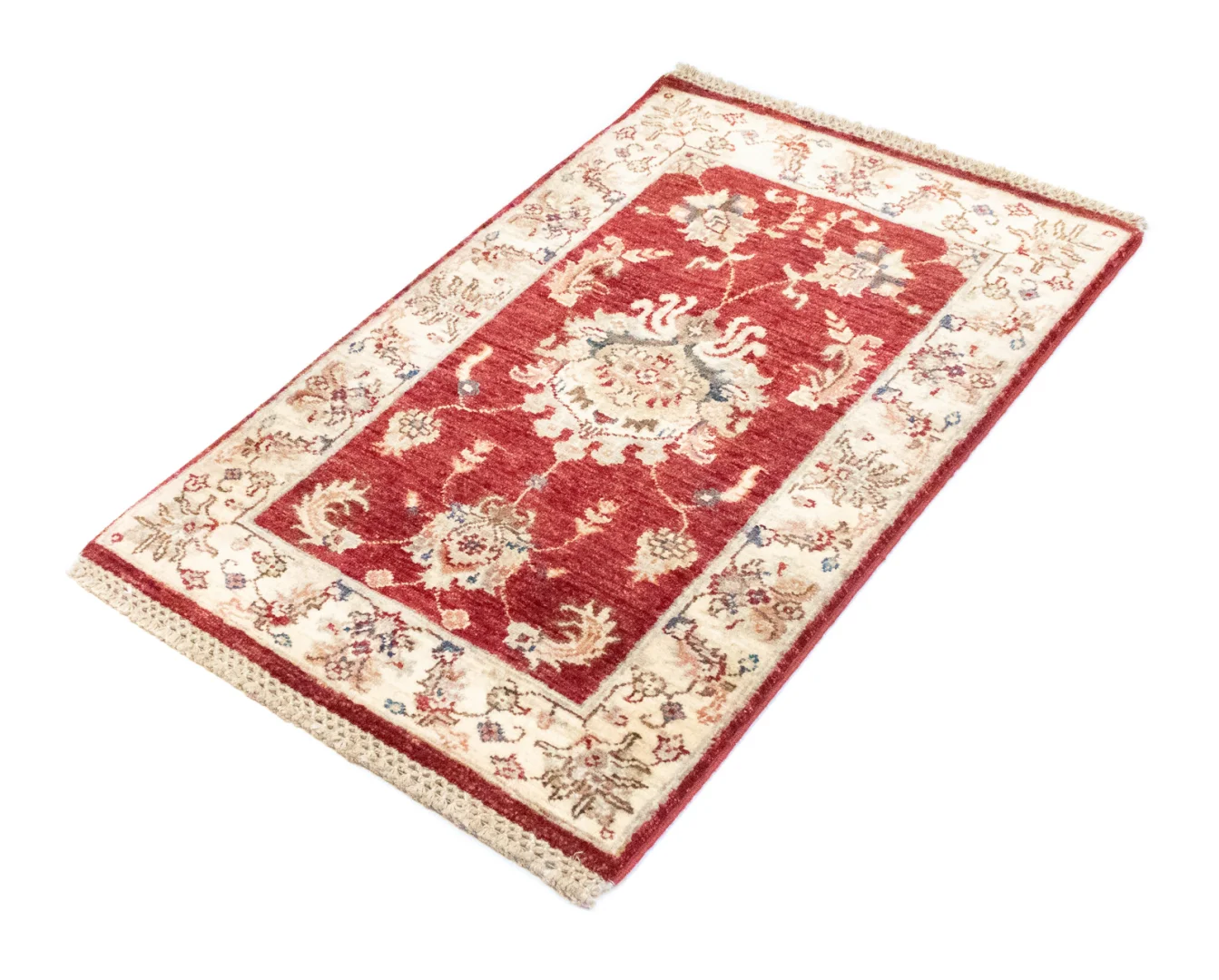
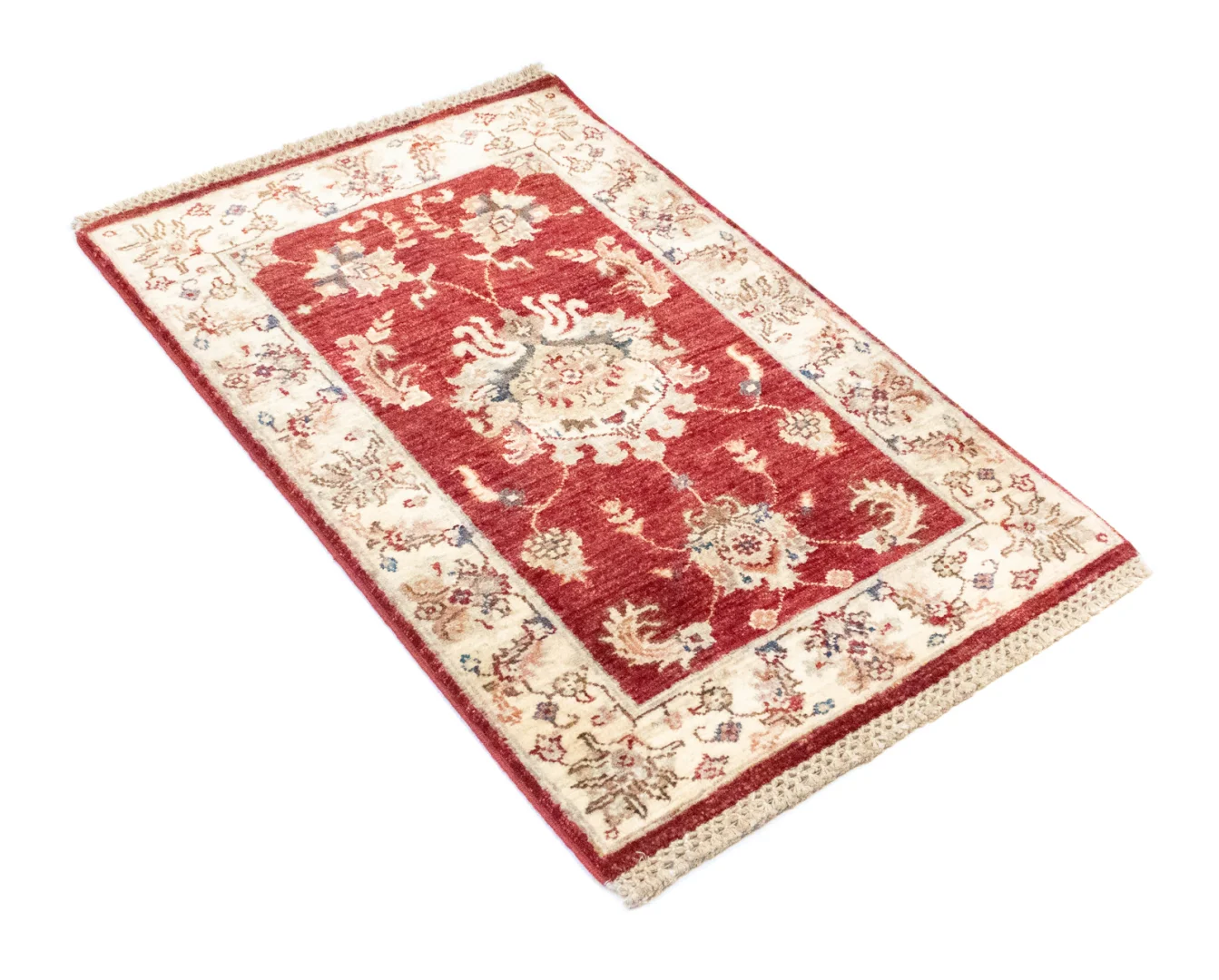
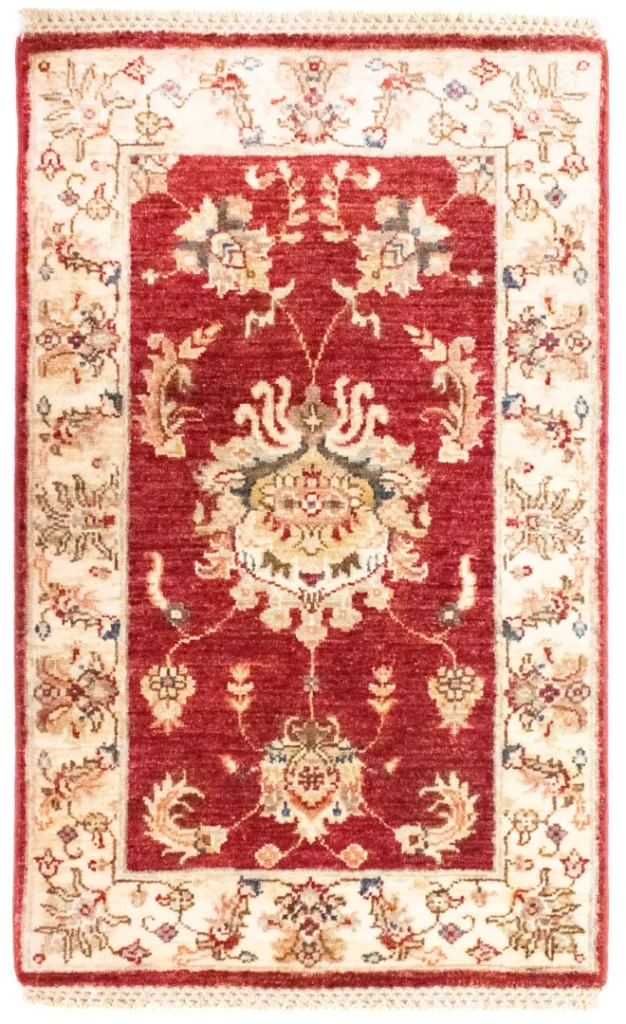
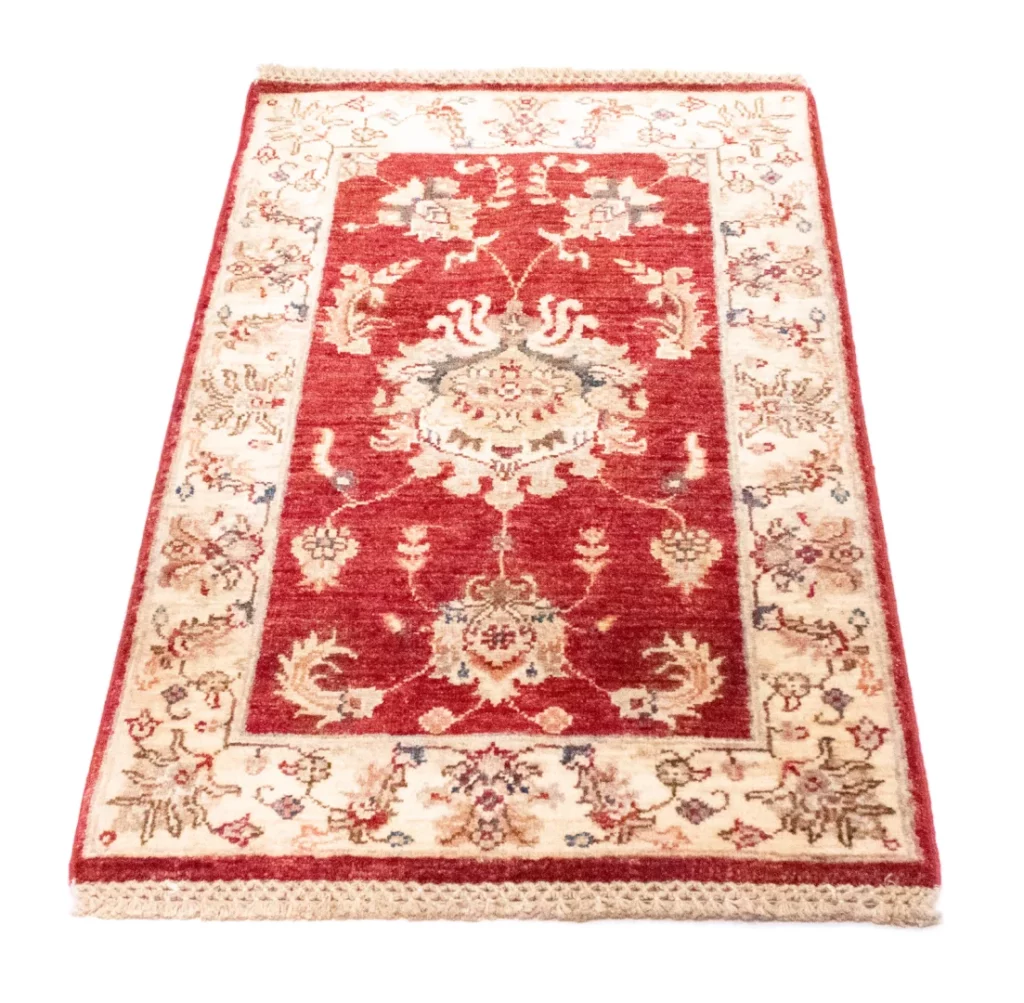
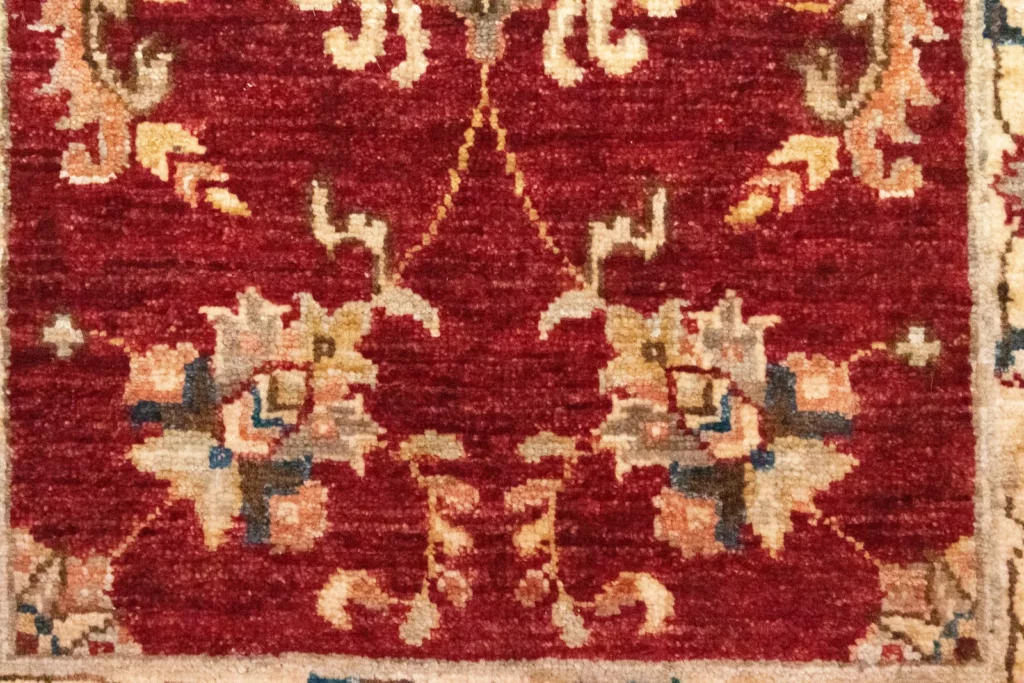
The design of this Ziegler Oriental rug is described as elegant and harmonious. Its composition is associated with the combination of floral and geometric motifs, arranged so that the elements form a coherent overall image. Floral forms introduce organic lines and references to plants, while geometric elements provide structure through measured shapes, repetition and clear directional relationships. Together, these two families of motifs create the balanced decorative language found in many oriental rugs.
A rug pattern is developed through the relationship between its central arrangement, surrounding areas and borders. Even when the source does not identify a particular named pattern, the principles of repetition and balance remain important for reading the design. A repeated motif can guide the eye across the surface, while a border can establish a visual frame. The orderly placement of forms helps the composition remain legible from a distance, and finer details become visible on closer inspection.
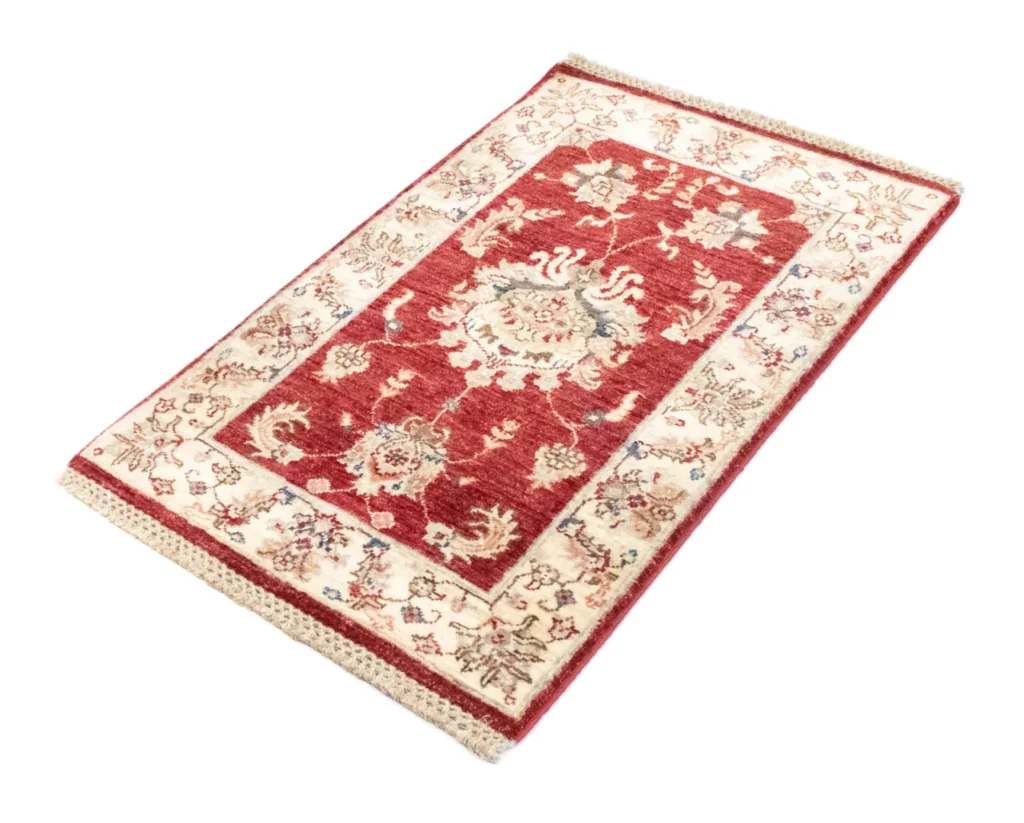
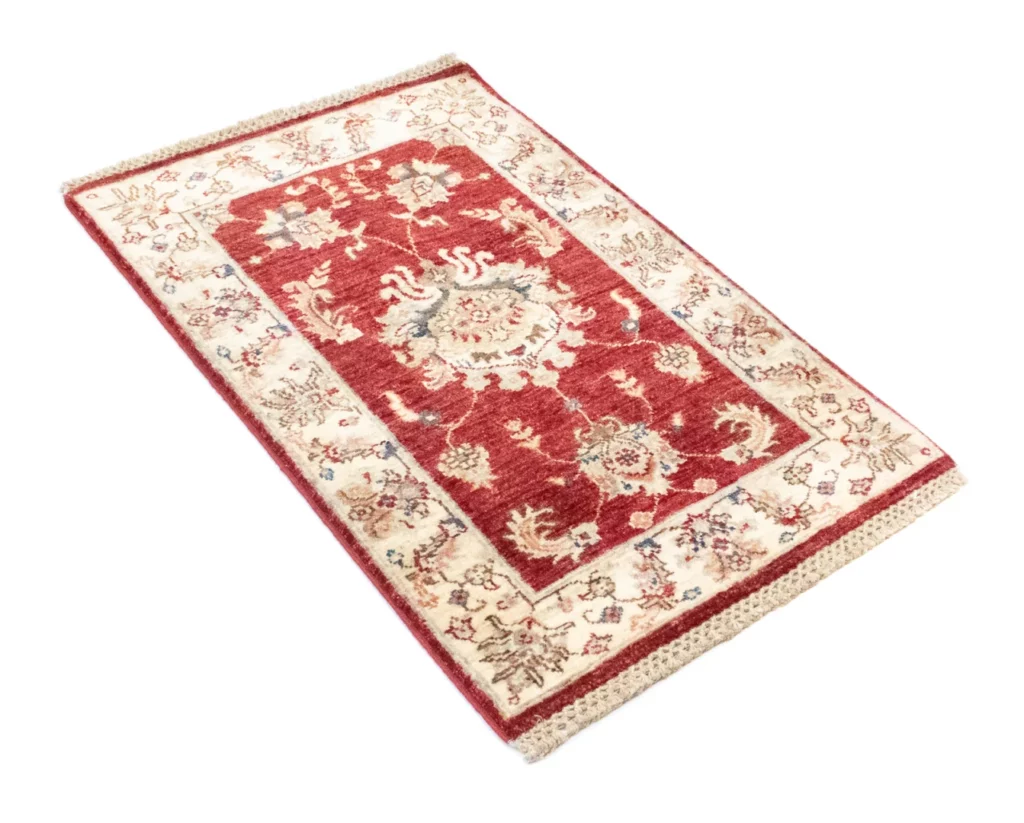
Colour is an essential part of this visual structure. The source describes the arrangement of colours and forms as carefully coordinated and notes that the colour and pattern may appear differently under changing illumination. This is a normal feature of a textile surface: the direction of the pile, the texture of the wool and the position of a light source influence how a colour is perceived. The design can consequently show slight shifts in emphasis during the day or when the rug is viewed from different sides.
Oriental rug patterns are often described as visual narratives because they combine recurring symbols, stylised natural forms and geometric order. A floral motif may be reduced to a deliberate outline rather than copied literally from nature. Geometric forms can act as a framework for the composition or repeat at intervals to establish rhythm. Through these devices, a rug can suggest movement, continuity and balance without depicting a single scene. The patterns belong to a decorative vocabulary developed over a long period of weaving history.
The harmonious character of the design makes it adaptable to different interior settings. In a living room, the floral and geometric arrangement can work as a decorative foundation around seating. In a bedroom, the wool surface and measured composition can provide a calm textile element. In a study or workroom, the pattern can introduce visual structure without requiring the rest of the interior to follow a historical style. These possible settings describe the use of the rug as an interior textile and do not alter its stated design.
The dense knotting supports the precise presentation of the pattern. Small changes in line, contour and spacing can be rendered more clearly when the surface is closely worked. This does not make the design mechanical; the rug remains the result of manual production. Instead, the knot density and hand-knotted technique work together, allowing the intended composition to be expressed in wool while retaining the material character of a handmade textile.
Light and viewpoint are therefore part of the way the design is experienced. A colour may appear more muted or more pronounced depending on the direction from which the pile is viewed, and a motif may seem to gain or lose emphasis as the surrounding illumination changes. This dynamic quality is characteristic of many woollen rugs. It gives the composition a changing visual presence while leaving the underlying arrangement of floral and geometric forms intact.
The design should be read as a whole rather than as a collection of isolated decorations. The relationship between the motifs, the colour placement and the overall order creates the sense of harmony described for the rug. Its visual language connects with the broader tradition of oriental carpets, where ornament is used to unite a textile surface and give an interior a defined decorative identity.
Special Features
A defining feature of this rug is its knot density of 200,000 knots. The closely worked construction contributes to the visual precision of the design and is also associated with a durable, long-lasting surface. The use of natural wool adds a comfortable texture, while hand-knotting gives the piece a construction intended to remain useful over an extended period when it is treated appropriately.
The rug can be cared for with less effort than many machine-made carpets, while still requiring sensible routine attention. Regular vacuuming without a brush attachment helps remove surface dust without unnecessarily working the pile. Spills should be treated promptly with a damp cloth and a mild cleaning product. Intensive cleaning is best entrusted to a professional carpet-cleaning service, particularly when preserving the wool and the hand-knotted structure is important.
The rug is also suitable for use with underfloor heating. Natural wool conducts warmth without losing its shape or quality in this setting. As with any textile placed over a heated floor, suitable installation and ordinary care remain important, but the source specifically describes this Ziegler Oriental rug as well suited to underfloor heating.
FAQ
How should I clean and care for this Ziegler Oriental rug?
Vacuum the rug regularly without using a brush attachment. This removes loose dust while treating the wool pile more gently. If a stain occurs, address it promptly with a damp cloth and a mild cleaning product. Avoid treating the rug aggressively or saturating it unnecessarily. For intensive cleaning, use a professional carpet-cleaning service. Professional treatment is particularly appropriate for a hand-knotted wool rug because the pile, colours and foundation benefit from a method suited to the construction.
Can this Ziegler Oriental rug be used over underfloor heating?
Yes. The rug is suitable for underfloor heating. Its natural wool allows warmth to pass through without the rug losing its shape or quality. The heating should be operated in a normal, controlled manner, and the rug should be laid on a suitable, clean surface. Regular care remains useful, but underfloor heating itself is not a reason to exclude this hand-knotted rug from a room with that type of heating.
How can I recognise an authentic hand-knotted Oriental rug?
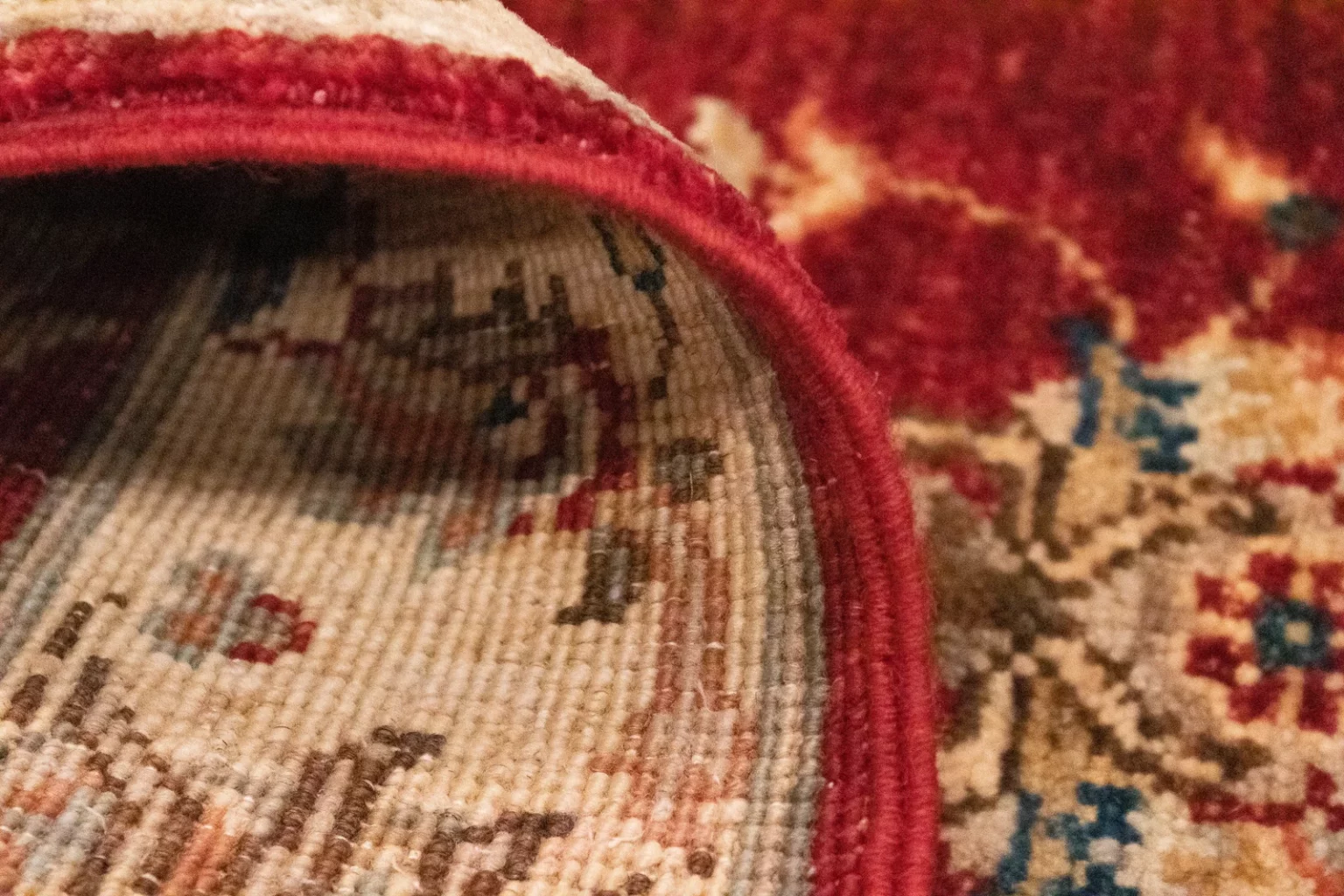
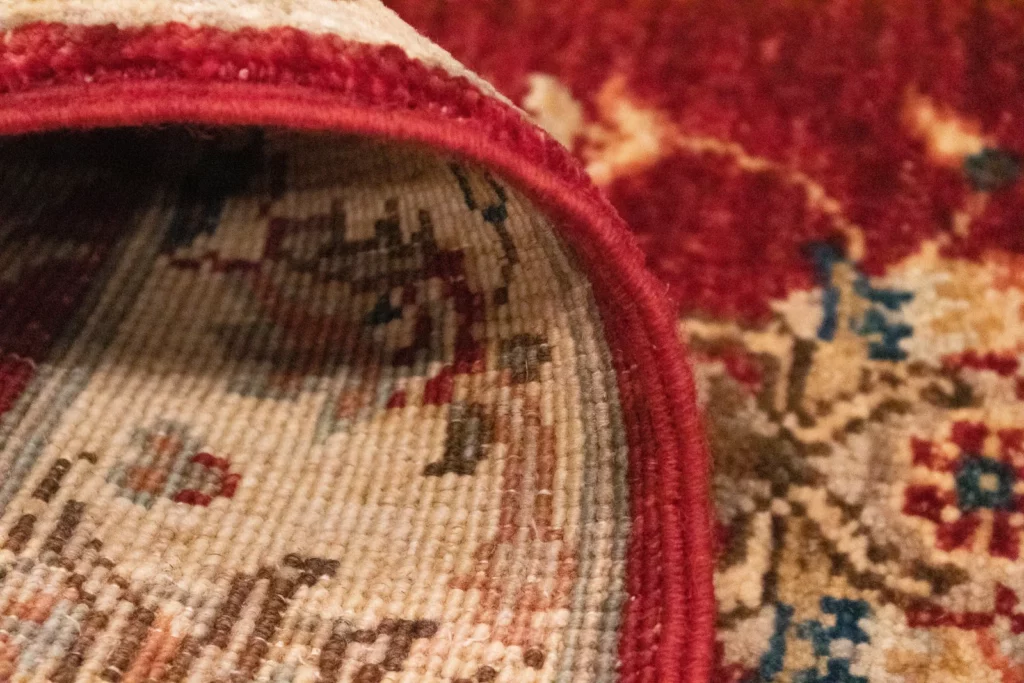
Authentic hand-knotted rugs generally show slight irregularities in their knotting because each knot is made by hand. Natural materials such as wool or silk are also characteristic indicators. In many cases, the pattern can be seen on the back of the rug, which provides another clue to the construction and quality of the piece. When buying, certificates or expert reports can help confirm authenticity. These points are useful general checks and should be considered alongside the rug’s material, workmanship and overall condition.
To provide the best experiences, we use technologies like cookies to store and/or access device information. Consenting to these technologies will allow us to process data such as browsing behavior or unique IDs on this site. Not consenting or withdrawing consent, may adversely affect certain features and functions.
Functional Always active
The technical storage or access is strictly necessary for the legitimate purpose of enabling the use of a specific service explicitly requested by the subscriber or user, or for the sole purpose of carrying out the transmission of a communication over an electronic communications network.
Preferences
The technical storage or access is necessary for the legitimate purpose of storing preferences that are not requested by the subscriber or user.
Statistics
The technical storage or access that is used exclusively for statistical purposes.The technical storage or access that is used exclusively for anonymous statistical purposes. Without a subpoena, voluntary compliance on the part of your Internet Service Provider, or additional records from a third party, information stored or retrieved for this purpose alone cannot usually be used to identify you.
Marketing
The technical storage or access is required to create user profiles to send advertising, or to track the user on a website or across several websites for similar marketing purposes.

 SECURE PAYMENT
 SHIPPING PARTNERS


