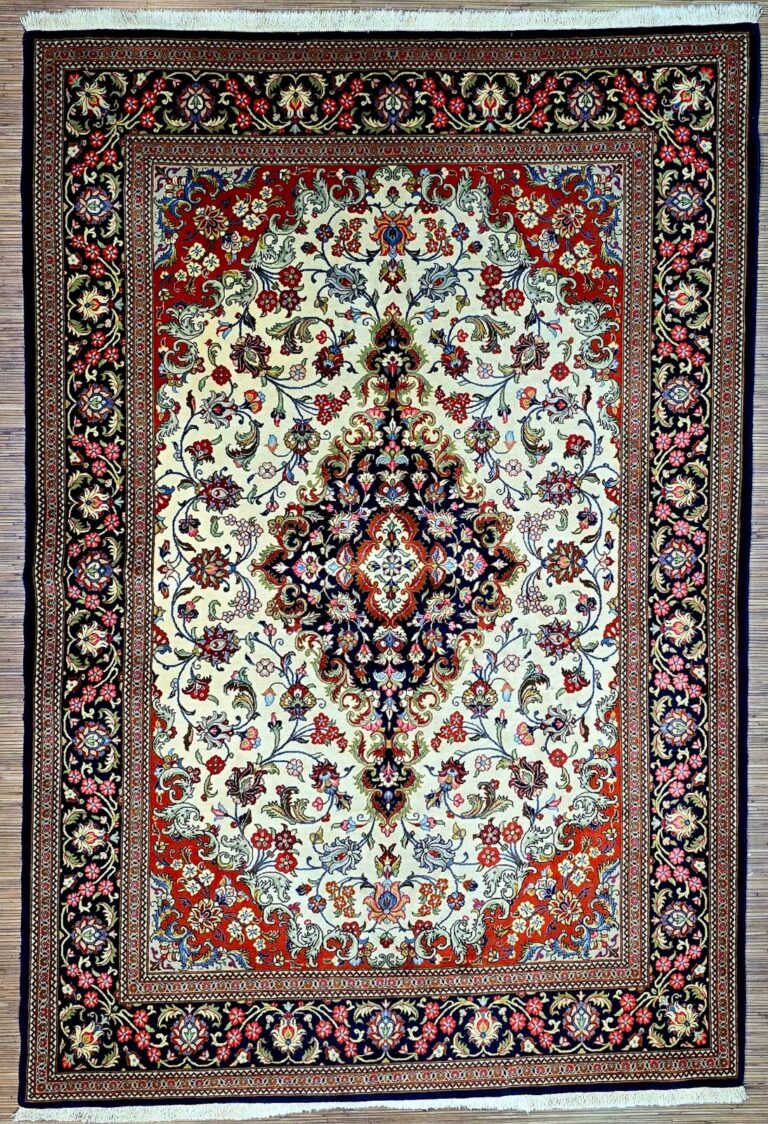
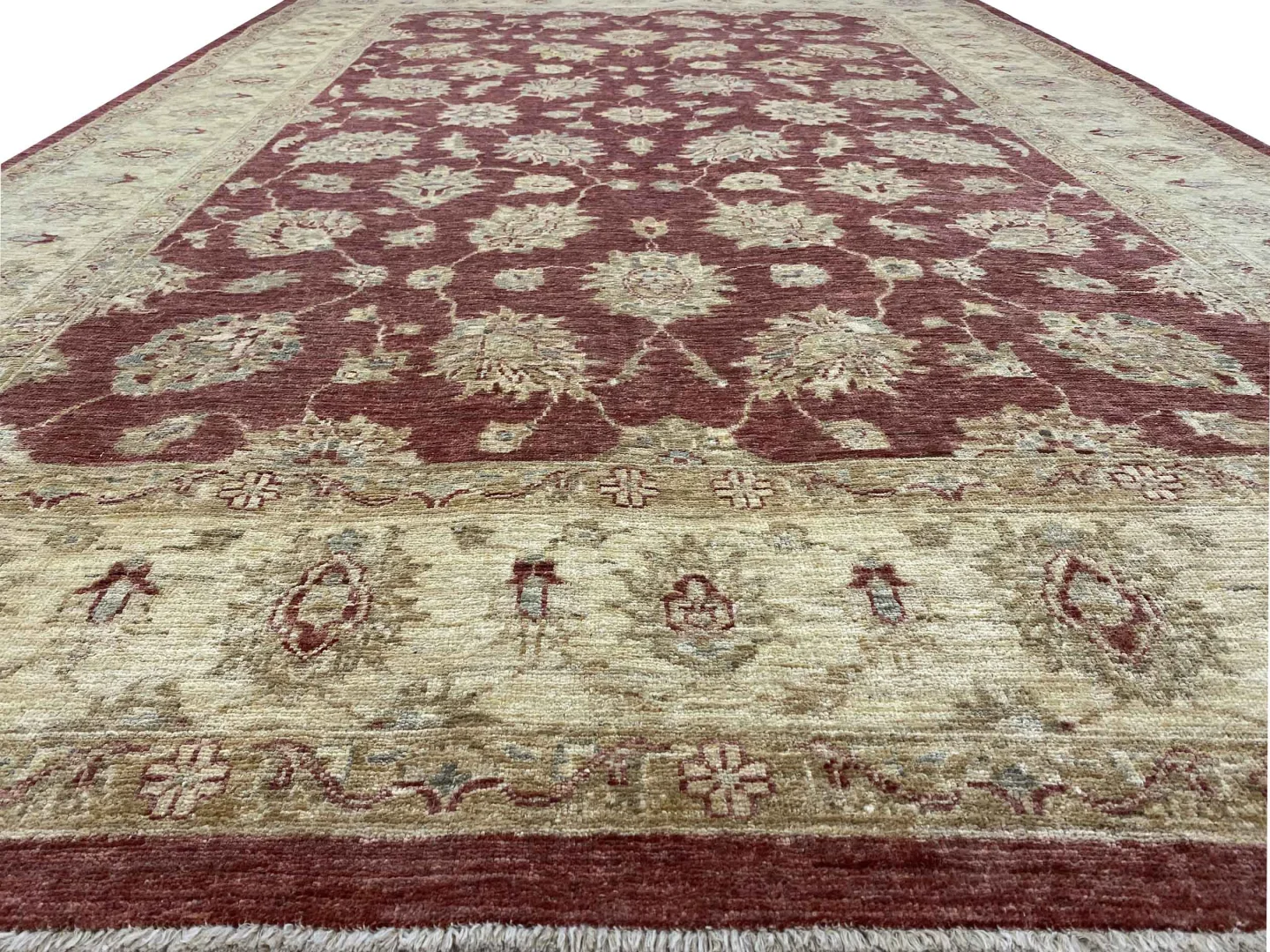
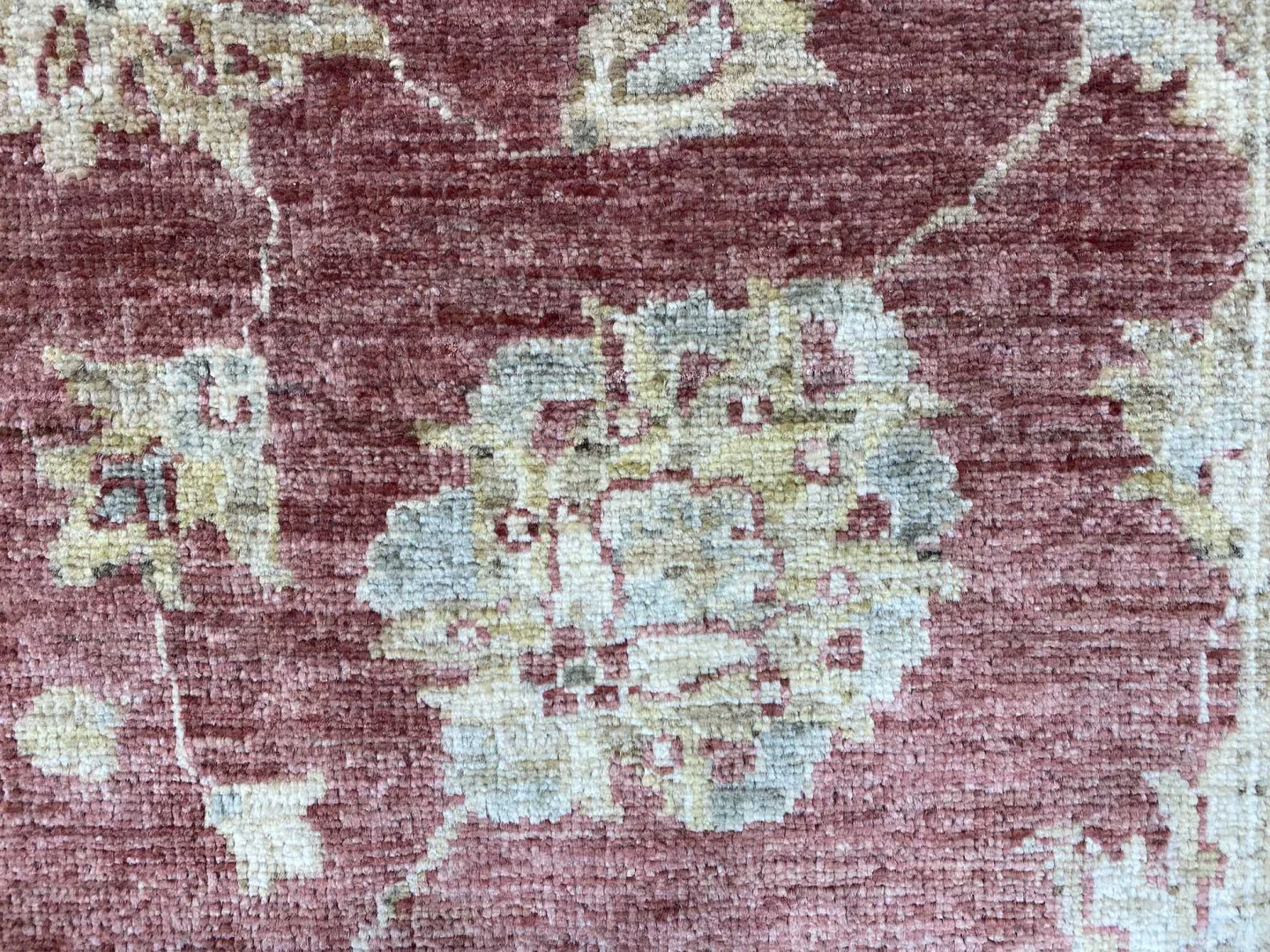
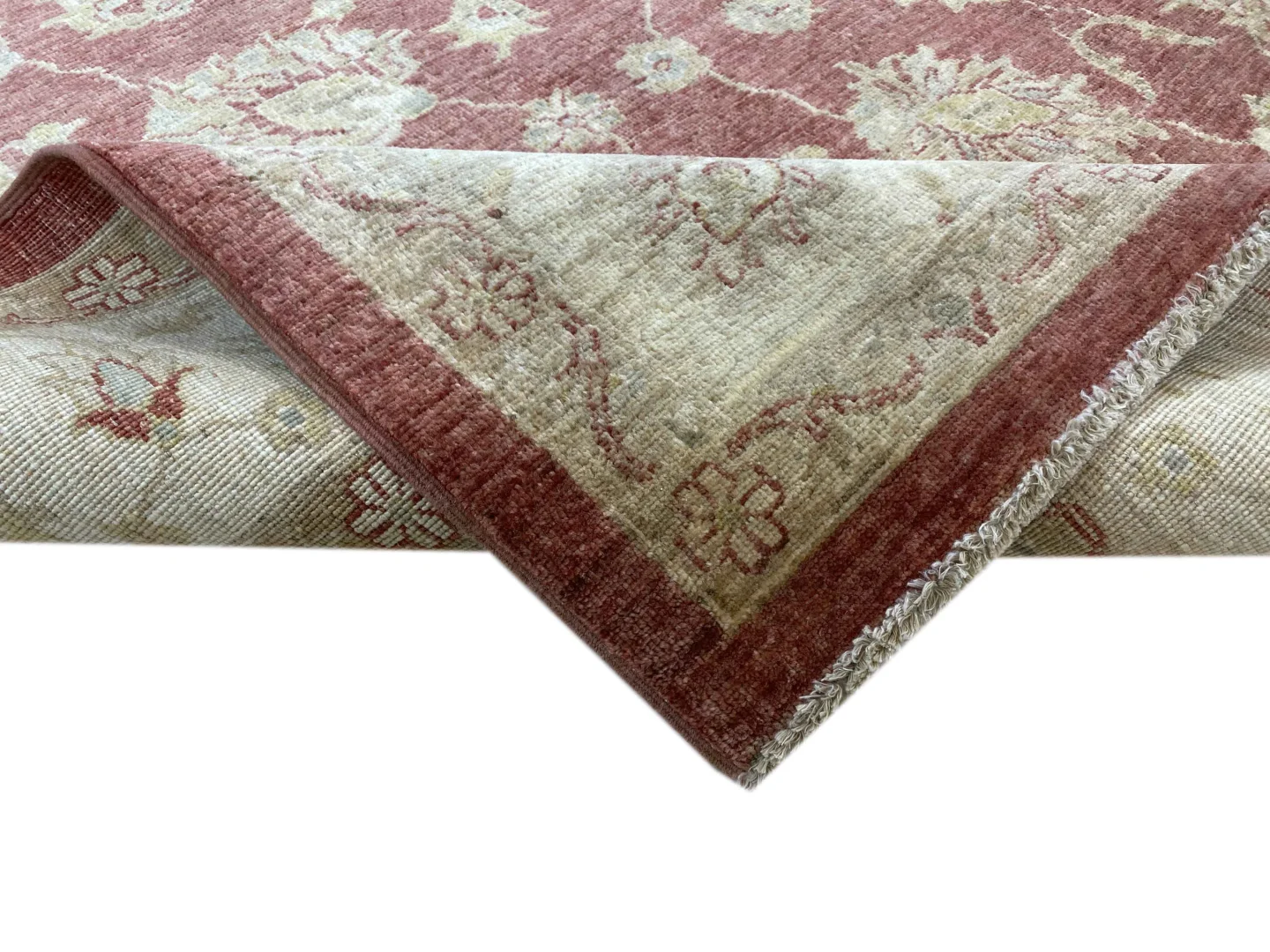
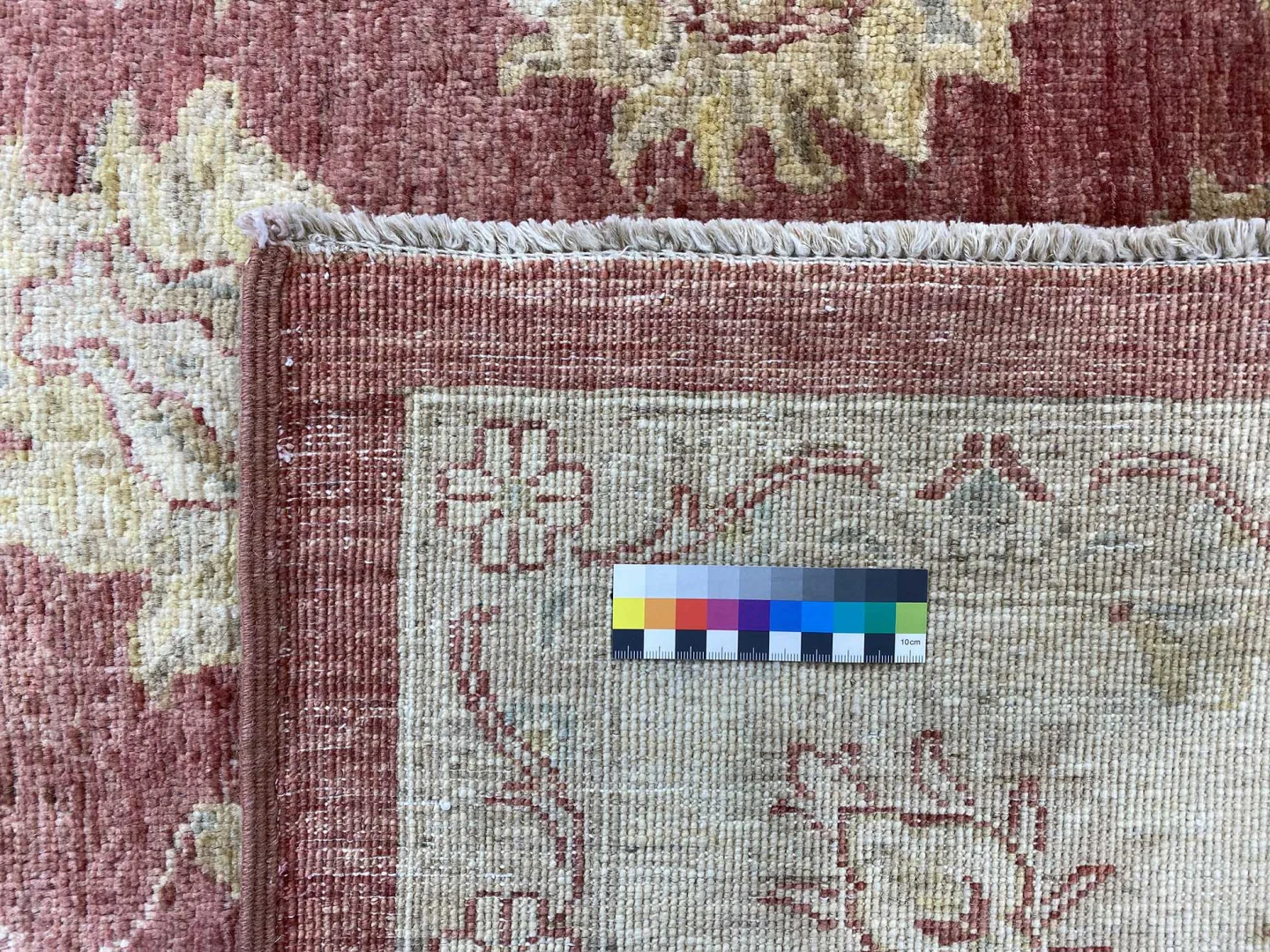
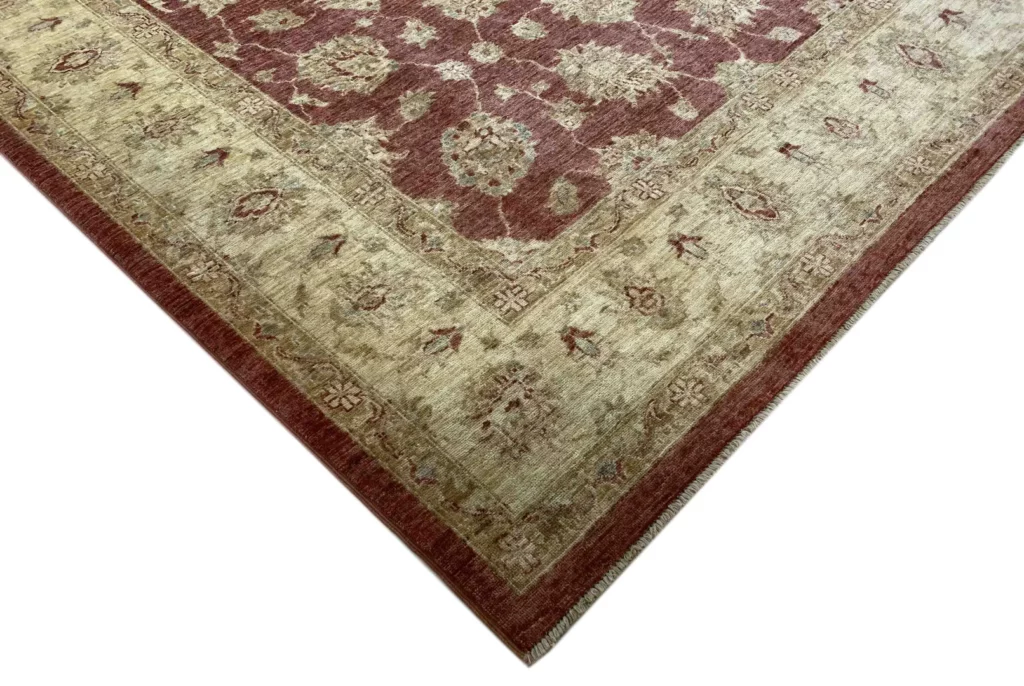
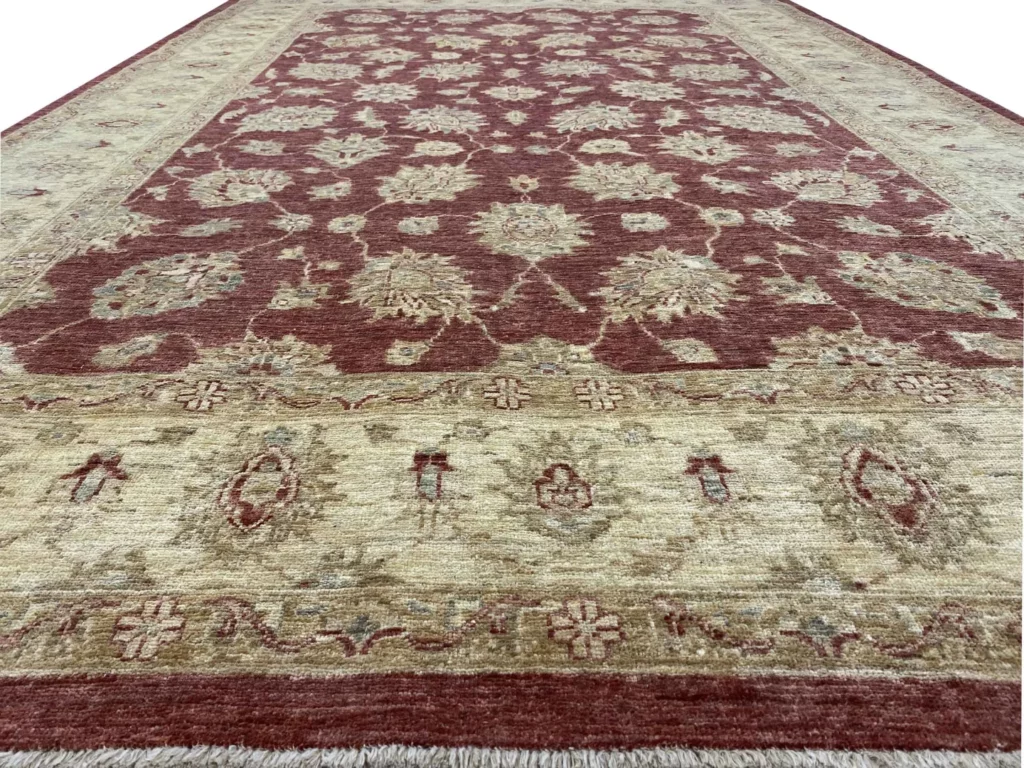
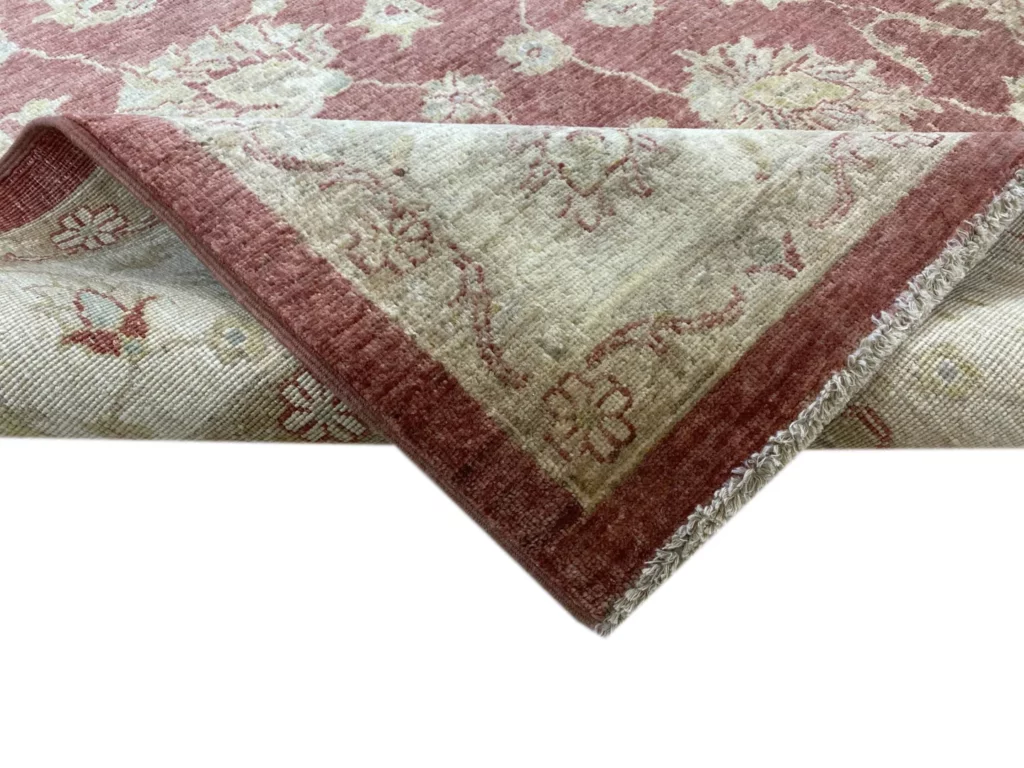
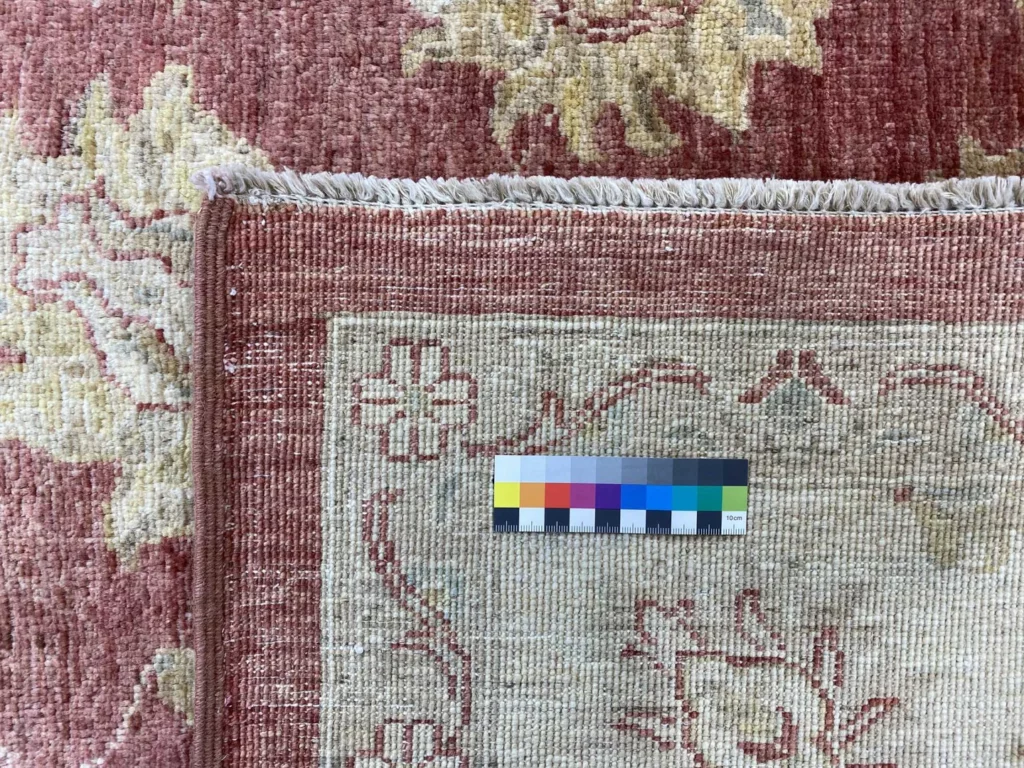
This Ziegler Oriental rug is hand-knotted and made from high-quality wool. Hand production builds the rug knot by knot on a loom. The yarn is placed by hand, and row after row is assembled into a continuous textile surface. This process requires regular movements, careful alignment and close attention to the developing design. Unlike a machine-made rug, a hand-knotted piece is formed through many individual stages of work, with the visible structure created during the knotting itself.
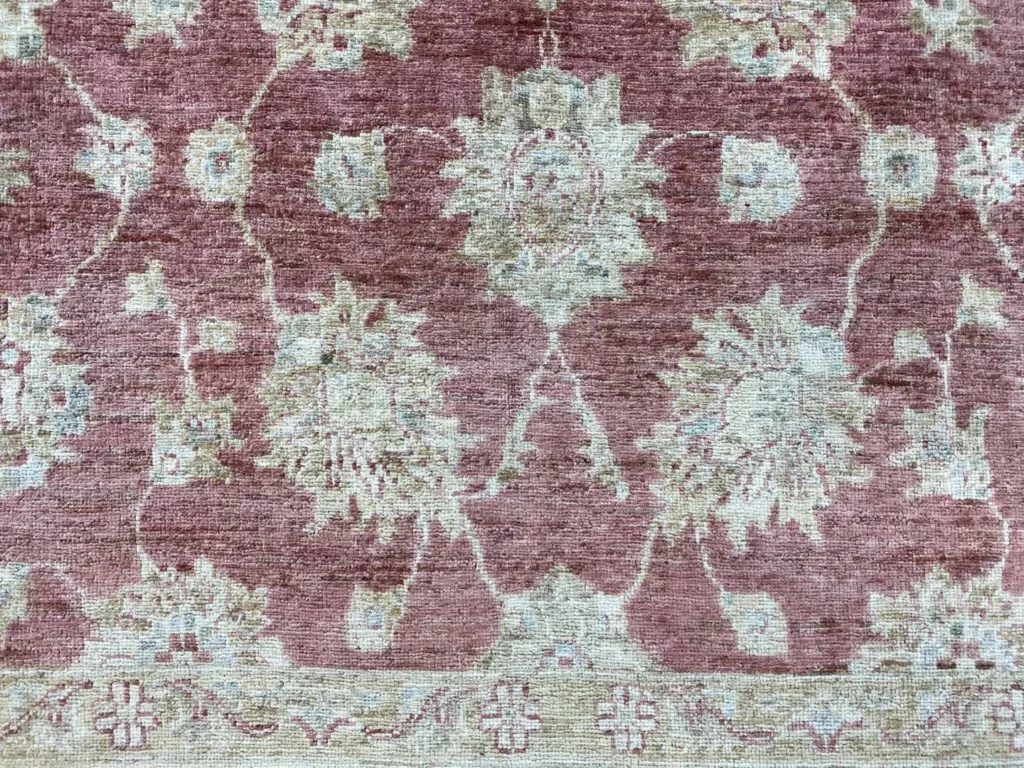
The knot density of this rug is 200,000 knots per square metre. Knot density records the number of knots set within a defined surface and is one of the central technical details of a knotted rug. It reflects the amount of work involved and allows Ziegler designs to be developed with differentiated areas and transitions. The pile material is high-quality wool. The product information identifies wool for the pile and does not provide a further material specification for the warp.
The combination of hand knotting, a wool pile and a high knot density places this piece within the established tradition of Oriental rug making. Its design is not printed onto a finished surface; it is built as the knots are tied. Each successive row follows the previous one, so the execution depends on the concentration and experience of the weaver. The rug is described as being in very good condition.
Origin and Tradition
The Ziegler rug has a history shaped by the European demand for Oriental carpets. In the nineteenth century, this type of rug was introduced by the Swiss merchant Ziegler. Early Ziegler rugs were made in the Sarough and Arak region of Persia. Their production was also intended to serve the growing European market. The name Ziegler therefore refers not only to an individual workshop, but to a development in rug history that connected established Oriental weaving traditions with European preferences in interior furnishing.
Today, Ziegler rugs are predominantly knotted in Pakistan and Afghanistan. The origin given for this rug is Pakistan and Afghanistan. Both countries have long traditions of hand-knotted rug production. Workshops there continue to use established knotting methods while working within a design language associated with the Ziegler tradition. The historical identity of the type can therefore remain visible even when the modern place of production differs from the original Sarough and Arak area.
Historical background and present origin should be kept distinct when describing a Ziegler rug. Sarough and Arak belong to the Persian history of the type. Pakistan and Afghanistan identify the countries associated with contemporary production, and they are the origin stated for this piece. Ziegler names a design and production tradition; the origin identifies where the rug was made. This distinction is important because a design reference must not be confused with the actual country of manufacture.
Regional traditions can influence how Ziegler rugs are made and designed. Sarough rugs are associated with strong colours and distinctive patterns. Rugs from Arak are often described through fine detail and balanced colour harmony. These historical associations help explain why Ziegler rugs appear in varied colour arrangements and pattern structures. This individual rug is identified as a Ziegler rug originating in Pakistan and Afghanistan; no additional attribution to Sarough or Arak is given for it.
Ziegler rugs belong to a wider group of Oriental weaving traditions. Tabriz and Kashan rugs are also known for detailed designs and high-quality materials. Both types originate in Iran and frequently feature floral motifs together with complex geometric forms. Nain and Isfahan are associated with traditional knotting techniques and the use of high-quality wool and silk. These comparisons provide context within the world of Oriental rugs, but they do not turn a Ziegler rug into a Tabriz, Kashan, Nain or Isfahan rug.
Design and Pattern
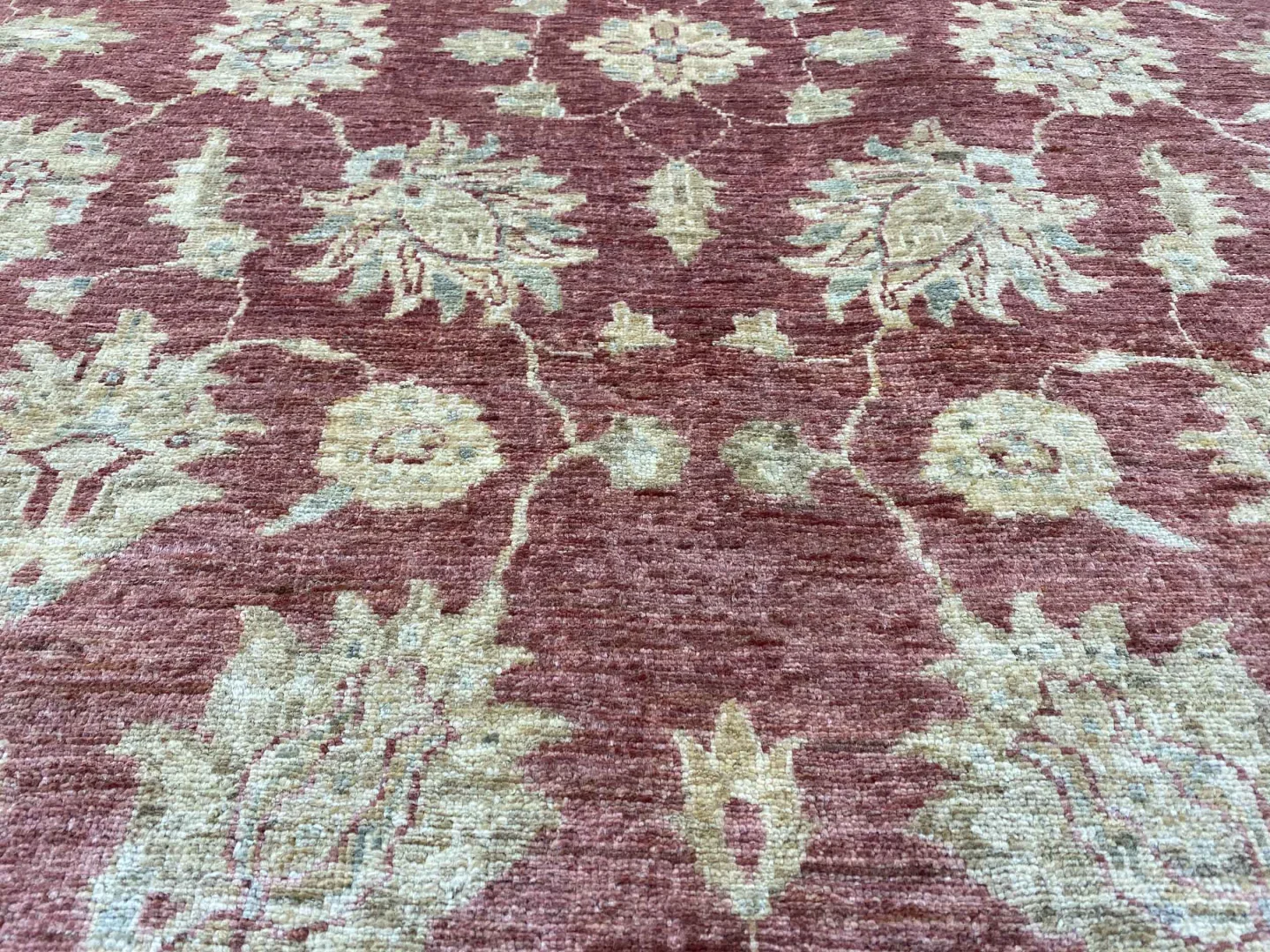
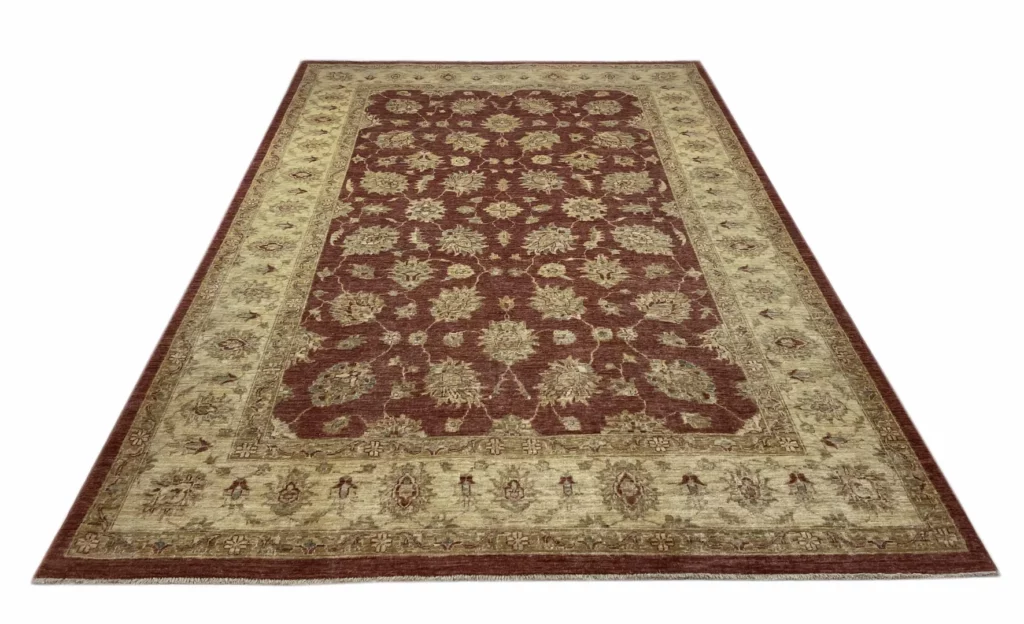
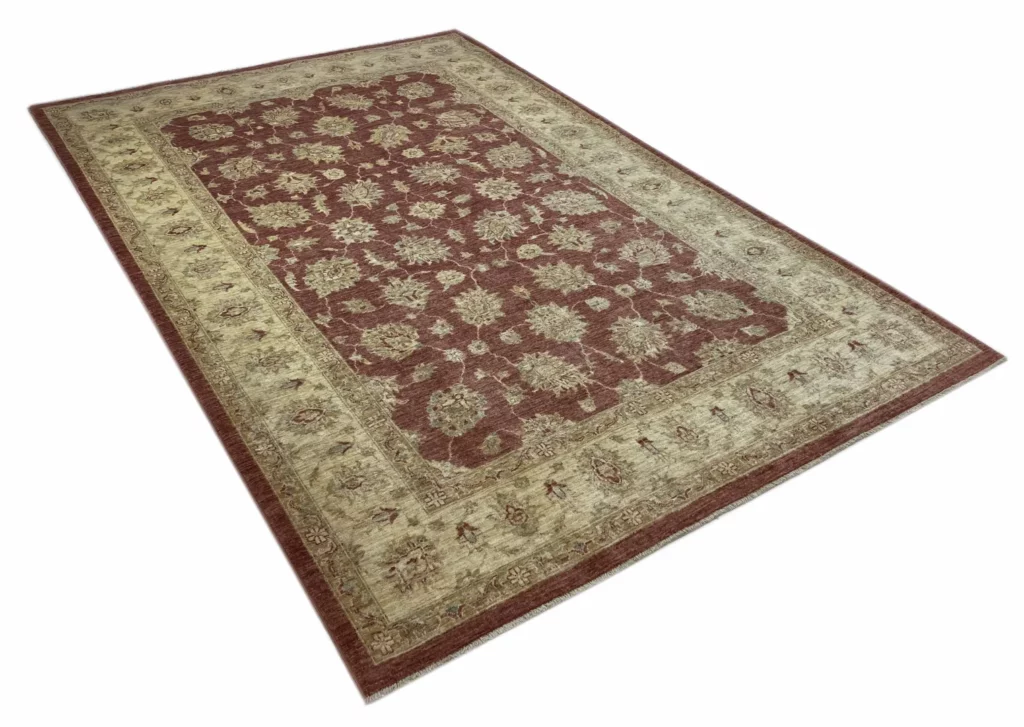
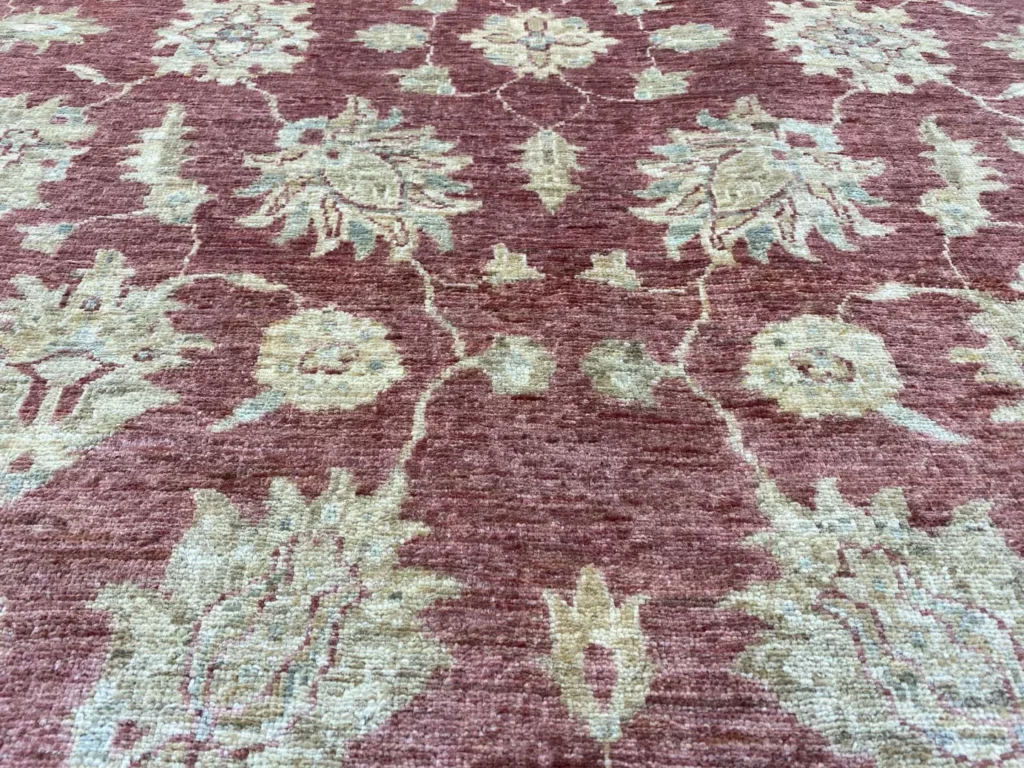
Ziegler rugs are associated with patterns that can combine floral and geometric elements. Floral forms give the surface an ornamental character, while geometric structures provide order and clear organisation. The balance between these components can vary from one design to another. Ziegler is therefore a recognisable design tradition rather than the name of one single, fixed pattern.
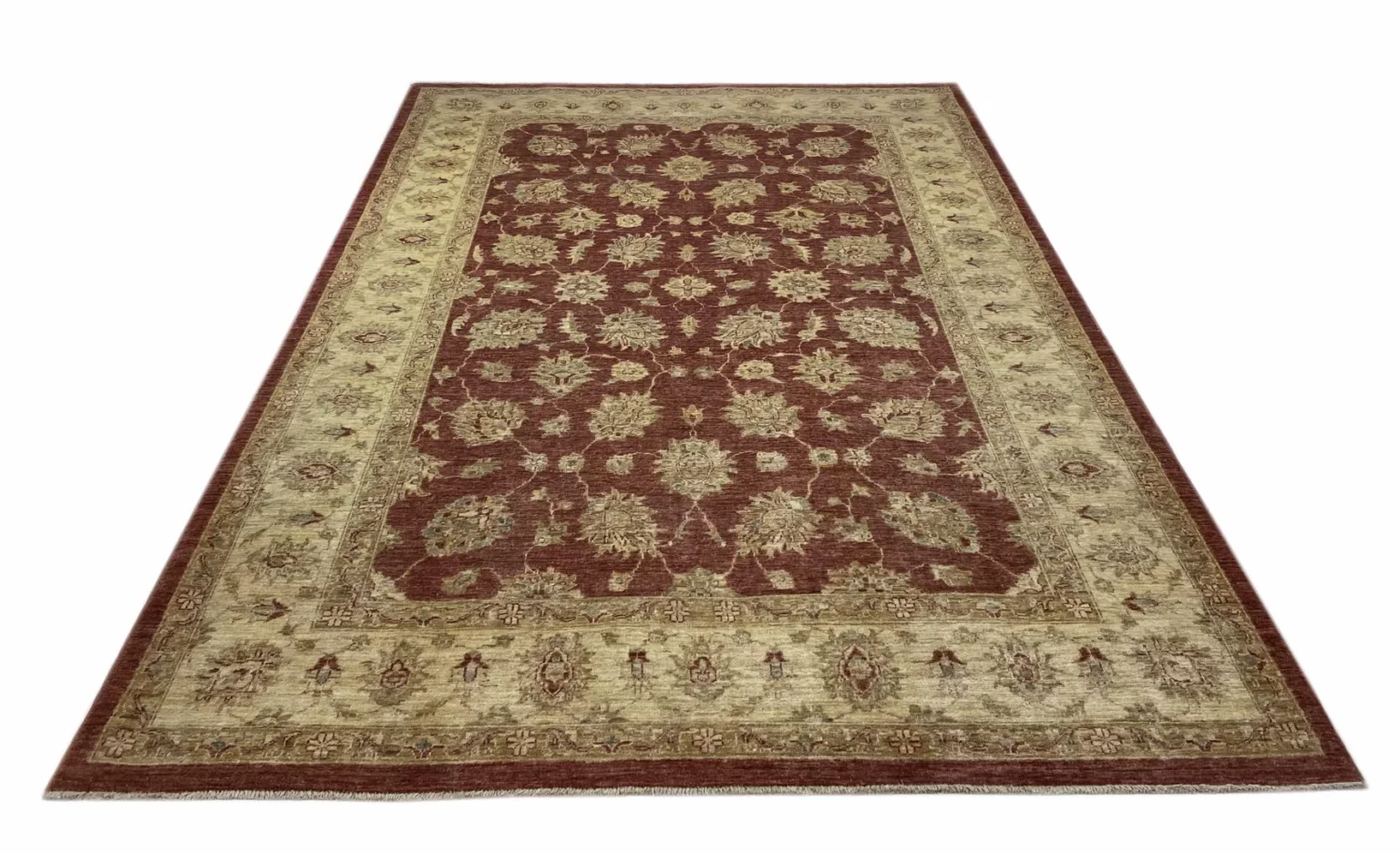
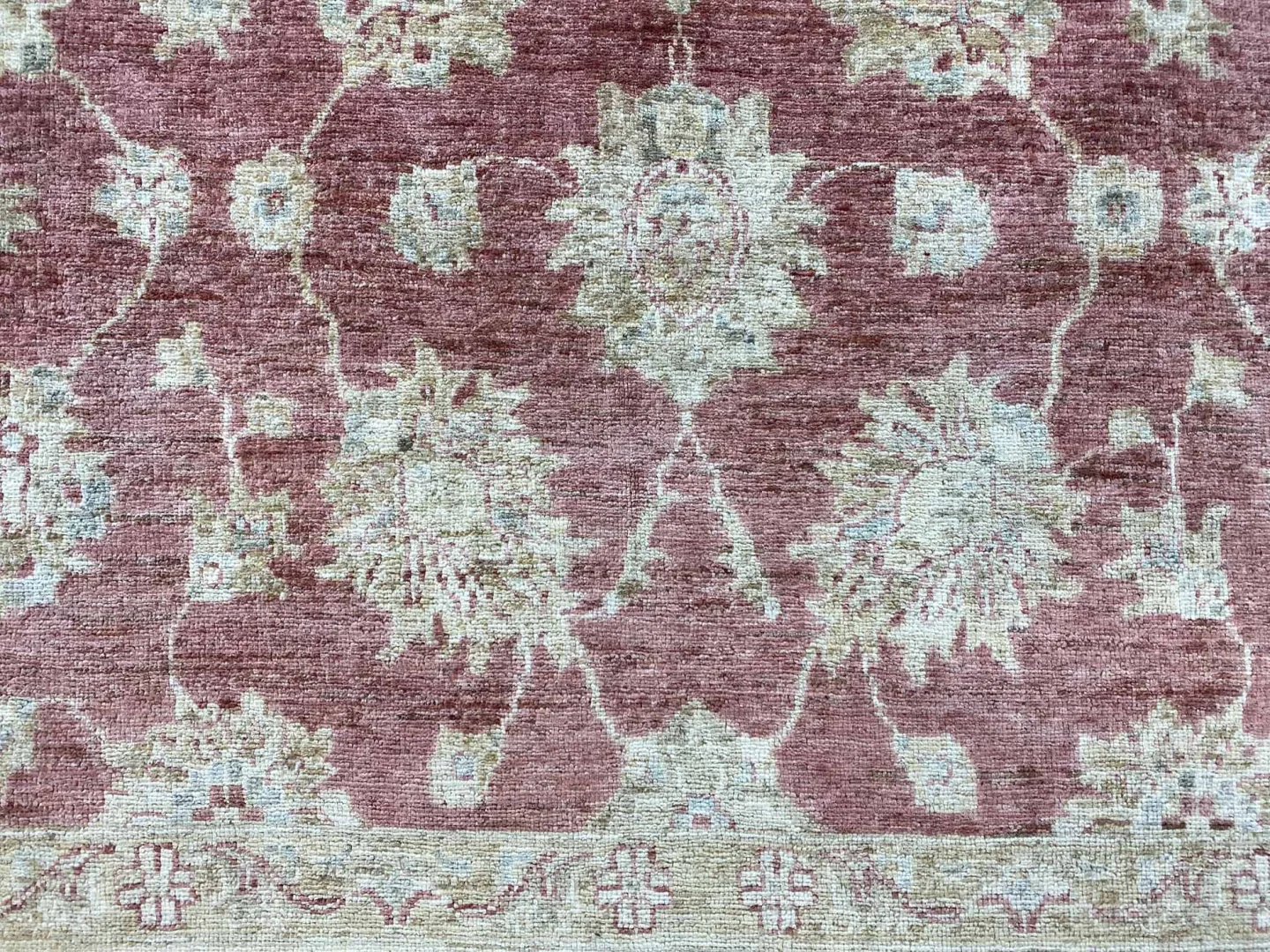
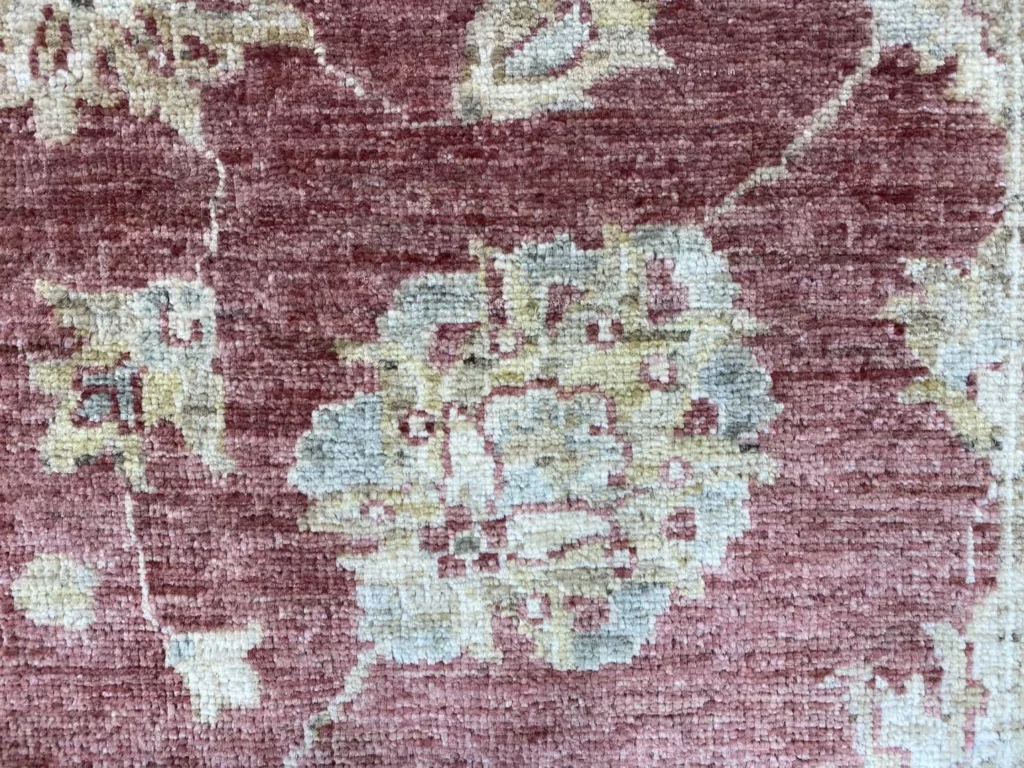
Colour treatment is another important part of the Ziegler tradition. A special stone wash gives the rugs a faded effect. As a result, the colours appear softer and more muted. The final impression is determined not only by the colours originally used, but also by the subsequent surface treatment. Ziegler rugs can range from restrained earth tones to livelier accents, creating different interpretations within the same broad design tradition.
The softened appearance relates directly to the visual language associated with Ziegler rugs. Floral and geometric forms can appear less sharply contrasted, and transitions between pattern areas may look more subdued. The faded effect is not presented as accidental wear; it is deliberately produced through the stone-washing process. This treatment is one of the features that helps distinguish the Ziegler approach from other Oriental rug designs.
A high knot density supports the detailed development of a rug pattern. Small shapes, lines and transitions can be built row by row as the rug is knotted. Ziegler design is not limited to strict geometric repetition. Floral ornament and geometric order may work together to create a balanced composition. The exact pattern drawing of this one-off rug is not specified in the product description; what is stated is its Ziegler classification and the general combination of floral and geometric design elements found in Ziegler rugs.
Compared with more strongly contrasted Oriental designs, the Ziegler style is often described through a gentler and more subdued colour impression. Stone washing changes the appearance of the colours without removing the hand-knotted structure or the ornamental origins of the rug. In this way, the design combines historical references from the Persian Ziegler tradition with a colour treatment that is also used in more contemporary interiors. This general stylistic context does not add an unstated pattern attribution to this individual piece.
Special Features
The defining special feature of this Ziegler rug is its stone wash. This treatment creates the faded effect associated with Ziegler rugs. The colours consequently appear soft and harmonious. The process is identified as part of the rug’s finish and shapes its visible character. It should be distinguished from a simple description of the colour range, because the treatment itself influences the final impression of the surface.
Further stated features are the hand-knotted construction, the pile made from high-quality wool and a knot density of 200,000 knots per square metre. The condition is described as very good. The origin is Pakistan and Afghanistan. Together, these details describe the rug’s construction and classification without assigning an unstated date, signature or additional province to this one-off piece.
FAQ
How should a Ziegler rug be cared for?
Regular vacuuming without a brush attachment is recommended. The rug may also be beaten out occasionally. For stains, work carefully with a damp cloth and a mild cleaning agent. Professional cleaning every few years may also be appropriate. Harsh chemicals, vigorous rubbing and unsuitable equipment should be avoided so that the wool pile, colours and the stone-washed surface are treated as gently as possible.
Where can a Ziegler rug be purchased?
Ziegler rugs are available from specialist carpet and rug shops as well as online dealers. A reputable seller should be chosen. Clear information about construction, material, condition and origin makes it easier to assess the individual piece. Since Ziegler rugs are made in different regions today, it is also important to distinguish the historical Ziegler tradition from the actual country of manufacture stated for the rug being offered.
How do Ziegler rugs differ from other Oriental rugs?
Ziegler rugs are characterised by their special stone wash, high knot density and distinctive patterns. Compared with other Oriental rugs, they often have a softer, more subdued colour appearance. Floral and geometric design elements may be combined within the same composition. The term Ziegler refers to this particular tradition within Oriental rug making. Other types, such as Tabriz, Kashan, Nain or Isfahan, have their own regional and design classifications.
To provide the best experiences, we use technologies like cookies to store and/or access device information. Consenting to these technologies will allow us to process data such as browsing behavior or unique IDs on this site. Not consenting or withdrawing consent, may adversely affect certain features and functions.
Functional Always active
The technical storage or access is strictly necessary for the legitimate purpose of enabling the use of a specific service explicitly requested by the subscriber or user, or for the sole purpose of carrying out the transmission of a communication over an electronic communications network.
Preferences
The technical storage or access is necessary for the legitimate purpose of storing preferences that are not requested by the subscriber or user.
Statistics
The technical storage or access that is used exclusively for statistical purposes.The technical storage or access that is used exclusively for anonymous statistical purposes. Without a subpoena, voluntary compliance on the part of your Internet Service Provider, or additional records from a third party, information stored or retrieved for this purpose alone cannot usually be used to identify you.
Marketing
The technical storage or access is required to create user profiles to send advertising, or to track the user on a website or across several websites for similar marketing purposes.

 SECURE PAYMENT
 SHIPPING PARTNERS