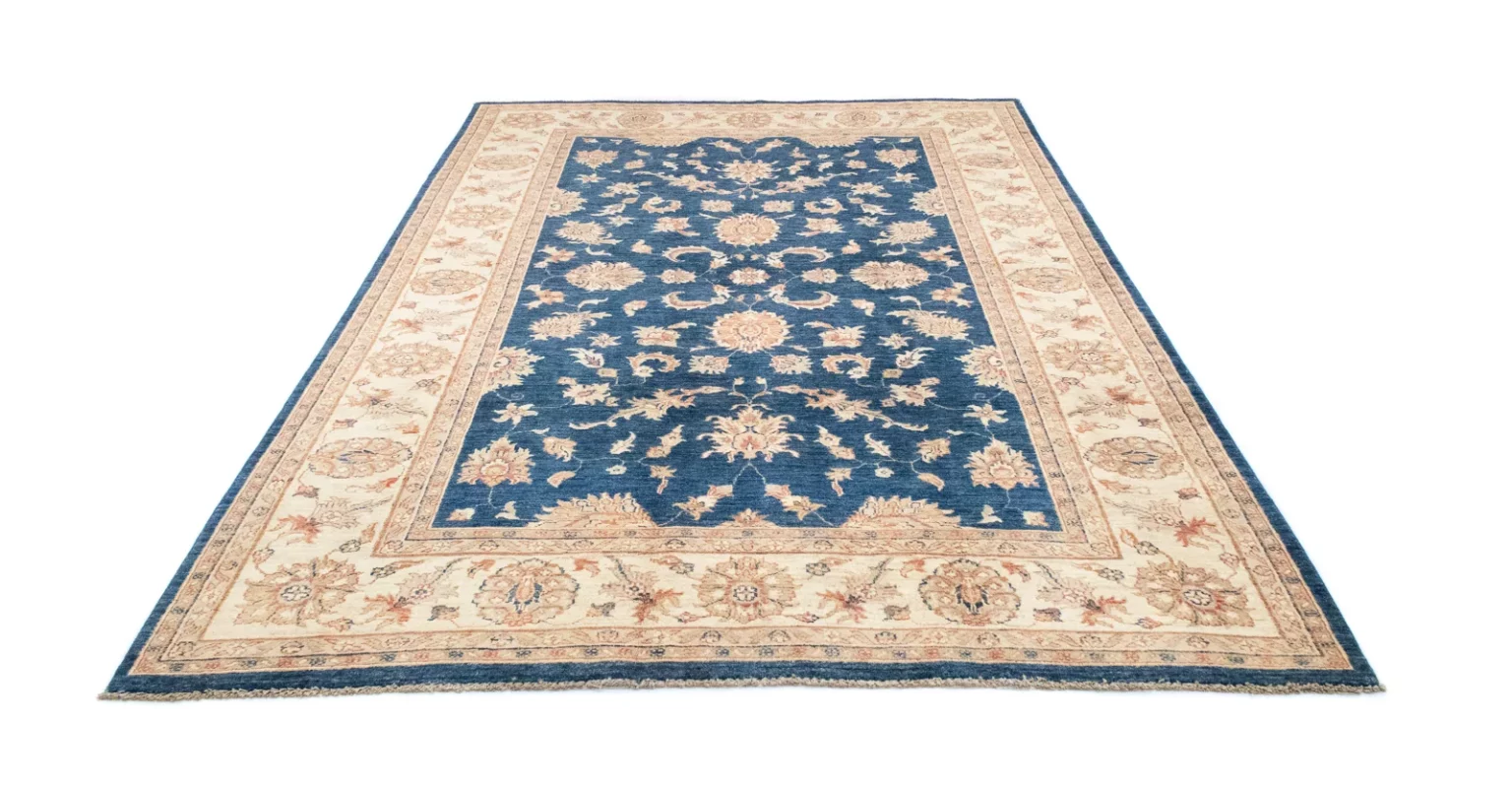
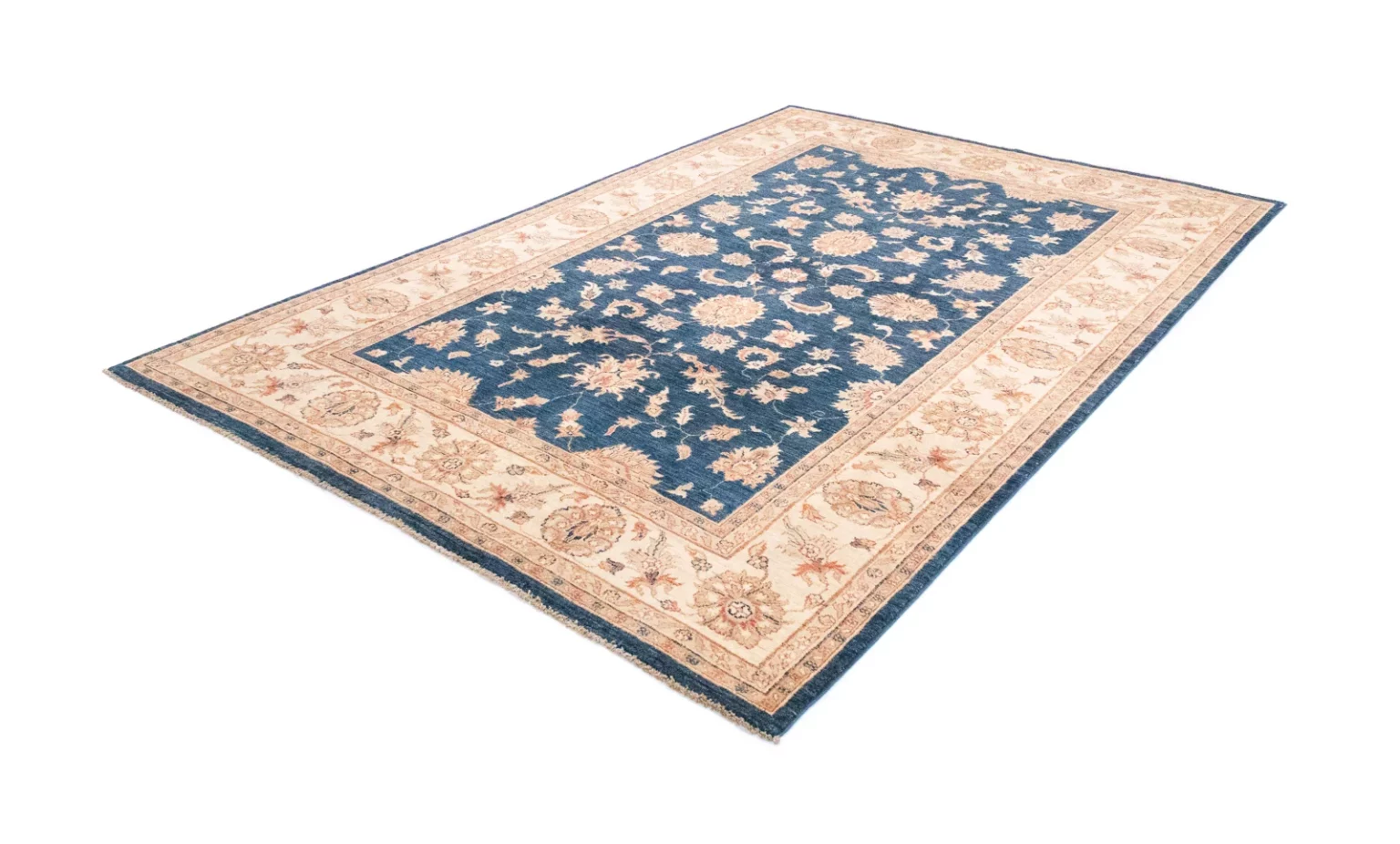
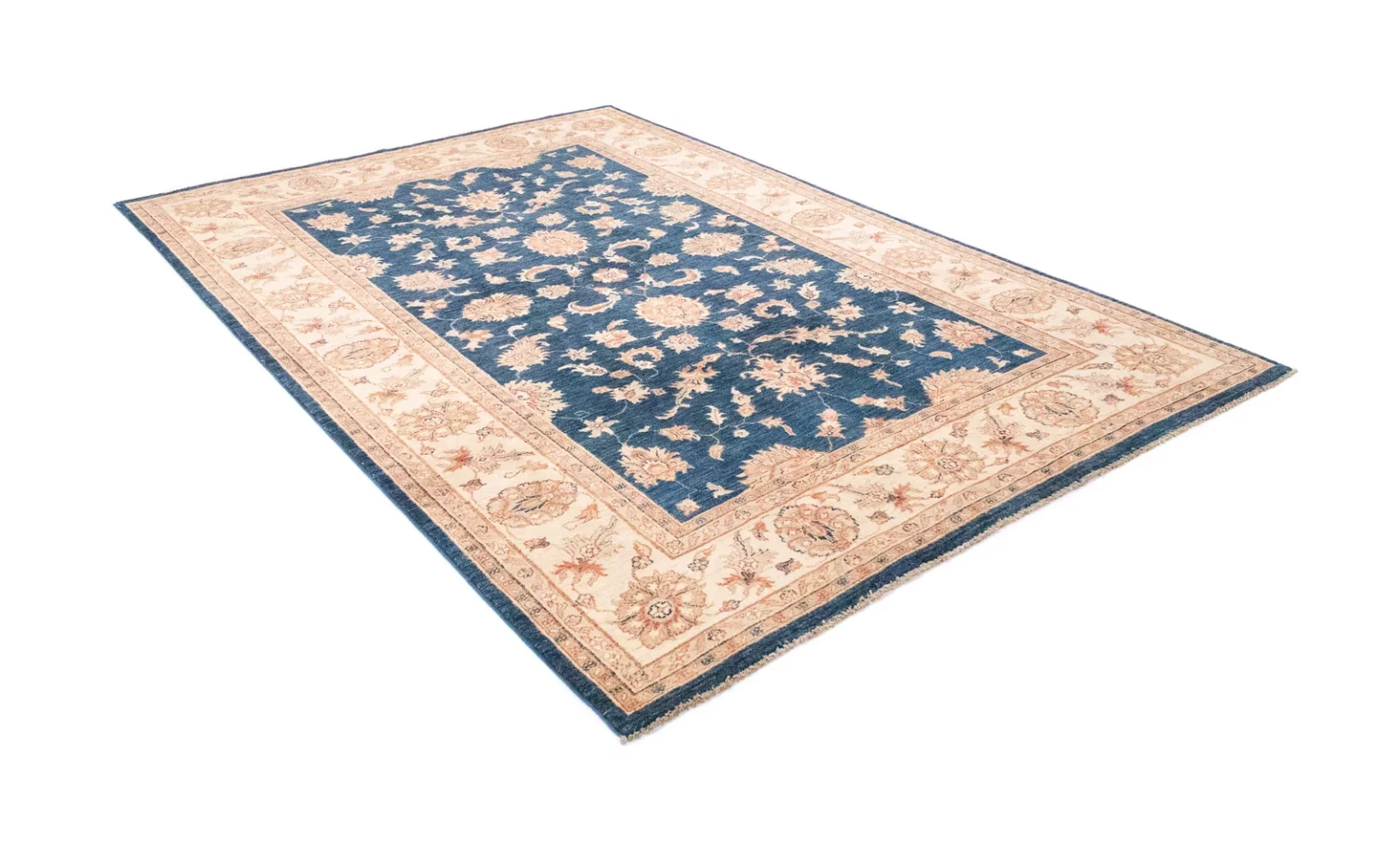
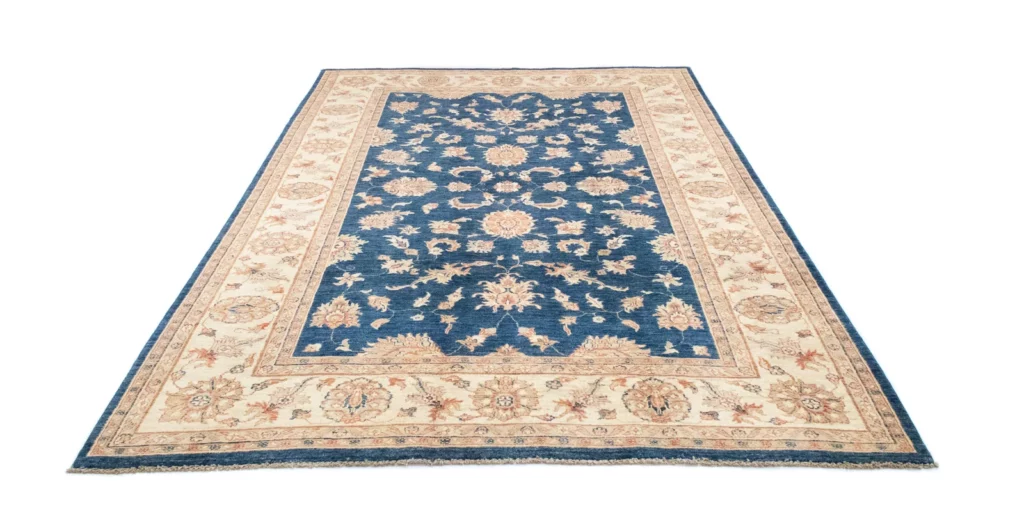
Oriental Rug Ziegler 287 x 192 cm Wool Hand-knotted
€ 2613
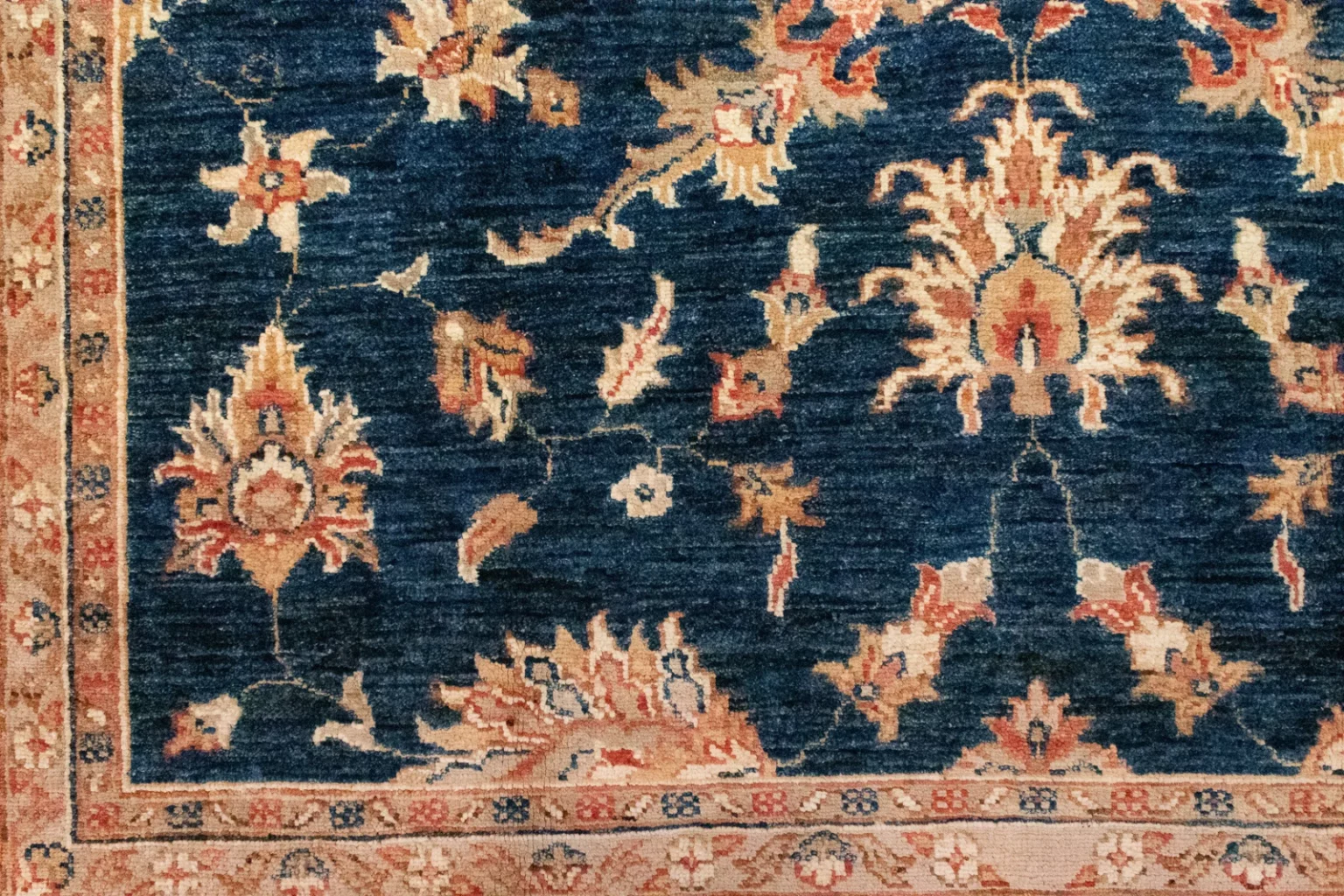
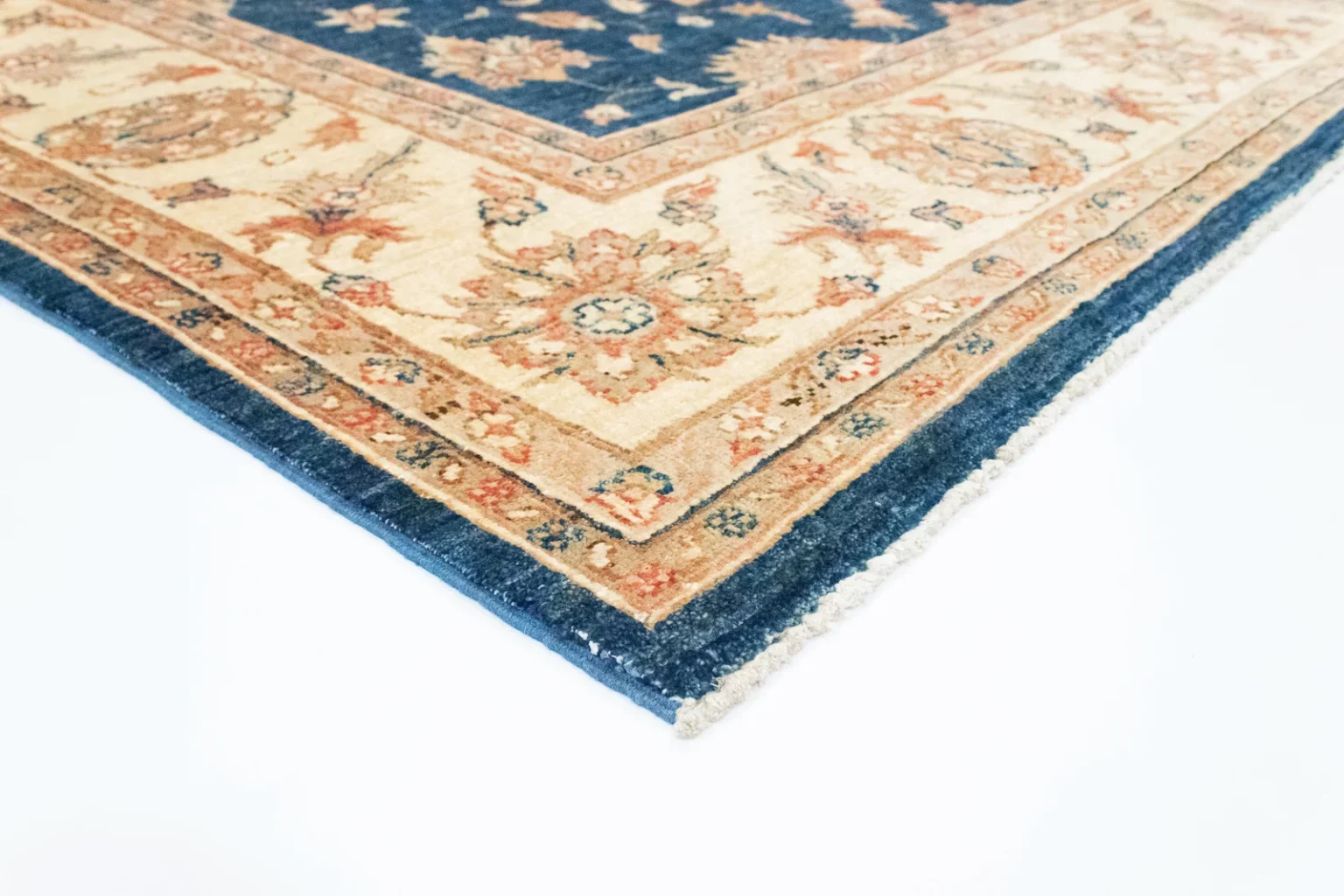
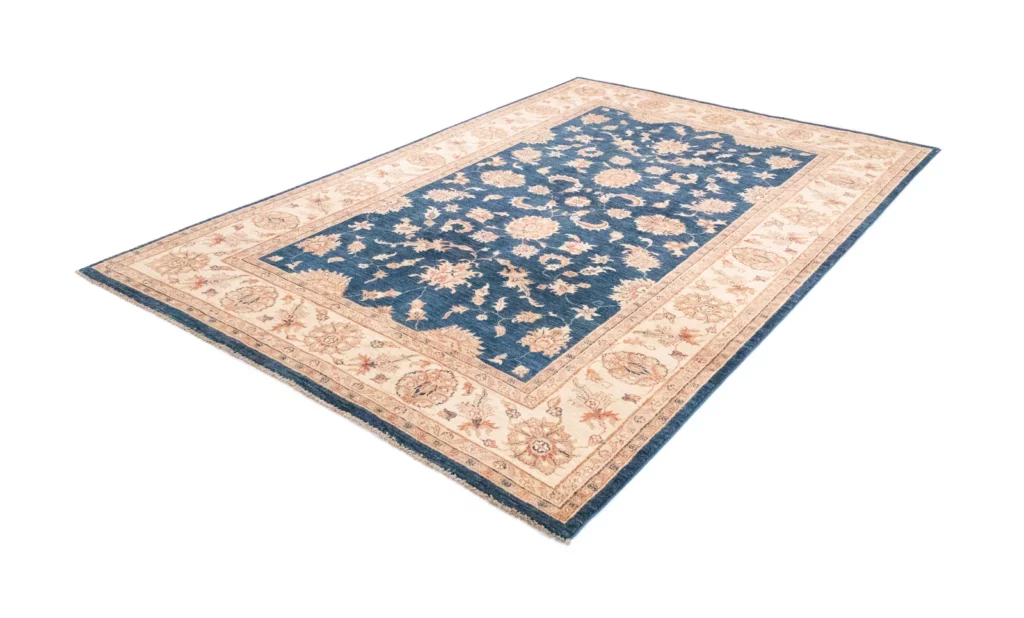
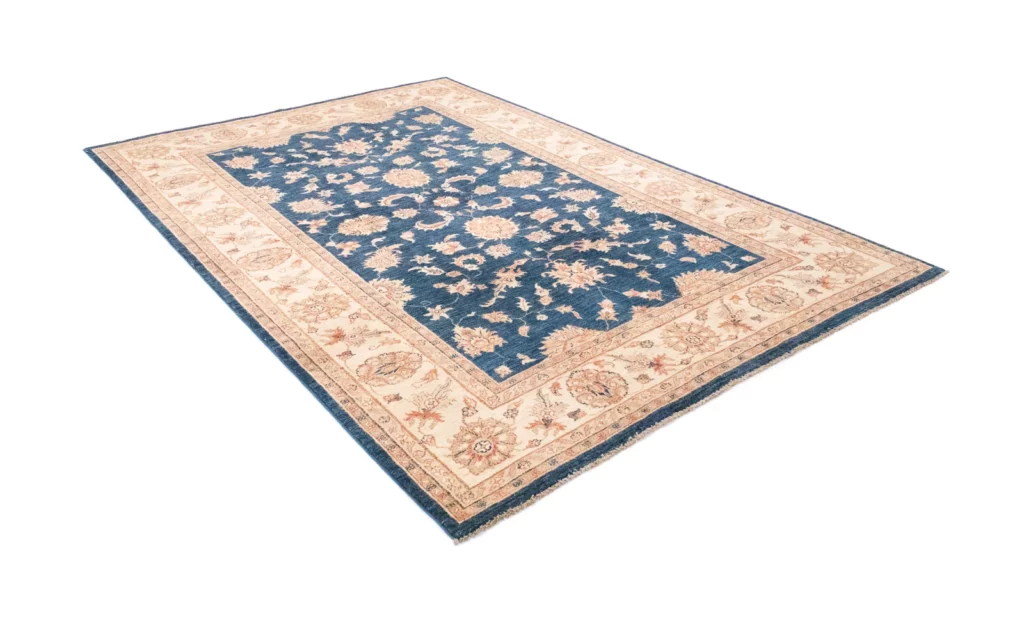
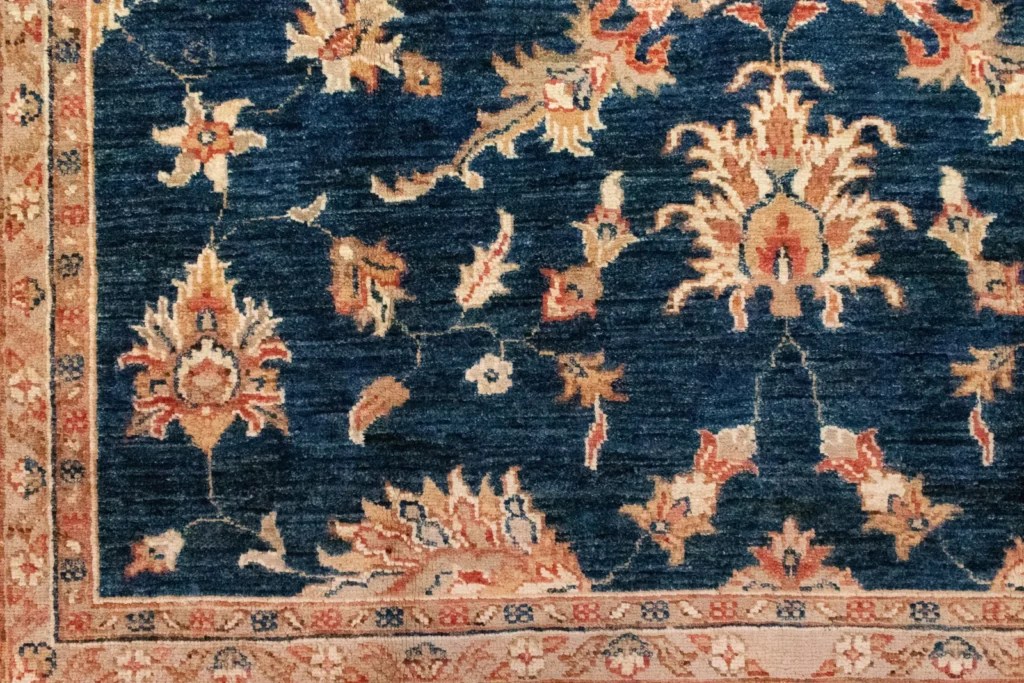
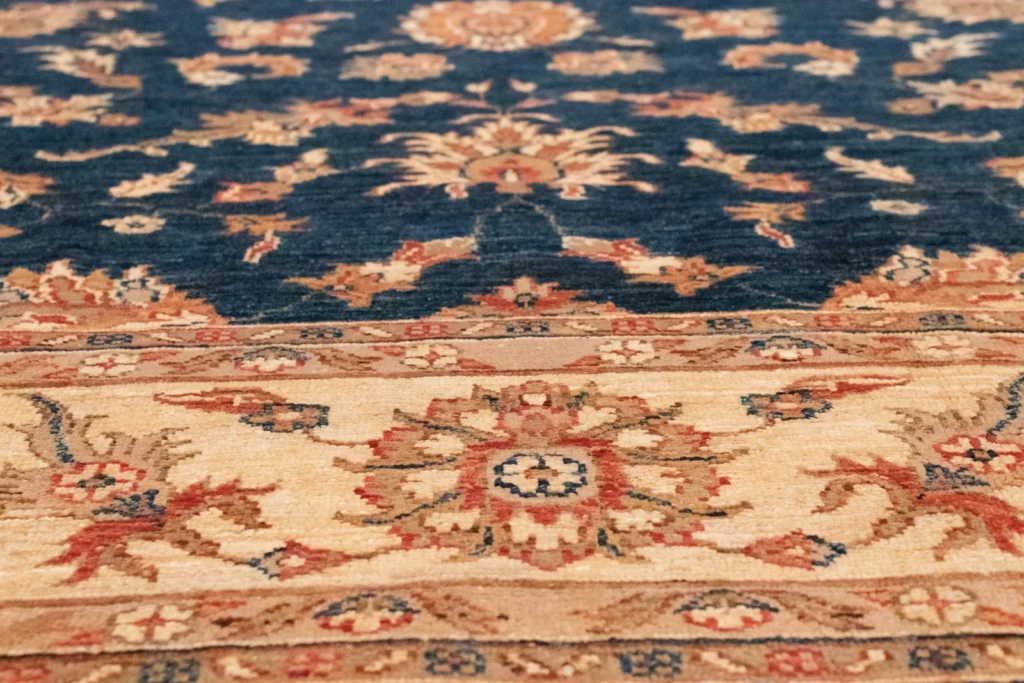
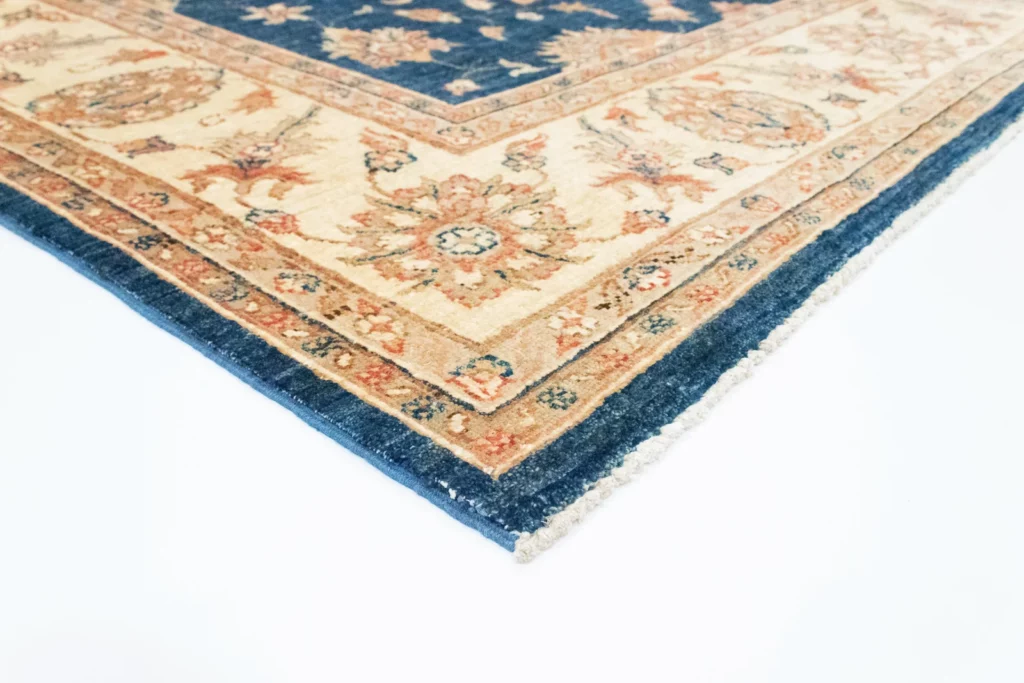
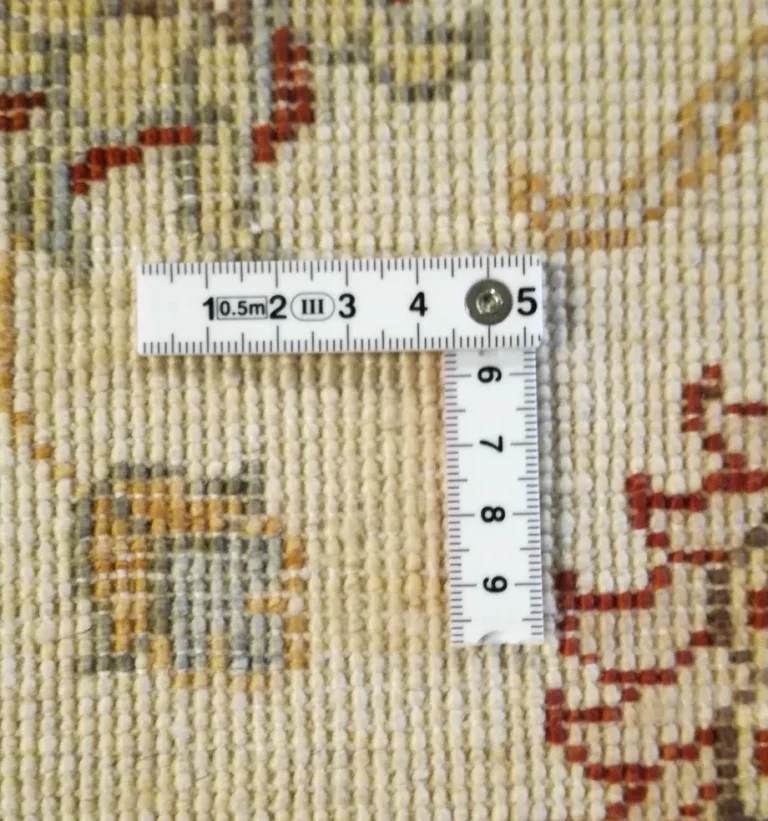
Hand-knotted Ziegler Oriental rug | Knot density: approx. 200,000 knots/m² | Material: Wool pile | Size: 287 x 192 cm | Pattern: Floral and geometric elements | Condition: Very good
This Ziegler Oriental rug is made from high-quality wool. Wool forms the pile and gives the surface the combination of a pleasant handle and resilient structure associated with well-made wool rugs. It has been used in rug making for generations because it can be worked into a compact pile that remains practical in everyday interiors. The wool in this piece is described as high quality and has been turned into a hand-knotted rug rather than a machine-produced floor covering.
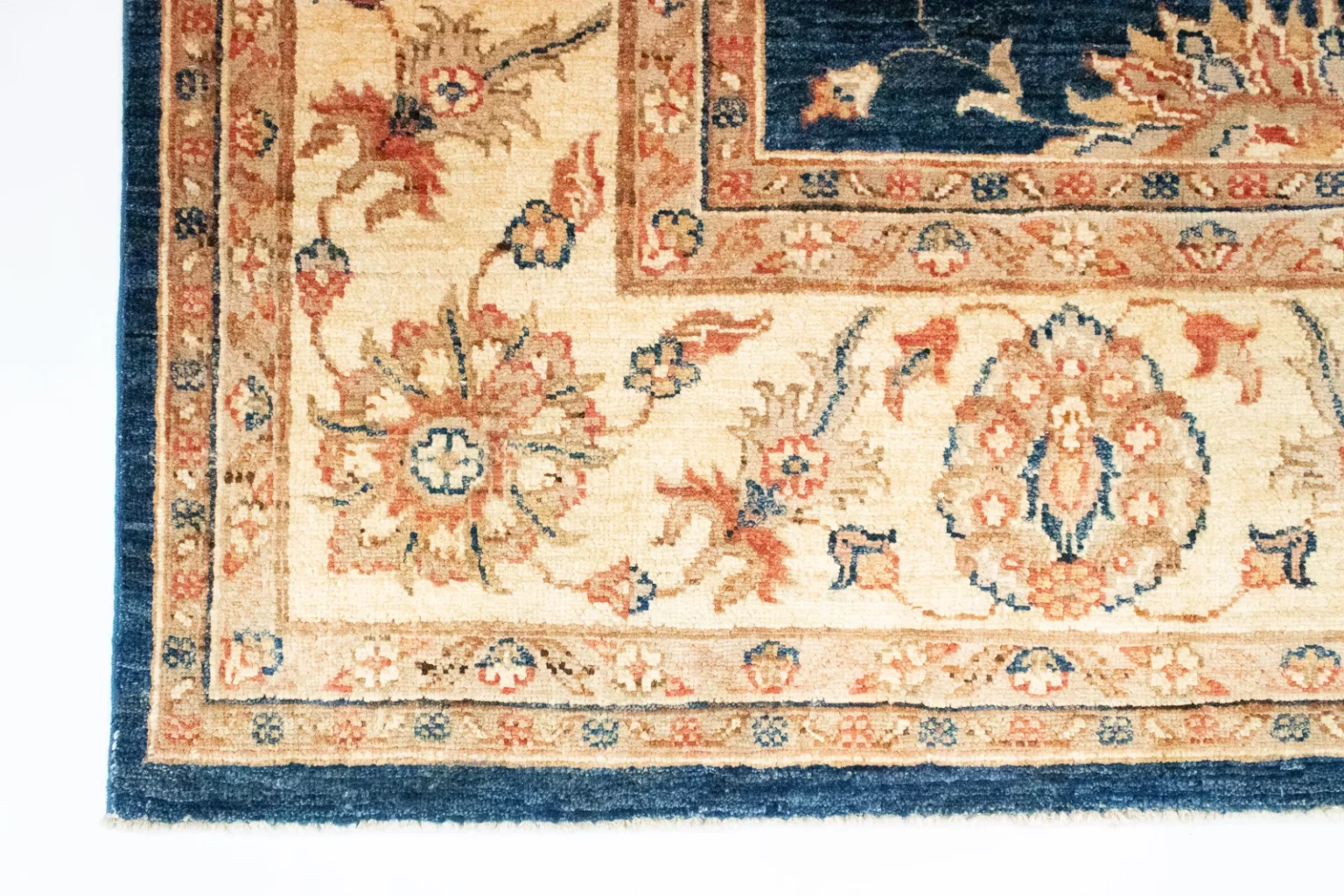
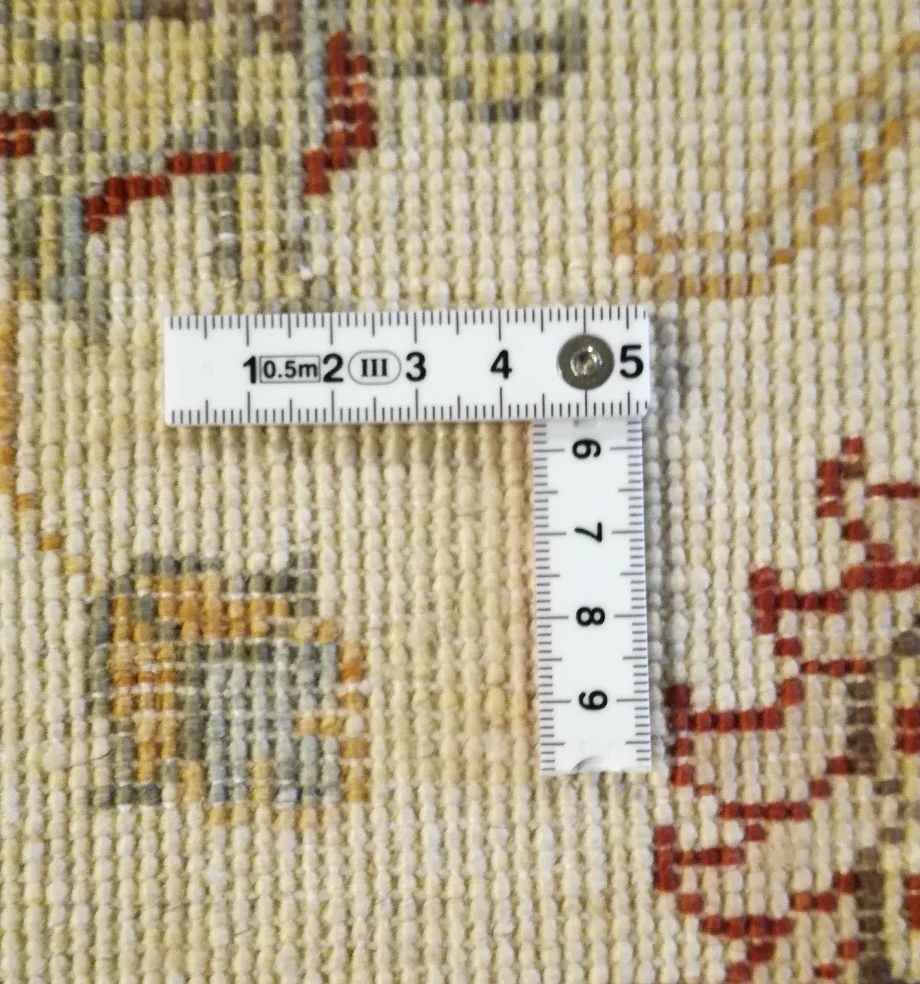
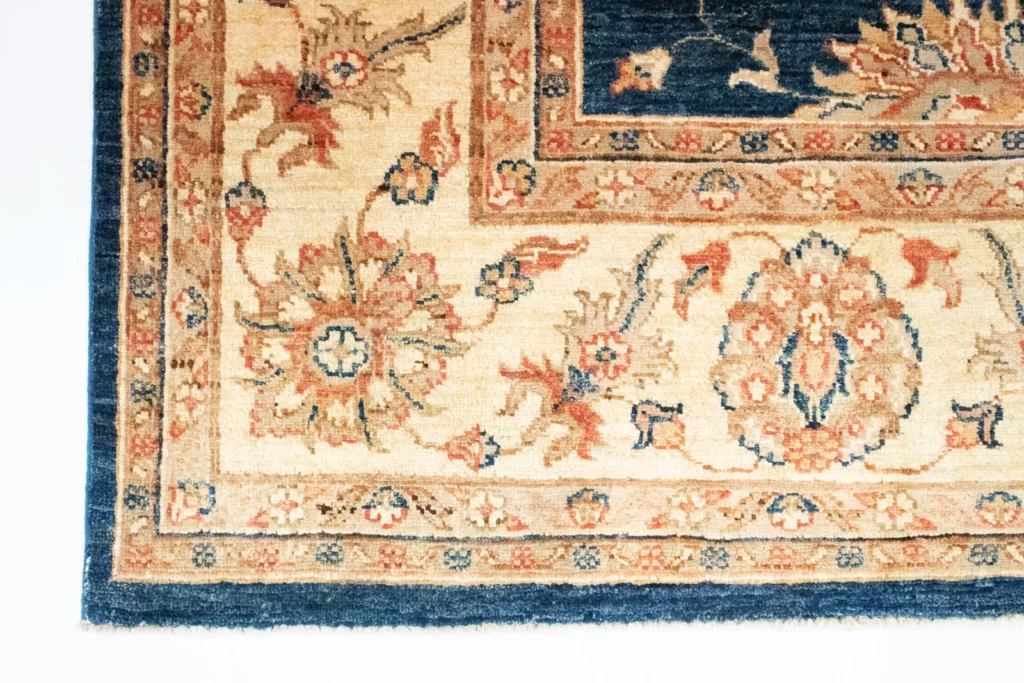
Hand knotting means that the knots are inserted individually into the foundation by skilled artisans. The design is built row by row, while the pile and foundation develop together through the making process. The product description gives an approximate density of 200,000 knots per square metre. This level of density supports a clearly articulated pattern and forms part of the rug’s technical description. It also reflects the amount of manual work involved in building the textile surface.
The rug combines this traditional construction with a special stone-wash treatment. The stone-wash effect is specifically described as producing faded colours, giving the palette a softened and more settled appearance. The treatment changes the visual character of the colours while leaving the hand-knotted structure intact. The surface therefore remains defined by wool pile and manual workmanship, with the finishing process adding its own muted colour effect.
The condition is very good. The description refers to minimal signs of use, indicating a well-preserved piece with limited evidence of wear rather than an unused or untouched rug. With a hand-knotted one-off, the relevant visual points include the pile, edges, fringes and overall evenness of the surface. These elements belong to the practical character of a handmade textile and should be considered alongside its colour treatment and pattern.
Origin and Tradition
The rug is listed as originating in Pakistan. It is therefore described here as an Oriental rug, not as a Persian rug. Ziegler is a recognised name in the rug trade and refers to a design tradition strongly influenced by Persian pattern language. A Persian-looking design and manufacture in Pakistan are separate pieces of information and should not be treated as the same claim.
Ziegler rugs are known for compositions based on Persian-inspired ornament. Historically, the name Ziegler is associated with European commercial links to Persian weaving workshops and with the development of broad, practical rug designs for international interiors. The term does not describe one single fixed pattern. It more often indicates a design approach in which classical motifs are enlarged or arranged with generous spacing, colours are interpreted in a composed way, and the complete field is intended to read as a balanced textile.
Sarough is another important name in Persian rug history. Sarough rugs are commonly associated with floral compositions, durable wool and a strong weaving tradition. Kashan is often connected with carefully organised medallion and all-over designs. Tabriz has a long history of finely drawn motifs, complex borders and varied classical layouts. These names provide useful context for the broader family of Oriental and Persian-influenced designs, but a regional design reference does not automatically establish the place where an individual rug was made.
Heriz and Qom are also established names within Persian rug culture. Heriz is frequently recognised for bold geometric medallions and clearly structured forms, while Qom is associated with detailed and finely arranged pattern traditions. Comparing these traditions helps explain the wide range of visual languages found in Oriental rugs. For this piece, Pakistan remains the stated origin, while Ziegler identifies the trade and design context in which its appearance is understood.
Handmade rug production is a body of knowledge passed through generations in many weaving regions. It involves preparing the wool, arranging the foundation, inserting the knots, trimming and levelling the pile, and completing the finishing work. Each stage influences the handle, drawing and durability of the finished textile. A hand-knotted rug is consequently an individual woven object rather than perfectly uniform serial merchandise. Even when a design belongs to a recognised tradition, the knotting and finishing create the particular character of each piece.
Design and Pattern
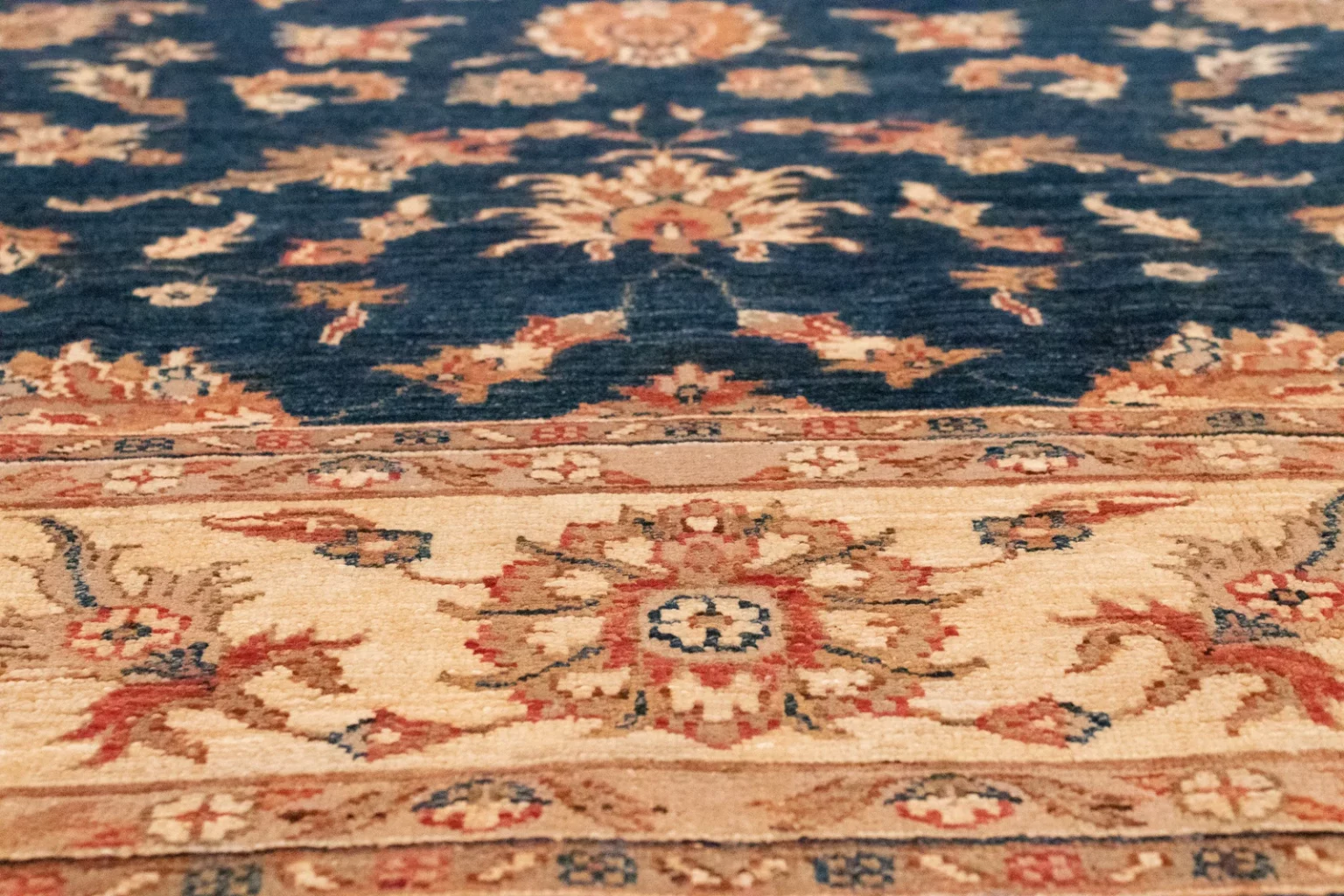
The pattern is described as containing floral and geometric elements. These two visual languages can work together in a single composition: flowers, leaves and vines bring organic movement, while medallions, borders, axes or repeated shapes provide structure. The final impression depends on the relationship between the drawing, the distribution of colour and the amount of open or ornamented ground. The description identifies the pattern family without assigning the rug to one narrowly defined motif.
Floral ornament is one of the most enduring features of Oriental rug design. In woven and knotted textiles, botanical forms are usually stylised rather than copied literally from nature. They are simplified and rhythmically repeated so they can be translated into rows of knots. Vines connect separate motifs, flowers create points of emphasis and leaves occupy the transitions between larger forms. This process produces decoration that can appear natural in theme while remaining ordered and suitable for textile construction.
Geometric elements perform a different function. They establish boundaries, guide the eye and give the field a sense of direction. Traditional compositions often combine angular organisation with softer floral lines. The resulting balance between regularity and variation is part of the appeal of hand-made patterning. Small differences in drawing are consistent with manual knotting, where the design is interpreted through the work of the maker rather than mechanically repeated with absolute uniformity.
The stone-wash effect is central to the appearance of this rug. The special treatment is described as creating faded colours, so the palette reads as softened rather than newly saturated. This can allow floral and geometric forms to relate through graduated tones instead of relying only on sharp contrasts. The source text also describes a special dyeing process associated with colour intensity and light fastness. Together, the dyeing and stone-wash treatment define the particular surface impression presented by this piece.
Ziegler design is often valued for ornament that remains broadly legible and for a balanced distribution of motifs across the field. That quality can suit a range of interior settings, although the actual effect always depends on surrounding furniture, wall colours, light and other textiles. A rug with floral and geometric elements may read as traditional, restrained or more strongly contrasted according to its setting. In this one-off, the individual colour arrangement, hand-knotted structure and faded finish are more important than assigning it to a single rigid pattern category.
Special Features
The main special feature is the combination of hand-knotted wool, Ziegler design and a special stone-wash finish. The treatment gives the colours a faded appearance and distinguishes the surface from a freshly saturated palette. At the same time, the traditional structure of the hand-knotted rug remains visible. The listed knot density, the floral and geometric pattern elements, and the very good condition complete the description of this particular version.
The rug is described as a high-quality one-off made in Pakistan. Its design refers to Persian rug traditions without making it a Persian rug manufactured in Iran. This distinction matters in Oriental rug terminology: origin, trade name, design tradition and place of manufacture can communicate different information. In this case, Pakistan provides the stated origin and Ziegler provides the relevant name and stylistic framework.
The product description names living rooms, dining rooms and entrance areas as possible settings. Its suitability depends on the furnishing and the level of use intended for the room. As with any hand-knotted wool rug, the pile, edges and fringes benefit from regular observation and care suited to the textile. The stone-wash finish should also be treated as part of the rug’s surface character when cleaning or positioning it.
FAQ
How should I care for this Oriental rug?
Gentle, regular vacuuming helps remove loose dust and keeps the wool pile maintained. The nozzle should be used without an aggressive rotating brush and without unnecessary pressure. Prolonged direct sunlight should be avoided so that the treated colour effect remains as even as possible. If a spill occurs, it should be blotted carefully with a damp cloth rather than rubbed, since friction can stress the fibres and work the substance further into the pile. For heavier soiling or a complete cleaning, a professional rug-cleaning service is appropriate. Household detergents, bleach and intensive do-it-yourself treatments should not be applied without checking their suitability, because wool and the special stone-wash finish can react adversely to unsuitable products.
What makes a Ziegler Oriental rug distinctive?
Its distinctive character comes from the combination of hand-knotted wool, Ziegler-influenced design and the stone-wash effect. Individual knots create the pattern and give the rug a textile structure that is not completely standardised. Floral and geometric elements provide a classical ornamental language, while the stone wash produces a faded, subdued colour impression. The listed knot density and the very good condition with minimal signs of use add to the description of this individual piece. It was made in Pakistan and draws on a design vocabulary connected with Persian rug traditions, without changing its stated Pakistani origin.
Which colours and patterns are popular in rugs of this kind?
Warm reds, gentle beige tones and deep blue are frequently found in Oriental rug palettes. They may be used with floral ornaments, vines, medallions and geometric borders. In this rug, however, the special stone-wash effect is particularly important: the colours are described as faded, giving them a calmer and more muted appearance. The pattern is identified as floral and geometric, but no single dominant colour or specific medallion is assigned. Its presence in a room will therefore depend on the surrounding furnishings, available light and the way other textiles are combined with it.
To provide the best experiences, we use technologies like cookies to store and/or access device information. Consenting to these technologies will allow us to process data such as browsing behavior or unique IDs on this site. Not consenting or withdrawing consent, may adversely affect certain features and functions.
Functional Always active
The technical storage or access is strictly necessary for the legitimate purpose of enabling the use of a specific service explicitly requested by the subscriber or user, or for the sole purpose of carrying out the transmission of a communication over an electronic communications network.
Preferences
The technical storage or access is necessary for the legitimate purpose of storing preferences that are not requested by the subscriber or user.
Statistics
The technical storage or access that is used exclusively for statistical purposes.The technical storage or access that is used exclusively for anonymous statistical purposes. Without a subpoena, voluntary compliance on the part of your Internet Service Provider, or additional records from a third party, information stored or retrieved for this purpose alone cannot usually be used to identify you.
Marketing
The technical storage or access is required to create user profiles to send advertising, or to track the user on a website or across several websites for similar marketing purposes.

 SECURE PAYMENT
 SHIPPING PARTNERS


