
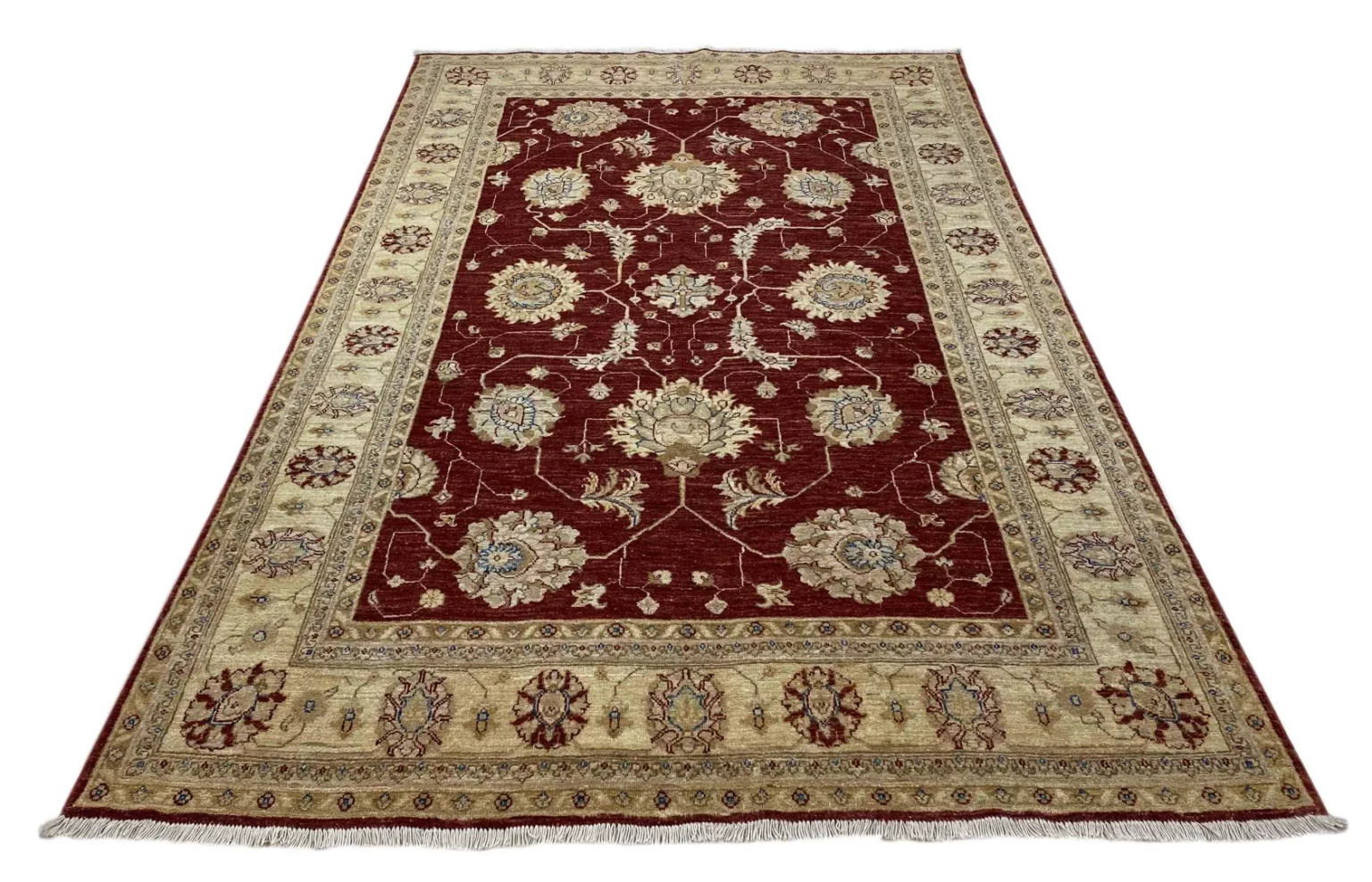
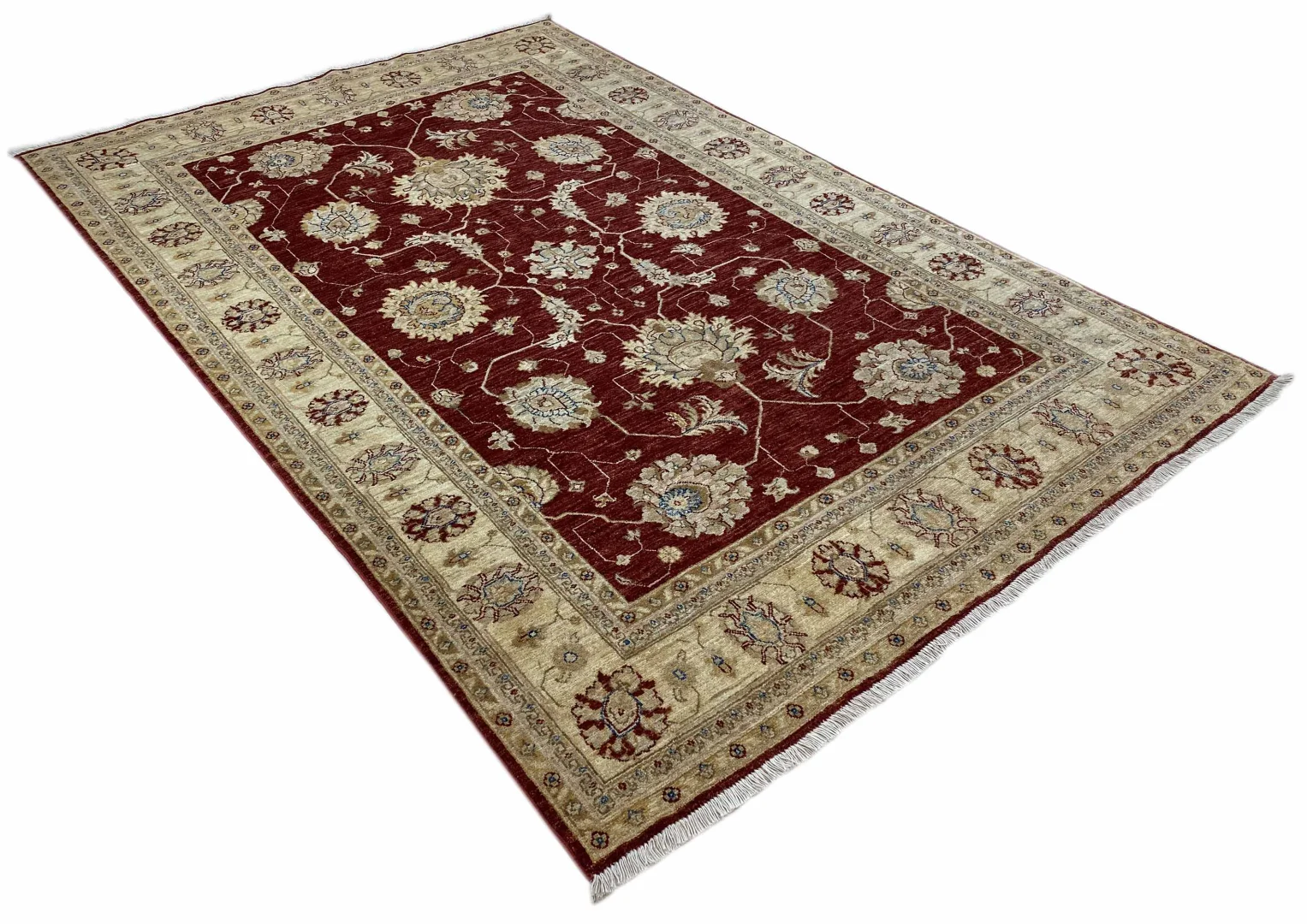
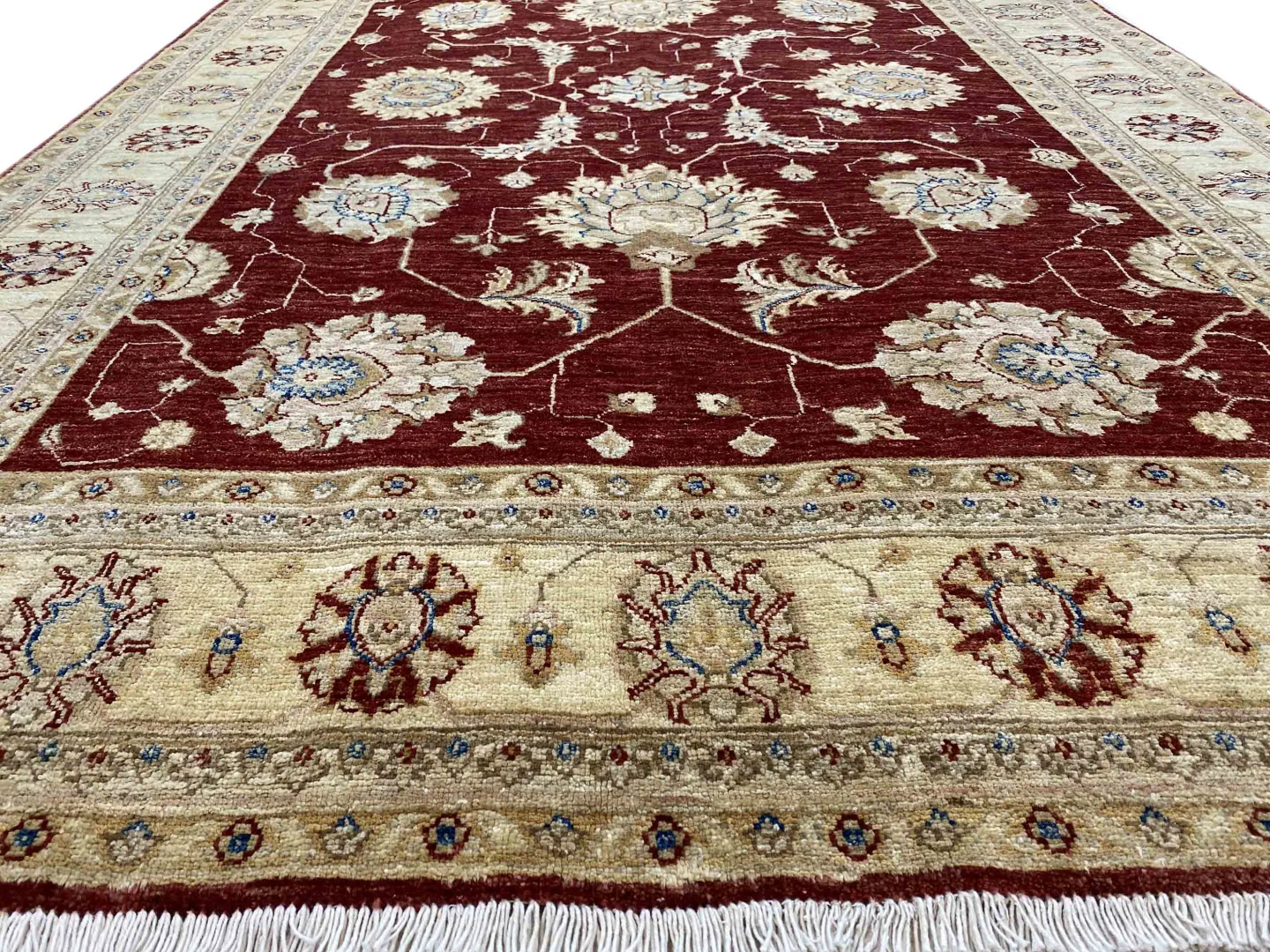
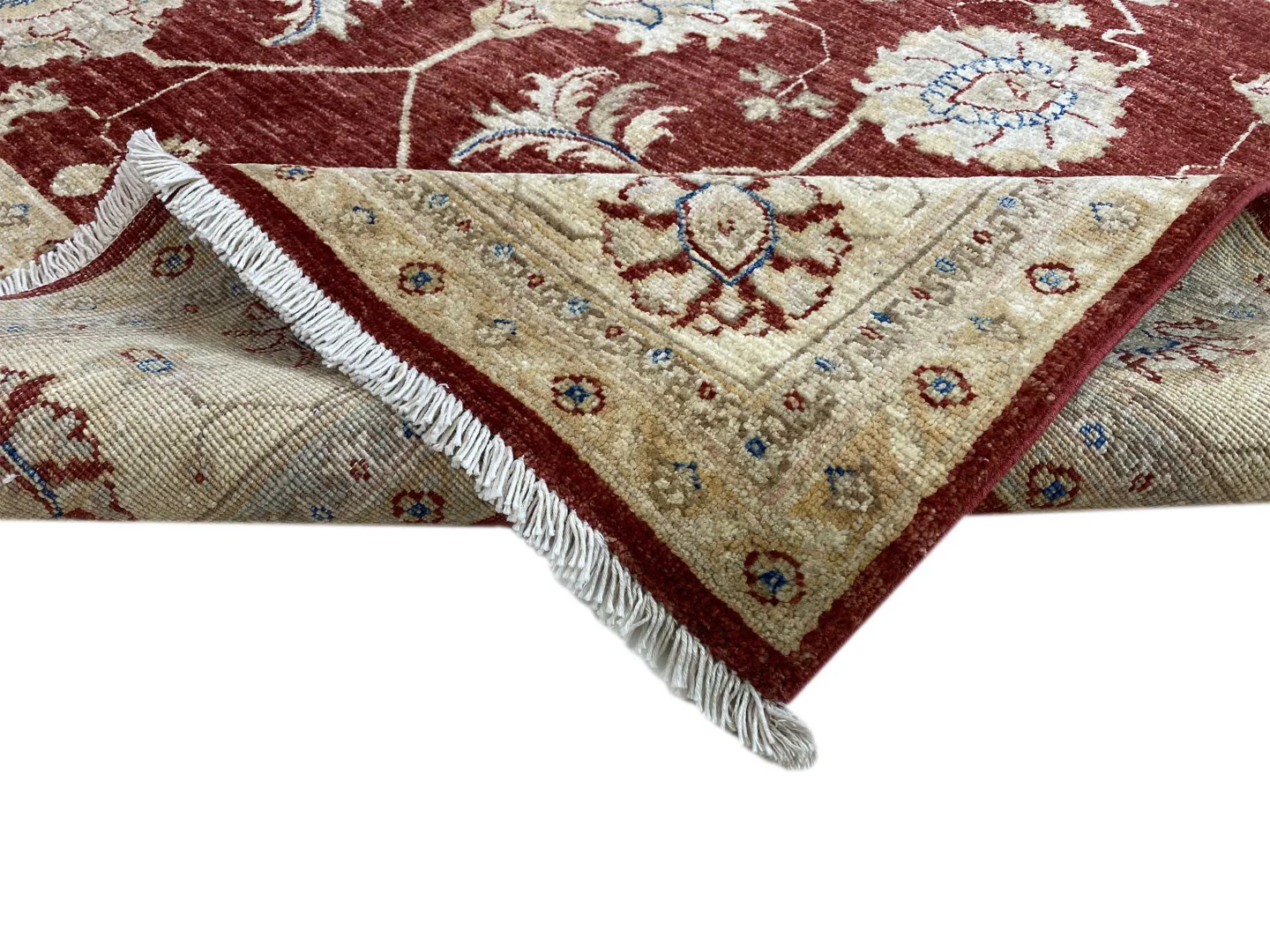
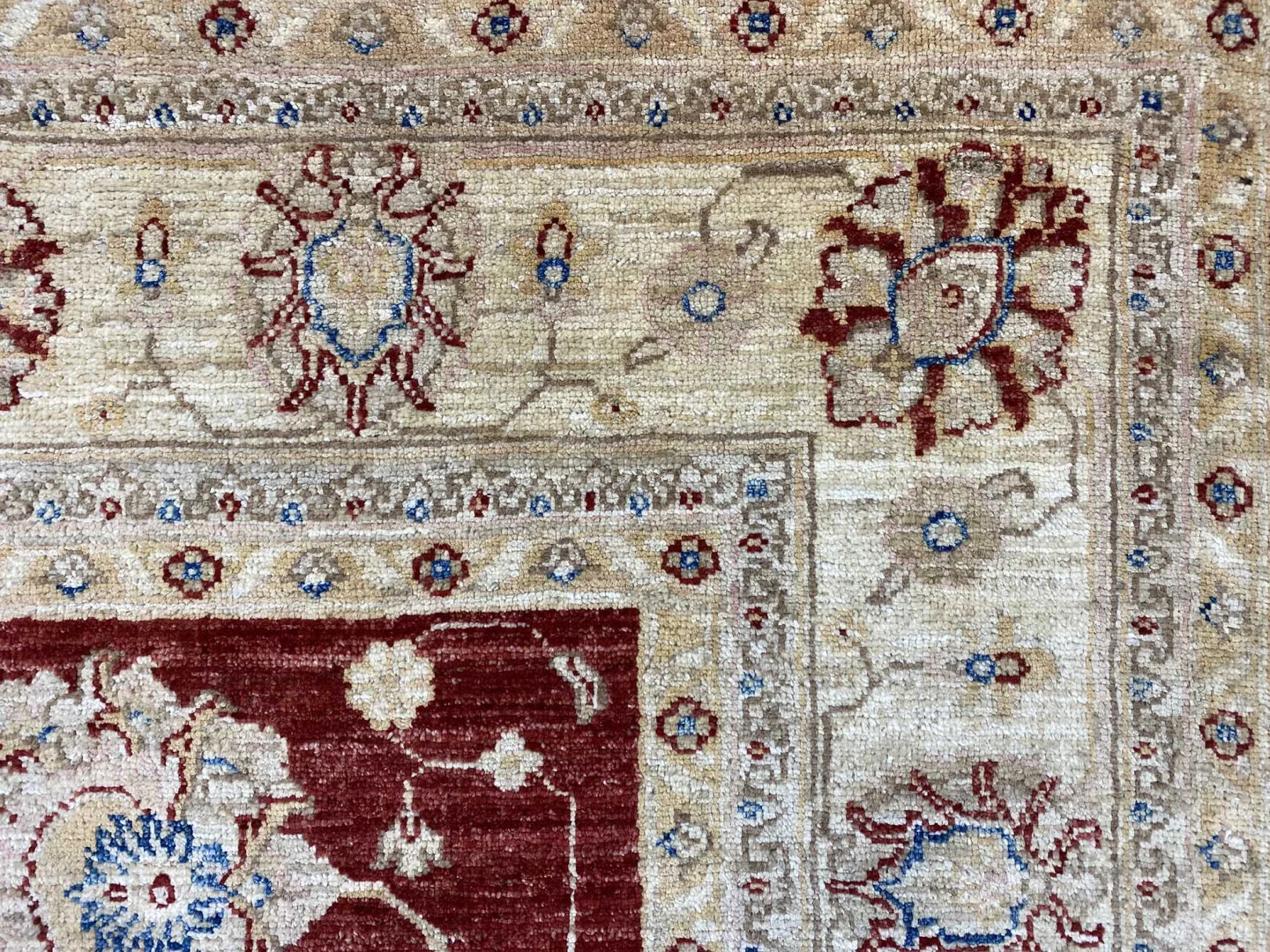
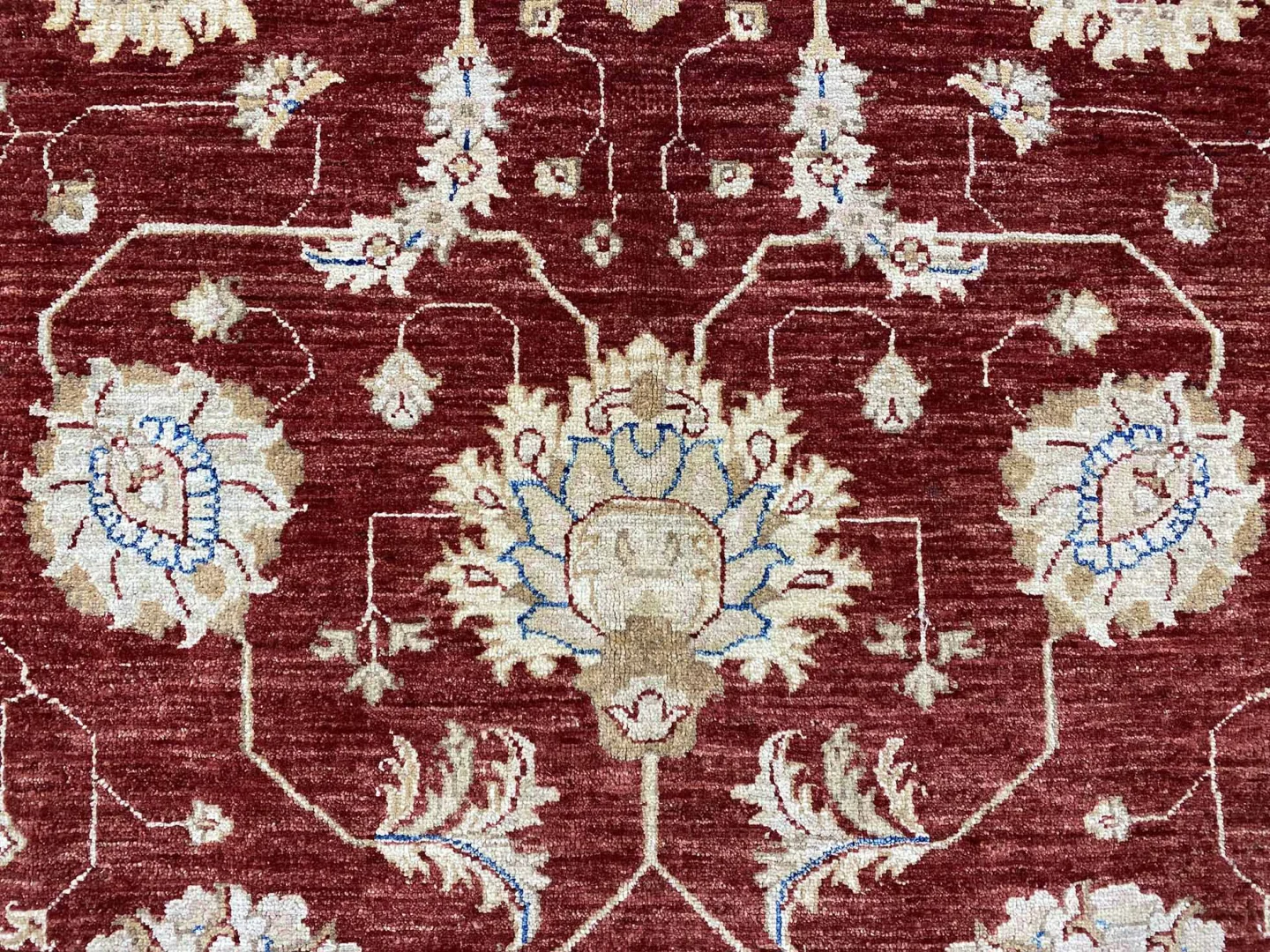
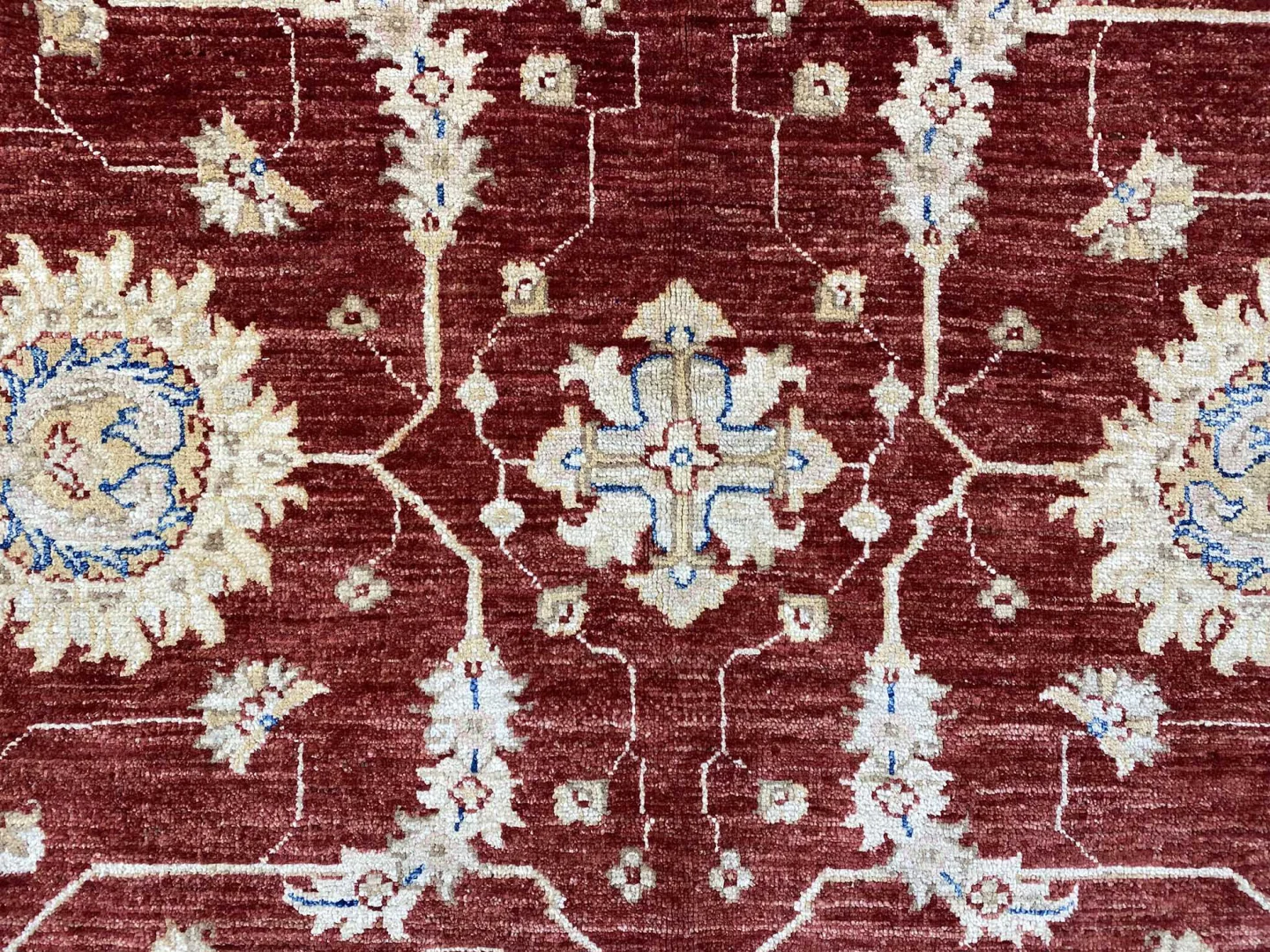
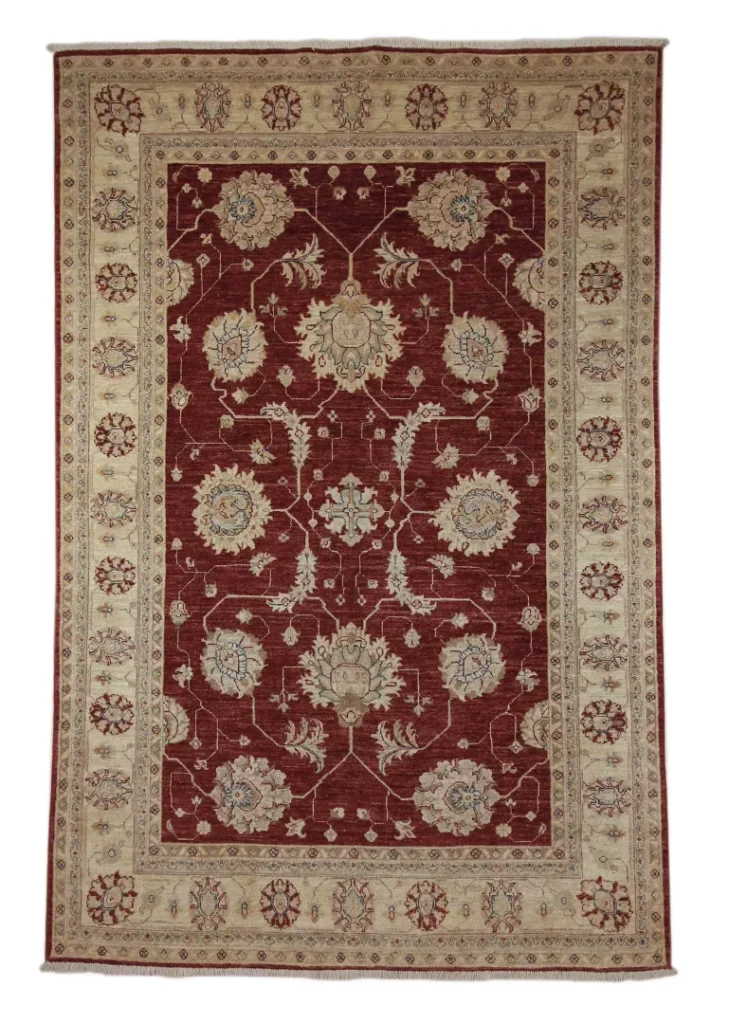
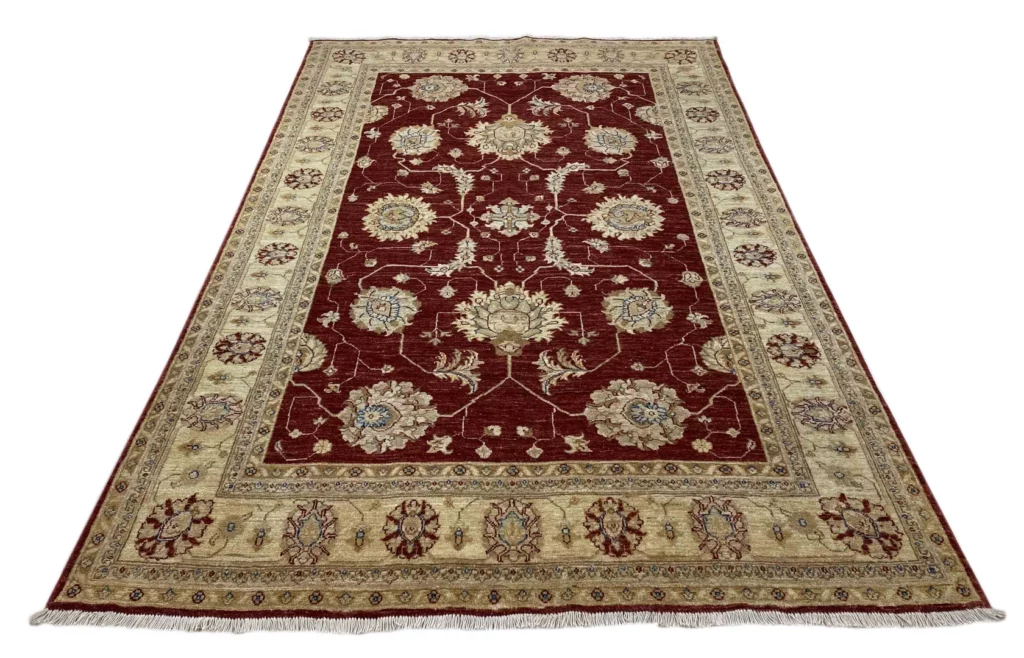
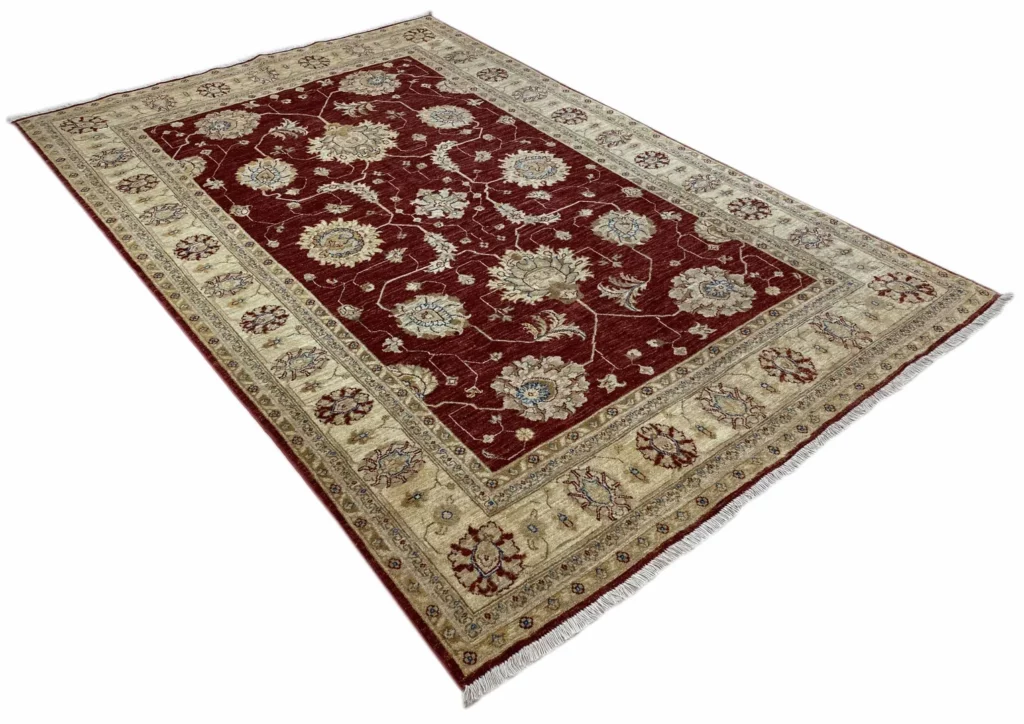
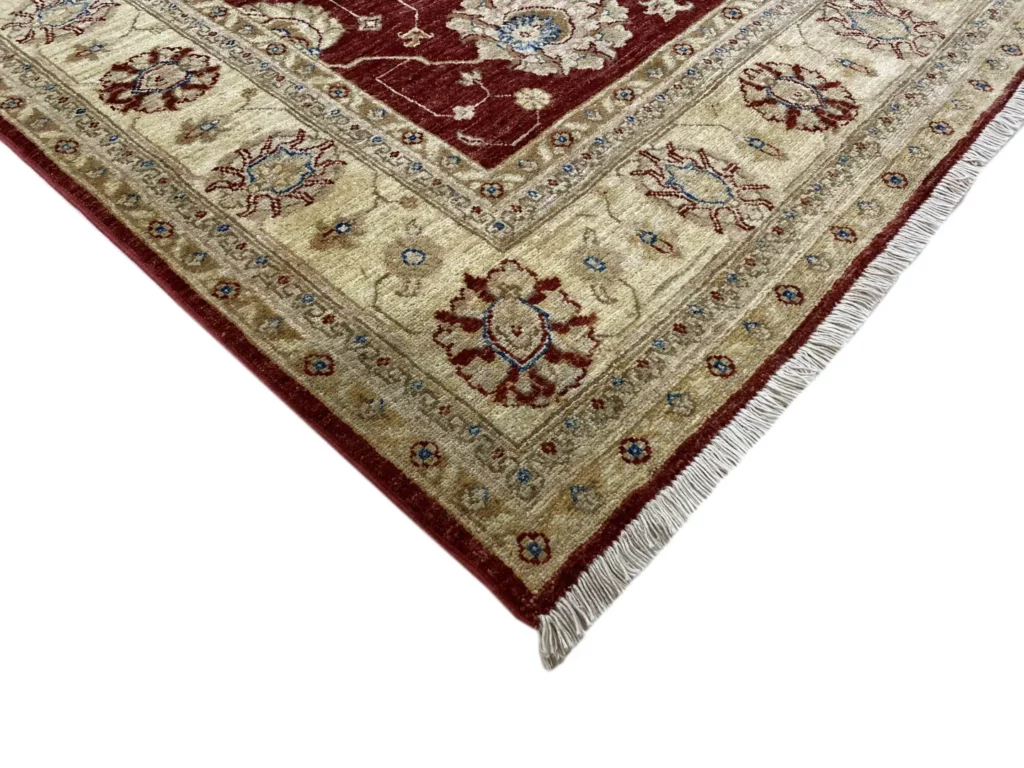
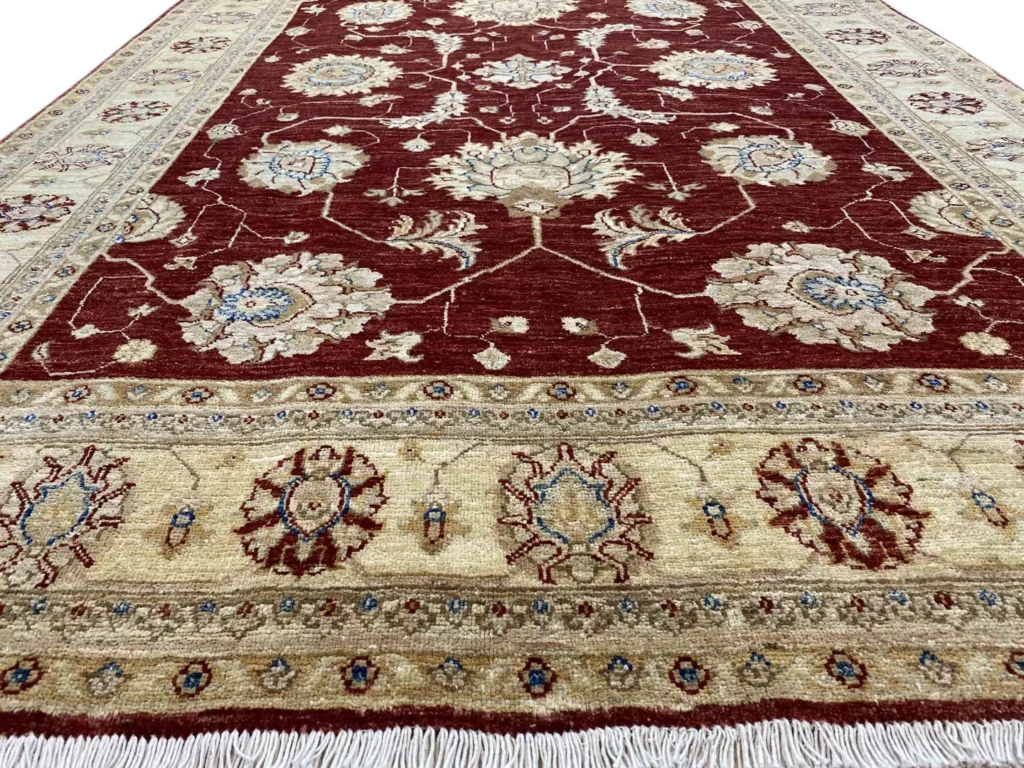
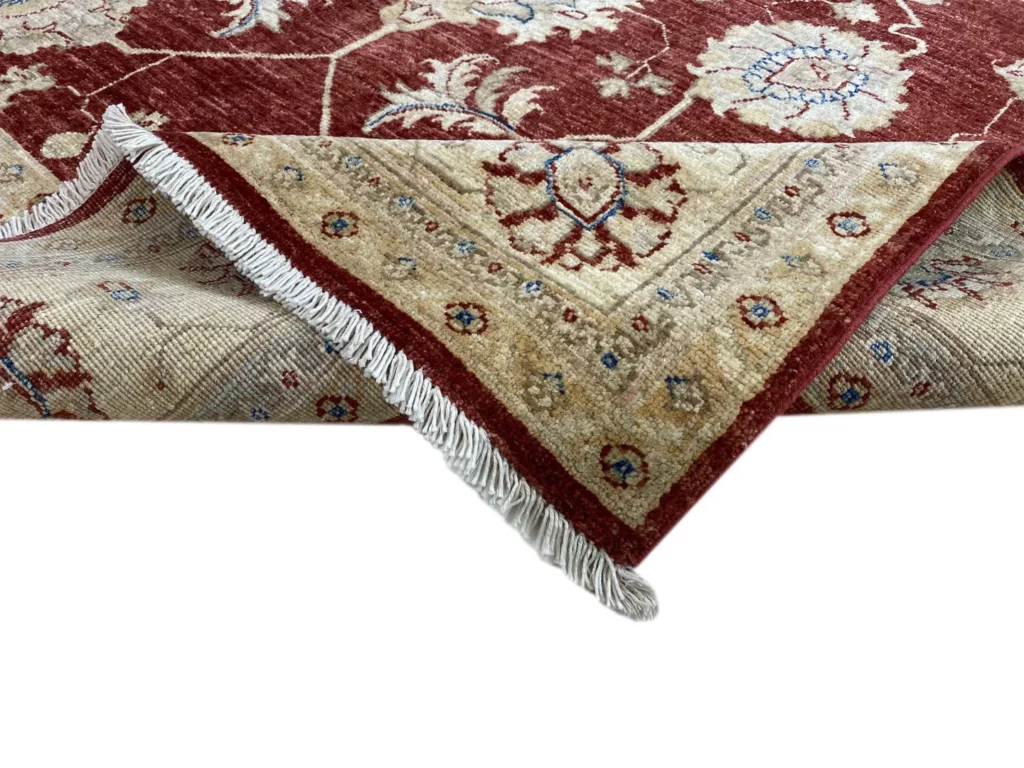
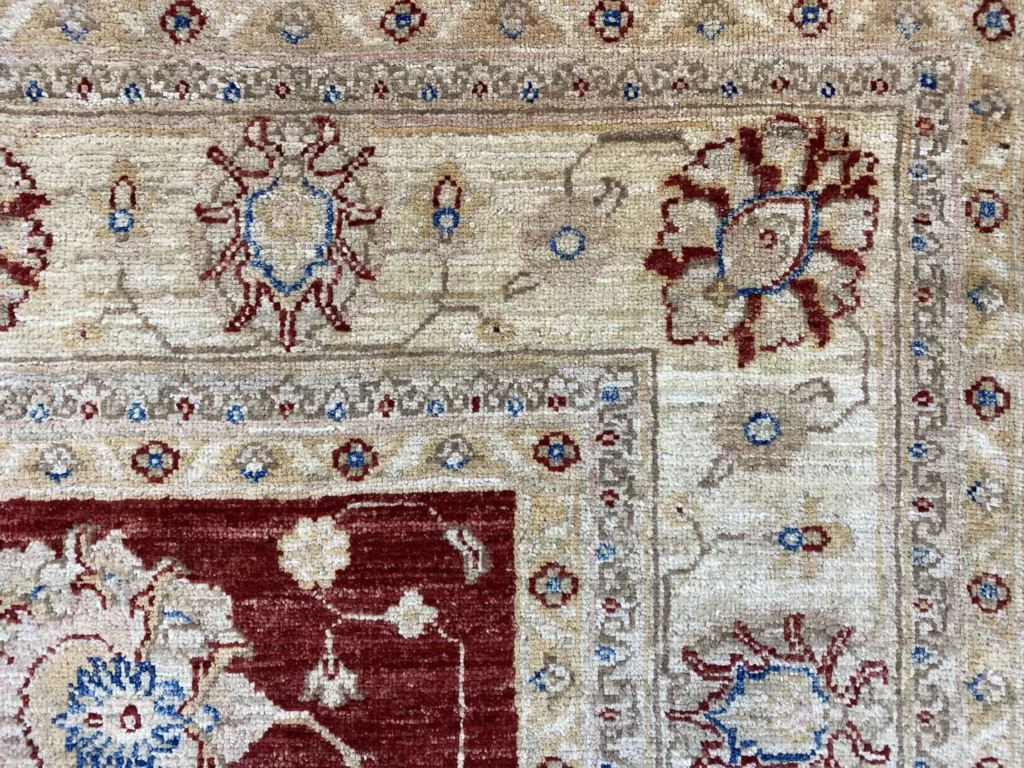
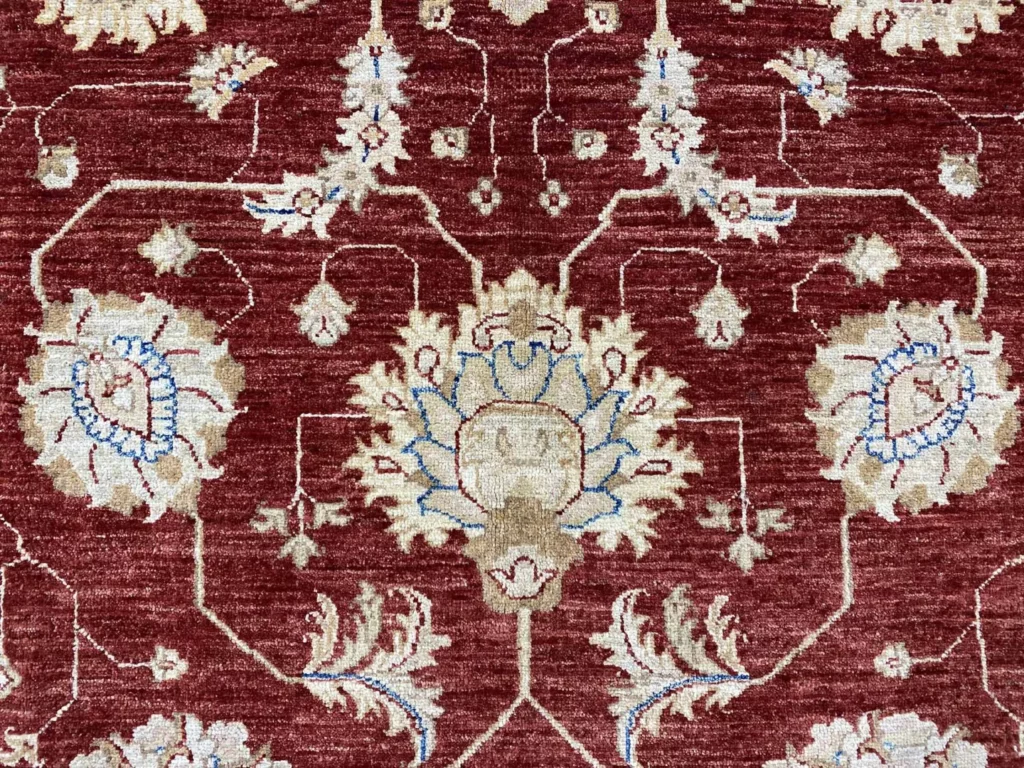
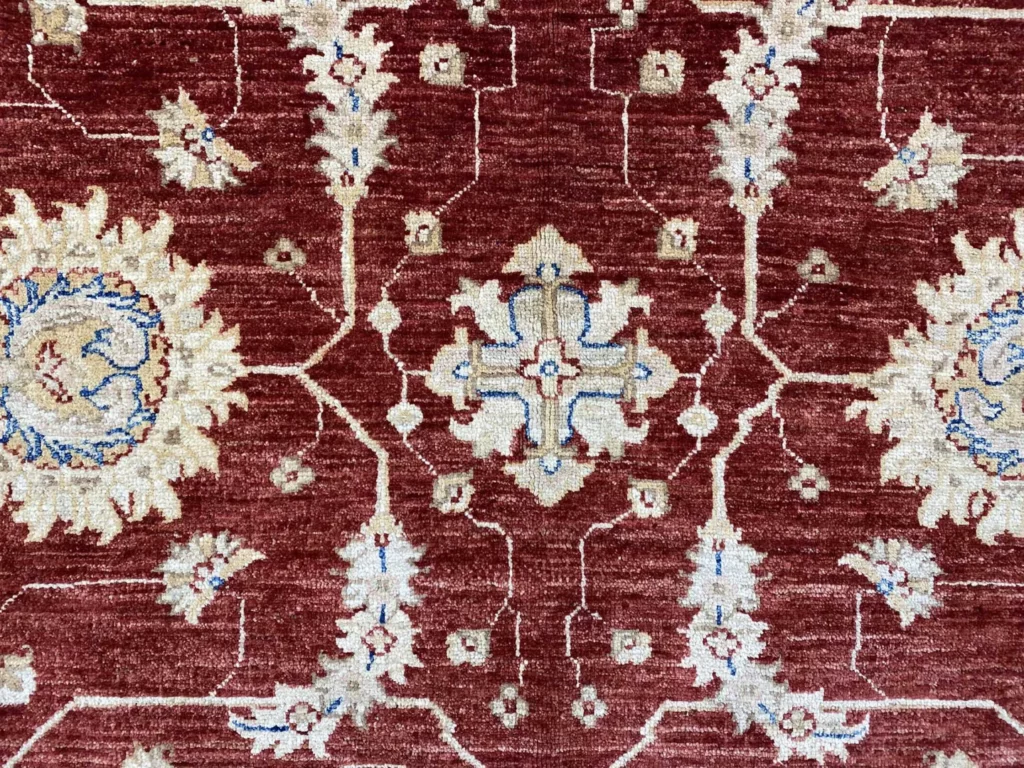
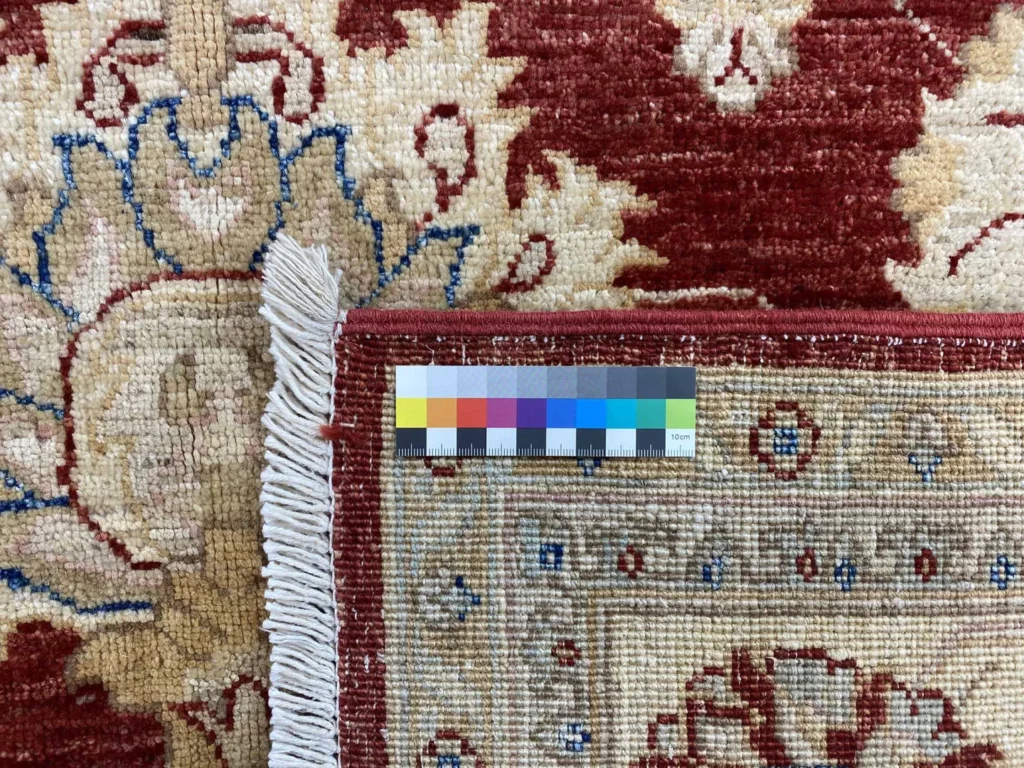
Oriental Rug Ziegler 237 x 170 cm Wool Hand-knotted
€ 1846
Hand-knotted Ziegler Oriental rug | Knot density: 200,000 knots/m² | Material: pile high-quality wool | Size: 237 x 170 cm | Pattern: varied colours and patterns | Condition: New
1 available
- ✓Free Shipping in EU
- ✓2-5 Business Days Delivery
- ✓14-Day Return Policy
- ✓Worldwide Shipping on request
 SECURE PAYMENT
 SHIPPING PARTNERS
Inventory number: 696DE9C1
Description
Ziegler Oriental Rug
Material and Craftsmanship
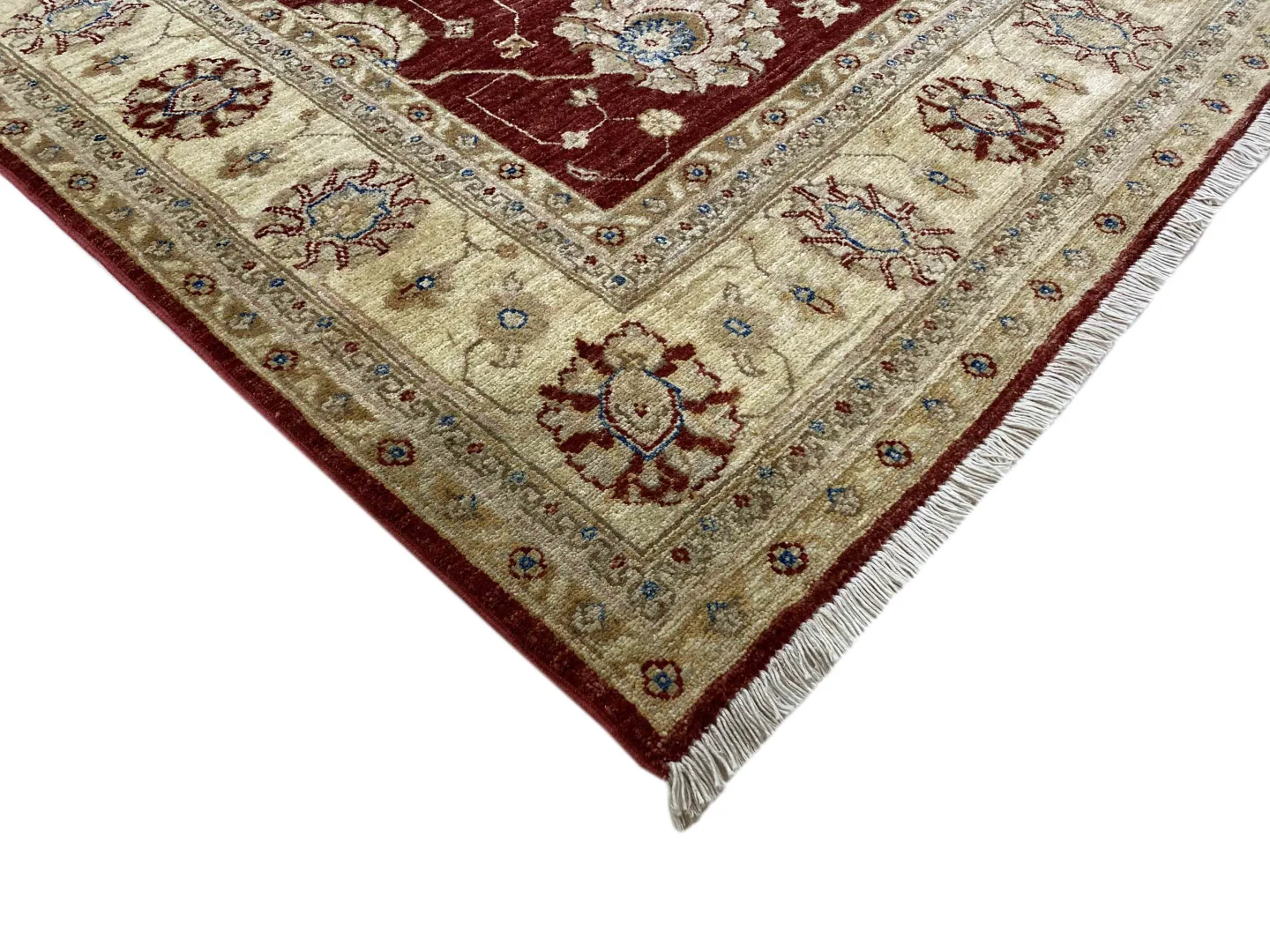
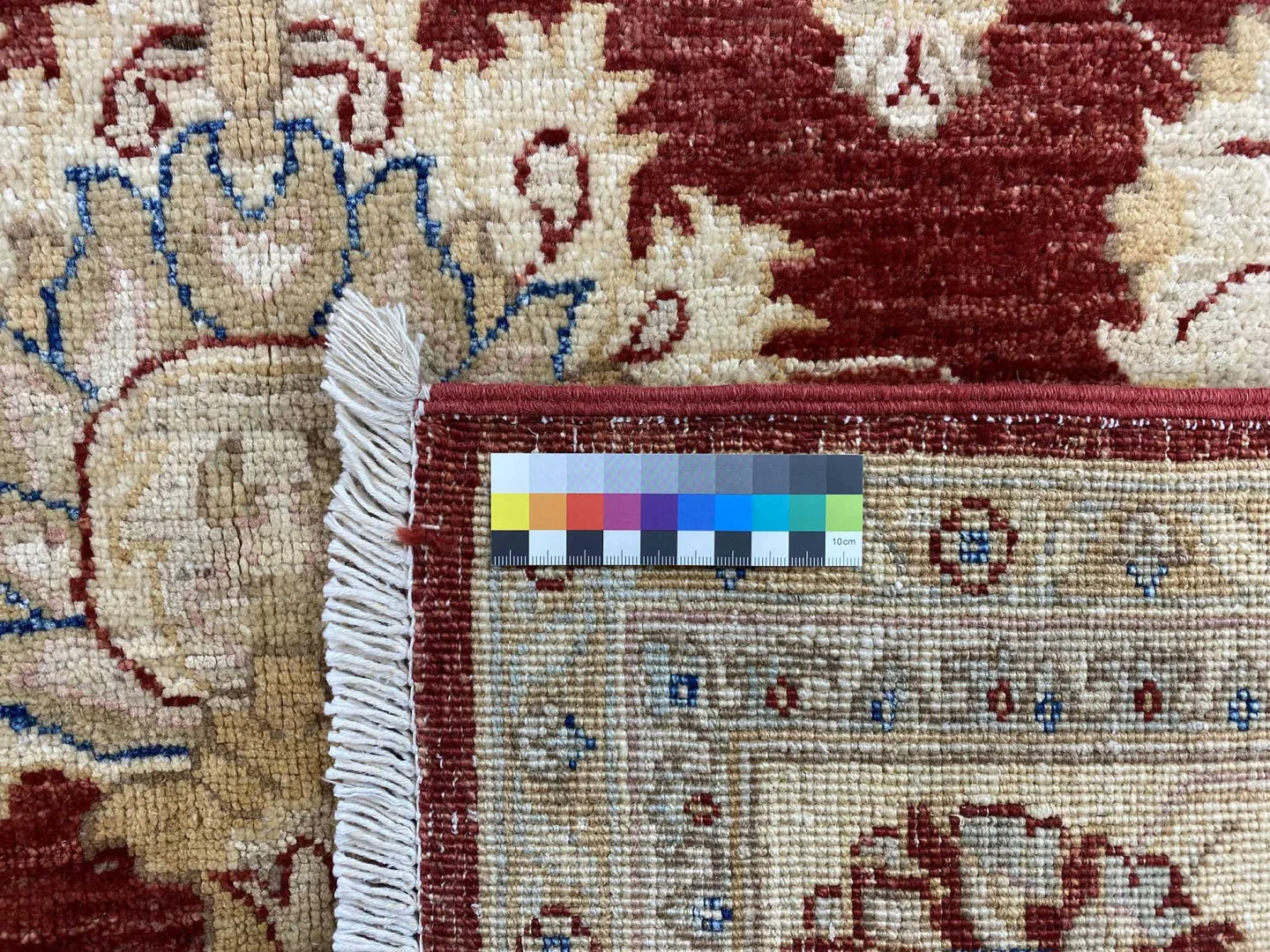
This Ziegler Oriental rug is hand-knotted and made from high-quality wool. Its construction is created by joining individual knots into a coherent textile structure. Unlike a machine-made floor covering, the pattern develops through successive manual steps carried out at the loom. This gives the surface the depth associated with hand-knotted Oriental rugs. Wool is traditionally used in rug making because it combines a pleasant handle with practical resistance. It can also retain warmth, contributing to the comfortable character of a woollen floor covering.
The rug has a knot density of 200,000 knots per square metre. Dense knotting supports a clearly developed surface and forms part of the rug’s stable construction. In the Ziegler tradition, wool is used to create a hard-wearing pile while retaining a calm, flowing visual effect. The making of this piece remains a manual process: each knot is placed individually, and the rows are built up continuously until the woven structure is complete.
A special stone wash is part of the rug’s finish. This treatment gives it the described softly faded effect. Stone washing is used to soften the appearance of the colours so that they seem less sharp and more naturally blended. It changes the visual character of the pile while leaving the hand-knotted nature of the rug intact. The resulting surface has a subdued colour balance and allows the pattern to appear more fluid.
The rug is listed as new. Its stated condition therefore combines the described hand-crafted construction with a surface that has not been shaped by everyday use. Wool, dense knotting and stone washing together account for the material and visual qualities associated with this Ziegler rug. No additional condition or provenance claims are needed beyond these stated characteristics.
Origin and Tradition
Ziegler rugs belong to a tradition developed in Persia during the nineteenth century. Their historical beginnings are associated with the Sarough and Arak region. In that setting, rugs were produced with a design language rooted in Persian weaving and with a practical, adaptable character suited to wider trade. The name Ziegler is connected with the Swiss merchant who arranged production in this region. For that reason, Ziegler is used as the name of a rug tradition as well as a description of a particular visual approach.
The historical link with Sarough and Arak explains the development of the Ziegler type. It is not the same as the manufacturing origin of this particular rug. This rug originates in Pakistan and Afghanistan. Ziegler rugs are hand-knotted there in a form that follows the historical design tradition. The word Ziegler therefore identifies the rug type and its design background, while Pakistan and Afghanistan are the stated countries of origin for this piece.
Rug making in Pakistan and Afghanistan includes varied local practices and a long experience of producing hand-knotted Oriental rugs. Wool is prepared, coloured and worked through a sequence of manual operations. The loom provides the framework in which the warp and weft form the body of the rug. Knots are inserted row by row, and the pile is then worked to create an even surface. For a Ziegler rug, stone washing is added as a distinctive finishing treatment after the hand-knotted construction has been made.
The Ziegler tradition is commonly associated with a durable, legible and restrained approach to interior textiles. Its development stands at the meeting point of Persian carpet design and later production in other Oriental weaving regions. A Ziegler rug can therefore draw on historical Persian patterns without being a Persian rug from Iran. The origin stated for this piece is Pakistan and Afghanistan. Its hand-knotted construction and high-quality wool are among the characteristics that define the type in its present form.
The trade in Ziegler rugs also helped spread this design tradition. Patterns had to work in different interior settings, so they were often developed with balanced colour relationships and ornament that could be read across a room. Ziegler rugs consequently show how craft history, international trade and local production can influence one another. The historical source of a design and the present-day place where an individual rug was made remain separate facts and should not be confused.
Design and Pattern
This rug is described as having varied colours and patterns. That description reflects the broad visual range possible within the Ziegler tradition. The stone wash gives the surface a softly faded effect, making the colour fields appear less rigidly separated. It allows neighbouring tones to sit together more gently and gives the design a deliberately muted appearance. The pattern remains part of the hand-knotted textile structure rather than being printed onto the finished rug.
Both floral and geometric motifs occur in the wider Ziegler design tradition. Floral compositions may use leaves, vines and stylised blossoms, while geometric arrangements can be based on lines, angles, diamonds or repeated compartments. These elements are formed through coloured knots during the making process. They are not applied as a flat graphic after production. Small variations and a tactile visual quality are therefore consistent with the handmade nature of the rug.
Ziegler designs often bring together an easily readable field, a surrounding border and supporting ornaments. Depending on the design, flowing vines may be more prominent, or the composition may rely more strongly on organised geometric forms. In this tradition, the relationship between field, border and colour distribution is as important as any single motif. This creates a sense of order while allowing the pattern to remain varied rather than mechanical.
The traditional Ziegler palette can extend from quiet earth tones to stronger blues and reds. Stone washing alters how those colours are perceived. A contrast that might otherwise appear pronounced can become softer, while individual colour areas still help define the structure of the design. This particular rug is described only through its varied colours and patterns; no single dominant colour or specific individual motif is assigned to it, so none is presented here as a feature of the piece.
The faded appearance is not presented as accidental wear. It is created by the special stone wash, which is used as part of the finish. A new rug can therefore have a surface with a calm, softened colour effect that suggests a settled interior appearance without making an age claim. The combination of a varied pattern and subdued colour transitions is part of the visual language associated with Ziegler rugs.
Related Persian traditions can also be found in Sarough, Kashan, Tabriz, Isfahan, Nain and Hamadan, but each has its own regional conventions of pattern and construction. Those names describe other rug traditions and are not the origin of this piece. This rug is identified as a Ziegler Oriental rug from Pakistan and Afghanistan. Its design follows the historical Ziegler vocabulary without assigning it to another province or country of manufacture.
Special Features
The special stone wash is a defining feature of this rug. It creates the stated softly faded effect and visually joins the different colours. Together with the varied patterns, it gives the surface a subdued appearance shaped by softened transitions and hand-crafted structure. The treatment belongs to the rug’s finish; it is not described as accidental ageing or ordinary wear.
Other specific features are the hand-knotted construction, high-quality wool, a knot density of 200,000 knots per square metre and new condition. The origin is Pakistan and Afghanistan. These details provide the factual description of the piece. The historical association of the Ziegler type with Sarough and Arak explains its tradition, but it does not replace the stated origin of this rug.
FAQ
What makes a Ziegler Oriental rug distinctive?
This Ziegler Oriental rug combines hand-knotted workmanship, high-quality wool and a special stone wash. The stone wash produces the softly faded effect associated with the surface described here. The rug is also made with varied colours and patterns. Its knot density of 200,000 knots per square metre is another expressly stated characteristic. The name Ziegler refers to a tradition developed in Persia during the nineteenth century and historically connected with Sarough and Arak. The actual origin of this rug, however, is Pakistan and Afghanistan.
How should a Ziegler Oriental rug be cared for?
Regular vacuuming is recommended, and spills or dirt should be removed promptly with a damp cloth. The surface should be treated gently so that the pile and colours are not placed under unnecessary strain. Professional cleaning is recommended to help preserve the colours and structure of the rug. Because the stone wash is part of its special finish, cleaning should take the treated surface and its softly faded effect into account. These care measures focus on maintaining the wool, the colour appearance and the hand-knotted construction.
Which room is suitable for a Ziegler Oriental rug?
A Ziegler Oriental rug can be used in living rooms, dining rooms and bedrooms. Its varied patterns and colours allow it to work with different interior schemes, while the faded effect supports a quieter overall appearance. Placement depends on the room layout and on the desired relationship between the rug, the furniture and the surrounding open floor. Since this rug is hand-knotted and made from high-quality wool, its textile structure is as important to the room as its design. These rooms are the settings described for the use of Ziegler rugs.
Additional information
| Design Style | |
|---|---|
| Size | |
| Shape | |
| Origin | |
| Knot Density | |
| Material |
Related products
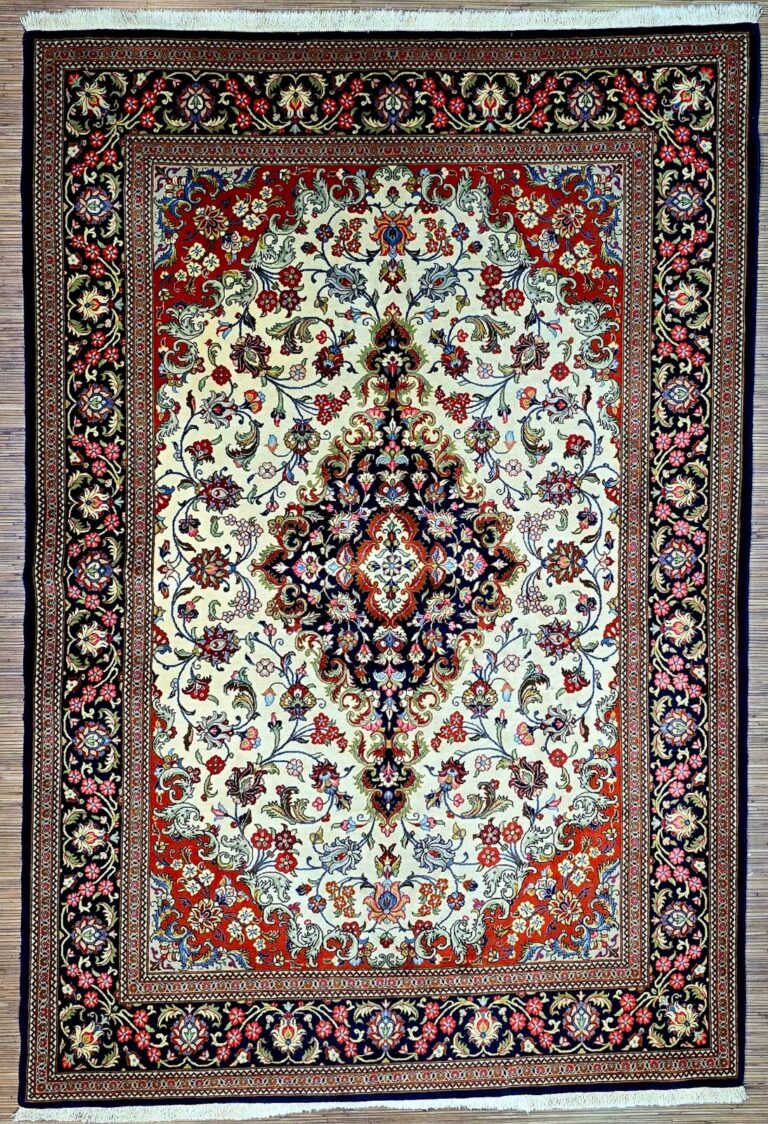
Persian Rug Qom 216 x 142 cm Wool Hand-knotted
€ 990
Persian Rug Isfahan 250 x 155 cm Silk Hand-knotted
€ 3600
Persian Rug Kashan 345 x 253 cm Wool Hand-knotted
€ 2910
Persian Rug Tabriz 293 x 203 cm Wool & Silk Hand-knotted
€ 3300
Persian Rug Tabriz 206 x 150 cm Wool Hand-knotted
€ 1830
Persian Rug Rosenbidjar 222 x 131 cm Wool Hand-knotted
€ 1530
Persian Rug Kashan 211 x 140 cm Wool Hand-knotted
€ 900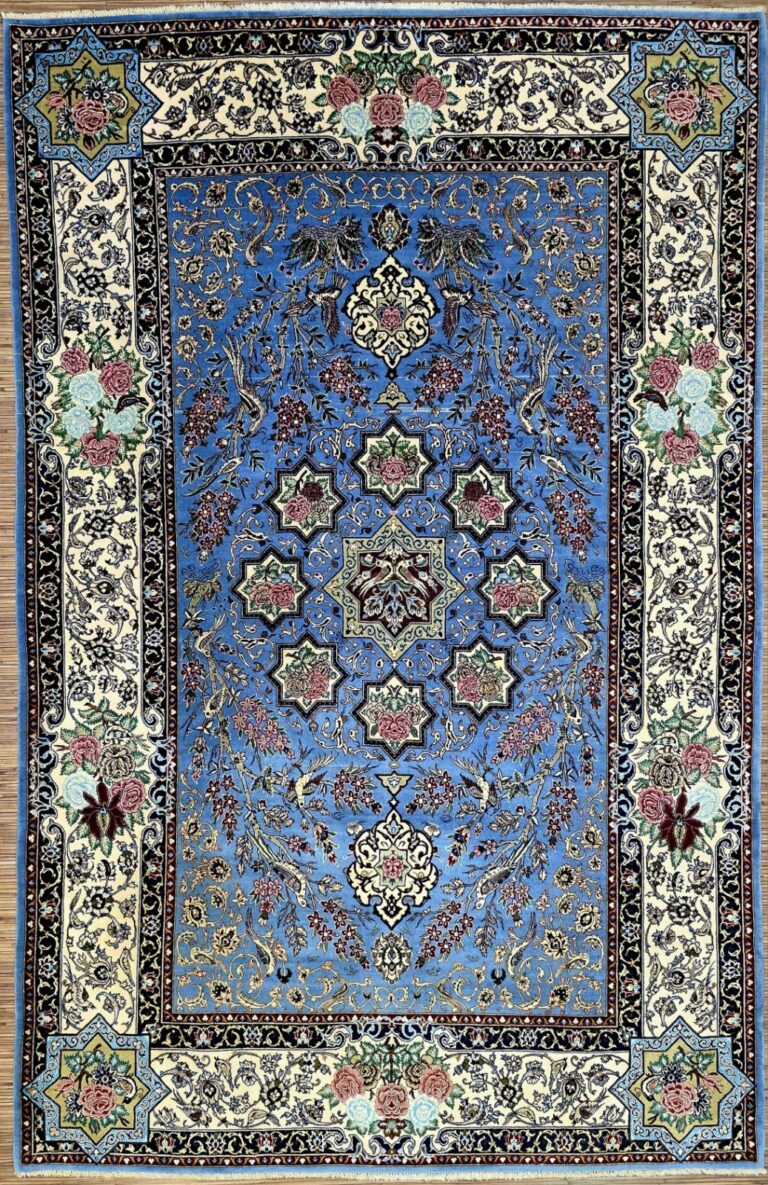
Persian Rug Isfahan 222 x 146 cm Silk Hand-knotted
€ 3905