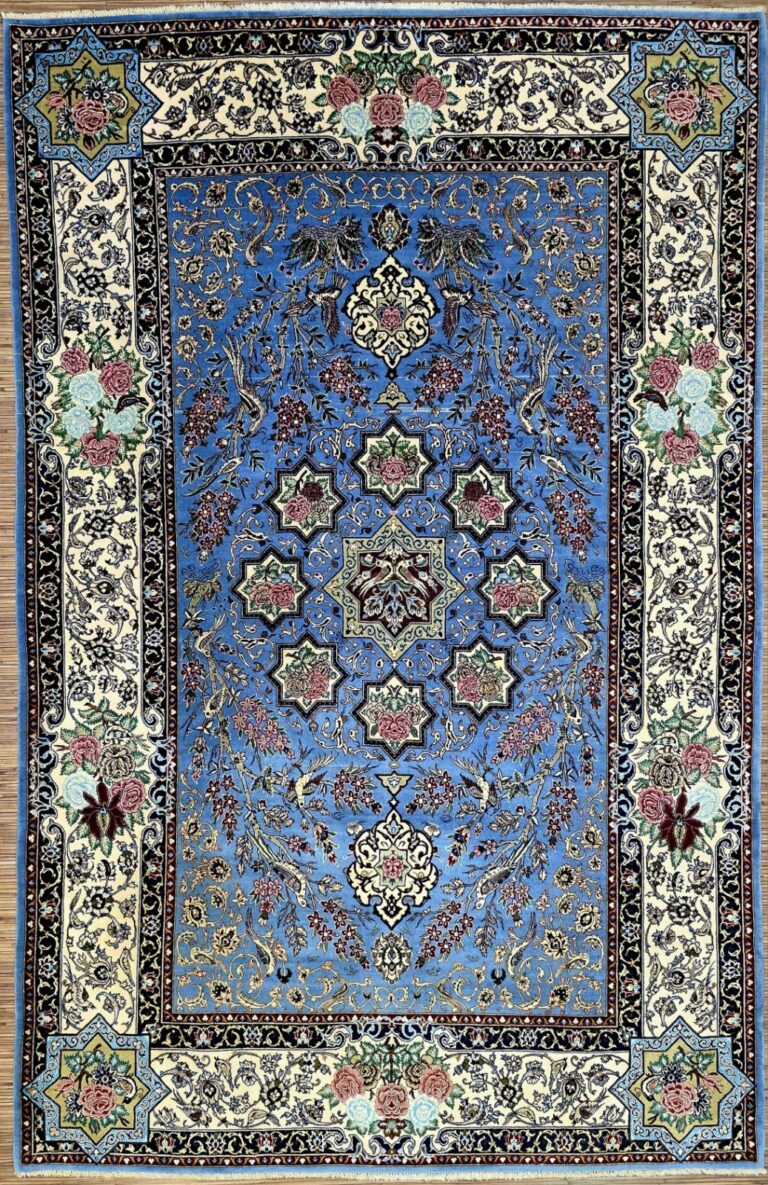
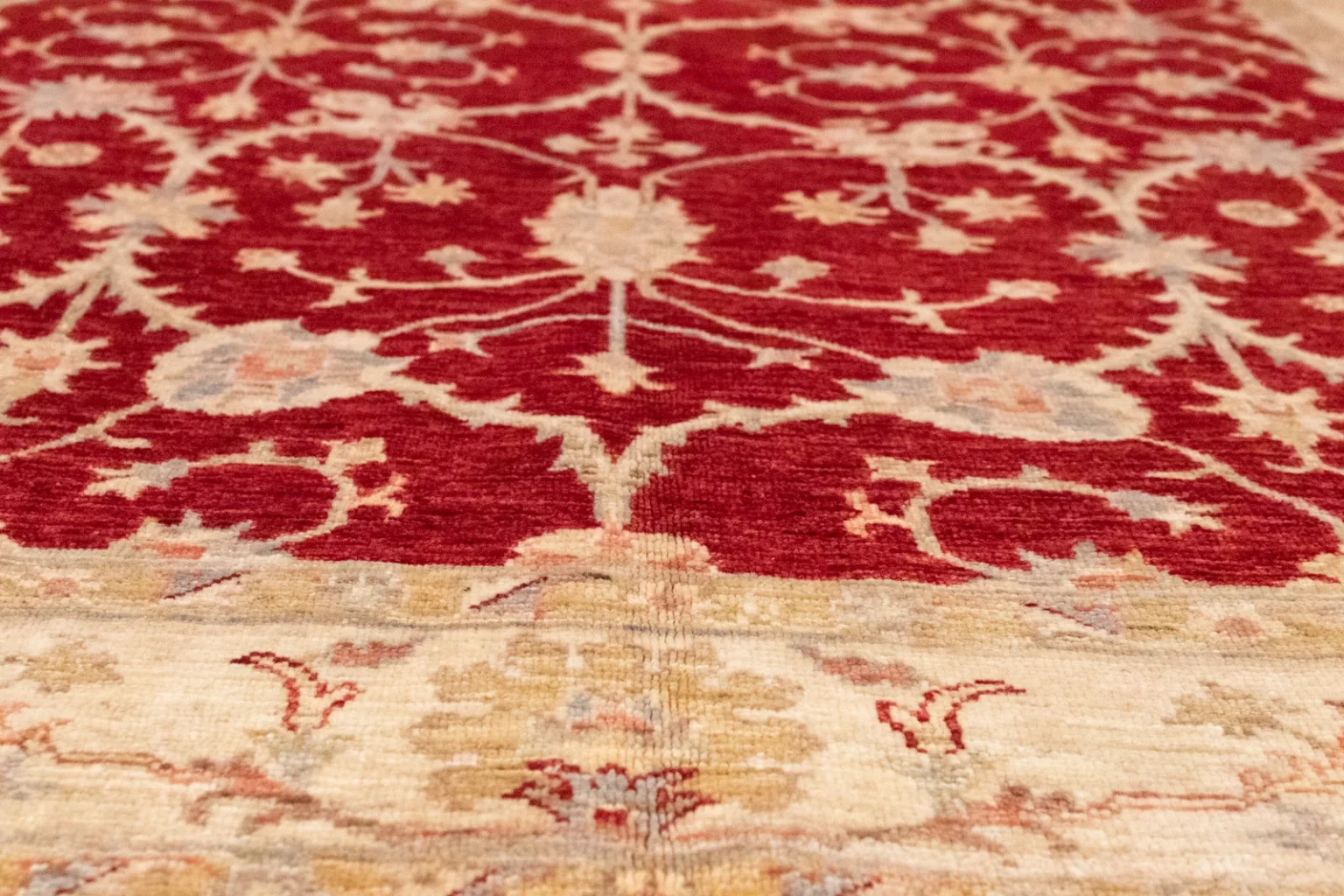
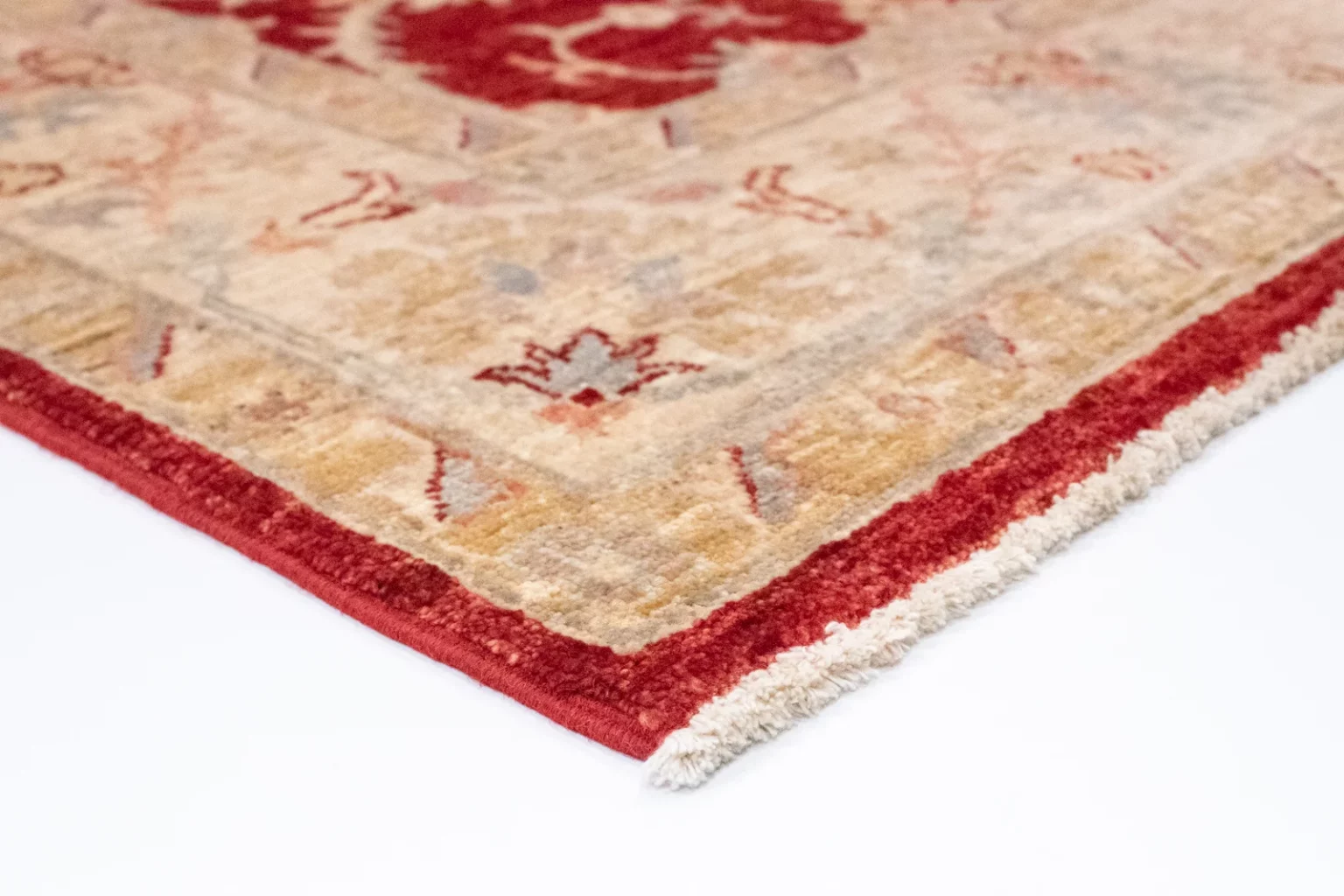
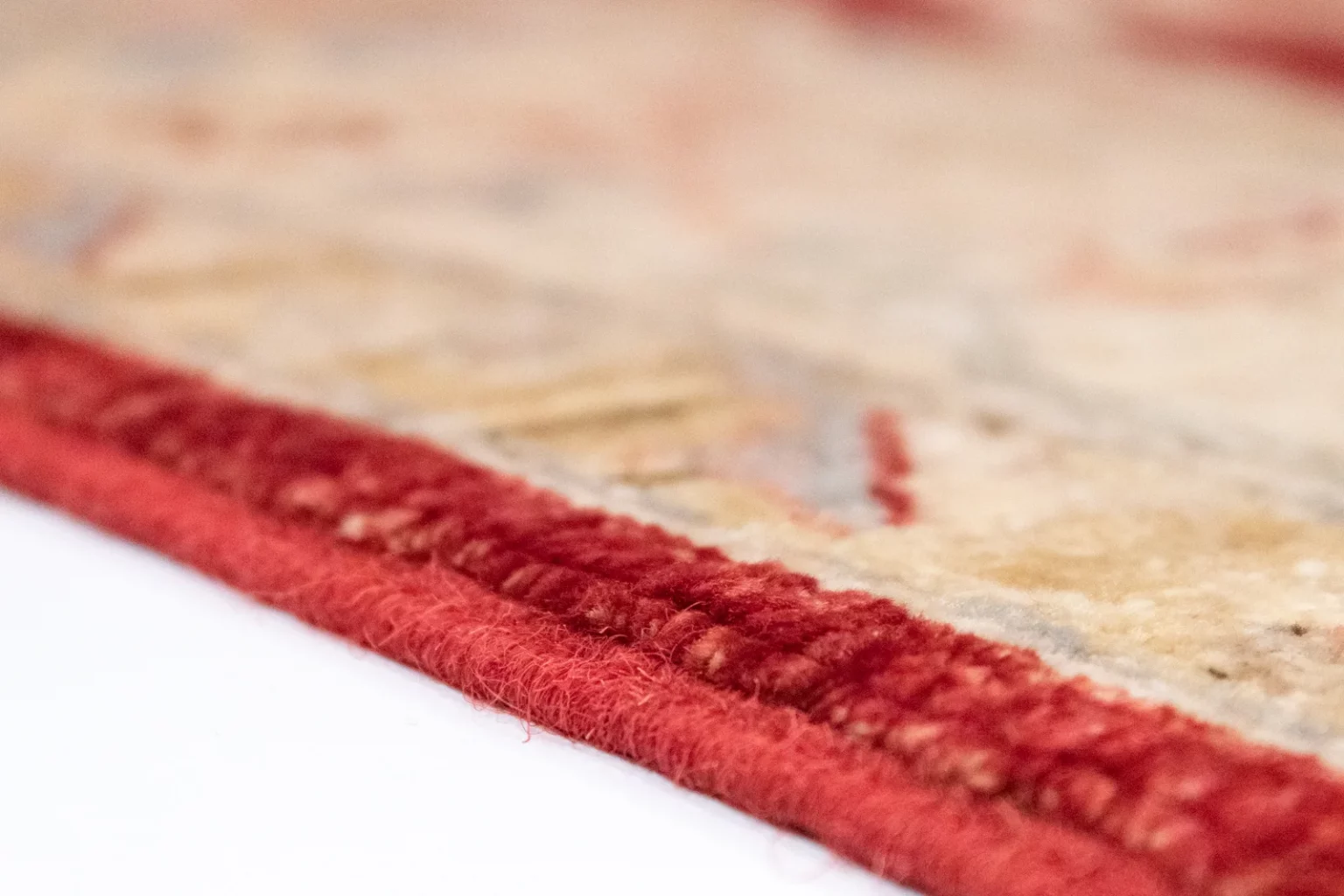
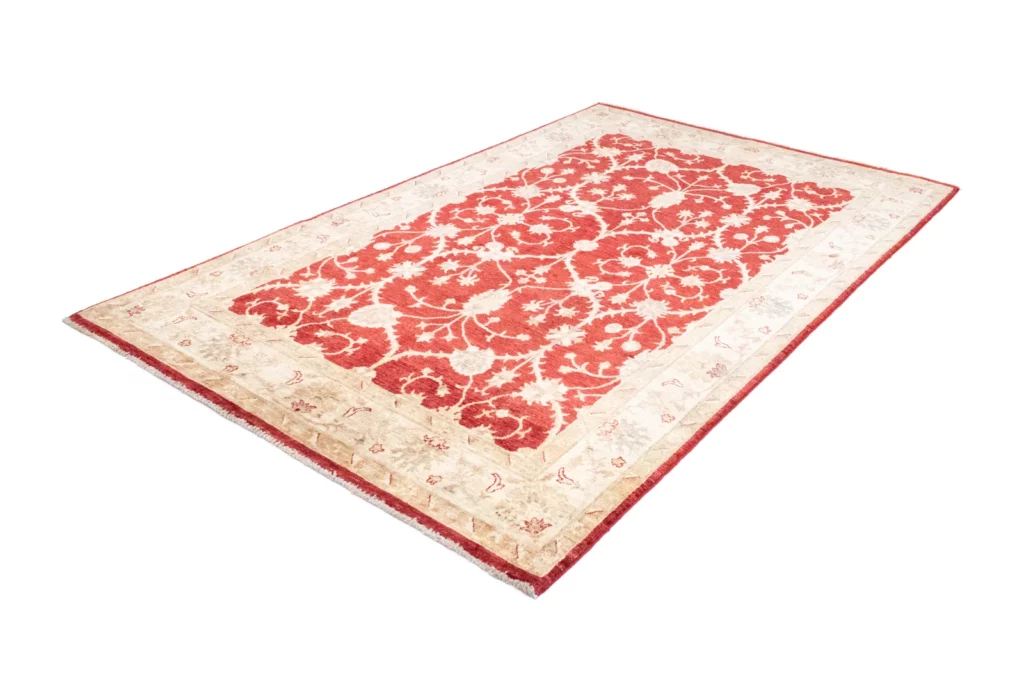
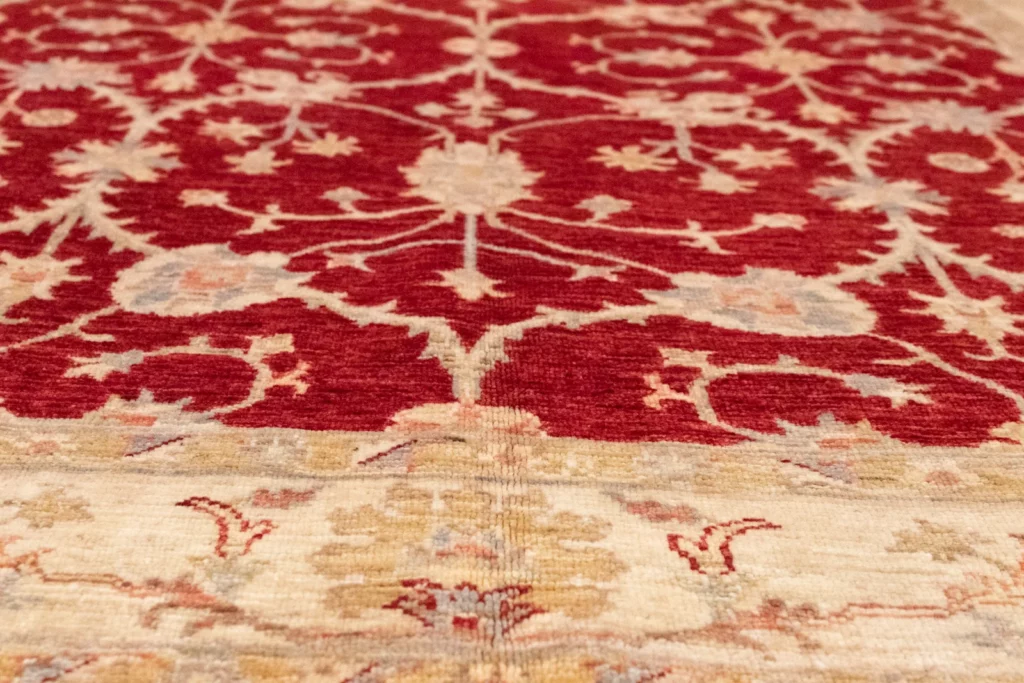
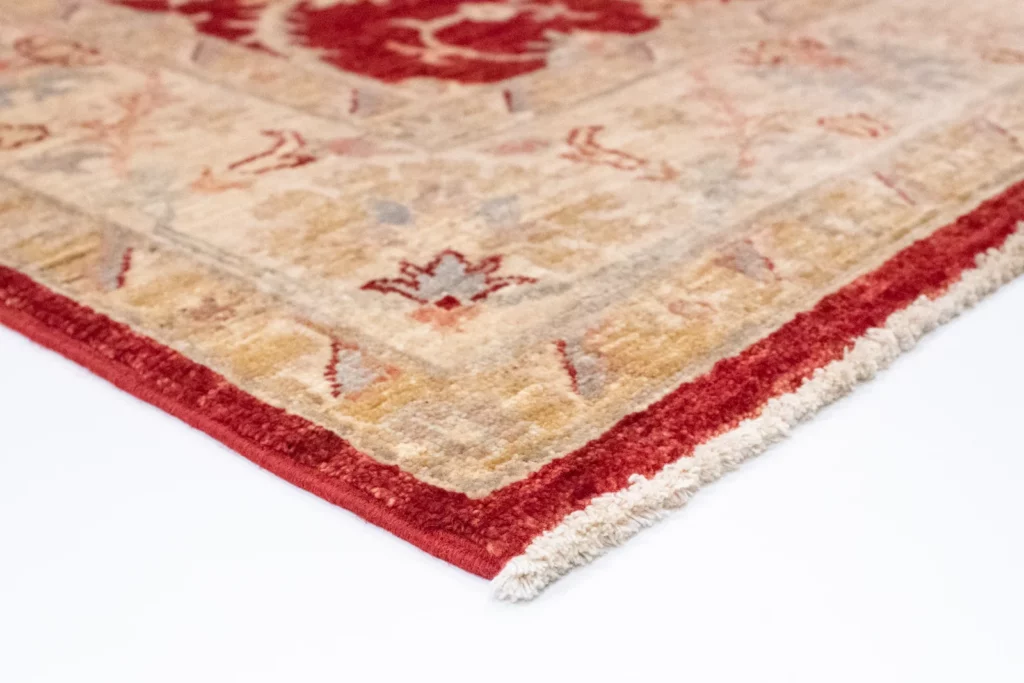
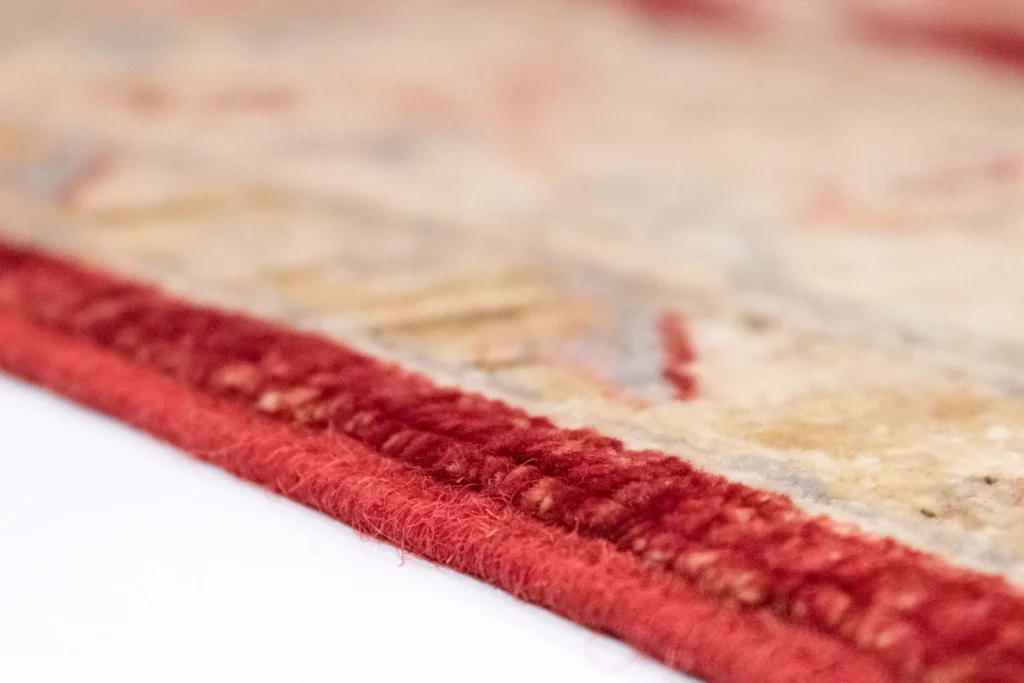
This Ziegler Oriental rug is hand-knotted and made from high-quality wool. Its construction is formed knot by knot on a loom, with the pile worked into the foundation and compacted row by row. The rug has a knot density of approximately 200,000 knots per square metre. In Ziegler rugs, this level of density reflects careful workmanship and supports a stable, hard-wearing construction.
Wool forms the pile and gives the surface the tactile character associated with wool rugs: resilient, softly textured and suitable for absorbing colour evenly. Hand-knotting creates a textile structure that is distinct from a machine-made floor covering. Each knot is placed individually, and the completed surface carries the small variations that arise from manual work. The pile, the knot structure and the handling of the material all contribute to the character of the finished rug.
A defining process used for this Ziegler rug is stone washing. After knotting, the surface is washed and treated so that the finished piece acquires a soft, gently faded appearance. This treatment allows the colours to remain lively while appearing restrained rather than harsh. Stone washing is one of the features commonly associated with Ziegler rugs, and here it works together with the wool pile and hand-knotted construction.
The combination of a dense knot structure and wool makes the rug suitable for a durable textile application. The source describes the knot density as an indication of high quality and longevity. The stone-washed finish adds a different dimension: it affects the visual and tactile impression of the surface without changing the fact that the rug is hand-knotted. These techniques belong to the craft tradition through which Ziegler rugs are made.
Origin and Tradition
The Ziegler tradition has its roots in the nineteenth century. The style was originally initiated by a Swiss merchant named Ziegler. Its development became associated with the Sarough and Arak region in Persia, where a form of rug production was established that combined local Persian weaving knowledge with designs suited to an international market.
Growing European demand for Persian rugs, particularly in Great Britain, helped establish Ziegler rug production in that region. The name therefore refers to a style with a specific commercial and design history rather than to one isolated pattern. Traditional Persian carpet motifs were adapted into compositions with a calmer overall presence. This connection between established ornament and changing market preferences is central to the history of Ziegler rugs.
Today, Ziegler rugs are mainly made in Pakistan and Afghanistan. This rug comes from Pakistan and Afghanistan. In both countries, the Ziegler tradition is continued through handcraft techniques, including the preparation of the wool, the arrangement of knot rows and the interpretation of established motifs. The current production origin is therefore Pakistan and Afghanistan, while the historical roots of the style lie in Sarough and Arak in Persia.
Pakistan has a long-standing rug-making culture in which several design influences meet. In the Ziegler tradition, that craft knowledge is expressed through hand-knotting, wool construction and a surface treatment that softens the appearance of the finished rug. Afghanistan is also known for continuing handmade rug production. Ziegler rugs made in these countries may vary in colour and composition, yet they remain connected through their use of traditional motifs and the characteristic stone-washed finish.
The history of Ziegler rugs illustrates how weaving traditions can develop through trade, demand and the exchange of technical knowledge. Persian-inspired ornament was adapted for European interiors and later continued in other producing regions. The floral and geometric foundations remained important, while the colouring and surface treatment could be adjusted. The result is a rug type with Persian design roots and a present-day production history centred mainly in Pakistan and Afghanistan.
Design and Pattern
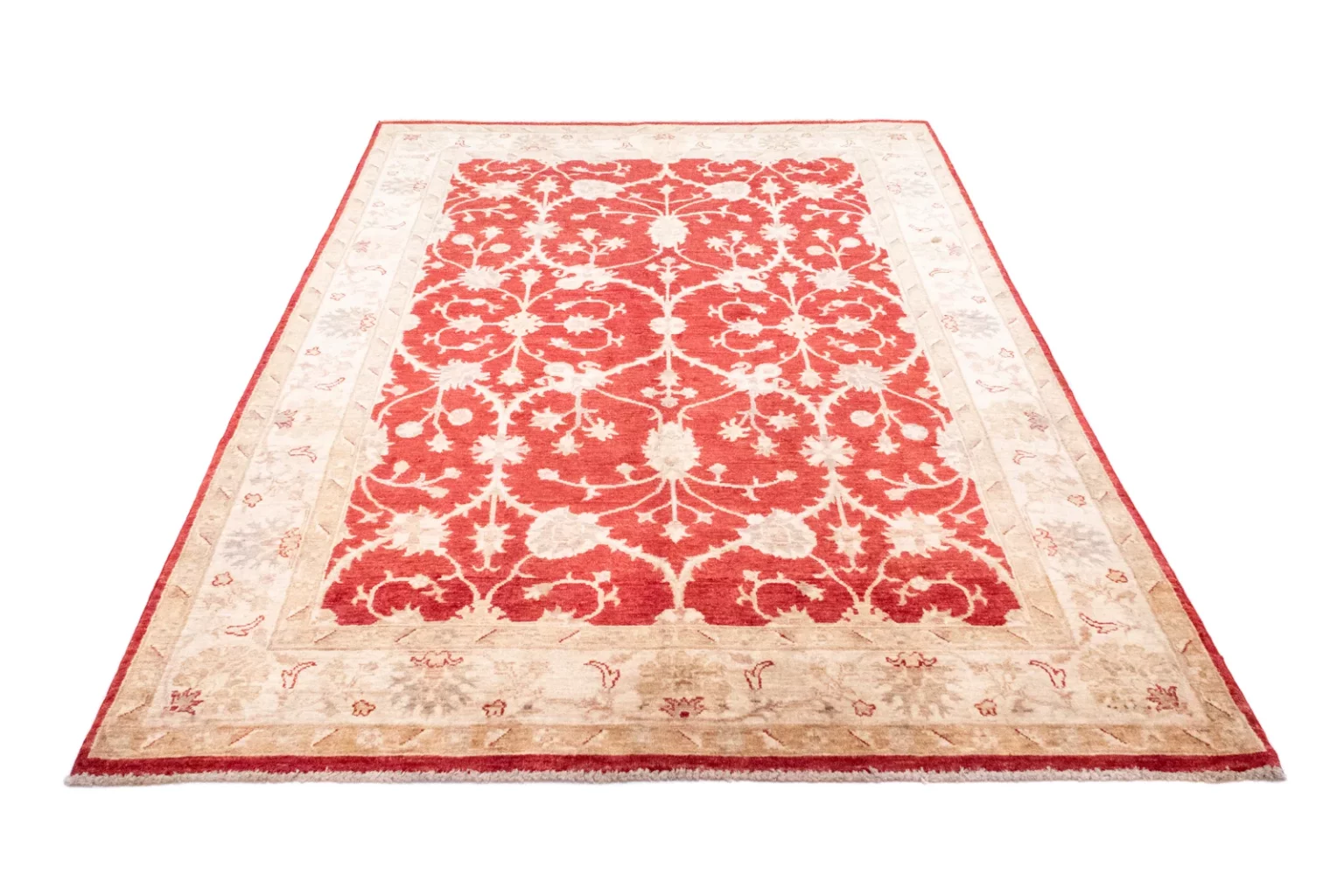
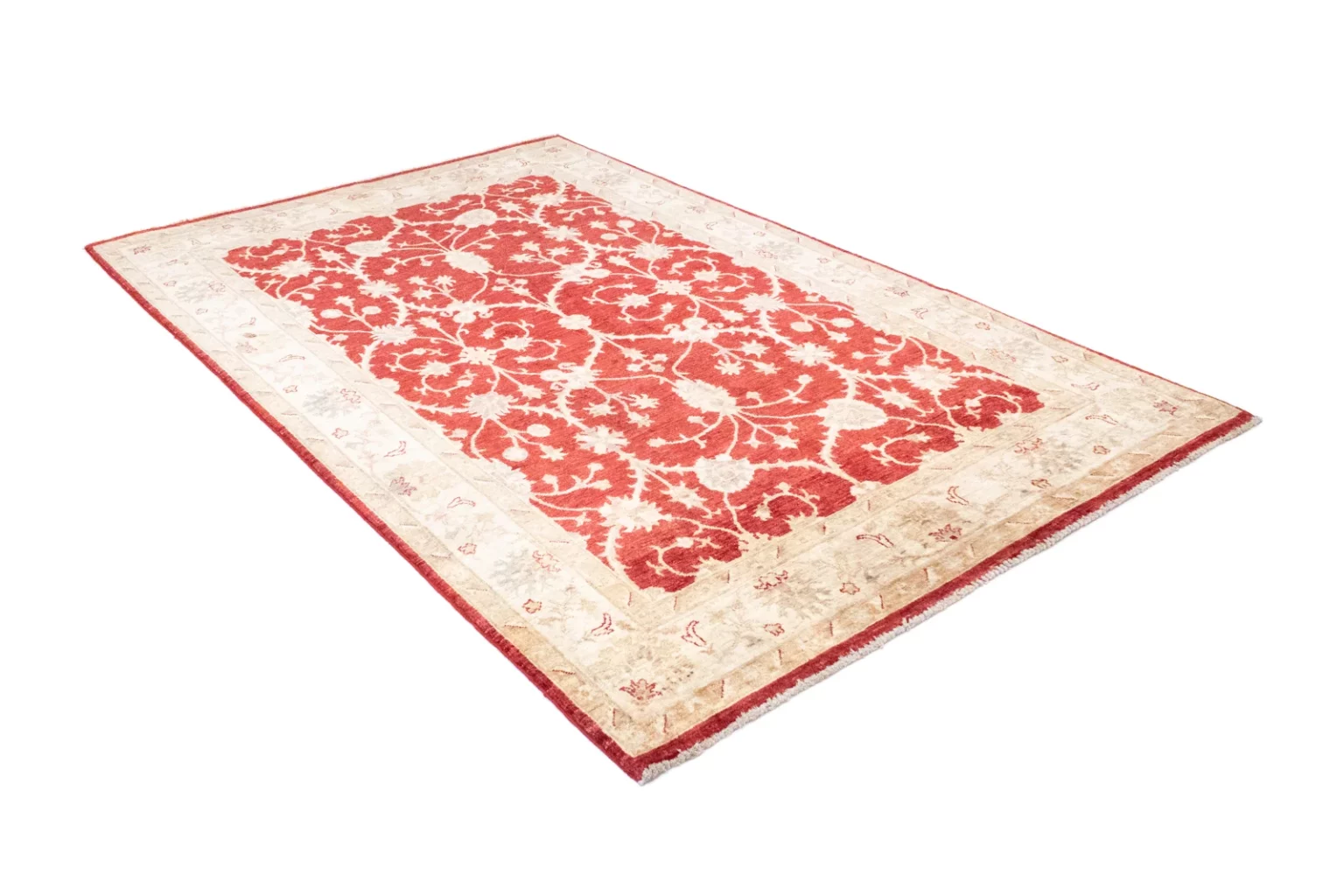
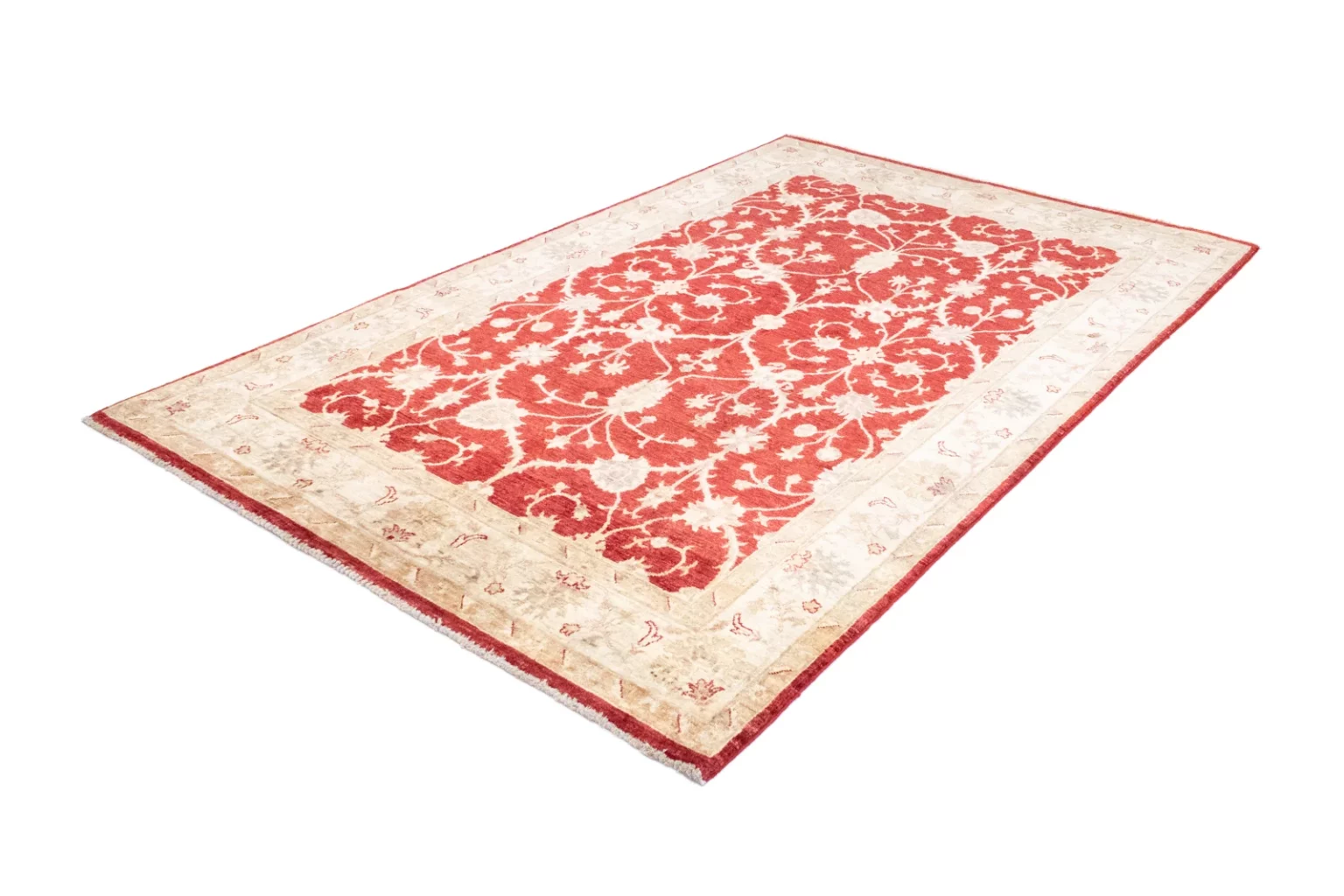
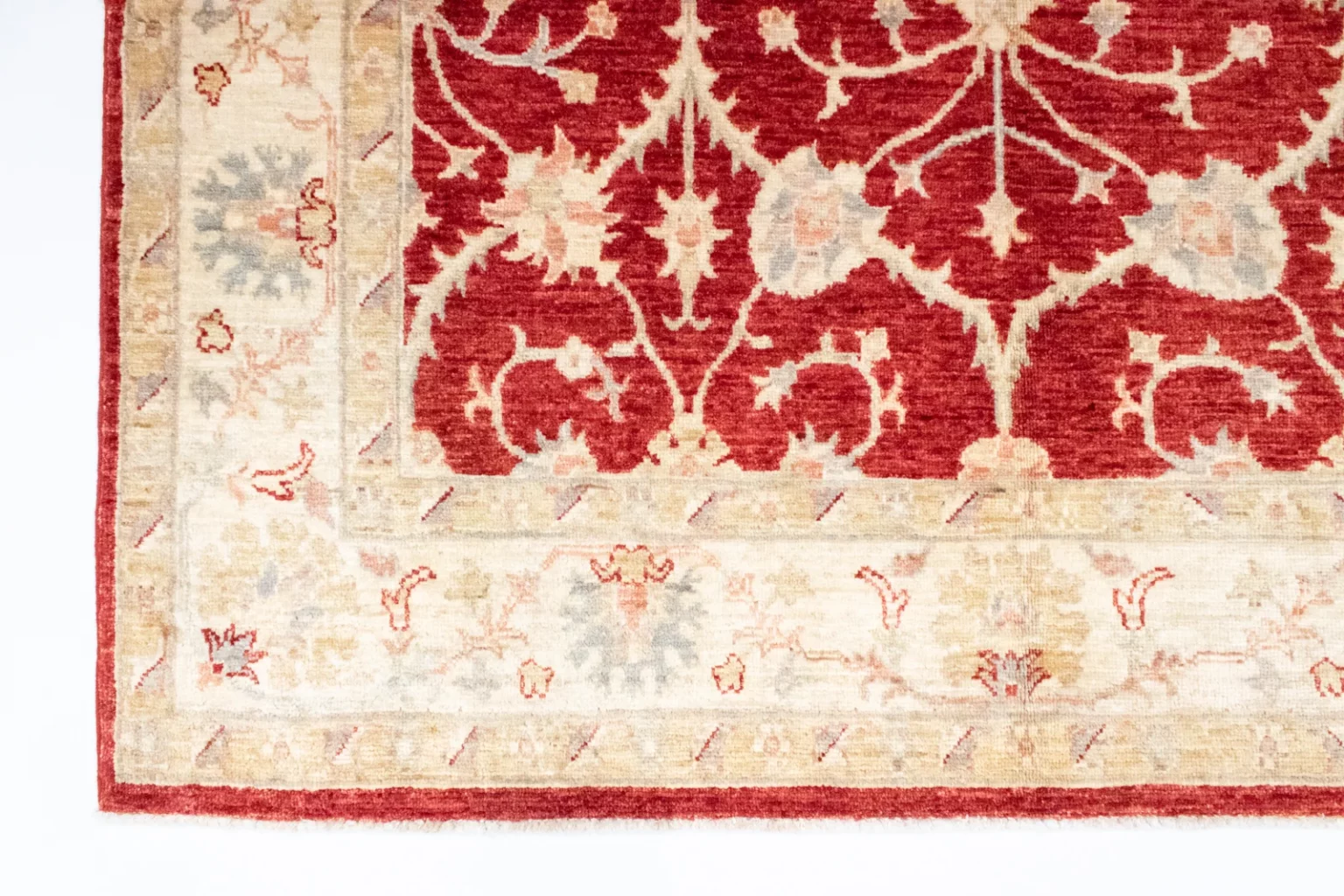
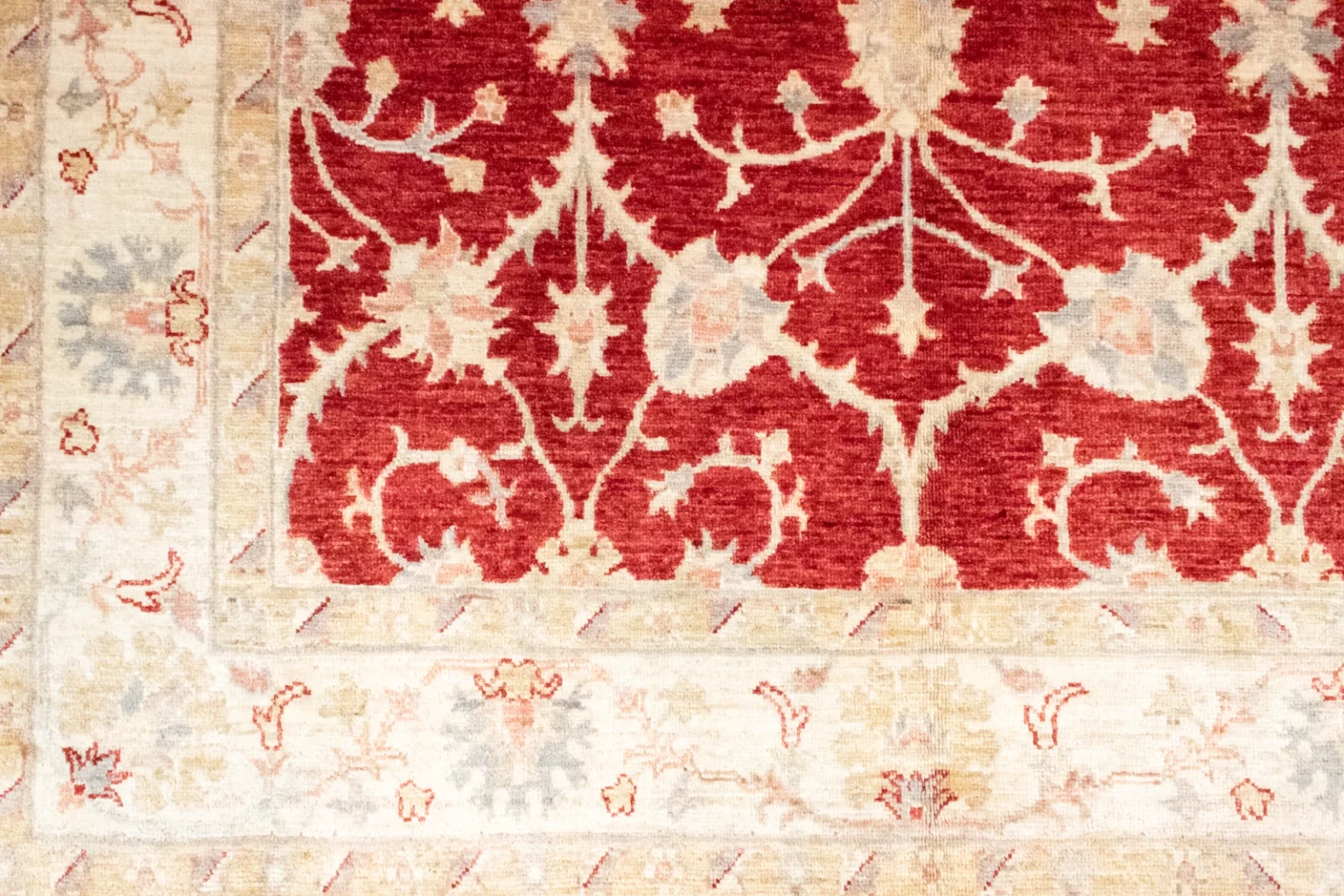
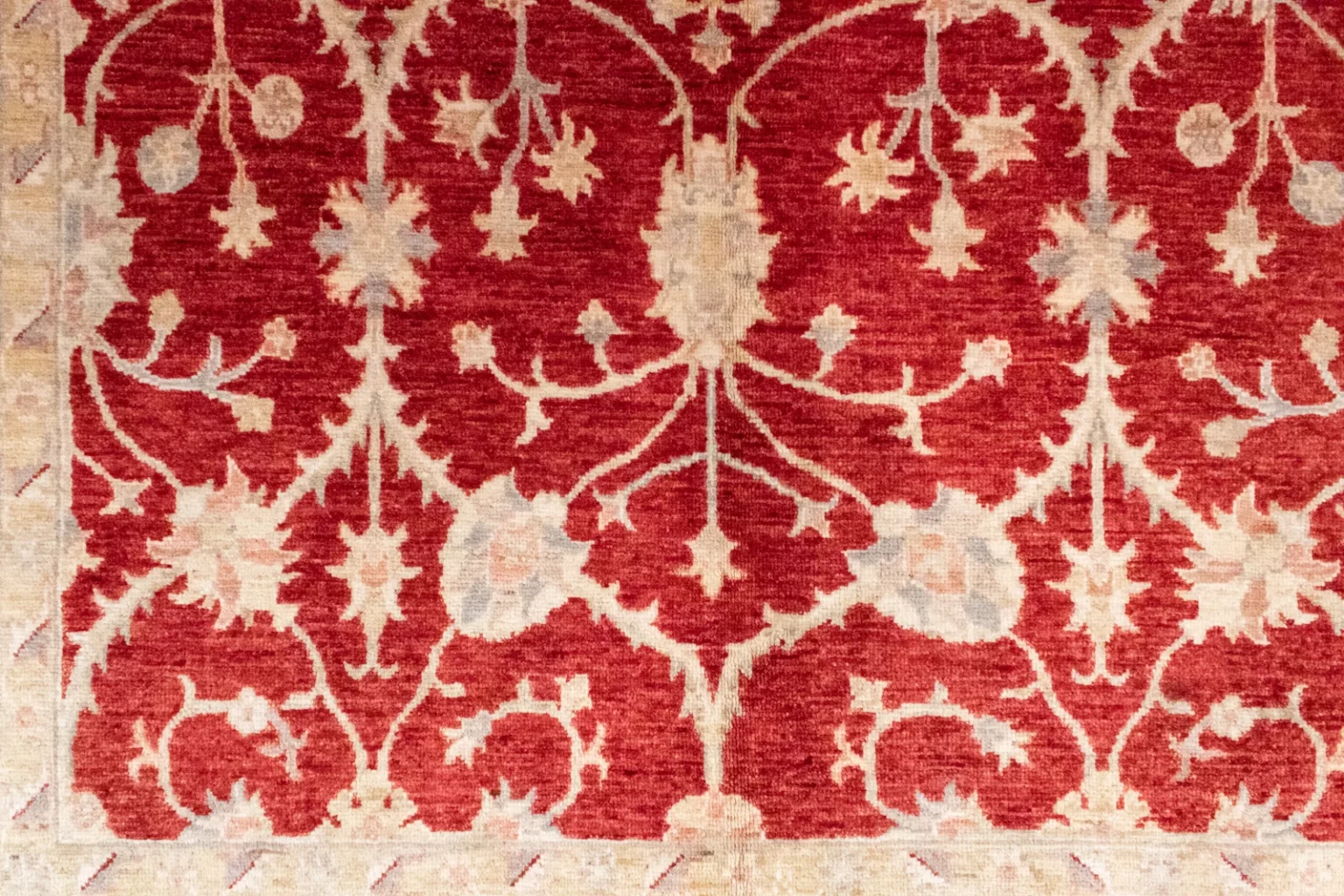
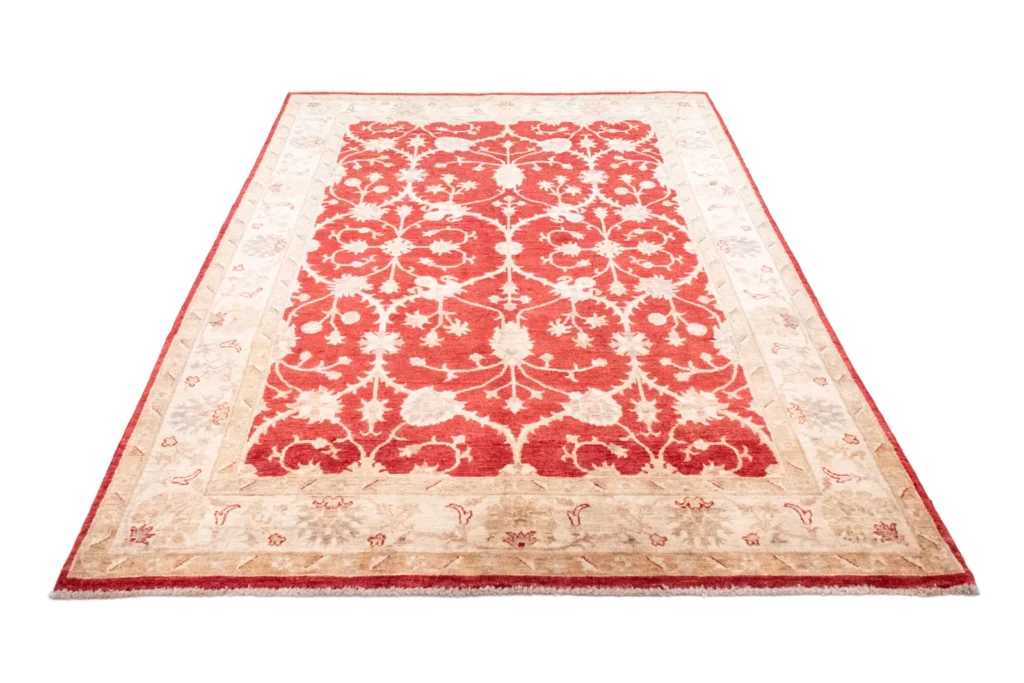
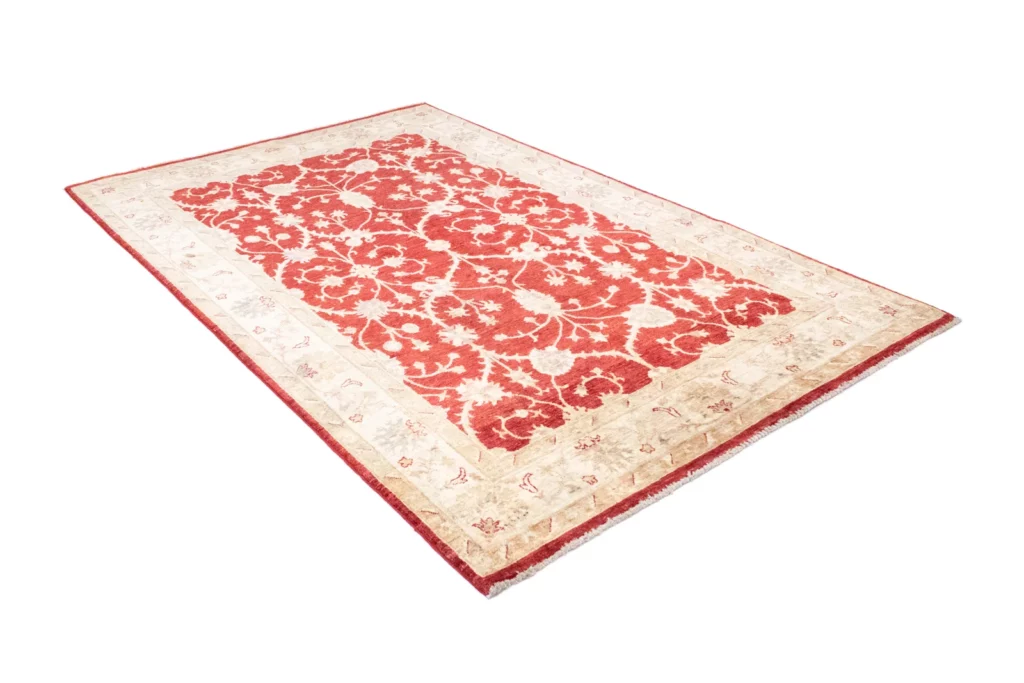
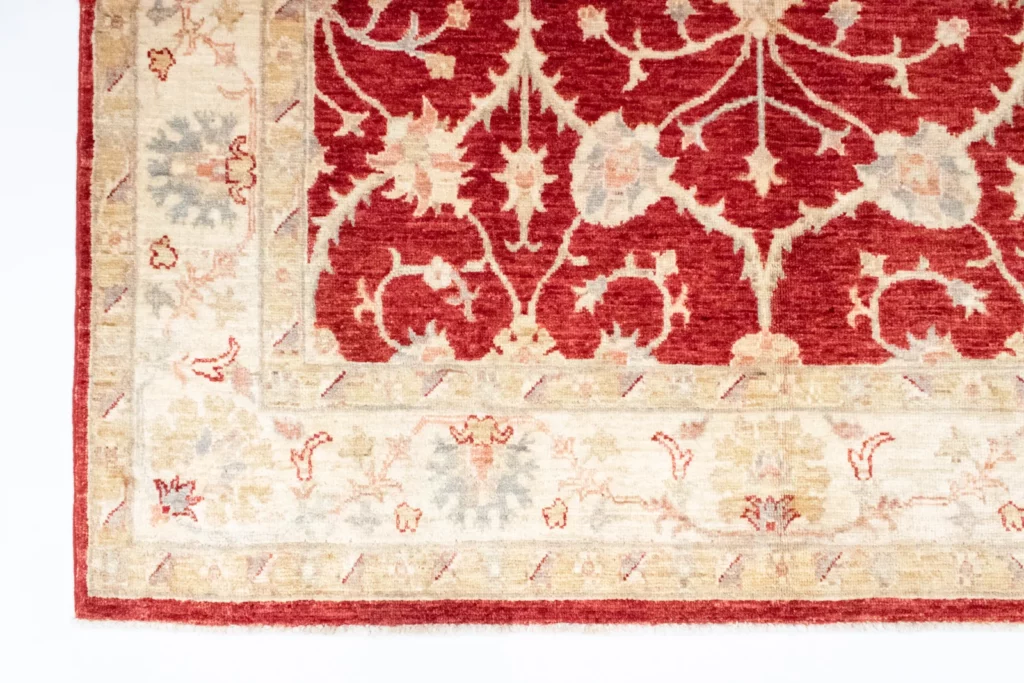
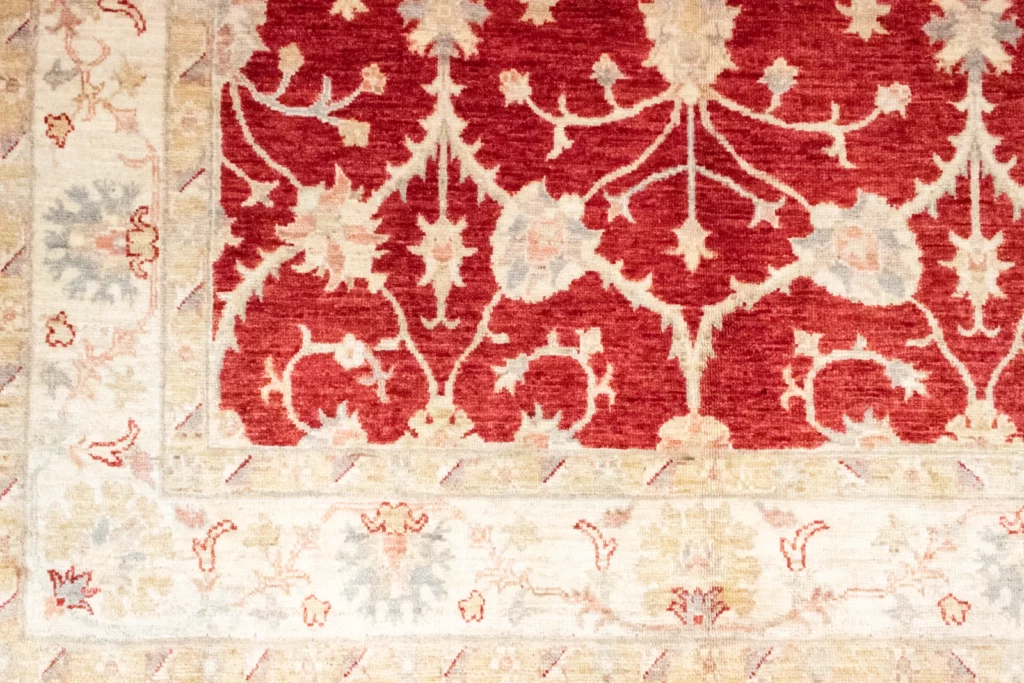
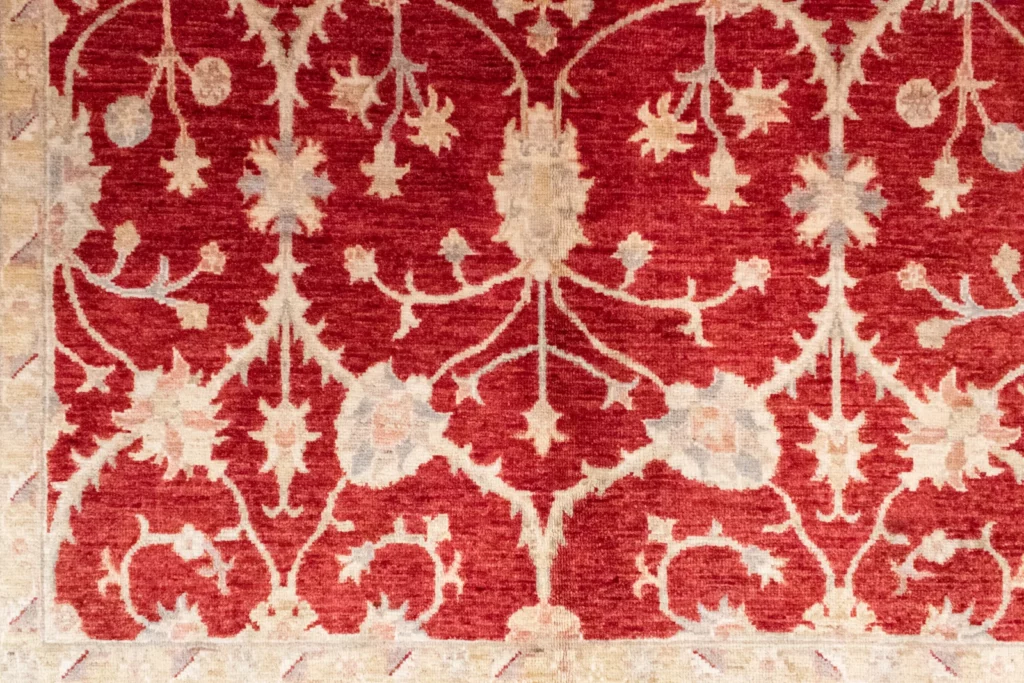
This Ziegler rug is described through varied colours and designs. Ziegler compositions are often inspired by traditional Persian motifs, with floral and geometric elements appearing frequently. Floral forms may take the shape of stylised flowers, leaves, vines or arabesques. Geometric elements provide order and definition. Together, these two families of motifs can create a balanced field in which organic movement and structured detail are combined.
Ziegler design is not limited to one strictly defined layout. Larger branches, smaller blossoms and geometric accents may be arranged into a repeating framework, or they may be distributed more freely across the field. Some compositions emphasise regular ornament, while others allow the motifs to move with greater openness. The tradition accommodates both approaches. Its common thread is the use of familiar Persian-inspired forms within a composition that is comparatively calm in its overall presentation.
Colour is an important part of the Ziegler appearance. The stone-washing process gives the palette a soft, faded quality. Colours can therefore remain lively while appearing subdued and integrated. Ziegler rugs are produced in many colour combinations, including gentle earth tones as well as more vivid blues and reds. The varied colours and designs associated with this rug type allow the pattern to be read as traditional without requiring an intense or sharply contrasting palette.
The washed surface also influences how the pattern is perceived. Edges may appear softer, and adjacent colour areas can seem more closely connected. The ornament remains structured, but its presentation is less rigid than that of a strongly saturated design. On this rug, the varied colours and designs are set into a hand-knotted wool surface, linking the decorative language with the material and construction.
Ziegler rugs belong to a distinct design tradition with historical links to Sarough and Arak. Their motifs can recall Persian carpet art, while later production in Pakistan and Afghanistan has allowed the style to develop in different colourways and interpretations. This combination of inherited ornament and later regional production explains why Ziegler is best understood as a style with a history, a technique and a recognisable visual vocabulary.
Special Features
The notable features of this rug are its hand-knotted construction, wool pile, knot density of approximately 200,000 knots per square metre and stone-washed finish. Its varied colours and designs define its decorative character. The rug is very well preserved.
Together, these details describe the main identity of the piece. The dense knotting is an indication of high quality and longevity, while the wool provides the pile material. Stone washing gives the colours their soft, faded appearance and remains a visible part of the Ziegler character. The rug comes from Pakistan and Afghanistan and therefore belongs to the present-day production tradition of this style.
FAQ
How should I care for my Ziegler Oriental rug?
Regular vacuuming without a brush attachment is recommended for removing dust while treating the wool surface gently. Occasional professional rug cleaning helps maintain the pile and colours. Direct sunlight should be avoided because it can cause colours to fade. As stone washing is part of the rug’s character, any cleaning should be carried out professionally and with consideration for the hand-knotted wool construction.
Where do Ziegler Oriental rugs come from?
The Ziegler style has nineteenth-century roots in the Sarough and Arak region in Persia. Today, Ziegler rugs are mainly produced in Pakistan and Afghanistan. This rug comes from Pakistan and Afghanistan. Production in these countries continues traditional handcraft methods and combines them with the floral and geometric designs and special stone washing associated with Ziegler rugs.
What makes Ziegler Oriental rugs distinctive?
The distinctive combination is formed by varied designs, floral and geometric motifs, high-quality wool and hand-knotted workmanship. Special stone washing gives Ziegler rugs their soft, faded appearance. This piece also has a knot density of approximately 200,000 knots per square metre. It brings together a design tradition rooted in Persian ornament with a dense handmade construction and present-day production in Pakistan and Afghanistan.
To provide the best experiences, we use technologies like cookies to store and/or access device information. Consenting to these technologies will allow us to process data such as browsing behavior or unique IDs on this site. Not consenting or withdrawing consent, may adversely affect certain features and functions.
Functional Always active
The technical storage or access is strictly necessary for the legitimate purpose of enabling the use of a specific service explicitly requested by the subscriber or user, or for the sole purpose of carrying out the transmission of a communication over an electronic communications network.
Preferences
The technical storage or access is necessary for the legitimate purpose of storing preferences that are not requested by the subscriber or user.
Statistics
The technical storage or access that is used exclusively for statistical purposes.The technical storage or access that is used exclusively for anonymous statistical purposes. Without a subpoena, voluntary compliance on the part of your Internet Service Provider, or additional records from a third party, information stored or retrieved for this purpose alone cannot usually be used to identify you.
Marketing
The technical storage or access is required to create user profiles to send advertising, or to track the user on a website or across several websites for similar marketing purposes.

 SECURE PAYMENT
 SHIPPING PARTNERS