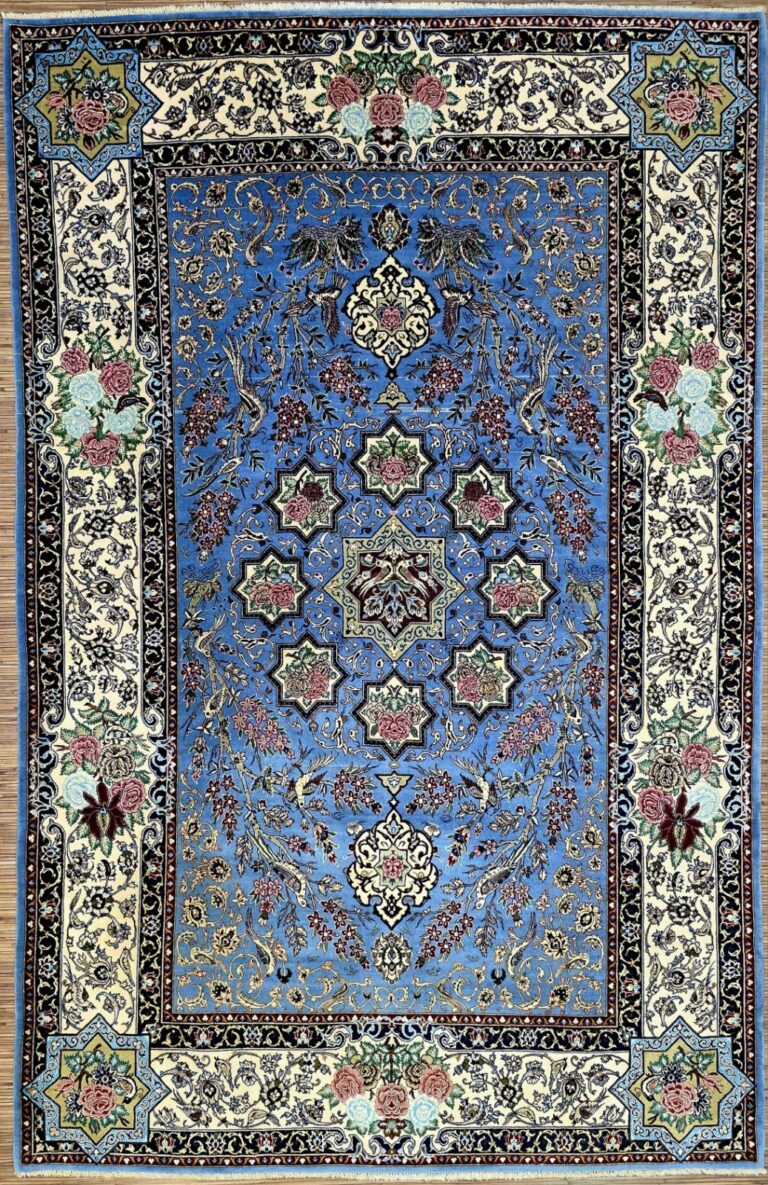
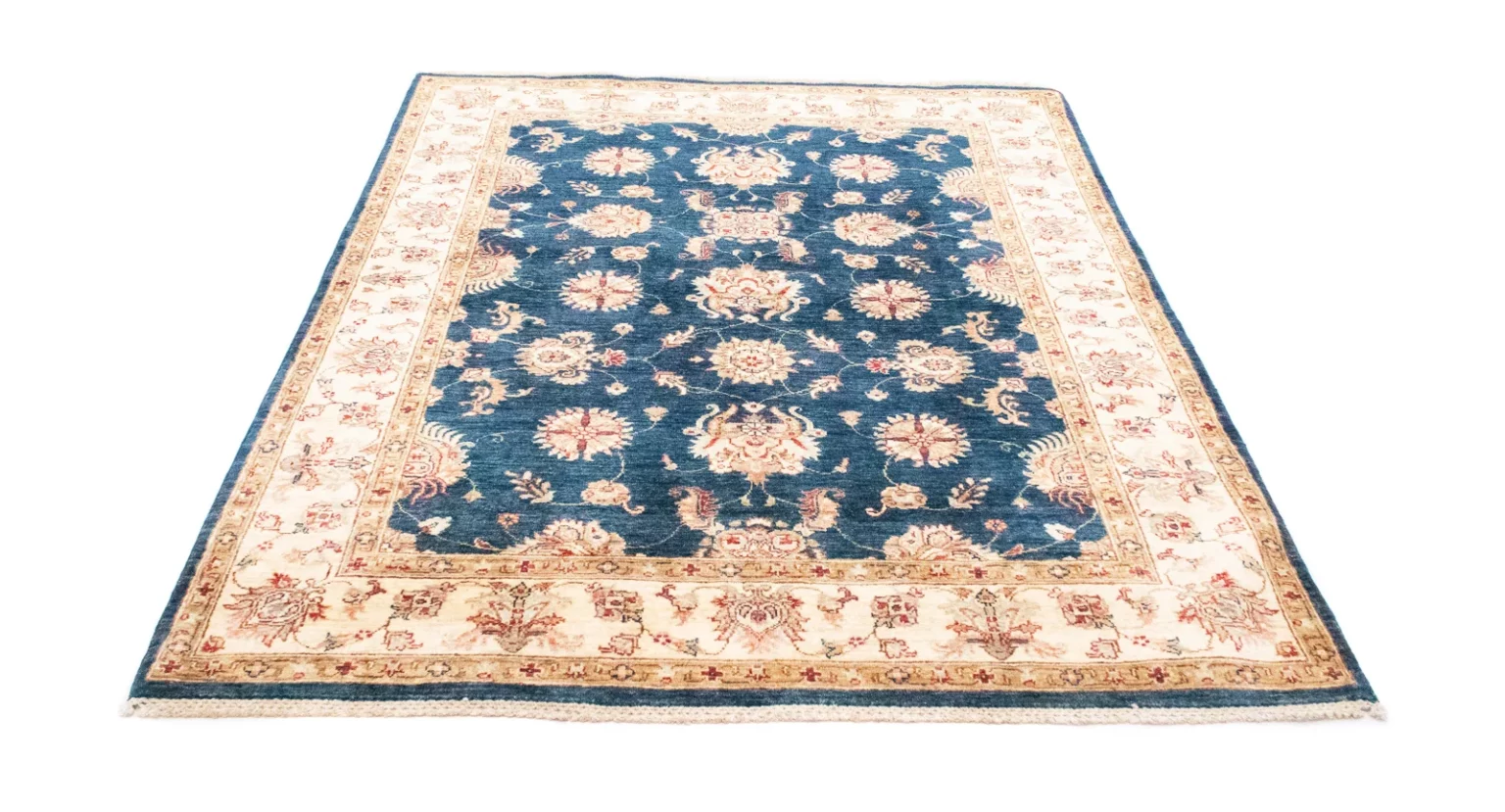
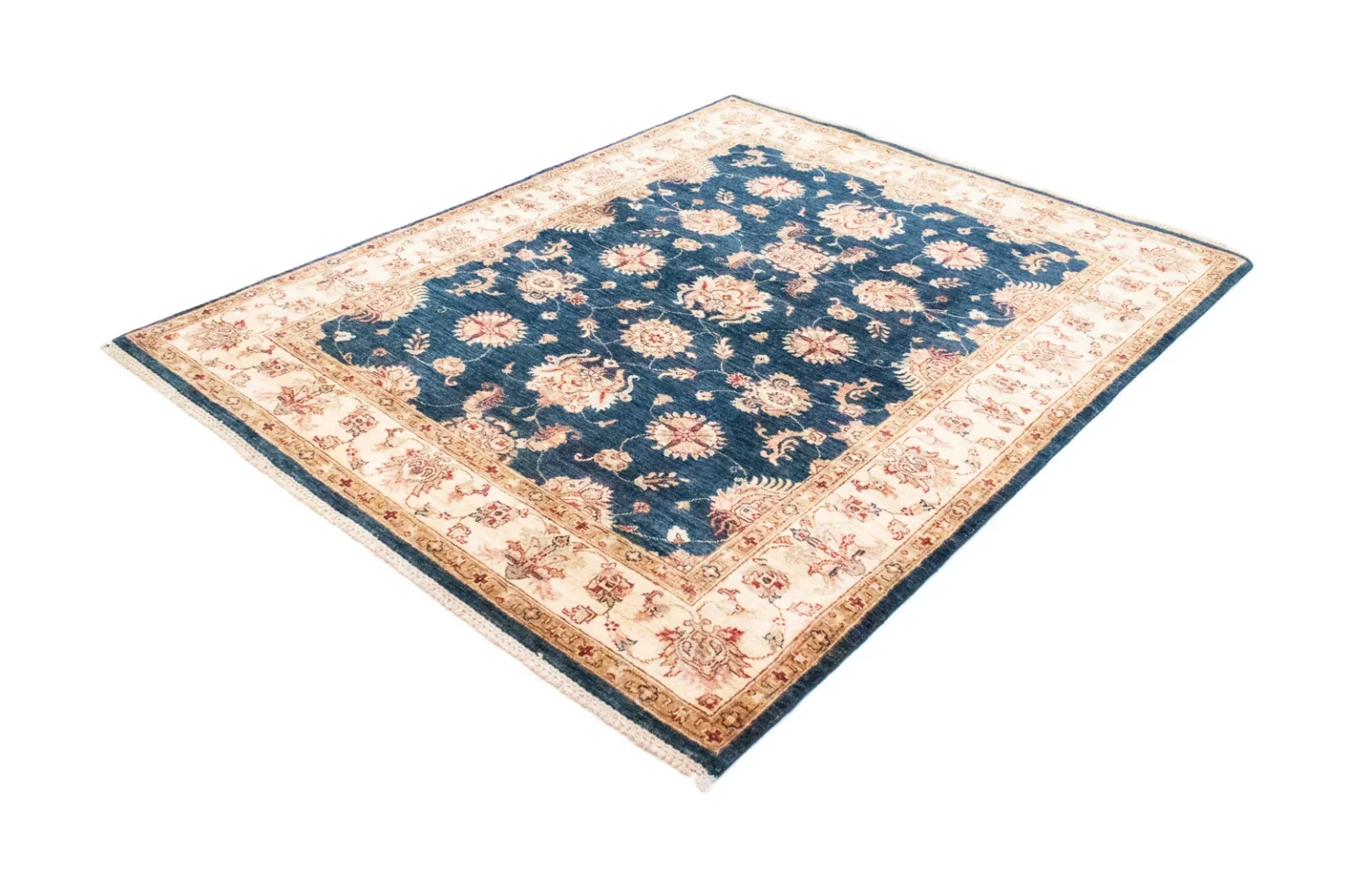
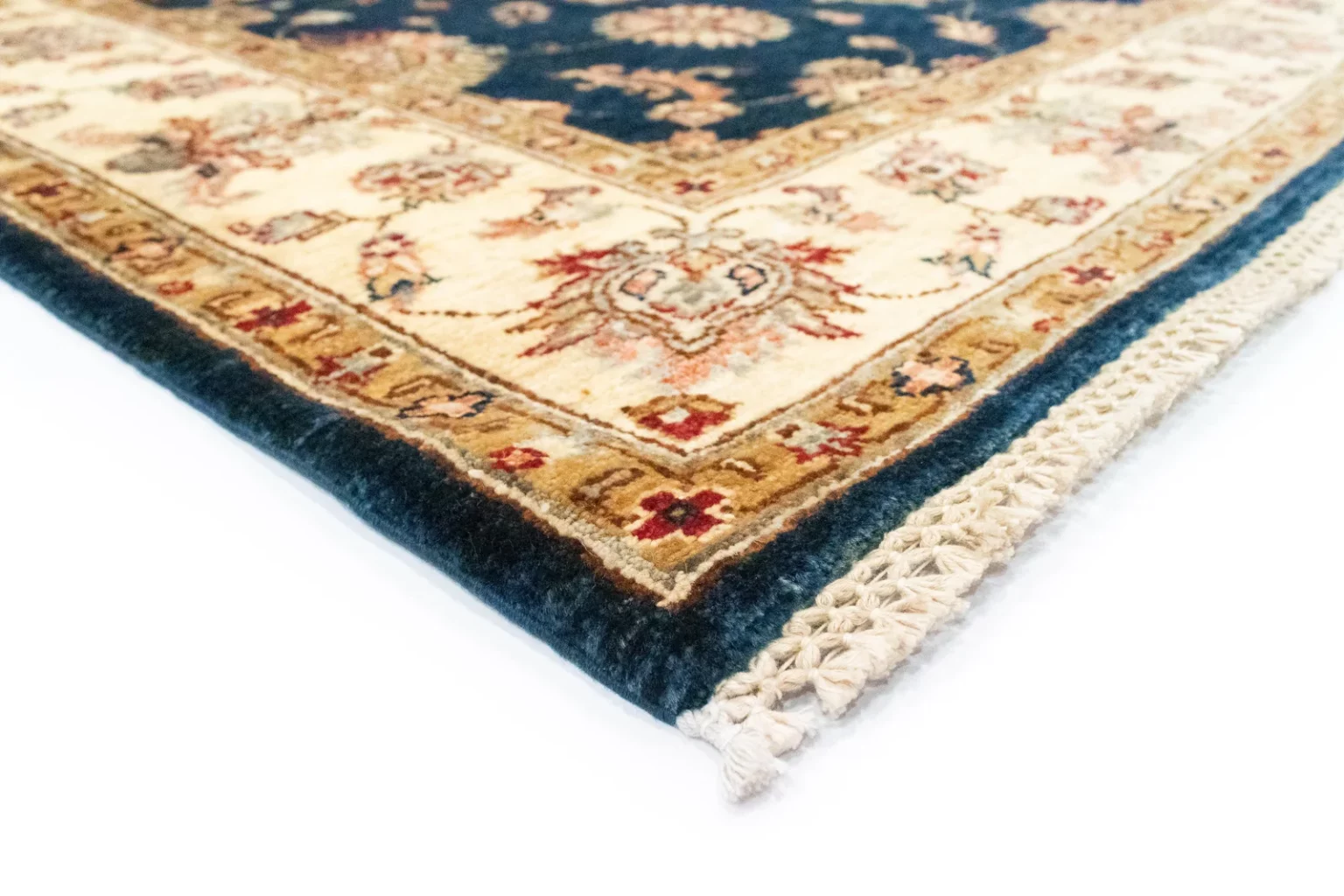
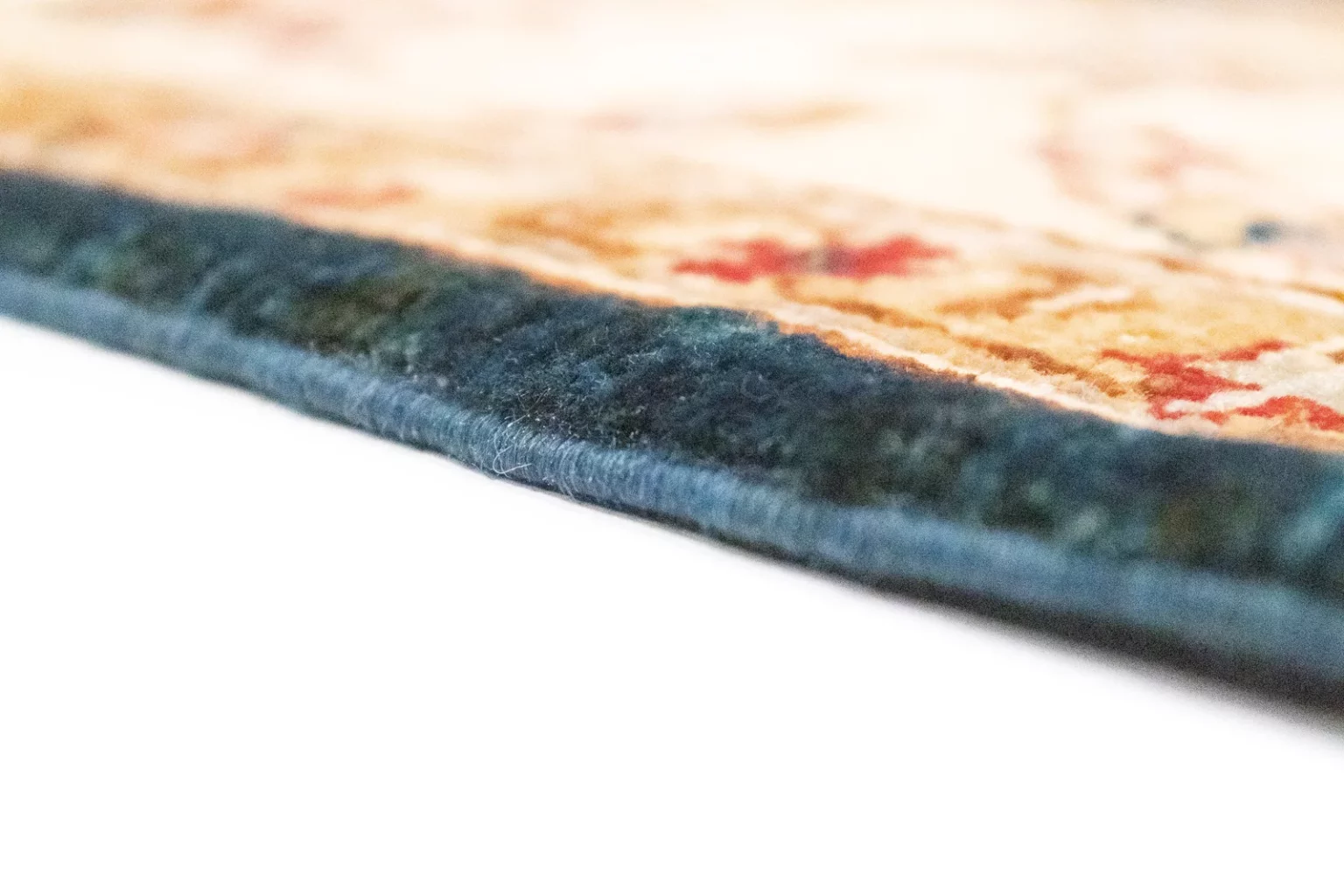
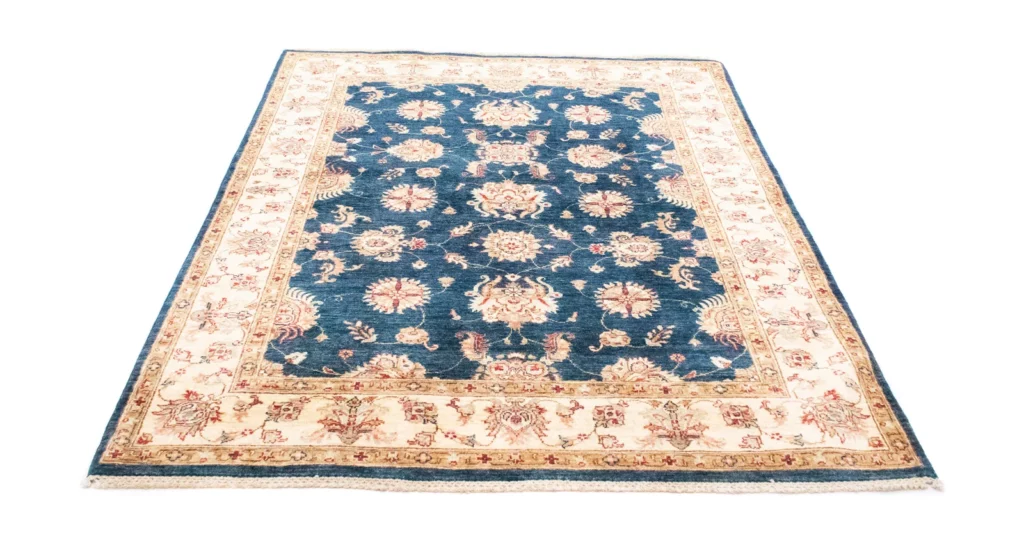
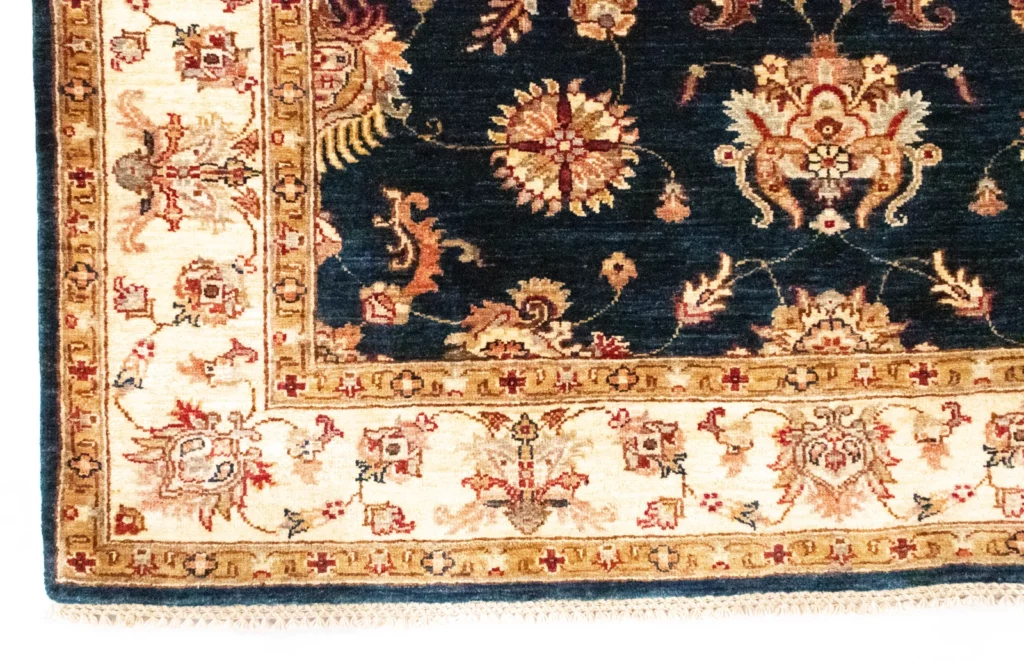
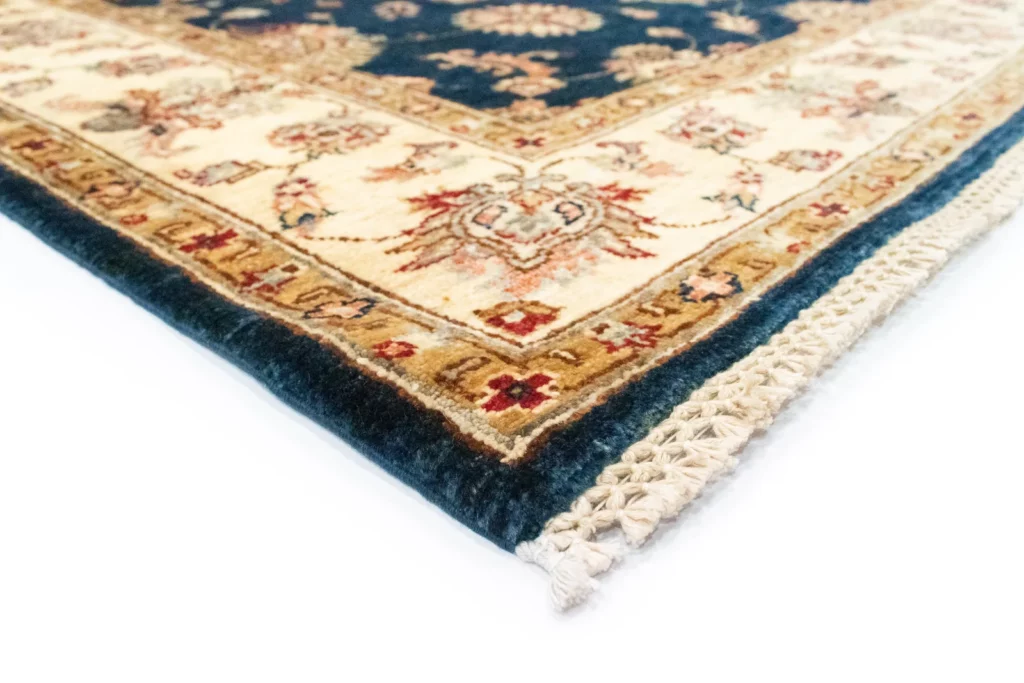
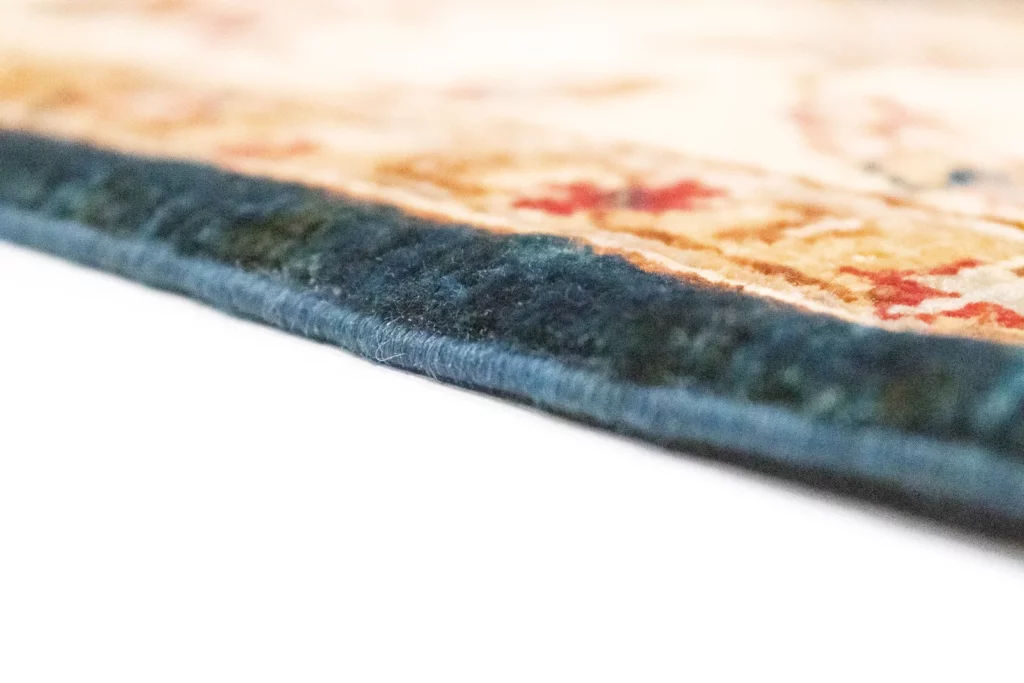
This Ziegler Farahan Oriental rug is hand-knotted and made from high-quality wool. Wool forms the pile, giving the surface its tactile character and visual depth. A hand-knotted rug is built knot by knot on a loom rather than produced in one continuous mechanical process. Each row is worked into the foundation, after which the pile is trimmed and the surface is finished. The pattern is therefore inseparable from the construction of the rug itself.
Wool has long been used in rug making because its fibres combine resilience with a pleasant handle. Depending on how it is spun, knotted, clipped and finished, wool can create a surface that feels both substantial and soft. Material selection is part of the craft: the yarn must be workable at the loom and must support the intended drawing of the design. In this piece, the wool pile is one of the stated features of the construction.
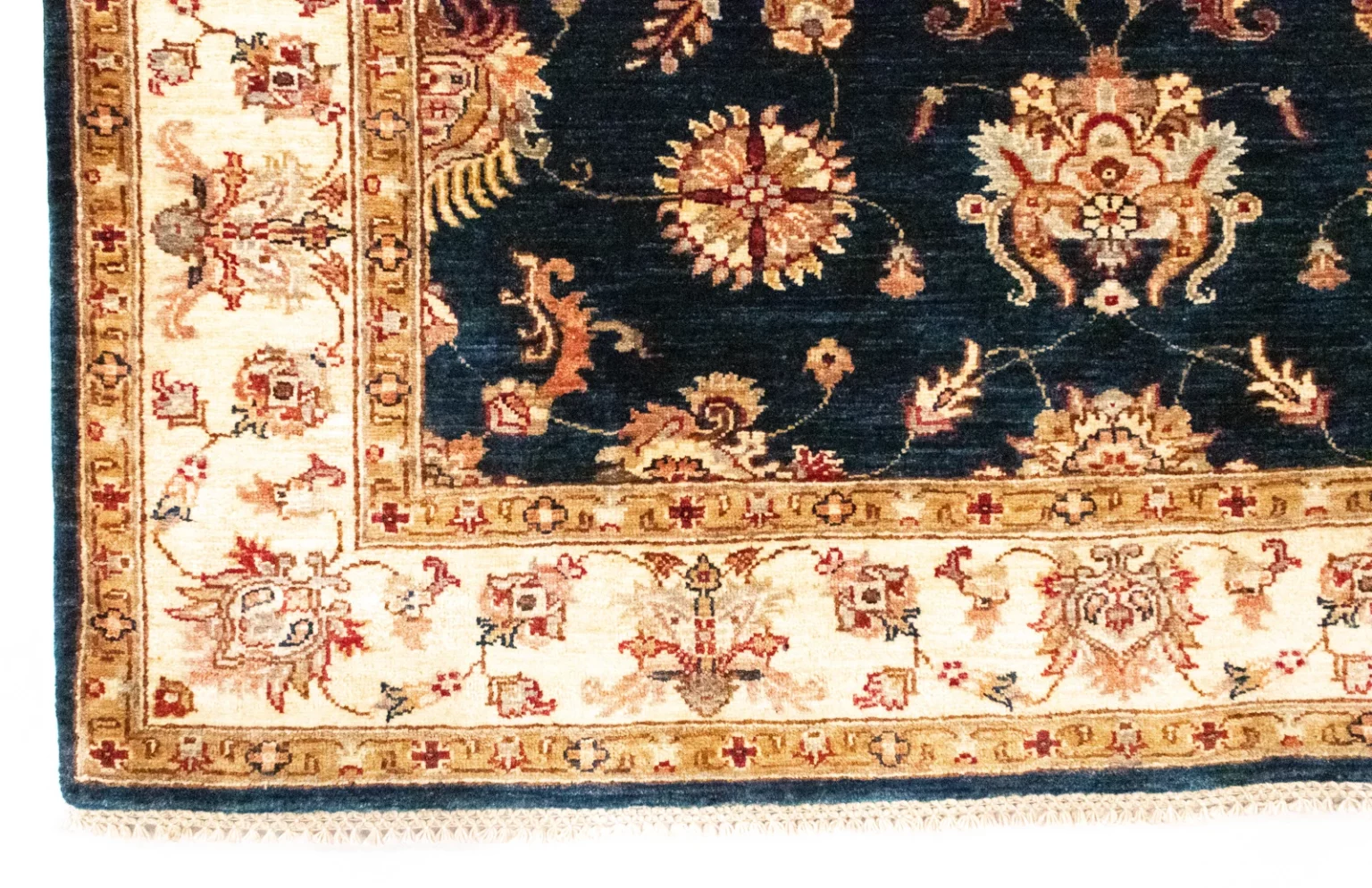
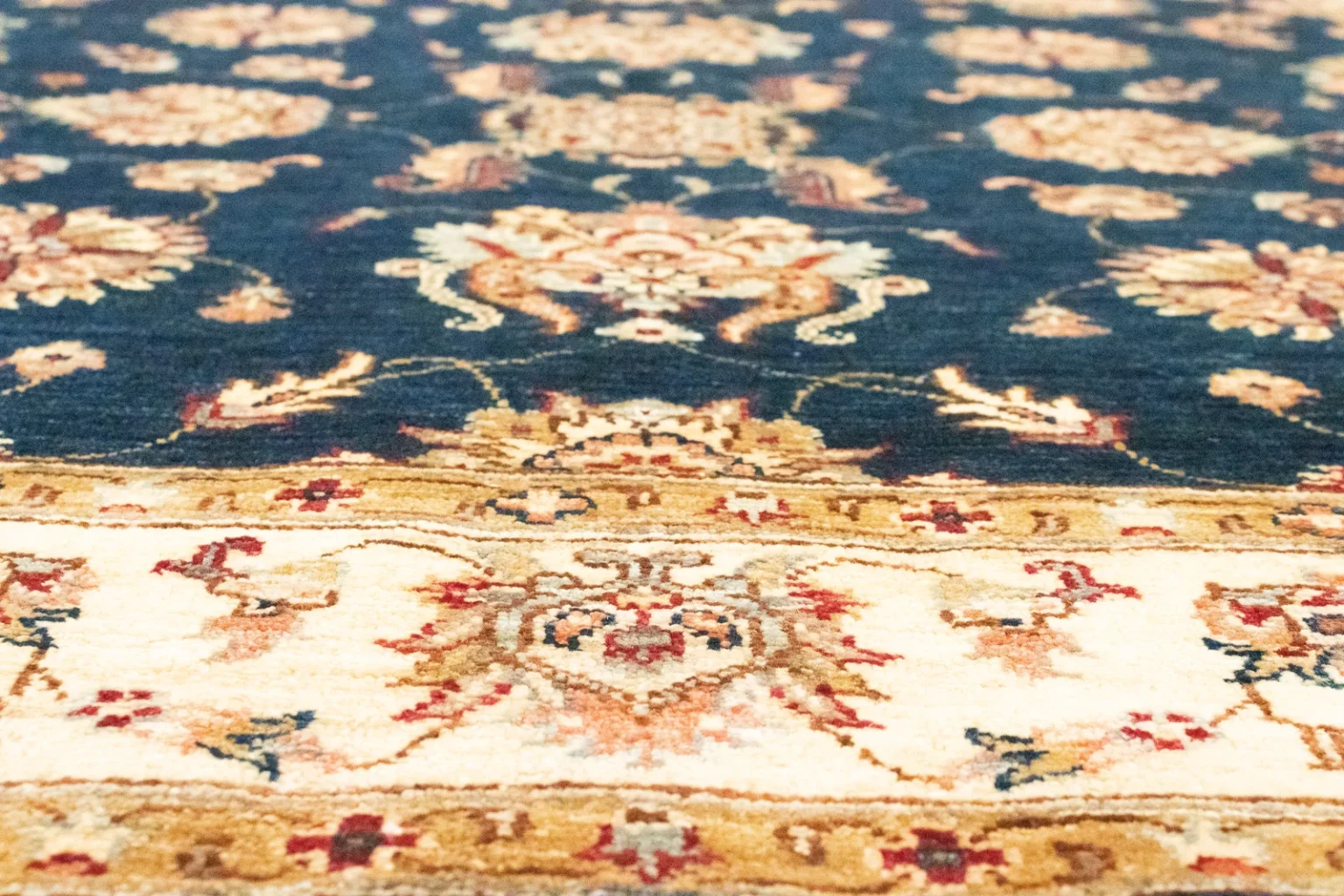
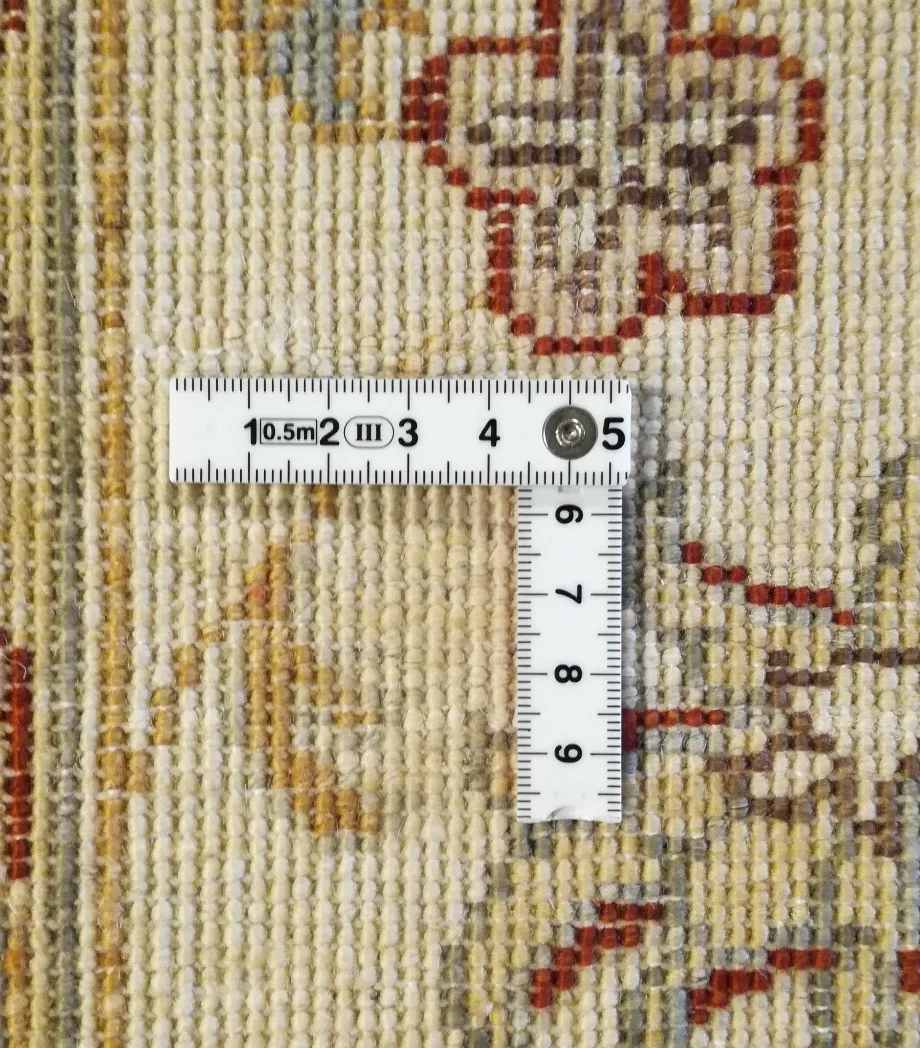
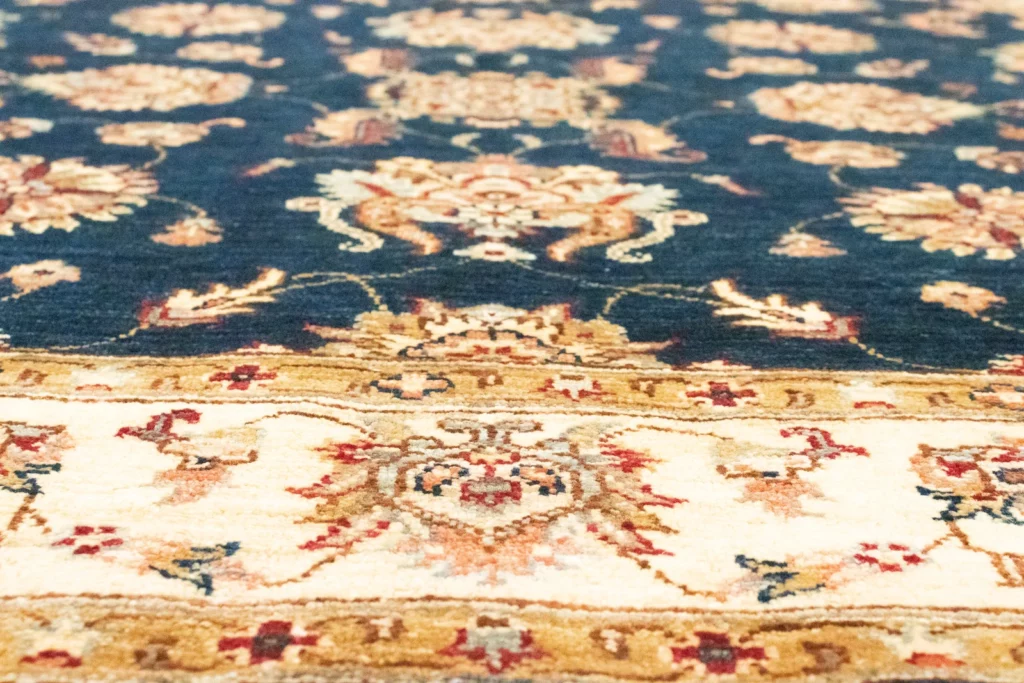
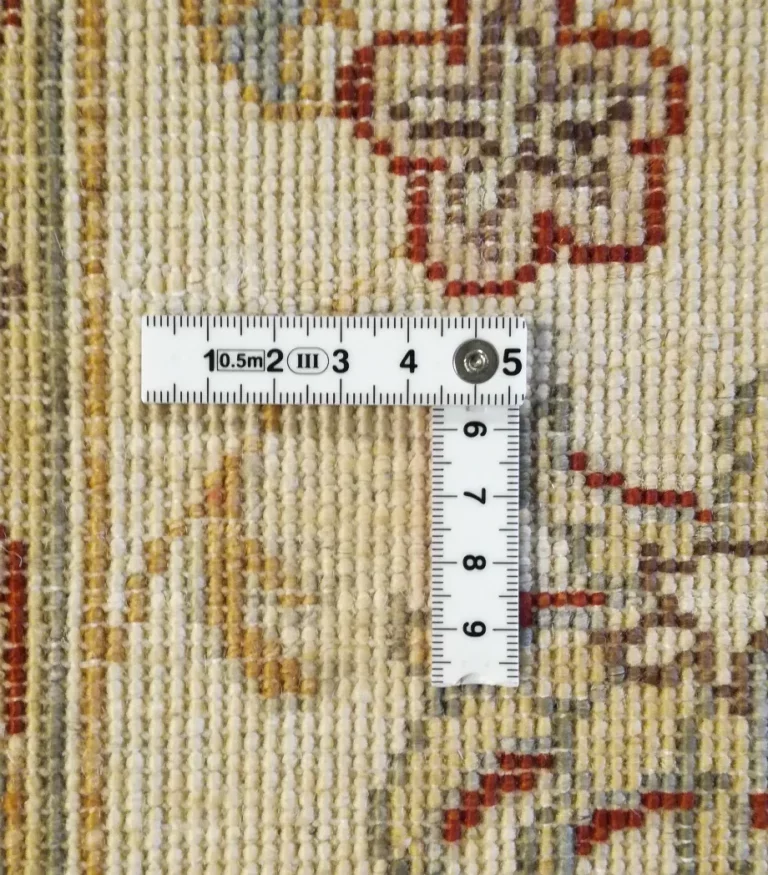
The high knot density is another technical characteristic of the rug. A dense structure allows outlines, small motifs and changes in colour to be rendered with greater precision. It also requires sustained attention during the weaving process, since the design has to be transferred carefully to the knotting sequence. The rug has additionally received a special stone wash. This is a finishing treatment that affects the way the pile, colours and overall surface are perceived.
Origin and Tradition
The stated origin of this rug is Pakistan/Afghanistan. Both countries have established traditions of making hand-knotted Oriental rugs, with regional practices that differ in drawing, wool preparation, colour use and workshop organisation. The origin identifies the production context of this particular piece and should be kept separate from the name Ziegler Farahan. A style or trade designation may refer to a design lineage without proving where an individual rug was made.
Afghanistan has a long history of wool production and rug weaving. Afghan weaving traditions include strong geometric arrangements, repeated tribal motifs and designs that place emphasis on the character of the wool and the clarity of the field. Knowledge of knotting, colour preparation and pattern construction is often passed through families and workshops. The process remains closely connected to the loom: the weaver builds the image through individual knots and adjusts the drawing as the work progresses.
Pakistan is also an important centre for hand-knotted Oriental rugs. Workshops there have interpreted a wide range of historical rug languages and have produced pieces for both local and international markets. Floral compositions, medallions, scrolling vines and geometric repeats may all be adapted to different formats and qualities. In this context, the name Ziegler Farahan identifies a design relationship, while the stated Pakistan/Afghanistan origin remains the relevant origin information for this rug.
Farahan is a region in north-western Iran associated with its own rug tradition, balanced compositions and the combination of floral and geometric elements. Ziegler rugs are likewise associated in the trade with broad, composed ornament and a restrained, lived-in colour impression. Designs connected with these traditions can be reproduced or adapted in different countries. It is therefore important to distinguish a regional or stylistic reference from the place of manufacture of the specific piece offered here.
Oriental rug history has always involved exchange. Motifs travelled along trading routes, were redrawn by different workshops and were adapted to local materials, looms and working methods. A design may consequently show Iranian, Afghan, Pakistani or other influences while being made elsewhere. For this rug, the factual framework consists of the Pakistan/Afghanistan origin together with the Ziegler Farahan designation. Those two details describe production background and design reference without turning the pattern name into a claim of Iranian manufacture.
Hand-knotting also links the rug to a broader textile tradition. The loom provides a vertical structure, while rows of knots build the pile and create the visible image. The pace and precision of this work differ from industrial floor coverings. Variations in wool, knot placement and finishing are part of the character of an individually made rug. The result is a textile in which regional influence, workshop practice and the chosen finishing method meet in one object.
Design and Pattern
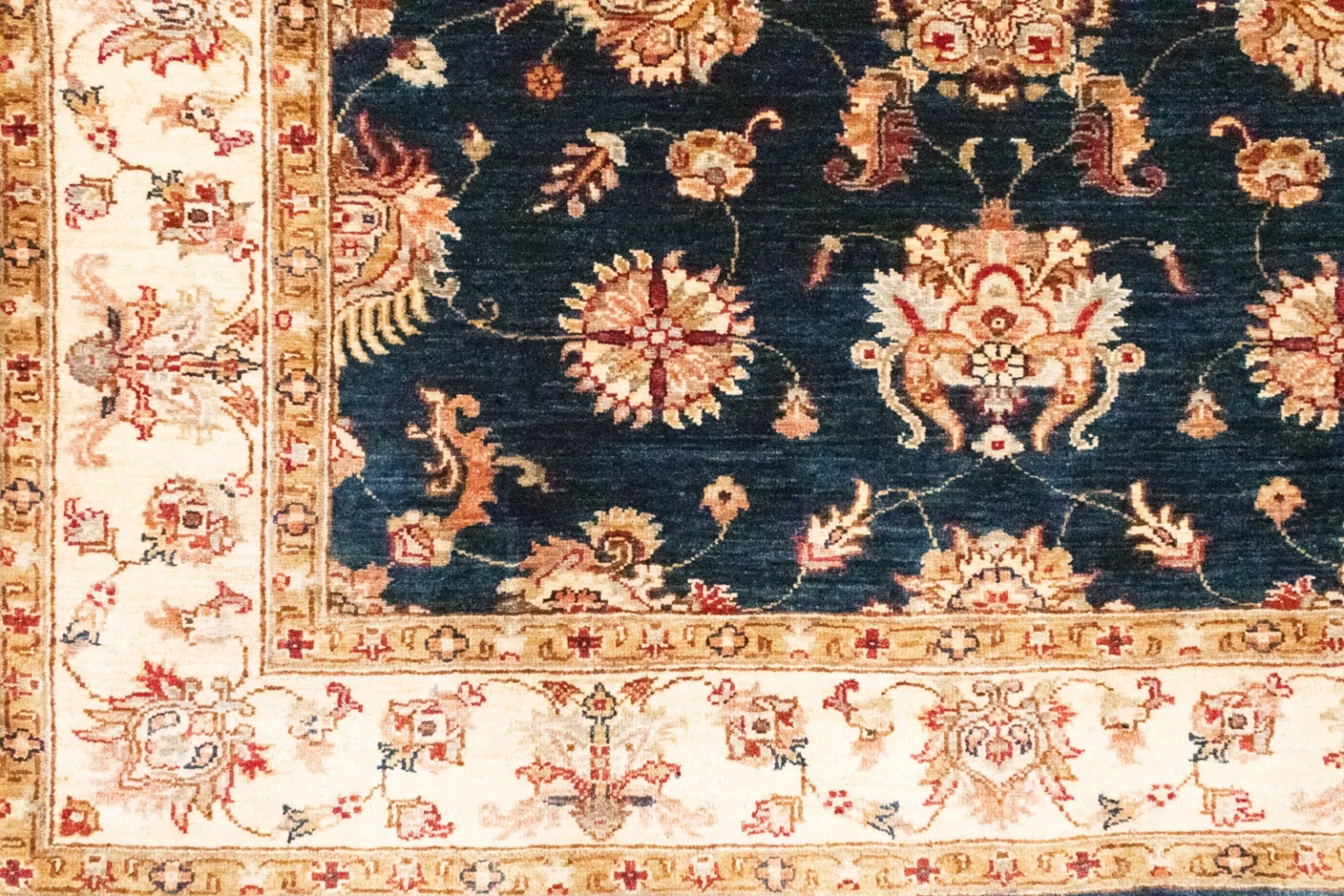
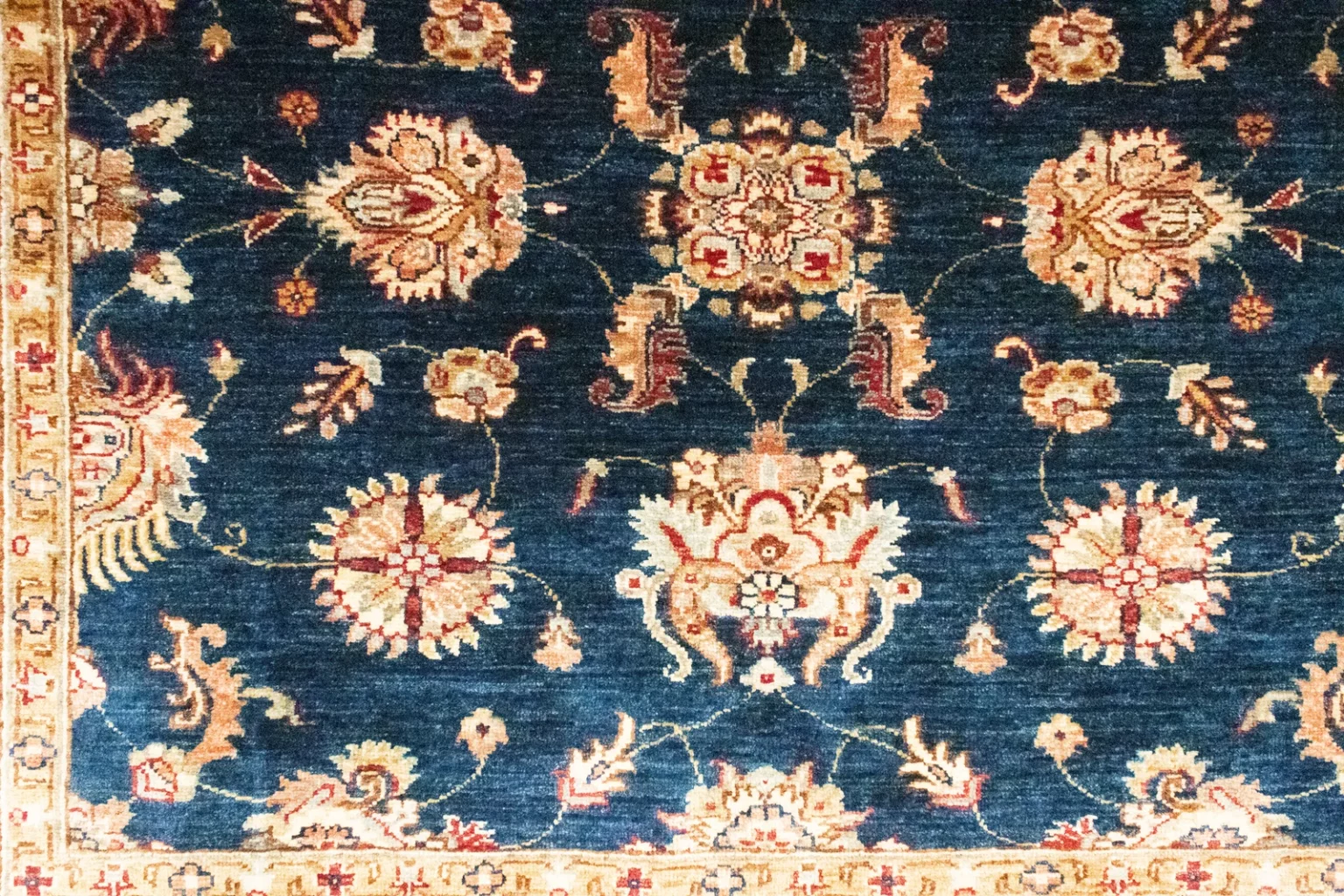
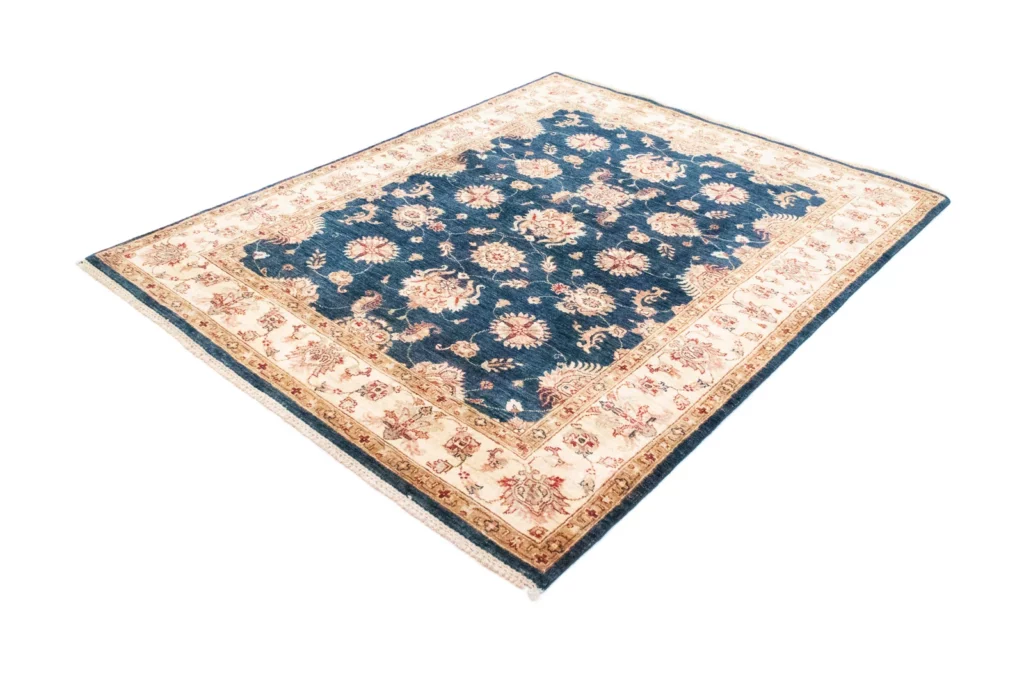
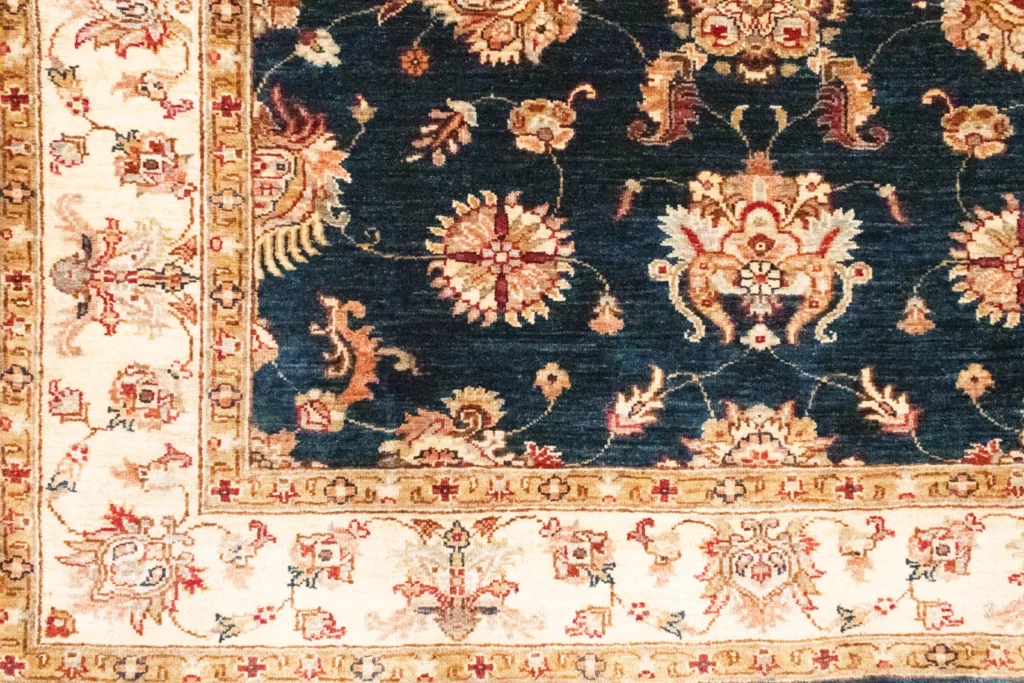
The term Ziegler Farahan points to a design vocabulary in which established Oriental rug ornament is arranged in a measured, coherent composition. Common elements associated with this vocabulary include floral motifs, vines, medallions and orderly geometric divisions. These forms are generally organised through axes, reflection or repeating rapports rather than scattered at random. The resulting image can be read as a complete field while still containing many smaller details.
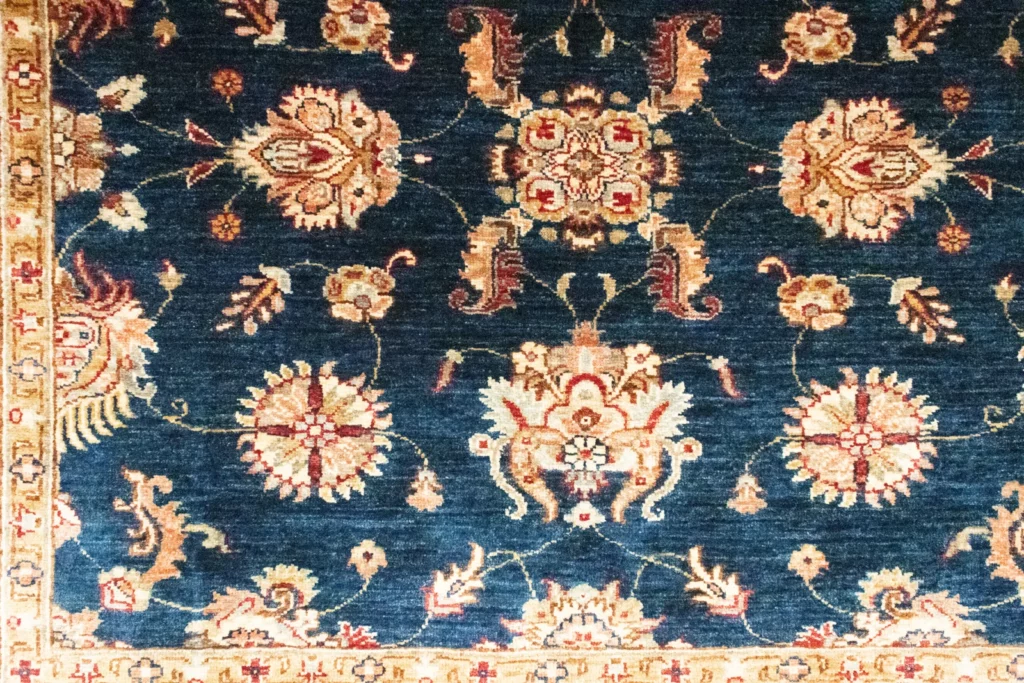
Floral ornament is one of the central languages of Oriental rug design. Flowers, leaves and curling branches may fill a central medallion, extend across the field or connect separate parts of the composition. In Farahan-related designs, these elements are often balanced through controlled symmetry. Curved lines keep the pattern moving, while smaller leaves and blossoms create links between larger forms. The exact drawing depends on the individual workshop and the pattern used.
A medallion-based design places a central shape at the centre of the visual arrangement. Corner pieces, subsidiary motifs and surrounding vines may be used to complete the field. Other compositions use an all-over pattern without a dominant centre. Both approaches are part of the wider history of Persian and Oriental rug design and continue to be adapted in contemporary workshop production. The Ziegler Farahan name provides a guide to this design family; it does not imply that every rug in the group has the same layout.
The special stone wash is particularly relevant to the colour impression of this rug. The treatment produces the stated faded colour effect, giving the palette a softened, worn-in appearance. Stone washing is a finishing process intended to alter the surface and the way the colours are read. It can visually bring neighbouring tones closer together and reduce the starkness of newly finished colour areas. Here, the faded effect is an explicit part of the rug’s described appearance.
Ziegler- and Farahan-related compositions may bring together earthy tones with red, blue and green accents. In general, colour balance depends not only on individual shades but also on the relationship between field, border and ornament density. A border frames the central design and creates a visual transition toward the edge. Additional guard borders can reinforce that framing. The effect of a palette is therefore shaped by the complete arrangement rather than by any single colour viewed in isolation.
Oriental rug patterns carry both decorative structure and historical memory. Floral scrolls and geometric forms have been redrawn across generations, with each workshop interpreting proportion, spacing and colour in its own way. On a one-off hand-knotted rug, the inherited vocabulary meets the individual execution of the makers. The pattern designation helps place the piece within a design tradition, while the handwork and stone wash give its surface a particular expression.
Pattern names are useful because they provide a common language for describing families of designs. They must nevertheless be read with care. A reference to Farahan can describe an Iranian design influence or a recognised trade style, while the stated origin of this rug is Pakistan/Afghanistan. This distinction preserves the difference between appearance and manufacture. It also explains why the rug can carry the Ziegler Farahan name while being presented as an Oriental rug rather than as a Persian rug.
Special Features
The stated knot density of this rug is 200,000 knots per square metre. Such a dense construction supports detailed drawing and allows contours and smaller ornaments to be worked with precision. It is a technical feature of the hand-knotting and helps explain the compact character of the woven structure.
The special stone wash is another defining feature. It creates the described faded colour effect and gives the rug a deliberately softened visual finish. Stone washing is used to change the surface impression and colour perception after the main knotting work has been completed. On this piece, the treatment is part of the specified execution rather than an incidental change.
The condition is described as very good. Together with the high-quality wool pile, hand-knotted construction and stone-washed finish, this gives the rug a clearly defined profile: an Oriental rug made in Pakistan or Afghanistan, carrying a Ziegler Farahan design reference, with dense knotting and a faded colour effect.
FAQ
How should I care for the rug?
Regular gentle vacuuming is suitable for routine care. Use the vacuum without a brush attachment so that the wool pile is not subjected to unnecessary mechanical stress. If something is spilled, blot the affected area immediately with a clean, dry cloth rather than rubbing it. Rubbing can disturb the fibres and affect the treated surface. If a specialist rug cleaner is needed, follow the product manufacturer’s instructions carefully.
How can I recognise a high-quality Oriental rug?
Useful indicators include knot density, even workmanship and the quality of the material. A clearly drawn, detailed pattern without conspicuous transitions or irregularities can also point to careful execution. Weight may provide an additional indication, but it is not decisive by itself. For this rug, the stated features include high-quality wool, hand-knotting and a dense knot structure.
Can the rug be used over underfloor heating?
Yes. The rug is suitable for rooms with underfloor heating. Wool is a natural temperature regulator and can absorb and release warmth. The heating should not be set too high, as excessive temperatures may put unnecessary strain on the wool fibres. Proper installation and regular gentle care help preserve the pile and the stone-washed surface.
To provide the best experiences, we use technologies like cookies to store and/or access device information. Consenting to these technologies will allow us to process data such as browsing behavior or unique IDs on this site. Not consenting or withdrawing consent, may adversely affect certain features and functions.
Functional Always active
The technical storage or access is strictly necessary for the legitimate purpose of enabling the use of a specific service explicitly requested by the subscriber or user, or for the sole purpose of carrying out the transmission of a communication over an electronic communications network.
Preferences
The technical storage or access is necessary for the legitimate purpose of storing preferences that are not requested by the subscriber or user.
Statistics
The technical storage or access that is used exclusively for statistical purposes.The technical storage or access that is used exclusively for anonymous statistical purposes. Without a subpoena, voluntary compliance on the part of your Internet Service Provider, or additional records from a third party, information stored or retrieved for this purpose alone cannot usually be used to identify you.
Marketing
The technical storage or access is required to create user profiles to send advertising, or to track the user on a website or across several websites for similar marketing purposes.

 SECURE PAYMENT
 SHIPPING PARTNERS