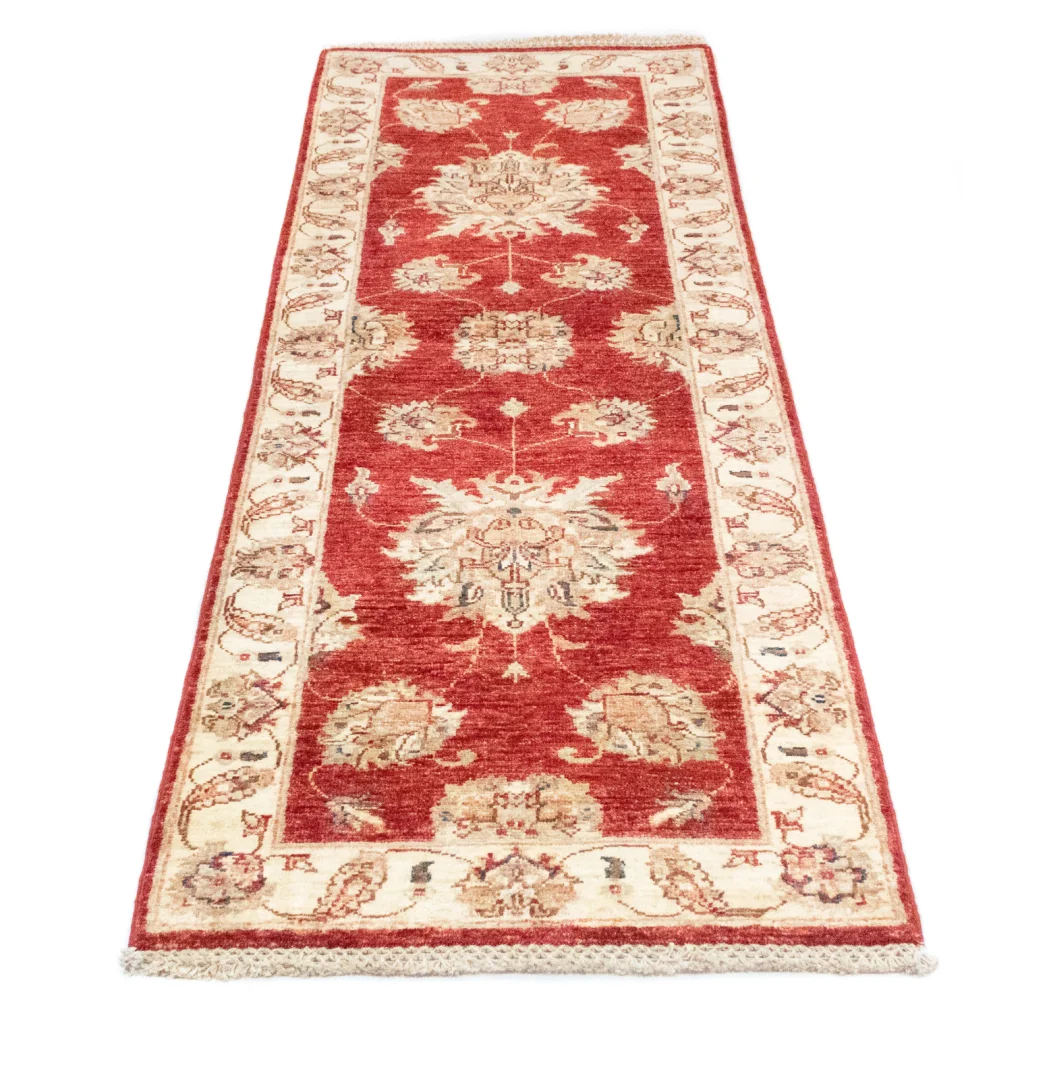
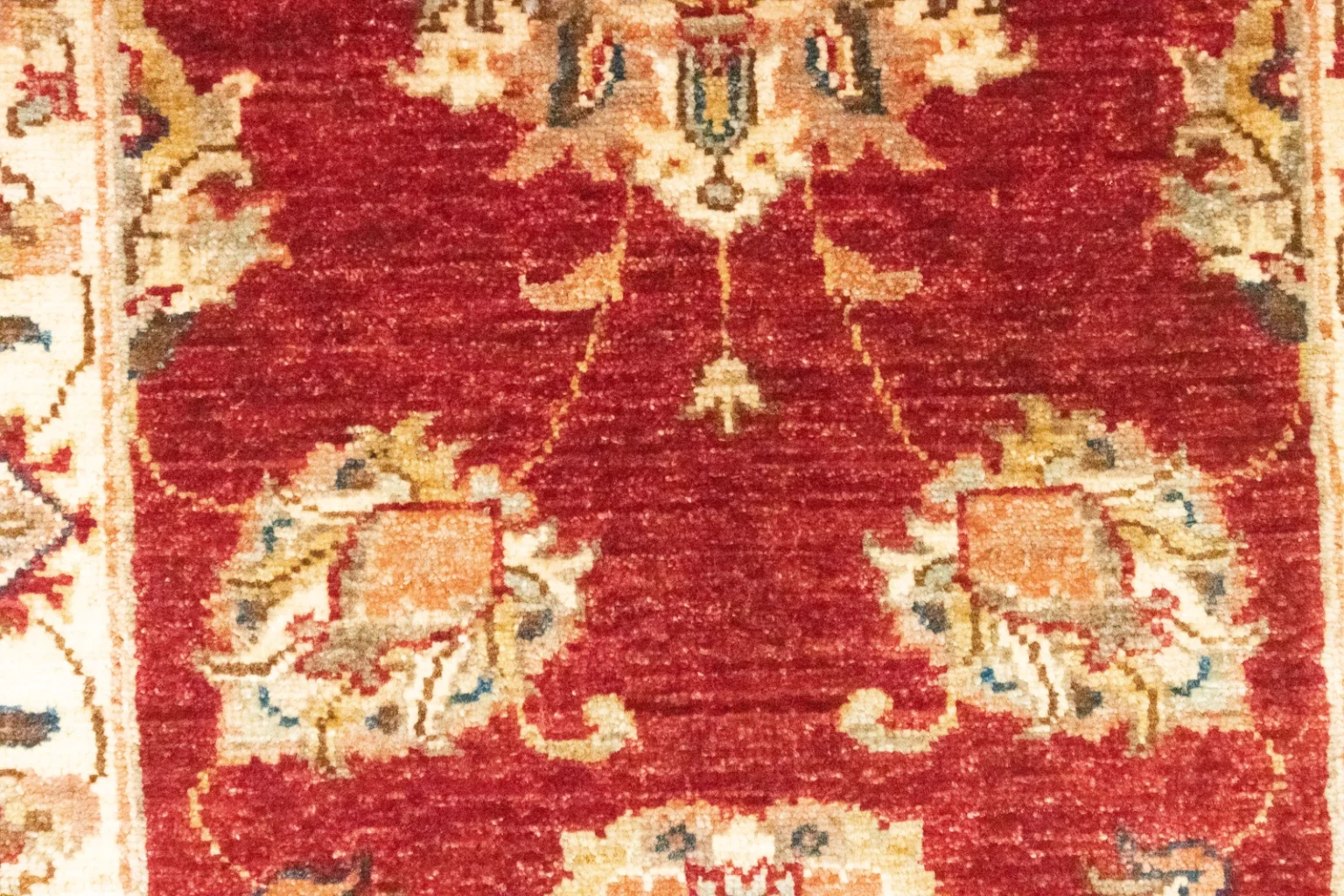
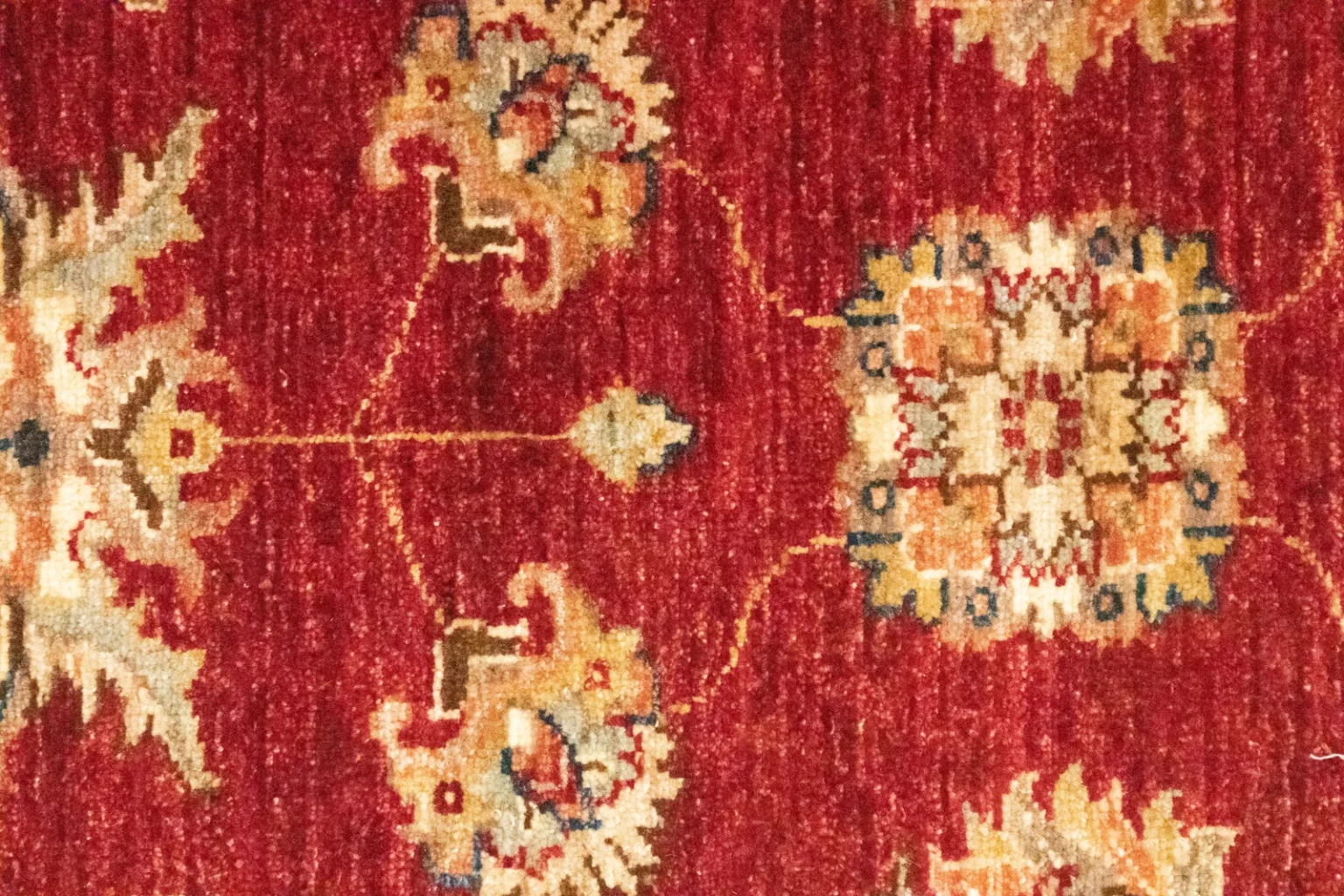
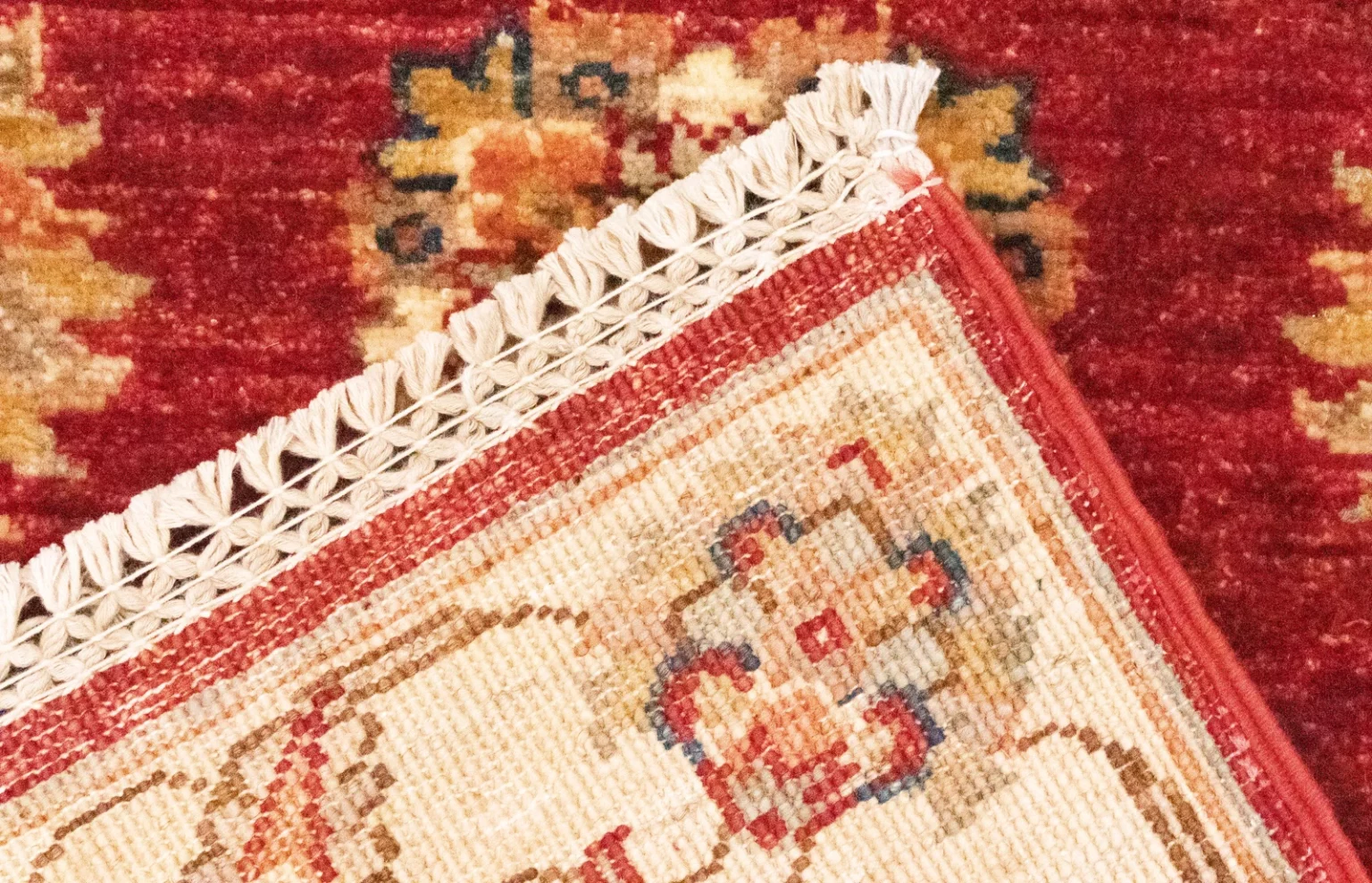
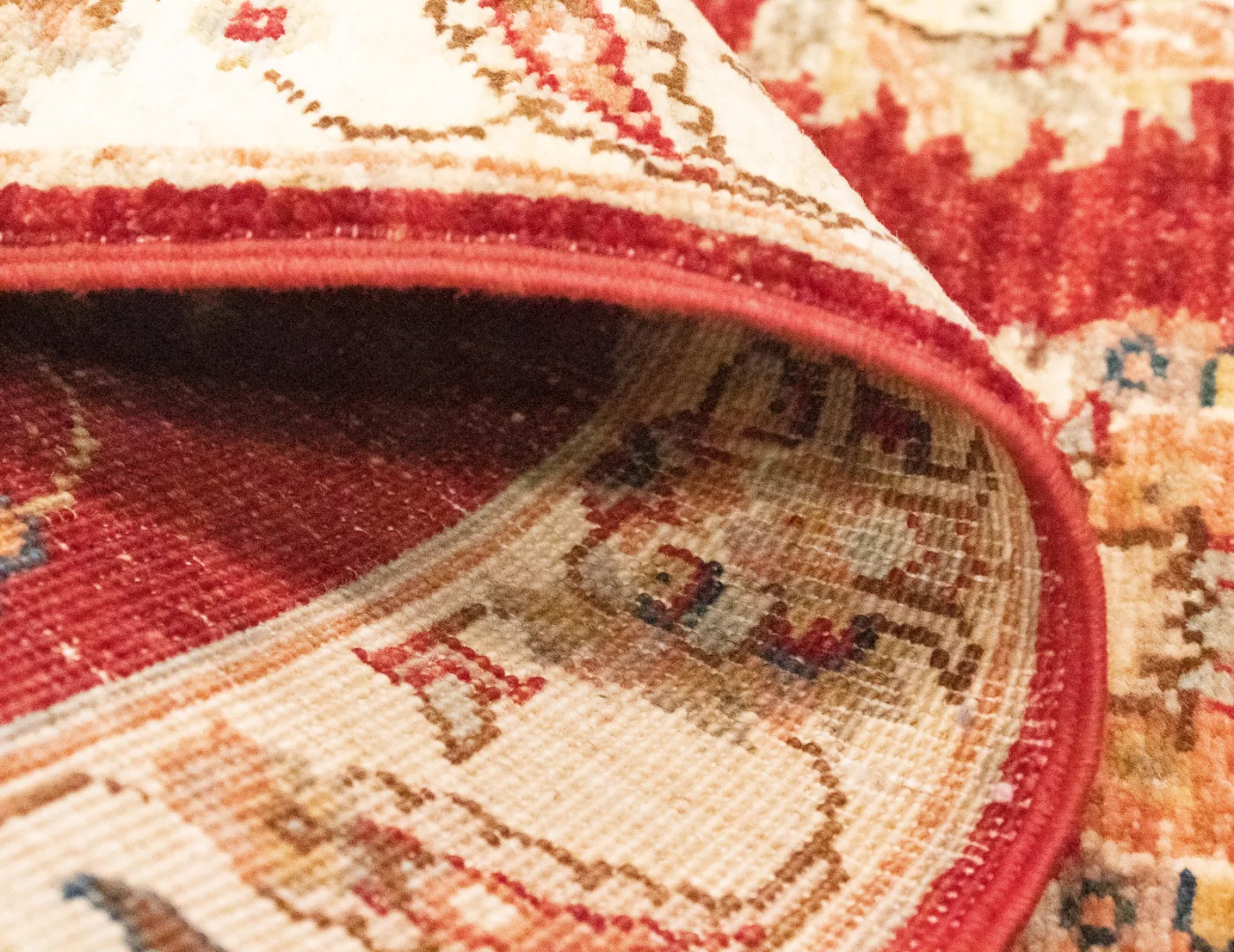
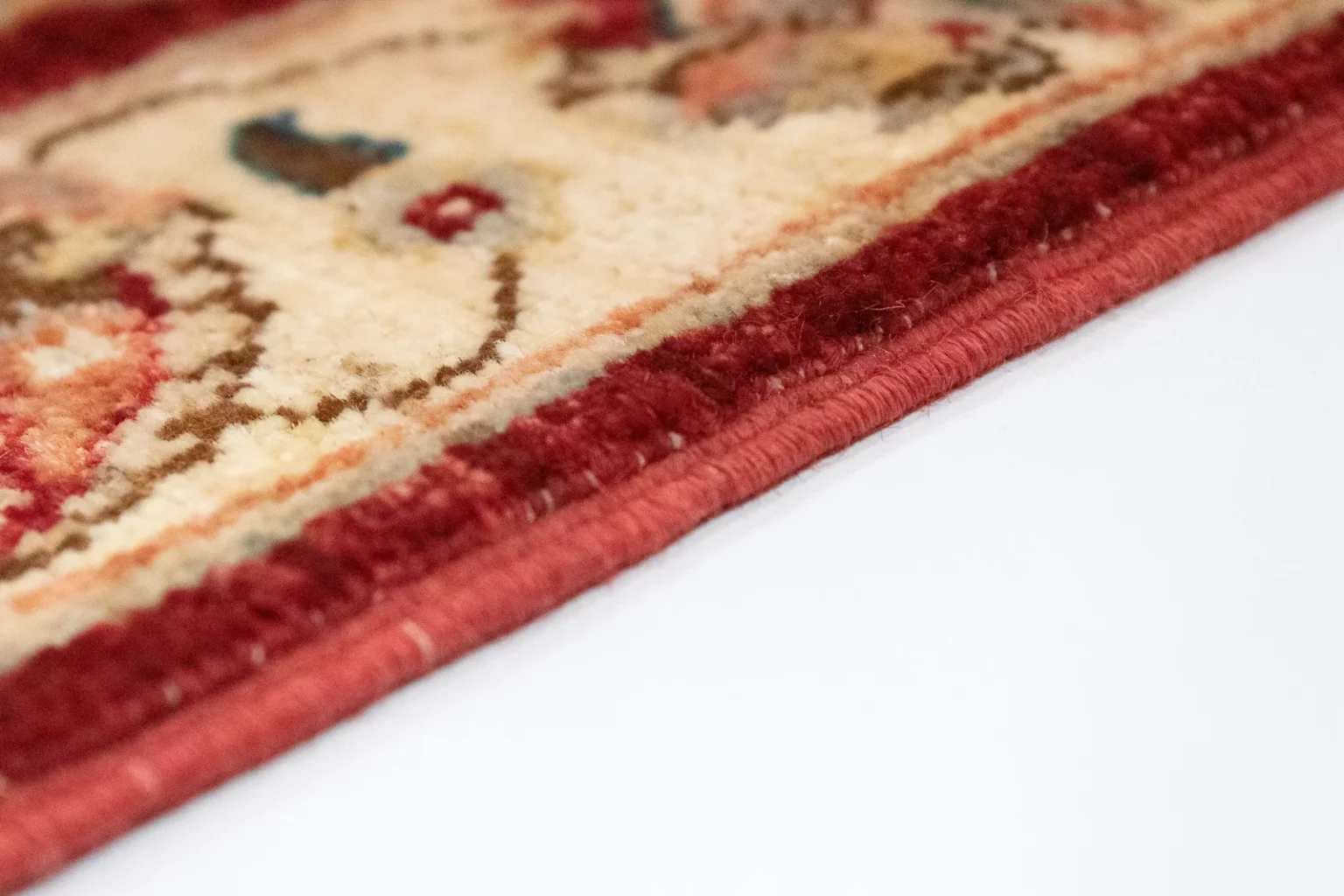
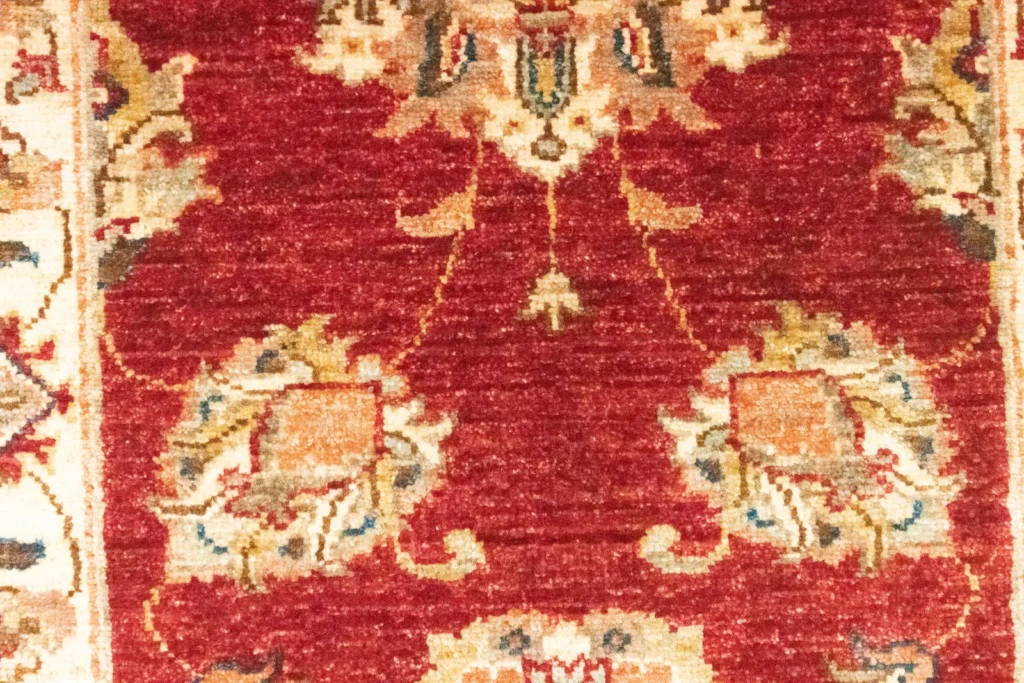
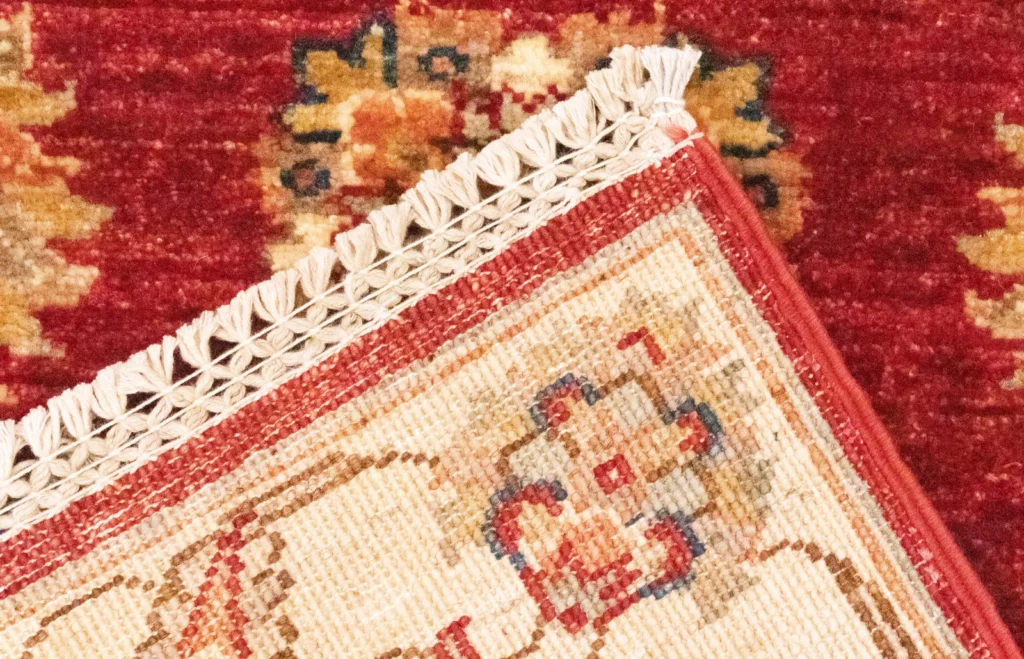
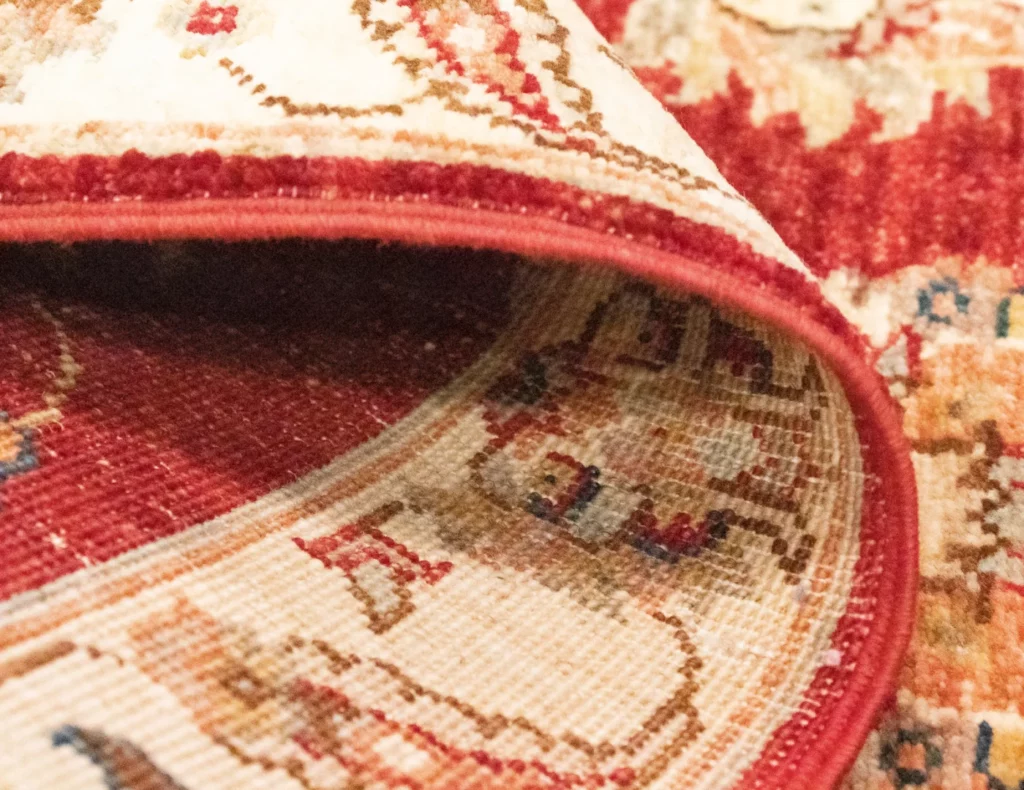
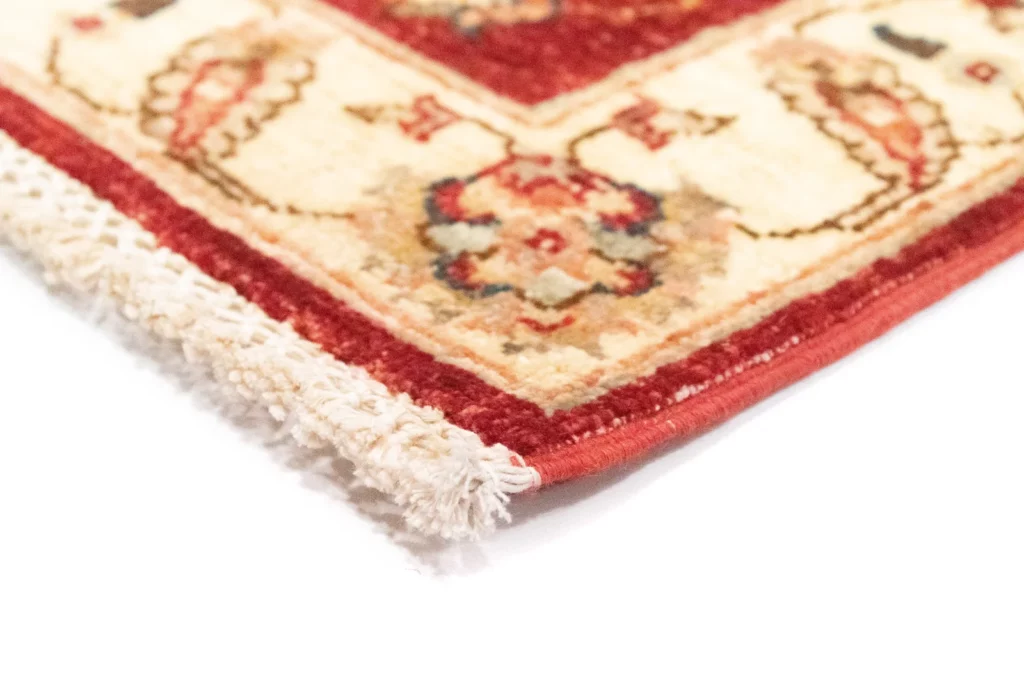
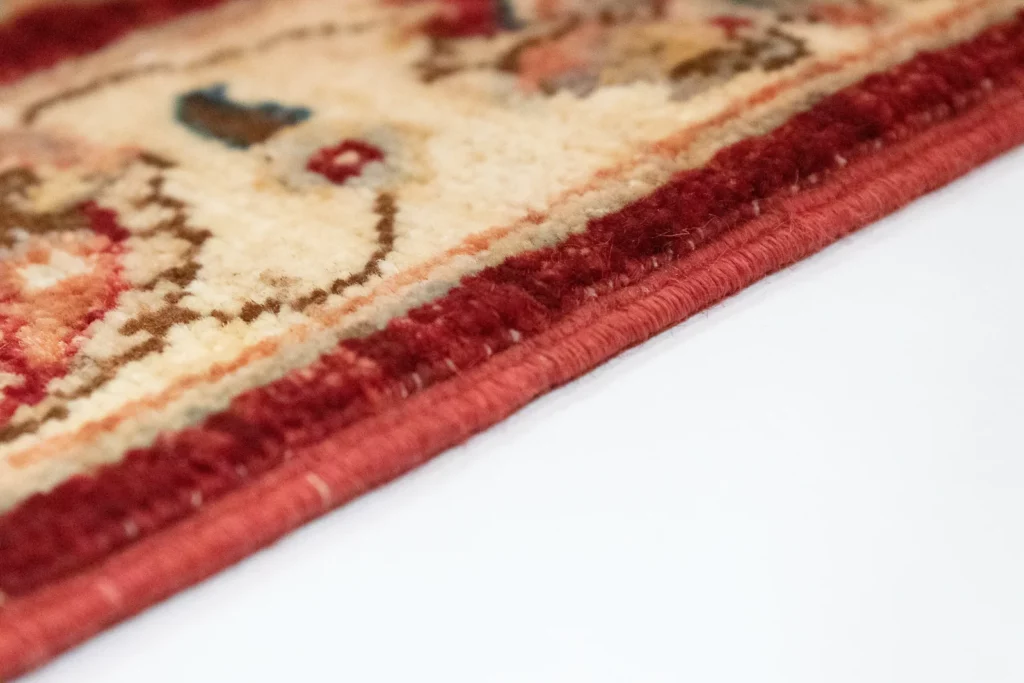
This Ziegler Oriental rug is hand-knotted with a wool pile. Its construction is built knot by knot, creating a textile surface through a gradual and highly manual process. Hand knotting gives the rug a structure that reflects the work carried out at the loom, where rows are formed and compacted as the design develops. Wool is a traditional material in Oriental rug making. It is used for the pile because it provides a substantial textile surface and supports the tactile character associated with hand-knotted rugs.
The product description gives the rug a knot density of approximately 200,000 knots per square metre. Knot density is a technical way of describing how closely the individual knots are arranged. It helps explain the fineness of the construction, although it is only one aspect of a rug alongside wool, design, colour and finishing. In a hand-knotted piece, the overall appearance results from the relationship between the knot structure, the pile and the visual arrangement of the pattern.
A special stone-washing process gives this rug its stated faded effect. Stone washing is used here as a surface treatment that softens the visual intensity of the colours and creates an intentionally timeworn appearance. It does not replace the original hand-knotting process; rather, it influences how the completed wool surface is perceived. The combination of wool, dense hand-knotted construction and stone washing gives the rug a material character that joins traditional craft with a deliberately softened finish.
Origin and Tradition
The name Ziegler refers to a distinct rug tradition associated with the Swiss company Ziegler. In the nineteenth century, the company commissioned rugs in Persia and helped establish a design language that is still known by the Ziegler name. This history explains why Ziegler rugs are often discussed alongside Persian carpet traditions. A historical design connection, however, does not by itself identify the manufacturing country of every individual rug.
The origin given for this rug is Pakistan and Afghanistan. Ziegler rugs are produced in both countries, where workshops continue to work with the established visual vocabulary while applying their own practical knowledge and production methods. This piece is therefore an Oriental rug from a Pakistan and Afghanistan production context. Ziegler identifies the design tradition, while Pakistan and Afghanistan identify the stated origin. Keeping those two descriptions separate is important in the rug trade because a pattern name, a historical model and the actual place of manufacture are not necessarily the same thing.
The Sarough and Arak region in Persia is described as another important reference point in the history of Ziegler carpets. The area has a long rug-making tradition in which workshop knowledge, repeated ornamental ideas and carefully balanced colour arrangements are passed from one generation to the next. Designs connected with that tradition can be adapted in other weaving centres. A rug made in Pakistan or Afghanistan may therefore draw on a historical Persian vocabulary without being described as a Persian-made rug.
Oriental rug making is shaped by the exchange between inherited designs and local workshop practice. Weavers contribute knowledge of knotting, wool preparation, colour coordination and finishing. In the Ziegler tradition, stone washing is an additional part of the visual development. It gives a quieter and more subdued appearance to colours that might otherwise read more clearly and brightly. This combination allows historical design ideas to be presented in a way suited to contemporary interiors while retaining the signs of hand production.
Sarough rugs are often mentioned for comparison because they may share related colours or design principles, while their knotting methods and structure can differ. Tabriz rugs represent another tradition, associated with the city of the same name and known for detailed, complex designs. Kerman and Isfahan are also established centres of Persian rug making, each with its own artistic language. These comparisons place Ziegler rugs within the wider history of Oriental carpets, but they do not change this rug’s designation. Its stated origin is Pakistan and Afghanistan, and its design identity is Ziegler.
Design and Pattern
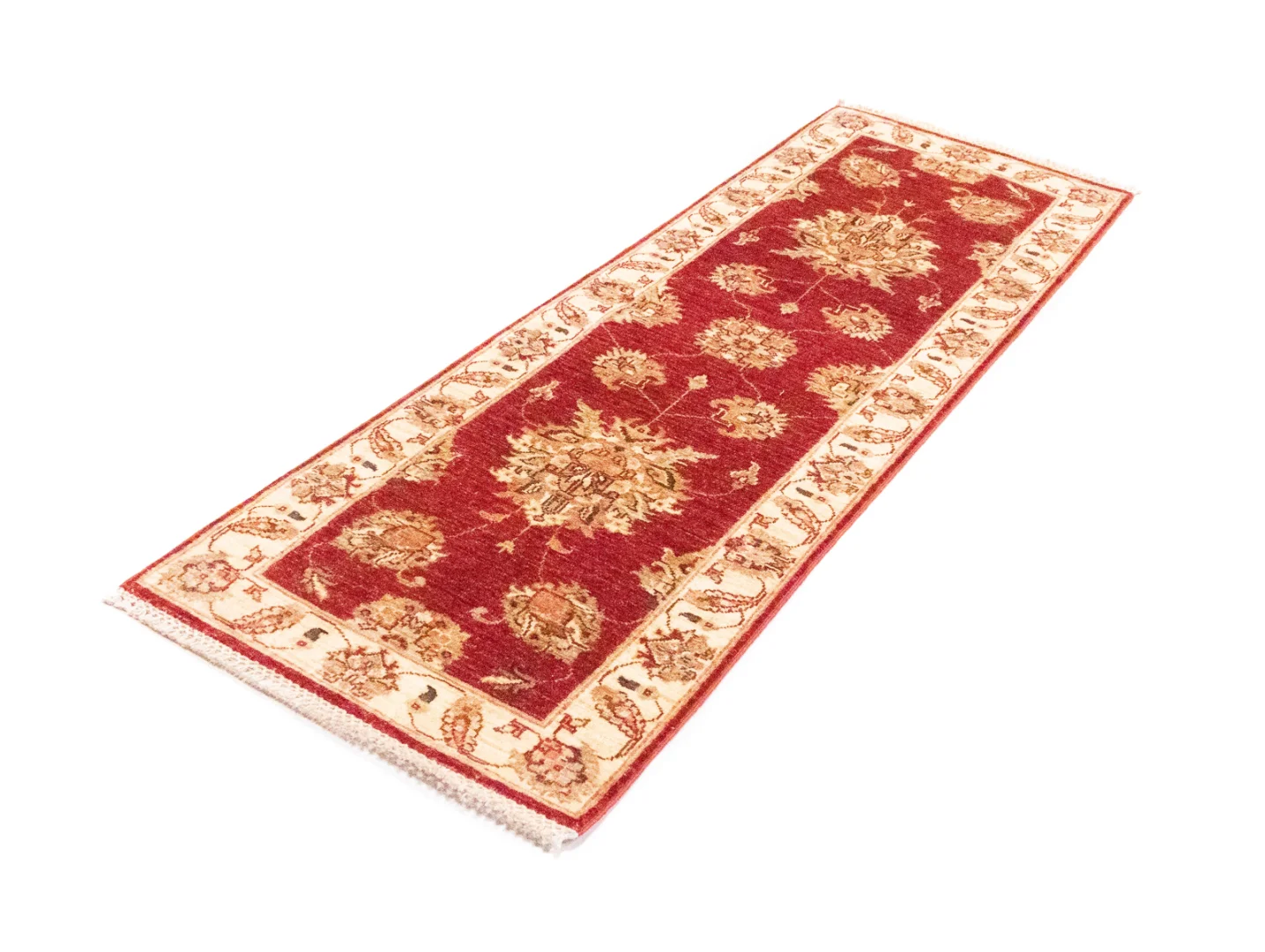
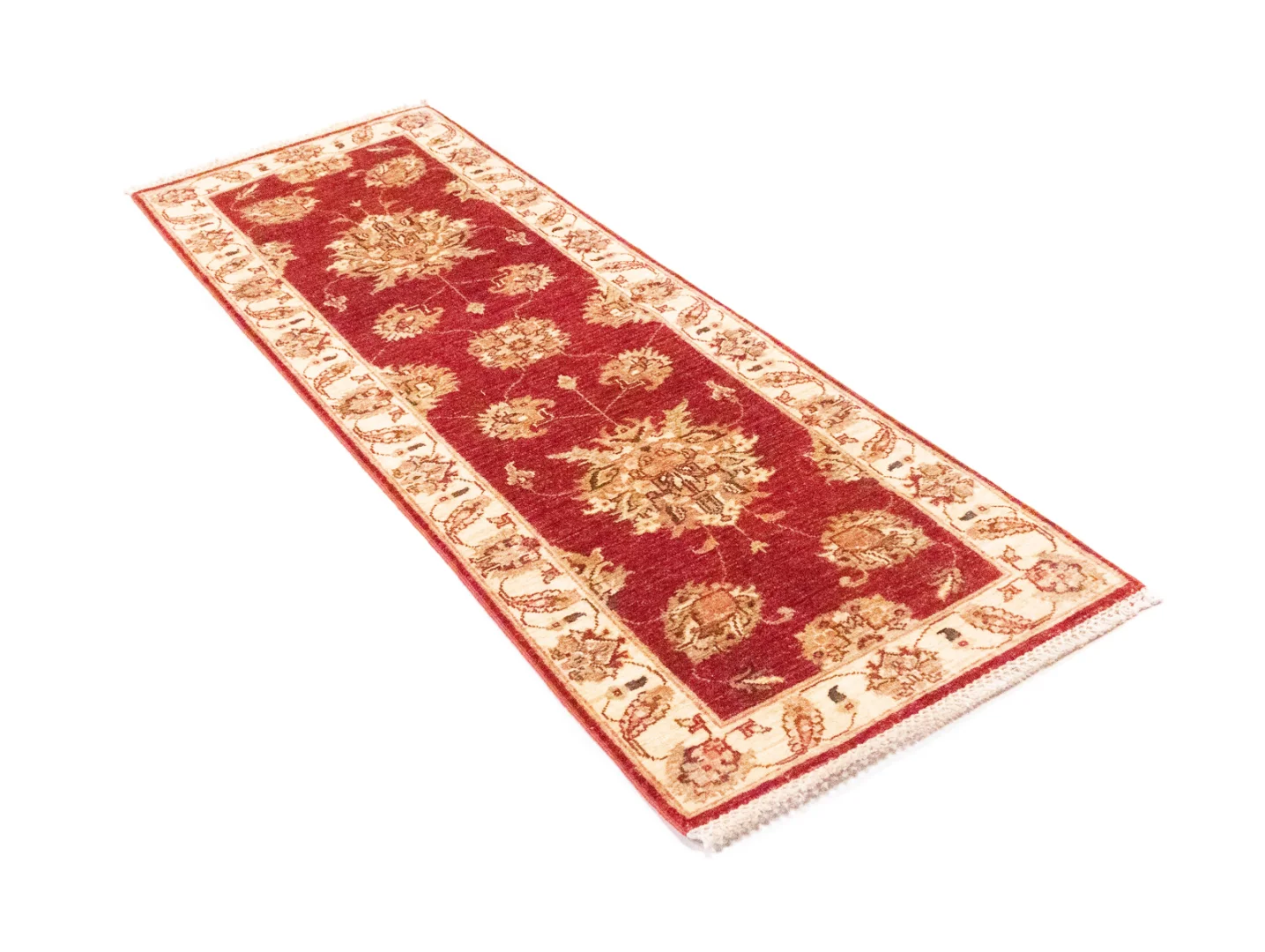
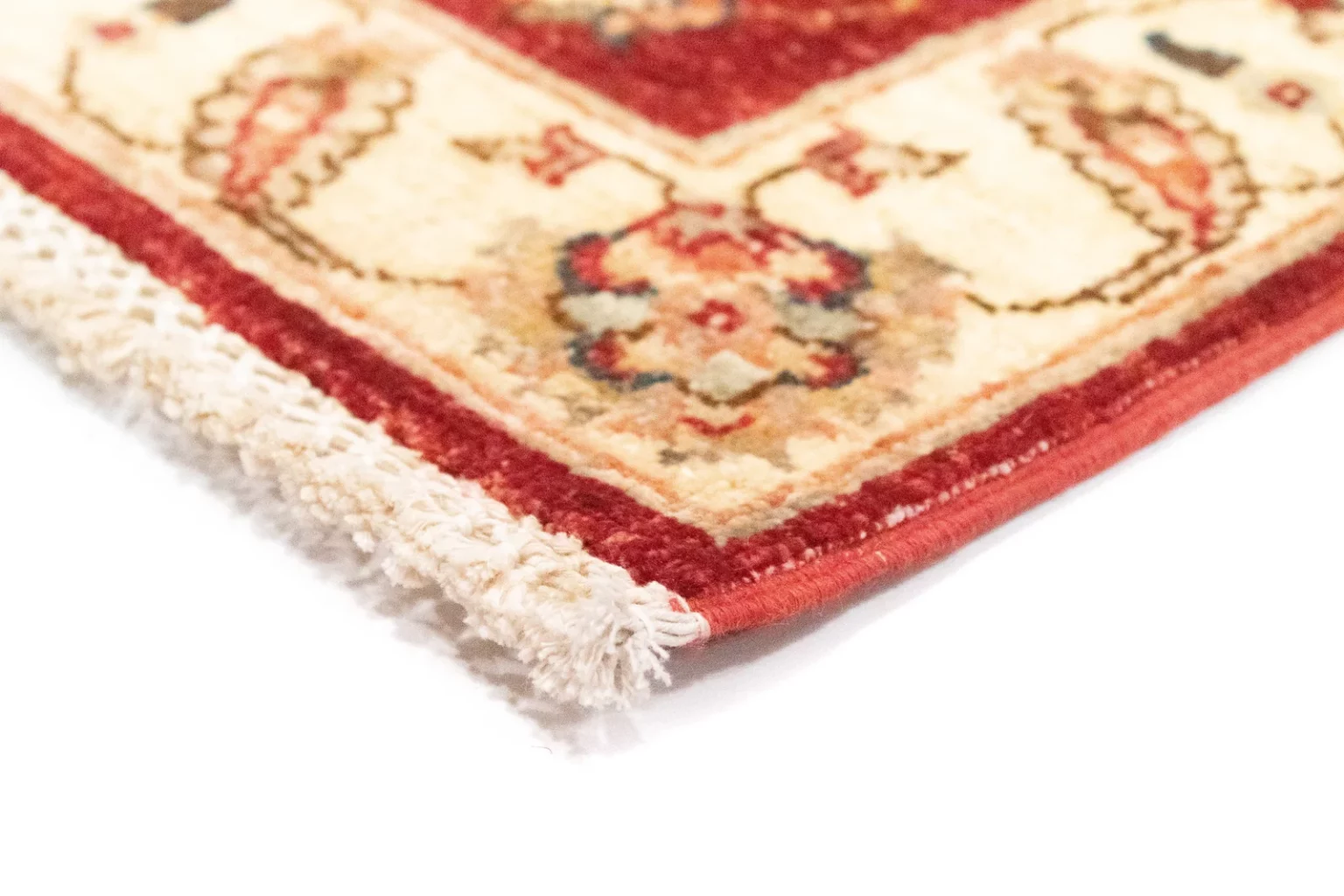
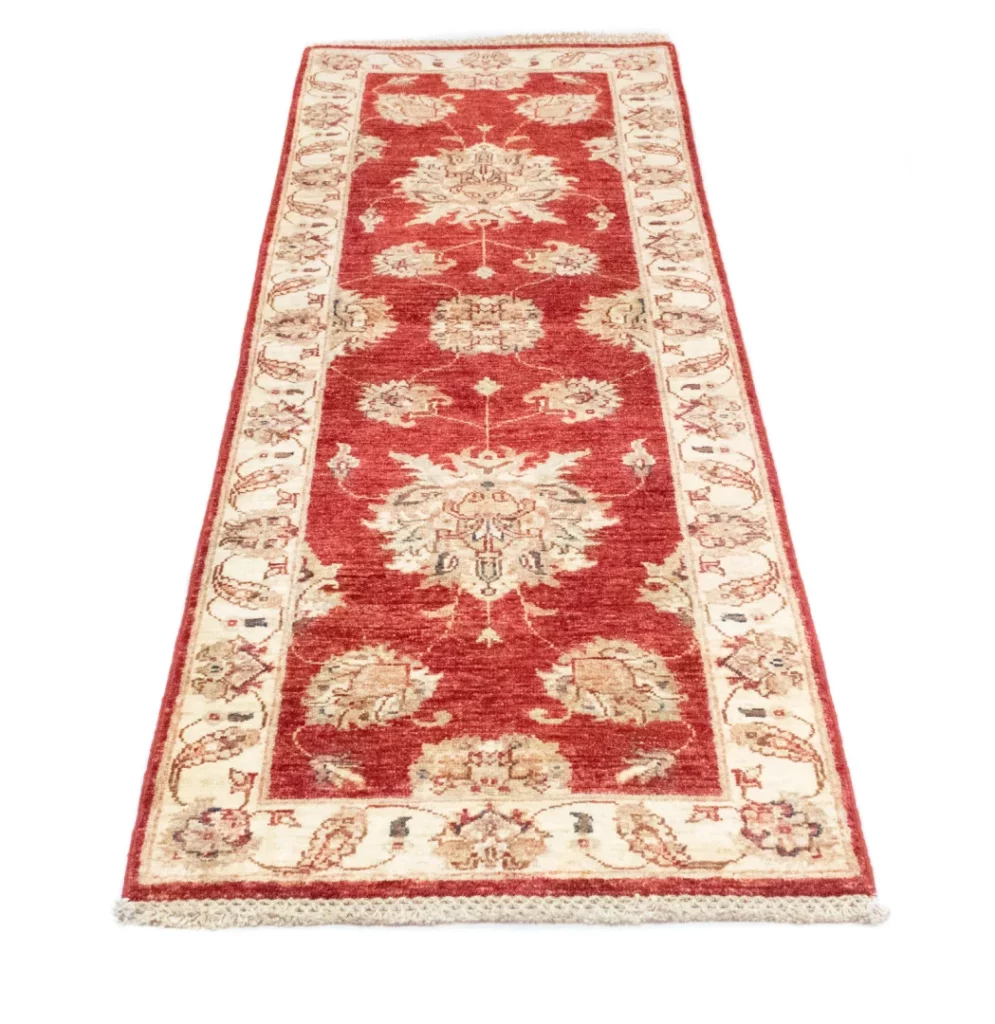
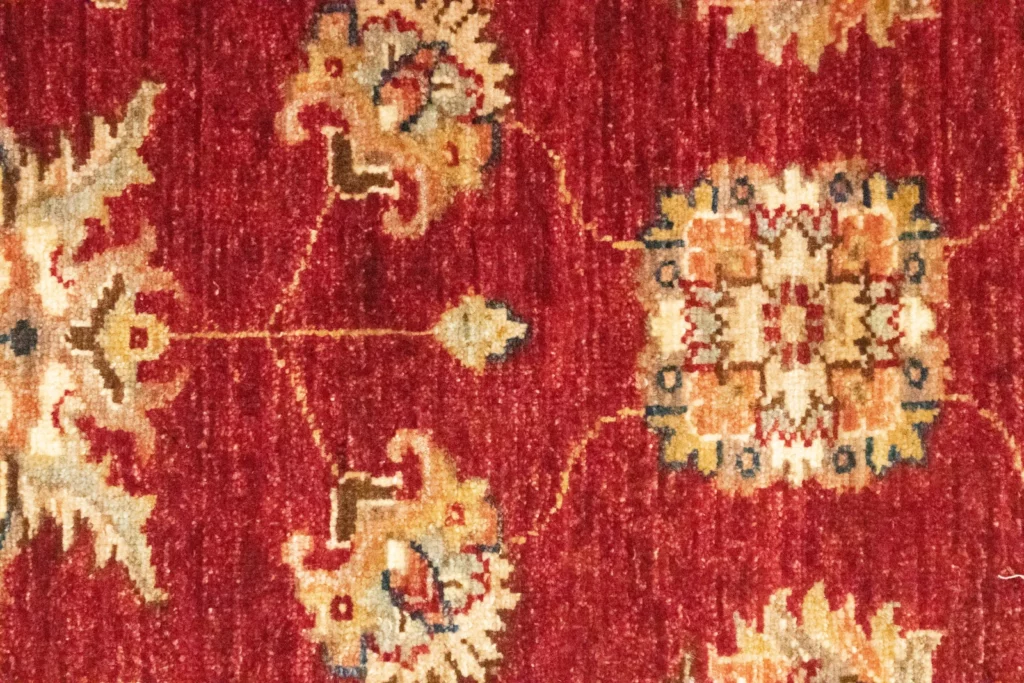
The design of this Ziegler rug is described through a range of colours and patterns rather than through one individually named motif. Ziegler compositions are generally recognised as a developed design tradition in which decorative elements are arranged in a balanced, cohesive field. Floral forms, scrolling lines, medallion ideas and border structures may occur within the broader vocabulary of the style. Since the specific description does not identify individual motifs on this rug, no particular ornament is presented as a confirmed detail.
Soft, earthy tones define the stated colour character. Such colours are an important part of the restrained visual language associated with Ziegler rugs. Instead of relying on sharp contrasts, an earthy palette can connect adjacent areas through related shades and create a quieter overall surface. The wool pile contributes to the way these tones are seen, while the stone-washing process further reduces their apparent intensity. The result is a colour arrangement that remains legible but avoids the appearance of an untreated, strongly saturated field.
The faded effect produced by stone washing is one of the central design features. It creates a nostalgic, worn-looking impression through deliberate finishing rather than through a claim about the rug’s age. The treatment can soften transitions between colour areas and make the pattern appear more integrated across the surface. On Ziegler rugs, this kind of subdued finish is used to bring traditional ornament into a gentler visual register. The result is an appearance that combines patterned structure with muted colour depth.
In Oriental carpet design, patterns do more than decorate a surface. They organise the field, establish rhythm and guide the eye through centres, borders and connecting areas. Ziegler designs are associated with a balanced relationship between ornament and open space. The softened finish can make those relationships appear less sharply outlined, allowing several parts of the composition to read together. The particular pattern on this rug is therefore best described by the facts provided: it is a Ziegler design with varied patterns, earthy tones and a stone-washed faded effect.
The wider comparison with other traditions also shows how design identities differ. Sarough rugs may use related floral ideas and subdued colours but often have another structural and knotting character. Tabriz examples are frequently associated with more intricate and densely articulated compositions. Kerman and Isfahan have their own established approaches to colour and ornament. These traditions provide useful context for understanding Ziegler design, but a comparison is not an attribution. The rug offered here remains a Ziegler Oriental rug made in the stated Pakistan and Afghanistan context.
Special Features
The main special feature of this piece is the combination of hand-knotted wool construction with a dedicated stone-washing treatment. The treatment creates the intentionally faded effect described for the rug and gives the earthy colours a softened, nostalgic appearance. The product information also records a knot density of approximately 200,000 knots per square metre. Together, these details describe a rug with a dense hand-knotted structure, a wool pile and a deliberately subdued surface finish.
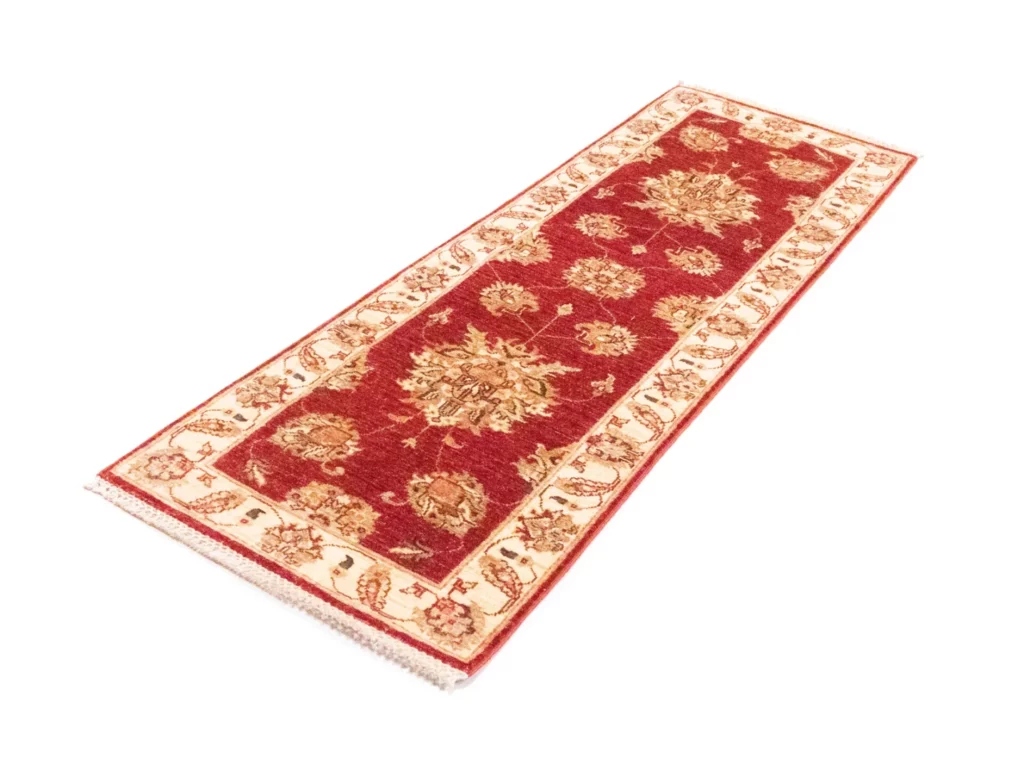
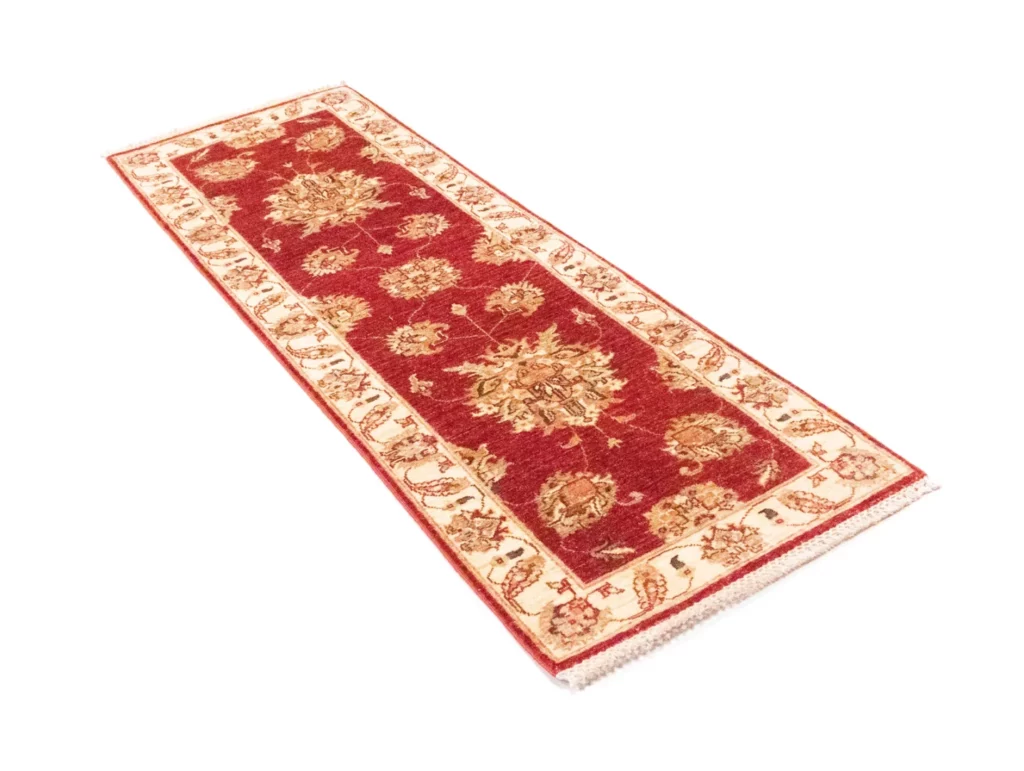
This rug is made as a runner, giving it an elongated format suited to use in passage areas and other linear spaces. Its stated origin is Pakistan and Afghanistan, while the Ziegler name connects the design to a tradition historically associated with Persian production. The condition is described as very good. The faded visual effect should be understood as the result of the specified stone washing, not as an unqualified statement that the rug has acquired its appearance through accidental wear.
The Ziegler designation therefore brings several elements together: a historical design source, production in Pakistan and Afghanistan, hand knotting, wool and a distinctive surface treatment. Its special character lies in this combination of technical construction and controlled colour softening. These are the features that distinguish the piece within the broader field of Oriental rugs.
FAQ
How should I care for my Ziegler rug?
Regular gentle vacuuming helps remove loose dust and everyday particles from the wool pile. Fresh spills should be blotted carefully with a damp cloth rather than rubbed into the surface. For a more thorough clean, professional rug cleaning at suitable intervals is advisable. Because the faded appearance comes from the specified stone-washing treatment, harsh chemicals and improvised treatments should be avoided. Care should preserve both the hand-knotted wool surface and the deliberately softened colour effect.
How can I check the authenticity of a Ziegler rug?
Several characteristics should be considered together: the Ziegler design vocabulary, its soft earthy colour range, hand-knotted construction, wool material and the recognisable visual effect of stone washing. Knot density can also serve as a technical reference. No single feature proves authenticity on its own, so origin, construction, materials and design tradition should be assessed as a group. For this rug, Pakistan and Afghanistan are the stated countries of origin, while the connection with Persian Ziegler models describes the historical design tradition rather than the place where this particular piece was made.
Which rooms suit a Ziegler rug best?
As a runner, a Ziegler rug is particularly suitable for hallways, corridors and other elongated areas that connect rooms. Its earthy tones and faded finish can also work as a calm textile accent in living or dining spaces when the surrounding arrangement leaves enough of the surface visible. Furniture should not cover the rug completely, since the pattern and colour treatment are central to its appearance. Everyday use should be matched with gentle care appropriate to a hand-knotted wool pile and its stone-washed finish.
To provide the best experiences, we use technologies like cookies to store and/or access device information. Consenting to these technologies will allow us to process data such as browsing behavior or unique IDs on this site. Not consenting or withdrawing consent, may adversely affect certain features and functions.
Functional Always active
The technical storage or access is strictly necessary for the legitimate purpose of enabling the use of a specific service explicitly requested by the subscriber or user, or for the sole purpose of carrying out the transmission of a communication over an electronic communications network.
Preferences
The technical storage or access is necessary for the legitimate purpose of storing preferences that are not requested by the subscriber or user.
Statistics
The technical storage or access that is used exclusively for statistical purposes.The technical storage or access that is used exclusively for anonymous statistical purposes. Without a subpoena, voluntary compliance on the part of your Internet Service Provider, or additional records from a third party, information stored or retrieved for this purpose alone cannot usually be used to identify you.
Marketing
The technical storage or access is required to create user profiles to send advertising, or to track the user on a website or across several websites for similar marketing purposes.

 SECURE PAYMENT
 SHIPPING PARTNERS


