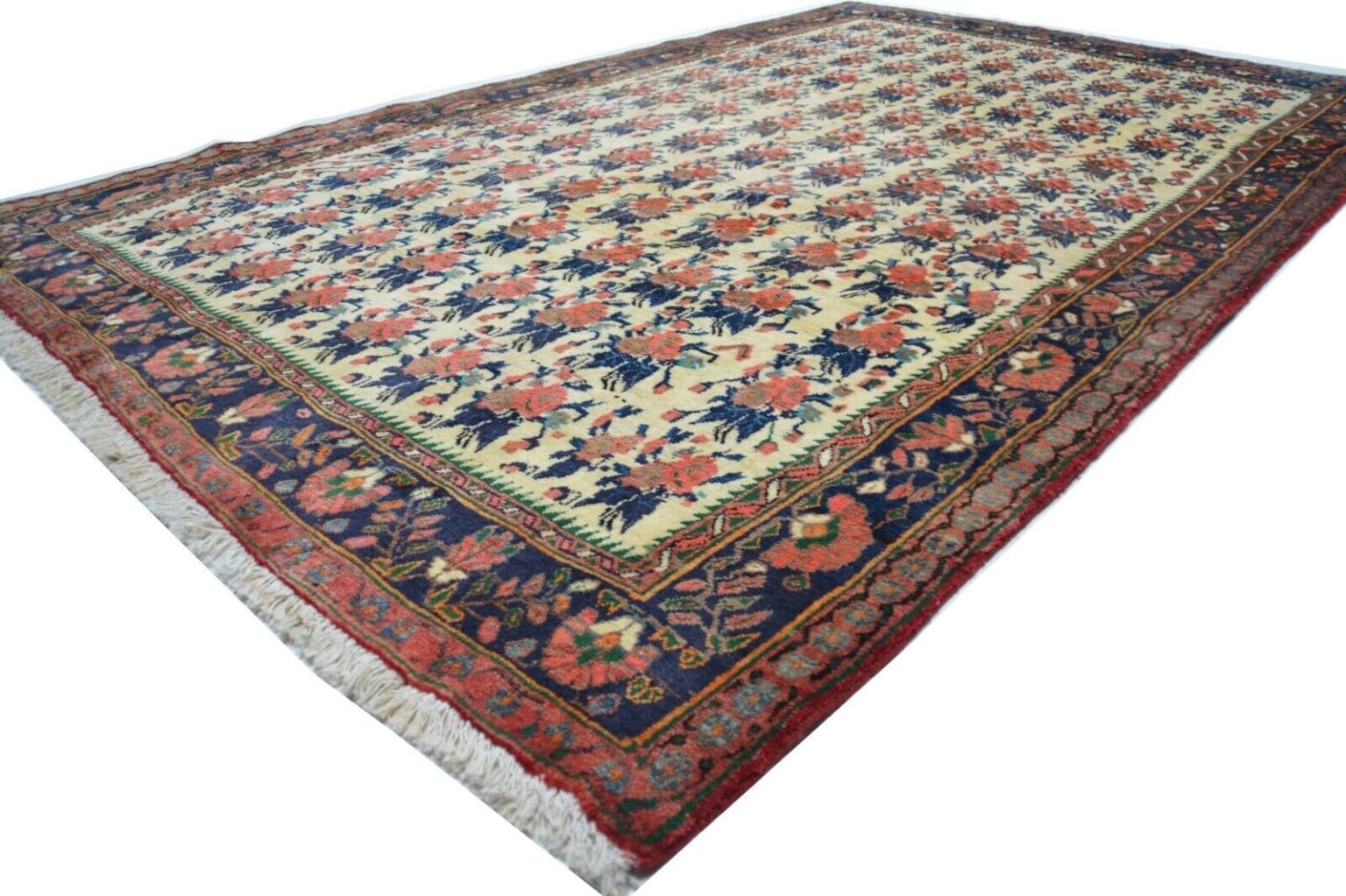
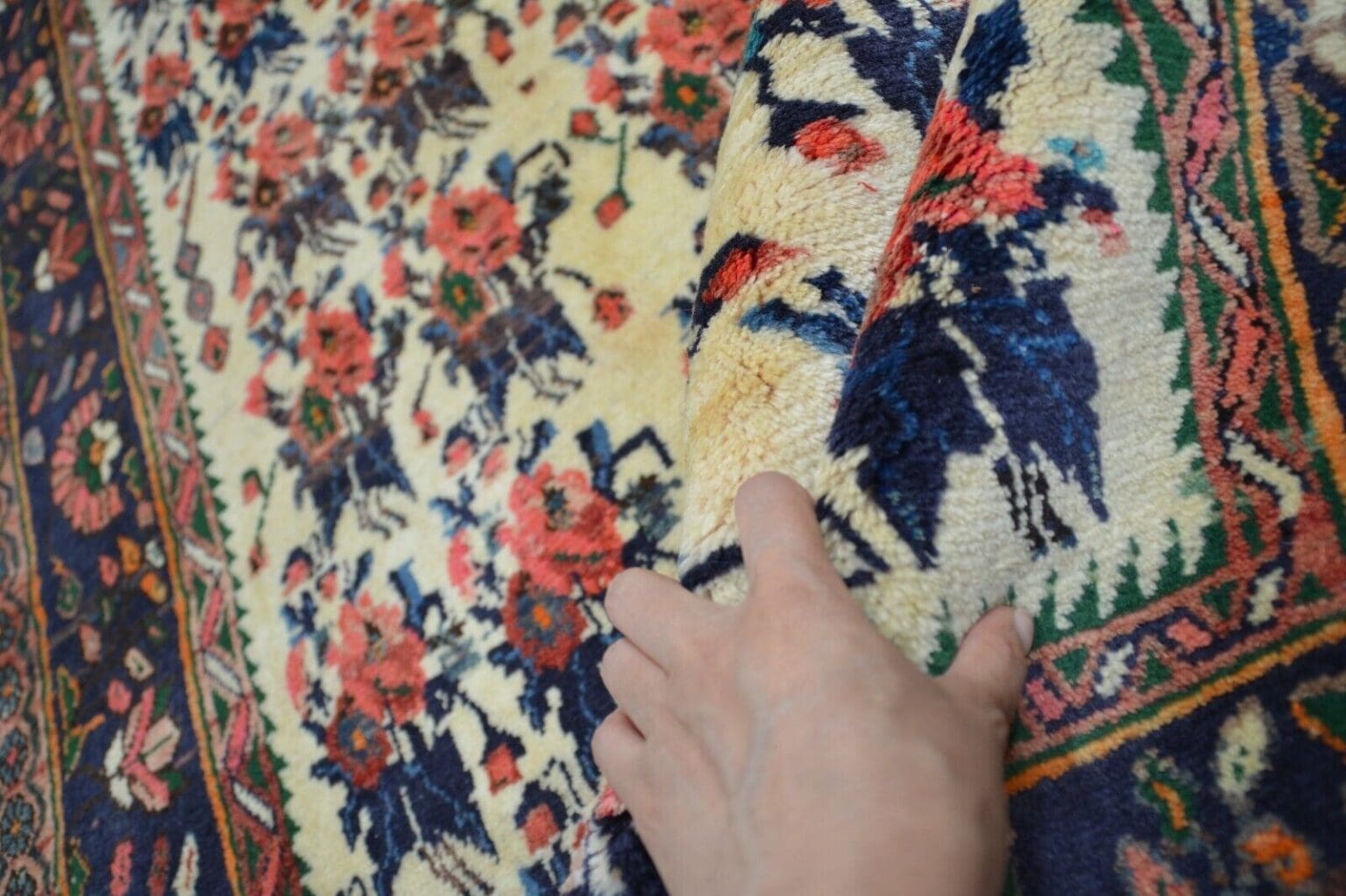
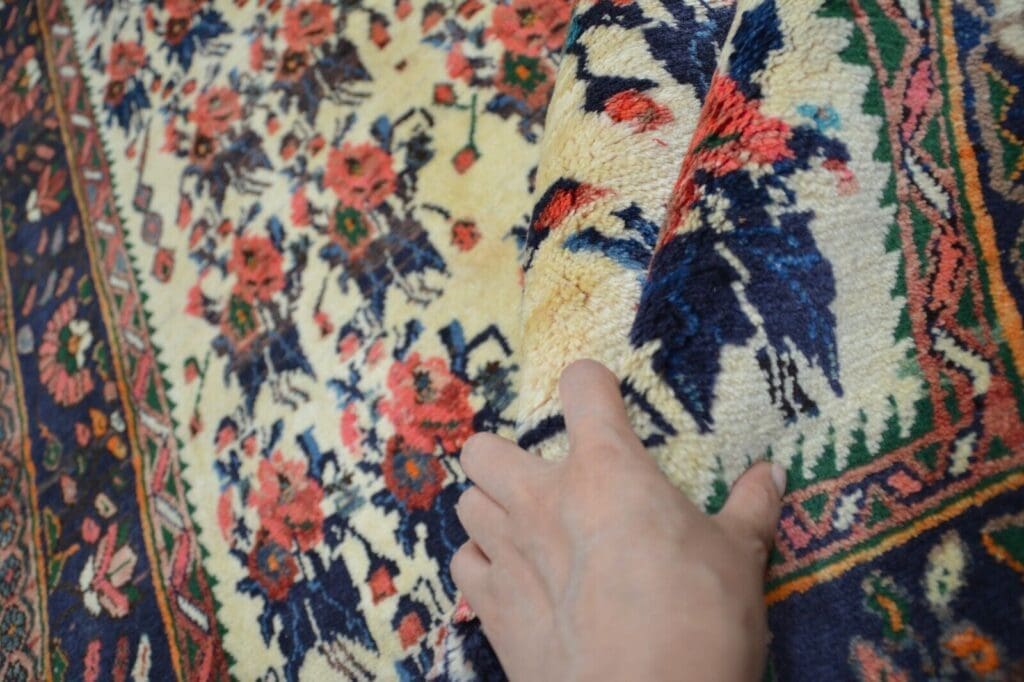
This Sirdjan Oriental rug is hand-knotted, with a pile made from 90% wool. The warp consists of 10% cotton. This material combination defines the rug’s construction: wool forms the visible surface, while cotton is used in the underlying foundation. The rug has a pile height of 1 cm. Because it is made by hand, it differs from a machine-made floor covering in the way its structure is formed, with individual knots placed into the textile foundation during the making process.
Wool is a natural material with a long history in rug making. It is durable, resilient and able to absorb moisture. Wool also has temperature-regulating qualities, which is why wool rugs are used in a wide range of domestic settings. The cotton in the warp supports the textile framework and complements the wool pile. The material composition described for this piece therefore combines a natural surface with cotton in the structural base.
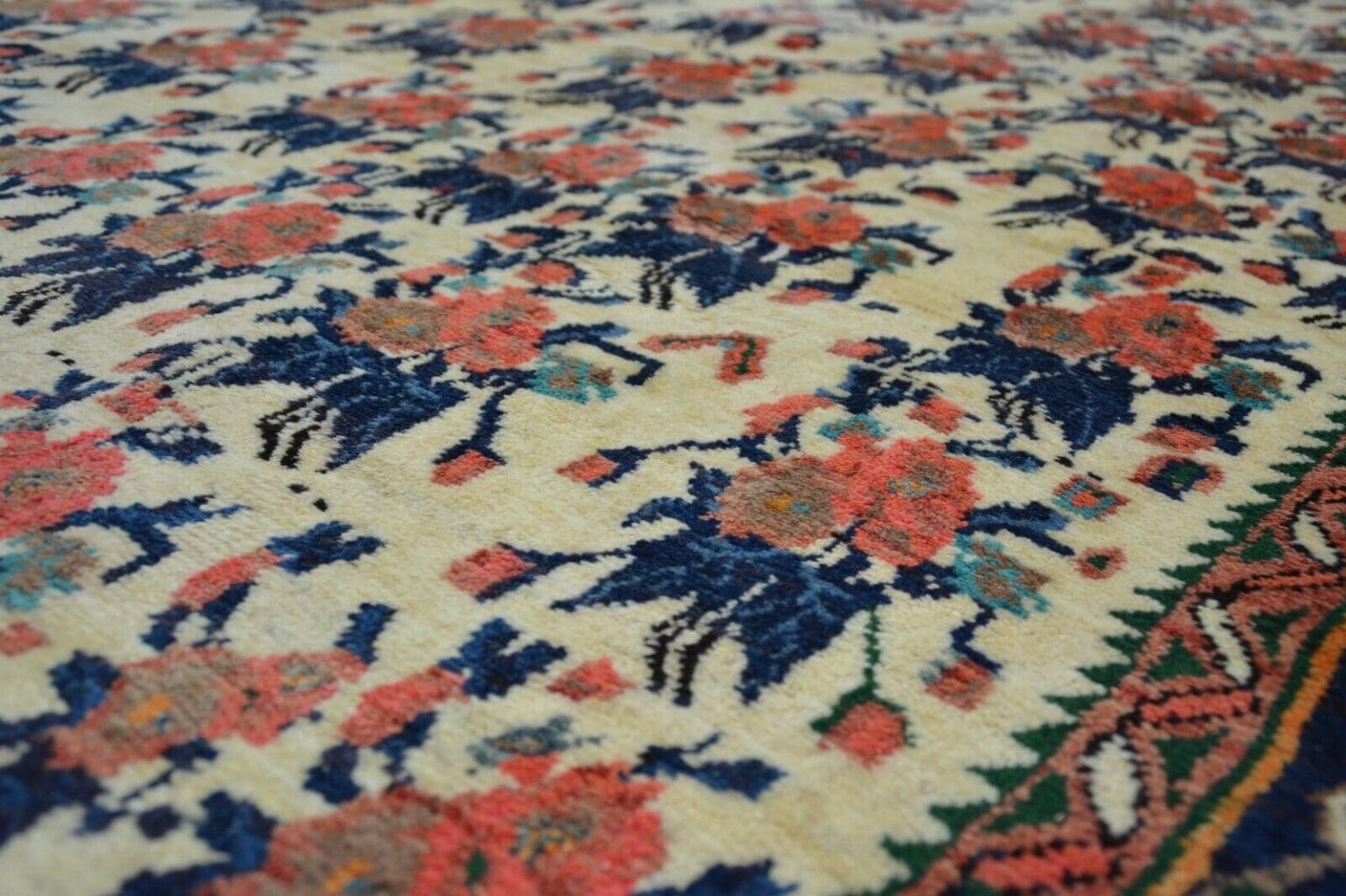
Hand-knotting allows ornaments and areas of colour to be worked out with precision. Each knot is placed by hand as the rug progresses. The result is not the entirely uniform appearance associated with industrial production, but the textile character typical of a hand-knotted rug. Wool accepts dyes well, allowing the pattern to remain clearly visible. At the same time, the material is suited to a rug that serves both as a floor covering and as a decorative element within a room.
Origin and Tradition
Sirdjan is located in Iran and therefore in Asia. The town and its surrounding area form part of the Persian rug tradition. That tradition includes many regional workshops, inherited design systems and established handcrafting methods. Rugs in this context are not understood only as practical household objects. Their patterns, colours and construction also express the textile culture of a particular region. The name Sirdjan therefore identifies a place within Iran’s rug-making landscape rather than merely describing a general decorative style.
Persian rug making has developed over many centuries. Different areas of Iran formed their own preferences for composition, ornament and colour. Some designs were passed from one generation to the next, while others were adapted by individual weavers and adjusted to a particular commission. Hand production connects these regional forms of expression. A hand-knotted rug is built through a sequence of operations: a foundation is prepared, knots are inserted, the pile is worked and the surface is finally arranged and finished.
For Persian rugs, origin is more than a geographical label. It also describes a cultural setting in which materials, manual skill and ornament are brought together. Within that setting, Sirdjan represents an Iranian tradition of hand-made floor coverings with decorative drawing. The work requires attention throughout the process, because the direction of the knots and the repetition of a design must remain coordinated. This creates the link between a rug’s practical purpose and its decorative role.
The description Original Sirdjan rug places this piece within the named regional tradition. It is also described as new and as a display piece. It is therefore not presented as a used rug whose character has been shaped by a long history of wear. Its classification brings together Iranian origin, Oriental design and traditional hand-knotting. These aspects explain why Sirdjan rugs can be considered both in the context of Persian craft history and as textile furnishings for present-day interiors.
Design and Pattern
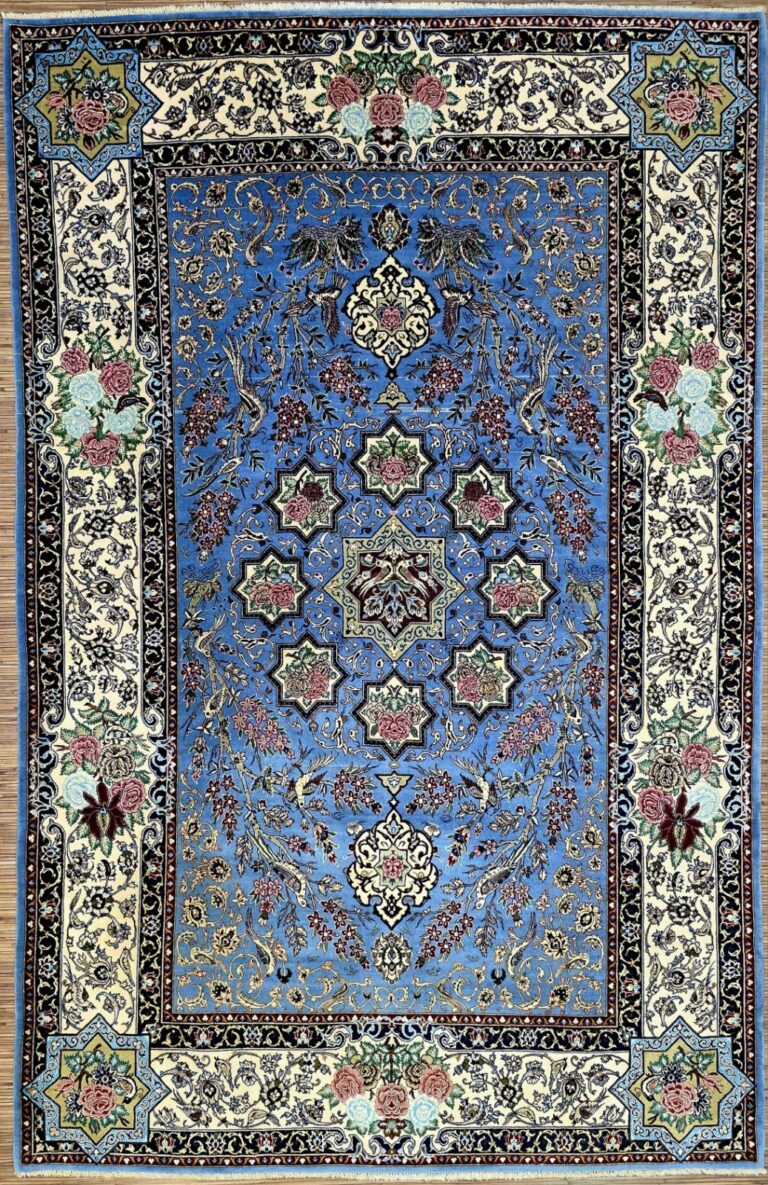
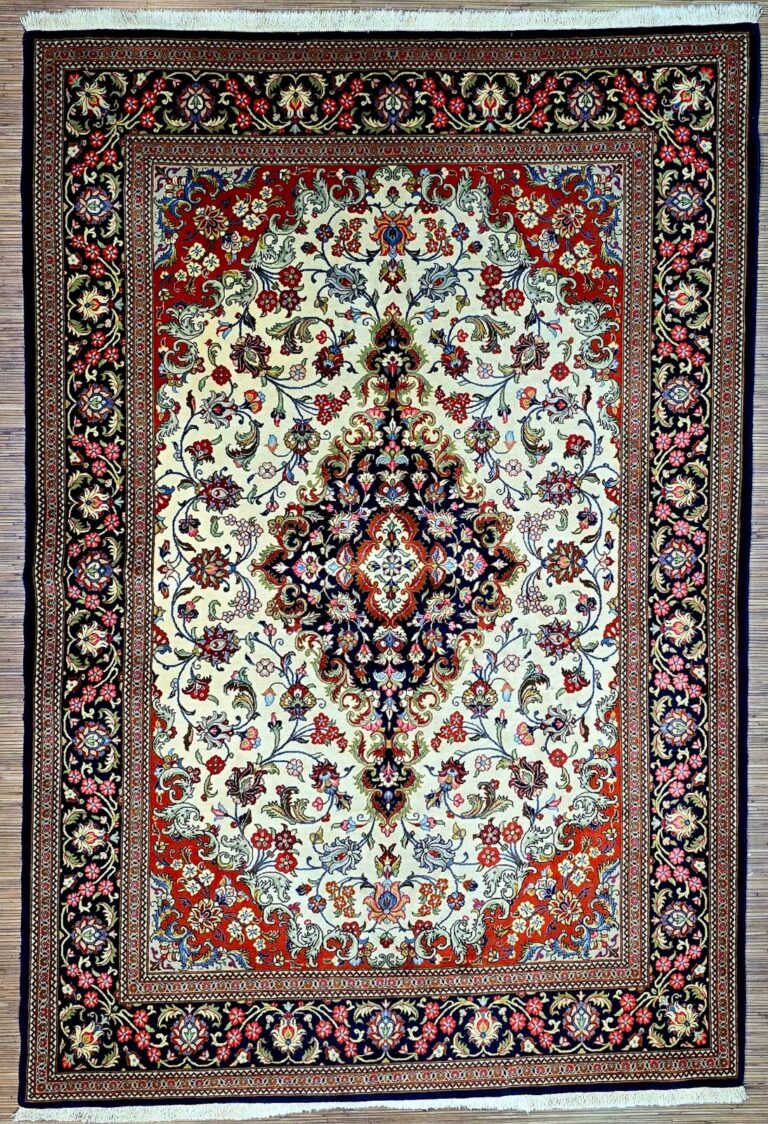
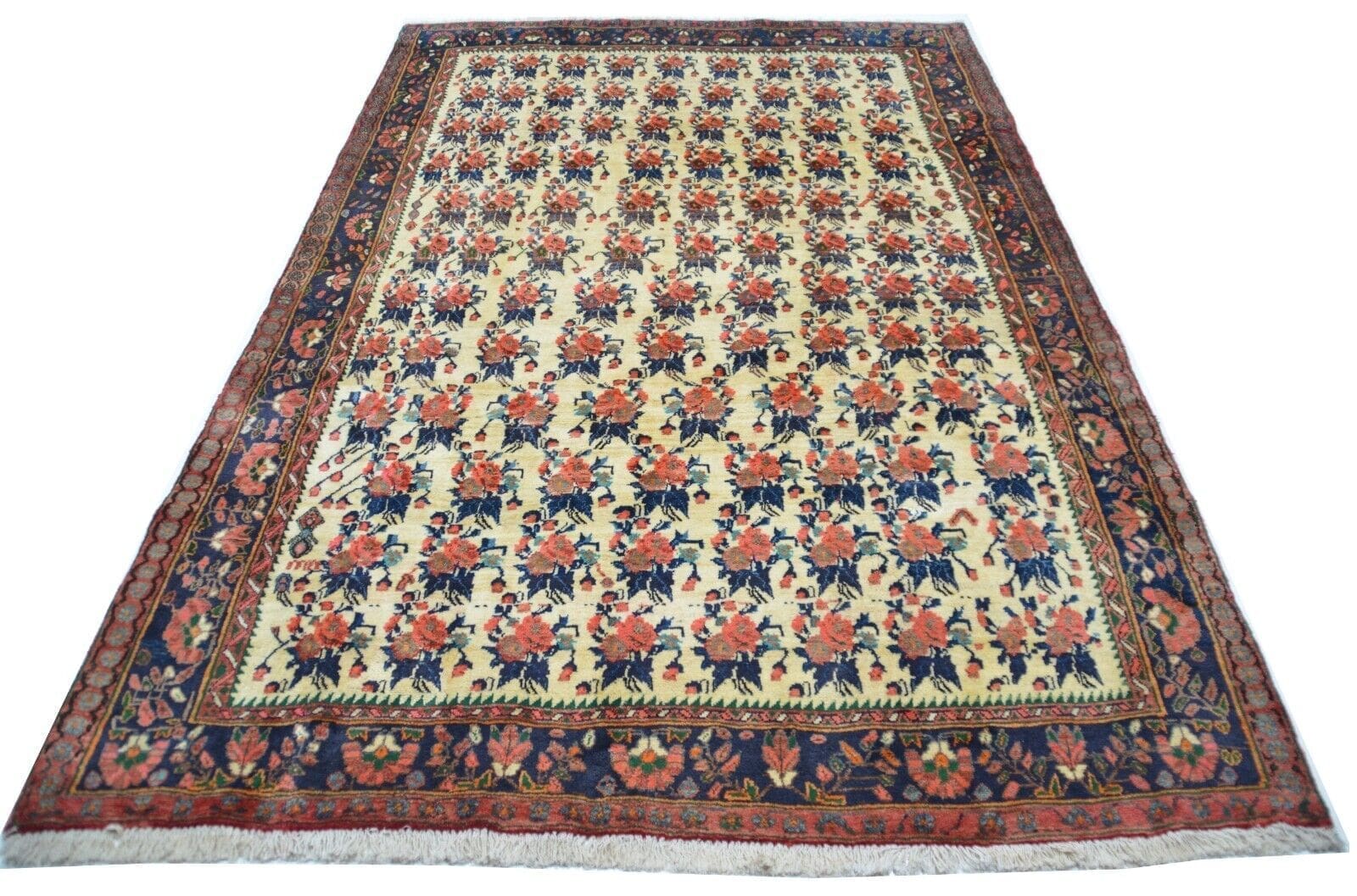
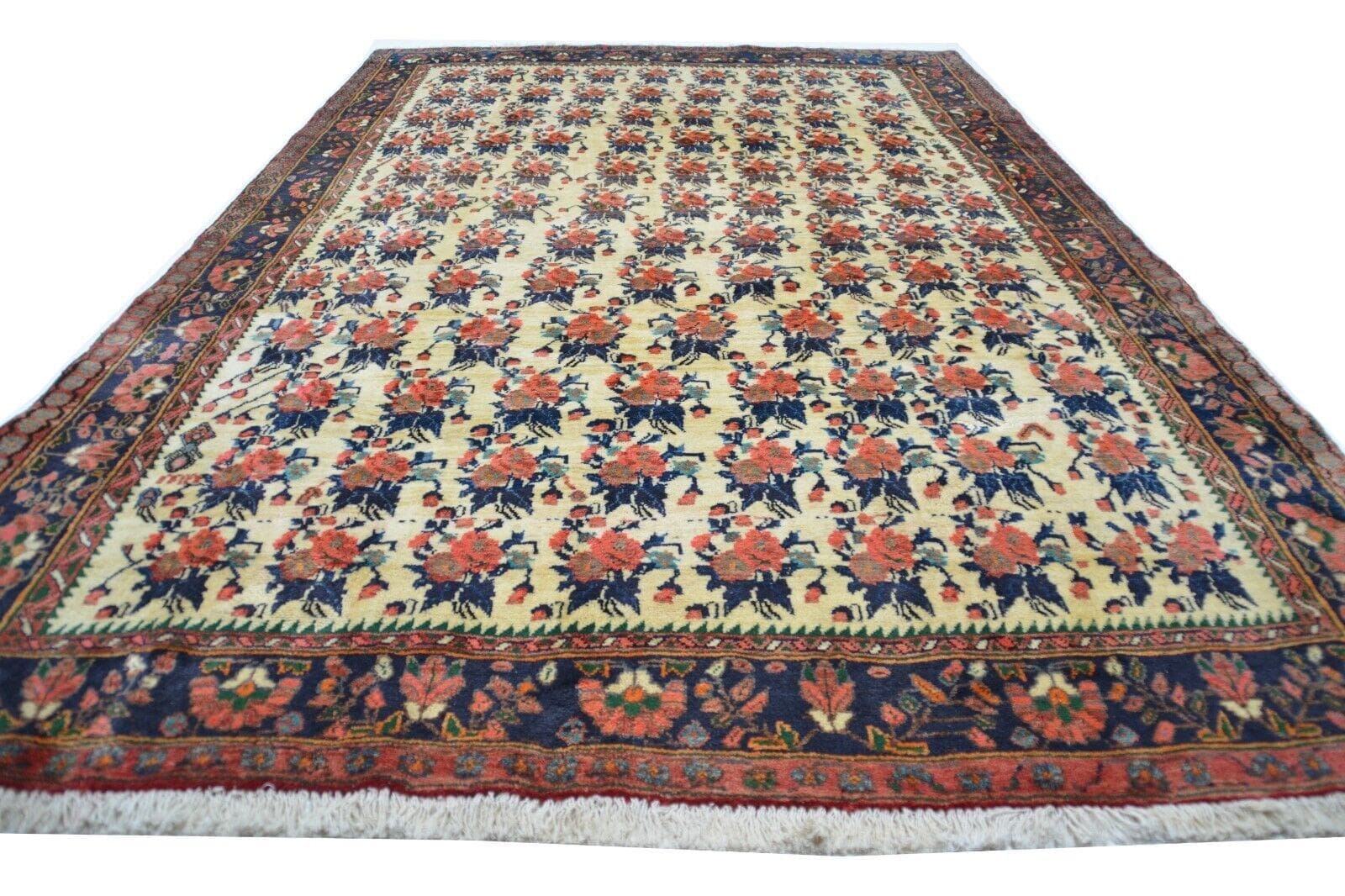
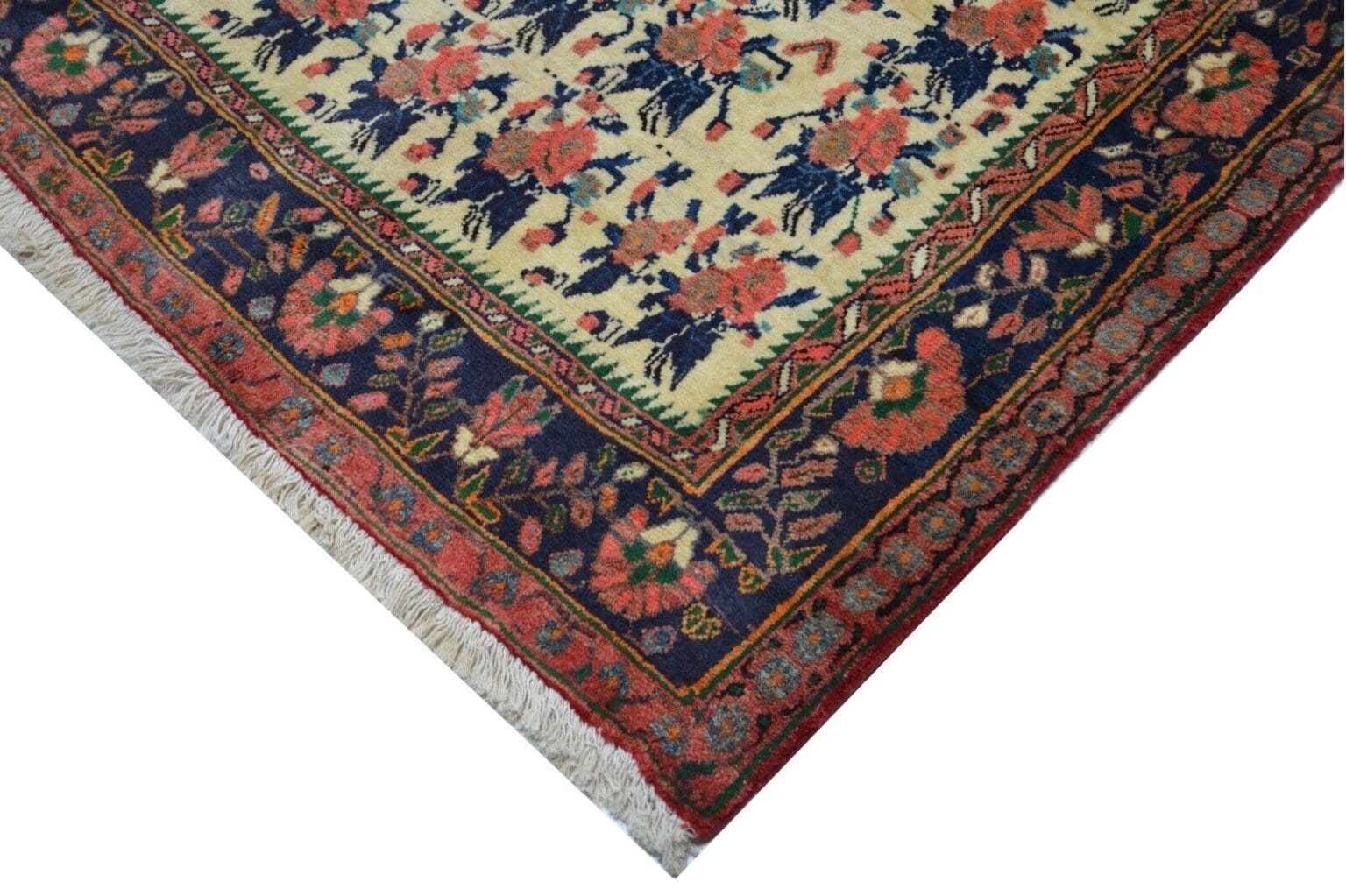
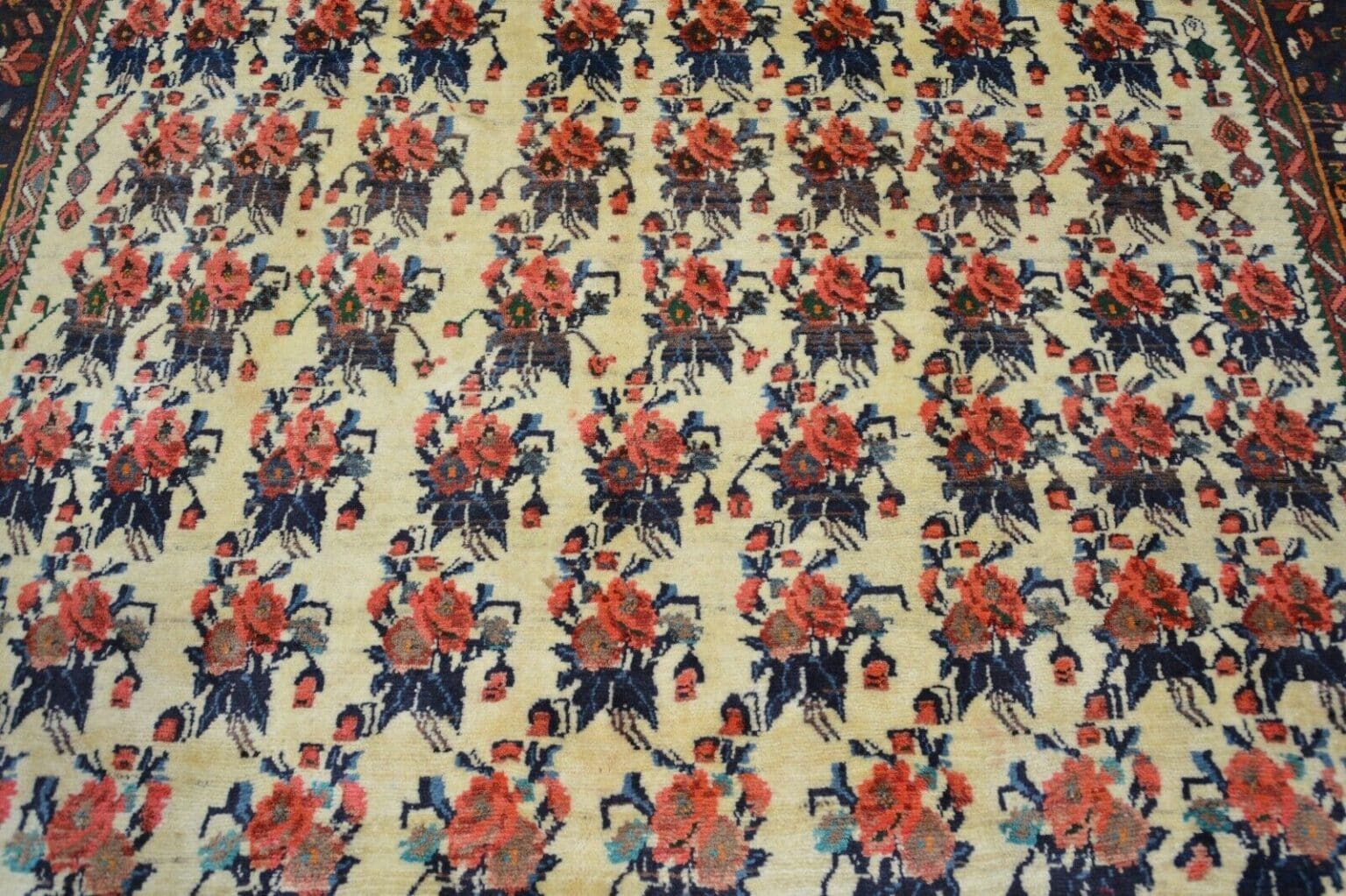
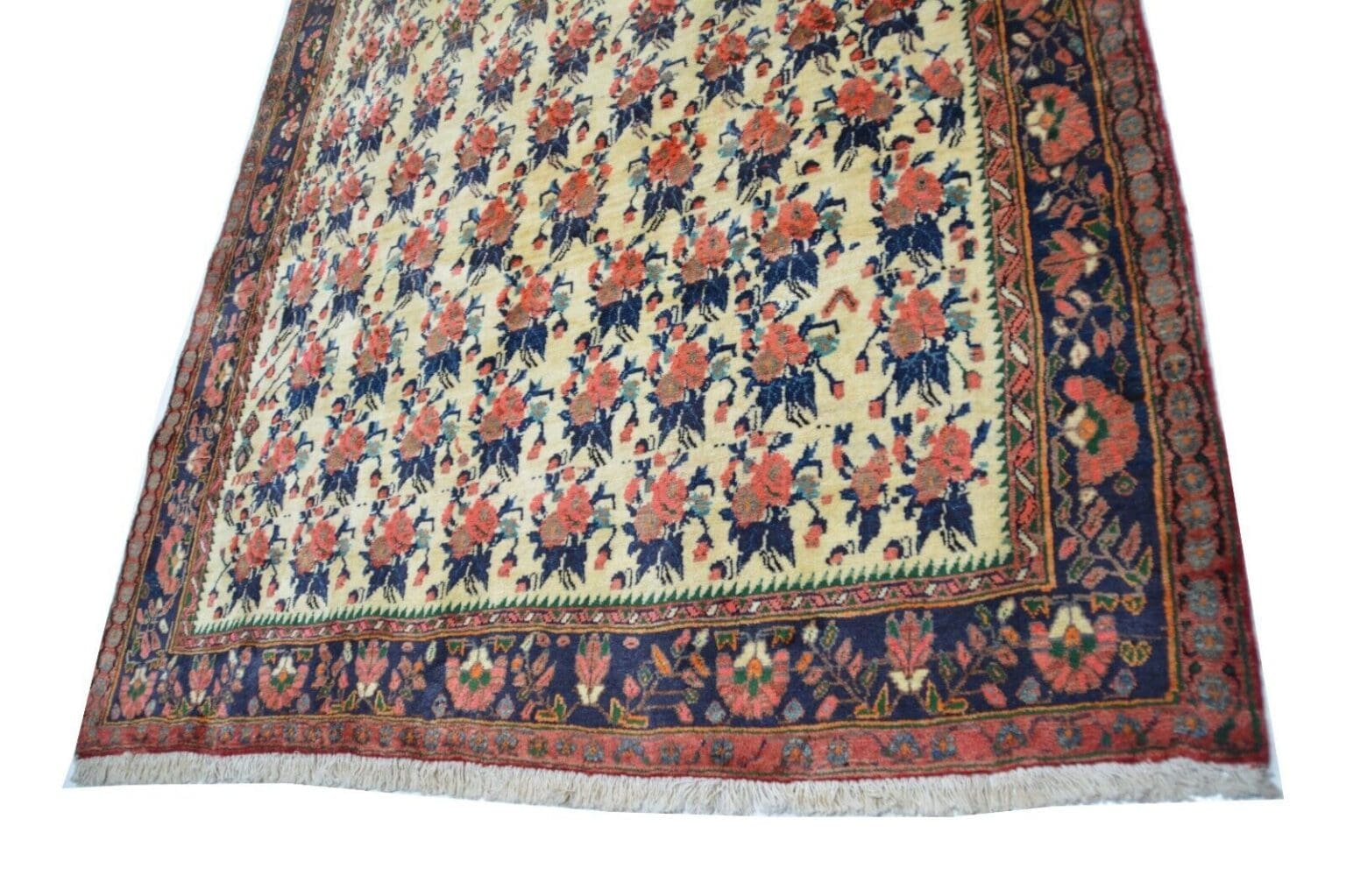
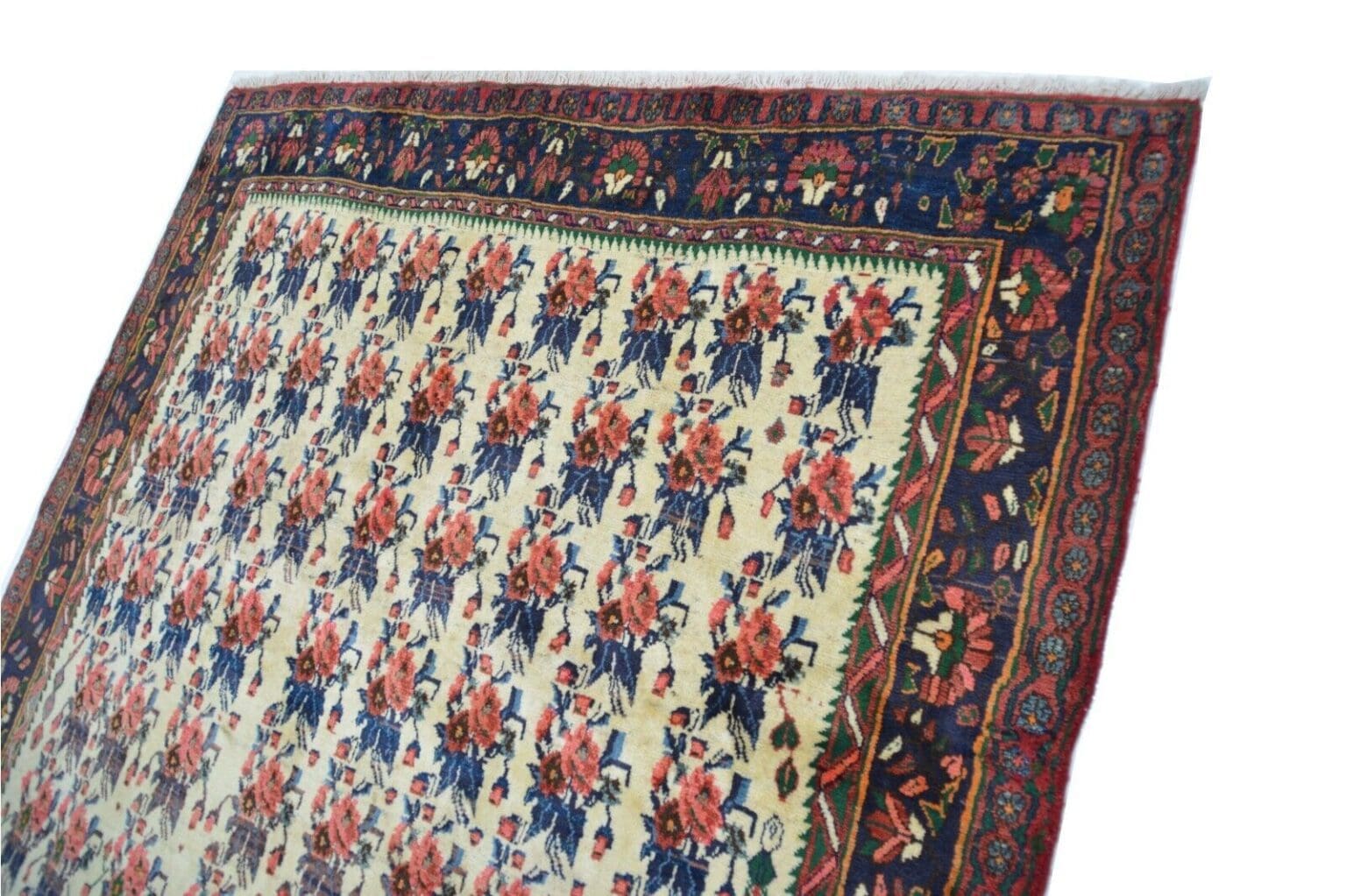
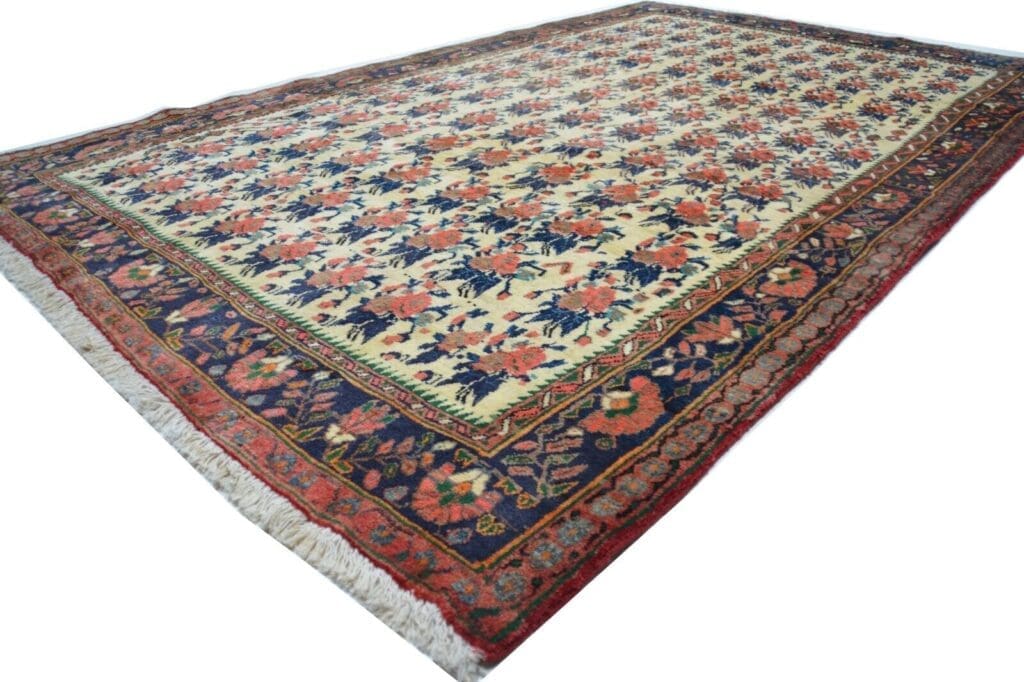
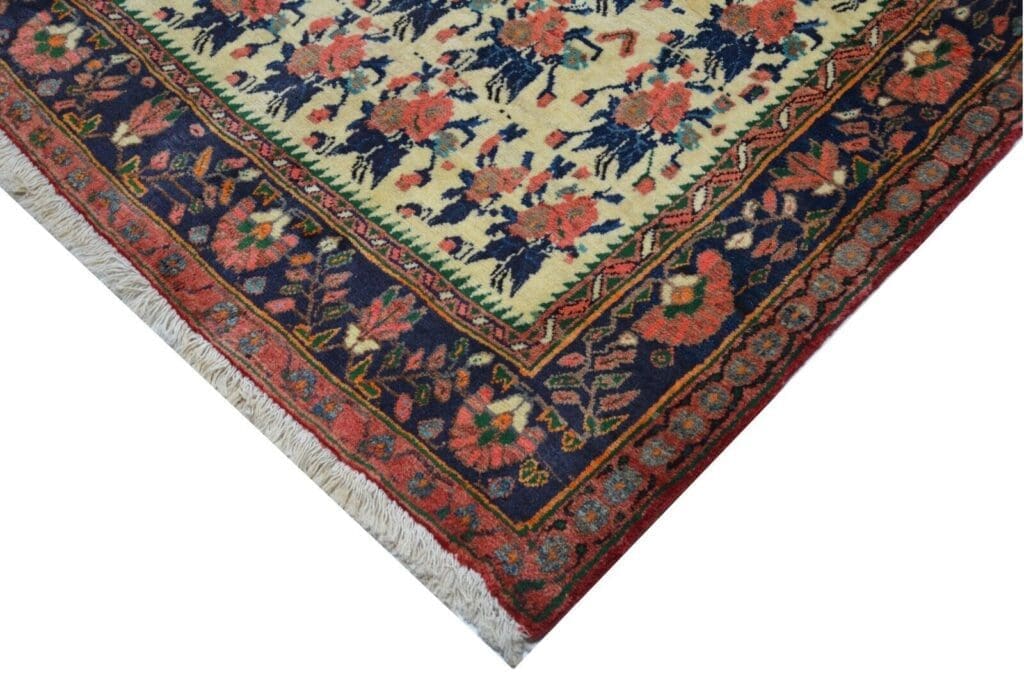
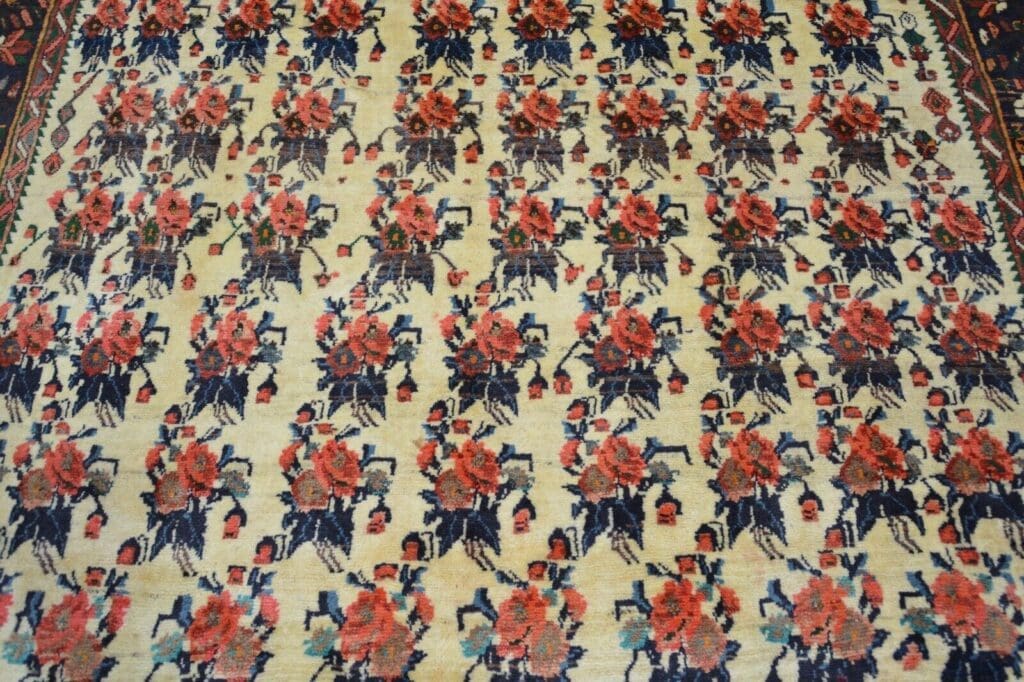
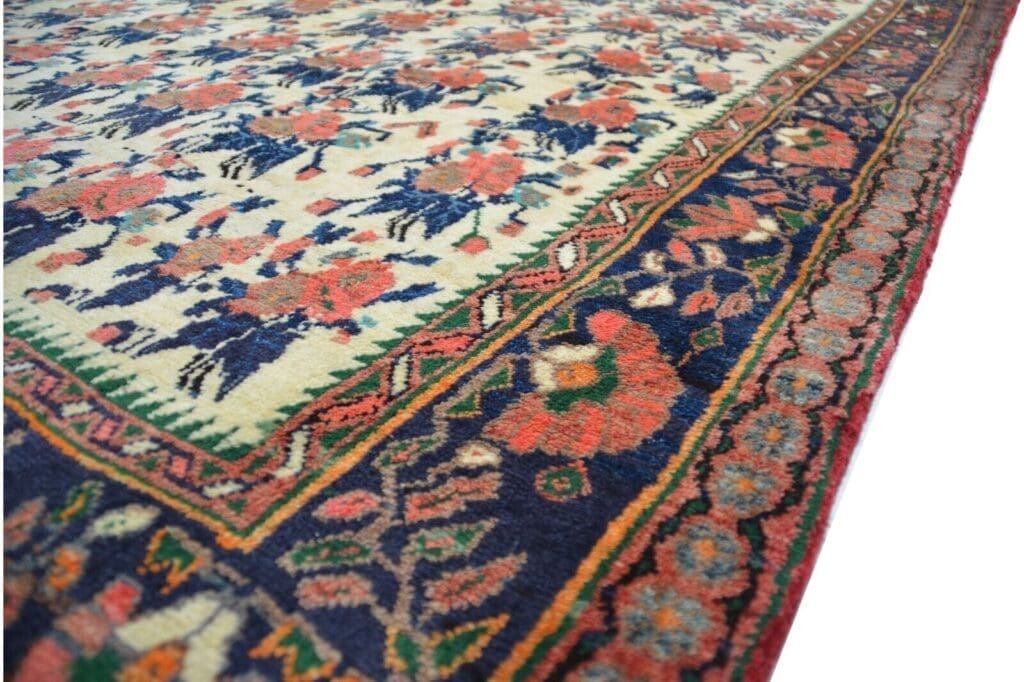
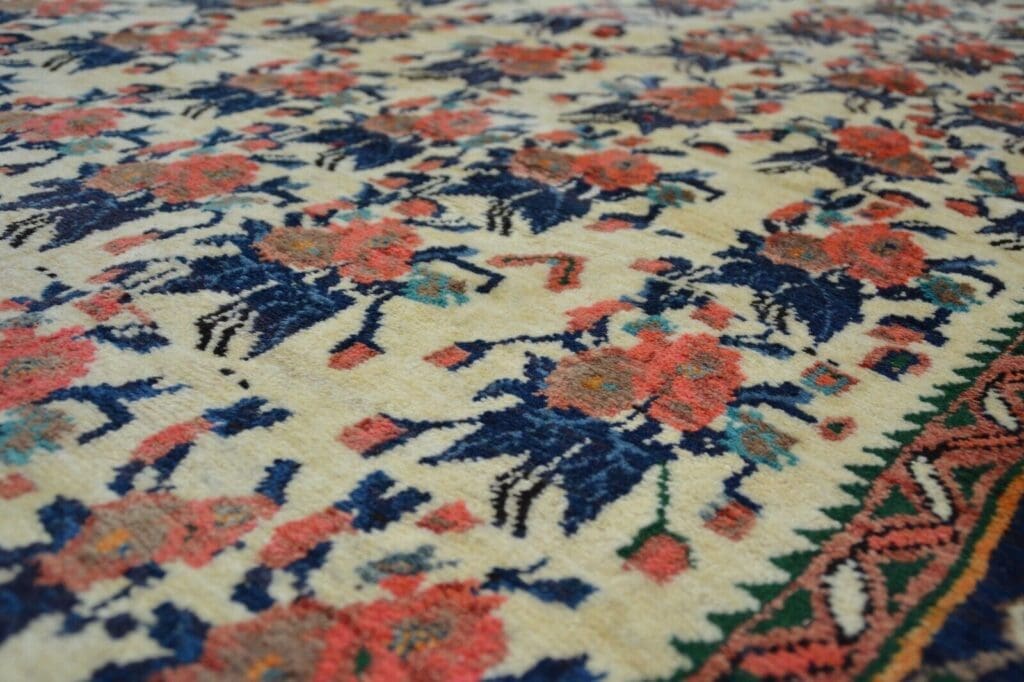
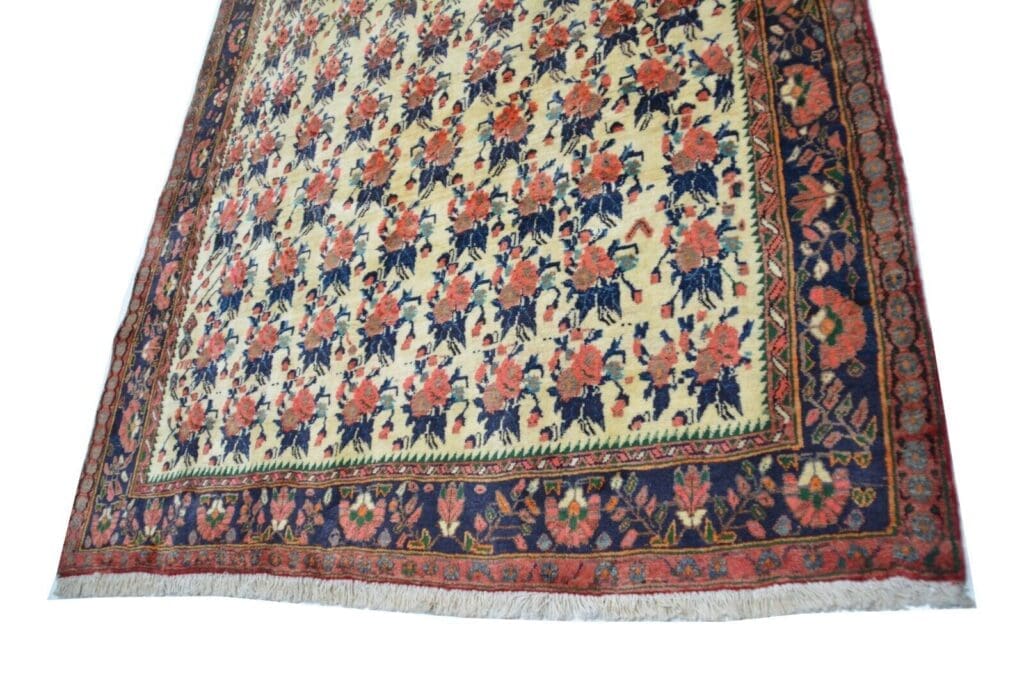
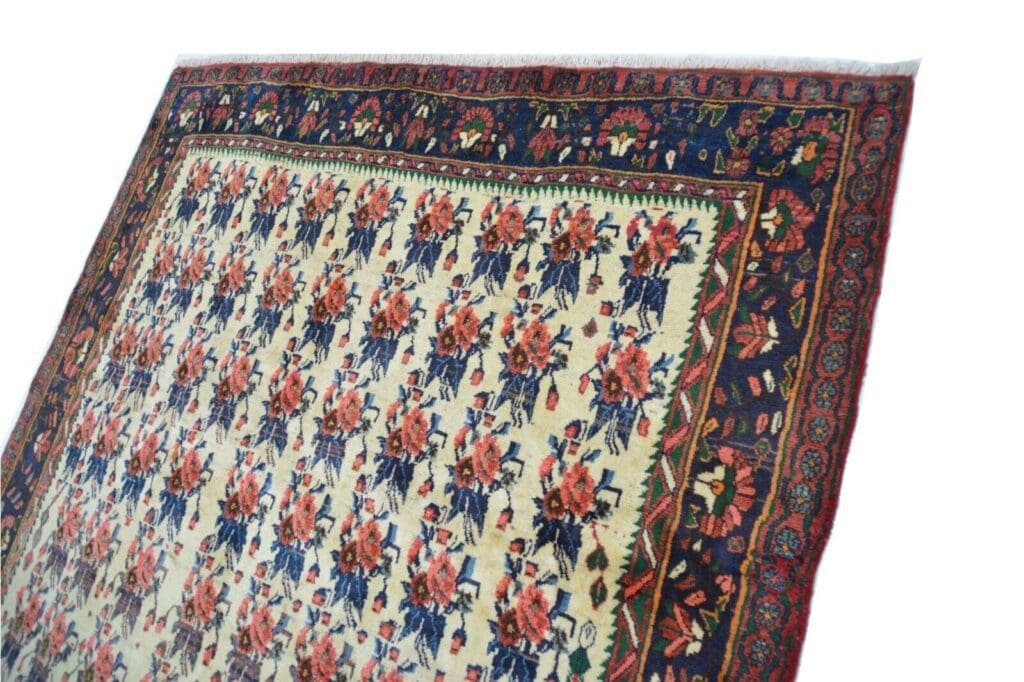
The pattern of this rug is described as Oriental. The description identifies floral motifs, geometric forms and detailed ornaments as characteristic design elements associated with Sirdjan rugs. These terms do not specify one single fixed drawing; instead, they refer to a broad vocabulary that can be combined in different ways within Oriental rug design. Floral shapes may appear as flowers, vines or stylised plants. Geometric elements introduce order across the field, while ornaments organise borders and interior sections.
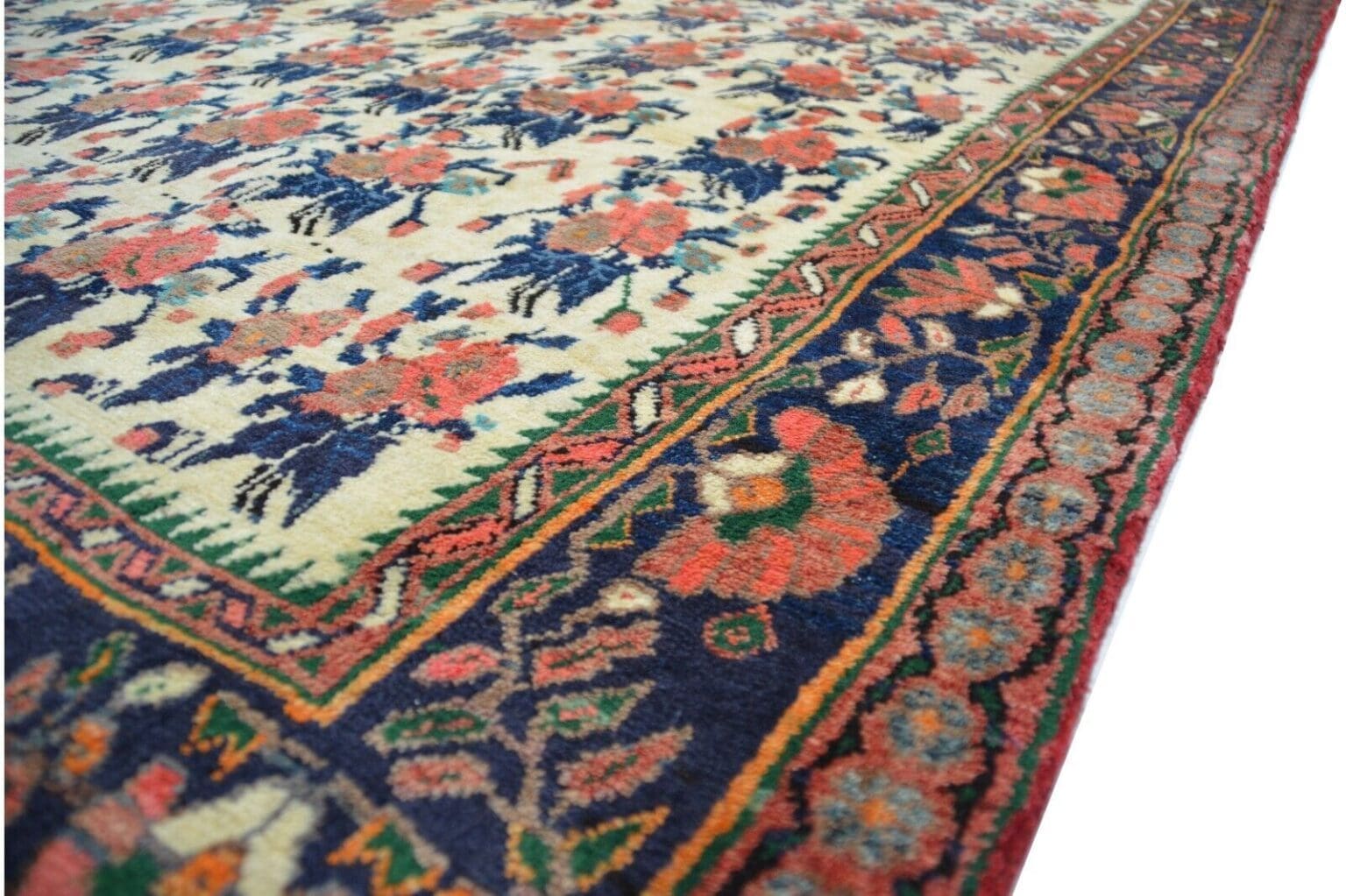
An Oriental rug pattern is often arranged in several visual layers. A central field may be enclosed by a border, with narrower bands separating the main design from the outer edge. The exact arrangement of this piece is not described in more detail, but the stated design context includes repeated ornaments, defined shapes and floral references. Hand-knotting makes it possible to work these elements through numerous small sections of colour and form. As a result, a pattern may present a different level of detail when viewed close up than when seen across the room.
The stated colour range extends from deep reds through lively blues and greens to softer earth tones. Red may function as a dominant ground or as an accent within an ornament. Blue and green provide contrasting areas, while earthy shades create a quieter connection between stronger colours. Wool gives the colours a textile quality rather than a completely smooth, printed appearance. The interaction of these colour groups helps the motifs remain legible across the surface.
Design and pattern serve several purposes in an Oriental rug. They structure the broad textile surface, guide the eye and connect the rug with Persian ornamental tradition. Floral and geometric signs can appear together while retaining their separate character. Such a design can be placed in traditional as well as contemporary interiors because its use is not tied to one particular furniture style. The Sirdjan rug can be used in a living room, bedroom or dining area, where it introduces a hand-knotted wool surface with an Oriental pattern.
Special Features
The rug is identified as new and as a display piece. Another stated feature is its suitability for underfloor heating. It can therefore be used in rooms where heat is delivered through the floor. Wool generally has insulating and temperature-regulating qualities. When it is used together with underfloor heating, the heat output of the complete floor construction should still remain within the requirements of the particular heating system.
Care for a hand-knotted wool rug begins with regular, gentle vacuuming. A soft brush can help remove dust and loose dirt without placing unnecessary strain on the surface. Spills should be blotted promptly with a soft cloth. A mild detergent is intended for treating stains; for a more thorough cleaning, a professional rug cleaner is recommended. Professional treatment helps protect both the wool and the hand-knotted construction.
FAQ
How should I clean the Sirdjan wool rug?
Vacuum the rug regularly with a gentle brush attachment to remove dust and dirt. If a stain occurs, use a mild detergent and a soft cloth. Treat the affected area carefully rather than rubbing the surface forcefully. For a deeper cleaning, consult a professional rug-cleaning specialist. Professional care helps prevent damage to the wool and protects the hand-knotted structure during more intensive treatment.
Is the rug suitable for underfloor heating?
Yes. The hand-knotted Sirdjan wool rug is suitable for rooms with underfloor heating. Wool is an insulating material and adapts well to different temperatures. This allows the rug to be used in both warm and cooler rooms. When combining any rug with underfloor heating, the technical instructions for the heating system and the complete floor construction should also be observed.
Where can the rug be used?
The Sirdjan rug can be used in several areas of the home. In a living room it provides a textile surface with an Oriental pattern, while in a bedroom it adds a hand-knotted wool layer to the interior. It can also be placed in a dining area. Its design works with both traditional and modern furnishing styles. The best placement depends on the room, the existing furniture and the arrangement desired for the space.
To provide the best experiences, we use technologies like cookies to store and/or access device information. Consenting to these technologies will allow us to process data such as browsing behavior or unique IDs on this site. Not consenting or withdrawing consent, may adversely affect certain features and functions.
Functional Always active
The technical storage or access is strictly necessary for the legitimate purpose of enabling the use of a specific service explicitly requested by the subscriber or user, or for the sole purpose of carrying out the transmission of a communication over an electronic communications network.
Preferences
The technical storage or access is necessary for the legitimate purpose of storing preferences that are not requested by the subscriber or user.
Statistics
The technical storage or access that is used exclusively for statistical purposes.The technical storage or access that is used exclusively for anonymous statistical purposes. Without a subpoena, voluntary compliance on the part of your Internet Service Provider, or additional records from a third party, information stored or retrieved for this purpose alone cannot usually be used to identify you.
Marketing
The technical storage or access is required to create user profiles to send advertising, or to track the user on a website or across several websites for similar marketing purposes.
 SECURE PAYMENT
 SHIPPING PARTNERS