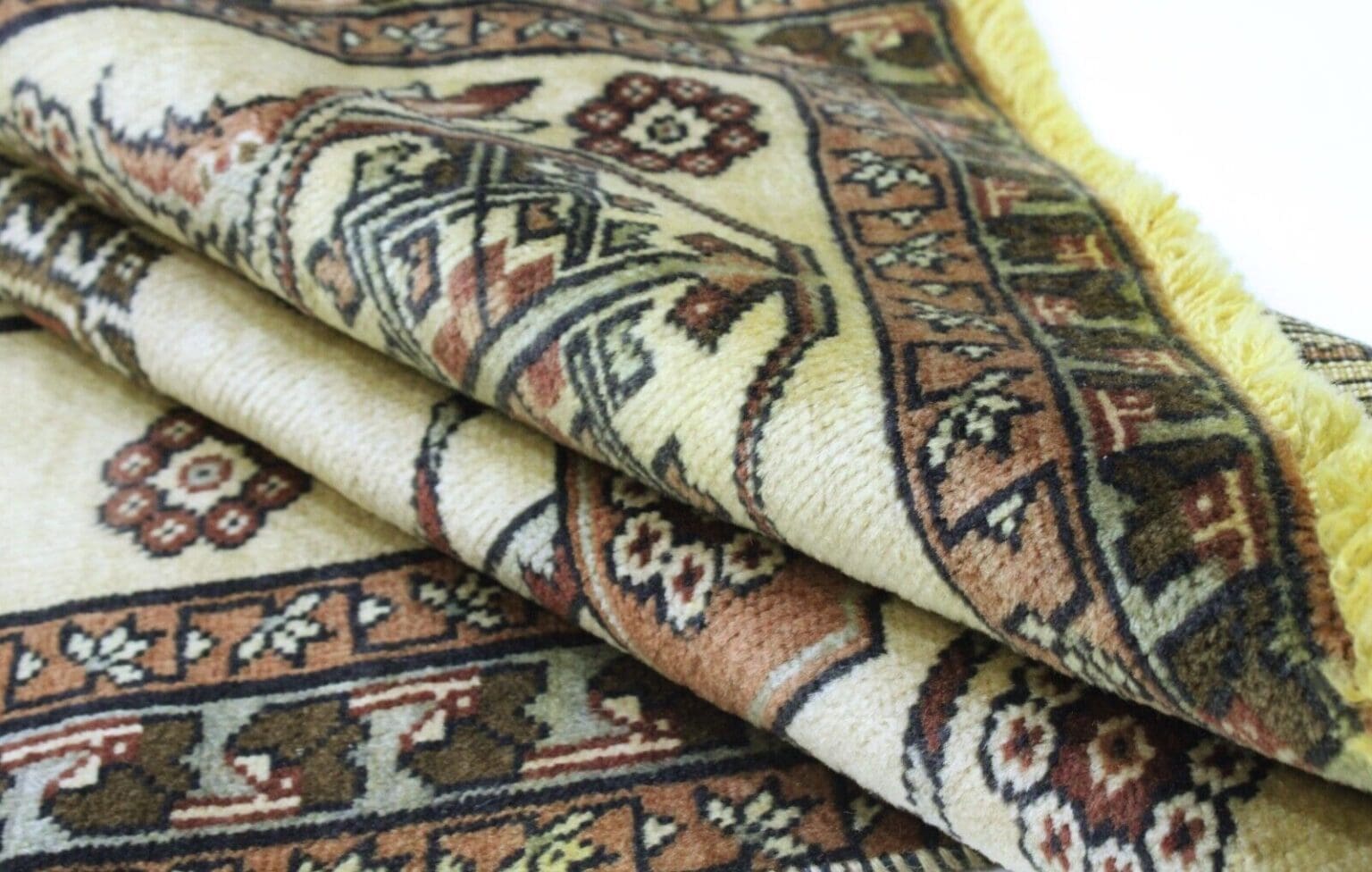
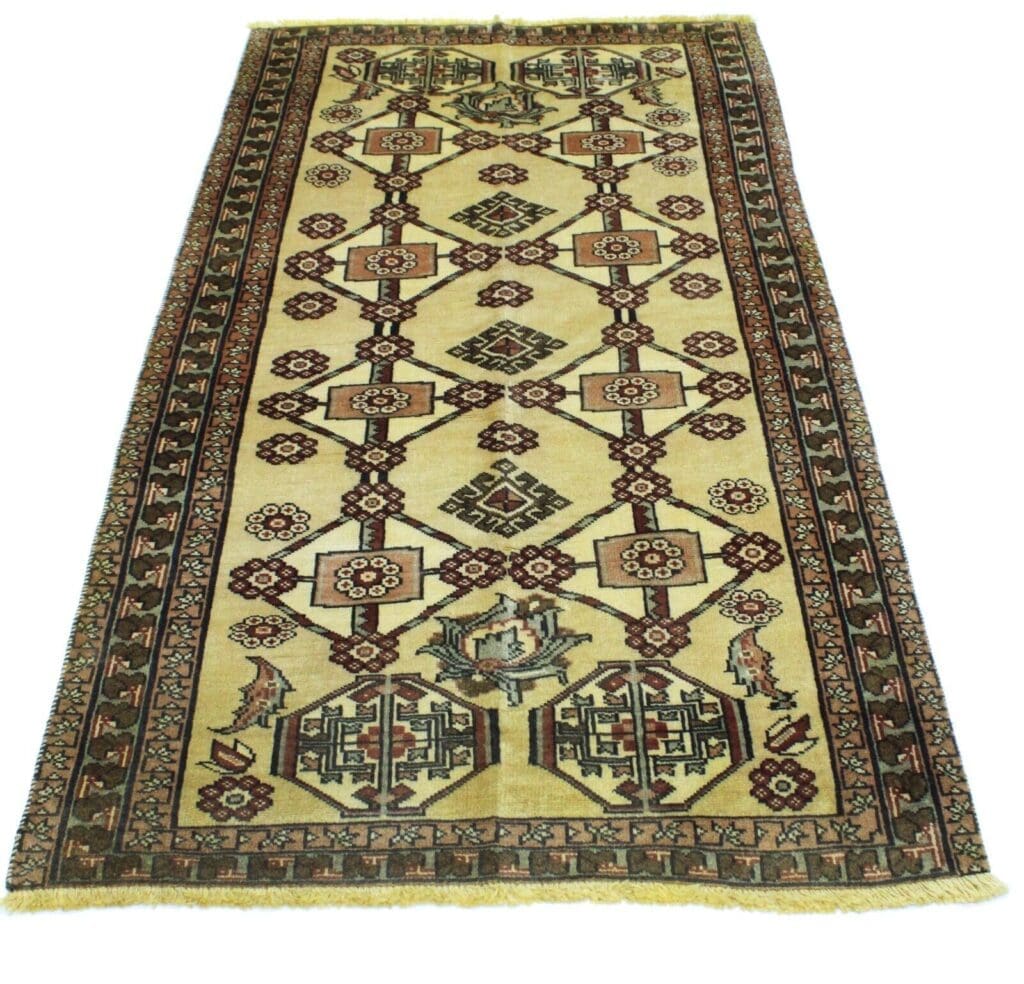
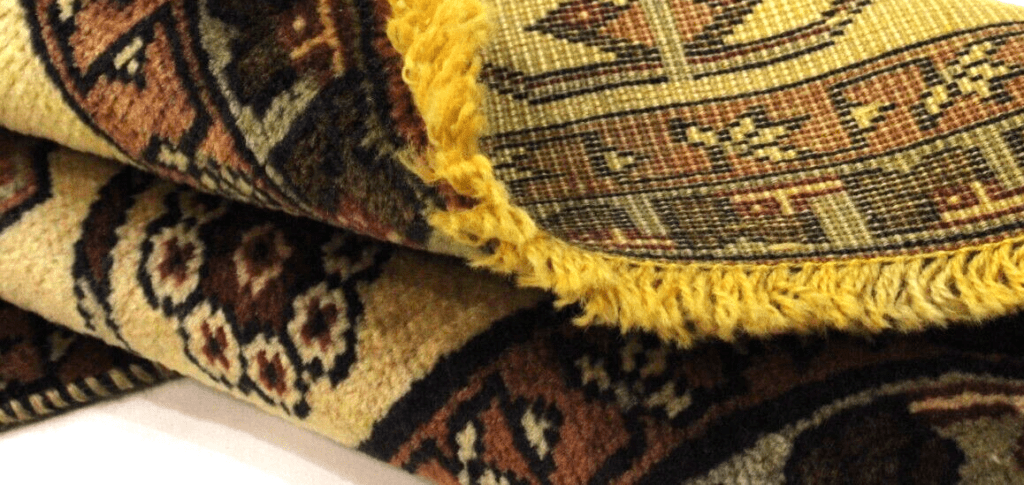
This hand-knotted Shiraz Persian rug is made of 100% wool. Wool is one of the traditional materials used in oriental rug making. Its natural fibre structure gives it a tactile surface, while its resilience has made it suitable for pile rugs across many weaving regions. A hand-knotted surface is built one knot at a time rather than produced as an identical machine-made repeat. Every individual rug therefore remains connected to the work of the person who made it.
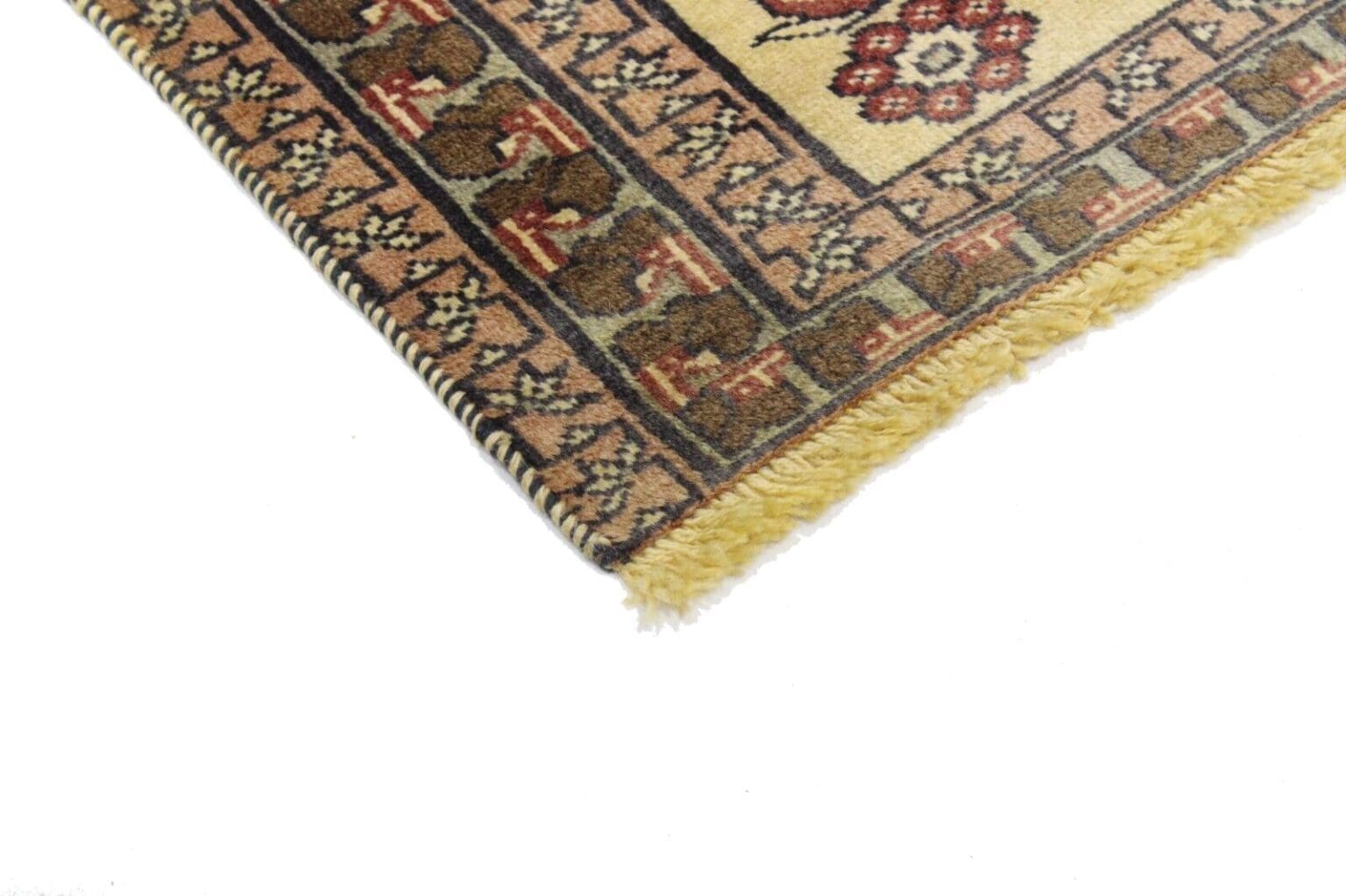
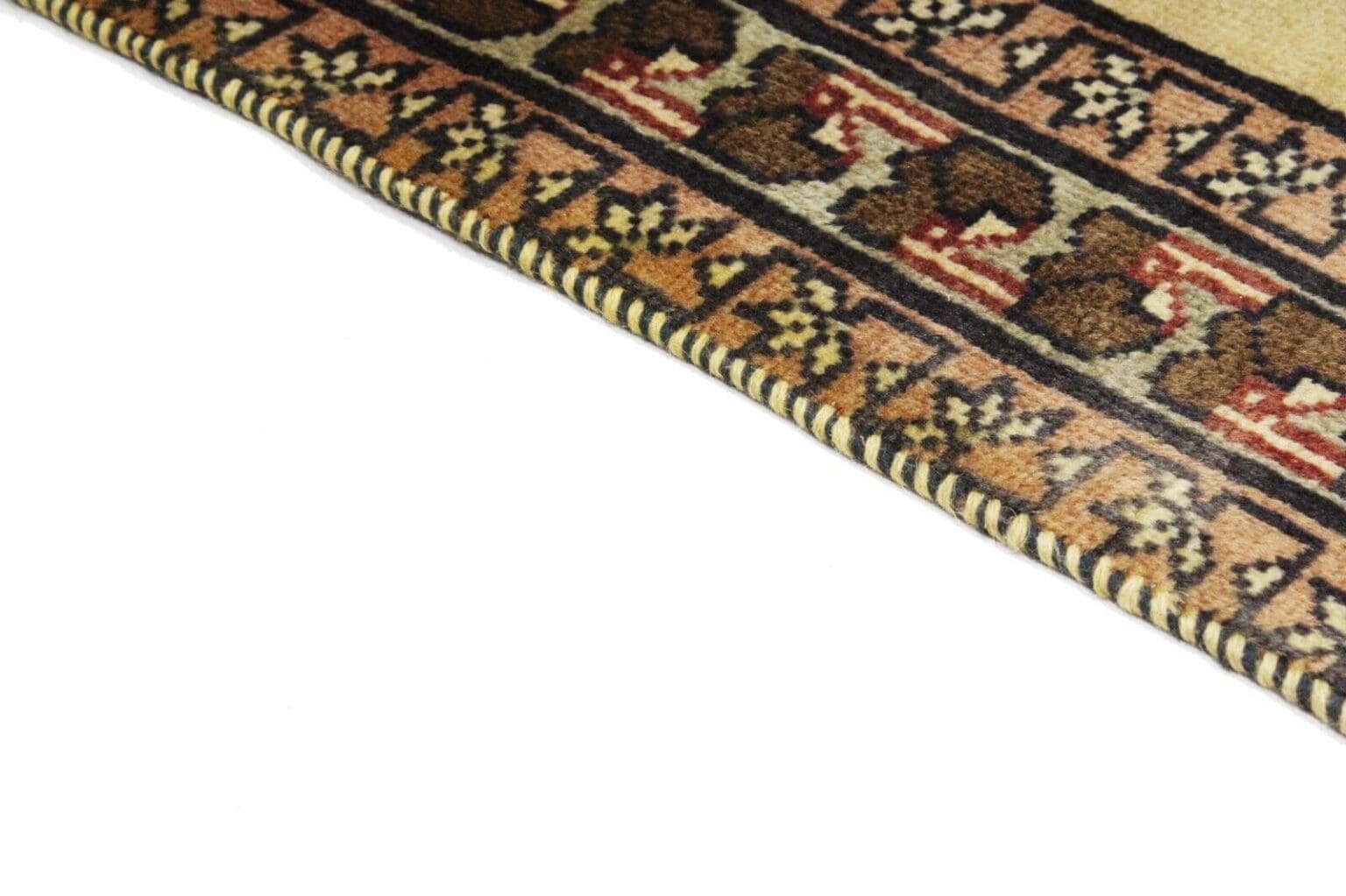
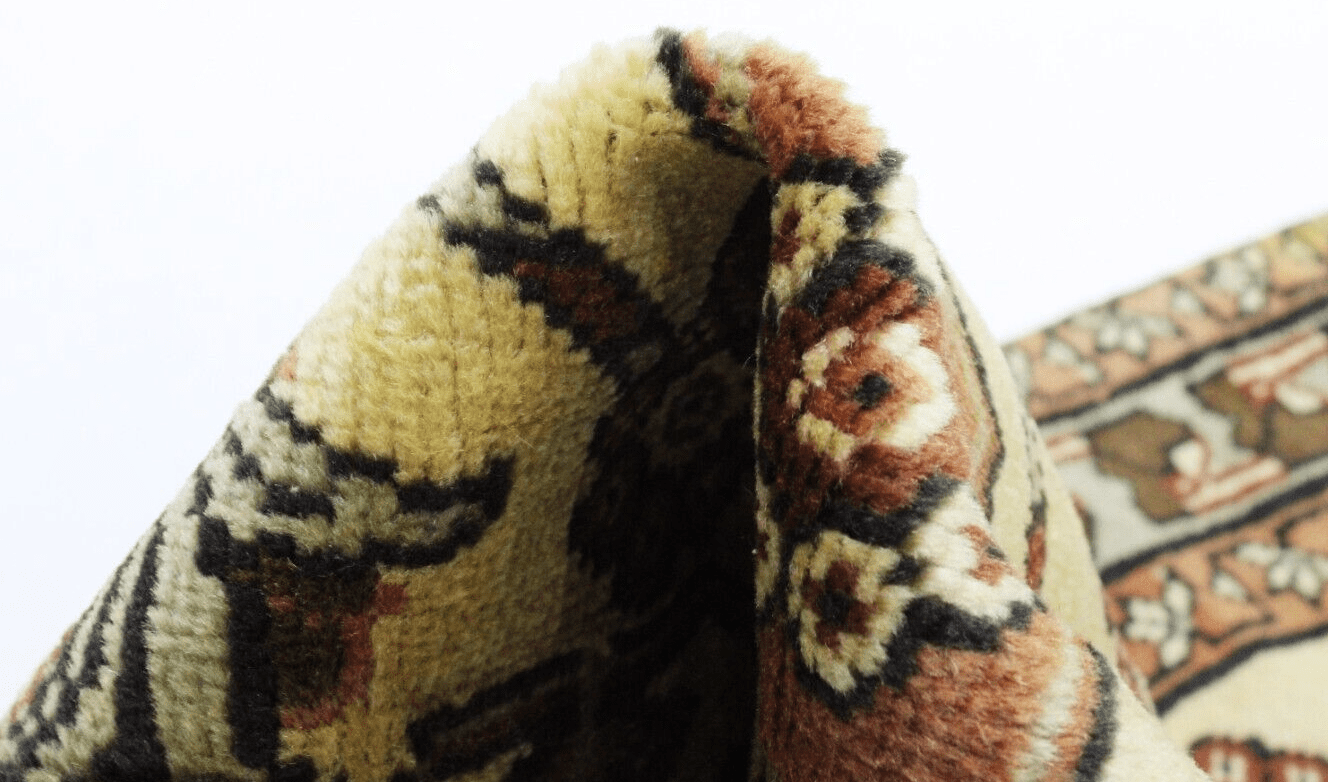
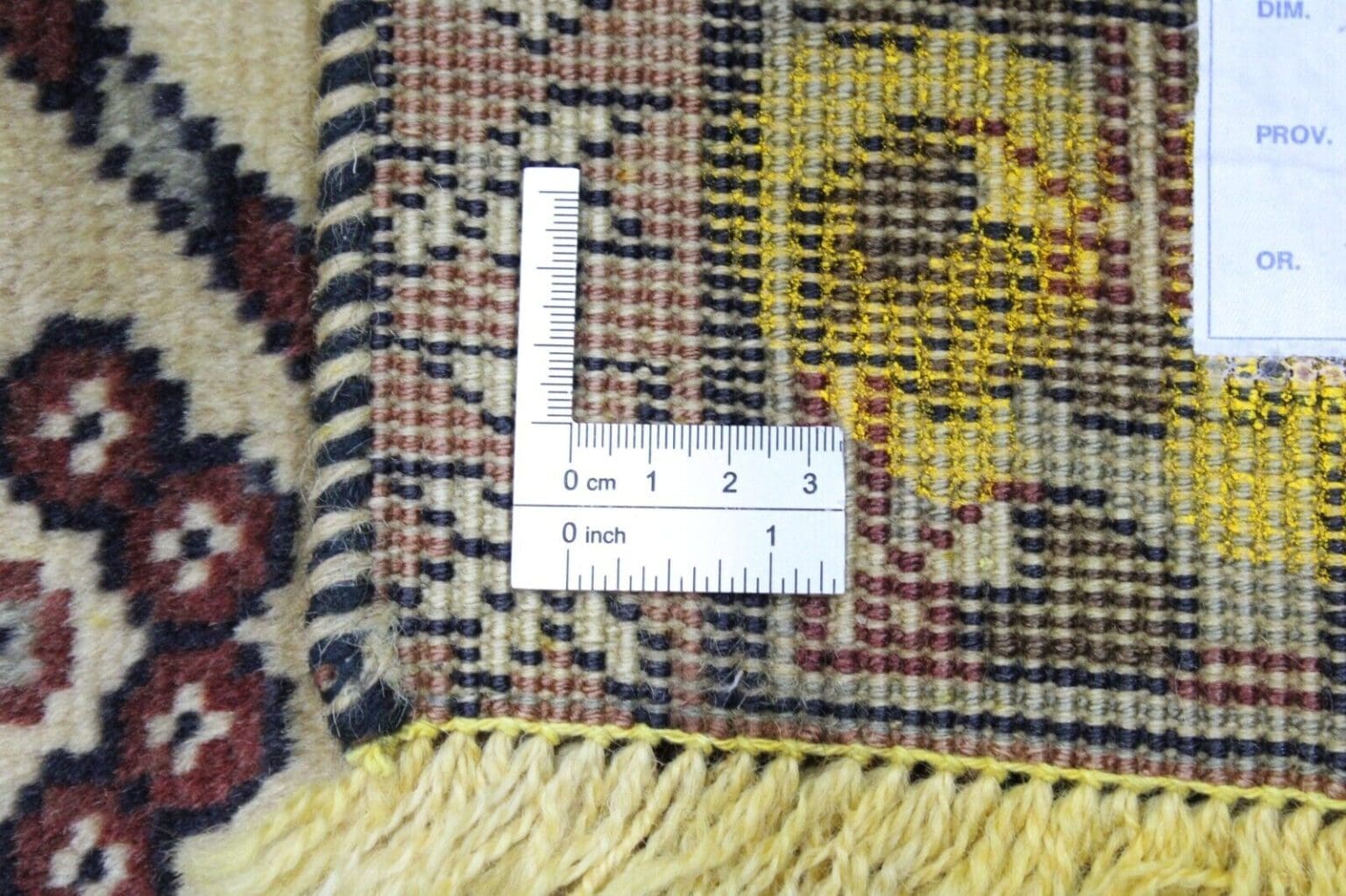
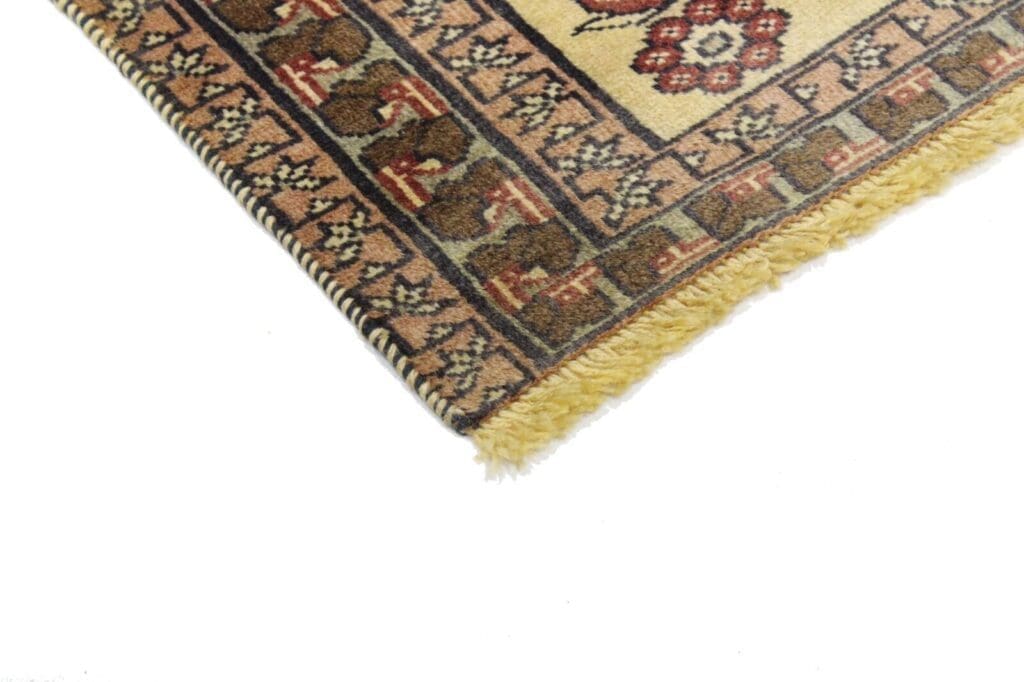
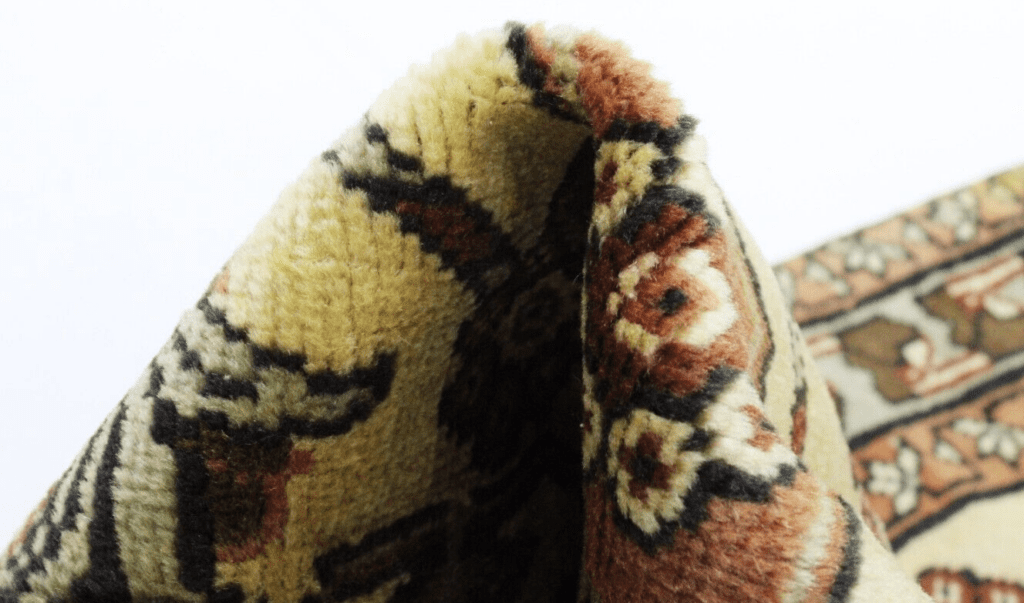
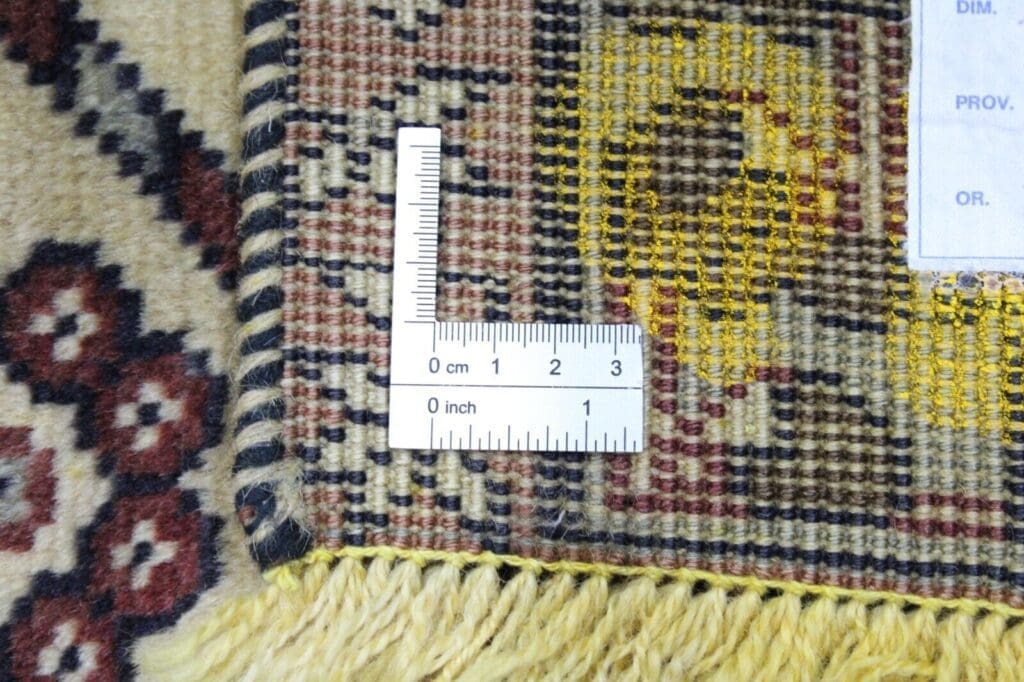
The pile of this rug is short, and its thickness is 1 cm. A short pile creates a compact surface and can allow the outlines of a geometric design to remain clearly visible. The knot density is described as high-quality handwork. The central production feature is therefore the traditional handmade technique: wool forms the pile, the design is created as the knots are placed, and the finished textile retains the character of hand craftsmanship.
Wool is valued in rug making for its practical and tactile qualities. Depending on the fibre, yarn and construction, it can form a firm surface with a comfortable feel. Wool rugs can also develop a distinct textile character through use. These are general properties that explain the importance of wool in many Iranian rug traditions. For this particular piece, the specified material is 100% wool.
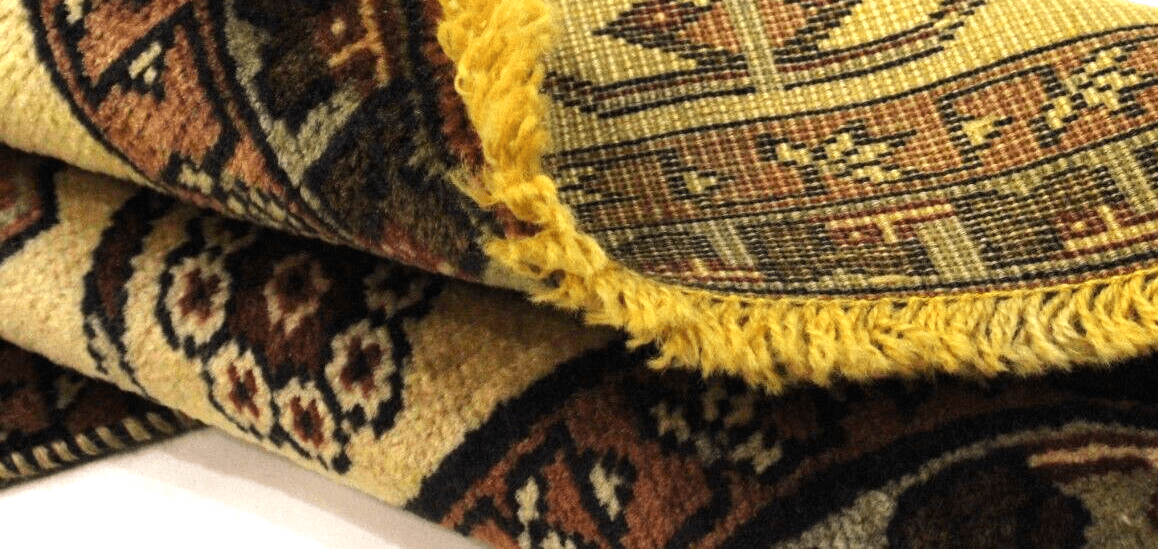
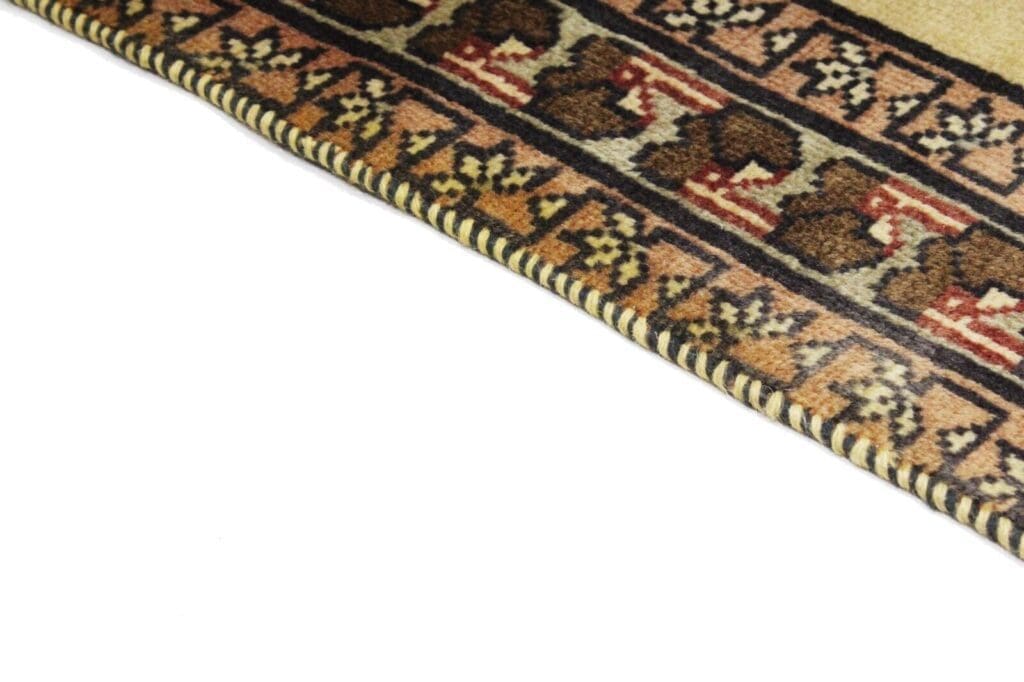
Hand-knotting differs from weaving and industrial production because the pile is formed from individual knots. Knots are placed in rows and secured through the continued construction of the rug. The exact method can vary between regions and workshops. Minor variations created by manual work are part of the making of an individual rug and should not be confused with the uniformity of a mechanically repeated product.
Origin and Tradition
The rug comes from Shiraz in Persia. Shiraz is a major historical reference point for rugs from southern Iran. The city and its wider region have been associated with urban workshops, village production and nomadic textile traditions. As a result, the name Shiraz can encompass several related approaches to design and technique within the southern Iranian rug landscape.
The region’s textile culture is closely connected with the transmission of knowledge through families and communities. Skills involving wool preparation, dyeing, pattern construction and knotting were often learned through practical work and passed from one generation to another. In nomadic settings, rugs could serve as useful household textiles as well as expressions of shared artistic traditions. Designs did not always require a fully detailed drawing; they could develop from a remembered vocabulary of forms and be adjusted during the making process.
Shiraz is particularly associated with the Ghashghai. The Ghashghai are a Turkic-speaking community based in southern Iran with a strong tradition of weaving and rug making. Ghashghai rugs are often discussed in connection with clearly organised geometric compositions. Diamonds, stepped lines, hooked forms, stripes and repeated fields may appear within this visual language. The designation therefore points to a cultural and craft context in southern Iran, not merely to a decorative label.
Nomadic rug making traditionally relies on portable looms and on materials available through local production or trade. Wool may come from local livestock or be obtained through regional exchange. The working conditions encourage designs that can be constructed from distinct geometric units and adapted to the size of the loom. These practical circumstances helped shape visual traditions in which strong outlines, repeated motifs and balanced fields could be combined with an individual handmade execution.
Persian rug making includes many different regional centres and methods. Urban workshops often became known for finely articulated floral ornaments, central medallions and carefully ordered borders. Village and nomadic traditions may instead use more abstract forms and a more openly rhythmic division of the field. This is a general description of Persian rug history and does not mean that every rug from one place has an identical appearance. For this piece, Shiraz, Persia and the Ghashghai designation are the stated references for origin and tradition.
The rug is dated to the late twentieth century, from 1970 to 1999. This period belongs to the recent history of Iranian hand-knotting. Traditional techniques continued to be practised in families, workshops and regional production settings, while Persian rugs were also traded internationally. The date shows that hand-knotting remained a living craft in the second half of the twentieth century rather than being limited to much older historical objects.
Trade routes helped bring Persian rugs from different regions to buyers elsewhere. Along with the rugs themselves, these exchanges spread knowledge of regional patterns and construction methods. Even so, place names remain important for understanding the cultural setting of a rug. Terms such as Shiraz and Ghashghai can refer to landscape, community, inherited design knowledge and working practice. They should not be treated only as names for a surface appearance.
Design and Pattern
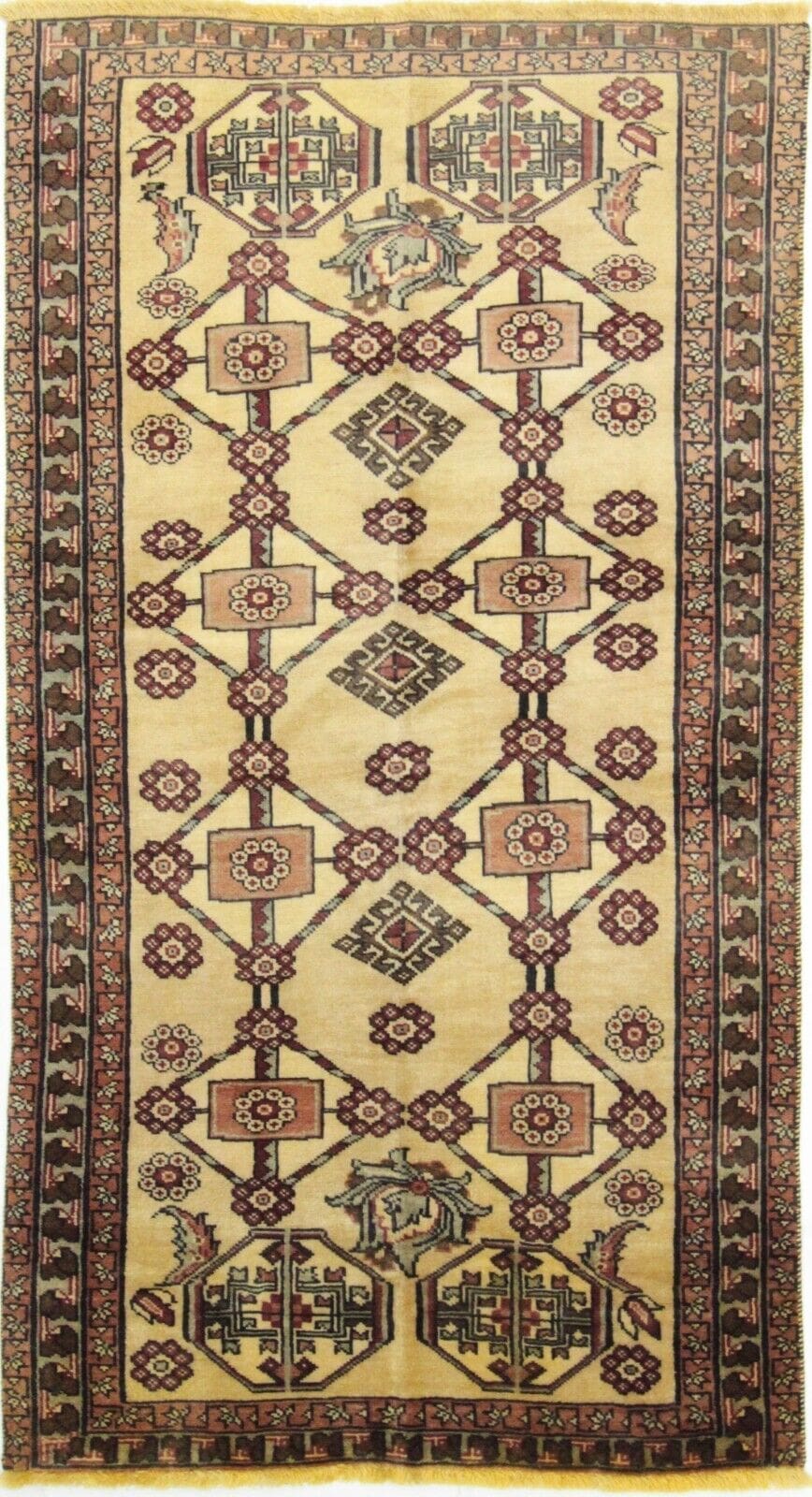
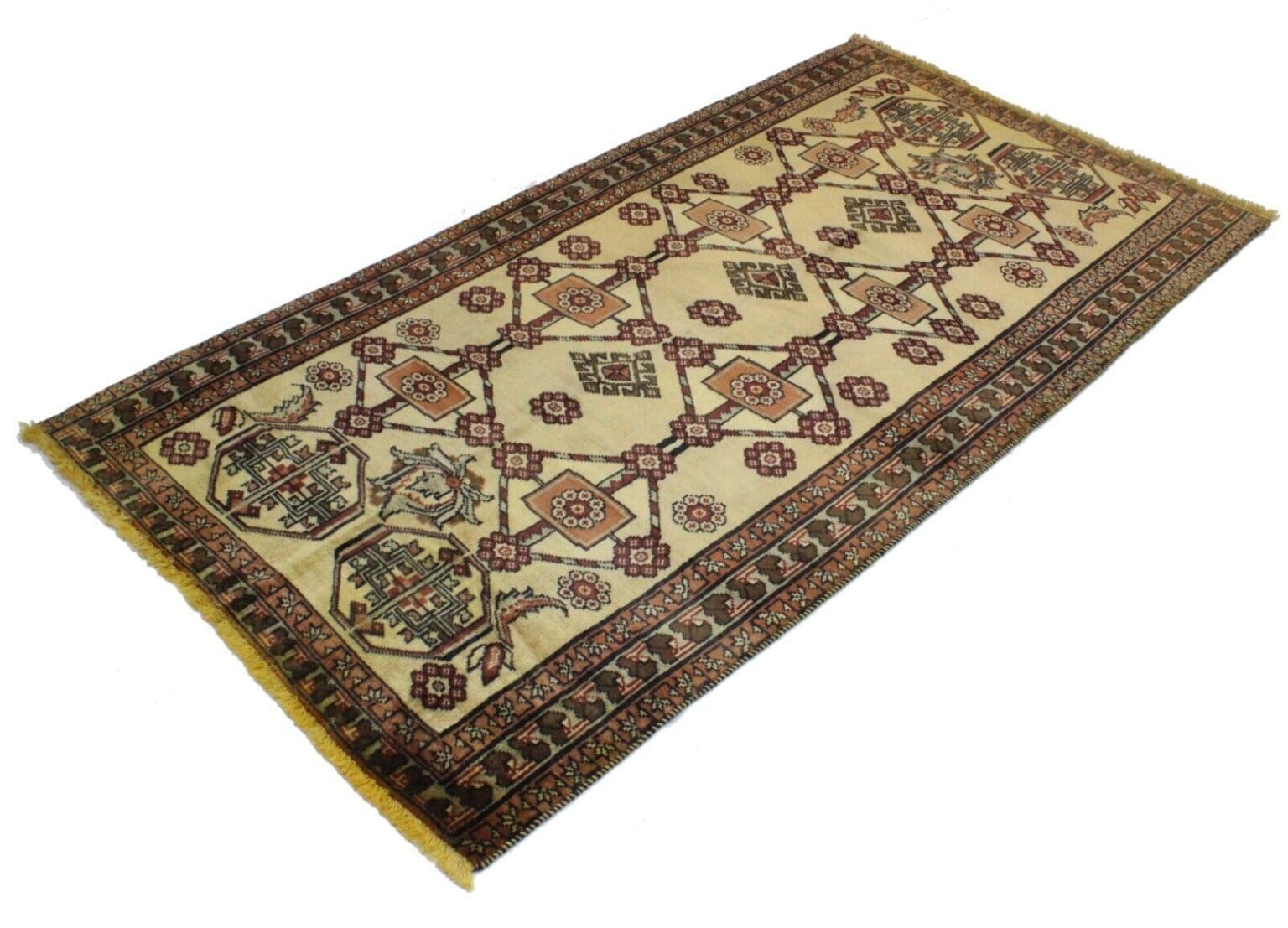
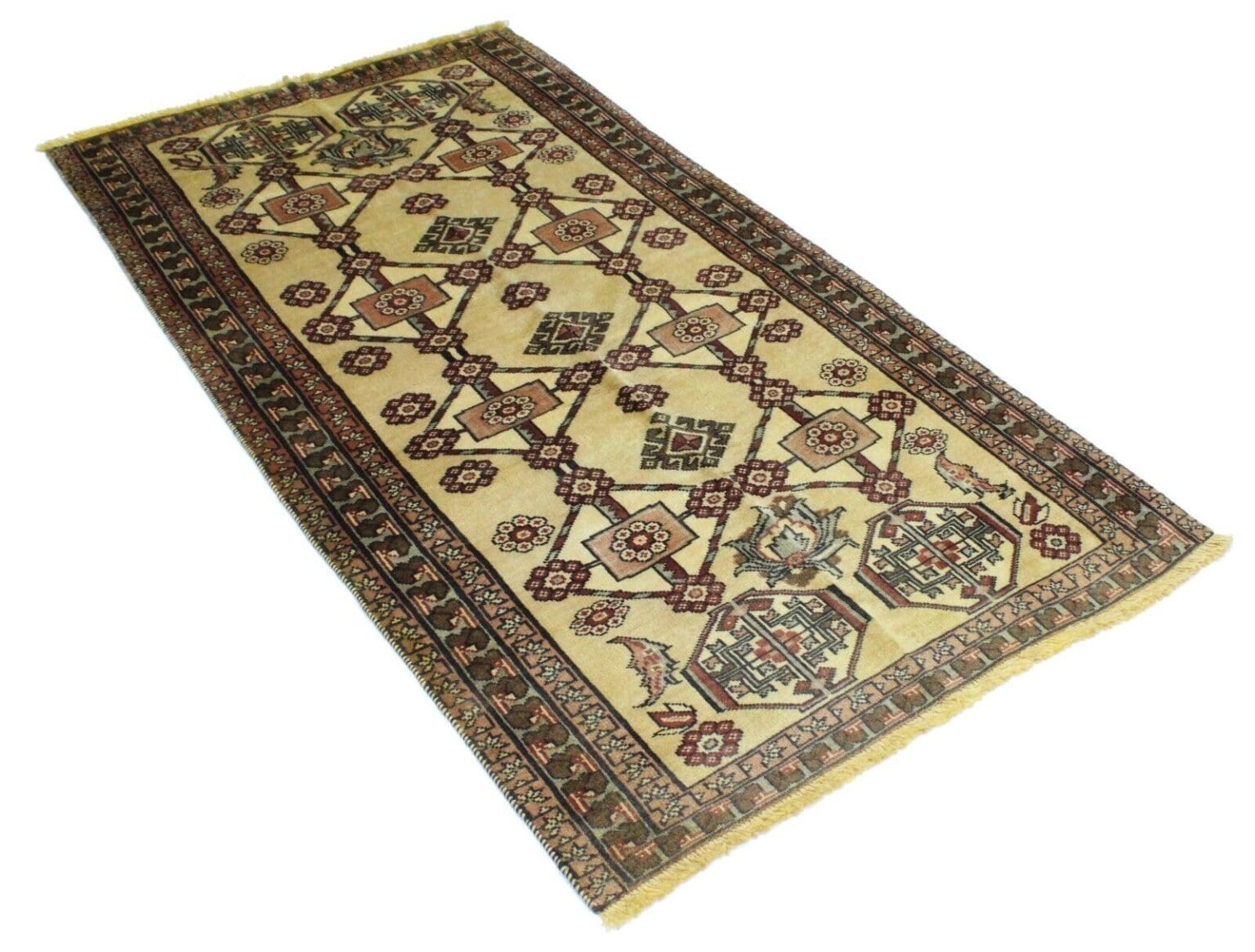
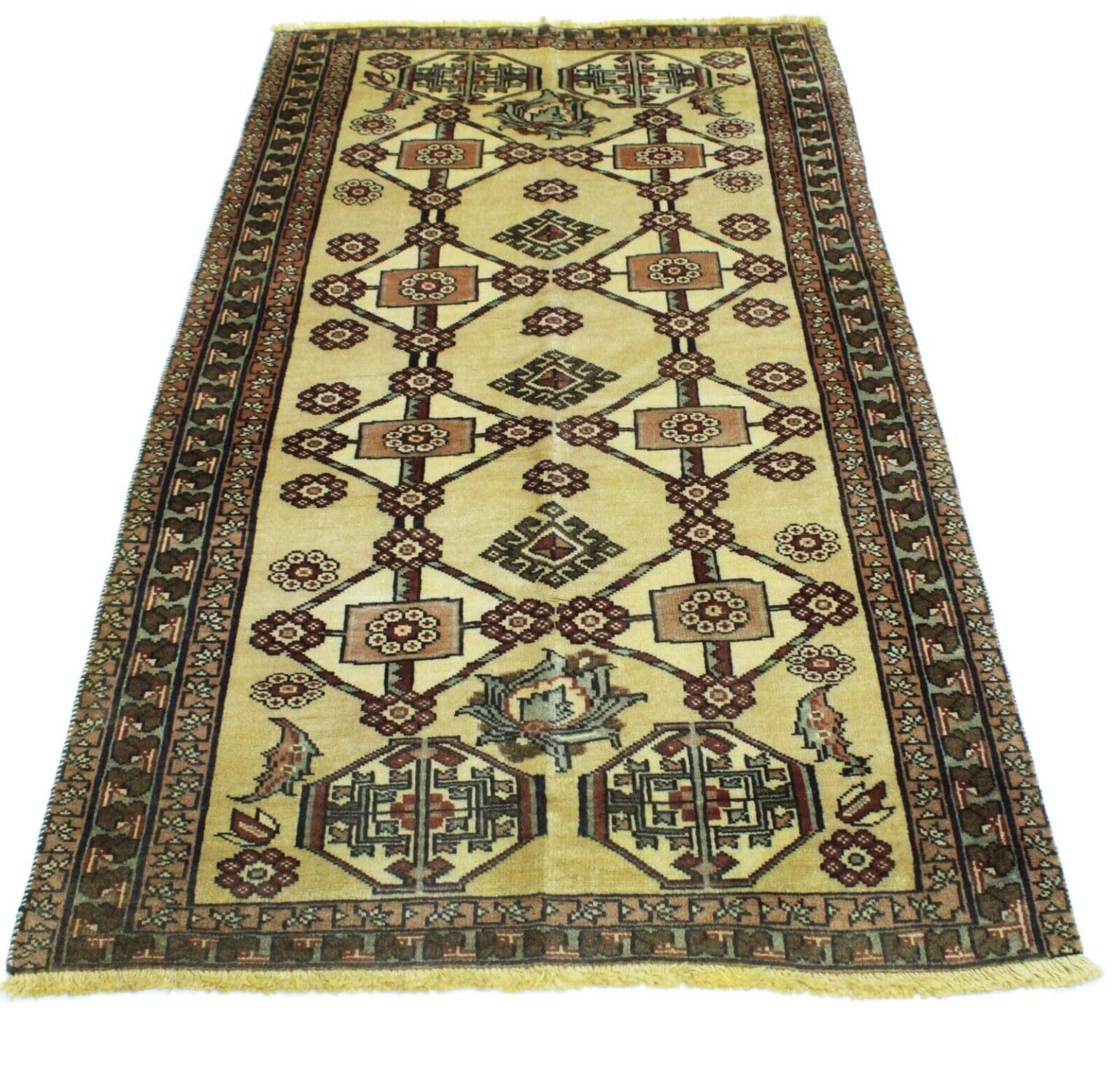
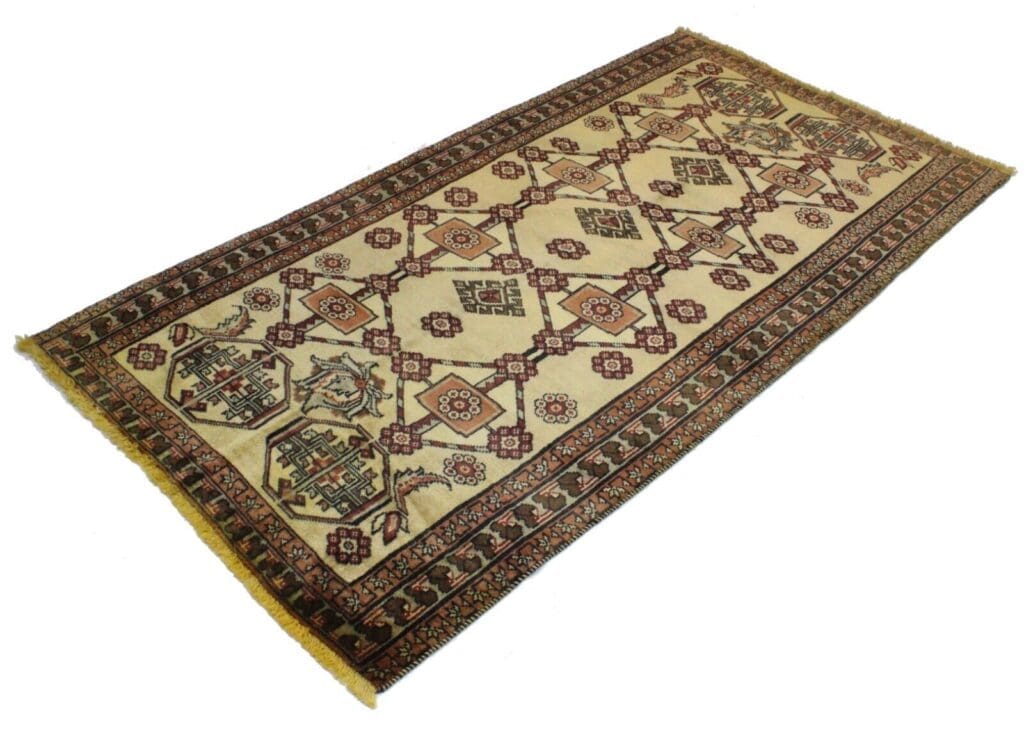
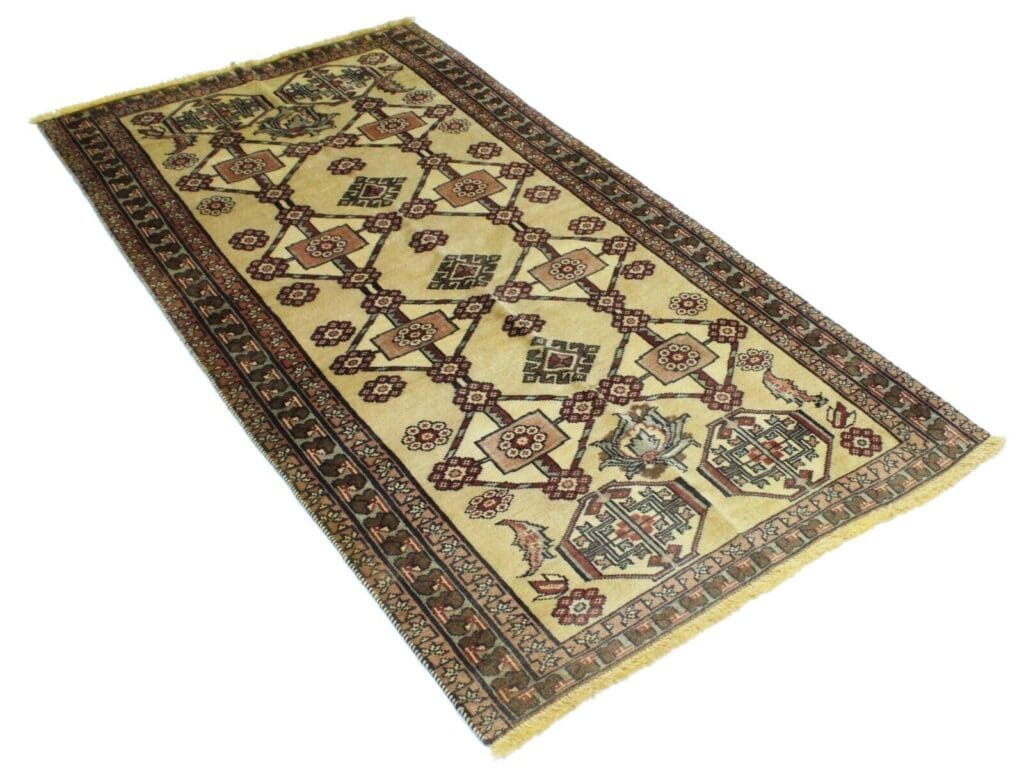
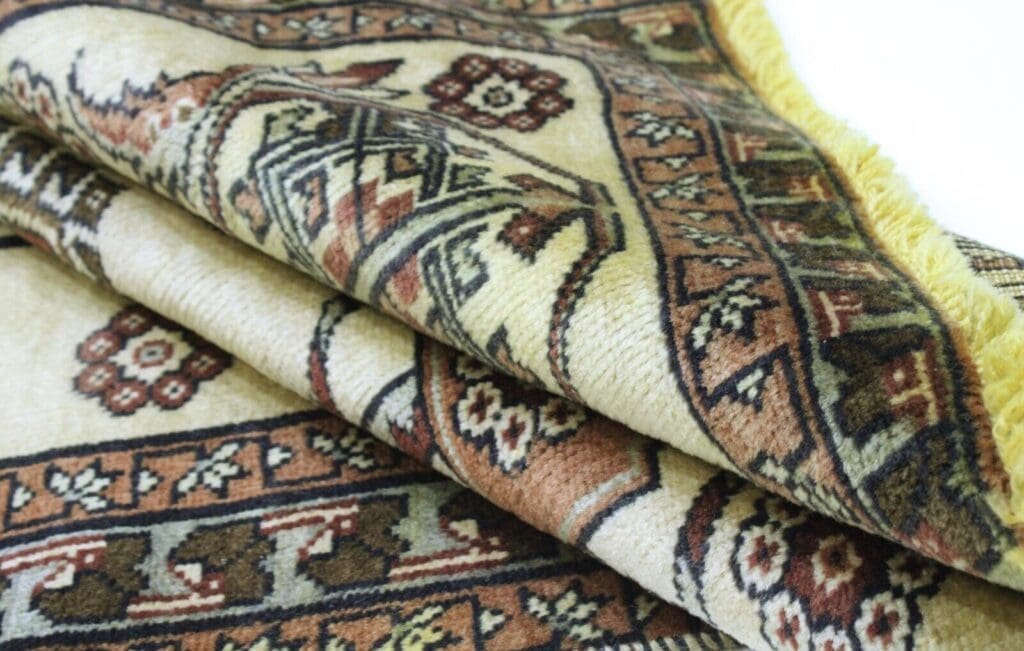
The pattern of this rug is geometric. Geometric compositions are built from lines, angles, enclosed areas and repeated shapes. Instead of presenting a strictly naturalistic scene, they create visual structure through abstraction, order and recurrence. Diamonds, stepped contours, hooked motifs, stripes and connected fields can be arranged into a unified surface. The exact combination and placement belong to the individual drawing of this rug.
Geometric designs are particularly compatible with the working methods found in many village and nomadic traditions. A composition can be assembled from recognisable basic elements and translated into knots row by row. The weaver may work from memory, from an inherited pattern vocabulary or from a simple working plan. The result does not have to be mathematically identical from one section to the next. Handmade execution gives the organised design an individual textile structure.
The title describes the colour impression as elegant gold. Golden tones may function as a field colour, as accents or as a connecting element between separate areas of a geometric composition. Warm light tones can emphasise the drawn lines, while contrasting areas can strengthen the division of the surface. The particular distribution of colour and its relationship to the forms belong to the individual design of this rug.
Patterns in oriental rugs have several roles. They organise the surface, establish visual rhythm and distinguish between the inner field, surrounding areas and borders. A repeated motif may act as a linking element across the composition, while border forms provide a transition between the rug and its surroundings. In geometric designs, much of the effect comes from the relationship between straight lines, angles, spaces and enclosed shapes.
Many motifs in Persian rug art have historical precedents. They may be derived from plants, animals, stars, landscapes, everyday objects or older ornamental traditions. Through transmission, such forms can become simplified and turn into abstract signs. Their meaning is not always fixed or singular. A motif may be understood differently depending on its region, community and setting. A geometric pattern is therefore best approached as part of a regional visual language rather than assigned one universally binding interpretation.
The Ghashghai tradition is often connected with strong geometric forms and a clearly divided field. A design may use one central area, several smaller compartments or a continuous arrangement of motifs. Borders can also be formed from repeated geometric elements. Handwork permits small differences in contour, spacing and alignment. In this way, inherited forms and the individual decisions of the maker remain visible at the same time.
A geometric rug can be used in varied interior settings because its visual structure does not depend on a realistic scene. Clear forms can be placed alongside traditional furnishings or simpler modern surfaces. This is a general characteristic of geometric rug design and does not predict the appearance of a particular room. It explains why geometric compositions have remained useful in both traditional and contemporary interiors.
Special Features
The rug is described as top condition, washed and used. Its used state forms part of its history as an individual textile, while the word washed records that cleaning has taken place. It is also specified as suitable for underfloor heating, non-slip and environmentally friendly. These details complement the information about the material, pile and construction and are part of the description of this particular rug.
As a hand-knotted Persian rug from Shiraz, this piece combines 100% wool, a short pile, a geometric pattern and a golden colour impression with the Ghashghai tradition. It is assigned to the late twentieth century and described as a washed, used rug in top condition. Its origin, material and handmade construction together define the identity of this one-off textile. Since a hand-knotted rug is not an industrially identical repeat, its individual drawing remains specific to the piece.
FAQ
How should I care for my Persian rug?
For regular care, vacuum the rug without using a brush attachment. Slow and even movements help remove dust and loose particles while treating the short wool pile gently. Occasional professional cleaning is recommended because a specialist can take the wool, the knotting technique and the rug’s condition into account when selecting a method. Direct sunlight should be avoided in order to reduce the risk of colour fading. If the rug has a more serious stain or becomes damp, professional advice is preferable to untested household cleaning products.
Where do the patterns on a Persian rug come from?
Patterns on Persian rugs are often shaped by region. They reflect the cultural, historical and craft background of the area in which a tradition developed. Forms may be inspired by nature, everyday life or older ornaments, then simplified, rearranged and passed on within families or workshops. In the Shiraz and Ghashghai context, geometric arrangements have an important place in the visual tradition. Their meaning is not always fixed, however. It can arise from the relationship between shape, colour, layout and the regional tradition in which the motif is used.
How can I assess the quality of a Persian rug?
The quality of a Persian rug should be assessed through several characteristics rather than one isolated detail. Relevant points include the number of knots per square metre, the nature of the wool or silk used, and the clarity and complexity of the pattern. The workmanship, the structure of the pile and the overall condition are also important. A quality rug is generally hand-knotted and shows recognisable signs of traditional craftsmanship. For this piece, the specified features are 100% wool, high-quality handwork, a short pile, a geometric pattern, and a washed and used top condition. These characteristics should be considered together when evaluating the rug.
To provide the best experiences, we use technologies like cookies to store and/or access device information. Consenting to these technologies will allow us to process data such as browsing behavior or unique IDs on this site. Not consenting or withdrawing consent, may adversely affect certain features and functions.
Functional Always active
The technical storage or access is strictly necessary for the legitimate purpose of enabling the use of a specific service explicitly requested by the subscriber or user, or for the sole purpose of carrying out the transmission of a communication over an electronic communications network.
Preferences
The technical storage or access is necessary for the legitimate purpose of storing preferences that are not requested by the subscriber or user.
Statistics
The technical storage or access that is used exclusively for statistical purposes.The technical storage or access that is used exclusively for anonymous statistical purposes. Without a subpoena, voluntary compliance on the part of your Internet Service Provider, or additional records from a third party, information stored or retrieved for this purpose alone cannot usually be used to identify you.
Marketing
The technical storage or access is required to create user profiles to send advertising, or to track the user on a website or across several websites for similar marketing purposes.
 SECURE PAYMENT
 SHIPPING PARTNERS


