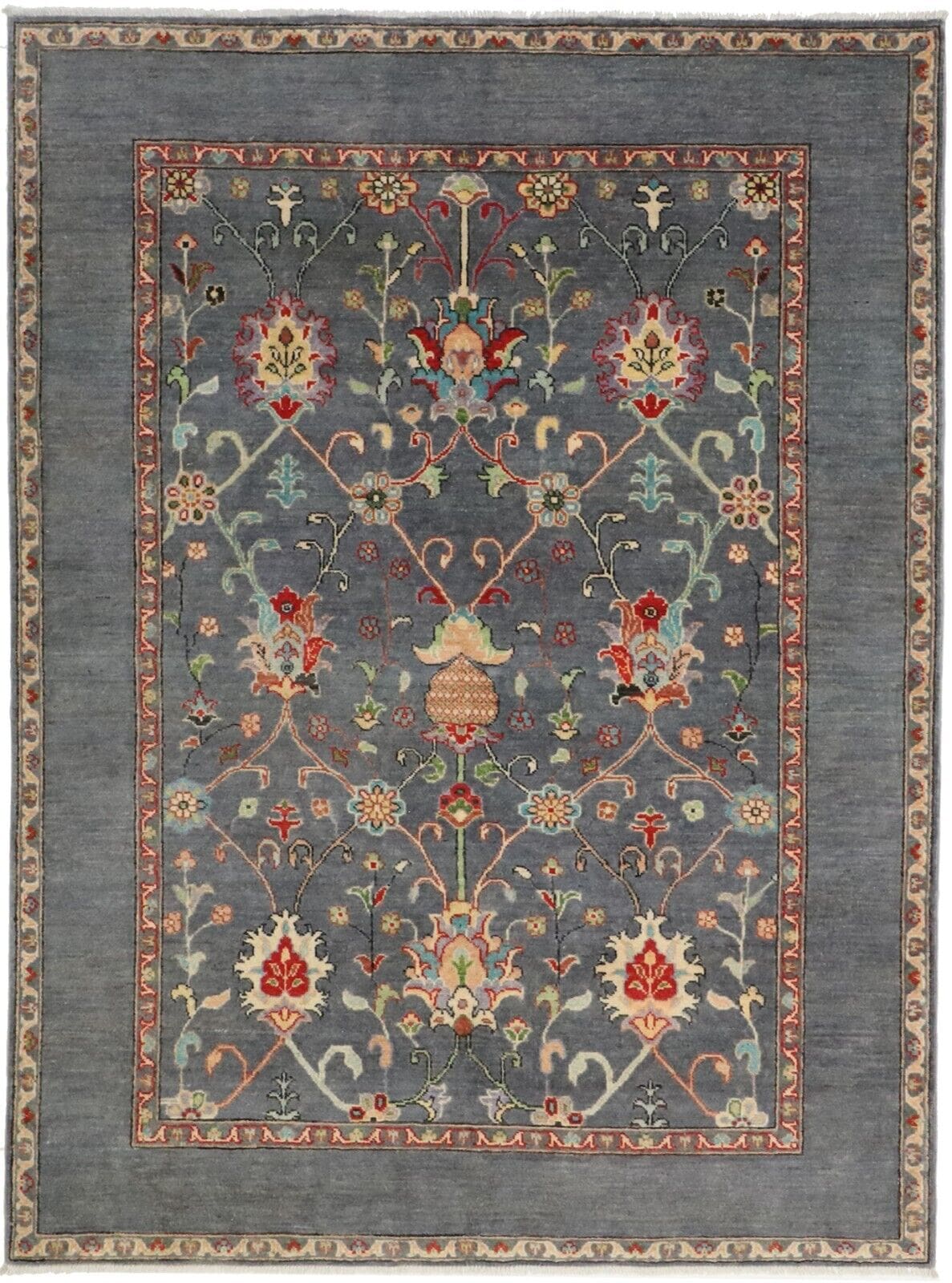
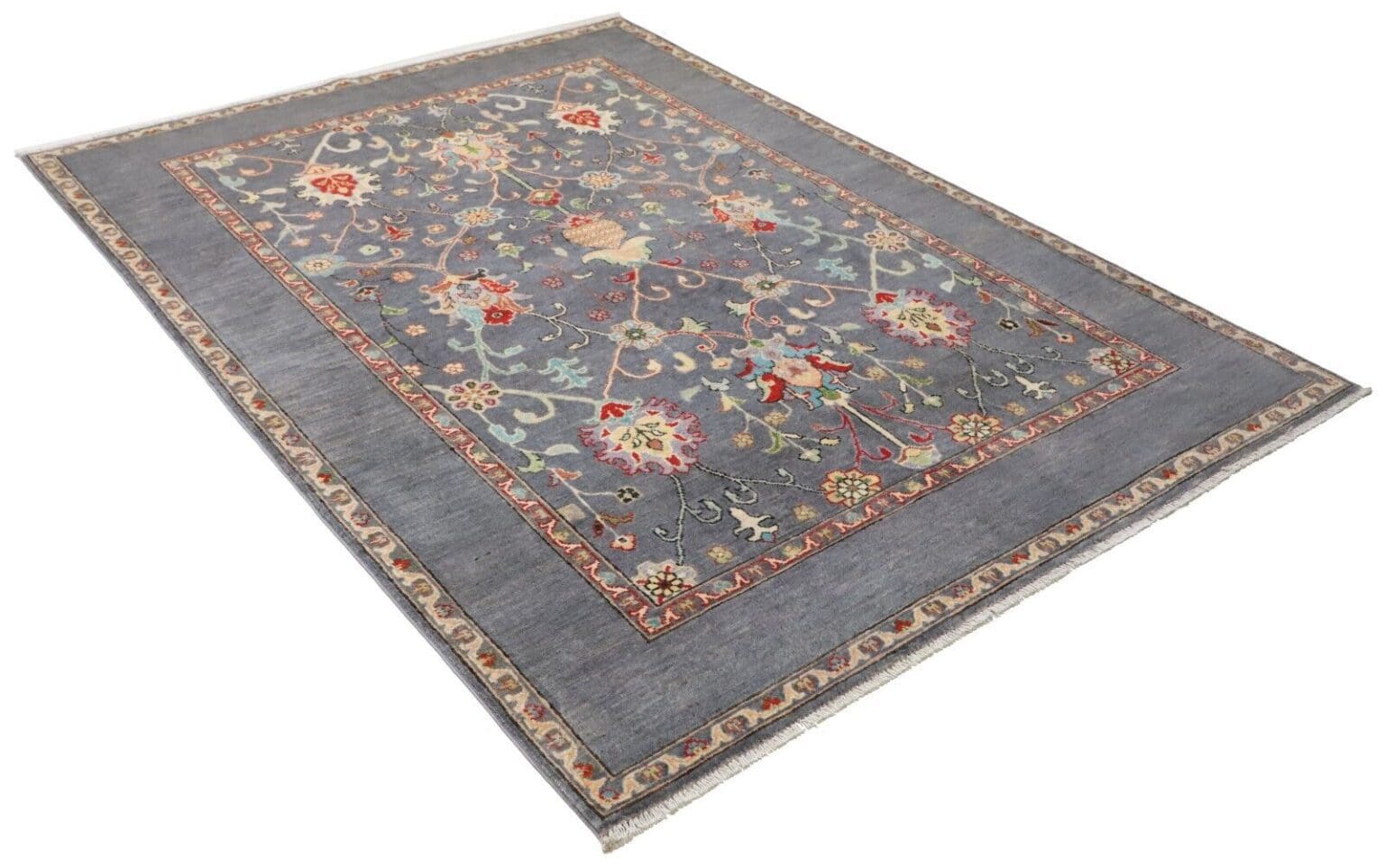
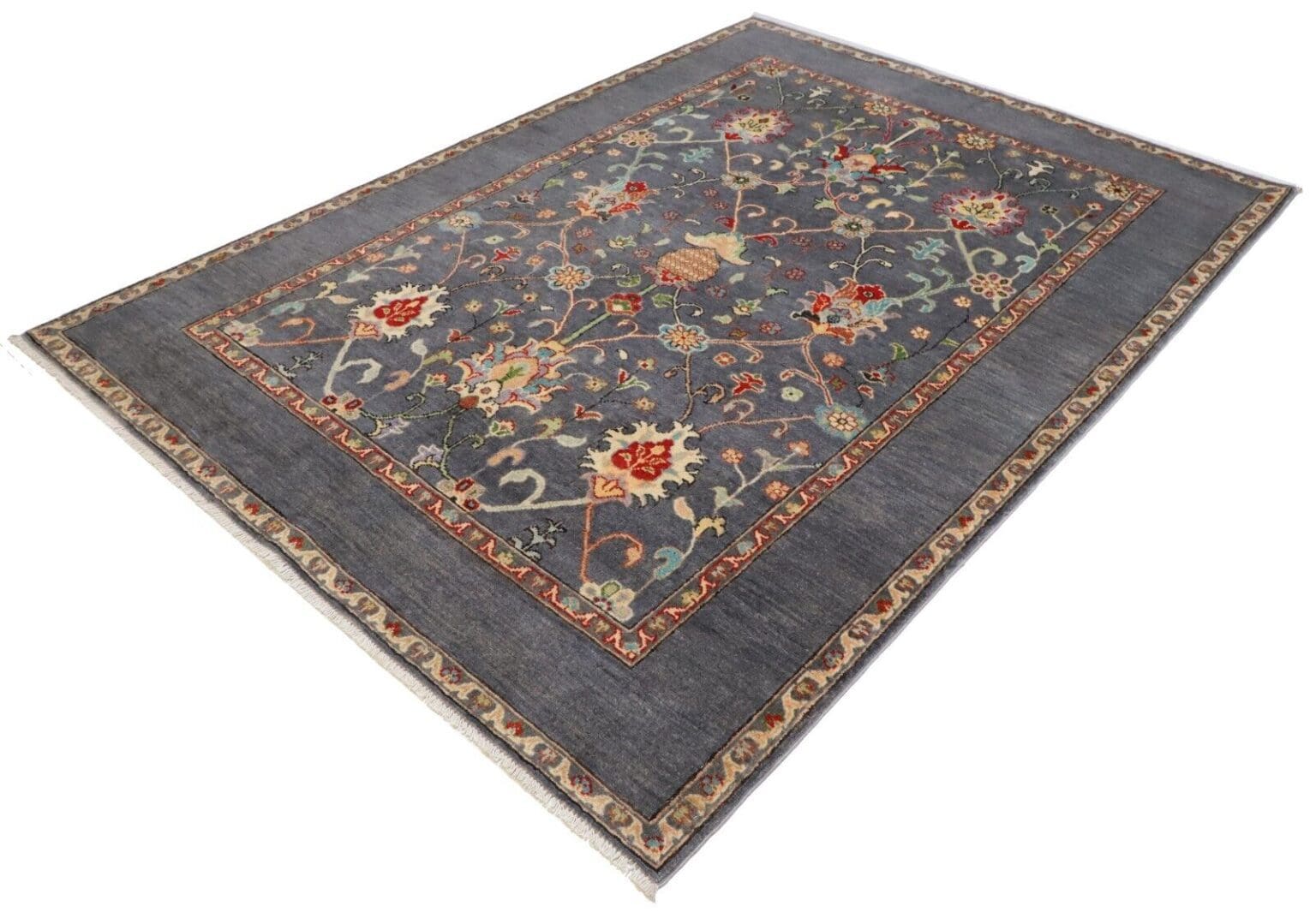
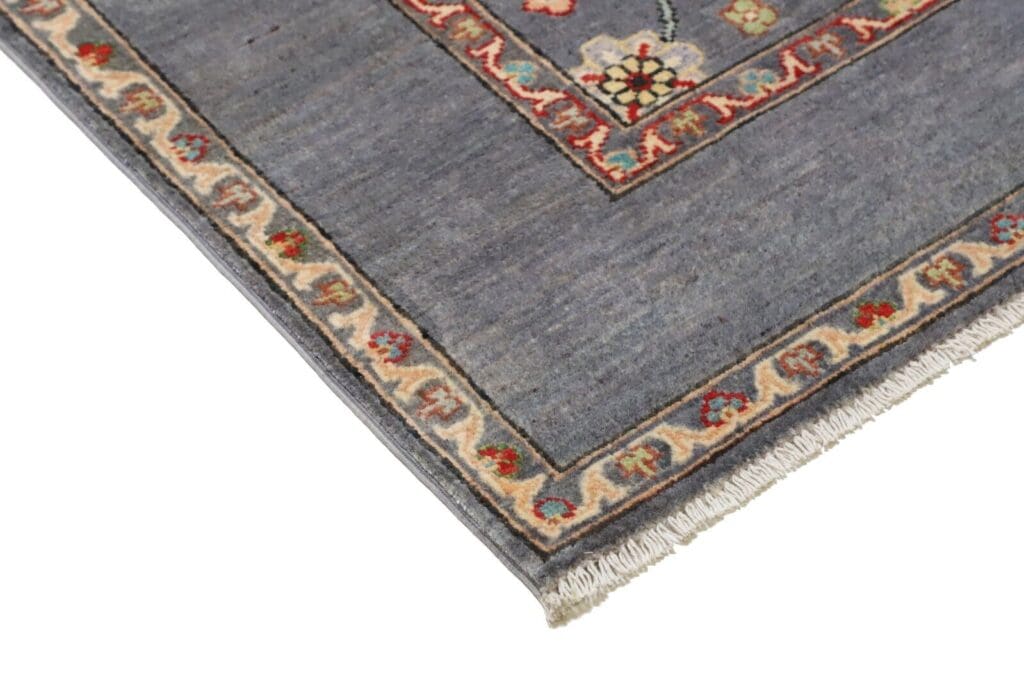
The Kazak Diyar is hand-knotted. In this method, individual knots are worked into the foundation by hand, creating a surface shaped by the maker’s manual process rather than by industrial production. Its pile is made from 100% highland wool. Wool has long been used in oriental rugs because it can provide a firm, durable and comfortable textile surface. For the Kazak Diyar, this natural fibre is the principal pile material.
The warp is 100% cotton. It forms the supporting structure into which the pile is knotted. The material combination specified for this rug therefore consists of highland wool in the pile and cotton in the warp. The listed knot density is approximately 160,000 – 200,000 knots per square metre. The source also describes the rug as having a knot density of 200,000 knots. Its hand-knotted construction and natural materials are central features of the piece.
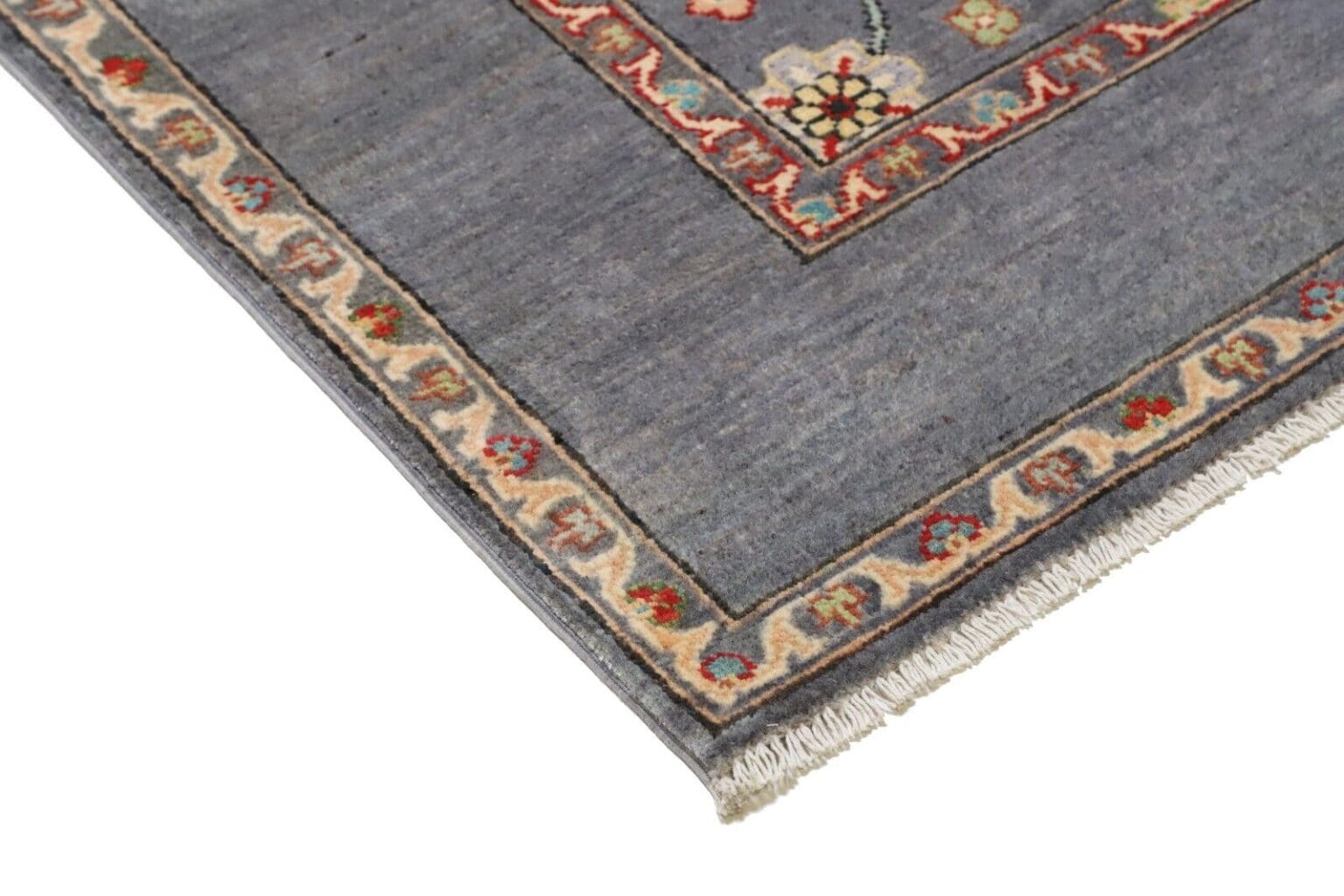
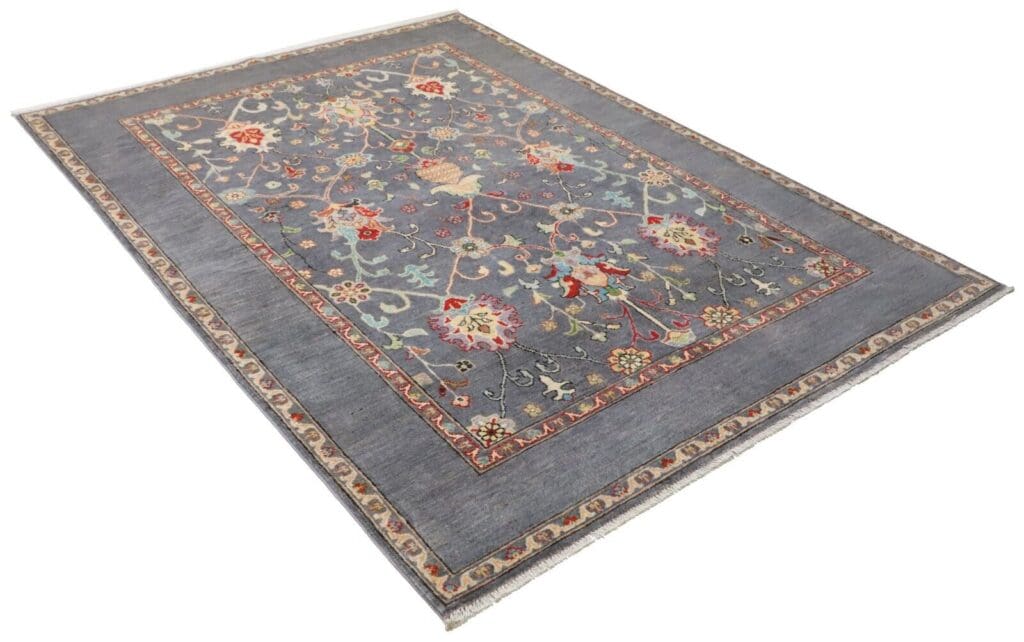
The rug has a short pile. According to the description, this pile height makes it easy to clean and allows the pattern to remain clearly visible. The wool surface is described as pleasant to the touch while also being resistant enough for everyday use. The Kazak Diyar is offered in perfect, unused condition. It has not previously been used and is presented in the condition stated for the item.
Origin and Tradition
The stated origin is Afghanistan. In terms of the offer, this makes the piece an Afghan oriental rug rather than an Iranian Persian rug. Kazak Diyar identifies the rug’s named design or type, but it does not replace the stated country of origin. This distinction matters in rug terminology: a pattern association or style name does not automatically establish where an individual rug was made.
The description connects the Kazak tradition with the Kasachisch region, which it presents as an area with a substantial rug-making heritage. Historically, the region is described as a meeting point for caravans and as a place where influences from different cultures came together. Such exchanges can affect ornament, composition and the way weaving and knotting practices develop. The Kazak Diyar combines these stylistic references with the stated Afghan origin.
The history of carpet knotting in the Kasachisch tradition is traced in the description back to the sixteenth century. Across the centuries, shapes, colour relationships and decorative arrangements changed, while the underlying craft tradition remained connected to its roots. Carpets associated with this tradition are known for strong colours and pronounced geometric patterns. Geometry can give a design a clear structure, divide its surface into ordered areas and guide the eye across the composition.
Rug traditions are shaped by movement and exchange as well as by local practice. Caravan routes, contact between cultures and the transmission of skills from one generation to another can all influence which motifs are retained or adapted. Hand-knotting preserves such design approaches through a process that is adjusted to the individual piece rather than repeated as a uniform industrial pattern. On the Kazak Diyar, this traditional context is combined with manufacture in Afghanistan and a clearly stated hand-knotted construction.
Design and Pattern
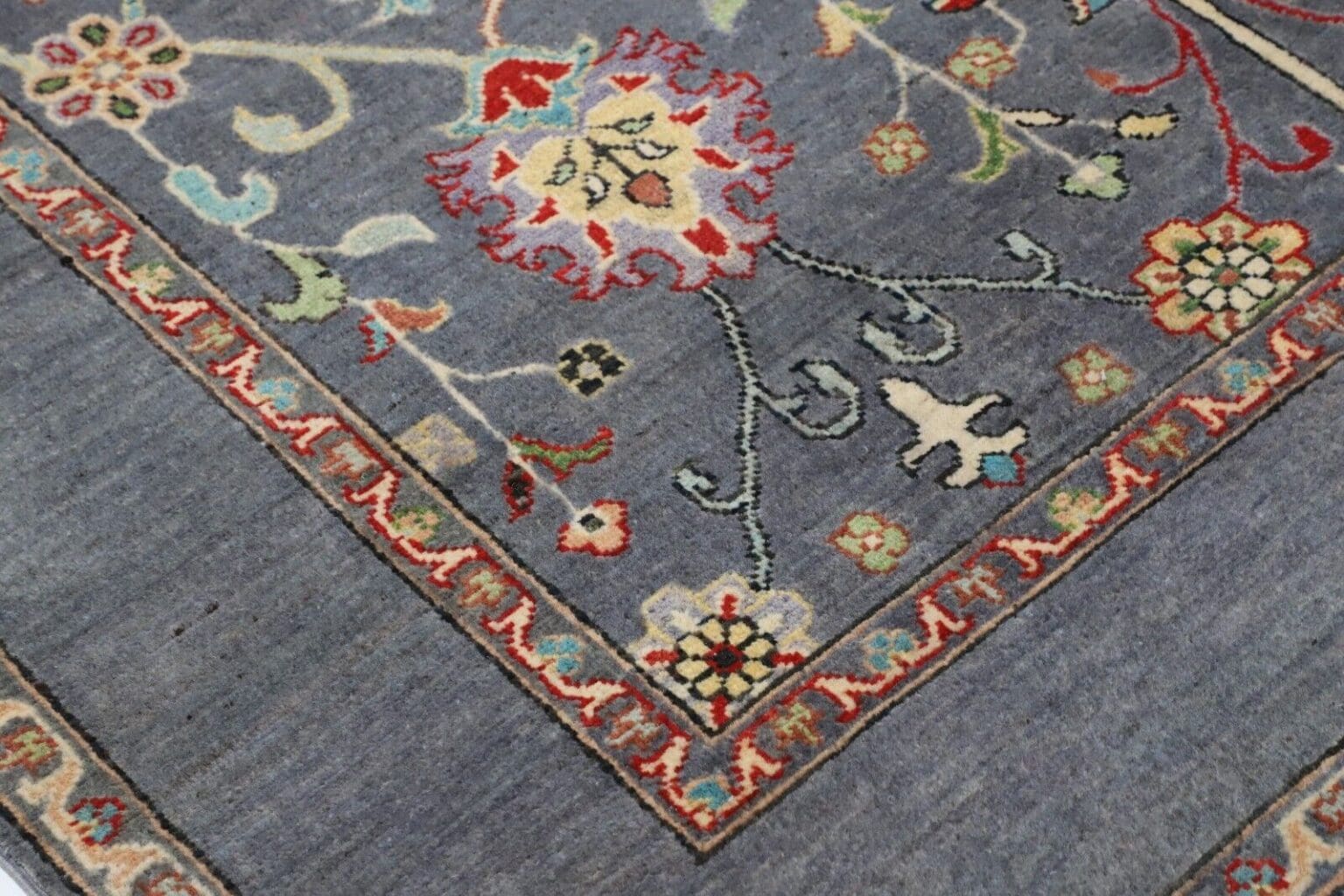
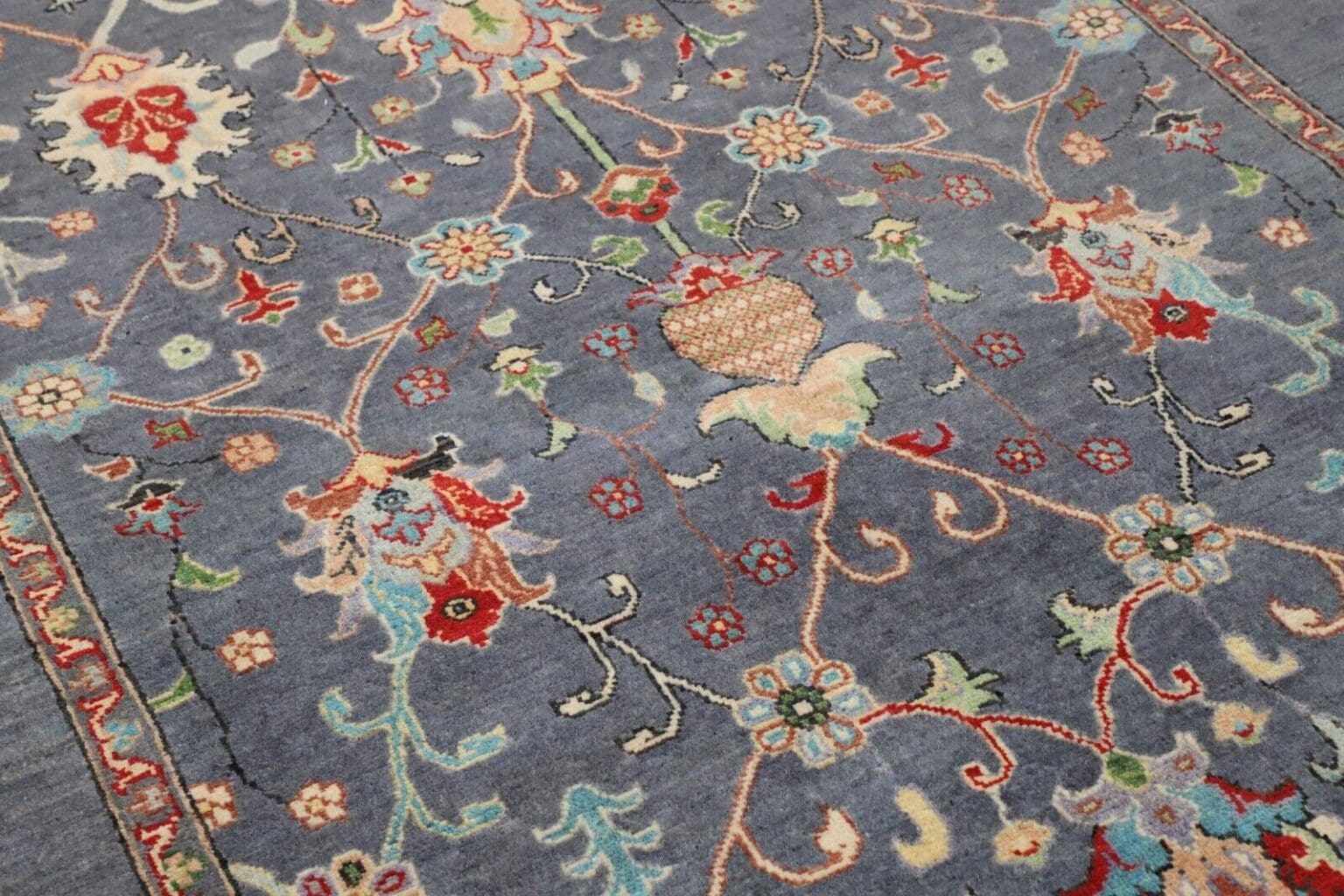
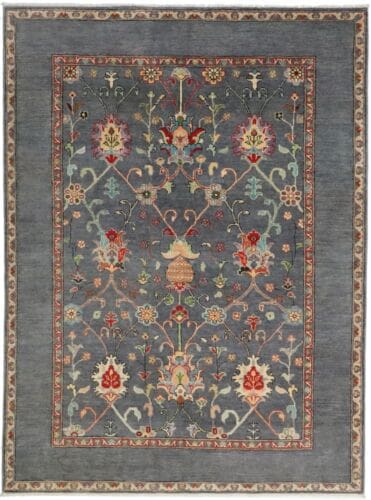
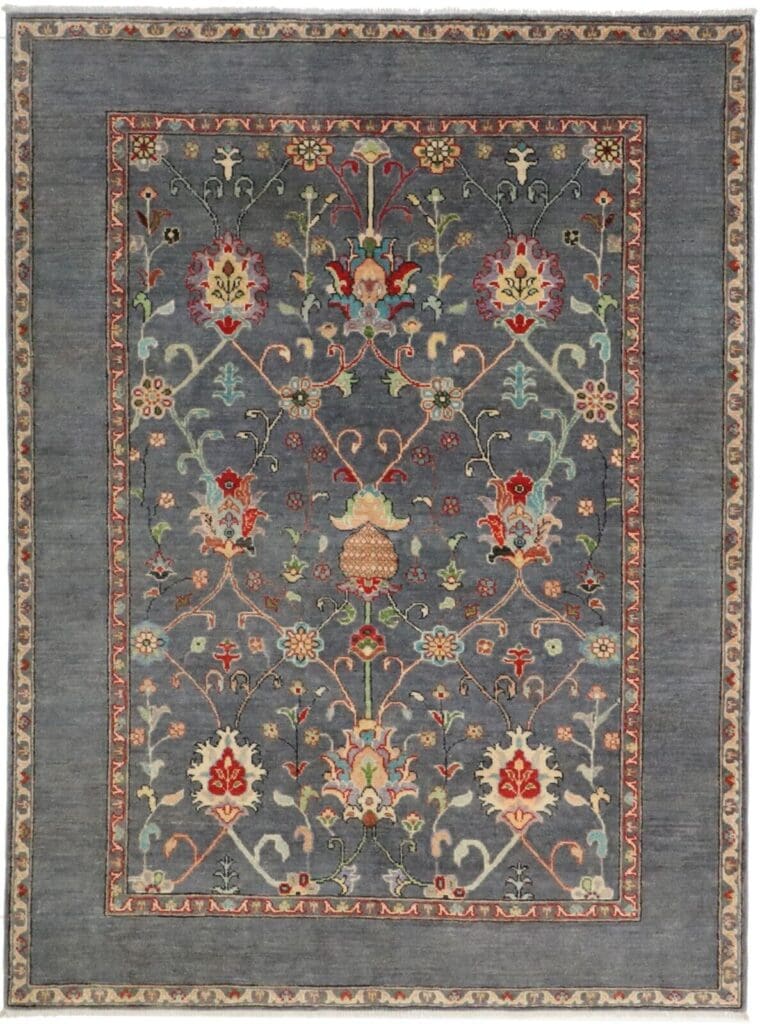
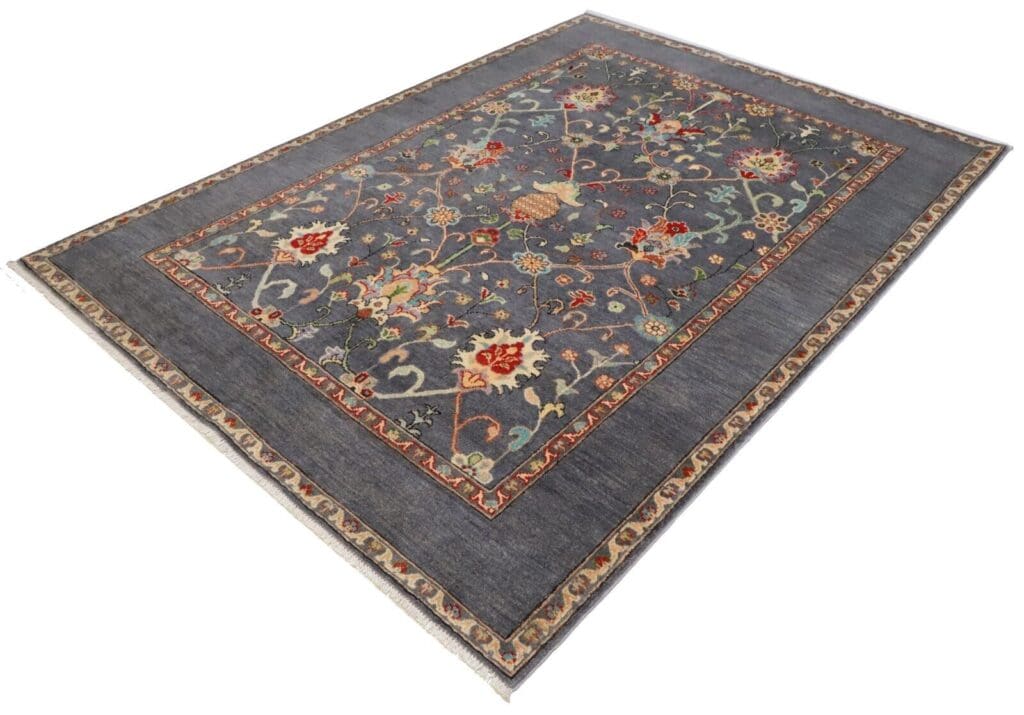
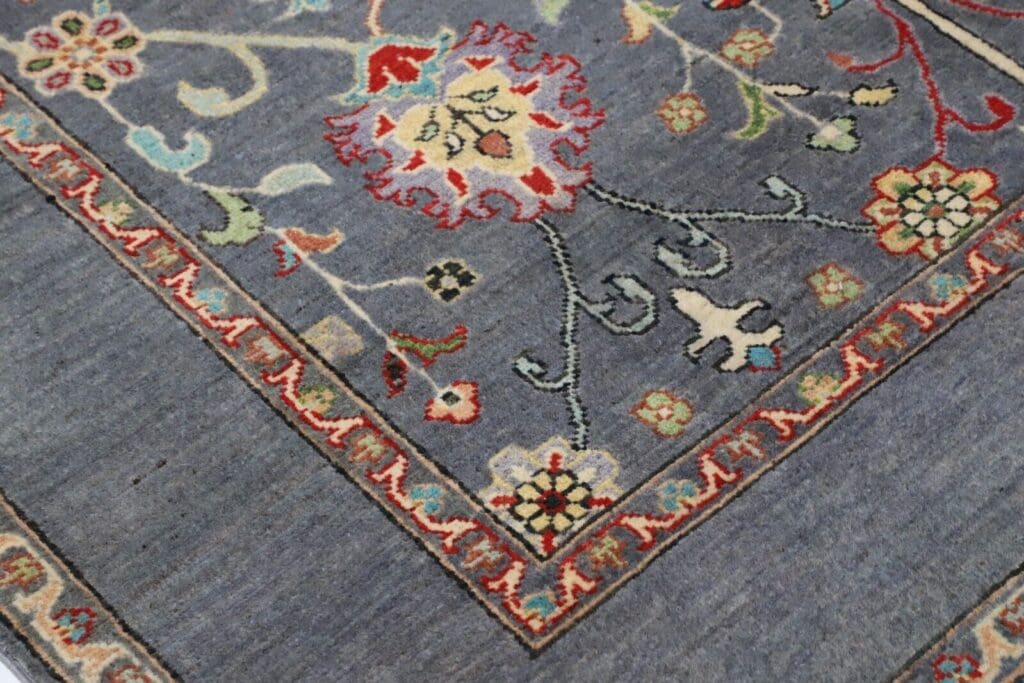
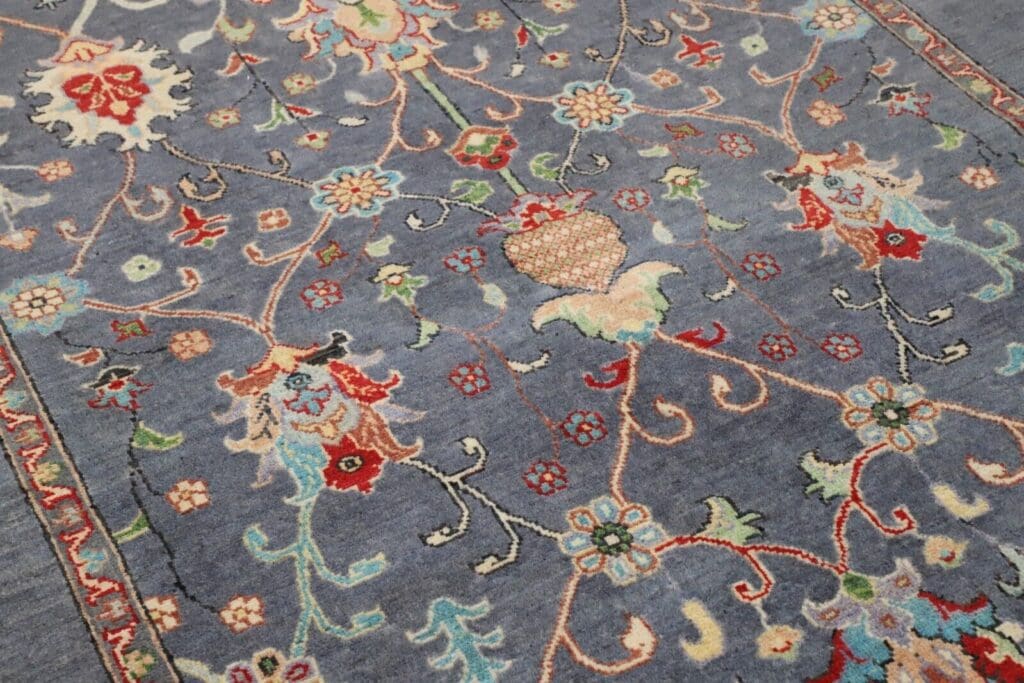
The Kazak Diyar is described as Art Deco, floral and oriental. These terms combine a stylistic classification with floral decoration and a broader oriental design language. In rug design, Art Deco often refers to a disciplined and clearly arranged visual vocabulary. That order may be expressed through geometric fields, strong axes or repeated outlines. The designation describes the design character; it is not a statement about the rug’s age.
The Kazak tradition is associated in the description with strong colours and distinctive geometric patterns. Geometric shapes may appear in borders, central fields, medallion-like arrangements or repeated sequences. They give the composition a recognisable framework. Floral motifs add an organic counterpoint to those firm lines. The source also mentions stylised animal figures as a typical possibility within the regional design language. Such figures may relate to stories and legends, although individual symbols do not necessarily have one fixed meaning.
Floral decoration in oriental rugs is commonly stylised rather than intended as a literal botanical image. Blossoms, leaves and vines can be translated into repeated ornamental forms. In a hand-knotted rug, each motif may show small individual variations created during the making process. Those variations belong to the character of handmade textiles. For this particular rug, the documented design features remain the important points: Art Deco, floral elements and an oriental overall appearance.
A rug pattern is read through the relationship between its central field, borders and repeated forms. Geometric details can emphasise the centre, while borders frame the design and create a transition toward the edge. Floral elements can soften a strict linear structure and introduce movement. The Kazak tradition provides a regional design context for this relationship. The Kazak Diyar is therefore described as a rug combining a marked, organised structure with floral decoration, without treating its pattern name as proof of a different origin.
Oriental ornament has developed through centuries of adaptation. Motifs have travelled, been reinterpreted and combined with local preferences. This is why geometric, floral and figurative elements may occur within the same design vocabulary. On the Kazak Diyar, the Art Deco classification adds a clearly ordered decorative quality to that traditional background. The result is a design described through the combination of regional Kazak references, floral ornament and a modern geometric sensibility.
Special Features
This rug is a one-off piece, with only one item in stock. It is offered in perfect, unused condition. The description states that its short pile is easy to clean. It is also specified as having an anti-slip feature and as being suitable for underfloor heating. These details complement the information about its materials and construction while leaving its hand-knotted, individual character unchanged.
The natural materials, wool pile and cotton warp define the textile composition. The product description also associates the wool and the workmanship with durability, easy care and a pleasant feel. The rug is described as colourfast, meaning that the offer states it retains its vivid colours even after extended use. These are the item properties given in the description and are presented alongside its Afghan origin and named Kazak design.
FAQ
What is the best way to clean the hand-knotted Kazak Diyar?
Vacuum the rug regularly to remove dust and loose dirt from the short pile. For stubborn marks, the description recommends a damp cloth and mild soap. Avoid direct sunlight to help prevent the colours from fading. Cleaning a hand-knotted rug should be done gently so that the pile and the detailed pattern are treated with care.
What makes a hand-knotted rug special?
In a hand-knotted rug, each knot is made by hand. This requires skill and gives every piece its own character. The manual construction is associated in the description with quality and durability. In the Kazak Diyar, that workmanship is combined with 100% highland wool in the pile and 100% cotton in the warp.
How can I tell whether a rug is authentic?
Knot density, the wool used and the level of detail in the pattern can help when assessing an authentic hand-knotted rug. If there is uncertainty, consulting a specialist is advisable. A certificate of authenticity can also be requested. For the Kazak Diyar, the offer identifies the origin, materials and hand-knotted construction.
To provide the best experiences, we use technologies like cookies to store and/or access device information. Consenting to these technologies will allow us to process data such as browsing behavior or unique IDs on this site. Not consenting or withdrawing consent, may adversely affect certain features and functions.
Functional Always active
The technical storage or access is strictly necessary for the legitimate purpose of enabling the use of a specific service explicitly requested by the subscriber or user, or for the sole purpose of carrying out the transmission of a communication over an electronic communications network.
Preferences
The technical storage or access is necessary for the legitimate purpose of storing preferences that are not requested by the subscriber or user.
Statistics
The technical storage or access that is used exclusively for statistical purposes.The technical storage or access that is used exclusively for anonymous statistical purposes. Without a subpoena, voluntary compliance on the part of your Internet Service Provider, or additional records from a third party, information stored or retrieved for this purpose alone cannot usually be used to identify you.
Marketing
The technical storage or access is required to create user profiles to send advertising, or to track the user on a website or across several websites for similar marketing purposes.
 SECURE PAYMENT
 SHIPPING PARTNERS