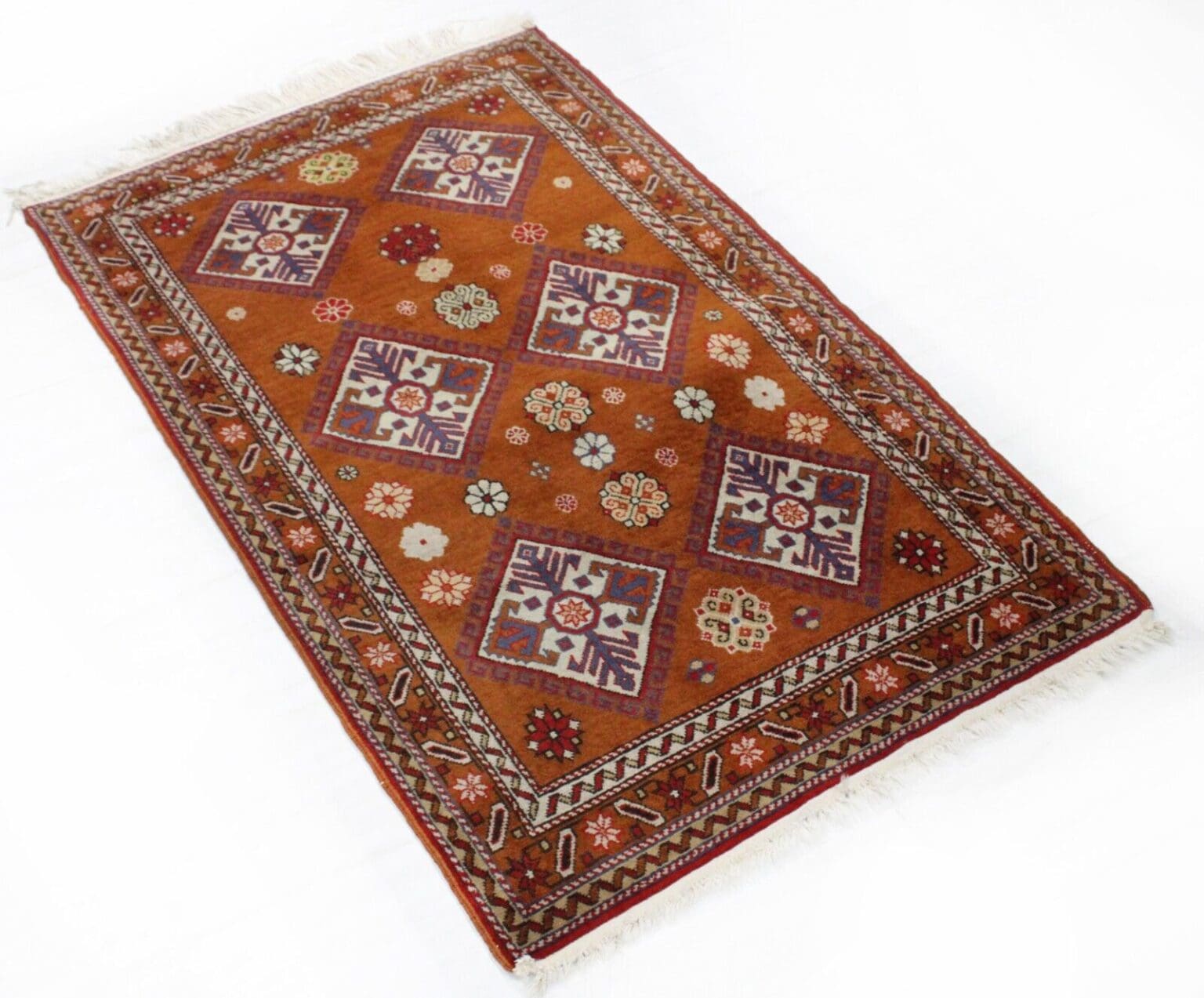
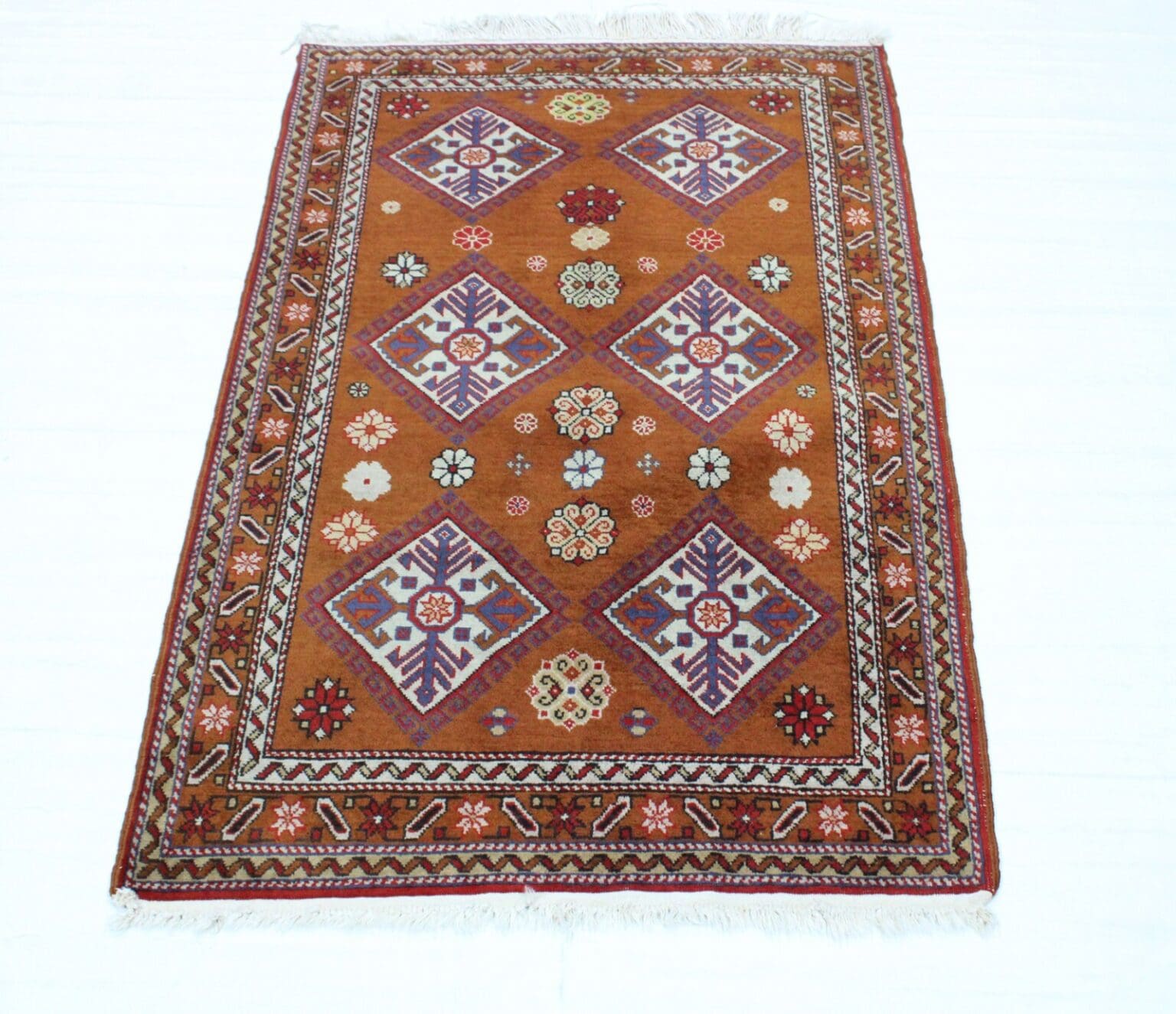
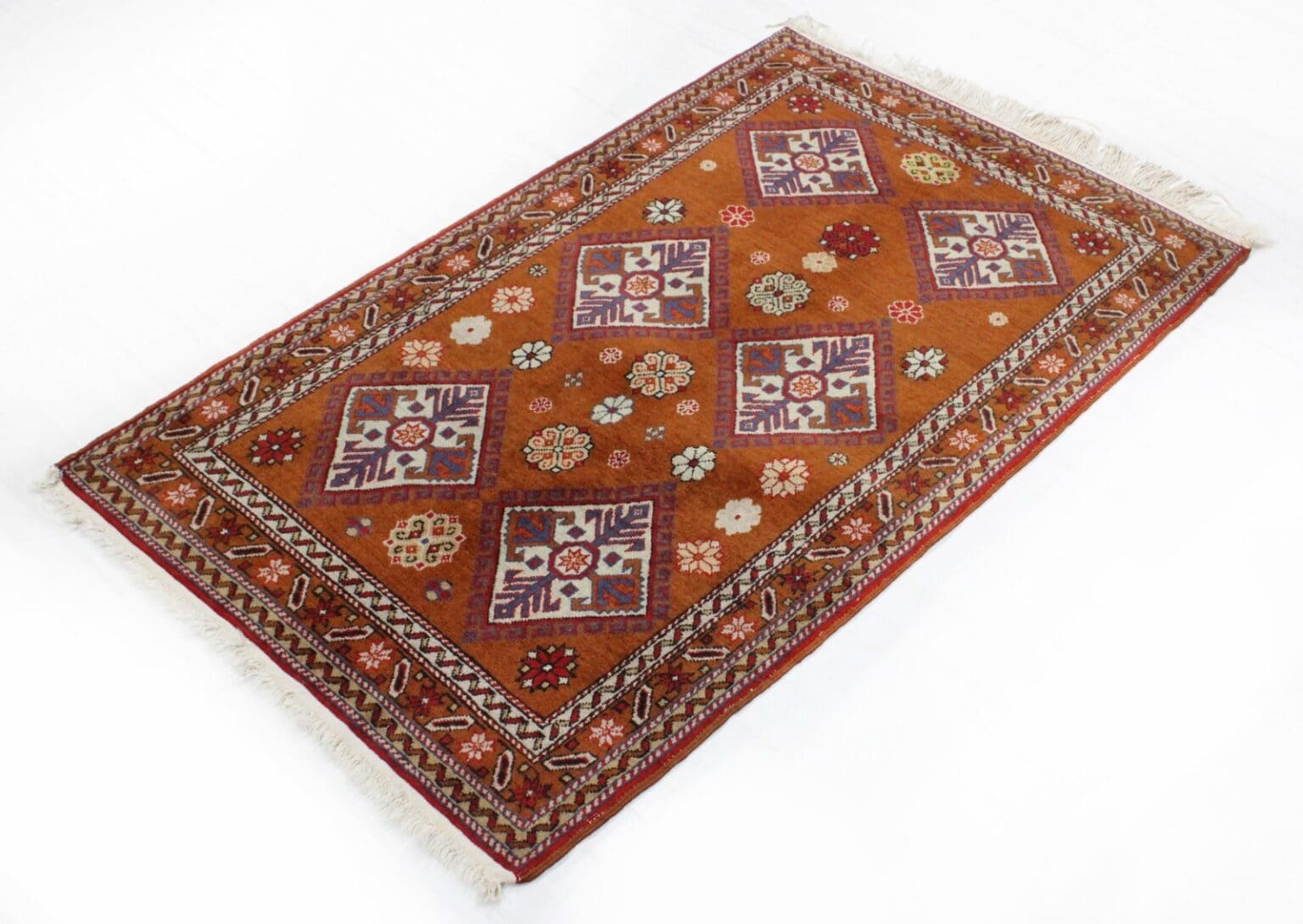
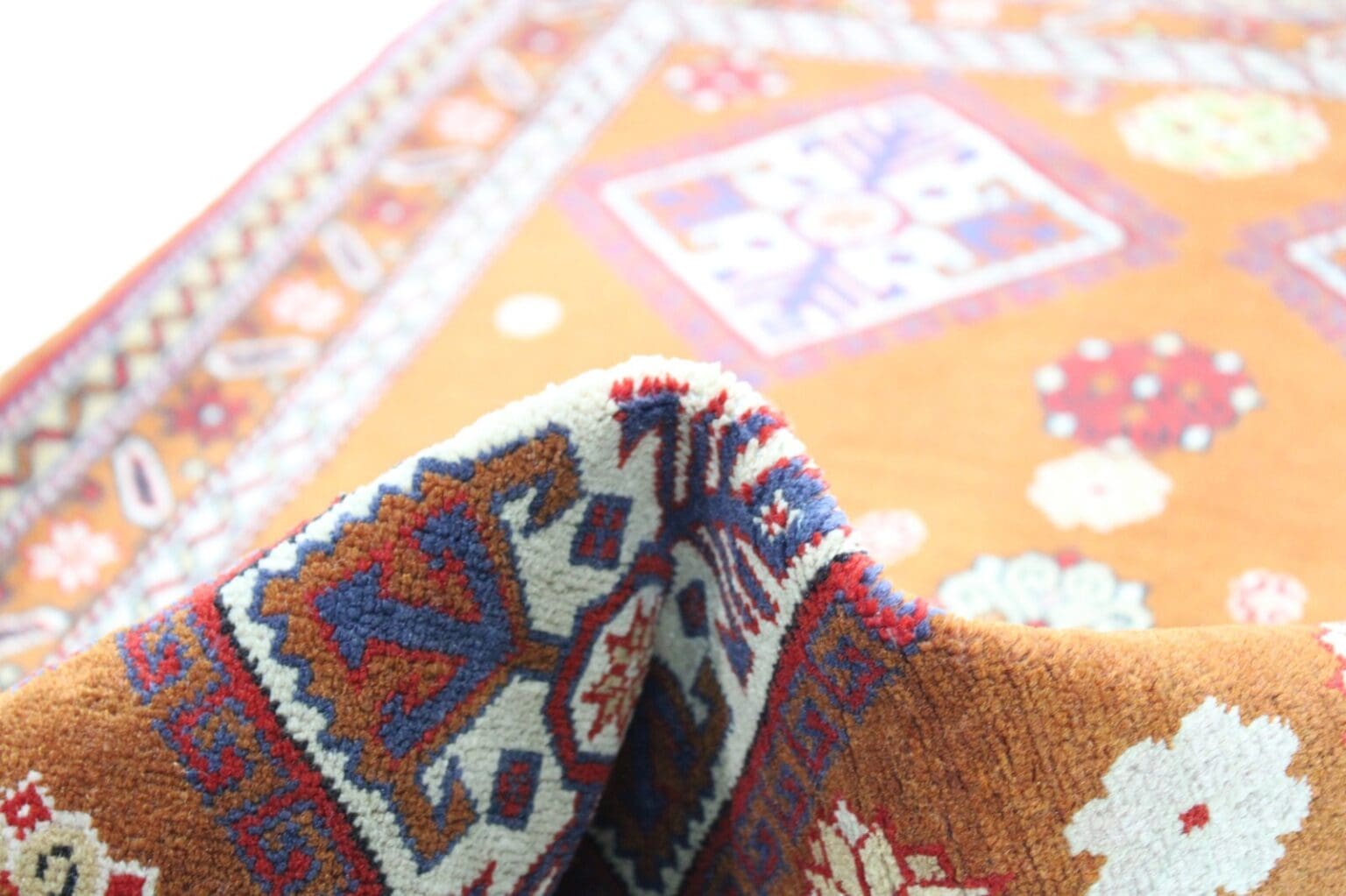
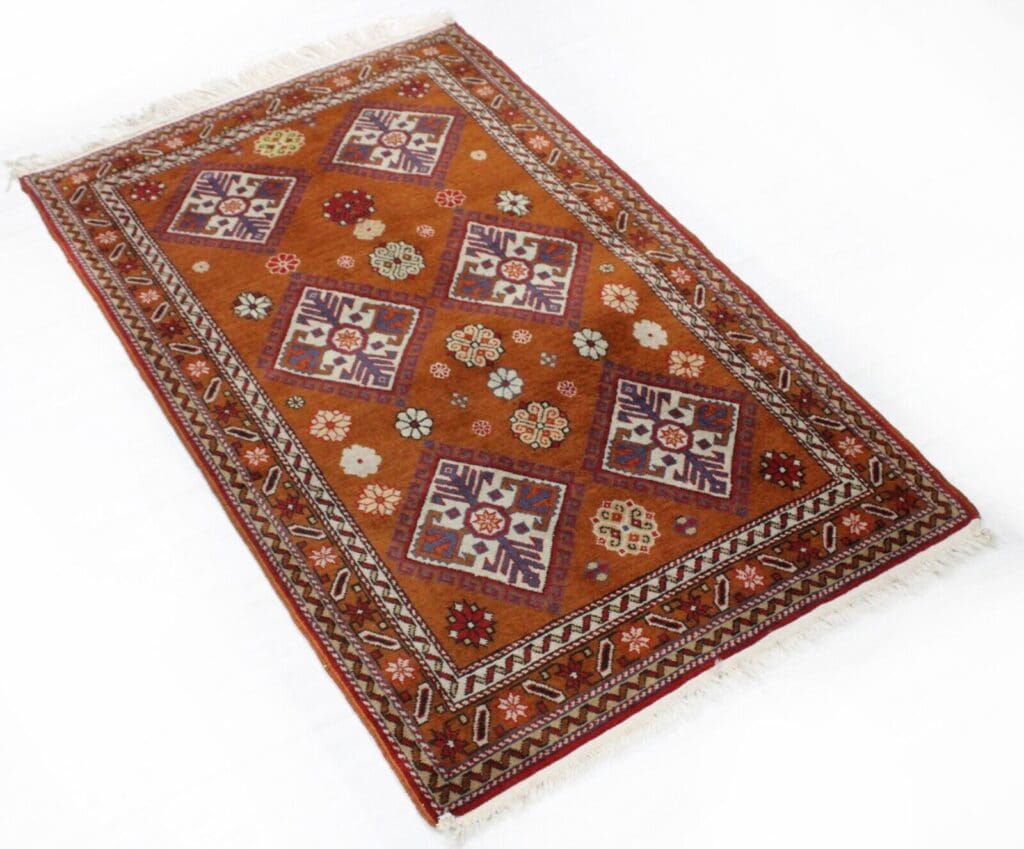
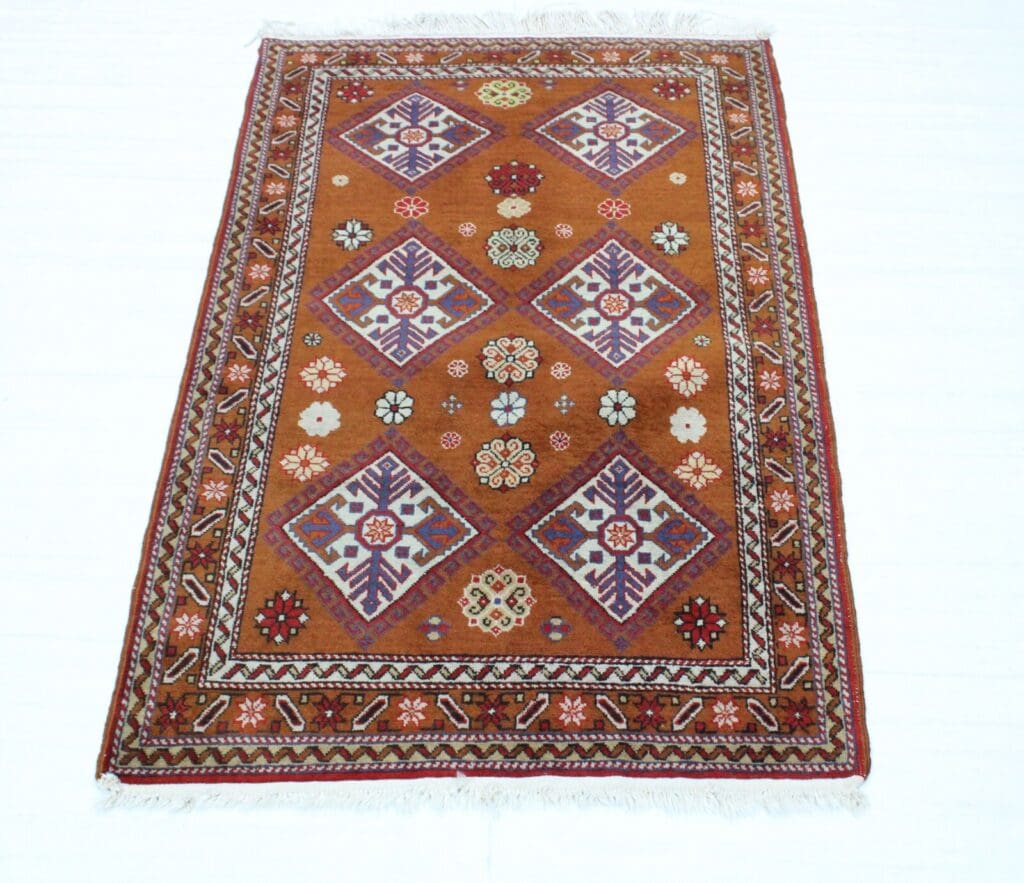
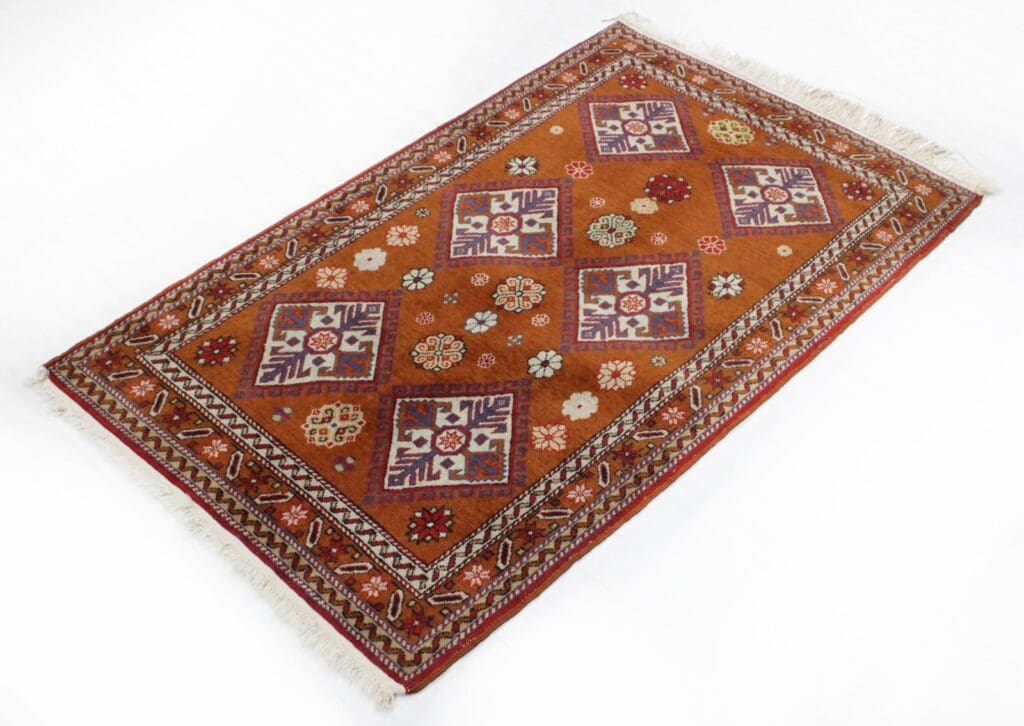
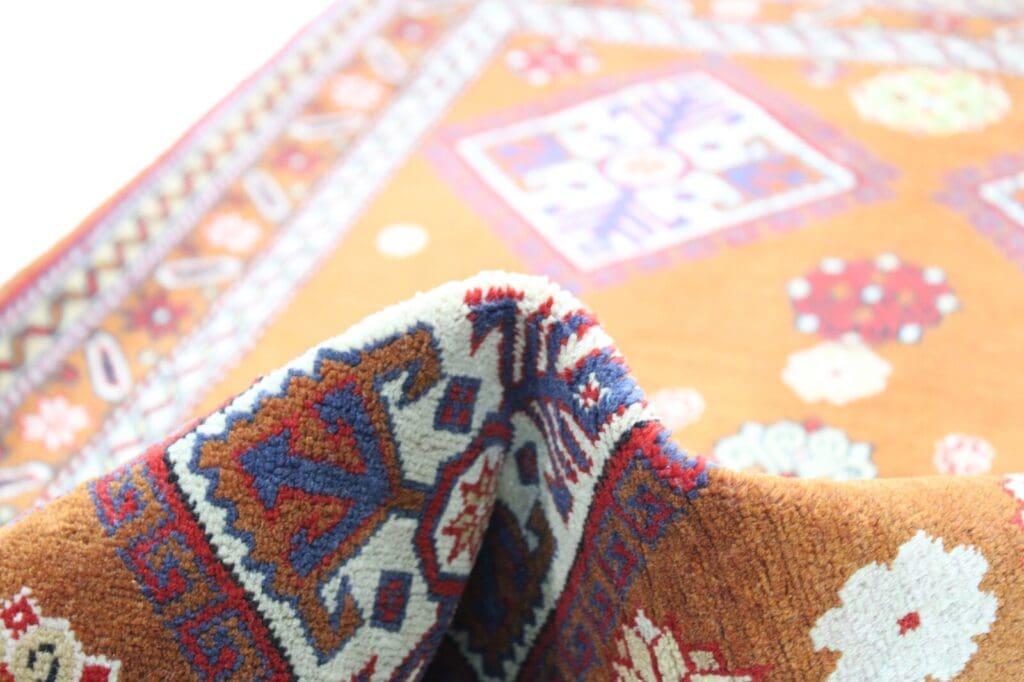
This Kazak Oriental rug is hand-knotted and has a wool pile. Hand-knotting is a textile process in which pile yarns are tied into the foundation one knot at a time. Rather than being produced in a single mechanical operation, the design develops gradually through the work of the person making the rug. Wool forms the visible pile and has long been used in rug making because it combines a tactile surface with practical durability.
Wool can provide a firm, natural handle while remaining suitable for regular use. Its fibres respond to light and handling differently from smooth synthetic materials, so a wool surface may look slightly different as the viewing angle changes. In a hand-knotted rug, the appearance is also affected by knot placement, tension and the precise execution of each row. These general characteristics explain why a handmade rug does not need to have the absolute uniformity associated with industrial production.
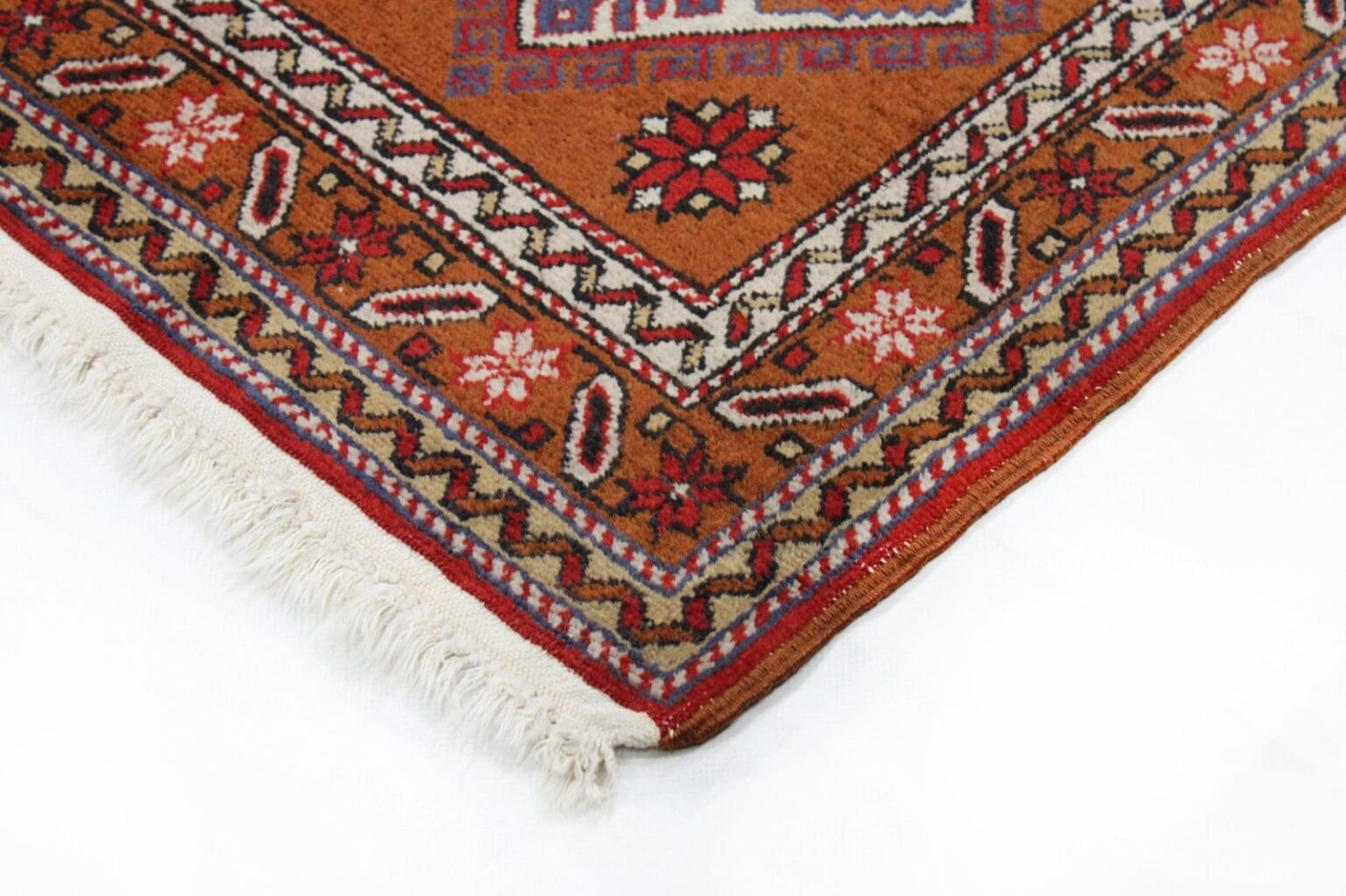
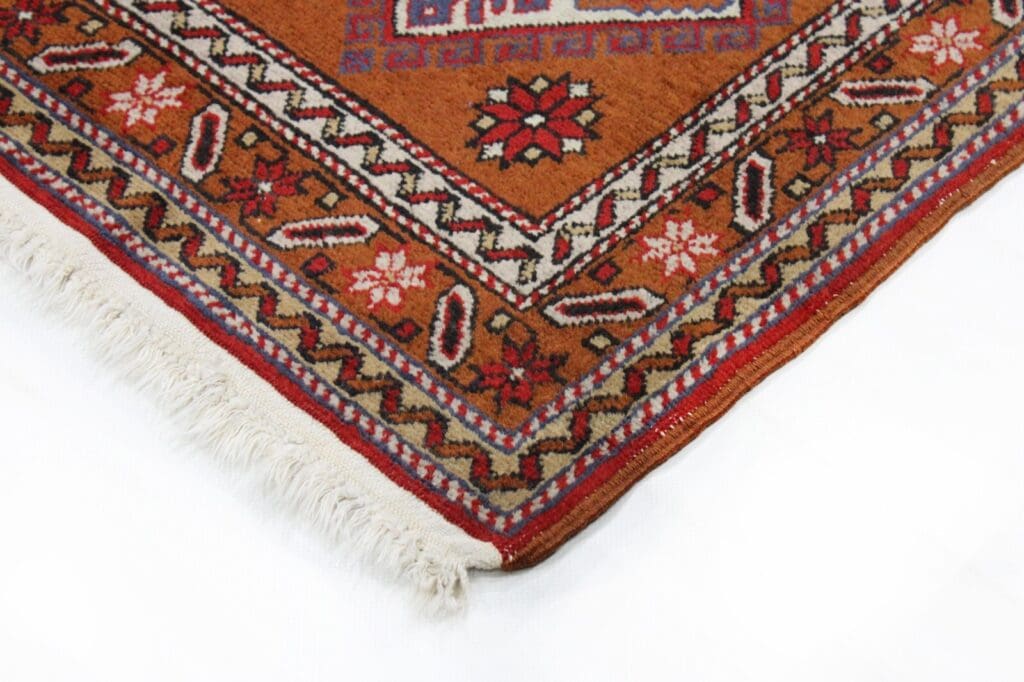
Making a hand-knotted rug requires a continuous sequence of decisions involving the design, the colours and the technical execution. Each row has to follow the intended order so that the outlines and fields gradually take shape. After knotting, the pile is generally trimmed to an even height and the rug is prepared for use. For this piece, the stated material and construction details are a wool pile and hand-knotted manufacture.
Wool rugs benefit from careful routine maintenance. Regular vacuuming removes loose particles without placing unnecessary strain on the surface. Occasional beating or airing may also form part of ordinary care. When a more thorough cleaning is needed, a professional rug-cleaning service should handle the work so that the wool, colours and foundation receive appropriate treatment.
Origin and Tradition
The rug comes from Russia and is described as Kazak. Kazak rugs belong to the wider group of Oriental rugs and are associated with a strongly geometric visual language. The name refers to a weaving tradition connected especially with the Caucasus and neighbouring Russian areas. This cultural region brought together several textile traditions. Nomadic, village and urban influences shaped the selection of ornaments, the balance of colour and the ways in which a design was transferred to the knotting structure.
Russian Kazak rugs therefore belong to a tradition in which rugs served as practical household textiles while also carrying a clearly organised vocabulary of forms. Geometric shapes could be repeated and adjusted to the available field on the loom. Designs were handed down, modified and recombined over time. A motif could reflect older regional models while also showing the individual interpretation of the person who knotted it.
In the Caucasus-influenced areas, rug making was closely connected with family and village life. Wool was an available fibre that could be spun, dyed and used for durable textiles. A rug was not completed in one operation. Preparing the wool, dyeing it, setting up the foundation, knotting, trimming and finishing formed a longer chain of work. Knowledge was often passed between generations through practical instruction and repeated use of established designs.
With Kazak rugs, origin cannot be identified from a single ornament alone. Regional traditions overlap, and comparable geometric forms may occur in more than one rug-producing area. The name, origin, construction, colour arrangement and pattern therefore need to be considered together. For this piece, Russia is named as the origin; it is presented as a Kazak Oriental rug rather than as a Persian rug from Iran.
The history of Oriental rugs includes many regional schools. Tabriz, Isfahan and Kashan, for example, developed distinct Persian design traditions, while Caucasian and Russian areas followed other paths. These traditions should not be treated as interchangeable. A Kazak pattern may form part of the broader history of Oriental design, but a rug made in Russia does not thereby become a Persian rug. Keeping origin and pattern terminology separate is an important part of an accurate description.
Design and Pattern
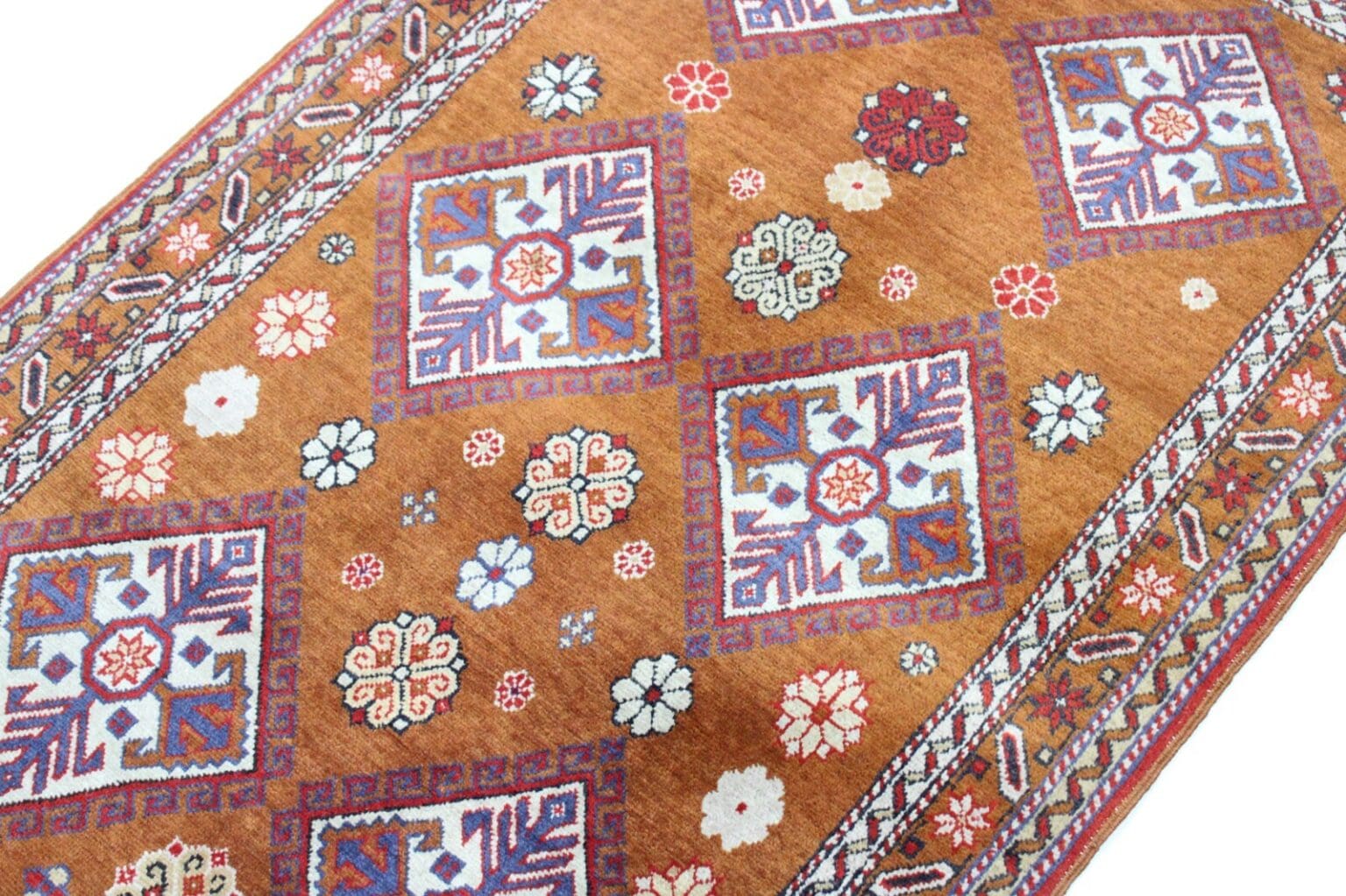
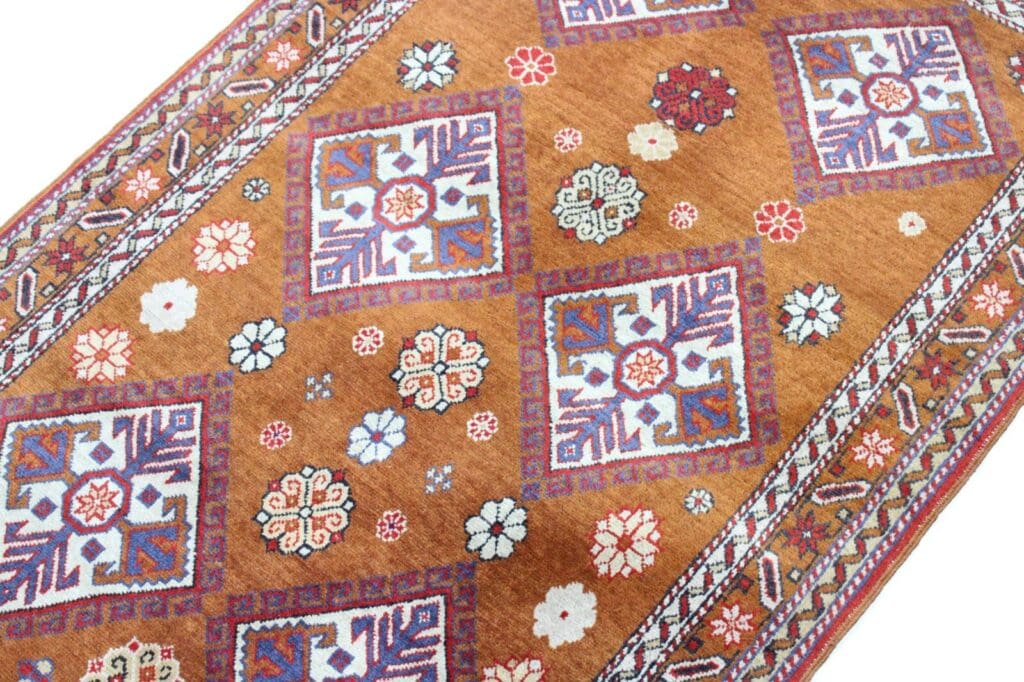
The pattern of this piece is identified as a traditional Kazak pattern. Kazak designs are generally recognised for their pronounced geometric structure. Large medallions, diamonds, hooked forms, rosettes and stepped outlines are common tools within this design tradition. Instead of relying mainly on soft transitions, the forms are often constructed from straight lines, angles and small stepped movements. This gives the composition a clearly ordered appearance that remains legible from a distance.
A medallion may serve as the centre of a rug design and be surrounded by smaller ornaments. Other compositions arrange several diamonds or polygonal fields in sequence. Repeated borders frame the inner field and create a transition between the centre and the outer edge. A border is not simply a finishing strip. It helps organise the design and may echo central motifs in a smaller or altered form.
Traditional Kazak patterns often include stylised plant forms and geometric signs. Flowers may be simplified until their outlines consist of hooks, points or small diamonds. Leaves can appear as angular shapes, while branches may be translated into controlled lines. Animal and everyday motifs were also abstracted in regional rug traditions. The purpose is not a naturalistic image, but a readable arrangement of signs across the surface.
The overall colour effect of a Kazak rug generally comes from the relationship between the ground, the principal motifs and the borders. Strong contrasts can make geometric forms stand out, while neighbouring tones can connect separate fields. In a hand-knotted rug, every colour area is built row by row. Small variations in execution are part of manual production and can influence the character of the pattern fields. The source identifies this rug as having a traditional Kazak pattern; it does not specify individual colours or particular motifs.
Oriental rugs are often discussed through regional names, but a motif name is not automatically an origin statement. A Kirman boteh, for example, can describe a design family or decorative element rather than the place where a particular rug was made. Diamonds and other angular forms likewise occur in several regions. In this rug, the details Russia, Kazak and traditional Kazak pattern provide the relevant classification. Further claims about a specific medallion, border arrangement or colour palette would go beyond the available description.
Special Features
The stated features of this one-off rug are its hand-knotted construction, wool pile, Russian origin, Kazak designation, traditional Kazak pattern and top condition. The manual method makes each stage of production part of the rug’s formation. Wool gives the pile the textile structure associated with that fibre. The rug is described as an original Russian Kazak Oriental rug, which distinguishes it from Persian rugs made in Iran.
Regular, gentle care is appropriate for preserving its condition. Vacuuming and occasional beating are named as suitable maintenance measures. If more extensive cleaning is required, a professional rug-cleaning service should be used. Water, cleaning products and vigorous mechanical treatment should not be applied without an expert assessment, since unsuitable cleaning can affect wool and colours.
FAQ
How can a genuine hand-knotted Oriental rug be recognised?
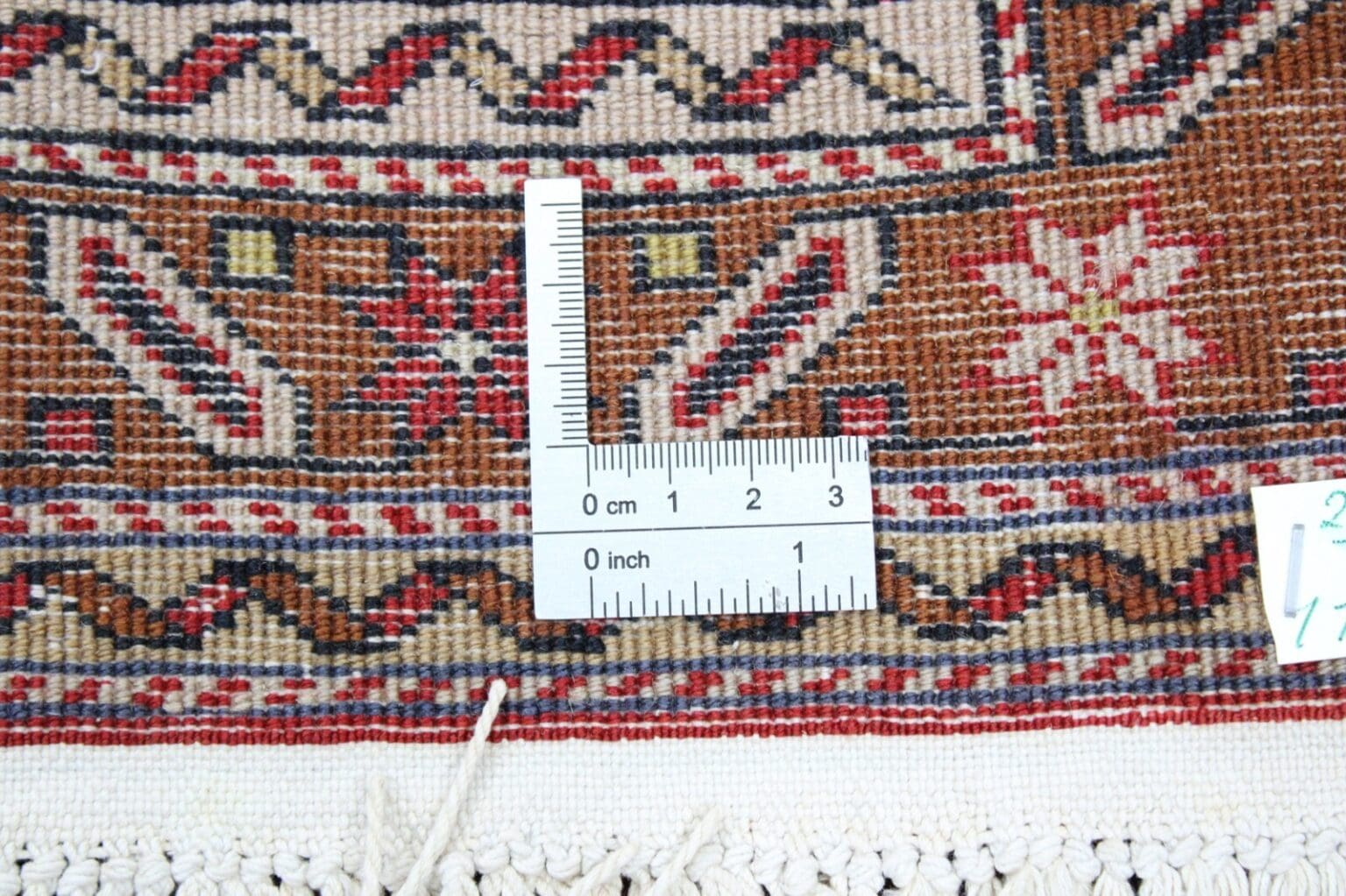
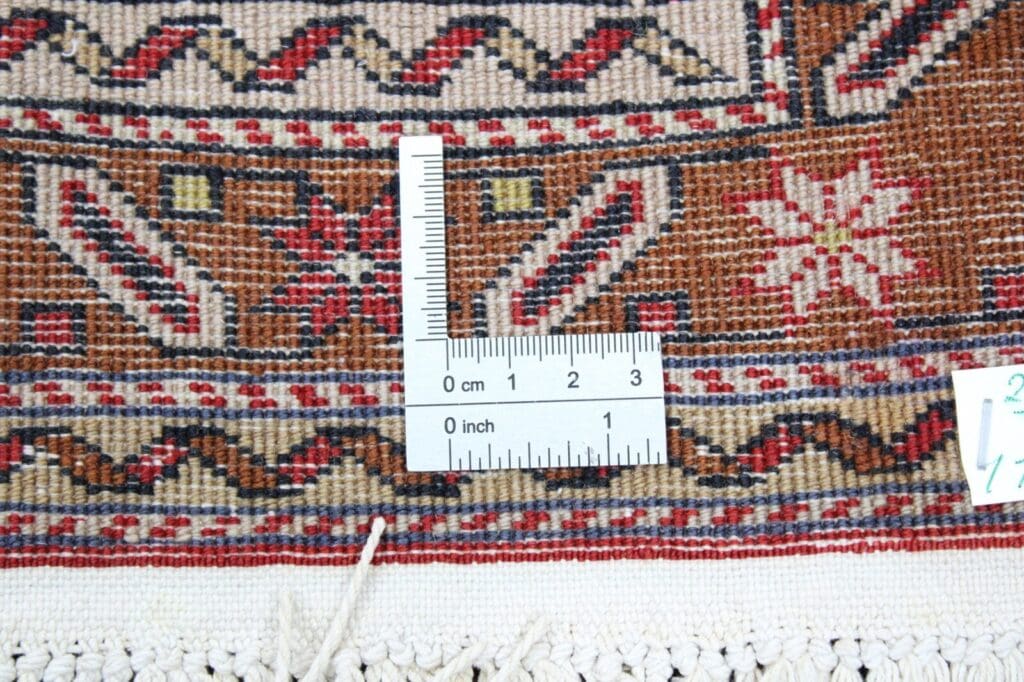
A hand-knotted rug is made knot by knot and therefore often shows small irregularities associated with manual work. The back can also provide indications of hand production, because the knot structure does not have the entirely schematic appearance of a machine-made product. This rug is identified by its hand-knotted construction, wool pile, Russian origin and Kazak designation. A general assessment should consider the material, workmanship and pattern together.
How should a hand-knotted wool rug be cared for?
Regular vacuuming and occasional beating help remove loose dirt and support the rug’s good condition. For a thorough cleaning, a professional rug-cleaning service should be used. This helps protect the wool, the colours and the structure of the hand-knotted rug. Strong cleaning agents or home wet-cleaning should not be attempted without professional advice.
What size is this Kazak rug?
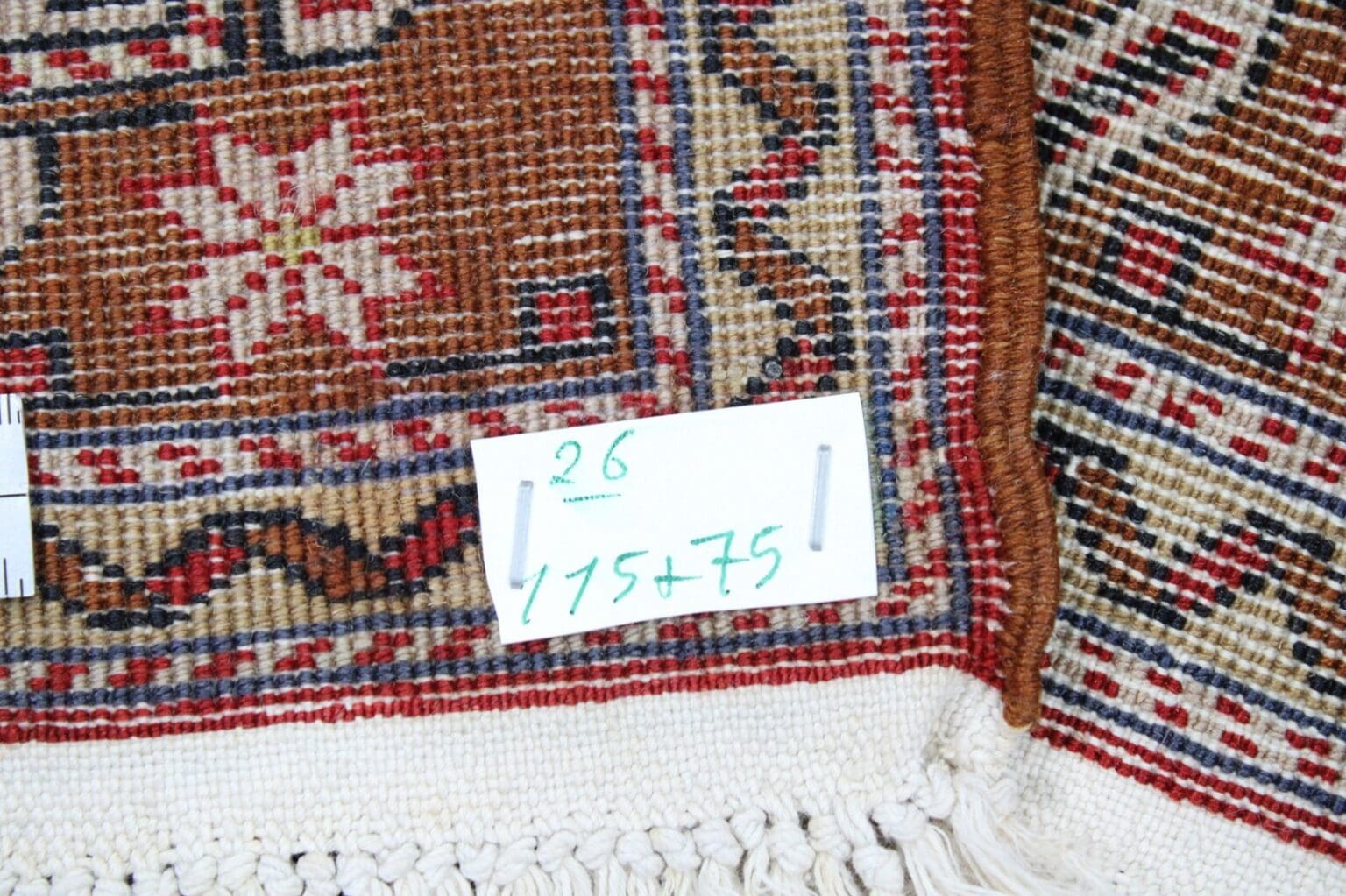
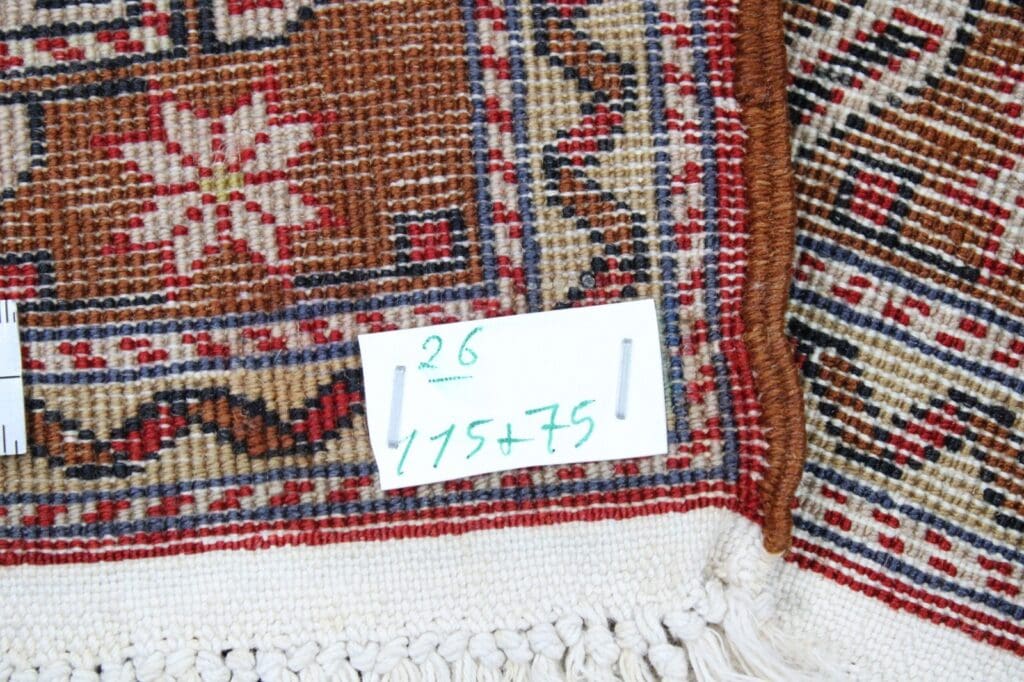
The rug measures 115 cm x 75 cm. This compact rectangular format can be used in different interior settings, for example as an accent area or to define a smaller zone. Whether the dimensions suit a particular room depends on the floor plan and the intended placement. The area where the rug is to be used should be measured before choosing its position.
To provide the best experiences, we use technologies like cookies to store and/or access device information. Consenting to these technologies will allow us to process data such as browsing behavior or unique IDs on this site. Not consenting or withdrawing consent, may adversely affect certain features and functions.
Functional Always active
The technical storage or access is strictly necessary for the legitimate purpose of enabling the use of a specific service explicitly requested by the subscriber or user, or for the sole purpose of carrying out the transmission of a communication over an electronic communications network.
Preferences
The technical storage or access is necessary for the legitimate purpose of storing preferences that are not requested by the subscriber or user.
Statistics
The technical storage or access that is used exclusively for statistical purposes.The technical storage or access that is used exclusively for anonymous statistical purposes. Without a subpoena, voluntary compliance on the part of your Internet Service Provider, or additional records from a third party, information stored or retrieved for this purpose alone cannot usually be used to identify you.
Marketing
The technical storage or access is required to create user profiles to send advertising, or to track the user on a website or across several websites for similar marketing purposes.
 SECURE PAYMENT
 SHIPPING PARTNERS


