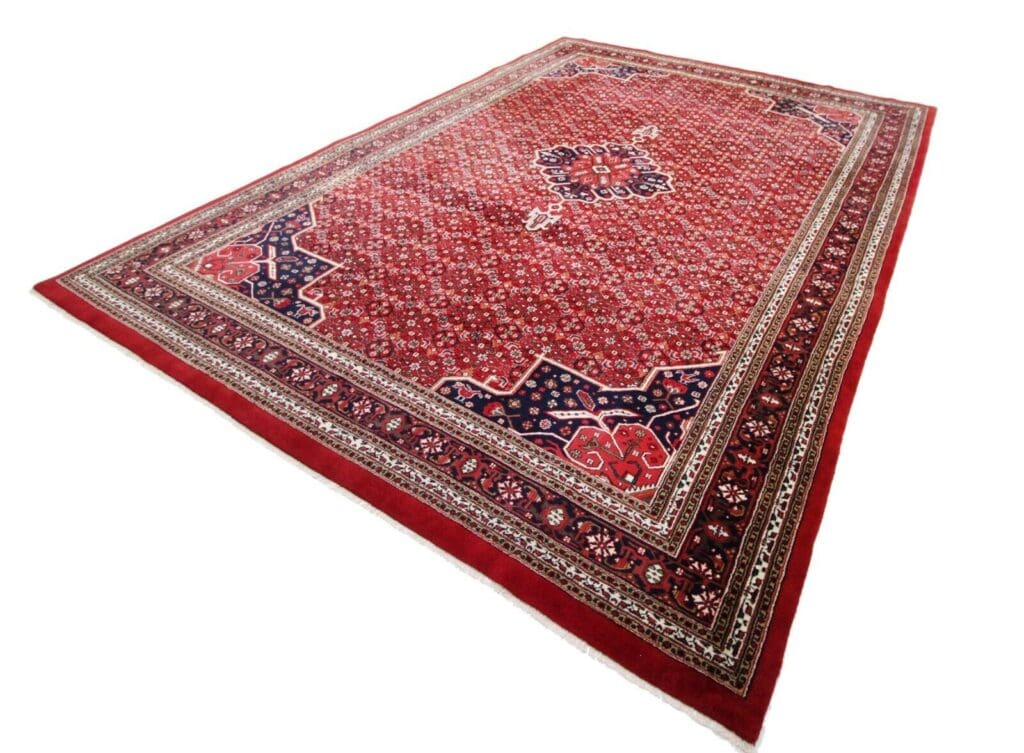
This Hamedan Oriental rug is hand-knotted and made from 100% wool. Its pile height is normal. Wool gives the rug a natural textile surface and a tactile character suited to everyday living spaces. The fibre is traditionally valued for its durability, comfortable feel underfoot and ability to contribute a sense of warmth within a room.
Hand-knotting is carried out by inserting individual knots into a prepared structure, row by row. The method requires experience, steady working rhythms and careful finishing. Unlike a machine-made carpet, a hand-knotted rug is built through a manual process in which the pile develops from the work of the knotter. The source describes the knot density as hand-knotted; no numerical knot count is given.
The wool combines a resilient surface with a pleasant feel. A normal pile height supports practical use and can be maintained through regular vacuuming without a brush. The product description states that this rug is suitable for underfloor heating. It is also described as child-friendly and environmentally friendly, adding practical information to the material and production details.
The condition is specified as top quality and very clean. This description applies to this one rug and complements its stated material, pile and construction. A hand-knotted one-off may retain small characteristics of manual production, while its clear material and manufacturing details remain unchanged. The rug is presented as a clean, well-maintained example of hand-knotted Indian production.
Origin and Tradition
This rug was made in India. Hamedan identifies the design orientation of this piece rather than its place of manufacture. It is therefore an Oriental rug, not a Persian rug. India has a long tradition of producing hand-knotted Oriental rugs and has developed a wide range of designs influenced by established weaving cultures from across Asia.
Hamedan is also the name of an important rug-producing region in Iran. Its weaving tradition is associated with considerable variety in both design and technique. Urban workshops, rural communities and the different cultural groups living in and around the region have all contributed to the breadth of Hamedan design. As a result, rugs associated with the region can display both strongly organised layouts and richly ornamented surfaces.
Hamedan rugs are often connected with expressive drawing and varied colour arrangements. Geometric forms, stylised plants and repeated borders are among the elements that may occur within this design family. Hamedan is not limited to one fixed pattern. The tradition includes compositions ranging from orderly field designs to more freely arranged floral schemes, allowing the regional name to cover a broad visual vocabulary.
The Iranian region of Hamedan belongs to a cultural landscape in which rugs were made for practical household use as well as for more formal settings. A combination of clear structure, decorative drawing and functional construction helped establish the recognition of the style. Indian weavers can take such regional models and interpret them within their own established production. In this case, the Hamedan reference concerns the design language, while India is the stated origin of the rug itself.
Hand-knotted Oriental rugs are created through a sequence of considered manual steps. A design is prepared first, followed by the arrangement of the foundation, the insertion of knots, the securing of successive rows and the final treatment of the pile. The technique links a drawn pattern with the individual work of the knotter. Each finished rug is consequently a single piece rather than an identical, mass-produced object.
Design and Pattern
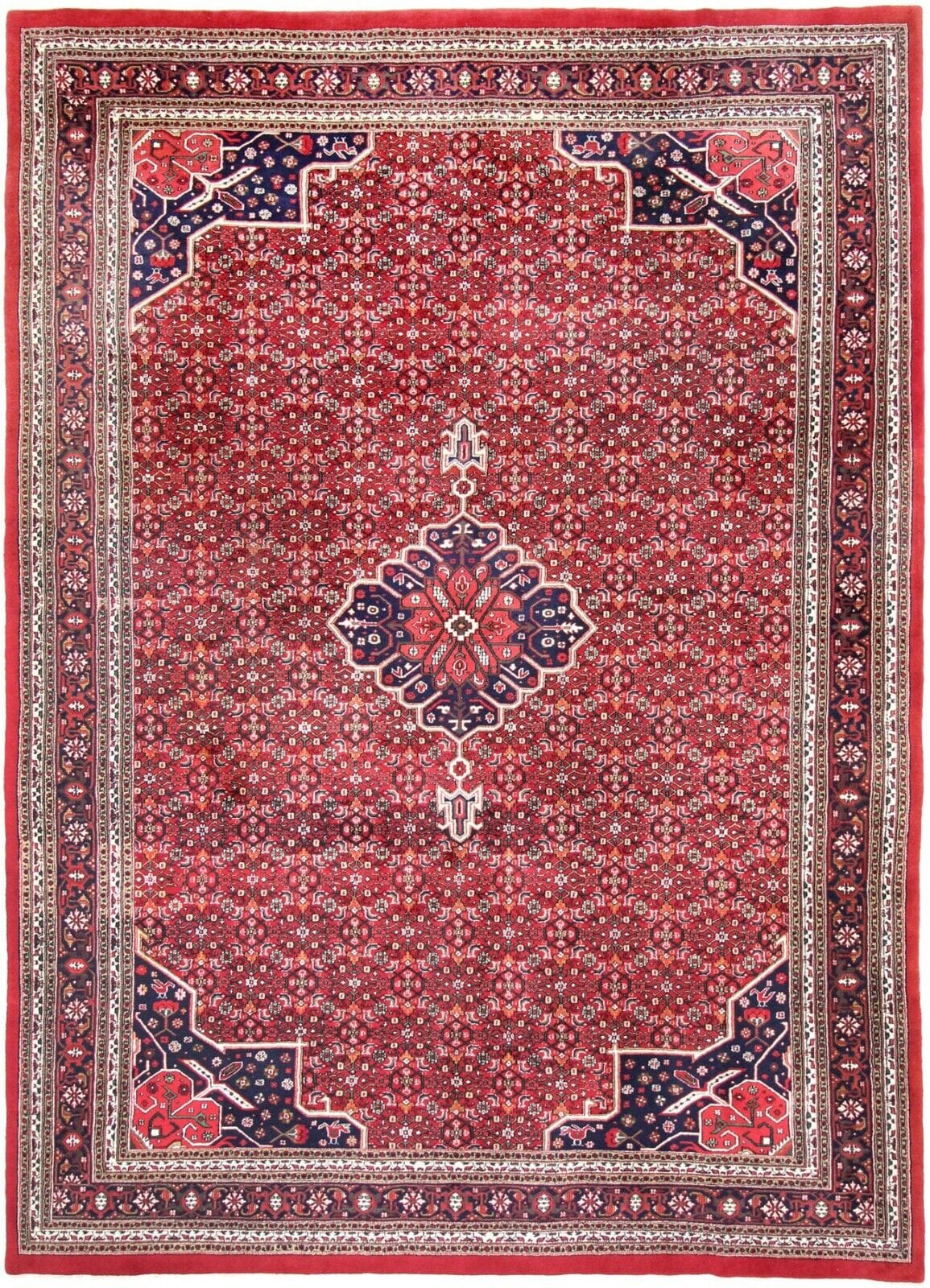
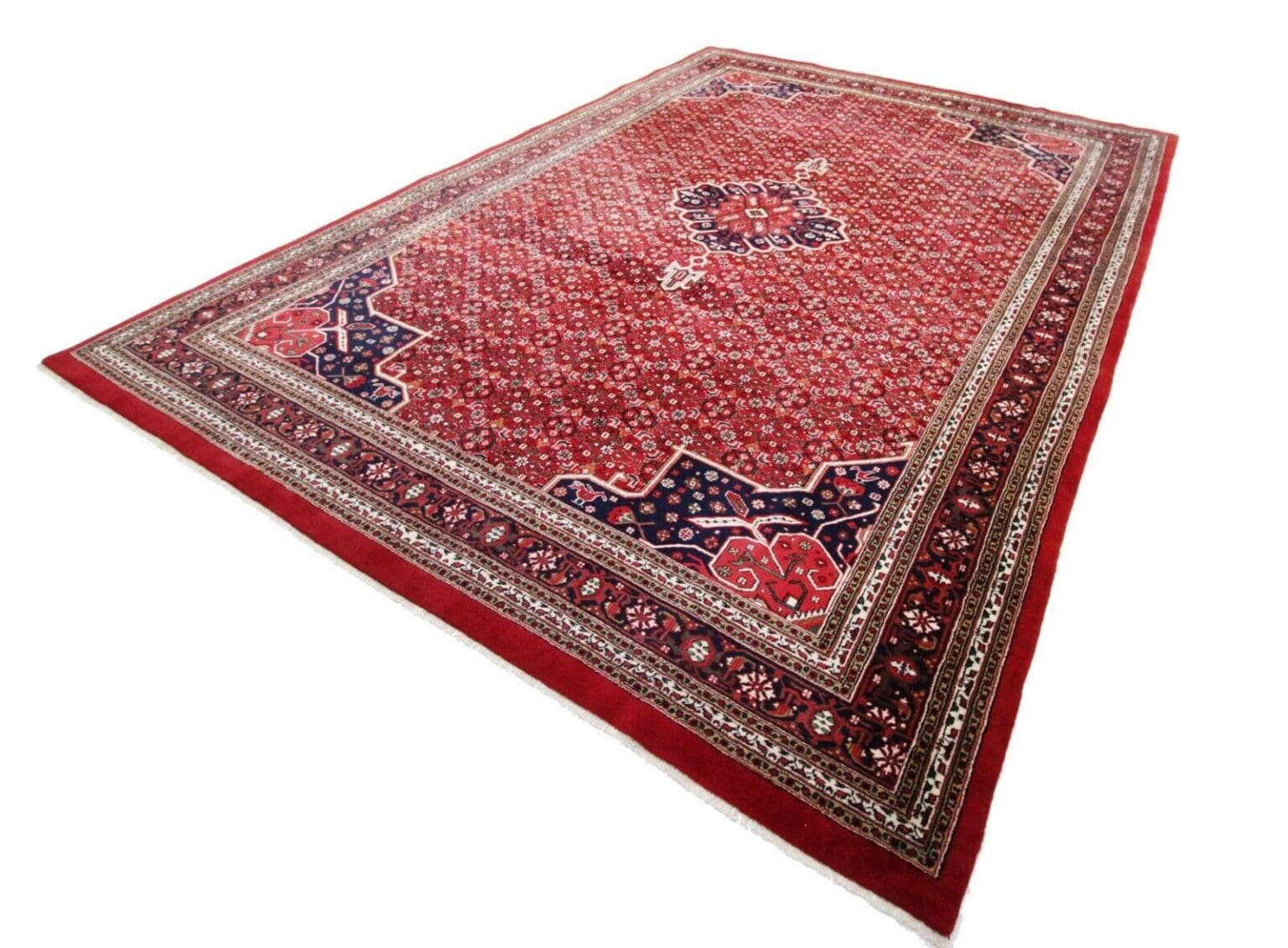
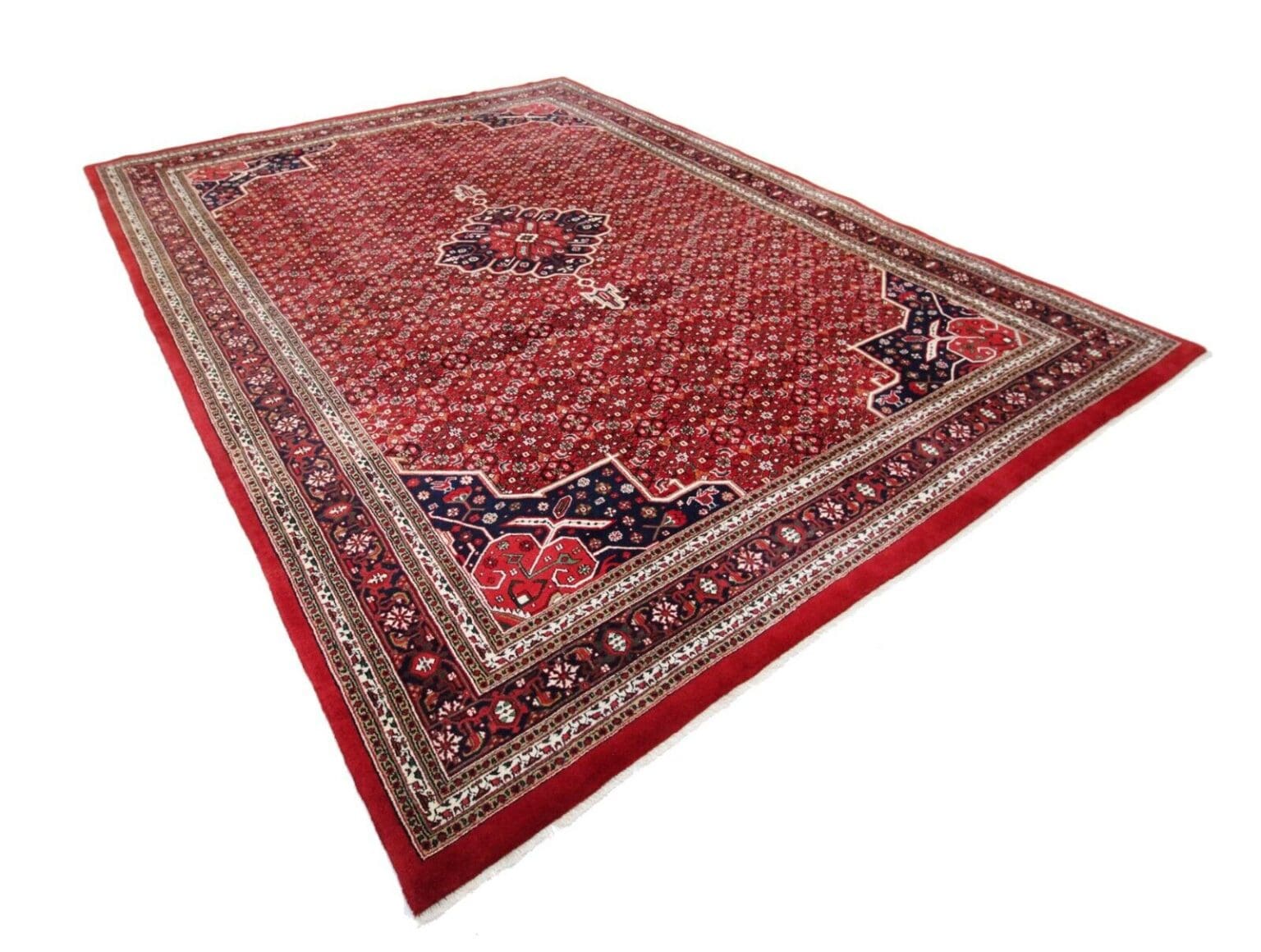
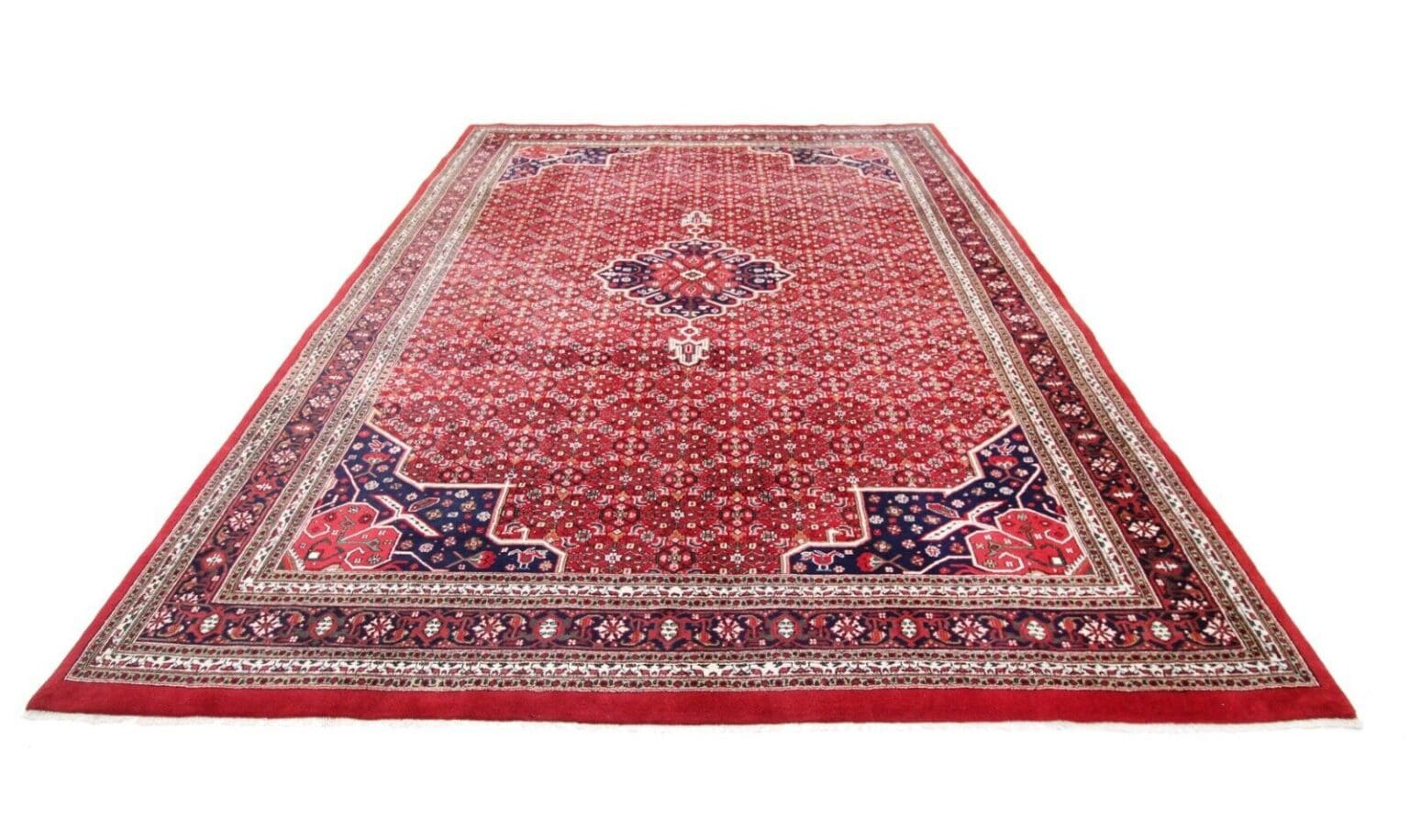
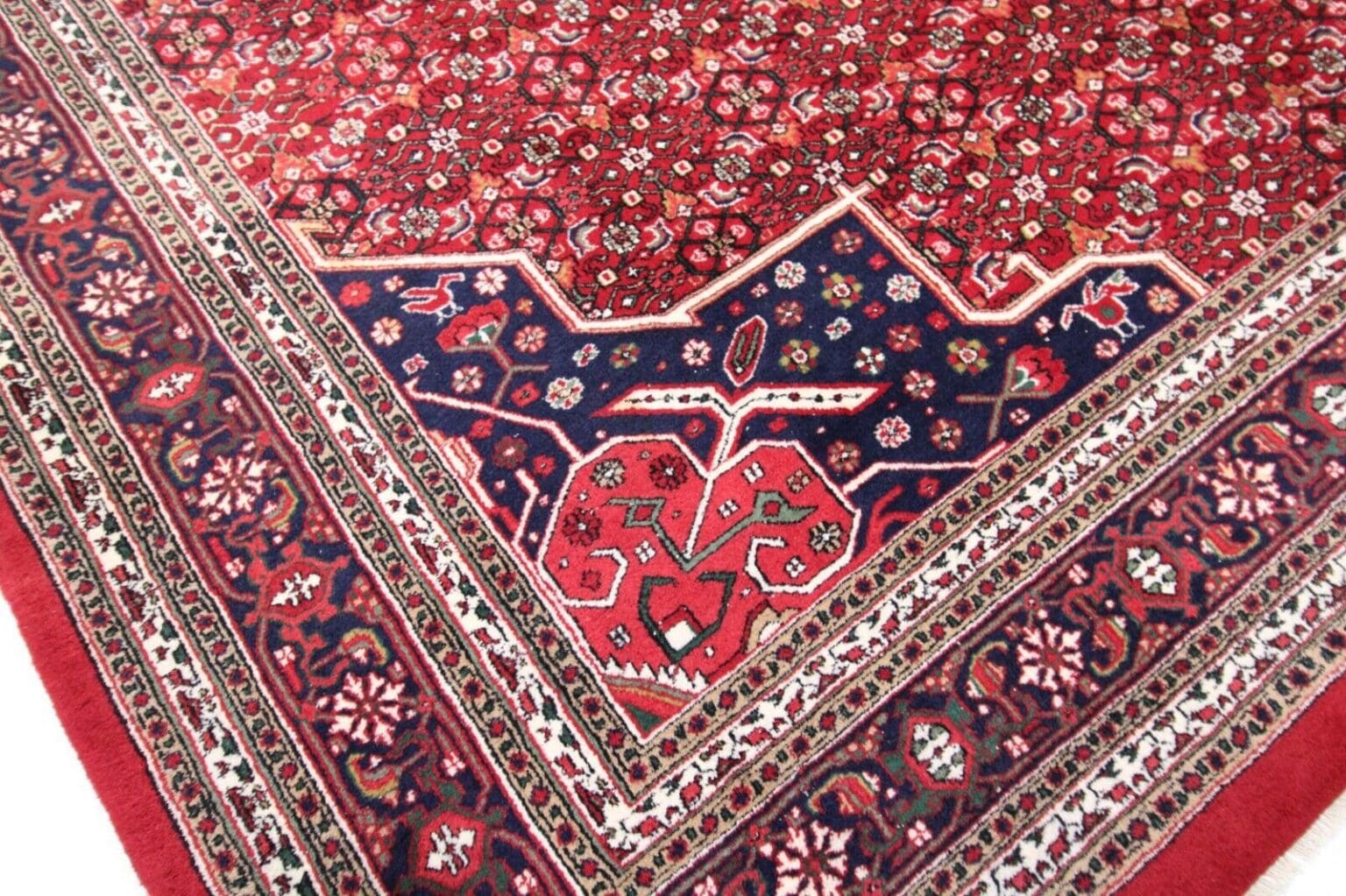
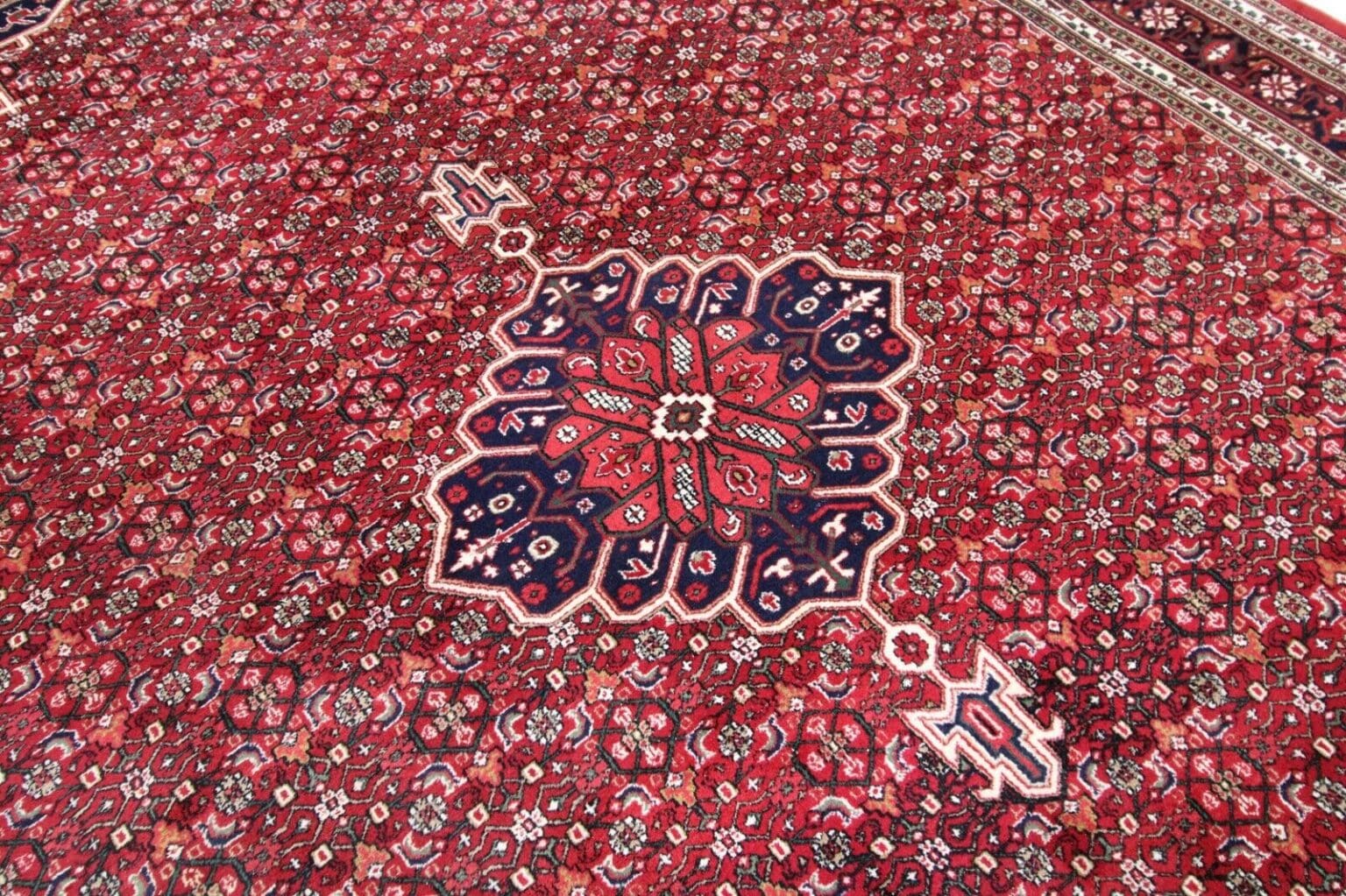
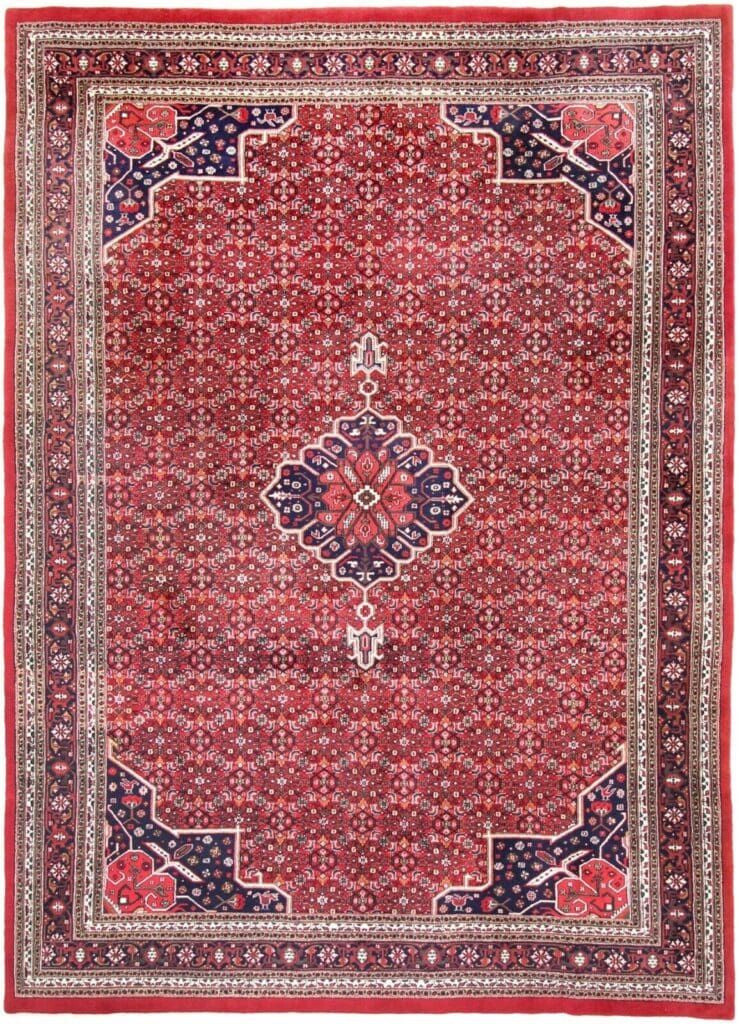
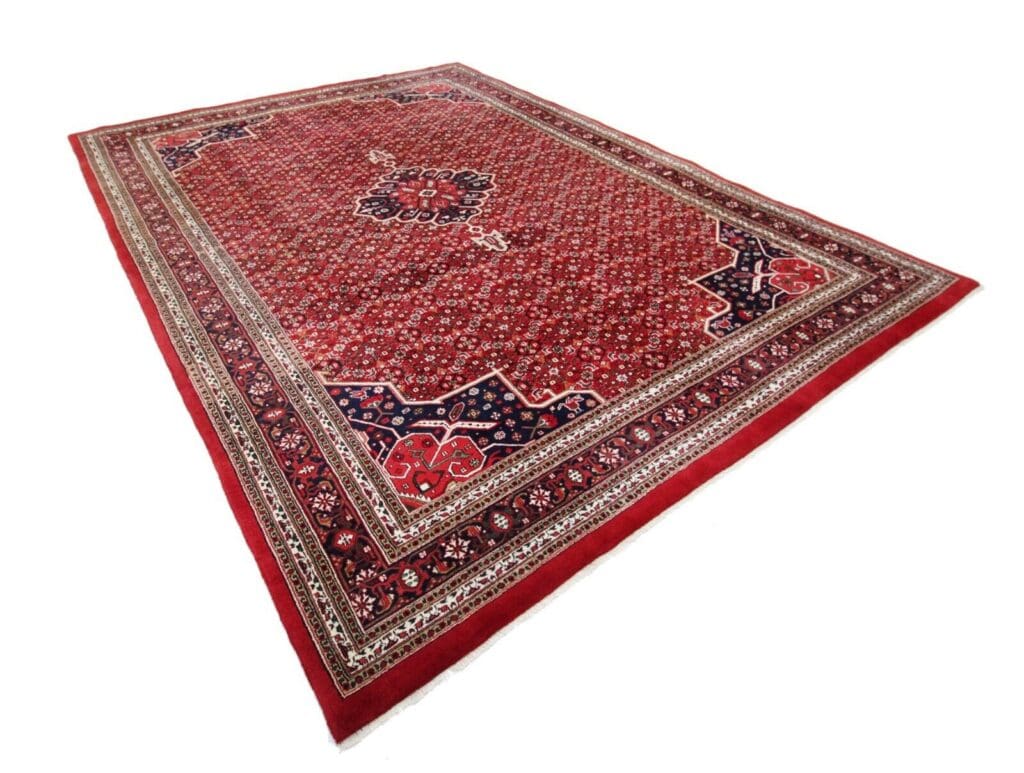
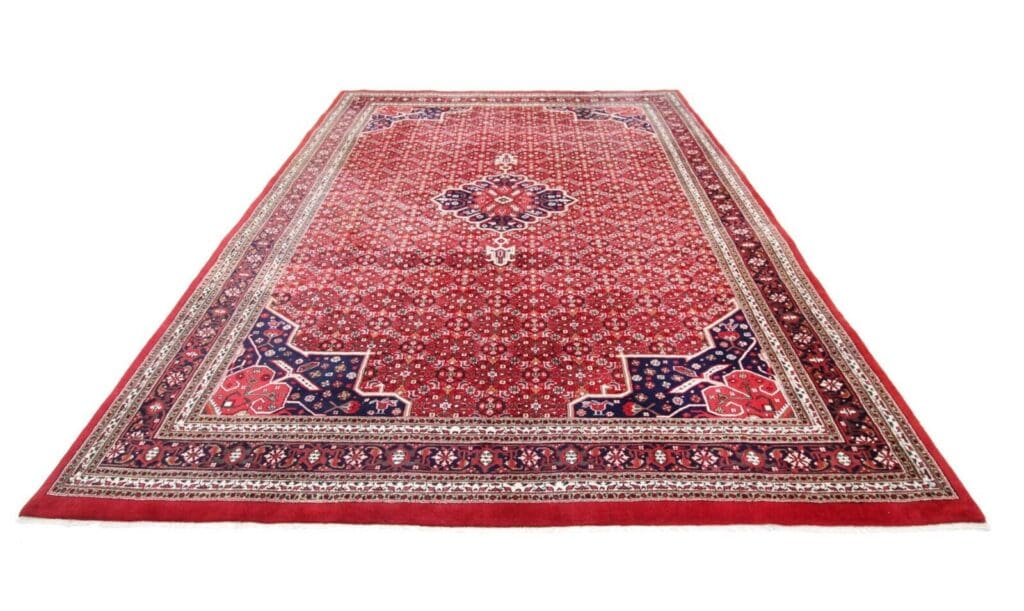
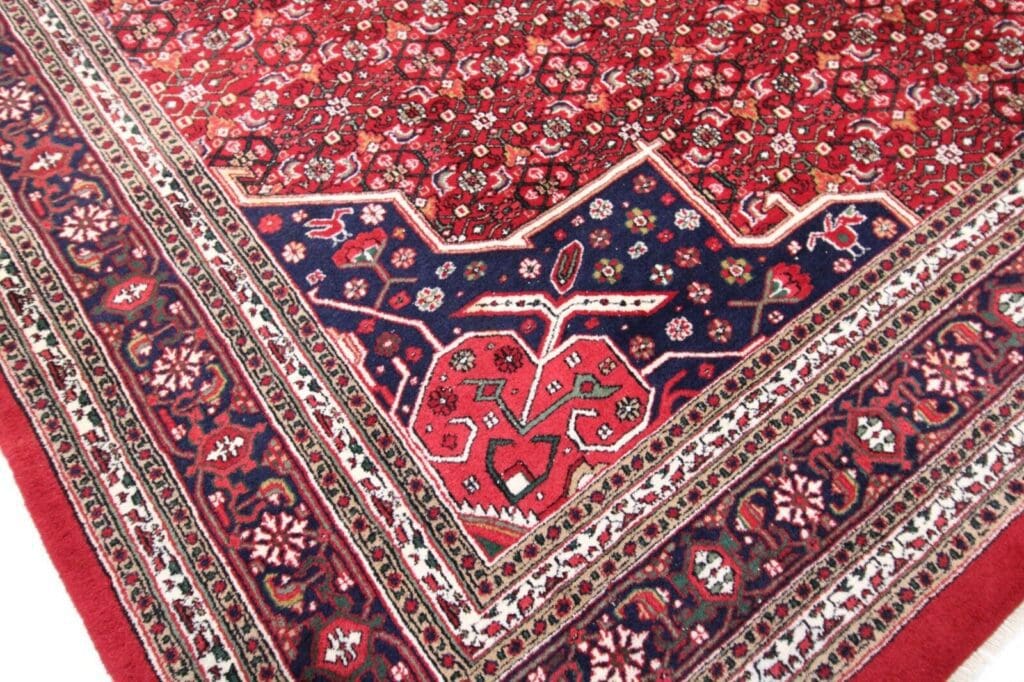
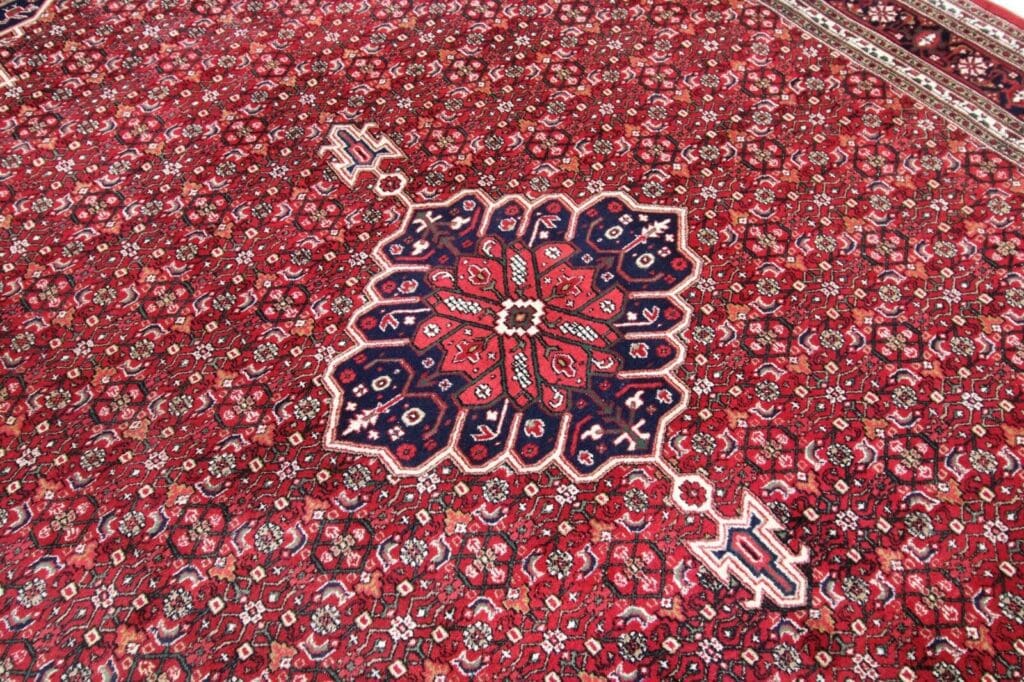
The pattern of this rug is described as Oriental with floral motifs. Floral ornament is a central feature in many Oriental rug traditions. Leaves, blossoms, vines and stylised botanical forms may be combined into a repeating field, a central arrangement or a border running around the composition. These elements are often interpreted rather than copied directly from nature, allowing them to form a measured and decorative rhythm.
Within the Hamedan design vocabulary, floral elements may appear alongside geometric contours. Lines, angles and balanced arrangements give the composition a framework, while blossoms and plant forms create a softer ornamental counterpoint. This combination can make a rug appear clearly structured when viewed as a whole while also revealing smaller decorative details as one looks more closely at the surface.
Oriental floral motifs serve both decorative and organising purposes. They divide the surface, create transitions between field and border and guide the eye across the complete design. Repeated forms provide visual unity, while minor variations in a hand-knotted work preserve the character of manual production. The result remains recognisably traditional without having the perfectly uniform appearance of a printed or mechanically repeated surface.
Hamedan rugs are commonly associated with colour worlds that can include warm reds and earth tones as well as blues and greens. The specific description of this rug names its Oriental floral design but does not state individual colours. For that reason, its documented character rests on the floral and Oriental pattern rather than on an added colour claim. The design can function as a decorative feature in a living space without being tied to one particular interior style.
A floral Oriental rug can visually organise a room and connect different furniture areas through one continuous textile surface. On the floor, the pattern provides a coherent field; from farther away, its ornament remains legible as a broad decorative arrangement. The Hamedan reference gives the design a regional tradition, while the Indian manufacture identifies the origin of this particular one-off rug.
Special Features
The listed special features are suitability for underfloor heating, child-friendly use and environmentally friendly qualities. These points accompany the stated hand-knotted construction and the use of 100% wool. The normal pile height and the resilient nature of wool support regular use in a living environment.
The rug is described as top quality and very clean. Regular vacuuming without a brush is suitable for removing loose dust and everyday dirt from the wool pile. Professional cleaning may be useful at intervals determined by use and traffic. Spilled liquids and visible damage should be dealt with promptly so that the rug can retain the clean condition described for it.
Hand-knotting makes each rug an individual piece. Here, India is the origin, while Hamedan refers to the design tradition. Keeping those two points distinct gives the rug an accurate description. The material, construction, pattern, condition and practical features are the specific details recorded for this single rug.
FAQ
How often should I have the Oriental rug cleaned?
Regular care helps remove dust and dirt from the wool pile. For routine maintenance, vacuuming without a brush is appropriate. The need for professional cleaning depends on how often the rug is used and how much traffic it receives; heavily used areas may require attention sooner. Spills should not be left in the pile for an extended period. When a deeper cleaning is needed, a specialist familiar with hand-knotted wool rugs should handle the work and take the pile structure into account.
Are Oriental rugs made from pure wool suitable for allergy sufferers?
Rugs made from pure wool are generally considered hypoallergenic and usually attract less dust and fewer allergens than rugs made from synthetic materials. This can be helpful for allergy sufferers, although it does not replace individual medical advice. Regular vacuuming without a brush and suitable professional care can help prevent dust from accumulating. Anyone with particular sensitivities should also consider their own response and ensure that the rug is maintained appropriately.
How can I extend the life of the rug?
Regular vacuuming without a brush keeps loose dust out of the wool pile. Direct sunlight should be avoided where possible in order to protect the colours. A rug pad can reduce wear and help the rug lie more securely on the floor. If damage is noticed, prompt professional repair is advisable. Cleaning that matches the level of use can also help preserve the hand-knotted construction, normal pile height and very clean condition for as long as possible.
To provide the best experiences, we use technologies like cookies to store and/or access device information. Consenting to these technologies will allow us to process data such as browsing behavior or unique IDs on this site. Not consenting or withdrawing consent, may adversely affect certain features and functions.
Functional Always active
The technical storage or access is strictly necessary for the legitimate purpose of enabling the use of a specific service explicitly requested by the subscriber or user, or for the sole purpose of carrying out the transmission of a communication over an electronic communications network.
Preferences
The technical storage or access is necessary for the legitimate purpose of storing preferences that are not requested by the subscriber or user.
Statistics
The technical storage or access that is used exclusively for statistical purposes.The technical storage or access that is used exclusively for anonymous statistical purposes. Without a subpoena, voluntary compliance on the part of your Internet Service Provider, or additional records from a third party, information stored or retrieved for this purpose alone cannot usually be used to identify you.
Marketing
The technical storage or access is required to create user profiles to send advertising, or to track the user on a website or across several websites for similar marketing purposes.
 SECURE PAYMENT
 SHIPPING PARTNERS


