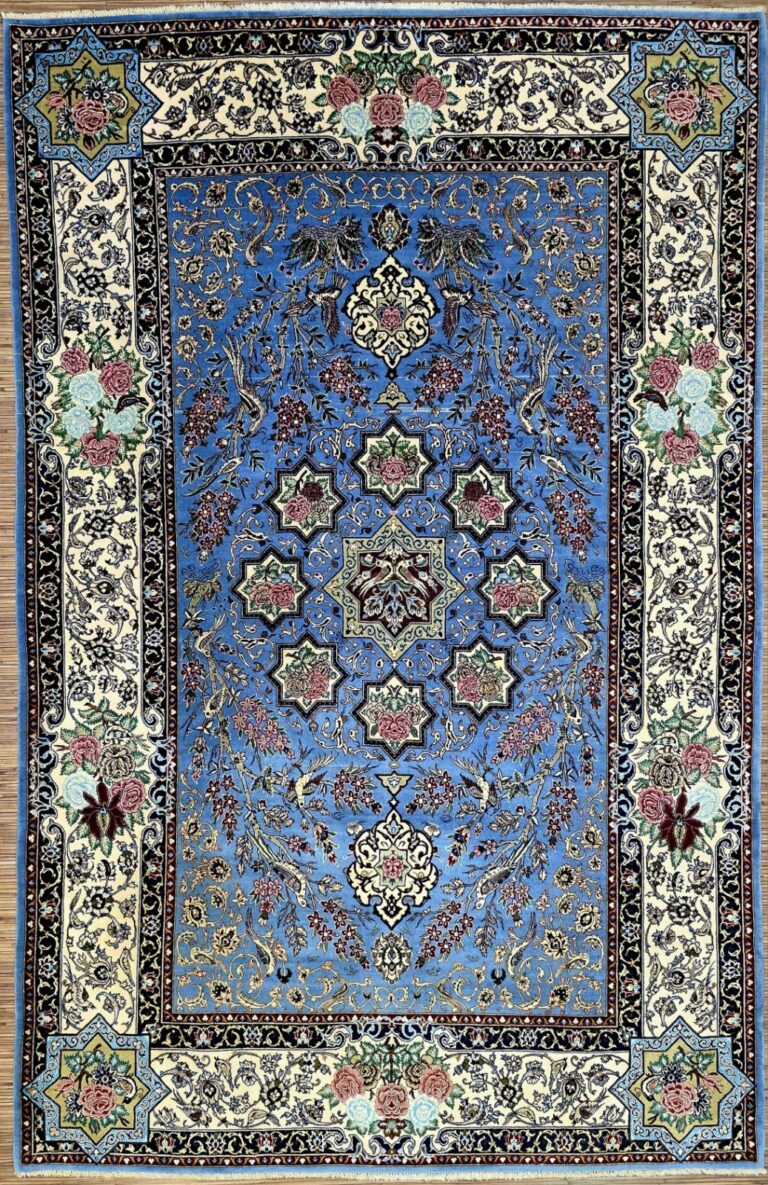
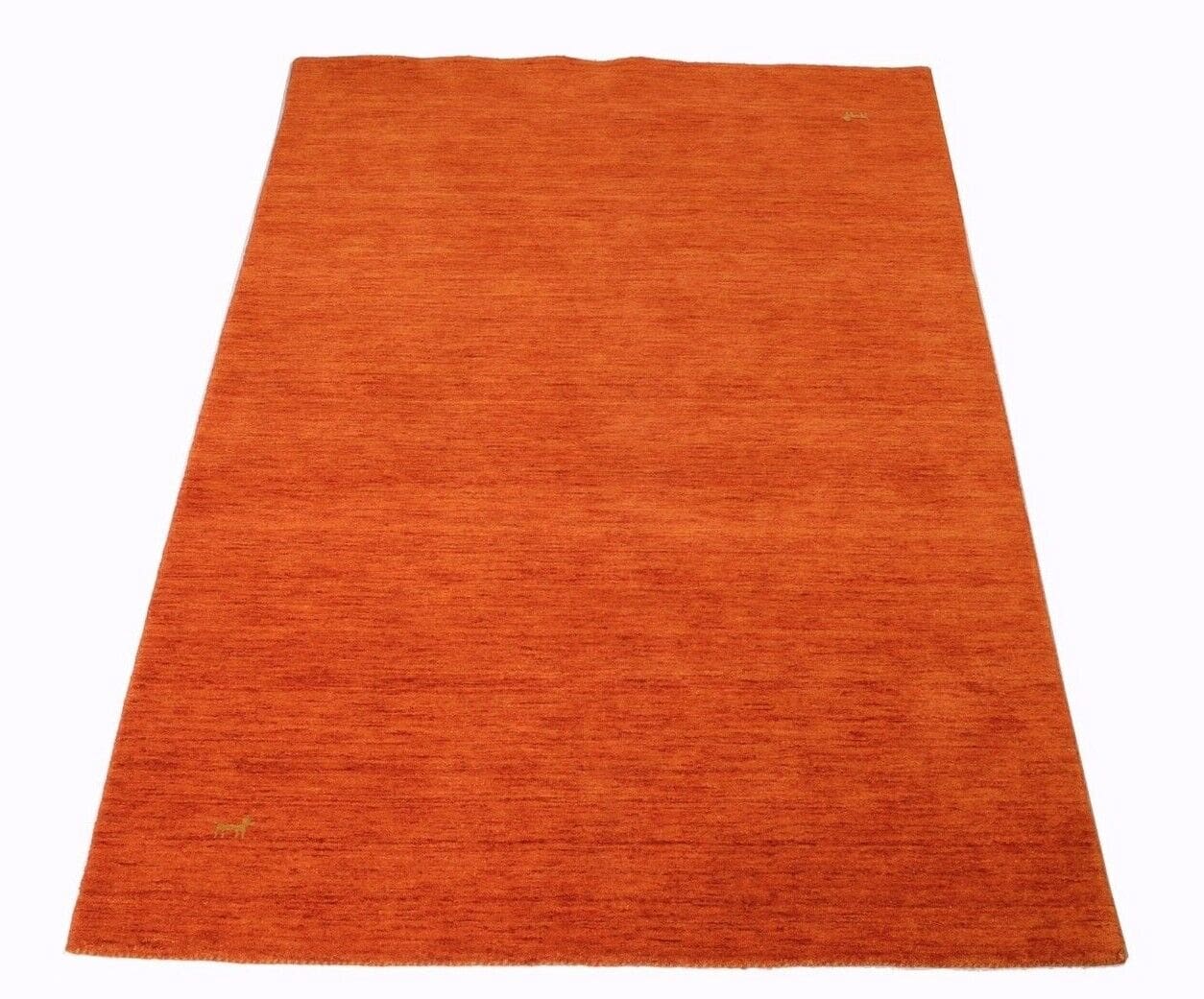
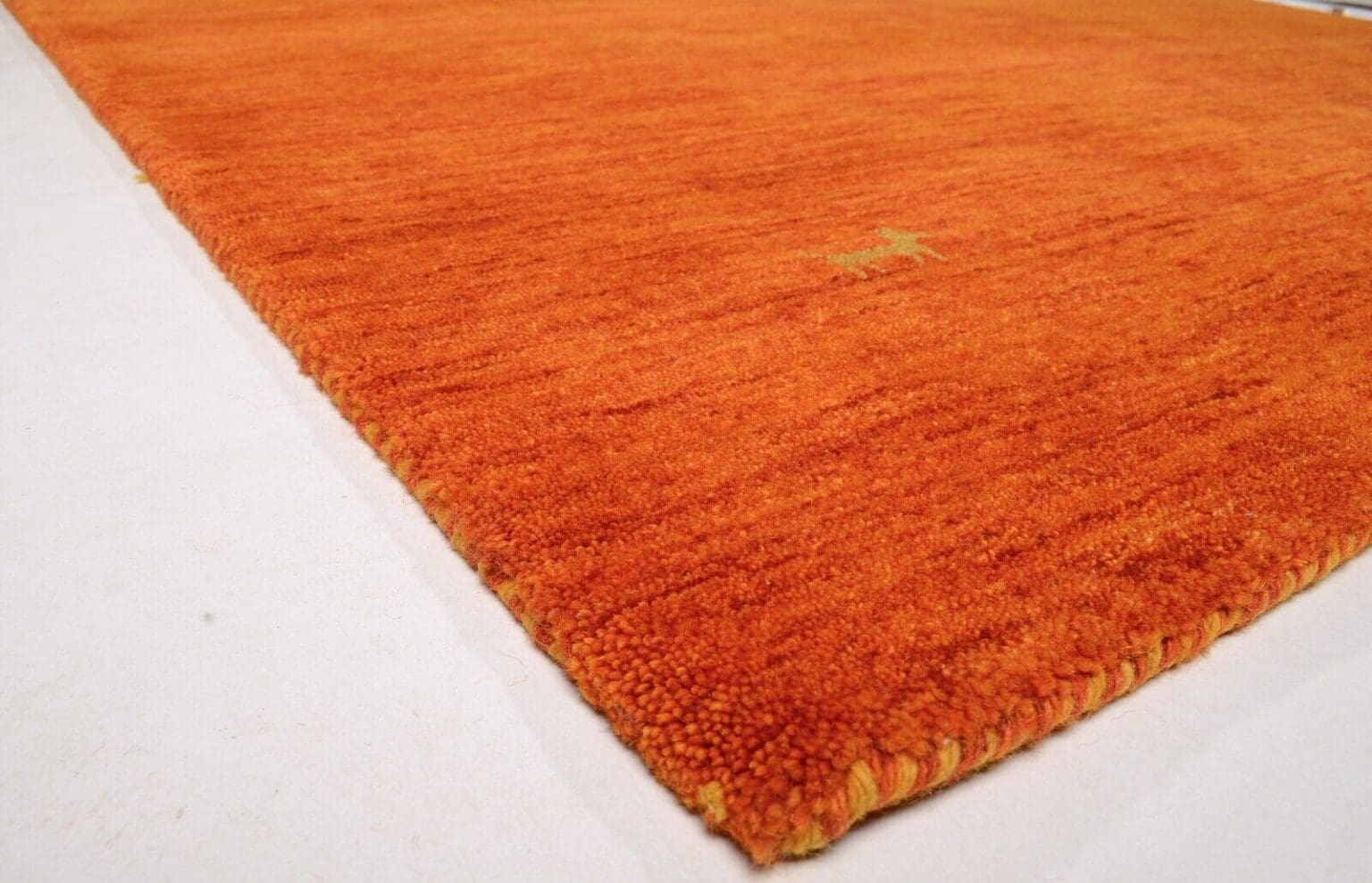
This Gabbeh Oriental rug is hand-woven. Its construction by hand gives the piece a distinctly textile character and separates it from rugs made by machine. The pile is made from 100% virgin wool. Virgin wool is a natural sheep-wool fibre and has long been used for woven and knotted floor coverings. It can be spun into yarn with a tactile surface and is suited to a pile that feels soft and comfortable underfoot.
The wool used for this rug was hand-spun and hand-dyed. Hand-spinning produces yarn with a naturally varied structure rather than the completely uniform appearance associated with industrial spinning. Hand-dyeing adds colour to the fibres in a separate manual process. Together with hand-weaving, these details describe a production method in which the raw material and the workmanship remain clearly visible.
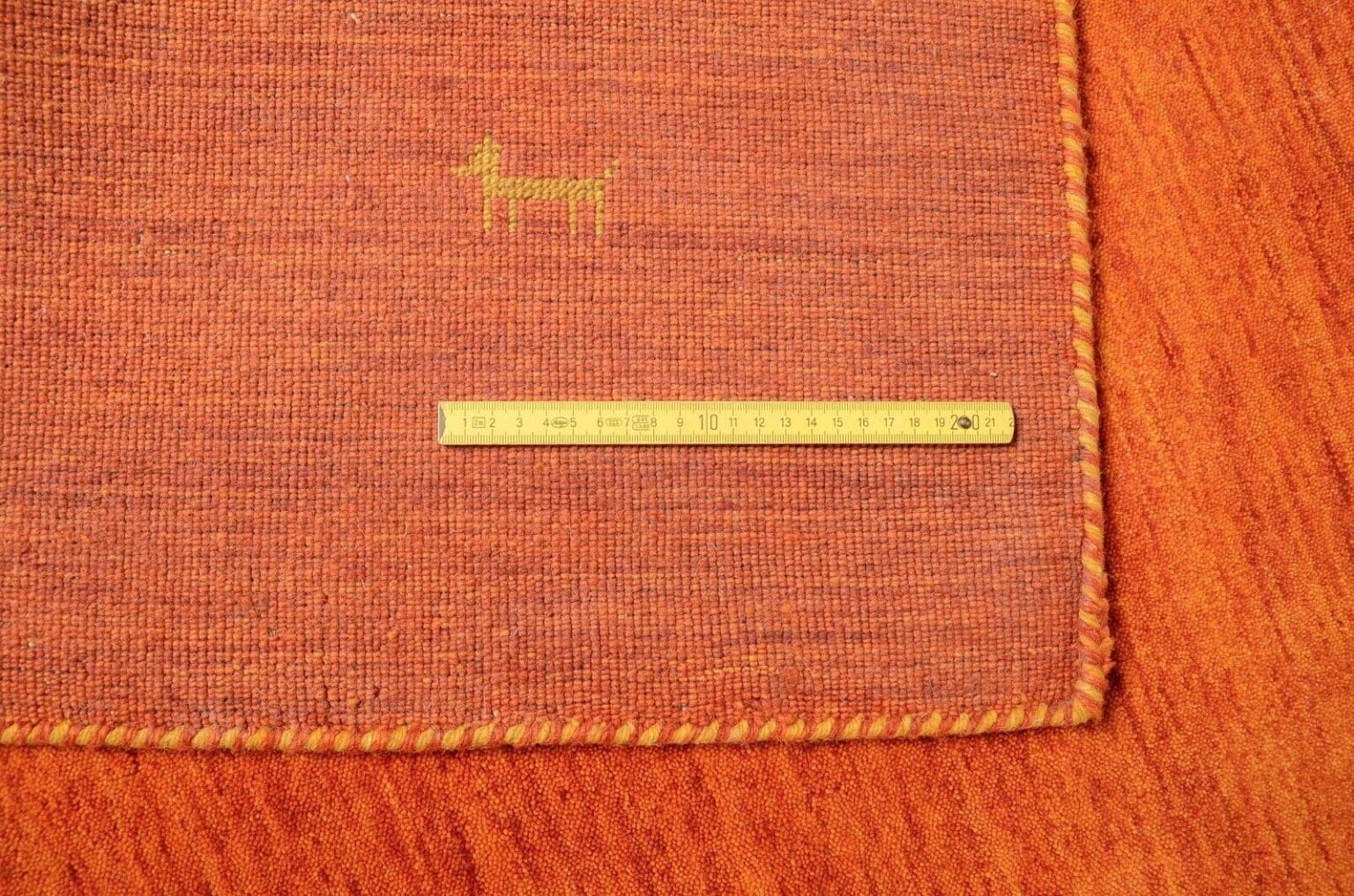
In hand-weaving, the weft is passed by hand through the warp to create the textile surface. This differs from knotting, where individual knots form the pile. The technique specified for this piece is hand-woven. The combination of virgin wool, hand-spun yarn, hand-dyed fibre and manual weaving therefore defines its manufacture without assigning it a knotting technique that is not stated.
Origin and Tradition
This rug comes from India. India has a diverse tradition of textile craftsmanship and is an important centre for the production of handmade rugs. Different parts of the country work with varied materials, weaving methods and design approaches. Indian production can therefore encompass both local interpretations and internationally recognised rug types. The handmade origin is a textile tradition in its own right and should not be confused with Persian provenance.
In the vocabulary of rug making, Gabbeh refers to a deliberately simple type of wool rug. The name is historically associated especially with village rugs from the Iranian cultural sphere. These rugs are known for a direct, uncomplicated appearance, a strong emphasis on wool and a restrained approach to ornament. The term identifies a rug type and visual language; it does not make this particular piece a Persian rug.
India is the stated origin of this rug, so it is an Indian Oriental rug. Gabbeh identifies the style and category rather than a different place of manufacture. Contemporary handmade rugs often use established names in this way: the name signals an open design, a clear relationship with the material and a reduced decorative vocabulary. This distinction between origin and style is important when describing the piece accurately.
Indian workshops use many types of yarn and natural fibres in handmade floor coverings. Virgin wool is especially suitable for spinning, dyeing and forming into a woven surface. Hand-spun yarn can introduce small variations in thickness and texture. Hand-dyed wool can also create a lively perception of colour across a surface, even when the design itself is described as plain. These are general features of craft production, while the specific material and processes of this rug are confirmed by its product details.
The result is a combination of Indian manufacture and a widely recognised Gabbeh form. The rug is not evidence of Persian origin; it is a hand-woven Indian piece made in a Gabbeh style. Origin and design name therefore provide different kinds of information. India states where it was made, while Gabbeh describes the rug type and its deliberately uncomplicated appearance.
Handmade rugs also carry a practical history. Weaving turns spun fibre into a useful surface for the home, while colour and texture give that surface its visual identity. In a plain Gabbeh, the process is not hidden beneath an elaborate ornament. The material, the rhythm of the weave and the solid field remain central. That approach links the rug to a long tradition of useful wool textiles while allowing it to sit within modern interiors.
Design and Pattern
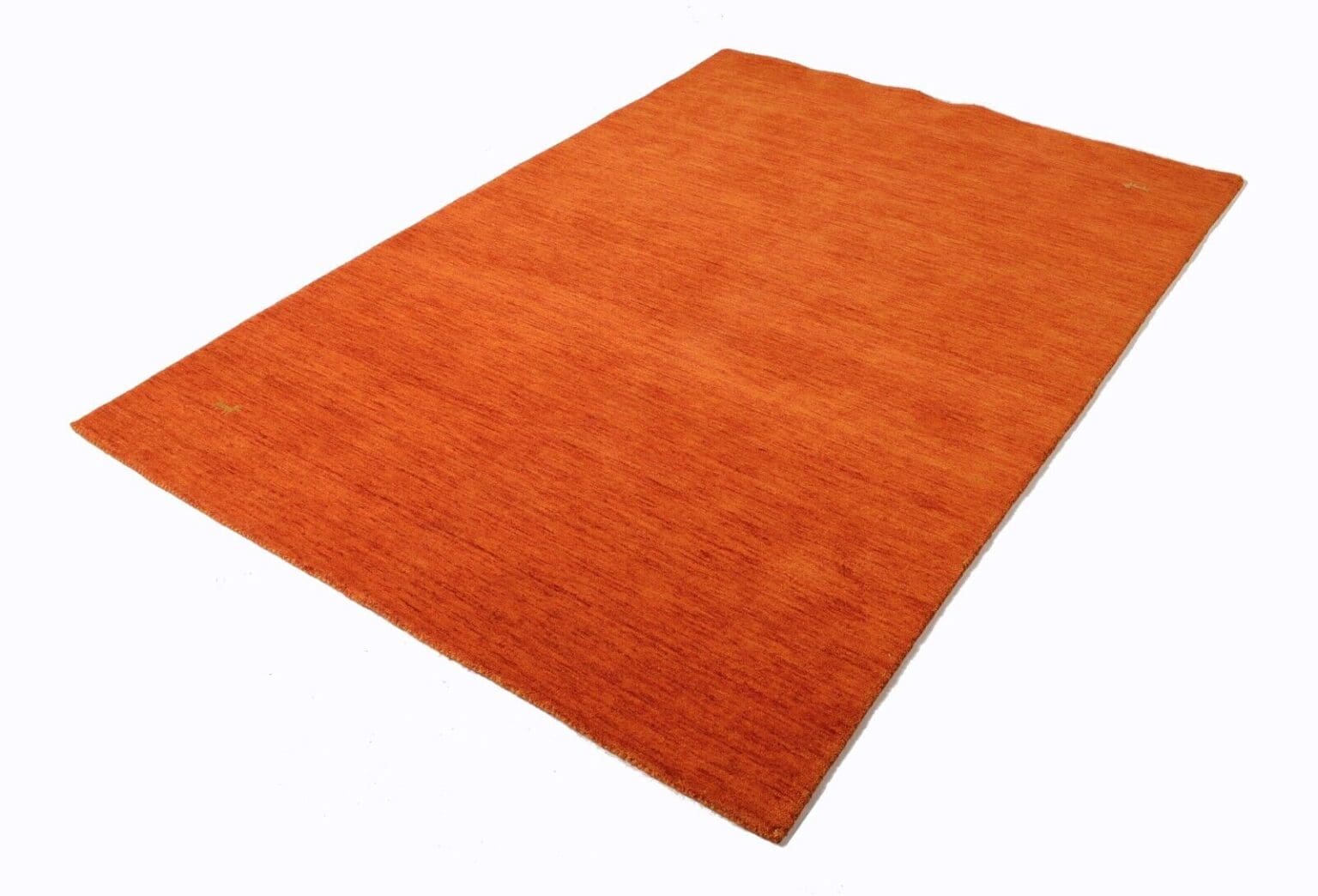
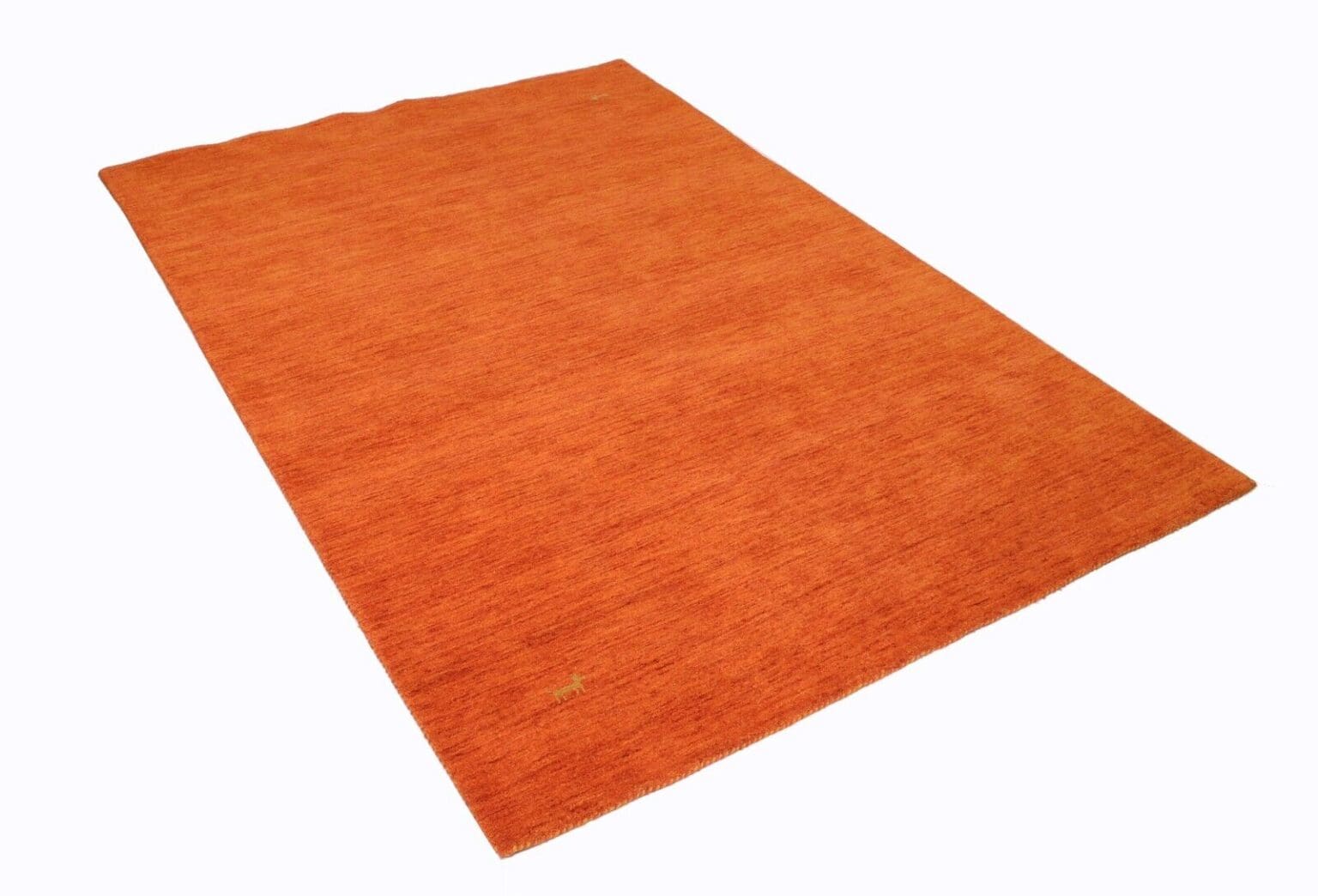
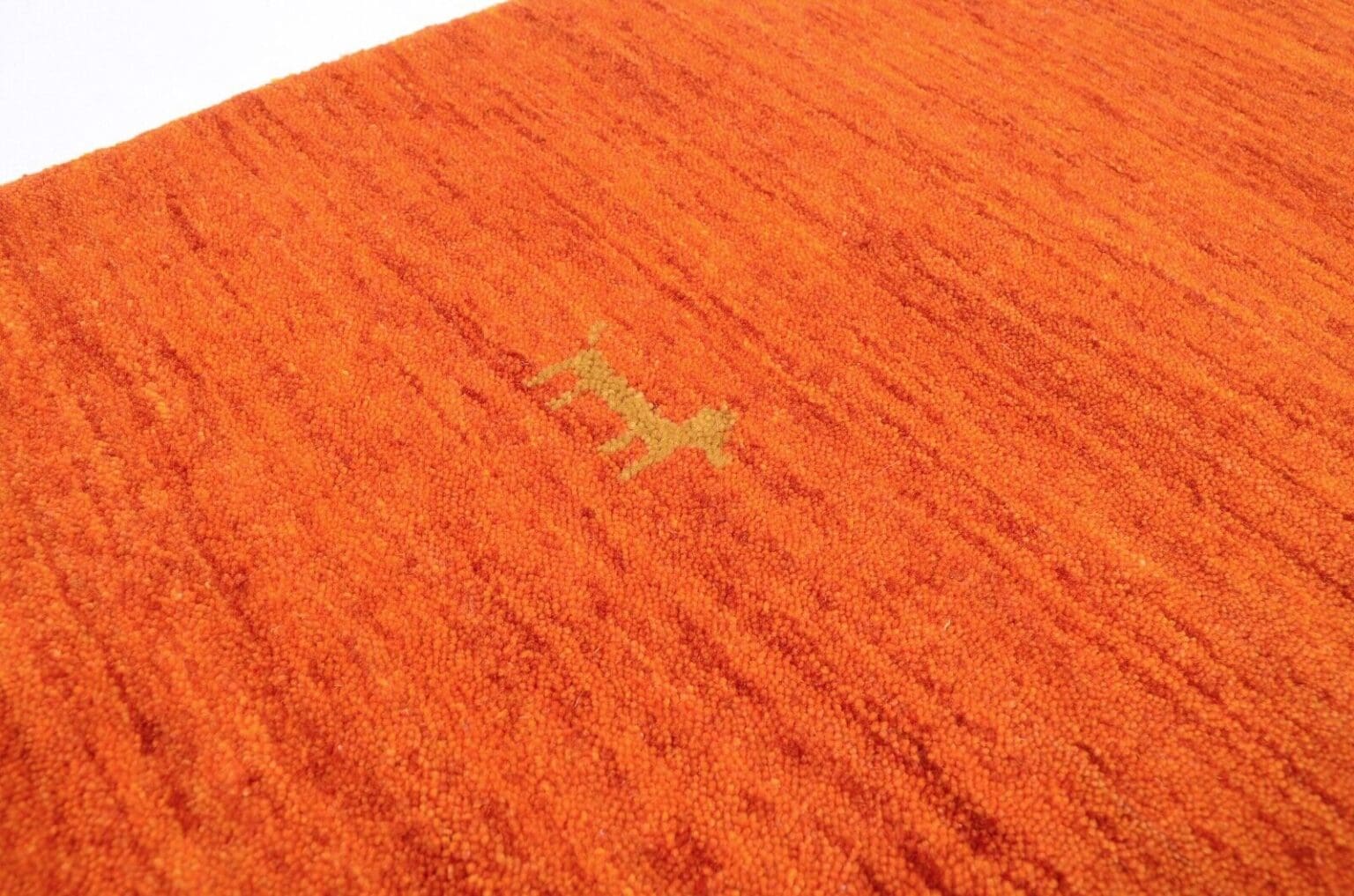
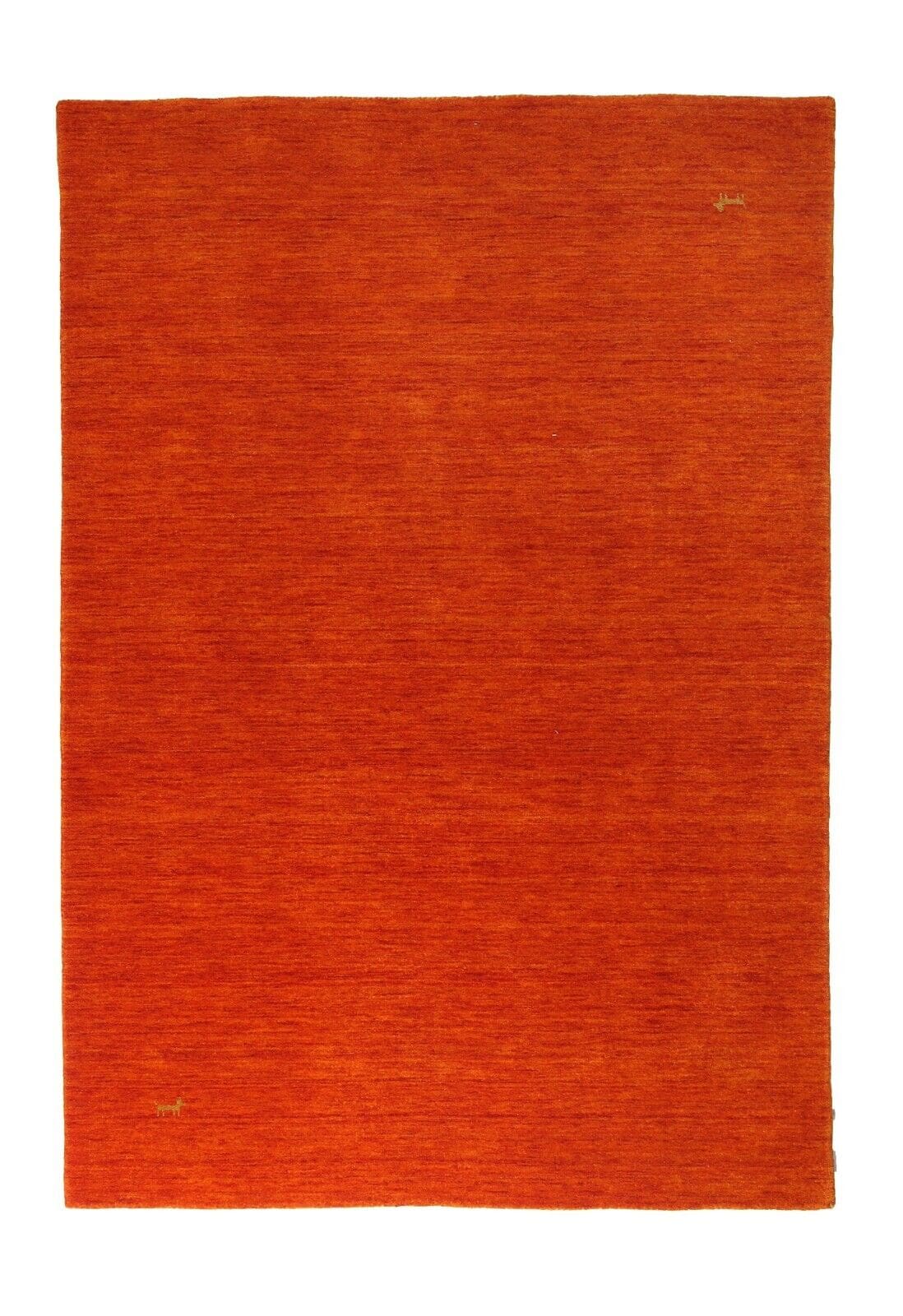
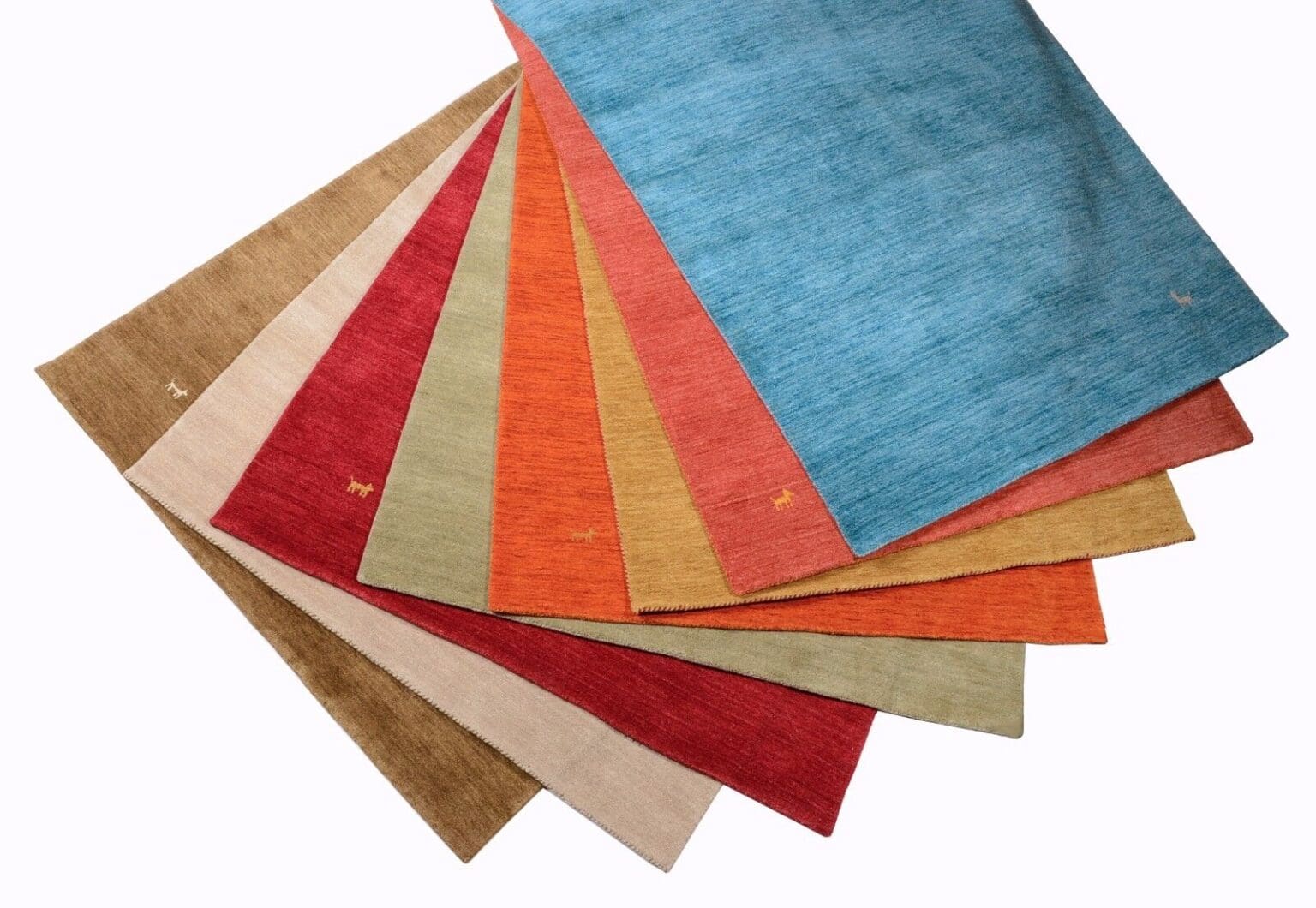
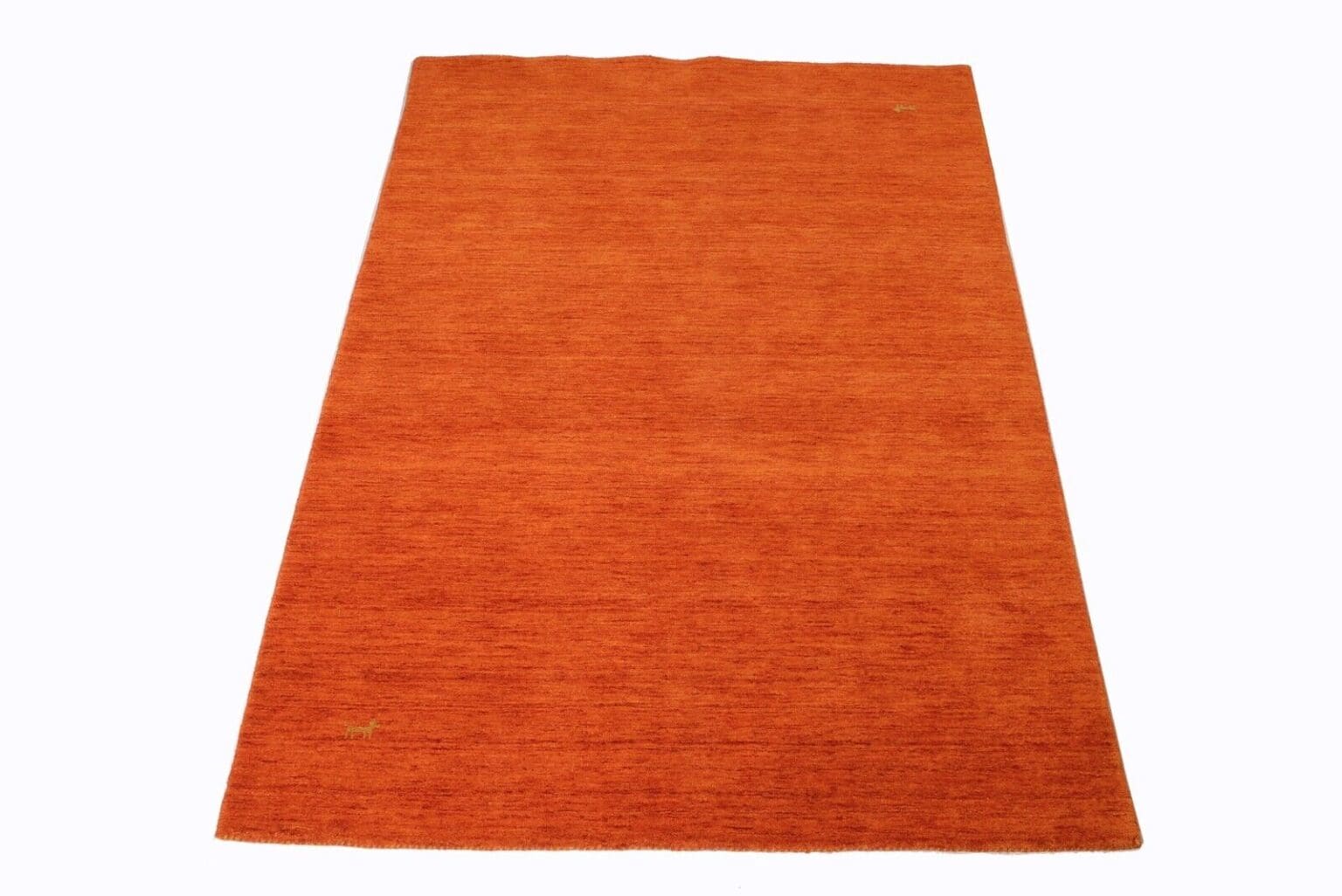
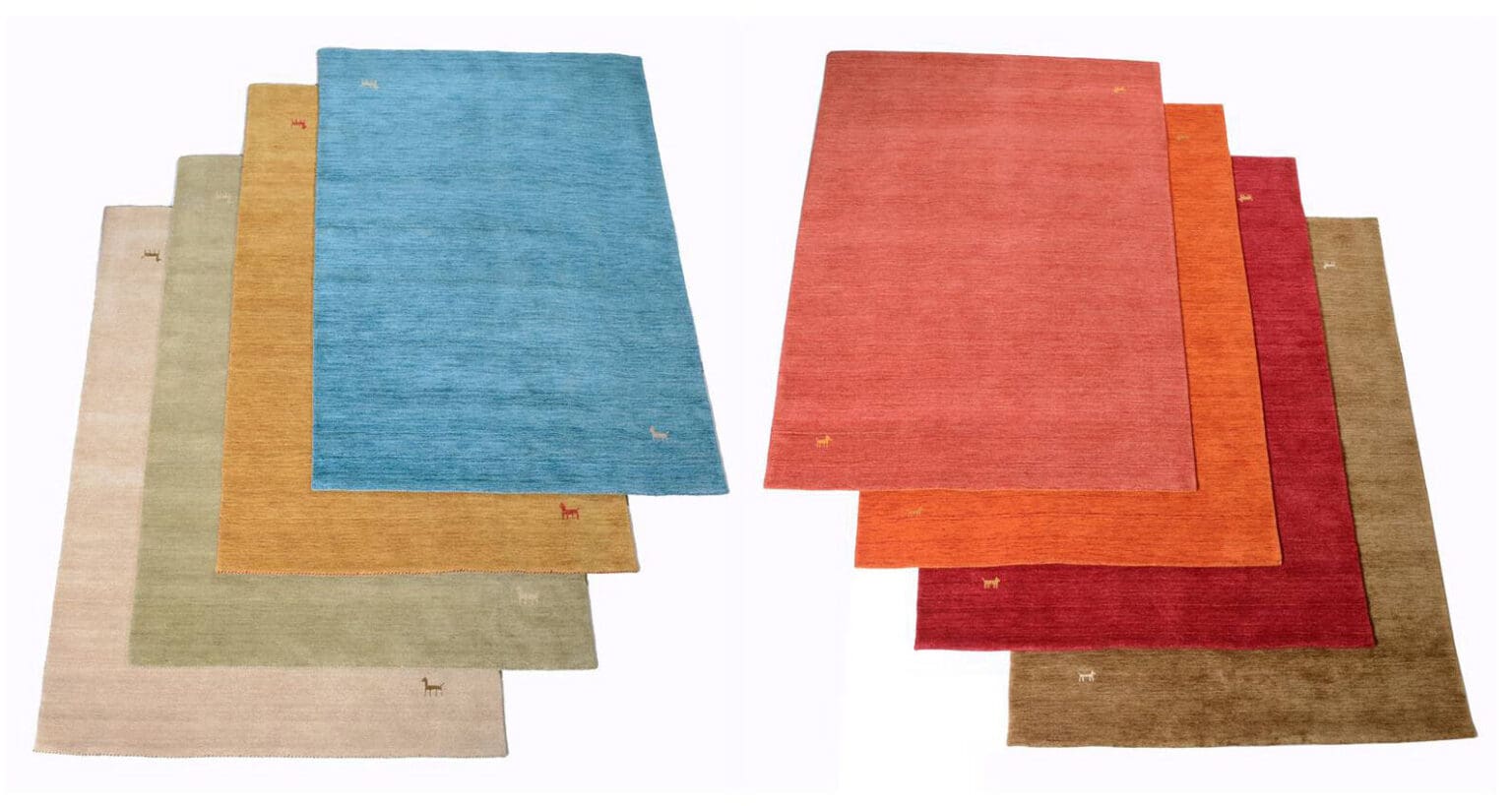
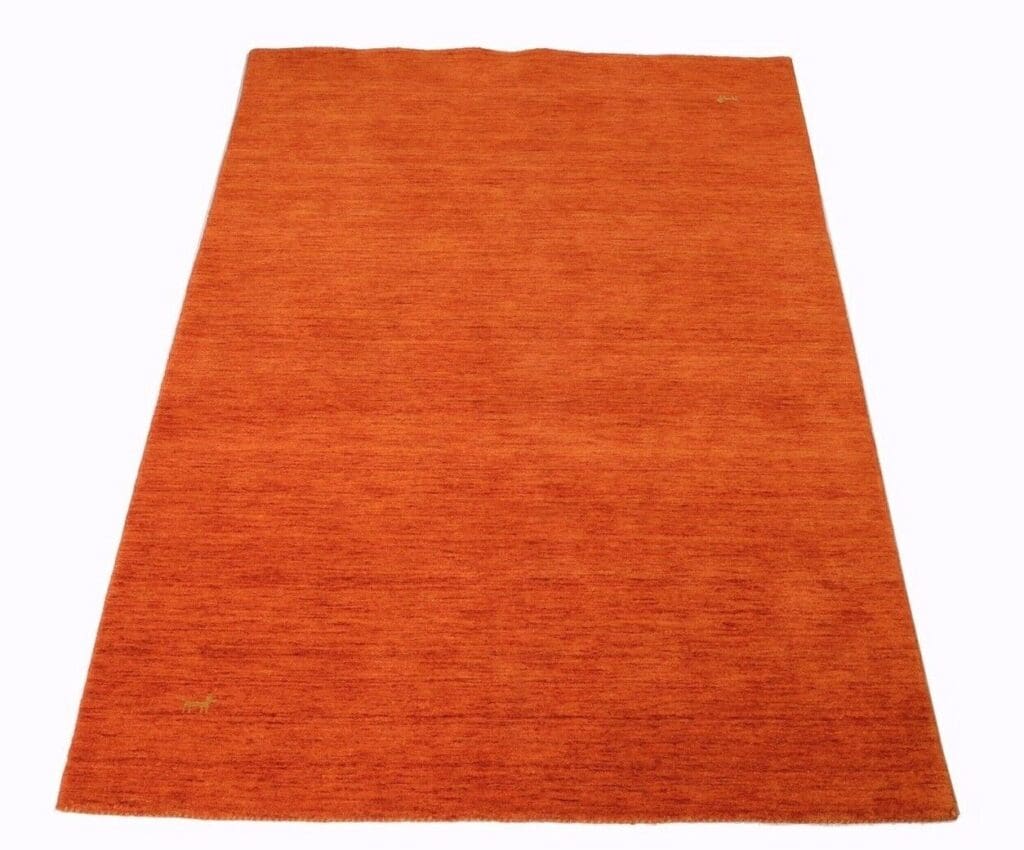
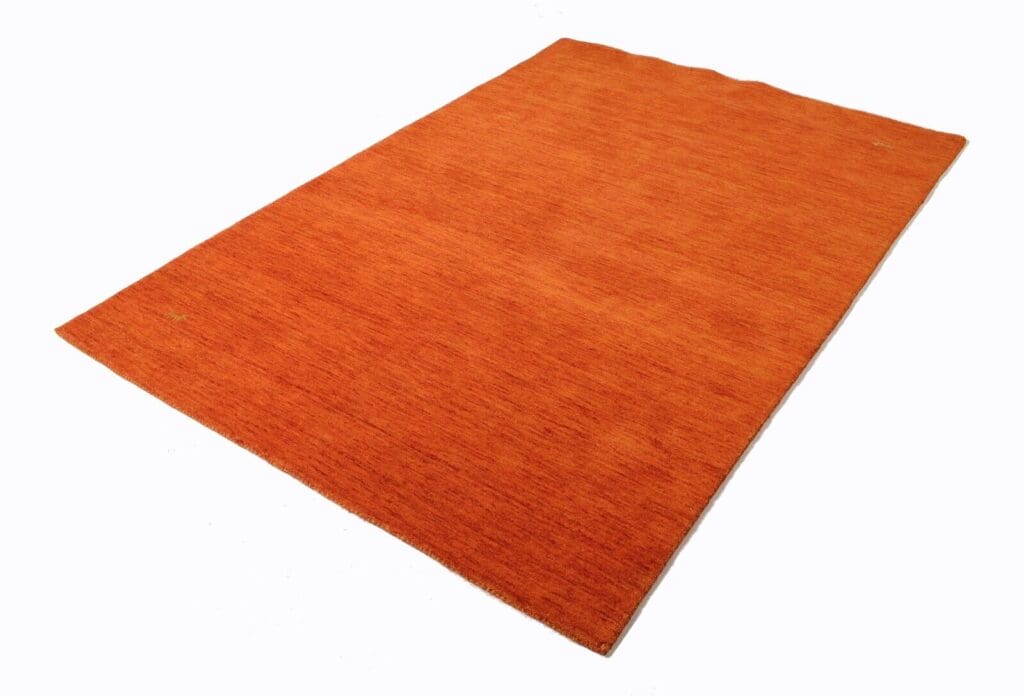
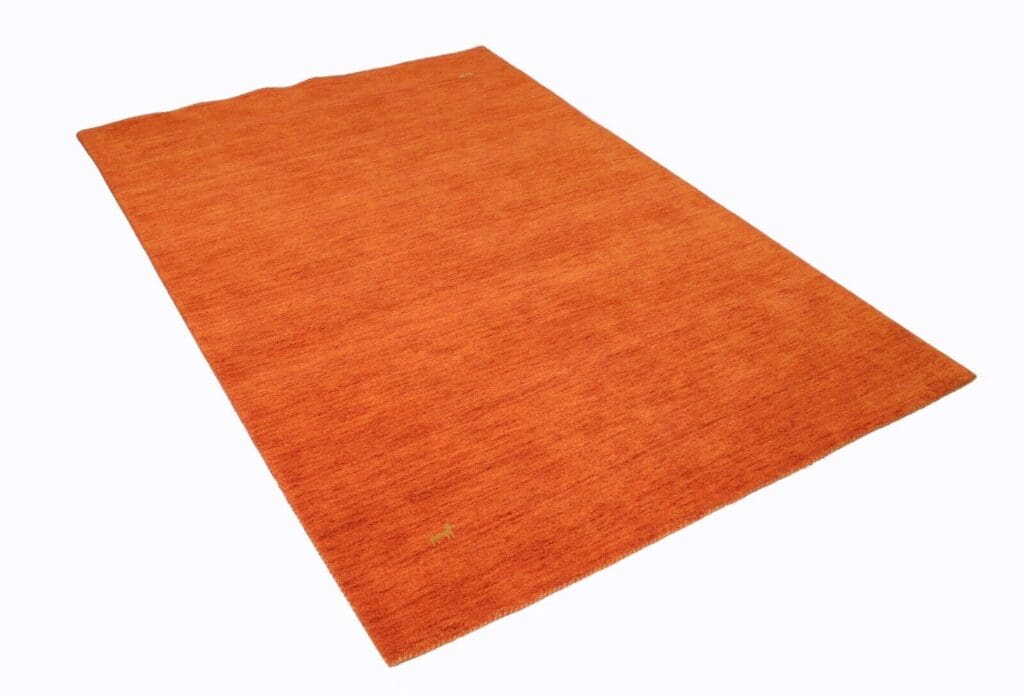
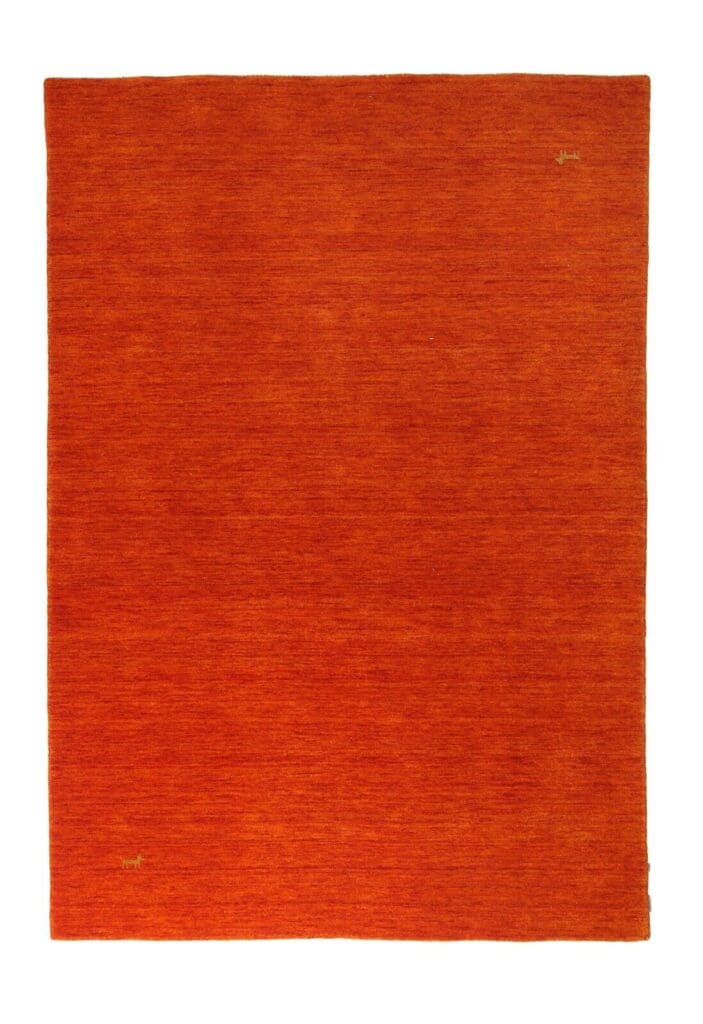
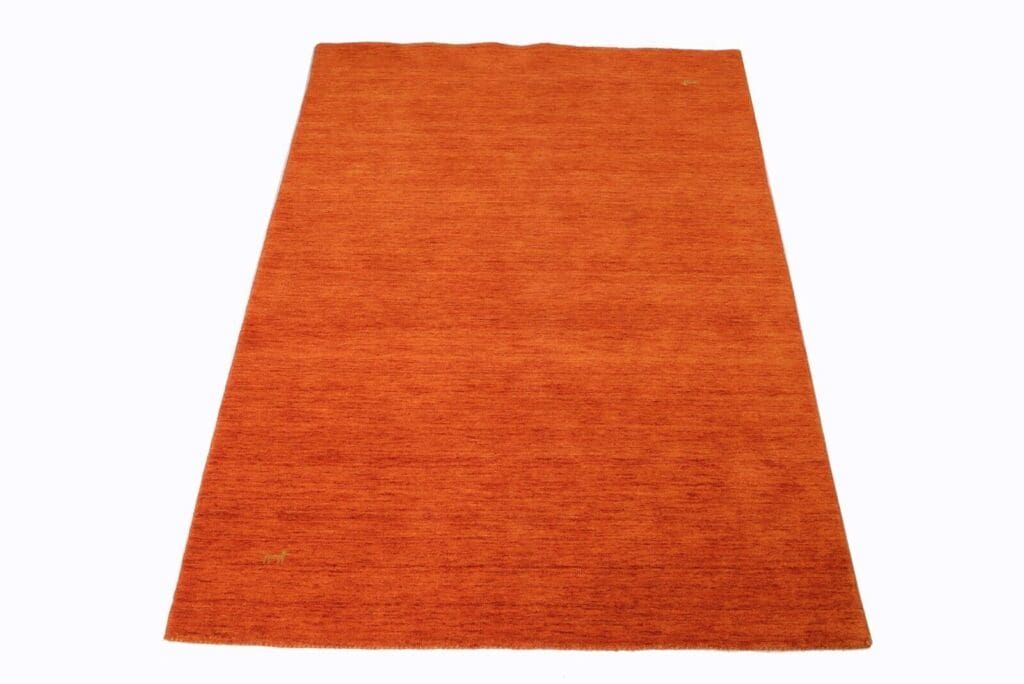
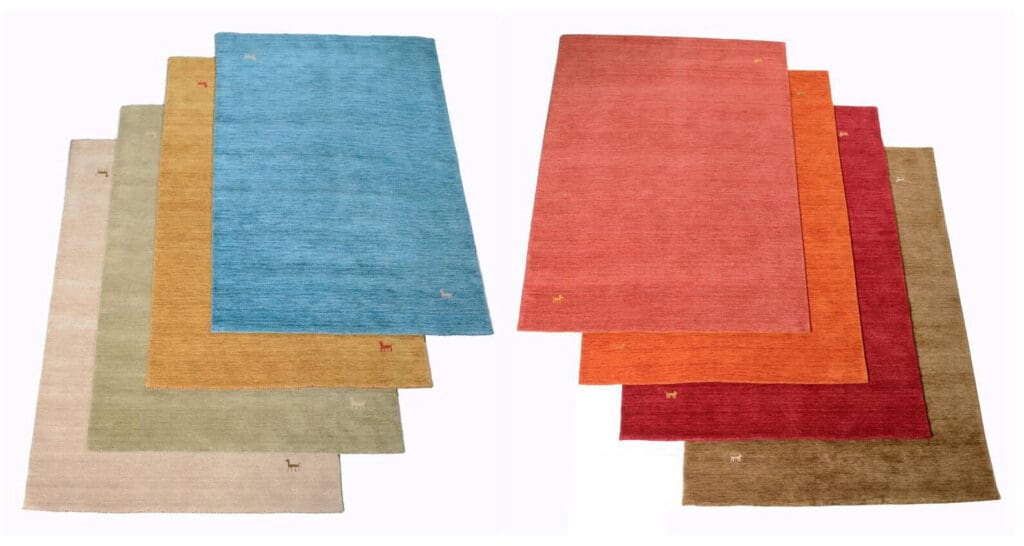
The pattern of this rug is plain. It does not have a separately stated medallion, border or collection of individual ornaments. Instead, the surface is defined by one continuous colour field. The colour is orange, giving the rug a warm and clearly identifiable visual direction. With the decorative structure kept to a minimum, the wool and the woven surface become more noticeable.
A restrained Gabbeh design belongs to a long tradition of simple wool rugs. The surface is not necessarily divided into dense ornament. Colour, texture and the irregular character of handmade yarn can provide the main visual elements. Simplicity is therefore not an absence of design; it is the design principle itself. A plain surface allows the fibre and the handwork to be read more directly.
Traditional Gabbeh rugs are often associated with a straightforward visual language. When geometric or figurative elements appear in this category, they are frequently simplified and surrounded by generous open areas. Other versions remain entirely or largely plain. The product information places this rug in the plain version. It would therefore be inaccurate to add specific symbols, animals, diamonds or medallions that are not stated for this piece.
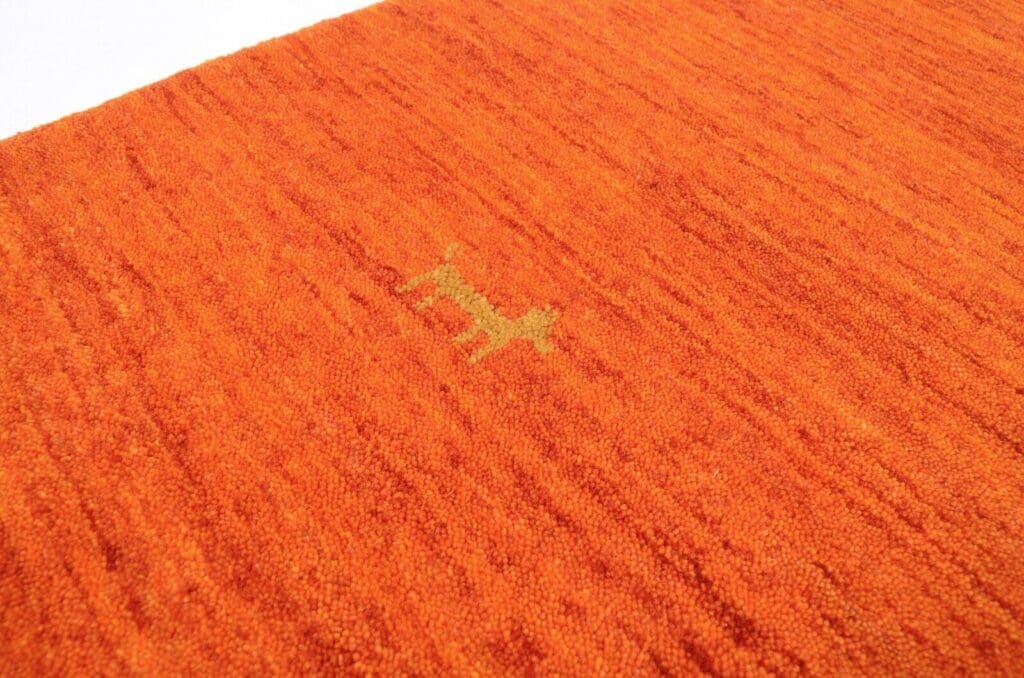
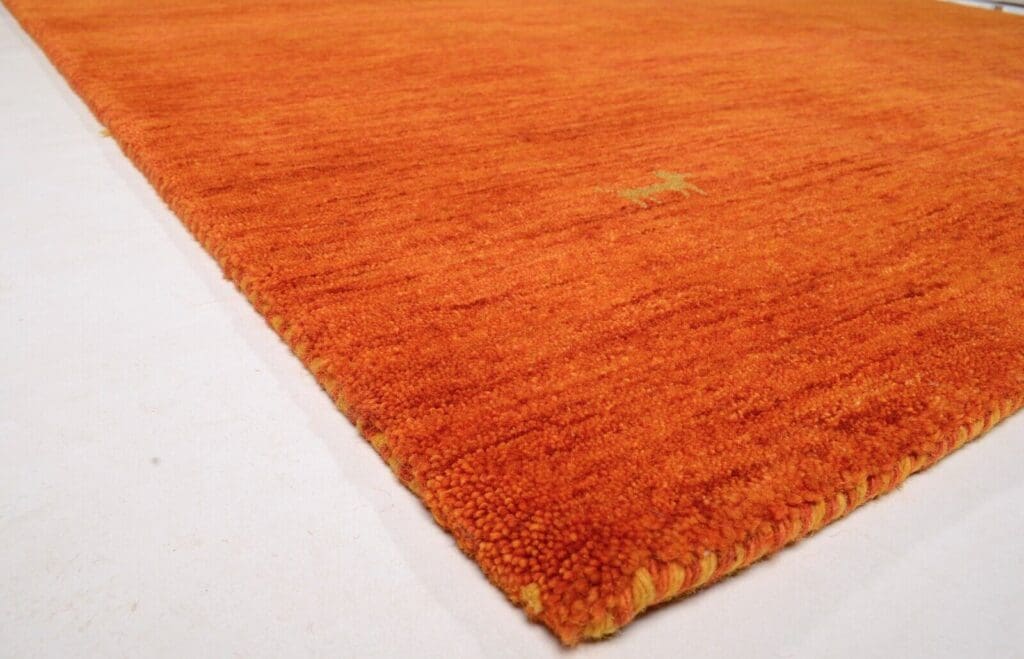
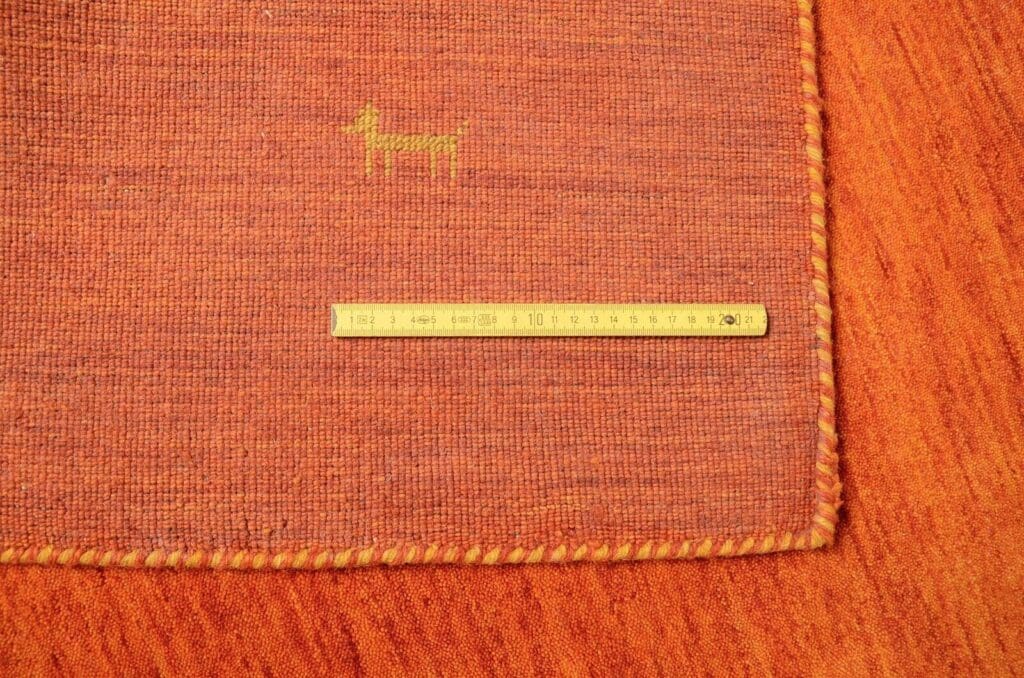
Orange creates a strong, warm field in an interior. In combination with virgin wool, the colour is perceived through the fibres rather than as a perfectly flat industrial coating. The wool is specified as hand-dyed, which is part of the material story. Any variation that may occur in hand-dyed yarn belongs to the character of the dyeing process, but it does not amount to an additional pattern.
The plain design works with the rug’s stated modern style. It can provide a coherent area of colour in a living room or give an eating area a calm, defined floor surface. Its reduced appearance can sit beside contemporary furniture without competing with elaborate furnishings. At the same time, the simple field remains compatible with the Gabbeh tradition. These possible settings do not alter the rug’s Indian origin or its classification as an Oriental rug.
In a hand-woven textile, appearance comes from the interaction of warp, weft, yarn and colour. A plain design makes these foundations especially easy to appreciate because no complex ornament distracts from the surface. Attention falls on the orange field, the virgin-wool pile and the handmade structure. The piece therefore combines the clear statement of a plain rug with the tactile presence associated with a handmade Gabbeh.
Special Features
The rug is new and in perfect condition. It can therefore be introduced directly into a living space. As a hand-woven one-off, it has an individual textile execution. The pile is made entirely from virgin wool, and the wool was hand-spun and hand-dyed. These are specific characteristics of this rug and distinguish its material and manufacture.
The rug is suitable for rooms with underfloor heating. It can consequently be used in a modern home where warmth comes from below the floor. The wool surface also feels pleasant underfoot. It is described as modern and can be used in living or dining areas. Its orange plain design provides a clearly defined colour presence while keeping the decorative language simple.
FAQ
How should I care for this hand-woven Gabbeh?
Regular vacuuming helps remove loose dust and particles from the pile and keeps the surface clean. An occasional professional cleaning is recommended when a more thorough treatment is needed. Direct sunlight should be avoided so that the orange colour does not fade unnecessarily. Because this is a hand-woven wool rug, care should be gentle, and any cleaning product should be tested or professionally assessed before it is used across the surface.
Can the rug be used with underfloor heating?
Yes. This hand-woven Gabbeh is suitable for use with underfloor heating. It can therefore be placed in modern rooms where heat rises from the floor. The wool surface adds a comfortable feel when walked on. The floor should be clean and even so that the rug lies properly and the heating system can be used as intended.
Where does this Gabbeh Oriental rug come from?
The rug comes from India. India has a rich tradition of rug making and handcraft production. Gabbeh describes the rug type and its simple plain design in this case; it does not change the stated origin. This piece is therefore a hand-woven Indian Oriental rug, not a Persian rug.
To provide the best experiences, we use technologies like cookies to store and/or access device information. Consenting to these technologies will allow us to process data such as browsing behavior or unique IDs on this site. Not consenting or withdrawing consent, may adversely affect certain features and functions.
Functional Always active
The technical storage or access is strictly necessary for the legitimate purpose of enabling the use of a specific service explicitly requested by the subscriber or user, or for the sole purpose of carrying out the transmission of a communication over an electronic communications network.
Preferences
The technical storage or access is necessary for the legitimate purpose of storing preferences that are not requested by the subscriber or user.
Statistics
The technical storage or access that is used exclusively for statistical purposes.The technical storage or access that is used exclusively for anonymous statistical purposes. Without a subpoena, voluntary compliance on the part of your Internet Service Provider, or additional records from a third party, information stored or retrieved for this purpose alone cannot usually be used to identify you.
Marketing
The technical storage or access is required to create user profiles to send advertising, or to track the user on a website or across several websites for similar marketing purposes.
 SECURE PAYMENT
 SHIPPING PARTNERS