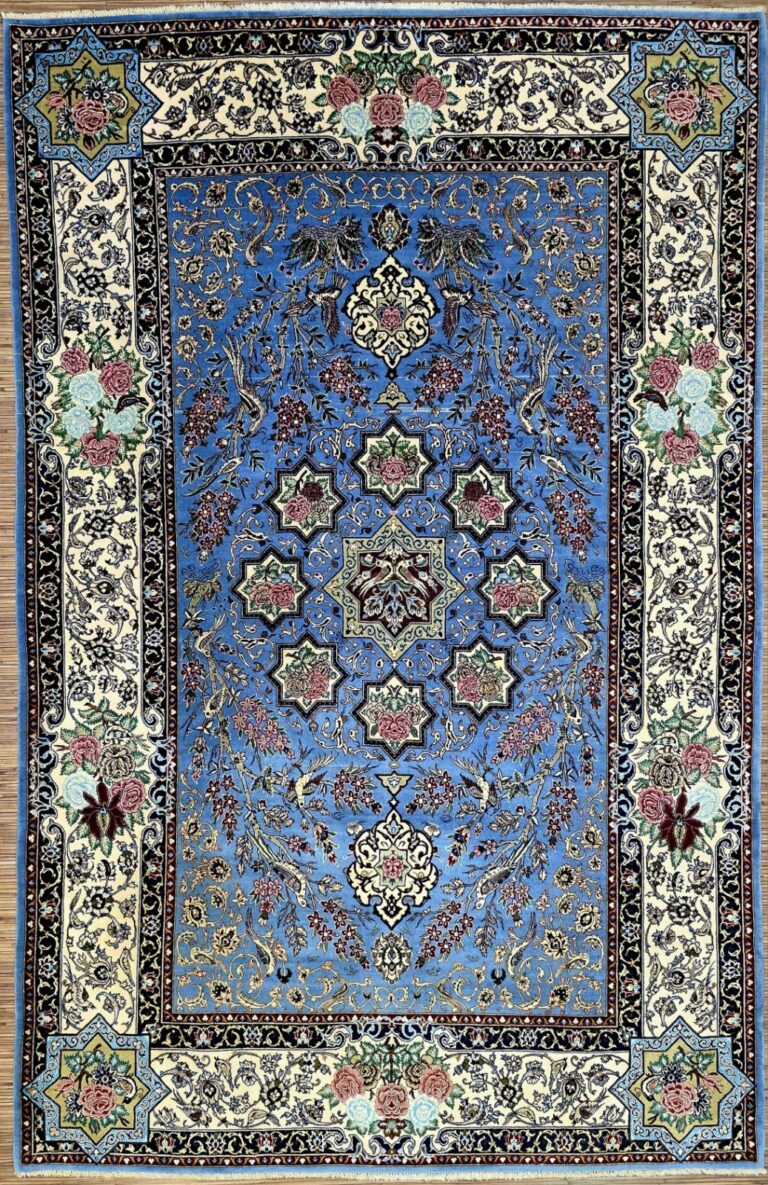
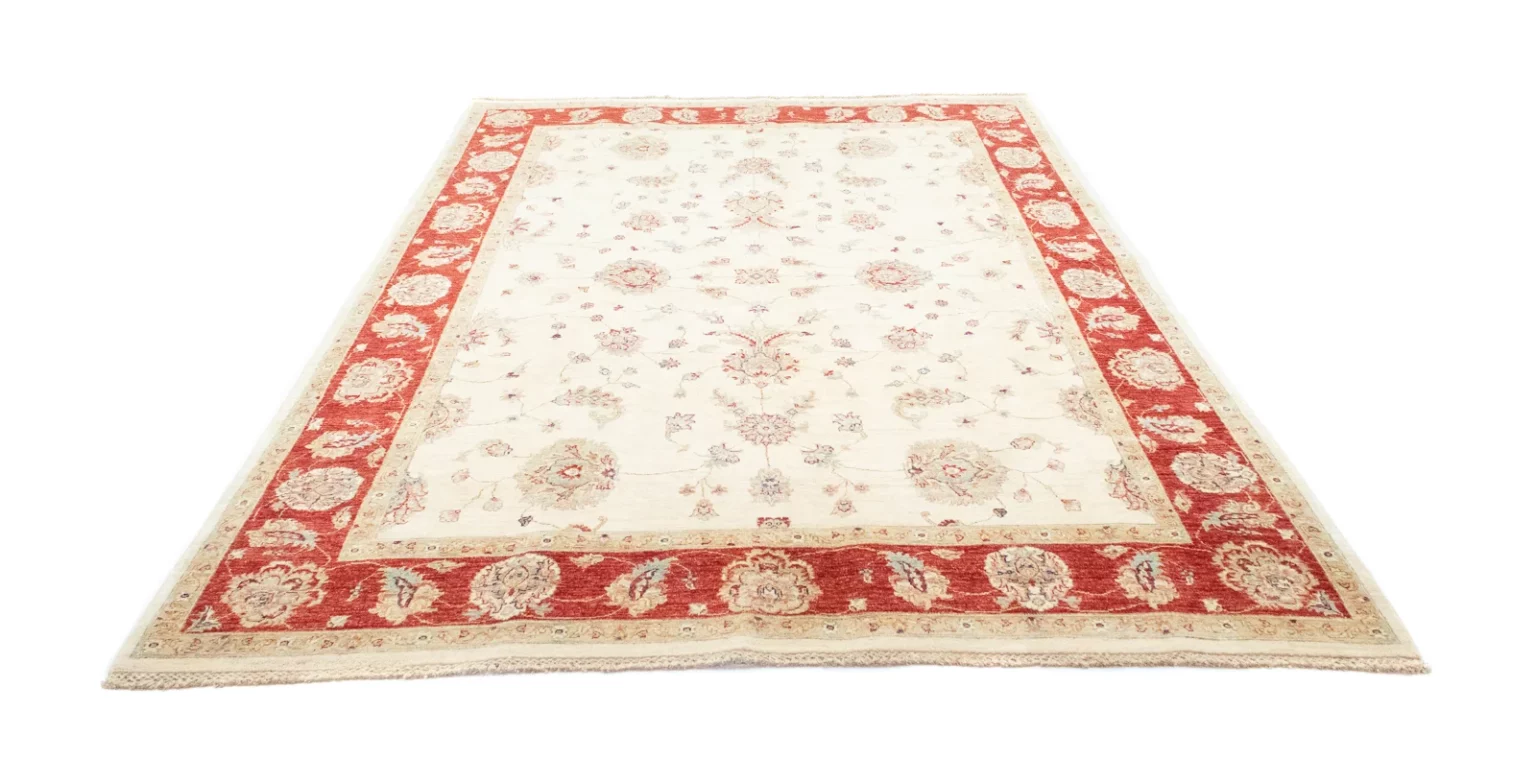
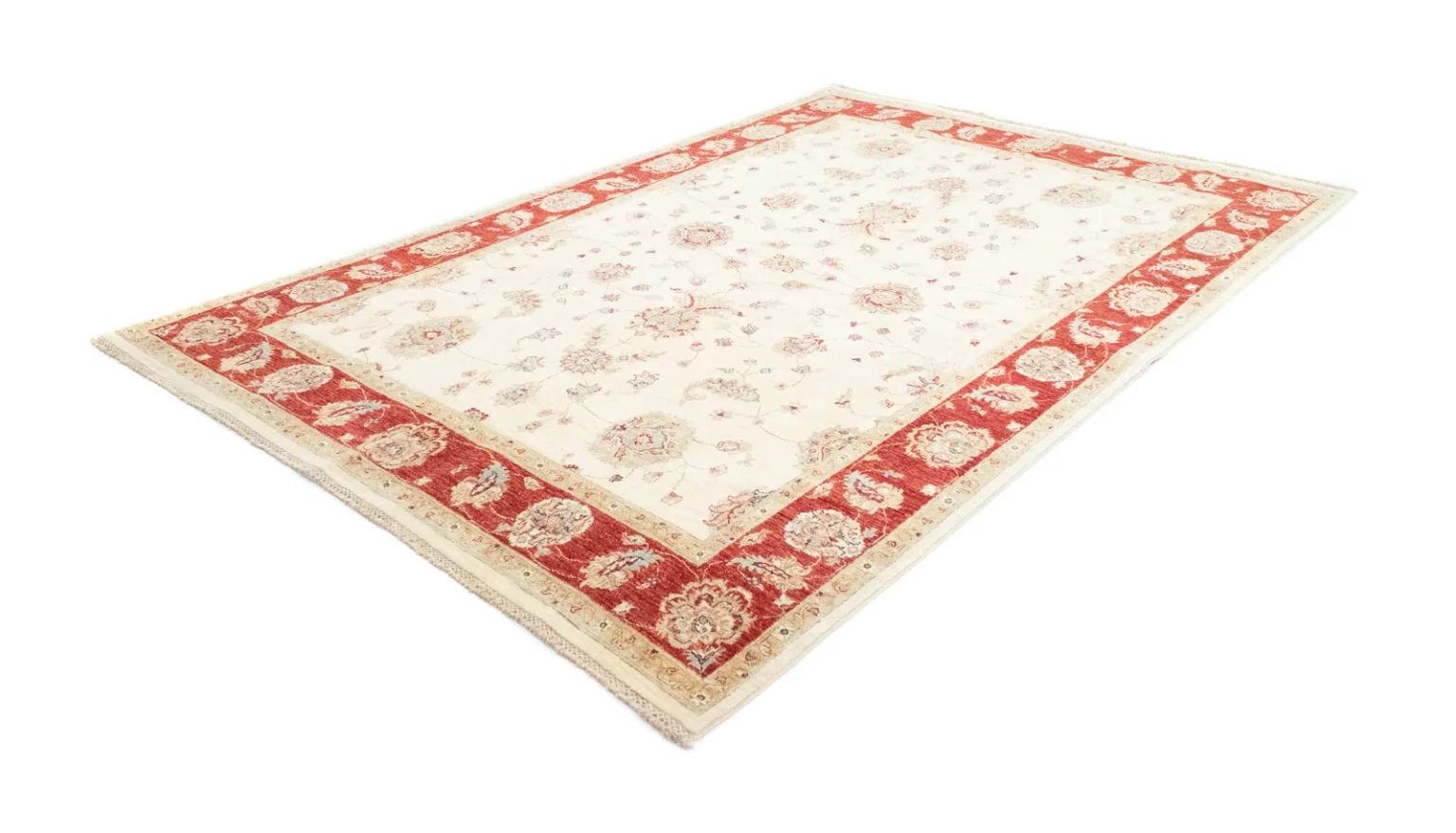
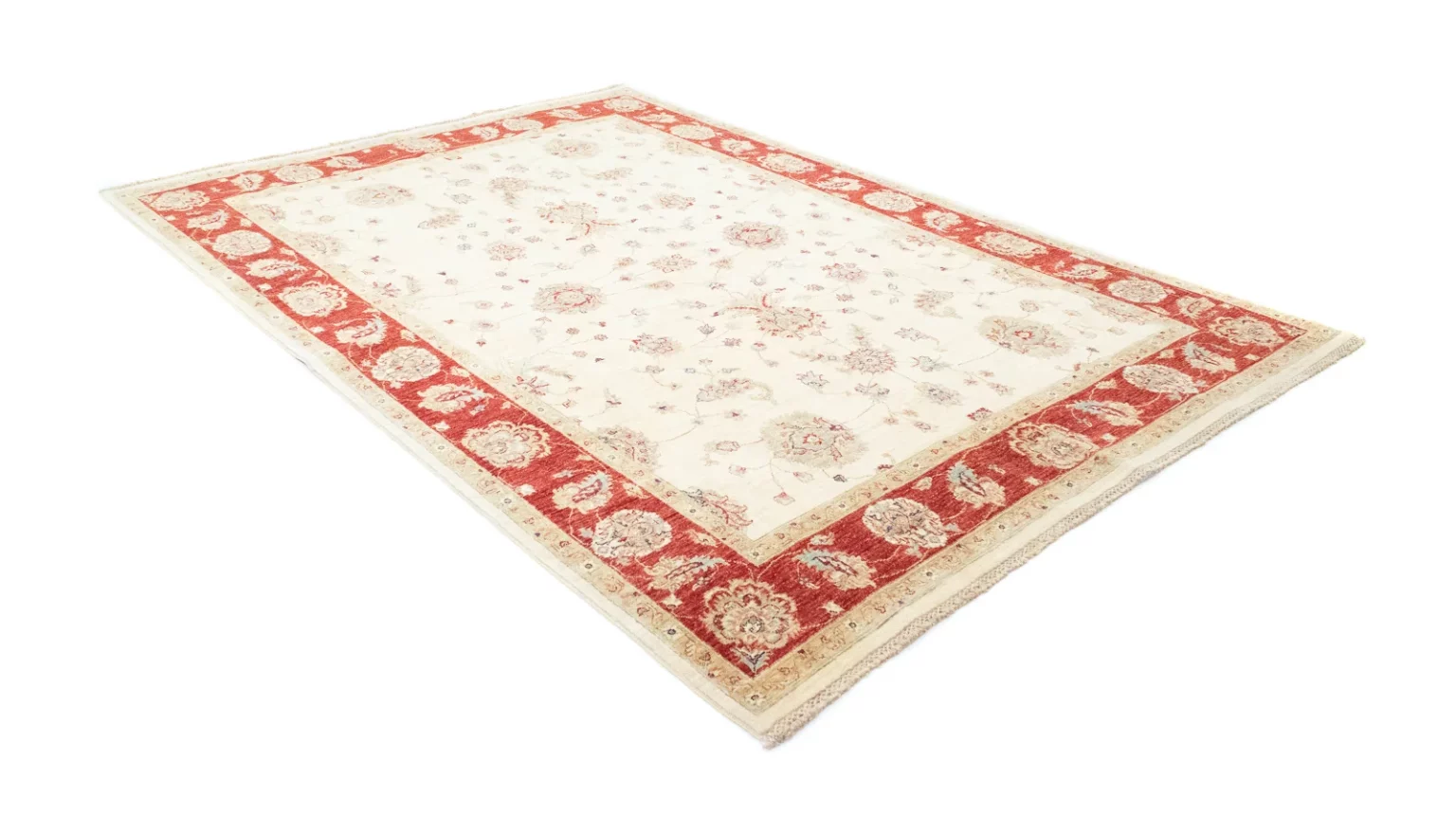
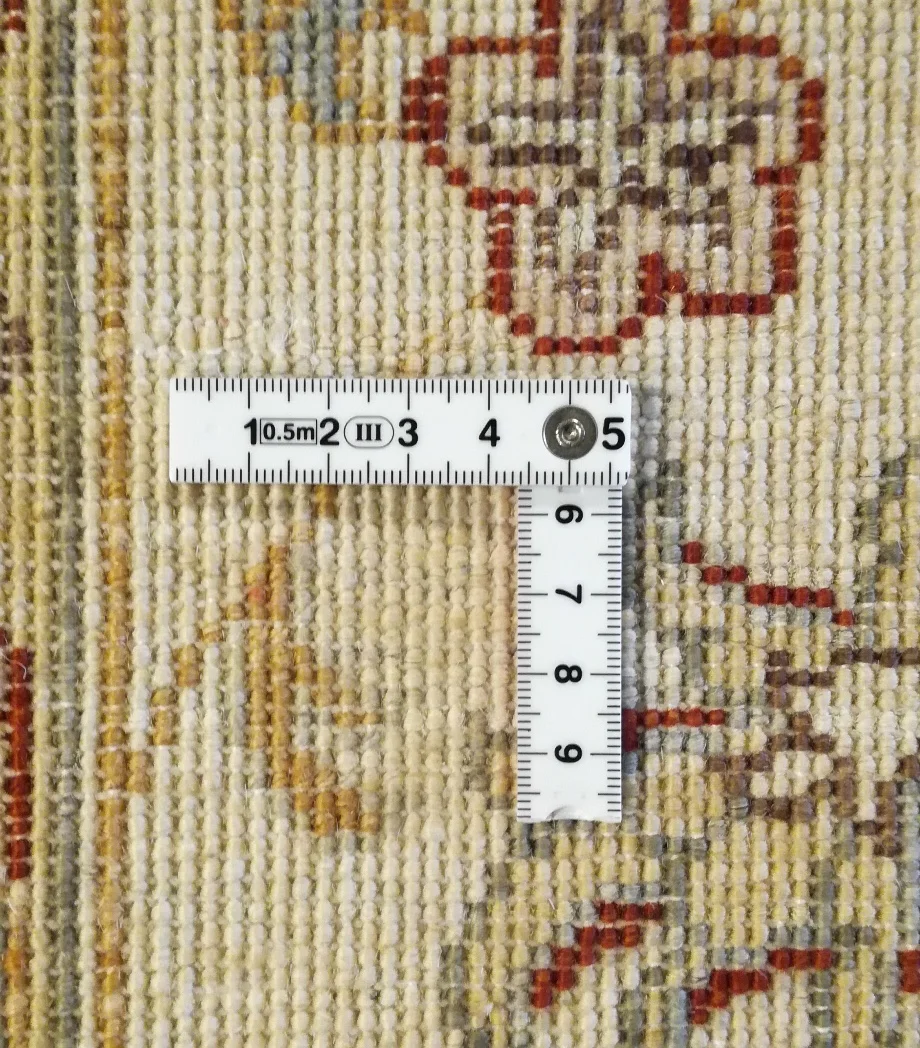
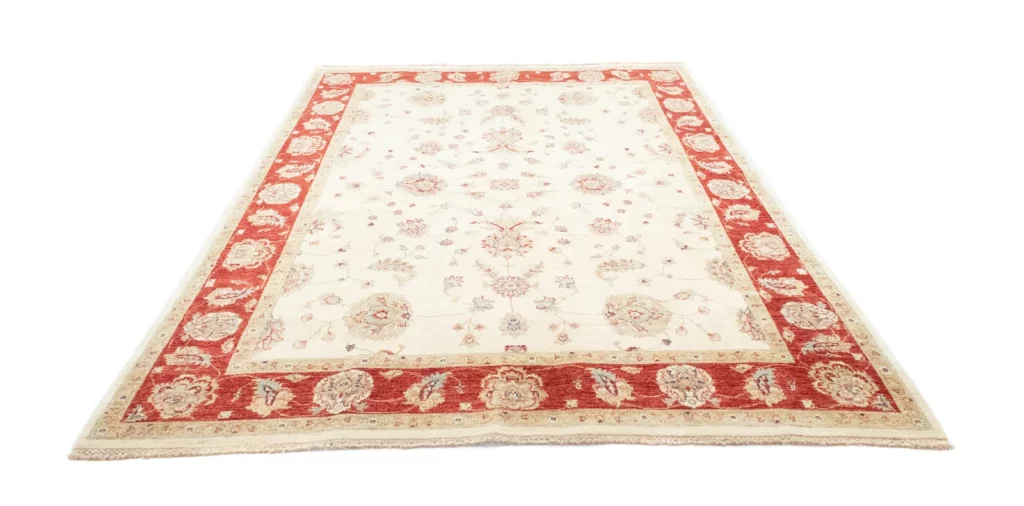
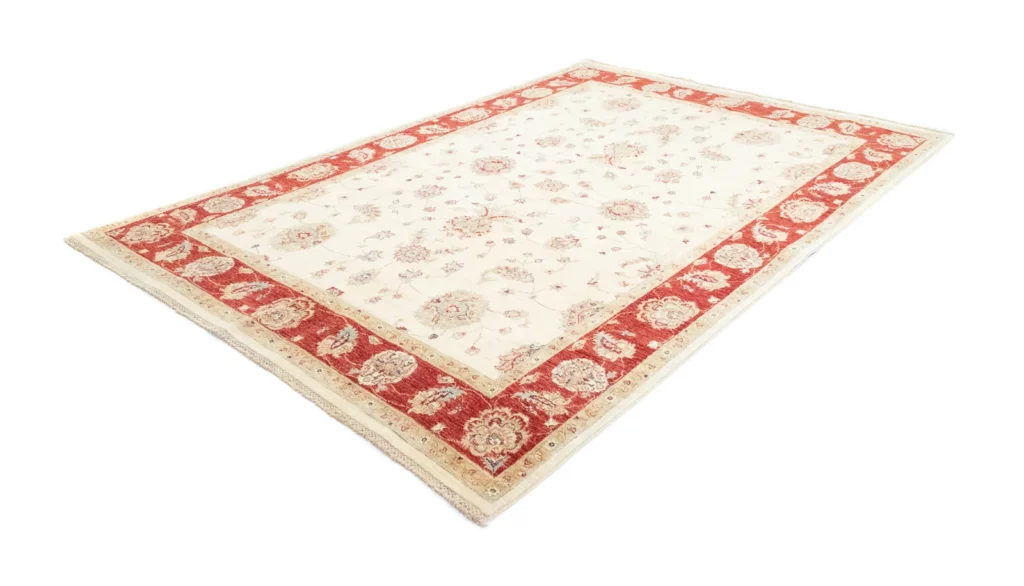
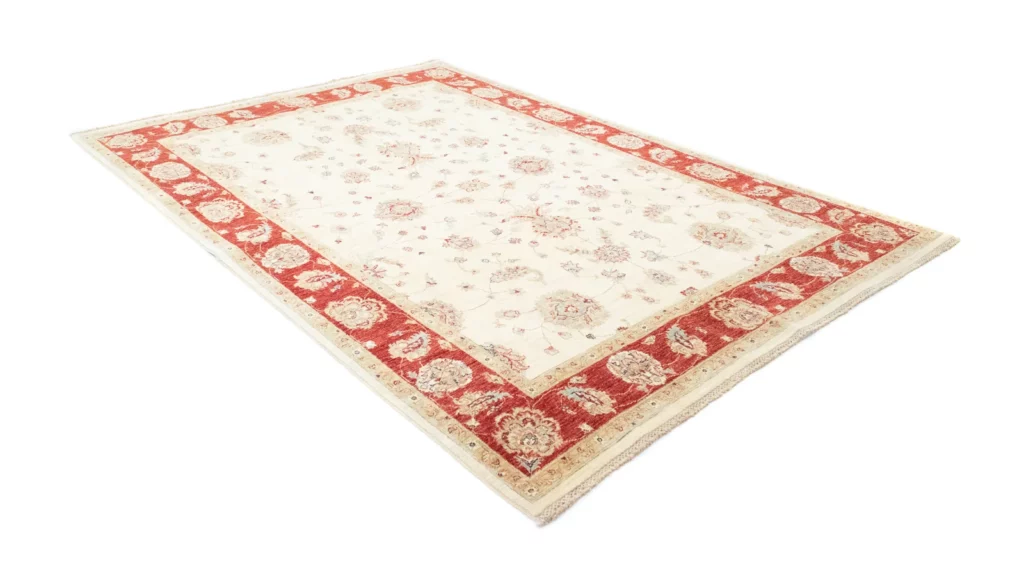
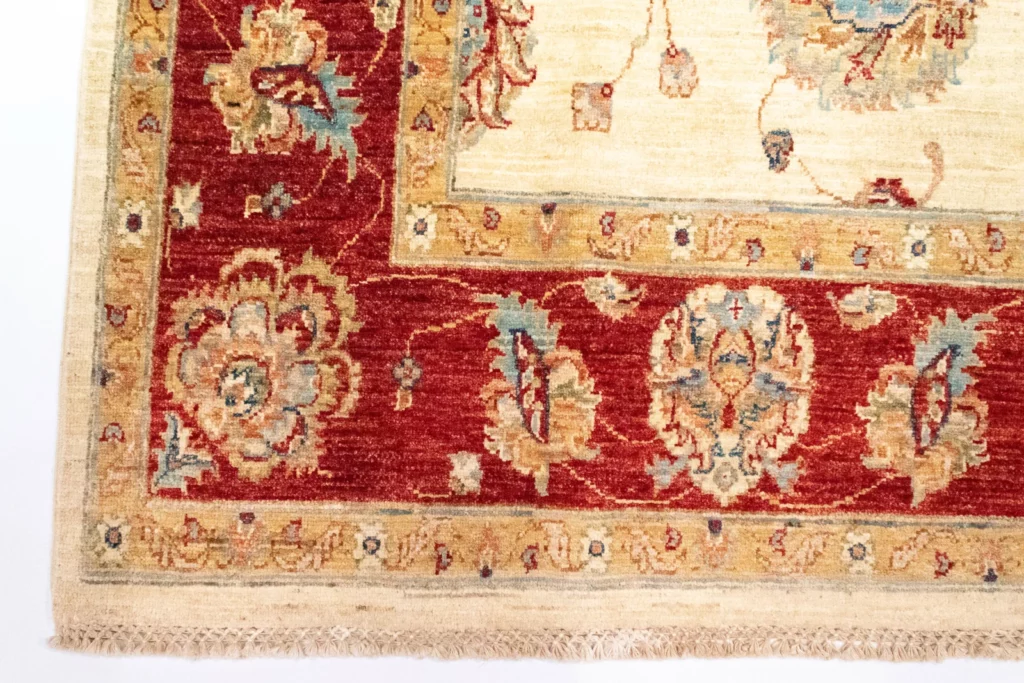
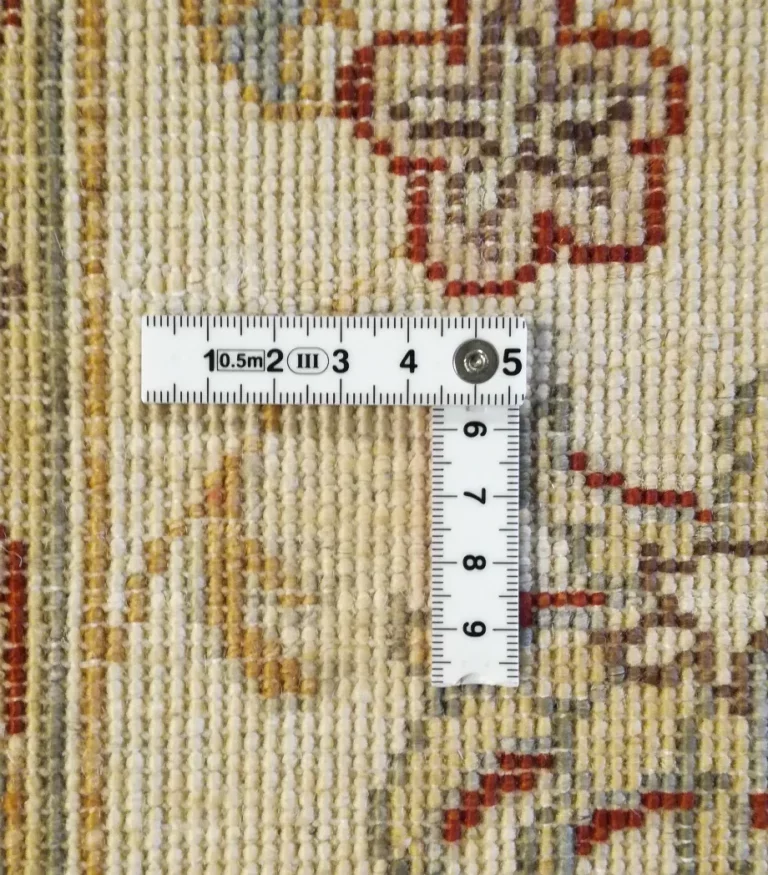
This Farahan Oriental rug is hand-knotted and has a pile made of high-quality wool. In a hand-knotted rug, individual knots are worked into the prepared structure one row at a time. The resulting surface is shaped by the fineness of the knotting and by the execution of each knot. This rug has a knot density of approximately 200,000 knots per square metre. That density allows a relatively detailed textile structure and supports the rendering of fine elements within a pattern.
Hand-knotting is a gradual process. The knots are inserted in rows and compacted as the work progresses. With each completed row, the textile field becomes more stable and the design takes shape. Wool is suited to this method because it is a natural fibre with a substantial handle and a distinct surface texture. Its feel remains part of the rug’s character after knotting and forms the principal material quality of this piece.
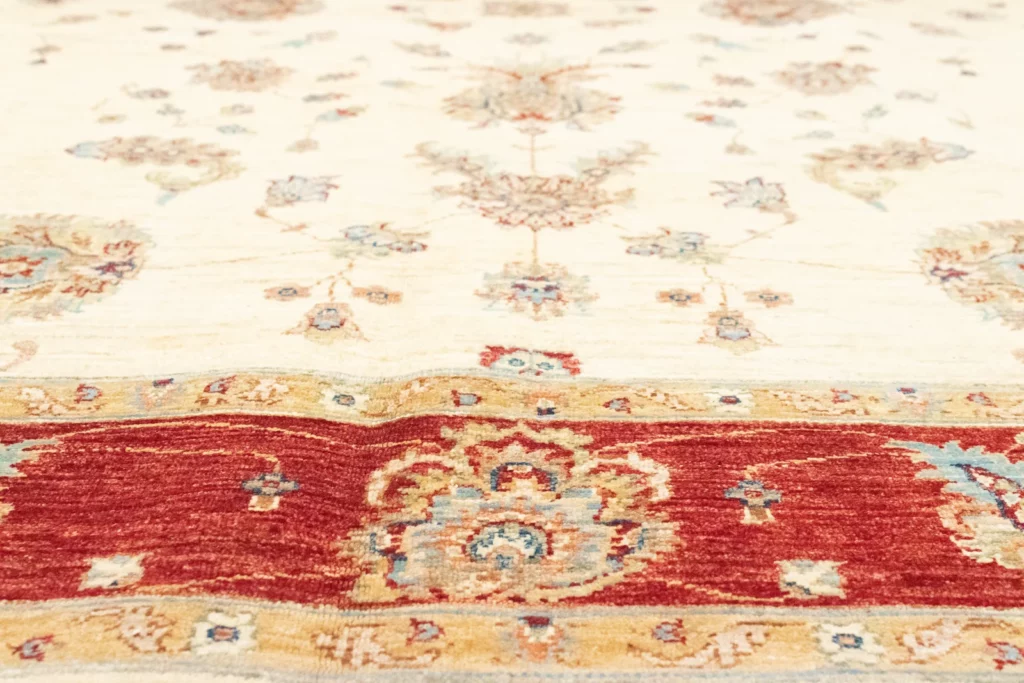
The rug has also undergone a special stone wash. This treatment is used to create a faded colour effect. The description also associates the process with intensifying the colours and making fine pattern details more pronounced. Stone washing therefore changes the visual and tactile impression of the surface while leaving the hand-knotted foundation intact. Depending on the light and the way the surface is viewed, the pattern and colour transitions can appear with different degrees of definition.
Here, the making of the rug and its later surface treatment belong together. The knotting establishes the structure, while the stone wash gives the finished pile its particular appearance. The condition is described as very good. This condition statement forms part of the description of the individual rug offered here.
Origin and Tradition
The rug is described as a Farahan Oriental rug and its origin is given as Pakistan and Afghanistan. Farahan refers to a Persian-influenced carpet tradition and to a particular design language; the stated origin of this individual rug, however, is Pakistan and Afghanistan. The name Farahan must therefore not be read as proof that this specific rug was made in Iran. The connection lies in the adoption and continuation of classical designs associated with Farahan and other Persian carpet traditions.
In carpet terminology, Farahan is associated with central Iran and with a long-established vocabulary of ordered compositions. Floral elements, structured fields and geometric organisation often work together in this tradition. Designs from such regions have been taken up, adapted and produced in many workshops over time. A rug can consequently carry Farahan as a style or design reference even when its stated production origin lies elsewhere.
Persian carpet making in Iran developed over many centuries. During the Safavid dynasty, carpet weaving reached an important period of development and recognition. Carpets were used not only as practical floor coverings, but also as textile works with a representative and social function. Workshops refined arrangements of floral forms, medallions, scrolling vines and geometric borders. This history continues to influence the vocabulary used for many Oriental rugs today.
When such designs are made in Pakistan or Afghanistan, inherited Persian design ideas meet regional workshop practices. Weavers may retain the established floral and geometric language while adjusting the drawing, colour handling and surface treatment. This creates a relationship between Persian design history and South or Central Asian production. For this piece, the two pieces of information should therefore be kept distinct: Farahan identifies the traditional design reference, while Pakistan and Afghanistan are the stated origin.
Stone washing belongs to a later stage of production rather than to a geographical origin. It is a surface treatment used to alter the appearance of colours and patterns after the rug has been knotted. The process can create softer transitions and a deliberately faded effect, while also giving the surface additional depth and a pleasant sheen. In this rug, that treatment is combined with a dense hand-knotted construction, linking a traditional technique with a deliberate finishing process.
The material description also mentions natural materials associated with the Iranian region, specifically wool and cotton, in the general context of rugs of this type. The pile of this individual rug is identified as high-quality wool. Its origin is stated as Pakistan and Afghanistan. These statements concern different aspects of the description: the general material provenance mentioned in the text and the origin of the finished rug.
The term Oriental rug is appropriate for this piece because its stated origin is outside Iran. Its Persian design reference does not change that classification. This distinction is important in carpet description: a pattern, workshop tradition or regional name can be carried into another country, while the actual origin remains the place where the rug was made. Farahan, Pakistan and Afghanistan thus describe complementary but separate parts of its identity.
Design and Pattern
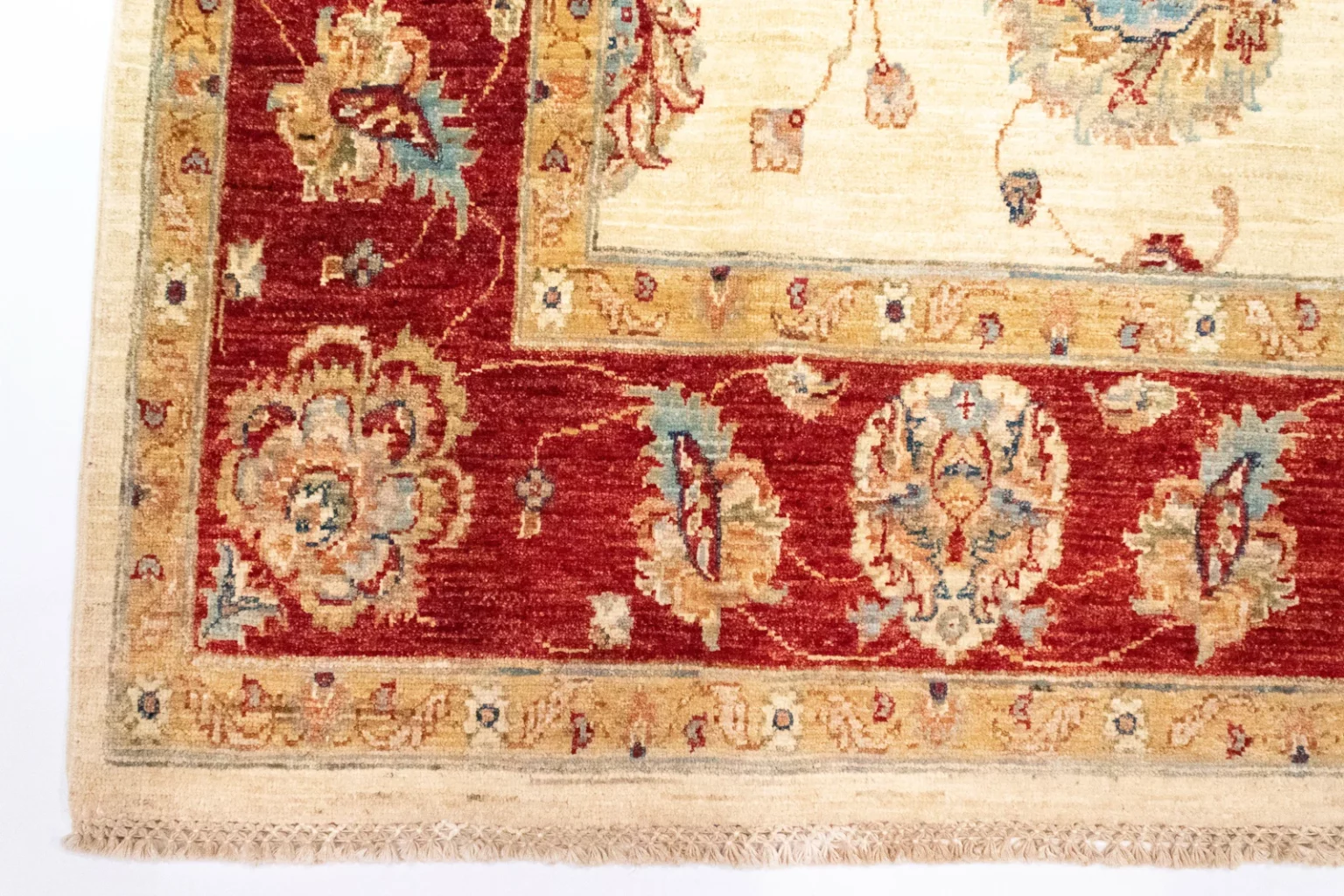
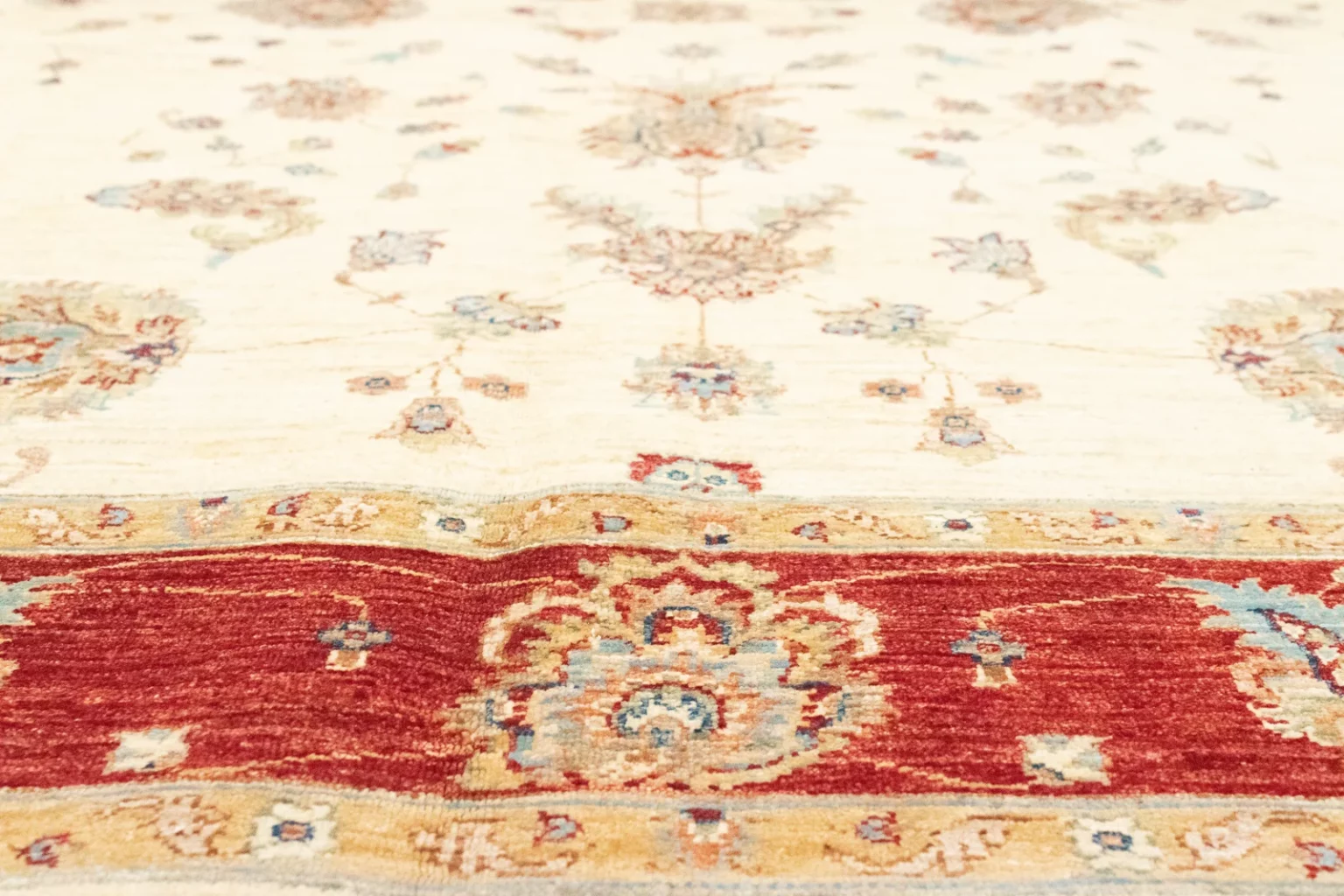
The design is characterised by harmonious colours and aesthetic patterns. Floral and geometric motifs are identified as typical elements of the Farahan tradition. Floral ornaments may include blossoms, leaves, scrolling vines and stylised plant forms. Geometric details bring order to the composition by dividing areas, framing sections or establishing a repeated rhythm of lines and angles.
Floral design is one of the central visual languages of Persian-influenced carpets. Forms from nature are transferred into an ornamental system rather than copied as literal botanical studies. Vines can connect separate parts of a field, blossoms can provide accents, and leaves can guide the movement of the design. Repetition creates continuity, while small variations retain the evidence of a handmade execution.
Geometric elements provide a counterpoint to these organic forms. They may function as borders, frames or devices for structuring the central field. Lines, angles and repeated units lead the eye across the surface and create visual balance. When floral and geometric groups are used together, the result is a pattern language that combines natural imagery with a disciplined and clearly organised layout.
The colours are described as harmonious and soft in effect. The stone wash adds a faded appearance and gives the surface more depth. At the same time, the treatment is described as intensifying the colours and highlighting delicate details in the pattern. This can make the drawing appear less abrupt, with transitions that move gradually across the wool pile. The wool texture contributes to that impression because it reflects light with a naturally varied surface.
Persian carpet patterns often carry a broader cultural and symbolic dimension. Floral imagery may be associated with nature, renewal and order, while geometric repetition can suggest balance and structure. These are general aspects of the tradition and should not be treated as an individual message encoded in this particular rug. Its identifiable design features are the floral and geometric vocabulary, the harmonious colour effect and the surface character created by the stone wash.
A high knot density can support the detailed presentation of such a design. Closely placed knots allow contours, small ornaments and transitions to be rendered with greater definition. Knot count alone, however, does not determine the complete visual result. The drawing, colour arrangement, wool surface and finishing treatment all contribute. In this rug, those elements meet within a Farahan-influenced composition made in Pakistan and Afghanistan.
The design therefore reflects the movement of Persian carpet ideas across regional boundaries. Its stated origin remains Pakistan and Afghanistan, while the Farahan name identifies the traditional design connection. Floral and geometric forms provide the visual vocabulary; the hand-knotted wool pile, the dense construction and the stone wash determine how that vocabulary is expressed in this one-off rug.
Special Features
The clearly identified special features are the knot density of approximately 200,000 knots per square metre and the special stone wash. The dense knotting supports a finely worked presentation of the motifs. The stone wash produces the described faded colour effect, intensifies the colour impression and brings out fine pattern details. It also gives the surface additional depth and a pleasant sheen.
High-quality wool pile, hand-knotting and stone washing represent three separate aspects of the rug’s construction. Wool determines the tactile quality of the pile, knotting creates the textile structure, and the wash shapes the final surface appearance. The rug is described as being in very good condition. Its identity is therefore defined by its material, technique, finishing treatment and stated condition as well as by its Farahan design reference.
As a hand-knotted Oriental rug, this piece is built knot by knot rather than woven as a flat textile. Farahan points to the design tradition, while Pakistan and Afghanistan are named as its origin. Keeping these details separate gives a precise description of the rug without confusing a Persian-influenced pattern name with the place of manufacture.
FAQ
How should I care for my Farahan Oriental rug?
Regular vacuuming can help remove dust and dirt from the pile. If a spill occurs, act promptly and dab the affected area with a dry, clean cloth. Aggressive cleaning products should be avoided because they may affect the wool surface and the colour effect created by the stone wash. If a more extensive cleaning is needed or a mark cannot be removed, a professional carpet cleaner should be used. Gentle, appropriate care helps preserve the textile structure and the special appearance of the treated surface.
Where do the materials for this rug come from?
The description refers to high-quality wool and cotton as natural materials associated with the Iranian region in the general context of this type of rug. The pile of this individual rug is specified as high-quality wool. At the same time, the rug itself is listed as originating from Pakistan and Afghanistan. The material reference and the origin of the finished Oriental rug therefore describe two different aspects of the product information.
Can the rug be used over underfloor heating?
Yes, the rug can be used over underfloor heating. Wool fibres have a naturally insulating quality and can transmit the warmth in a comfortable way. The temperature should not be set too high, however, so that the quality of the rug is maintained. A moderate setting supports careful use of the wool pile and takes the special stone-washed finish into account.
To provide the best experiences, we use technologies like cookies to store and/or access device information. Consenting to these technologies will allow us to process data such as browsing behavior or unique IDs on this site. Not consenting or withdrawing consent, may adversely affect certain features and functions.
Functional Always active
The technical storage or access is strictly necessary for the legitimate purpose of enabling the use of a specific service explicitly requested by the subscriber or user, or for the sole purpose of carrying out the transmission of a communication over an electronic communications network.
Preferences
The technical storage or access is necessary for the legitimate purpose of storing preferences that are not requested by the subscriber or user.
Statistics
The technical storage or access that is used exclusively for statistical purposes.The technical storage or access that is used exclusively for anonymous statistical purposes. Without a subpoena, voluntary compliance on the part of your Internet Service Provider, or additional records from a third party, information stored or retrieved for this purpose alone cannot usually be used to identify you.
Marketing
The technical storage or access is required to create user profiles to send advertising, or to track the user on a website or across several websites for similar marketing purposes.

 SECURE PAYMENT
 SHIPPING PARTNERS