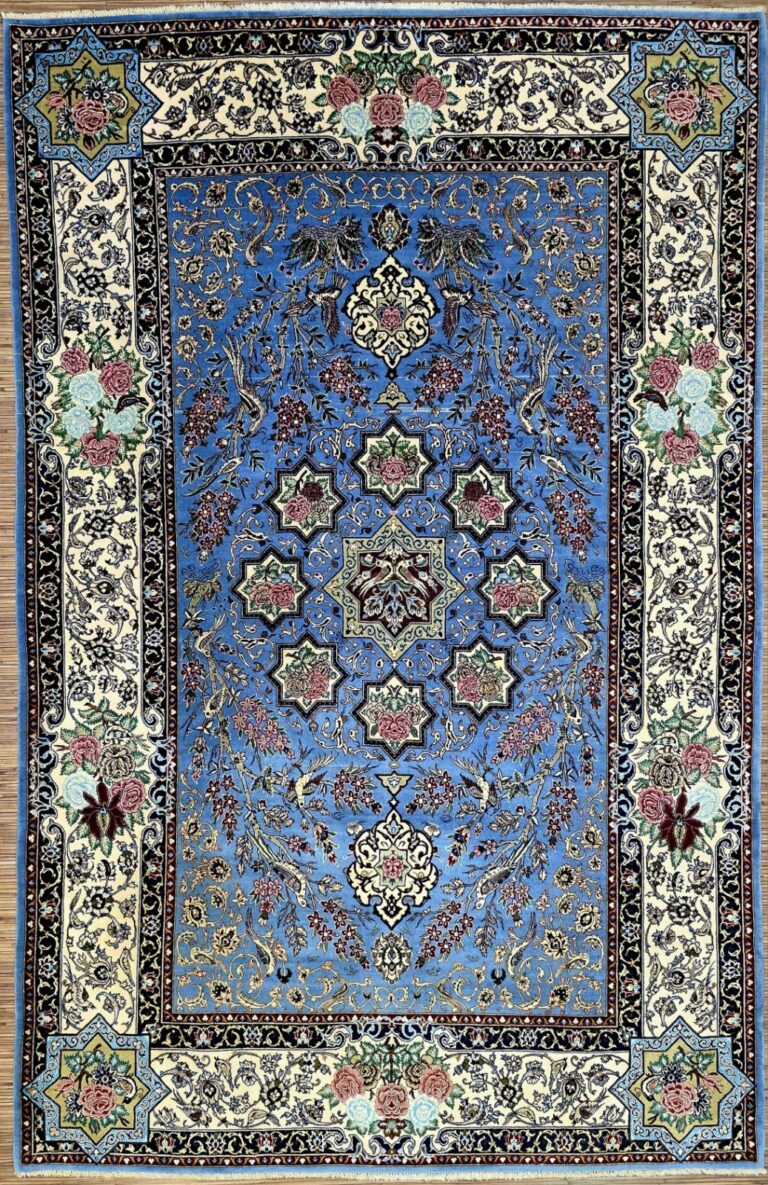
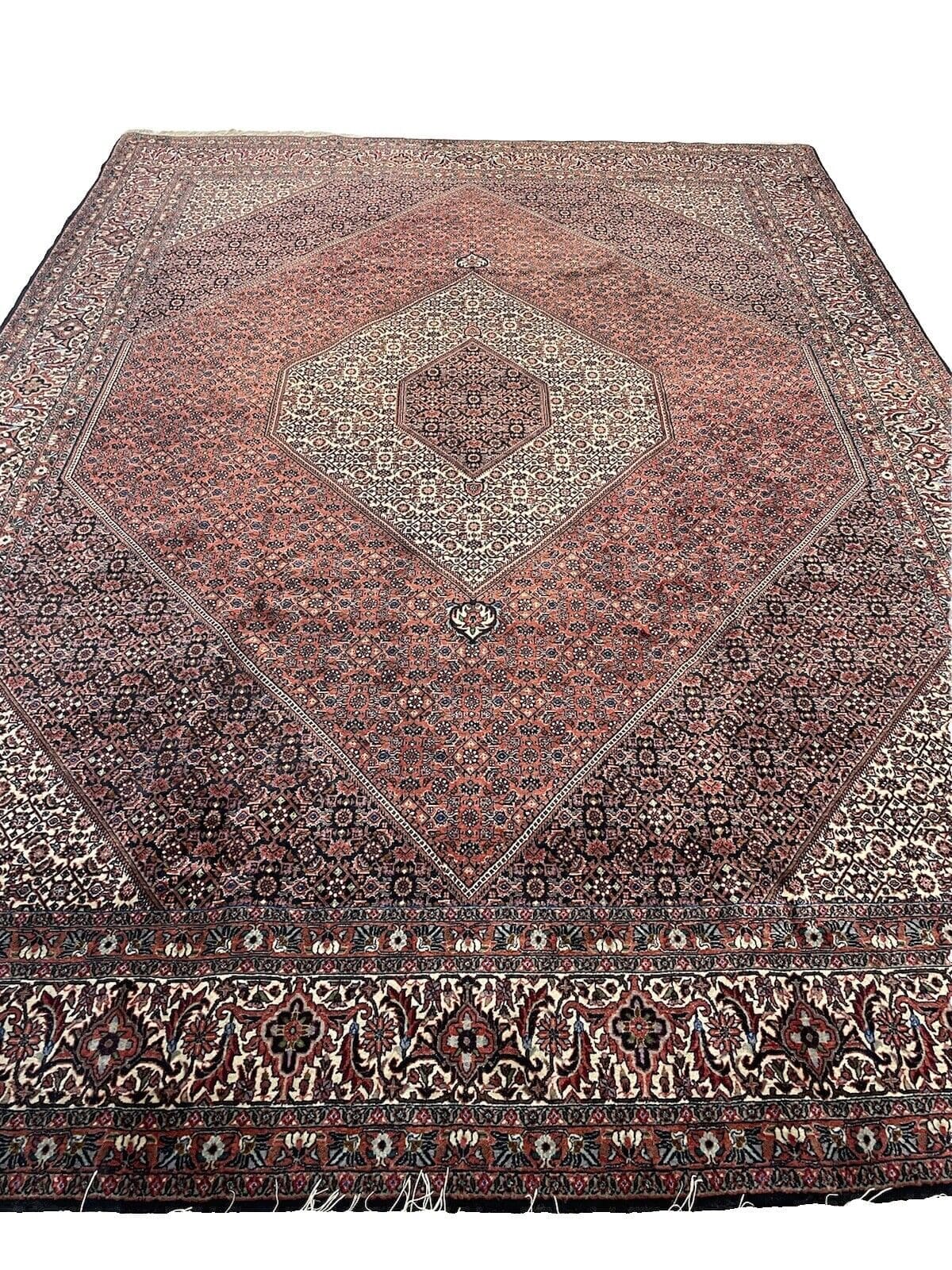
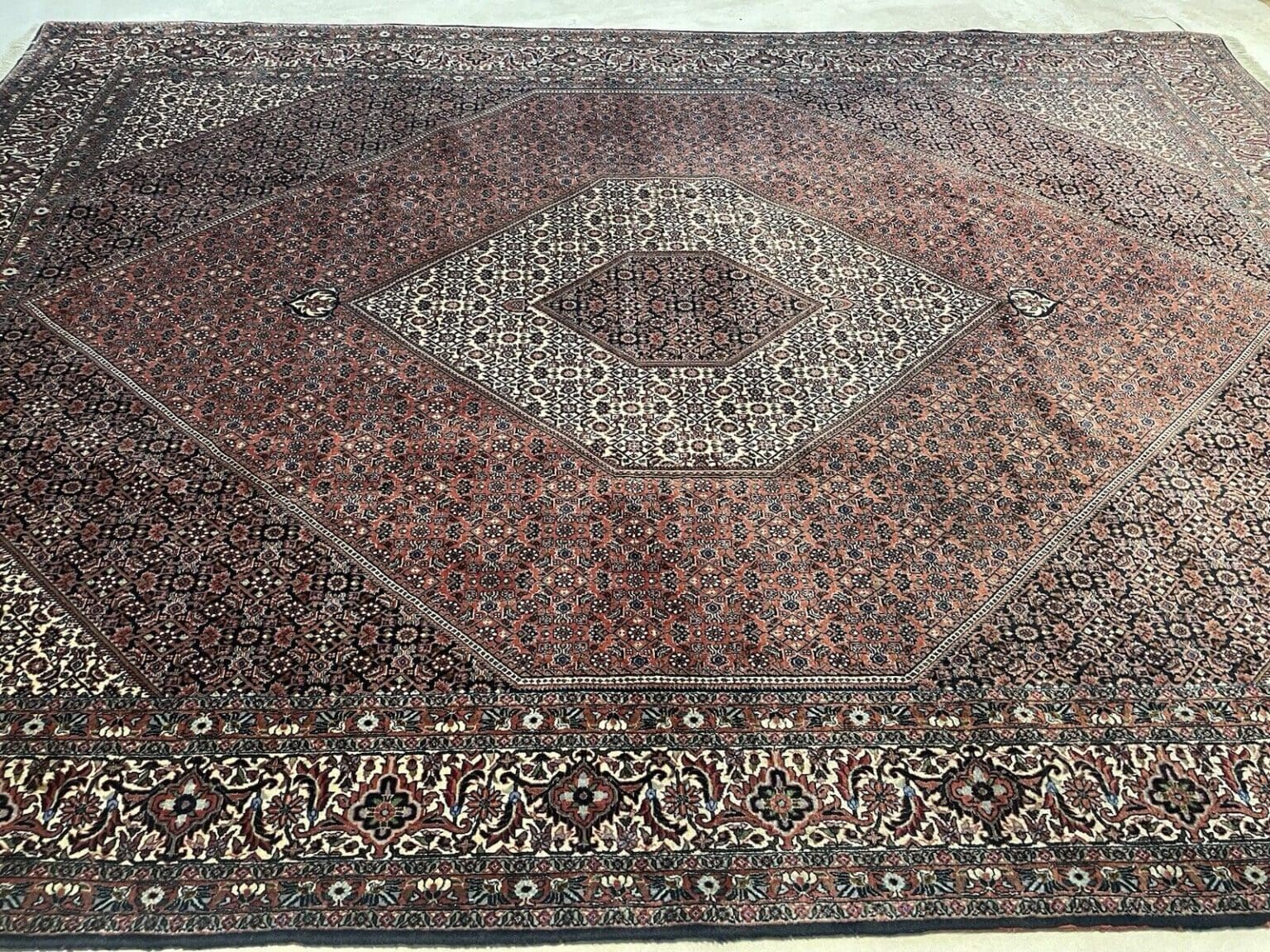
This Oriental rug is hand-knotted and made from 100% wool. In hand-knotting, individual knots are built into the foundation row by row, so the design becomes part of the textile structure rather than being printed onto its surface. The product description identifies the knot density as very high. That dense construction supports the fine rendering of the Herati pattern and is one of the defining features given for this individual rug.
The pile height is 12 mm. Wool has long been used in Oriental rug making because it offers a resilient pile and a comfortable tactile quality. It can be worked in different densities and gives the surface a distinct, softly textured character. For this rug, wool is the only stated material. No information is provided about a special warp, silk content, mixed fibres or a particular foundation structure, so those details are not added.
Hand-knotting is a gradual process in which the design is assembled through successive rows of knots. A very high knot density makes it possible to render smaller motifs and more closely spaced transitions with greater definition than a coarse construction. This is general technical background about the craft. The product information does not specify the knot count per area, the exact knot type, the tools used or the workshop process, and none of those details are attributed to this piece.
The rug is described as new with a tag. This condition statement accompanies the hand-knotted construction, the wool pile, the very high knot density and the 12 mm pile. No wear, repair, restoration or previous use is stated. The condition is therefore presented in the terms supplied for the item: new with tag. The description also calls the rug finely made and of very good quality, without attaching an additional certificate or test result to that assessment.
Origin and Tradition
This rug comes from India. India has a long-established tradition of producing hand-knotted rugs and is home to workshops that work in a wide range of ornamental languages. Indian makers produce designs rooted in local practice as well as patterns associated with Persian and broader Oriental rug art. The origin India identifies where this particular rug was made. The Bidjar wording in the title and the description of its style as traditionally Persian or Oriental do not change that origin.
Persian rug design has influenced weaving traditions well beyond the borders of Iran. Its vocabulary is often recognised through balanced layouts, repeated botanical forms, ordered borders and carefully controlled relationships between field and ornament. Indian production can interpret this vocabulary through its own workshop traditions and hand-knotting practices. A rug made in India may therefore have a Persian-inspired or Oriental appearance without being an Iranian Persian rug. For this item, India is the stated country of manufacture.
Bidjar rugs are associated in rug history with a Kurdish weaving tradition in Iran. The Bidjar name is often connected with compact patterning, a firm visual structure and designs in which field and borders are clearly organised. These characteristics have made Bidjar an important reference within the international vocabulary of Oriental rugs. They should not be turned into an un stated provenance for this item. The product information names India as the origin while using Bidjar in the title.
Indian rug making includes many regional workshops and different approaches to established designs. Its history shows how motifs can travel, be taught, and be reinterpreted while remaining recognisable within a wider Persian or Oriental design tradition. Wool is an important rug material in this context because it can form a durable pile and can be shaped into fine or dense surfaces. The very high knot density given for this rug relates to its detailed hand-knotted execution, not to an Iranian place of manufacture.
In the rug trade, names may refer to an origin, a design tradition, a construction style or a visual association. These categories need to remain separate when describing a one-off piece. Here, the origin is India, the title uses Bidjar, the style is described as traditional Persian or Oriental, and the pattern is Herati. Together these terms explain how the rug is presented without claiming that it was woven in Bidjar or elsewhere in Iran.
Design and Pattern
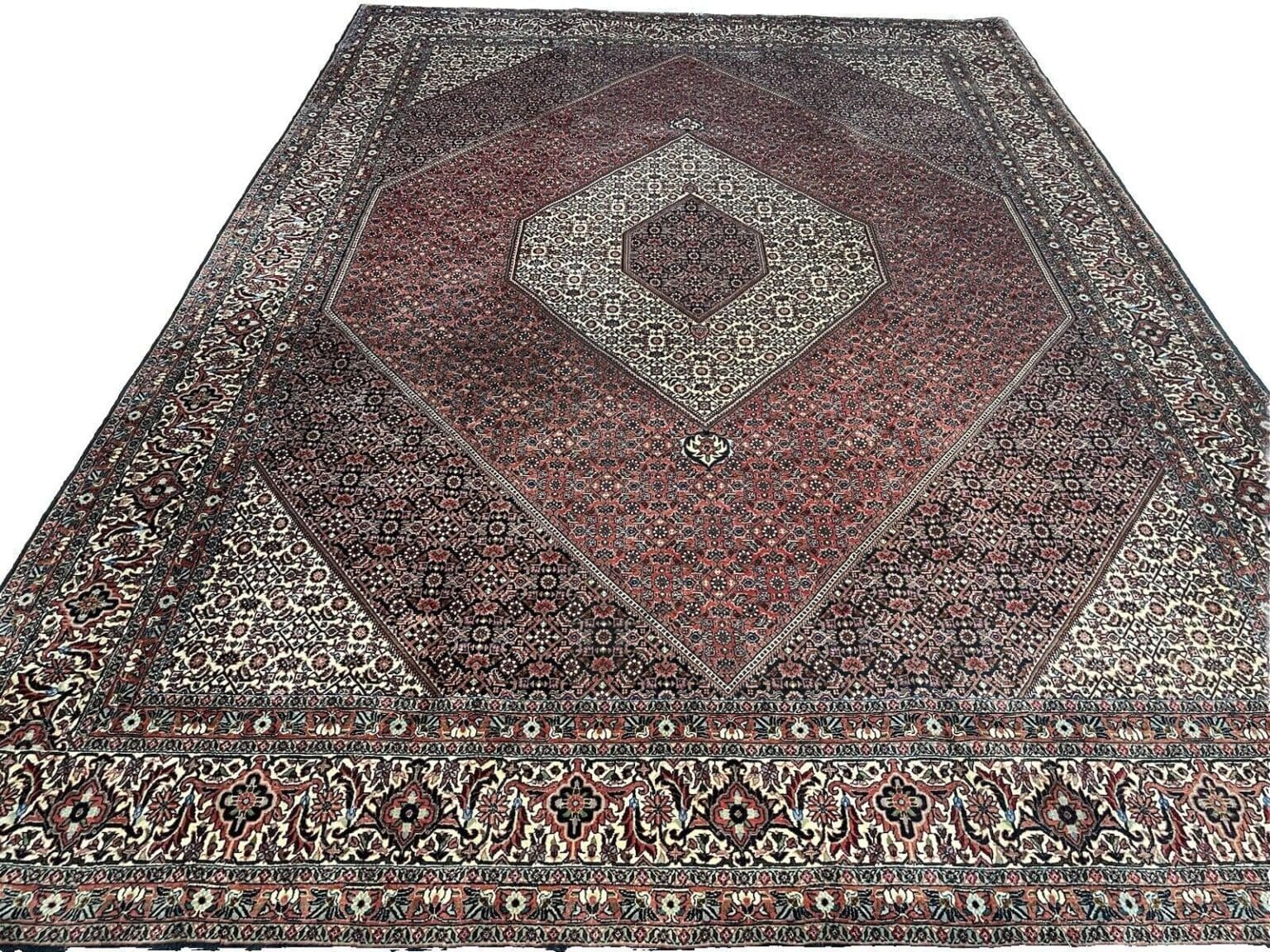
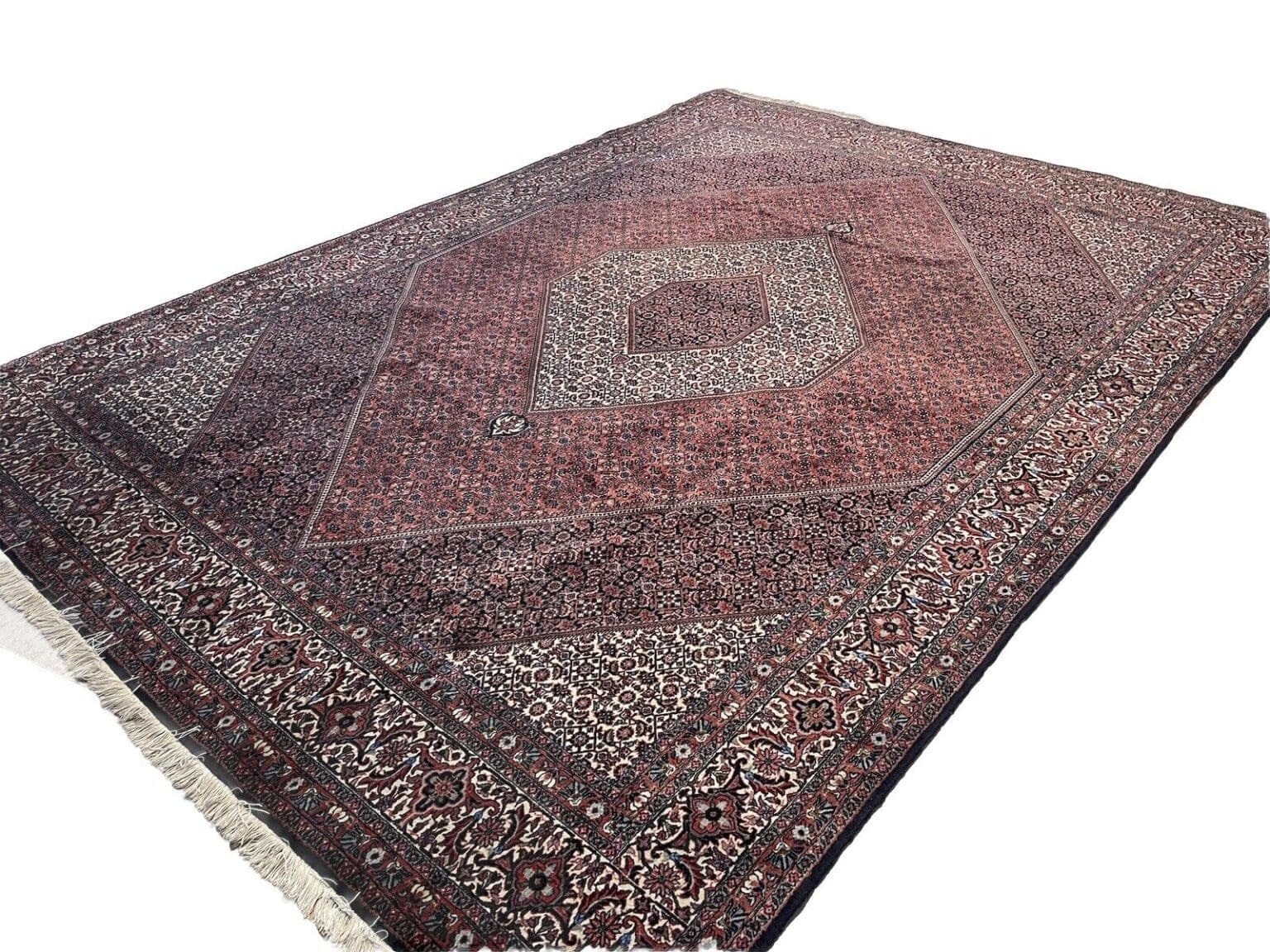
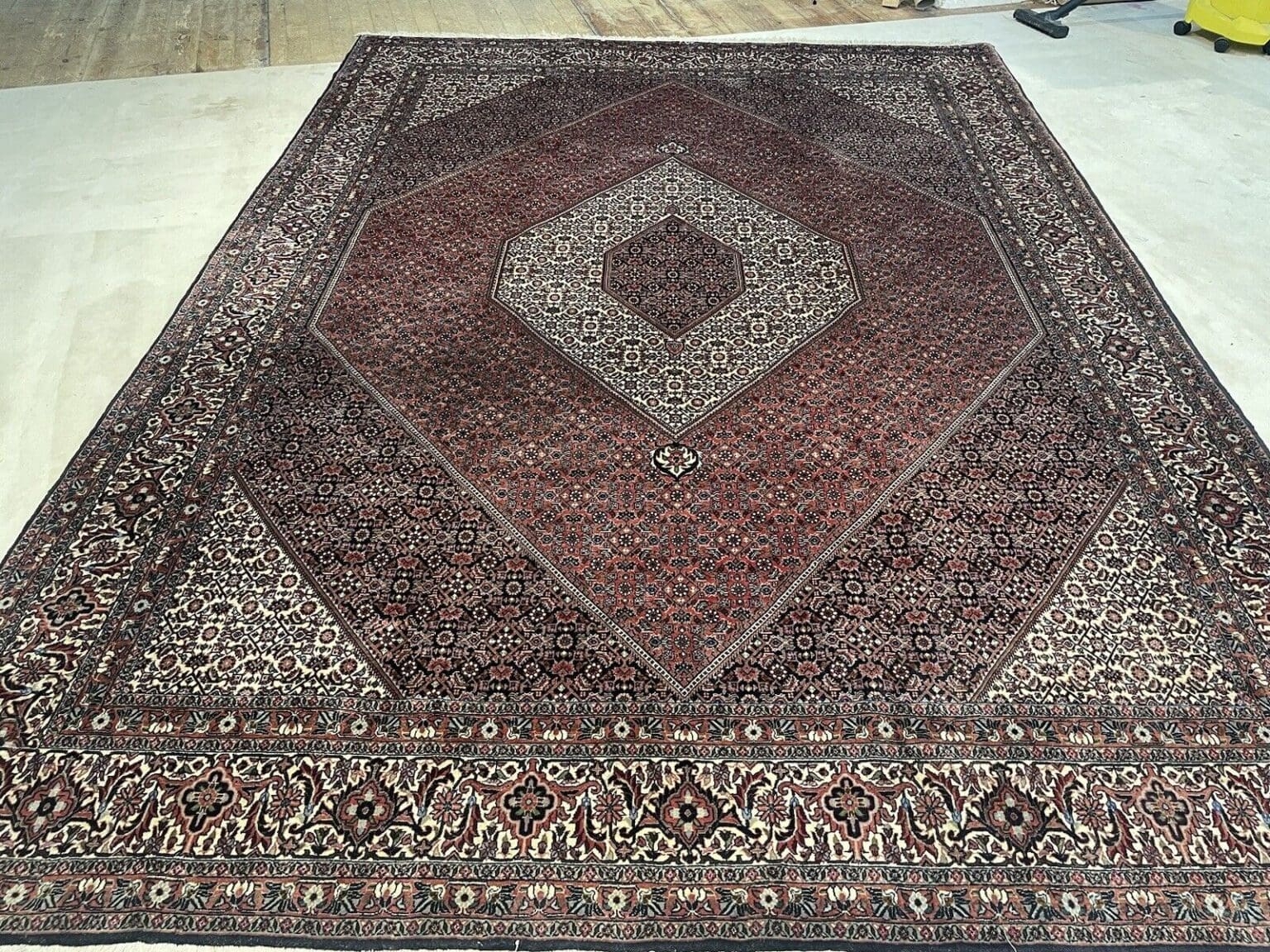
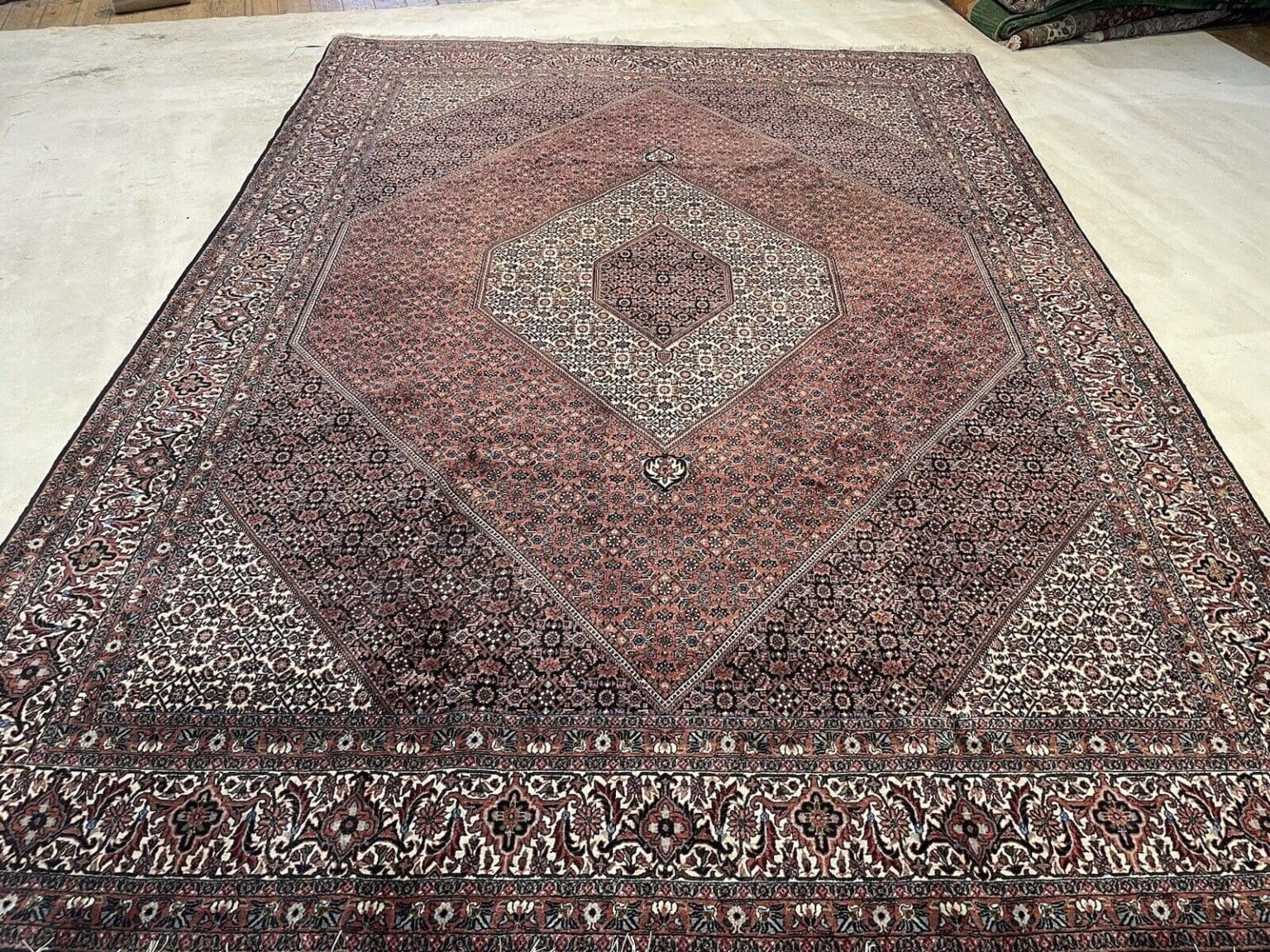
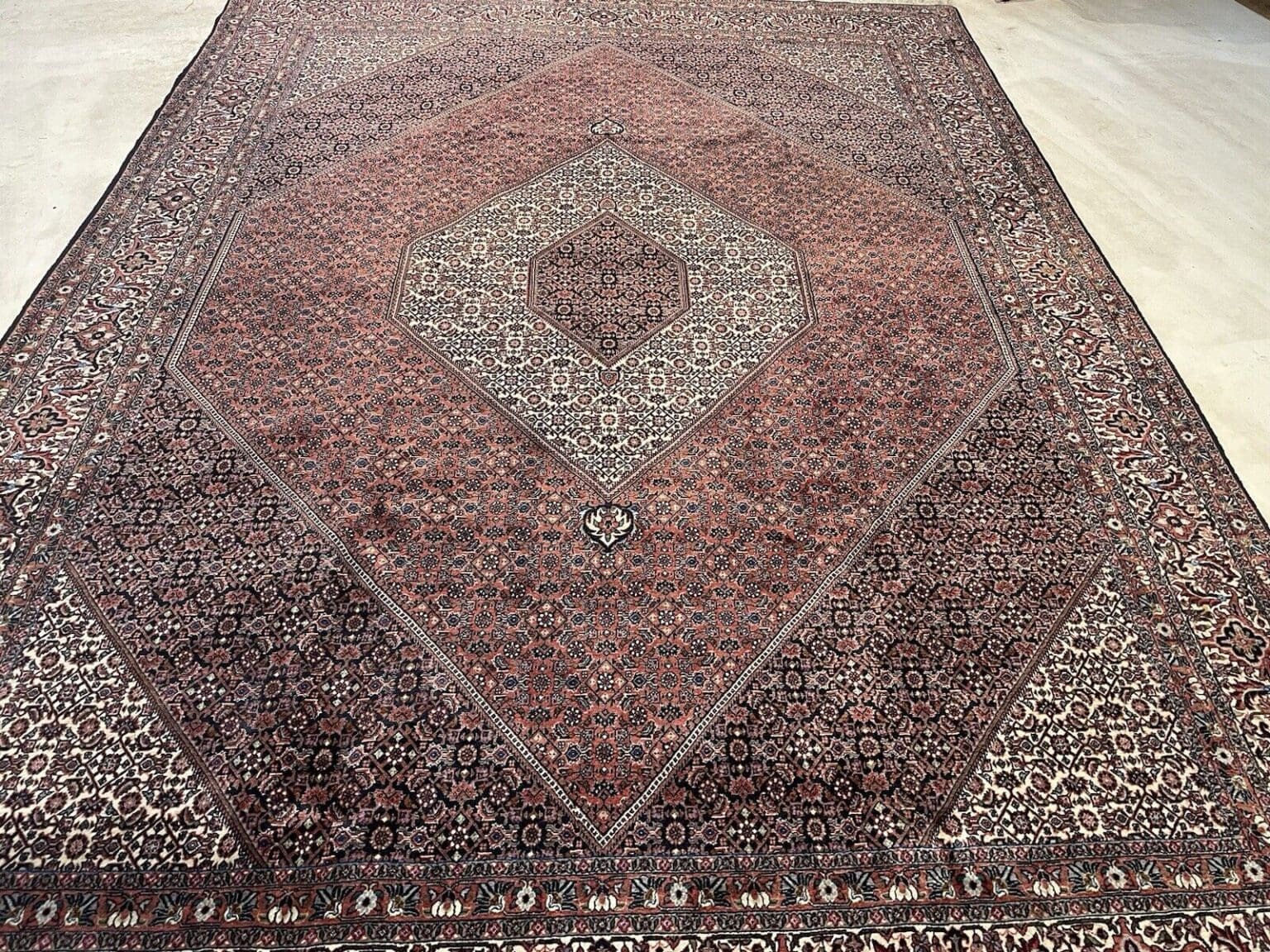
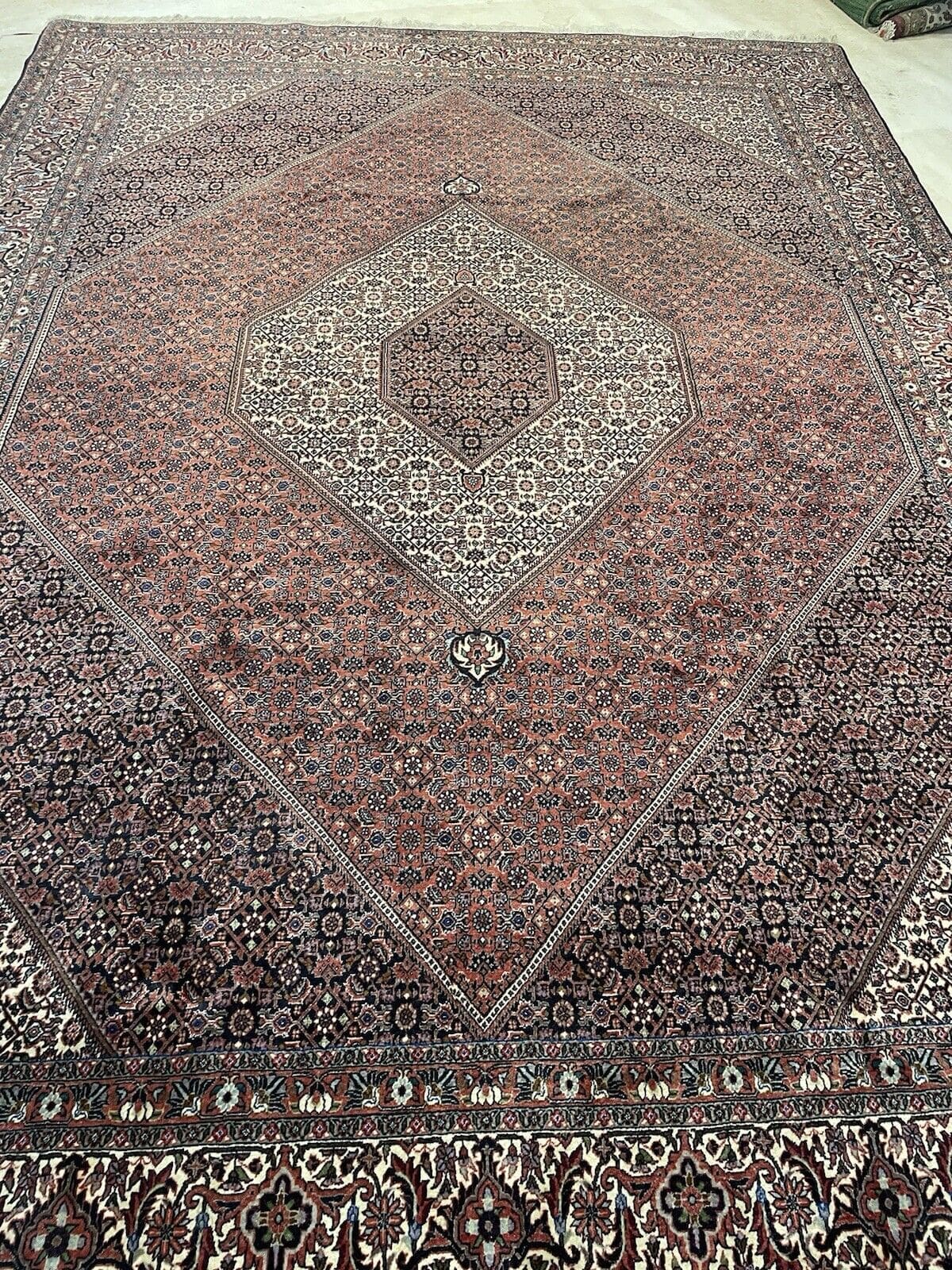
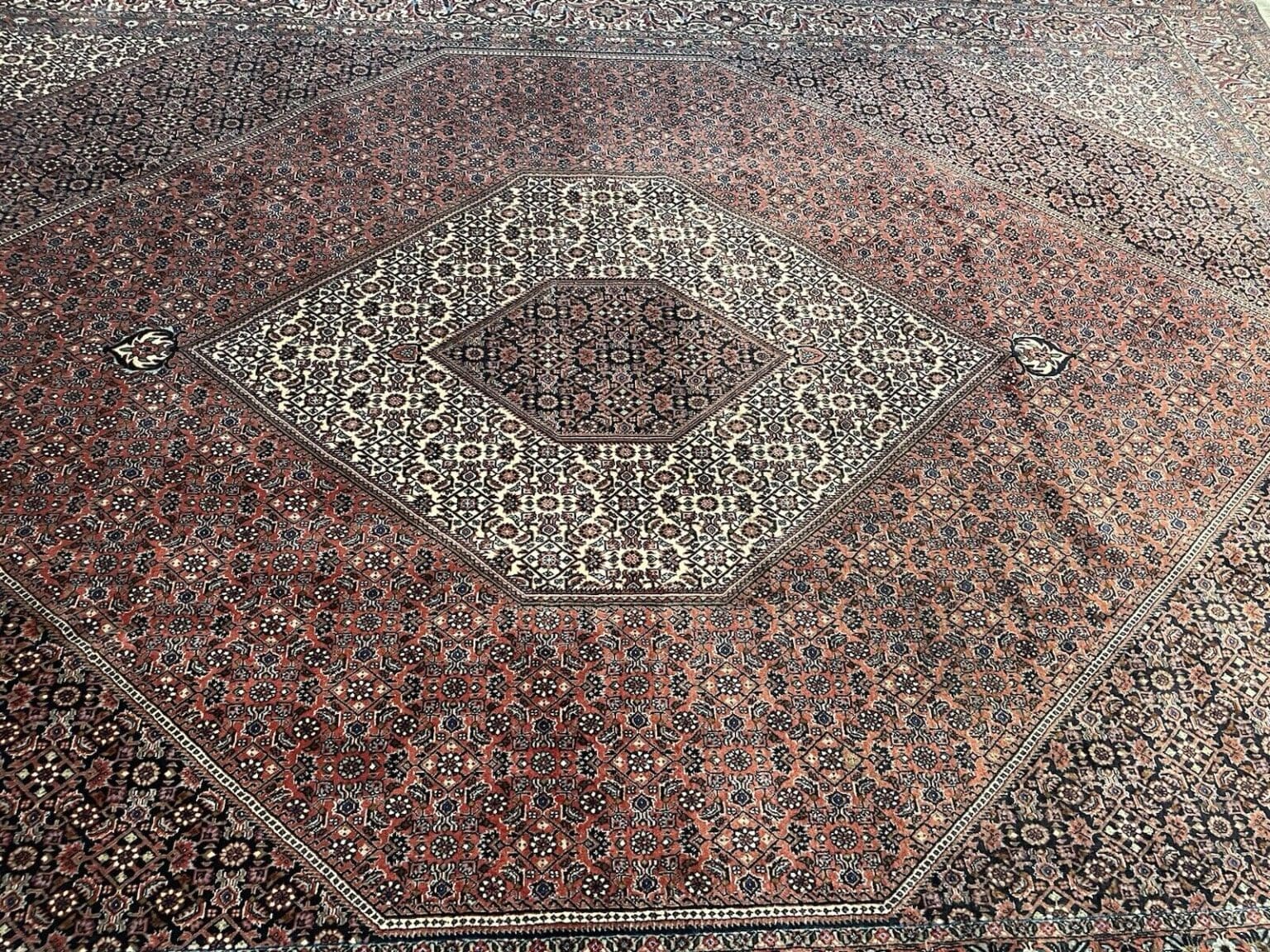
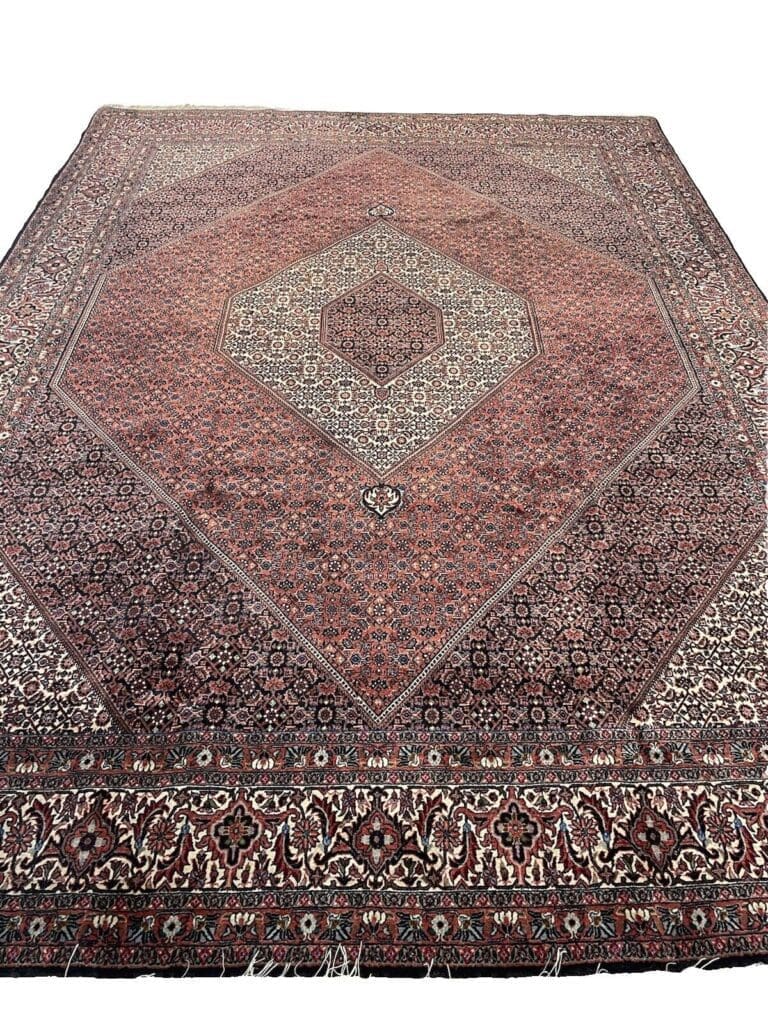
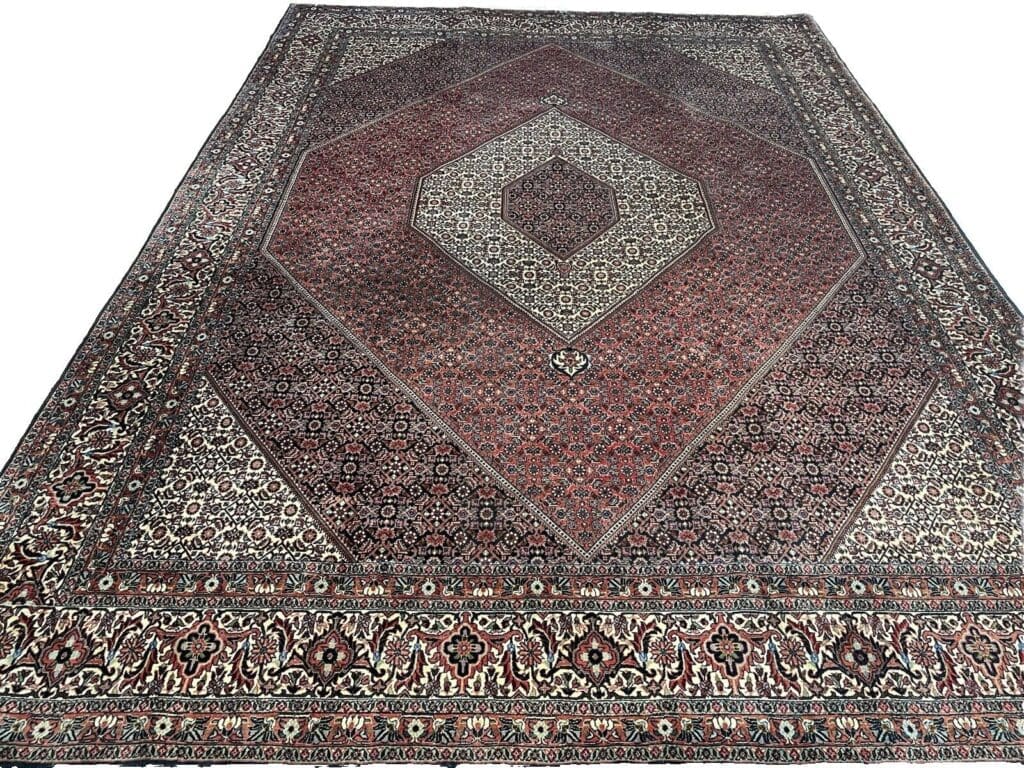
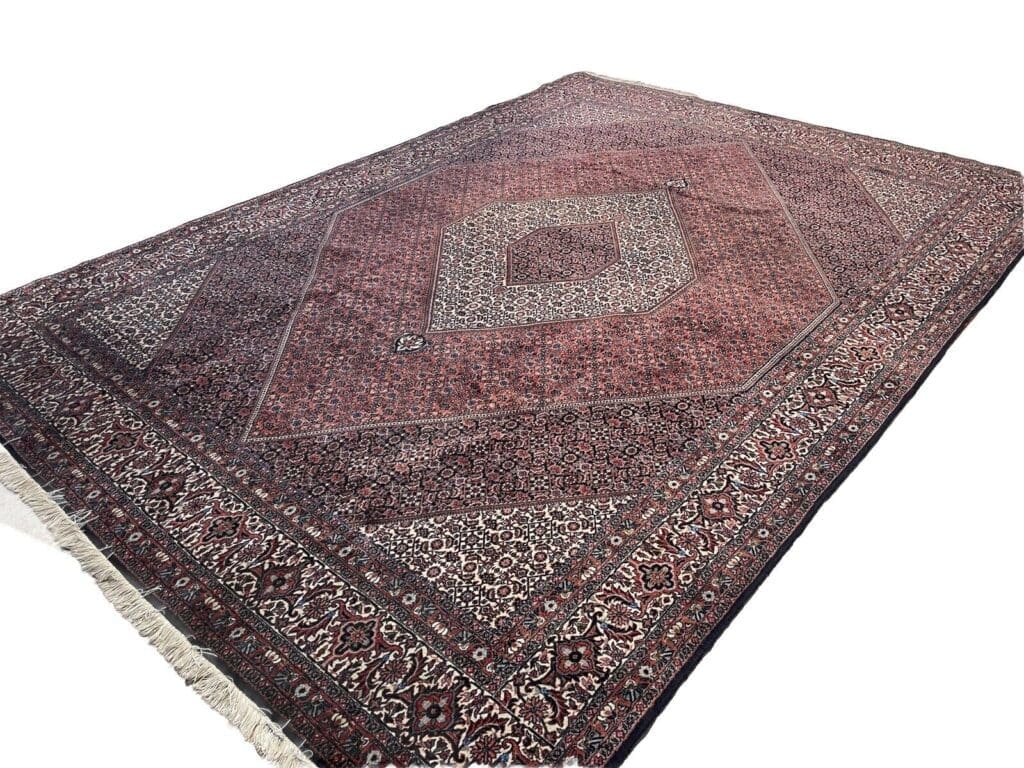
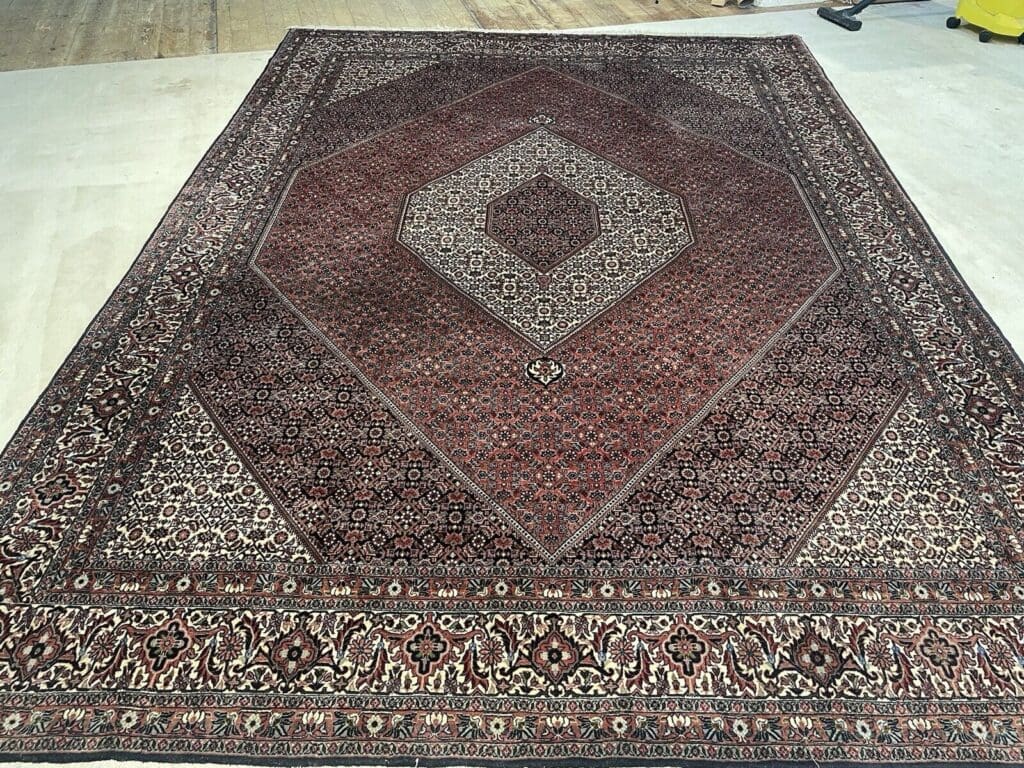
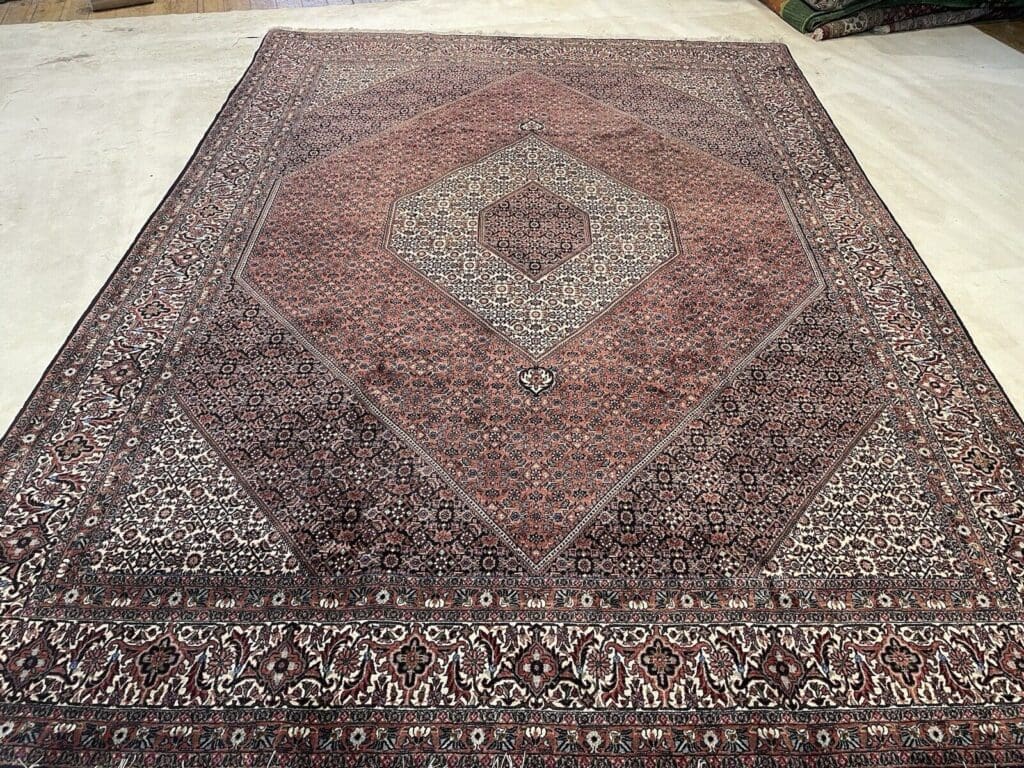
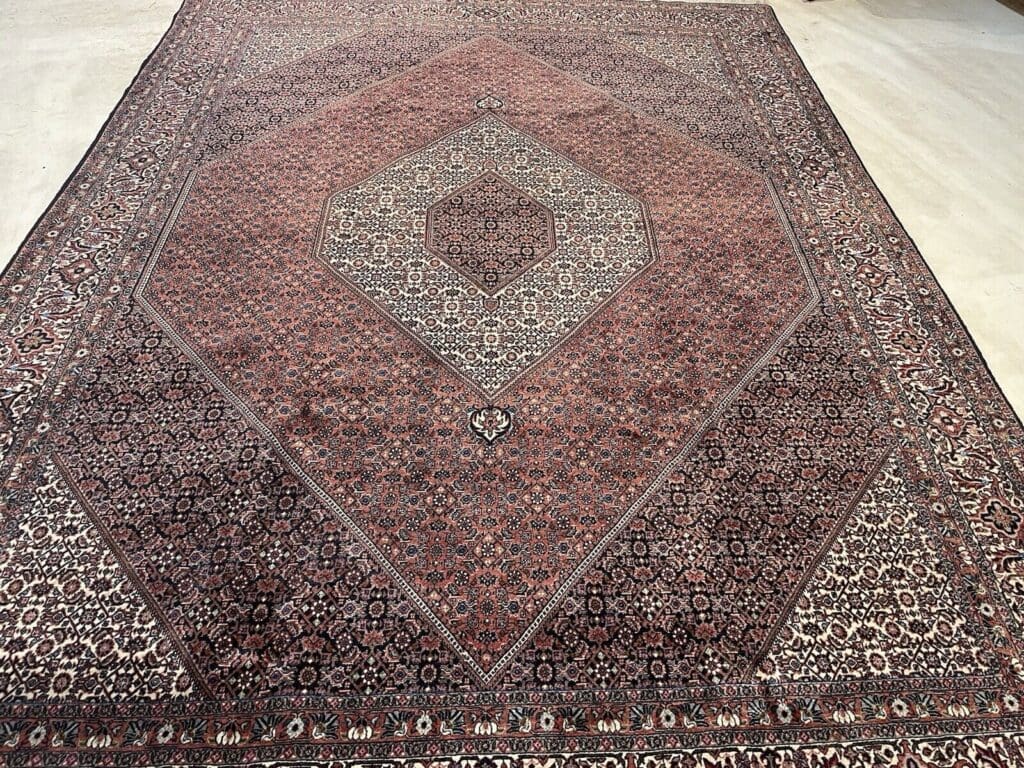
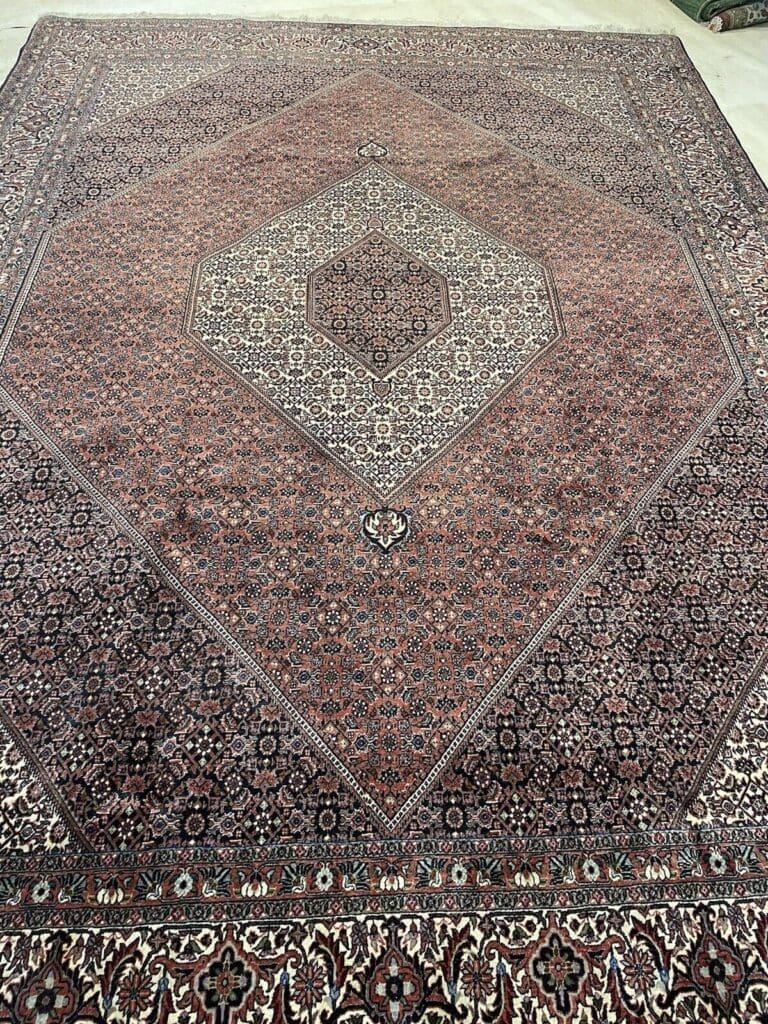
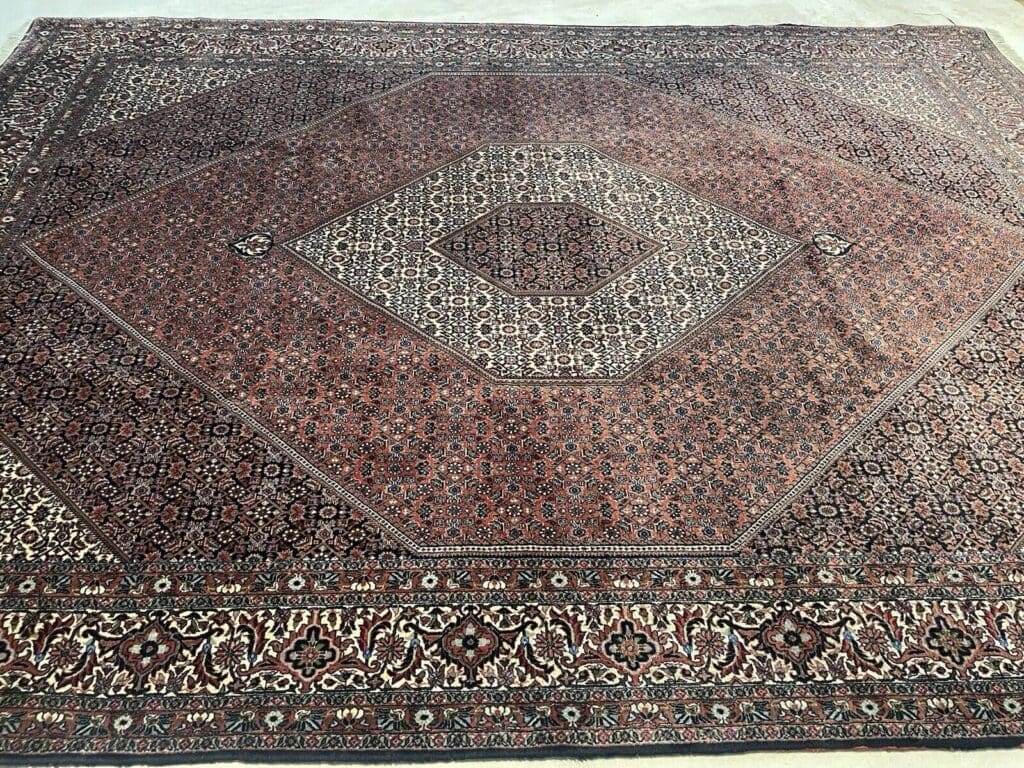
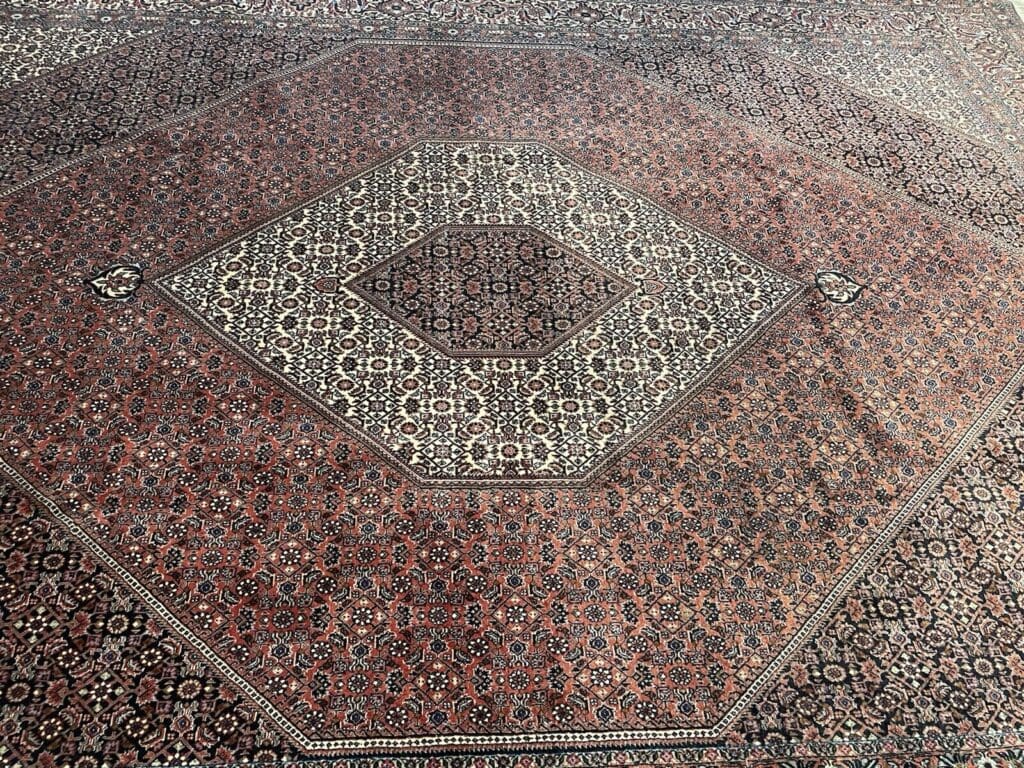
The pattern is identified as Herati. Herati is one of the established pattern families within Persian-influenced rug design. It commonly combines a central diamond-like form, leaves and scrolling branches in a repeated arrangement. The exact balance of these elements varies between workshops, colour schemes and individual executions. For this rug, the reliable design statement is that it has a Herati pattern; the source does not provide a full colour list or a detailed map of its field and border.
Herati is sometimes called the fish pattern because paired leaf forms can resemble fish around a central motif. The design is not intended as a naturalistic picture. Its effect comes from the rhythm created by leaves, branches, small geometric accents and repetition across the field. A continuous rapport can make the surface appear both ordered and active. The dense hand-knotting of this rug is suited to the precise repetition of such compact ornamental elements.
In Persian and Oriental pattern traditions, ornament serves as a way of organising the entire surface. Repeated motifs can guide the eye, connect separate areas and create a measured transition between a central field and its surrounding border. Herati designs may be arranged as an all-over pattern or combined with other structural elements. The source does not state whether this rug has a medallion, a particular border system or a specific colour arrangement, so those features are not assigned to it.
The Bidjar reference provides a design context within which dense, clearly legible ornament is often discussed. Herati elements may appear in Bidjar-related design vocabularies in several different layouts. That general history explains why the name can be useful when discussing the pattern language, but it does not establish the rug’s place of production. This individual piece remains an Indian-made Oriental rug with a Herati pattern.
The style is described as traditionally Persian or Oriental. This is a stylistic classification rather than a second origin statement. Floral and geometric details, scrolling forms, repeated motifs and a carefully ordered surface are all common in the broad tradition to which Herati belongs. Only the pattern name Herati is specifically supplied for this rug. No signature, medallion, border name or additional motif is stated.
The visual character of a Herati rug is created by the interaction of material, knotting and pattern rhythm. Each knot contributes to the gradual formation of the ornament, while the wool pile gives the finished surface its tactile presence. The very high knot density supports fine detail, but it does not supply information about colours or an unstated composition. The design description therefore remains focused on the documented Herati pattern and the Persian-Oriental style.
Special Features
The specific features named for this rug are its hand-knotted construction, 100% wool, very high knot density, 12 mm pile height, Herati pattern and new condition with tag. It is also described as finely made and of very good quality. These statements describe the supplied product characteristics; they do not imply an unstated grading system, certification or laboratory assessment.
India is the stated origin, while Bidjar appears in the title and the style is described as traditional Persian or Oriental. This distinction is important. The rug is an Oriental rug made in India with a Persian-influenced design vocabulary, not an Iranian Persian rug. Its new condition with tag is an additional characteristic of the individual item offered for sale.
The combination of wool, hand-knotting and the Herati pattern places the rug within a long tradition of detailed Oriental textile design. The description names the living room, bedroom and dining room among possible settings. Other placement decisions depend on the room and its use. No claim is made about a particular interior effect, a specific colour palette or a special technical treatment beyond the properties stated here.
FAQ
How should I care for this hand-knotted Oriental rug?
Vacuum the rug regularly and gently to remove dust and loose dirt. If a spill occurs, dab the affected area promptly with a damp cloth rather than rubbing it. Rubbing can work the substance further into the pile and place unnecessary stress on the fibres. Avoid harsh cleaning products. For substantial soiling or a full cleaning, a professional rug cleaner with experience in hand-knotted wool rugs is the appropriate choice. Care should be carried out carefully so that the wool pile and the hand-knotted structure are not treated aggressively.
Where does this Bidjar Oriental rug come from?
This rug comes from India, a country known for its long tradition of hand-knotted rug production. Bidjar is used in the title, while India is given as the origin and Herati as the pattern. The Bidjar name should therefore be understood as part of the rug’s offered design or style description, not as proof that this piece was made in Iran. Its traditional Persian or Oriental appearance describes the design language, while its stated manufacturing origin remains India.
What other rug types are related to this style?
Rugs from Isfahan and Kerman are mentioned as comparable options because they share elements of Persian-influenced artistic design and detailed rug traditions. Nain is also named as a recognised producer associated with refined designs and the use of silk. Those references point to related areas and style families within Persian and Oriental rug culture. They are not additional origins for this rug, and their materials or layouts may differ from this Indian-made, woollen, hand-knotted piece with a Herati pattern.
To provide the best experiences, we use technologies like cookies to store and/or access device information. Consenting to these technologies will allow us to process data such as browsing behavior or unique IDs on this site. Not consenting or withdrawing consent, may adversely affect certain features and functions.
Functional Always active
The technical storage or access is strictly necessary for the legitimate purpose of enabling the use of a specific service explicitly requested by the subscriber or user, or for the sole purpose of carrying out the transmission of a communication over an electronic communications network.
Preferences
The technical storage or access is necessary for the legitimate purpose of storing preferences that are not requested by the subscriber or user.
Statistics
The technical storage or access that is used exclusively for statistical purposes.The technical storage or access that is used exclusively for anonymous statistical purposes. Without a subpoena, voluntary compliance on the part of your Internet Service Provider, or additional records from a third party, information stored or retrieved for this purpose alone cannot usually be used to identify you.
Marketing
The technical storage or access is required to create user profiles to send advertising, or to track the user on a website or across several websites for similar marketing purposes.

 SECURE PAYMENT
 SHIPPING PARTNERS