Oriental Rug Baluch 218 x 117 cm Wool Hand-knotted
€ 888
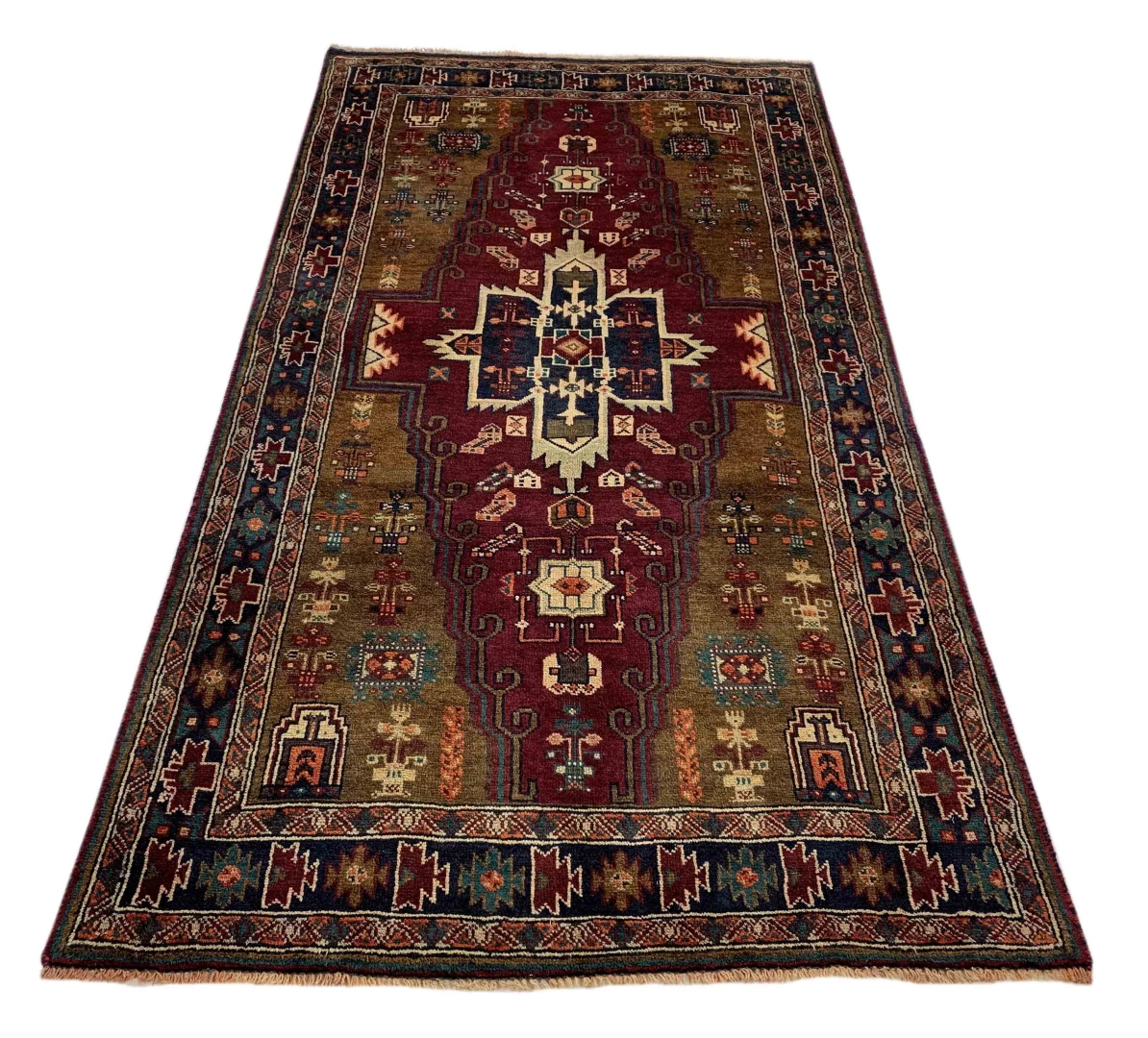
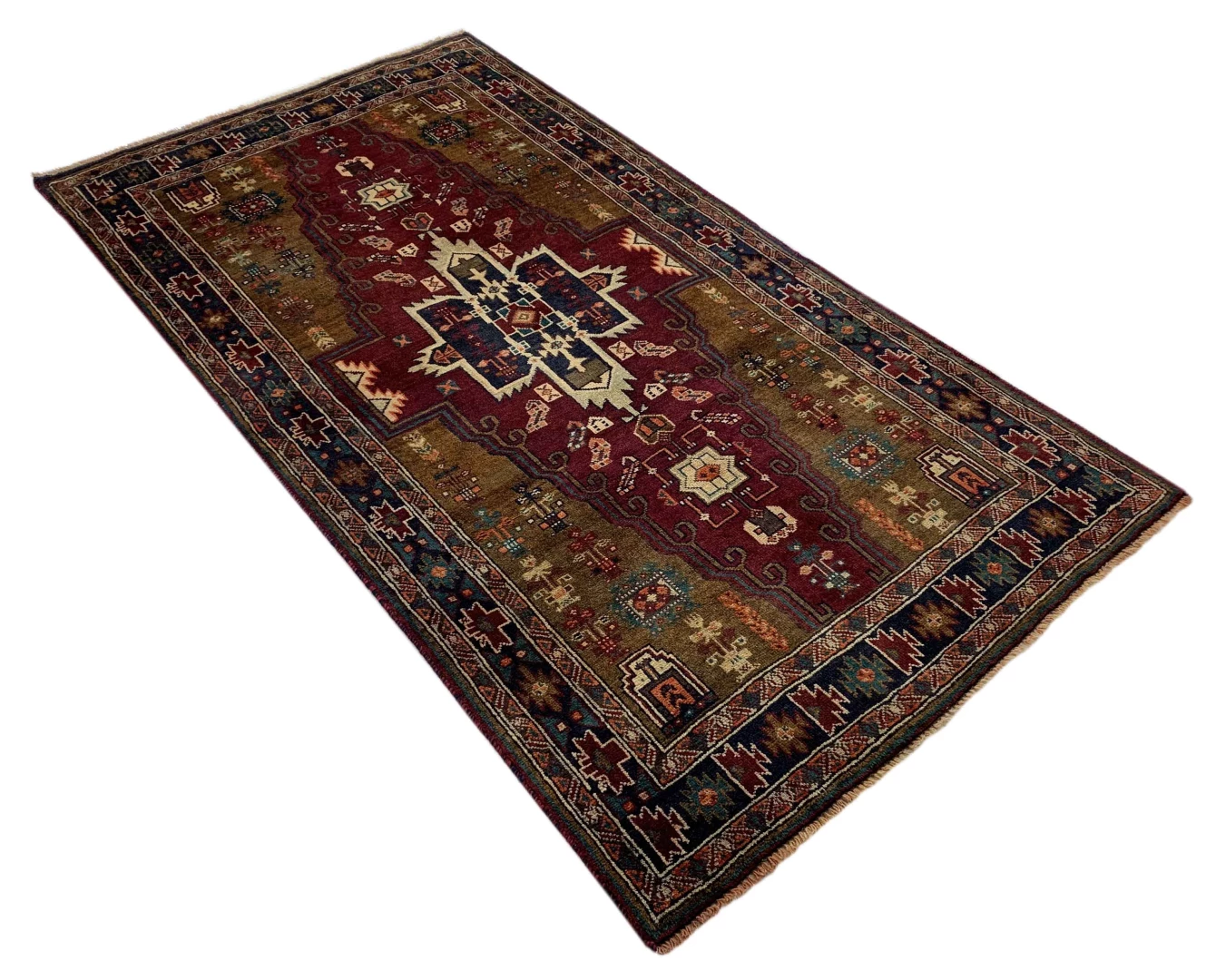
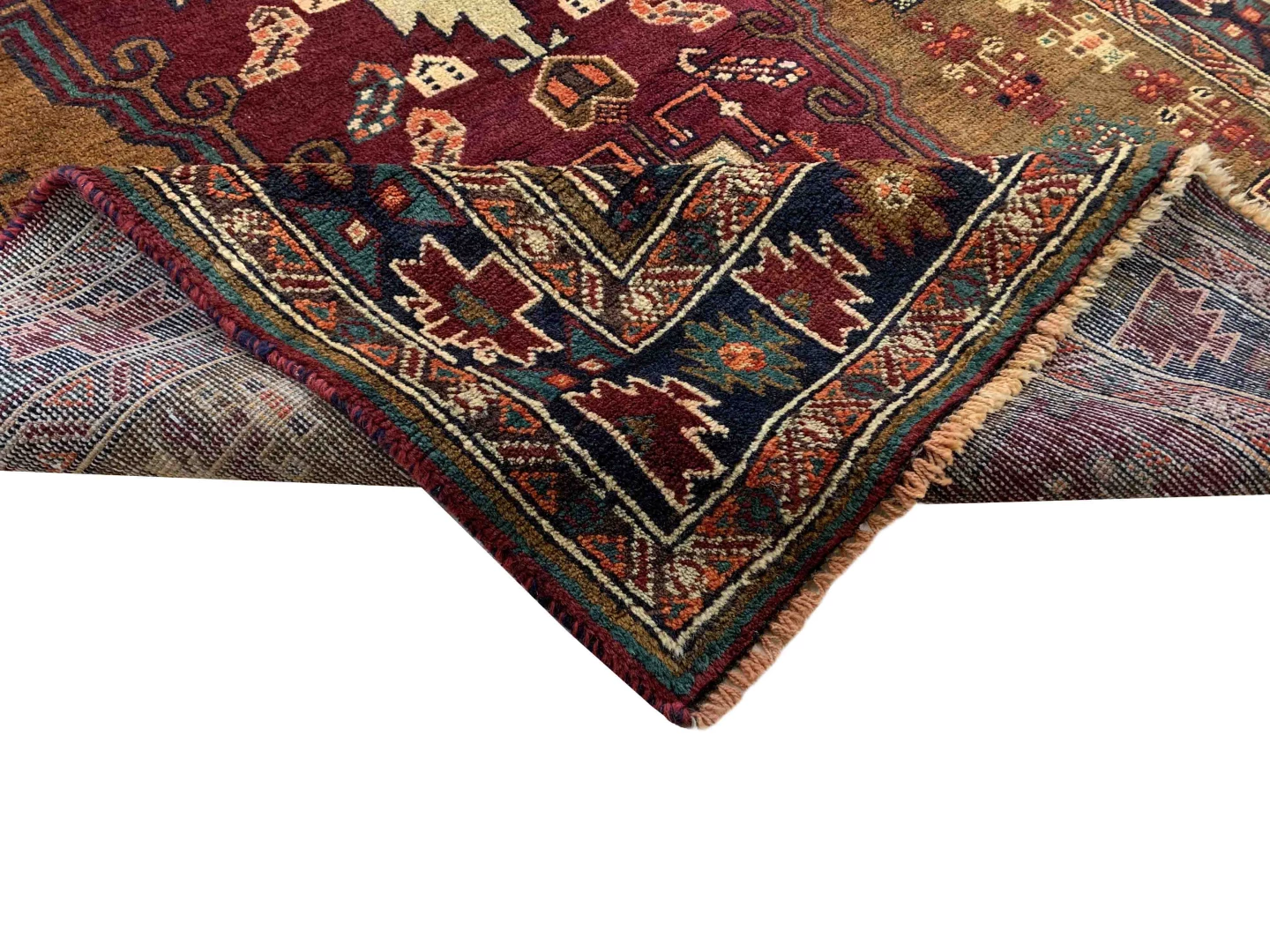
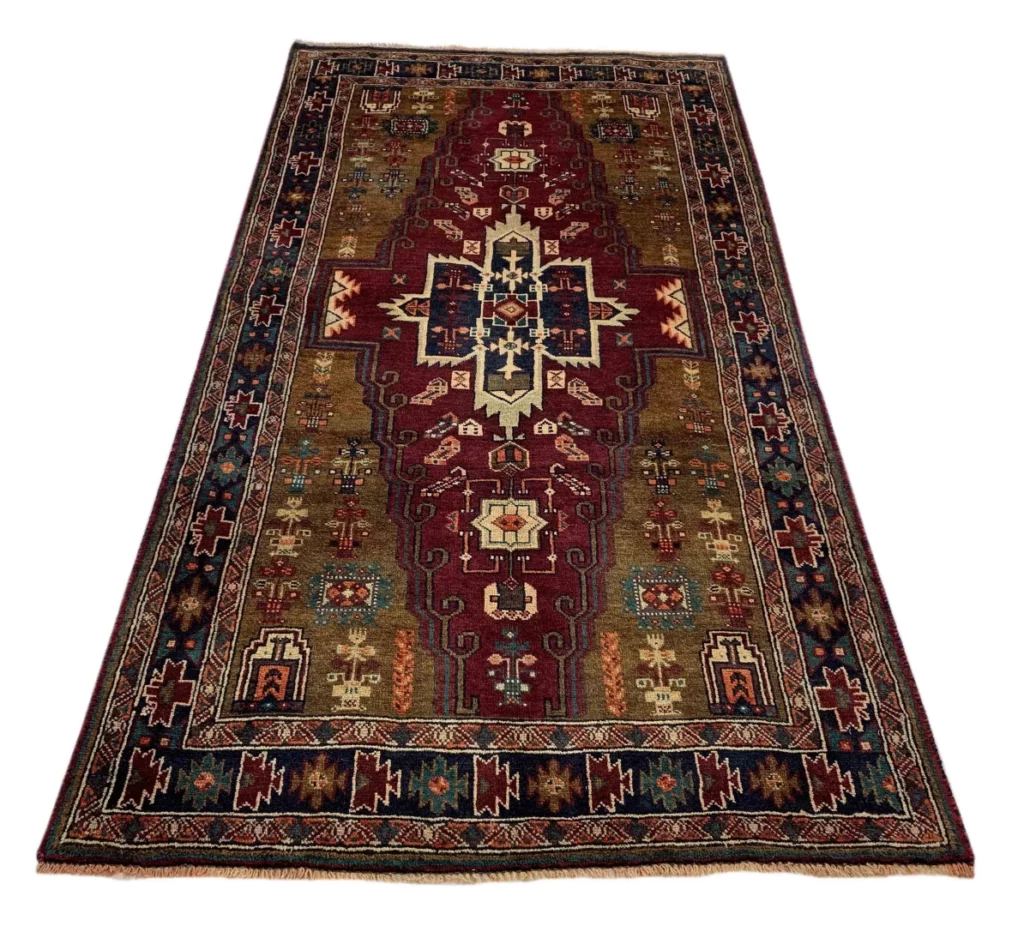
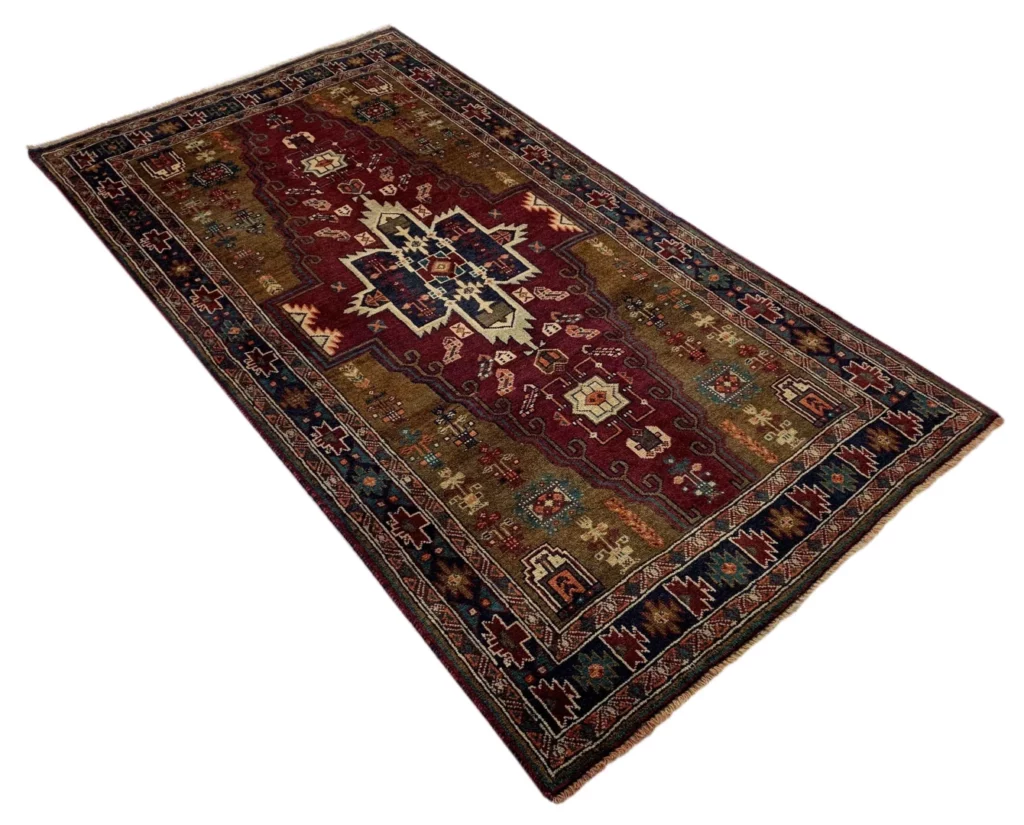
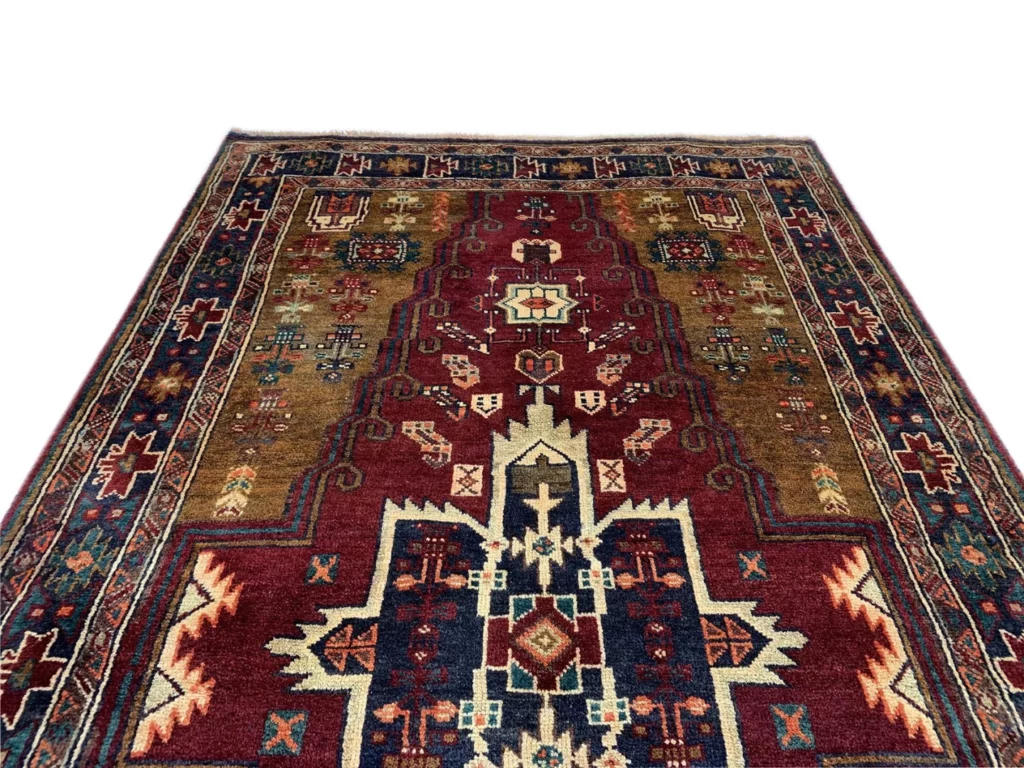
Hand-knotted Balutsch Oriental rug | Knot density: 120,000 – 250,000 knots/m² | Material: Pile natural wool | Size: 218 x 117 cm | Pattern: Geometric forms and stylised motifs, dominant red and brown tones | Condition: Dirt-resistant and suitable for hallways and kitchens
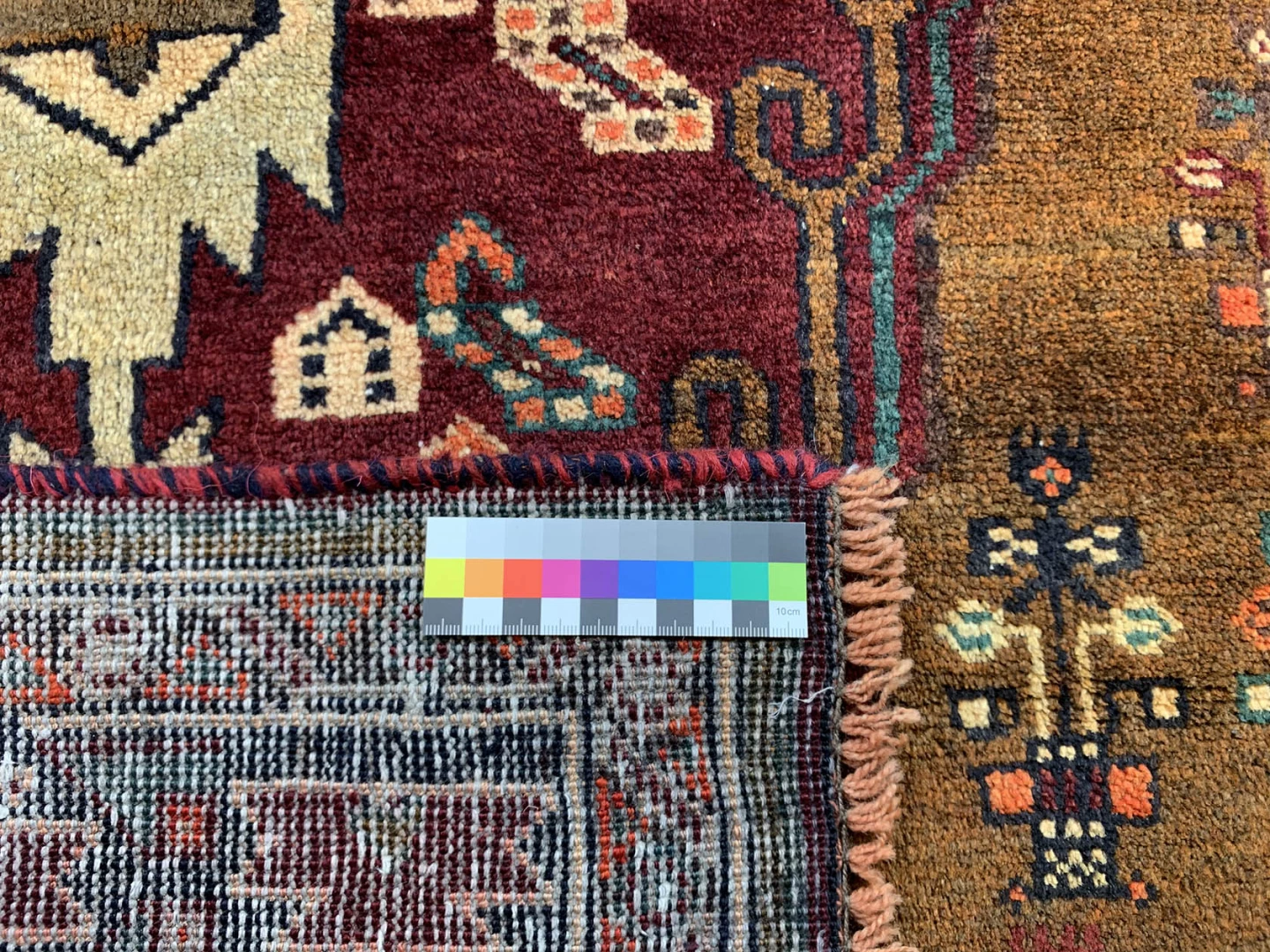
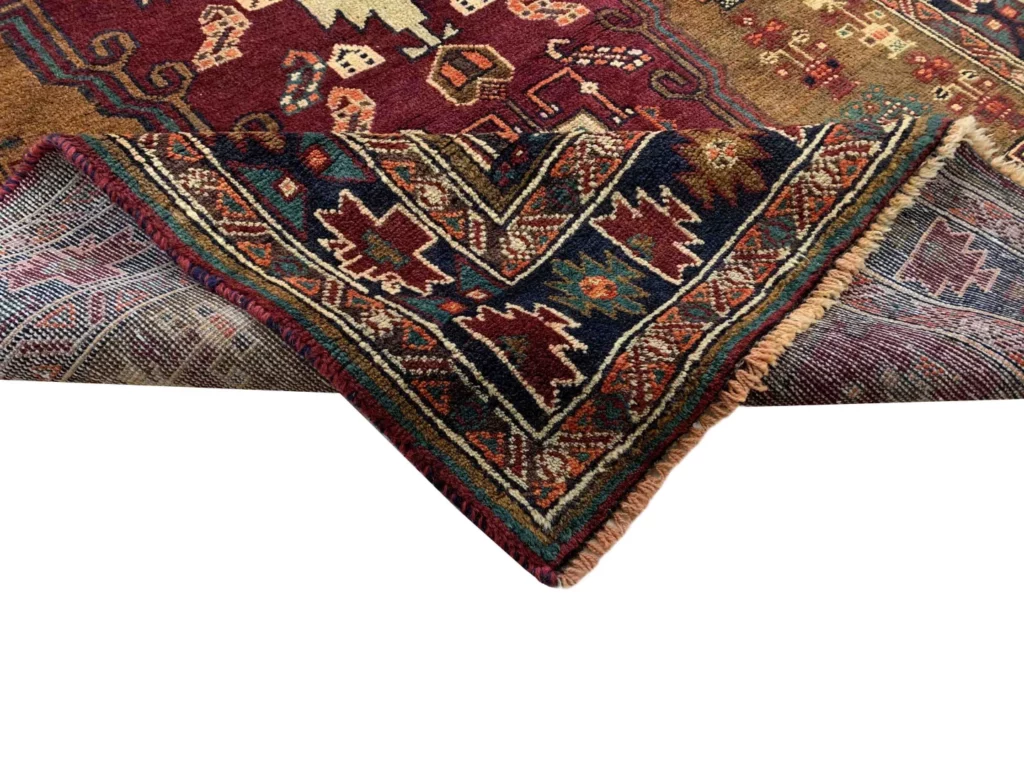
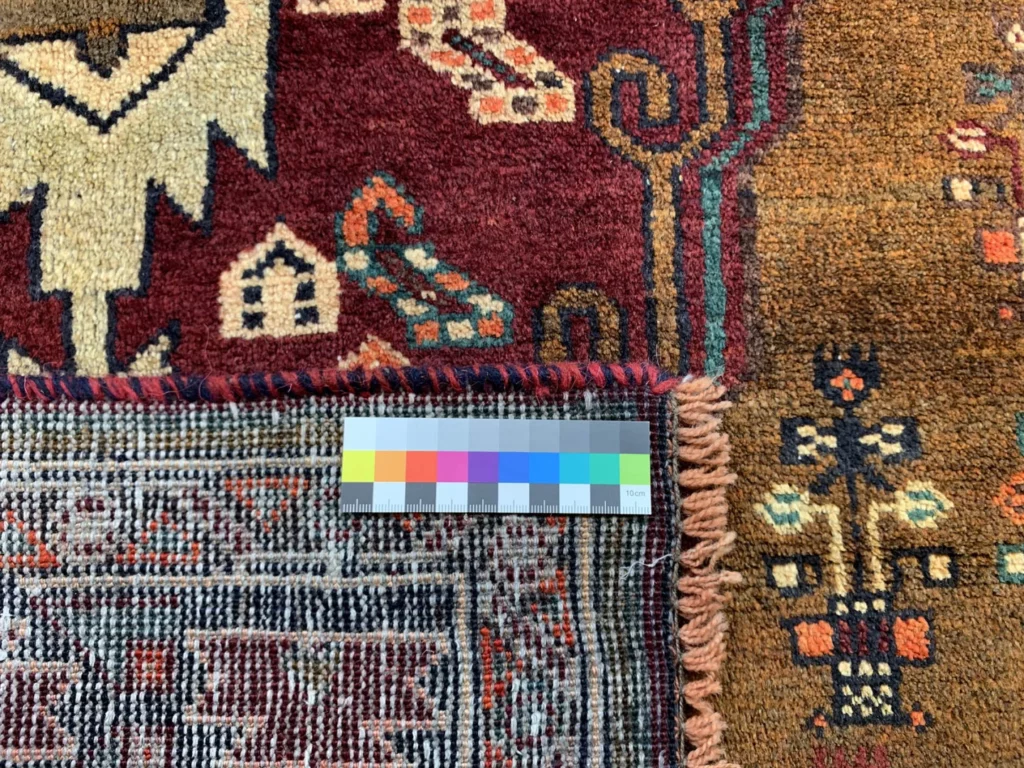
This Balutsch Oriental rug is hand-knotted and made from natural wool. The wool is hand-spun, giving the pile a soft textile feel while retaining the durability associated with the material. Its knot density ranges from 120,000 to 250,000 knots per square metre. This dense construction supports a detailed rendering of the pattern and is part of the careful manual workmanship used to make the rug.
In a hand-knotted rug, the design is built one knot at a time on a foundation. The work requires consistent tension and controlled placement of the coloured wool threads. Unlike a machine-made floor covering, the production of this rug remains directly connected to the handwork of the knotters. Each individual piece therefore has its own execution and is not simply a repeated industrial unit.
Natural wool performs several functions in a Balutsch rug. It forms the pile, receives the colours and gives the surface its distinct textile structure. Hand-spun wool can show small variations in thickness and twist; these variations belong to traditional production. The wool used for Balutsch rugs is connected with the Baluch people’s own production and is obtained from their own sheep.
The source describes this rug as dirt-resistant. It is therefore identified as suitable for hallways and kitchens, areas in which a floor covering may be used frequently. This quality does not replace appropriate care, but it explains the rug’s practical suitability for these rooms. No information is provided about its age, backing, borders, repairs or signature, so those details are not added here.
Origin and Tradition
Balutsch rugs belong to the tradition of the Baluch people, a nomadic people associated with the tri-border region between Afghanistan, Iran and Pakistan. This geographical description identifies the cultural area in which the Balutsch weaving tradition developed; it does not assign every rug to one specific modern country. The rugs of this region combine the textile work of nomadic communities with a visual language shaped by inherited forms and regional knowledge.
For nomadic communities, rug making was closely connected with everyday life. Wool was an available resource that could be spun and made into portable textiles. A rug could serve a practical purpose while also preserving knowledge of colour, pattern and knotting techniques. Such knowledge was passed on within the community. Motifs were not merely decorative additions; they also provided a visible expression of cultural identity and regional history.
The area between Afghanistan, Iran and Pakistan includes varied landscapes and ways of life. Balutsch tradition should therefore not be reduced to one completely fixed arrangement of motifs. Its shared characteristics include hand production, the use of wool and a preference for clearly organised compositions, often based on geometric forms. Individual colours and symbols may vary within the tradition, while the connection with nomadic craftsmanship remains central.
The name Balutsch consequently refers to an ethnic and cultural rug tradition. It should not be used as a general label for every carpet made in one of the three countries mentioned above. Other names describe different historical and regional contexts. Ziegler rugs, for example, are associated with soft colours and floral designs. Qashqai rugs come from the tradition of another nomadic people in Iran. Sarouk and Tabriz are also established names in the Persian rug world, but they represent different regional and stylistic developments.
Traditional knowledge in Balutsch rug making includes more than the knot itself. It also covers the preparation of wool, hand spinning, the choice of colour relationships and the transmission of pattern vocabulary. The finished textile brings material knowledge and cultural history together. This Balutsch Oriental rug belongs to that wider tradition of hand craftsmanship from the region between Afghanistan, Iran and Pakistan.
Design and Pattern
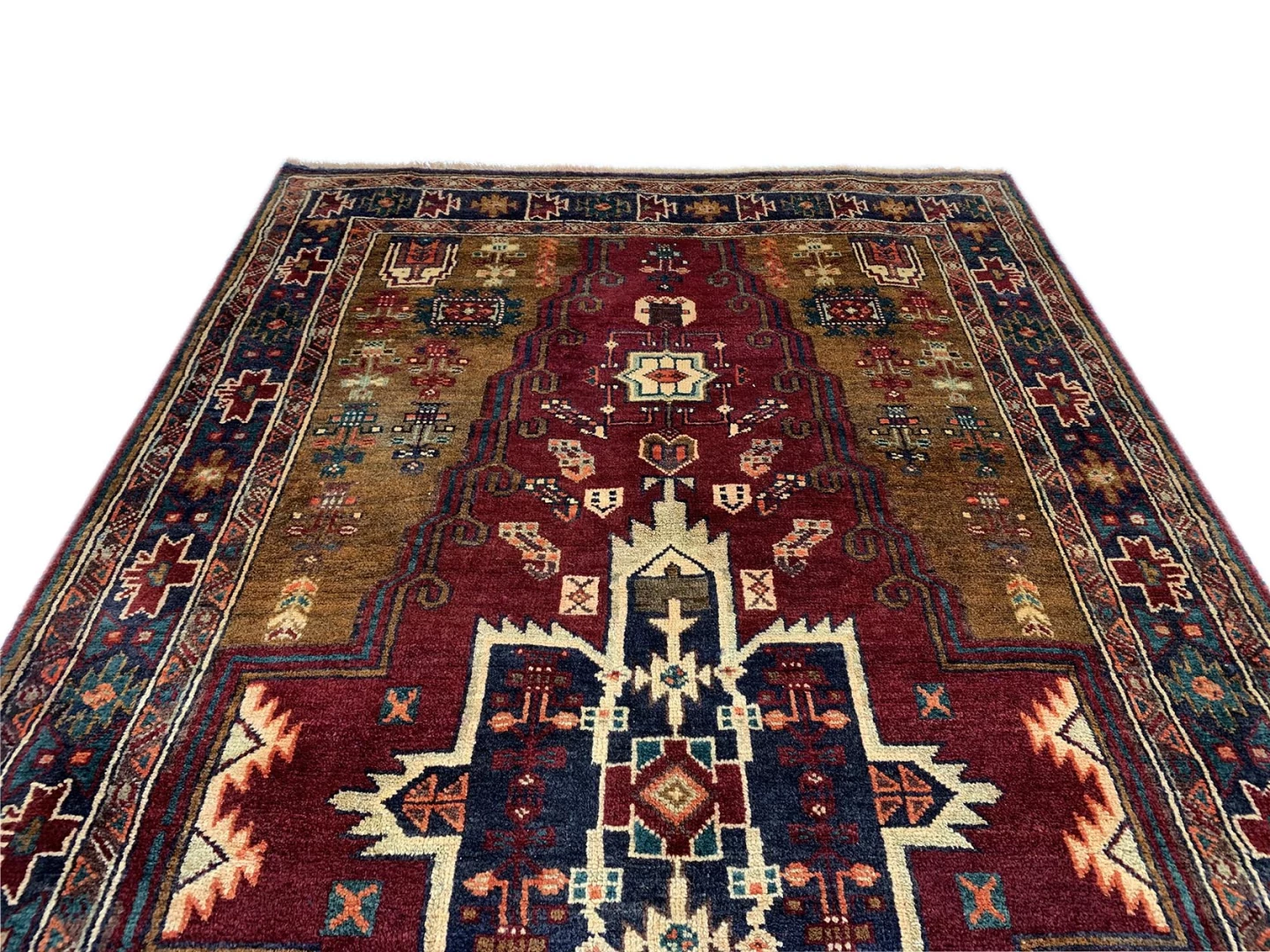
The design of this rug is defined by geometric forms and stylised motifs. Geometric composition organises the surface through lines, angles, fields and repeated signs. Stylised motifs may refer to forms from the visible world, but they are simplified into a textile vocabulary rather than rendered as naturalistic pictures. The result is a structured arrangement in which the individual elements relate to one another.
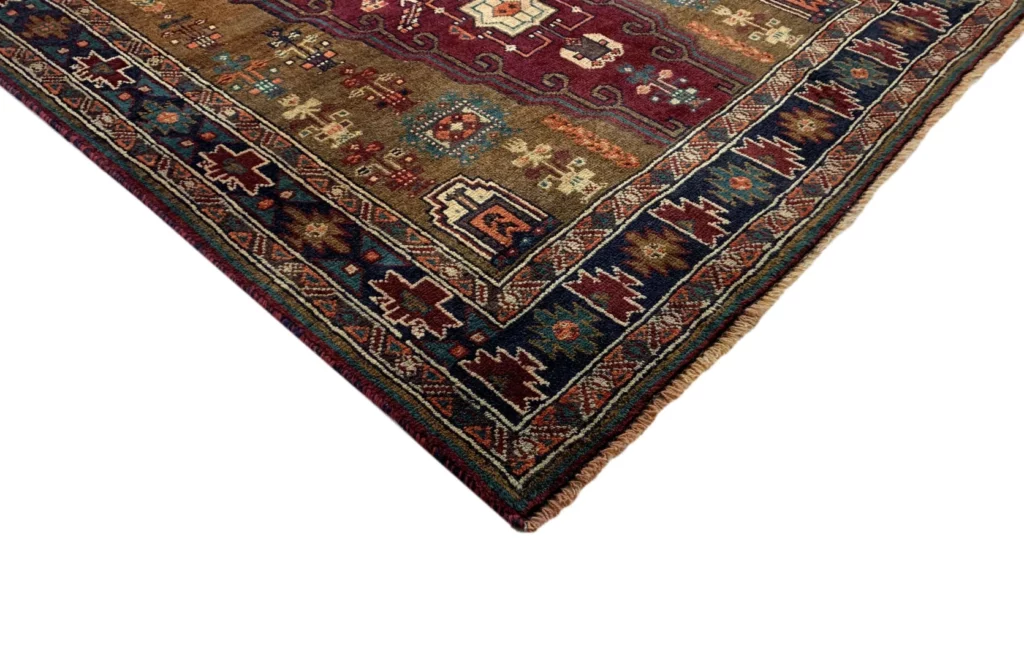
Dominant red and brown tones determine the overall colour impression. Red may appear as a strong field colour or as an accent within individual motifs, while brown provides an earthy and more subdued counterpart. The relationship between these two colour families is one of the stated characteristics of this rug. No further colour list is supplied, so the description remains with the documented red and brown emphasis.
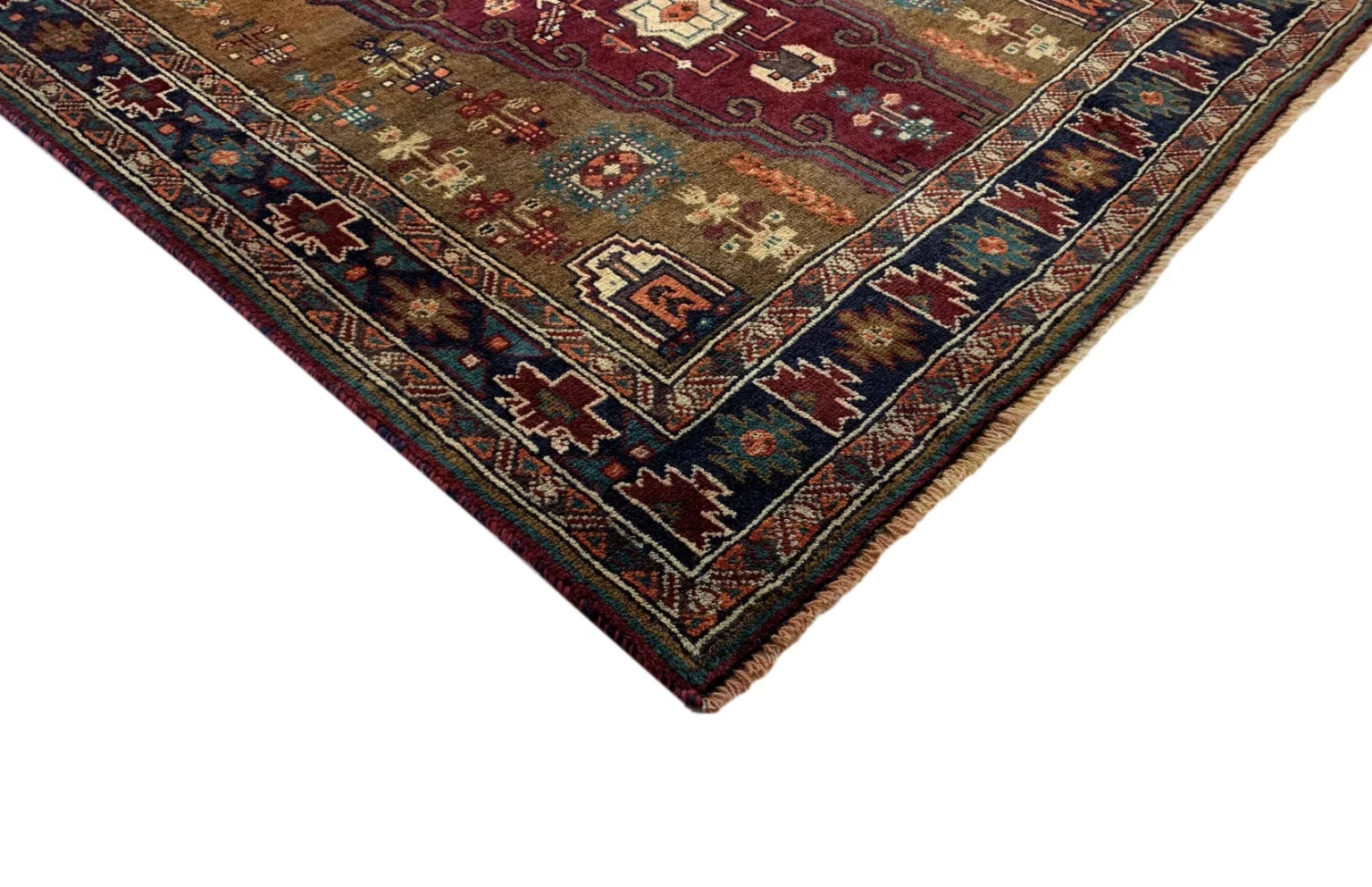
Balutsch rugs often organise their designs through a relationship between a central field, borders and smaller internal motifs. Geometric borders can frame an interior area and mark the transition towards the edge. Repetition establishes rhythm, while variations keep the composition from becoming entirely mechanical. Stylised signs may appear individually or be joined into groups. The precise arrangement on an individual rug is determined by its hand-knotted execution.
A traditional pattern vocabulary is not necessarily a rigid template. Craft knowledge transmits forms and principles while leaving room for the interpretation of the knotter. Proportions, colour transitions and the treatment of a motif may consequently differ from one piece to another. In a one-off hand-knotted rug, this individual interpretation is part of the nature of the craft rather than a defect of manufacture.
The dense knotting supports the presentation of finer pattern areas. It can make contours more distinct and allow a more differentiated treatment of geometric and stylised elements. At the same time, the design remains a textile construction: lines are formed from coloured knots and fields from the sequence of many individual working steps. The pattern is therefore both a visual order and a visible record of the rug’s making.
Compared with floral designs associated with certain Ziegler rugs, this Balutsch rug places its emphasis on geometric organisation and stylised forms. Qashqai rugs may also express a nomadic design tradition, but they belong to another community and another Iranian cultural setting. The Balutsch designation is therefore important for the particular combination of material, colours, pattern tradition and cultural context represented here.
Special Features
The documented features of this rug are its natural wool, hand-knotted construction, knot density between 120,000 and 250,000 knots per square metre, and dirt-resistant finish. It is also characterised by dominant red and brown tones and a design based on geometric forms and stylised motifs. Together, these details connect practical use with the traditional handcraft of the Baluch people.
The dirt-resistant quality is specifically associated with use in hallways and kitchens. These are areas where a floor covering may encounter dust and everyday activity more frequently. Its suitability for such spaces is therefore part of the described character of this piece. The source does not state whether it has visible wear, restoration, a particular age or a previous repair.
Every hand-knotted rug is individual in its execution. In this piece, that individuality lies in the combination of its wool surface, dense knotting, colour palette and inherited pattern forms. There is no documented signature, workshop attribution or production date, and no such information is inferred.
FAQ
How should a Balutsch Oriental rug be cared for?
Regular vacuuming and occasional beating are recommended for care. Spilled liquids and other marks should be dabbed immediately with a damp cloth so that they do not remain permanently in the wool fibres. Professional cleaning every few years may also be appropriate. The cleaning method should take account of the natural wool and the hand-knotted construction. The dirt-resistant quality makes everyday use easier, but it does not remove the need for prompt treatment of stains or for regular, gentle maintenance.
Where does the wool for Balutsch rugs come from?
The wool is connected with the Baluch people’s own production. Balutsch rugs use natural, hand-spun wool obtained from the Baluch people’s own sheep. Hand spinning is part of the traditional preparation of the material and provides the basis for the rug’s wool pile. This creates a direct relationship between the raw material and the craft process. The wool contributes both softness and durability to the finished construction.
What are the advantages of a hand-knotted Balutsch Oriental rug?
Hand-knotted production combines an individual pattern with a durable wool surface. This rug is dirt-resistant and is described as suitable for hallways and kitchens. Its knot density supports detailed treatment of the geometric and stylised motifs. The dominant red and brown tones give the design a clearly recognisable colour character. Since each piece is made by hand, it has an individual execution and reflects the traditional craftsmanship of the Baluch people from the tri-border region between Afghanistan, Iran and Pakistan.
To provide the best experiences, we use technologies like cookies to store and/or access device information. Consenting to these technologies will allow us to process data such as browsing behavior or unique IDs on this site. Not consenting or withdrawing consent, may adversely affect certain features and functions.
Functional Always active
The technical storage or access is strictly necessary for the legitimate purpose of enabling the use of a specific service explicitly requested by the subscriber or user, or for the sole purpose of carrying out the transmission of a communication over an electronic communications network.
Preferences
The technical storage or access is necessary for the legitimate purpose of storing preferences that are not requested by the subscriber or user.
Statistics
The technical storage or access that is used exclusively for statistical purposes.The technical storage or access that is used exclusively for anonymous statistical purposes. Without a subpoena, voluntary compliance on the part of your Internet Service Provider, or additional records from a third party, information stored or retrieved for this purpose alone cannot usually be used to identify you.
Marketing
The technical storage or access is required to create user profiles to send advertising, or to track the user on a website or across several websites for similar marketing purposes.

 SECURE PAYMENT
 SHIPPING PARTNERS


