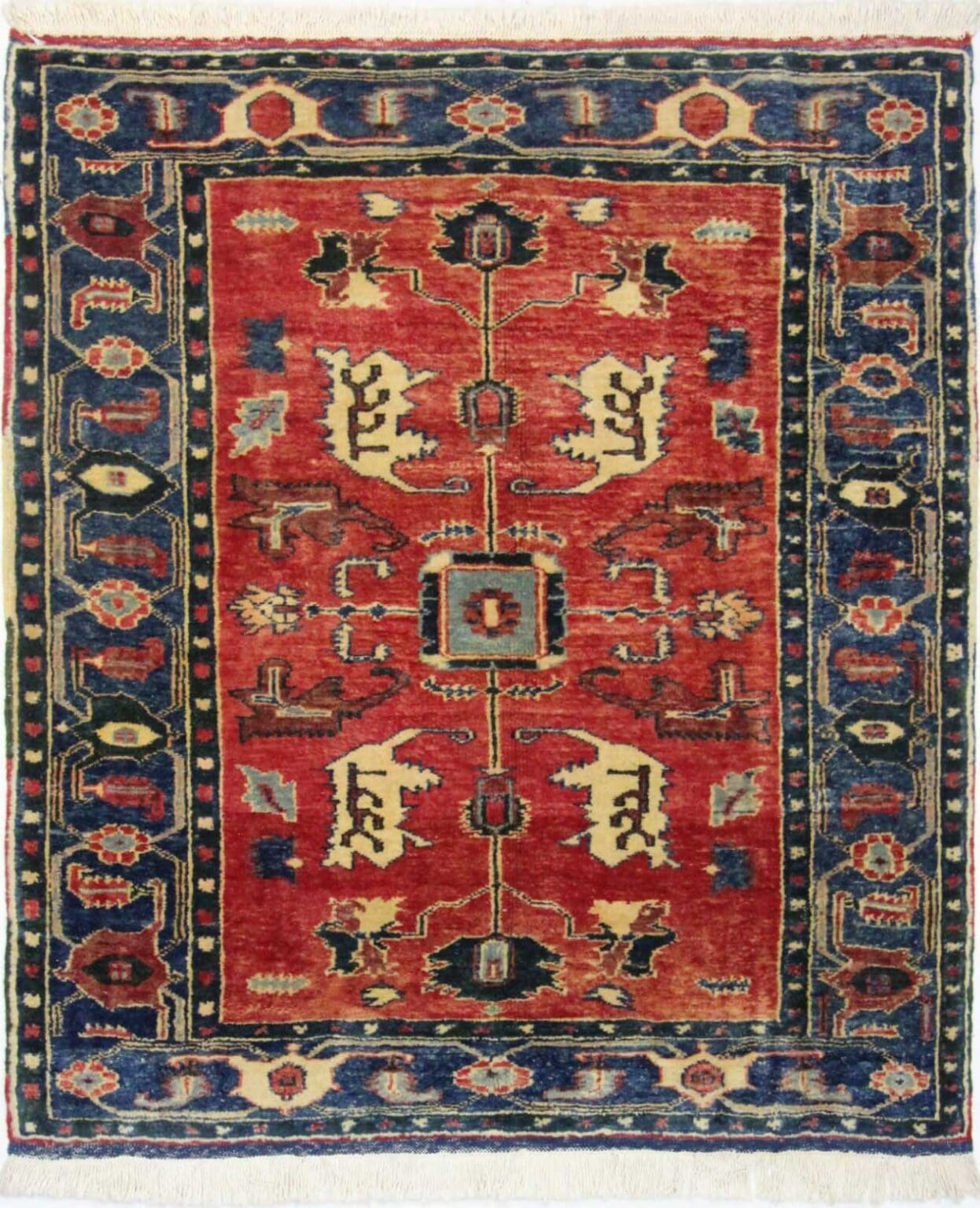
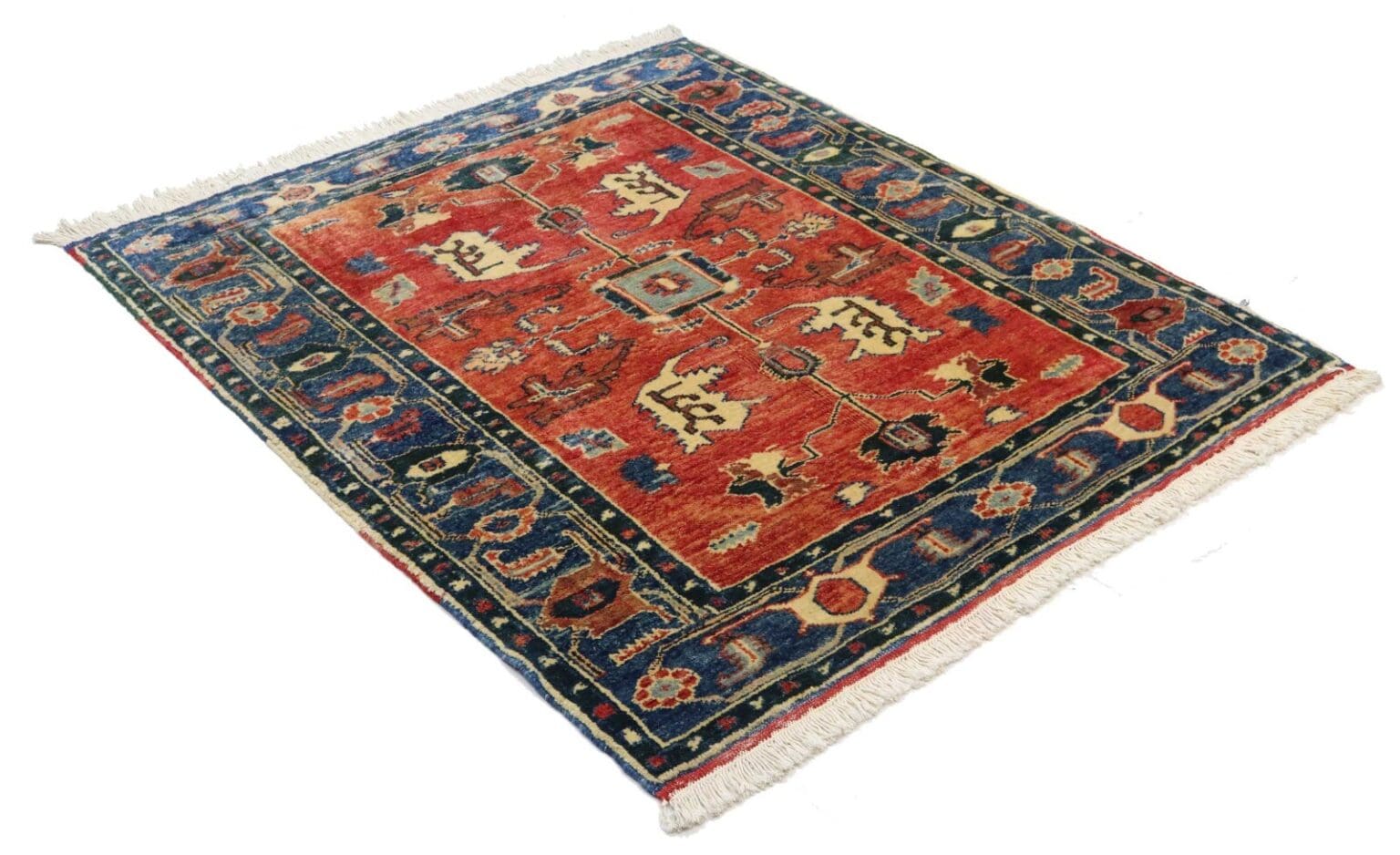
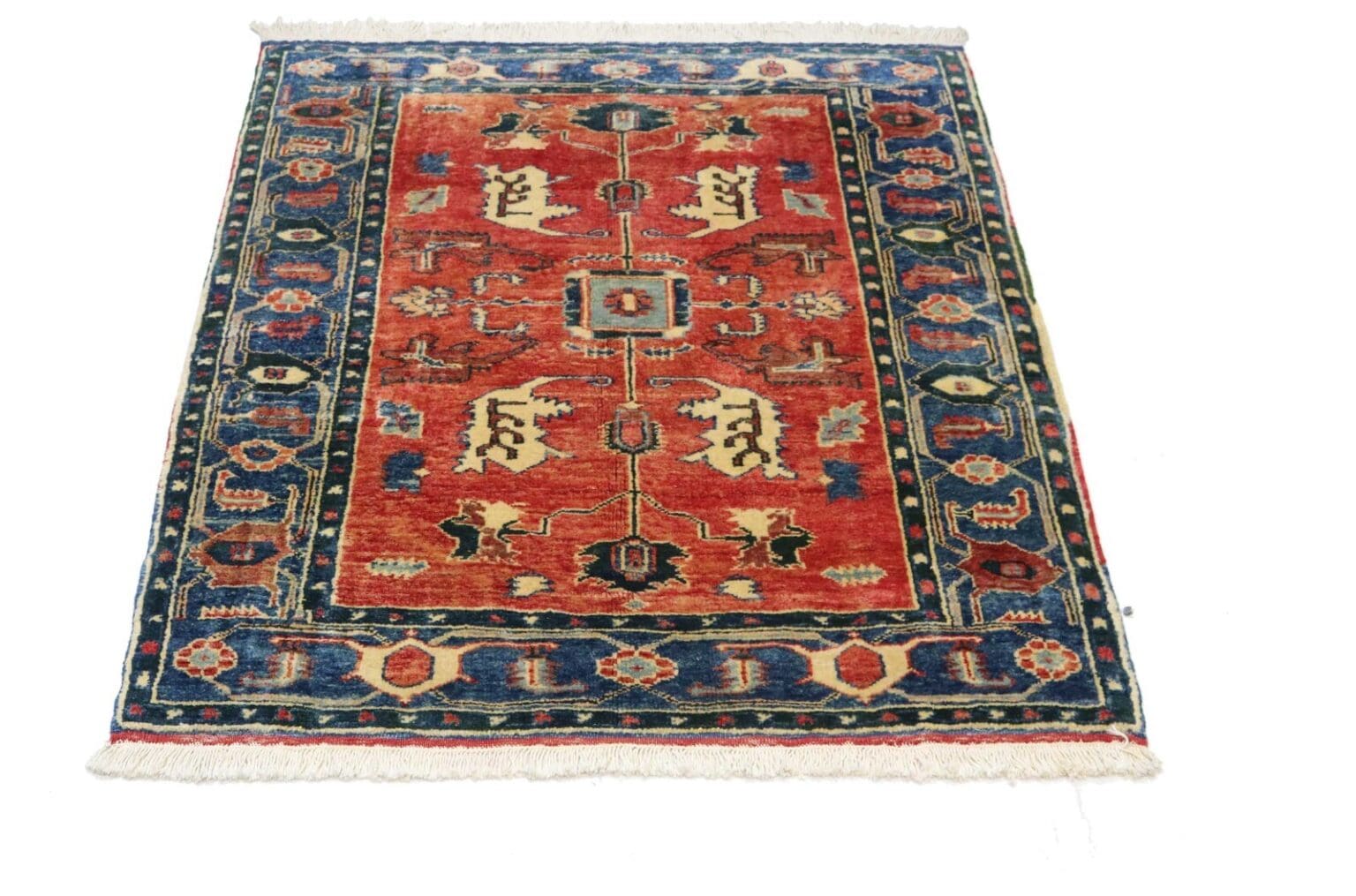
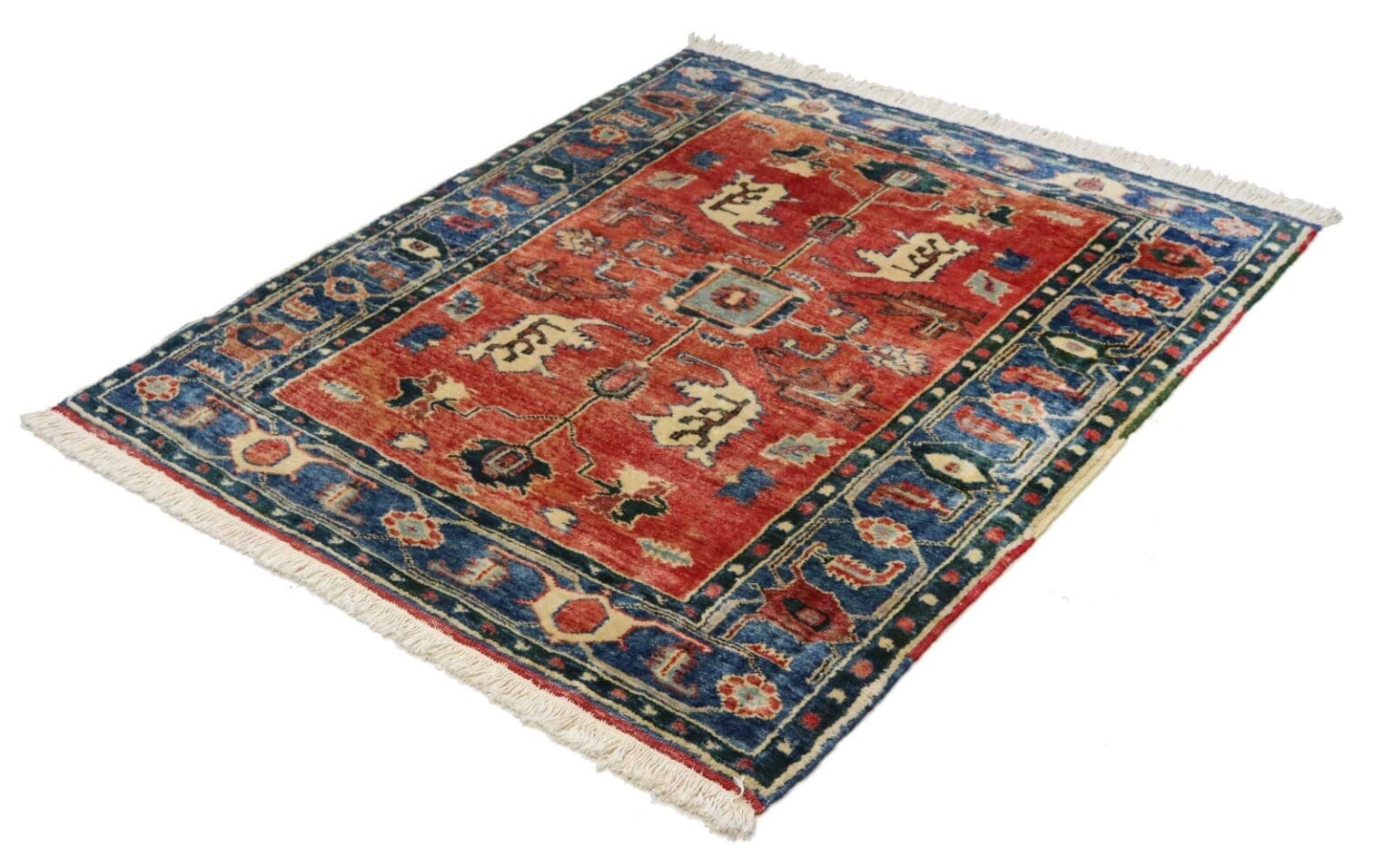
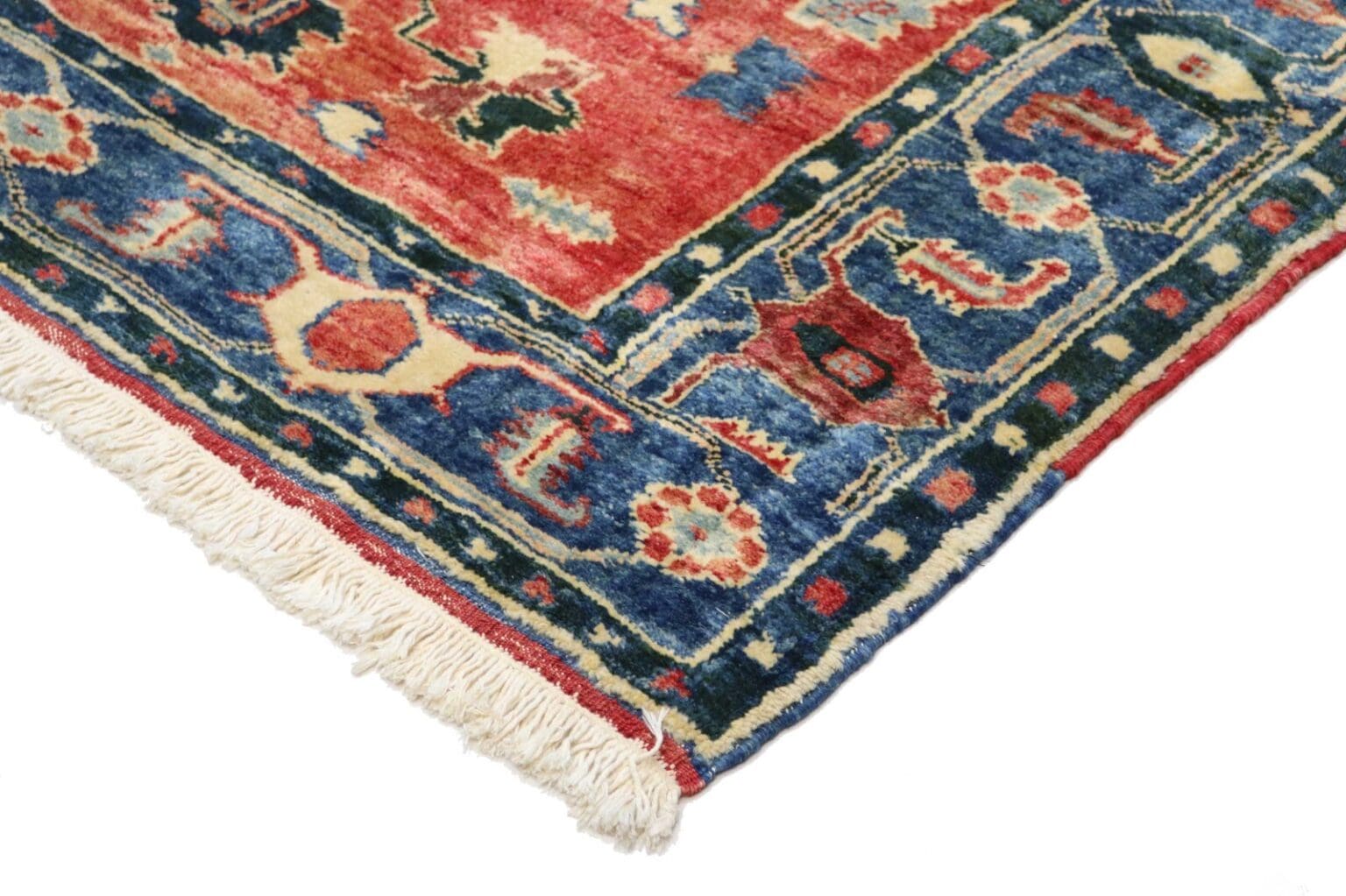
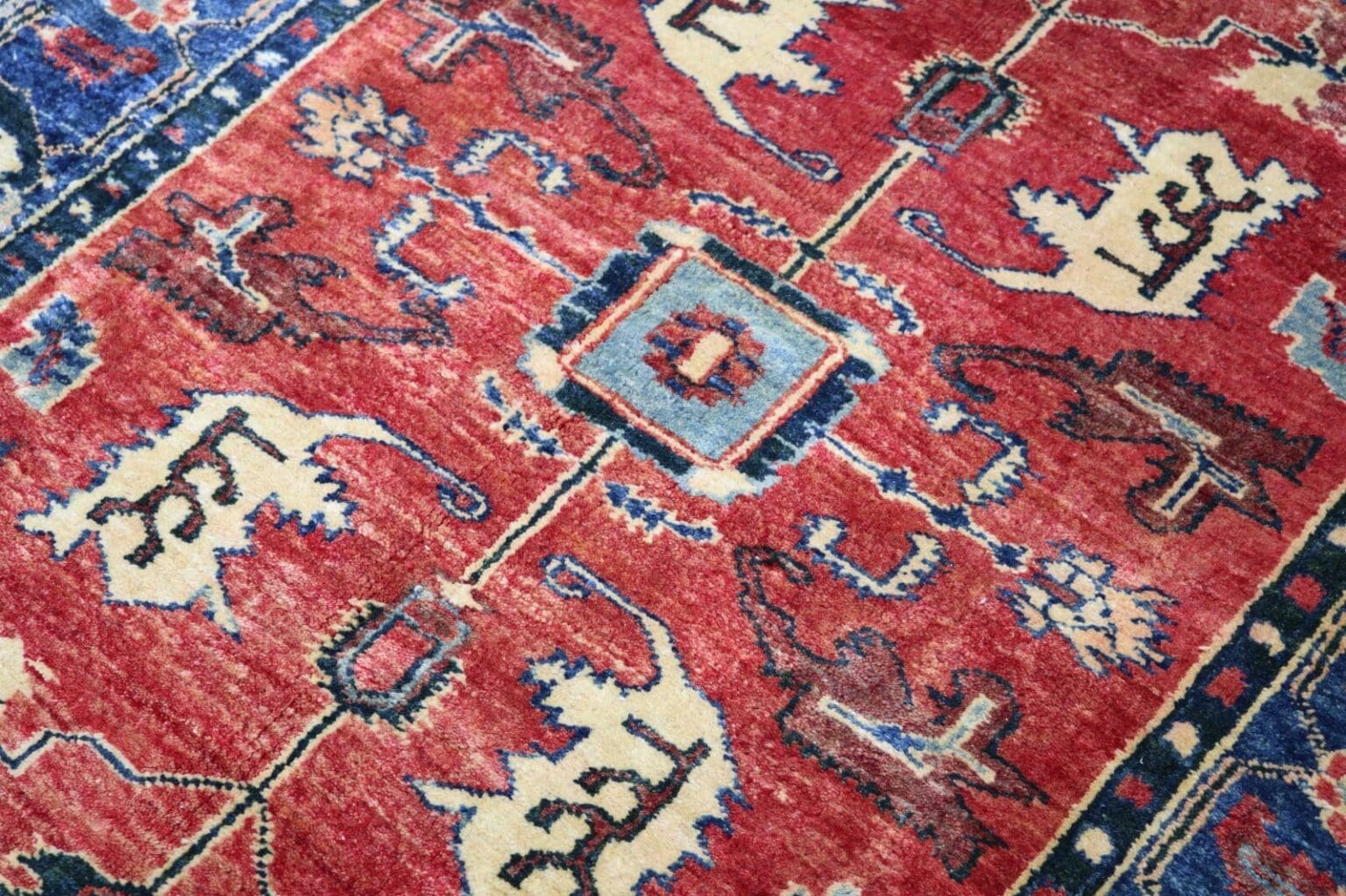
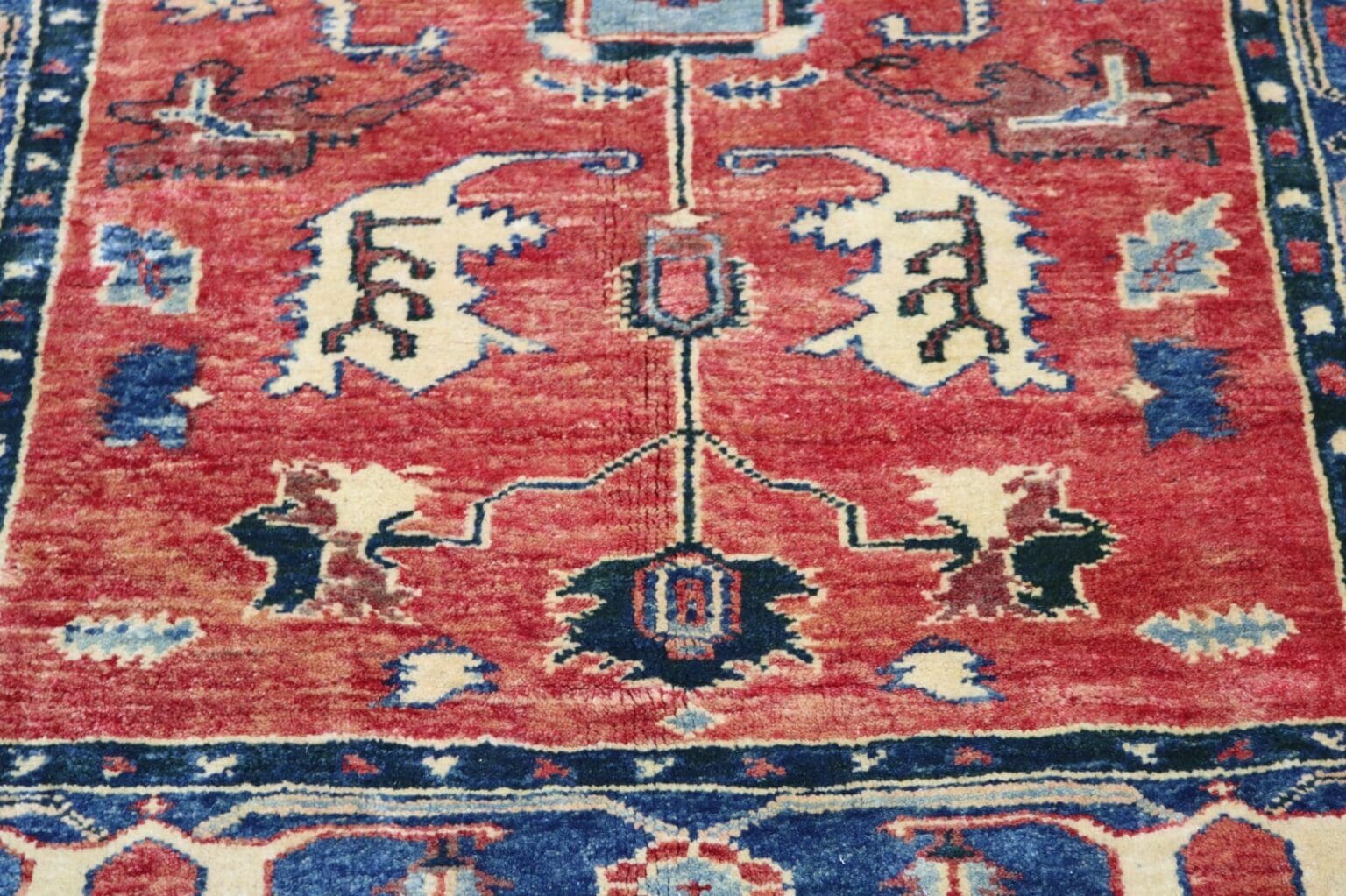
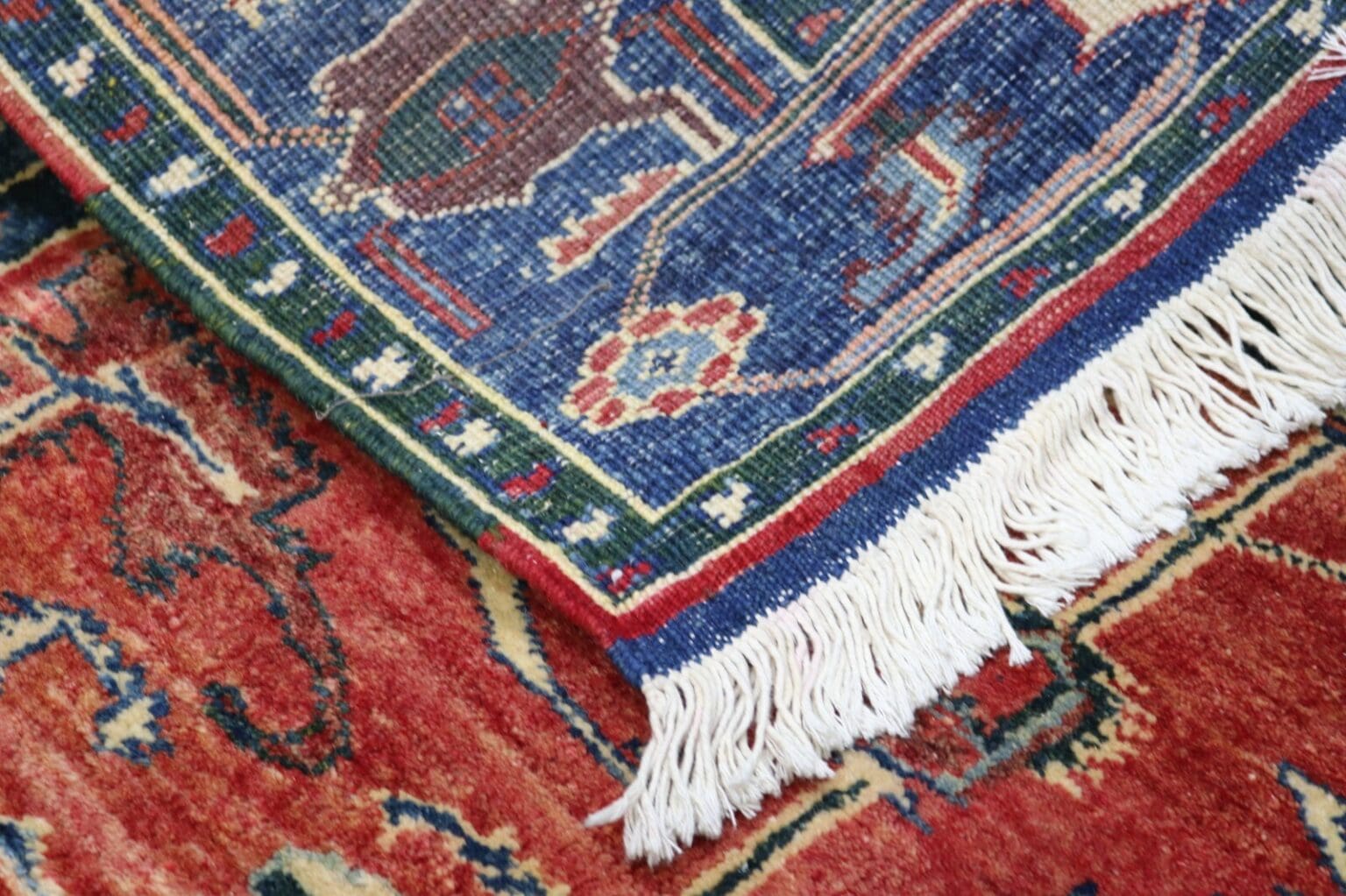

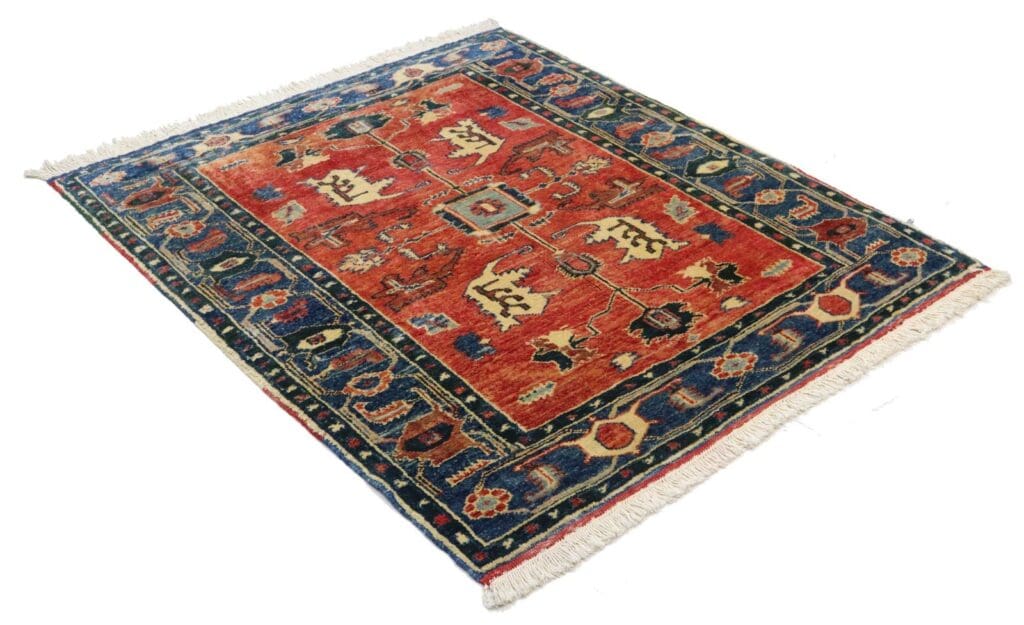
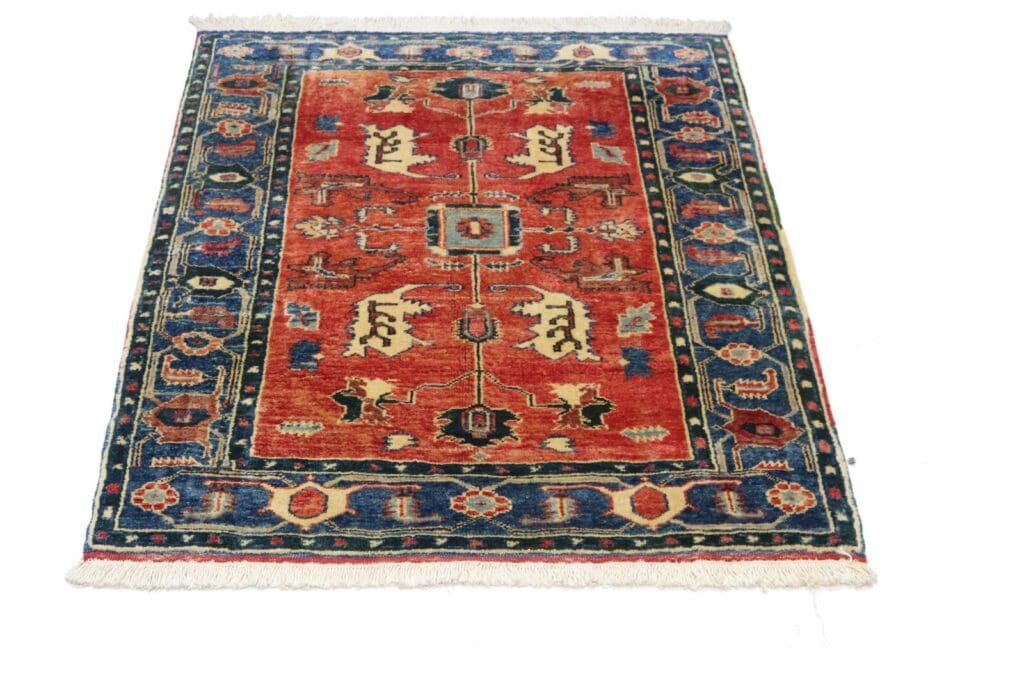
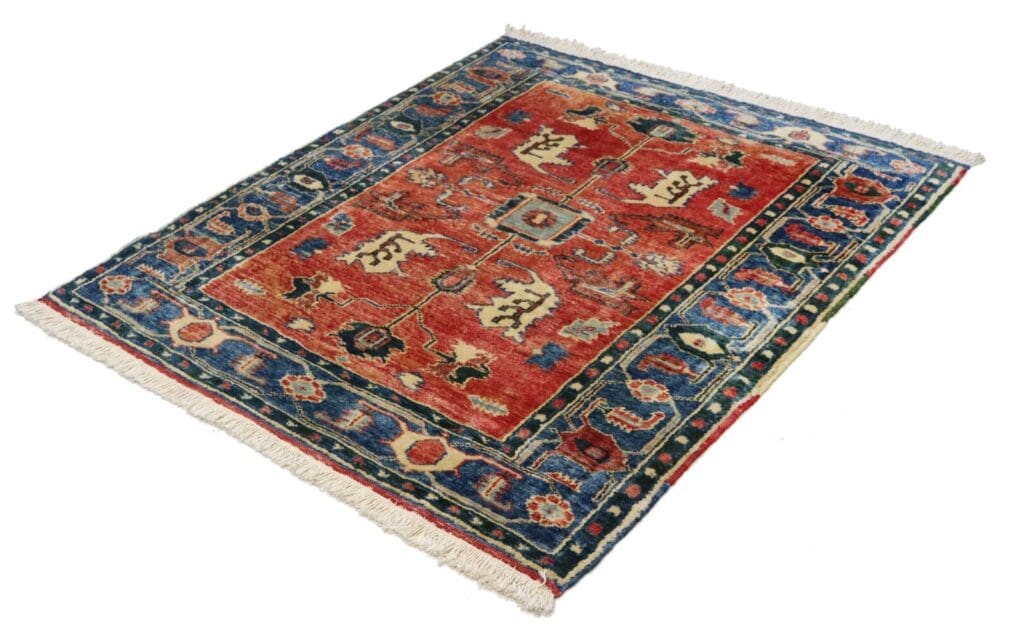
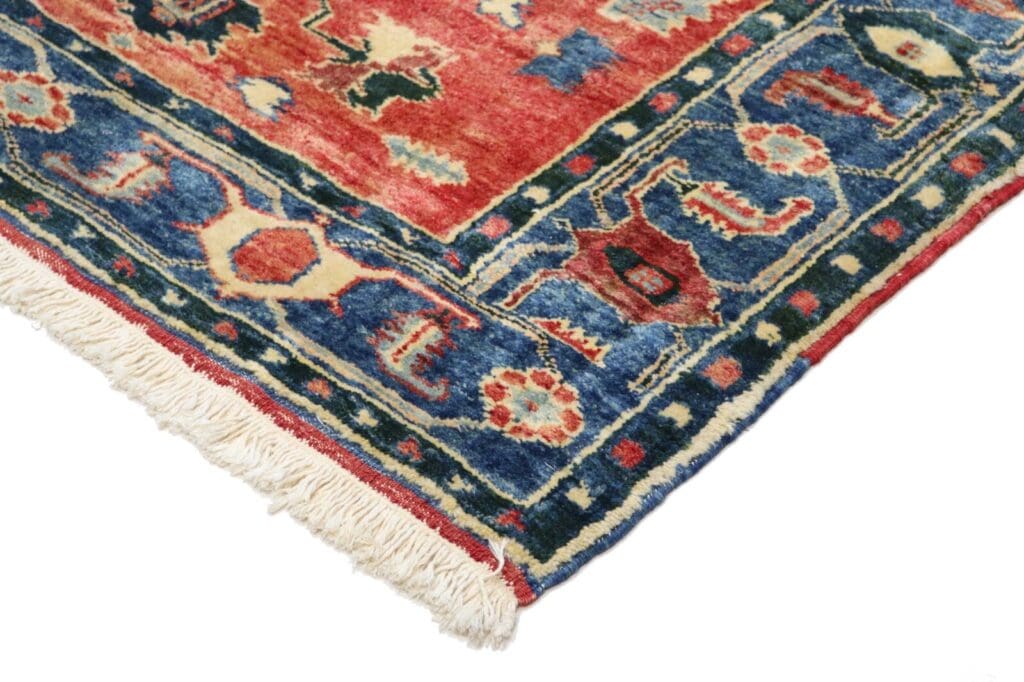
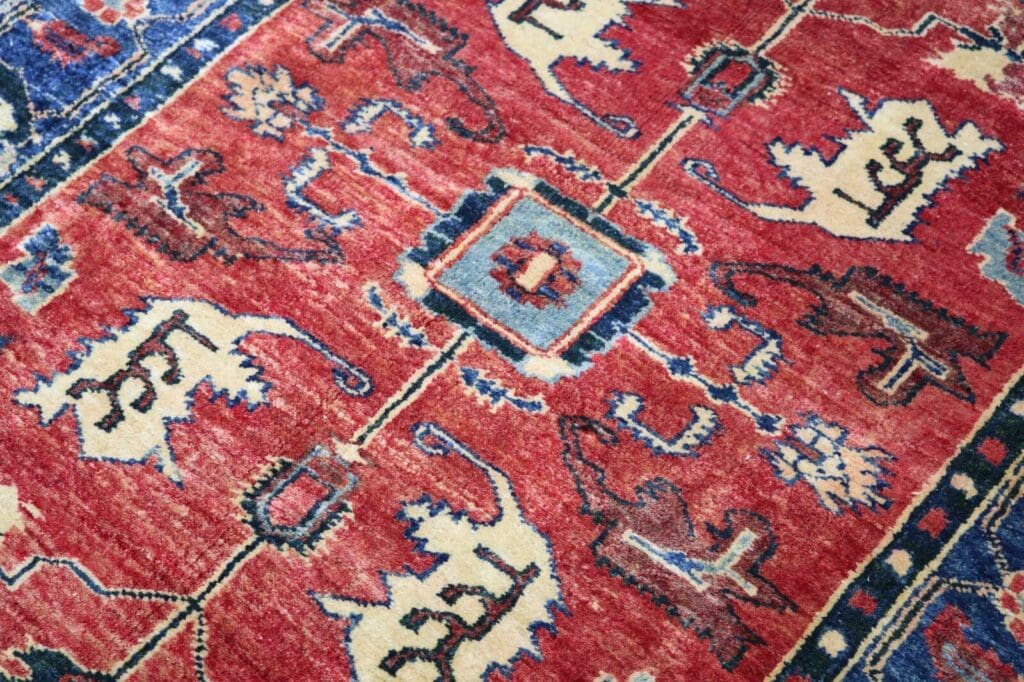
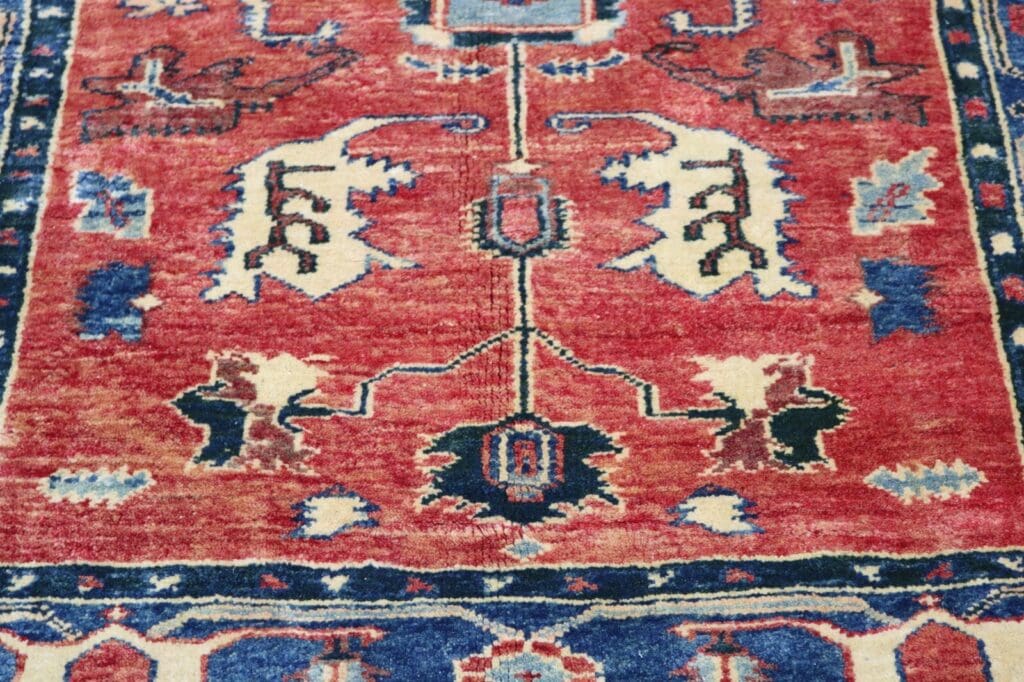
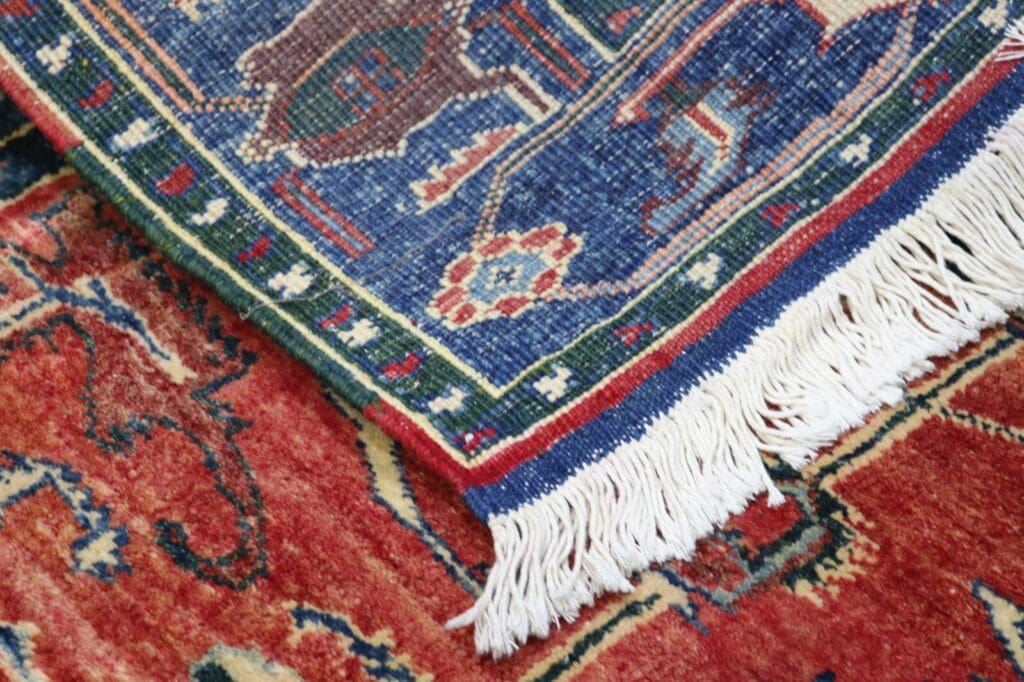
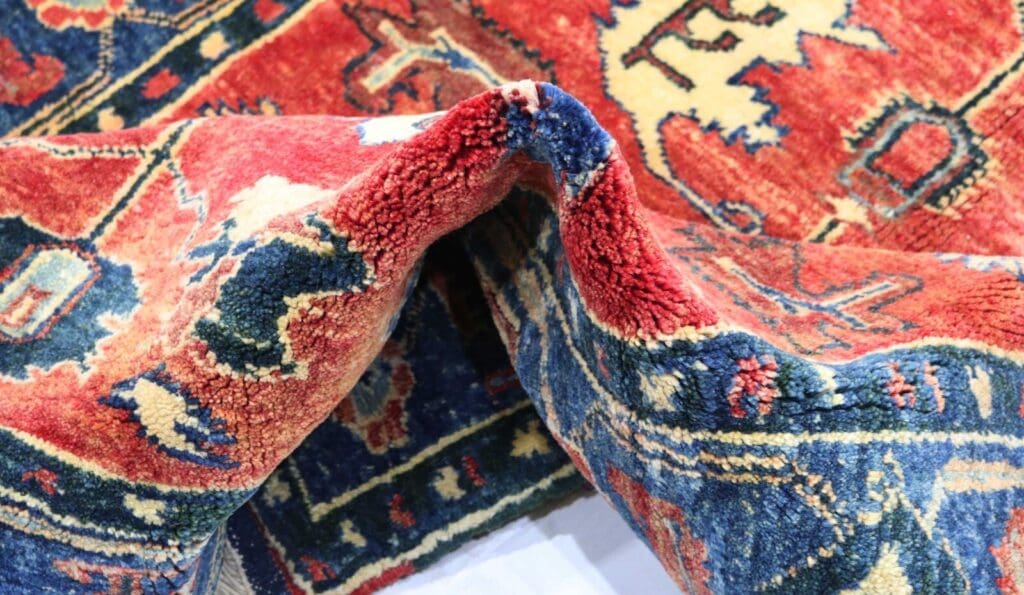
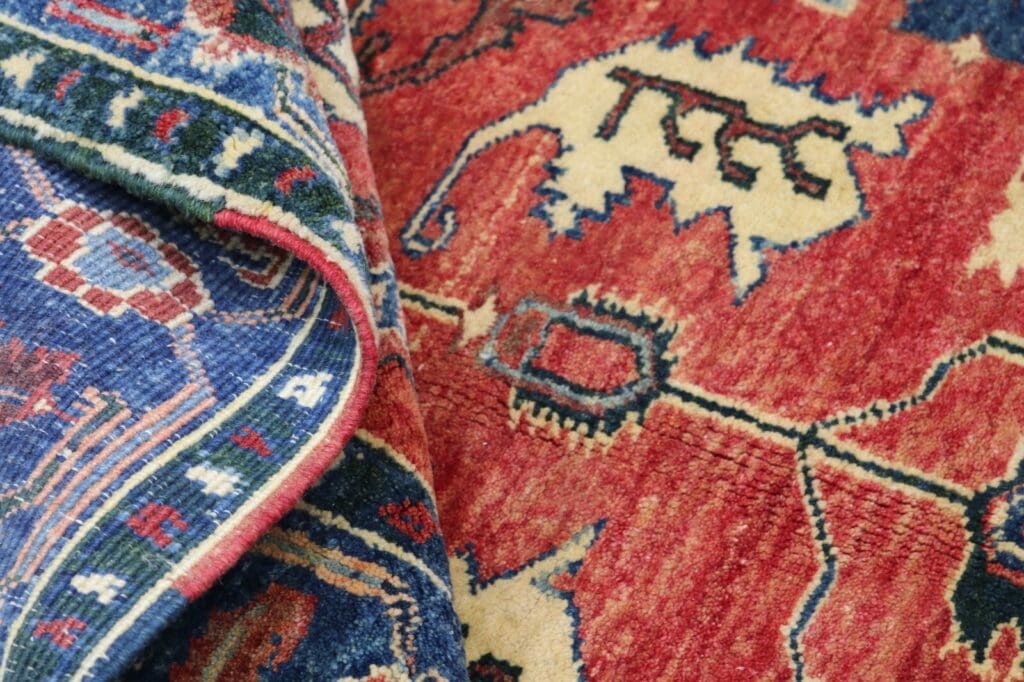
Oriental Rug Aseri 161 x 138 cm Wool Hand-knotted
€ 2663
Hand-knotted Aseri Oriental rug | Material: pile 100% wool, warp 100% cotton | Size: 161 x 138 cm | Pattern: unique floral pattern | Condition: used, antique | Age: approx. 60 years
Sold out
- ✓Free Shipping in EU
- ✓2-5 Business Days Delivery
- ✓14-Day Return Policy
- ✓Worldwide Shipping on request
 SECURE PAYMENT
 SHIPPING PARTNERS
Inventory number: 45971F1A
Description
Aseri Oriental Rug
Material and Craftsmanship
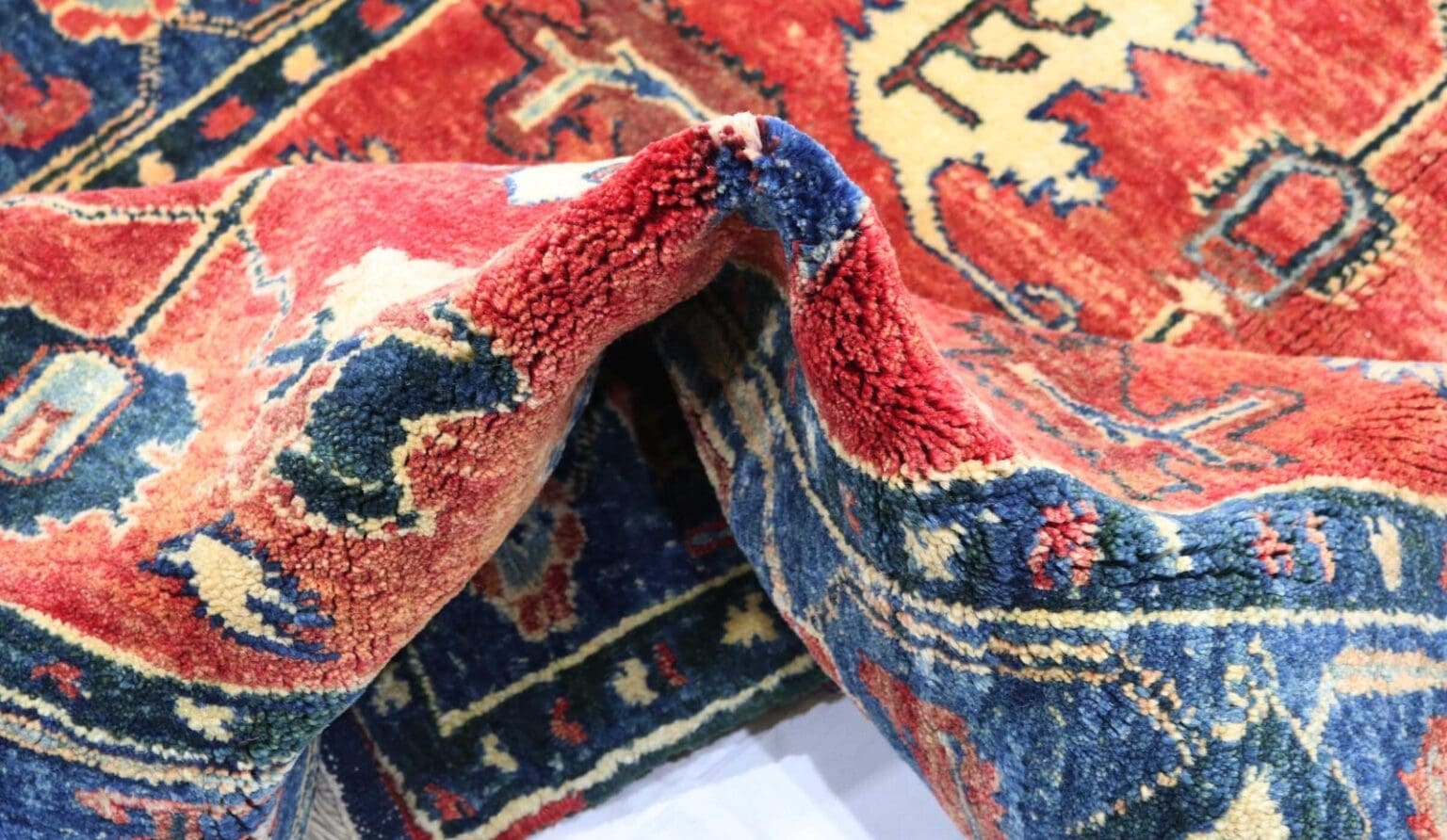
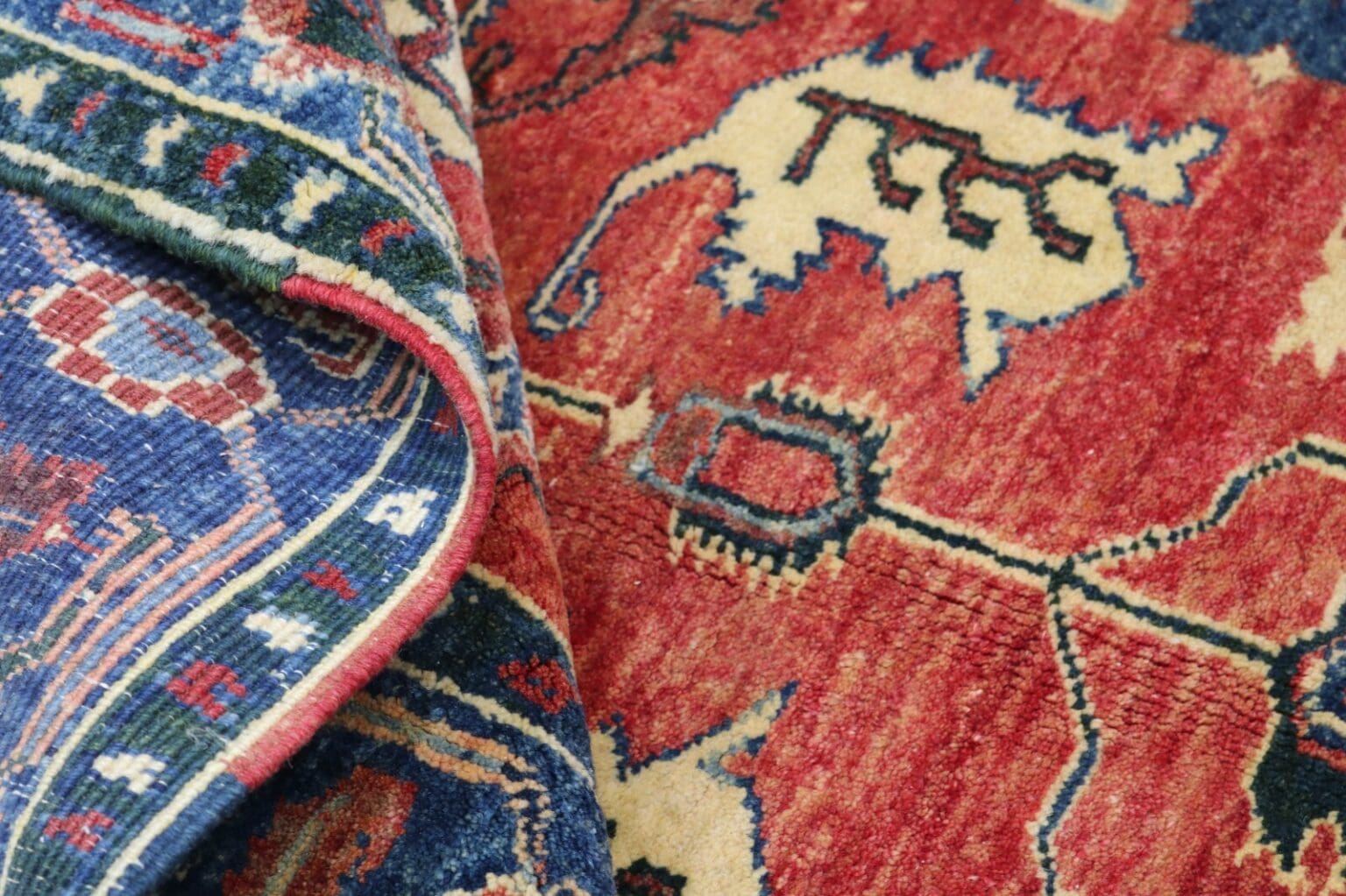
This Aseri Oriental rug is hand-knotted. Its pile is made from 100% wool, while the warp consists of 100% cotton. Wool is a traditional rug material, valued for its tactile surface and natural textile structure. In the pile, it provides a soft feel and forms the visible surface that carries the colours and pattern.
In hand-knotting, the pile threads are inserted individually into a prepared warp. The result is not an entirely uniform industrial product, but a one-off textile shaped by manual work. Rows are built up progressively and compacted during production. The floral design is transferred into the rug directly through this knotting structure rather than applied as a separate surface decoration.
The cotton warp provides the foundation to which the wool knots are attached. Warp, knots and pile work together to create the rug’s construction. The product information specifically identifies wool for the pile and cotton for the warp. No knot density is given, so no density is assigned to this rug.
Origin and Tradition
The rug is identified as an Aseri rug and originally comes from Azerbaijan. Azerbaijan is one of the important regions of Caucasian rug making. Rugs from this area belong to a long-established tradition in which manual skill, inherited pattern systems and regional approaches to colour are closely connected. Within this broader tradition, Aseri rugs are understood as a distinctive form of Caucasian weaving and knotting.
Rug making in Azerbaijan has traditionally been connected with family and domestic life. Knowledge of spinning, dyeing, preparing the warp and tying knots was often passed from one generation to the next. The work produced more than a useful household object. A rug could be part of a home’s cultural setting, an expression of regional identity and a carrier of inherited signs. Production frequently took place in the home, with women playing an important role in preserving and transmitting knotting knowledge.
Caucasian rug art includes a range of regional forms and visual languages. Geometric structures, botanical shapes and stylised figures can be combined in many different ways. Motifs were not developed only for decoration. In traditional contexts, signs and arrangements may relate to nature, everyday life, protection, fertility or the social world of the weavers. Their precise meaning can vary according to region, family and individual composition, so a motif should not be assigned one universal interpretation.
Azerbaijan is often described as a region with a particularly rich rug-making heritage. Its history of carpet production reaches back to antiquity. Over time, knowledge of fibre selection, colour, warp preparation, knotting and finishing was refined while the handmade foundation of the craft remained central. Each stage requires a practical understanding of how materials behave and how a pattern can be built into a durable textile surface.
The carpet-knotting art of Azerbaijan is also described as UNESCO world heritage of carpet-making. This classification points to the cultural importance of the inherited craft. It shows why a rug of this kind can be considered not only as a floor covering, but also as a textile record of material knowledge, labour, pattern tradition and regional history. The Aseri rug therefore belongs to a Caucasian tradition in which carpet making forms part of the cultural heritage.
Design and Pattern
The pattern of this rug is described as a unique floral design. Botanical ornament is a recurring subject in Azerbaijani rug art. Plant forms may be represented in a recognisable way or reduced to stylised signs. In a knotted rug, these shapes are not painted onto the finished surface. They are assembled from individual knots and colour areas, so the image emerges from the textile construction itself.
Aseri rugs are known for complex, often floral patterns. Geometric forms and stylised animals may appear alongside plant motifs in the regional vocabulary. Geometric elements can organise the field, while floral shapes introduce an organic rhythm. Animal figures are often simplified and integrated into an ornamental system. The motifs present in any individual rug depend on its own composition; for this piece, the stated feature is a unique floral pattern.
In Caucasian ornament, forms may be repeated, mirrored, arranged in rows or placed within a central field and border. These arrangements create visual coherence across the surface. A flower may appear as an isolated element, develop into a vine or be combined with other ornaments in a continuous composition. Hand-knotting allows such structures to be built knot by knot. Minor variations within repeated forms are part of the nature of handmade production.
The colour traditions associated with Azerbaijani rugs include strong and clearly differentiated tones. Deep reds, lively blues and soft beige shades are named for Aseri rugs. Red can give a field warmth and visual weight, while blue introduces contrast. Beige can act as a quieter counterpoint and separate individual ornaments. The effect of a palette always depends on the distribution of colours, the outlines of the motifs and the relationship between the ground and the ornament.
Colour and pattern in an Oriental rug do more than provide surface decoration. In many regional traditions, colours and signs are connected with inherited ideas and with the environment in which the rugs were made. A floral motif may recall plants and growth, while a structured border frames and contains the composition. These associations belong to the general language of regional rug art and should not automatically be treated as a personal statement by an unidentified weaver.
The floral design gives this rug a visual language that can be placed in different domestic settings. The named palette of red, blue and beige can be used alongside traditional furnishings as well as more restrained interiors. Its effect will depend on the surrounding room. What remains constant is the relationship between the hand-knotted construction, the colour fields and the floral forms as parts of one textile composition.
Special Features
The rug is approximately 60 years old and is described as used and antique. At the same time, it is stated to show few signs of wear despite its age. These details combine a historical classification with a specifically described state of preservation. The condition is therefore presented as the supplied condition description rather than inferred simply from the rug’s age.
Practical features include suitability for underfloor heating and an anti-slip construction. The rug is also described as pet-friendly and child-friendly. It can be vacuumed regularly as part of its care. Professional rug cleaning is recommended when a thorough cleaning is needed; stains may be treated carefully with a damp cloth. Direct sunlight should be avoided to help prevent the colours from fading.
FAQ
How should I care for the Aseri rug?
Regular vacuuming on a low setting is recommended. Direct sunlight should be avoided because it can contribute to colour fading. If a stain occurs, a damp cloth can be used to treat the area gently. For a more comprehensive cleaning, professional rug cleaning is advisable. This approach gives the pile and colours a careful form of maintenance.
What is the difference between hand-knotted and hand-woven rugs?
A hand-knotted rug is built from a large number of individual knots. The knots are inserted into the warp during a longer production process, and together they form the pile, pattern and structure. Hand-woven rugs, by contrast, are made from longer fabric strips that are joined together. This produces different structural qualities and different design possibilities. Hand-knotted rugs are generally regarded as having a higher value.
Can this rug be used in every room?
The Aseri rug is intended for use in a range of rooms. The suggested spaces include a study, dining room, guest room, kitchen, bedroom and living room. Its floral design and named colour range can work with different furnishing styles, from classic to modern. Suitability for underfloor heating and an anti-slip, pet-friendly and child-friendly construction are also stated. The final placement should be chosen according to the conditions of the particular room.
Additional information
| Color | |
|---|---|
| Size | |
| Shape | |
| Material |
Related products

Persian Rug Tabriz 353 x 253 cm Wool & Silk Hand-knotted
€ 4200
Persian Rug Farahan 235 x 154 cm Wool Hand-knotted
€ 990
Persian Rug Tabriz 293 x 203 cm Wool & Silk Hand-knotted
€ 3300
Persian Rug Rosenbidjar 222 x 131 cm Wool Hand-knotted
€ 1530
Persian Rug Isfahan 222 x 146 cm Silk Hand-knotted
€ 3905
Persian Rug Kashan 345 x 253 cm Wool Hand-knotted
€ 2910
Persian Rug Isfahan 250 x 155 cm Silk Hand-knotted
€ 3600
Persian Rug Kashan 211 x 140 cm Wool Hand-knotted
€ 900