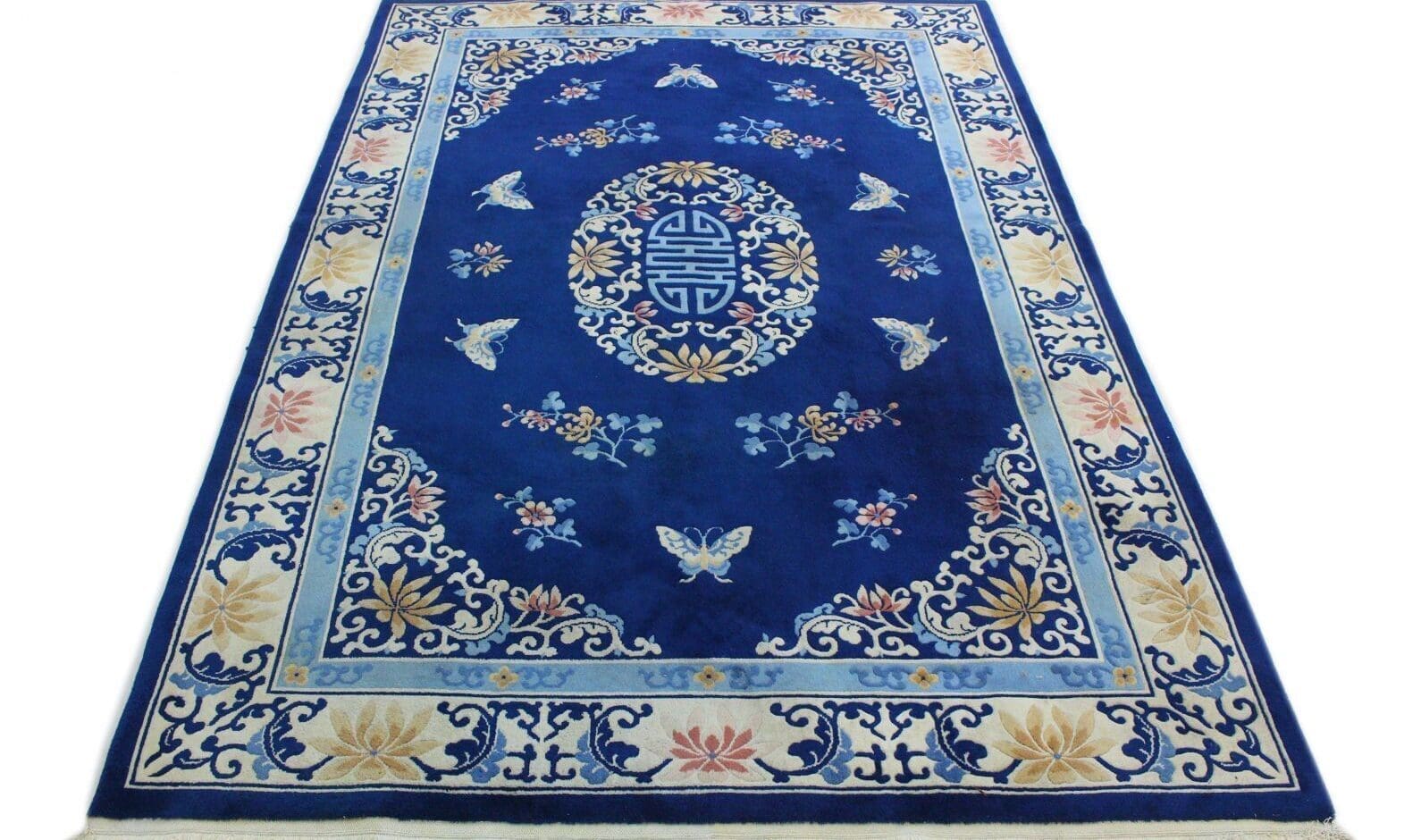
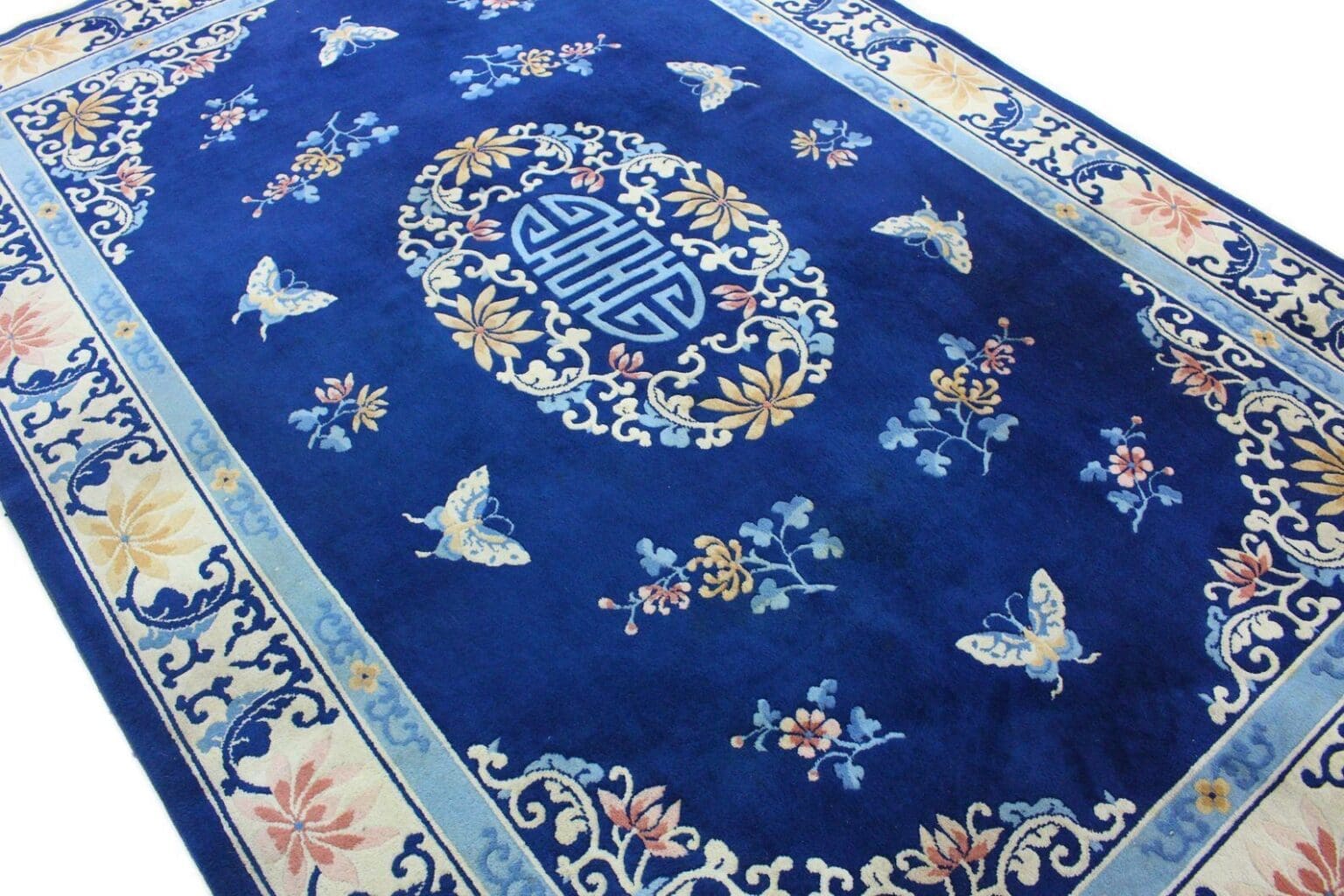
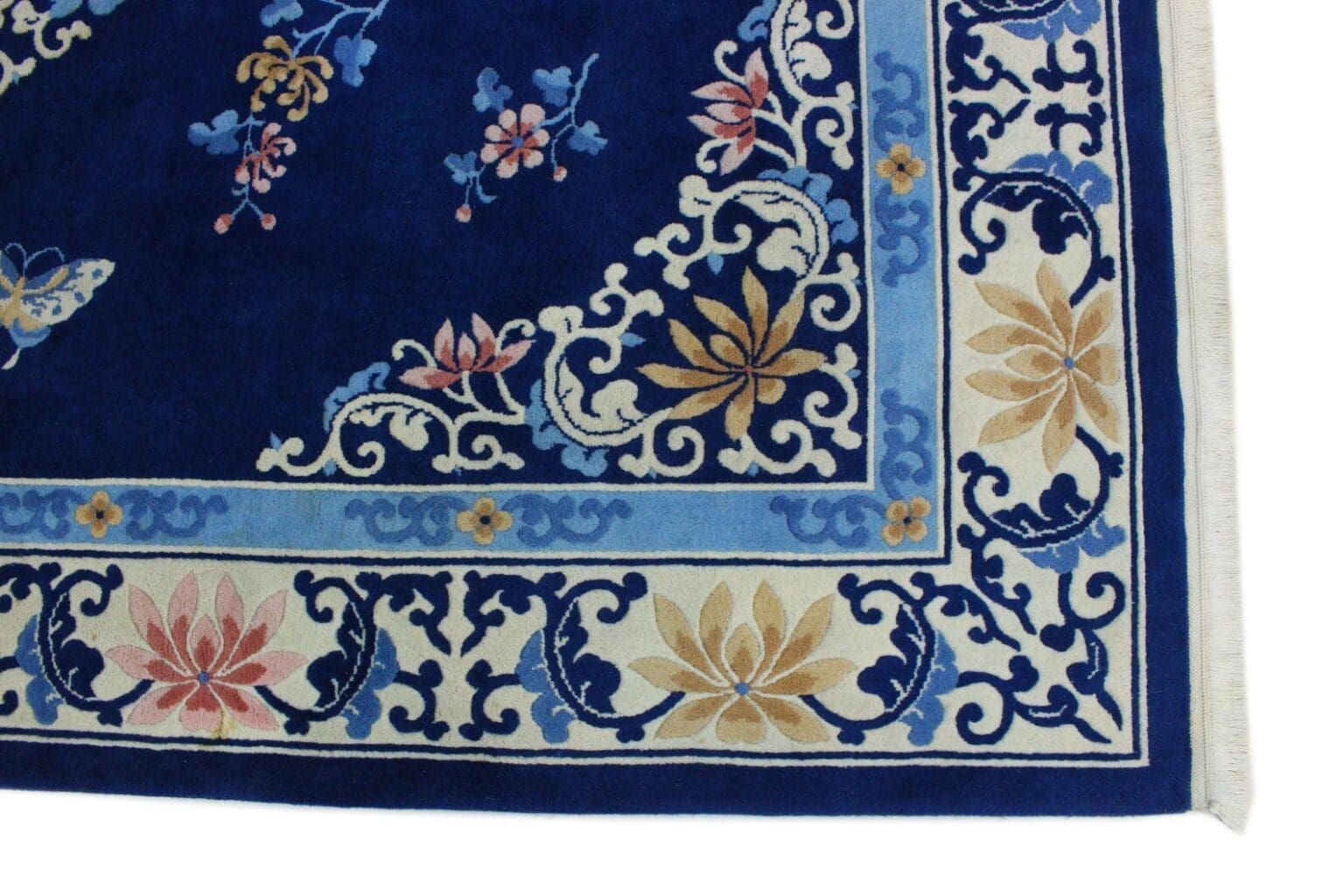
Hand-knotted Chinese Oriental rug | Knot density: not stated | Material: pile wool, warp cotton | Size: 300 x 200 cm | Condition: New with tag | Age: approx. 25-40 years
This Oriental rug was hand-knotted in China. Wool is specified for the pile, while the warp threads are made of cotton. These two materials have distinct roles in the construction: wool forms the visible, tactile surface, and the cotton warp provides the underlying framework around which the knots are secured. No knot density is given for this rug, so no density claim is made.
In hand-knotting, each knot is tied individually around the warp threads and then held in place with weft threads. The rug grows row by row through this manual process. Its construction is therefore different from a machine-made floor covering, where the structure is produced by an automated system. Hand-knotted is the stated manufacturing method for this particular piece.
Wool has long been used in Oriental rug making because it gives the pile a substantial handle and accepts color well. Cotton is often chosen for warp threads because it can be tensioned into a stable, even foundation. This general textile knowledge explains the relationship between the materials without adding any claim about the exact grade of wool, the source of the fibers, or the number of knots in this rug.
The rug was thoroughly washed and inspected. Its condition is listed as “New with tag.” These points describe its treatment and the condition recorded for the offered piece; they are separate from its construction in wool, cotton and hand-knotting. The information establishes a clear material and production profile without requiring assumptions about details that are not supplied.
Origin and Tradition
The rug comes from China and is therefore a Chinese-made Oriental rug. China has a broad and independent carpet tradition shaped by different regions, workshops and cultural influences. Chinese rugs are not one uniform category. Their designs may reflect local imagery, courtly decoration, religious ideas and long-standing exchanges with other parts of Asia.
Chinese carpet production includes both hand-knotted and hand-woven forms. In a knotted rug, the warp is stretched on the loom and the design is built through successive rows of knots. Weft threads help secure the rows, while the pile is later adjusted to create a coherent surface. This sequence links the drawing, the chosen yarns and the physical work of the knotter. It is the technical foundation behind many handmade rugs.
Historically, Chinese rugs have been associated with both practical interiors and formal settings. Motifs can draw on nature, the visual language of East Asian culture, symbolic traditions or decorative court design. Color has also served more than a purely technical purpose: it can establish an atmosphere and carry cultural associations. This history helps explain why Chinese rugs may appear either strongly ornamental or more pictorial while still belonging to a recognizable craft tradition.
The description “traditional Persian/Oriental” identifies the style of this rug, not its country of manufacture. The origin of this specific piece is China. A Persian-influenced visual language can be adopted and reinterpreted by workshops in other countries. For that reason, this rug is presented as an Oriental rug rather than a Persian rug. More broadly, Oriental rugs form a large family of handmade textiles from Asia, and their regional origins should not be confused with the name of a design tradition.
The development of Chinese rug making is especially visible in the balance between ordered composition and symbolic ornament. Borders, central fields and repeated signs can organize a surface, although no single arrangement appears in every rug. Workshops adapt inherited ideas to the available materials, the intended setting, the requested size and the desired visual balance. For this rug, the documented style is traditional Persian/Oriental and the documented color is blue; no specific Chinese city, province or workshop is named.
Hand-knotting also connects the present object with a wider history of textile production. A design is transferred into a sequence of manual decisions: the selection of yarn, the placement of each color and the completion of each row. This does not make every Chinese rug Persian in origin, nor does a Persian-style motif establish a Persian provenance. It shows instead how techniques and visual ideas can travel across regions while retaining distinct places of manufacture.
Design and Pattern
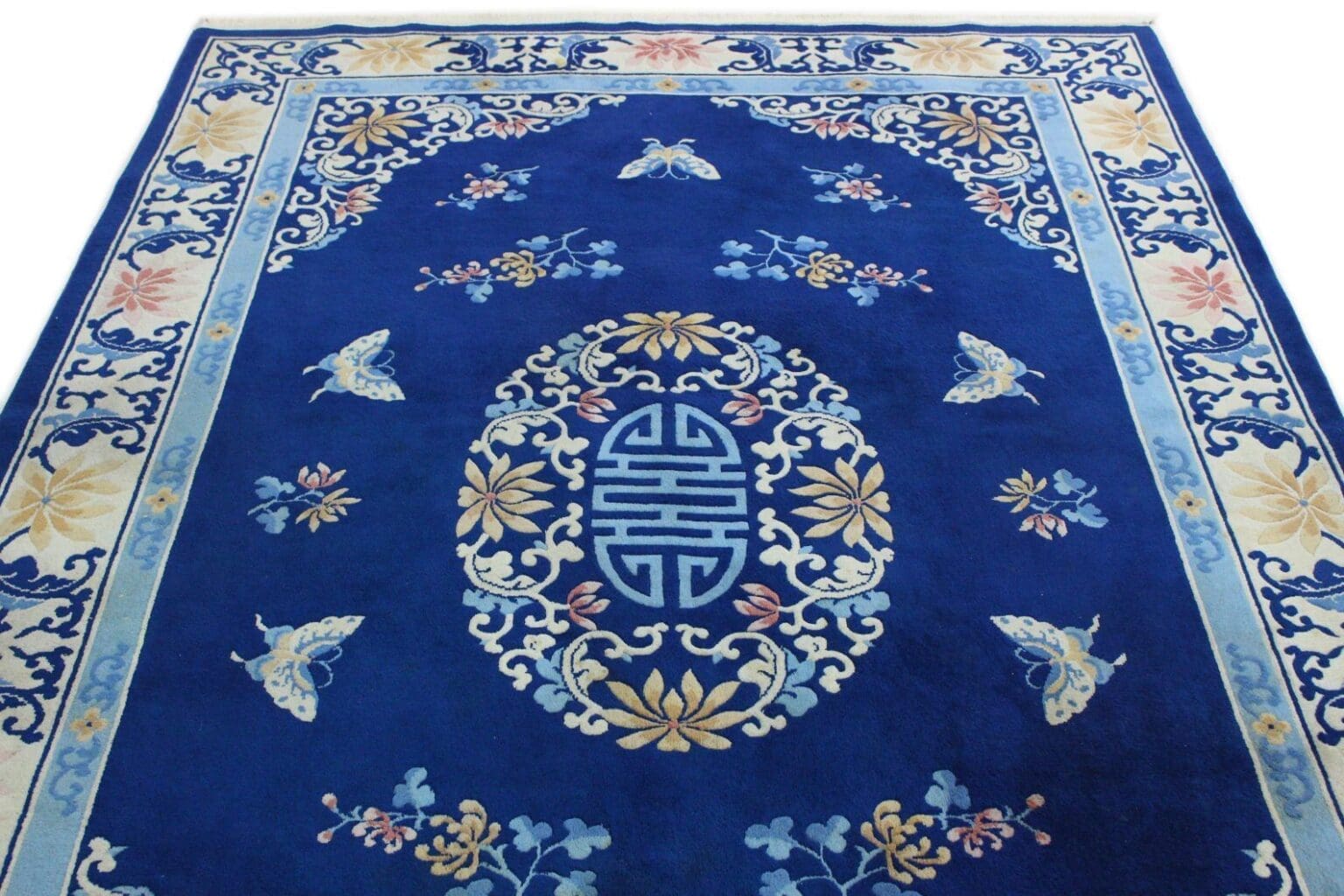
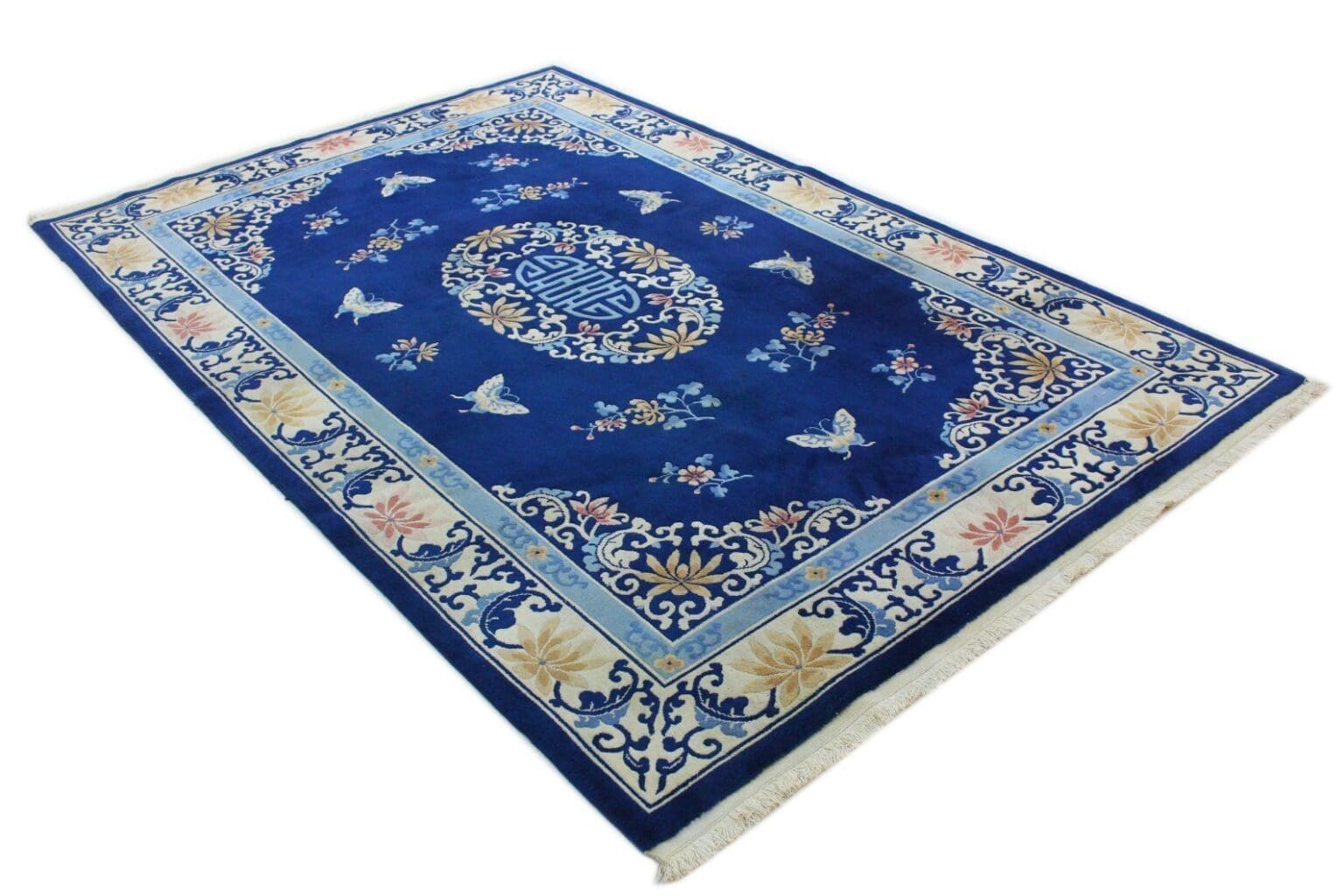
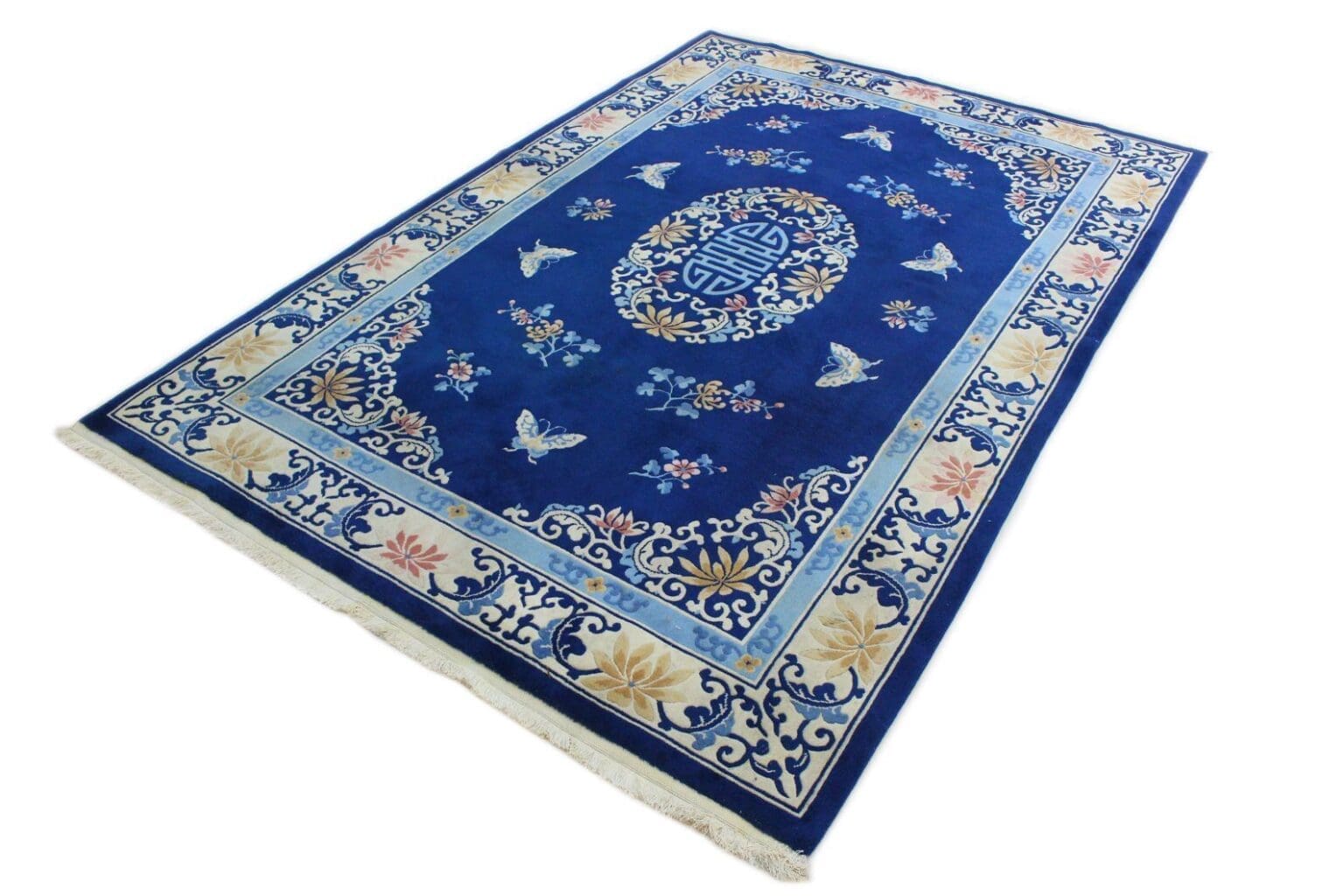
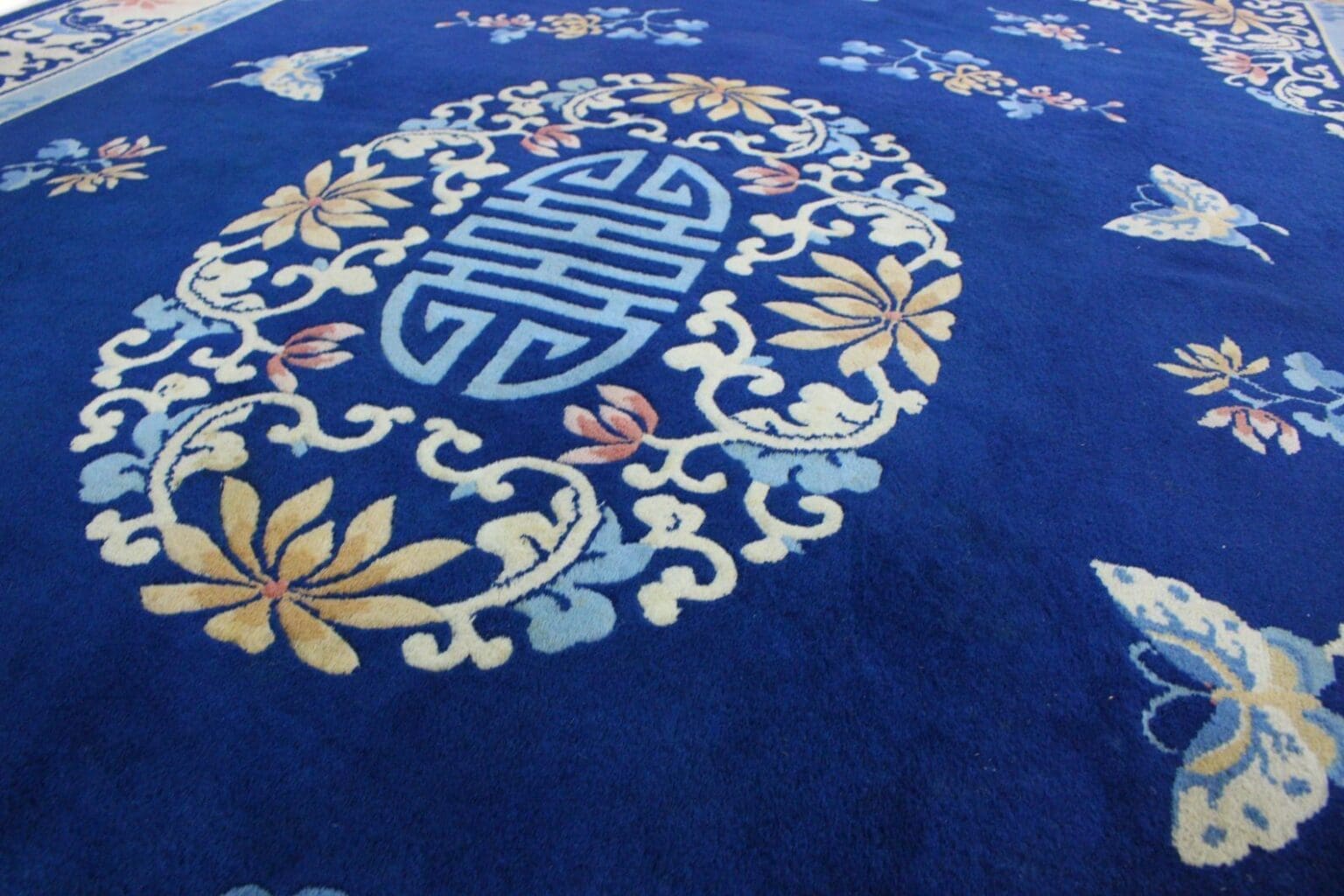
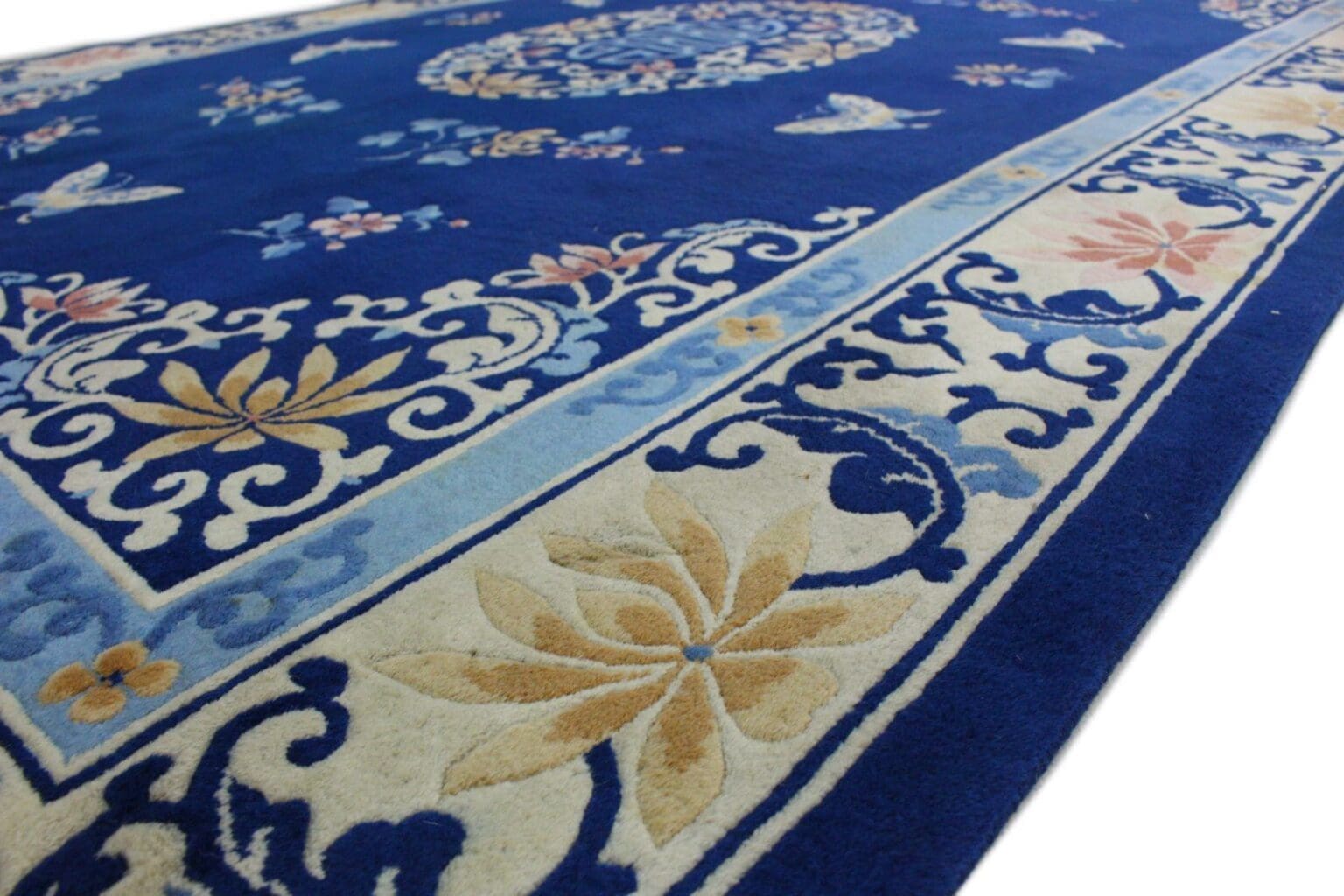
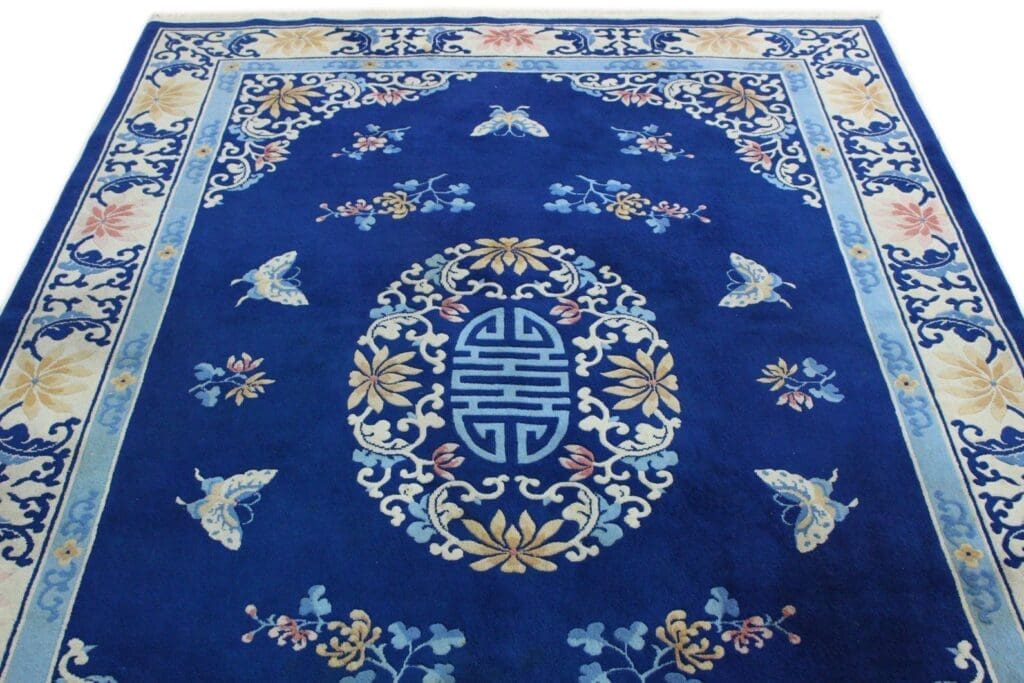
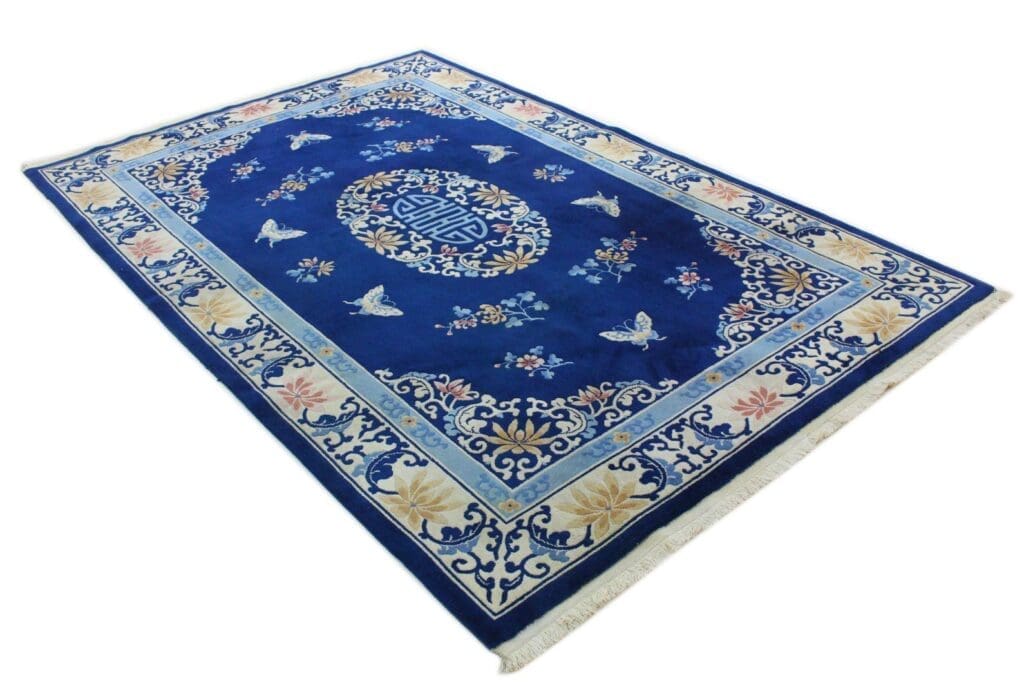
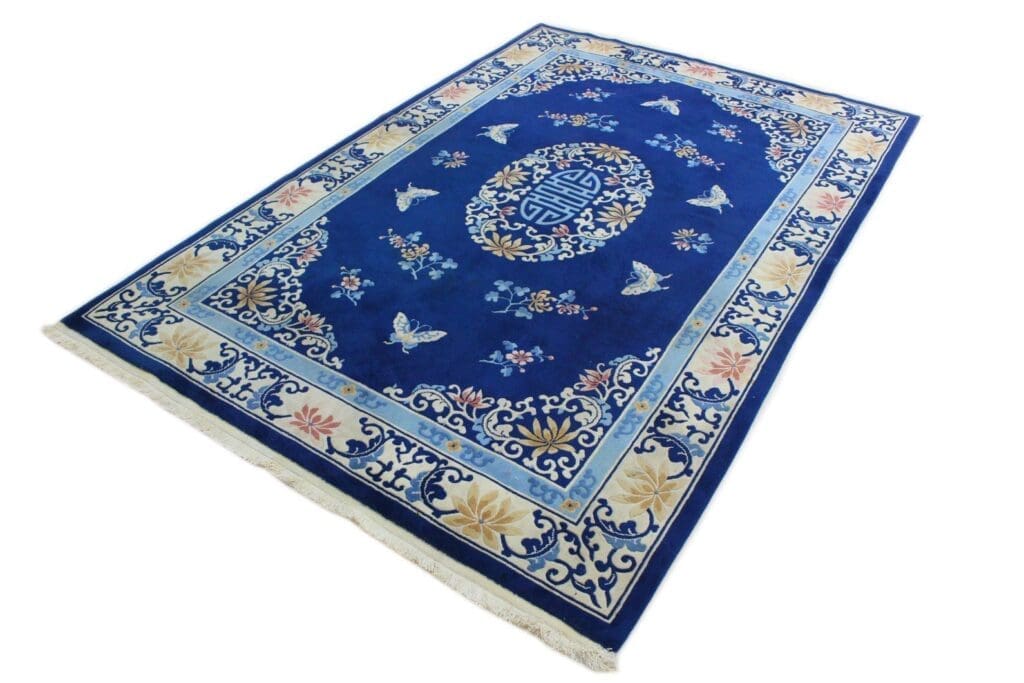
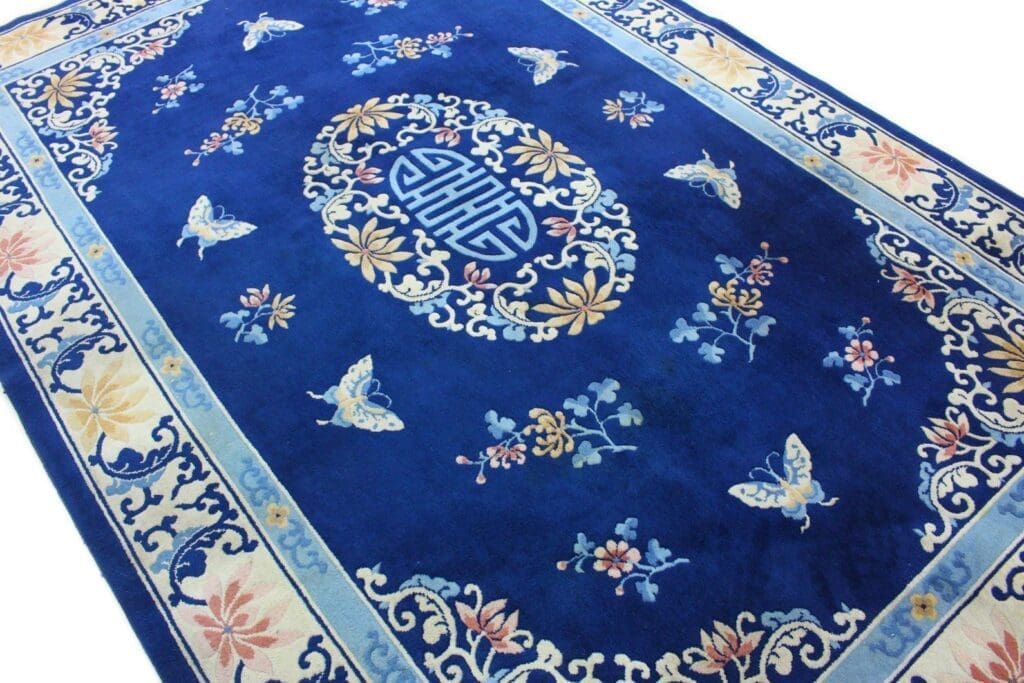
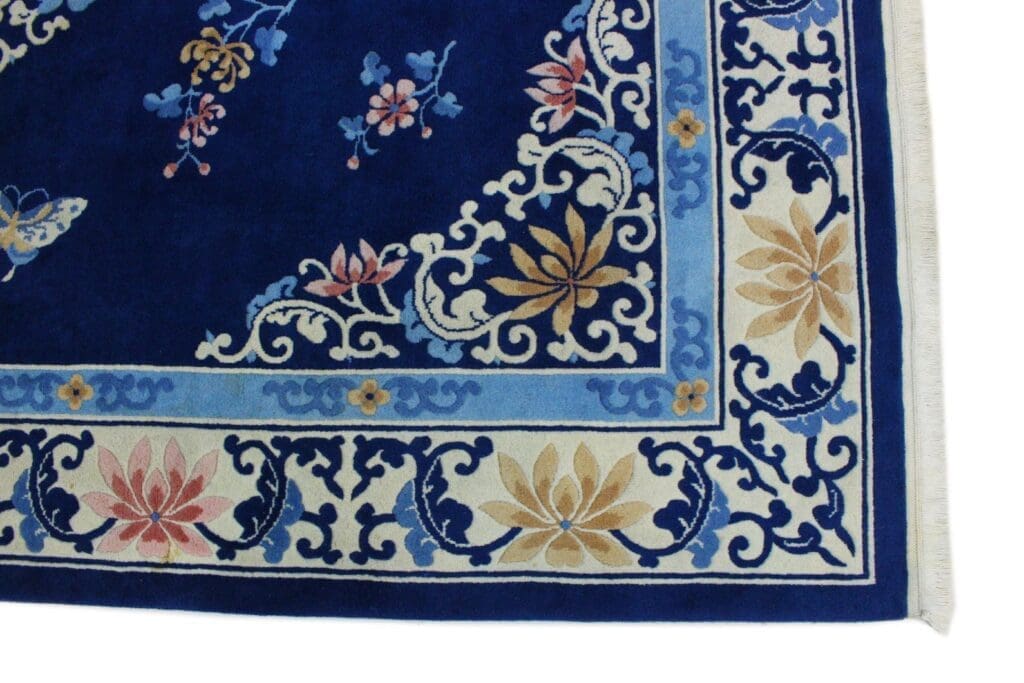
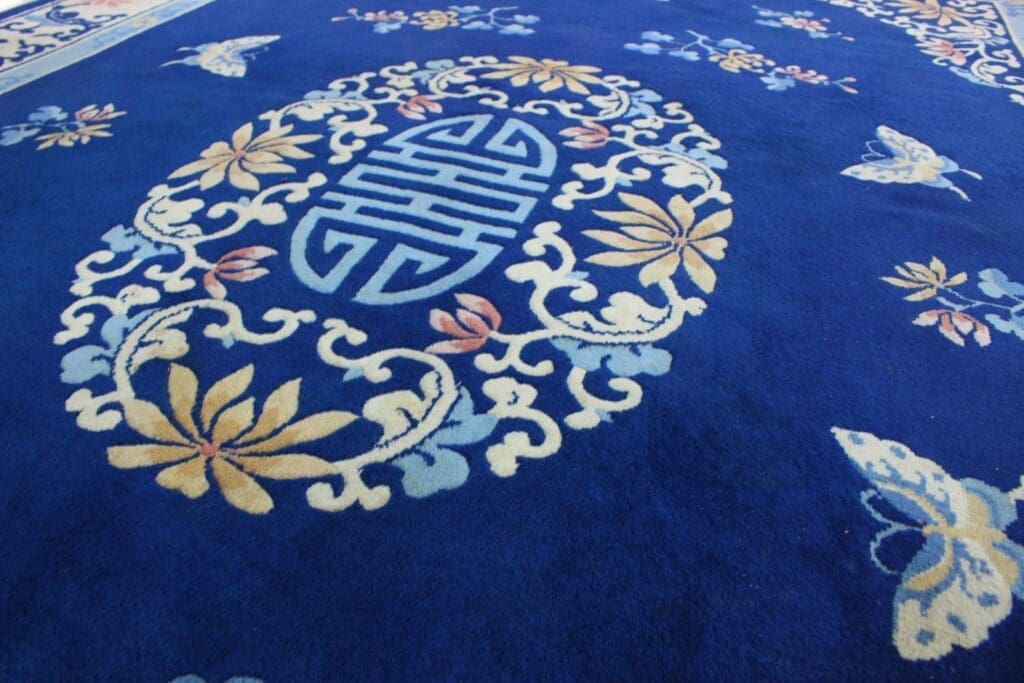
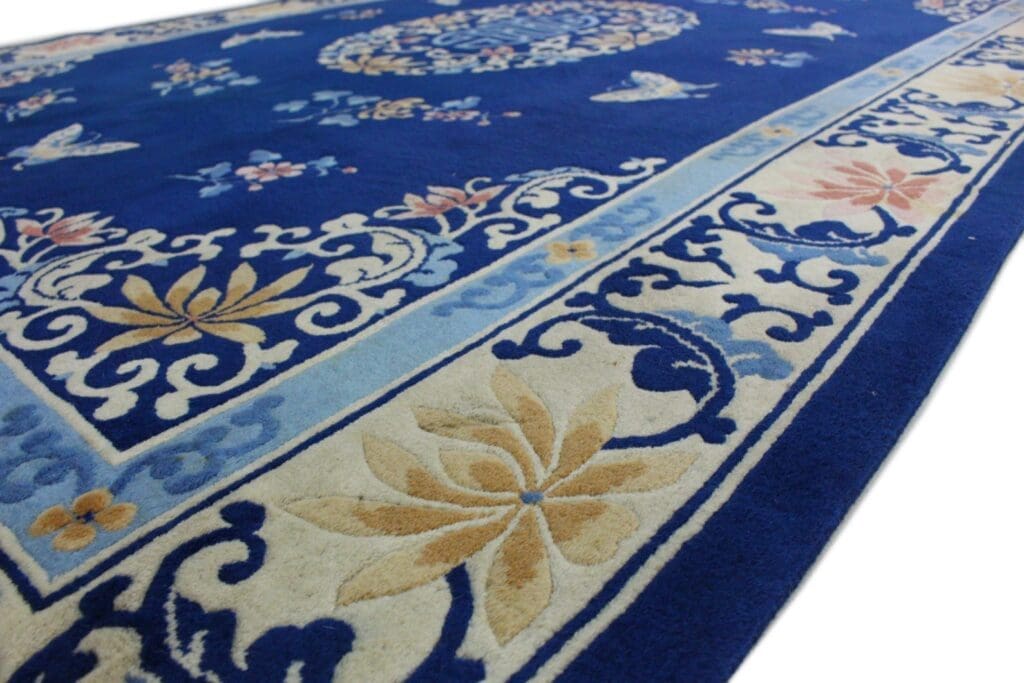
This rug is described as classic and traditional Persian/Oriental in style. Its stated color is blue. The product information does not identify a particular motif, medallion, border layout or named pattern. The design can therefore be discussed through its documented style and color, but no specific ornament is assigned to the rug without evidence.
Traditional Persian- and Oriental-influenced designs often organize a rug through a relationship between field and border. A central medallion may be used in one composition, while another repeats an all-over arrangement across the surface. Floral vines, leaves and geometric forms may be combined, separated into bands or reduced to a regular rhythm. These are general possibilities within the tradition, not descriptions of a pattern that has not been specified for this piece.
Blue covers a wide range of shades, from pale and muted tones to deeper, denser hues. Depending on the dye and the colors around it, blue can appear quiet, cool, contrasting or restrained. In classical Oriental rug design, blue is often set against lighter grounds or combined with warm accents. Only blue is documented for this rug, so additional colors are not presented as features of the individual piece.
Pattern and color perform several functions in traditional rug design. They divide the surface, guide the eye and create relationships between the center, the edges and the transitions between them. Floral imagery may evoke plants or gardens, while geometric forms can establish order through repetition and symmetry. In Persian-Oriental visual language, such forms are often connected with nature, balance or the idea of a structured space. Their precise meaning depends on the actual symbol and its cultural context.
The word “classic” indicates a traditional design direction rather than an experimental one. It does not prove that the rug reproduces a particular historical model. Likewise, “Persian/Oriental” describes the visual character and not the origin. This Chinese-made rug therefore combines Chinese production with a traditional Persian-Oriental style description. Keeping those two aspects separate allows the design to be described accurately.
On a hand-knotted rug, the visual effect comes from the interaction of knots, pile, color placement and finishing. Manual work can produce small variations in the way a surface develops. The image is not printed onto a completed textile; it is built from colored yarns as the knotting progresses. In that sense, the decorative language and the physical construction are inseparable parts of the object.
Special Features
The stated special features include thorough washing and inspection. The rug is also described as suitable for underfloor heating. This is a product-specific statement and is not extended to every hand-knotted rug. Before use, the heating system should be operated correctly and the rug should be placed on a suitable, stable floor. A suitable anti-slip underlay can provide additional security where necessary.
The listed condition is “New with tag,” while the rug is described as approximately 25-40 years old. These two facts are kept distinct: the age gives a time classification, whereas the condition wording describes the status recorded for the offered item. The rug is rectangular and blue. No signature or special provenance document is stated.
Its documented individual features are the Chinese manufacture, hand-knotting, wool pile, cotton warp, blue color, rectangular form, thorough washing and inspection, suitability for underfloor heating, and the stated condition and age. No specific knot count, workshop, province or exceptional rarity is supplied, so none is added here.
FAQ
How should I care for this Oriental rug?
For routine care, vacuum gently without using a rotating brush attachment. This removes loose dust while avoiding unnecessary mechanical stress on the pile. Stronger soiling is best handled by a professional rug cleaner. Prolonged direct sunlight should be avoided because it can alter colors over time. Do not rub a spill aggressively into the pile; if the appropriate treatment is uncertain, consult a specialist.
How long can a hand-knotted rug last?
The service life of a hand-knotted rug depends on use, maintenance, moisture, sunlight and the way stains are treated. With suitable care, hand-knotted rugs can remain in use for several decades and, in appropriate circumstances, considerably longer. No fixed lifespan can be promised for this individual rug. Gentle regular cleaning and avoiding intense, concentrated wear are important parts of responsible care.
Where is an Oriental rug best suited?
A rectangular Oriental rug can be used in living rooms, bedrooms or hallways. The best placement depends on the room, the amount of foot traffic and the floor beneath it. Since this rug is listed as suitable for underfloor heating, it can also be used in a room equipped with that system. An anti-slip underlay may improve safety. In especially busy areas, careful use and regular inspection are advisable.
To provide the best experiences, we use technologies like cookies to store and/or access device information. Consenting to these technologies will allow us to process data such as browsing behavior or unique IDs on this site. Not consenting or withdrawing consent, may adversely affect certain features and functions.
Functional Always active
The technical storage or access is strictly necessary for the legitimate purpose of enabling the use of a specific service explicitly requested by the subscriber or user, or for the sole purpose of carrying out the transmission of a communication over an electronic communications network.
Preferences
The technical storage or access is necessary for the legitimate purpose of storing preferences that are not requested by the subscriber or user.
Statistics
The technical storage or access that is used exclusively for statistical purposes.The technical storage or access that is used exclusively for anonymous statistical purposes. Without a subpoena, voluntary compliance on the part of your Internet Service Provider, or additional records from a third party, information stored or retrieved for this purpose alone cannot usually be used to identify you.
Marketing
The technical storage or access is required to create user profiles to send advertising, or to track the user on a website or across several websites for similar marketing purposes.
 SECURE PAYMENT
 SHIPPING PARTNERS


