This vintage Oriental rug was hand-knotted and is described as being made from high-quality materials. No specific fiber is named, so the material is presented without assigning a pile or warp fiber. Hand-knotting is a traditional process in which individual knots are tied by hand around the warp structure. Rows of knots are secured and compacted as the work progresses, allowing the surface design to develop gradually across the rug.
The rug is described as having a high knot density. In general, knot density influences how finely a pattern can be represented, because a greater number of knots gives the weaver more points with which to build small changes in line, shape, and color. It also contributes to the closely worked character associated with hand-knotted rugs. The construction described for this piece supports both the detailed appearance of its pattern and its practical resistance to everyday use.
Hand-knotted construction also gives a rug a distinct surface texture. The source describes this rug as soft underfoot, while its construction is also presented as durable and easy to care for. These qualities result from the combination of the knotting method, the chosen materials, and the compact structure of the finished surface. Since the exact fibers and technical specifications are not identified, no further material classification is assigned here.
Origin and Tradition
The term Oriental rug refers to a broad family of hand-made floor coverings associated with weaving cultures across the Orient. It does not identify a particular province or workshop, and no specific place of origin is named for this rug. Across these cultures, rug making developed as a practical craft that could also carry visual, social, and symbolic meaning. Designs, colors, and construction methods were passed between generations and adapted by individual weaving communities.
Traditional rug production is closely connected with the organization of the loom and the preparation of the yarn. Warp threads form the foundation, while rows of knots create the pile and weft threads help stabilize the structure. The weaver builds the design row by row, following a drawn plan, a remembered composition, or a pattern tradition. This process requires repeated attention to tension, alignment, color placement, and the evenness of the knotting.
In many Oriental weaving traditions, the rug is both a useful household object and a form of textile art. Workshops and individual weavers have developed recognizable approaches to proportion, border arrangement, color relationships, and the treatment of floral or geometric forms. Some compositions are formal and symmetrical, while others allow more variation in the arrangement of motifs. The traditions are not uniform across the Orient; they reflect different environments, materials, technical habits, and cultural histories.
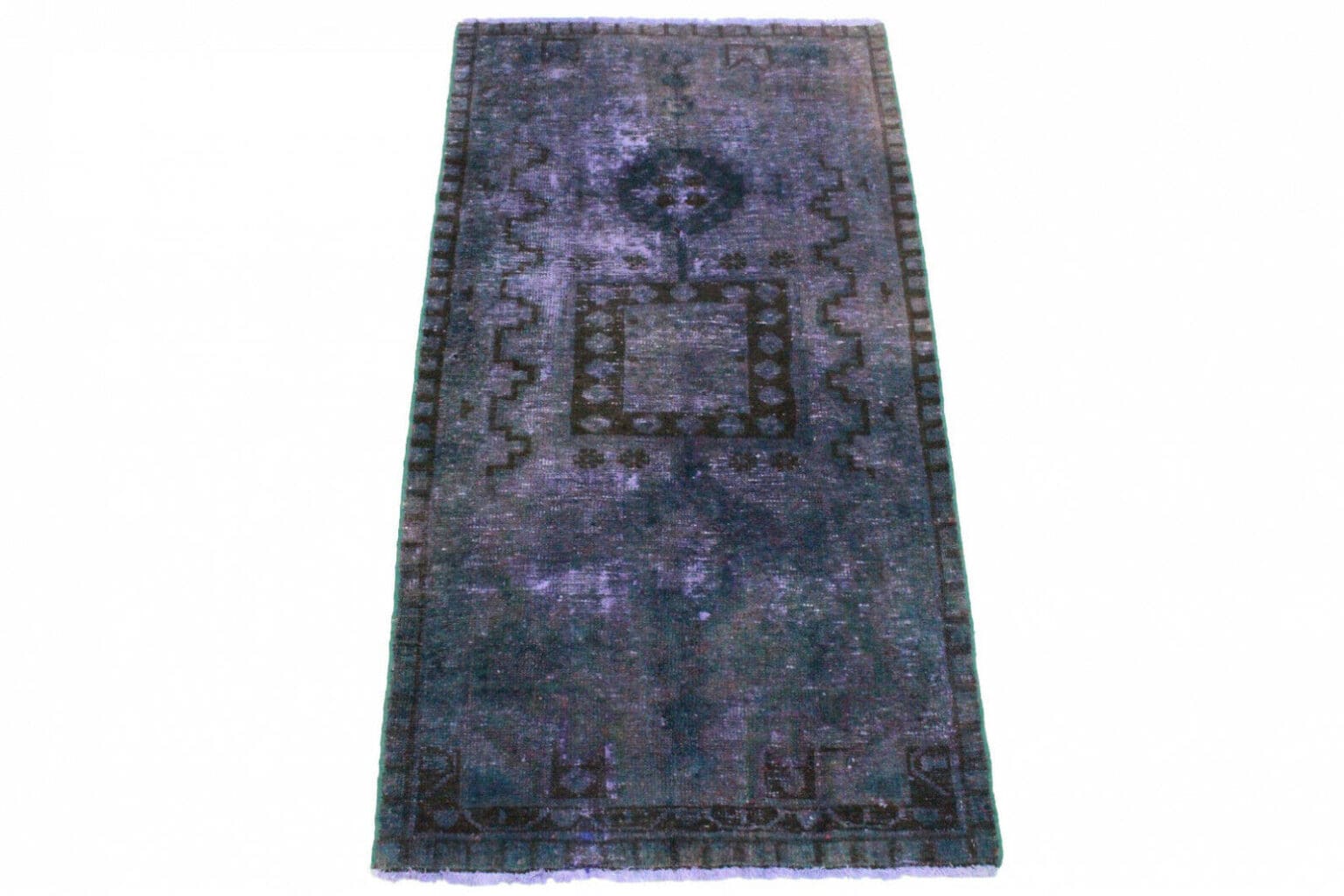
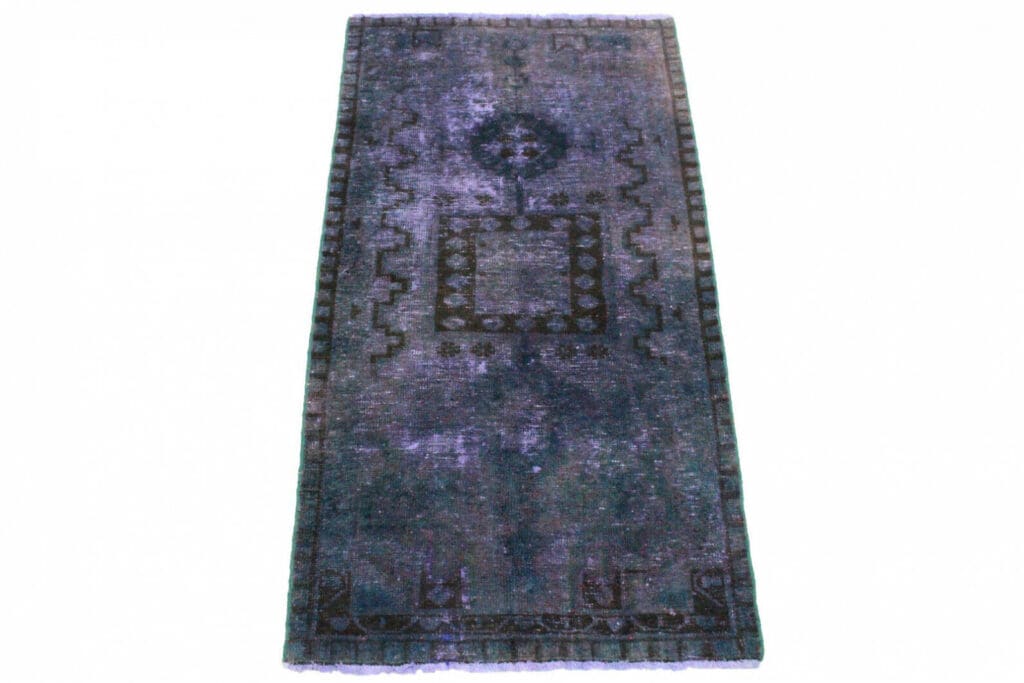
Color has always played an important role in this tradition. Dyers select and combine colors to define the field, borders, and smaller decorative elements. Purple can be used as a strong ground color or as an accent within a wider palette, depending on the composition. The purple coloring of this rug gives its surface a clear visual identity, while the fine accents help articulate the design. Because the source does not name a region, the rug is not assigned to a particular weaving province or regional school.
The vintage character places the rug within a tradition of continued use and appreciation for older hand-made textiles. A vintage rug is valued for its established surface and for the visible connection between traditional production and later interior use. It should not be confused with a statement of exact age or provenance: neither an age nor a named origin is provided for this piece. What is identified is its vintage designation, hand-knotted construction, purple color scheme, and designer-piece character.
Design and Pattern
The design combines floral and geometric motifs. Floral forms are among the recurring elements in Oriental rug design and may be arranged as individual blossoms, stylized leaves, branching forms, or repeating botanical units. Geometric motifs introduce defined edges, measured intervals, and structured relationships between the decorative elements. When these two visual languages appear together, the composition can balance organic shapes with a more ordered framework.
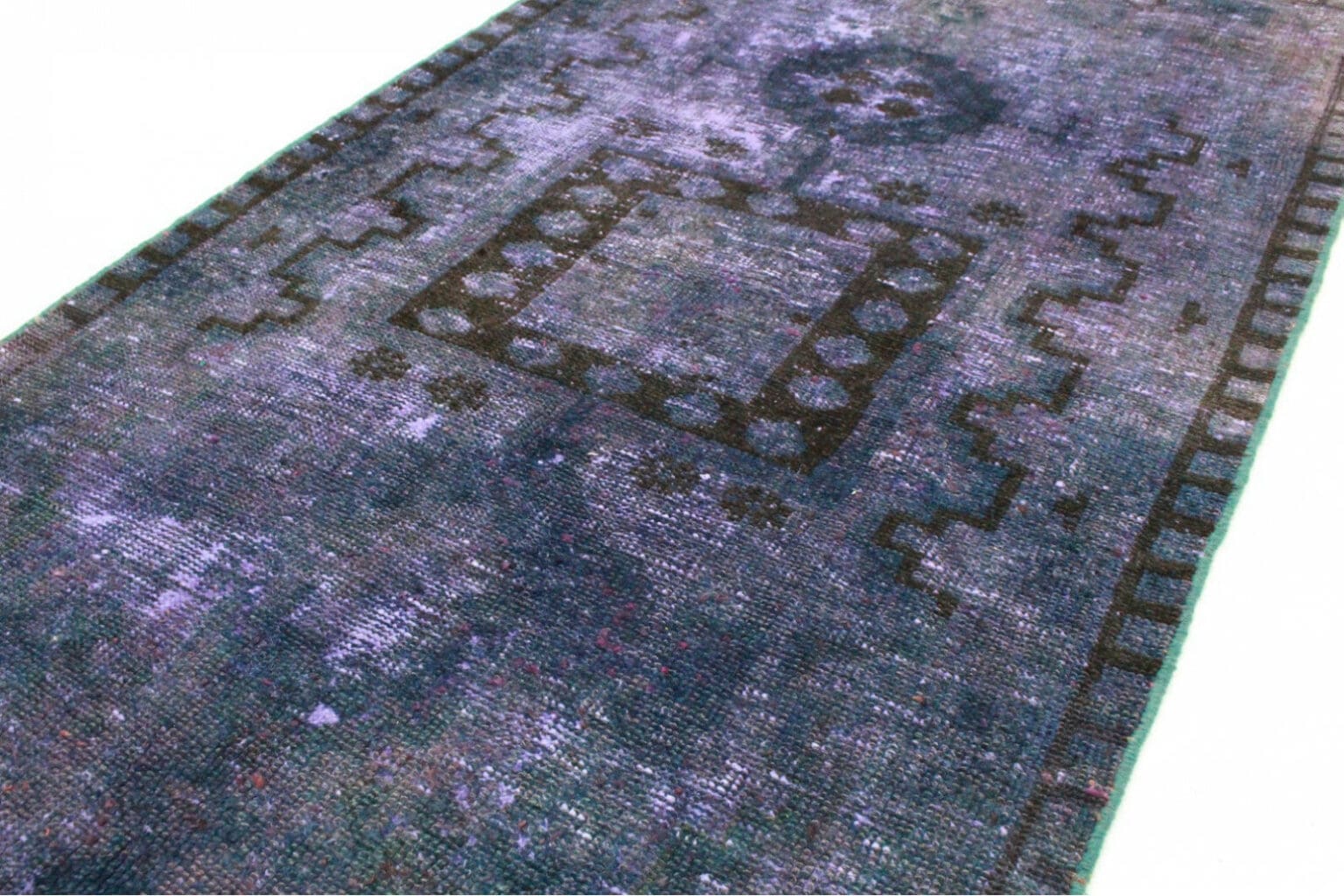
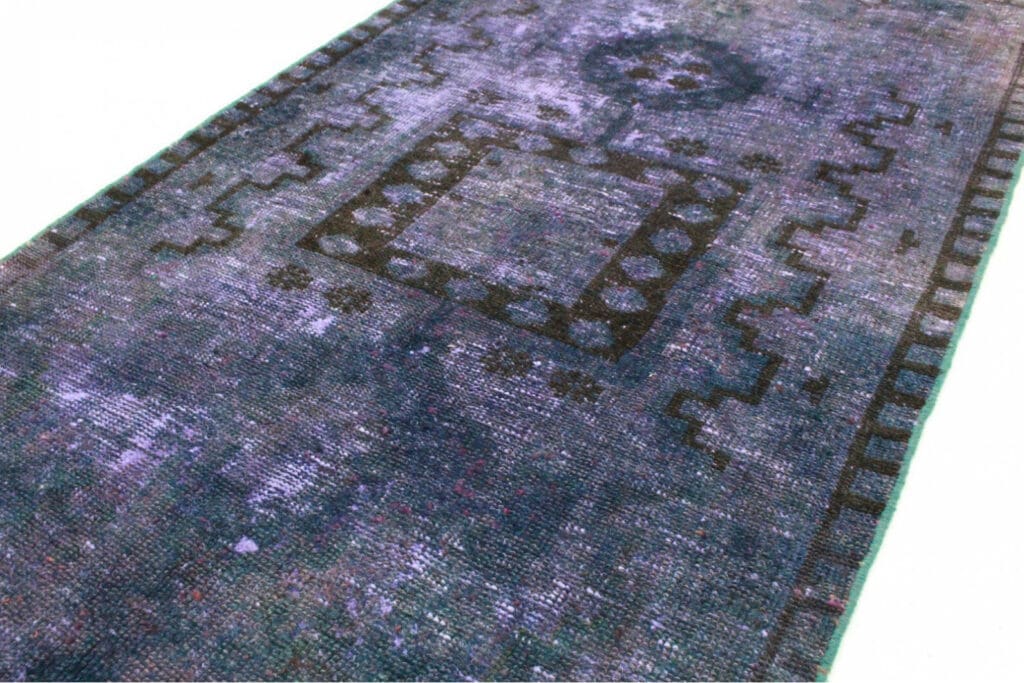
On this rug, the motifs are described as being worked into the surface with attention to detail. Hand-knotting allows a design to be built from many small colored units, so curves, corners, outlines, and changes in scale can be represented through the arrangement of individual knots. The high knot density is relevant to this detailed appearance, although no numerical density is given. The pattern is therefore described by its floral and geometric character rather than by assigning it to a named regional design.
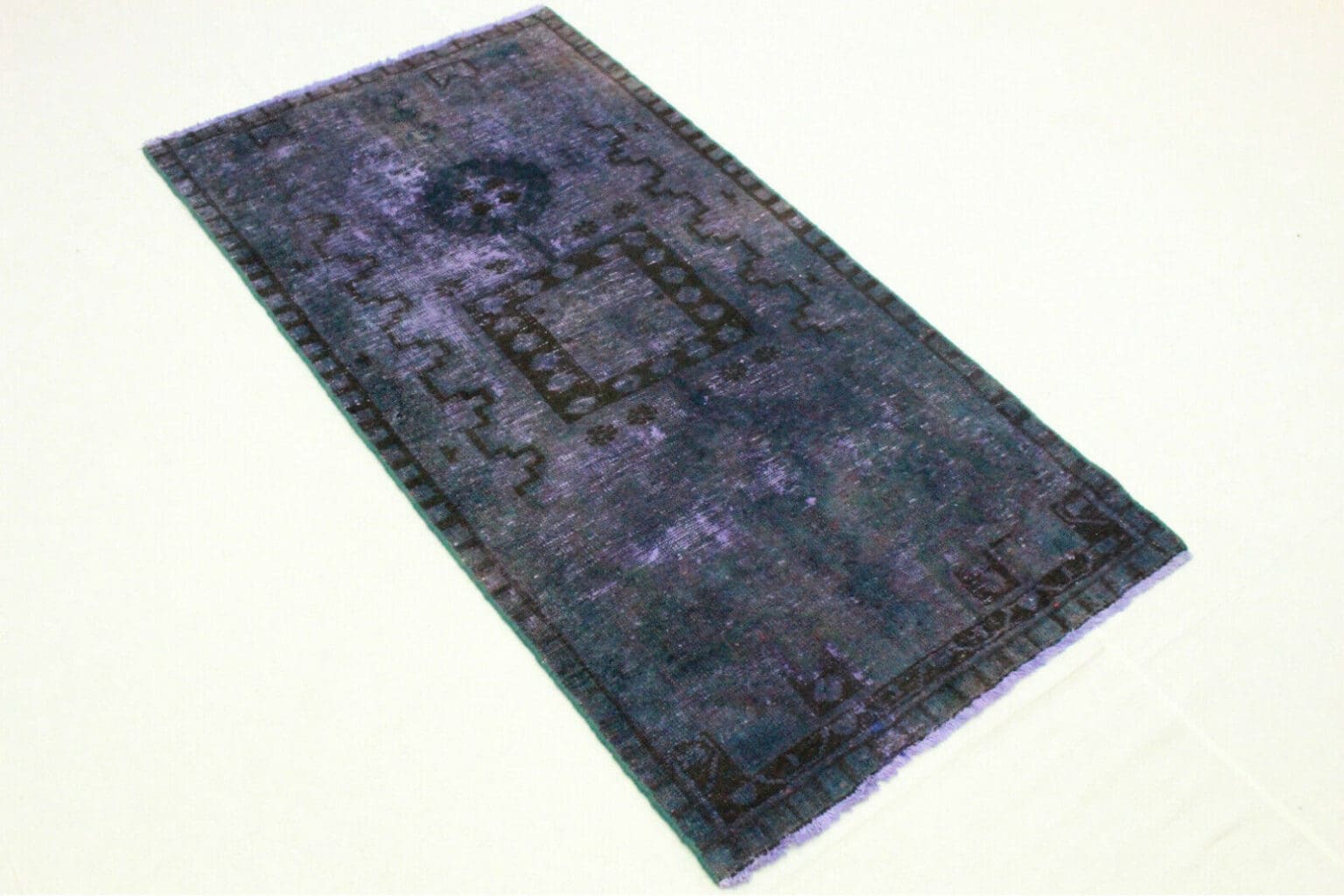
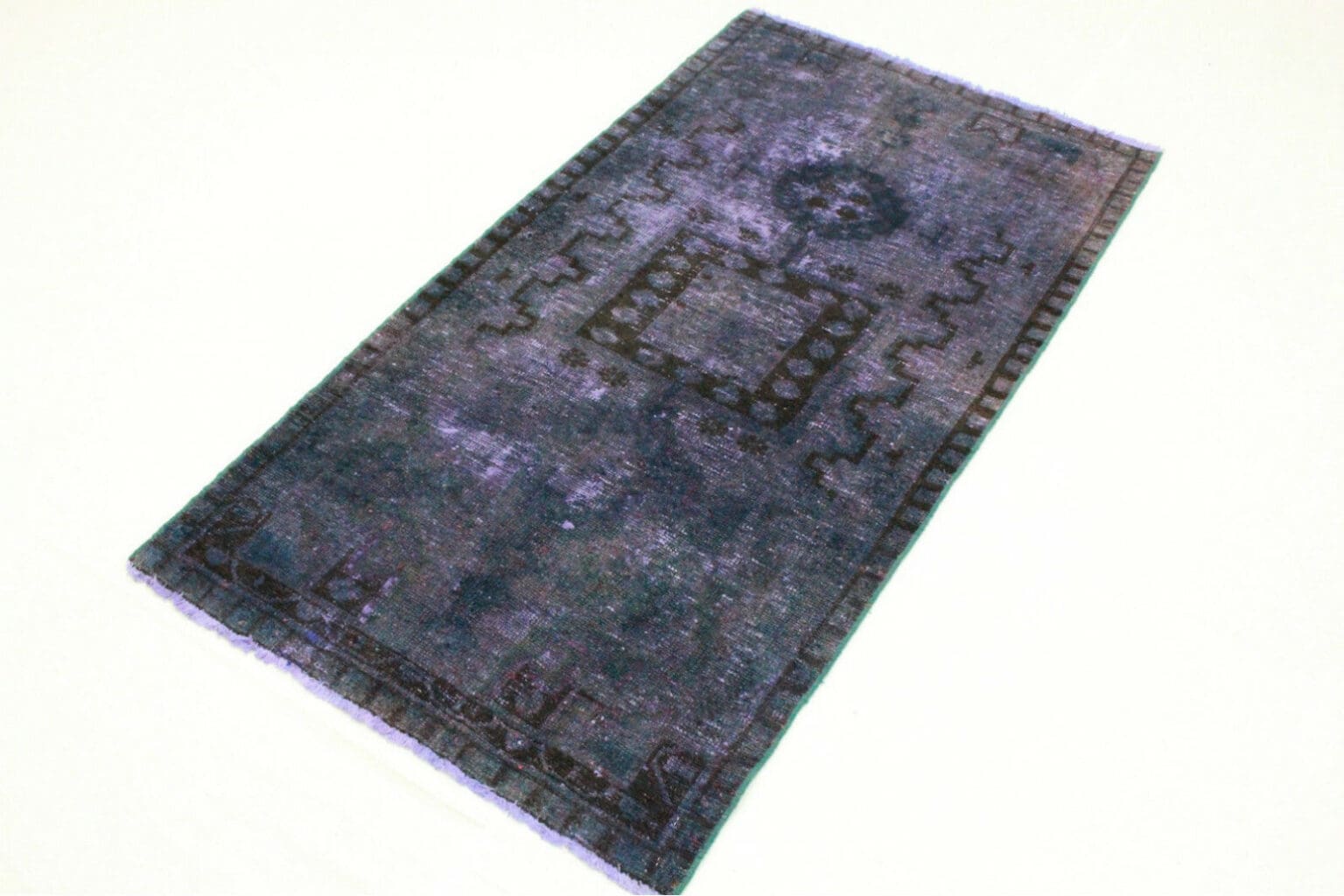
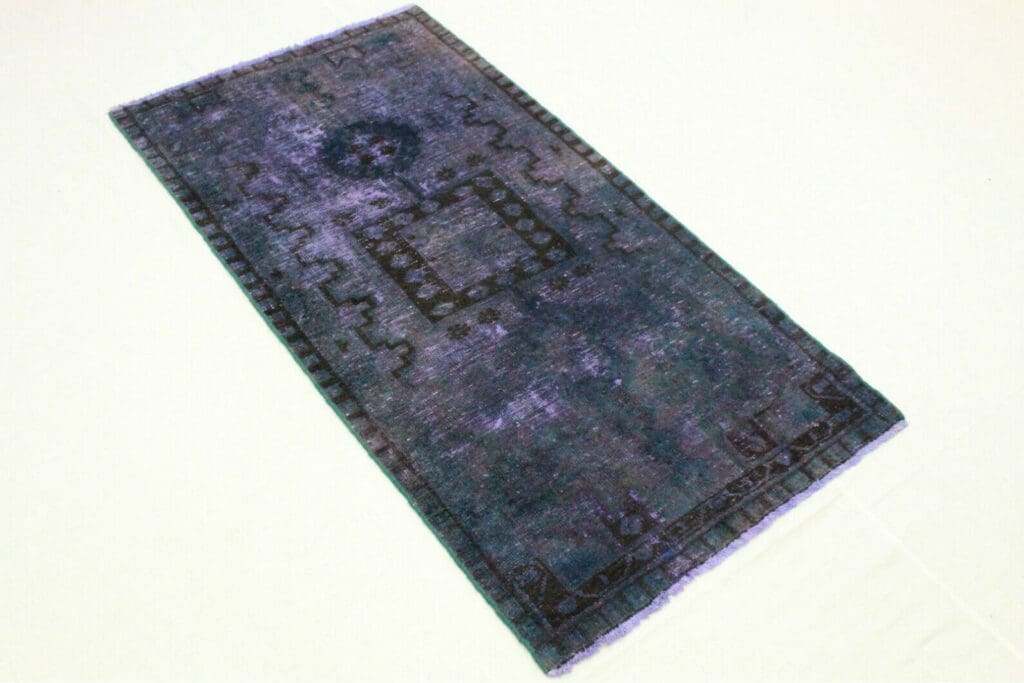
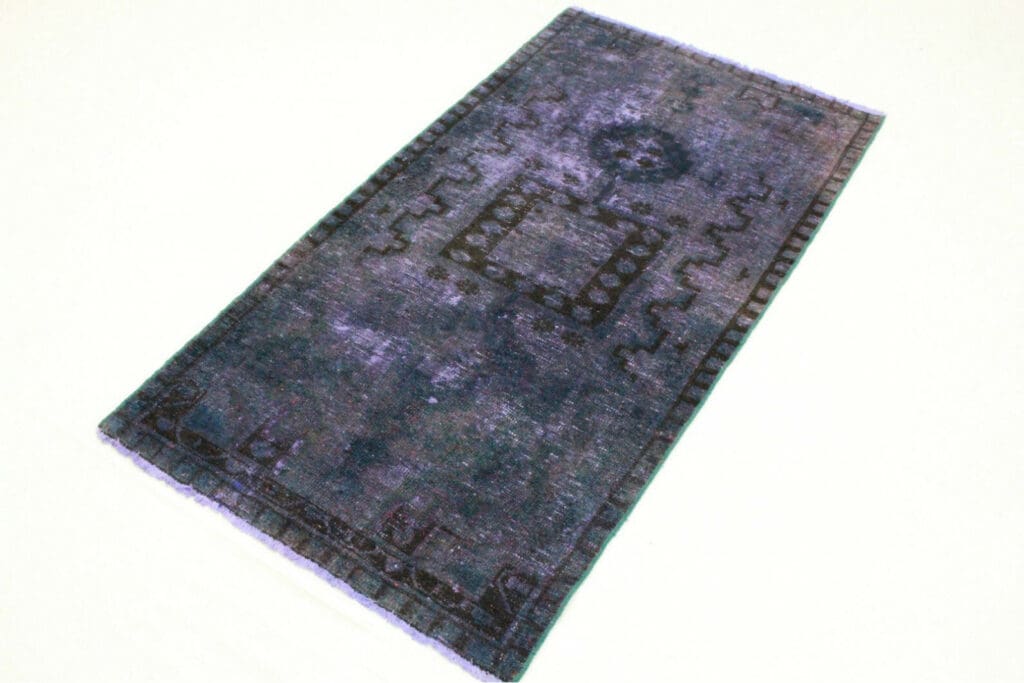
Purple is the defining color of the rug. The source describes a warm purple palette and also refers to deep purple combined with fine accents. In an interior, a dark or warm purple field can create a visually concentrated foundation, while lighter or contrasting details can separate the motifs from one another. The effect depends on the relationship between the dominant color, the smaller accents, and the surrounding furnishings. The rug’s color scheme is suitable for settings that combine decorative detail with either modern or classically styled elements.
Oriental pattern traditions often use borders to frame a central field and to organize the movement of the eye across the surface. Other compositions distribute motifs more freely or use repeated forms to create rhythm. Floral designs may refer broadly to the natural world, while geometric forms can express balance, repetition, and order. These associations belong to the wider language of Oriental textiles and do not establish a particular symbolic interpretation for the motifs on this individual rug.
The combination of purple coloring, floral detail, and geometric structure gives this piece a decorative presence without requiring a specific historical pattern name. Its design can be read as a meeting of organic and architectural forms: flowers and plant-like shapes soften the composition, while angular or repeated elements provide visual structure. The result is a patterned surface that can function within a living room, hallway, bedroom, entrance area, or dining setting, provided that its placement protects the colors from direct sunlight.
Special Features
The defining features of this piece are its vintage designation, hand-knotted construction, purple color palette, and status as a designer piece. The deep purple coloring is combined with fine accents, giving the rug a clearly differentiated surface. Its floral and geometric pattern adds another layer of visual structure, while the hand-made construction connects the object with established Oriental rug-making practices.
The source also describes the rug as durable, easy to care for, and suitable for frequently used living spaces. These statements relate to the hand-knotted construction and the quality of the materials described for the rug. Care should nevertheless follow the needs of a hand-made textile, especially where exposure to sunlight, spot treatment, and professional cleaning are concerned.
FAQ
How should I care for this vintage Oriental rug?
Vacuum the rug regularly to remove loose dust and particles. Protect it from direct sunlight, since prolonged exposure can affect the appearance of colored textiles. If a spill occurs, remove it promptly and, where appropriate, use a damp cloth carefully rather than rubbing aggressively. For a thorough cleaning, a professional familiar with Oriental rugs is recommended. Professional treatment is particularly useful for a vintage hand-knotted rug because the cleaner can select a method suited to its construction and materials.
Where can I place an Oriental rug?
Oriental rugs are commonly used in living rooms, hallways, and bedrooms. They can also define an entrance area or sit beneath a dining table, where the pattern establishes a visual focus within the room. The rug should be positioned away from direct sunlight to help preserve its purple coloring and fine accents. In any location, stable placement and regular care help the hand-knotted surface remain suitable for everyday interior use.
How can I recognize the quality of an Oriental rug?
Important points include knot density, the materials used, and the quality of the craftsmanship. A higher number of knots per square meter generally allows more intricate and finely resolved designs. Wool and silk are commonly regarded as valuable fibers in Oriental rug making because of their durability and surface qualities, but the specific fiber of this rug is not identified. For this piece, the stated high knot density, hand-knotted technique, described high-quality materials, and detailed floral and geometric design are the relevant documented features.
To provide the best experiences, we use technologies like cookies to store and/or access device information. Consenting to these technologies will allow us to process data such as browsing behavior or unique IDs on this site. Not consenting or withdrawing consent, may adversely affect certain features and functions.
Functional Always active
The technical storage or access is strictly necessary for the legitimate purpose of enabling the use of a specific service explicitly requested by the subscriber or user, or for the sole purpose of carrying out the transmission of a communication over an electronic communications network.
Preferences
The technical storage or access is necessary for the legitimate purpose of storing preferences that are not requested by the subscriber or user.
Statistics
The technical storage or access that is used exclusively for statistical purposes.The technical storage or access that is used exclusively for anonymous statistical purposes. Without a subpoena, voluntary compliance on the part of your Internet Service Provider, or additional records from a third party, information stored or retrieved for this purpose alone cannot usually be used to identify you.
Marketing
The technical storage or access is required to create user profiles to send advertising, or to track the user on a website or across several websites for similar marketing purposes.
 SECURE PAYMENT
 SHIPPING PARTNERS


