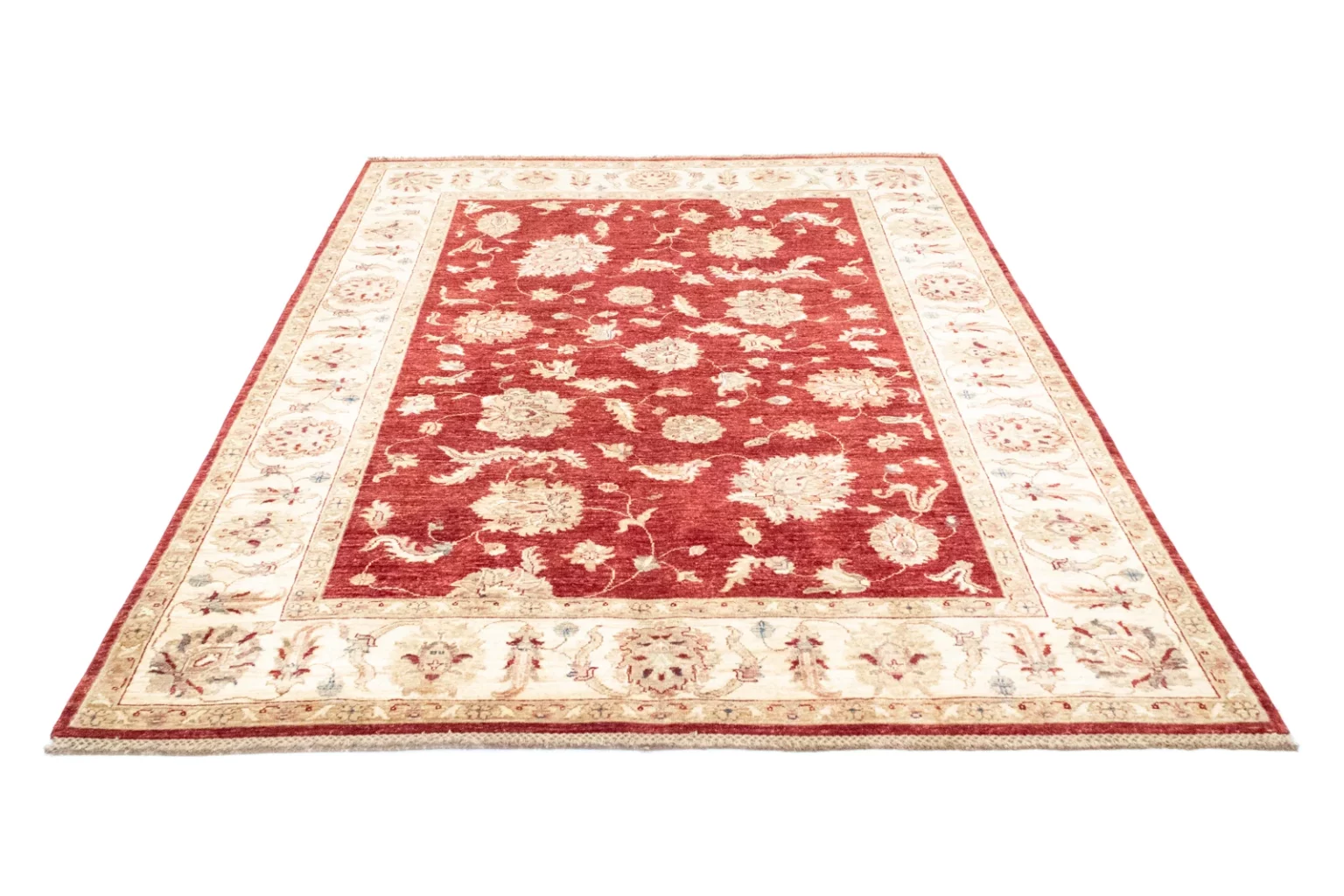
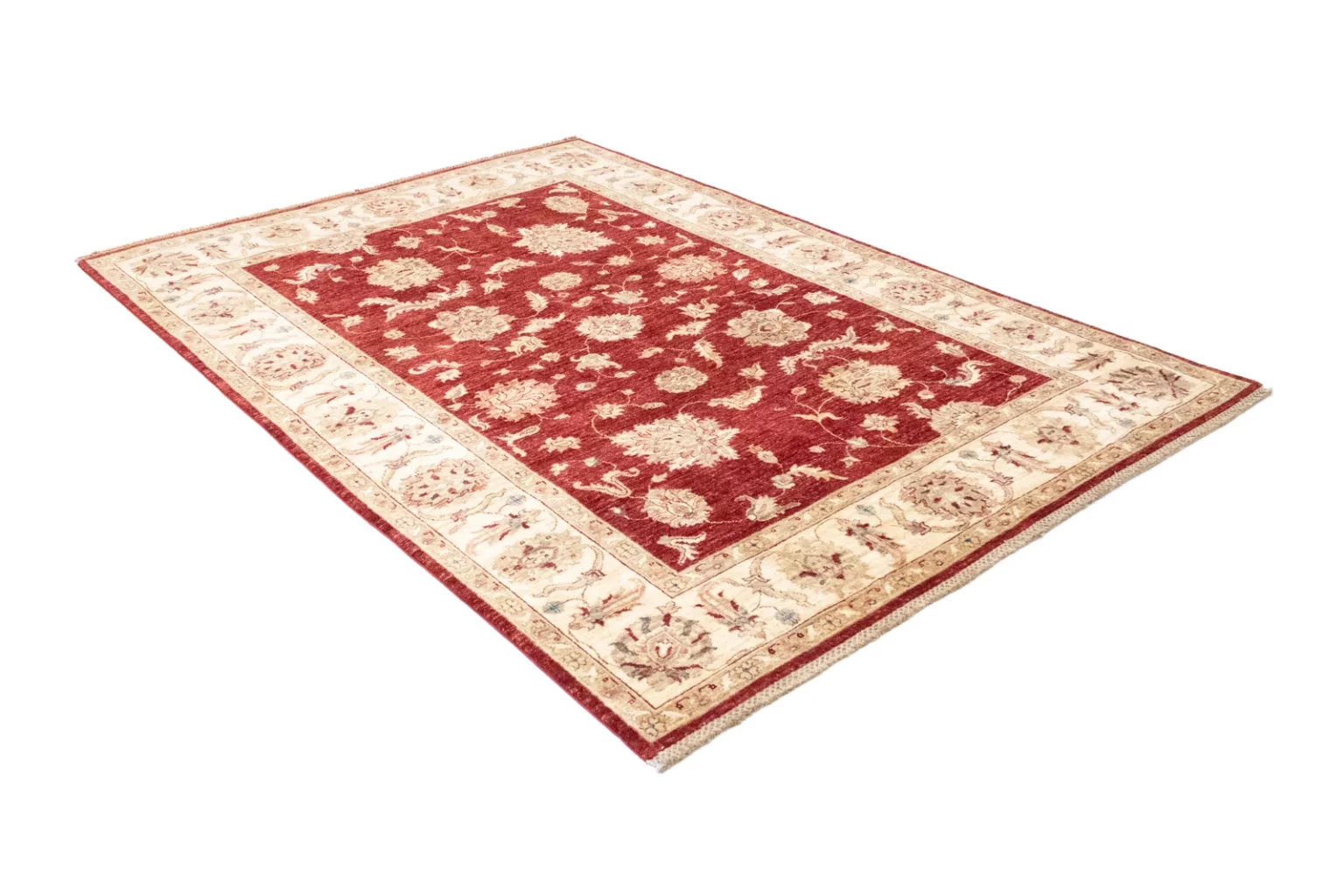
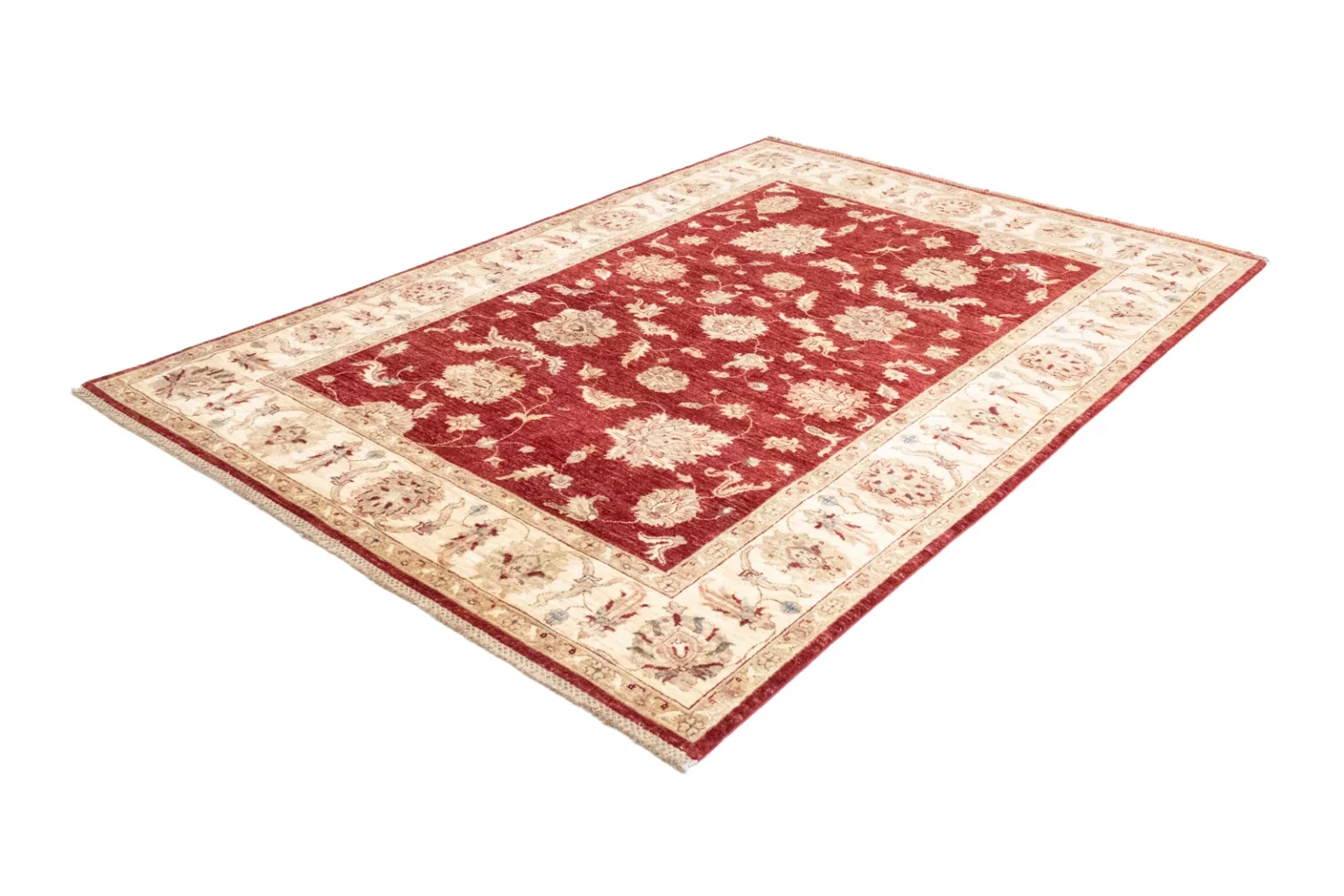
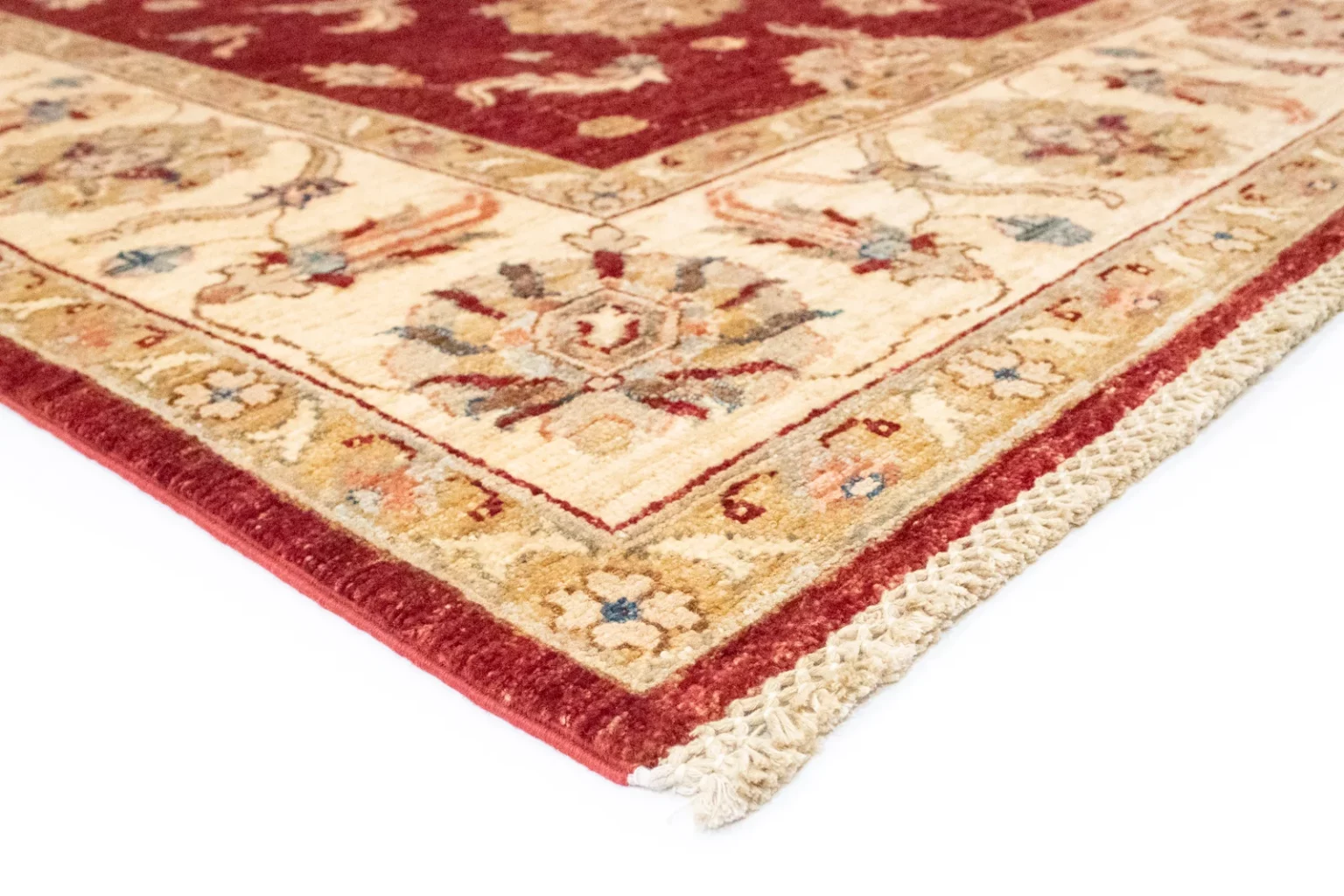
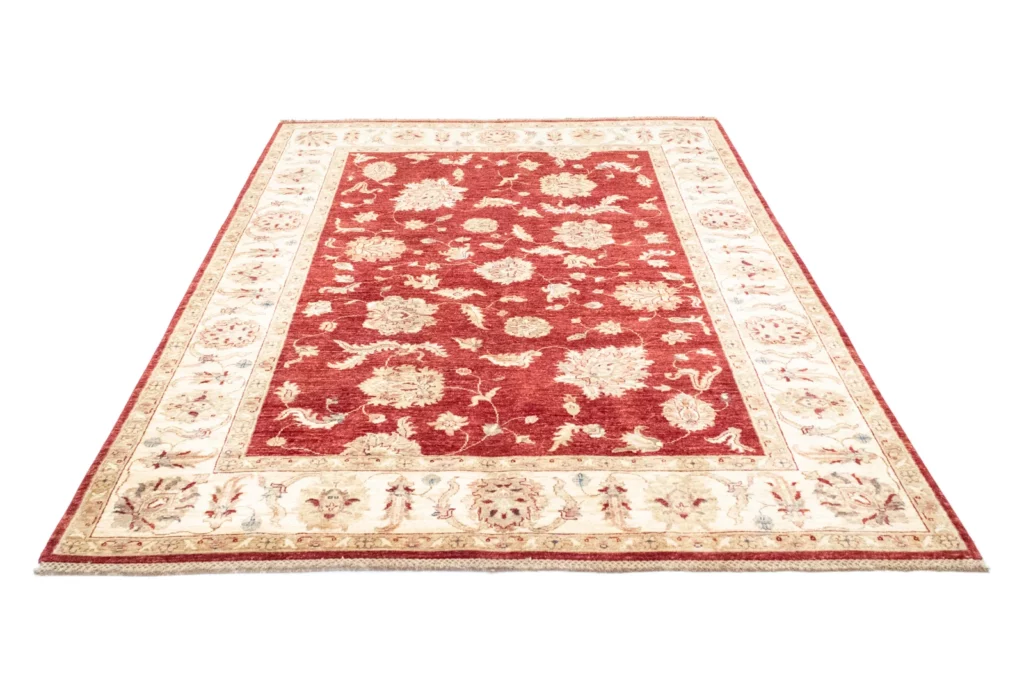
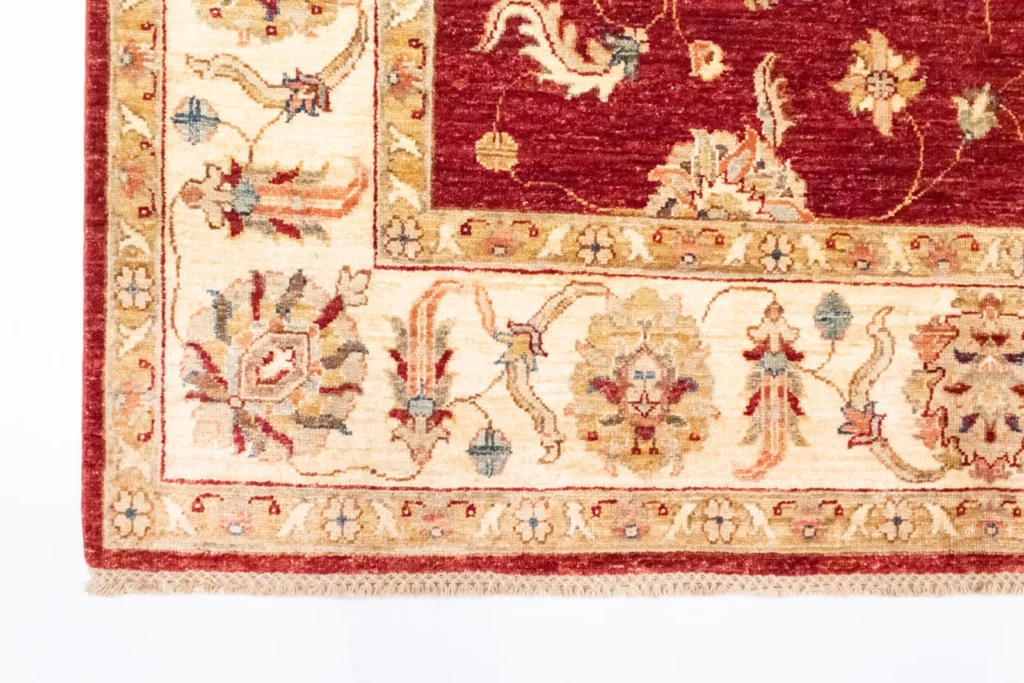
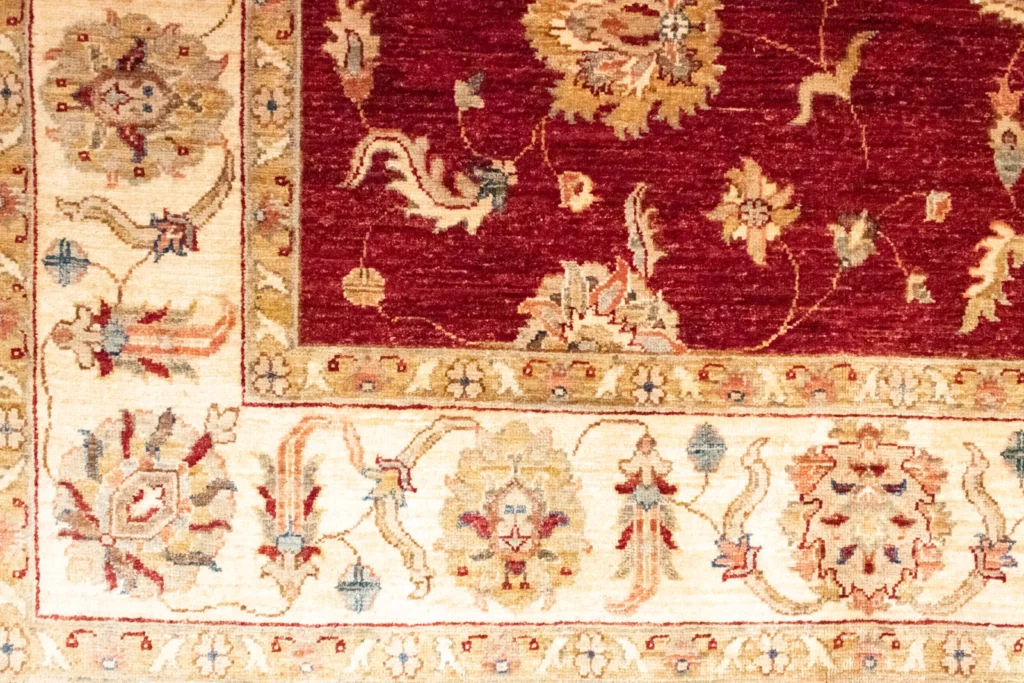
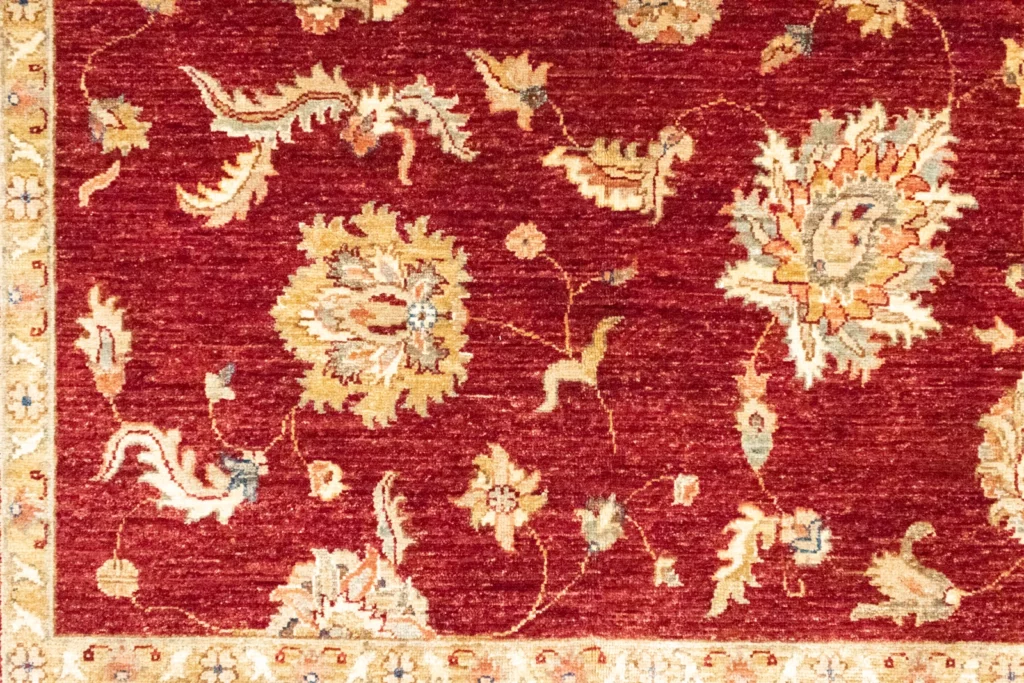
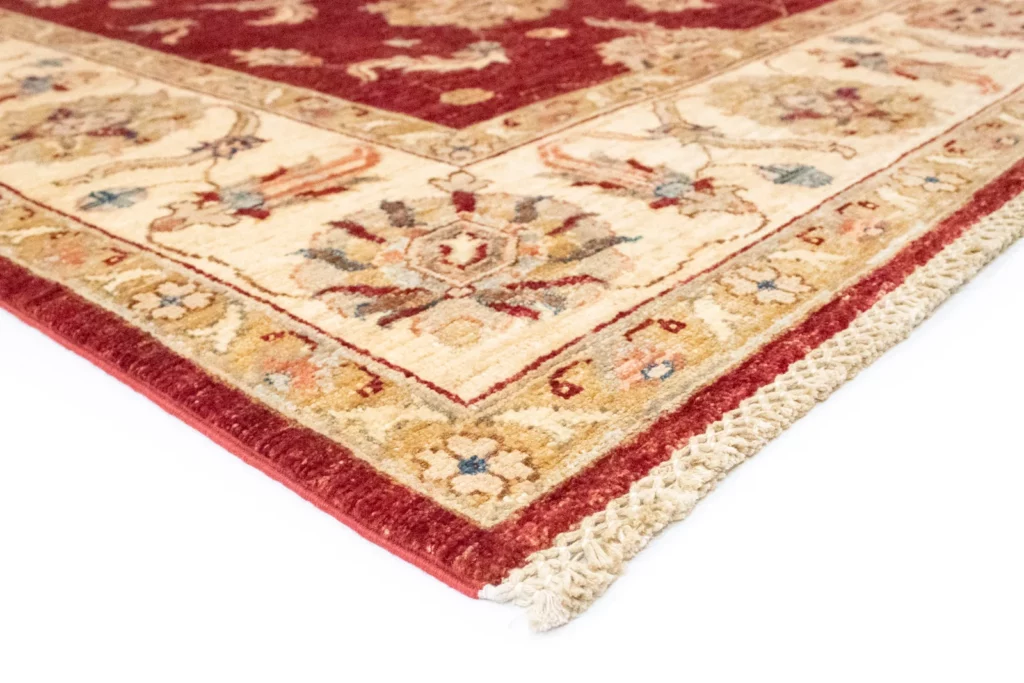
Hand-knotted Ziegler Persian Rug | Knot density: approx. 200,000 knots/m² | Size: 242 x 171 cm | Pattern: harmonious colours and large geometric motifs
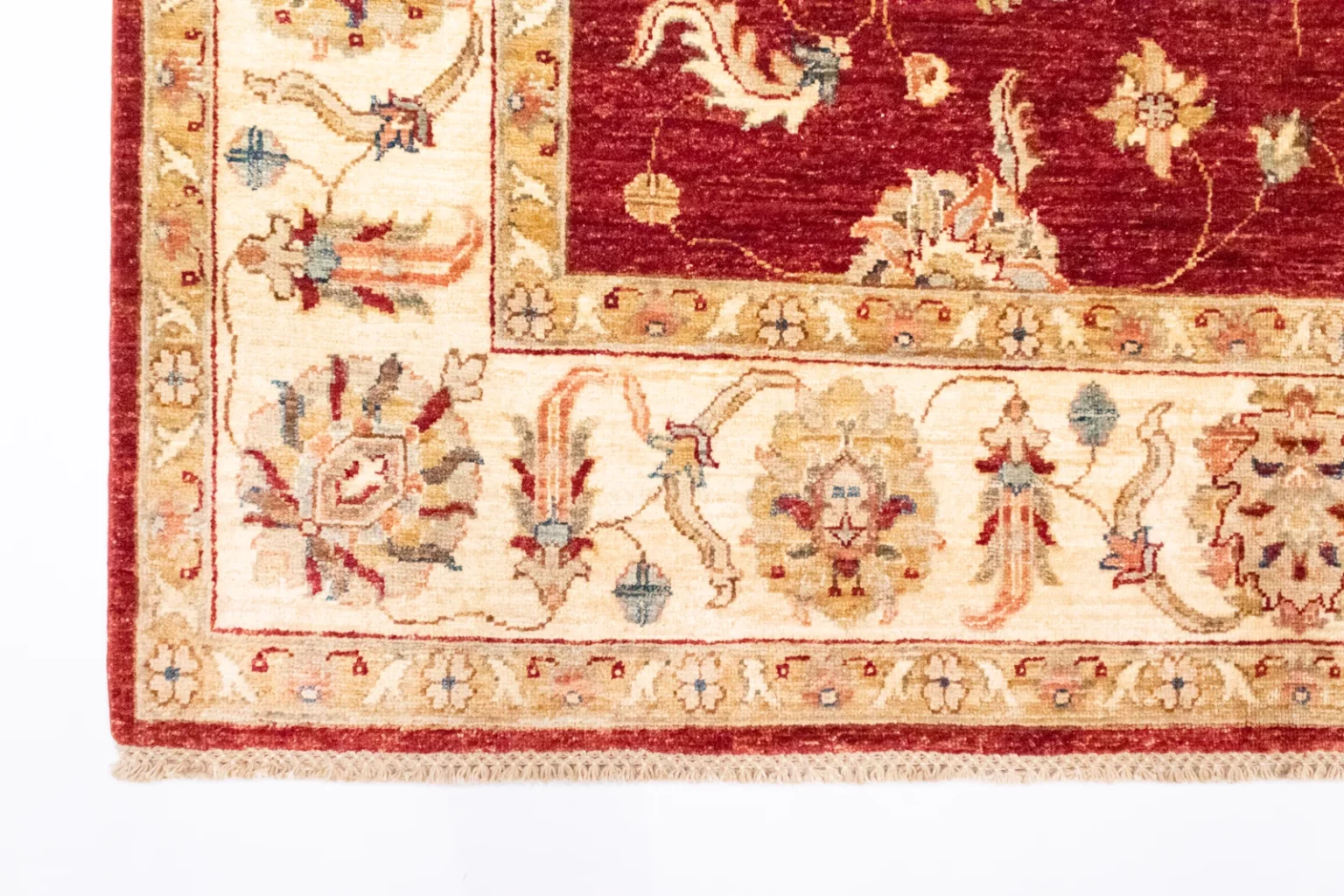
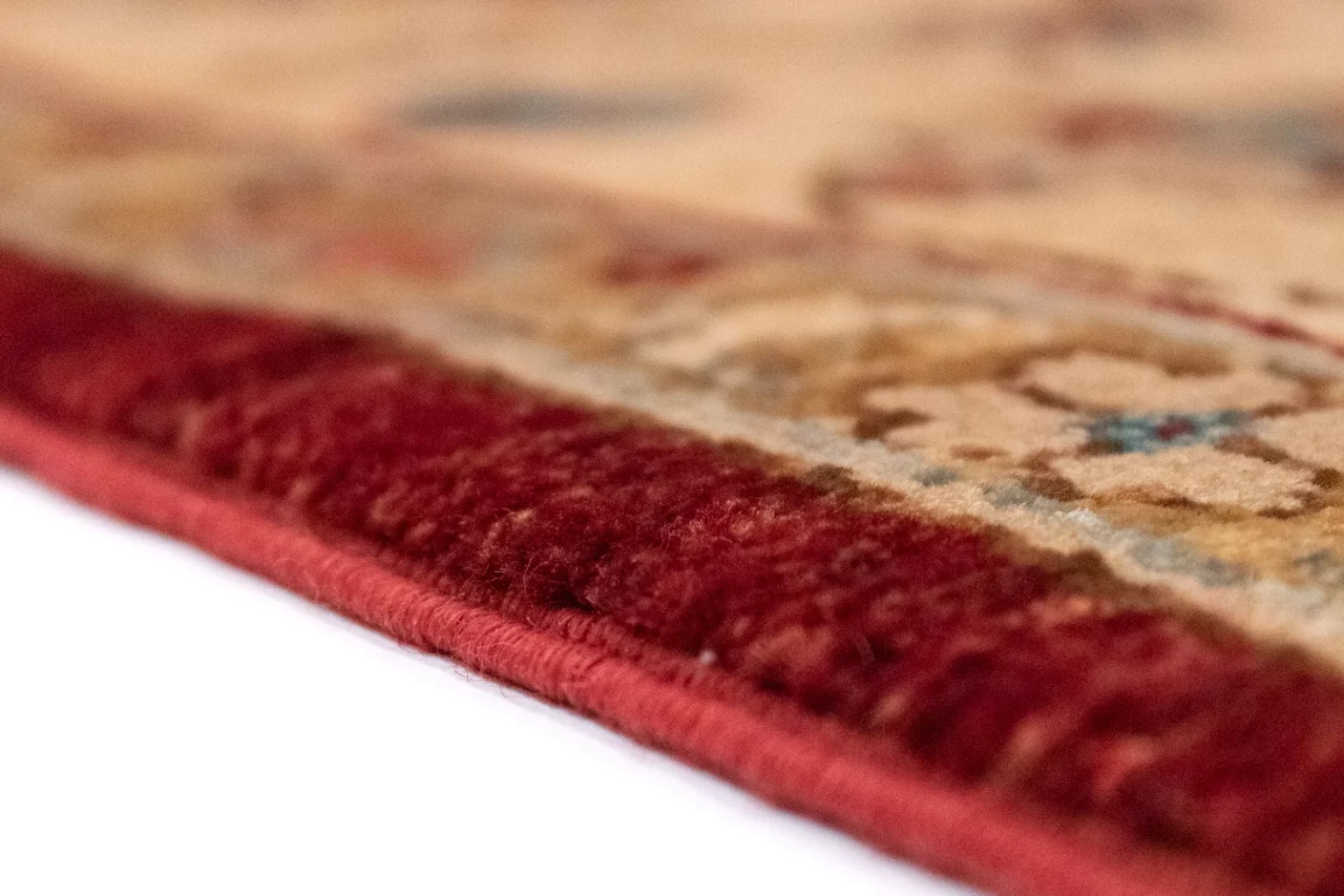
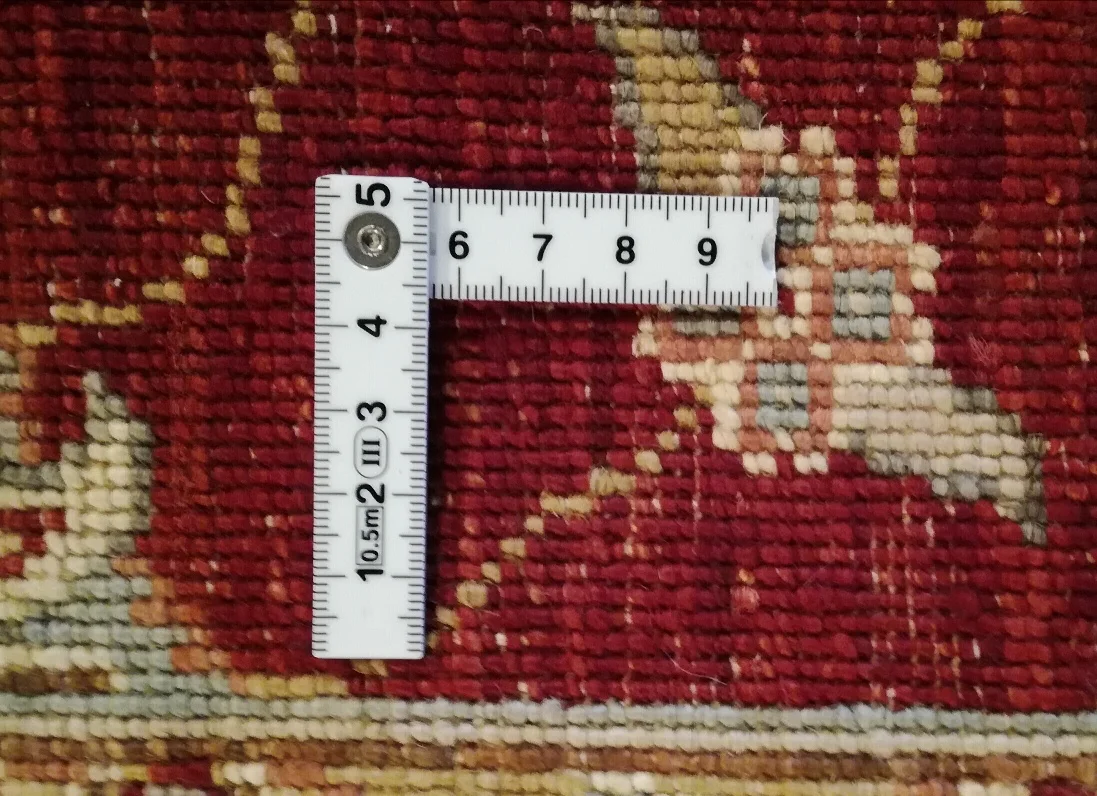
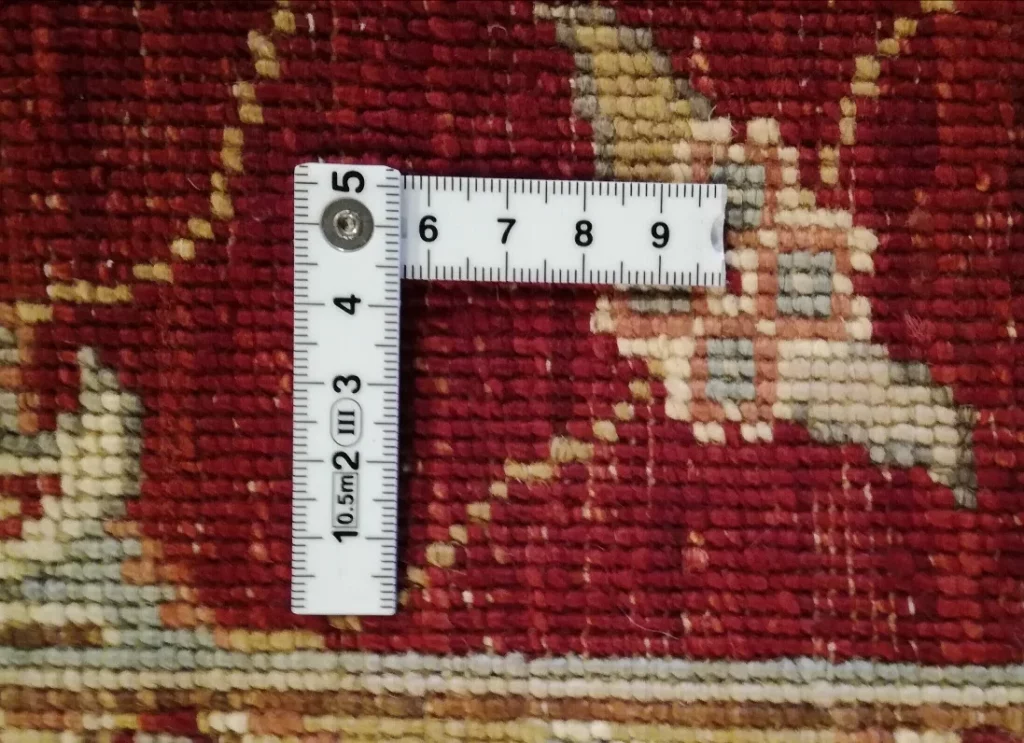
This Ziegler Persian rug is hand-knotted, a traditional method in which individual knots are tied by hand around the warp before the rows are compacted and the pile is shaped. Hand-knotting allows a pattern to be built gradually, with the character of the finished surface depending on the knotting work, the selected yarns and the subsequent finishing. The rug has a knot density of approximately 200,000 knots per square metre. That density describes the number of knots worked into the rug and is an important technical feature of its construction.
The source does not identify the pile or warp material of this particular rug. Persian rugs are traditionally made with materials such as wool, silk or cotton, but no specific fibre should be assigned to this piece without a stated material description. The construction itself remains clearly identified as hand-knotted. Unlike a mechanically produced floor covering, a hand-knotted rug is assembled knot by knot, so the structure is directly connected with the work of the weaver.
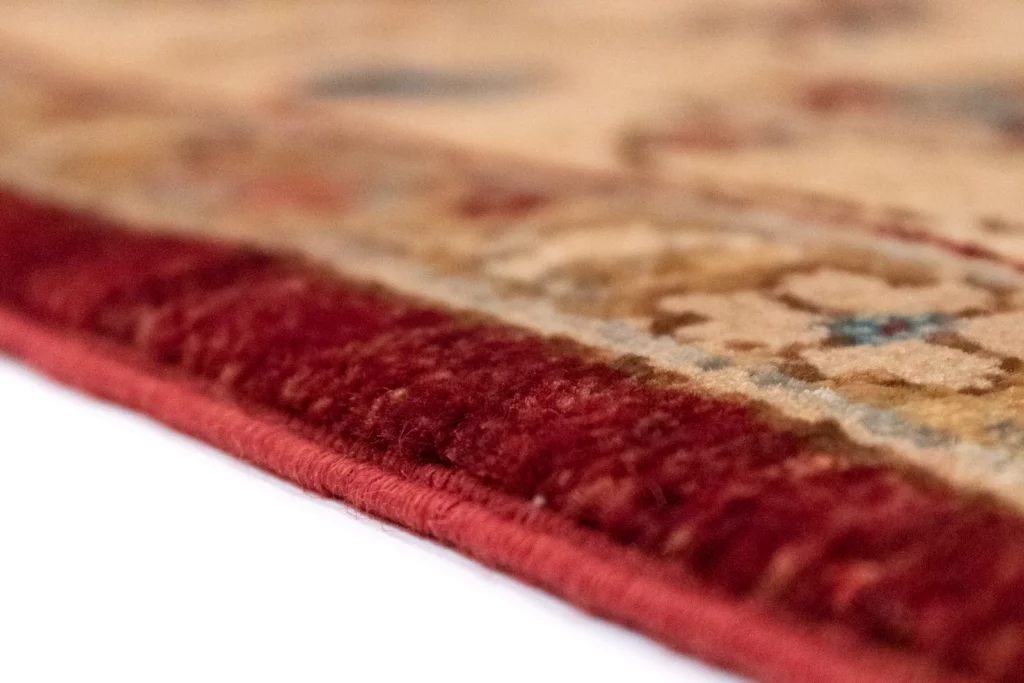
After knotting, a rug can be washed and finished to bring the surface, colour and handle into a coherent appearance. This piece is described as having undergone Steinwäsche, or stone washing. In the source description, this treatment is associated with a gentle, faded appearance of the colours. Stone washing is a finishing process rather than a knotting technique: it follows the making of the rug and influences how the yarns and colours are presented.
Origin and Tradition
The designation Persian rug refers to the long tradition of carpet weaving associated with Persia, present-day Iran. Persian carpets are known for combining practical floor covering with a developed textile tradition in which the arrangement of colour, border and field is carefully planned. The Persian carpet tradition encompasses many regional approaches rather than one single design. Differences in local weaving practice, available materials, dyeing methods and pattern language have produced a wide range of rugs under the Persian name.
Ziegler rugs occupy a particular place within this history. The name goes back to a Swiss merchant who established a cloth production operation in Persia during the nineteenth century. The Ziegler tradition became associated with designs that were less crowded than some classical courtly carpets and that used broad, clearly readable forms. Harmonious colour combinations and large geometric motifs are characteristic features commonly connected with the Ziegler type. These qualities helped the style remain compatible with both traditional interiors and more restrained modern settings.
The historical Ziegler story also shows how carpet production developed through contact between Persian weaving traditions and international trade. Designs and production methods were shaped for a wider market while retaining elements of Persian pattern culture. The name therefore describes a design and commercial tradition with Persian roots, not simply a single workshop or one fixed weaving village. Ziegler carpets can be encountered in different production contexts, and the source explains that they are mainly knotted in Pakistan and Afghanistan. That production history belongs to the Ziegler type and should be distinguished from a claim about the exact workshop of this individual rug.
Persian carpet weaving has also influenced and been influenced by neighbouring textile regions. Pakistan and Afghanistan have long-established carpet-making traditions of their own, with weavers adapting familiar designs, construction methods and finishing practices to local production. This exchange is one reason why a design name, a historical reference and a place of manufacture are not always identical. The Ziegler name points to a recognisable Persian-derived style, while the broader production context can extend beyond Iran.
Other well-known Persian carpet traditions include Heriz, Tabriz and Kashan. Heriz designs are often associated with strong colour contrasts and robust pattern structures. Tabriz is widely known for detailed, finely articulated compositions, while Kashan is connected with elaborate floral designs and, in some examples, the use of silk. These labels represent distinct design histories within the larger Persian carpet tradition. They are not alternative names for this Ziegler rug, but they help place Ziegler within the varied landscape of Persian weaving.
Design and Pattern
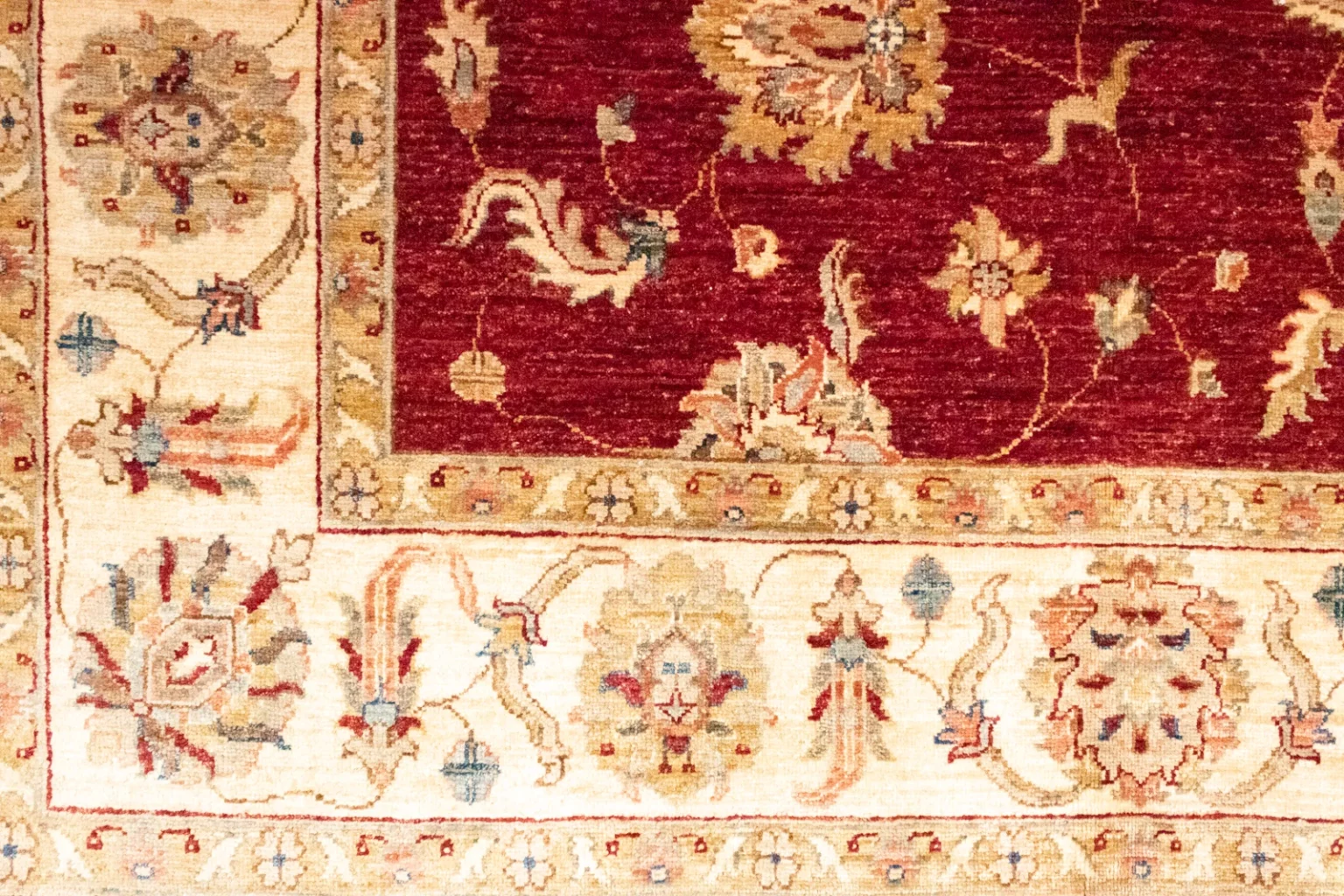
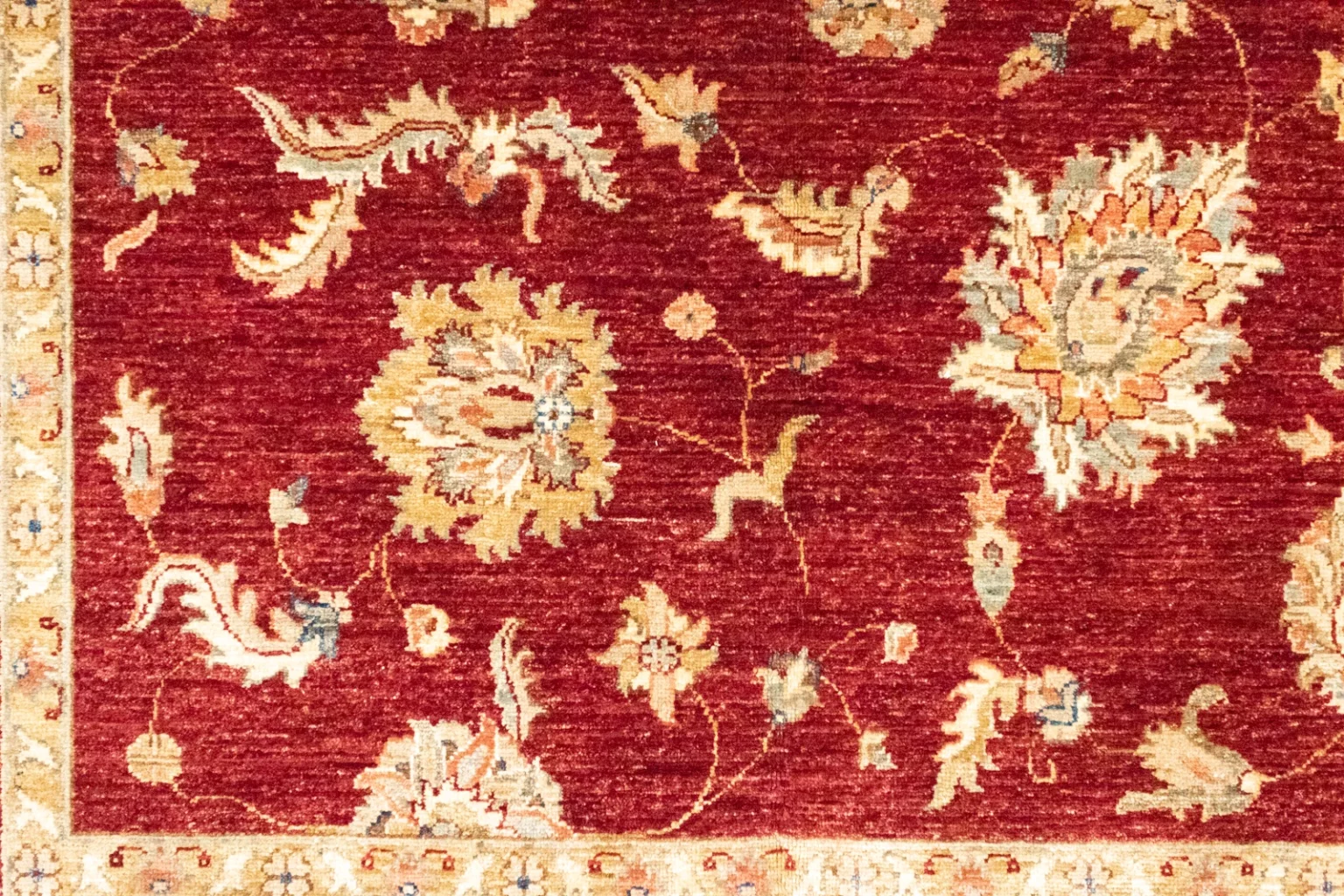
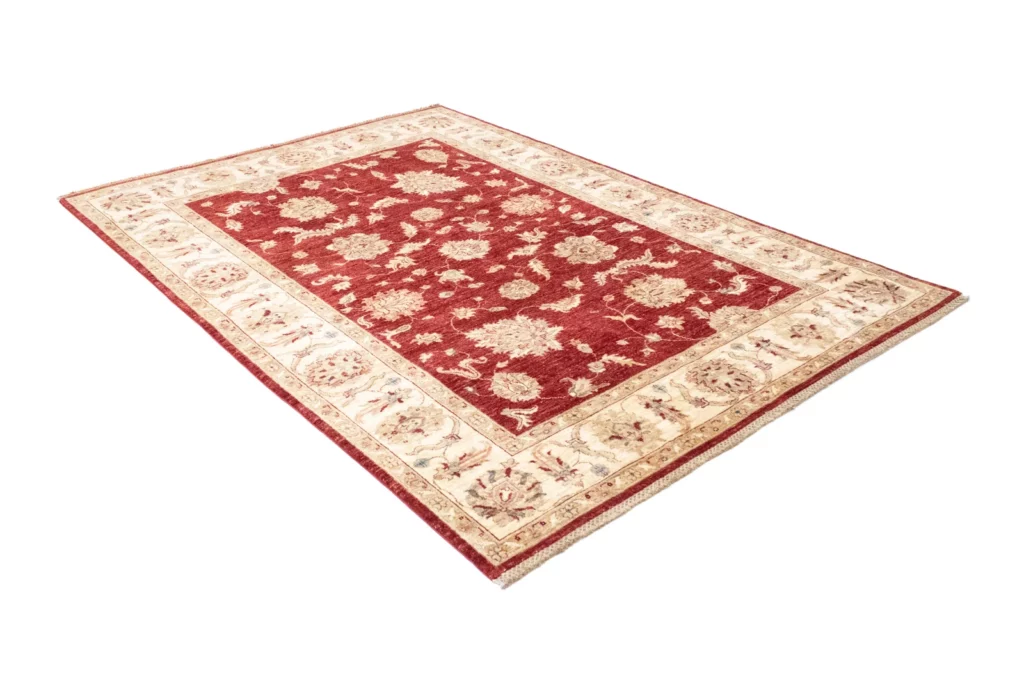
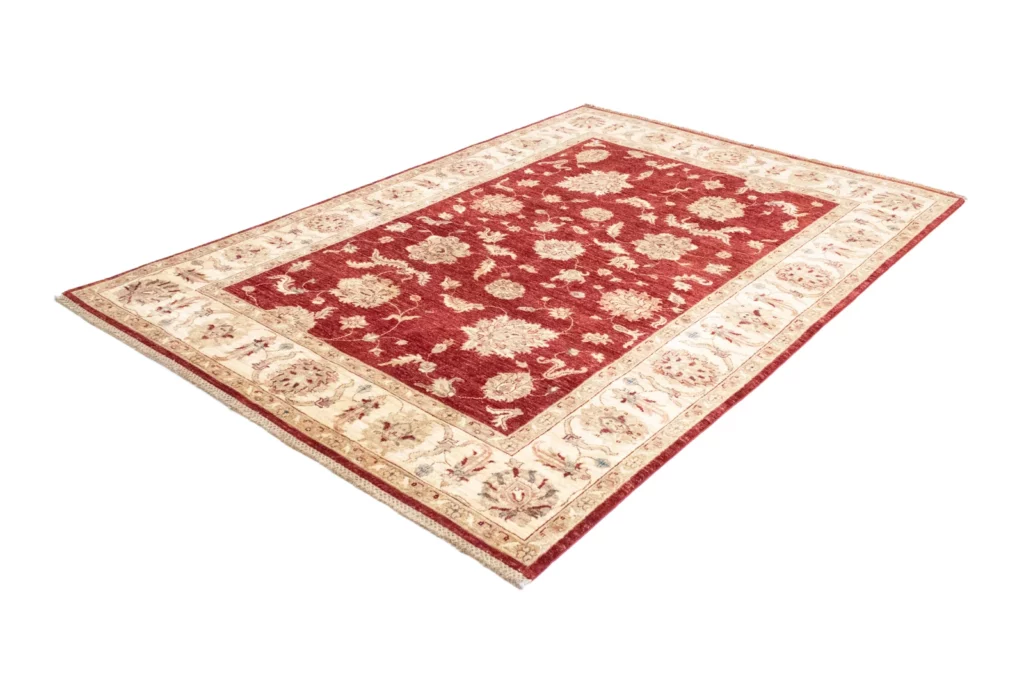
The design information for this rug describes harmonious colours together with large geometric motifs. Such a composition gives the pattern a clear visual structure: larger forms establish the main rhythm, while the colour relationships hold the field and border together. Geometric design does not depend on naturalistic drawing. It can use angled lines, repeated shapes, stepped contours and balanced divisions to create order across the woven surface.
Ziegler patterns are often recognised for their spacious handling of ornament. Rather than filling every area with extremely fine detail, the design may allow larger motifs and calmer colour fields to remain legible. This approach is closely connected with the Ziegler tradition described in the source, where harmonious colours and broad geometric forms are central characteristics. The exact arrangement of motifs on this rug is not described beyond those features, so no particular medallion, floral emblem or border arrangement is assigned here.
Colour plays an important role in the appearance of a Ziegler design. Harmonious colour does not mean that every tone is identical; it means that the colours are selected and placed so they work together without disrupting the overall composition. In a carpet, this relationship is affected by the yarn, the dyes, the density of the knotting and the finishing process. The stone washing described for this rug gives the colours a softly faded look, which can make the transitions between tones appear more subdued.
Persian carpet motifs frequently carry cultural associations and may derive from flowers, leaves, gardens, architectural forms or geometric symbols. These traditions provide a broad vocabulary for carpet design, but a motif should not be identified more precisely than the description allows. For this rug, the stated pattern consists of large geometric motifs and harmonious colours. The design can therefore be understood through its scale, repetition and colour balance without attaching an unsupported regional motif name to it.
The wider Persian design tradition includes both highly detailed compositions and stronger, more monumental patterns. A Heriz carpet, for example, is commonly recognised for a forceful pattern language, while Tabriz examples may emphasise fine detail and Kashan examples may foreground floral ornament. Ziegler designs form a different visual direction within this family, with broad motifs and measured colour relationships. These comparisons describe established design traditions; they do not alter the classification of this particular rug as a Ziegler Persian rug.
Special Features
The defining technical feature recorded for this rug is its hand-knotted construction with an approximate knot density of 200,000 knots per square metre. It is also described as Steinwäsche finished. This treatment gives the colours a gentle, faded appearance and contributes to the rug’s stated visual character. The pattern is identified by harmonious colours and large geometric motifs, features associated with the Ziegler tradition.
No specific fibre, condition, age, signature or workshop is stated for this rug. Those details are therefore not added to its description. The distinction is useful when assessing a hand-knotted carpet: construction, design, finishing and material are separate aspects, and each should be documented independently. Here, the documented features are the hand-knotting, the knot density, the Steinwäsche finish and the Ziegler pattern language.
FAQ
What distinguishes a Ziegler Persian rug?
A Ziegler rug is associated with a Persian-rooted design and commercial tradition that developed from the nineteenth century onward. The name refers to the Swiss merchant who established cloth production in Persia and later became connected with this carpet style. Ziegler designs are commonly recognised for harmonious colours and large geometric motifs. They often present the pattern in a comparatively broad and readable way, rather than relying only on very fine ornament. Production of Ziegler-type rugs is mainly associated with Pakistan and Afghanistan, while the historical design tradition has Persian roots. This combination of design history and wider production context is an important part of understanding the term Ziegler.
What does Steinwäsche mean?
Steinwäsche means stone washing, a finishing treatment applied after the rug has been made. The process is used to influence the appearance of the surface and colours. In the description of this rug, Steinwäsche gives the colours a soft, faded look. It is not the same as hand-knotting and does not describe the number of knots or the fibre used. Hand-knotting concerns how the rug is constructed, while stone washing concerns how the completed textile is finished. The two terms therefore identify different stages of carpet production and should not be used interchangeably.
How should a hand-knotted Persian rug be cared for?
Regular cleaning helps prevent everyday dust from working deeply into a hand-knotted rug. Protection from direct sunlight is recommended because prolonged exposure can affect textile colours. Professional carpet cleaning is advisable when a deeper treatment is required, as the correct method helps preserve both the colours and the structure. Care should be adapted to the materials and condition of the individual rug, but no specific fibre or condition is stated for this piece. For that reason, a professional should assess the rug before selecting a cleaning process. Gentle, appropriate care supports the longevity of the knotting and the finished surface.
To provide the best experiences, we use technologies like cookies to store and/or access device information. Consenting to these technologies will allow us to process data such as browsing behavior or unique IDs on this site. Not consenting or withdrawing consent, may adversely affect certain features and functions.
Functional Always active
The technical storage or access is strictly necessary for the legitimate purpose of enabling the use of a specific service explicitly requested by the subscriber or user, or for the sole purpose of carrying out the transmission of a communication over an electronic communications network.
Preferences
The technical storage or access is necessary for the legitimate purpose of storing preferences that are not requested by the subscriber or user.
Statistics
The technical storage or access that is used exclusively for statistical purposes.The technical storage or access that is used exclusively for anonymous statistical purposes. Without a subpoena, voluntary compliance on the part of your Internet Service Provider, or additional records from a third party, information stored or retrieved for this purpose alone cannot usually be used to identify you.
Marketing
The technical storage or access is required to create user profiles to send advertising, or to track the user on a website or across several websites for similar marketing purposes.

 SECURE PAYMENT
 SHIPPING PARTNERS


