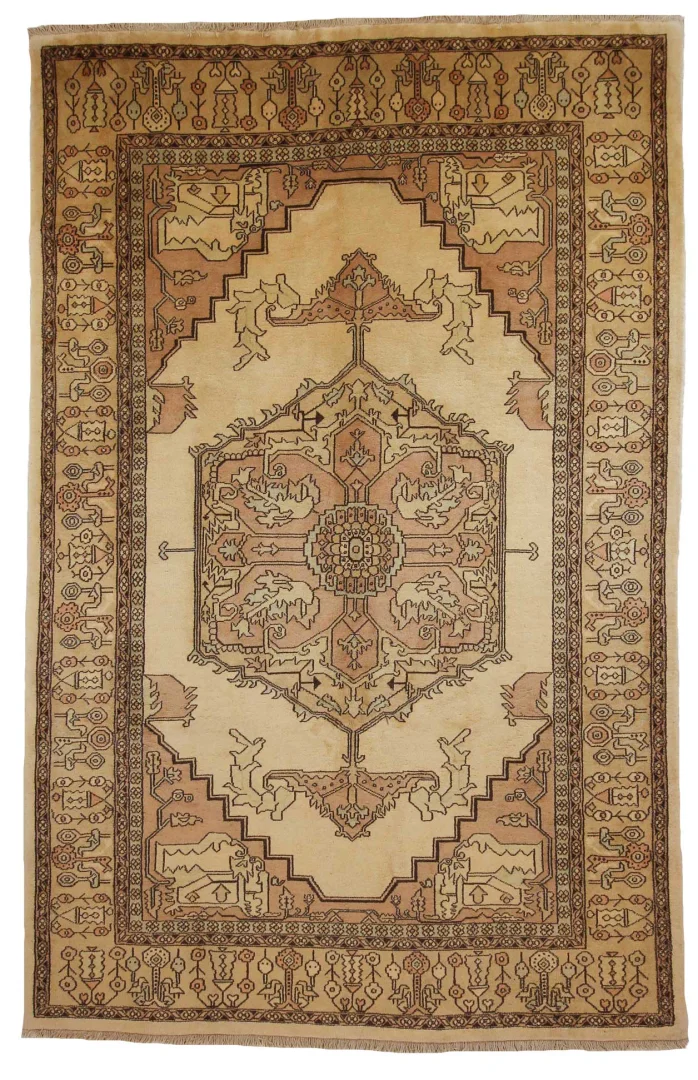
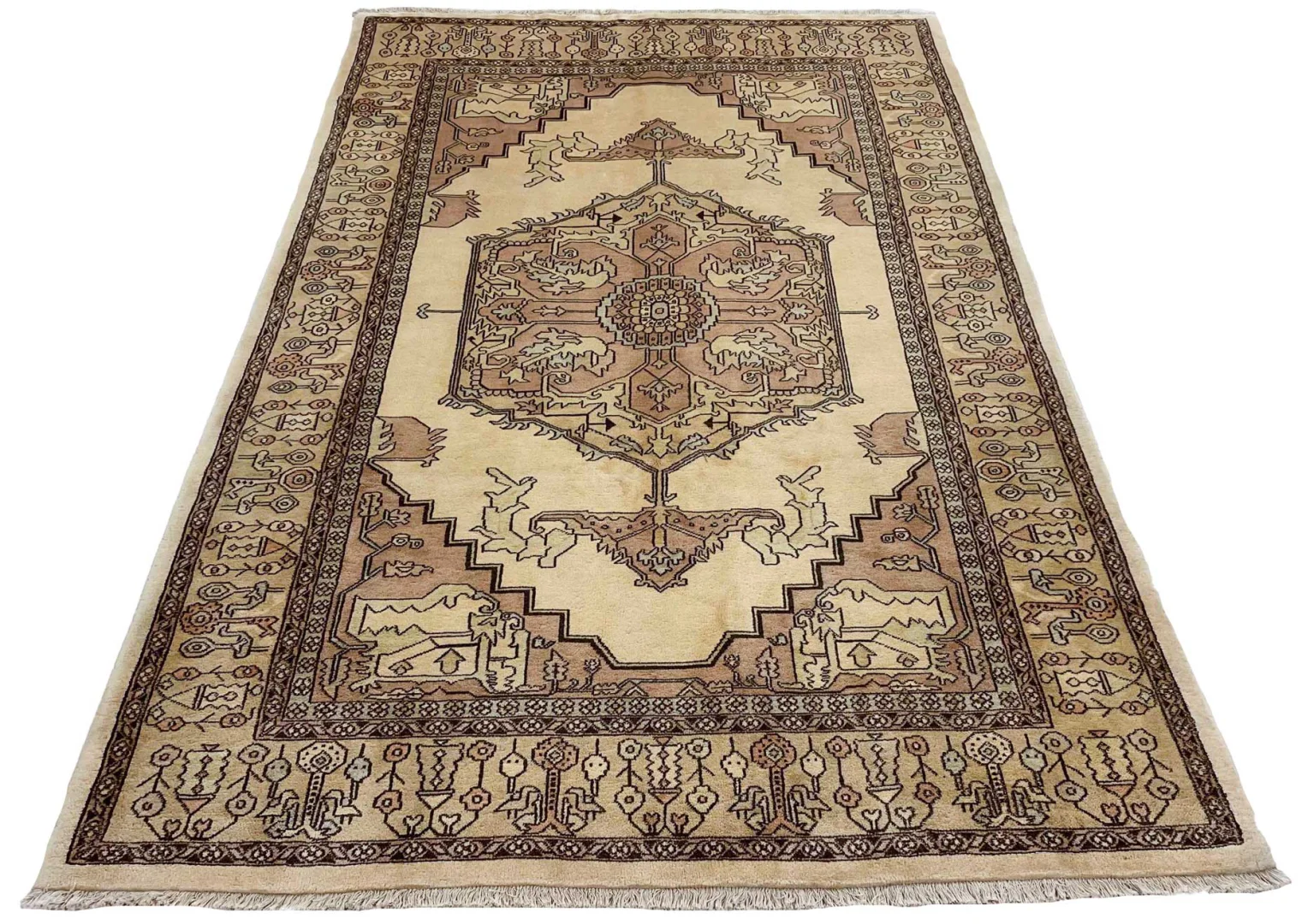
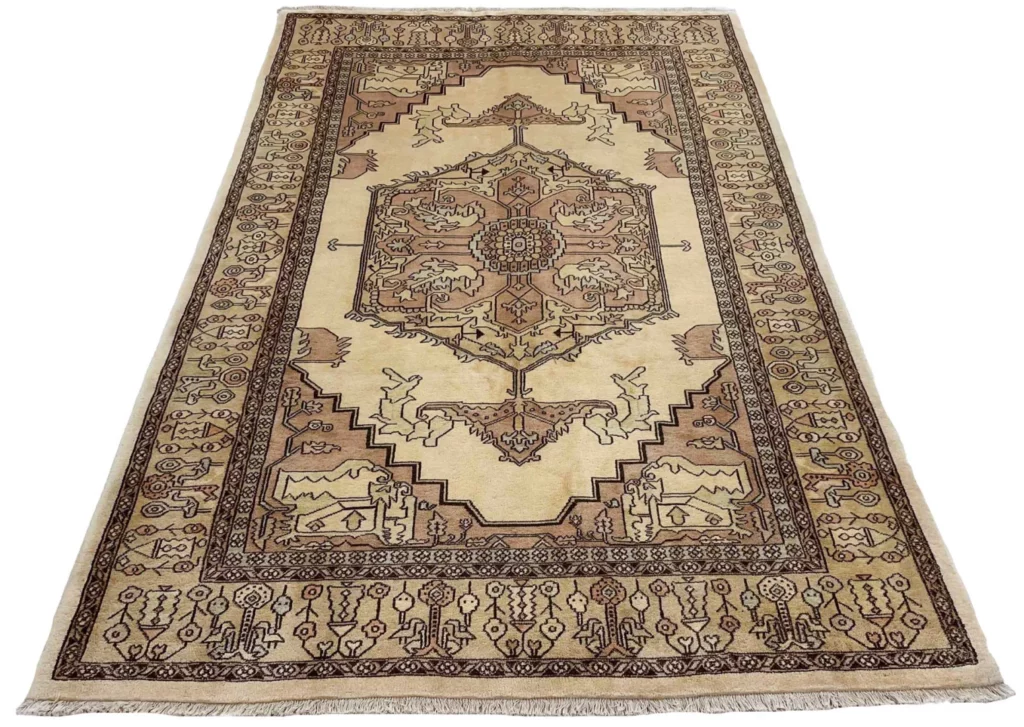
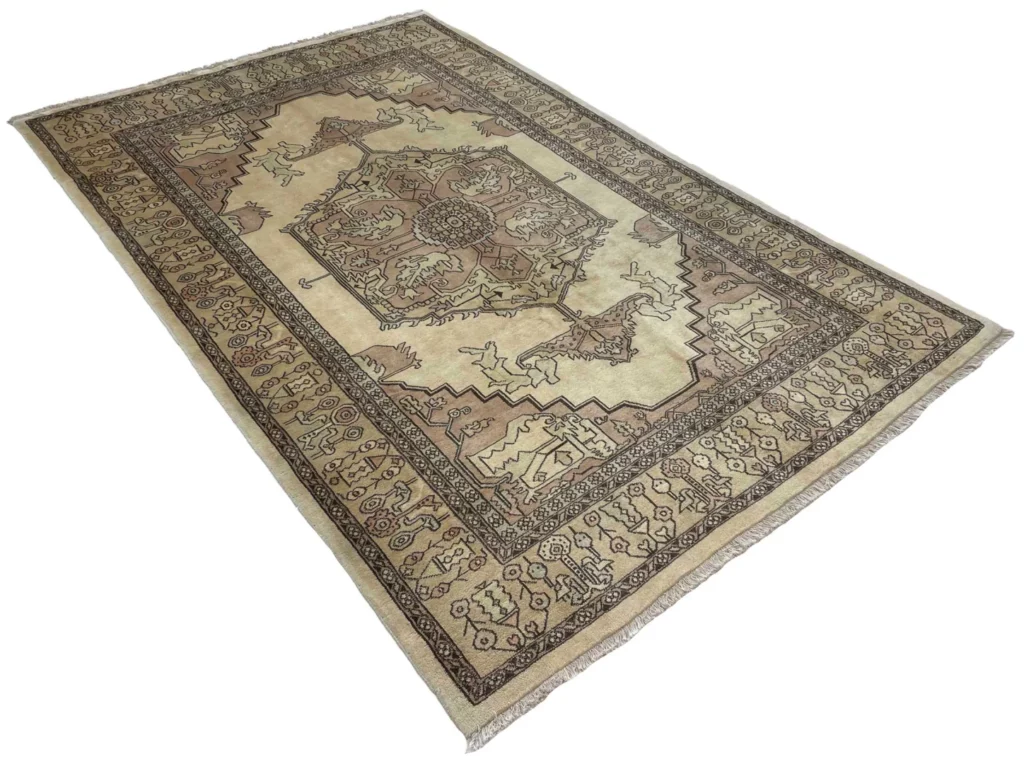
Hand-knotted Yazd Persian Rug | Knot density: 250,000 – 450,000 knots/m² | Material: Wool pile | Size: 275 x 175 cm | Pattern: Similar to Kerman and Keshan | Condition: Well preserved
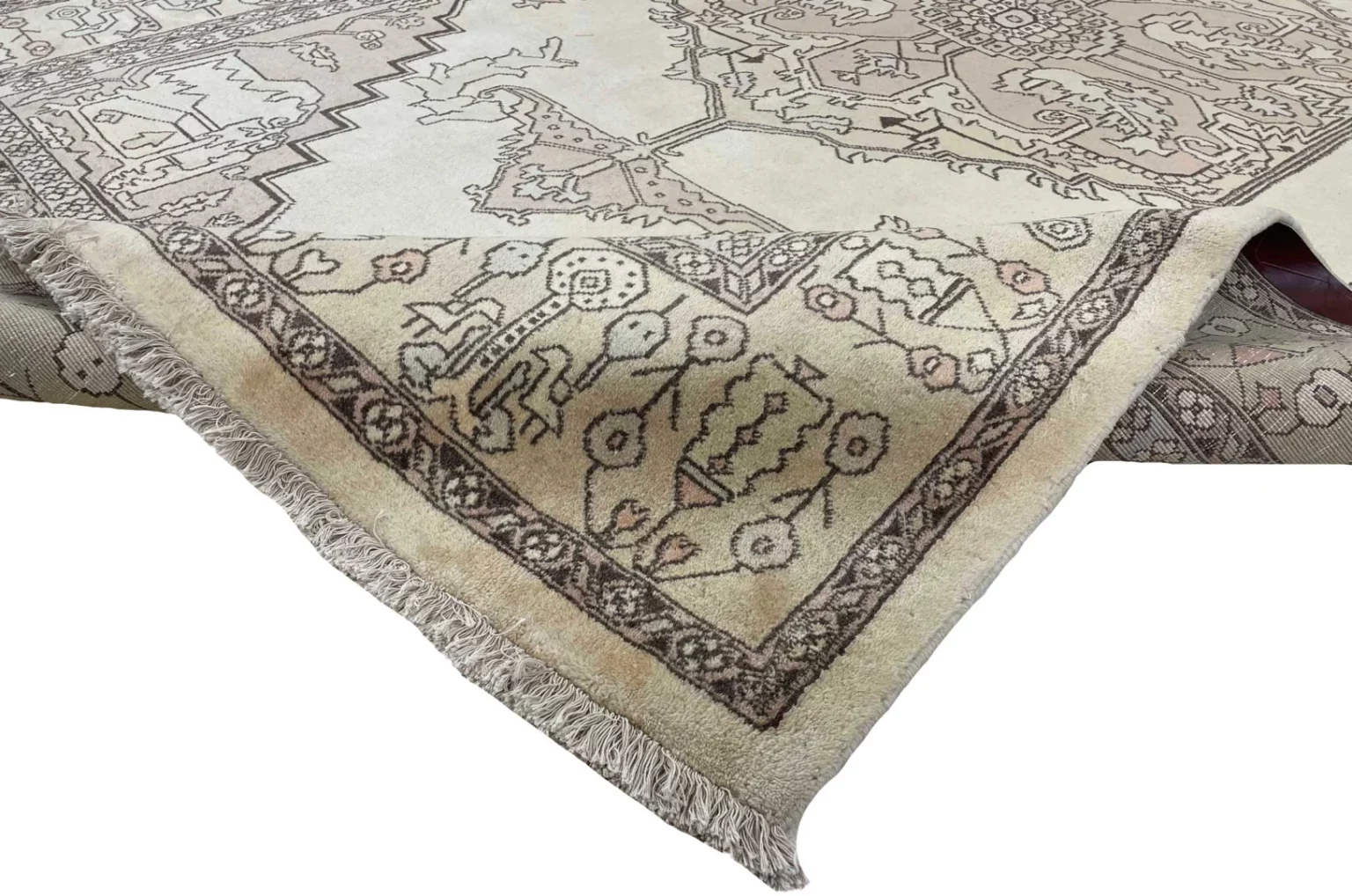
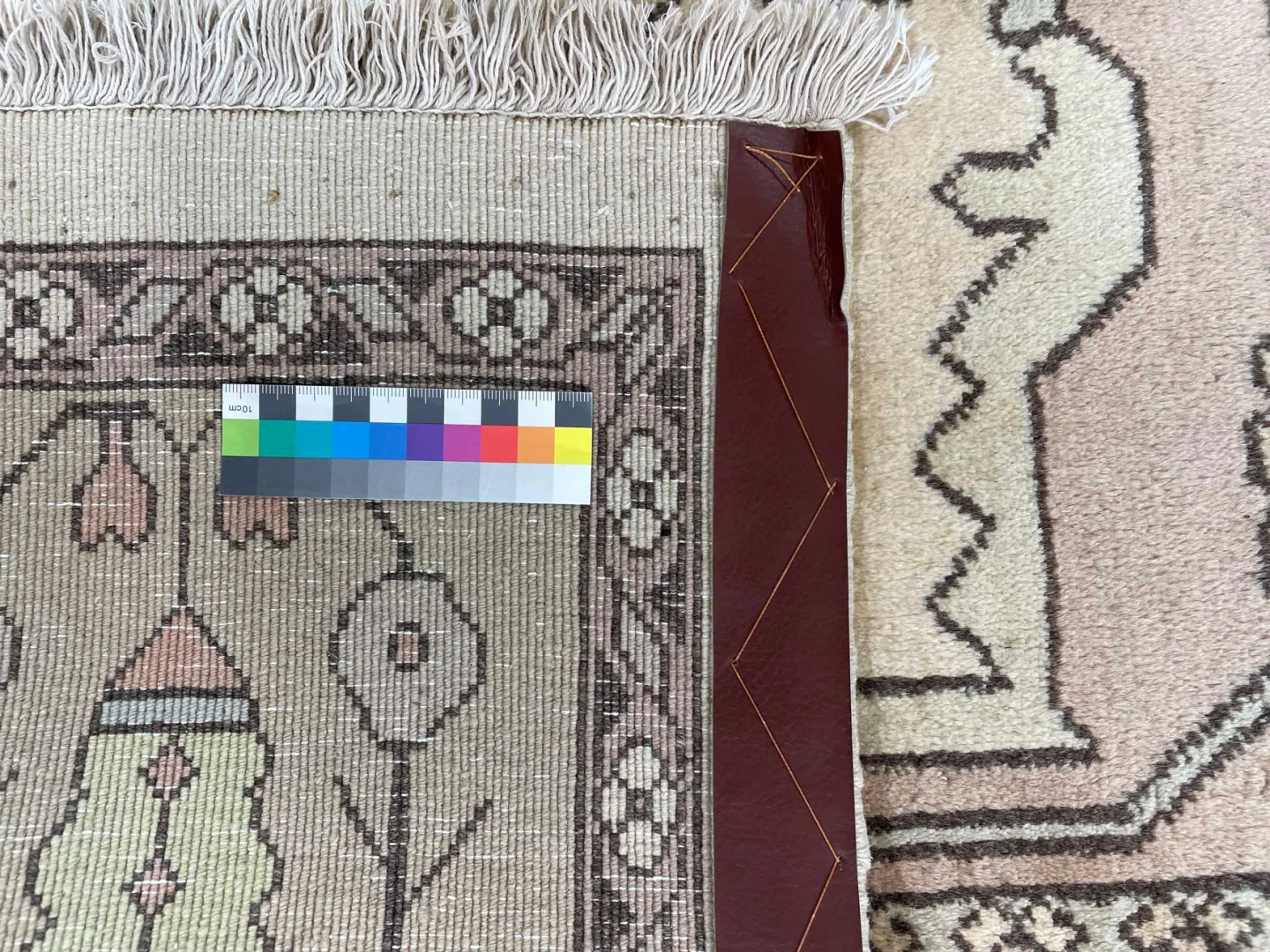
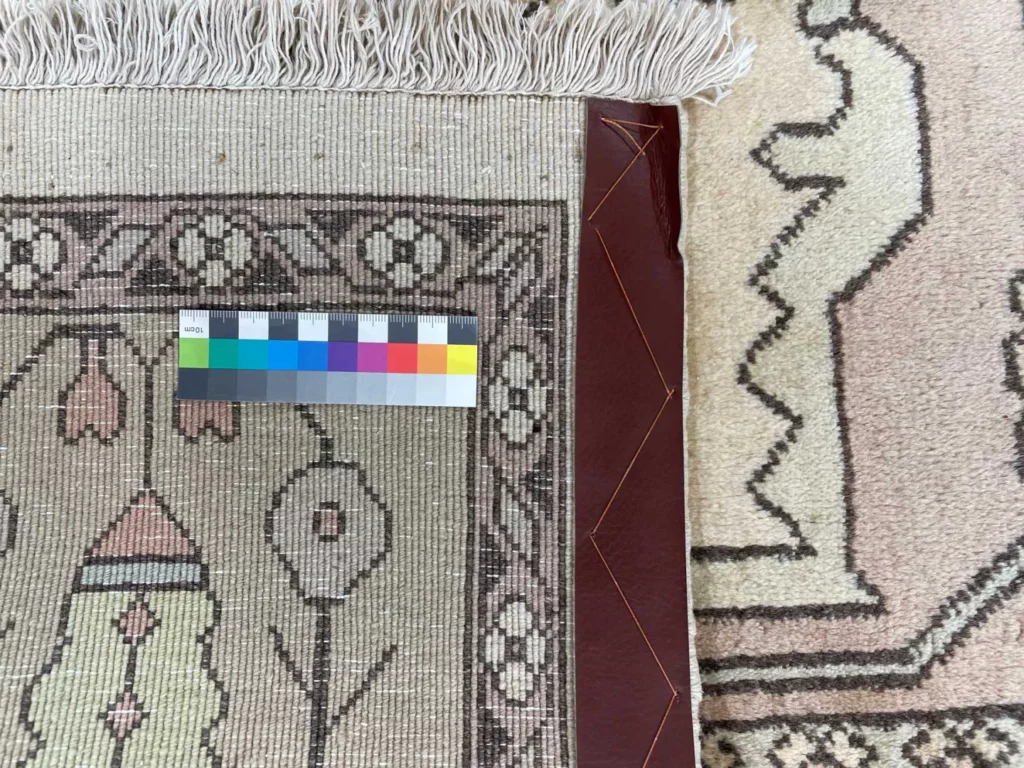
This Persian rug is hand-knotted and has a wool pile. Hand knotting is a traditional method in which the design is built into the structure row by row, rather than being printed onto a finished surface. The pile is the visible textile layer, giving the rug its characteristic feel and texture. Each area of colour and every part of the design is formed through the arrangement of knots, making the construction inseparable from the appearance.
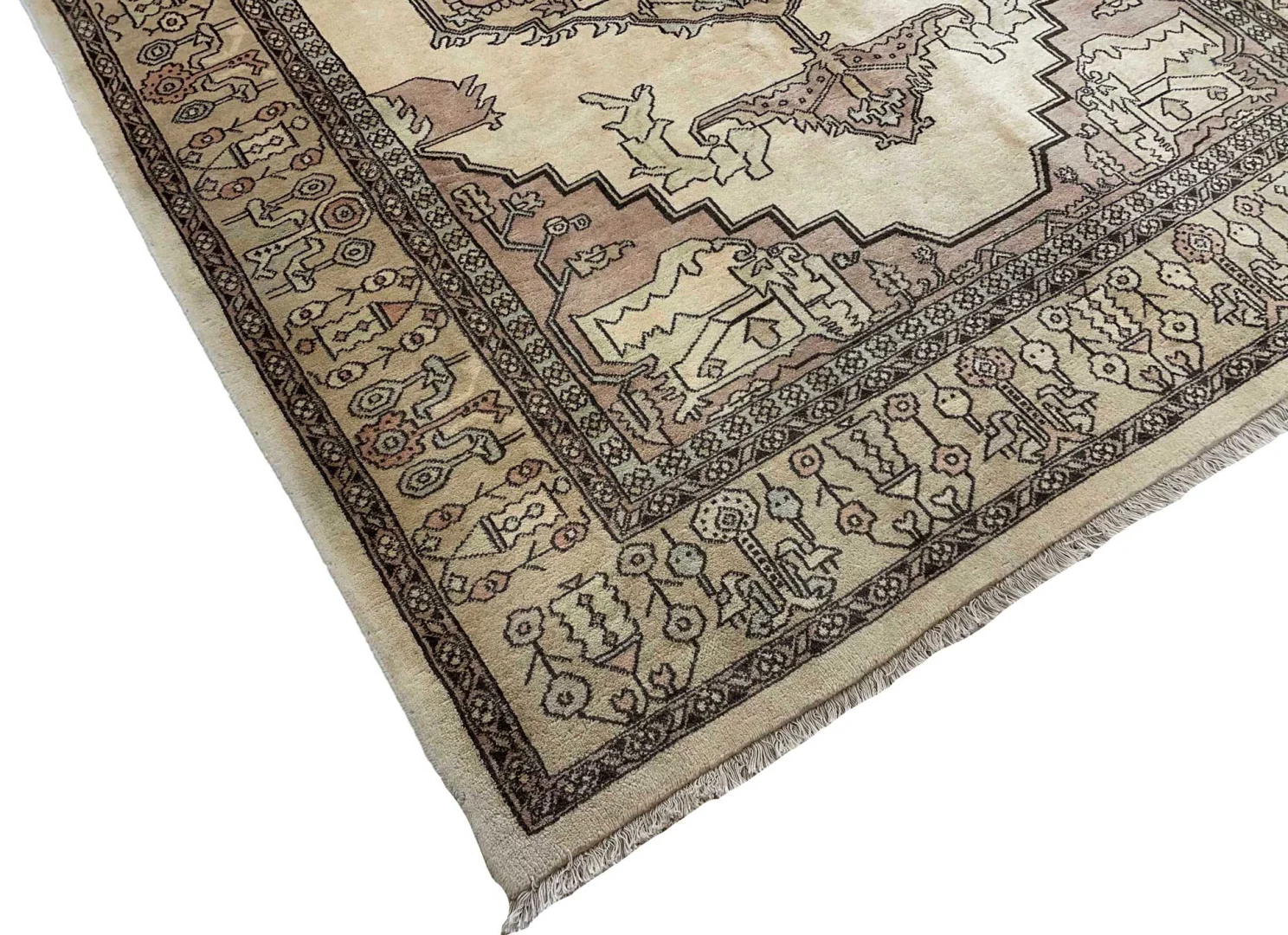
The recorded knot density is between 250,000 and 450,000 knots per square metre. A density in this range supports the detailed rendering of outlines, floral elements and geometric transitions. Knot density is one of the technical features used to describe the fineness of a rug, alongside the yarn, the structure of the foundation and the precision of the work. It helps explain how a design can be rendered with numerous small visual distinctions.
Wool has long been used for oriental rug pile because it is resilient and well suited to repeated handling. Its natural surface can absorb colour evenly and can appear subtly different as light moves across the pile. The material specified for this rug is high-quality wool. Its construction is clearly identified as hand-knotted, which places the piece within a long-established Persian weaving practice rather than an industrial production method.
Origin and Tradition
The rug comes from Yazd in Persia. Yazd is a historic city in the southern central part of Iran, situated in a dry landscape between desert areas and mountain ranges. Its position contributed to its importance as a place of trade and cultural exchange. Goods, design ideas and craft knowledge travelled through the region, and textile traditions developed within this wider network rather than in complete isolation.
Yazd rug making belongs to the broader Persian tradition while retaining its own regional context. Workshops associated with Yazd have worked with carefully organised compositions, fine knotting and both floral and geometric elements. There is no single fixed pattern that defines every rug from Yazd. Designs may draw on established local practice as well as on forms known from other Persian weaving centres. This range is part of the way regional rug traditions have developed over time.
The place name Yazd identifies the origin of this rug and should be kept separate from its stylistic references. Its pattern is described as similar to Kerman and Keshan. That wording concerns design influence or visual resemblance; it does not change the place of manufacture. The rug is therefore a Yazd Persian rug with a composition related to two recognised Persian design traditions.
Kerman, also written Kirman, is a weaving region in southeastern Persia. Kerman designs are often associated with finely articulated floral arrangements, scrolling vines, layered borders and a carefully balanced use of colour. Flowers, leaves and curving stems may be distributed across a field in a regular rhythm. The tradition includes many variations, but its general reputation rests on detailed ornament and a controlled relationship between the central field and its surrounding borders.
Keshan, commonly written Kashan in English, is another historic Persian rug centre in central Iran. Keshan compositions are frequently built around a medallion, a structured field or a repeated all-over arrangement. Floral scrolls, leaves and blossoms may be used to connect the main elements, while one or more borders frame the field. The patterns can be dense and ordered, with the overall layout remaining legible through symmetry and careful spacing.
Persian rug patterns were transmitted through families, workshops, trade routes and written or remembered examples. A design could be adapted to local taste, altered by a particular workshop or combined with elements from another centre. For this reason, a rug’s origin and its design vocabulary are related but not identical categories. Yazd describes the origin here, while Kerman and Keshan describe the pattern references. The distinction is useful when identifying oriental rugs and prevents a design name from being mistaken for a place of manufacture.
Yazd also forms part of a wider Iranian culture in which textile skills, natural fibres and detailed handwork have been passed between generations. Knowledge of spinning, dyeing, knotting and proportion contributes to the final appearance of a rug. A hand-knotted piece records that relationship between a planned design and its physical execution. Its regional identity comes from the place and tradition of production, while its individual character comes from the specific composition and workmanship of the finished rug.
Design and Pattern
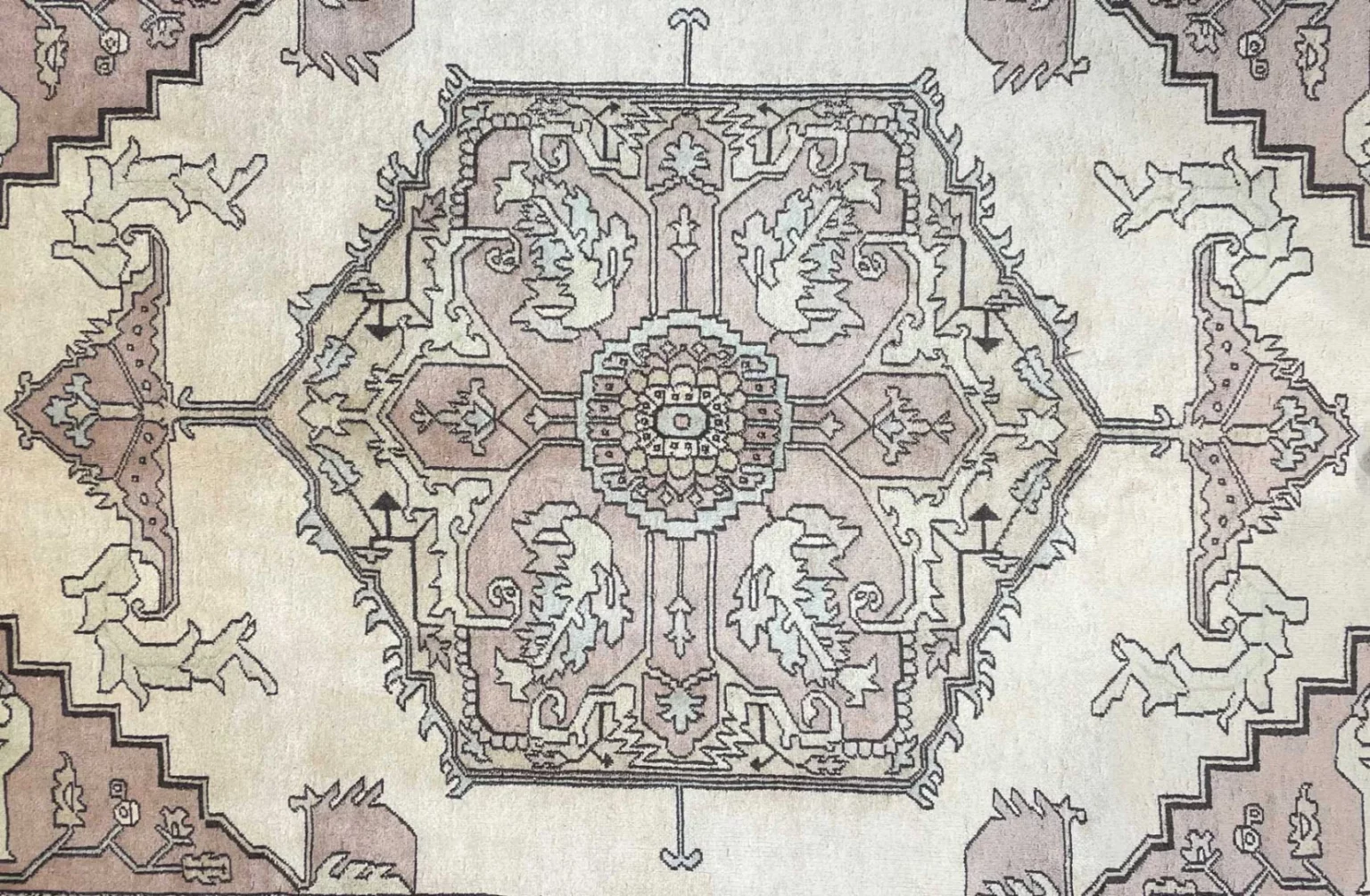
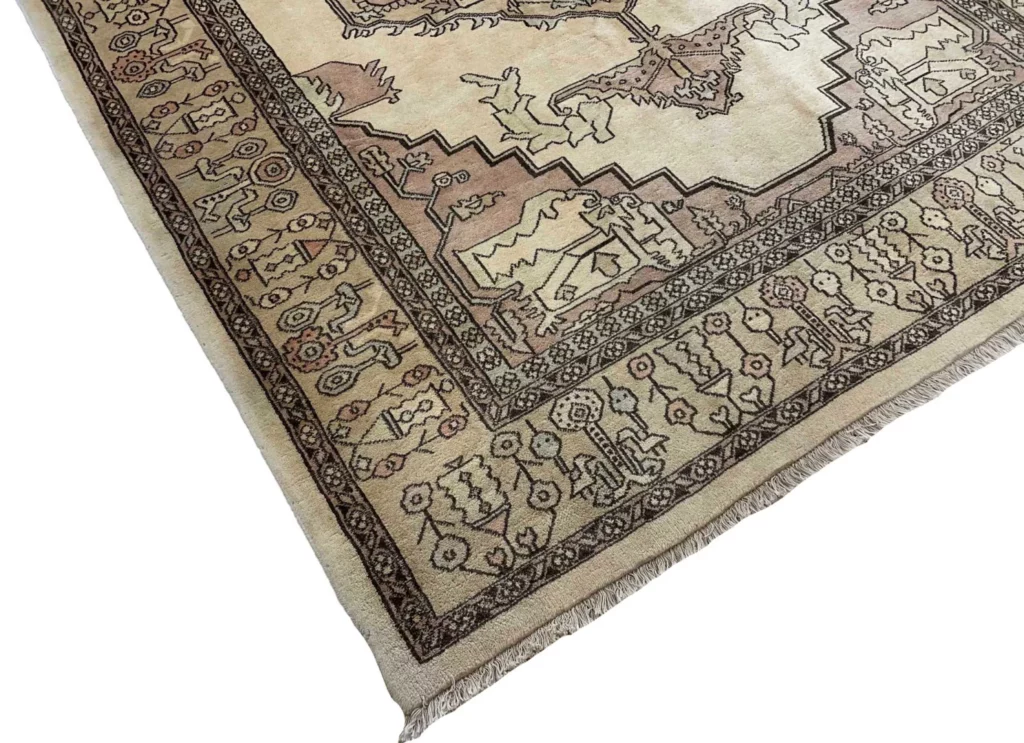
The colour palette specified for this rug consists of red, cream and blue. Together, these colours create a combination of warm, light and dark tones. In Persian rug design, red may provide a strong field or accent, cream can establish contrast and blue may define outlines, compartments or ornamental details. The source does not state which colour forms the central field or border, so no particular distribution is assigned here. The confirmed palette remains red, cream and blue.
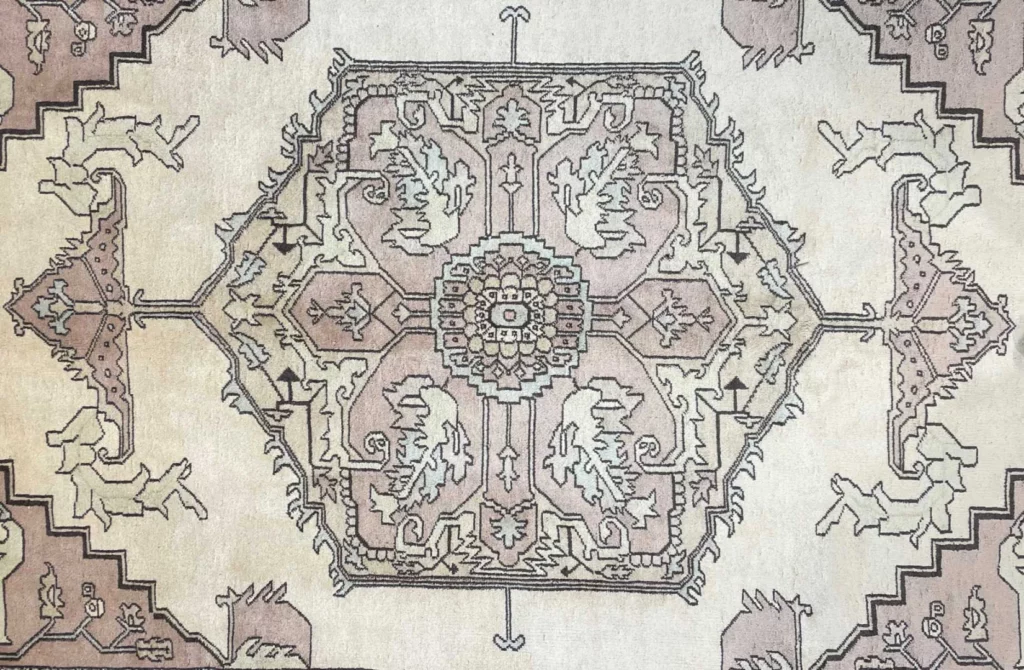
The pattern is similar to Kerman and Keshan. Kerman-related design language is often recognised through floral scrolling, blossoms, leaves and finely divided ornament. Such motifs may be arranged around a central structure or repeated across the field. Their visual effect depends on the balance between curved botanical forms, narrow connecting lines and the surrounding border system. The tradition is not limited to one exact layout, and individual workshop interpretations can differ considerably.
Keshan-related compositions are commonly associated with a strong sense of order. A central medallion, a balanced field or an organised all-over pattern can provide the framework. Floral elements then fill or connect the spaces, while borders give the design a clear outer boundary. The result may combine dense ornament with a disciplined arrangement of shapes. These are general features of the named design tradition; the exact placement of motifs on this rug is not described in the source.
The connection between Kerman and Keshan can therefore be understood as a reference to composition and ornament rather than to origin. Persian rug designs often use repeated forms, mirrored balance and carefully paced transitions between larger and smaller motifs. Colour helps separate these areas and can make the structure easier to read. Light and dark tones may distinguish a field from its border, while related shades can connect separate ornamental groups.
It is important to distinguish a pattern label from a geographic designation. A reference to Kerman or Keshan may describe a visual model, an ornamental tradition or a resemblance to rugs associated with those centres. It does not establish that this particular rug was made there. The origin given for this piece is Yazd. Its design reference extends toward Kerman and Keshan, creating a clear example of how Persian weaving traditions influence one another across regional boundaries.
A relatively fine knotting structure can support the depiction of small flowers, narrow vines and precise edges. It allows a designer to differentiate nearby colour areas and to preserve detail within a complex composition. This does not mean that every Yazd rug has the same pattern. Workshop practice, the chosen design and the intended commission all affect the final arrangement. For this rug, the documented design characteristics are its similarity to Kerman and Keshan and its red, cream and blue palette.
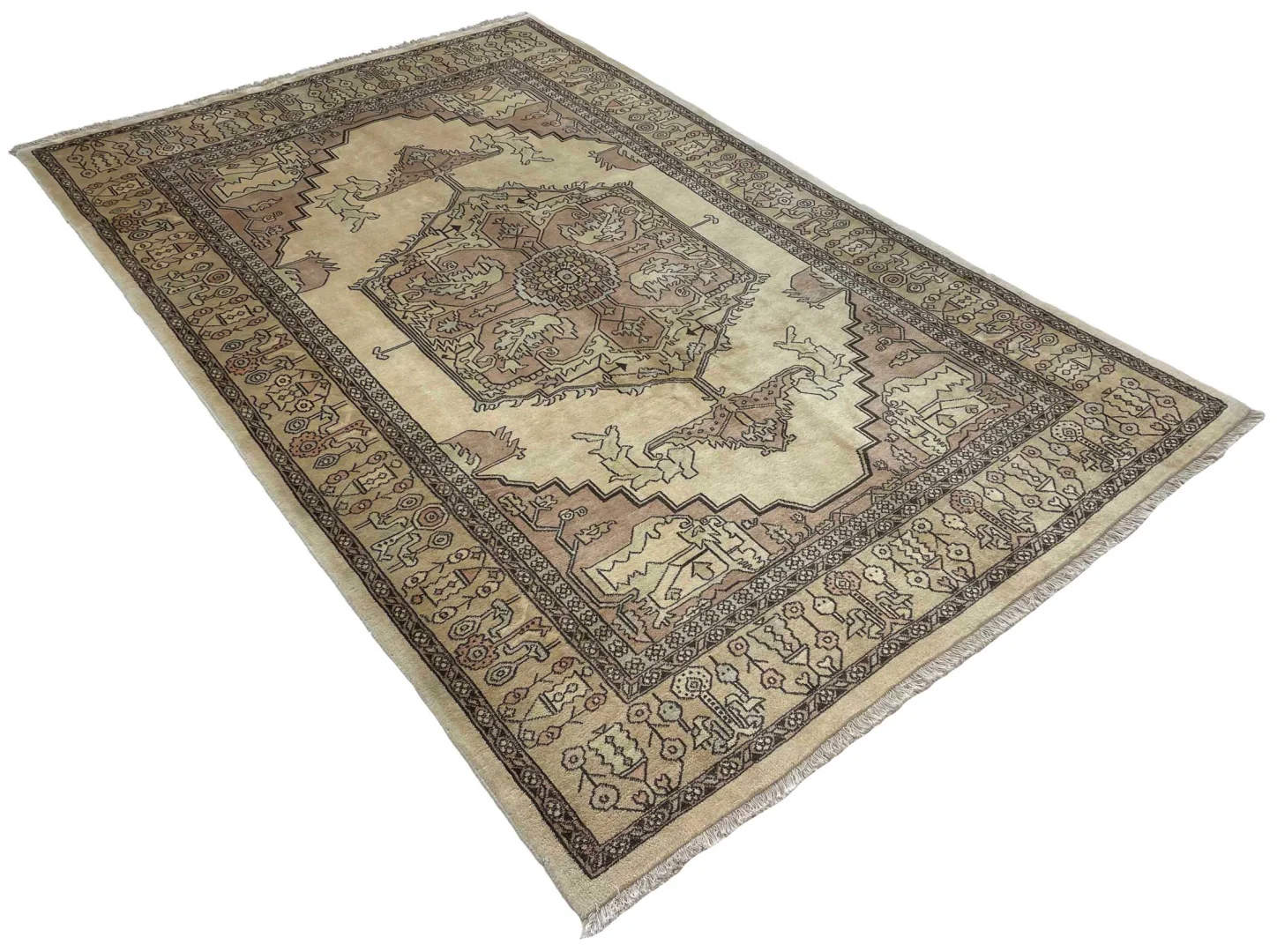
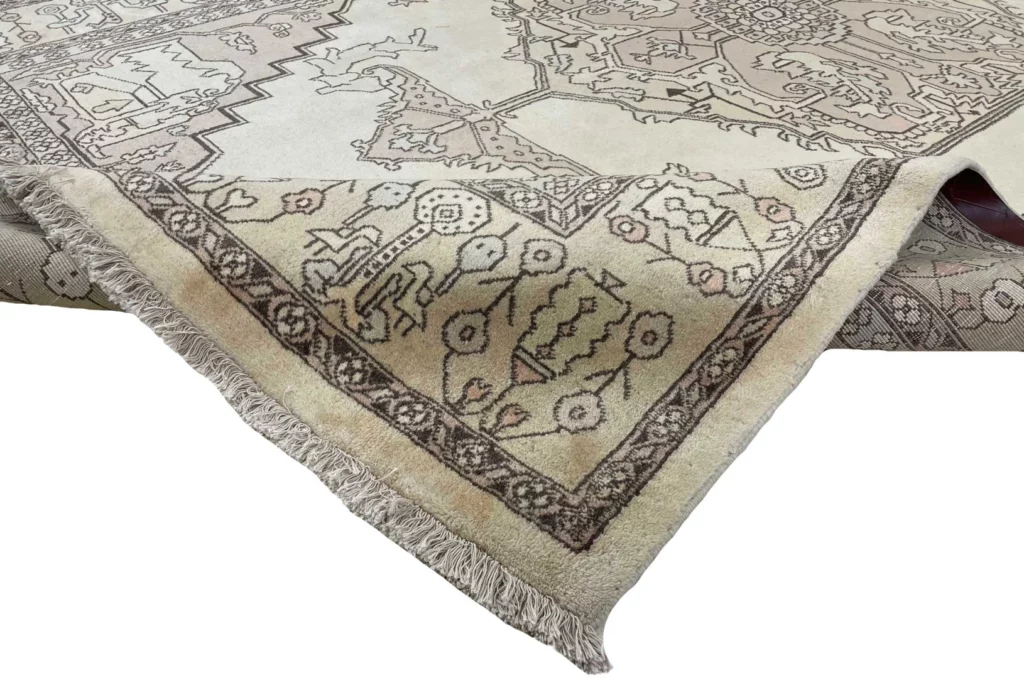
The visual reading of a Persian rug also changes with the direction of the pile and the surrounding light. This is a general characteristic of pile rugs rather than a separate feature claimed for this example. Wool can show subtle shifts in surface tone as it is viewed from different directions. In a design influenced by established floral and structured traditions, these changes can make the relationship between field, ornament and border appear slightly different from one viewpoint to another.
Special Features
The defining features of this rug are its Yazd origin, hand-knotted construction, wool pile and recorded knot density. Its stated colours are red, cream and blue, and its pattern is described as similar to Kerman and Keshan. The condition is well preserved. These points describe the individual piece without assigning it another origin or claiming a motif that has not been specified.
Its regional and stylistic identity can be summarised clearly: it is a Yazd Persian rug whose design relates to Kerman and Keshan traditions. The wool pile and hand-knotted construction belong to the material and technical description, while the colour combination supplies the visible palette. Since every hand-knotted rug is made as an individual textile object, the precise execution and distribution of ornamental details remain specific to this piece.
FAQ
How should a Yazd Persian rug be cleaned and cared for?
Regular, careful vacuuming helps remove loose dust from the pile. Cleaning should take account of the hand-knotted construction and wool material. If the rug needs more than routine care, professional cleaning is appropriate because a specialist can select a method suited to the fibres, dyes and structure. Prolonged direct sunlight should be avoided so that the red, cream and blue colours remain as even as possible over time.
Where do the colours of Yazd rugs come from?
Yazd rugs are traditionally associated with dyes derived from natural sources. Plants and minerals can provide colour materials that are prepared and used for yarn dyeing. The resulting palette depends on the raw materials, the dyeing process and the individual workshop. The colours specified for this rug are red, cream and blue. No particular plant, mineral or dye recipe is identified for this individual piece.
What can make a Yazd rug a good investment?
The significance of a Yazd rug may relate to its hand craftsmanship, wool, knotting quality and place within Persian cultural history. The design and the condition of the individual rug are also relevant when it is assessed. This piece is hand-knotted and well preserved. A possible change in value cannot be determined from origin alone; it depends on the specific workmanship, the condition, the design and the market for comparable rugs.
To provide the best experiences, we use technologies like cookies to store and/or access device information. Consenting to these technologies will allow us to process data such as browsing behavior or unique IDs on this site. Not consenting or withdrawing consent, may adversely affect certain features and functions.
Functional Always active
The technical storage or access is strictly necessary for the legitimate purpose of enabling the use of a specific service explicitly requested by the subscriber or user, or for the sole purpose of carrying out the transmission of a communication over an electronic communications network.
Preferences
The technical storage or access is necessary for the legitimate purpose of storing preferences that are not requested by the subscriber or user.
Statistics
The technical storage or access that is used exclusively for statistical purposes.The technical storage or access that is used exclusively for anonymous statistical purposes. Without a subpoena, voluntary compliance on the part of your Internet Service Provider, or additional records from a third party, information stored or retrieved for this purpose alone cannot usually be used to identify you.
Marketing
The technical storage or access is required to create user profiles to send advertising, or to track the user on a website or across several websites for similar marketing purposes.
 SECURE PAYMENT
 SHIPPING PARTNERS


